So, Who is the Mom ….? !!!

A mother and her twin daughters have sent the internet into a tizzy and how!

On January 28, Kaylan Mahomes, a resident of Indianapolis, US, posted a selfie of her twin and her mom in a car. The caption read, “Mom, twin and me.”

However, the photograph left everyone scratching their heads as all three women share a youthful glow and look like sisters, rather than mom and daughters.

The internet simply couldn’t figure out of the three women in the photo, which one was the mom.

The photo since then has been notching up serious viewership with the current count being 19,000 retweets and 30,000 likes. Some Twitter users have also shared it along with the hashtag #blackdontcrack, an expression that refers to African-Americans whose smooth skin makes them look younger than their age.

But the big question remains: Which young-looking lady is the mom?

For those who can’t figure it out, this video (external link), might give you a clue.

So, go ahead, …….. who’s the mom?

Photograph: @kaylan_17/Twitter

Source……..www.rediff.com

Natarajan

Construction Worker Becomes Sarpanch & Teaches Villagers How to Use Computers Too !!!

Nauroti Devi is not any ordinary 70-year-old. This Dalit woman from Harmada village in Ajmer district of Rajasthan never went to school. But she got elected as the sarpanch of the village and is famous for overcoming the domination of the Jat community in the village.

Can you believe that Nauroti is the one who taught the panchayat secretary how to operate a computer?

She has also trained many other women from her village to use computers.

sarpanch

Photo source: dalitjagran.blogspot.in

According to The Hindu, she says “I carried the computer and printer into the office and used it for regular communication and also to take out printouts of notices.”

In the 1980s, Nauroti joined The Barefoot College in Tilonia. It is here that she joined adult literacy classes and learnt to operate a computer.

During her five-year term as sarpanch, Nauroti Devi managed to do a lot of work for the community. She constructed toilets and houses for those living below the poverty line.  She restored a burial ground and fenced it to stop encroachment. She started work on a long-pending Primary Health Center in the village. She also waged a battle against the alcohol mafia. When Nauroti ended her term, she left a surplus of Rs. 13 lakh in the panchayat account.

Nauroti has always been a woman of great resolve. Prior to joining the Barefoot College, she used to work at a construction site as a stone worker. When she was not paid the minimum wage, she managed to mobilise other construction workers and fought for a raise. The workers finally got justice when their case was taken to the court by an NGO.

She was disqualified from contesting in the 2015 panchayat elections for being illiterate. And for this, she has filed a writ petition in court.

Even though she’s no longer a sarpanch, she continues to be a voice for the marginalised in her community.

Source……Meryl Garcia in http://www.the better india .com

Natarajan

Parents Don’t Have to Worry About Their Child’s School Bus Anymore. All Thanks to This 15-Year-Old!

Parents are often worried about the safety of their children whenever they are going to or coming back from school. Why is the bus late? Did my child reach safely? Did my child get on the bus? But not anymore! A 15-year-old has developed a solution in the form of an app.

Getting irritated because your school bus is stuck in a traffic jam due to heavy rains is one thing. But to reach home late, find your parents worried, and develop an app so they won’t be stressed the next time – that’s called combining innovation with care. Arjun S. is a 15-year-old student of Class 10 in Velammal Vidhyashram School in Chennai. He has developed an app that can help parents track the position of their children’s school buses whenever they want.

“I got the idea after a cyclone hit Chennai in 2012. I reached home late one day and my parents were really scared because they had no way of finding out if I was safe. I thought that if there could be a way to track school buses easily, it would be so much better for parents and school authorities. I was learning more about building apps and the android programming language at that time, and decided to find a solution,” says Arjun.

The young boy’s love for technology led to the development of LOCATERA – an app to find out where exactly a school bus is located at any given time, and to know if a particular child is there in the bus or not.

track a school bus

“I have been using computers since the age of two. My dad had a system and I would stack up some pillows on the chair to reach the keyboard to use some basic electronics simulation software. My parents were always careful about giving me age-appropriate tools for using the system,” he says, talking about his interest in this field.

The first app developed by Arjun was called Ez School Bus Locator. He shared it with many schools, including his own, and collected the feedback from administrators and parents about their specific requirements. “I collected the information about the schools’ basic requirements and modified the app accordingly. LOCATERA is a modified version of Ez School Bus Locator, and it came two years after the first one. Unlike other solutions that require some kind of hardware installation, all this app needs is the presence of a phone inside the bus,” he adds.

LOCATERA is basically a tri-app solution, which means three apps working together. These include the attendant, admin, and parent apps.

1. LOCATERA attendant:

track a school bus

This app captures the location of the bus and shares it with parents and the school if required. The bus attendant can install and keep it on his/her phone. The attendant adds all students to the app by scanning their Quick Response (QR) Code-based ID cards, using bar code scanning, as and when the students board or get off the bus. Student activities are recorded on the Cloud – to be used by schools in case of emergencies.

2. LOCATERA admin:

track a school bus

The admin version has to be with the administrator of the school transport system so he/she can see all the buses together, locate the position of a particular bus, get information about it, and find out which students are present in the bus at any given time.

3. LOCATERA parent:

track a school bus

Parents have to get their mobile numbers verified before they get access to the app. Once they are in, they can find the location of the bus by clicking on the ‘Bus on Map’ option. Alternatively, they can tap on ‘Bus Location’ and ‘Distance & Time’ options to find out the exact address of the bus and how soon the child will reach home. To find out if the child is there in the bus or not, they just have to select the ‘Child in Bus’ option. Parents who don’t have android phones can give a missed call to the attendant’s phone whenever they want the information. The LOCATERA attendant looks into the bank of registered numbers to find out which parent has called. He/she then sends an SMS with information about the child and the bus location.

Arjun used Massachusetts Institute of Technology (MIT)’s programming tool called MIT App Inventor to develop LOCATERA. It is basically a programming language tool with a more graphical user interface, instead of codes.

Arjun submitted the app to ‘Google India Code to Learn Contest 2015’ and was declared the winner. He also won the MIT ‘App of the Month (Best Design)’ award in December 2012 for Ez School Bus Locator.

Among other awards, he also received the 2014 ‘National Child Award for Exceptional Achievements for Computer Technology’, which was initiated by the Ministry of Women and Child Development, Government of India.

track a school bus

“I would like to work in the field of computer science itself, and would like to go to IIT or MIT or something like that,” says Arjun, talking about his future plans.

He also started a company named LateraLogics in 2012, which has several products including some other apps that Arjun has developed over the past three years. Currently, only the demo version of LOCATERA is available on Play Store, for all three stakeholders. Those who want to use the complete version can fill out the LOCATERA Flexi Plan Enquiry Form to receive the pricing details for that particular school. Arjun keeps receiving constant feedback from the schools that are already using it.

As he is also preparing for his board exams, Arjun has a tough time juggling his studies and his passion. “But I somehow manage it,” he says.

track a school bus

Arjun at the award ceremony

He also likes to play the keyboard, and is a badminton enthusiast in his free time.

“We have been supporting Arjun from a very young age…He has always been passionate about technology. We gave him the right kinds of tools from the start and he has always been serious about what he does. He does a lot of research and discusses his ideas before finalising anything. We are also in touch with the state and Central government to see how the app can be implemented all over the country. The Ez School Bus Locator version is free of cost and it is being used in more than 10 countries right now. We think it can be used in India as well,” says Arjun’s father Santhosh Kumar.

The agreement for using the app for one academic year includes a one-time activation fee (per child, per year) and a monthly maintenance fee option (per month, per child). After a successful pilot project in his school, Arjun is having discussions with other schools for implementation the same. Trial runs have been scheduled for some schools in Tamil Nadu, Kerala, and other parts of the country as well.

The agreement for using the app for one academic year includes a one-time activation fee (per child, per year) and a monthly maintenance fee option (per month, per child). After a successful pilot project in his school, Arjun is having discussions with other schools for implementation the same. Trial runs have been scheduled for some schools in Tamil Nadu, Kerala, and other parts of the country as well.

“Look for problems around you and get inspired by them. You’ll see a lot of opportunities to make this world a better place using your own skills,” is Arjun’s advice to other youngsters like him.

Download the demo versions of the app here:
LOCATERA attendant
LOCATERA admin
LOCATERA parent

You can find other details about installing the app here.

Source…….Tanaya Singh in http://www.the betterindia.com

Natarajan

The Gold Mines of Serra Pelada…….!!!

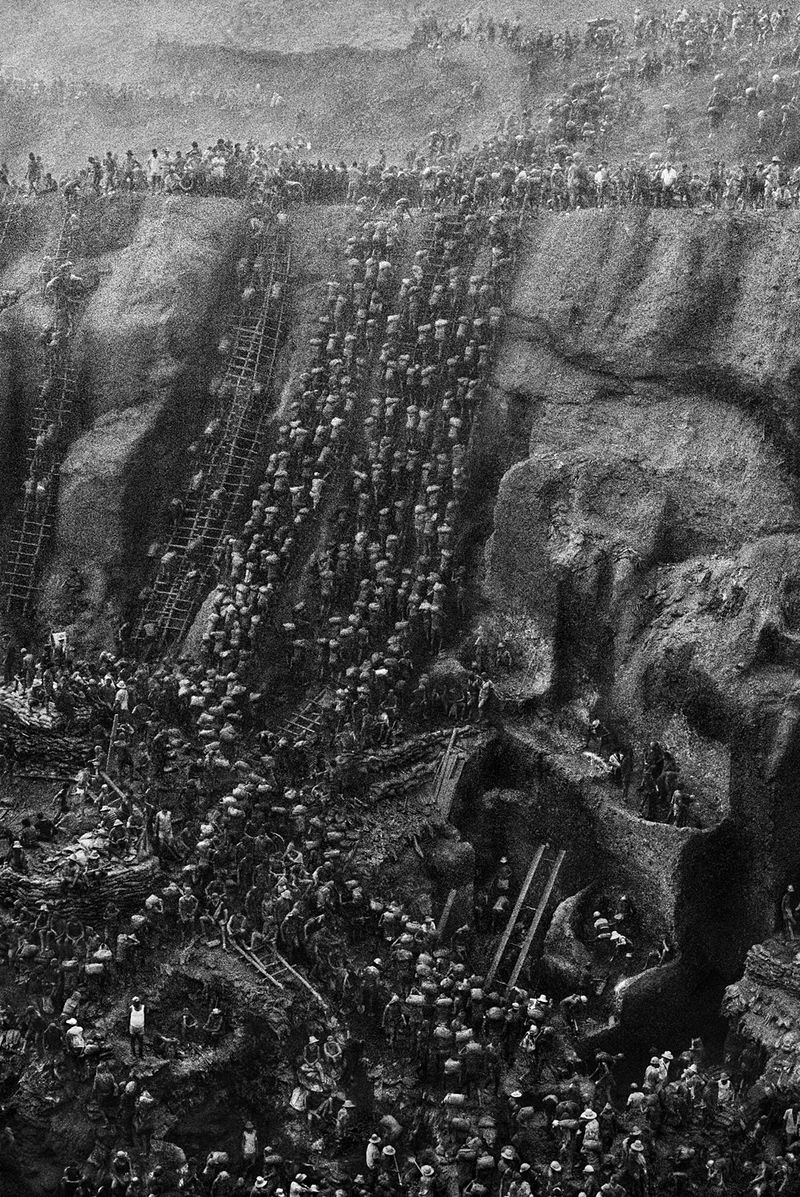
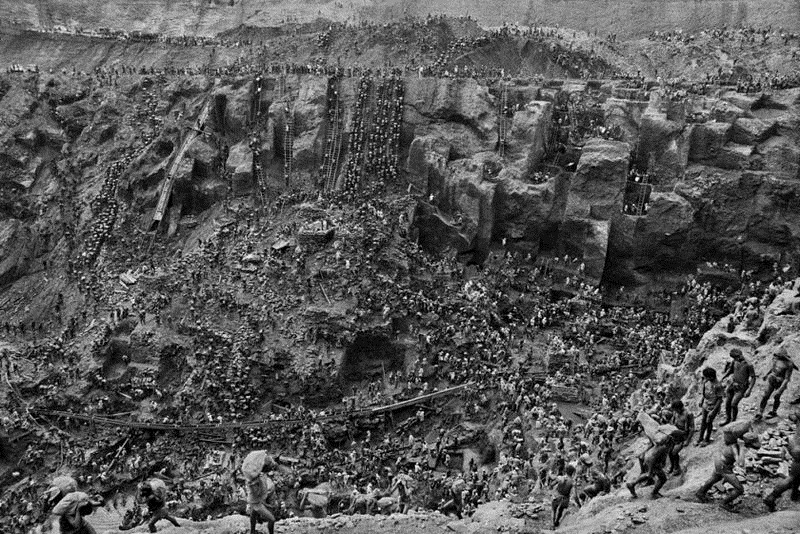
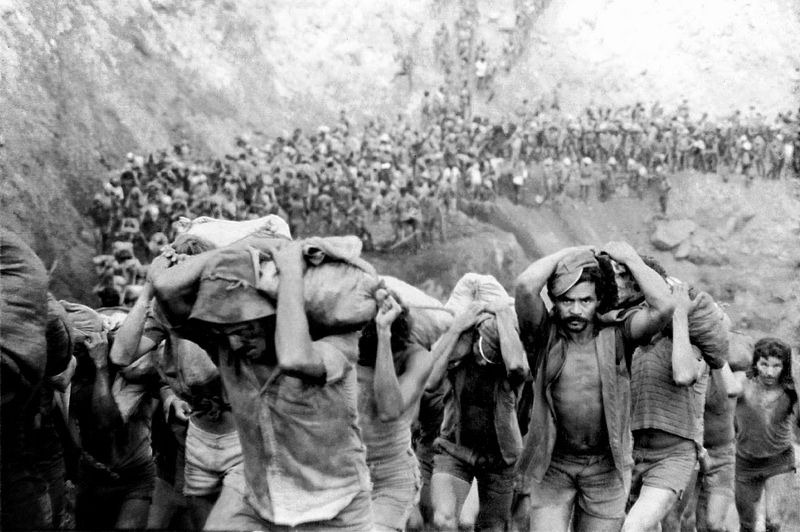
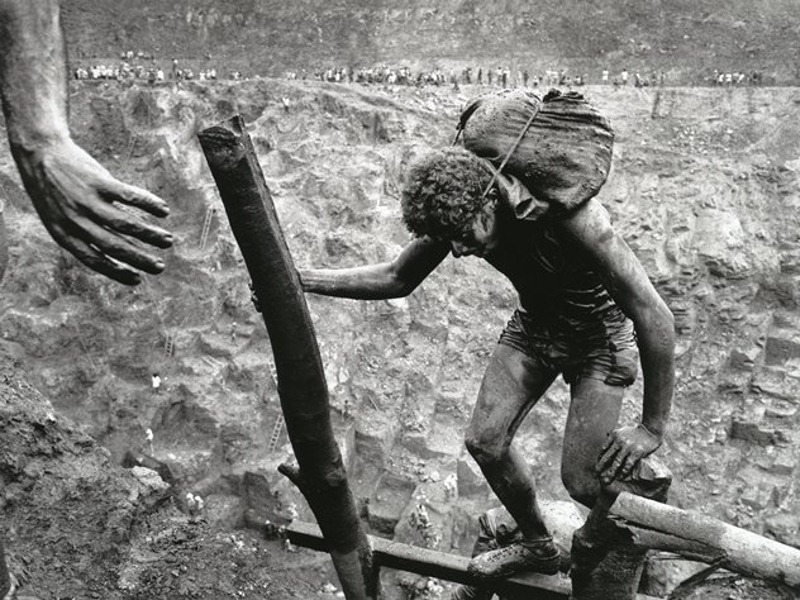
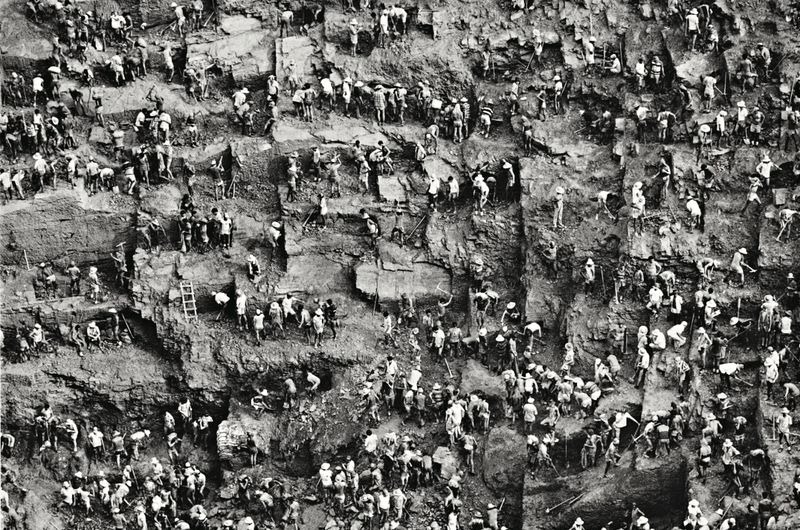
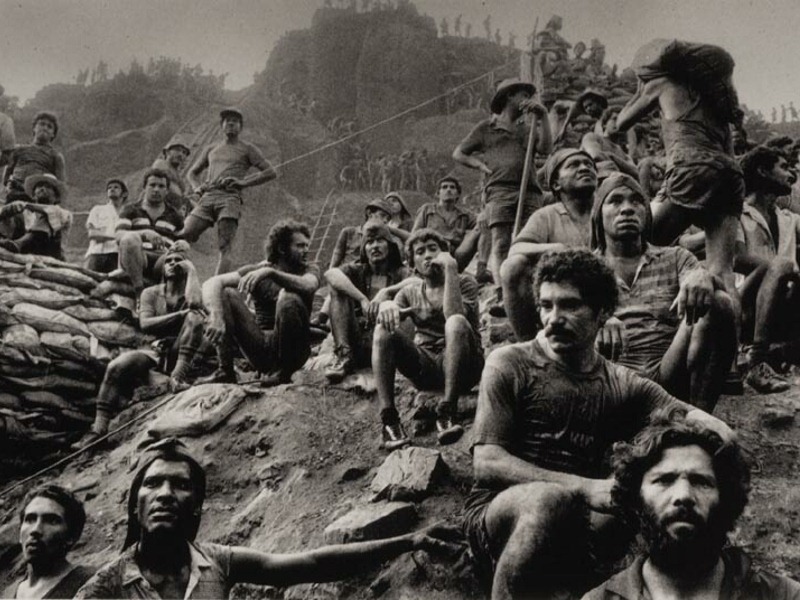
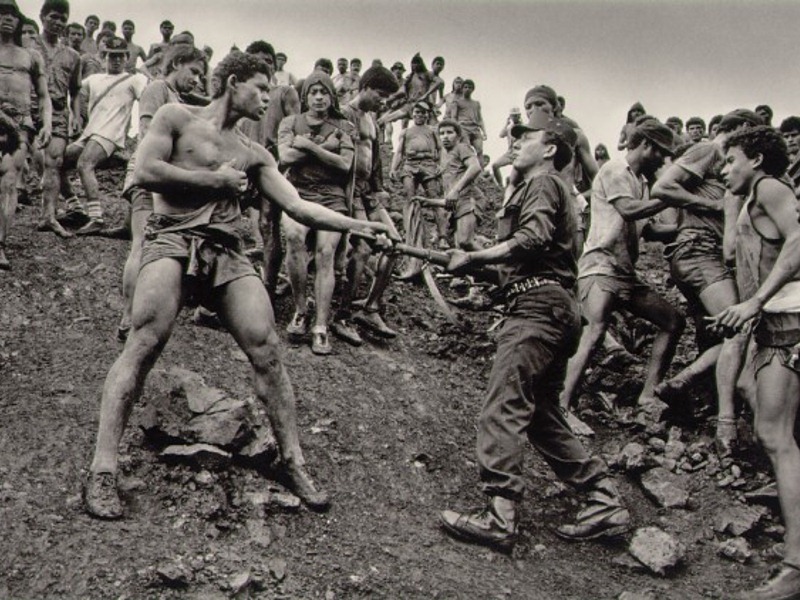
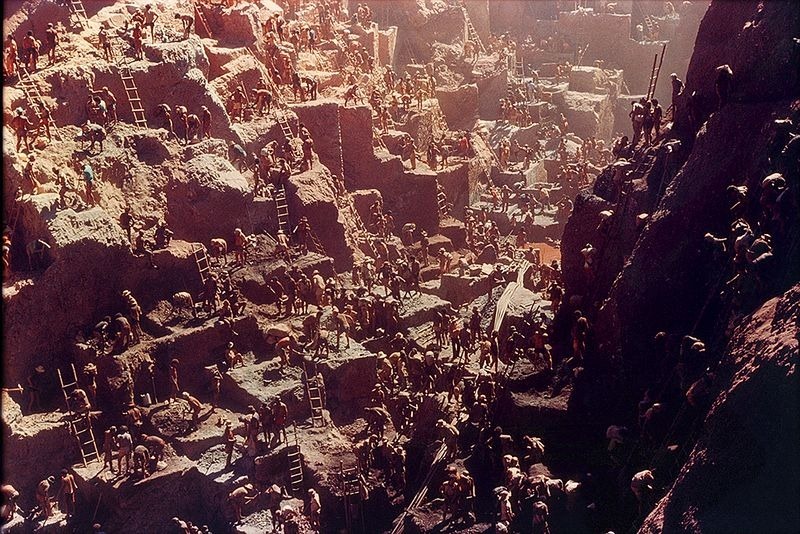
In the early 1980s, Brazilian photographer Sebastião Salgado travelled to the mines of Serra Pelada, some 430 kilometers south of the mouth of the Amazon River, where a notorious gold rush was in progress. A few years earlier, a child had found a 6-grams nugget of gold in the banks of a local river, triggering one of the biggest race for gold in modern history. Motivated by the dream of getting rich quickly, tens of thousands of miners descended into the site swarming like ants in the vast open-air pit they had carved into the landscape. Salgado took some of the most haunting pictures of the workers there, highlighting the hazardous conditions in which they worked and the sheer madness and chaos of the operation.

serra-pelada-1

Photo credit: Sebastião Salgado

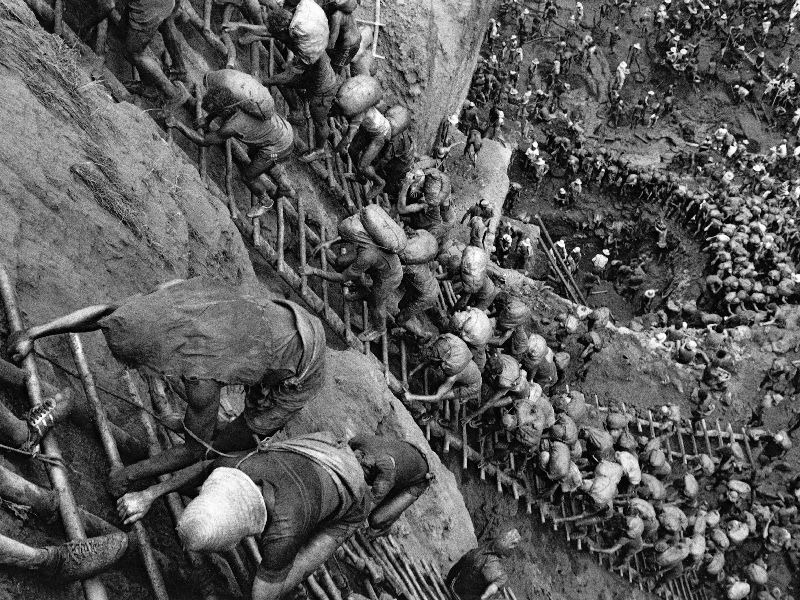
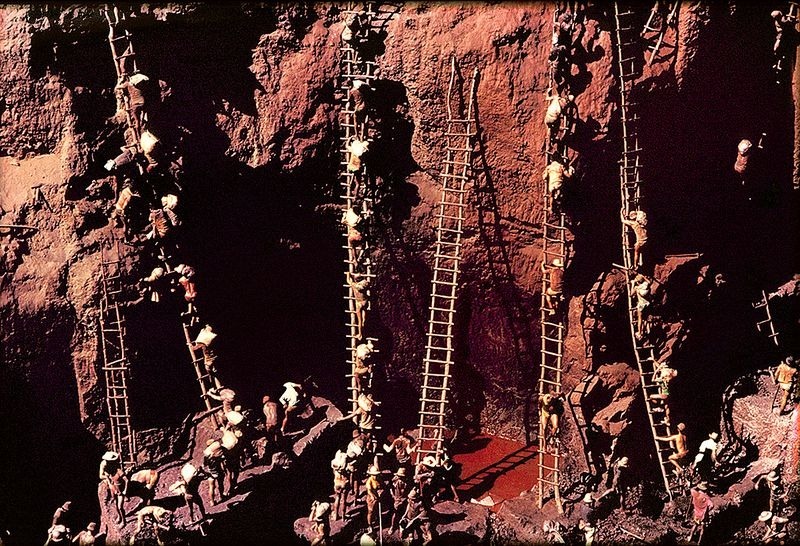
One of the most vertigo-inducing photograph of the series showed hundreds of workers swarming up tall ladders, scaling the cliff-like sides of a hellish hole. Later, when talking about the captivating images, Sebastião Salgado had said: “Every hair on my body stood on edge. The Pyramids, the history of mankind unfolded. I had travelled to the dawn of time.”

During its peak, the Serra Pelada mine employed some 100,000 diggers or garimpeiros in appalling conditions, where violence, death and prostitution was rampant. The diggers scratched through the soil at the bottom of the open pit, filled it into sacks each weighing between 30 to 60 kilograms, and then carried the heavy sacks up some 400 meters of wood and rope ladders to the top of the mine, where it is sifted for gold. On average, workers were paid 20 cents for digging and carrying each sack, with a bonus if gold was discovered. Thousands of underage girls sold their bodies for a few gold flakes while around 60–80 unsolved murders occurred in the nearby town, where the workers lived, every month.

Three months after the gold’s discovery, the Brazilian military took over operations to prevent exploitation of the workers and conflict between miners and owners. The government agreed to buy all the gold the garimpeiros found for 75 percent of the London Metal Exchange price. Officially just under 45 tons of gold was identified, but it is estimated that as much as 90 percent of all the gold found at Serra Pelada was smuggled away.

Mining had to be abandoned when the pit became flooded preventing further exploration. Geological surveys estimate that there could still be 20 to 50 tons of gold buried under the muddy lake, which the pit has now become.

In 2012, after remaining largely untouched for the last 20 years, a Brazilian cooperative company was granted an exploration license for the property in a bid to develop Serra Pelada.

serra-pelada-11

Photo credit: Sebastião Salgado

serra-pelada-12

Photo credit: Sebastião Salgado

sebastiao-salgado-serra-pelada-6

Photo credit: Sebastião Salgado

sebastiao-salgado-serra-pelada-8

Photo credit: Sebastião Salgado

serra-pelada-14

Photo credit: Sebastião Salgado

sebastiao-salgado-serra-pelada-4

Photo credit: Sebastião Salgado

sebastiao-salgado-serra-pelada-5

Photo credit: Sebastião Salgado

serra-pelada-9

Photo credit: Sebastião Salgado

serra-pelada-2

Photo credit: Rudi Böhm

serra-pelada-3

Photo credit: Rudi Böhm

Sources: Aljazeera / www.beetlesandhuxley.com / Buried in Mud, Digging for Gold / Wikipedia

Source………www.amusingplanet.com

Natarajan

Europe’s First Underwater Sculpture Museum…!!!

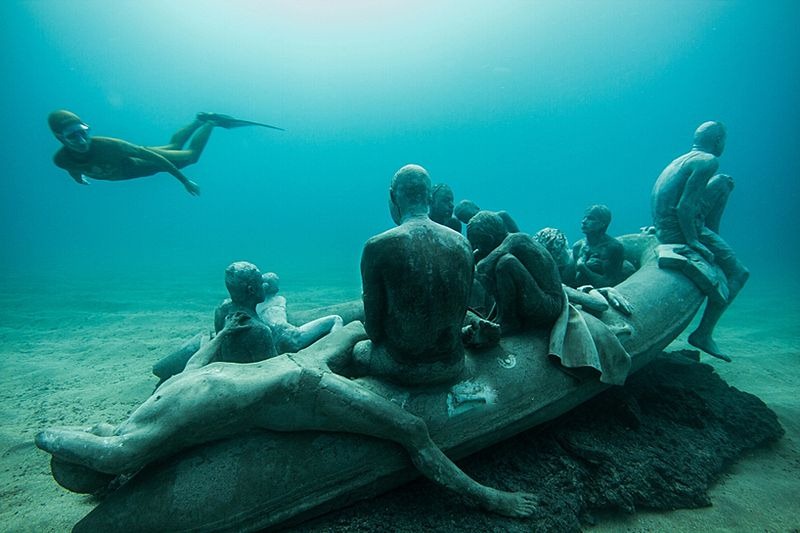
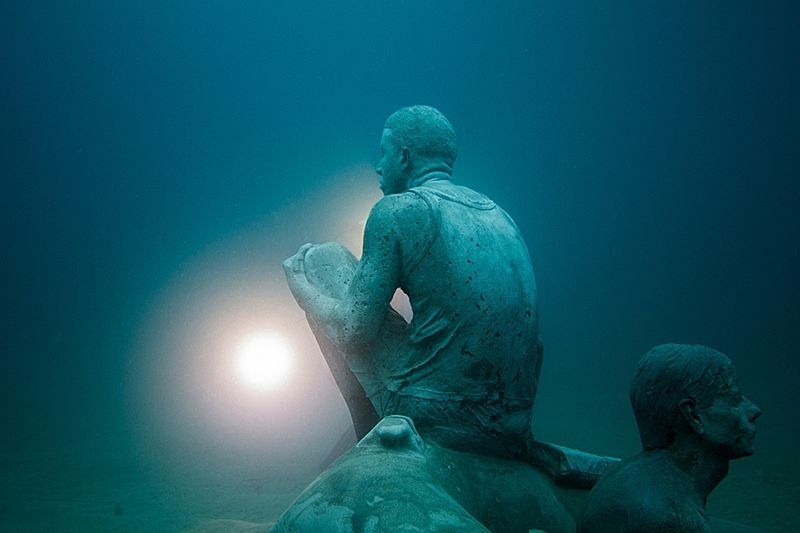
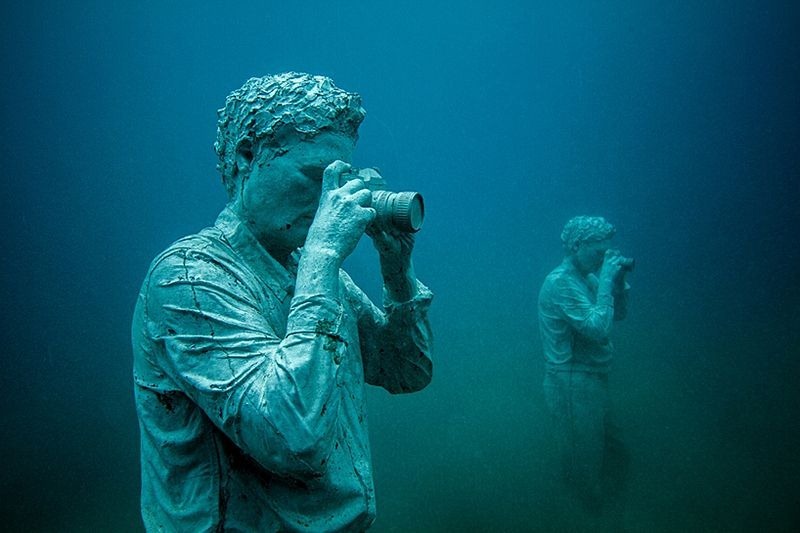
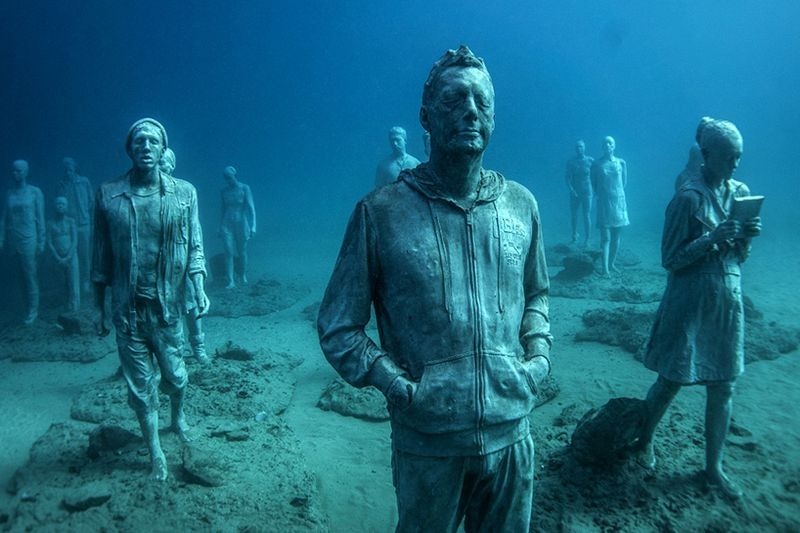
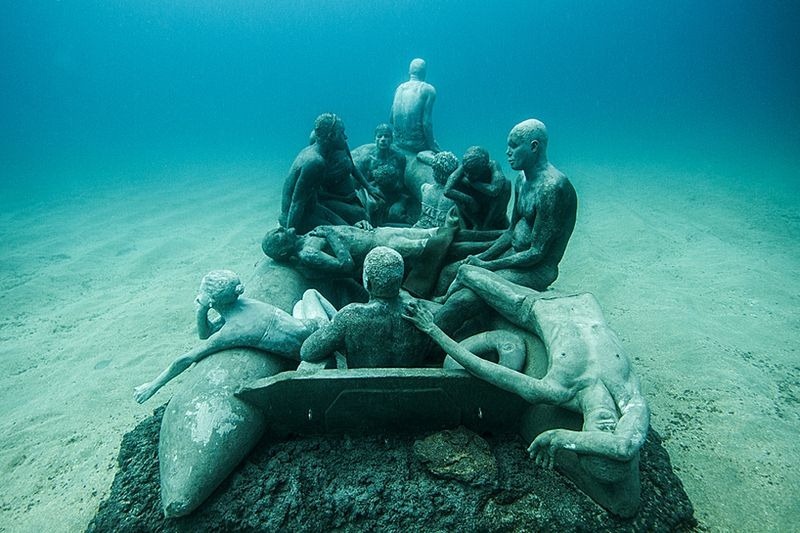
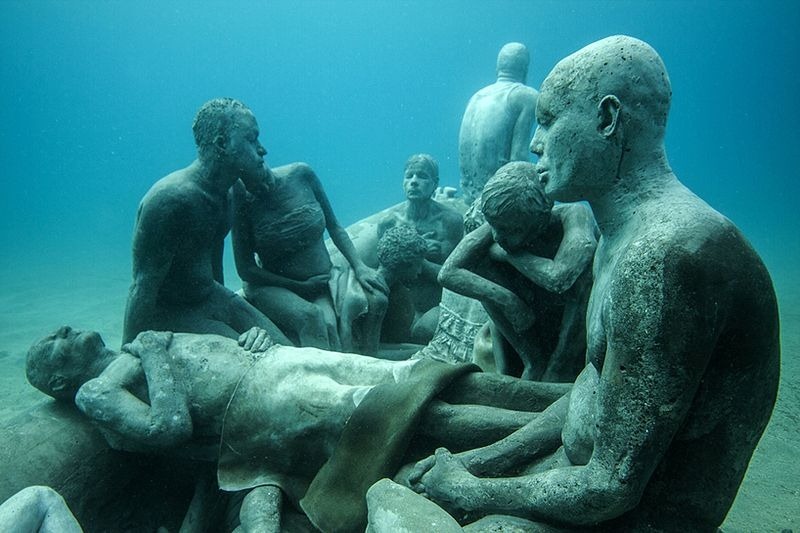
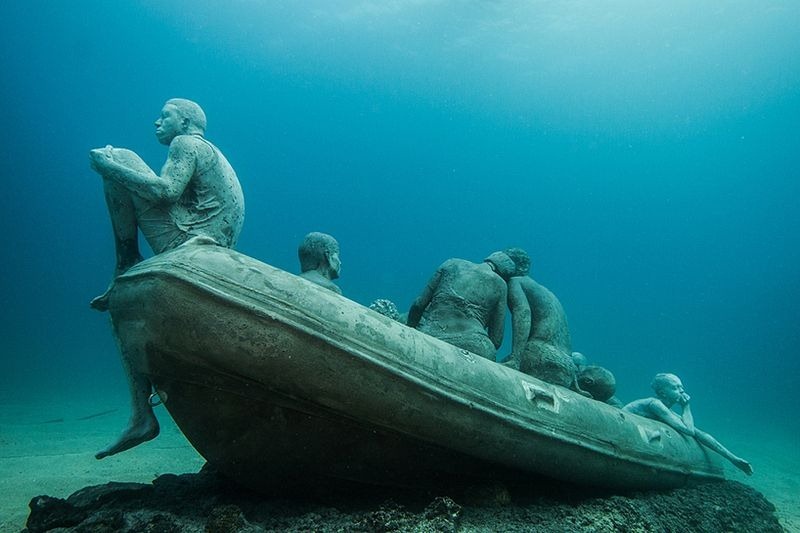
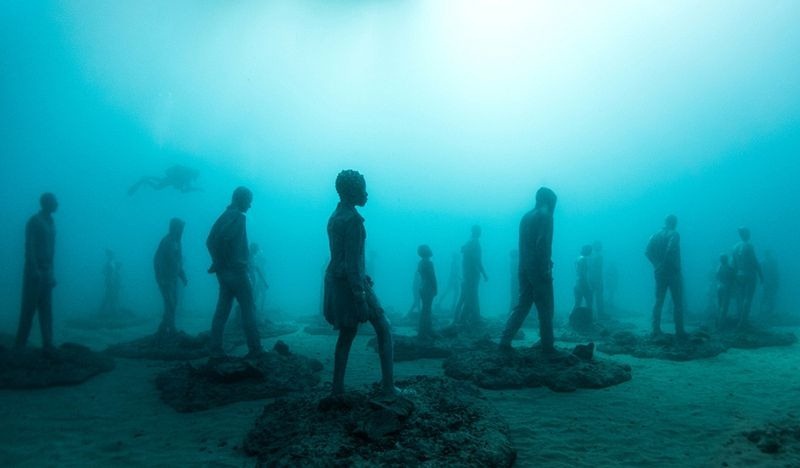
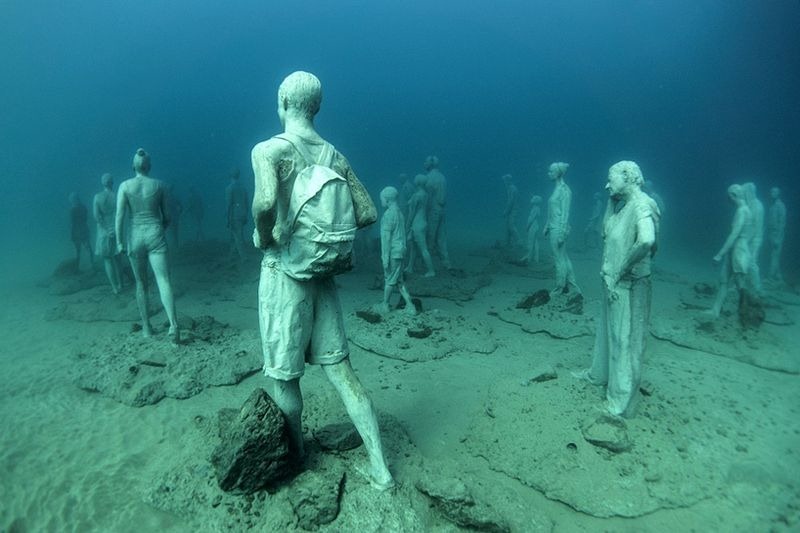
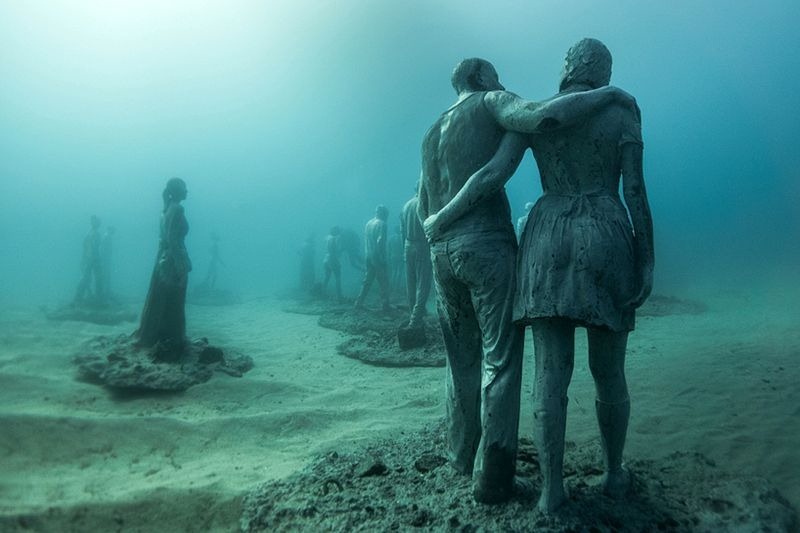
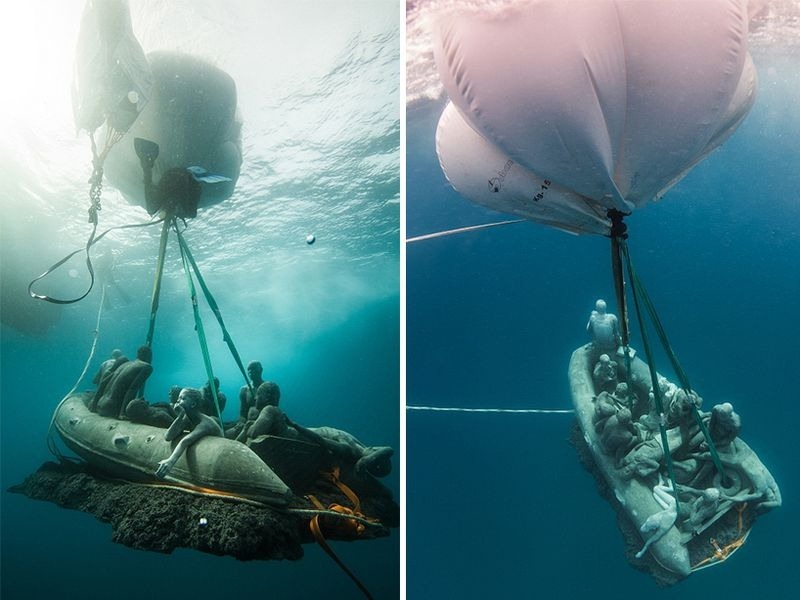
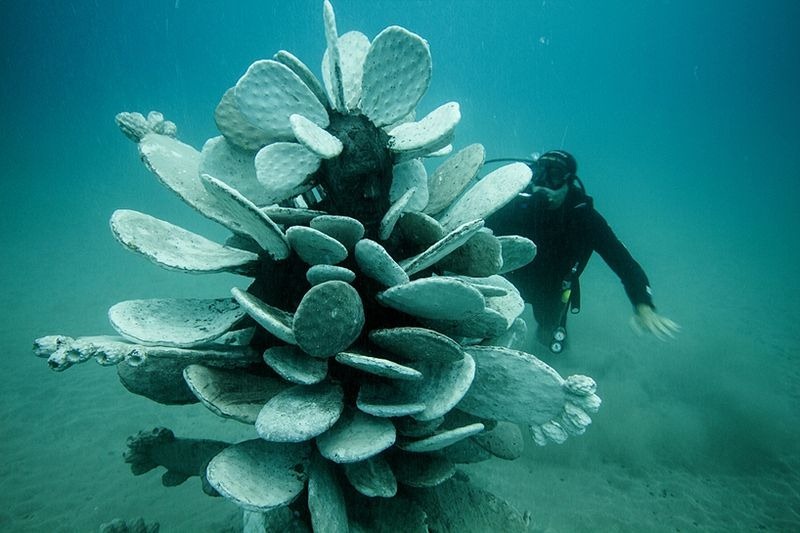
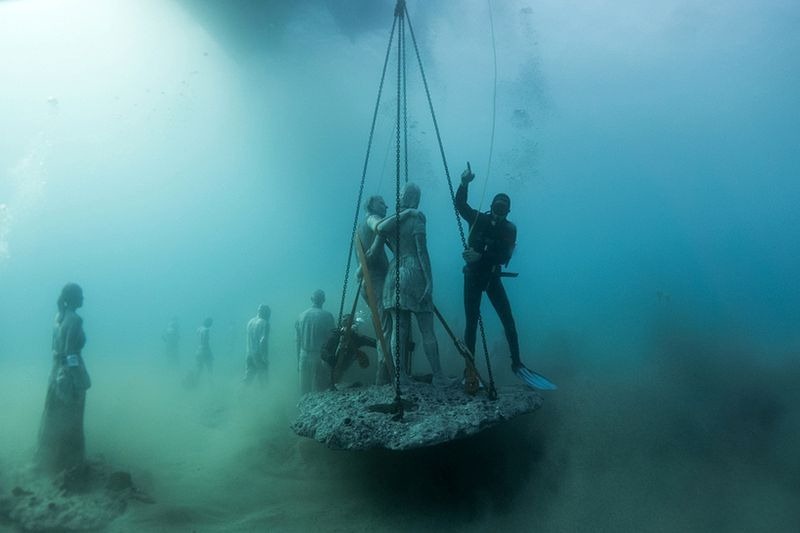
The island of Lanzarote in the Canary Islands, Spain, has set up of the first set of sculptures in what will be the first completely underwater museum in Europe. The museum is located off the coast of Lanzarote at a depth of 12-14 meters and features the works of British artistJason deCaires Taylor, who has created similar works in both Cancun, Mexico and Grenada in the West Indies. The sculptures on display include several human figures representing people engaging in mobile phones, walking, taking pictures and selfies. Another installation titled ‘the raft of lampedusa’ depicts a boat of figures desperately waiting for treatment and aid, representing the ongoing refugee crisis. The underwater sculptures will eventually attract and promote growth of plant and animal life, symbolizing the symbiotic relationship humans have with nature.

jason-decaires-taylor-lanzarote-6

A lot of marine life seek for shelter from predators, so they naturally gravitate toward submerged objects. As a diver, Taylor knows that if you place any object underwater they’re very quickly colonized.

Taylor’s team only chooses sites he describes as “barren and desolate.” Sometimes he positions the sculptures as a diversion from areas that gets lot of tourists so as to lure them away from the fragile and dangerous area.

The sculptures are made from a very inert type of marine cement designed to last for hundreds of years. He avoids using metals because they are corrosive and pollute the environment.

“The longer they are underwater the more the layers of calcium deposit will start to form, so they’ll start to get more and more unrecognizable over time,” Taylor told Good. “That’s one of the reasons I start out with a simple image or quite often a human figure, because I know however much you disfigure the human body you can still recognize some part of it as some identifying feature you can relate to.”

jason-decaires-taylor-lanzarote-1

jason-decaires-taylor-lanzarote-2

jason-decaires-taylor-lanzarote-4

jason-decaires-taylor-lanzarote-7

jason-decaires-taylor-lanzarote-8

jason-decaires-taylor-lanzarote-9

jason-decaires-taylor-lanzarote-11

jason-decaires-taylor-lanzarote-13

jason-decaires-taylor-lanzarote-14

jason-decaires-taylor-lanzarote-15


jason-decaires-taylor-lanzarote-16

jason-decaires-taylor-lanzarote-17

via Design Boom

 source……..www.amusingplanet.com
Natarajan

Hyderabad Lab Claims It Has Made World’s First Zika Virus Vaccine…

Bharat Biotech, a Hyderabad based vaccines and bio-therapeutic manufacturer, claims it has made a breakthrough in developing the world’s first vaccine against the dreaded mosquito-borne Zika virus.

The World Health Organization recently announced that Zika, which causes serious birth defects in children, is now present in 23 countries. Brazil has the maximum number of cases (3,530) and the United States too announced its first case yesterday.

There is concern that the virus could soon spread to Asia and Africa as well. India too is not as safe as hoped, although the virus was last seen here over 60 years ago.

1

Pic Source


The virus causes only a mild illness in most people. However, in pregnant women it is linked to abnormally small heads in their babies, a birth defect called microcephaly.

Bharat Biotech International Limited in Hyderabad told NDTV that they have patented the vaccine.

“On Zika, we are probably the first vaccine company in the world to file a vaccine candidate patent about nine months ago,” said Dr Krishna Ella, Chairman and Managing Director, Bharat Biotech Ltd.

The company used a live Zika virus, imported officially, to develop not one but two candidate vaccines.

Dr. Ella says the company has sought help from the Indian Council of Medical Research (ICMR) to get this vaccine out to the world as soon as possible.

“We have just been informed about the Zika vaccine candidate that Bharat Biotech has. We will examine it from the scientific point of view and see the feasibility of taking it forward. It is a good example of a Make in India product,” said Dr. Soumya Swaminathan, pediatrician and Director General, ICMR.

Dr. Ella is also seeking the help of Prime Minister Modi in fast tracking the development and delivery of the vaccine to those parts of the world where it is needed most.

The company says it can make one million doses of the vaccine in four months.

Source…….Nishi Malhotra in http://www.the betterindia.com

Natarajan

Who is Amit Singhal? 10 facts about the IITian who redeveloped and ran Google Search for 15 years ….

Last night Amit Singhal announced that he was retiring from Google. Amit Singhal who? Well, those who keep an eye on Google know him fairly well. Although, he is not as well-known as Larry Page, Sergey Brin, and  Sundar Pichai, he is probably the single-most important person inside Google.

The reason why he is such a big deal in Google is because he runs the company’s core search operations. This means, if you use Google Search, whether on the web or on mobile, you use the ideas and features implemented, maintained and conceived by Singhal’s team. He is the man, who for the last 15 years, has kept Google the best damn search engine in the world.

Want to know more about him? Here you go:

1- Amit Singhal is so important to Google that when he retired last night, Danny Sullivan, a long-time Google watcher and founder of Search Engine Blog, compared it to Jony Ive leaving Apple. Now we all know how important Jony Ive is for Apple.

2- Amit Singhal was born in Jhansi. He still visits his family, friends and relatives in India.

3- According to Singhal, he spent “most of my boyhood in the foothills of the Himalayas”.

4- Singhal finished his BS in computer sciences from IIT Roorkee in 1989. He then went to the US.

5- In the US, Singhal studied computer science at University of Minnesota before completing his PhD in computer science from Cornell University.

6- At Cornell, Singhal studied with Prof Gerard Salton. Singhal describes him as “one of the founders of the field of IR (information retrieval).

7- Singhal worked at AT&T’s Bell Labs before he was persuaded to join Google by his friend Krishna Bharat. He joined Google in 2000. Incidentally, Bharat was the person behind Google News.

8- Singhal famously re-wrote the original Google algorithm that was created earlier by Larry Page. He reportedly changed it completely to suit the existing challenges. This apparently impressed Larry Page so much that Singhal was put in charge of Google’s secret sauce — its search algorithm — and was tasked to keep it fresh and relevant.

9- Singhal is a big fan of Star Trek universe and wants to build technologies, such as virtual assistant that understands voice commands, used in the USS Enterprise.

10- When mobile phones started becoming popular, Singhal conceived and developed the idea of “search without searching”. This formed the core of Google Now, a feature on Android phones that provides information to users even before they search for it.

Source……www.indiatoday.intoday.in
Natarajan

How a school dropout built a Rs 60 crore business…? …An Inspiring Story !!!

From extreme poverty to building a company worth Rs 60 crore, Raja Nayak’s incredible rags-to-riches story is an inspiration.

Raja Nayak

At 17, Raja Nayak ran away from home.

Like millions before him, he wanted to escape the punishing life that poverty inflicts on its victims.

“I knew I had to earn money. I wanted to earn big money. That was my only focus then,” Raja Nayak, 54, tells me as we settle down in his plush new office in Bengaluru for the interview.

“I had realised as a young boy that it was very hard for my parents to send me and my four siblings to school. My father did not have a steady income and my mother had little to make ends meet often pawning whatever little valuables she had,” he says.

The penny dropped when Raja was loitering with his neighbourhood friends and was persuaded to watch a Hindi movie.

It was the 1978 film, ‘Trishul’, where a penniless Amitabh Bachchan eventually goes on to become a real estate baron.

Those three hours in the dark theatre ignited Raja’s mind and future path as it were.

“I was really taken up by the story. It felt so real to me. Suddenly, I believed that it was possible to make my dreams come true. I wanted to be a real estate baron too,” Raja says with a smile, quickly brushing off the source of his inspiration.

Riding on this belief, he escaped to Mumbai (Bombay then).

But it wasn’t going to be that easy, was it?

He returned home heartbroken, but his mind was constantly engaged in finding the right break.

Today, Raja has a total turnover of Rs 60 crore from his various enterprises that include MCS Logistics, a company he established in 1998 in international shipping and logistics, Akshay Enterprises that’s into corrugated packaging, Jala Beverages that manufactures packaged drinking water, Purple Haze that is in the wellness space with three beauty salon-and-spa centres in Bengaluru.

Nutri Planet (with three other directors and partners) that is working with Central Food Technological Research Institute (CFTRI) to bring products like energy bars and oil made out of Chia rice.

Besides these, he also runs schools and a college under the banner of Kalaniketan Educational Society for the underprivileged and disadvantaged sections of society.

Raja is also the President of the Karnataka chapter of Dalit Indian Chamber of Commerce and Industries (DICCI), where he says, they are inspiring the disadvantaged sections of society to dream big.

“We are making them aware of the opportunities available to make their dreams come true,” he says.

The first take: Small but sure

Son of Dalit migrants from a village in Karnataka, Raja was born in Bengaluru (Bangalore then) and spent the first 17 years of his life in the city without much exposure to the life outside.

Back then in the late 70s and 80s, Bangalore was a sleepy town. But I had this Punjabi friend, Deepak (who is no more), who had seen many more places than I because his father had a transferable government job. We lived in the same locality and I would end up spending most of my time with him.”

Raja gave up studies while he was in first pre-university course (PUC), and with Deepak as his partner, decided to sell shirts on the footpath.

“I had seen people selling wares on the footpath and some traders had even offered us money to sell it for them. We realized if they could make a good business out of this, why not us?” recalls Raja, who was quick to grasp this as an exciting opportunity.

Between them, the two friends collected Rs 10,000 and set out for Tiruppur in Tamil Nadu, a major garment and textile hub.

“My mother would sometimes hide some money in kitchen containers, and because I was her favourite she gave it to me.”

In Tiruppur, they bought export reject surplus shirts for Rs 50 each. They bundled them in a state road transport bus and came back to Bangalore, setting up ‘shop’ on the footpath outside the Bosch office.

“We had seen hawkers outside their gate before and thought it would be a good place to start, more so because it was near our neighbourhood,” says Raja.

It was a perfect plan. Most of the shirts that they had bought were either shades of blue or white.

The male employees of Bosch have a blue shirt as their uniform.

During the hour-long lunch break, Raja and his friend had sold all the shirts at Rs 100 each, making a tidy profit of Rs 5000.

“I had never seen so much money in my life. I was ecstatic,” Raja tells me, reliving that fantastic moment from his past.

Intoxicated by this early success, the two friends reinvested the amount and included more items to sell, going from one place to another to procure them.

“It was like we had wheels on our feet. This was just the beginning. We were not resting till we had made lots of money,” he says smiling.

They would buy cotton hosiery items and inner wear in kilos and set up stalls at large exhibitions employing a few boys to manage them. Whatever was left over, they would hawk them on footpaths.

In three years, they had set up a well-oiled business.

The two friends diversified into Kolhapuri chappals and footwear.

“Till now, no one had asked me which caste I belonged to. Most often people associate cobblers with the Dalit community, and it was here that I would be asked about my caste,” says Raja, replying to my earlier question if his caste ever came in the way of his business.

The bold scene: Take risks

According to Raja, “In all our businesses, we never lost any money.”

However, his friend had to move out of Bangalore, leaving Raja to continue the business on his own.

Around 1991, in the post liberalisation era, Raja started a corrugated packaging business, Akshay Enterprises, with another partner who had the knowhow of this market.

He says, “Wherever there was an opportunity, I encashed it.”

Real estate was also booming around this time, and Raja invested in property, making and reinvesting neat sums along the way.

So you see the pattern? He wanted to make money like everyone else, but what separated him from others was that instead of just wishing or whining, he kept his ear to the ground for any opportunity and never shied away from hard work.

“Like many people, I have also faced hurdles, but fortunately, the risks I took in business paid off,” says Raja.

It is in his personal associations and interactions that, he says, he was cheated by many people but refuses to elaborate.

“I often say this to people and students when I am invited to address them. Do not take my life as an example. It was all luck.”

But seriously, was it just luck?

If so, may be then fortune favours the brave. Because as Raja believes, taking risks is important if you want your dreams to come true.

“My neighbours and friends who I grew up with are still where they were — either employed in some company as clerks or as labour. Sometimes they come to me asking for money which I give. But those days, their condition was better than mine. Their father had a job, they went to school. I could not. But today, I share the dais with the VIPs of India. It is not only because of money. It is because of all the hard work and status I have built over the past 35 years,” he says, emphasising how the risks he took paid off.

The silent, angry young man Raja claims that he never faced discrimination based on his caste. Perhaps, he is being politically correct.

But sometimes silence speaks more than words.

Consider this — In the same lane where Raja and his family lived in Bengaluru in a house smaller than his new office where we are meeting (it is the latest Purple Haze outlet which was inaugurated earlier in the morning), Raja went on to build a four-storey building that houses his office on the top floor and his school below.

The school was started because not only was he unable to complete his education, but his sister was also denied admission.

“When I had some money, I rented a small house, hired a few teachers and started a nursery school for underprivileged children,” he informs me.

Clearly, the soft-spoken, suave entrepreneur I am talking to was an angry young man once.

There’s also this prejudice in society about not eating or drinking water from a low caste person.

So Raja decided to venture into the food business.

Though the eatery he started has shut down, the bottled drinking water venture, Jala Beverages, is doing well in the market.

The romantic interlude

The other driving force behind Raja’s multiple business ventures was his life partner, his wife Anita. “I kept diversifying because I knew there was someone to look after these businesses,” he says.

Anita came to Raja’s school looking for a job when she was around 16.

She is also a school dropout from a poor Dalit home. Her father was an autorickshaw driver.

Anita started helping around the school and later learned the administrative ropes.

“We actually eloped and got married in a temple. The only witness was one of the school staff,” reveals Raja, adding, that till today they do not have a formal marriage certificate.

A happy end

A lot has been written and debated about the suicide of a promising Dalit student in Hyderabad University recently, but stories like Raja’s give hope to the millions who feel oppressed because of a discriminating society like ours.

“I did not climb up using any reservation provisions. Nor have my children studied under any reservation quota (he has three sons). I put them in my school because I believe you do not need a fancy building to learn better. For me, a good school was where good English was taught.”

Raja says that it is not concessions, but connections that he seeks as a Dalit.


“Unfortunately, people from my community are only after government jobs. They do not look at self-employment favourably. At DICCI, we are trying to make them aware of the opportunities available to them. We want to have job creators rather than job seekers,” he says.

Though it took Raja a lot more than three hours to turn his life into a miracle that he witnessed on the silver screen as a teenager, he still has one big dream. “I want to be in the Rs 100-crore club. There are some companies there. Toh unse bhi milenge (I shall rub shoulders with them too).”

Yeah, that’s a great leveler.

For as Raja says, when it comes to business only money talks.

Source……….Dipti Nair Mumbai  in www. rediff.com

Natarajan

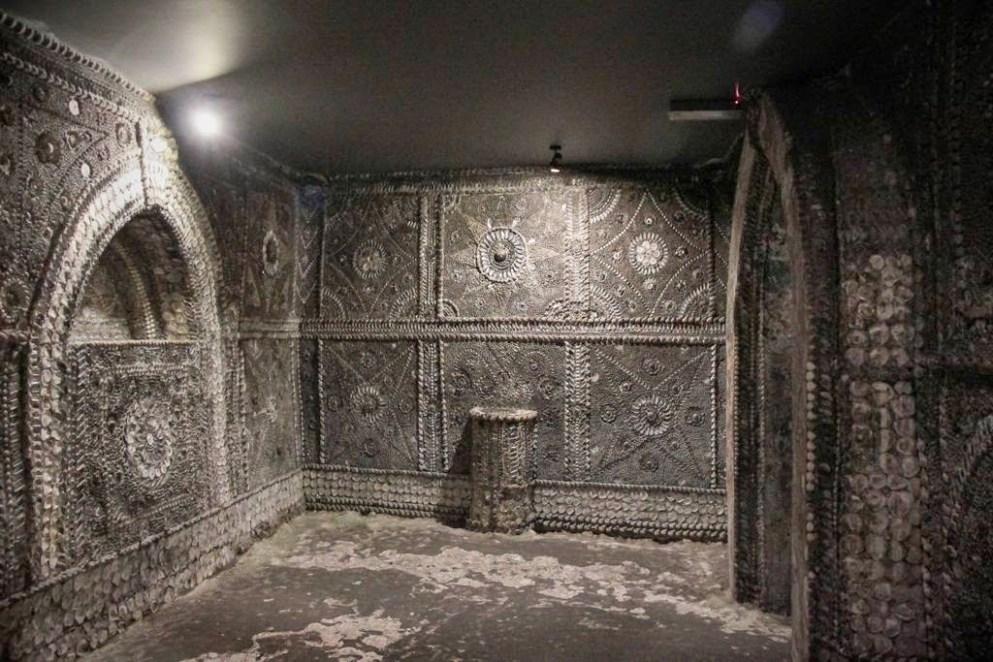
The Mystery of the Margate Shell Grotto….!!!

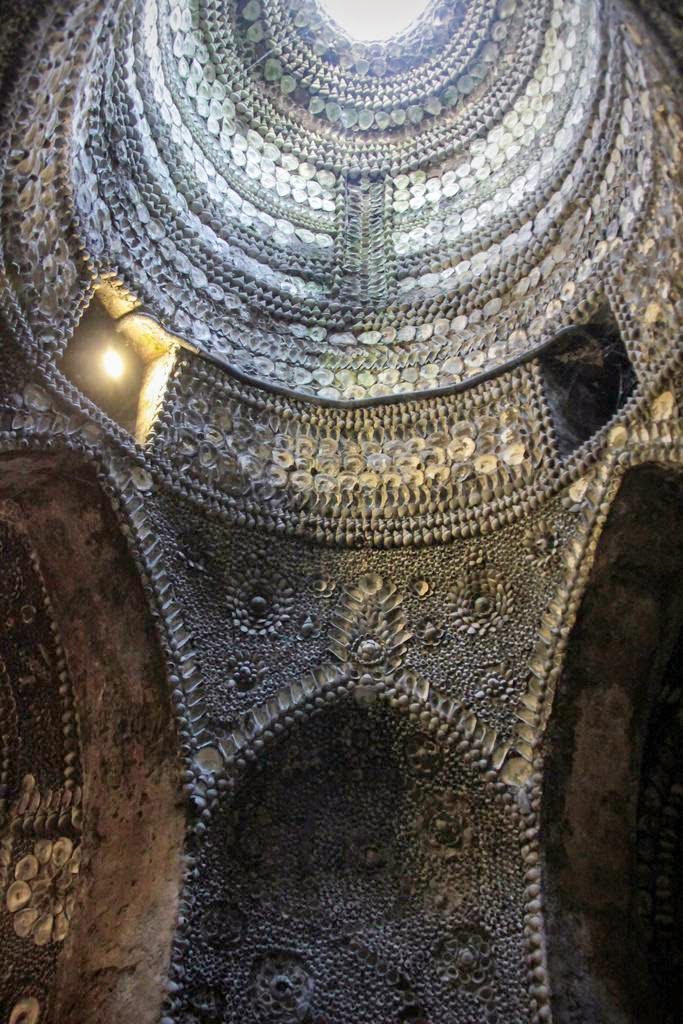
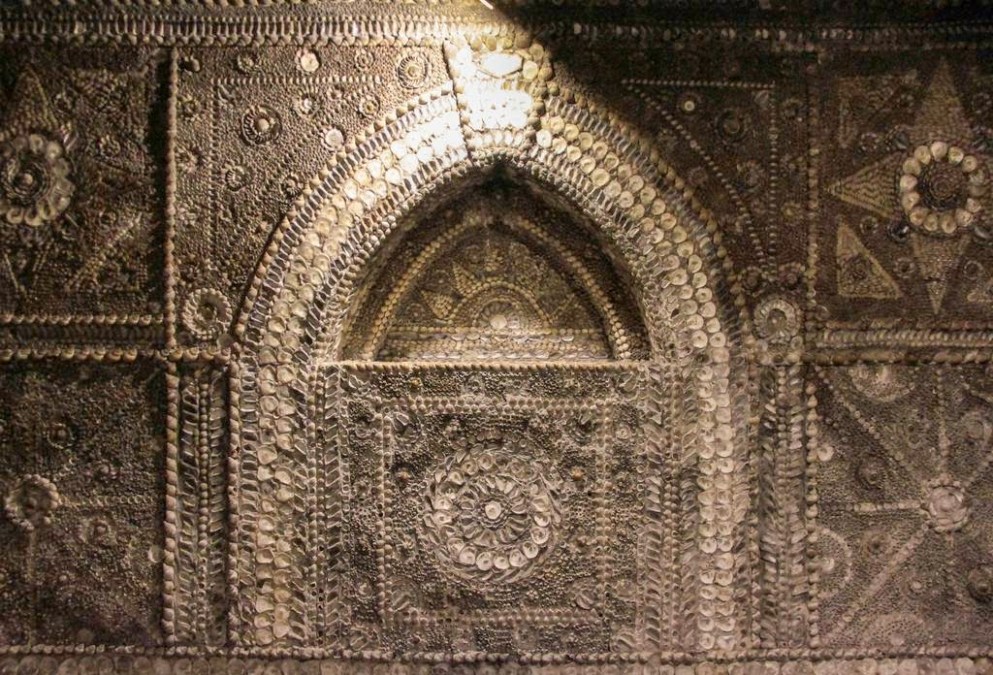
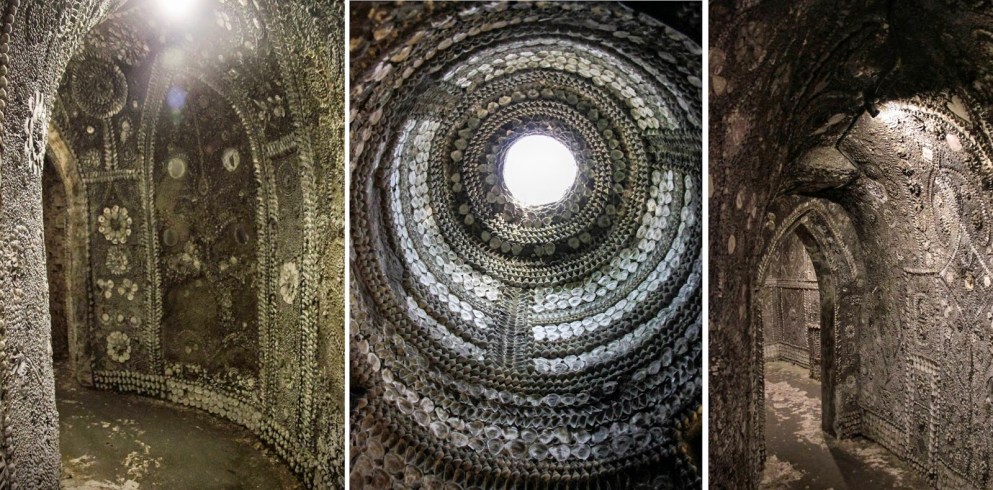
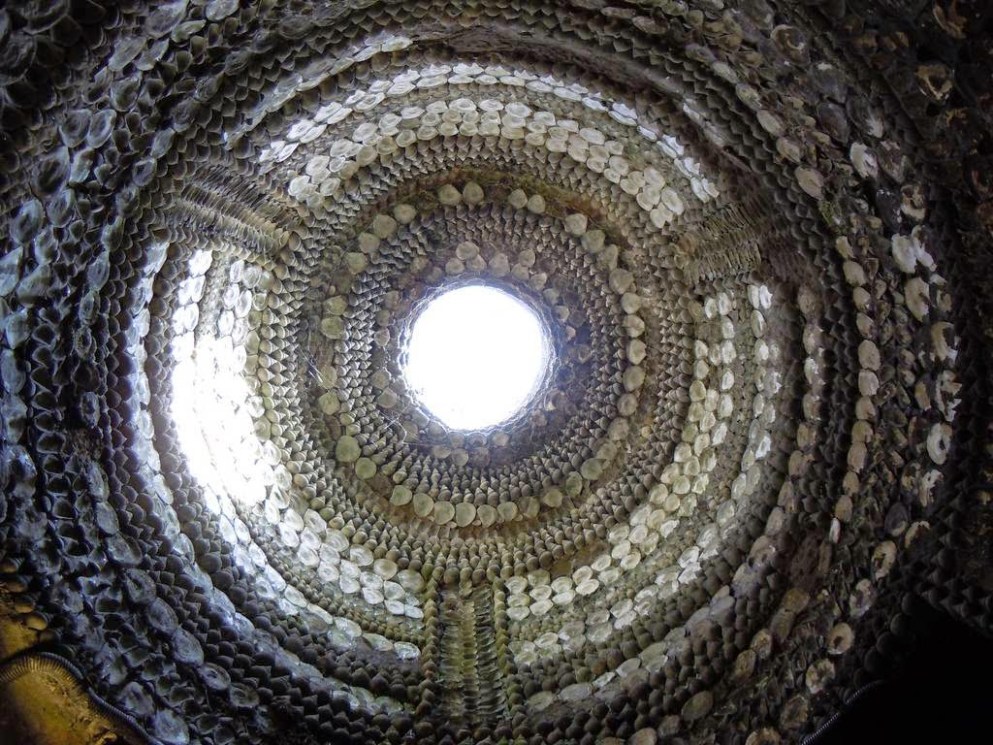
In 1835 a labourer was digging a field just outside the English seaside town of Margate.  His work was interrupted when he thrust his spade in to the soil and it simply vanished in to the ground.  The master of the nearby Dane House School, James Newlove, was made aware of this strange disappearance.  He volunteered his young son, Joshua, for the task of being lowered, candle in hand, in to the void via a length of rope

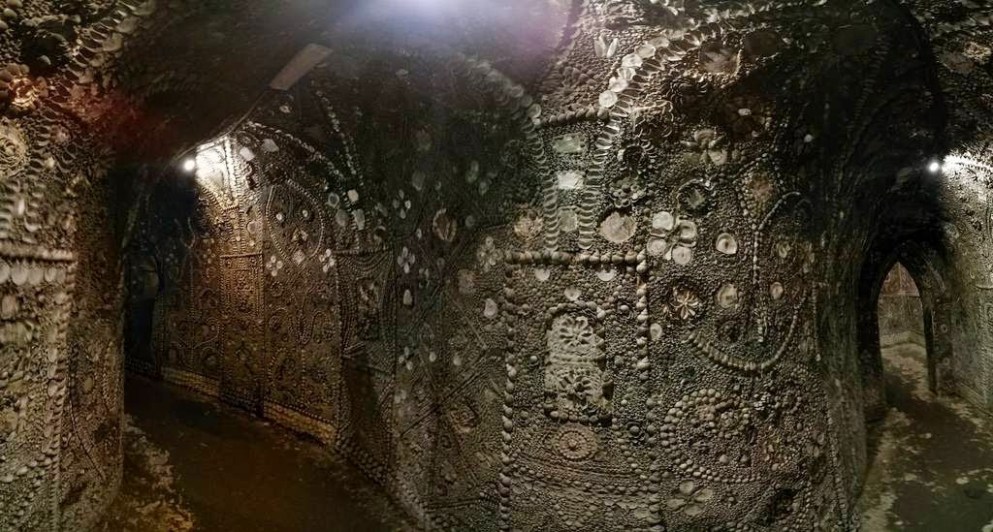
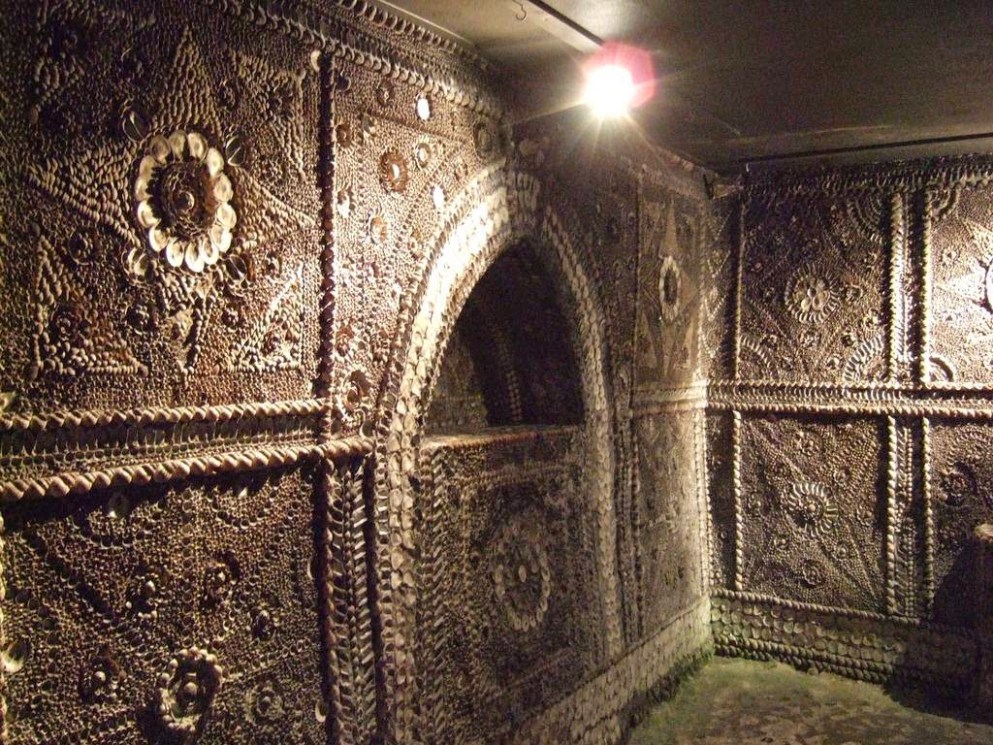
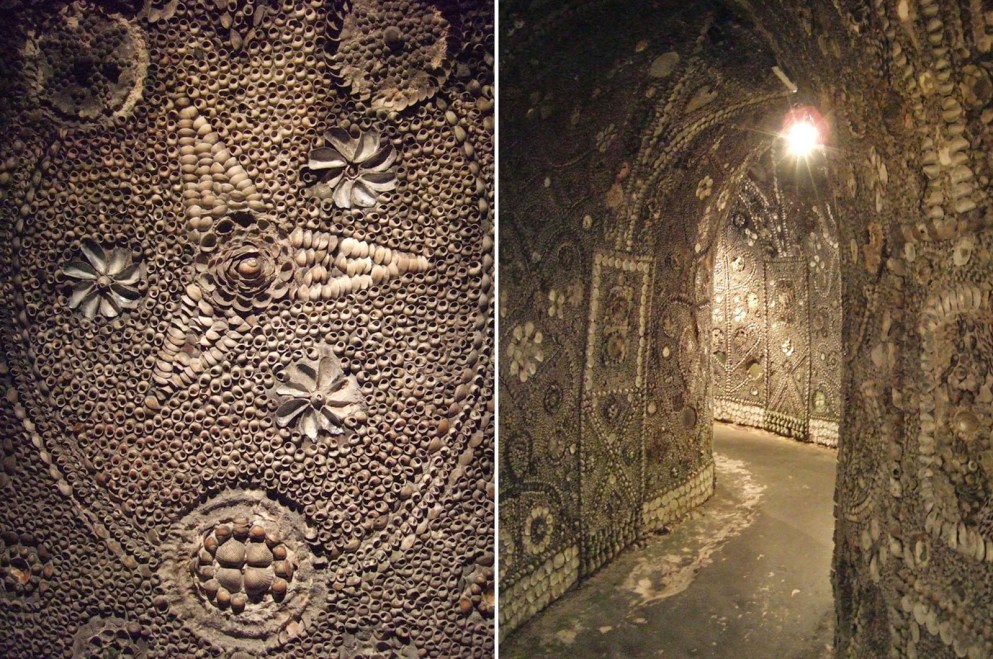
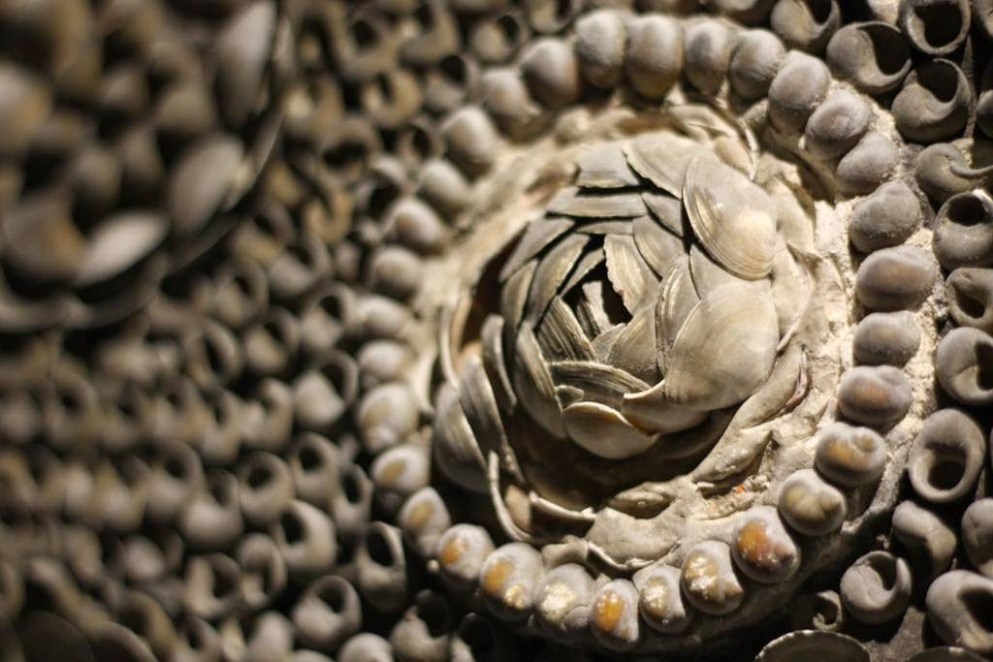
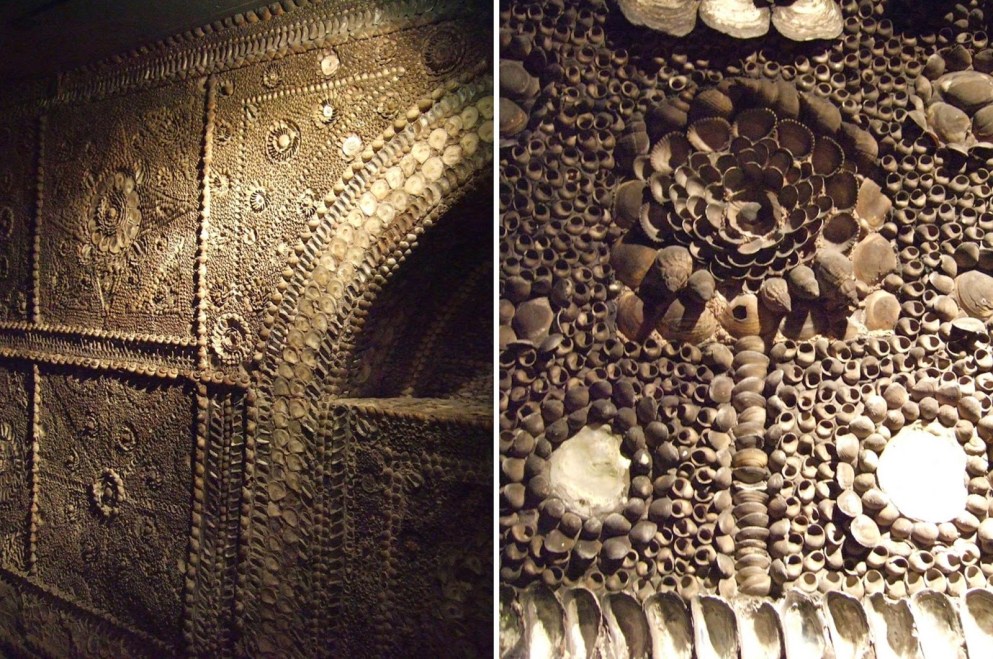
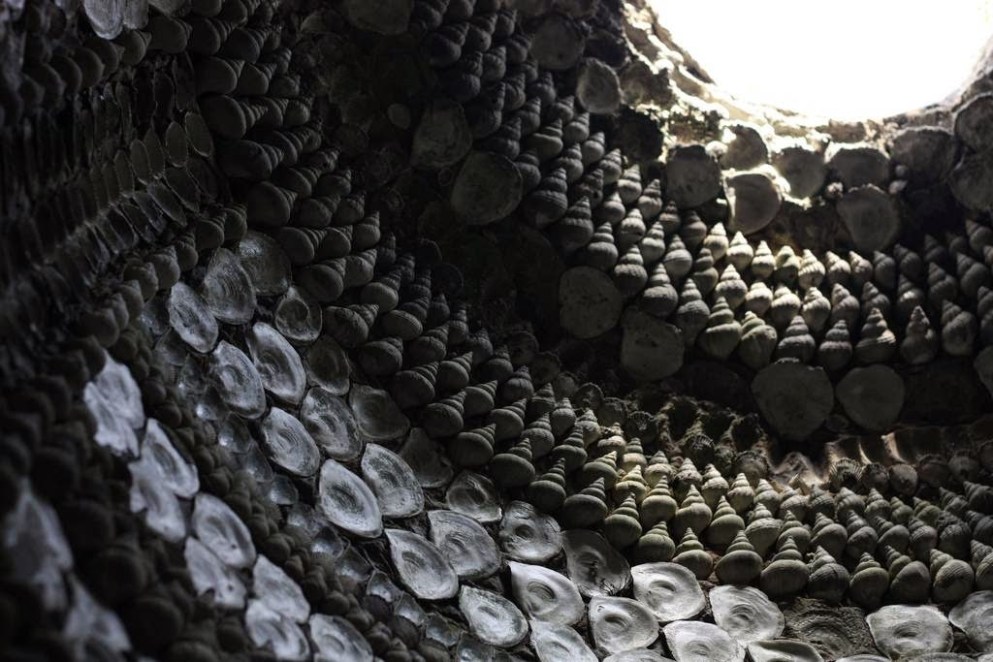
Regardless of our modern sensibilities about the health and safety of children, when Joshua was pulled back to the surface his wide-eyed tale astonished everyone. He told of a magical temple adorned in shells, hundreds, thousands… millions of them.  All told, 4.6 million.

Image Credit DeadManJones

Image Credit Krondol
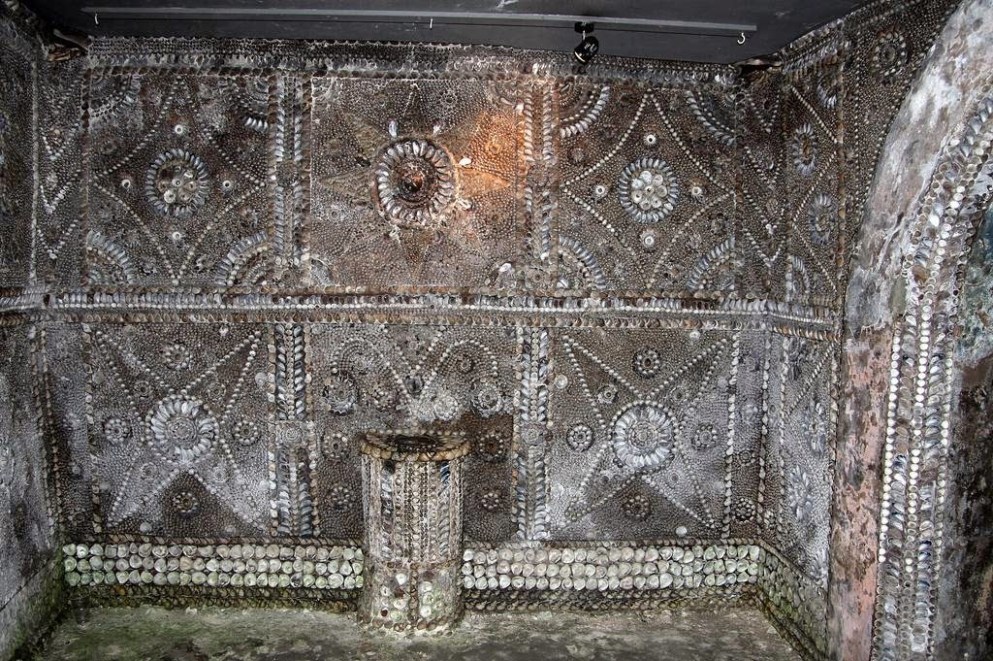
Joshua’s tale was nowhere near as tall as people may have at first imagined.  When the hole was widened enough for adults to enter they too witnessed the wondrous contents of the winding subterranean passageway, complete with an altar chamber and rotunda.  Newlove senior, a canny schoolmaster if ever there was one, was first to consider the financial benefits such a discovery might reap.  He hurriedly purchased the land above the mysterious chamber and began to adapt it so that visitors might enter – for a small charge of course. In 1837, just two years after its discovery, the grotto opened to a curious public.  Yet to this day debate rages (in a very English way, of course, involving polite discussion over tea and cucumber sandwiches) about it origins.

Image Credit Ben Sutherland
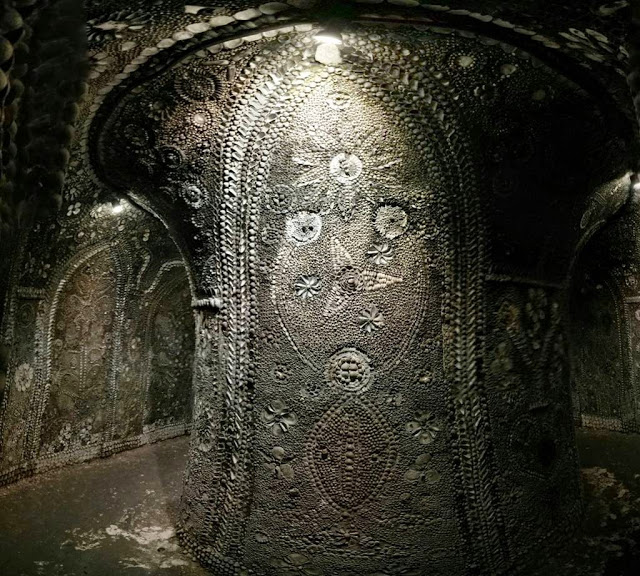
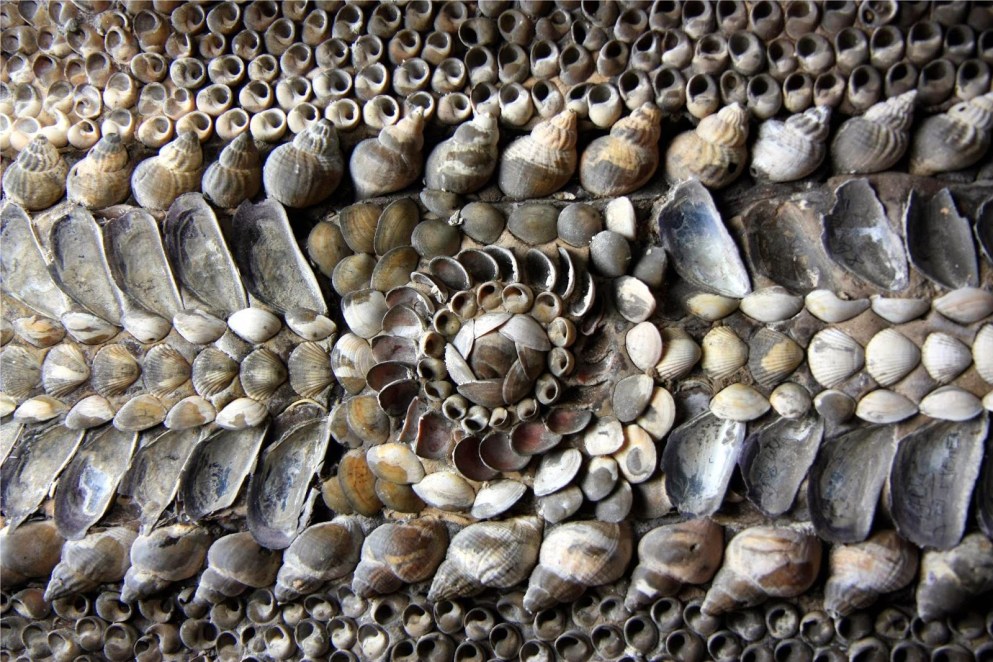
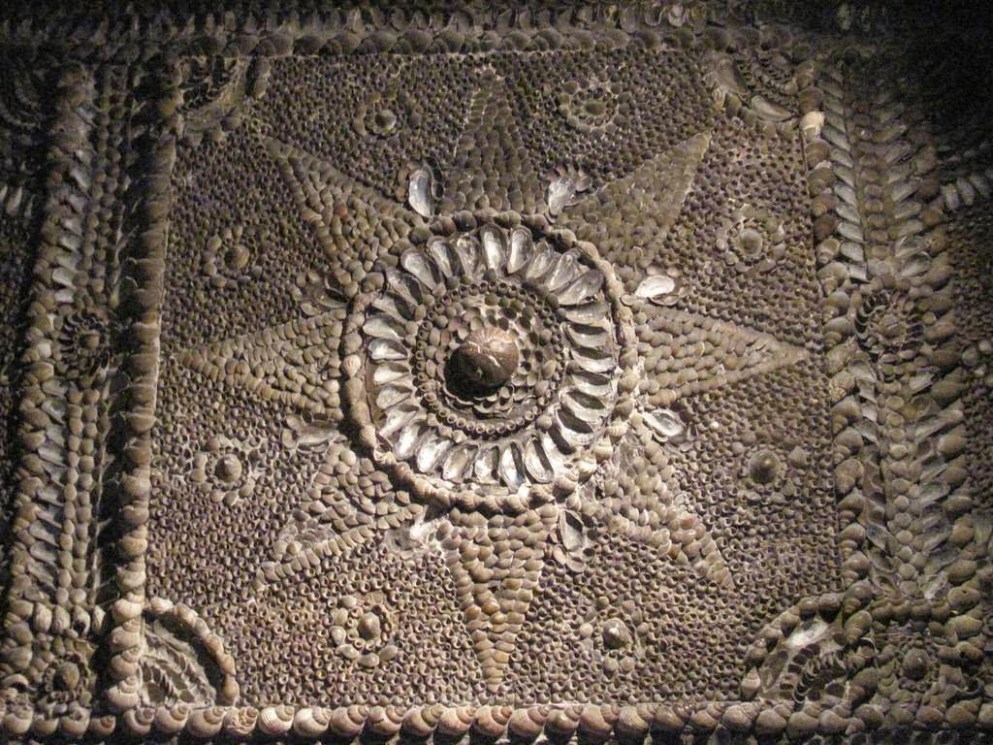
How it came to be originally built remains unexplained.  However, the 2000 square feet of mosaics, created from mussel, cockle, whelk and oyster shells have provoked a multitude of explanations none of which have been confirmed with any total surety.

Image Credut Ben Sutherland
Shell grottoes of this type were extremely popular in the Europe of the 1700s. Many suppose that this was the result of a local bigwig embarking on the Grand Tour and returning with a desire to recreate a highlight of his or her European expedition.  Yet although this is not without the realms of possibility, the land above the grotto never formed part of any large estate, which is where you would expect such an extravagance to be positioned – close enough to the big house to easily chaperone curious guests to its confines. These visitors would be impressed both by the owner’s wealth and aesthetics because, frankly, this kind of thing was built to do both.

Image Credit Kotomi

Image Credit Simon Lee
Moreover, had the grotto been built in the 1700s then there would have been some vestigial local memory (or legend) of its construction.  In order to get millions of shells in to this underground passage many local people would have to have been involved in their transport.  Yet the discovery in 1835 was a surprise to all – no one stepped forward with any explanation.

Image Credit Ben Sutherland
It has been suggested that the grotto was a smuggler’s cave – almost all the shells are British and so it could have been a hideaway made by locals for stolen and contraband goods.  Yet this idea doesn’t hold much water either. Although near to the sea, the waves remain stubbornly a number of miles away and there are no tunnels from coast to ‘cave’. Plus with a distinct lack of an escape route any smuggler would have been mad to hide their booty here – not to mention the fact that they would have had to spend more of their time decorating the place than doing any actual smuggling. So, it’s a no to that theory as well.

Image Credit Krondol

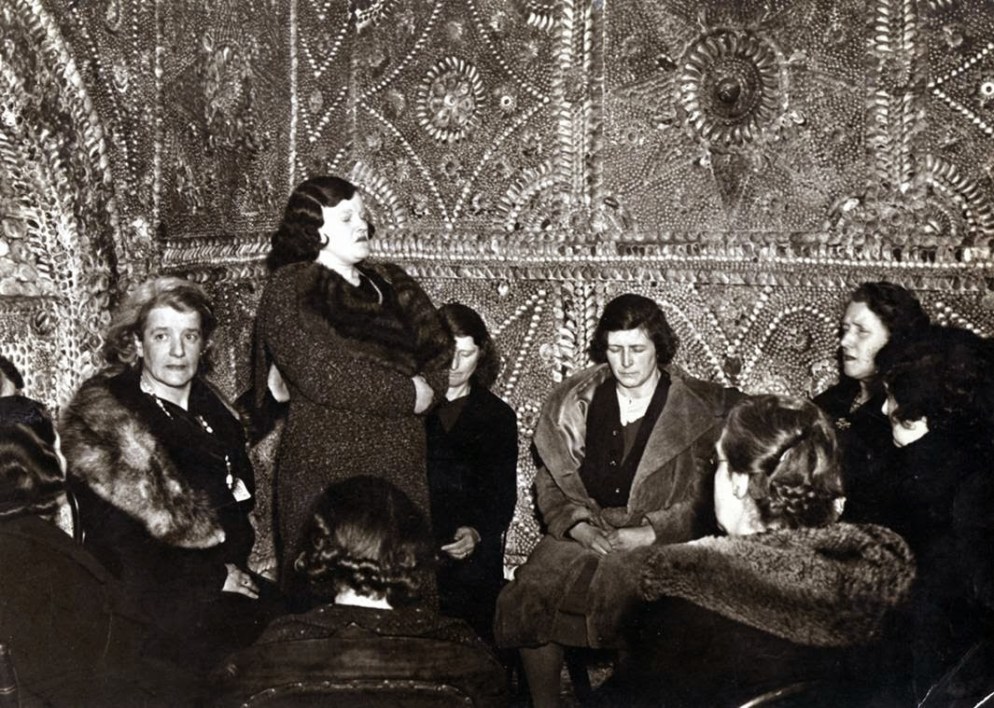
Could it be a Roman temple?  A remnant of dark-age rituals?  A prehistoric astronomical calendar? Make up a theory and it could well be feasible – and many have.  There have even been séances held in the grotto to try and contact the spirits of the builders, such as the one from the 1930s above.

Image Credit John C Bullas

Image Credit Feribrulu
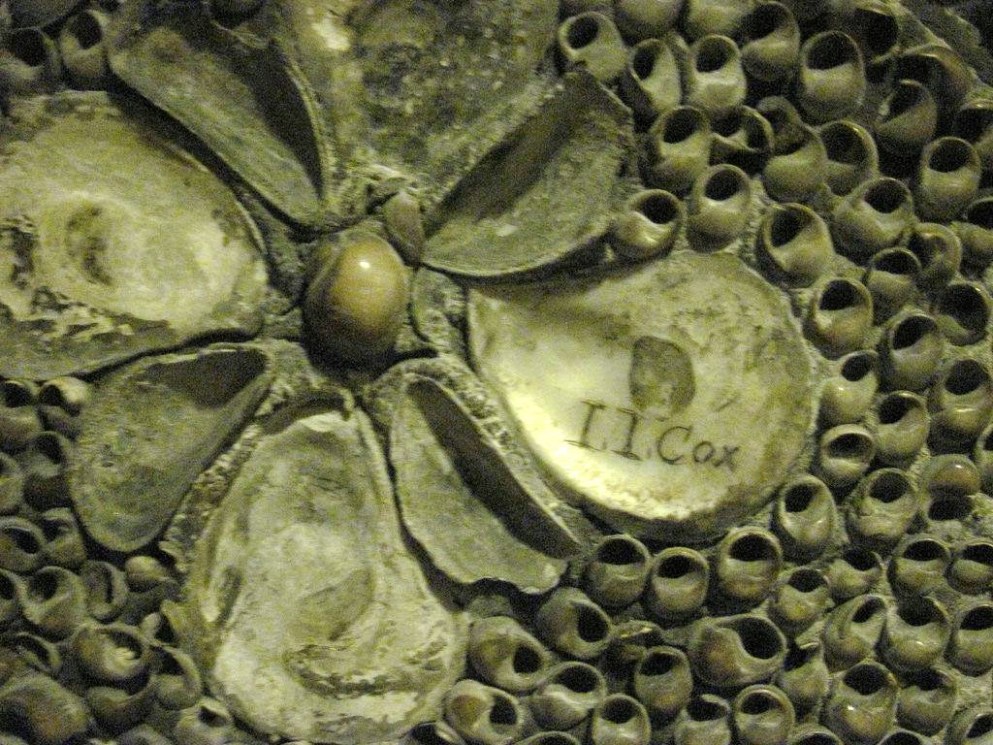
A number of the shells have been vandalised over the years by visitors.  Even though this is difficult to condone it adds an extra layer of history to the place.

Image Credit Kotomi

 
Image Credit Mr Moss
The latest research which took place in 2006 points towards an explanation which might please Indiana Jones fans.  Mick Twyman of the Margate Historical Society put forward the suggestion that the grotto was built by the Knights Templar or their associates sometime in the middle 1100s.  He has suggested this after a painstaking measurement of angles inside the grotto (a temple now, perhaps?) and the way that the sunlight is projected in to the inside of the dome.   The altar chamber certainly looks the part of an early temple for masonic rituals. Yet this kind of theory, unlike its scientific namesake, isn’t proof – just conjecture however sensible and enlightened.

Image Credit Simon Lee
Why not get the shells carbon-dated?  This is certainly a possibility for the current owner (the grotto has always been in private hands although recent restoration work has been done in partnership with English Heritage, the charity that looks after the National Heritage Collection of the country).  However, this has been advised against for a number of reasons.  First and foremost quite a number of shell samples would be needed to ensure that dating caught the earliest shells and not just those used in previous (unknown) restoration work over the centuries.  Secondly it’s expensive and money needs to be more urgently spent on conservation rather than speculative investigation, however scientific and potentially illuminating.

Image Credit Feribrilu

Image Credit Kotomi
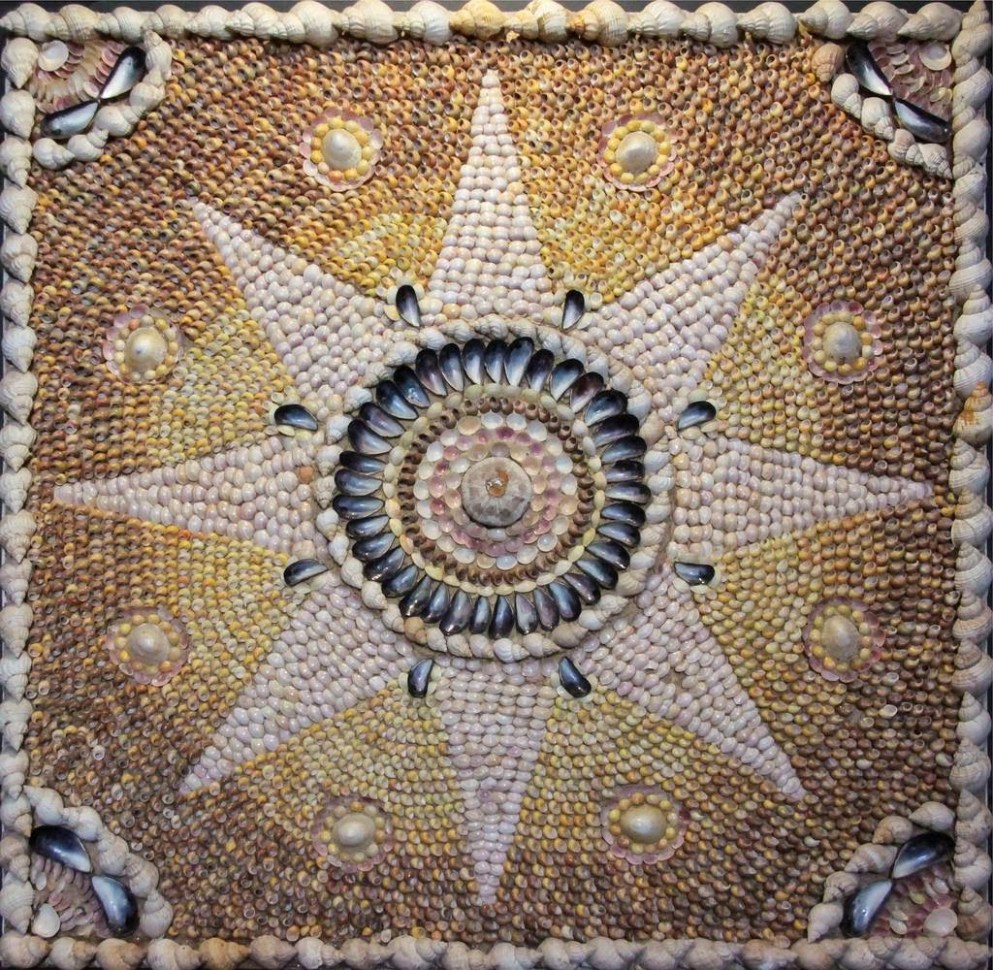
How did the shells look before the decades of gas-lit exhibition and when water damage had not bleached them? A modern recreation of a panel from the grotto shows how it must have dazzled visitors in its heyday.

Image Credit Kotomi
Yet, perhaps it is best to leave well alone in terms of a definitive origin story.  After all, even a secure dating of the oldest shells in the grotto would only establish their age – it would hardly go any further in discovering who built the grotto and why.  Sometimes it’s simply best to allow imagination to flourish and allow visitors to create their own history for this amazing place.

If you want to visit the Margate Shell Grotto, please check out its website for opening times.

Source…….www.kuriositas.com
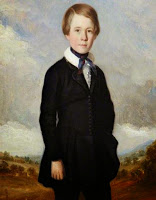
The picture of the c1835 schoolboy is by William McTaggart
First Image Credit DeadManJones


Natarajan
Nature Soundmap: Listen to the Sound of Nature…!!!

You’ll probably agree with me that one of the best ways to experience nature is to be able to listen to its magnificent sounds. There’s something particularly enlivening about being fully aware of the beauty and diversity of our world. Our planet boasts a wealth of inspiring places that give us this perspective, and they are spread all over the globe for us to enjoy. However, if getting to these places poses a challenge to you, there’s another thing you can do to experience them – all you have to do is visit naturesoundmap!
Nature Soundmap is a project funded by Wild Ambience, which has gathered a collection of about 400 high-quality natural soundscapes from all over the world. Over 90 nature sound recordists have visited the locations to make this collection possible, so you can virtually experience their sounds from the website itself. The equipment used for these recordings allows users to enjoy sensational 360-degreesounds of the locations that are so vivid, it will almost feel like you’re actually there.

Nature Soundmap’s website allows you to view an interactive map of the world that displays the particular locations the recordists have visited. By clicking on these locations, you will be able to listen to the corresponding sounds. Listen to anything from a monsoon in Borneo’s tropical forest, to the erupting Piton de le Fournaise volcano in the Indian Ocean, frogs and crickets in the Amazon rainforest at night, kangaroos jumping in Australia, and a Great Blue Turaco singing in Uganda.
The website is incredibly easy to use, and it’s also free (although donations are welcome from those who would like to support the fantastic work put into the project).


Click here to visit Nature Soundmap!

Listen to the Wonderful Sounds of Nature with a Click of a Mouse

Here’s a guide that will help take you through the website’s main features:

  • Visit naturesoundmap
  • You will see a world map on your screen. Click and drag on the map to browse through it. Hover over the different locations marked in green to view more details about the sound subject and the location where it was recorded. By using the scroll button on your mouse, or the +/- buttons at the bottom-left of your screen, you can zoom in and out of the map (zooming in will allow you to see more location names).

Listen to the Wonderful Sounds of Nature with a Click of a Mouse

  • Click on the desired location and a pop-up box will appear on your screen. This includes an image of the environment or animal the website features the sound of, as well as details about the recordist, location, habitat, and a more detailed description of the sound. Click on ‘More info’ / ‘Read more’ to read further about the location or sound (a new tab will be opened). Click on ‘Listen’ in the pop-up box to play the sound. Change to a random sound by clicking on one of the arrows on each side of the pop-up box.
  • A player will appear at the bottom of your screen, displaying what you’re listening to. Click on the “pause” symbol to pause the sound (or re-click on the ‘Listen’ button in the pop-up box). To change sounds, you may click on another location and repeat, or simply click on the “next” symbol in the player to go to another random location.
  • You may even create your own little “playlist” of your favorite natural sounds by clicking on ‘Add to Playlist’ in the pop-up box. This action will send the sound to the player. To expand the player and access your sounds, click on the Playlist button on the right-hand side of the player. From here, you can click and drag to change the order of the sounds, or click on the ‘X’ to remove any of them from your list. Clicking on the Shuffle button, found abovethe Playlist button, will allow you to randomize the order of your sounds. Collapse the player by clicking on the Playlist button again.
  • Share your favorite sounds with your social media friends by clicking on ‘Share on Facebook’ or ‘Share on Twitter’  at the bottom of the player.

For the ultimate listening experience, Nature Soundmap suggests that you use headphones or decent speakers (good quality is recommended) to further the authenticity of your experience. If some sounds are quite loud, turn the volume down to a more reasonable level.

To immerse yourself even further into the experience, just close your eyes, picture your surroundings and take in all the aspects and dimensions of the sounds, including foreground and background noise. It’s a truly remarkable and almost surreal experience that sucks you out of reality for a little while and draws you closer to nature.


Try Nature Soundmap now!

Source…..www.ba-bamail.com

Natarajan