Cordoba is an ancient city in the south of Spain, the capital of Moorish Spain. The city is a virtual maze of winding streets, modern and antique merchandise, dotted by colorful coffee shops, which at night move to the spontaneous beat of flamenco dancing. Here visitors find the ‘Calleja de las Flores’ – the street of flowers!
The city is located on the banks of the Guadalquivir river, and its easy access to the mining resources of the Sierra Morena (coal, lead, zinc) satisfies the population’s needs.
During the 10th century, it was the second richest city in the Muslim empire (after Bagdad), to which learned men from all Europe came to study during the 11th and 12th centuries
The city eventually declined, especially during Renaissance times. In the 18th century it was reduced to just 20,000 inhabitants. The population and economy started to increase only in the early 20th century.
With a few clicks on a key board and a swipe of the mouse, we have access to an unprecedented amount of information the likes of which man has never seen before.
But if you have a slow internet connection speed then waiting for that page to load, that video to buffer, or that file to download can feel like an eternity.
Akamai Technologies, a cloud services provider, made a list of the fastest internet connection speeds in the world that shows where the luckiest netizens reside.
Each of these countries is ranked by the average speed of their broadband internet connection in mega bits per second (Mbps), and they are all faster than the United States, which ranks 17th in the world in internet connection speed on the list.
#10 Finland
Average Mbps: 12.1. Internet speeds have increased 33% over the last year.
#9 Czech Republic
Average Mbps: 12.3. Internet speeds have increased 8.4% over the last year.
#8 Ireland
Average Mbps: 12.3. Internet speeds have increased 8.4% over the last year.
#7 Latvia
Average Mbps: 13. Internet speeds have increased 25% over the last year.
#6 The Netherlands
Average Mbps: 14.2. Internet speeds have increased 15% over the last year.
#5 Switzerland
Average Mbps: 14.5. Internet speeds have increased 21% over the last year.
#4 Sweden
Average Mbps: 14.6. Internet speeds have increased 34% over the last year.
#3 Japan
Average Mbps: 15.2. Internet speeds have increased 16% over the last year.
#2 Hong Kong
Average Mbps: 16.8. Internet speeds have increased 37% over the last year.
#1 South Korea
Average Mbps: 22.2. Internet speeds have increased 1.6% over the last year.
A woman is dancing happily down the railroad tracks, singing to herself “…21 …21 …21…”
After a little while, an Antartian walks up to her. She observes for a minute and then asks, “What are you doing?”
The woman does not answer and keeps singing “…21 …21 …21 …” So the Antartian jumps on the tracks and follows her dancing and starts singing “…21 …21 …21 …” A little later a train comes down the tracks. The woman jumps off, but the Antartian keeps dancing and singing to her self and gets hit by the train.
The woman gets back on the track and starts dancing and singing again, “…22 …22 …22 …”
…………………..
A man goes to the doctors and asks why he’s been feeling ill. The doctor examines him and replies “I’m sorry to tell you, you’ve got the disease known as Yellow 24.” “What’s that?” the man asks. “It means your internal organs have started turning yellow – you’ve got 24 hours to live”.
The man goes home and tells his wife the bad news. His wife says “Well, will you come to bingo with me tonight then? Otherwise you’ll never be able to.” The man agrees so he and his wife go to the bingo. He finds that he’s won the one-line and £10. He begins to think this isn’t such a bad day after all. Twenty minutes later, he’s won the full house and £150. He enters the lucky draw, worth £500, and wins that too. The bingo caller calls him up on stage.
He says “I don’t believe it, mate. You’ve won three competitions in a total of £660 in one night. You must be the luckiest man on the earth!”
The man says “Well, no, I’m not. I’ve got Yellow 24.”
The bingo caller looks down at the piece of paper he’s holding and starts clapping. “I don’t believe it; he’s won the raffle as well!”
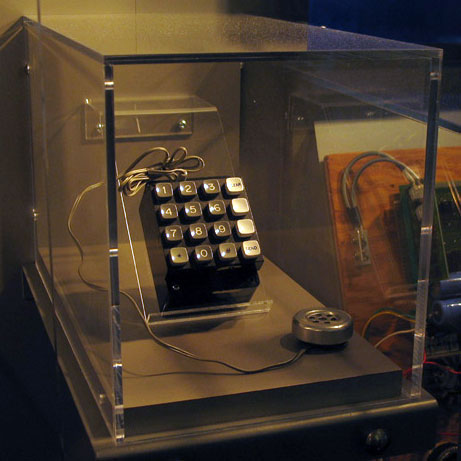
Today I found out Steve Jobs’ first business was selling “blue boxes” that allowed users to get free phone service illegally.
These boxes were designed in 1972 by Jobs’ close friend and future co-founder of Apple, Steve Wozniak. The idea to sell them was supposedly Jobs’. The two learned about blue boxes from famed “phreaker” (phone freak/hacker) John “Cap’n Crunch” Draper. (This nickname was alluding to a whistle given away in the 1960s in Cap’n Crunch cereal which produced the perfect tone, 2600 Hz, to allow a person to enter operator mode on AT&T’s phone system. Draper later briefly worked at Apple, even while serving a five year jail sentence for his phreaking escapades.)
The blue box worked by producing certain tones that were used in the telephone system to switch long distance calls. Once you made a long distance call, you could use the box to enter operator mode, then use it to route your call as you wanted and to wherever you wanted, all for free and extremely difficult to trace, making blue boxes a popular item amongst various criminal elements.
As Jobs explained, you could use the device to call “from a payphone and go to White Plains, New York, take a satellite to Europe, take a cable to Turkey, come back to L.A…. You can go around the world 3 or 4 times and call the payphone next door and shout in the phone and it would be about 30 seconds and it would come out the other phone.” (This was something John Draper used to demonstrate to people at parties using one of his own blue boxes.)
Jobs and Wozniak became intrigued with the idea of trying to make one of these boxes. As Jobs explained in a 1995 interview,
We were so fascinated by them (blue boxes) that Woz and I figured out how to build one. We built the best one in the world; the first digital blue box in the world. We would give them to our friends and use them ourselves. And you know, you rapidly run out of people you want to call. But it was the magic that two teenagers could build this box for $100 worth of parts and control 100’s of billions of dollars of infrastructure in the entire telephone network in the whole world…
Experiences like that taught us the power of ideas. The power of understanding that if you could build this box, you could control 100’s of billions of dollars around the world, that’s a powerful thing. If we wouldn’t have made blue boxes, there would have been no Apple.
The two stopped making the boxes after they were nearly caught by the police. Despite giving up on the venture, they reportedly made about $6000 selling the blue boxes and Wozniak claims he once was able to prank call the Pope, posing as Henry Kissinger. The Pope unfortunately was sleeping at the time, so he wasn’t able to talk to him directly. Draper claims he once successfully prank called President Nixon using his own blue box.
Since the mid-1990s, blue boxes no longer work in most countries as phone systems throughout the world have been revamped using a digital system and no longer use the in-band signaling that the blue box exploited. Specifically, the new system separates the voice and signaling channels.
Bonus Steve Jobs Facts:
Steve’s biological parents, Abdulfattah Jandali and Joanne Carole Schieble, met at the University of Wisconsin where Jandali was a professor of political science and Schieble his student. They gave Jobs up for adoption to Paul and Clara Jobs when he was born, supposedly because his biological mother’s family didn’t approve of his biological father. Despite this, in December of 1955, just 10 months after giving Jobs up for adoption, the two got married and had another child, present day bestselling author and professor of English and Literature Mona Simpson (best known for her book Anywhere But Here, which was subsequently made into a movie starring Natalie Portman and Susan Saranden). Jobs didn’t know he had a sister until 1985 when he was 30 years old and contacted his biological mother for the first time. Jobs and Mona became fast friends and remained extremely close throughout his life.
When Mona Simpson first learned she had a wealthy brother, she didn’t know who it was. A lawyer had called her representing Jobs. In her own words, “I lived in New York, where I was trying to write my first novel. I had a job at a small magazine in an office the size of a closet, with three other aspiring writers. When one day a lawyer called me — me, the middle-class girl from California who hassled the boss to buy us health insurance — and said his client was rich and famous and was my long-lost brother, the young editors went wild. This was 1985 and we worked at a cutting-edge literary magazine, but I’d fallen into the plot of a Dickens novel and really, we all loved those best. The lawyer refused to tell me my brother’s name and my colleagues started a betting pool. The leading candidate: John Travolta. I secretly hoped for a literary descendant of Henry James — someone more talented than I, someone brilliant without even trying. When I met Steve, he was a guy my age in jeans, Arab- or Jewish-looking and handsomer than Omar Sharif. We took a long walk — something, it happened, that we both liked to do. I don’t remember much of what we said that first day, only that he felt like someone I’d pick to be a friend. He explained that he worked in computers. I didn’t know much about computers. I still worked on a manual Olivetti typewriter. I told Steve I’d recently considered my first purchase of a computer: something called the Cromemco. Steve told me it was a good thing I’d waited. He said he was making something that was going to be insanely beautiful.”
Before Jobs’ biological father knew he was the father of Steve Jobs, he managed a Mediterranean restaurant in Silicon Valley Jobs used to frequent. When Jobs’ sister, Mona Simpson, first met her father as an adult (her father and mother had divorced in 1962 when she was just 5 years old and her father did not keep in touch) , he actually mentioned that he had once managed a restaurant frequented by such people as “Steve Jobs… yeah, he was a great tipper.” He didn’t know when he was saying this that Jobs was his son and at that point, Mona chose not to tell him.
Jobs stated the reason he didn’t want his father knowing about him was, “When I was looking for my biological mother, obviously, you know, I was looking for my biological father at the same time, and I learned a little bit about him and I didn’t like what I learned. I asked her to not tell him that we ever met… not to tell him anything about me.”
Mona Simpson has the distinction of having a Simpson’s character named after her, Homer Simpson’s mother. Mona for a time was married to writer and producer Richard Appel, who named the character after her. Before this, Home Simpson’s mother was simply called “Mother Simpson”.
Despite officially dropping out of college after just 6 months, Jobs still attended classes for another 18 months on a variety of subjects, living in friend’s dorm rooms and earning money by collecting soda bottles to turn in for money for food. (True Story: I did this too as a kid… good times! Seriously though, they are kind of fun memories, oddly enough.)
When Jobs briefly worked for Atari, he was given the task of trying to reduce the number of chips in the arcade game Breakout as much as possible. The task was a bit over his head, but as he’d done before and would go on to do throughout his life, he demonstrated great business savvy and ability to exploit
other people for his own gain by giving the job to his much more technically skilled friend, Wozniak. He offered Wozniak 50% of his earnings from Atari for taking the job. Wozniak then did it, reducing the number of chips by an astounding 50, meaning the total earnings for the job were $5000 ($100 per chip removed was Atari’s offer). They then paid Jobs the agreed upon $5000. Jobs proceeded to give Wozniak $350, stating that Atari had decided to only pay Jobs $700 for the job. Ten years later, when Wozniak learned of this, he wasn’t upset, but said even if Jobs had told him at the time, he’d have been happy to have given Jobs the lion’s share of the earnings even though Woz did all the work, as he knew Jobs needed money at that time and he was a friend. This would set a trend in their relationship, though, Woz doing the work and Jobs taking the credit and the lion’s share of the money. As Wozniak said, “Steve didn’t ever code. He wasn’t an engineer and he didn’t do any original design…” Another friend of Jobs’, Daniel Kottke, said, “Between Woz and Jobs, Woz was the innovator, the inventor. Steve Jobs was the marketing person.” But, to be fair, Jobs was one hell of a marketer and without him, Woz probably would have just had a nice career working at HP his whole life. Jobs even had to work at prying Woz away from HP even as their company grew, simply because Woz loved working there.
Despite mostly just taking other people’s ideas and sometimes tweaking, but mostly doing an amazing job at marketing them, Jobs held 342 patents in the United States at the time of his death, usually listed as a co-inventor with the actual inventor. This is something we might call the “Thomas Edison” model.
Despite Jobs to a certain extent himself being rejected by his biological parents, he did the same thing for a time to his first child, Lisa Brennan-Jobs. She was born in 1978 to Chris Ann Brennan, an ex-girlfriend of Jobs’, who got pregnant with Lisa when Jobs was dating someone else. Brennan told Jobs
Lisa was his, but he refused to acknowledge his daughter, even while Brennan and his daughter were living on Welfare. By the time Lisa was 9, though, Jobs had decided to be her father and from that point on, the two were extremely close. He had three more children, Reed, Erin, and Eve, after marrying Laurene Powell in 1991.
Even though he denied that he was the father of Lisa Brennan for a long time, Jobs named the “next generation” computer system he was working on at Apple at the time, “Lisa”. This later became the Apple project the graphical user interface Jobs “borrowed” from Xerox was developed under. Jobs had this type of interface demonstrated to him after being given a tour of Xerox’s Palo Alto facility. It was a system Xerox didn’t think would be popular or practical, but later gave rise to the Apple graphical user interface and Microsoft Windows’ interface.
For a while there, Jobs got away with not having a license plate for his car, a Mercedes-Benz SL 55 AMG. In California, you’re allowed to not have a license plate for up to 6 months after you purchase a car. Thus, every six months, he simply leased a new SL 55. He started doing this in 2007.
According to Mona Simpson, after Jobs’ liver transplant, Jobs went through 67 nurses before finally finding three he liked and who subsequently were his nurses up to the point he died.
Steve Jobs’ teacher in the 4th grade had to resort to bribing him to get him to pay attention and do his homework, giving him candy and money out of her own pocket. He soon became one of the top students in the class, as you might expect.
Once he got to middle school at the age of 11, Jobs told his parents, due to bullying, if they didn’t take him to a different school, he would drop out. They agreed and moved to Los Altos, which proved to be huge for Jobs’ future, as without this move, he may well have never met Steve Wozniak.
Jobs and Wozniak made their first sale after starting Apple Computers to the owner of a computer store called Byte Shop, Paul Terrel. He ordered 50 computers, priced at $500 each. The computers built to fulfill that order were built in Jobs’ parent’s garage by Jobs, Wozniak, Steve’s sister Patti, and a friend Dan Kottke, with Apple paying Patti and Kottke $1 per board they put together.
The retail price for that same computer was set at $666.66 by Jobs and Wozniak, giving them a 33% profit margin.
Contrary to popular belief, and even what Jobs himself often said, he was never technically fired from Apple. After the brouhaha between Jobs and John Sculley reached its zenith, Jobs was dismissed by the board, but was still the chairman of the board, just not required, and indeed encouraged, not to come to meetings or show up at work at all. Jobs said about this, “At 30, I was out. And very publicly out. What had been the focus of my entire adult life was gone, and it was devastating. I really didn’t know what to do for a few months. I felt that I had let the previous generation of entrepreneurs down — that I had dropped the baton as it was being passed to me. I met with David Packard and Bob Noyce and tried to apologize for screwing up so badly. I was a very public failure, and I even thought about running away
from the Valley.” Jobs then got the idea to try to make high end computers for researchers and universities and came back to Apple to pitch the idea to the board, via starting a new company that Apple would invest in. The board was initially receptive to the idea, until Steve told them who he wanted from Apple for the new company, basically many of the best at Apple. Thus, they rejected his idea, at which point Jobs resigned and sold nearly all his stock in Apple. Again, he resigned, he was not fired.
NeXT in a lot of ways was a spectacular failure, but in other ways was a spectacular success that made Jobs a lot of money and provided the way for him to get back in with Apple via the NeXT operating system. Because of Apple’s need for such an OS, Apple purchased NeXT for nearly half a billion dollars, more than double the asking price before Jobs pitched it to them (again, he was a brilliant marketer).
Directly after founding NeXT with five other people from Apple, Apple sued NeXT, as the six were intimately aware of all of Apple’s projects and designs, having come up with many of them themselves. Further, they were using this knowledge to design the NeXT system. Because of this, NeXT produced nothing the first year, not even schematics, as they didn’t want to risk losing whatever they’d develop to Apple if they lost the lawsuit. Atari had something similar happen to them in their early days where every employee basically took a year off after a settlement over Pong with Magnavox that gave Magnavox rights to everything Atari produced for the following calendar year after the settlement. More on that here: The Development of Pong
A NeXT computer served as the first World Wide Web server when Tim Berners-Lee was developing the web. More on this here: The First Website
Despite having no product whatsoever other than selling a t-shirt with the company’s logo, and blowing through mountains of money while spinning their wheels, Jobs managed to get Ross Perot to invest $20M in NeXT in exchange for just a 16% share of the company, making the company valued at $125M. This quite possibly was the most expensive start-up t-shirt company in the history of the world, also demonstrating once again how good Jobs was at marketing.
At the same time NeXT was failing spectacularly, Jobs’ other company, Pixar, was doing the same. As mentioned in the above video, Pixar had actually started out as a hardware company, selling high end graphics computers, the Pixar Image Computer (PIC), which sold initially for $125,000 per computer, with later editions, the PIC II, selling for $29,500. This endeavor failed, as did many other ventures they tried, such as creating a universal rendering programing language and software package, RenderMan. After Jobs purchased Pixar from George Lucas and the numerous failures that followed, he eventually decided to shut the company down, but continued to be talked out of it by John Lasseter, with Lasseter convincing Jobs that the company could survive doing TV commercials and the like, with the commercials and video shorts being used as a platform to sell the PIC computers. This provided a stay of execution, but even after producing award winning shorts, sales of the PIC computers were still extremely low and Jobs shut down the hardware division of Pixar. Even then, the company lost $8 million dollars in 1990, at which point Jobs fired half the staff and took back all the stock shares that had been given to the employees by shutting the company down and starting a new company with the same name and remaining staff. At this point, Jobs had lost about $50 million on Pixar. Pixar’s fortunes changed thanks to John Lasseter, his team, and their development of the script for Toy Story, which was initially rejected, but after significant modifications, accepted by Disney’s Jeffrey Katzenberg.
Before Katzenberg accepted the script for Toy Story, Jobs had been very close to a deal to sell Pixar to Microsoft.
Steve Jobs was listed as an executive producer of Toy Story, the movie that finally made Pixar a viable company and allowed Steve Jobs to once again own a profitable business, unlike what Pixar had been and what NeXT was up to that point, both money-sinks.
Thanks to Toy Story, when Steve Jobs took Pixar public, it became the biggest initial public offering in 1995, even bigger than Netscape. As the sole owner of Pixar, as he’d taken all his employees shares, Jobs was now for the first time a billionaire, with a net worth of about $1.5 billion.
Mona Simpson states that Steve Jobs’ last words, after looking at his sister, his wife of 20 years, and then his children, then staring off into space, were “Oh wow. Oh wow. Oh wow.” At which point he fell asleep and died shortly thereafter.
On May 13, 1992, following the successful capture of the Intelsat VI satellite, three astronauts continue moving the 4.5 ton communications satellite into the space shuttle Endeavour’s cargo bay. A fellow crew member recorded this 70mm still frame from inside Endeavour’s cabin. Left to right, astronauts Richard J. Hieb, Thomas D. Akers and Pierre J. Thuot, cooperate on the effort to attach a specially designed grapple bar underneath the satellite. Thuot stands on the end of the Remote Manipulator System’s (RMS) arm while Hieb and Akers are on Portable Foot Restraints (PFR) affixed to Endeavour’s portside and the Multipurpose Support Structure (MPESS), respectively. The sections of Earth which form the backdrop for the scene are blanketed with thousands of square miles of clouds.
The Intelsat satellite, stranded in an unusable orbit since its launch aboard a Titan vehicle in March 1990, was equipped with a new perigee kick motor. The satellite was subsequently released into orbit and the new motor fired to put the spacecraft into a geosynchronous orbit for operational use. The capture required three spacewalks: a planned one by astronaut Pierre J. Thuot and Richard J. Hieb who were unable to attach a capture bar to the satellite from a position on the RMS; a second unscheduled but identical attempt the following day; and finally an unscheduled but successful hand capture by Pierre J. Thuot and fellow crewmen Richard J. Hieb and Thomas D. Akers as Commander Daniel C. Brandenstein delicately maneuvered the orbiter to within a few feet of the 4.5 ton communications satellite.
The STS-49 mission, the first flight of shuttle Endeavour, set records for the first (and only, to date) spacewalk involving three astronauts; first shuttle mission to feature four spacewalks; first shuttle mission requiring three rendezvous with an orbiting spacecraft; first attachment of a live rocket motor to an orbiting satellite and first use of a drag chute during a shuttle landing.
Even in bright moonlight, astrophotographer Justin Ng captures amazing shots of the Milky Way. Here’s one from May 6, during the peak of a meteor shower.
Justin Ng wrote to EarthSky, with this photo attached. He captured it on May 6, 2015 at 5:30 a.m. local time in East Java, Indonesia. He wrote:
Just led my first full moon astrophotography expedition to Mount Bromo, one of the active volcanoes in Indonesia. It would have been easier to unveil the Milky Way against the bright moon on our first night there, but the sky was cloudy and we could only do this on our last night, which was more challenging as the bright moon was located nearer to the Milky Way’s galactic center.
The moon and Saturn made a close approach on May 6, passing just within 2° of each other, at around 35° above horizon at 5.30am (GMT +7). It was a cold night, and alsowhen the Eta Aquarid meteor shower peaked. The large and bright waning gibbous moon, with its illumination at 97%, managed to obscure both the Eta Aquarid meteor shower and the spectacular Milky Way. Although I was able to see a few faint Eta Aquarid meteors on that night, I was unable to see the Milky Way with my unaided eye because the bright moon was so close!
Nonetheless, using the method that I have shared in this tutorial, I managed to unveil the Milky Way that’s obscured by the moon.
So it’s still possible to unveil the Milky Way against a large and bright moon! Give it a try.
Justin pointed out that the circular feature in the photo – on the lower left side – was not a real object in the sky over Mount Bromo. It’s an internal reflection from his camera, known as a lens flare, often seen (although usually not so beautifully!) in photos of bright objects like the sun and moon.
Thank you, Justin!
Bottom line: Milky Way in bright moonlight, by Justin Ng of Singapore.
… she’s going to want to take pictures. An octopus at a New Zealand aquarium trains a camera on visiting tourists.
Meet the world’s first octographer. An animal behavior expert at Kelly Tarlton’s Sea Life Aquarium in Auckland City, New Zealand trained an octopus named Rambo to take photos using a Sony Cyber-shot TX30 camera. Octopuses are super intelligent and Rambo learned quickly. Mark Vette is Rambo’s trainer. He said:
When we first tried to get her to take a photo, it only took three attempts for her to understand the process. That’s faster than a dog. Actually it’s faster than a human in some instances.
Rambo charges $2 to take your picture. The small donation goes directly to the aquarium to help offset expenses.
Here’s a sea fog, called a haar in Scotland. They occur on the east coast of England or Scotland in spring and summer, when warm air passes over the North Sea.
Will Keogh wrote:
Sea haar and clouds meet in perfect harmony. Pic taken from Lyle Hill, Greenock towards Gourock in Scotland. The haar occurs when warm air condenses over the cold river creating a fog.
The ‘haar’ is also known as a ‘sea fret.’ It typically lies at a uniform height above the waterline but it is a moving entity, i.e. by the wind.
However, when the haar collides with, for example, a hillside, the haar is displaced from the horizontal.
Thank you, Will Keogh!
BBC meteorologist Gail Pirie agrees that a fret, haar and sea fog are all the same thing. She says these fogs typically occur between April and September, when warm air passes over the North Sea:
The variation in name simply arises from the locale in which you happen to find yourself when the fog rolls in off the sea. On the east coast of Scotland sea fog is known locally as haar or North Sea Haar, and it is often said to plague local residents during the summer. Likewise, it’s English counterpart – Fret or Sea Fret can make summer days on the East coast of England miserable.
Bottom line: These sorts of sea fogs are called haars on the east coast of Scotland and frets on the east coast of England. They’re usually flat, but this photo by Will Keogh shows a haar that’s been pushed horizontally after colliding with a hillside, so that it rises up toward clouds above.
Queenstown Airport in New Zealand was voted the world’s number one.Source: Getty Images
SOMETIMES flying into a destination can be just as spectacular as when on the ground.
sometimes what a pilot sees in a day, people won’t see in their lifetimes..
amazing Queenstown, New Zealand.
I invite people of the world to come visit this beautiful country and its people.
Every year PrivateFly.com asks travellers around the world to vote for their favourite airport landings before a panel of judges picks the best 10.
Of the 147 airports that received nominations this year, these were voted the Top 10 Most Stunning Airport Approaches for 2015.
1. Queenstown, New Zealand
Flying into Queenstown airport was considered the most spectacular in the world.
A world class approach to a world class destination. The snatched panoramas as you descend into this hitherto barren-looking landscape makes you realise that pilots do get the best views,” said judge Bill Prince.
2. Las Vegas Mccarran Airport, USA
The bright lights of Vegas make it one of the most exciting airports to fly into.
“Arriving at night makes the Las Vegas strip look like some type of miniature recreation. It is always worth a window seat,” said judge Doug Gollan.
3. Nice Cote D’Azur Airport, France
Landing on the water’s edge in Nice.Source: Getty Images
“Nice, Cote d’Azur has to be one of the most spectacular places to arrive and depart with this breathtaking coastline as far as the eye can see,” said judge Tiffany Dowd.
4. Barra Airport, Scotland
Not your usual runway.Source: Getty Images
“Where else in the world can you fly over majestic mountains, stunning coastline and turquoise seas before descending over a historic harbour castle and landing on a large silver sand beach? Totally stunning and totally unique. Nothing comes close,” said judge Carol Cork.
5. St Maarten Princess Juliana International
Just scraping past beach goers. Picture: Ivan Wong Rodenas.Source: Flickr
“I chose the landing strip at St. Maarten for its proximity to the beach, giving a beautiful view for passengers on landing planes, and a prime photo op for beachgoers, as incoming jets fly overhead,” said judge Chloe Pantazi.
6. Saba (Juancho e Irausquin)
Teetering on the edge of this Caribbean island. Picture: Richie Diesterheft.Source: Flickr
“A simply unforgettable and thrilling landing on the world’s shortest runway, flanked by cliffs and ocean with a striking view of its active Volcano, Mount Scenery,” said judge David Scowsill.
7. Billy Bishop Toronto City, Canada
Sitting parallel to the city is Toronto’s Billy Bishop airport.Source: Getty Images
“A dramatically short island runway, surrounded by city and water. Just moments away from the centre of Toronto,” said judge Adam Twidell.
8. Gibraltar
Flying in next to the towering 450 metre “Rock” is no easy feat.Source: Getty Images
“Not for those with faint hears. Landing at ‘The Rock’ requires a lot of skill (and adverse weather conditions redirect flights to Malaga too often), but if you are lucky it is stunning. Also very interesting to see the geographic differences between nearby Spain and this British territory,” said judge Ana Silva O’Reilly.
9. London City Airport, UK
Surrounded by history on one side and modernity on the other.Source: Getty Images
“For its steep approach and its short runway in the heart of the city,” said judge Frédéric Beniada.
10. Cape Town, South Africa
Beautiful Cape Town provides spectacular views on approach.Source: Getty Images
“Spectacular views of Table Mountain as you approach. One of the most beautiful cities on earth,” said judge Adam Twidell.




 Take off with Natarajan