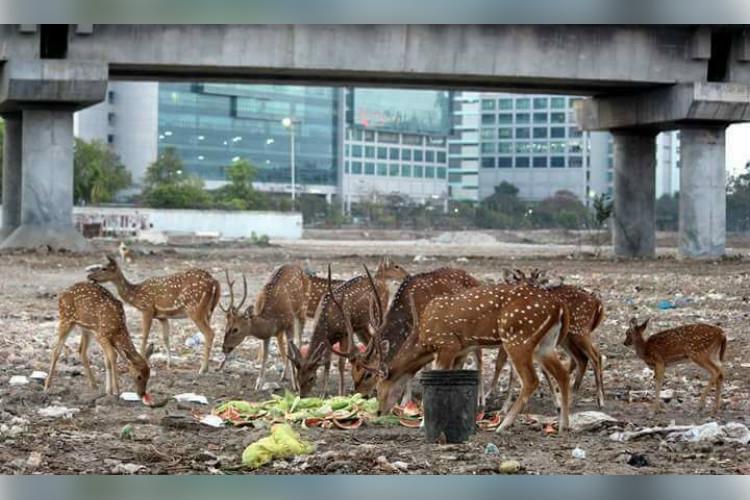
Seen the photos of Deer eating garbage in Chennai ? …Here is the story behind it …


Over the past month, upsetting photos of spotted deer feeding on plastic and other waste in and around the Taramani area in Chennai have surfaced on social media. The deer had reportedly strayed from the IIT Madras campus or nearby areas. The loss of the forest ecosystem forces these herbivores to munch on plastic which in turn results in their death due to stomach bloating.

The pictures, which many are sharing on social media, were perhaps first postedby Facebook user Aarthi Gopalan.

Unfortunately, this is not new to a city that has witnessed several deer deaths over the years.

In fact, an RTI by animal activist Antony Rubin revealed that 220 deer and 8 blackbucks died between 2013 and 2016 on the IIT Madras campus. The campus, a thickly forested area, has increasingly come under the scanner for disrupting the ecosystem in the area with toxic waste and with garbage during its annual student fest, Sarang. After the January 2014 edition of Sarang, The Fifth Estate, a website run by IIT Madras students, reported that 21 deer had died and three were injured during the event.

Speaking to TNM, Antony Rubin says, “There is too much construction, debris and waste on campus. This has been happening for quite some time now. DLF bought a property in the area which was occupied by deer. They cleared out the entire building, so the deer came out and they are feeding on the garbage over there.”

Antony warns that trying to ‘trap them’ could prove fatal for these creatures. “Deer are very sensitive. If they are caught by force, they literally die within a few minutes because they go into shock. The death rate during translocation is about 20 to 30%. The ideal way is to slowly guide them towards Guindy National Park or IIT. There should be no traffic and it should be calm, so that the deer are not stressed.”

Animal rights activist Shravan Krishnan wrote on Facebook, “We have in fact spotted deers as far as Gandhinagar, Indra Nagar and past Kotturpuram. The main reason for these deers to stray out is because of loss habitat especially in IIT.  These deers stray out for food and water during the summers. You only see deers coming out, but we have spotted a whole lot of animals such as pangolins, jackals, civet cats, jungle cats and monitor lizards also venturing out due to habitat destruction. This problem will get worse in the coming years.

The only way to stop deers venturing out is to improve their habitat and to stop construction inside IIT and other buffer areas. (sic)”

In November last year, in response to Antony Rubin’s petition before the National Green Tribunal (NGT), the Forest Department had admitted that “due to the presence of the solid waste stray dogs are entering into the campus and they are attacking the deer and blackbucks and causing fatal injuries and in such circumstances necessary directions are to be issued to remove all the solid waste and to see that campus is free of stray dogs and protect the wildlife (sic).”

In December 2017, the southern bench of the NGT had directed IIT Madras to ensure that no further damage or injury is caused to the animals, including endangered species on campus.

IIT Madras, on the other hand, had claimed that they have an efficient process for solid waste management in place and blamed the increasing number of stray dogs on the campus for the death of the animals.

Meanwhile, the southern bench of the NGT has virtually become non-existent as its last member retired and no new appointment is forthcoming. Pending non-compliance appeals before the court are now left in the lurch.

With no way of filing appeals here, activists end up incurring significant expenditure moving the cases elsewhere. “The case keeps getting rescheduled here. So we are trying to move it to Delhi. What else can we do?” Antony asks.

Source….Manasa Rao in http://www./www.thenewsminute.com/

Natarajan

” Despite everything …this too will pass …”

One day, King Solomon, the wisest man in the world, wanted to test the integrity and wisdom of his faithful servant. The King summoned his servant and asked him to carry out a task, knowing that it could not be completed. King Solomon said: “The Feast of Tabernacles is in 6 months, and I would like to wear a magic ring for the holiday. Any person who is sad and looks at the ring will become happy and any happy person who looks at the ring will become sad.”

The faithful servant immediately went on the journey in the search of the mysterious ring. A month passed, two months passed, and the servant, who visited every jeweler and peddler in the kingdom, remained without the ring. Two more months passed, and the servant reached the limits of the kingdom, but he had yet to find anyone who had heard of such a magical ring.

Over time, the faithful servant became frustrated. With all his might he wanted to fulfill his master’s wish, but no matter how hard he tried, he could not find the mysterious ring. He was depressed and almost gave up, until one day before the Feast of Tabernacles, he arrived at the small workshop of a poor jeweler in a small village.

The servant, who had nothing to lose, asked the old silversmith: “Tell me, sir, have you ever heard of a magical ring that causes the sad to become happy and the happy to become sad?” The old silversmith thought for a second, took out a small copper ring from one of the drawers, scratched it and handed it to the servant. The servant, who for the past few months had lost all hope, gave one glance at the inscription on the ring, and his eyes lit up. He thanked the silversmith, paid him a bag of gold coins, and hurried to the king’s palace.

When the servant finally arrived at the King’s Palace, Solomon was very happy and rejoiced. He did not believe that his servant would really come back to him with a ring. The servant handed the ring to his master, the wise king gave it one look and the smile immediately disappeared from his face. All the courtiers were curious to see what was written on the magical ring, and finally, when they looked at it, they saw the following simple sentence:
“Despite everything, this too will pass” 
This simple sentence contains a truth that we must cherish in our hearts – even if it feels like everything is going great and were on top of the world, we must remember that all this might disappear one day. On the other hand, and this is the happy side of the rule, all the suffering, all the frustration, all the difficult times we sometimes experience, these too will pass and be forgotten.
Source….www.ba-bamail.com
Natarajan

THE ANCIENT STONE IN LONDON THAT IS SUPPOSED TO BE IMPORTANT BUT NO ONE REMEMBERS WHY…!!!

Sitting in the heart of London since long before anyone can remember, theories regarding the London Stone range from Roman ruin, to Druidic icon to a talisman of good fortune.

Although many point to John Stow’s Survey of London(1598), where he sets the 10th century as the first mention of the stone in print (he claims he found a mention of the stone in a document from the 900s AD), others feel more comfortable citing a list of Canterbury Cathedral’s properties from somewhere around the turn of the 12th centuries, where it lists Eadwaker æt lundene stane.

Regardless, by medieval times, the London Stone was a fixture in the city, so much so that residents even incorporated it into their names, such as Ailwin of London Stone. Clearly important, by the 15th century the landmark was seen as a symbol for London, and perhaps England; this helps explain why, when Jack Cade led a rebellion against Henry VI in 1450, he reportedly struck the London Stone with his sword in claiming the city for himself, as immortalized by Shakespeare in King Henry VI, Part II, Act IV, Scene VI.

In the 16th century, one popular theory for the stone’s origins was that it had been used by the Roman’s during their occupation (approximately 43 AD – 410 AD) as a millarium or central milestone from which all distances were measured. Charles Dickens even cited this explanation in his Dictionary of London (1879).

During the 18th century, some were speculating that the stone was used in worship by the Druids, although there is no evidence to support it.

In the 19th century, as interest in spiritualism became more widespread, some theorized that the London Stone was a Palladium or talisman dating back to Roman times and Britain’s legendary founder. It was during this time that the now well-known saying appeared: “So long as the Stone of Brutus is safe, so long shall London flourish.”

By the 20th century, serious archaeologists began digging into the London Stone’s origins, and some found that it is situated at the center, or at the gate, of where a large Roman structure, sometimes identified as a Governor’s palace or pretorium, had been.

Today, those who believe in ley lines, straight “lines” that connect sites of historical or geographical significance, claim that the London Stone is transected by several of these lines, while others have posited that the stone was set in the center of the old Roman city, in homage to Jupiter.


Source….www.today i foundout.com

Natarajan


வாரம் ஒரு கவிதை… ” எங்கும் எதிலும் “

எங்கும் எதிலும்
————–

photo-1485546246426-74dc88dec4d9

எங்கள் வங்கியில் எங்கும் எந்த ஊரிலும்
எந்த கிளையிலும் நீங்க உங்க பணம்
பெறலாம் ..பணம் கட்டலாம் என்று
சொன்னது என் வங்கி …மகிழ்ந்தேன் நான் !
வங்கிக்கு செல்லும் வீண் சங்கடம் எதுக்கு
உனக்கு…. உன் வங்கி கணக்கு விவரம்
இப்போ உன் மடிக் கணினியிலும் கைபேசியிலும்
சொன்னது மீண்டும் என் வங்கி !
வங்கியே என் கையில் இப்போது ..எங்கும் எப்போதும் !
பணம் எடுக்க ATM …எங்கும் எதிலும் எப்போதும் !
விண்ணில் பறந்தேன் நான் …மண்ணில் இல்லை
என் கால் !
எங்கும் எதிலும் எப்போதும் பண பரிமாற்றம் !
உங்க வங்கிக்கு நீங்க வரவே தேவை இல்லை
உங்க வங்கி கணக்கு இப்போ உங்க கையில்
என்றும் சொன்ன என் வங்கி இருக்குதா
அதே இடத்தில் என் பணத்துடன் ?
இன்று சென்று பார்க்க வேண்டும் நான் !
எங்கும் எதிலும் நானாவது கவனமாக
இருக்க வேண்டாமா ? என் வங்கியில்
இருப்பது என் பணம் அய்யா !
Natarajan
in http://www.dinamani.com dated 25th Feb 2018

Unlike the Super-Rich defauters ,this Ex-PM”s familyHonoured their loan liability ….

These are not good times for the Punjab National Bank, which is embroiled in an 11,400 crore-scam allegedly perpetrated by diamond mogul Nirav Modi and his maternal uncle, Mehul Choksi.

For the average citizen, this is yet another instance of a wealthy man swindling public money through dubious loans issued by these banks, and leaving the country without paying back his dues.

Unlike Nirav Modi and Vijay Mallya, the PNB, which is India’s second largest public-sector bank, also had famous personalities and their families as customers who have honoured their loans.

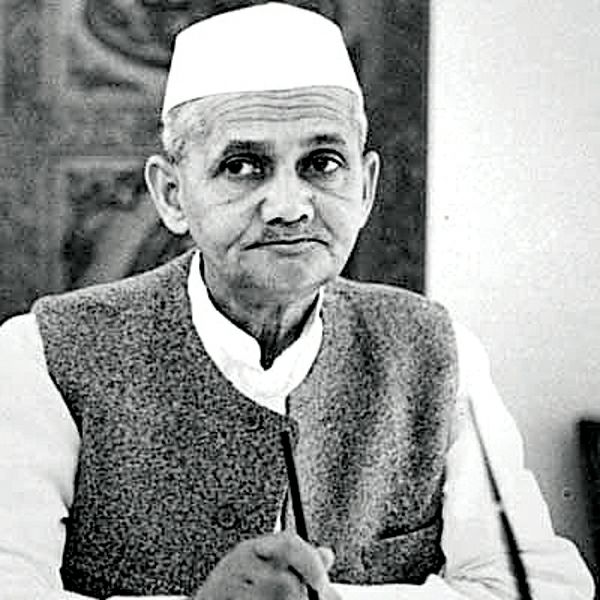
Former Prime Minister Lal Bahadur Shastri had taken a car loan of Rs 5,000 from PNB. After his sudden demise on January 11, 1966, the former prime minister’s widow Lalitha paid back the loan from the pension she received, reported Times of India.

“We went to St Columba’s School on a tonga. Once in a while, we used the office car, but my father did not allow us to use it regularly for any kind of private work. There was a demand at home that we should buy a car,” said Anil Shastri, his son and senior Congress politician, to the publication.

In response to his family’s demands, Shastri approached a senior official from the PMO and discovered that a new Fiat would cost Rs 12,000. Since the family had only Rs 7,000 in the bank, the prime minister decided to apply for a Rs 5,000 loan which the bank sanctioned that very day.

When the prime minister passed away in Tashkent, where he had gone to sign the declaration of peace between India and Pakistan after the 1965 war, the loan remained unpaid. “It was repaid by my mother from the pension she received after my father’s death,” said Anil Shastri.                                                                                                                         


This 1964-model Fiat with the plate number DLE 6 is today exhibited at the Lal Bahadur Shastri Memorial in the national capital.

Source….www.thebetterindia.com

Natarajan


At 103, This Karnataka Man is one of the oldest Drivers on the Country”s streets Today …

Willy’s, Morris Minor, Fiat, Austin, Ferguson, Mercedes Benz, Chevrolet, Volkswagen – these are just among the few brands 103-year-old CSR Michael D’Souza has driven.

A veteran of World War II, Michael has been driving for the last 85 years.

But giving up his car keys is simply not an option for him. “I enjoy driving and never got tired of it. I will continue to drive till the lord sends me his vehicle,” he smiles.

A native of Ooty, Michael was born to Charlson and Mary D’Souza on October 16th, 1914. Michael’s first tryst with a vehicle was at the age of 18, when he and his 13 siblings drove around Ooty in his father’s truck.

“The licence issued then was a page-long and it was applicable for all vehicles. Unlike today, there was no such thing as a licence based on vehicle category,” he says.

In 1932, he was enlisted in the British Army for 10 years and during his service he travelled to different parts of the country.

“However, due to the loss of my original military documents during transit in Visakhapatnam, my post-service benefits were denied to me. Though I appealed to my superiors for several years, I gave up realising it was a lost cause,” he says.

Meanwhile, Michael married Eliza, and the couple moved to the erstwhile Madras Presidency. Though they had no children, it was a happy marriage, he says, and they regarded the children of his elder brother as their own.

A few years later, Michael joined the Public Works Department (PWD) in Mysore and later he was transferred to Mangalore. At PWD, Michael had the chance to drive the general purpose vehicle, affectionately called ‘Jeep’ (GP). He also was given the opportunity to drive a truck, tractors and even road rollers.

“It was quite an experience, since the department barely had qualified man-power to operate such heavy-duty machines. I was asked to drive everything and I took the opportunity to make the most of it,” he laughs.

In fact, several roads in Mysore, Udupi and Mangalore were first asphalted and sealed when he drove the road roller over them.

In 1982, he retired from service, but the couple stayed on in Mangalore.

Michael got his first license in 1959, and he has renewed it constantly since then.

“On my last visit, the RTO inspector said in jest that should I make it for my next renewal in 2019, then he will award me the permit driving for a lifetime,” Michael smiles.

Considering he has driven so many vehicles, which one does he prefer?

“The GP,” he says, without missing a beat. “It does not skid and in unstable territory you can also shift to a lower gear and drive.”

He has only driven a two-wheeler once. “I got so dizzy, I stopped immediately. I am only cut out to driver vehicles with four wheels or more,” he says.

Except for a brief period in 1993 when he had a cataract surgery, Michael has never stopped driving. At the ripe age of 103, his medical records show that he is incredibly fit for his age and shows no signs of age-related ailments.

His secret, he says, is his diet, which comprises rice, curd, chapathi and bread. Although, up until a couple of years ago, he used to consume meat frequently, lately he has reduced his intake of non-vegetarian food.

“As our age progresses, I believe we should not strain our stomachs. Therefore, nowadays I eat meat only rarely,” he says.

He is also incredibly active – no matter the number of floors, he always takes the stairs.

After Eliza passed away in 2013 – at the age of 83 – Michael’s routine changed. He now wakes up at 4 am every morning to tend to his garden and feed his cat, dog and birds. “Earlier, I used to even have a goat, a chicken and a duck. My wife was very irritated with the tortoise I had, so I had to give him up,” he says.

Always dressed in a formal shirt, pants and a golfer’s hat, Michael still works – he now drives for a local banker and his family. The one concession he does make for his age is that he now avoids going on long drives and driving late in the night.

What does Michael think of drivers today? “Terrible!” he shakes his head. “People just don’t follow lane discipline any more. It’s horrible the way autorickshaws and two-wheelers switch lanes these days. One of the main reasons I don’t drive in the evening is how people thoughtlessly switch on their high beams even on well-lit roads. It can easily lead to an untoward incident.”

In his 85 years behind the wheel, Michael says he has been fined only once for not wearing a seatbelt. “Three months ago, when I was fined, I went to the station to pay the fine. The inspector took the receipt, laughed when he saw my age and the fact I was being fined for the first time, and said he will pay the fine on my behalf and let me go,” smiles Michael.

Ironically, Michael does not own a car, although the centenarian does not regret it. “As long as I am allowed to drive a car, I don’t have any qualms about it,” he says.

Content provided by Story Infinity (Subs and Scribes Media Ventures LLP).

Source….Harsha Raj Gatty in https://www.thenewsminute.com/

Natarajan


He is 100 and She is 99…Meet the Kerala Couple celebrating 82 years of Marriage …

The Kottayam-based couple studied in the same school and later went on to marry.


Ask Madhavan Nair and Meenakshi Amma for how long they have been married, and 99-year-old Meenakshi Amma creases her forehead, as if lost in deep thought. Sitting beside her, 100-year-old Madhavan Nair does not need much prodding to remember the year they got married – Malayalam calendar year 1111.

Meenakshi Amma nods in agreement.  “See, he still remembers it so clearly!” she says, breaking into laughter.

(Malayalam calendar year 1111 is the year 1936. According to Malayalam calendar, 2018 is the year 1193.)

The duo celebrated 82 years of their marriage in December 2017 and the milestone also coincided with Madhavan Nair’s 100th birthday.

In their house near Pallikkathode in Kerala’s Kottayam district, Madhavan Nair – who used to be an active member of the Congress party – and his wife Meenakshi Amma, continue to live their “happily ever after” to this day.

When TNM visited the couple, Madhavan Nair and Meenakshi Amma shared their eight decades-long love story. Although the duo first met in school at the age of 8, little did they know that the coming years would bring them together. After a few years of studying in the same class, both Madhavan Nair and Meenakshi Amma moved to different schools.

Together in youth and old age

Having known each other since a very young age, Madhavan Nair and Meenakshi Amma have retold their wedding story many a time to their children, explaining how theirs had been an arranged marriage and not a love marriage. The couple have five children together, all of whom stay in Kottayam.

“It is true that we knew each other from school. We had seen each other, but hadn’t spoken much. What do school kids have to talk to each other at that age? Years later, our families decided to get us married. So that’s how it happened,” Madhavan Nair says.

Asked about the wedding, Madhavan Nair’s recollection is matter-of-fact: “It was a simple ceremony, no pomp and show like today’s weddings. The wedding took place at her (Meenakshi Amma) house. I tied the thaali around her neck, gave her the pudava (saree) and there was a meal afterwards. That’s how simple the wedding was.”

After a moment’s pause, Madhavan Nair continues: “During our times, nobody got married in temples like now, and young people never eloped! The weddings used to happen at the brides’ house.”

When asked whether they feel the weight of 82 long years, the two of them smile. This writer was charmed to see Madhavan Nair’s toothless grin while Meenakshi Amma guffawed loudly, displaying her perfectly aligned teeth.

The years where Madhavan Nair was involved in party and social work had not been easy on his family, he admits. The odd working hours and the long absence from home did not exactly bode well for a harmonious family life. But Meenakshi Amma is in no mood to send her husband on a guilt trip.

“People would come to get him. He would go with them and share whatever knowledge he had. It never bothered me, since I knew he was going on work and not for anything else. He would return home after work for sure,” Meenakshi Amma says.

However, Madhavan Nair has for long withdrawn from his years of active social life, and now spends most of his time at home. While minor health issues do trouble Meenakshi Amma, Madhavan Nair likes to dismiss age-related woes.

Despite having to rely on a walking stick, the 100-year-old is young at heart.

“I walk around the house and the yard at times. With this walking stick, I can walk as far as I can. But I am not so young any more, I have no teeth left and I don’t think I look good with this toothless grin!” Madhavan Nair says.

Visuals by Lenin CV

Source….Megha Varier in https://www.thenewsminute.com

Natarajan

Will Chennai be able to save a 300 year old Plaque connecting it to its Armenian Past …?

The plaque is the last living relic of the Marmalong, the first ever bridge built over the Adyar river in 1726 by Armenian trader Coja Petrus Uscan.


If you take a walk across the busy roads of Saidapet in Chennai, chances are that you would cross what is perhaps one of the oldest living relics that connects the city to its Armenian past.

To the uninitiated, it may look like an unremarkable slab of stone on a pale green crumbling wall. However, this ordinary looking slab of stone is in fact a 300-year-old plaque that belonged on the pillars of one of oldest bridges in the city.

Marmalong Bridge, the first ever bridge across the Adyar river, was commissioned in 1726 by Coja Petrus Uscan, an immensely wealthy Armenian trader. Uscan, who had decided to settle in Madras after coming to the city in 1724, paid 30,000 pagodas from his own money to build the bridge and another 1,500 pagodas for its upkeep.

“Uscan was immensely respected and perhaps was even one of the only non-British allowed to stay in Fort St George or the White town. A devout believer in St Thomas, Uscan wanted more people to visit the Saint Thomas Mount, and therefore removed the two impediments – the river and the lack of steps – by building the bridge as well as 160 steps to the mount. This was the initial purpose of the bridge. But all that soon changed as the Marmalong Bridge became crucial to the expansion of the city, especially towards the South,” says Chennai-based novelist and historian Venkatesh Ramakrishnan.

Mount Road came after the bridge


 Mount Road, around which the city developed, came 60 years after the Marmalong bridge.

Named after Mambalam, one of the villages near the Adyar, the Marmalong Bridge perhaps laid the foundation stone for the city as it led to the emergence of the Mount Road, around which Chennai developed.

“It was only natural that a road followed after a bridge was built. The British built the Mount Road in the 1800s, around which the city grew. So, in a sense, the bridge led to the city’s birth and is very close to its heart,” Venkatesh adds.

However, the Marmalong only lives in our memories today. Where the arched bridge of Uscan once stood, a concrete replacement called the Maraimalai Adigal Bridge now exists. There are no traces of this Adyar-Armenian connect but for the last living relic – the plaque commemorating Uscan’s construction of the bridge.

With inscriptions in three ancient languages – Persian, Armenian and Latin, the Uscan plaque was established in memory of the great nation of Armenia and is a tribute to the people who helped build the city.

“The Armenian inscriptions are on the lower portion of the plaque. It can’t be read because the writing has faded with time and neglect,” according to Venkatesh.

Crusade to preserve the plaque


The neglected plaque stands near the Saidapet Metro construction site. 

Displaced from its original site, the plaque faces the perils of urbanisation and is further threatened by the metro rail work that is underway.

Years of neglect and development in the area has buried the stone in layers of debris. In fact, the bottom of the stone has disappeared under the ground as the road levels have been rising every year due to re-carpeting, Venkatesh laments.

With the construction of the Saidapet Metro station underway, historians who are fighting to save the plague urge the CMRL to give the stone a place of honor in the metro station.

Highlighting the importance of preserving such relics, Venkatesh says, “The Armenians have contributed immensely to this city. I believe it is important to preserve all traces to this link. It is really unfortunate that while the Uscan stone stands neglected, another plaque at the Fourbeck Bridge is preserved by the Architectural Society of India,” he said.

A dedicated group of Chennai historians have launched a Facebook page “Retrieve Uscan Stone” to draw attention to the issue and save the plaque.

“The Saidapet Metro work is too close to the plaque. We have been urging the officials to move the relic to a better place, may be a museum or a memorial site. We just don’t want to lose a precious piece of the city’s history,” Venkatesh says hopefully.

Source….https://www.thenewsminute.com

Natarajan