Amazing Vertical Take Off…Boeing 787-9 Dreamliner…!!!

IT has to be seen to be believed.

In the lead-up to the Paris Air Show, which begins on June 15, Boeing has set the bar high after releasing a video of its newest version of the Dreamliner aircraft — the 787-9 — performing some impressive aerial moves.

But it’s the takeoff which has everyone talking as the passenger jet makes an almost vertical ascent seconds after leaving the ground.

The steep climb looks impressive, though it has its doubters.

Boeing 767 pilot Patrick Smith told CNN: “It looks like the takeoff is at a near vertical 90 degree angle — trust me it’s not.”

He said a 787 with passengers making a 20 degree pitch-up on takeoff would be pretty strong.

“Presumably the plane was very light because it wasn’t carrying any passengers, probably had a very light fuel load, no freight, so it would have been able to perform a steeper than normal ascent — but not to the extent the video seems to show,” Smith said.

That’s steep ... the Boeing Dreamliner 787-9 takeoff

That’s steep … the Boeing Dreamliner 787-9 takeoff Source: Supplied

video clip..

Source….www.news.com.au and http://www.youtube.com

Natarajan

“Here’s why no one has found a trace of missing Flight MH370….”

A Texas A&M University professor and his team in Qatar have a mathematical theory about why search crews have found no trace of Malaysia Airlines Flight 370 more than a year after it went missing.

Dr. Goong Chen, whose research on this theory was published in the American Mathematical Society’s journal, argues that the plane could have nosedived into the Indian Ocean at a 90-degree angle and remained somewhat intact as it sank to the bottom.

At 1:30 a.m. on March 8, the plane carrying 239 people dropped off air-traffic-control screens, less than an hour into a flight from Kuala Lumpur to Beijing.

One of the biggest mysteries surrounding Flight MH370 is the fact that, despite experts tracking the plane’s satellite pings to the southern Indian Ocean, searchers have never found a debris field or oil slicks from the supposed crash.

Texas A&M noted that in the case of Air France Flight 447, crews recovered thousands of pieces of floating debris from the Atlantic Ocean just days after the plane crashed in 2009.

Chen explains that if the plane were to enter the ocean at another angle, it would have created a large “bending moment” from the external force of hitting the water, causing the fuselage to break up.

In this type of situation, there would likely be a field of floating debris on the surface of the water.

But a vertical entry would be much smoother, with a smaller “bending moment.” The plane’s wings would have likely broken off immediately, but since they’re heavy, they probably would have sunk to the bottom of the ocean.

So if the plane nosedived into the ocean, it could have sank somewhat intact and landed belly-up on the ocean floor, according to the research paper.

The ocean’s current would have guided the plane to its resting place at the bottom. Lightweight debris like seat cushions and passenger belongings probably wouldn’t be able to float to the ocean’s surface if the plane’s body sank intact.

The plane stalling from a steep climb, aircraft mechanisms malfunctioning, and the plane running out of fuel could have caused MH370 to plunge into the ocean at a sharp angle, according to the research paper.

Chen and his team created simulations of what the descent might have looked like:

MH370 Malaysia Airlines plane simulation

Texas A&M University at Qatar / Notices of the American Mathematical Society

The plane entering the water at this angle wouldn’t have created the same large waves as an entry at a lesser angle. Big waves would have likely caused more break-up of the plane at the surface.

The animation below shows the supposed distribution of pressure. The paper notes that aviation experts say that how a plane enters the water determines how it breaks up.

MH370 Malaysia Airlines plane simulation

Texas A&M University at Qatar / Notices of the American Mathematical Society

In other scenarios Chen and his team looked at, the plane’s angle of entry would have created bigger waves and more pressure, which likely would have caused the plane to break up more near the water’s surface.

Plane crash simulation

Texas A&M University at Qatar / Notices of the American Mathematical Society

Illustration showing a diving water entry.

Plane crash simulation

Texas A&M University at Qatar / Notices of the American Mathematical Society

Illustration showing a rolling water entry.

Chen and his team concluded that based on the various scenarios they mathematically examined, a nosedive is the mostly likely explanation of what happened to the plane. If the plane had entered the ocean at a different angle, the paper notes, search crews would have likely found debris by now.

1434023992025

Texas A&M University at Qatar/Notices of the American Mathematical Society

“This particular assertion is speculative but forensic,” the paper concludes. The team noted that they based this theory on computed data, aviation precedents, and atmospheric and ocean surface conditions.

The disappearance of MH 370 is one of the most bizarre and tragic aviation mysteries of all time. Investigators have not offered any conclusive explanation as to what happened to the plane after it disappeared from radar.

Australian officials announced last month that teams are expanding the MH370 search area in the Indian Ocean. They said that if the plane isn’t found there, they’re not sure where else to look.

Source….Pamela Engel in http://www.businessinsider.in

Natarajan

” Footage From Cockpit “…Plane Landing in one of the ‘Scariest ‘ Airports in the World…

There’s a belief that computers do all of the work in the cockpit, but this amazing video shows British Airways pilots conquering one of the most challenging runways in the world.

With cameras mounted in the flight deck, the clip shows a pilot’s-eye view as a BA plane approaches and touches down on the runway in Funchal, on the Portuguese island of Madeira.

It may seem like a routine event, but captains Ally Wilcox and Ian Mills had to contend with high winds and were unable to rely on the plane’s instruments as they landed at an airport nestled between the Atlantic Ocean and a hill dotted with home

click and watch the video clip below…

 Captains Ally Wilcox and Ian Mills had to contend with high winds as they approached the runway

Captains Ally Wilcox and Ian Mills had to contend with high winds as they approached the runway

Footage from the cockpit provides a perspective that most passengers will never see as they arrive on the stunning island for a relaxing holiday.

It can be a turbulent landing, and after an extension was built in 2000 part of the runway is on stilts over the sea.

Captain Wilcox narrated the video, which was shot on a recent flight from London, telling viewers Funchal is a unique airfield because pilots cannot land a plane there unless they have special approval from Portugal’s civil aviation authority.

He said BA and Airbus have developed a bespoke plan that has been approved by authorities, which includes using banana sheds as a waypoint to navigate the ‘tricky terrain’ to the left of the runway.

Footage from the cockpit provides a perspective that most passengers will never see

Footage from the cockpit provides a perspective that most passengers will never see In order to land in Funchal pilots must undergo training and be approved by Portuguese aviation authorities

In order to land in Funchal pilots must undergo training and be approved by Portuguese aviation authorities

Only 20 BA captains are permitted to fly into Funchal, and each one had to pass a two-hour simulated training session.

Captain Wilcox said: ‘The island is very tricky because of the terrain … it means we have to fly around the bay and very close to the terrain before completing a curving approach onto the runway.’

As the airport does not have an instrument landing system, pilots must navigate around the bay visually using good judgment, he added.

Funchal is frequently included in lists of the 'scariest' runways in the world due to its challenges

Funchal is frequently included in lists of the ‘scariest’ runways in the world due to its challenges

High winds add to the degree of difficulty.

He tells viewers: ‘As it’s out in the Atlantic the wind is often strong and very variable in nature.

‘As with this approach we faced exactly that challenge with the head wind becoming a cross wind pushing us towards the terrain and here ending up as a tail wind as we landed on the runway.’

Given its location and turbulent winds, Funchal is frequently included in lists of the ‘scariest’ runways in the world.

Source….www.dailymail.co.uk  and http://www.you tube.com

Natarajan

Image of the Day…Fresh Crater Find in Mars….

Closeup of Mars crater showing a quarter of the crater at left and surface at right

The High Resolution Imaging Science Experiment (HiRISE) camera aboard NASA’s Mars Reconnaissance Orbiter acquired this closeup image of a “fresh” (on a geological scale, though quite old on a human scale) impact crater in the Sirenum Fossae region of Mars on March 30, 2015.

This impact crater appears relatively recent as it has a sharp rim and well-preserved ejecta. The steep inner slopes are carved by gullies and include possible recurring slope lineae on the equator-facing slopes. Fresh craters often have steep, active slopes, so the HiRISE team is monitoring this crater for changes over time. The bedrock lithology is also diverse. The crater is a little more than 1-kilometer wide.

The University of Arizona, Tucson, operates HiRISE, which was built by Ball Aerospace & Technologies Corp., Boulder, Colorado. NASA’s Jet Propulsion Laboratory, a division of the California Institute of Technology in Pasadena, manages the Mars Reconnaissance Orbiter Project and Mars Science Laboratory Project for NASA’s Science Mission Directorate, Washington.

Image Credit: NASA/JPL/University of Arizona
Caption: Alfred McEwen

Source…www.nasa.gov

natarajan

படித்து ரசித்தது ….” வாழ்க்கைப் பயணம் …”


வாழ்க்கைப் பயணம்

அமெரிக்க தொழிலதிபரான ராக்ஃபெல்லர், முதுமையிலும் கடுமையாக உழைத்தவர். ஒருமுறை, விமானத்தில் பயணித்தார். அப்போதும் ஏதோ வேலையாக இருந்தவரைக் கண்டு அருகில் இருந்த இளைஞர் வியப்புற்றார். அவர், ”ஐயா, இந்த வயதிலும் இப்படிக் கடுமையாக உழைக்கத்தான் வேண்டுமா? ஏகப்பட்ட சொத்து சேர்த்து விட்டீர்கள்… நிம்மதியாக சாப்பிட்டு, ஓய்வெடுக்கலாமே?!” என்று ராக்ஃபெல்லரிடம் கேட்டார்.

உடனே ராக்ஃபெல்லர், ”விமானி இந்த விமானத்தை இப்போது நல்ல உயரத்தில் பறக்க வைத்து விட்டார். விமானமும் சுலபமாகப் பறக்கிறது. அதற்காக… இப்போது எஞ்ஜினை அணைத்துவிட முடியுமா? எஞ்ஜினை அணைத்துவிட்டால் என்னவாகும் தெரியுமா?” என்று கேட்டார்.

”பெரும் விபத்து நேருமே!”- பதற்றத்துடன் பதிலளித்தான் இளைஞன்.

இதைக் கேட்டுப் புன்னகைத்த ராக்ஃபெல்லர், ”வாழ்க்கைப் பயணமும் இப்படித்தான். கடுமையாக உழைத்து உயரத்துக்கு வர வேண்டியுள்ளது. வந்த பிறகு, ‘உயரத்தைத் தொட்டு விட்டோமே…’ என்று உழைப்பதை நிறுத்தி விட்டால், தொழிலில் விபத்து ஏற்பட்டு விடும். உழைப்பு என்பது வருமானத்துக்காக மட்டுமல்ல, உடல் ஆரோக்கியம் மற்றும் மன நிம்மதிக்காகவும்தான்!” என்று விளக்கம் அளித்தார்.

Source………………unknown…. input from a friend of mine
Natarajan

Why Airplane Windows Have Tiny Holes….

My friends laugh at me when I ask for a window seat. You’re an airline pilot, they say. You have the window seat all the time.

True enough. But the cockpit, well, that’s work. As a passenger I’m actually free to enjoy the experience—to listen to music or a long-postponed podcast while gazing out at the world below, to remember that it’s still a wonder to look down, not up, at clouds. The window seat is like the best table in a café on a busy street, except that instead of people-watching, entire cities, oceans, and mountain ranges parade past.

airplane window

Still, every once in a while something interferes with that view. Maybe it’s the forehead smudges left by your seat’s previous occupant. Or the little hole that appears in the lower portion of a typical airliner window.

Hole in the window? The little one, near the bottom, that you perhaps only notice when a hollowed-out snowflake of frost forms near it. This tiny hole is called a breather hole or a bleed hole, and it serves an important safety function.

If you look closely at a typical passenger cabin window, you’ll see three panes, typically made of acrylic materials. The purpose of the innermost pane—sometimes called the scratch pane, but I like to call it the smudge pane—is merely to protect the next one.

The middle pane (with the breather hole in it) and the outer pane are more important. Generally speaking, as an aircraft climbs, the air pressure drops in both the cabin and the outside air—but it drops much more outside, as the aircraft’s pressurization system keeps the cabin pressure at a comfortable and safe level. This means that the pressure inside the aircraft during flight is typically much greater than the pressure outside.

The outer two cabin windows are designed to contain this difference in pressure between the cabin and the sky. Both the middle and the outer panes are strong enough to withstand the difference on their own, but under normal circumstances it’s the outer pane that bears this pressure—thanks to the breather hole.

airplane window

As Marlowe Moncur, director of technology 
for GKN Aerospace, a leading passenger cabin window manufacturer, put it to me via email: “[T]he purpose of the small bleed hole in the [middle] pane is to allow pressure to equilibrate between the passenger cabin and the air gap between the panes, so that the cabin pressure during flight is applied to only the outer pane.”

In the extraordinarily unlikely event that the outer pane fails, the middle pane takes over. And yes, in that case, there would be a small leak of air through the breather hole—but nothing the aircraft’s pressurization system couldn’t easily cope with.

Bret Jensen, an aerospace engineering guru at Boeing Commercial Airplanes, told me about a separate but related function of the hole: to release moisture from the air gap and stop (most) fog or frost from forming on the window. So when you’re looking out at the clouds and planetary wonders crossing below you, take a moment to give thanks for the breather hole.

There’s still the matter of that small but lovely pattern of frost that can form near the breather hole on a long flight. At cruising altitude the temperature of the outside air can be minus 70 degrees Fahrenheit. The frost, according to Moncur, “is caused by condensation of water when cabin air contacts the cold window surface.”

But what causes that telltale frost pattern? The physics behind it are an interesting question, he says. “The circular pattern must be a function of window surface temperature, humidity of the cabin air and flow rate through the bleed hole.”

Read the original article on Slate. Copyright 2015. Follow Slate on Twitter.

Read more: http://www.slate.com/blogs/the_eye/2015/05/29/what_s_that_thing_why_are_there_holes_in_airplane_windows.html#ixzz3bmg2xKTh


Brilliant Video shot From IAF Jaguar Plane…!!!


How difficult is it to film a running car sitting in another car? Pretty difficult. But this video mission has crossed all levels of precision and perfection by capturing the launch and the flight of India’s nuclear-capable sub sonic cruise missile called Nirbhay. The missile is being developed by India’s DRDO with features like wing development and a turbofan engine. It carries either conventional or a nuclear payload while flying to the target.

This video uploaded by Anantha Krishnan M. is from the last successful test and is shot from an IAF Jaguar plane. We salute the pilot and the camera person for a brilliant footage!

 Source…..www.storypick.com and http://www.youtube.com
Natarajan


Here is what a Pilot Thinks When the Aircraft loses all of its Engines in the Mid Air….

Last weekend, Singapore Airlines Flight 836 was traveling from Singapore to Shanghai when the twin-engine Airbus A330-343 lost power on both engines over the South China Sea.

Image result for airbus A330-343

Image of Airbus330-343


Fortunately, the pilots were able to restore power to the engines, and the flight was able to continue on to its destination.

No injuries have been reported.

Modern turbofan engines are very robust pieces of engineering and tend to be incredibly reliable.

That makes last weekend’s incident an exceedingly rare event.

In fact, experienced A330 pilot Karlene Petitt told Business Insider that in her years flying the popular jet, she has never encountered, in pilot parlance, a “dual flameout.”

So what is an airline pilot thinking when the engines on his or her plane inexplicably lose power?

“What would go through my mind is fly the plane and do everything I can to get the engines started,” Petitt said in an email. “That would be the only thing to think about.”

In the cockpit, pilots are equipped with reference guides which provides guidance and checklists for a wide variety of operational situations – including the loss of power on all engines.

At cruising altitudes – 39,000 ft. in the case of the Singapore jet – the air is very thin and there may not be enough oxygen to get the engines to relight.

However, according to Petitt, “Normally when you get down around 24,000 feet you should be able to get one started because of the denser air at that altitude.”

In the case of Singapore Flight 836, the airliner lost 13,000 feet of altitude before the pilots were able to get the engines going again.

According to Petitt, she would only think about looking for a landing location after realizing she wouldn’t be able to get the engines going.

Depending on how high and how far the airplane is from an airport, the pilot would then determine what would be the appropriate course of action

In past incidents, pilots have chosen a variety of strategies.

In 1983, Air Canada Flight 143 going from Montreal to Edmonton ran out of fuel midway through the flight after the ground crew miscalculated the amount needed for the trip. The pilots were able to glide the twin-engine Boeing 767-200 jet to safety at a retired Canadian military runway that had been turned into a race track.

In 2001, an Air Transat Airbus A330 traveling from Toronto to Lisbon developed a fuel leak while flying over the Atlantic Ocean. The widebody jet lost all power, but the pilots were able to glide to an airport in the Azores Islands.

Miracle on the Hudson
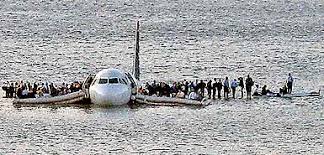
Most famously, US Airways flight 1549 lost both of its engines after colliding with a flock of geese while taking off from New York’s LaGuardia Airport. Due to the low altitude, the pilots didn’t have time to complete the engine restart procedure. Miraculously, Captain Sully Sullenberger was able to successfully guide the Airbus A320 down in the middle of the Hudson River.

In these instances, the pilots were able to safely land their planes with few injuries to the passengers and crew.

“Pilots never stop flying the plane,” Petitt reiterated. “No matter what, we will do what it takes.”

Source….BENJAMIN ZHANG in www.businessinsider.in

Natarajan

image of the Day… Sunset Sequence in Mars…!!!

Sunset on Mars

NASA’s Curiosity Mars rover recorded this sequence of views of the sun setting at the close of the mission’s 956th Martian day, or sol (April 15, 2015), from the rover’s location in Gale Crater.

The four images shown in sequence here were taken over a span of 6 minutes, 51 seconds.

This was the first sunset observed in color by Curiosity.  The images come from the left-eye camera of the rover’s Mast Camera (Mastcam). The color has been calibrated and white-balanced to remove camera artifacts. Mastcam sees color very similarly to what human eyes see, although it is actually a little less sensitive to blue than people are.

Dust in the Martian atmosphere has fine particles that permit blue light to penetrate the atmosphere more efficiently than longer-wavelength colors.  That causes the blue colors in the mixed light coming from the sun to stay closer to sun’s part of the sky, compared to the wider scattering of yellow and red colors. The effect is most pronounced near sunset, when light from the sun passes through a longer path in the atmosphere than it does at mid-day.

Malin Space Science Systems, San Diego, built and operates the rover’s Mastcam. NASA’s Jet Propulsion Laboratory, a division of the California Institute of Technology, Pasadena, manages the Mars Science Laboratory Project for NASA’s Science Mission Directorate, Washington. JPL designed and built the project’s Curiosity rover.  For more information about Curiosity, visit http://www.nasa.gov/msl and http://mars.jpl.nasa.gov/msl.

Credit: NASA/JPL-Caltech/MSSS/Texas A&M Univ.

Source……www.nasa.gov

New “Malaysia Airlines ” set to Fly From September 1….

The state-run airline’s sole shareholder, Khazanah Nasional Berhad, has this week appointed an Administrator to facilitate the transfer of selected assets and liabilities from the existing Malaysian Airline System Berhad to new company Malaysia Airlines Berhad. The current business will continue to operate through to August 31, 2015, with the new operator, effectively a start-up, taking to the air from September 1, 2015.

New 'Malaysia Airlines' to Fly From September 1, 2015

Troubled Asian national carrier Malaysia Airlines will be completely revamped as a business through the remainder of the year as its new boss takes drastic action to return the loss-making operator to profitability. Christoph Mueller, who recently joined as chief executive officer from Aer Lingus has played important roles in the restructuring the Irish carrier and other European flag carriers.

The state-run airline’s sole shareholder, Khazanah Nasional Berhad, has this week appointed an Administrator to facilitate the transfer of selected assets and liabilities from the existing Malaysian Airline System Berhad to new company Malaysia Airlines Berhad. The current business will continue to operate through to August 31, 2015, with the new operator, effectively a start-up, taking to the air from September 1, 2015.

The voluntary administration follows the passing of a special Malaysia Airlines administration act by both houses of the Malaysian Parliament last year to provide for “an effective, efficient and seamless means to transition the business, property, rights, liabilities and affairs”.

The transition of the business is a key component of the 12-point MAS Recovery Plan, which was announced on in August last year to restructure the national carrier and set it on a path towards sustainable profitability. The process also includes conditional investment funding by Khazanah of up to RM6 billion ($1.66 billion), disbursed on a staggered basis and subject to the fullfillment of strict conditions.

Christoph Mueller, Chief Executive Officer Designate of the new airline, said: “This appointment does not affect our daily operations or existing reservations. All Malaysia Airlines flights, schedules, and reservations continue to operate as normal. I assure you our operations are very much business as usual.”

The ‘new’ Malaysia Airlines is expected to operate under a new brand and livery and there are certain to be changes to its network and fleet strategies, including the departure of some, if not all, the Airbus A380s in its fleet and which are used on its routes to London and Paris from Kuala Lumpur.

In this first official interview since taking over at Malaysia Airlines on May 1, 2015, Mueller has outlined more details of his management brief to Reuters. He said the ‘new’ Malaysia Airlines will operate like a “start-up” and would not be “a continuation of the old company in a new disguise,” but that “everything is new”.

“I’m hired to run the new company entirely on commercial terms and there’s very little margin for error,” he told Reuters in this week’s interview in the downtown Kuala Lumpur office of Malaysian state investor Khazanah. The airline is expected to cut its 20,000 workforce by around a third through the switch of airlines, with all those keeping employment with the state-run business doing so on revised contracts. .

Source….Richard Maslen in http://www.routesonline.com

Natarajan