Australians Rescued A Giant Spider. The Rest Of The World Wonders Why….?

AUSTRALIA:  For the past day, people around the world at least the ones who can get past a certain spider video without screaming “kill it with fire!” have been engaged in a rigorous debate about whether Andrea Gofton is one of the most compassionate Australians on her continent, or simply insane.

This month, her community has endured its worst flooding in almost a decade nearly 20 inches since March 1
Australians Rescued A Giant Spider. The Rest Of The World Wonders Why.

Homes and roads are flooded; students on a field trip to Echo Creek Adventure Park got more creek and more adventure than they were expecting; and towns have been declared a “disaster area.” Still, all things considered, the waterlogged population has escaped mostly unscathed.

At least the humans. It is a tough time to be an air-breathing animal in northeast Australia. Dens and burrows are flooded. Food sources are underwater and water-adept predators, particularly crocodiles, sharks and snakes, are riding newly-created waterways in search of unsuspecting prey.

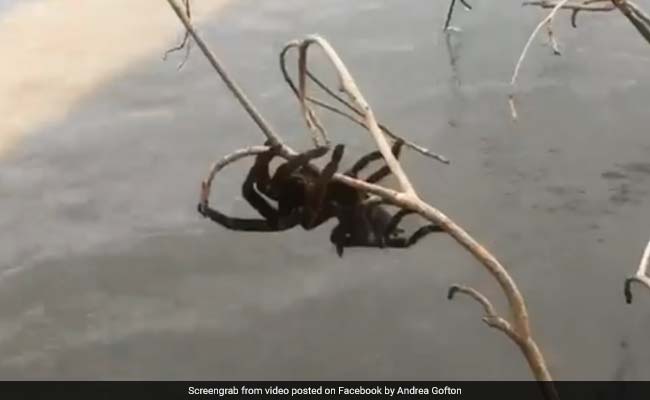
But Gofton’s ethical dilemma came in the form of a not-so-tiny spider found clinging precariously to a tree branch: A giant Australian tarantula called the bird-eating spider.

It is, of course, almost instinctual for humans to want to save animals, even when they don’t do a particularly good job of it.

But there are some things about the spider that Gofton encountered that people need to know before deciding to reject the offer from #TeamKillItWithFire.

It is huge: The spider can grow to be the size of a man’s hand, a two-inch body with six-inch legs. That is bigger than some chihuahuas.

It has giant, venomous fangs. The tarantula’s fangs are nearly half an inch long, about a sixth the size of its body. The Queensland Museum says the tarantulas “can be quite aggressive if mishandled” and that the bite is “quickly fatal to dogs and cats,” but rarely causes serious illness in humans.

It has a deadly, if inaccurate nickname.Scientists have pointed out that the name “bird-eating” spider is, technically, a misnomer. The giant Australian tarantula only occasionally eats birds. Instead, it feasts on lizards, frogs and other spiders, a correction that is not at all reassuring.

It is standing right behind you. Okay. That one is technically a lie, but not as much as you think.

It hisses. Although some have said it’s more of a bark. Either way, the sound is nature’s way of saying “Don’t save me from this raging river, Andrea.”

But some people don’t listen.

Gofton and her friend Andrew Giliberto encountered the arachnid outside a SPAR Supermarket in the town of Halifax. The creature’s legs were intertwined over a flimsy branch, which was the only thing stopping it from being swept away by the water below, according to 9News Australia.

One of the Aussies filmed, while another put a hand close to the spider, apparently to see if it would latch on. It didn’t. So they snapped the branch that it was on and carried it to a nearby avocado tree, where they set it free.

They’ve spent the subsequent 24 hours going back and forth with ardent supporters of spider-cide, arguing that their actions were heartwarming, not horrendous.

Clearly, critics argued, Gofton had not gotten the message that giant spiders are notour friends.

“Nope nope, just nope,” one woman wrote on a post about the spider-save on a community Facebook group about the floods. “The tree has gotta be burnt, with a flame thrower.”

A short time later, Gofton replied: “I’m glad there are decent people out there, the negativity about an animal is beyond ridiculous.”

Of course the spider is the one who’s having the last laugh (hiss? bark?). It’s now safely weathering out what remains of the storm in the avocado tree outside the neighborhood supermarket.

That means some unsuspecting shopper may be in for a surprise, especially if the rescued spider is female.

Another fun fact about the giant Australian tarantula: Females can lay 50 eggs at a time.

Source…….www.ndtv.com

Natarajan
 

The little girl from Mahabalipuram who is taking Indian skateboarding scene by storm…

Eight-year-old Kamali Moorthy, a child prodigy, is the only girl skateboarder and surfer in her hamlet in Tamil Nadu.


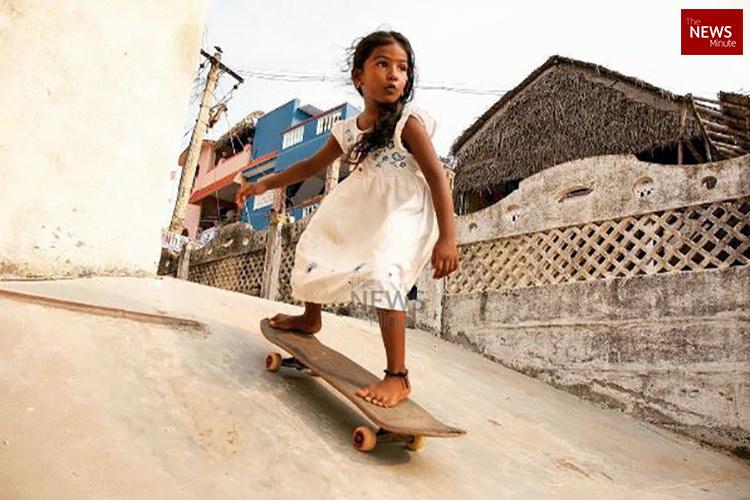
It was 3pm on a Friday. The air was hot and salty, and Fisherman Colony, a seaside village near Mahabalipuram in Tamil Nadu, was baking in the afternoon sun. Seemingly oblivious to the heat, a few children are skateboarding on a quirky new skating ramp set up in the street. Among them was an arresting sight – a small girl effortlessly navigating the concrete slopes of the ramp, setting herself apart from the rest.

With her short hair tied up and two front teeth still taking shape, 8-year-old Kamali Moorthy grins as she drops into the ramp from the granite coping and rolls down the slopes, as if she was born to do so. And this is indeed the common belief among many people, from tourists to the fisher folk, who adore Kamali, the only girl skateboarder and surfer in the hamlet.

“Was she born with a skateboard?” asks Steffano Beccari, an Italian sculptor as he watches Kamali on the ramp.

“Right? she makes it look so easy,” responds Aine Edwards, Kamali’s mentor and an Irish entrepreneur residing in Mahabalipuram.

For the skateboarding community in India, Kamali is a child prodigy. She is not a professional skateboarder yet, but she is already a part of the circuit and goes on tours with other skateboarders. How did this young girl from a fishing hamlet in coastal TN become the next big thing in Indian skateboarding?

Destined to meet

“Kamali was only 3 years old when she started skating on a slope built by Holystoked collective, which builds skating ramps free of cost across India,” Aine says, “Mahabs has always been a surfer’s town, and skateboarding is concrete surfing, so it goes hand-in-hand here.”

Velu, a well-known surfer and Kamali’s uncle’s friend taught her and her little brother, Harish, how to balance themselves on a skate board, she says. “He even gifted them two boards. Ever since those baby steps, Kamali has been on a roll, quite literally, teaching herself new tricks every day and skating to her heart’s content.”

However, it was when world-renowned skater Jamie Thomas visited Mahabs as part of a brand promotion event few years ago, that Kamali got her first big break.

“I was down the end of the street and one of my friends mentioned that there was a pro skate-boarder in town. Just then, Kamali came out in a white dress with a skate board in her hand and Jamie Thomas was by the beach. I went and asked him if I can introduce him to a little girl. The rest is history,” says Aine, adding that they were destined to meet.

For Aine, it was just surreal to watch Jamie and Kamali skateboard together.

“What was merely a chance encounter lasted 3 to 4 hours. Jamie changed all his plans and taught her new tricks,” Aine says, “And just like that, he took Kamali’s skills up by a few notches. It was magic.”

“I learned a lot of new tricks from Jamie which I have been practicing. He taught me to drop in from the big one (taller part of the ramp) and to skate through steeper slopes. Then he taught me this cool trick called rock to fakie which I’m not sure how to explain” Kamali chips in with excitement. A talkative child, who is not shy to speak up, Kamali has more than just the sporting talent, she has confidence.

Jamie even sent Kamali a skateboard, on which she has been practicing ever since. Every day, she takes her board and goes to the ramp opposite to her house to hone her skills. However, Kamali’s potential, Aine explains, is not limited to the ramps in her village.

“Last year, we took a bunch of kids, including Kamali, to Mangaluru where Holystoked set up a skate park. She skated non-stop. She dropped in from the top of the ramp which is twice as tall as the ramp she was used to back home. After she got back, she was dejected as she had to go back to the smaller ramp. It was like giving a kid a big candy and taking it back,” laughs Aine.

Skateboarder in the surfers’ family

Aine and Kamali were introduced to each other through a surfer friend who stayed in a homestay atop Kamali’s house. Kamali’s chirpy presence instantly drew everyone to her, and Aine too was charmed the moment they met.

“She was quite a character even then. A lot of fun to hang out with. We soon started going to the ocean to surf and she gradually picked up the art of riding the waves,” Aine recollects.

Unlike the other girls in the town, Kamali was born into a family of surfers and hence it came naturally to her, Aine explains.

“Surfing is in her blood. Kamali only started skating regularly during her school summer holidays, as there was no one to take her surfing. Now she can catch green waves and go sideways on her own, which is quite impressive,” says Aine.

“She has two skateboards and there’s a skating park conveniently located opposite to our house. She has been skateboarding almost every day since she was three. I sometimes think she uses her board more than her feet,” Kamali’s mother Suganthi says.


With the surf season beginning in March, Aine says that Kamali is excited to hit the waves again.

Skateboarding into the future

Living with her single mum, Suganthi, and grandparents, Kamali and her four-year-old brother Harish are the first-generation English medium school goers. So, they have to strike a balance between their formal education and sport. But with growing popularity, a lot of the residents around Mahabs want to send their kids to skate. And many of them even ask if Kamali can teach their children, explains Aine.

“The teachers in her school are very encouraging. Some of them wanted to get Kamali to teach skating to her classmates as part of the school’s extra-curricular activity,” says Aine.

“All said, this is still a conventional fishing village and the girls are brought up pretty traditionally. Many in this village don’t understand this culture of skating and surfing. For them it is something that has infiltrated from the West and they wonder what all the fuss is about?” says Aine.

Despite these challenges, Kamali, Harish and several other skater kids aim to shatter stereotypes and become mainstream skateboarders.

Aine and other surfing enthusiasts in Mahabs want to promote the sport in and around the village by setting up more and better ramps in the future. However, when asked about promoting skating through competitions, she remains sceptical, “She is too young to compete professionally. But besides this, skating much like surfing, is a soul sport. Although there are quite a few surfing contests, you do it not as a competition but for the love of the sport.”

Source ::::: Sreedevi Jayarajan in http://www.thenewsminute.com

natarajan


After Coimbatore’s Water Table Collapsed, This Simple Initiative Revived It…Thanks to ” Siruthuli “

As cities across India are facing a severe shortage of water, Coimbatore has been trying to preserve and recharge its groundwater levels. At the forefront of this change is Siruthuli, an NGO that is dedicated to cleaning Coimbatore, and infusing green methods throughout the city!

Coimbatore, which was once a place of abundant rainfall, was shaken to reality following a drought in 2003.

As part of its initiative to recharge groundwater levels in the city, Siruthuli has implemented rainwater harvesting structures (RWH).                                               

“In 2003, Coimbatore received 65% less rainfall than in previous years. This made us release the need to save water, and harvest it when there was adequate rainfall,” says Shruthi Suresh, a representative of the organisation.

The organisation conducted a series of geo-hydrological studies in 2005, to better analyse how to approach the conservation of groundwater in the region. In association with the Corporation of Coimbatore, Siruthuli began conducting rainwater harvesting structures in various locations across the city.

However, one of the significant challenges of the construction was the fact that Coimbatore was primarily a hard rock structure, and thus percolation of water was difficult. The organisation persevered and came up with the idea of drilling bore wells for groundwater.

“We came up with this technique to recharge the groundwater. We recommended two types of structures using this technique. The first simply recharges the aquifers, while the other not only recharges but also pumps the harvested waters so that it can be used,” she explains.

According to Shruthi, the structures are installed in both open spaces, as well as on roadsides.

Today, thanks to the efforts of this organisation, Coimbatore has more than 600 rainwater harvesting structures in different locations across the city.

However, on average it has been observed that the open spaces have seen a much higher level of maintenance than the ones on the roadside ones. There have been instances where some of the roadside RWH structures have been shut down for new roads and construction.

However, the organisation is optimistic and has seen significant growth in groundwater tables, from the time the wells have been implemented. This can be seen in the table below:

The water that is harvested from the ground is what is used extensively for not only daily use but as drinking water. It, therefore, becomes imperative for the citizens of the city, to maintain and use the water judiciously.

Today, even with a shortage of water, Coimbatore maintains stable and sustainable groundwater tables.

This initiative goes along with one of the organisation’s chief objectives, titled, “Water Watch,” under which, they aim to not only recharge groundwater, but also rejuvenate water bodies, and restore the River Noyyal. The river, which once had 34 streams, is now reduced to just four.

In the future, Siruthuli plans to conduct a comprehensive study of the entire region. This will be done to better understand natural drains, vegetation, groundwater levels, land use, and livelihoods. The study will form the basis for developing watershed concepts, RWH structures, and more. These will be applied across Coimbatore, after a series of awareness campaigns.

Siruthuli has also been involved in spreading the message of going green and educating the next generation for the same.

You can read about their initiatives here!

Source…..Anakha Arikara  in http://www.the better india .com

Natarajan


Seen the photos of Deer eating garbage in Chennai ? …Here is the story behind it …


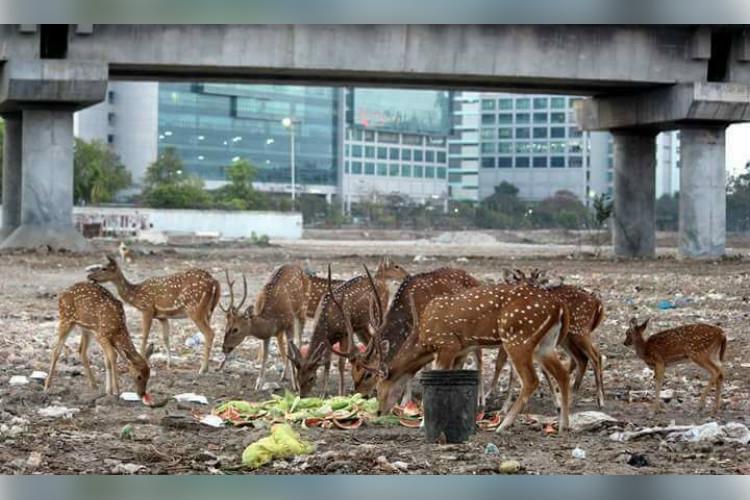
Over the past month, upsetting photos of spotted deer feeding on plastic and other waste in and around the Taramani area in Chennai have surfaced on social media. The deer had reportedly strayed from the IIT Madras campus or nearby areas. The loss of the forest ecosystem forces these herbivores to munch on plastic which in turn results in their death due to stomach bloating.

The pictures, which many are sharing on social media, were perhaps first postedby Facebook user Aarthi Gopalan.

Unfortunately, this is not new to a city that has witnessed several deer deaths over the years.

In fact, an RTI by animal activist Antony Rubin revealed that 220 deer and 8 blackbucks died between 2013 and 2016 on the IIT Madras campus. The campus, a thickly forested area, has increasingly come under the scanner for disrupting the ecosystem in the area with toxic waste and with garbage during its annual student fest, Sarang. After the January 2014 edition of Sarang, The Fifth Estate, a website run by IIT Madras students, reported that 21 deer had died and three were injured during the event.

Speaking to TNM, Antony Rubin says, “There is too much construction, debris and waste on campus. This has been happening for quite some time now. DLF bought a property in the area which was occupied by deer. They cleared out the entire building, so the deer came out and they are feeding on the garbage over there.”

Antony warns that trying to ‘trap them’ could prove fatal for these creatures. “Deer are very sensitive. If they are caught by force, they literally die within a few minutes because they go into shock. The death rate during translocation is about 20 to 30%. The ideal way is to slowly guide them towards Guindy National Park or IIT. There should be no traffic and it should be calm, so that the deer are not stressed.”

Animal rights activist Shravan Krishnan wrote on Facebook, “We have in fact spotted deers as far as Gandhinagar, Indra Nagar and past Kotturpuram. The main reason for these deers to stray out is because of loss habitat especially in IIT.  These deers stray out for food and water during the summers. You only see deers coming out, but we have spotted a whole lot of animals such as pangolins, jackals, civet cats, jungle cats and monitor lizards also venturing out due to habitat destruction. This problem will get worse in the coming years.

The only way to stop deers venturing out is to improve their habitat and to stop construction inside IIT and other buffer areas. (sic)”

In November last year, in response to Antony Rubin’s petition before the National Green Tribunal (NGT), the Forest Department had admitted that “due to the presence of the solid waste stray dogs are entering into the campus and they are attacking the deer and blackbucks and causing fatal injuries and in such circumstances necessary directions are to be issued to remove all the solid waste and to see that campus is free of stray dogs and protect the wildlife (sic).”

In December 2017, the southern bench of the NGT had directed IIT Madras to ensure that no further damage or injury is caused to the animals, including endangered species on campus.

IIT Madras, on the other hand, had claimed that they have an efficient process for solid waste management in place and blamed the increasing number of stray dogs on the campus for the death of the animals.

Meanwhile, the southern bench of the NGT has virtually become non-existent as its last member retired and no new appointment is forthcoming. Pending non-compliance appeals before the court are now left in the lurch.

With no way of filing appeals here, activists end up incurring significant expenditure moving the cases elsewhere. “The case keeps getting rescheduled here. So we are trying to move it to Delhi. What else can we do?” Antony asks.

Source….Manasa Rao in http://www./www.thenewsminute.com/

Natarajan

Message for the Day…” Loud talk disturbs those who practise namasmarana (remembrance of Lord’s name) or meditation (dhyana) or recitation (japam)! Noise breeds further noise.”

It must be explained to people who come to Prasanthi Nilayam that silence is the very first rung of the ladder of spiritual endeavour and the hallmark of this place! From here, they must learn to make every place, wherever they are, a Prasanthi Nilayam. Loud talk disturbs those who practise namasmarana (remembrance of Lord’s name) or meditation (dhyana) or recitation (japam)! Noise breeds further noise. This is a workshop, where damaged minds and hearts come for repair or overhaul. In workshops there will be the din of hammer, the clang of wheel, the whirr of engine and the clatter of chains. In this workshop, only the whisper of the Name of God should be heard. With new parts fitted and new coats of paint, cars emerge out of the workshop as good as new and they run smoothly, without trouble, for miles and miles. People must find Prasanthi Nilayam as a workshop for persons, who are weary, travel-worn, or about to enter upon a long journey.

Source::: http://media.radiosai.org/

Natarajan

வாரம் ஒரு கவிதை… ” எங்கும் எதிலும் “

எங்கும் எதிலும்
————–

photo-1485546246426-74dc88dec4d9

எங்கள் வங்கியில் எங்கும் எந்த ஊரிலும்
எந்த கிளையிலும் நீங்க உங்க பணம்
பெறலாம் ..பணம் கட்டலாம் என்று
சொன்னது என் வங்கி …மகிழ்ந்தேன் நான் !
வங்கிக்கு செல்லும் வீண் சங்கடம் எதுக்கு
உனக்கு…. உன் வங்கி கணக்கு விவரம்
இப்போ உன் மடிக் கணினியிலும் கைபேசியிலும்
சொன்னது மீண்டும் என் வங்கி !
வங்கியே என் கையில் இப்போது ..எங்கும் எப்போதும் !
பணம் எடுக்க ATM …எங்கும் எதிலும் எப்போதும் !
விண்ணில் பறந்தேன் நான் …மண்ணில் இல்லை
என் கால் !
எங்கும் எதிலும் எப்போதும் பண பரிமாற்றம் !
உங்க வங்கிக்கு நீங்க வரவே தேவை இல்லை
உங்க வங்கி கணக்கு இப்போ உங்க கையில்
என்றும் சொன்ன என் வங்கி இருக்குதா
அதே இடத்தில் என் பணத்துடன் ?
இன்று சென்று பார்க்க வேண்டும் நான் !
எங்கும் எதிலும் நானாவது கவனமாக
இருக்க வேண்டாமா ? என் வங்கியில்
இருப்பது என் பணம் அய்யா !
Natarajan
in http://www.dinamani.com dated 25th Feb 2018

Unlike the Super-Rich defauters ,this Ex-PM”s familyHonoured their loan liability ….

These are not good times for the Punjab National Bank, which is embroiled in an 11,400 crore-scam allegedly perpetrated by diamond mogul Nirav Modi and his maternal uncle, Mehul Choksi.

For the average citizen, this is yet another instance of a wealthy man swindling public money through dubious loans issued by these banks, and leaving the country without paying back his dues.

Unlike Nirav Modi and Vijay Mallya, the PNB, which is India’s second largest public-sector bank, also had famous personalities and their families as customers who have honoured their loans.

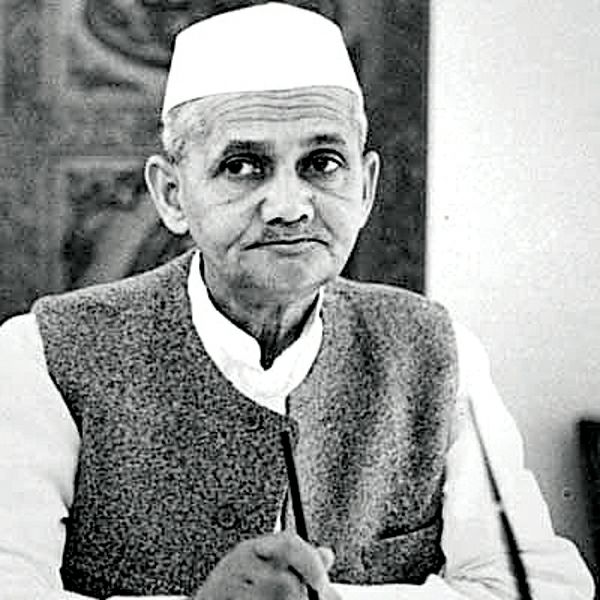
Former Prime Minister Lal Bahadur Shastri had taken a car loan of Rs 5,000 from PNB. After his sudden demise on January 11, 1966, the former prime minister’s widow Lalitha paid back the loan from the pension she received, reported Times of India.

“We went to St Columba’s School on a tonga. Once in a while, we used the office car, but my father did not allow us to use it regularly for any kind of private work. There was a demand at home that we should buy a car,” said Anil Shastri, his son and senior Congress politician, to the publication.

In response to his family’s demands, Shastri approached a senior official from the PMO and discovered that a new Fiat would cost Rs 12,000. Since the family had only Rs 7,000 in the bank, the prime minister decided to apply for a Rs 5,000 loan which the bank sanctioned that very day.

When the prime minister passed away in Tashkent, where he had gone to sign the declaration of peace between India and Pakistan after the 1965 war, the loan remained unpaid. “It was repaid by my mother from the pension she received after my father’s death,” said Anil Shastri.                                                                                                                         


This 1964-model Fiat with the plate number DLE 6 is today exhibited at the Lal Bahadur Shastri Memorial in the national capital.

Source….www.thebetterindia.com

Natarajan


When your parents agree to watch your children, this is a convenient arrangement in every respect, but in order for it to work best for all parties, it is important to have some basic rules so that your parents don’t feel like substitute parents or like they are “working for you.” If you stop asking for their help and start demanding it, if you want them to follow all your rules, and if you involve your partner in arguments between you and your parents, you should reconsider your behavior and read the following tips for maintaining a relationship with grandparents who care for their grandkids.

1. Don’t take your parents for granted

Within our family unit, we tend to forget that those around us are people with needs and limitations of their own, just like us. This is even truer when our parents become caregivers to our children. Although grandchildren sometimes seem to be a source of happiness and enjoyable pastime for your parents, remember that they have other interests. Don’t assume that your parents are always available for you or want to help all the time. Ask for help and don’t demand it, and know when you should hold back and not burden them, even considering their age limitations.

If your parents took care of your children all week, you might want to reconsider asking them to babysit Saturday night. Despite the grinding routine, it must be remembered that our parents also need their own free time, a listening ear and someone who would like to spend time with them talking about things that concern them. Look for shared time with your parents where you can recharge them with energy and build up your relationship.

2. Be a little laxer on your rules

Every parent has rules and methods when raising their children; some don’t want their children to watch television, some don’t want them eating candy, and some schedule tutors immediately after the kids come home from school. Whatever your rules are, when your children are under your parents care for a long time, you may need to be a bit more flexible with your rules.

Keep in mind that your parents can’t meet all your conditions and expectations and might even choose to break your rules, whether it’s because that’s what they’re used to, or maybe because they want to spoil and treat their grandkids. As long as your parents do not do something that compromises your child’s physical and mental well-being, think your rules over, and decide which one you can be more flexible with, and which ones you aren’t budging on.

3. Offer payment for special expenses

Even if in most cases your parents won’t ask for compensation for taking care of your children, remember that they have additional expenses on the days they take care of and spend time with your little ones. If grandparents take the grandchildren for a meal at a restaurant, for a day at the mall, or to the zoo, the experience usually involves quite a bit of an expense. Offer to pay them back, or even leave some money with them beforehand. Even if the offer is rejected by your parents, be sure to offer them money from time to time to show them that their help isn’t expected or taken for granted.

4. Say thank you and buy them a gift

Your parents don’t take care of their grandchildren in order to receive a gift. They do so for a variety of reasons related to helping you and just loving and wanting to spend time with their family. Despite all this, all of us, old and young, need recognition and reinforcement. Thank your parents and don’t take their help for granted, even if they’re guilty of doing so themselves. Buy them a nice gift and write a thank you card to remind them of your appreciation of their dedication and help. In order to repay your parents in another way, try to help them in areas where they have difficulty as in small renovations or house maintenance.

5. Don’t involve your partner in arguments with your parents

It is natural and common for you to have occasional disagreements with your parents about issues related to the care and education of your kids, and it’s even recommended that you have an open conversation with them about the issues that concern you, but be sure to do so without involving your partner. Your parents may feel uncomfortable or even attacked, in the presence of a more distant person like your spouse, even if they like and get along with them. If you can’t overcome the problem alone, you can lean on your partner for support, but first, try to talk to your parents privately and remember that they have only good intentions for you and their grandchildren.

6. Encourage your child to respect your parents

Do you come across situations where your children are cheeky to your parents? Do they demand instead of ask, treat your parents with contempt and perhaps maybe even curse them out? Just before you scold them, ask yourself whether your children are just copying the nature of the relationship they have seen between you and your parents. Remember that personal example is the main way children learn about relationships.

Beyond setting a personal example, make sure to praise and thank your parents in front of your children; you can tell them for example how Grandpa once managed to fix the car during a family trip or how Grandma sewed you the most beautiful costume in school. Beyond that, it is important that you teach your child how to deal respectably with arguments and disagreements in general, and with their grandparents in particular.

7. Clean up after yourself

After a whole day in the company of children, everyone’s house looks completely different – toys everywhere, puzzles scattered all over the floor, half-eaten candy and dirty dishes all over the place. It may be that in your home this doesn’t really bother you, but when your children spend time with your parents, it isn’t fair to leave their home messy. Make sure that the kids clean up the mess they made, and do it yourself if your child is too young to do It themselves.

8. Make your home accessible to parents

Technology has become a part of our lives whether we like it or not. Even those who are deterred by innovations have to adapt to a new era and can even finally discover that they like the new possibilities. Many of our parents have a smartphone and a Facebook account and get along very well.

However, it is worth remembering that each device and software has its own complex operating system. When your parents come to your home to watch your children, let them feel comfortable and give them access to all the tools you have in your home. Be sure to explain to your parents how to operate all electronic devices putting special emphasis on the TV, computer, microwave and other appliances that they will most likely want to use.

9. Don’t have your parents cook and clean

You may never have asked your parents to fold your laundry or cook dinner. They just see a pile of clothes on the sofa in the living room and fold it on their own. But what starts out as a small initiative can become an abysmal routine in which most household chores, including cleaning, cooking, children’s showers and even homework help, are done by your parents. In some cases, your parents also drive your kids to afterschool activities.

You may think that your parents are just doing these things to kill time, but no one actually wants to do these menial tasks, especially considering that your parents have to clean up their own home. Just let your parents know that that isn’t something they have to do, and to just enjoy the time with their grandchildren.

Once your kids get older and you no longer need your parents to watch them, they’ll be teenagers managing their own schedules. In order to maintain the relationship between them and keep it deep, mutual and ongoing, make sure that it isn’t based solely on supervision and fulfillment of tasks.

Encourage your children to get off their phones and talk to their grandparents, take an interest in them, discover more of their life story and family heritage. On the other hand, encourage your parents to play with their grandchildren and open up to them not only as grandparents but as human beings. You will find that even when your children grow up and get older, they’ll still want to visit their grandparents and the bond between them will accompany them for the rest of their lives.

Source….www.ba-ba mail.com
Natarajan