This image of a migrant child went viral. Here’s the story behind it……

Photographer John Moore, who took the picture that has come to symbolise the horror of the new family-separation policy in the United States, reveals what happened that night.

MCALLEN, TX – JUNE 12: A two-year-old Honduran asylum seeker cries as her mother is searched and detained near the U.S.-Mexico border on June 12, 2018 in McAllen, Texas. The asylum seekers had rafted across the Rio Grande from Mexico and were detained by U.S. Border Patrol agents before being sent to a processing center for possible separation. Customs and Border Protection (CBP) is executing the Trump administration’s “zero tolerance” policy towards undocumented immigrants. U.S. Attorney General Jeff Sessions also said that domestic and gang violence in immigrants’ country of origin would no longer qualify them for political asylum status. (Photo by John Moore/Getty Images)


A two-year-old girl in a bright pink shirt is crying. It’s the middle of the night, and she’s only visible thanks to bright lights, likely from cars and cameras. She’s sobbing, her head tilted back in fear as she looks up at a strange man touching her mother. But nobody can soothe her.

This image of a Honduran girl crying as United States Border Patrol agents search her mother has come to represent the heartbreak being experienced by illegal immigrants separated from their children.

Pulitzer prize-winning photographer John Moore has been documenting the immigrant experience for a decade, riding along with both Border Patrol agents and immigrant trains in order to get the story.

Speaking of the image, he speaks about the June 12 ride-along that resulted in the emblematic picture — not to mention the other heartbreaking photos he captured of this mother and child.

That fateful night                                                                                                                                   

On June 12, after seeking access, he accompanied Border Patrol agents to the banks of the Rio GrandeRiver on the outskirts of McAllen, Texas.

Waiting with the guards for hours, he finally heard rafts coming across the river. They waited a little longer and then suddenly moved in to see nearly dozen of them – mostly women and children.

Describing that moment itself, Moore says, “Most of these families were scared, to various degrees. “I doubt any of them had ever done anything like this before — flee their home countries with their children, travelling thousands of miles through dangerous conditions to seek political asylum in the United States, many arriving in the dead of night.”

While the agents were trying to get the families into buses, he finally spoke to one woman who identified herself as a Honduran. She was travelling with her two-year-old. “The mother told me they had been travelling for a full month and were exhausted,” says Moore, who speaks Spanish. “They were taken into custody with a group of about 20 immigrants, mostly women and children, at about 11 pm,” he was quoted as saying to Getty Images FOTO.

Describing what happened next, Moore says, “Before transporting them to a processing center, transportation officers body searched everyone and the mother was one of the last. She was told to set the child down, while she was searched. The little girl immediately started crying. While it’s not uncommon for toddlers to feel separation anxiety, this would have been stressful for any child. I took only a few photographs and was almost overcome with emotion myself. Then very quickly, they were in the van, and I stopped to take a few deep breaths.”

Moore says he doesn’t know what became of the 2-year-old Honduran girl, adding that the asylum seekers he photographed likely had no idea of the new “zero tolerance” policy that has led to families being separated from their children, since they had been travelling for a month under harsh circumstances.

Source….www.rediffmail.com

Natarajan

MCALLEN, TX – JUNE 12: A U.S. Border Patrol vehicle illuminates a group of Central American asylum seekers before taking them into custody near the U.S.-Mexico border on June 12, 2018 in McAllen, Texas. The group of women and children had rafted across the Rio Grande from Mexico and were detained by U.S. Border Patrol agents before being sent to a processing center for possible separation. Customs and Border Protection (CBP) is executing the Trump administration’s zero tolerance policy towards undocumented immigrants. U.S. Attorney General Jeff Sessions also said that domestic and gang violence in immigrants’ country of origin would no longer qualify them for political asylum status. (Photo by John Moore/Getty Images)

“எட்டு அடி குழியில் 3000 லிட்டர் மழை நீர் சேமிப்பு” – அசத்தும் கோயம்புத்தூர்காரர்கள்!


“மழை நீர்… உயிர் நீர்…”, “மரம் வளர்ப்போம்; மழை பெறுவோம்…” இப்படி மழை நீருக்காக ஏராளமான வாசகங்கள் பெரும்பாலும், வாகனங்களின் பின்புறம்தான் எழுதப்படுகின்றன. கான்கிரீட் காடான நகரங்களில் மழை நீர், சாக்கடையிலும், கடலிலும்தான் கலக்கின்றன. பெய்யும் மழை நீரைச் சேகரிக்க முடியாமல், கோடை காலத்தில், தண்ணீர் பஞ்சம் ஏற்பட்டு, கேன் தண்ணீரை நம்பி காலத்தை ஓட்டி வருகிறோம்.

கோவையில் இந்தாண்டு கோடை காலம் முதலே நல்ல மழை பெய்து வருகிறது. கோவையில் ஓராண்டில் பெய்யும் சராசரி மழை அளவு 620 மி.மீட்டர். இந்த நீரைச் சேகரித்தாலே குடிநீர் பஞ்சம் எட்டிக்கூட பார்க்காது. ஆனால், பெய்யும் மழை நீரைச் சேகரிக்க முடியாததால், கடந்த சில ஆண்டுகளாக, கோவையில் கோடை காலத்தில் கடுமையான தண்ணீர் பஞ்சம் ஏற்படுகிறது. நிலத்தடி நீர் மட்டமும் கணிசமாகக் குறைந்துவிட்டது.

இந்நிலையில், கோவையில் மழை நீரைச் சேமிப்பதற்காக, பொது இடங்களில், மழைநீர் சேகரிப்புக் கிணற்றை தன்னார்வலர்கள் அமைத்து வருகின்றனர். அதன்படி, இந்தியாவின் “மழைநீர் மனிதன்” என்று அழைக்கப்படும் சேகர் ராகவனின் ஆலோசனைப்படி, ரேக் அமைப்பு, கோவை குளங்கள் பாதுகாப்பு அமைப்பு மற்றும் சில நல்ல உள்ளங்கள் உதவியுடன், கோவை மாநகராட்சியுடன் இணைந்து மழைநீர் சேகரிப்பு கிணறை அமைத்து வருகின்றனர்.


மழைநீர் சேகரிப்பு கிணறு

மழை நீர் அதிகளவில் வீணாகக்கூடிய பொது இடங்களில், குழி தோண்டி, அதில் கான்கிரீட் ரிங்கை அமைத்தால் போதும். உதாரணத்துக்கு எட்டு அடி குழிதோண்டி, அதில் தொட்டி போல, நான்கு அடி விட்டமுள்ள, காங்கிரீட் ரிங்கை இறக்கி வைத்தால்போதும். சராசரியாக எட்டு அடி ஆழமுள்ள குழியில் 3,000 லிட்டர் நீரை சேமிக்கலாம். இதில் சேமிக்கப்படும் நீர், கொஞ்சம், கொஞ்சமாக நிலத்தில் இறங்கும். இதன் மூலம், சுற்றுவட்டாரப் பகுதிகளில் நிலத்தடி நீர் மட்டம் உயரும். சென்னையில் வெற்றி பெற்ற இந்த மழைநீர் சேகரிப்புக்கிணறுகளை, கோவையில் முதல்கட்டமாக, குறிச்சி பகுதியில் மாநகராட்சிக்கு சொந்தமான ரிசர்வ் சைட்டிலும், துடியலூர் பகுதியிலும் நடைமுறைப்படுத்தியுள்ளனர்.

இதுகுறித்து சேகர் ராகவன், “பூமிக்குள் நீர் இறங்குவதற்கு, 10 முதல் 15 அடி ஆழத்துக்கு குழி தோண்டலாம்.  நமக்கு தகுந்தாற்போல் ரிங் அமைத்துக் கொள்ளலாம். ஆண்டுக்கு ஒரு முறை மட்டும் இதைச் சுத்தம் செய்தால் போதும். இதை வீடுகளிலும் அமைக்கலாம். தெருக்களின் ஓரமாகவும் அமைக்கலாம். நீர் சேமித்து வைக்கும் தொட்டியாக இதைப் பார்க்கக் கூடாது. நீரை நிலத்தடிக்கு அனுப்பி வைக்கும் திட்டமாகத்தான் பார்க்கவேண்டும். சென்னையில் பல இடங்களில் இந்த மழைநீர் சேகரிப்புக் கிணற்றை அமைத்துள்ளோம். இதன் மூலம் வெள்ள அபாயத்தையும் தவிர்க்கலாம். நிலத்தடி நீர் அளவையும் அதிகரிக்கலாம். குறிப்பாக, அடுக்குமாடி குடியிருப்புப் பகுதிகளில் இதுபோன்ற கிணறுகளை அமைப்பது மிகவும் நல்லது. நிலத்தடி நீர் என்பது, வங்கியை போன்றது. அதில் தண்ணீரைச் செலுத்தினால்தான், மீண்டும் அதில் இருந்து, தண்ணீரை எடுக்க  முடியும். 10 அடி ஆழம், 3 அடி காங்கிரீட் ரிங்குடன் கூடிய மழை நீர் சேகரிப்பு கிணறை அமைக்க 12 ஆயிரம் ரூபாய் ஆகும்” என்றார்.

ரேக் (Raac) அமைப்பின் ரவீந்திரன், “தற்போதைக்கு, பெரும்பாலான பகுதிகளில், மழை நீரைச் சேகரிப்பதற்காக, 200 அடிக்கு போர் போட்டு, ஆறு அடிக்கு குழித் தோண்டி, அதில் கற்களை போடுவார்கள். இதற்கு 75 ஆயிரம் ரூபாய்வரை செலவாகும். எல்லோராலும் இதை அமைக்க முடியாது. அவற்றை பராமரிப்பதும் கடினம். ஆனால், மழை நீர் சேகரிப்புக் கிணறுகளை அமைக்க அவ்வளவு செலவு ஆகாது. இதை, பராமரிப்பதும் மிகவும் எளிது. 15 ஆயிரம் ரூபாய் செலவுசெய்து ஓர் கிணற்றை அமைத்தால், அதன் மூலம் 15 ஆண்டுகளுக்கு மழை நீரைச் சேமிக்கலாம். பொது இடங்களில் மழை நீரைச் சேமிப்பதற்கு இது மிகவும் எளிதான வழி. இதுதொடர்பாக, மக்களிடையே விழிப்பு உணர்வும் செய்து வருகிறோம். மழைக்காலம் முழுவதுமே மழை நீர் சேகரிப்புக் கிணற்றை அமைக்கத் திட்டமிட்டுள்ளோம்”  என்றார்.

சமூக ஆர்வலர் டிம்பிள் கூறுகையில், “சென்னை அண்ணாநகரில் என் உறவினர் வீடு உள்ளது. அவர்களுடையே தெருவே லாரி தண்ணீரை பிடித்துக் கொண்டிருக்கும். ஆனால், இவர்கள் பிடிக்க மாட்டார்கள். அப்போதுதான், மழைநீர் சேகரிப்பு கிணறு குறித்துத் தெரியவந்தது. அப்போதிலிருந்தே, இந்தத் திட்டத்தைக் கோவைக்கு கொண்டு வரவேண்டும் என்று ஆசை இருந்தது. எங்களது அப்பார்ட்மென்ட் அருகே, இப்படி வீணாகும் மழைநீரை பார்க்கும்போது, எனக்கு வருத்தமாக இருக்கும். பின்னர், சேகர் ராகவனுடன் ஆலோசித்து, எங்களுடைய அப்பார்ட்மென்ட் அருகே உள்ள ரிசர்வ் சைட்டில் கிணறு அமைத்தோம். 2,500 சதுரடி பகுதியில் பெய்யும் மழை நீர், இதில் சேமிக்கப்படும். கோவை முழுவதும் இதுபோன்று 44 ஆயிரம் குழிகள் அமைக்கலாம் என்கின்றனர். அப்படி அமைக்கும்போது, நிலத்தடி நீரின் அளவு ஒன்பது மீட்டர் வரை அதிகரிக்கும். எனவே, பள்ளிகள், அரசு அலுவலகங்கள், ஷாப்பிங் மால்கள் போன்ற பகுதிகளில் இதுபோன்ற கிணறுகளை அமைக்கலாம். அந்தப் பகுதிகளில் உள்ள மக்கள் இணைந்து, தங்களின் பங்களிப்பில்கூட இதுபோன்று குழிகளை அமைக்கலாம்” என்றார்.

மழை பெய்வதற்கு முயற்சி செய்யாவிடினும், குறைந்தது பெய்யும் மழை நீரையாவது சேமிக்க முன் வருவோம்…!

Source….. http://www.vikatan.com

Natarajan

The Burning Mountain of New South Wales, Australia…

Approximately 224 km north of Sydney, just off the New England Highway, in New South Wales, Australia, is a hill that has been burning for the last 6,000 years. The fire burns underground, at a depth of about 30 meters, fueled by a coal seam that runs through the sandstone. The aborigines called the mountain Wingen, which means ‘fire’, and used its heat for warmth in the winter months, for cooking and for the manufacture of tools. They believed that the mountain was set on fire by a tribesman to warn others when the Devil carried him off deep into the earth. European explorers and early settlers knew of the Burning Mountain but they thought the smoke coming out of the ground was volcanic in origin. It was not until 1829 that a geologist identified it as a coal seam fire.


Photo credit: NSW National Parks and Wildlife Service

Coal seam fire, as it happens, are incredibly common, and thousands of them are burning underground across the world. In the US state of Pennsylvania alone, as many as 45 fires are burning, the most famous being the Centralia mine fire which has been burning since 1962. In India, more than seventy individual fires are burning beneath a region of the Jharia coalfield in Jharkhand. The fires, which started in 1916, are rapidly destroying the only source of prime coking coal in the country. The problem is more acute in coal-rich nations such as China, where underground fires are consuming at least 10 million tons of coal annually—with some estimate putting the figure to twenty times more. Beside losses from burned and inaccessible coal, these fires contribute significantly to air pollution and increased levels of greenhouse gases in the atmosphere. A geologist from the University of Alaska at Fairbanks calls them “a worldwide catastrophe with no geographic territory, and if we don’t take care of them they’re going to take a toll on us.”

Underground coal-seam fires are the most persistent fires on Earth and can burn for thousands of years. There is geological evidence that coal seam fires existed as early as the Pleistocene era, although modern-day coal fires are usually the result of human undoing, such as mining accidents or open coal seams unintentionally coming in contact with oxygen. Some coals ignite spontaneously at temperatures as low as 40 °C. Once fire gets hold, temperatures climb rapidly. The permeability of the coal allows oxygen to reach the fire but poor ventilation traps the heat inside. Some coal fires exceed temperatures of 500 °C.

Coal fires are very difficult to extinguish. It’s like a frustrating, expensive version of whack-a-mole, writes Dan Cray for Time. “You put one down, then 300 feet later another one picks up,” says Mark Engle, a geologist with the U.S. Geological Survey. Many governments have completely given up on the effort.

One of the most visible changes coal seam fires make is upon the landscape and on the environment. For example, near a coal fire in Germany, elevated ground temperatures allowed many insects and spiders to survive the cold winter. In Australia’s Burning Mountain, the heat has killed off all vegetationexcept those in the periphery of the burning seam, which actually thrives from run-off from the brunt soil. Large areas of the land has collapsed as a result of the burnt-out coal seam, and smoke vent from many cracks on the ground. The heat has turned the soil red.

Unlike Pennsylvania’s Centralia, Burning Mountain is actually pretty safe for tourists. There is a 4 km-long walking trail through the region with information panels along the track unpacking the story of Burning Mountain and the fascinating Aboriginal heritage. A viewing platform at the climax of Burning Mountain walk provides a safe vantage point to view the exhaust vents and rocks transformed by extreme temperatures.

Source….. Kaushik in http://www.amusing planet.com

Natarajan

The Meteorite That Crashed Into A Car…..


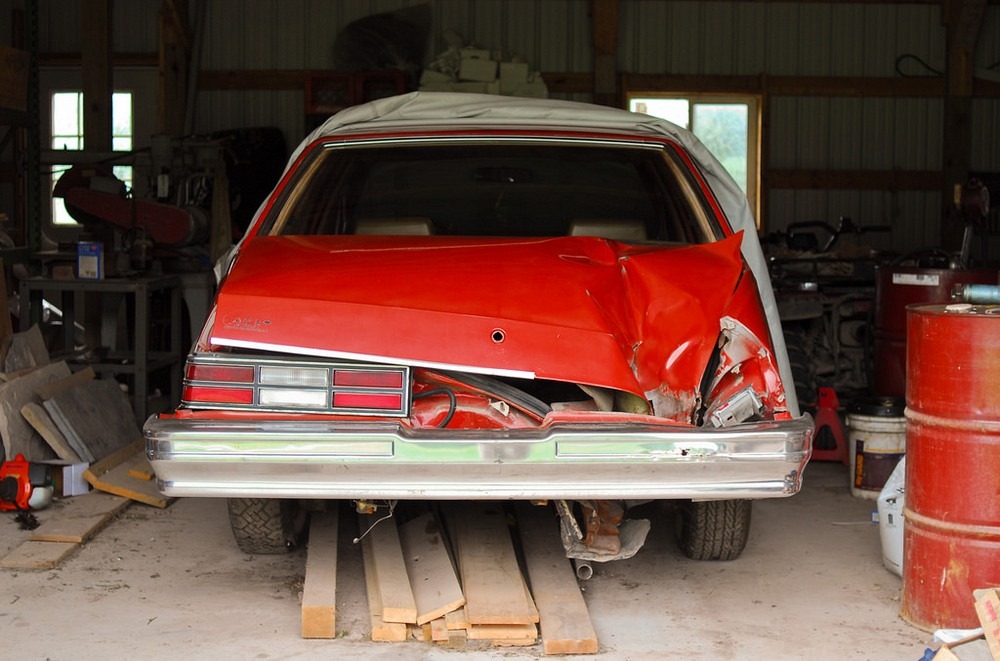
The Peekskill meteorite car sitting at a collector’s garage in Peekskill. Photo credit: Ryan Thompson/Flickr 


On October 9, 1992, a brilliant fireball flashed across the evening sky over eastern United States startling thousands of spectators attending the weekly high school football matches being played across the East Coast. The fireball, that witnesses described as being brighter than the full moon, was travelling almost horizontally and heading northeast. In just forty seconds, the meteorite had crossed four states travelling 700 kilometers through the atmosphere. The intense heat and friction broke the space rock into more than 70 pieces, several of which were large and fast enough to produce their own glowing trails. A considerably weighty chunk of the meteorite, about the size of a bowling ball, eventually touched ground at Peekskill, New York, with a loud boom.

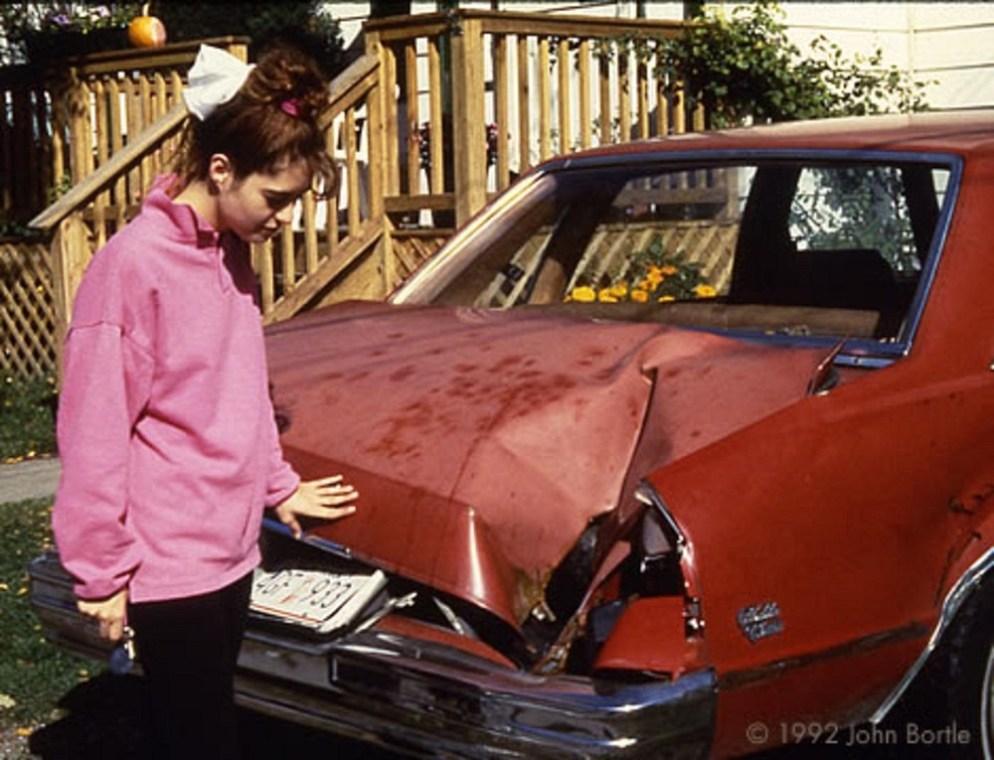
17-year-old high-school student Michelle Knapp was watching television in her parents’ living room when she heard a thunderous crash outside. Knapp ran outside to investigate the noise. There she found, standing on the driveway, her 1980 Chevy Malibu. The Malibu’s trunk was twisted and battered with a hole through it. A sizeable rock over 12 kilograms in weight lay under the car, embedded in the asphalt. It was still smoking and smelled of rotten eggs. The rock had narrowly missed the fuel tank.

Understandably, Michelle was not happy; she had recently bought the car for $400 and now it was totaled. Michelle did what anybody else would have done—she called the cops and reported an act of vandalism. It was a neighbor who reasoned that vandals can’t throw rocks through cars and surmised that the rock was from outer space. The suspicion proved correct when the very next day, a curator from the American Museum of Natural History in New York City confirmed that the object was indeed a meteorite, the same one that streaked across the northeastern sky distracting coaches and parents from their kid,s football games.

Michelle Knapp in the driveway with her Malibu taken only days after the historic impact. Photo credit: John Bortle

It was this impeccable timing of the Peekskill meteorite that made it one of the most witnessed and most recorded meteorite events in history. Dozens of spectators to the high school football games had brought camcorders with them, and when the meteorite flashed over their heads many of these cameras turned skywards, towards the brief but more exciting event. As many as 16 different observers from various locations recorded the event on tape—a record that was not broken until 2013 when a meteor exploded over Russia. The sixteen videos of the fireball taken from multiple perspectives made it possible for scientists to determine the exact trajectory of the meteorite. Indeed, Peekskill is one of the few meteorites whose orbit is precisely known.

As for the car, Michelle spent no time securing a deal with a renowned meteorite collector for an amount that was nearly two orders of magnitude more than what Michelle had paid. Since then, the car has been on display in numerous cities throughout the world, including Paris, Tokyo, Munich and more.

Source……Kaushik in http://www.amusing planet .com

Natarajan


The Pigeons who took Photos ….

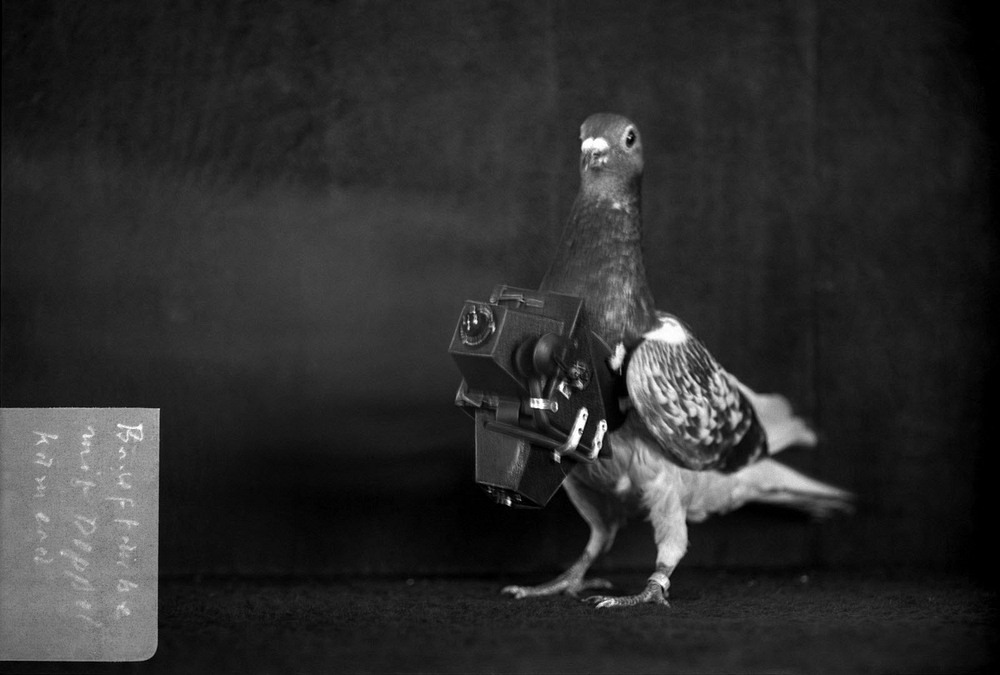
At the turn of the last century, when aviation was still in its infancy, a German named Julius Neubronner submitted a patent for a new invention—a miniature camera that could be strapped to the breast of a pigeon so that the bird could take flight and snap pictures from the air.

Julius Neubronner was an apothecary who employed pigeons to deliver medications to a sanatorium located near his hometown Kronberg, near Frankfurt. An apothecary is one who makes medicines. A pharmacist is a more modern word, but in many German speaking countries, such as Germany, Austria and Switzerland, pharmacies are still called apothecaries.                                                                                                                                   


Apothecary was Julius Neubronner’s family profession. His father was an apothecary, and so was his grandfather. In those days, homing pigeons were used extensively to carry messages and small supplies. It was Julius’s father’s idea to use pigeons to receive prescriptions from the sanatorium and send out medicinal supplies in a hurry—a practice that continued for more than half a century until the sanatorium closed.

One day, Neubronner let out a pigeon on an urgent errand but it didn’t return. When several days passed and there was still no sign of the bird, Neubronner assumed the pigeon was lost, or it got caught and killed by predators. A month later, the lost messenger showed up unexpectedly at Neubronner’s place. The bird appeared well fed, which got Neubronner into thinking. Where had he gone? Who had fed him?

Neubronner decided that he would start tracking his pigeons’ future travels.


Julius Neubronner with one of his pigeons.

Being a passionate do-it-yourself amateur photographer, it didn’t take long for Neubronner to fashion a miniature wooden camera which he fitted to the pigeon’s breast by means of a harness and an aluminum cuirass. A pneumatic system in the camera opened the shutter at predetermined intervals and the roll of film, which moved along with the shutter, took as many as thirty exposures in a single flight. The entire rig weighed no more than 75 grams—the maximum load the pigeons were trained to carry.

The pictures turned out so good that Neubronner started making different models. One system, for instance, was fitted with two lenses pointing in opposite directions. Another one took stereoscopic images. Eventually, Neubronner applied for a patent, but the patent office threw out his application citing that such a device was impossible as they believed a pigeon could not carry the weight of a camera. But when Neubronner presented photographs taken by his pigeons, the patent was granted in 1908.


Aerial photograph of Frankfurt.

Neubronner exhibited his photographs in several international photographic exhibition gaining him accolades. In one such exhibition in Dresden, spectators watched as the camera-equipped carrier pigeons arrived at the venue, and the photos were immediately developed and turned into postcards which they could purchase.

The technology was soon adapted for use during the First World War, despite the availability of surveillance aircraft then. Pigeons drew less attention, could photograph enemy locations from a lower height, and were visibly indifferent to explosions on a battlefield.

Neubronner’s avian technology saw use in the Second World War too. The German army developed a pigeon camera capable of taking 200 exposures per flight. The French too claimed they had cameras for pigeons and a method to deploy them behind enemy lines by trained dogs. Around this time, Swiss clockmaker Christian Adrian Michel perfected a panoramic camera and an improved mechanism to control the shutter. Pigeon photography was in use as late as the 1970s, when the CIA developed a battery-powered pigeon camera, though the details of the camera’s use are still classified.

Today, aerial photography has been replaced by aircrafts, satellites, and more recently, by affordable drones. But the legacy of Julius Neubronner’s pigeon photography lives on in these images which are among the very early photos taken of Earth from above.

Bonus fact: So what happened to Neubronner’s pigeon who stayed away from the owner for a month and returned fattened up? It had flown away to Wiesbaden, some twenty kilometers away, and was taken care of by a restaurant chef.


Source…..Kaushik in http://www.amusingplanet .com

Natarajan


A Grandchild’s Emotional Letter to Their Grandparents….

Dear grandparents, you may not have noticed, but while your grandchildren paint in the living room or sleep after a full meal, they want to tell you some very important and touching things. Spending time with you fills them with strength, support, and love like no other. You are the ones who know how to comfort, spoil and encourage them, and the only price to enter your home and heart is just a hug and a kiss. Awesome grandparents, your grandkids are grateful for all of these and many more things, even if they don’t always make a point of saying so. If you could step into their thoughts, we’re sure that this is what you’d see they want to tell you…


There are people in the world who always know how to make us feel special.


Their love is endless as part parents, teachers and some even best friends.

They believe less in discipline and more in spoiling,
They are less concerned with the rules and much more with handing out treats.

Their home is our second home and a place where we are always greeted with a smile and open arms.

In moments when we need a caressing hand and an enthusiastic gaze, a sympathetic ear, and a warm embrace – they are always there.

When we tell them about our day, they are proud of us.
When they tell us about their lives, we are proud of where we came from.

They have silver hair and a gold heart that can always be trusted.

When it comes to “adults,” they’re the kind we like best!

They make soup for us when we are sick, watch the plays we put on, and soothe us when we get nervous.

Because of them, the world is a better and safer place.

Everyone is busy, but they always have time for us
Everyone is in a hurry, but they always have time for another kiss and a wish for our safety.

At their dining table you can find our favorite food:
A generous dose of devotion, spiced with attention and lots of affection.

They always give us the feeling that they’ve waited all day to see us and that everything became instantly better as soon as we arrived.

They are our grandparents and the source of the most complete, sweet and encompassing love we have in our lives.

Thank you for dreams that come true – we will always remember that grandparents are wonderful people!


Source….www.ba-ba mail.com

Natarajan

At the age of 7 , He is the youngest to scale the Mountain Kilimanjaro …

He just wanted to see some snow. But he got much more than that.
Samanyu, all of 7, scaled Africa’s loftiest peak and proved that no dream is impossible.
And that age is just a number.
Rediff.com‘s Divya Nair speaks to the mini mountaineer.


IMAGE: Samanyu Pothuraju at Uhuru peak, Mount Kilimanjaro in Tanzania.
All photographs: Kind courtesy Samanyu Pothuraju/Boots and Crampons

On April 2, 2018, when Samanyu Pothuraju, 7, from Hyderabad, was woken up at 3 am by his expedition leader Bharat Taminneni, he didn’t want to wake up.

He begged, “It’s too cold outside. I don’t want to go. Please let me sleep.”

It was the very last leg of their ascent to the summit of Mount Kilimanjaro so Bharat would not give in.

Recalls Lavanya Krishna, Samanyu’s mother, “Finally, Bharat told him that if he reached the summit, his favourite (Telugu film) hero Pawan Kalyan would (surely want to) meet him.”

Mention of Pawan Kalyan did the magic.

Samanyu woke up with a start.

Eight odd hours later that day, at 11.52 am, to be precise, little Samanyu made it to the top of Uhuru, the highest point of Mount Kilimanjaro, Tanzania. And clinched a world record.

At 7, Samanyu is the youngest person in history to scale this peak, 5,895 metres above sea level.

But the Class 3 student, who “loves karate, computers and math,” did not have the faintest idea about the significance of his journey.

“I was wearing a thick jacket and gloves. My legs were paining, but I was happy,” Samanyu tells Rediff.com from Hyderabad.

Last year he was one of the youngest to reach the Mount Everest base camp in Nepal.

What inspired him to go to Africa?

Mount Everest actually.

Says Lavanya, who accompanied Samanyu till Kilimanjaro’s second base camp and not beyond, “When we reached the base camp of Mount Everest, some months ago, he (Samanyu) was disappointed that he couldn’t see much snow.”

“When I told him about Kilimanjaro, he asked me if there would be snow and if he could touch it. I said yes. He said he wanted to go and see the snow.”

For Lavanya, a bank employee who quit her job to take care of her children (Samanyu’s elder sister is 13), sending her seven year old to the top of Kilimanjaro wasn’t an emotional decision.

It was about letting Samanyu have his dream.

She consulted Raji Thammineni of Boots and Crampons, a Hyderabad-based adventure logistics company, to find out how safe the journey was.

“Raji is a friend and she advised I first send Samanyu to a training camp to see if he was fit to go.”

Samanyu passed the camp last year with with flying colours.

“He could climb 50 steps up and down with ease, trek to mountains and even made it to the Everest base camp in October 2017,” says Lavanya.

In November, Samanyu signed up with Boots and Crampons to prepare to scale Kilimanjaro, Africa’s highest mountain.

In addition to his training, Lavanya helped her son get mountain ready by showing him a video of the terrain daily.

“He saw how people climbed it in different situations — rain, sun, snow, etc.”

Samanyu was keen to see snow. But he also wanted to see East Africa’s famous blue monkeys.”

“He saw three blue monkeys,” Lavanya says.

Lavanya and Samanyu flew to Tanzania on March 27.

“It was supposed to be summer. When we reached it was raining and snowing. My head was paining on reaching the second base camp, so I was asked to rest,” says Lavanya.

The next climb, from the second base camp to the last camp, took approximately 10 hours.

The final stretch from the last camp to the summit was equally long. But Samanyu finished it like a pro, says Lavanya.

‘It required meticulous planning to achieve this mission. We took all the care and precautions to keep the child safe and help him realise (the importance) of his mission to the summit of one of the most challenging mountains in the world,’ Bharat and Raji posted on Facebook about Samanyu’s achievement.

‘Master Samanyu fought bravely with different terrains — rainforest, moorland-rocky landscape, Alpine desert and crater rim — before summiting this wonder of the world. We are extremely proud to support Master Samanyu’s achievement which brought laurels to our country,’ the post added.

The sacrifices

To prepare for Africa, Samanyu had to wake up early and religiously maintain a schedule so he could balance school, extracurricular activities and mountaineering.

“He’d wake up at 5 am and go for his karate classes followed by cycling. After school, he’d train for mountaineering,” says Lavanya.

Samanyu had to follow a strict diet. Not too much sugar. No ice cream.

“I had to eat canned food,” Samanyu tells Rediff.com. “It was tasty though.”

“After we climbed down, they gave me ice cream. I was very happy.”

What’s next

His next challenge?

“I want to do the 10 peaks challenge in Australia.”

Turns out none of this has affected his academic performance: Samanyu, who studies at the Bolton School in Hyderabad, scored over 95 per cent in his last examination.           

IMAGE: Samanyu holds up a printout with Telangana Chief Minister K Chandrashekhar Rao’s image at Uhuru peak, Kilimanjaro.

Lavanya and Krishna spent Rs 15 lakhs funding their son’s expedition, but they feel helping Samanyu attain his dreams was their most important mission.

Here’s their message to parents: “Never stop your child from dreaming big. You can guide her /him on what is right and wrong. But support their dreams as much as you can.”

Samanyu is now waiting to meet Pawan Kalyan, as promised. His parents have tweeted the Telugu superstar about their son’s wish to meet him.

Hey, Pawan, if you are reading this feature, please do give lil’ Samanyu a call.

http://www.rediff.com

Natarajan


Meet the Ex-IAS Officer Who Left America to Head the Swachh Bharat Mission…


The Swachh Bharat Abhiyan (Clean India Mission) promised to bring open defecation in India down to zero, and the government had also guaranteed that it would build enough toilets in every village and city to completely eradicate the problem of open defecation.

Many of us will agree that open defecation leads to the proliferation of diseases, and it is thus, advisable, to make India completely open-defecation free.

However, one man working for the Swachh Bharat Mission knows that the subject of open-defecation is not as black and white as it seems. For many, it is a part of their lifestyle, that they cannot change overnight. The problem of maintaining toilets that were built by the authorities also keeps people outside the washroom walls.

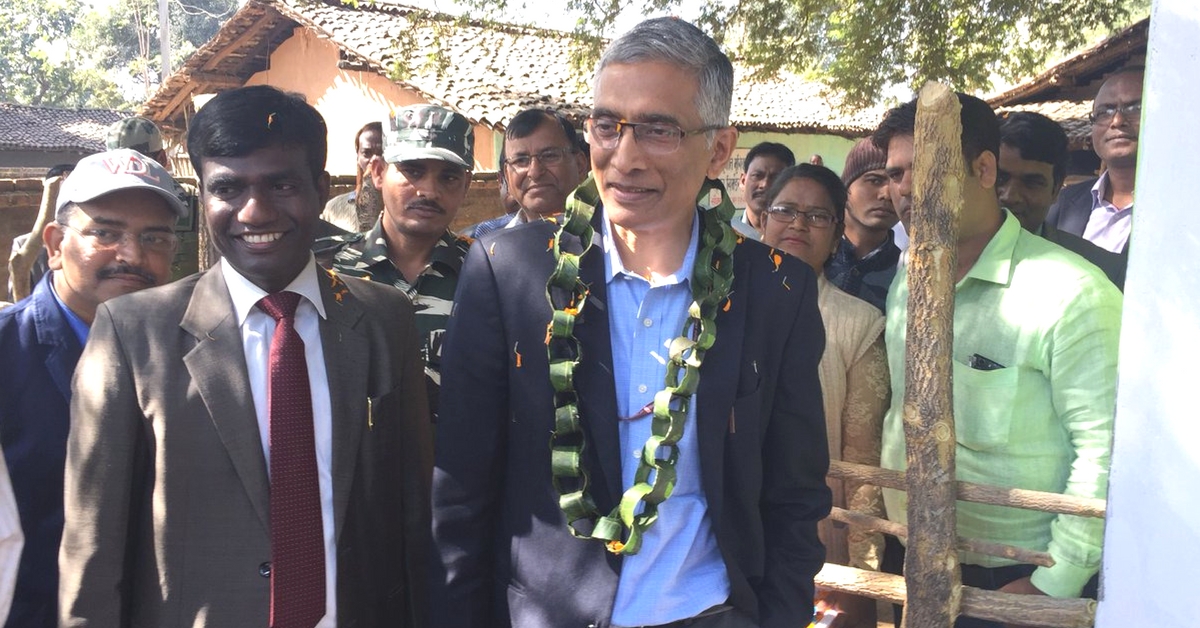
Meet Parameswaran Iyer, a former IAS (Indian Administrative Service) officer who currently leads the Swachh Bharat Mission  


Mr Iyer had worked with World Bank from April 1998 to September 2007 in Hanoi, Vietnam. From 2012 onwards he was the lead water and sanitation specialist for the World Bank and was instrumental in bringing two leading programmes on the ground there.

Before taking up a specialisation in Vietnam, Mr Iyer had also worked in Washington on Egypt and Lebanon and in the Bank’s Water Anchor.

When he realised that he had to accept that many people prefer to defecate in the open rather than in toilets, Mr Iyer brought his experience in Vietnam to practical use. In 2014, he had written about the need for behaviour change before a lifestyle change, on the World Bank’s site.

“The biggest lesson learned so far in Vietnam, and other countries is that eliminating open defecation is not driven by the construction of toilets.

It is driven by changing the behaviour at the community level based on quality, evidence-based interventions. What is also clear is that approaches must be tailored to be the specific context with careful consideration of local factors such as ethnicity,” he wrote.

Mr Iyer’s experience with the World Bank, across several countries, will certainly help India, to go a step further in the cleanliness mission.

This is a rare case of the Indian government appointing an IAS officer working with the World Bank for their initiative, and Mr Iyer has certainly upped the hopes of Indian citizens. He was appointed as Union Secretary for the Ministry of Drinking Water and Sanitation in 2017 on a two-year contract basis.

A senior government official told Livemint, “It is clear from the two-year fixed contract, that the government has decided to give him a free hand to steer the programme. It also gives a clear signal that if the government does not get the desired results from the internal talent pool, it will not hesitate in getting them from outside.”

With a combined experience of about two decades in this sector, Parameswaran is sure to be a beaming light of hope for the dream of a clean India!

Featured image source: Twitter.

Source….Tanvi Patel  in http://www.the betterindia.com

Natarajan


How Sivalingam battled pain to snatch another C’wealth gold….

‘I had no hopes of winning a medal after I injured my thighs during the National Championships while attempting 194 kg in clean and jerk. ‘

‘Even now I am competing at less than ideal fitness, but I am glad that was enough to get me a gold.’                                                                                                                                       

Defending champion Sathish Sivalingam (77 kg) claimed India’s third gold medal at the Commonwealth Games on Saturday, emerging triumphant despite having given up podium hopes after his injured thighs made even routine things like sitting painful.

The 25-year-old Indian lifted a total 317 kg (144+173) and was so ahead in the competition that he forfeited his final clean and jerk lift.

“I had no hopes of winning a medal after I injured my thighs during the National Championships while attempting 194 kg in clean and jerk. It’s a quadriceps problem; even now I am competing at less than ideal fitness, but I am glad that was enough to get me a gold,” said Sathish, after the medal presentation ceremony during which he was accorded a warm applause from the packed arena.

“I was in so much pain that even sitting was very painful for me. Everyone took care of me, gave me hope but I was not very confident. I had not trained that hard and my body was not at its best, and so how could I hope for a medal,” added the Tamil Nadu lifter.

GOLD COAST, AUSTRALIA – APRIL 07: Gold medalist Sathish Kumar Sivalingam of India poses during the medal ceremony for the Men’s 77kg Weightlifting Final on day three of the Gold Coast 2018 Commonwealth Games at Carrara Sports and Leisure Centre on April 7, 2018 on the Gold Coast, Australia. (Photo by Mark Metcalfe/Getty Images)


It was a fascinating contest of one-upmanship between Sathish and eventual silver-medallist Jack Oliver of England in the snatch competition.

The two kept upping the weights before their attempts but Oliver kept his nose ahead at the end of snatch as he lifted 145 kg in his second attempt. It was a kilogram more than Satish’s final attempt.

However, Satish had the last laugh in clean and jerk after Oliver failed two attempts of 171kg and settled for a total of 312 kg (145+167).

The bronze medal went to Australian showman Francois Etoundi, who lifted 305 kg (136+169) and collapsed clutching his injured shoulder after his final lift.

“I got lucky there, had he (Oliver) not dropped those weights, I would have had to go higher and I am not sure how my body would have taken that. I am quite relieved actually.”

At the 2014 Commonwealth Games, Sathish won the gold medal with 149 kg snatch and 179 kg clean and jerk lifts, totalling 328 kg. His lift of 149 kg in snatch continues to be the Games record.

“I didn’t want to touch that level because I still need to undergo rehabilitation. The fact that the access to our physio was limited made it all the more difficult. I just hope that we get a physio with us at the Asian Games,” said Sathish, once again highlighting the problems the weightlifters are facing due to the lack of accessibility of their physios in the competition area.

Sathish is also the reigning Commonwealth Championships gold-medallist.

“I hope to do even better in the Asian Games because there is a gap now. Earlier, the Asian Games used to come within 20-25 days of the Commonwealth Games, which didn’t give us enough time to prepare. But this time I have got time to prepare and be fully fit now,” he said.

Tags: Jack OliverKumar SivalingamSathish SivalingamFrancois EtoundiIMAGE

Source:   www.rediff.com

Natarajan

The jingle Trucks of Pakistan …

A typical Pakistani truck driver spends more time with his truck than he does with his wife. Which explains why he wants his 10-ton six-wheeler to look like a new bride.

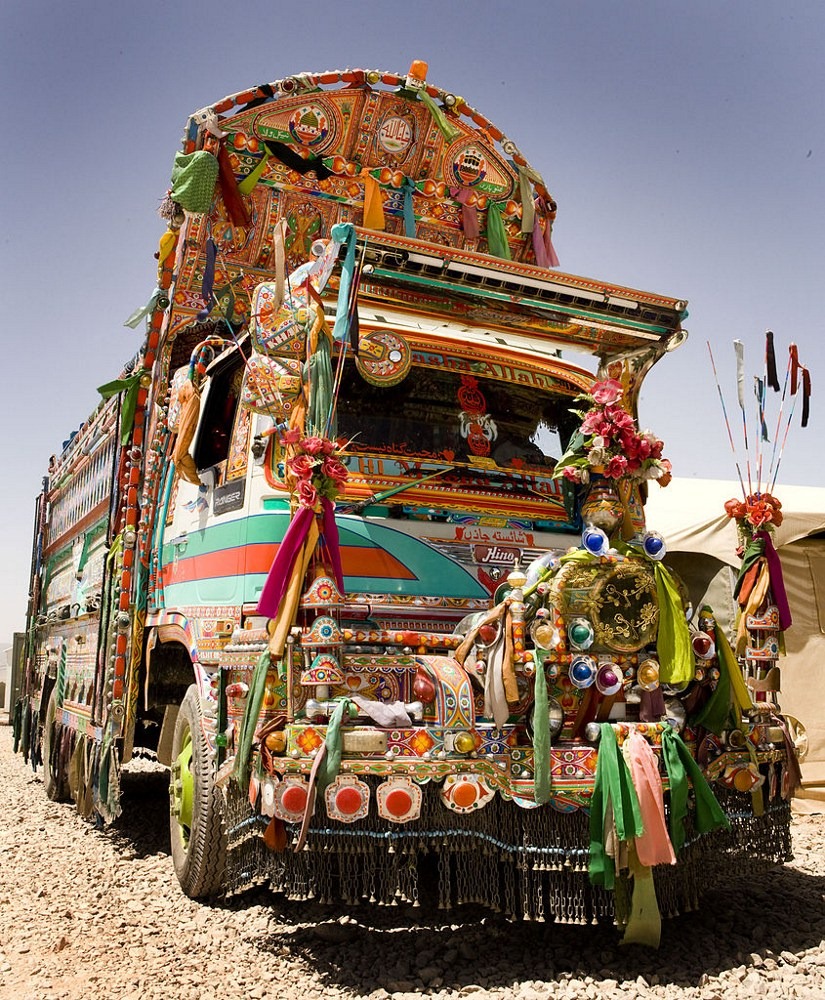
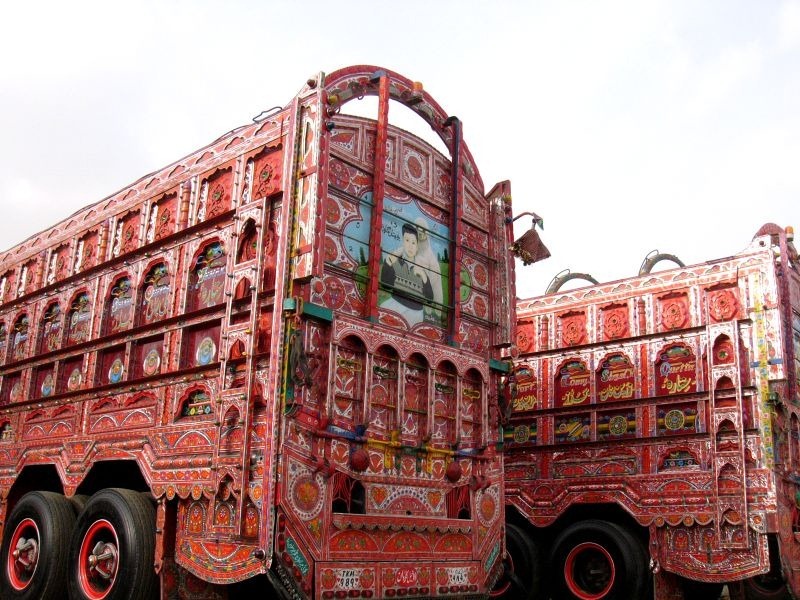
These trucks plying across Pakistan’s national highways and the neighboring country of Afghanistan are distinctively ostentatious. The entire trucks, from top to bottom, are a riot of colors. Lavishly painted panels containing a mosaic of birds, flowers, landscapes, saints, and actresses in hyper-saturated color palette adorn the exterior, while plastic flowers, draped beads, mirrors, ribbons and velvet grace the interior. The cabin is crowned by a custom built wooden prow wrapped in more kitschy artwork, while a string of metal bells dangle from the chassis all round the periphery. When the truck is in motion, these bells clang against each other like a new bride’s ghungroo. This is where the nickname “jingle trucks” come from—coined by US troops deployed in Afghanistan.


Photo credit: ISAF Public Affairs/Flickr

And it isn’t just trucks alone. Passenger buses, water tankers, transport vans, rickshaws, and even vendors’ pushcarts are psychedelically decorated with eye-popping colors. It’s like a rolling folk art, “a national gallery without walls, a free-form, kaleidoscopic exhibition in perpetual motion,” as Richard Covington puts it.

The tradition of decorating trucks began sometime in the 1920s with the introduction of the long-distance Bedfords—a British-built truck with rounded cab and seven-feet high paneled sides that was to become the country’s most prestigious and dependable truck for more than half a century. Originally trucks were painted with each company’s logo so that illiterate people could recognize who owned the trucks. Gradually, these logos became more fanciful, flamboyant and competitive. By the 1950s, stylized murals and frescoes had begun to replace them. It was only in the 1960s, as the country’s economy boomed, the decorations became increasingly sophisticated to reflect the growing wealth of the drivers and the rise of a new urban class.

Pimping out a truck this way cost truck owners a small fortune. It isn’t unheard of for a driver to spend the equivalent of a year’s worth, or more, of profits on truck decorations. According to a 2005 article, a basic painting and body job costs a minimum of $2500, equivalent to two years of the average truck driver’s salary. Some spend upwards of $10,000 outfitting their rigs. Unbelievably, many truckers will return to the workshop every three or four years for a full vehicle makeover.

“Truckers don’t even spend so much money on their own houses,” marvels Durriya Kazi, head of the department of visual studies at the University of Karachi. “I remember one driver who told me that he put his life and livelihood into the truck. If he didn’t honor it with the proper paint job, he would feel he was being ungrateful.”

A well-decorated truck also gives customers the impression that it is well taken care of and will, therefore, be a dependable way to transport goods.

Truck painting is also a big business. In Karachi city alone, more than 50,000 people are engaged in this unregulated yet lucrative industry. Family-run workshops comprising of apprentices and highly trained artisans, and small shops selling all manners of outlandish ornaments and accessories crowd around truck yards.

Over the years, however, the business has changed. Now instead of meticulously hand painting each truck, mass produced stickers and adornments are used.

“Truck decoration is not stagnating; it is dead,” laments R M Naeem, an assistant professor at the National College of Arts, Lahore. “This is because truck painters treat their work as a source of livelihood. They do not have the time or the luxury to innovate; they repeat the same old patterns, images and icons over and over again.”

However, thanks to artists like Haider Ali, who gave a Ford van a jingle-truck-style makeover a couple of years ago in a parking lot in Pasadena, California, and other painters, it’s unlikely that this quintessentially Pakistani craft is going to die out any time soon


Source……..Kaushik in  http://www.amusingplanet.com

Natarajan