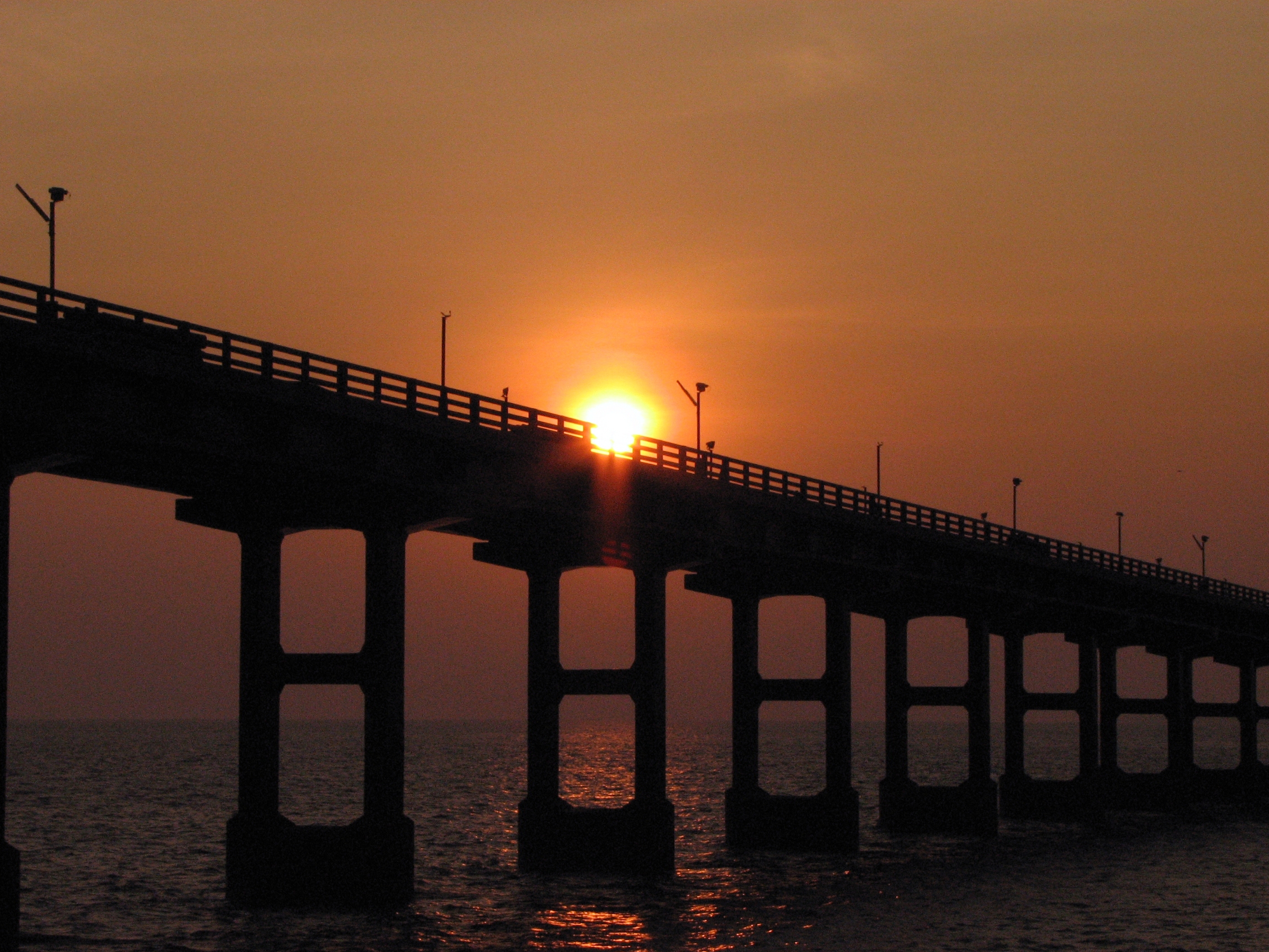
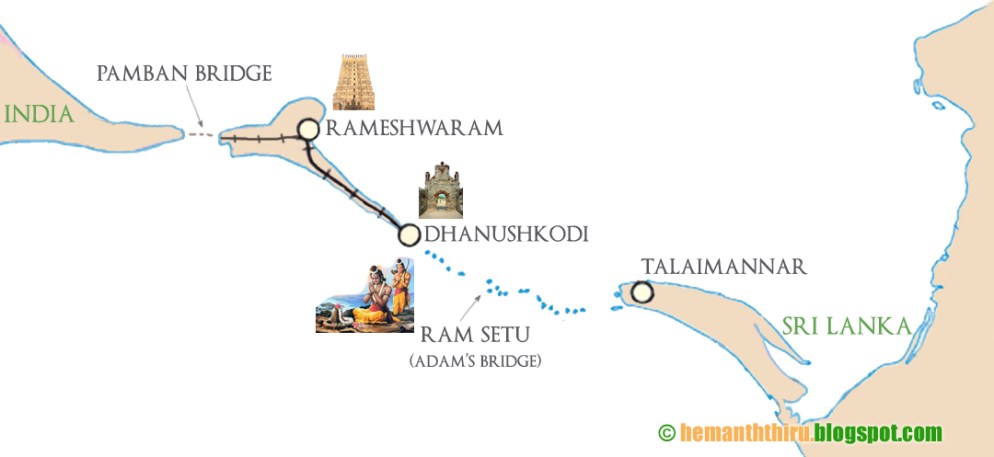
” சித்திர ராமாயணம் ….”


One of the Vanguard satellites is checked out at Cape Canaveral, Florida in 1958. Vanguard 1, the world’s first solar-powered satellite, launched on St. Patrick’s Day (March 17) 1958. It was designed to test the launch capabilities of a three-stage launch vehicle and the effects of the environment on a satellite and its systems in Earth orbit. Vanguard 1 was the second U.S. satellite in orbit, following Explorer 1, and remains the oldest artificial object orbiting Earth to this day. Vanguard began as a program at the Naval Research Laboratory in Washington and transferred over to NASA (along with many of its personnel) after the agency was founded by the National Aeronautics and Space Act of 1958.
Image Credit: NASA
SOURCE::::: http://www.nasa.gov
Natarajan
Today I found out the origin of the phrase “jump on the bandwagon.”

For those not familiar, when you jump on the bandwagon, it means you begin supporting a hobby, idea, person, etc. after it has become popular or successful.
The word “bandwagon” is the rather unimaginative name for a wagon that carried a circus band. It first appeared in print in the equally unimaginatively titled book The Life of P.T. Barnum, Written by Himself, which was published in 1855:
At Vicksburg we sold all our land conveyances excepting our horses and the ‘band wagon.’
P.T. Barnum is the famous circus owner and showman Phineas T. Barnum. Back then, circuses were known for their showy parades through town before they set up. These parades attracted villagers’ attention and acted as an easy marketing ploy to get people to go to the circus. Bandwagons were part of those parades. Bright and ornamental, they were impossible to miss.
Toward the end of the 1800s, people had caught on to the fact that bandwagons snared an audience’s attention. Politicians started to use bandwagons in parades through towns on their campaign trails. It’s believed that Dan Rice, a famous circus clown, was the first to rent out his bandwagon to a political campaign.
As a campaign became more and more successful, other people and politicians sought to rent seats on the bandwagon and ride it through town. In doing so, they received face time with the public and believed that the success of the original campaign would rub off on them.
There are records of the phrase used in political speeches throughout the 1890s, usually in the form of warning potential voters not to “jump on the opponent’s bandwagon in haste.” Because of the negative connotations associated with the phrase, many didn’t admit to having a bandwagon of their own despite it becoming common.
Over time, the phrase stopped meaning the literal riding of a bandwagon and started to refer to jumping into anything that was popular. It’s unclear exactly when this transition occurred, but Teddy Roosevelt made a reference to it in Letters, 1899, (later published in 1951):
When I once became sure of one majority they tumbled over each other to get aboard the band wagon.
SOURCE:::: http://www.today i foundout.com
Natarajan
The aircraft which is known as ‘The City of Canberra’ was cheered and applauded by a crowd of thousands as it made a tricky landing on the short and narrow runway.

A Qantas jumbo jet has made history by landing at a regional airport in New South Wales to become the first 747-400 in the world to go on display.
The aircraft which is known as ‘The City of Canberra’ was cheered and applauded by a crowd of thousands as it made a tricky landing on the short and narrow runway.
Illawarra Airport’s runway, which is only 1,800 metres, is less than half the length of Sydney Airport’s runways and at just 30 metres wide, the aircraft’s wingspan of 64 metres caused the two engines to hang over the runway’s edge on landing.
The aircraft was retired to Wollongong after 25 years of service, where it will become a prized addition to the aviation museum based at Illawara Regional Airport.
Qantas’ final 747 flight departed Sydney Airport last weekend, and flew at just 4,000 feet and at a much slower speed for its 15 minute journey to Wollongong.
The Historical Aircraft Restoration Society who will be looking after the jumbo jet has Australia’s biggest collection of historical aircraft including a plane known as ‘Connie’, a Lockheed Super Constellation originally built for the US Air Force.
“It’s a bit sentimental but it’s going to a great home down here and we know it’s going to be looked after by the society volunteers,” Captain Greg Matthews said.
The City of Canberra is the oldest aircraft in the Qantas fleet and holds the record for the longest ever non-stop commercial flight for its trip from London to Sydney in 1989.
In total, the plane has flow 85 million kilometres, which is equivalent to 110 return trips to the moon. Its last commercial flight was in January this year between Johannesburg and Sydney.
SOURCE::::: Poppy Marello in http://www.routesonline.com
Natarajan
A ‘ghost airport’ that opened four years ago in Castellon, Spain is finally set to begin operations after Irish LCC, Ryanair announced scheduled flights to the UK.

A ‘ghost airport’ that opened four years ago in Castellon, Spain is finally set to begin operations after Irish LCC, Ryanair announced scheduled flights to the UK.
Flights will link the €150 million airport to London Stansted three-times-weekly and Bristol twice-weekly from September this year.
Castellon-Costa Azahar Airport became one of Spain’s white elephant airports, after it opened in March 2011 and was one of the Valencia region’s many grand building projects. The city region is already served by Valencia Airport, and nearby airports Reus and Alicante both also serve similar markets.
Until recently, Castellon has only hosted charter flights carrying teams from the Spanish football league, and flights from the region’s general aviation flying club.
The airport has faced a multitude of problems which have contributed to the airport lying dormant for the past four years. In 2012, part of the runway had to be demolished due to an error of measurement, and in 2013 the airport received more backlash after it was revealed it had no provisions to fuel planes, as fuel stations had not yet been built.
Ryanair announced its plans to fly to Castellon in its latest press release which highlighted the airline’s London Stansted winter schedule.
“Ryanair is pleased to launch our biggest ever London Stansted winter 2015 schedule, with two new routes to Castellón and Ponta Delgada—110 in total—and more flights on 23 routes, which will deliver over 18 million customers p.a. and support 18,000 on site jobs at London Stansted Airport,” said Ryanair’s Chief Marketing Officer, Kenny Jacobs.
Ryanair will start selling the flights on Friday (13MAR15), and it said it has the capacity to bring 60,000 passengers a year to Castellon.
Castellon is the 24th airport in Spain to carry Ryanair flights, and the Irish budget airline handled nearly 32 million passengers in Spain in 2014.
SOURCE:::: Poppy Marello in http://www.routesonline.com
Natarajan
The 21-gun salute that we know today has its roots in the ancient tradition of warriors demonstrating their peaceful intentions by resting the point of their weapons on the ground.
The notion of making a soldier’s weapons useless to show that he came in peace continued even as warfare changed over the centuries. Gunpowder and cannons became commonplace among militaries and private forces, both on land and at sea around the 14th century. In order for a ship entering a foreign port to show those on shore that they came in peace, the captain would have his crew fire the guns. This rendered the weapons inoperable for a period of time, with early guns only being capable of firing a single shot before crews needed to reload them.
Traditionally when a British ship entered into a foreign port, it would fire its guns seven times. The reason for the seven shots is widely debated to this day. One theory states that the majority of the British ships at this point only carried seven guns and so firing seven shots became the standard to signal those on shore that the ship was now unarmed. Ships carried enough gunpowder and ammunition to reload multiple times, but beyond symbolism, the idea here was that the lengthy process of reloading would allow the soldiers onshore more than enough time to disable the ship with their own weapons if needs be.
Another proposed theory for the number seven relates to the Bible. After creating the world, the Bible states that God rested on the seventh day (or for the seventh “event”- there is some debate over the “day” vs. “event” translation). So it has been theorized that the number could have been chosen in reference to its Biblical significance, perhaps of resting with the ship coming to port after a long journey. Yet another theory stems from the pervasive superstitious nature of sailors combined with the historic notion in certain regions that the number 7 is sacred, and that odd numbers are lucky and even unlucky. In fact, for a time it was common to use an even number of shots to signify the death of a ship captain when returning from the voyage the death occurred on.
Whatever the underlying reason, the guns onshore would return fire as a form of welcome once the incoming ship finished firing the seven rounds. However, the shore bound guns fired three rounds for every one fired by the incoming ships, putting the total number of shots fired at twenty-one in these cases. As with the “7” number, it’s not known precisely why in the regions that used this number scheme that they chose a 3 to 1 ratio. What is known is that as time went on where this was practiced, it became traditional for the ships themselves to start firing off 21 shots as well, perhaps due to the ships becoming larger and being equipped with more guns, with the captains ostensibly preferring a 1 to 1 salute.
This then brings us to when firing the 21 shots became considered a type of official salute, rather than a symbolic way to indicate peaceful intentions. This seems to have started around 1730 when it became a recognized salute to British government officials. Specifically, the British Navy allowed its ships and captains the option to perform the 21-gun salute as a way to honor members of the British Royal Family during select anniversaries. About eighty years later, in 1808, the 21-gun salute officially became the standard salute to honor British Royalty.
While the British Navy adopted the 21-gun salute in 1808 as the standard, other nations, such as the United States, didn’t adopt it until much later. In fact, the United States War Department decided in 1810 to define the “national salute” as having the same number of shots as there were states in the nation. That number grew every year that a new state joined the Union. Needless to say, this quickly became a cumbersome way to salute the United States and its dignitaries.
That said, the United States did make the “Presidential Salute” a 21-gun salute in 1842, and in 1890 officially accepted the 21-gun salute as the “national salute.” This followed the 1875 British proposal to the United States of a “Gun for Gun Salute” of 21-guns to honor visiting dignitaries. Essentially, the British and French, among other nations, at this point were all using 21 guns for their salutes, but the U.S. system required many more shots for their dignitaries. Besides needing to fire off more cannons, this also potentially signified greater honor to the U.S. dignitaries than to those of other nations. Thus, the British proposed a 1 for 1 shot, with 21 being the number, which was accepted by the U.S. on August 18, 1875.
The 21-gun salute still represents a significant honor today. In the United States, the 21-gun salute occurs to honor a President, former president, or the head of foreign state. It can also be fired in order to honor the United States Flag. The salute also occurs at noon on the day of the funeral of a President, former President, or President-elect along with on Memorial Day.
You may have noticed that there’s no mention of the 21-gun salute occurring during military funerals and that’s a common misconception. Known as the “3 Volleys,” the salute that occurs during soldiers’ funerals follows a battlefield tradition where both sides stopped fighting so that they could remove their dead from the field. The series of three shots, or volleys, let the other side know that the dead had been taken care of and that that battle could resume. Therefore the number of volleys is more important than the actual number of shots. Even the United States Army Manuel’s section on the Ceremonial Firing Party at a funeral named the number of riflemen as between five and eight, rather than an exact number.
SOURCE:::: http://www.today i foundout.com
Natarajan
The Way We Were – Young vs. Old
The ageing process is not something we usually pick up on our daily lives. Loved ones that we see every day seem to never age, while those we haven’t seen in a long time seem to have done so over night. However, when you see early photos of your parents, the difference is very clear.


WHEN WE ARE OLD, WHO DO WE DEPEND ON ?
Have your own abode.
No matter what, do not lose it.
If you have an old companion, keep each other good company.
Watch your health while it is still good Maintain a positive outlook and you will be happy.
Now, when our health is still good, Our mind still clear.
But on who can we depend on in our old age ?
We will have to analyse
Accept
this in various stages.
1st Stage :
Just after retirement, between 60 to 70 yrs old,
Our health will still be comparatively good
So too our financial means.
Eat moderately while we have the means
At times, wear what we fancy
Those who like it, have some fun.
Do not be hard on ourself
Our days are numbered, so grasp every opportunity
Have enough savings ! Keep the house !
Make arrangements for the days ahead or retreat to a peaceful and quiet place.
If the kids are well off, it is their business ….
If the kids are loving, they have good traits ….
We need not decline financial help from our kids
Nor decline their respect.
But we should remain independent Live our own life well.
2nd Stage :
If no mishap and illness strikes after we are 70,
We will still be able to take care of ourselves.
Not a major problem.
However, we must realise we are really getting old
Gradually, our mind and body will give away
Our reflexes will slow down with time …
We will have to eat slowly, to avoid choking.
We will have to walk slowly, to avoid falls.
We can no longer rely on someone, we have to look after ourselves!
Do not meddle any more or try to control the kids!
Some even interfere and try to control the kids lives!
Some even interfere with the third generation !!!
We have devoted our entire life, It is time for us to be a little selfish …..
And take hold of ourselves. Life comes in a full circle.
Keep ourselves busy in whatever we love to do ….
Try to maintain good health for as long as possible.
Give ourselves more opportunities to take control of our own life …..
We lead an easier life when we do not have to solicit help from others …..
3rd Stage:
Our health begins to fail ….
We have to request help from others ….
We have to be mentally prepared for it.
The majority of us cannot escape this hurdle.
We have to prepare ourselves, emotionally, to accept that :-
In life, living and ageing, sickness and death are milestones
we have to encounter.
This is the final stage in life ….. Nothing to fear !
Be prepared for it in advance and you will not be too depressed.
Either check into a private nursing home … Or an old folks home ….
Depending on affordability, of course.
There must be a way out ….
The idea is not to add to the kids’ burden, emotionally,
Increase their chores their financial commitments.
Try your best to overcome –
What hardship our generation have not endured ?
What disasters we have not experienced ?
Trust ourselves to take life’s last lap in our stride.
4th Stage:
Our mind is still clear,
But when our quality of life has deteriorated drastically ..
We must be courageous enough to face death!
WHEN WE ARE OLD, WHO DO WE DEPEND ON ?
Ourselves, Ourselves, Only Ourselves !
SOURCE….. input from a friend of mine
Natarajan