HolikaDahan and The Stories Related to the Festival….” Victory of Good Over Evil “

The festival of Holi is associated with different mythological and spiritual stories. Out of the many tales, the most prominent is that of a devotee – Prahlad, his father Hiranyakashyap and Hiranyakashyap’s sister Holika. This story behind holika dahan is a testament to the power of bhakti (devotion).

King Hiranyakashyap worshiped Lord Brahma for years and, with penance he was able to impress him. Lord Brahma granted wishes of the king which were:

– King Hiranyakashyap cannot be killed by human being or an animal

– He will not die either in his home or outside the home

– He will not die in the day or at night

– He will not die either by astra or shastra (weapons)

– King Hiranyakashyap will not die either on land or in the sea or in the air

With such blessings the king had become invincible and wanted people in his kingdom to preach him as God. Everyone did except King Hiranyakashyap’s son Prahlad who preached Lord Vishnu. Offended by his son’s disobedience, King Hiranyakashyap decided to kill Prahlad and made several attempts too. All his attempts went in vain as Prahlad was saved by Lord Vishnu each time. King Hiranyakashyap then asked Holika, his sister, to kill Prahlad. Holika had a gift – she could not be harmed or burned by fire. Holika’s blessing was in the form of a shawl, which would protect her. As asked by her brother, Holika get herself seated in the flames with Prahlad on her lap to kill him. All the while Prahlad kept chanting Lord Vishnu’s name. As soon as the fire soared, the blessed shawl of Holika fluttered away to cover Prahlad. In this way, Prahlad lived and Holika burnt and died. This is how Holi gets its name from Holika and is celebrated as a festival that marks the victory and power of bhakti (devotion).

In some parts of the country, story of Pootana or Putana is also prevalent as the reason to celebrate Holi. The demon king Kansa (uncle of Krishna) feared getting killed one day by Lord Krishna. Kansa sent Putana to kill Krishna through her poisonous breast milk. She came to baby Krishna and started feeding of her poisonous milk. Lord Krishna, knowing her demonic intentions, sucked out Putana’s life-force while she fed him her milk and she turned into her original giant and scary form. Lord Krishna sucked all her blood until Putana was killed. It is said that it was the night of Holi when Putana was killed and Lord Krishna proved his greatness. Some who view the origin of festivals from seasonal cycles believe that Putana represents winter and her death the cessation and end of winter.

We can follow whichever story behind celebrating Holi but all the stories have the same crux – Victory of good over evil. In 2015, Holika Dahan is being celebrated on 5th March.

HOLI  GREETINGS TO ALL

source::::www.in.lifestyle.yahoo.com

Natarajan


” In our days, Hardware was Found in Hardware Shop and name of Software was Never Heard … ” !!!!

The Best Answer an Older Person Can Give

Some time ago, a loving gradnson was talking to his grandmother about modern life. He asked for her opinion on everything that has been going on in the last few years. His grandmother gave him a long look and said: “Well, let me see…
I was born before:
* penicillin
* television

old lady

* frozen foods
* Xerox
* contact lenses
* Frisbees and
* the pill
There were no:
* credit cards
* laser beams or
* ball-point pens
Man had not yet invented:
* pantyhose
* dishwashers
* clothes dryers
* and the clothes were hung out to dry in the fresh air and
Nor has man walked on the moon yet.
Your Grandfather didn*t live together until we got married. There were very few single mothers.
Until I was 25, I called every man older than me, “Sir.”
And after I turned 25, I still called policemen and every man with a title, “Sir.”
We were before gay-rights, computer-dating, dual careers, daycare centers, and group therapy.
Our lives were governed by the Ten Commandments, good judgment, and common sense.
We were taught to know the difference between right and wrong and to stand up and take responsibility for our actions.
Serving your country was a privilege; living in this country was a bigger privilege.
We thought fast food was what people ate during Lent.
Having a meaningful relationship meant getting along with your cousins.
Draft dodgers were those who closed front doors as the evening breeze started.
Time-sharing meant time the family spent together in the evenings and weekends, not purchasing condominiums.
We never heard of FM radios, tape decks, CD*s, electric typewriters, yogurt, or guys wearing earrings.
We listened to Big Bands, Jack Benny, and the President*s speeches on our radios.
If you saw anything with *Made in Japan * on it, it was junk.
The term *making out* referred to how you did on your school exam.
Pizza Hut, McDonald*s, and instant coffee were unheard of. We had 5 & 10-cent (5 and dime) stores
where you could actually buy things for 5 and 10 cents.
Ice-cream cones, phone calls, rides on a streetcar, and a Pepsi were all a nickel.
And if you didn*t want to splurge, you could spend your nickel on enough stamps to mail 1 letter and 2 postcards.
You could buy a new Ford Coupe for $600, but who could afford one? Too bad, because gas was 11 cents a gallon.
In my day:
* “grass” was mowed,
* “coke” was a cold drink,
* “pot” was something your mother cooked in and
* “rock music” was your grandmother*s lullaby.
* “Aids” were helpers in the Principal*s office,
* “chip” meant a piece of wood,
* “hardware” was found in a hardware store and.
* “software” wasn*t even a word.
We volunteered to protect our precious country.
No wonder people call us “old and confused” and say there is a generation gap.
How old do you think I am?
Read on to see… Are you ready??
*
*
*
*
*
*
*
*
*
*
*
*
*
*
*
*
*
*
*
*
*
*
*
*
This woman would be only 65 years old.

old lady

She would have been born in late 1950.
Gives you something to think about, doesn’t it?
So much has changed in one lifetime. !!!
Natarajan

68 வருடம் சேவை … ஒரே அலுவலகம் … 95 வயதில் ஓய்வு…!!!..

சிறந்த அலுவலகமாக தேர்வு செய்யப்பட்ட செண்பகனூர் கிளை அஞ்சல் அலுவலகம். (உள்படம்) கே.வி.பீட்டர்.

சிறந்த அலுவலகமாக தேர்வு செய்யப்பட்ட செண்பகனூர் கிளை அஞ்சல் அலுவலகம். (உள்படம்) கே.வி.பீட்டர்.

கடந்த கால் நூற்றாண்டுக்கு முன்பு வரை தபால்காரர் என்பவர் எல்லோராலும் ஆவலுடன் எதிர்பார்க்கப்பட்ட கதாநாயகர்.

இவை எல்லாம் மறக்க முடியாத சிறந்த காலக்கட்டம் அது. அப்போது இந்தியாவின் சிறந்த அஞ்சல் அலுவலகமாக கொடைக்கானல் அருகேயுள்ள செண்பகனூர் கிளை அஞ்சல் அலுவலகம் தேர்ந்தெடுக்கப்பட்டது. இதற்குக் காரணம், அந்த அலுவலகத்தில் பணியாற்றிய போஸ்ட் மாஸ்டர் (கிளை அஞ்சலக அதிகாரி) கே.வி. பீட்டர்.

தொடக்கத்தில், கொடைக்கானல் மலைவாழ் மக்களிடையே கிறிஸ்தவ மத போதகராகத்தான் வாழ்க்கையைத் தொடங்கினார் கே.வி.பீட்டர். அடர்ந்த மலைப் பகுதியான செண்பகனூர் அஞ்சல் அலுவலகத்துக்கு போஸ்ட்மாஸ்டராக பணிபுரிய யாருமே முன்வராதபோது, 1913-ல் தனது 27-வது வயதில் சேவை அடிப்படையில் பணியில் சேர்ந்தார் கே.வி.பீட்டர். அந்த ஒரே அலுவலகத்தில் 95 வயது வரை அதாவது 68 ஆண்டுகள் தொடர்ந்து பணிபுரிந்தார்.

இதுகுறித்து தேசிய விருது பெற்ற முன்னாள் அஞ்சல் அலுவலர் கோவை என். ஹரிஹரன் ‘தி இந்து’ விடம் கூறும்போது, ‘பேருக்குத்தான் கே.வி.பீட்டர் செண்பகனூர் அஞ்சல் அதிகாரி. ஆனால், அங்கு அவர்தான் போஸ்ட் மாஸ்டர், தபால்காரர், அலுவலக எழுத்தர், விற்பனையாளர் என எல்லாம். இப்போதுதான் கொடைக்கானல் சர்வதேச கோடைவாசஸ்தலம்.

அப்போது, கொடைக்கானல், செண்பகனூர் பகுதிகள் மக்கள் நடமாட்டமே இல்லாத அடர்ந்த மலைப்பிரதேசமாக இருந்தன. கரடுமுரடான மலைப் பாதையில் நடந்துதான் அலுவலகத்துக்கு வர வேண்டும். நடந்து சென்றுதான் தபால்களை பட்டுவாடா செய்ய வேண்டும். அப்போது, கொடைக்கானல் செண்பகனூர் பகுதியில் ஆங்கிலேய அரசின் உயர் அதிகாரிகள், வெளிநாட்டு சுற்றுலாப் பயணிகள் நிரந்தரமாகவும், மாதக்கணக்கிலும் தங்கியிருப்பர். ஆங்கிலேயருக்கு ஏராளமான தபால்கள் வரும். அவர்களும் தபால், மணியார்டர்களை வெளியூர்களுக்கு அனுப்புவர்.

கே.வி.பீட்டர் தனி ஆளாக, தனது முழு சக்தியையும் அஞ்சல் துறைக்காகவே செலவிட்டார். தபால்களை அவரே பிரிப்பார்; பட்டுவாடா செய்வார்.

நேரம், காலம் பாராமல் திருமணம் செய்து கொள்ளாமலே அஞ்சல் அலுவலகத்தையே வாழ்க்கையாக நினைத்தார். அன்றைய காலக்கட்டத் தில் ஓராண்டில் 16 ஆயிரம் ரூபாய்க்கு தபால்தலைகளை விற்று சாதனை படைத்தார் (கிளை அஞ்சல் அலுவலக வரலாற்றில் அப்போதைய சாதனை). அதனால், செண்பகனூர் அஞ்சல் அலுவலகத்தை 1983-ல் இந்தியா வின் சிறந்த அஞ்சல் அலுவலகமாக மத்திய அரசு அறிவித்தது.

இதற்கு காரணமான கே.வி.பீட்டருக்கு மத்திய அரசு பத்ம விருது வழங்கி கவுரவித்தது. ஓய்வே இல்லாமல் பணிபுரிந்த அவருக்கு, அவரது 62-வது வயதில் 62 நாட்கள் முழு ஊதியத்துடன் அஞ்சல் துறை விடுமுறை வழங்கியது. அஞ்சல் துறை மீது அவருக்கு இருந்த ஈடுபாட்டை பாராட்டி, ஆயுட்காலம் வரை அங்கேயே பணிபுரிய கே.வி.பீட்டருக்கு மத்திய அரசு சிறப்பு அனுமதி வழங்கி உத்தரவிட்டது.

அதனால், 95 வயது வரை அங்கேயே பணிபுரிந்த அவர், முதுமை காரணமாக ஓய்வு பெற்றார்.

10 ரூபாய்க்கு பணியில் சேர்ந்த கே.வி.பீட்டர், 210 ரூபாய் ஊதியம் வாங்கும்போது ஓய்வுபெற்றார். ஆனாலும், 105-வது வயதில் தான் இறக்கும்வரை செண்பகனூர் அஞ்சல் அலுவலகத்தை தன் கண்காணிப்பிலேயே வைத்திருந் தார். சமூக அமைப்புகள் உதவிய தால், கே.வி.பீட்டர் ஊதியத்தை எதிர்பார்க்காமல் வாழ்நாள் முழுவ தும் கடைசி மூச்சு வரை தபால் துறைக்காக வாழ்ந்தார்’’ என்றார்.

சிறந்த அலுவலகமாக தேர்வு செய்யப்பட்ட செண்பகனூர் கிளை அஞ்சல் அலுவலகம். (உள்படம்) கே.வி.பீட்டர்.

இந்திரா காந்தியின் பாராட்டுக் கடிதம்

இந்திரா காந்தி பிரதமராக இருந்தபோது அவரது உதவியாளர் மூலம் கே.வி.பீட்டருக்கு அனுப்பிய பாராட்டுக் கடிதத்தில், ‘சாதாரண பணியிலும் ஒருவரால் திறம்படச் செயல்பட முடியும் என்பதற்கு உதாரணமாகத் திகழ்கிறீர்கள்’ என்று குறிப்பிடப்பட்டிருந்தது. 1946-ல் தகவல் தொடர்புத் துறை அரசு செயலராக இருந்த கிருஷ்ணபிரசாத், கே.வி.பீட்டரின் சேவையைப் பாராட்டி தங்க கைகடிகாரத்தை பரிசாக வழங்கினார்.

கொடைக்கானலுக்கு சுற்றுலா செல்பவர்கள், அலுவல் நிமித்தமாக கொடைக்கானல் செல்லும் அஞ்சலக அதிகாரிகள், இன்றும் செண்பகனூர் அஞ்சல் அலுவலகத்தை சுற்றுலாத் தலம்போல பார்வையிட்டுச் செல்கின்றனர்.

SOURCE:::::ஒய்.ஆண்டனி செல்வராஜ்  in http://www.tamil.the hindu.com
Natarajan

Lesser Known Facts about Taj Mahal ….

What don’t you know about the Taj Mahal?

What don’t you know about the Taj Mahal? Source: Getty Images

IT’S no secret that the Taj Mahal is a monument of love, built by a Mogul emperor as the final resting place for his beloved queen who died giving birth to their 14th child in 1631.

What’s less known is that the white-marbled tomb was not her first resting place after death.

Queen Mumtaz Mahal in fact died some 900 kilometres away in central India’s Burhanpur town and was buried there, in a rose-tinted sandstone pavilion in her favourite deer park. The once opulent and richly decorated pavilion is now a sad, crumbling ruin, thanks to neglect and apathy by authorities and Burhanpur’s own 200,000 residents.

And it’s not the only gem in the treasure chest of this town, which even most Indians could not identify on a map.

Behind its dirty, unpaved streets and open garbage dumps, Burhanpur hides an abundance of magnificent Islamic monuments dating back to 15th century. Once an important trading and military outpost, Burhanpur slipped into margins of history in less than two centuries and is now nowhere to be found in any tourist advertisement.

On a recent trip, we found in Burhanpur the ruins of a riverside palace; airy pavilions with intricately carved pillars; grand stone mausoleums with latticed windows that throw filtered beams of dusty light on the graves inside; a royal bath house with cheerful paintings of birds and flowers; austere and imposing mosques with incredibly fine calligraphy, and a fort on a cliff with a mind-boggling view of the undulating plains below.

Each one of the town’s treasures is a reminder of India’s rich multicultural history and the contribution that about 800 years of Muslim rule made to the predominantly Hindu country’s heritage.

Mogul Queen Mumtaz Mahal's first resting place.

Mogul Queen Mumtaz Mahal’s first resting place. Source: AP

Many of the monuments in the town are in utter neglect. Infrastructure as basic as toilets and roads to the sites is missing. Open drains run along some important tombs, which are ravaged by overgrown shrubs. Mountains of garbage greet visitors.

“Every monument here tells a story. Every stone here says ‘come to me and listen to what I have to say’ but there is nobody to listen or to take care of them,” lamented Hoshang Havaldar, 60, who has lived all his life in Burhanpur, and runs one of only two decent hotels in the town.

Burhanpur was ruled by the founding Faruqi dynasty from 1400 to 1599 and by the fabled Moguls from 1600, when Emperor Akbar conquered it. His grandson, Emperor Shah Jahan, ran his military campaigns against southern kingdoms from Burhanpur, accompanied by his wife Mumtaz.

Emperor Shah Jahan had originally planned to build the Taj Mahal in Burhanpur.

Emperor Shah Jahan had originally planned to build the Taj Mahal in Burhanpur. Source: AP

She died while giving birth to their 14th child and was buried in a pavilion facing a small palace in a deer park.

Today, the Ahukhana, as the park was called, and its two buildings are one of the most dilapidated among Burhanpur’s treasures.

The sprawling park is locked up with no caretaker. Its rusty metal gates are tied by a chain loose enough to leave enough space for humans or animals to slip through. The grounds are overgrown with shrubs and weeds. Wild goats and cows roam freely. All that remain of the one-story pavilion are pillars and walls, some art work on them still visible. Its ceiling is no more.

For about six months, Mumtaz’s body remained in the pavilion while Shah Jahan made plans to build the Taj Mahal on the banks of the nearby River Tapti.

But unfortunately Burhanpur’s geography, geology and hydrology conspired against his plans.

According to historians, Shah Jahan wanted the monument to be of white marble, which was only available in the faraway Markana, making transportation difficult. River Tapti’s breadth was a little narrow where he envisaged the mausoleum — meaning it would not be reflected fully in the water on moonlit nights. Finally, the rock-bed just wasn’t right to hold up a building of that mass. As it turned out, Agra on the banks of majestically wide River Yamuna and not too far from Markana, was the perfect choice.

Mumtaz’s body was disinterred and taken to Agra, then the imperial capital of the Mogul empire that ruled India from 15th to 19th centuries. And so Burhanpur faded away.

One of the most beautiful monuments in Burhanpur is the tomb of Bilquis Jahan, the wife of Shah Jahan’s son. It is known as the Kharboozi Gumbaz, or Melon Dome, because of its distinctive dome and bulging walls that look like the fruit. An unimposing structure, it nevertheless stands out because of its shape and stunning interior — every corner of its walls and roof is decorated with murals in floral pattern, its colours as fresh as they were centuries ago.

But to get there we had to walk through a graveyard, where a horse lay dying in a ditch while little boys played nearby.

This is the real resting place.

This is the real resting place. Source: AP 

If you go

Burhanpur: Located in Madhya Pradesh state, about 180km from Indore, the city with the nearest airport. The drive from Indore takes about four hours. Madhya Pradesh State Tourism runs a hotel, Tapti Retreat,

SOURCE:::: http://www.news.com.au   Travel Column

Natarajan..

The Gift of Maria Montessori….

Maria Montessori

Maria Montessori

From a humble beginning, a great movement was born

As I write about one of the greatest educators of our times, Maria Montessori, my first question to myself is: “Why is a Waldorf teacher writing about Montessori”. Then I ask myself – why not? I think the first question comes from my conventional education and dogmatic beliefs. The second – from my unlearning over the years and becoming a free human being. To belong in one ideology or school of thought does not mean you can not see beauty in the other. So here is a Waldorf teacher from a completely different tradition, writing about Maria Montessori, not as a Montessorian but as someone deeply interested in learning how different educators used different lenses to view children and in doing so, how each one had a gift to give to them.

In early 1900, there existed in Rome a slum known as the San Lorenzo Quarter. Two buildings there housed the poorest class. During the day, the adults living at San Lorenzo would go off to work, the older children would be sent to school and the younger children between the ages of three and six began to vandalise the buildings, with no one to care for them. The governing body decided it would be less expensive to set aside one room for these kids and an adult as a caregiver than to continue to repair and repaint the whole building being damaged by these children. And, as history would have it, that caregiver was Dr. Maria Montessori. It was here in this Roman slum with those 60 children where she made discoveries that would direct her life’s work.

The news of her unprecedented success in Casa Dei Bambini or House of Children in San Lorenzo soon spread. Soon, Montessori was invited by several countries to set up centres for children. Alexander Graham Bell and Thomas Edison invited her to USA to give talks about her methods that gained immense popularity all over the world.

So what was it that was so special about her methods? Maria Montessori strongly believed that education is not what the teacher gives; education is a natural process spontaneously carried out by the human individual and is acquired not by listening to words but by experiences upon the environment. She writes about it: “Supposing I said there was a planet without schools or teachers, study was unknown, and yet the inhabitants – doing nothing but living and walking about – came to know all things, to carry in their minds the whole of learning , would you not think I was romancing? Well, just this, which seems so fanciful, is a reality. It is the child’s way of learning. This is the path he follows. He learns everything without knowing he is learning it, and in doing so passes little from the unconscious to the conscious, treading always in the paths of joy and love.’

Maria Montessori received a doctor of Medicine degree in 1896, the first woman in Italy to achieve this status. She campaigned vigorously on women’s rights. She wrote and spoke on the need for greater opportunities for women and was recognised in Italy and beyond as a leading feminist voice. It was this outspokenness and leadership in thinking that landed her in trouble. She was also vociferous about her anti-fascist views and was forced to go into exile.

And, the country that became her home in exile was India. The Theosophical Society invited her to in 1939 and she made Adyar, Chennai her home for eight years. It was here that she developed her work ‘Education for peace’. And she was nominated twice for the Nobel Peace Prize.

Today, most Montessori teachers use the materials used in Montessori classrooms – called the Didactic Apparatus, which was her discovery. But it would be a shame to reduce Montessori and her teachings to the mere apparatus. She and the children whom she crusaded for are much larger than that.

(Santhya is an educator and founder of Yellow Train) 

SOURCE:::::  Santhya Vikram in http://www.the hindu.com

Natarajan

Mummified Monk Inside Buddha Statue …. ?

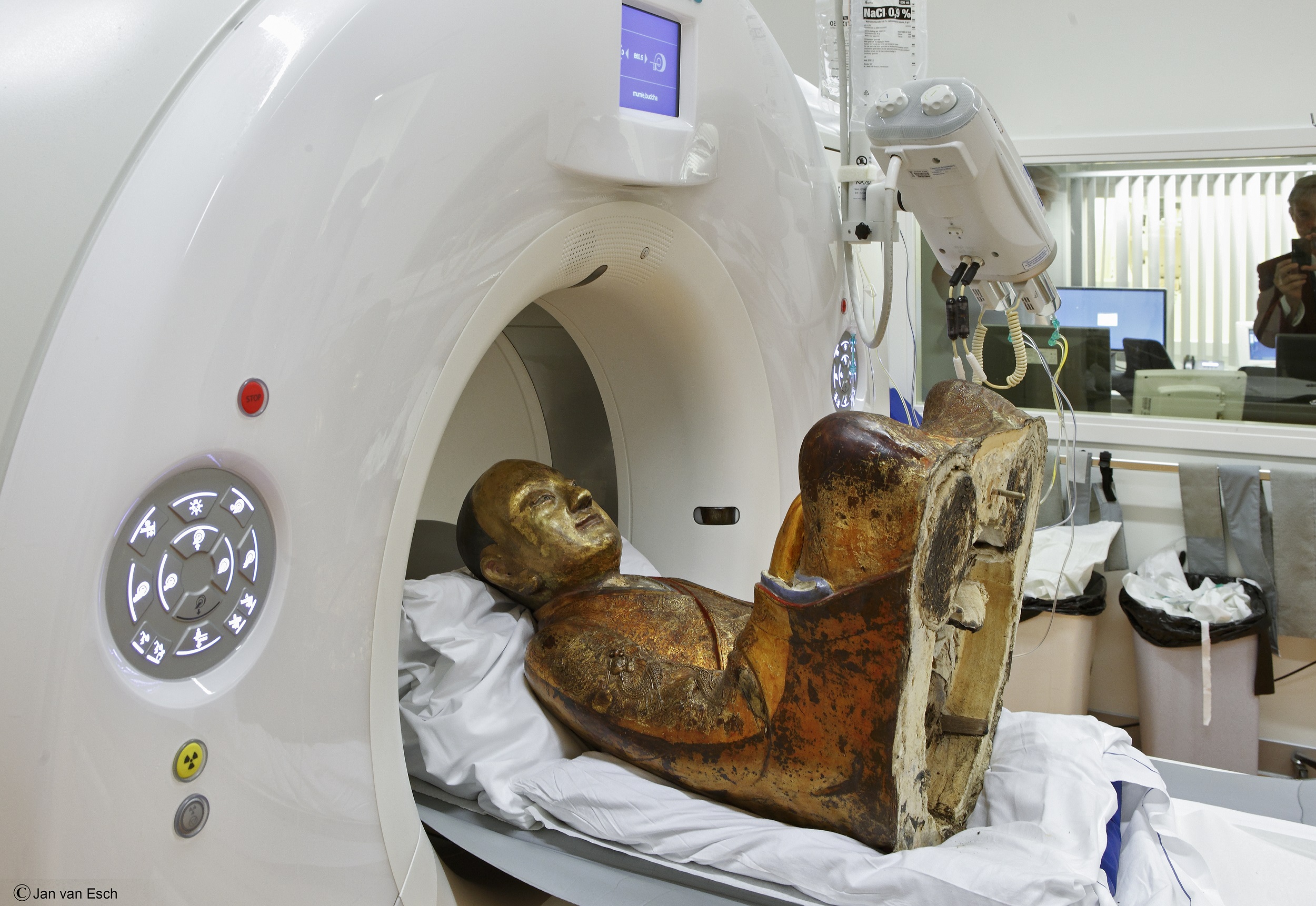
The mummified remains of a monk have been revealed inside a nearly 1,000-year old Chinese statue of a Buddha.

635603189441117628-mummy-buddha

The mummy inside the gold-painted papier-mâché statue is believed to be that of Liuquan, a Buddhist master of the Chinese Meditation School who died around the year 1100, researchers said. It’s the only Chinese Buddhist mummy to undergo scientific research in the West.

The statue was on display last year at the Drents Museum as part of an exhibit on mummies. It was an cited as an example of self-mummification, an excruciating, years-long process of meditation, starvation, dehydration and poisoning that some Buddhist monks undertook to achieve enlightenment and veneration.

When the exhibit ended in August, a CT scan at the Meander Medical Center in the Netherlands revealed the seated skeleton. Samples taken from organ cavities provided one big surprise: paper scraps printed with ancient Chinese characters indicating the high-status monk may have been worshiped as a Buddha.

A CT scan has revealed a mummified Chinese monk inside a Buddha statue. The remains date back about 1,000 years. Video provided by Newsy Newslook

The finding was first reported in December but did not get wide notice. Irish Archaeology carried a report over the weekend, which apparently started the news ball rolling.

But the revelation is not, as some reports claim, “a shocking discovery,” The History Blog notes: “It was known to be inside the statue all along … that’s why it was sent to the Drents Museum in the first place as part of the Mummies exhibition.”

The mummy’s existence was discovered in 1996 when the statue was being restored in the Netherlands, Live Science writes, explaining what was found, how its age was determined and when the first detailed skeletal imaging was performed.

DNA tests were conducted on bone samples, and the Dutch team plans to publish its finding in a forthcoming monograph.

Researchers still have not determined whether the monk mummified himself, a practice that was also widespread in Japan and that was outlawed in the 19th century. If he did, the process was gruesome, asAncient Origins explains:

For the first 1,000 days, the monks ceased all food except nuts, seeds, fruits and berries and they engaged in extensive physical activity to strip themselves of all body fat. For the next one thousand days, their diet was restricted to just bark and roots. Near the end of this period, they would drink poisonous tea made from the sap of the Urushi tree, which caused vomiting and a rapid loss of body fluids. It also acted as a preservative and killed off maggots and bacteria that would cause the body to decay after death.

In the final stage, after more than six years of torturous preparation, the monk would lock himself in a stone tomb barely larger than his body, where he would go into a state of meditation. He was seated in the lotus position, a position he would not move from until he died. A small air tube provided oxygen to the tomb. Each day, the monk rang a bell to let the outside world know he was still alive. When the bell stopped ringing, the tube was removed and the tomb sealed for the final thousand day period of the ritual.

At the end of this period, the tomb would be opened to see if the monk was successful in mummifying himself. If the body was found in a preserved state, the monk was raised to the status of Buddha, his body was removed from the tomb and he was placed in a temple where he was worshiped and revered. If the body had decomposed, the monk was resealed in his tomb and respected for his endurance, but not worshiped

If you find yourself in Budapest before May, the Buddha mummy statue is on display at the Hungarian Natural History Museum.

SOURCE::::: Michael Winter, USA TODAY …www.usatoday.com

Natarajan

This Date in Science…. Feb 20…1962…. John Glenn First American To orbit Earth !!!

This date in science: John Glenn first American to orbit Earth
John Glenn and Friendship 7
On February 20, 1962, John Glenn became the first American to orbit the Earth. He made three turns around the planet before returning safely.

February 20, 1962. John Glenn became the first American to orbit the Earth on this date. He made three turns around the planet before returning safely in his space capsule, which was called Friendship 7. He followed two Russian cosmonauts in making this early orbit of our planet: Yuri Gagarin ( April 1961) and Gherman Titov (August 1961).

While Glenn was in orbit, NASA controllers received an indication that the heat shield on his craft had come loose. They instructed Glenn not to jettison the rockets underneath the heat shield during re-entry, because the rockets might be able to hold the shield in place. Fortunately, the indication turned out to be a false alarm.

Glenn returned to space at age 77 aboard the space shuttle Discovery in 1995, making him the oldest person to fly in space. His mission’s primary scientific aim at that time was to study the effects of spaceflight on seniors.


John Glenn climbs into the Friendship 7 spacecraft just before making his first trip into space on February 20, 1962. Photo via NASA

John Glenn and Friendship 7

Here's What John Glenn saw on February 20, 1962.  Just 5 minutes and 44 seconds after launch, Glenn offered his first words about the view from his porthole: “This is Friendship 7. Can see clear back; a big cloud pattern way back across towards the Cape. Beautiful sight.” Three hours later, at the beginning of his third orbit, Glenn photographed this panoramic view of Florida from the Georgia border (right, under clouds) to just north of Cape Canaveral. His American homeland was 162 miles (260 kilometers) below. “I have the Cape in sight down there,” he noted to mission controllers. “It looks real fine from up here. I can see the whole state of Florida just laid out like on a map. Beautiful.”  Image via NASA
Here’s What John Glenn saw on February 20, 1962. Just 5 minutes and 44 seconds after launch, Glenn offered his first words about the view from his porthole: “This is Friendship 7. Can see clear back; a big cloud pattern way back across towards the Cape. Beautiful sight.” Three hours later, at the beginning of his third orbit, Glenn photographed this panoramic view of Florida from the Georgia border (right, under clouds) to just north of Cape Canaveral. His American homeland was 162 miles (260 kilometers) below. “I have the Cape in sight down there,” he noted to mission controllers. “It looks real fine from up here. I can see the whole state of Florida just laid out like on a map. Beautiful.” Image via NASA
Here’s what John Glenn saw on February 20, 1962. Just 5 minutes and 44 seconds after launch, Glenn offered his first words about the view from his porthole: “This is Friendship 7. Can see clear back; a big cloud pattern way back across towards the Cape. Beautiful sight.” Three hours later, at the beginning of his third orbit, Glenn photographed this panoramic view of Florida from the Georgia border (right, under clouds) to just north of Cape Canaveral. His American homeland was 162 miles (260 kilometers) below. “I have the Cape in sight down there,” he noted to mission controllers. “It looks real fine from up here. I can see the whole state of Florida just laid out like on a map. Beautiful.” Image via NASA
Bottom line: John Glenn became the first American to orbit Earth on February 20, 1962. His space capsule was called Friendship 7.

Bottom line: John Glenn became the first American to orbit Earth on February 20, 1962. His space capsule was called Friendship 7.

SOURCE:::: www. earthskynews.org

Natarajan

Do you Know That the Largest Air Evacuation in History was done by India …?

When thousands of Indians were stuck in Kuwait during Gulf war, the Indian government executed the world’s largest air evacuation mission ever. The operation continued for almost two months and managed to airlift over 1,70,000 Indians. Here is all you need to know about the amazing effort!

Air India might be largely known today for delayed flights and poor service. But did you know that the largest air evacuation in the history of mankind was executed by the much aligned national airline of India? In 1990, the Indian government airlifted over 1,70,000 Indians from Kuwait with help of 488 flights in just 59 days. Air India entered into Guinness Book of World Records for the civil airline that had evacuated the most people till date.

Why the evacuation?

During the Gulf war in 1990, when Saddam Hussain invaded Kuwait, the Iraqis took over the city in a few hours leaving the entire country in a state of terror. This included the fairly significant Indian community there as well. While the Kuwaiti royal family escaped to Saudi Arabia, the general population suffered great tragedies and loss. The responsibility came on the Indian government to safely evacuate the Indian community from Kuwait and hence, the largest air evacuation mission took shape.

“We did not use the word ‘condemn’ in our statement [about the Iraqi attack], for two reasons: one, we were concerned about our nationals there; second, we still believed that there was some scope for a negotiated solution to the problem. We were keen to play a role. If we condemned the development openly, it would have been difficult for us to deal with Iraq,” said K.P. Fabian, former Ambassador of India who was head of the Gulf Division of the Ministry of External Affairs during the First Gulf War.

What made it difficult?

Evacuating the Indian community from Kuwait was not an easy task. People were not ready to leave behind everything they had spent their entire lives earning in Kuwait. They underestimated the gravity of the situation and were reluctant to leave their well-settled lives.

Also, many people living there did not have valid travel papers as they had handed them over to their employers who were either missing or dead.

“Meanwhile, another problem was brewing. One set of Air India crew was stranded in Kuwait, having flown in a flight earlier. The Air India pilots and staff threatened that unless we got this crew out, they would ground the flights. The threat was indeed serious. As per Ministry of Overseas Indians (MOIA) annual report 2012-13, there are over 25 million overseas Indians across the globe and whenever need arises, it is the government’s responsibility to bring back the country’s citizens safely. Not only just the evacuation during Gulf war, Indian government has successfully executed many such missions. It was decided that the Foreign Minister should go to Baghdad and Kuwaitand urgently arrange repatriation of our nationals” said Fabian.

Also, Indian people took shelter in various schools and other buildings in various parts of Amman. They had to travel from various places to the Amman airport. It could not be predicted when these people would arrive and due to this, flights got delayed a lot. The crew had to stay on duty for a much longer time than the stipulated duty hours which created a lot of tiffs.

How did they do it?

Indian government officials went to Kuwait to meet Saddam Hussain and get him on board the arranged repatriation of Indian nationals.

“We conveyed our official viewpoint and also our plans to evacuate our nationals. He listened to our views and repeated his known position, and agreed to facilitate the repatriation of our nationals,” said Fabian.

As the help reached on August 14 (12 days after the invasion had taken place), Indian citizens were angry as they were expecting a quicker intervention by the Indian government. But, the then Foreign Minister I.K. Gujral quickly brought the crowd under control and in no time had them shouting “Bharat Mata ki Jai”.

Initially, a few military aircrafts were arranged to evacuate the elderly, women and children. But due to a lengthy air space clearance procedure, this did not seem like a feasible solution. So the government turned to Air India for assistance.

You should have seen us. We were operating out of a hotel room in Amman with very little space and carrying out all our operations from there,” MP Mascarenhas, who organised the operation as the airline’s regional director in the Gulf & Middle East, told Scroll.

The Indian Air Force deployed its IL 76 aircraft for a steady communication link between Kuwait and Delhi government officials. The situation was severe and required immediate help and attention. The Kerala government came forward and dispatched food items for the Indian nationals in Kuwait.

“My suggestion was that we needed to first pick up mothers with babies, other children, women, sick and old people. And also, on the basis of some kind of distributive justice, we needed to select people from every region,” said Fabian.

There were far more people to be evacuated than expected. But, the coordination and team work of the people on the mission managed to evacuate all the Indian nationals out of the country. There was also a Pakistani Airline crew stranded in Kuwait and they wished to be evacuated by Indian aircrafts. On humanitarian grounds, the Indian officials agreed.

The successful operation that started on August 14 1990, continued for almost 2 months and created history, finally coming to an end on October 11.

Other notable achievements

This was not the only successful evacuation and heroic act by the Indian government. “Operation Sukoon” in 2006 by the Indian Navy was another great operation to evacuate Indian, Sri Lankan and Nepalese nationals, as well as Lebanese nationals with Indian spouses, from the conflict zone during the 2006 Lebanon War. Four naval ships – INS Mumbai, INS Betwa and INS Brahmaputra and oil tanker INS Shakti – executed the successful operation.

Another successful evacuation “Operation Blossom” took place in 2011 when mass protests against the military broke out in Libya. Around 8,000 Indians were evacuated with help from Indian Navy’s INS Jalashwa (an amphibious transport dock ship) and a destroyer INS Mysore – both these ships together could carry around 1,200 people at one go – and the fleet tanker the INS Aditya.

The Indian government has time and again proved that it leaves no stone unturned in bringing back its people safely to the country in times of distress anywhere in the world. Kudos to all the heroes who have showed immense courage and humanity in the toughest of times.

– See more at: http://www.thebetterindia.com/15179/heres-need-know-largest-air-evacuation-history-india/#sthash.53OtJbOP.dpuf

SOURCE:::: http://www.the betterindia.com

Natarajan

How an 11 Year old Girl got to Name the Planet Pluto … !!!

An 11-year-old British girl is responsible naming the planet Pluto, the once ninth planet of our solar system, after her grandfather read about the dwarf planet’s discovery at the family breakfast table.

pluto

The girl, Venetia Burney, recalled the event in an interview with NASA in 2006,

Venetia_Burney

“I think it was on March the 14th, 1930 and I was having breakfast with my mother and my grandfather. And my grandfather read out at breakfast the great news and said he wondered what it would be called. And for some reason, I after a short pause, said, “Why not call it Pluto?” I did know, I was fairly familiar with Greek and Roman legends from various children’s books that I had read, and of course I did know about the solar system and the names the other planets have. And so I suppose I just thought that this was a name that hadn’t’t been used. And there it was. The rest was entirely my grandfather’s work.”

Burney’s grandfather, Falconer Madan, the ex-head librarian at the Bodleian at Oxford, was so pleased by his granddaughter’s proposed name that he suggested it to Herbert Hall Turner, a retired astronomer who held the title of Astronomer Royal.

Turner immediately wired the idea to American astronomers at Lowell Observatory. The planet was officially named a in May 1930.


Despite many rumors that Burney named the planet Pluto after the Greek god of the underworld or that the first two letter “PL” are in honor of Percival Lowell, the founder of Lowell Observatory, Burney seems to have named the planet Pluto because it sounded good to her. “I just thought it was a name that hadn’t been used so far, and might be an obvious one to have,” Burney told NASA.

There was also a rumor that the planet was named after Pluto the dog because both, the cartoon and the planet, came out in 1930. However, Pluto the dog was originally named Rover in 1930. It wasn’t until 1931 that the beloved cartoon dog took the name Pluto, meaning that the dog took the name of the planet.
This article originally appeared at Modern Notion. Copyright 2015. Follow Modern Notion on Twitter
Read more: http://modernnotion.com/little-girl-named-pluto/#ixzz3SELJkgOQ

SOURCE::::

http://www.businessinsider.com

Natarajan

Have you Heard about these Aircraft Designs … ?

The 20th century saw an amazing array of new vehicles – from cars to ships to submarines and airplanes. Some of these designs are still used today, their basic premise being so dead on. However, some designs were less than ideal, and what follows are the aircraft designs that just weren’t as good as the rest, but are still fascinating to see. Enjoy this collection of strangely designed planes.

weird planes

weird planes

weird planes

weird planes

weird planes

weird planes

weird planes

weird planes

weird planes

weird planes

weird planes

weird planes

weird planes

weird planes

weird planes

weird planes

weird planes

weird planes

weird planes

weird planes

weird planes

weird planes

weird planes

weird planes

weird planes

weird planes

weird planes

weird planes

SOURCE:::: http://www.ba-bamail.com

Natarajan