OK, “blow your mind” is a bit dramatic. But Amazing Facts You’ll Probably Enjoy and Like….
Google’s founders were willing to sell to Excite for under $1 million in 1999—but Excite turned them down.
. There was a third Apple founder. Ronald Wayne (pictured at home in 2010) sold his 10% stake for $800 in 1976.
According to Amazon, the most highlighted Kindle books are the Bible, the Steve Jobs biography, and The Hunger Games.
*
A California woman once tried to sue the makers of Cap’n Crunch because Crunch Berries contained “no berries of any kind.”
*
*
In a 2008 survey, 58% of British teens thought Sherlock Holmes was a real guy, while 20% thought Winston Churchill was not.
*
At one point in the 1990s, 50% of all CDs produced worldwide were for AOL.
*
*
A British man changed his name to Tim Pppppppppprice to make it harder for telemarketers to pronounce.
*
J.P. Morgan once offered $100,000 to anyone who could figure out why his face was so red. No one solved the mystery.
*
Prairie dogs say hello with kisses.
*
Jonas Salk declined to patent his polio vaccine. “There is no patent,” he said. “Could you patent the sun?”
*
* The 50-star American flag was designed by an Ohio high school student for a class project. His teacher originally gave him a B–.
*
*
. After leaving office, Lyndon Johnson let his hair grow out.
*
*
Sean Connery turned down the Gandalf role in Lord of the Rings. “I read the book. I read the script. I saw the movie. I still don’t understand it.”
*
*
**
*
*”
*
*
*
*
If you start counting at one and spell out the numbers as you go, you won’t use the letter “A” until you reach 1,000.
*
*
The medical term for ice cream headaches is sphenopalatine ganglioneuralgia.
*
After Leonardo da Vinci’s death, King Francis I of France hung the Mona Lisa in his bathroom.
*
*
In Spain, Mr. Clean is known as Don Limpio.
*
In Qaddafi’s compound, Libyan rebels found a photo album filled with pictures of Condoleezza Rice.
*
*
Marie Curie’s notebooks are still radioactive. Researchers hoping to view them must sign a disclaimer.
*
*
When three-letter airport codes became standard, airports that had been using two letters simply added an X.
*
*
*
Fredric Baur invented the Pringles can. When he passed away in 2008, his ashes were buried in one.
For more amazing facts follow @mental_floss on Twitter. Images courtesy of Getty Images and Thinkstock. Ronald Wayne image via Karen T. Borchers/MCT/Landov.
இந்துக்கள் இயற்கையை வழிபட்டவர்கள். அவர்கள் மும்மூர்த்திகளை வணங்கினாலும் இயற்கை வழிபாடுகளை கைவிடவில்லை. மனித குல மேம்பாட்டிற்கு அத்யாவசயம் என்பதினால் காற்று, நீர், நிலம், நெருப்பு மற்றும் வாயு போன்ற ஐந்தையும் புனிதமாகப் போற்றி வணங்கி வந்தார்கள்.
அது போலவே மரங்களும் மனித வாழ்க்கையில் முக்கியப் பங்கு வகிக்கின்றது. சில மரங்களை ஸ்தல விருட்ஷங்கள், அதாவது ஆலயத்து புனித மரங்கள் என அவற்றை மக்கள் தற்போது வணங்கி வந்தாலும், பண்டையகால மனிதர்களும் மரங்களை இயற்கை வழிபாடு என்ற பெயரில் வணங்கி வந்துள்ளார்கள்.
பிறந்தது முதலே முருகனும் மரங்கள் மற்றும் செடி கொடிகளுடன் சம்பந்தப்பட்டு உள்ளார். சிவனுடைய மூன்றாம் கண்ணில் இருந்து நெருப்புப் பொறியாக வெளி வந்தவரை வாயுவே (வாயு பகவான்) எடுத்துச் சென்று சரவணப் பொய்கை எனும் நதியில் இருந்த ஆறு தாமரை மலர்கள் மீது ஆறுமுகமாக வைத்தார்.
முருகப் பெருமான் தன்னுடைய பிறப்பில் இருந்தே இயற்கையின் ஐந்து புலன்களுடன் சம்மந்தப்பட்டு இருந்துள்ளார். சங்க இலக்கியங்களில் அவரை செடி கொடிகளும் மரங்களும் அடர்ந்த குறிஞ்சி மலையின் அதிபதி என்று கூறி உள்ளார்கள்.
பண்டையக் காலம் முதல் எங்கெல்லாம் மலைகள் இருந்தனவோ அங்கெல்லாம் ஆலயங்களை எழுப்புவதை தமிழர்கள் வழக்கமாகக் கொண்டு உள்ளார்கள். தேவர்களை துன்புறுத்தி வந்த சூரபத்மனைக் கொல்லச் சென்ற போது அவன் ஒரு மாம்பழ மரமாக தன்னை உருமாற்றிக் கொண்டு நின்று கொள்ள, அதை கண்ட முருகனும் ஒரு அம்பை எய்து அந்த மரத்தை இரண்டாகப் பிளந்து விட ஒன்று அவருடைய மயில் வாகனமாகவும், இரண்டாவது அவருடைய சேவல் கொடியாகவும் மாறியது.
ஆகவே சூரசம்ஹார நிகழ்ச்சிகள் ஆலயங்களில் நடைபெறும்போது இந்த நிகழ்ச்சியை நினைவு படுத்தும் விதமாக அங்கு மாம்பழ மரத்தைப் போல ஒன்றை வைப்பது வழக்கம்.
காலம் செல்லச் செல்ல பக்தர்கள் முருகனுக்கு ஆலயங்களை அமைக்கத் துவங்கினார்கள். முருகன் ஆலயங்கள் எங்கெல்லாம் இருந்ததோ அங்கெல்லாம் இருந்த ஸ்தல விருட்ஷங்களையும் வணங்கத் துவங்கினார்கள். முருகன் ஆலயங்கள் அனைத்திலும் குறிப்பிட்ட ஒரே மரம் தல விருட்ஷமாக இருக்கவில்லை என்பதை கவனிக்க வேண்டும்.
உள்ளூர் நிலைக்கேற்ப முருகன் ஆலயங்களில் இருந்த தல விருட்ஷங்கள் வெவ்வேறாக இருந்தன. இந்த கட்டுரையின் நோக்கமே தமிழ் நாட்டில் உள்ள ஆலயங்களில் உள்ள மரங்களின் வரலாற்று மகத்துவத்தையும், மருத்துவ குணங்களை ஆராய்வதுமே ஆகும்.
அவற்றைக் குறித்த புராணக் கதைகளையும் ஆராய்ந்தேன். இதில் ஸ்தல புராணங்கள், படித்தப் புத்தகங்களின் சாரம், மற்றும் அந்தந்த ஆலயங்களுக்கு விஜயம் செய்த போது அங்கு கேட்டறிந்த செய்திகள் போன்ற அனைத்தையும் கொடுத்துள்ளேன்.
தமிழ்நாட்டில் முருகனுடைய ஆலயம் பல இடங்களிலும் இருந்தாலும், வெவ்வேறு தல விருட்ஷங்களைக் அடங்கிய ஆலயங்களையே ஆராய்ந்தேன்.
தாமரை மலர்கள் மற்றும் மாம்பழ மரங்களைத் தவிர இந்தக் கட்டுரையில் காணப்படும் மரங்கள் வருமாறு: ராணி மலர் அல்லது மருதம் (Terminalia Arjuna), பன்னீர் அல்லது இந்திய கற்பூரவல்லி (Guettarda speciosa), புன்னை (Calophyllum inophyllum ), நெல்லி (Emblica officinalis), மகிழம் (Mimusops elengi), பலா (Artocarpus integrifolia), குரா (Webra corymbosa), பத்ரி ( Stereospermum suaveolens), வன்னி (Prosopis spicigera) மற்றும் கல் அதி (Ficus retusa auct) போன்றவை அவை.
தமிழ்நாட்டின் கோயம்பத்தூர் மாவட்டத்தில் உள்ள மருதமலை தண்டாயுதபாணி ஆலயத்தில் உள்ள ஸ்தல விருட்ஷம் ‘மருதமரம்’. அதை சமஸ்கிருதத்தில் ‘அர்ஜுனா’ என்கிறார்கள். இந்த ஆலயத்தை சுற்றி உள்ள மலைப் பகுதிகளில் மருத மரங்கள் அதிகமாக உள்ளதினால் அந்த ஆலயத்தின் பெயரும் அதனால் வந்திருக்கலாம். இந்த மரத்தில் சிறிய சிறிய பூக்களே பூக்கின்றன.
இந்த ஆலயத்தில் உள்ள ஸ்தல விருட்ஷத்தை பக்தர்கள் போற்றி வணங்குகிறார்கள். இந்த மரத்தின் அடிப்பாகத்தில் உள்ள பட்டைகளை உபயோகித்து ஆயுர்வேத மருத்துவத்தில் இருதய நோய்க்கு மருந்தை தயாரிக்கின்றார்கள்.
‘வாகதத்தா’ மற்றும் ‘சக்ரதத்தா’ போன்ற பெரும் மருத்துவ நிபுணர்கள் இருதய சிகிச்சைக்கான வேறு பல மருந்துகளுடன் இந்த மரத்தில் இருந்து செய்த மருந்தையும் கொடுக்குமாறு அறிவுறுத்தி உள்ளார்கள்.
இதில் செய்யப்படும் மருந்துகள் ஆஸ்துமா நோய்க்கு நல்ல மருந்தாகும். இதை தேனுடன் கலந்து சாப்பிட்டால் உடைந்து போன எலும்புகள் இணையும்போது அவை வலுப்படும். வயிற்று நோயான பேதியை நிறுத்த மருதப் பொடியை உண்ணலாம்.
இளம் பெண்களின் முகங்களில் தோன்றும் சிறு பருக்களுக்கு இந்த மரப்பட்டையின் பசையைத் தடவலாம். தேள் கடிக்கு இந்த மரத்தின் பட்டையை எரித்து அதன் சாம்பலை தடவினால் உடனே குணமாகும். இயற்கையில் நுண்ணுயிரிகளால் விளைவும் தீமைகளை அழித்து சுற்றுப்புறத்தை தூய்மையாக்கும் சக்தி கொண்டது இந்த மரம்.
திருச்செந்தூரில் உள்ள முருகனின் ஆலயத்தில் பூஜை செய்த வீபுதியை பன்னீர் இலை மீது வைத்தே பக்தர்களுக்கு வழங்குகிறார்கள். அதற்குக் காரணம் பன்னீர் மரம் அங்கு முருகப் பெருமானுக்கு உகந்த மரம் ஆகும். இந்த மரத்தின் வெள்ளை நிறப் பூக்கள் சிறியதாக இருந்தாலும் நல்ல மணம் கொண்டவை. சில ஆலயங்களில் பன்னீர் புஷ்பம் சிவன் மற்றும் விஷ்ணு பகவானுக்கு உகந்த மலராக கருதப்படுகிறது.
இரவில் பூத்துக் குலுக்கும் இந்தப் பூவின் வாசனை நல்ல நறுமணத்தைக் கொண்டு உள்ளது. இந்த மரத்தின் பூக்களை அர்ச்சனை செய்யவும், மாலையாகக் கோர்த்து தெய்வங்களுக்கு அணிவிக்கவும் பயன்படுத்துகிறார்கள். இந்த மரத்தின் பட்டைகள் மருத்துவக் குணங்களைக் கொண்டு உள்ளது. இந்த மரப்பட்டையை வயிற்று நோயான பேதியை நிறுத்தும் மருந்துகள் செய்யவும், வீடுகளில் மேஜை நாற்காலிகளை செய்யவும் பயன்படுத்துகிறார்கள். மேலும் உடலில் தோல் பகுதிகளில் உப்பிக் கொள்ளும் இடங்களில் இந்த மரத்தின் இலைகளை வைத்துக் கட்ட உப்புசம் குறையுமாம்.
புன்னை மலர்கள் சாதாரணமாக சிவபெருமானின் காலை வேளை பூஜையில் போடப்படும் மலராகும். புன்னை மரம் கடலூரில் மைலம் எனும் இடத்தில் உள்ள சுப்ரமணிய ஸ்வாமி ஆலயத்தின் ஸ்தல விருஷம் ஆகும். இது வாழ்கையில் வளர்ச்சியைக் குறிக்கும் மரமாம்.
புராணங்களில் ‘புன்னக வனம்’ என்று கூறி இந்த மரங்கள் அடர்ந்த வனப் பிரதேசத்தைப் பற்றிய குறிப்புக்கள் நிறையவே உள்ளன. பண்டைய காலத்தில் கிராமங்களில் ஒரு பழக்கம் இருந்ததாம். பூக்க வேண்டிய காலத்தில் இந்த மரத்தில் பூக்கள் தோன்றவில்லை என்றால் ஊர் பெண்கள் அந்த மரத்தை சுற்றி நின்றவாறு நடனம் ஆடிக்கொண்டே அதை எட்டி எட்டி உதைப்பார்களாம்.
அப்படி செய்வதின் மூலம் பூக்காத மரங்களும் பூக்கத் துவங்கும் என்பது ஆச்சர்யமான உண்மையாக இருந்துள்ளது (Agrawala, Ancient Indian Folk Cults, 1970, Varanasi). புன்னை மலரின் சாற்றைப் பூசுவத்தின் மூலம் மேக நோயும் (venerial disease), உடலில் தோன்றும் கொப்புளங்களும் குணமாகுமாம்.
புன்னை மர இலைகளை பொடி செய்து உபயோகித்தால் தலை சுற்றலும், தலை வலியும் குணமாகும். நரம்பு தளர்ச்சி போன்ற வியாதியும் (நடுக்கம்) இதன் மூலம் குணமாகிறது. இந்த மரத்தின் அடிமரப் பட்டையின் சாற்றை உட்கொண்டால் உடலுக்குள் மற்றும் வெளியில் வெளியேறும் ரத்தம் கெட்டிப்பட்டு நின்று விடும்.
இந்த மரத்தின் விதைகளில் இருந்து எடுக்கப்படும் எண்ணையை ஊசி மூலம் தசையில் செலுத்திக் கொண்டால் தொழு நோயினால் ஏற்படும் வலியை குறைக்க முடியும் என்பது ஆச்சர்யமான செய்தியாக உள்ளது (Dustur, J. F., Medicinal Plants of India and Pakistan, 1962, Bombay).
இந்த மரத்தின் விதையில் இருந்து பெறப்படும் பச்சை வண்ண எண்ணை நாற்றம் அடித்தாலும், தசை வலி, மூட்டு வலி, தோல் வியாதி மற்றும் சீழ்ப்புண் (அல்சர்) போன்ற நோய்களையும் குணப்படுத்துகின்றது. (Cowen, D. V., Flowering Trees and Shrubs in India, 1984, Bombay). இதை நாம் அன்றாடம் பயன்படுத்தும் குளியல் கட்டி அதாவது சோப்பு தயாரிக்கவும் பயன்படுத்துகிறார்கள். (Krishnamurthy, T, Minor Forest Products of India, 1993, Delhi). புன்னை பழங்களில் இருந்து பசை கிடைக்கின்றது.
மகிழ மரம் சிவன், விஷ்ணு மற்றும் முருகனுக்கு உகந்த மலர்கள் என்பதினால் வைஷ்ணவர்களும், சைவர்களும் அதை பயன்படுத்துகிறார்கள். அவர்களைத் தவிர ஜைன மற்றும் புத்த மதத்தினரும் அதை பயன்படுத்துகிறார்கள். மகிழ மரங்கள் அமராவதி மற்றும் சாஞ்சி ஸ்தூபிகளுக்கு அருகிலும் உள்ளன.
‘நெமினத’ எனும் ஜெயின் தீர்த்தங்கரர் இந்த மரத்தின் அடியில் அமர்ந்து கொண்டு மோட்ஷம் அடைந்தாராம். காஞ்சிபுரம் மாவட்டத்தின் திருப்போரூரில் ஸ்ரீ கந்தசுவாமி ஆலயம், மதுரை மாவட்டத்தில் பூம்பாறையில் உள்ள குழந்தைவேல் ஆலயம் போன்றவற்றில் இந்த மரம் ஆலய ஸ்தல விருட்ஷமாகும். இந்த மரத்தின் மலர்கள் அளவில் சிறியதாக இருந்தாலும் நல்ல மணம் கொண்ட பூக்கள் ஆகும். அவை வாடினாலும் மணக்கும்.
இந்த மரத்தைக் குறித்த புராணக் கதைகள் நிறையவே உள்ளன. இந்த மரத்தின் அடியில் இளம் பெண்கள் அமர்ந்து கொண்டு உணவு அருந்தனாலும், அதன் மீது எச்சில் துப்பினாலும் அந்த மரம் அதிக பூக்களை பூக்குமாம் (M. Amirthalingam,Sacred Trees of Tamil Nadu, Chennai, 1998, p 167). இந்தியப் பெற்றோர்களுக்கு ஆண் குழந்தை பெறுவது வரப்பிரசாதமாக கருதப்படுகின்றது. அப்படி ஆண் குழந்தைகள் இல்லாதவர்கள், ஆலயங்களில் உள்ள இந்த மரத்தை பிரதர்ஷணம் செய்தப் பின் அதன் மீது ஒரு தொட்டிலைக் கட்டி விட்டால் ஆண் குழந்தைப் பிறக்குமாம்.
அது போல தமது கோரிக்கைகள் நிறைவேற வேண்டும் என வேண்டிக் கொண்டு இந்த மரத்தை பிரதர்ஷணம் செய்தப் பின் அதன் மீது ஒரு கயிற்றைக் கட்டுவார்களாம். கோரிக்கை நிறைவேறியதும் ஆலயத்துக்குச் சென்று அங்கு கட்டி இருந்தக் கயிற்றை அவிழ்த்து விடுவார்களாம். முருகனை சியோன் என கருதுவதினால் (son of Korravai & Siva) குழந்தை வரம் கேட்டு அவரை வணங்குவார்களாம்.
குரா எனப்படும் சுரைக்காய் போன்ற மரம் தந்தைக்கும் மகனுக்கும் உகந்த மரமாம் (Siva and Murugan). நாகப்பட்டின மாவட்டத்தில் உள்ள திருவிடைக்காய் எனும் இடத்தில் உள்ள குமாரசிவம் ஆலயத்தின் ஸ்தல விருட்ஷமாம் இந்த மரம்.
இந்த மரத்தை ஜைனர்களும் புனித மரமாக கருதுகிறார்கள். காஞ்சீபுரத்தில் ஜைன காசி என அழைக்கப்படும் திருப்பருத்திக்குன்றம் எனும் இடத்தில் உள்ள வர்த்தமானீஸ்வரர் ஆலயத்திலும் இதுவே ஸ்தல விருட்ஷம் ஆகும். இந்த ஆலயத்தின் ஒரு கல்வெட்டு செய்தியின்படி ‘ தர்மத்தைக் குறிக்கும் என்றும் அழிவில்லாத திரிலோக்யனாதாவின் வாசஸ்தலத்தின் வாயிலில் நிற்கும் இந்த மரம் பெரியதாக வளர்வதும் இல்லை, சிறியதாவதும் இல்லை. அது மன்னனின் செங்கோலைக் காத்து நிற்கின்றது’ (South Indian Inscriptions Vol. VII, No. 399).
ஸ்தல புராணத்தின்படி நல்ல மணம் கொண்ட இந்த மரத்தின் பூக்களை முருகன் பெரிதும் விரும்புகிறார். இந்த மரத்தில் ஒரு தொட்டிலைக் கட்டிவிட்டு, ஆண் குழந்தை வேண்டும் என வேண்டிக்கொள்ளும் பெண்களுக்கு ஆண் குழந்தை பிறக்குமாம்.
இந்த மரம் திருவிடைக்காளி ஆலயத்தில் விசேஷமாக கருதப்படுகிறது. இந்த மரத்தின் பொந்தில் உள்ள உள்ள நாகத்தை அங்குள்ள பண்டிதர் தினமும் பூஜித்து வருகிறார் . இந்த ஆலயத்தை சுற்றி உள்ளப் பகுதியில் உள்ளவர்களின் வீடுகளில் யாருமே இதுவரை பாம்புக் கடிபட்டு இறந்தது இல்லையாம்.
கல் அதி அல்லது குறுகலான இலைகளைக் கொண்ட நாவல் மரமும் திருப்பரம்குன்றத்து சுப்பிரமணியர் ஆலயத்தில் உள்ள முருகனுக்கு உகந்தப் புனிதமான மரமாம். திருப்பரம்குன்றம் ஆறு படை வீடுகளில் ஒன்றாகும். சிறு மலைக் குன்றின் மீது உள்ள இங்குதான் சூரபத்மனைக் கொன்றப் பின் முருகப் பெருமான் வந்து தேவசேனாவை மணந்து கொண்டார்.
சங்க காலத்தை சேர்ந்த சிறப்பான பத்து காப்பியங்களில் ஒன்றான திருமுருகாற்றுப்படையில் நக்கீரனார் இயற்கையாகவே அழகாக அமைந்து உள்ள இந்த இடத்தின் பெருமையை விவரித்து உள்ளார். இந்த மரப்பட்டையின் சாறு வயிற்றுப் புண் மற்றும் கல்லீரல் கோளாறுகளை குணப்படுத்துமாம்.
பலா, வாழைப்பழம் மற்றும் மாம்பழம் போன்ற மூன்றுப் பழங்களிலும் பலா முக்கியப் பங்கை வகிக்கின்றது. சேலம் மாவட்டத்தின் கொல்லிமலை ஆறுமுகப் பெருமான் ஆலயத்தின் ஸ்தல விருட்ஷம் பலா மரமாகும்.
பலா மரத்தின் இலைகள் வாழை இலையைப் போன்ற புனிதமான இலை என்பது பலருக்கும் தெரிந்திருக்க வாய்ப்பில்லை. வீடுகளில் கலசம் வைக்கும் பெண்கள் வாழை இலைகளை வைப்பது போல பலா இலைகளைக் கூட உபயோகின்றார்கள். பண்டைக் காலத்தை சேர்ந்த சில புத்த மத சிலைகளில் கூட பலா மர சிற்பங்கள் இடம் பெற்றுள்ளதைக் காணலாம்.
இந்த மரத்தின் அடியில் கடவுட்கள், அகமாக்கள், வேதங்கள் மற்றும் சாஸ்திரங்கள் அமர்ந்து இருந்ததான செய்தியைக் குறிப்பிட்டு அதன் புனிதத் தன்மையை எடுத்துக் காட்டி உள்ளார்கள் (M. Amirthalingam). இந்த மரத்திற்கு ஒரு சொட்டுத் தண்ணீர் ஊற்றினாலும் அது தெய்வங்கள் அனைவருக்கும் அபிஷேகம் செய்த பலனைத் தருமாம்.
விருதுநகர் மாவட்டத்தில் உள்ள வல்லகோட்டை முருகன் ஆலயத்தில் உள்ள முத்துக் குமரன் ஆலயத்தில் உள்ள ஸ்தல விருட்ஷம் பத்ரி மரமாகும். இதன் பூக்கள் சிறியதாக இருந்தாலும் நல்ல மணம் கொண்டவை. இந்த மரத்தின் பூக்கள் சிவன், விஷ்ணு மற்றும் முருகனுக்கு உகந்தவை.
அது மட்டும் அல்ல இந்த மரத்தின் அடியில் அமர்ந்து கொண்டுதான் பதினோராவது தீர்தங்கரான வசுபூஜ்யா என்பவர் ஞானம் அடைந்தாராம். அவர்களைத் தவிர ஒரு யக்ஷாவும் இந்த மரத்துடன் சம்மந்தப்பட்டு உள்ளது (Bhattacharya, Jaina Iconography, Delhi, 1974). திருப்பாதிரிபுலியூரில் உள்ள பாடலீஸ்வரர் ஆலயத்திலும் இந்த மரமே ஸ்தல விருட்ஷமாகும்.
இத மரத்தின் அடியில் அமர்ந்து கொண்டு தவம் இருந்துதான் பார்வதி தேவி தனது பாபங்களை விலக்கிக் கொண்டாராம். (Sthala Purana of Padaleeswarar temple). பண்டைய இந்திய மருத்துவ மேதைகளான ‘சரகா’, ‘சுஸ்ருதா’ மற்றும் ‘வராஹமித்ரா’ என்பவர்கள் இந்த மரத்தில் பல்வேறு பகுதிகளை பல தரப்பட்ட வியாதிகளை குணப்படுத்த பயன்படுத்தி உள்ளார்கள்.
இந்த மரத்தின் பட்டைகள் இருமல், வயிற்று வலி மற்றும் ரத்தசோகை போன்ற வியாதிகளை குணப்படுத்துமாம். இதன் பூக்கள் வயிற்றுப் போக்கு மற்றும் ரத்த வெளியேற்றத்தைத் தடுக்கும். இந்த மரத்தின் வேர் வயிற்று வலியை குணப்படுத்தும்.
தமிழ்நாட்டு சிவன் ஆலயங்கள் பலவற்றில் வன்னி மரமே ஸ்தல விருட்ஷமாக உள்ளது. அதே வன்னி மரம் திருச்சி மாவட்டத்தின் குமாரவயலூர் ஆலயத்தில் ஸ்தல விருட்ஷமாக உள்ளது. இந்த மரத்தின் புனிதத்தைப் பற்றி ரிக் வேதம், ராமாயணம் மற்றும் மகாபாரதத்தில் செய்திகள் உள்ளன.
அக்னி பகவான் இந்த மரத்தில் வாசம் செய்ததான கதை உள்ளது. ஆகவே யாகங்களில் எழுப்பப்படும் ஹோமங்களில் இது விசேஷமானதாக கருதப்படுகிறது. தீ மூட்டி வளர்க்கப்படும் ஹோமங்களில் வன்னிமரப் பட்டை, ஆல மர மற்றும் அரச மரக் குச்சிகளை பண்டிதர்கள் பயன்படுத்துகிறார்கள் (Macdonell & Keith, Vedic Index, Delhi, 1982). வன்னி மரம் சனி பகவானுக்கும் புனிதமானது என்று செய்தி ஆச்சர்யமாக இருக்கும். இந்த மரத்தைக் குறித்த புராணக் கதைகள் பலவும் உண்டு. வன்னி மரப் பட்டைகள், இலைகள், பழம் மற்றும் அதன் மலர்கள் ஆயுர்வேத மருத்துவத்தில் பெரும் பங்கு வகிக்கின்றது.
இந்த மர இலைகளின் சாற்றை அருந்தினால் மூட்டு வலி, தசை வலி மற்றும் பித்த வியாதிகள் குணமாகும். கர்பிணிகள் இந்த மரத்தின் மலர்களை சக்கரையுடன் சேர்த்து சாப்பிட்டால் கருச்சிதைவு ஏற்படாது. இந்த மரத்தின் பட்டை, பழம் மற்றும் இலையின் சாறுகளை தேனுடன் சேர்த்து சாப்பிட்டால் பாம்புக் கடி விஷம் முறியும் (Shanmugam N. K. Mooligai Kalai Kalanjiyam, Madras, 1989).
மிகவும் வலிமையான இந்த மரத்தின் கட்டைகளைக் கொண்டு விவசாய நிலங்களில் உழுவதற்கு பயன்படுத்தப்படும் மரத்திலான கருவிகளை செய்யலாம். தமிழ்நாட்டில் உள்ள வன்னியர்களுக்கு வன்னிமரம் குலதெய்வத்தைப் போன்ற பாதுகாப்பைத் தரும் மரம். ஆகவே வன்னியர்கள் மரணம் அடைந்தால் அவர்களது இறுதிக் காரியங்களில்-தகனத்திற்கு- வன்னி மரக் கட்டைகளையே பயன்படுத்துவார்கள்.
தஞ்சாவூரில் உள்ள சுவாமிமலை ஆறு படை வீடுகளில் ஒன்றாகும். இங்குதான் அவர் பிரணவ மந்திரத்தை சிவனுக்கு போதித்தாராம். ஆகவே அந்த ஆலயத்தில் உள்ள ஸ்வாமிநாத ஸ்வாமியை தகப்பன் ஸ்வாமி என்றே அழைக்கின்றார்கள். சிவனை மாணவராகவும், முருகனை குருவாகவும் சித்தரித்து உள்ளார்கள்.
சிவனுக்கும், விஷ்ணு ஆலயங்களிலும் புனிதமாக கருதப்படும் நெல்லி மரமே ஸ்வாமி மலையிலும் ஸ்தல விருட்ஷமாக உள்ளது. இந்த மரத்தின் பழத்தில் லஷ்மி தேவி குடி இருப்பதாகக் கருதப்படுவதினால் அது வளமான வாழ்வையும், செல்வத்தையும் கொடுக்கும் மரம் என்கிறார்கள். கனகதாரா ஸ்தோத்திரத்தை தோத்திரம் செய்து தனக்கு நெல்லிக் கனியைத் தந்த ஏழைப் பெண்ணை ஆதி சங்கரர் பெரும் செல்வந்தர் ஆக்கினார் என்பது கதை.
நெல்லிக்காயை அமலாக்கி பழம் என்று குறிப்பிட்டு அதைப் பற்றிய செய்திகள் ஜைமீனிய உபநிஷத், சந்தோக்ய உபநிஷத், குமார புராணா மற்றும் சங்கரத புராணா போன்ற பல மருத்துவ நூல்களில் குறிப்பிடப்பட்டு உள்ளது. சாஞ்சியில் உள்ள ஸ்தூபாவிலும் நெல்லி மரத்தின் உருவம் செதுக்கப்பட்டு உள்ளது. அதிக சத்து உள்ள பழம் மட்டும் அல்ல, நெல்லி உயிர் அணுக்களை அதிகரிக்கும் குணம் கொண்டது.
ஆண் குழந்தைகள் வேண்டும் என வேண்டிக் கொண்டு பெண்கள் இந்த ஆலய மரத்தில் சிவப்பு மற்றும் மஞ்சள் நிற கயிற்றைக் கட்டுவார்கள். கோரிக்கை நிறைவேறியதும் அதை கயற்றி விடுவார்கள். இந்த மரத்துக்கு சந்தனம் மற்றும் மஞ்சள் பசைகளை தடவி, குங்குமம் இட்டு , மாலைகளைக் கட்டி கற்பூரம் காட்டி வழிபடுகிறார்கள்.
இந்த ஆலயத்தின் ஸ்தல புராணத்தின்படி இந்த மரம் ஆலயத்தின் தெற்குப் பகுதியில் நடப்பட வேண்டும். புராணக் கதை ஒன்றில் இந்த பிரபஞ்சமே பிரளயத்தில் முழுகியபோது அதைக் கண்டு பிரும்மா பயந்து போய் வாயை பிளந்து கொண்டு நின்றபோது அவர் வாயில் இருந்து கீழே சிந்திய உமிழ் நீரே நெல்லி மரமாக மாறியதாக (Padma Purana, Uttarakanda, 47. 7-11) கூறப்பட்டு உள்ளது. ஸ்கந்த புராணமோ பிரும்மா செய்த ஒரு தவத்தின் முடிவில் அவர் சிந்திய ஆனந்தக் கண்ணீரில் இருந்து இந்த மரம் வந்தது என்று கூறி உள்ளது (II, 4. 12. 13).
இந்த புராணக் கதைகளைத் தாண்டி இந்த மரம் மருத்துவ குணங்களைக் கொண்டது என்பது உண்மை. இதன் இலைகள், கனி, பூக்கள் மற்றும் மரப்பட்டைகள் போன்றவை சில மருந்துகளை தயாரிக்க உதவுகின்றன. ஒரு நெல்லிக் கனியின் சத்து மூன்று ஆப்பிள் பழங்களின் சத்துக்களுக்கு இணையானது.
இதில் வைட்டமின் C அதிகம். இந்தக் கனியை தேனுடன் கலந்து சாப்பிட்ட ஆஸ்துமா, TB எனும் நுரையீரல் நோய் , மார்புச் சளி, கல்லீரல் கோளாறு, சக்கரை வியாதி போன்றவை குணமாகும். பல் ஈறுகளில் இருந்து வெளியேறும் ரத்தம் நிற்கும். இந்த மரக் கனியை உண்டால் களைப்பு ஏற்படாது, மன அழுத்தம் குறையும். கண் பார்வைகளுக்கு நல்லது.
ஜீரண சக்தி அதிகரிக்கும். இந்த கனியின் பதப்பட்ட சாறு ஜீரணக் கோளாறு, மஞ்சள் காமாலை போன்றவற்றை குணப்படுத்தி மூக்கு அடைப்பையும் விலக்கும் என்று ஒரு ஆராய்ச்சியில் கண்டு பிடித்து உள்ளார்கள். இந்த மரத்தின் பல பாகங்களை பயன்படுத்தி பல்வலி, நரம்பு தளர்ச்சி எனப்படும் நடுக்கம், தொண்டை புண், போன்றவற்றை குணப்படுத்த மருந்துகளை தயாரிக்கின்றார்கள்.
கருப்பையை பலப்படுத்தும் மருந்தையும் இந்த மரத்தின் சில கலவைகளில் செய்கிறார்கள். தேள்கடியை குணமாக்க நெல்லி மரப்பட்டை மற்றும் வெங்காய சாறு இரண்டும் கலந்த கலவையை பயன்படுத்துகிறார்கள்.
முடிவுரை
தமிழ்நாட்டின் மூலை முடுக்குகளில் எல்லாம் பல இடங்களிலும் முருகனின் ஆலயங்கள் உள்ளன. அங்கெல்லாம் பக்தர்கள் சென்று அந்தந்த ஆலயங்களில் உள்ள ஸ்தல விருட்ஷங்களை வணங்குகிறார்கள். அங்குள்ள மரத்தை புனிதமாகக் கருதுகிறார்கள். அந்த ஆலயங்களில் உள்ள ஸ்தல மரங்களும் அங்குள்ள தெய்வங்களுக்கு இணையானதே என்று நினைக்கின்றார்கள்.
அந்த மரங்களை வழிபடுவதின் மூலம் தமது வேண்டுகோட்கள் நிறைவேறும் என்று நம்புவதினால் அவர்கள் அந்த ஆலயங்களில் உள்ள தெய்வங்களை வழிபடுவது போலவே அங்குள்ள ஸ்தல விருட்ஷங்களுக்கும் மாலைகள் போட்டு, பூஜைகள் செய்து அவற்றையும் வழிபடுகிறார்கள். ஆலயங்களில் உள்ள கருவறைக்கு சென்று தெய்வத்தின் பக்கத்தில் பக்தர்கள் நிற்க முடியாது. ஆனால் அவர்களால் ஆலயங்களில் உள்ள ஸ்தல விருட்ஷங்களின் அருகில் அவர்களால் செல்ல முடியும்.
ஆகவே அவர்களது ஸ்தல விருட்ஷங்களின் மீதான நம்பிக்கை அபாரமானது. அந்த ஸ்தல விருட்ஷங்கள் மருத்துவ குணங்களைக் கொண்டவை. அந்த மரங்களில் இருந்து செய்யப்படும் மருந்துகள் எந்த விதமான பக்க விளைவுகளையும் ஏற்படுத்துவது இல்லை. புராணங்கள், மத நம்பிக்கைகள் மற்றும் மருத்துவ குணம் போன்றவற்றைத் தவிர இயற்கை சூழ்நிலையை பாதுகாக்கவும் மரங்கள் இன்றி அமையாதவை.
ஆகவே சுற்றுப்புற சூழ்நிலையை நன்கு பராமரித்து, இயற்கை வளங்களைப் பாதுகாப்பதின் மூலமே ஒரு தேசம் வளர்ச்சிப் பாதையில் செல்ல முடியும். அதற்கு உதவியாக இருப்பது மக்களின் கடமை. ஸ்தல விருட்ஷங்கள் குறிப்பிட்ட ஒரு பகுதியின் சமூக பொருளாதார வளர்ச்சிக்கு எடுத்துக் காட்டாக உள்ளன. ஸ்தல விருட்ஷங்கள் எனப்படும் அந்த மரங்களைப் பற்றிய உண்மைகளை அனைவரும் அறிந்து கொண்டு, அவற்றை புனிதமாக போற்றி வணங்குவது மட்டும் அல்லாமல் சுற்றுப்புற சூழ்நிலையை பாதுகாப்பதையும் தமது கடமையாக நினைக்க வேண்டும்.
இந்தியாவைப் பொறுத்தவரை அவரவர்களின் சார்ந்துள்ள மதங்கள் அனுமதிக்கும் எதையுமே மக்களால் எளிதாக ஏற்றுக் கொள்ள முடிகின்றது . ஸ்தல விருட்ஷங்கள் அதற்கு ஒரு உதாரணம். முருக வழிபாடும் ஒரு விதத்தில் இதற்கு உதவுகின்றது.
It is through the private commerce of the auction house that many a precious relic of India’s history has come to light.
On May 22, a remarkable artifact that illuminates a watershed moment in India’s history will be auctioned by the leading London auction house Christie’s — and presumably thereafter vanish forever from the public eye.
A heavy gold ring worn by 18th century ruler Tipu Sultan during his last campaign against the British in 1799 will be sold as part of the ‘Raglan Collection: Wellington, Waterloo & The Crimea.’
Unusually, the 41.2 gm oval ring has the name of the Hindu God Rama in raised Devanagari inscribed on it.
It was taken off the finger of the dead ruler by the Duke of Wellington, Arthur Wellesley, as his personal spoil of war after the Battle of Seringapatam in 1799.
The ring then found its way into the hands of another military family, that of FitzRoy Somerset, the 1st Baron Raglan. A famous soldier of the early 19th century, he joined Duke Wellington’s service in 1808 and rose to become his right-hand man for the next 40 years. He fought in major campaigns under Duke Wellington, including Waterloo and in the Crimea.
FitzRoy Somerset married the Duke’s favourite niece Emily Wellesley-Pole who was in possession of the ring, a gift from her uncle.
The ring has been valued at £10,000 to £15,000 and is part of the private collection of Fitzroy John Somerset, the great great grandson of the 1st Baron Raglan. The collection contains items that have been the possession of the family from 1858, including historical medals, arms and armour, militaria, pictures, furniture, silver, books, Indian weapons and works of art, as well as a selection of art.
Though a small object of personal use, the ring with its inscription awakens the spirit of the unusual 18th ruler who was its owner.
The historical record shows Tipu as Catholic in his religious outlook and forward-looking in his world-view. He sought out what was modern and transformatory for the time, putting it to use in his paramount objective of defeating the British.
கத்தரி வெயிலில் “ஐஸ்க்ரீம்’ என்ற வார்த்தையைக் கேட்டாலே உடலும் மனமும் சில்லிடும். வீட்டைச் சுற்றும் தள்ளுவண்டி ஐஸ் ஆகட்டும், இரவு நேர குல்ஃபி ஆகட்டும் அல்லது அடுக்குமாடி கட்டடங்களில் குளிர்சாதன அறையில் குளிரூட்டப்படும் ஐஸ்க்ரீம் ஆகட்டும் அத்தனைக்குமே மக்கள் மத்தியில் மவுசு அதிகம். அது சரி இந்த ஐஸ் க்ரீம் எப்படித் தோன்றியது?
ஐஸ்க்ரீமுக்கு ஒவ்வொரு நாட்டிலும் ஒவ்வொரு பெயர்கள் சூட்டப்பட்டுள்ளன. “ஃப்ரோஸன் கஸ்டர்டு’, “ஃப்ரோஸன் யோகட்’, “சோர்பெட்’, “ஜெலடோ’ என்று பலப்பெயர்கள் இதற்கு உண்டு.
கி.மு. 4-ம் நூற்றாண்டிலேயே ஐஸ்க்ரீம் கண்டுபிடிக்கப்பட்டதாக தெரியவந்துள்ளது. கி.பி 37-68-ல் வாழ்ந்த ரோமப் பேரரசன் நீரோ மலைகளில் இருந்து ஐஸ்கட்டிகளை வெட்டிக் கொண்டு வரச்செய்து அதன் மேல்புறத்தில் பழத்தால் அலங்காரம் செய்து சாப்பிட்டுள்ளான். கி.பி.5-ம் நூற்றாண்டில் க்ரீஸ் நாட்டு மக்கள் வெண்பனியில் தேன், பழங்கள் சேர்த்து சாப்பிடுவார்களாம்.
கி.பி. 618-197-ல் வாழ்ந்த சீன அரசன் டேங் ஐஸ்கட்டிகளையும் பாலையும் சேர்த்து ஐஸ்க்ரீமை உருவாக்கும் முறையை பின்பற்றினான். சில நூற்றாண்டுகள் கழித்து 1295-ல் மார்கோ போலோ சீனாவுக்கு விஜயம் செய்தார். அப்போது அங்குள்ள ஐஸ்க்ரீம் தயாரிக்கும் முறையை இத்தாலிக்குக் கொண்டு சென்றார். இதனால் ஐரோப்பா கண்டம் முழுவதும் ஐஸ்க்ரீம் புகழ் பரவியது. அதற்கு முன்பு வரை ஐஸ்க்ரீமின் சிறப்பு விளம்பரப்படுத்தப்படவில்லை.
இந்த ஐஸ்க்ரீம் ஐரோப்பியாவுக்கும் இடம் பெயர்ந்தது. அதன் பின்பு படிப்படியாக ஐஸ்க்ரீம் ரெசிபிகள் உருவாக ஆரம்பித்தன.
பாரசீக சாம்ராஜியத்தில் பனியின் மீது திராட்சை ரசத்தை ஊற்றி விருந்துகளில் பறிமாறுவார்கள். அதுவும் கோடைக்காலத்தில்தான் இதனை விரும்பி உண்பார்கள். பாரசீகர்கள் பனியை சேமிக்க தரைக்கடியில் உள்ள பிரத்யேக அறைகளை உருவாக்கினர். அல்லது மலையின் உச்சியில் மீந்திருக்கும் பனியை சேகரித்து விருந்துகளில் பறிமாறுவார்கள்.
1533-ம் ஆண்டு இத்தாலிய சீமாட்டி ஒருத்தி பிரஞ்சு சீமான் ஒருவரைத் திருமணம் செய்துகொண்டாள். அப்போது சீரின் ஒரு பகுதியாக “ஜெலடியரி’ எனப்படும் ஐஸ்க்ரீம் தயாரிப்பவர்களை இத்தாலியிலிந்து பிரான்ஸூக்கு கொண்டு சென்றாள்.
100 ஆண்டுகளுக்குப் பின்பு நான்காம் ஹென்ரியின் மகள் இங்கிலாந்து மன்னன் முதலாம் சார்லûஸ மணந்து கொண்டபோது ஐஸ்க்ரீம், ஆங்கிலக் கால்வாயைக் கடந்தது. முதலாம் சார்லஸ் ஒரு ஐஸ்க்ரீம் கலைஞனின் ரெசிபியில் கவரப்பட்டு, அந்த ரகசியத்தை யாருக்கும் சொல்லக்கூடாது என்று அந்தக் கலைஞனுக்கு ஆயுள் முழுவதுக்கும் பெருந்தொகையை ஊதியமாக வழங்கிக்கொண்டே இருந்தார். அப்போதுதான் அந்த ஐஸ்க்ரீமுக்கு தனித்துவமான புகழ் கிடைக்கும் என நினைத்தார்.
இந்தியாவில்…
இந்தியாவைப் பொருத்தவரை, 16-ம் நூற்றாண்டில் முகலாய பேரரசர்கள் ஆப்கானிஸ்தானுக்கும் பாகிஸ்தானும் இடையில் 800 கி.மீ. நீளம் உள்ள ஹிந்து குஷ் என்ற மலைத்தொடரில் இருந்து குதிரை வீரர்கள் மூலமாக ஐஸ் கட்டிகளை இந்தியாவுக்கு கொண்டு வந்துள்ளனர். பழச்சாறு மூலம் தயாரிக்கப்பட்ட ஓர் இனிப்பை ஐஸ் கட்டிகளுடன் சேர்த்து விருந்துகளில் பறிமாறுவார்கள்.
ஐஸ்க்ரீம் ரெசிபிகள்: ஐஸ்க்ரீமுக்கென்று தனியாக ரெசிபிக்கள் உருவாக ஆரம்பித்தது 18-ம் நூற்றாண்டில்தான். சமையல் முறைகள், குறிப்புகள் அடங்கிய ஆங்கிலத்தின் முதல் இதழான “மிசிஸ். மேரி ஏல்ஸ் ரெசிப்ட்ஸ்’-ல் 1718-ம் ஆண்டு முதல் ஐஸ்க்ரீம் ரெசிபி வெளியானது.
குளிர்சாதனப் பெட்டிக்கு முன்பு…
நவீன குளிரூட்டும் முறை கண்டுபிடிக்கும் முன்பு ஐஸ்க்ரீம் என்பது பெரும் செல்வந்தர்களுக்கே உரியதாக இருந்தது. பண்டிகைகளில், விருந்துகளில் மட்டுமே ஐஸ்க்ரீம் இடம்பிடிக்கும். அதனை உருவாக்குவதற்கும் கடினமாக உழைக்க வேண்டும். ஐஸ் கட்டிகளை உறைந்து போயிருக்கும் ஏரி, குளங்களிலிருந்து குளிர்காலத்தில் வெட்டி எடுத்து வருவார்கள். நிலத்தில் துளையிட்டு அதனை சேமித்து வைப்பார்கள். அதன் பின்பு நிலத்தில் மரத்தினாலான பெட்டிகளில் அல்லது செங்கலால் உருவாக்கப்பட்ட ஐஸ் வீடுகளில் வைக்கோல் பரப்பி அதன் மீது ஐஸ் கட்டிகளை வைப்பார்கள்.
மிகவும் புகழ் பெற்றத் தலைவர்கள், விவசாயிகள், தோட்ட முதலாளிகள், அமெரிக்க முன்னாள் ஜனாதிபதிகளான ஜார்ஜ் வாஷிங்டன், தாமஸ் ஜெஃபர்ஸன் உள்ளிட்டோர் குளிர்காலத்தில் ஐஸ் கட்டிகளை வெட்டி எடுத்து வந்து சேமித்துள்ளனர்.
இங்கிலாந்தைச் சேர்ந்த ஃப்ரெட்டிரிக் டியடோர் ஐஸ் கட்டிகளை வெட்டி எடுத்து வந்து, அதனை ஒழுங்கான வடிவங்களாக செதுக்கி, உலகம் முழுவதற்கும் கப்பலில் ஏற்றுமதி செய்து பெரும்பணம் படைத்தான்.
அமெரிக்காவைச் சேர்ந்த ஜேக்கப் ஃப்யூசெல் என்பவர்தான் முதன் முதலில் ஐஸ்க்ரீம் விற்பனையை பெரிய அளவில் செய்யத் தொடங்கினார்.
“பாட் ஃப்ரீஸர்’ முறை: ஒரு பெரிய பாத்திரத்தில் உப்பு மற்றும் ஐஸ்கட்டிகளைப் போட்டு அதனுள் ஒரு சிறிய பாத்திரத்தை வைத்து அதில் ஐஸ்க்ரீம் தயாரித்தனர். இதற்கு “பாட்-ஃப்ரீஸர்’ முறை என்று பெயர். இதில் பெரிய பாத்திரத்திற்குள் இருக்கும் உப்பும், ஐஸ்கட்டியும் சிறிய பாத்திரத்தினுள் வைத்துள்ள ஐஸ்க்ரீம் செய்யத் தேவையான பொருள்களின் வெப்பத்தை குறைத்து அதனை உறைய வைக்கும்.
சில காலத்திற்குப் பிறகு ஒரு பாத்திரத்தினுள் ஐஸ்கட்டிகள் மற்றும் உப்பைப் போட்டு, ஓர் உருளைக்குள் அடைக்கப்பட்ட ஐஸ்க்ரீம்களை அதனுள் வைப்பார்கள். அதில் ஓர் கைப்பிடியும் இருக்கும். கைப்பிடியைச் சுற்றச் சுற்றச் உருளைக்குள் உள்ள ஐஸ்க்ரீம் கெட்டியாகிவிடும். இந்த இயந்திரத்தை யார் உருவாக்கினார்கள் என்பது தெரியவில்லை. ஆனால் 1843-ம் ஆண்டு நேன்சி ஜான்சன் என்பவர் இதற்கான காப்புரிமையைப் பெற்றார். “பாட் ஃப்ரீஸர்’ முறைக்குப் பின்பு இந்தப் புதிய முறை வழக்கில் இருந்தது. நேன்சி, ஐஸ்க்ரீம் இயந்திரத்திற்கு காப்புரிமை பெற்ற பிறகு பலர் அந்த இயந்திரத்தை மேம்படுத்தி காப்புரிமை பெற்றனர்.
ஐஸ்க்ரீம்களை தொழிற்சாலையில் பதப்படுத்தும் முறையை 1870-ம் ஆண்டு ஜெர்மனைச் சேர்ந்த பொறியாளர் ஒருவர் கண்டுபிடித்தார். இயற்கையான ஐஸ் கட்டிகளை வெட்டியெடுத்து சேமிக்கும் முறை இதன் மூலம் கைவிடப்பட்டது. 1926-ம் ஆண்டு நவீன ஐஸ்க்ரீம்கள் தொழிற்சாலைகள் தோன்றி, செயற்கை ஐஸ்கட்டிகள் உருவாக்கப்பட்டன.
பன்னிரண்டு மணி வெயில். நடக்கும்போது தார் உருகிய ரோடு காலைக் கொப்புளிக்க வைக்கிறதே. கண்களில் நீர் மல்குகிறது. ஏன்? வெயில் அனலாய் சுட்டெரிக்கும்போது கண் கூசுகிறதே அதனால் தான். அந்த காலத்தில் குடை ரொம்ப பேர் உபயோகிக்க மாட்டார்கள். மேல்துண்டை தலையில் சுற்றிக்கொண்டு வெயிலில் நடப்போம். தலைப்பாகை அல்லது தலப்பா என்று சொல்வோமே அது. இப்போது வெயிலில் தலையில் தலப்பா இல்லே. கடைகள் தான் ”தலப்பா கட்டி” க் கொண்டிருக்கிறது. மரமே கிடையாது. நிழலே கிடையாது. நடக்கவே இடம் இல்லையே. டீசல் பெட்ரோல் மணம் மூச்சு விடமுடியாமல் திக்கு முக்காடச் செய்ய, அரை அங்குலத்தில் ஒரு லாரி, பேருந்து மேலே பட்டு நசுக்காமல் தப்பி, எதிரில் வருவோரை இடித்து, நகர்வது ரொம்ப வழக்கமாகிவிட்டதே.
வெயிலுக்கு ஒரு குளிர்ந்த சோடா குடிக்க ஒரு கடையில் நின்ற போது ஒரு புத்தகம் தலைக்கு மேல் தொங்கி விற்பனைக்கு காத்திருந்தது. சோடாவின் விலைக்காக நூறு ரூபாய்த்தாளை நீட்டினபோது கடைக்காரர் அளித்த விரோத பார்வை மேலே தாக்கியதால், தொங்கிய புத்தகம், சில்லறை மாற்ற, கை மாறியது. அந்த புத்தகம் ஒரு சில ஆலய விவரங்களை உள்ளே கொண்டிருந்தது. அவற்றில் கண் செல்லும்போது என்ன ஆச்சர்யம், சில்லறை மாற்ற வாங்கிய புத்தகத்தின் பக்கங்கள் என் மனத்தையே மாற்ற, ”பக்கம்” என்னை பக்குவப்படுத்தியதே!!.
நான் இப்போது நிற்கும் திருவல்லிக்கேணி இப்படியா இருந்தது ஒருகாலத்தில் என்று அறிந்தேன். புத்தகம் அப்படி என்ன சொல்லியது?
”வயோதிக வைஷ்ணவர் ஒருவர் திருவல்லிக்கேணி எல்லாம் ஒரு தரம் சுற்றி தான் என்ன பார்த்தேன் என்று ஒரு டயரி எழுதிவைத்தது அந்த புத்தகத்தின் ஒரு பக்கத்தில் கண்ணில் பட்டது.
யாரோ ஒருவர் அவரைக் கேட்டிருப்பார் போலும்
”சுவாமி, திருவல்லிக்கேணிக்கு புதிதா?”
”ஆமாம், பல தேசங்களை சென்று பார்த்து வருகிறேன். இந்த புண்ய திவ்ய தேசம் மனதிற்கு ரொம்ப பிடித்திருக்கிறது””
” எப்படி அய்யா இருக்கிறது எங்கள் திருவல்லிக்கேணி, இங்கு என்ன பார்த்தீர்? உமது அபிப்ராயத்தை சொல்லும்”:
”1. அந்த பெரிய கம்சன் வில்லை ஓடித்தவனை, அவன் கொல்ல அனுப்பிய பெரிய மத யானையை கொன்றவனை,, மல்லர்களை அழித்தவனை, அர்ஜுனனுக்கு தேர் ஒட்டிய மகாராஜா பார்த்தனுக்கு சாரதியாக காட்சி தந்ததையும், சிற்றன்னை சொன்ன வாக்கை தட்டாது முடி துறந்த தந்தை சொல் தவறாத ராமனையும் திருவல்லிக்கேணியில் கண்டேன்.
2. மாட மாளிகை கூட கோபுரங்கள் உள்ள, ஒப்புமை இல்லாத அழகிய மாதர்கள் வாழும் மயிலாப்பூரில் இருக்கும் திருவல்லிக்கேணியில் என் நந்தகோபன் குமரனைக்கண்டேன்
3. மாய உருவெடுத்த அரக்கி பூதனை ஒரு தாயாக உருவெடுத்து பாலூட்ட வந்தபோது பாலோடு அவள் உயிர் குடித்த பாலக்ரிஷ்ணனை திருவல்லிக்கேணியில் கண்டேன்.
4.இந்திர விழாவில் தனக்கு மரியாதை செய்யாத ஆயர்குடி மக்கள் மேல் கோபம் கொண்டு இந்திரன் பெரும் வெள்ளம் மழை இடி மின்னல் அனுப்பி அவர்களை எல்லாம் தாக்கச்செய்தபோது மலையைக் குடையாய் பிடித்து காத்த கண்ணனை திருவல்லிக்கேணியில் கண்டேன்.
5. பாண்டவர்க்கு தூது சென்ற துவாரகை மன்னன், லக்ஷ்மி மணாளன் நாராயணனான கிருஷ்ணன், என் தந்தை, அம்மான் அவனைத் திருவல்லிக்கேணியில் கண்டேன்.
6. கண்ணிழந்த திருதராஷ்ட்ரன் மகன் துச்சாதனன் அபலை திரௌபதியை துகிலுரித்து, அவள் ஆபத் பாந்தவா என்று தீனமாக வேண்ட அவளைக் காத்தவனை, அந்த 100 பேரை இழந்து அவர்கள் மனைவியர்கள் வாட, அவர்கள் பாண்டவர்க்கு இழைத்த தீமைக்கு யுத்தத்தில அர்ச்சுனன் கணக்கு தீர்க்க அந்த அர்ஜுனனின் தேர்ப்பாகனாய் வந்த பார்த்த சாரதியை திருவல்லிக்கேணியில் கண்டேன்.
7.பரதன் சத்ருக்னன் லக்ஷ்மணன் என்று தம்பிகளோடு, ராவணனை வதம் செய்த பிறகு, சீதையோடு பட்டாபிஷேகம் செய்த ராமனை, சூர்ய வம்ச ராஜாராமனை, சூரியனின் கதிர்கள் கூட நுழையமுடியாதபடி மரங்கள், இலைகள் கவிந்து பரவி குளிர்ச்சியாக இருக்கும் தோப்பும் துரவுமாக பச்சை பசேலென்று காட்சியளிக்கும் திருவல்லிக்கேணியை கண்டேன்.
8. எங்கேடா பிரஹலாதா உன் நாராயணன் என்று வெகுண்டு வாளுடன் தூணைச் சிதைத்த இரணியன் முன் நரசிங்கமாக தோன்றிய அழகிய தெள்ளிய சிங்கனைத் திருவல்லிக்கேணியில் கண்டேன்.
9. நாராயணனுக்கு நதியிலிருந்து அழகிய தாமரை மலரைப்பறித்து சூட்ட ஆற்றில் இறங்கிய யானையின் காலை ஒரு முதலை பிடித்து அதைக்கொல்ல முயற்சி செய்ய, ஆதிமூலமே என்று நாராயணனை வேண்டி அந்த யானை கதற, உடனே கருடாரூடனாக வந்து சுதர்சனச்சக்ரம் ஏவி அந்த முதலையை கொன்று காட்சி தரும், தேன் சொட்டும் மலர்கள் நிரம்பி வழியும், சோலை மிகுந்த, மாட கூட கோபுரங்கள் உயர்ந்த திருவல்லிக்கேணியைக் கண்டேன்.
10 தெளிந்த நீரோடை, தாமரைக் குளங்கள், உயர்ந்த மதில் சுவர்கள் கொண்ட மண்டபங்கள், மாளிகைகள், தொண்டை மண்டல ராஜா அழகுற நிர்மாணித்த மயிலாப்பூர் சேர்ந்த திருவல்லிக்கேணியை கண்ணாறக்கண்டேன் ”
அந்த வைணவர் எழதிய ” டூர் டைரி” பாடல்கள் :
1068:
வில் பெரு விழவும், கஞ்சனும் மல்லும்
வேழமும் பாகனும் வீழச்
செற்றவன் தன்னை, புரம் எரி செய்த
சிவன் உறுதுயர் களை தேவை
பற்றலர் வீயக் கோல் கையில் கொண்டு
பார்த்தன் தன் தேர் முன் நின்றானை
சிற்றவை பணியால் முடி துறந்தானை
திருவல்லிக் கேணி கண்டேனே.
1070:
வஞ்சனை செய்யத் தாய் உருவாகி
வந்த பேய் அலறி மண் சேர
நஞ்சு அமர் முலையோடு உயிர் செக உண்ட
நாதனை தானவர் கூற்றை ,
விஞ்சை வானவர் சாரணர் சித்தர் வியந்து
துதி செய்யப் பெண் உருவாகி
அம சுவை அமுத அன்று அளித்தானை
திருவல்லிக்கேணிக் கண்டேனே 2.3.3
1071:
இந்திரனுக்கு என்று ஆயர்கள் எடுத்த
எழில் விழாவில் பழ நடை செய்
மந்திர விதியில் பூசனை பெறாது
மழை பொழிந்திட தளர்ந்து ஆயர்
எந்தம்மோடு இன ஆநிரை தளராமல்
எம்பெருமான் அருள் என்ன
அந்தம் இல் வரையால் மழை தடுத்தானை
திருவ அல்லிக்கேணி கண்டேனே 2.3.4
1072:
இன்துணை பதுமத்து அலர்மகள் தனக்கும்
இன்பன் நல் புவி தனக்கு இறைவன் ,
தன் துணை ஆயர் பாவை நப்பின்னை
தனக்கு இறை, மற்றையோர்க்கு எல்லாம்
வன் துணை பஞ்ச பாண்டவர்க்கு ஆகி
வாய் உரை தூது சென்று இயங்கும்
என் துணை எந்தை தந்தை தம்மானை
திருவல்லிக் கேணிக் கண்டேனே. 2.3.5
1073:
அந்தகன் சிறுவன் அரசர் தம் அரசற்கு
இளையவன் அணி இழையைச் சென்று ,
எந்தமக்கு உரிமை செய் என, தரியாது
எம்பெருமான்! அருள்! என்ன
சந்தம் அல் குழலாள் அலக்கண் நூற்றுவர் தம்
பெண்டிரும் எய்தி நூலிழப்ப ,
இந்திரன் சிறுவன் தேர்முன் நின்றவனை
திருவல்லிக்கேணிக் கண்டேனே . 2.3.6
1074:
பரதனும் தம்பி சத்ருக்கனும்
இலக்குமனோடு மைதிலியும்
இரவும் நன் பகலும் துதி செய்ய நின்ற
ராவணாந்தகனை, எம்மானை
குரவமே கமழும் குளிர் பொழிலூடு ,
குயிலொடு மயில்கள் நின்று ஆல
இரவியின் கதிர்கள் நுழைதல் செய்தறியாத்,
திருவல்லிக்கேணிக் கண்டேனே 2.3.7
1075:
பள்ளியில் ஓதி வந்த தன் சிறுவன்
வாயில் ஓராயிரம் நாமம்,
ஒள்ளிய ஆகிப் போத, ஆங்கு, அதனுக்கு ,
ஒன்றும் ஓர் பொறுப்பு இலன் ஆகி,
பிள்ளையைச் சீறி வெகுண்டு தூண் புடைப்ப
பிறை எயிற்று அனல் விழிப் பேழ்வாய் ,
தெள்ளிய சிங்கம் ஆகிய தேவை —
திருவல்லிக்கேணிக் கண்டேனே 2.3.8
1076:
மீன அமர் பொய்கை நாள்மலர் கொய்வான்
வேட்கையினோடு சென்று இழிந்த ,
கான் அமர் வேழம் கையெடுத்து அலற,
கரா அதன் காலினைக் கதுவ,
ஆணையின் துயரம் தீரப் புள் ஊர்ந்து
சென்று நின்று ஆழி தொட்டானை,
தென் அமர் சோலை மாட மா மயிலைத்
திருவல்லிக் கேணிக் கண்டேனே 2.3.9
கேள்வி கேட்டவர் யாரென்று தெரிய அவசியமில்லை. பதில் சொன்னவர் நமக்குத்தெரிந்த திருமங்கை ஆழ்வார்.'(நாலாயிர திவ்ய பிரபந்தந்தில் திருமங்கை ஆழ்வாரின் பெரிய திருமொழியில் 1068-1077 (பத்து) பாசுரங்கள் நான் படித்து மகிழ்ந்தவை உங்களுடன் பகிர்ந்து கொள்கிறேன். அந்த திருவல்லிக்கேணி மாறி ட்ரிப்ளிகேன் ஆகி, மாட மாளிகைகள், கோபுரங்கள் அடுக்கு வீடுகளாகவும், சோலை, மயில், குளம், மரம் செடி கொடி எல்லாம் காணாமல் போய்விட்டது. நல்லவேளை பார்த்தசாரதி ஆலயம் தன்னைச் சுற்றி ஒரு சுவர் எழுப்பிக்கொண்டதோ தப்பியதோ. யாரோ யாருக்கோ அதை விற்றிருப்பார்கள். திருமங்கை மன்னன் அவர் வர்ணனை எல்லாம் வெறும் ஏட்டில் தான். அதாவது மிஞ்சியதே.
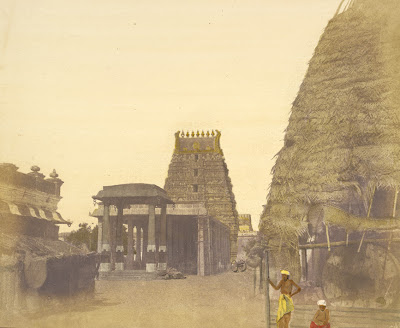
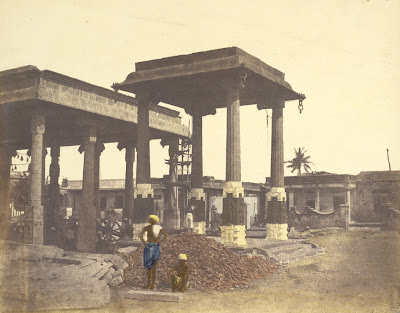
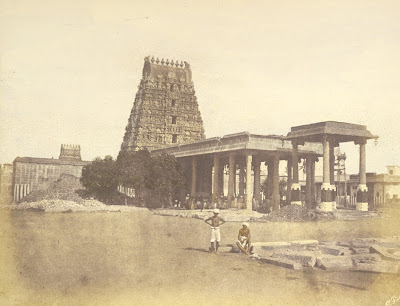
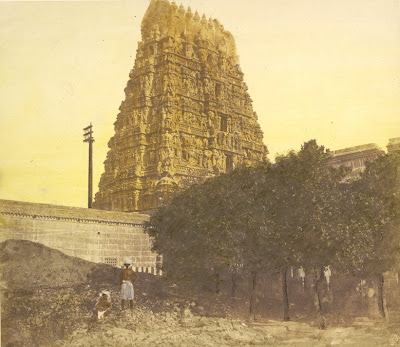
Some Rare Photographs of the Parthasarathi Temple, at Madras (Chennai), Tamil Nadu, taken by Frederick Fiebig in c.1851. The photograph is one of a series of hand-coloured salt prints by Fiebig. The temple is one of two large temple complexes in Madras and is situated in Triplicane. It dates from the 17th century and is a celebrated sanctuary dedicated to the worship of Vishnu as Parthasarathi, the principal Hindu deity. The temple has two enclosures, which are entered through gopuras on the east and west sides. A gopura is a gateway surmounted by an elaborately carved tower and is found in south Indian temple architecture. This is a view of the west gopura. Little seems to be known about Frederick Fiebig. He was probably born in Germany and became a lithographer (and possibly was also a piano teacher
source:::: Input from a friend of mine & Blog site on Vishnu Temples …divyadesamyatra.blogspot.com/
Chennai has just voted, along with the rest of Tamil Nadu. Waiting for the results may be a good time to think of the first mass-based election – in 1937, when over 35 million or about 25 per cent of the adult population voted in all British-ruled provinces of India, for the local legislatures. In Madras Presidency, that meant elections to the newly created Madras Legislative Assembly.
Our city was the capital of this vast Presidency, which extended from Andhra to Kanyakumari and so the atmosphere was electric. Adding to the excitement was the Congress party, contesting elections for the first time. Leading the campaign effort was S Satyamurti, veteran freedom-fighter, lawyer, theatre personality, patron of music and a magnificent orator. Under Satyamurti, the campaign was to be a colourful one.
He had for long been using theatre and (from 1931) film artistes, to attract crowds for his public meetings. In the 1937 campaign he was to press them once again into service. Chief among these were KB Sundarambal and ‘Avvai’ TK Shanmugam. Those were polls when in place of symbols, each party was identified by a ballot box of a certain colour and the voter had to push his paper into the box of his/her choice. The Congress party was assigned the colour yellow. At each public meeting, Sundarambal and Shanmugam would sing song hits from their plays and when a sizeable crowd had collected, would speak about the Congress. Then Sundarambal would wax eloquent on the good and auspicious qualities of turmeric and therefore the colour yellow. They would then depart after asking everyone assembled to vote for the yellow box. The Devadasi campaigner Tanjavur Kamukannammal would give the colour a different twist. She would speak about snuff and then ask everyone to vote in the ‘snuff box’! A special gramophone record containing the songs of Sundarambal and Musiri Subramania Iyer along with Congress appeals carried the message into households.
Such was the Congress juggernaut that some opposing candidates opted to withdraw rather than fight the polls. The first unopposed return to the Assembly was announced a month before the election – a certain K Kamaraj Nadar (!!) was declared elected from the Sattur-Aruppukottai rural constituency.
Those were days when newspapers could get away by being blatantly partisan (or patriotic depending on how you looked at it). The Hindu, carried a headline instructing its readers to “Fill the Yellow Boxes”. “Voters should require little persuasion at this time of the day to vote for the Congress,” it said. On the eve of polling day (February 14) NS Varadachari, a Congress candidate, was roughed by hired thugs in the Triplicane area. The Hindu carried a column on this and also had a photograph of Varadachari leading a procession, with bandaged head!
The results, when announced on February 24, were well worth the effort. The Congress had cornered 74 per cent of the seats in the Assembly, the best performance by the party anywhere in India.
தமிழ்நாட்டின் தனிப்பட்ட சிறப்பு எங்கு பார்த்தாலும் பிள்ளையார் கோயில்கள் இருப்பதேயாகும். “கோயில்’ என்று பெயர் வைத்து விமானமும் கூரையும் போட்டுக் கட்டடம் எழுப்ப வேண்டும் என்பது கூட இல்லாமல், அரச மரத்தடிகளிலே கூட வானம் பார்க்க அமர்ந்திருக்கும் ஸ்வாமி நமது பிள்ளையார்.
தெருவுக்குத் தெரு ஒரு பிள்ளையார் கோயில், நதிக் கரைகளிலெல்லாம் பிள்ளையார், மரத்தடிகளில் பிள்ளையார் என்றிப்படி இந்தத் தமிழ் தேசம் முழுவதும் அவர் வேறெந்த ஸ்வாமிக்கும் இல்லாத அளவுக்கு இடம் கொண்டு அருள்பாலித்து வருகிறாரர். அவரைப் “பிள்ளையார்’ என்றே அன்போது கூறுவது நம் தமிழ்நாட்டுக்கே உரிய வழக்கம். சர்வலோக மாதா பிதாக்களாகிய பார்வதி பரமேசுவரர்களின் ஜேஷ்ட புத்திரர் அவர். “பிள்ளை’ என்றால் அவரைத்தான் முதலில் சொல்ல வேண்டும். வெறும் “பிள்ளையார்’ என்று சொல்லக்கூடாது என்பதால் மரியாதையாகப் “பிள்ளையார்’ என்று சொல்வது தமிழ்நாட்டுச் சிறப்பு.
தெய்வம் என்று ஒன்று இருந்தால் அது லோகம் பூராவுக்குந்தான். ஆனாலும் அதை “நம்முது’ (நம்முடையது) என்று விசேஷமாகப் பிரித்து வைத்த ப்ரியம் காட்டி உறவு கொண்டாடணும் என்று பக்த மனஸுக்குத் தோன்றுகிறதுண்டு.
ஒவ்வொரு தெய்வத்திடம் இப்படி ஒவ்வொரு ஜனÙமுஹத்திற்கு ஒரு அலாதி பந்துத்வம் இருப்பதுண்டு. தமிழ் மக்களுக்கு ஸுப்ரஹ்மண்ய ஸ்வாமி என்றால் தனியான ஒரு ப்ரியம். முருகன், முருகன் என்று சொல்லி, தமிழ்த் தெய்வம் என்று அவரை இந்த நாட்டுக்கே, பாஷைக்கே உரித்தானவராக முத்ரை குத்தி வைத்துக் கொண்டாடுகிறோம்.
எனக்கென்னவோ அவரை மட்டும் அப்படிச் சொல்லாமல் அவருடைய அண்ணாக்காரரையும் தமிழ்த் தெய்வம் என்று சொல்லணும் என்று (இருக்கிறது)! இளையவரைத் தமிழ்த் தெய்வம் என்று குறிப்பாகச் சொல்ல எவ்வளவு காரணமுண்டோ அவ்வளவு – ஒரு வேளை, அதைவிடக்கூட ஜாஸ்தியாகவே – அண்ணாக்காரரையும் சொல்வதற்கு இருப்பதாக எனக்குத் தோன்றுகிறது. அதனால் – அந்த அண்ணா – தம்பிகளைப் பிரிக்கவேபடாது. சேர்த்துச் சேர்த்தே சொல்லணும், நினைக்கணும், பூஜை பண்ணணும் என்பதாலேயும் – பிள்ளையார், ஸுப்ரஹ்மண்யர் இரண்டு பேரையுமே தமிழ்த் தெய்வங்கள் என்று வைத்தவிட வேண்டுமென்று தோன்றுகிறது. அப்படி ஒரு ரெஸொல்யூஷன் கொண்டு வரப் போகிறேன்! (அது) “பாஸ்’ ஆகணுமே! அதனால் புஷ்டியான காரணம் நிறைய காட்டுகிறேன். யுனானிமஸாகவே பாஸ் பண்ணிவிடுவீர்கள்!
– ஜகத்குரு காஞ்சி காமகோடி ஸ்ரீ சந்திரசேகரேந்திர சரஸ்வதி சங்கராச்சார்ய ஸ்வாமிகள்
One serene image has been viewed by over one billion eyes, has been seen in videos of the White House and even the Russian government–the default Windows XP computer background.
Even though Microsoft killed off support for Windows XP this week after 13 years, they decided to pay homage to the nostalgic scene.
With many wondering where the image of green grass and blue skies named ‘Bliss’ really came from, the tech company Microsoft released a video in which they interview the photographer Charles O’Rear.
Video Link :
+5
This photo called ‘Bliss’ was taken by former National Geographic photographer Charles O’Rear on 1996 and was made famous by being Microsoft XP’s default desktop photo
+5
This is the same scene where O’Rear took his famed desktop background photo in 1996
+5
O’Rear drove from Napa Valley to Sacramento on an extremely busy and dangerous road
O’Rear, a former National Geographic photographer said he was driving through the Napa Valley on his way to visit his girlfriend in San Francisco when he came across a beautiful landscape with perfect grass and an almost clear sky.
In a video about the photo, O’Rear says that even though the photo appears to be taken in a calm environment, the road there is one of the most dangerous and busy roads he’s driven on.
Despite the dangerous road, the image couldn’t be more placid. He took his old film camera and snapped the famous photo in 1996.
O’Rear says by the time he took the picture there were a few clouds in the sky but when he first saw the photo worthy setting the sky was completely clear.
Several years later, Microsoft commissioned the photo for Windows XP, reports Time. They flew O’Rear out to their offices to personally deliver the photo.
‘I had no idea where it was going to go,’ ‘O’Rear said in the video.
‘Anybody now from age 15 to the rest of their life will remember this photograph.’ he said.
‘I’m thrilled to know that people have had pleasure from looking at that, from looking that a photograph that I made.’
+5
O’Rear stopped to snap the photo as he was driving along this busy road from Napa Valley to Sacramento
+5
Charles O’Rear took the photo with an old film camera back in 1996 and never knew that the picture he took on a whim would be seen by over one billion eyes !!!
மகாபெரியவாள் சிவாஸ்தானத்தில் தங்கியிருந்தார்கள். அங்கிருந்த ஸ்ரீ பிரம்மபுரீஸ்வர்ர் ஆலயத்துக்கு அப்போதுதான் பெருமை வந்த்து. பிரும்ம ஸ்வரூபியான் பெரியவாளைத் தரிசிக்க வந்த அடியார்கள் எல்லாரும் பிரும்மபுரீஸ்வர்ரையும் நிச்சயமாகத் தரிசனம் செய்தார்கள்.
நாங்கள் பெரியவாளைத் தரிசனம் செய்யச் சென்றிருந்தோம். அன்றைக்குப் பெரியவா, மௌனம் ! ஆனால். அவர்களுடைய அருட்பாரிவையே பக்தர்களுக்குப் போதுமானதாக இருந்த்து.
அந்த்ச் சமயம் பார்த்து, இந்தோனேஷியாவிலிருந்து ஒரு சரித்திர ஆராய்ச்சியாளர் தரிசனத்துக்கும், சில சந்தேகங்களுக்கு விளக்கம் கேட்கவும் வந்தார்.
நல்லகாலமாக, அன்றைக்குக் காஷ்ட மௌனம் இல்லை; கைகளால் ஜாடைகள் காட்டினார். அதை விவரித்துச் சொன்னார், அணுக்கத் தொண்டர்.
அவருக்குச் சரித்திர ஞானம் – அதுவும், இந்தோனேஷிய சரித்திரம் ! – இல்லவேயில்லை.
நான் மேனிலைப் பள்ளித் தலைமையாசிரியராதலால், தொண்டர் கூறியதை மேலும் தெளிவாக ஆங்கிலத்தில் கூறி வந்தேன்.
இந்தோனேஷியா என்பது அநேகம் தீவுகளின் தொகுதி. அவற்றில், ஒரு தீவில், ஒரு இந்து மன்னர் நட்த்திய யாகத்தைப் பற்றி மிகவும் ஆர்வத்துடன் கூறினார், அந்த ஆராய்ச்சியாளர்.
“யாகம் நடந்த தீவின் பெயர் என்ன?” என்று ஜாடை மூலமாகவே பெரியவா கேட்டார்கள்.
ஆராய்ச்சியாளருக்குத் தெரியவில்லை, நூற்றுக்கணக்கான தீவுகளின் பெயரை நினைவில் வைத்துக் கொள்வது சாத்தியமில்லை என்றாலும், சில முக்கியமான் தீவுகளின் பெயர்களைக் கூறத் தொடங்கினார். அவர் ஒன்றொன்றாகத் தீவின் பெர்யரைச் சொன்னதும், ‘அது இல்லை’ என்ற பாவனையில் பெரியவா தலையை அசைத்துக் கொண்டிருந்தார்கள்.
ஆராய்ச்சியாளருக்கே அலுப்பு வந்துவிட்ட்து. “நூற்றுக்கணக்கான தீவுகள் இருக்கும்போது, அவைகளின் பெயர்கள் பெரியவாளுக்கு மட்டும் தெரிந்திருக்கப் போகிறதா என்ன?” என்ற எண்ணமும் தோன்றியிருக்க்க் கூடும்.
பெரியவா, பக்தர்களின் கூட்ட்த்தில் பார்வையைச் செலுத்தினார். பின், தன் செவியின் கீழே, கைவிரல்களை வட்டமாக வைத்து, ‘என்ன பெயர்?’ என்று கேட்பது போல ஜாடை காட்டினார்கள்.
ஒருவர், “குண்டலம்” என்று மெல்லிய குரலில் கூறினார்.
பெரியவா, ‘அதுதான்! .. அவனிடம் சொல்லு …’ என்று ஜாடை காட்டினார்கள்.
அங்கு நடப்பதையெல்லாம் விந்தையுடன் பார்த்துக் கொண்டிருந்த இந்தோனேஷிய ஆராய்ச்சியாளரிடம், ‘குண்டலம்..” என்ற சொல் இரைந்து கூறப்பட்ட்து.
ஒரு துள்ளு துள்ளினார், அவர்.
“ஆமாம்! அந்த யாகம் நடந்த தீவின் முதற்சொல் குண்டலம் தான்!” என்று பக்தர்களிடம் கூறிவிட்டு, பெரியவாளிடம் முழுப் பெயரையும் தெரிவித்தார்.
பெரியவா புன்னகைத்தார். ஆராய்ச்சியாளருக்கு மகா ஆச்சரியம் ! தன்னுடன் வந்திருந்தவர்களிடம், அவர்கள் மொழியில் தன் வியப்பை வெளிப்படுத்திப் பேசி, பெரியவாளின் பூகோள ஞானத்தைப் பெரிதும் போற்றினார்.
ஆனால் பக்தர்களுக்கெல்லாம் உண்மை தெரியும். பெரியவா, ஞானக் களஞ்சியம்; ஞான ஊற்று; அனைத்து ஞான்ங்களையும் தன்னுள் அடக்கி வைத்திருக்கும் ரத்தினப் பெட்டகம்.
ஆசிரியனான எனக்கு நன்றாகவே புரிந்த்து – ‘இது, வெறும் படிப்பு அறிவு அல்ல !”
இந்த அதிசய நிகழ்ச்சி நடந்தபோது நாங்களும் அதைக் காணக் கிடைத்த்து, எங்கள் பாக்கியம்.
http://www.periva.proboards.comSource: Maha Periyavaal Darisana Anubhavangal – Part 4
As narrated by Sri V.Sundaram, Cuddalore
Contributed by Forum Member Shri Sankara Narayanan
Gmail’s home page as it looked on March 31, 2004, shortly before the service launchedSkizzers.org
Google’s email breakthrough was almost three years in the making. But it wasn’t a given that it would reach the public at all
If you wanted to pick a single date to mark the beginning of the modern era of the web, you could do a lot worse than choosing Thursday, April 1, 2004, the day Gmail launched.
Scuttlebutt that Google was about to offer a free email service had leaked out the day before: Here’s John Markoff of the New York Timesreporting on it at the time. But the idea of the search kingpin doing email was still startling, and the alleged storage capacity of 1GB—500 times what Microsoft’s Hotmail offered—seemed downright implausible. So when Google issued a press release date-stamped April 1, an awful lot of people briefly took it to be a really good hoax. (Including me.)
Gmail turned out to be real, and revolutionary. And a decade’s worth of perspective only makes it look more momentous.
The first true landmark service to emerge from Google since its search engine debuted in 1998, Gmail didn’t just blow away Hotmail and Yahoo Mail, the dominant free webmail services of the day. With its vast storage, zippy interface, instant search and other advanced features, it may have been the first major cloud-based app that was capable of replacing conventional PC software, not just complementing it.
Even the things about Gmail that ticked off some people presaged the web to come: Its scanning of messages to find keywords that could be used for advertising purposes kicked off a conversation about online privacy that continues on to this day.
Within Google, Gmail was also regarded as a huge, improbable deal. It was in the works for nearly three years before it reached consumers; during that time, skeptical Googlers ripped into the concept on multiple grounds, from the technical to the philosophical. It’s not hard to envision an alternate universe in which the effort fell apart along the way, or at least resulted in something a whole lot less interesting.
“It was a pretty big moment for the Internet,” says Georges Harik, who was responsible for most of Google’s new products when Gmail was hatched. (The company called such efforts “Googlettes” at the time.) “Taking something that hadn’t been worked on for years but was central, and fixing it.”
It All Began With Search
Gmail is often given as a shining example of the fruits of Google’s 20 percent time, its legendary policy of allowing engineers to divvy off part of their work hours for personal projects. Paul Buchheit, Gmail’s creator, disabused me of this notion. From the very beginning, “it was an official charge,” he says. “I was supposed to build an email thing.”
He began his work in August 2001. But the service was a sequel of sorts to a failed effort that dated from several years before he joined Google in 1999, becoming its 23rd employee.
Gmail’s creator, Paul Buchheit, at his desk at Google in 1999Courtesy Paul Buchheit
“I had started to make an email program before in, probably, 1996,” he explains. “I had this idea I wanted to build web-based email. I worked on it for a couple of weeks and then got bored. One of the lessons I learned from that was just in terms of my own psychology, that it was important that I always have a working product. The first thing I do on day one is build something useful, then just keep improving it.”
With Gmail–which was originally code-named Caribou, borrowing the name of a mysterious corporate project occasionally alluded to inDilbert–the first useful thing Buchheit built was a search engine for his own email. And it did indeed take only a day to accomplish. His previous project had been Google Groups, which indexed the Internet’s venerable Usenet discussion groups: All he had to do was hack Groups’ lightning-fast search feature to point it at his mail rather than Usenet.
At first, Buchheit’s email search engine ran on a server at his own desk. When he sought feedback from other engineers, their main input was that it should search their mail, too. Soon, it did.
The fact that Gmail began with a search feature that was far better than anything offered by the major email services profoundly shaped its character. If it had merely matched Hotmail’s capacity, it wouldn’t have needed industrial-strength search. It’s tough, after all, to lose anything when all you’ve got is a couple of megabytes of space.
But serious search practically begged for serious storage: It opened up the possibility of keeping all of your email, forever, rather than deleting it frantically to stay under your limit. That led to the eventual decision to give each user 1GB of space, a figure Google settled on after considering capacities that were generous but not preposterous, such as 100MB.
“A lot of people thought it was a very bad idea, from both a product and a strategic standpoint.”Still, long before Google chose to give Gmail users 1GB of space, it had to decide that Gmail would be a commercial product at all. That wasn’t the no-brainer it might seem, even though Google had a maniacally email-centric culture itself.
In its early years, one of the defining things about the company was its obsessive focus on its search engine; that set it apart from Yahoo, Excite, Lycos and other search pioneers that had recast themselves as “portals,” expanding their ambitions to encompass everything from weather to sports to games to, yes, email. Portals had a reputation for doing many things, but not necessarily doing them all that well.
“A lot of people thought it was a very bad idea, from both a product and a strategic standpoint,” says Buchheit of his email project. “The concern was this didn’t have anything to do with web search. Some were also concerned that this would cause other companies such as Microsoft to kill us.”
Fortunately, the doubters didn’t include Google’s founders. “Larry [Page] and Sergey [Brin] were always supportive,” Buchheit says. “A lot of other people were much less supportive.”
Buchheit had been working on his project for a month or two when he was joined by another engineer, Sanjeev Singh, with whom he’d found social-networking startup FriendFeed after leaving Google in 2006. (FriendFeed was acquired by Facebook in 2009.) The Gmail team grew over time, but not exponentially; even when the service launched in 2004, only a dozen or so people were working on it.
Gmail’s first product manager, Brian Rakowski, learned about the service from his boss, Marissa Mayer, on his first day at Google in 2002, fresh out of college. (He’s still at Google today, where he currently works on Android.) What he saw got him excited, but it was still an exceptionally rough draft.
“It didn’t look anything like what Gmail does now or even what it looked like when it launched,” he says. “I was just graduated from school and was indoctrinated in usability tests and target users. I was pretty paranoid that Google engineers would love it and it wouldn’t appeal to the mass market. I agonized over it a lot.”
All along, though, Gmail’s creators were building something to please themselves, figuring that their email problems would eventually be everybody’s problems. “Larry said normal users would look more like us in 10 years’ time,” Rakowski says.
What Does Google Email Look Like?
Even in August of 2003, two years into the effort, Gmail had only the most rudimentary of front ends. That’s when another new Google recruit, Kevin Fox, was assigned to design the service’s interface. (After leaving Google, he reuinited with Buchheit and Singh at FriendFeed.)
Fox knew that Gmail needed to look Googley; the challenge was that it wasn’t entirely clear what that meant. The company didn’t yet offer an array of services: Other than the company’s eponymous search engine, one of the few other precedents Fox could draw inspiration from was Google News, which had debuted in September of 2002. But search and News were both websites. Gmail was going to be a web app.
“It was a fundamentally different kind of product,” he says. “Fortunately, they gave me lots of latitude to explore different design directions.” Fox aimed for something that took cues from both websites and desktop applications without mindlessly mimicking either. After three major passes on the design, he settled on the look that’s still very much recognizable in today’s version of Gmail.
Gmail as it appeared in April of 2004, in a screenshot created by its designer, Kevin FoxKevin Fox
Thinking of Gmail as an app rather than a site had technical implications, too. Hotmail and Yahoo Mail had originally been devised in the mid-1990s; they sported dog-slow interfaces written in plain HTML. Almost every action you took required the service to reload the entire web page, resulting in an experience that had none of the snappy responsiveness of a Windows or Mac program.
With Gmail, Buchheit worked around HTML’s limitations by using highly interactive JavaScript code. That made it feel more like software than a sequence of web pages. Before long, the approach would get the moniker AJAX, which stood for Asynchronous JavaScript and XML; today, it’s how all web apps are built. But when Gmail was pioneering the technique, it wasn’t clear that it was going to work.
The ambitious use of JavaScript “was another thing most people thought was a pretty bad idea,” Buchheit says. “One of the problems we had was that the web browsers weren’t very good back then…We were afraid we’d crash browsers and nobody would want to use it.”
The more JavaScript that Gmail used, the more sophisticated it could get. One of its flagship features ended up being that the messages in your inbox weren’t strictly sequential. Instead, with the aim of making it easier to follow discussion threads, all the messages in a given back-and-forth string were collected into a cluster called a conversation, with any duplicated text automatically concealed. From a design perspective, says Fox, “trying to make it so that conversations were obvious to the user and intuitive was the largest challenge.”
“We weren’t going to plaster it with banners. We committed to that from pretty early on.”Then there was Gmail’s business model. Some within Google advocated for it being a paid service, but Buchheit and others wanted the service to reach as many people as possible, which was an argument for it being free and supported by advertising. With other free email offerings of the time, that meant flashy graphical banner ads–the antithesis of the unobtrusive little text ads which, then as now, accompanied Google search results.
“We weren’t going to plaster [Gmail] with banners,” says Rakowski. “We committed to that from pretty early on.” Instead, Gmail got little text ads of its own, automatically keyed to words in the text of a user’s email. In an example Google used early on to explain the system, two ads for ticket agencies were displayed alongside a conversation that mentioned a Beach Boys concert.
As with other aspects of Gmail, it wasn’t a given that the plan to monetize it through text ads would work. “I remember trying to model out how valuable each user would be in terms of advertising,” remembers Rakowski. “We had no idea.”
Advertising wasn’t just a math problem. Other email services already scanned the text of incoming messages, to check for spam and viruses, for instance. But doing the same thing for advertising purposes was something new, and Google knew that some people might be creeped out by any tangible evidence that their messages had been read, even if the one doing the reading was a machine.
“We thought pretty hard before doing what we did,” says Harik. “We thought, is this thing a perceived privacy violation or a real one? We decided it would be an issue of perception.”
Going Public
For much of its development, Gmail had been a skunkworks project, kept secret even from most people within Google. “It wasn’t even guaranteed to launch–we said that it has to reach a bar before it’s something we want to get out there,” says Fox.
By early 2004, however, Gmail worked, and almost everybody was using it to access the company’s internal email system. It was time to settle on a schedule for a public announcement. The date the company selected was April 1.
Copernicus Center, the lunar research lab Google also announced on April 1, 2004Google
That wasn’t just another random day on the calendar. Google had begun itstradition of April Fools’ mischief in 2000; the company had a hoax in the works for 2004, involving an announcement that it was hiring for a new research center on the moon. It figured, correctly, that announcing Gmail at the same time would lead some people to think that the announcement was a prank. Especially since the 1GB of space was unimaginably ginormous by 2004 standards.
“Sergey was most excited about it,” says Rakowski. “The ultimate April Fools’ joke was to launch something kind of crazy on April 1st and have it still exist on April 2nd.”
“If you’re far enough ahead that people can’t figure out if you’re joking, you know you’ve innovated.”The team had to scamper to make the deadline, and in fact, Gmail wasn’t really ready to go: Google didn’t have the awesome server capacity in place to give millions of people reliable email and a gigabyte of space apiece. “We had a Catch-22 when we launched,” Buchheit remembers. “We couldn’t get many machines because people thought we couldn’t launch, but we couldn’t launch because we didn’t have machines.”
In the end, Gmail ended up running on three hundred old Pentium III computers nobody else at Google wanted. That was sufficient for the limited beta rollout the company planned, which involved giving accounts to a thousand outsiders, allowing them to invite a couple of friends apiece, and growing slowly from there.
As news about Gmail dribbled out on March 31 and continued into April Fools’ Day, the reaction did, indeed, include a fair amount of disbelief. “If you’re far enough ahead that people can’t figure out if you’re joking, you know you’ve innovated,” says Harik. “Primarily, journalists would call us and say ‘We need to know if you’re just kidding, or if this is real.’ That was fun.”
Once it was clear that Gmail was the real deal, the invitations became a hot property. The limited rollout had been born of necessity, but “it had a side effect,” says Harik. “Everyone wanted it even more. It was hailed as one of the best marketing decisions in tech history, but it was a little bit unintentional.”
Gmail’s use of JavaScript made features like auto-completion of contact names as you typed possibleGoogle
Bidding for invites on eBay sent prices shooting up to $150 and beyond; sites such as Gmail Swap emerged to match up those with invites with those who desperately wanted them. Having a Hotmail or Yahoo Mail email address was slightly embarrassing; having a Gmail one meant that you were part of a club most people couldn’t get into.
Despite the publicity windfall, Buchheit sounds a tad wistful about the situation, even a decade later: “I think Gmail could have grown a lot more in the first year if we’d had more resources.”
The aura of exclusivity and experimentation stuck to Gmail long after it did grow huge. Google kept increasing the number of invites each user could issue, but it didn’t open up the service to all comers until Valentine’s Day, 2007. And Gmail wore its Beta label like a badge of honor until July of 2009. (The company finally removed it as a sop to cautious business customers, who didn’t want to sign up for something that sounded unfinished.)
Gmail’s use of advertising keyed to the contents of email messages raised hackles–maybe more so than Google had anticipated. Some critics thought it invaded the privacy of the sender; others felt that the recipient was the party whose rights had been violated. Fear of inappropriate placements—such as pharmaceutical ads next to an email concerning suicide—was a common theme. And some people had reasonable questions about what Google would do with the data it collected to serve the ads, and how long it would preserve it.
Gmail’s limited release—the same thing that had some people giddily competing for invites on eBay—left others developing an antipathy to the service based on assumptions rather than reality. “I went to dinner parties at friends of friends,” says Rakowski. “People would talk about Gmail, not knowing that I worked on it, understanding it incorrectly because they hadn’t had a chance to try it.”
The annotated screenshot Google used in 2004 to explain how Gmail’s ads workedGoogle
The reaction from privacy groups got ugly fast. On April 6, 31 organizations and advocates co-signed a letter to Page and Brin, raising a gaggle of concerns about Gmail, calling it a bad precedent and asking that the service be suspended until their concerns could be addressed. “Scanning personal communications in the way Google is proposing is letting the proverbial genie out of the bottle,” they warned.
Right in Google’s own backyard, California State Senator Liz Figueroa (D-Fremont) sent Google a letter of her own, calling Gmail a “disaster of enormous proportions, for yourself, and for all of your customers.” She went on to draft a bill requiring, among other things, that any company that wanted to scan an email message for advertising purposes get the consent of the person who sent it. (By the time the California Senate passed the law, cooler heads prevailed and that obligation had been eliminated.)
Google reacted to the controversy over Gmail’s ads by listening to the critics, detailing its policies on the Gmail site and spotlighting the work of journalists who thought the controversy was silly. It didn’t cave to those who demanded fundamental change to the service, and pushed back at what it argued was irresponsible behavior by some of the service’s foes:
When we began the limited test of Gmail, we expected our service would be the subject of intense interest. What we did not anticipate was the reaction from some privacy activists, editorial writers and legislators, many of whom condemned Gmail without first seeing it for themselves. We were surprised to find that some of these activists and organizations refused to even talk to us, or to try first-hand the very service they were criticizing. As we read news stories about Gmail, we have regularly noticed factual errors and out-of-context quotations. Misinformation about Gmail has spread across the web.
That’s unfortunate for Google, but why should you care? Because it may affect your right to make your own decisions about how you read your mail. This misinformation threatens to eliminate legitimate and useful consumer choices by means of legislation aimed at innocuous and privacy-aware aspects of our service, while simultaneously deflecting attention from the real privacy issues inherent to all email systems.
“Ten years from now, we’ll probably look back at the Gmail dust-up with…befuddlement,” wrote Slate’s Paul Boutin, one of the journalists whose pro-Gmail stances Google linked to in its response to the privacy flap. Mostly, we do: In 2012, the last time Google issued an official count, Gmail had 425 million active users, which suggests that discomfort with its approach to advertising is a minority view. The issue has never vanished entirely, though. It’s still in the courts, and Microsoft continues to tell consumers that it’s a reason to use Outlook.com, Hotmail’s successor.
A Decade Later
One remarkable thing about Gmail that wasn’t obvious in 2004: Its creators built it to last. The current incarnations of Outlook.com and Yahoo Mail have nothing to do with the email services Microsoft and Yahoo offered 10 years ago. But Gmail–despite having added features more or less continuously and gone through somesignificant redesigns–is still Gmail.
“I can’t think of another app that has existed so close to its original form for 10 years,” says Fox. “Someone who had only used Gmail in its first iteration and suddenly used it today would still understand Gmail. They’d know how to use it for virtually everything they’d want to do.”
“What makes the product what it is really comes from the continuous focus on the types of problems we’re trying to solve for our users,” says Alex Gawley, Gmail’s current product manager. “If you look back to 2004, the big problems email users were facing were having to delete messages for lack of storage, not being able to find messages and crazy amounts of spam.” Today, the big opportunities include making Gmail more action-oriented–which Google is doing with features such as live flight status information displayed within messages–and reimagining it for mobile devices such as phones and tablets. Gawley says challenges like those are enough to keep the Gmail team busy for the next half-decade.
Of course, no matter how inventive Gmail remains, it’s now the establishment. When newfangled apps and services such as Mailboxand Alto come along, the experience they’re reimagining is one created by Gmail, more than any other single email client, over the last decade. The creators of any new service would be thrilled to do to Google what Google did to Microsoft and Yahoo in 2004.
Gmail’s creator Paul Buchheit in March 2014Annie Harper
Then again, some of the issues email still has may not lend themselves to the sort of problem-solving Silicon Valley knows how to tackle. When I dropped Buchheit a line at his Gmail address asking to chat with him for this story, I got an automated message explaining that he was on hiatus from email—checking in, but only sporadically. Did Gmail’s creator think that email was broken all over again?
”The problem with email now is that the social conventions have gotten very bad,” Buchheit told me once we’d made contact. “There’s a 24/7 culture, where people expect a response. It doesn’t matter that it’s Saturday at 2 a.m.–people think you’re responding to email. People are no longer going on vacation. People have become slaves to email.”
“It’s not a technical problem. It can’t be solved with a computer algorithm. It’s more of a social problem.”
Sounds like the man who fixed email in 2004 is saying that the only folks who can fix it in 2014 and beyond are those of us who use it–and sometimes abuse it–it every day.






 Take off with Natarajan