” இறைவனின் அழைப்பை உணர்ந்த போது……”

அண்ணல் காந்தி “நான் 125 ஆண்டுகள் வாழ்வேன்’ என்று பல முறை சொல்லியிருக்கிறார். ஆனால், தனது 79-ஆவது வயதிலேயே இறைவனடி சேர்ந்துவிட்டார்.
ஞானிகளும், யோகிகளும், சித்தர்களும் தாங்கள் இறக்கும் காலம் எப்போது என்பதை முன்னதாகவே உணர்ந்து, அறிவிக்கும் சக்தி படைத்தவர்கள் என்பார்கள். சுவாமி விவேகானந்தர் தன் ஆன்மா பிரியும் நாளை, வங்காளப் பஞ்சாங்கத்தைப் பார்த்து, தானே முடிவு செய்து கொண்டார்.
அதேபோல், மகான் காந்தியும் தனது இறுதிக் காலம் நெருங்கிவிட்டது; இறைவனின் அழைப்பு வந்துவிட்டது என்பதை உணர்ந்தார்; அந்த உள்ளுணர்வை வெளிப்படுத்தவும் செய்தார் தன் சொல்லாலும், செயலாலும்.
இறப்பதற்கு முந்தைய நாள் (29.01.1948) அந்த உள்ளுணர்வைத் தெளிவாக வெளிப்படுத்தினார்.
அன்று மதிய உணவு வேளையின் போது, தில்லி பிர்லா பவன் புல்வெளி அரங்கில் அமர்ந்திருந்தார். அப்பொழுது நேருஜியின் சகோதரி கிருஷ்ணா ஹதீசிங், கவிக்குயில் சரோஜினி நாயுடு, இந்திரா காந்தி, நான்கு வயதான ராஜீவ் காந்தி – ஆகிய நால்வரும் வந்தார்கள். வண்ண வண்ண உடைகள் அணிந்திருந்த அவர்களைப் பார்த்து “இந்த ஏழையைப் பார்ப்பதற்கு இளவரசிகள் வந்திருக்கிறார்களோ!’ என வேடிக்கையாகப் பேசி வரவேற்றார் காந்திஜி. “முன்பை விட உங்கள் உடல் தேறியிருக்கிறது: மிகவும் நேர்த்தியாகக் காணப்படுகிறீர்கள்’ என்று ஹதீசிங் சொன்னதற்கு, காந்திஜி பதில் எதுவும் பேசவில்லை.
அவ்வேளையில் சிறுவன் ராஜீவ், அங்கே சிதறிக்கிடந்த மலர்களை தன் இரு கைகளாலும் சேகரித்து எடுத்து, அண்ணலின் அருகில் சென்று, அவரது காலடிகளில் வைத்தான். உடனே காந்திஜி, ராஜீவைப் பிடித்து, அவரது காதை செல்லமாகக் கிள்ளியபடி “நீ இதைச் செய்யக் கூடாது. மலர்களை இறந்தவர்களின் காலடியில் வைப்பது தான் வழக்கம்’ என்று சொன்னார்.

ஒருமணி நேரம் கழித்து, பிரபலமான “லைஃப்’ பத்திரிகை நிருபர் “மார்கரெட் பூர்சி ஒயிட்’ அண்ணலிடம் பேட்டிக்காக சந்தித்தார். அதுவே காந்திஜி அளித்த கடைசிப் பேட்டியாக அமைந்தது. அந்த நிருபர் “125 வயதுவரை வாழ வேண்டும் என்ற விருப்பம் உங்களுக்கு இருக்கிறதா?’ என்று கேட்க, அதற்கு அண்ணல், “அந்த நம்பிக்கையை நான் இழந்துவிட்டேன். இன்று உலகில் நிகழும் கொடிய நிகழ்வுகளே அதற்குக் காரணம். இருண்ட உலகத்தில் நான் வாழ விரும்பவில்லை’ என்று சற்று அழுத்தமாகவே சொன்னார்.
அதன்பின் மதக்கலவரங்களால் பாதிக்கப்பட்டு, வீடுகளை, சொத்துக்களை இழந்த ஒரு கிராம மக்கள் கூட்டம் காந்தியைச் சந்தித்தது. வந்தவர்களில் பலர் கண்ணீர் விட்டு அழுது கொண்டே கை வணங்கி நின்ற போது, உணர்ச்சி வசப்பட்ட ஒரு நபர் கோபத்தோடும், வேகத்தோடும் காந்தியை நோக்கி “நீங்கள் எங்களுக்கு செய்த தீங்குகள் போதும், எங்களை முழுமையாக அழித்து விட்டீர்கள், எங்களை விட்டு விடுங்கள். நாங்கள் பார்த்துக் கொள்வோம். நீங்கள் இமயமலைக்குச் சென்று விடுங்கள். அது போதும் எங்களுக்கு’ என்று கொடிய சொற்களை கொட்டித் தீர்த்தார். இது அண்ணலின் மனதை அதிகம் பாதித்திருக்க வேண்டும். ஆகவேதான், தன் பேத்தி மனு பென் இடம் “ஏழைகளின் இந்த கோபக்குரல் எனக்கு இறைவனின் குரலாகவே தோன்றுகிறது. இறைவன் எனக்கு அனுப்பும் மரண எச்சரிக்கையாக இதனை நான் கருதுகிறேன். ஆனால், ஒன்றை உறுதியாகச் சொல்வேன். இமயமலையில் எனக்கு அமைதி கிடைக்காது. அவதியுறும் என் மக்களுக்கு உதவுவதே எனக்கு அமைதியைக் கொடுக்கும். மக்களுக்கு மத்தியில் நான் வாழ விரும்புகிறேன். குழப்பத்திற்கு மத்தியிலேயே நான் சாக விரும்புகிறேன். இறைவன் எப்பொழுது வேண்டுமானாலும் என்னை எடுத்துக் கொள்ளட்டும். (I want to find peace in the midst of my people: I want to die in the turmoil. God may take me away any time as He wills) என்று சொன்னார்.
இந்த நிகழ்வு அவர் நெஞ்சை மிகவும் பாதித்தது. ஆகவே தான், இரவு படுக்கைக்குச் செல்லும் முன்பு, தன் நீண்ட கால சகாவான பிரிஜ் கிருஷ்ணா சந்தி வாலாவிடம் “இதனை இறைவன் எனக்கு அனுப்பிய இறுதி எச்சரிக்கையாக எடுத்துக் கொள்ள வேண்டும்’ என்று திரும்பவும் சொன்னார்

கடுமையான இருமலுக்காக டாக்டர் சொன்ன பெனிசிலின் மாத்திரையை எடுத்துக் கொடுத்த போது, என்றுமில்லாத வகையில் கோபத்தை வெளிப்படுத்திச் சொன்னார். “நான் நோயால் அல்லது கட்டியால் இறக்க நேர்ந்தால், இவன் ஒரு “போலி மகாத்மா’ (False Mahatma) என்று எல்லோரும் ஒன்று சேர்ந்து உரக்கச் சொல்லுங்கள். ஆனால், ஒரு எதிர்பாராத நிகழ்வால் அல்லது ஒருவனின் துப்பாக்கிக் குண்டுகள் என் நெஞ்சிலே பாய்ந்து, எந்த ஏக்கமும் இல்லாமல், ராம நாமத்தை என் உதடுகள் உச்சரித்தவாறே, என் உயிர் போகுமானால், அப்பொழுது இவன் உண்மையான மகாத்மா (True Mahatma) என்று நீங்கள் சொல்லலாம்…’
அண்ணலின் இறுதி நாளான, ஜனவரி 30 அன்று, மாலை 4 மணி அளவில் சர்தார் படேலுடன் ஆழ்ந்த உரையாடலில் ஈடுபட்டிருந்தார். அது சமயம் அவரைச் சந்திப்பதற்காக, அவரது சொந்த மாநிலமான “கத்தியவாரி’லிருந்து இரண்டு தலைவர்கள், முன் அறிவிப்பு எதுவும் இல்லாமல் வந்திருப்பதாகச் சொன்னார்கள். அதைக் கேட்டவுடன் “பிரார்த்தனை கூட்டம் முடிந்த பின், அவர்களைச் சந்திப்பதாக சொல்லுங்கள். அதுவும் அப்பொழுது நான் உயிரோடு இருந்தால்’ என்று சொன்னார்.
இதற்கு சில மணி நேரத்திற்கு முன்னால், காந்தி இருமலுக்காக எடுக்க வேண்டிய மருந்தை – கிராம்பும் வெல்லமும் சேர்ந்த கலவையை – எடுத்து வருகிறேன் என்று மனு பென் சொன்ன போது “இன்று இரவுக்குள் என்ன நடக்கும் என்பதை யார் அறிவார்? நான் உயிருடன் இருப்பேனா? என்பது கூடத் தெரியாதே’ என்று குறிப்பிட்டார்.
இவ்வாறு, தனது இறுதிக் காலம் நெருங்கி விட்டது. இறைவனின் அழைப்பு வந்து விட்டது. தனது மரணம் ஒரிரு நாள்களில் நிகழும் என்பதை மற்ற மகான்கள், ஞானிகள், சித்தர்கள் போல் மகாத்மா காந்தி அடிகளும் முன்னதாகவே உணர்ந்தார். அந்த உள்ளுணர்வை பலமுறை வெளிப்படுத்தவும் செய்தார்.

ஜனவரி 30-ஆம் நாளன்று அண்ணல் மூன்று முக்கிய செயல்களில் ஈடுபட்டார் எனச் சொல்லலாம். “பிரிவினைக்குப் பின் நிகழ்ந்து வரும் குழப்பங்களையும் கொடுமைகளையும் பார்த்த பின்பும் காந்திஜி பாகிஸ்தானின் மீது மென்மையான போக்கைக் கடைப்பிடிக்கிறாரே என்று குற்றம் சாட்டி, காந்திஜியின் சேவை இனி தேசத்திற்குத் தேவை இல்லை. அவர் இமயமலைக்குத் துறவியாகச் செல்வதே உசிதம்’ என்ற குரல் வலது சாரிகள், மதவாதிகள், பிற்போக்குவாதிகளிடமிருந்து பலமாக ஒலிக்கத் தொடங்கியது. ÷ஆனால், காந்தியோ தன் அமைதிப்பணி, தான் இல்லாவிட்டாலும், தொடர வேண்டியது முன்பை விட மிகமிக அவசியம் எனக் கருதியிருக்க வேண்டும். ஆகவேதான், அன்று எவரும் எதிர்பாராத வகையில் அங்கிருந்தவர்களை ஒரு குறிப்பிட்ட குஜராத்தி பஜனைப் பாடலைப் பாடும்படி பணித்தார்.
அந்த பாடல் வரிகளின் பொருள்:
“ஓ! மனிதா! நீ களைப்படைந்தாலும், இல்லா விட்டாலும், ஓய்வு எடுக்காதே! உன் போராட்டத்தை நிறுத்தாதே! தனிமனிதனாக அதனைத் தொடர்ந்து நடத்து’ என்பதாகும்.
தான் மறைந்தாலும், ஒவ்வொரு தனிமனிதனும் தன் போராட்டத்தைத் தொடர வேண்டும் என மகாத்மா எண்ணியதால் தான், இப்பாடலைப் பாடச் சொல்லியிருக்க வேண்டும்.
“தேசம் இன்று இருக்கும் சூழலில் நேரு, படேல் ஆகிய இரு தலைவர்களும் இணைந்து செயல்பட வேண்டும். அவர்களது அறிவும், ஆற்றலும், சேவையும், அர்ப்பணிப்பும் தேசத்திற்குத் தொடர்ந்து கிடைக்க வேண்டும்’ – என்ற ஆவலை அண்ணல் உறுதிபட வெளிப்படுத்தினார். அதற்கு சர்தார் படேல் இசைவு தெரிவித்தார். அன்றைய தினத்தில் அண்ணலின் இரண்டாவது முக்கியமான பணி இது.
மூன்றாவதாக, காங்கிரஸ் பேரியக்கத்தின் இலட்சியம், அணுகுமுறை, செயல்பாடு ஆகியவற்றைத் திருத்தும், வரைவு ஆவணத்தைத் (Draft Document) தயாரிக்கும் பணியில் மும்முரமாக ஈடுபட்டிருந்தார். இதனை காங்கிரஸின் கடைசி அத்தியாயத்தைக் காந்திஜி எழுதிக் கொண்டிருந்ததாகச் சொல்வார்கள். அதே நாளில் தான், நாதுராம் கோட்சே, காந்திஜியின் கடைசி அத்தியாயம் எழுதப்படுவதற்கான திட்டத்தைத் தீர்க்கமாக, வகுத்துக் கொண்டிருந்தான்.

பிரார்த்தனைக் கூட்டத்திற்கு சரியாக 5 மணிக்கு செல்பவர் மகாத்மா. அன்று 10 நிமிடங்கள் தாமதமாகி விட்டதை அறிந்த அண்ணல், தன்னையே நொந்து கொண்டு “நான் என்னையே சிதைத்துக் கொள்ள வேண்டியது தான்’ என்று சொன்னார். அவைதான் அண்ணலின் வாயிலிருந்து வந்த கடைசி வார்த்தைகள்.
காலதாமதம் ஆகிவிட்டதால், என்றுமில்லாத வகையில் வேகமாக நடந்தார் காந்திஜி. எதிரே ராணுவ பாணியில் காக்கி உடை அணிந்திருந்த கோட்சே, காந்திஜியின் முன் வந்து வணங்கினான். பதிலுக்கு காந்திஜியும் இருகரம் கூப்பி வணங்கினார். கூப்பிய கைகளை எடுக்கும் முன்பாக, கோட்சே, தன் கைத் துப்பாக்கியால் காந்திஜியின் நெஞ்சை நோக்கி 3 முறை சுட்டான். “ஹே! ராம்’ என்ற வார்த்தைகள் அண்ணலின் வாயிலிருந்து கடைசியாக வந்தன. நிலைகுலைந்து மண்ணில் சாய்ந்தார் மகாத்மா.
கூடியிருந்தவர்கள் அனைவரும் அதிர்ச்சிக்குள்ளானார்கள். பலர் பயந்து ஓடினார்கள். பலர் கதறி அழுதார்கள். அதிர்ச்சிக்கு உள்ளாகாமல், ஆடாமல் அசையாமல் அப்படியே நின்றிருந்தான் கோட்சே. அவன் தப்பிச் செல்ல எந்த முயற்சியும் எடுக்கவில்லை. ஆனால், அமெரிக்கத் தூதரகத்தின் இளம் அதிகாரி-ஹெர்பர்ட் டாம் ரெய்னர்-கோட்சேயின் தோள்களைக் கெட்டியாகப் பிடித்துக் கொண்டு காவல் அதிகாரி வந்தவுடன் ஒப்படைத்தார்.
அண்ணலின் உடலை மனு பென் தன் மடியில் வைத்துக் கொண்டார். அங்கிருந்த ஓர் இளம் பெண் மருத்துவர், காந்திஜியைத் தொட்டுப் பார்த்தார். உயிர் பிரிந்து விட்டது என்பதை அறிந்தார். ஆனால், அதனை அறிவிக்க அவருக்கு மனோதிடம் வரவில்லை.
செய்தி அறிந்தவுடன் தன் மகள் மணிபென் உடன் முதலில் ஓடிவந்தவர் சர்தார் படேல். அதிர்ச்சியடைந்த நிலையில், அண்ணலின் மணிக்கட்டைப்(Wrist) பிடித்துப் பார்த்தார். இதயம் இன்னும் கொஞ்சமாவது இயங்கும் அறிகுறி இருக்கிறதா? என்ற ஏக்கத்தோடு பார்த்தார் படேல். ஆனால், அந்த அறிகுறி எதுவும் இல்லை போலும்.
அடுத்து வந்த டாக்டர் பி.பி. பார்கவா, உயிர்பிரிந்து 10 நிமிடங்கள் ஆகிவிட்டன என்பதை அறிவித்தார். கூடியிருந்தோர் அழுது புலம்பினர்.
அடுத்து ஓடிவந்து சேர்ந்தவர் அண்ணலின் மகன் தேவதாஸ் காந்தி. அவரது மகன் கோபாலும் உடன் வந்திருந்தார். தன் தந்தையின் கைகளைப் பிடித்துக் கொண்டு கதறினார். காந்திஜியின் காதருகே தன் முகத்தை வைத்துக் கொண்டு, “பாபு! ஏதாவது சொல்லுங்களேன் என்று அழுதுகொண்டே கேட்டார். அழு குரல் விண்ணை எட்டியது.

அப்போழுது, சர்தார் படேல் “மற்றவர்கள் அழலாம். கண்ணீர் வடித்து தங்கள் துக்கத்தைக் கரைத்துக் கொள்ளலாம். நான் அதைச் செய்ய முடியாதே! என் செய்வேன்! என்றார்.
அடுத்து வந்து சேர்ந்த பண்டித நேரு, ரத்தக் கறை தோய்ந்த காந்திஜியின் உடையில் முகத்தைப் புதைத்துக் கொண்டு, ஒரு குழந்தையைப் போல, தேம்பித் தேம்பி அழுதார். படேல், நேருஜியின் முதுகில் மெதுவாக வருடி, அவரை அமைதிப்படுத்த முயன்றார். நேருவும், படேலும் ஒருவரை ஒருவர் கட்டித் தழுவிக்கொண்டு எவரும் கட்டுப்படுத்த முடியாத அளவில் விம்மி, விம்மி அழுதார்கள். (They embraced each other and sobbed uncontrollably). இந்திய தேசத்தின் பிரதம மந்திரியும், உள்துறை அமைச்சரும், தன் தந்தையை இழந்த மகன்களைப் போல் ஒருவரை ஒருவர் தழுவிக் கொண்டு, அழுது கொண்டிருப்பதைப் பார்த்து பதை பதைத்துப் போனார்கள் மக்கள்.
மக்கள் கூட்டம் கூடிக் கொண்டே இருந்தது. கூட்டத்தை விலக்கிக் கொண்டு உள்ளே நுழைந்தார் கவர்னர் ஜெனரல் மௌண்ட் பேட்டன். அப்பொழுது ஒரு இளைஞன் கோபமாக “காந்திஜியை ஒரு முஸ்லிம் கொலை செய்து விட்டான்’ (It was a muslim who murdered gandhiji) எனக் கூக்குரலிட்டான்.
அது கேட்ட மௌண்ட் பேட்டன் “ஏ முட்டாள்! காந்தியைக் கொன்றவன் ஒரு இந்து’ (you fool! It was a Hindu) என்று உரக்கக் கத்தினார். இதனை உடனே சொல்லியிருக்காவிட்டால், நிலைமை பயங்கரமானதாக மாறியிருக்கும் என்கிறார்கள் வரலாற்று ஆய்வாளர்கள்.
நேருஜியும், படேலும் அதிர்ச்சியாலும் துக்கத்தாலும் நிலைகுலைந்து நின்றார்கள். அப்பொழுது மௌண்ட் பேட்டன், நேருஜியை படேல் அருகில் அழைத்துச் சென்று, இருவரிடமும் மெதுவாக “நீங்கள் இருவரும் இணைந்தே இருக்க வேண்டும் என்பது தான் காந்திஜியின் கடைசி ஆசை’ என்றார். அதனைக் கேட்டு, இருவரும் மனம் வெதும்பினார்கள். ஒருவரை ஒருவர் தழுவிக் கொண்டு அழுதார்கள். சமரசப் பேச்சு மூலம் சாதிக்க முடியாத இருவரின் ஒற்றுமையை, காந்திஜியின் மரணம் சாதித்துக் காட்டியது.
அண்ணலின் உடலைப் பதப்படுத்தி, பாதுகாப்பாக வைத்து, மக்களும், விஜயம் செய்யும் வெளி நாட்டுத் தலைவர்களும் அஞ்சலி செலுத்தும் வகையில், ஒரு நிரந்தர ஏற்பாட்டைச் செய்யலாமா? என்ற கேள்வி எழுந்தது. அப்பொழுது, அண்ணலின் செயலாளர் பியாரேலால் “அண்ணல் அது கூடாது என்று ஏற்கெனவே சொல்லியிருக்கிறார்’ என்றார்.

இந்த விவாதம் தொடர்ந்த போது, பொறுமை இழந்த நேருஜி, “ஏன் காலம் தாழ்த்துகிறீர்கள்? என்ன எற்பாடு செய்ய வேண்டும் என்பதை பாபு-விடமே கேட்போம்,’ (Why waste time! Lets us go and ask Babu what arrangements must be made) என்றார். அதனைக் கேட்டு கூடியிருந்த அனைவரும் அழத் தொடங்கிவிட்டார்கள்.
அண்ணலின் இறுதிப் பயணத்திற்கான ஏற்பாடுகள் செய்யப்பட்டன. காந்திஜி சுடப்பட்ட போது, மனுவின் கையிலிருந்து விழுந்த மலர் மாலை, அண்ணலுக்கு அணிவிக்கப்பட்டது. கதர் மாலையும் சூட்டப்பட்டது. தலைக்குப் பின்னால் “ஹே! ராம்’ என்று எழுதப்பட்டது. கால் அருகில் “ஓம்’ என எழுதப்பட்டது. உடம்பை மலர்களாலும், அண்ணலே நூற்று நெய்த கதர் ஆடையாலும் மூடத் தொடங்கினார்கன். அப்பொழுது மகன் தேவதாஸ். “பாபுவின் நெஞ்சை மட்டும் (மலர்களாலோ, ஆடையாலோ) மூடாதிர்கள். அது திறந்தே இருக்கட்டும். ஏனென்றால் பாபுவைப் போன்ற நேர்த்தியான நெஞ்சு, உலகில் எந்த வீரனுக்கும் இல்லை’ (I asked for the chest to be left bare. No soldier ever had a finer chest than Bapu’s  என்று சொன்னார்.
பாபுஜிக்குப் பிடித்தமான பஜனைப் பாடல்களை மிகவும் மென்மையான குரலில் பாடிக் கொண்டிருந்தார்கள். அதனைக் கேட்ட நேருஜி, பாடகர் குழுவை நோக்கி ஓடினார். “ஏன் மென்மையாகப் பாடுகீறீர்கள்! உரக்கப் பாடுங்கள்! யார் கண்டார்கள்! உங்கள் பாடல் கேட்டு பாபு எழுந்து வந்தாலும் வந்துவிடுவார்’ – (Sing louder; who knows Bapu may wake up) என்று உணர்ச்சி பொங்கக் கூறினார்.
காந்திஜியின் வாழ்க்கையே ஒரு வரலாறு. அவரது மரணமும் ஒரு தனி வரலாறு. அவர் சுடப்பட்ட போது “ஹே! ராம்!’ என்றார். அவரைச் சுட்டவனும் “ராம்’ என்ற பெயரைக் (நாதுராம் கோட்சே) கொண்டவனாக இருக்கிறானே! கொடுத்தவனே எடுத்துக் கொண்டானா! படைத்தவனே பறித்துக்கொண்டானா?
விடை காண முடியாத வினா இது!
அண்ணல் காந்தி ஓர் அணையா ஜோதி! அந்தத் தீப ஒளியில், அவர்காட்டிய வழியில் நடப்போம் நாம்!

(இன்று மகாத்மா காந்தியின்
69-ஆவது நினைவு தினம்.)
“ஒரு எதிர்பாராத நிகழ்வால் அல்லது ஒருவனின் துப்பாக்கிக் குண்டுகள் என் நெஞ்சிலே பாய்ந்து, எந்த ஏக்கமும் இல்லாமல், ராம நாமத்தை என் உதடுகள் உச்சரித்தவாறே, என் உயிர் போகுமானால், அப்பொழுது இவன் உண்மையான மகாத்மா என்று நீங்கள் சொல்லலாம்…’

Source……..முனைவர் அ. பிச்சை in http://www.dinamani.com

Natarajan

The Parallel Worlds Of Puddles In Toronto…!!!

With my Instagram account I try to demonstrate that you don’t need a professional camera to take a nice picture. With the use of a smartphone, one can take a beautiful picture that tells its own story.

Many people don’t like rain, but the puddles left behind can be more than magical. Every time I see a puddle I take out my smartphone and put my camera lens as close as I can to the water and capture its parallel world. These are some of my puddle reflections I have taken in Toronto, Canada last month.

More info: Instagram

Source………Guigurui

Guigurui

Community Member  in http://www.boredpanda.com

Natarajan

Message for the Day……” Discipline Consists of….”

Sathya Sai Baba

You must seek Truth and test it thoroughly with all the canons of reasoning. The discipline consists of: 1) The heroism to observe dharma rigorously (Ojas). 2) Fearless self-control (Tejas). 3) Discarding of all feelings of joy or sorrow with equanimity, due to the peaks and troughs of life. 4) Having unshakable faith in dharma and truth(Sahana). 5) Mental and physical health of the most excellent kind, earned by discipline and celibacy (bala). 6) The desire and ability to speak sweetly and straight, won by the practice of truth and love. 7) Withdrawal of the five senses of wisdom (Jnanendriyas) and the five senses of action (karmendriyas) from vice and sin, and the sublimation of all the senses to serve truth (indriya-moha).8) Victory over Self resulting in acceptance by the world. 9) The destruction of one’s prejudices and the pursuit of truth at all times (dharma). It is essential that all humanity today acknowledges the glory of this universal dharma. You must earnestly pray, “May all this be conferred on me” as found in the ‘Chamakam’ hymn.

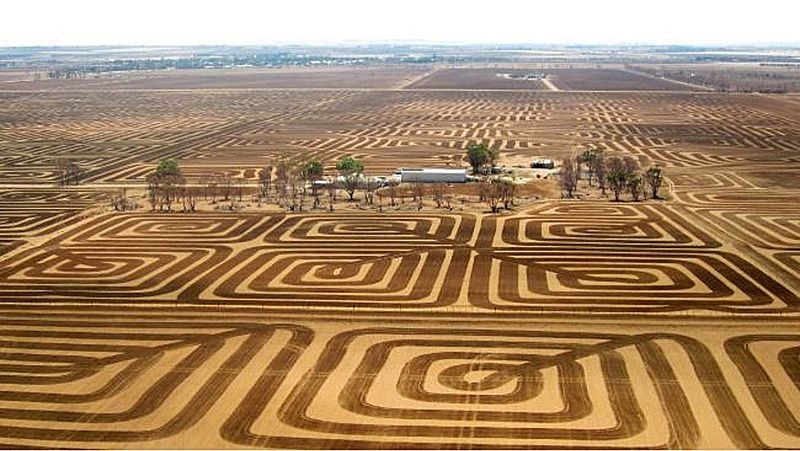
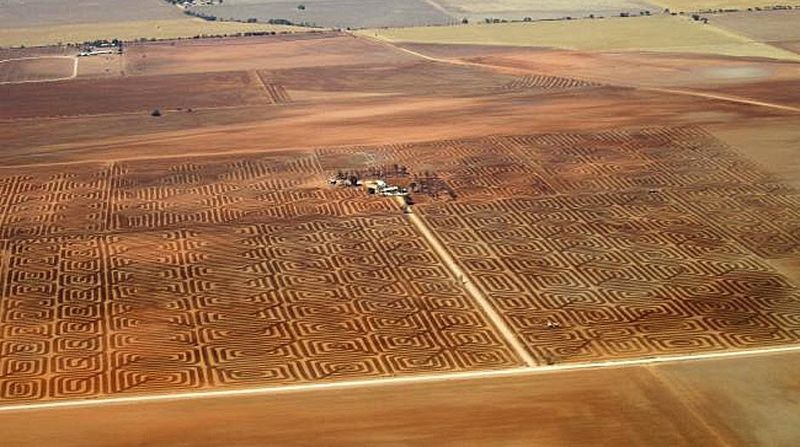
Australian Farmer Fights Soil Erosion With Land Art……

After a recent bushfire consumed all vegetation on his land, a South Australian farmer Brian Fischer decided to etch a gigantic geometric pattern on the bare ground in a bid to fight soil erosion. Without vegetation, the topsoil was vulnerable to erosion by gusting winds. So Fischer ploughed his land in a patchwork of spirals creating long furrows in the topsoil. Now no matter which direction the wind blows there will always be a furrow to catch the soil. Fischer says the pattern cost him a few days to make, but he expects to save 15 cm of topsoil that would have otherwise been lost, until the fields are green again.

The clever erosion-fighting technique came from his dad, who used it on the farm as early as 1944 during one of the worst droughts South Australia experienced. More than one million hectares of land were destroyed by a raging bushfire in Victoria, prompting some farmers to come up with this unique solution.

brian-fischer-1

Photo credit: Brian Fischer

brian-fischer-2

Photo credit: Brian Fischer

via The Guardian

Source….www.amusingplanet.com

Natarajan

How Barefoot College Trained 700 Rural Grandmothers to Be Solar Engineers & Electrified 20000 Homes…?

A vocational training college in Rajasthan, started by well known educator and activist Sanjit Bunker Roy, is responsible for lighting up the homes of thousands of poor villagers across the world.

Tilonia is a small village in Rajasthan’s Ajmer district. On the face of it, Tilonia is like any other village in India. One can see large tracts of semi-arid land, flocks of sheep on the roads, and women whose heads are covered with the pallus of brightly coloured sarees.

However, what sets Tilonia apart is that it is home to the Social Work and Research Centre, popularly known as Barefoot College. This institute is known all over the world for training rural people in vocational skills.

In the 1970s, Sanjit Bunker Roy, an educator and social activist decided to give something back to society and set up Barefoot College in Tilonia.

bunker roy

Photo source: Youtube

The college is spread over eight acres and runs completely on solar energy.

Bunker, who studied at Delhi University, says: “My elitist education almost destroyed me. In fact, the biggest reasons why the poor will always remain poor are the literate man and woman — products of the formal education system. This system makes you look down on villages.”

According to him, the formal system of education demeans and devalues the traditional knowledge and practical wisdom that the poor value. He says his real education started during his initial years in Tilonia when he was working as an unskilled labourer — blasting wells for water.

“I lived with very poor and ordinary people under the stars and heard the simple stories they had to tell of their skills, knowledge, and wisdom that books and university education can never teach you. My real education started when I saw amazing people – water diviners, traditional bonesetters and midwives – at work. That was the humble beginning of the Barefoot College,” he adds.

Though the college started with the aim of providing solutions to the water problems of rural India, its mission soon changed to sustainable development and empowerment of the marginalised. In fact, the courses offered at the institute are rooted in the Gandhian philosophy of making villages self-reliant.

“But it was not Gandhi or Marx who inspired the work of the college, but very ordinary people with grit, determination, and the amazing ability to survive with almost nothing,” says Bunker.

Students, primarily women, are selected from the poorest of villages and are taught vocational skills in different areas like solar energy, healthcare, education, handicrafts, and so on. The college provides basic health services to the villages through a team of doctors, midwives, and dentists.

It imparts education to women and children by keeping their different needs in mind. There are crèches for small children whose mothers work all day. There are night schools for children who help in the fields or tend to animals during the day. And bridge courses for those among them who wish to join day school. There is an emphasis on hands-on learning. Even the lessons offered are practical in nature. The children are taught about how democracy works, how to take care of a sick animal, how land is measured, etc.

Barefoot College is probably best known for producing hundreds of ‘barefoot’ solar engineers.

The Better India (4)

In 2003, the college decided to train illiterate rural women as solar engineers. The biggest challenge at the time was to convince donors, policy makers, as well as the male members of the community to accept the ‘impossibility’ that these women could be trained.

“Do you know why we insisted on women? Because training men is pointless. They will grow restless and go to big cities in search of jobs. Women have more patience to learn the skill. And especially since they are from poor families, they will stay back home and prove their worth to their communities,” says Bunker.

This training of women — to teach them how to install, repair, and maintain solar lighting units — did not stop in Rajasthan. Today, the institute trains women from countries like Afghanistan, Bhutan, Sierra Leone, Mozambique, Fiji, etc. It boasts of having over 700 solar ‘mamas’ in 70 of the least developed countries in the world. These women, from isolated and non-electrified villages, congregate in Rajasthan for a few months. To overcome the language barrier, they are taught through sign language.

They memorise the permutations and combinations of wires through colour codes.

The Better India (3)

Barefoot College brought three women from Afghanistan to Tilonia and trained them. After they went back, their village became the first ever solar-electrified village in the country. These women went on to train 27 others and now there are over a 100 solar-electrified villages in Afghanistan.

The College also trained grandmothers from Sierra Leone. They lit up the first village in the country with the sun’s energy.

The idea caught on and now there is a Barefoot Vocational Training Centre in Sierra Leone.

Under the India Technical Economic Cooperation Programme of the Ministry of External Affairs, the Barefoot College has trained nearly 700 rural grandmothers to be solar engineers and electrify over 20,000 houses in different countries.

Barefoot College is funded by various organisations and grants. Barefoot College applied for the HCL Grant and through this grant, it wanted to implement the Barefoot model of alternate community-based education and skill development in the five districts of Rajasthan, by empowering and educating children, women, and youth and setting up 25 crèches and 50 bridge schools in these districts. To know more about Barefoot College, contact the team on their website.

About HCL Grant

There are about 3.3 million NGOs in India doing commendable work in various areas aimed at inclusion and development. The HCL Grant has been launched to support the institutionalization of the Fifth Estate comprising individuals and institutions formed and led by the citizens of the country through the creation of strong governance frameworks and management capabilities. An endeavour of the HCL Foundation, HCL Grant envisions to build sustainable communities by supporting NGOs and individuals who are doing path-breaking work towards high impact transformation in rural India. In the first year, HCL Grant has identified the best NGOs in the area of rural education. To know more about the HCL Grant: http://www.hcl.com/hcl-grant

source……..Meryl Garcia in http://www.the betterindia.com

Natarajan

The Story of the Wise Old Man…..Inspiring Story !!!

Everyone has their own personal outlook on life. Many of us don’t choose it – we just follow our feelings, shaped by circumstance and experience. Others decide to choose what their outlook will be, and follow their minds instead. The old man in this story shows us that it takes some wisdom to be able to live happily…

A 92-year-old man, short, very well-presented, who takes great care of his appearance, is moving into an old people’s home today.

His wife of 70 years has recently died, and he is obliged to leave his home.

After waiting several hours in the retirement home lobby, he gently smiles as he is told that his room is ready. 

 As he slowly walks to the elevator, using his cane, I describe his small room to him, including the sheet hung at the window, which serves as a curtain.

 “I like it very much”, he says, with the enthusiasm of an 8-year-old boy who has just been given a new puppy. 

“Sir, you haven’t even seen the room yet. Hang on a moment, we are almost there.”

This Story Will Inspire You: The Wise Old Man

“That has nothing to do with it,” he replies. 

“Happiness is something I choose in advance.  Whether or not I like the room does not depend on the furniture, or the decor – rather it depends on how I decide to see it. 

“It is already decided in my mind that I like my room.  It is a decision I make every morning when I wake up. 

“I can choose.  I can spend my day in bed enumerating all the difficulties that I have with the parts of my body that no longer work very well, or I can get up and give thanks to heaven for those parts that are still in working order. 

“Every day is a gift, and as long as I can open my eyes, I will focus on the new day, and all the happy memories that I have made during my life. 

“Old age is like a bank account.  You withdraw in later life what you have deposited along the way. “

This Story Will Inspire You: The Wise Old Man

For a moment, I thought about the old man’s words, and it all made sense.

He made me realize that in life, we have to deposit all the happiness we can in our bank account of memories. Like this, we will always have a trove of them to cherish.

Source………….www.ba-bamail.com

Natarajan

Message for the Day…” Ways of God’s Showering Grace on HIS Devotee…”

Sathya Sai Baba

Even when you attain the state of living with God and merger in a divine form (sarupya-mukti), there is still a trace of differential feeling. Just because a devotee has a form like the Lord’s, one may not have the powers of creation, preservation, and destruction that the Lord has. Only when all trace of difference disappears and unity is attained, the highest stage is reached. This is real union (Sayujya). This comes of divine grace won by the essence of the spiritual practice of each; it cannot be claimed as the fruit of effort. The devotee wishes to serve the Lord as one pleases and to experience the joy of the form that one has attributed to the Lord. But the Lord, out of His grace, gives the devotee not only existence with the Lord, witnessing always the glory of the Lord, and being suffused with God-consciousness but also Sayujya – union with Him! The path of devotion results also in attainment of ultimate knowledge (Brahma-jnana). Even if the devotee does not crave it, the Lord Himself vouchsafes it to the devotee.

Rio Celeste, The Blue River…!!!

Winding through the verdant rainforest of Tenorio Volcano National Park of Costa Rica, is a bright blue river called Rio Celeste. The river is formed by the confluence of two smaller rivers called the Sour Creek and the Good View River. At precisely the point where the waters of the two completely transparent rivers meet, that the blue color starts. For that reason, this point is known as El Teñidor, which means “The Dyer” in English.

Until very recently, scientist were unable to fully explain why Río Celeste has such a distinctive turquoise coloration. Many hypotheses were put forward such as the water contained copper or calcium carbonate and sulfur, or that the river’s proximity to the Tenorio Volcano caused it have the blue color. It is now known that the blue color arises due to a physical phenomenon known as Mie scattering triggered by the presence of certain minerals in the river’s water that causes sunlight to reflect in such a manner that it gives the water its incredible hue.

rio-celeste-3

Photo credit: The Rohit/Flickr

As already mentioned, Río Celeste is fed by two rivers — Sour Creek and Good View River. The Good View River carries significant quantities of a type of whitish mineral known as aluminosilicate, that is composed of aluminum, silicon and oxygen. This is the mineral that is responsible for reflecting the blue color in sunlight. But if the mineral is also contained in the Good View River, why doesn’t it appear blue like Río Celeste? The answer lies in the size of the particles.

Researchers found that Good View River particles have a size of 184 nanometers, while in the Río Celeste the particles are much larger at 566 nm.

“This increase in size is what causes the scattering of sunlight, such that it occurs principally in the blue region of the visible spectrum. So that’s why we have that spectacular light blue color of the Rio Celeste” said Dr. Max Chavarría Vargas, lead investigator.

But why are the aluminosilicate particles in Río Celeste bigger than those in Good View River, when the particles itself came from the Good View River? It so happens that Sour Creek, the second river to join Good View River, is highly acidity due to volcanic activity (which is why it’s called Sour Creek). When these two streams mix to form Río Celeste, the drop in pH causes the aluminosilicate particles to aggregate and enlarge producing Mie scattering which gives the river a strong turquoise color.

“It’s one of those quirks of nature where one of the rivers provides mineral material with one size and the other river provides the acidic environment so that those particles grow,” said Dr. Max Chavarría Vargas.

rio-celeste-7

Photo credit: Steve Corey/Flickr

rio-celeste-5

Photo credit: The Rohit/Flickr

rio-celeste-2

Photo credit: Efrain Gonzalez Buitrago/Flickr

rio-celeste-4

Photo credit: The Rohit/Flickr

rio-celeste-1

Photo credit: Bruce Thomson/Flickr

Sources: The Costa Rica Star / Wikipedia

Source…….www.amusingplanet.com

Natarajan

Image of the Day…Space Station Flyover of the Mediterranean…

Nighttime photograph from low Earth orbit of Mediterranean showing clouds and city lights

Expedition 46 flight engineer Tim Peake of the European Space Agency (ESA) shared this stunning nighttime photograph with his social media followers on Jan. 25, 2016, writing, “Beautiful night pass over Italy, Alps and Mediterranean.”

Image Credit: ESA/NASA

Source…….www.nasa.gov

Natarajan

Message for the Day..” Need for Rigorous Practice of Right conduct in one’s life …”

If you are careless about the discipline of truth, every duty laid on you by dharma and every action prompted by dharma will hang heavy as a burden. Hence, you must search for the reality behind all these phenomena in your daily living, and that search will make all your duties, which are dharmic actions, light and pleasant. The Lord has designed people such that they are inclined towards God and are delighted at the expansion of their vision, and are happy when they are moral and virtuous. So, people must serve their own best interests by adhering to their basic nature, by concentrating on the Divine (Brahman), by assiduously cultivating truth, and by rigorously practicing right conduct (dharma).

Sathya Sai Baba