Incredible Images of Macro Photography ….

A Tiny Wonderland in the Backyard

While studying for a degree in neuroscience, Nadav Bagim (A.K.A. Aimishboy) went through a period of introspection. He wasn’t sure whether he wanted to continue with his studies, leaving him in somewhat of an existential impasse. When his father gave him an SLR-like camera, Nadav’s life went in an entirely different direction.

Nadav taught himself how to use the camera and became fascinated with macro photography. He says that he only uses Photoshop to perform minor tweaks in his images and that his tiny models do the real work.

The Celestial Conductor 

Tiny Photoshoot

Moon River

Tiny Photoshoot

The Offering

Tiny Photoshoot

Life Inside a Snowglobe

Tiny Photoshoot

Swirling

Tiny Photoshoot

Winged Shadows

temp

Piggy-Back Ride

temp

Tickle Me

Tiny Photoshoot

Hey There!

Tiny Photoshoot

Waiting for the Princess

temp

Sunrise Friends

Tiny Photoshoot

Make Slime, Not War

Tiny Photoshoot

Source….www.ba-bamail.com

Natarajan

” I ‘am Sorry’ Written Across Brisbane Sky…” !!!

The words "I'm sorry", followed by "I love you" were written across the Brisbane sky just after lunchtime on April 27.

The words “I’m sorry”, followed by “I love you” were written across the Brisbane sky just after lunchtime on April 27. Photo: Michael Coombes/Twitter
It’s the question all of Brisbane wants answered: What on earth did he do to need to apologise in the sky?

Just after lunchtime on Monday, a skywriter plastered the words “I’m sorry”, followed by “I love you”, with the love signified by a heart, and two crosses for kisses, across the sky over the city.

Pictures of the airborne apology splashed across social media within minutes, with rumours flying about what somebody could have possibly done to warrant a gesture way that went beyond a bunch of flowers or make-up dinner.

The apology, as seen from the CBD.

The apology, as seen from the CBD.
The apology, as seen from the CBD. Photo: Daniela Sunde-Brown
The $4000 contrail confessional was carried out by Rob Vance of Skywriting Services Australia, based on the Gold Coast.

Mr Vance began the mercurial mea culpa at 12.58pm and finished it at 1.10pm.

“For us the words are back to front and upside down,” he said of the skywriting procedure.

“We’re working in three dimensions and can’t see what we’re doing, so it’s a bit tricky.”

Mr Vance said for now he could only confirm the person behind the apology was a man and an “interesting guy”.

But the man who requested it didn’t appear to be frantically lovelorn, he said.

“No, he was calm, cool and collected,” Mr Vance said.

While you can’t put a price on love, Mr Vance said the service usually charged $3990 for up to 10 letters or characters.

Interestingly, it’s not the first time Mr Vance has made a profit from someone screwing up.

“It’s usually along the same lines – someone saying sorry and that’s basically it,” he said.

“‘I’m sorry Barbara’ or something like that.”

The author and recipient of Monday’s message remain a mystery.

Mr Vance said he would check with his client to see if he could share the story behind the soaring sorry note.

"I'm sorry" appears over Brisbane.

“I’m sorry” appears over Brisbane. Photo: Amy Remeikis 

Source….

 in

http://www.brisbanetimes.com.au

Natarajan

Nine Indians Who have Planets Named after Them….

Viswanathan Anand just had a planet named after him. The Chess Grandmaster, once nicknamed the “Lightning Kid”, famous for his rapid tactical calculations has been immortalized with planet Vishyanand, the main asteroid belt minor planet between the orbits of Mars and Jupiter.

But Indians are no strangers to having planetary bodies named after them – these whiz kids have had their own planets for a while now.

Hamsa Padmanabhan

hamsa planet

At 16, Hamsa Padmanabhan had a minor planet 21575 named ‘Hamsa’, after her. She was then a second-year B.Sc student of Fergusson College, when she made a presentation at the Massachusetts Institute of Technology’s (MIT) Lincoln lab for the Intel International Science and Engineering Fir (ISEF) in 2006. Today at 21, she is doing her post graduation in Physics from Pune University, after which she plans to do her doctoral research in theoretical physics.

Sainudeen Pattazhy

sainuddin planet

NASA named a minor planet (5178 No CD4) after Kerala zoology professor Sainudeen Pattazhy for his environmental research and campaigns, including red rain, health hazard of mobile phone towers, biological control of mosquitoes and the eco-biology of trees of religious importance.

Vishnu Jayaprakash

vishnu fuel cell

In 2010, Vishnu Jayaprakash, then a Chennai Class XII student of Chettinad Vidyashram demonstrated a microbial fuel cell that runs on cow dung and inexpensive graphite electrodes. The minor planet named after him is called 25620 Jayaprakash. He aimed to reduce power costs for India’s 700,000 villages. Today, he has done extensive research on renewable energy technologies, and is now focussing on Microbial Fuel Cell (MFC) technology.

Anish Mukherjee

anish intel award planet

When Anish Mukherjee and Debarghya Sarkar were only 16 years old, they noticed the large scale bottle tampering rampant in India. They took the idea of autodisposable syringes—which, once used, cannot be used again—and implemented that for one-time use bottle cap. Their design enabled customers to know if the the bottle had been tampered with. For this, planet 2000 AH52 he was renamed 25629 Mukherjee.

Debarghya Sarkar

sarkar intel award planet

In 2010, Sarkar and his school classmate Anish Mukherjee worked on an innovative design that would make bottle-caps completely tamper proof. For his contribution to electrical and mechanical engineering, 25630 Sarkar (previously 2000 AT53) is named after him. Debarghya Sarkar is currently a Ph.D. student at the University of Southern California. He plans to take his interest in bottle cap design towards a larger goal – design, fabrication and integration of devices that modulate photons and electrons.

Hetal Vaishnav

hetal planet

When class X student Hetal Vaishnav saw that ragpickers were not picking up waste packets made up of multilayer plastic, she found that recycling companies avoided buying multilayer film plastic waste from them as it cannot be reused or recycled. Hetal then spent months to innovate upon a process to deliver an innovative material that is “sustainable to water, has good nail- and screw-holding capacity, and has features that are better than MDF (Medium-density fibreboard) and plywood.”. This let her use multilayered and metallised plastic used for packaging wafers and chewing tobacco. “I got a certificate from Lincoln Lab a few days ago,” Hetal said on telephone from Rajkot. Planet 25636 Vaishnav was named for her contribution to the environment.

Akshat Singhal

akshat planet

After Akshat found how annoying it was to index documents in a computer, he developed a system to automatically categorise documents, and also find relations between them, using artificial intelligence. The planet named after him, 12599 Singhal, is in the same region of planets that has 8749 Beatles, 2001 Einstein and 7000 Curie.

Madhav Pathak

madhav pathak

Madhav Pathak has changed the conventional Braille slate, making writing easier for the visually impaired. After Madhav Pathak found that his uncle could not easily write in Braille, the system of six raised dots, he decided to change it. Braille  has a steep learning curve: Blind children have to memorise more than 300 combinations of dots, since they need one set of combinations for reading, and another set for writing! Madhav has modified the Braille slate (used for writing the language), which lets students easily read and write the language. For this, he has 12509 Pathak named after him.

Viswanathan Anand

vishwanatan anand

Named Vishyanand, the main belt minor planet is between the orbits of planets Mars and Jupiter. The planet was discovered in 1988 by Kenzo Suzuki in Toyota, Japan and was nameless until now. A minor planet is usually named after the person who discovered it but if it remains nameless, then it’s in the hands of the committee members to name it. Hence Micahel Rudenko, a minor planet committee member and an ardent fan of Viswanathan Anand’s knack for chess decided to name the planet ‘Vishyanand’. He is only the third chess player in the world after Alexander Alekhine and Anatoly Karpov to be honored in this fashion.

With inputs from Mensxp.com

Source…..www.indiatimes.com

Natarajan

Powerful Earthquake Rocks Nepal….

Powerful 7.9-magnitude earthquake rocks Nepal

The quake’s epicenter less than 50 miles from capital city of Kathmandu. Hundreds dead and many historic buildings collapsed.

earthquake-Kharahara-tower-collapse-BBC

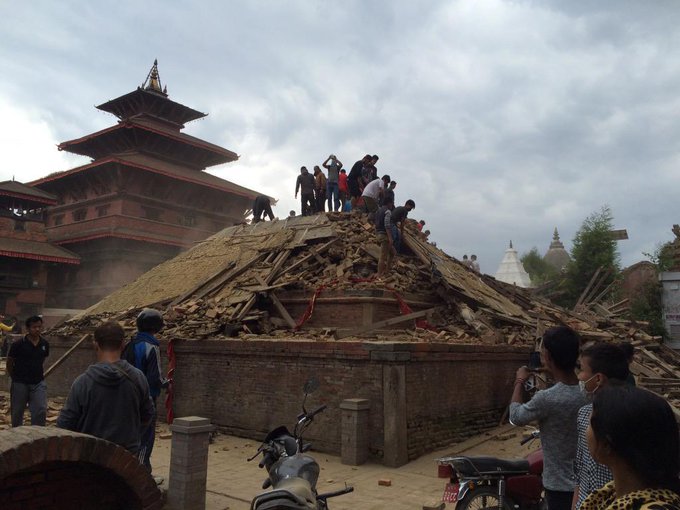
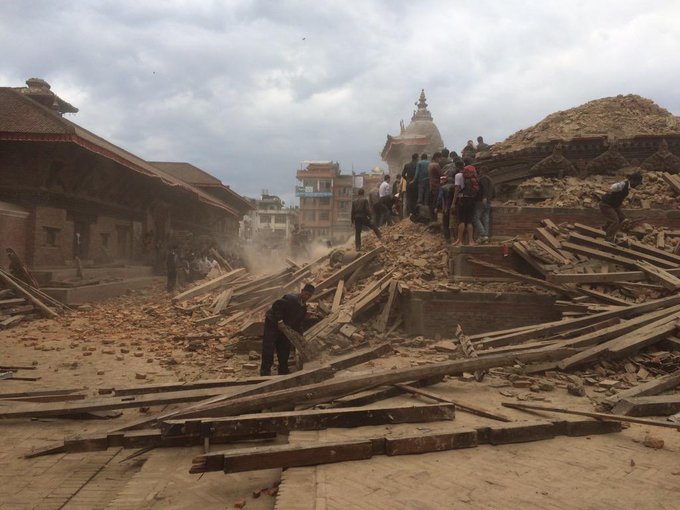
The death toll is still rising from the powerful 7.9-magnitude earthquake – an extremely strong earthquake – in Nepal today (April 25, 2015). Hundreds are reported to have died from the quake so far, which wrecked many historic buildings. USGS originally reported the quake at a 7.5-magnitude and later upgraded this estimate. The quake took place at 6:11 UTC (1:11 a.m. CDT). This powerful quake’s tremors were felt across the region, and into neighboring India, Pakistan and Bangladesh. The quake struck between the capital Kathmandu and the city of Pokhara about 120 miles (200 km) away. At least one strong aftershock (6.6 magnitude) has already occurred, with many smaller aftershocks, and more are expected.

Nepali minister reports “massive damage” at the epicenter.

– Preliminary death toll at 686 at 7:30 a.m. CDT (1230 UTC), according to the New York Times.

– Eight bodies recovered from Mount Everest after an avalanche triggered by the quake in Nepal.

– The landmark Dharahara tower is among buildings reduced to rubble in Kathmandu.

Get continuous updates from the BBC on the scene at the quake location

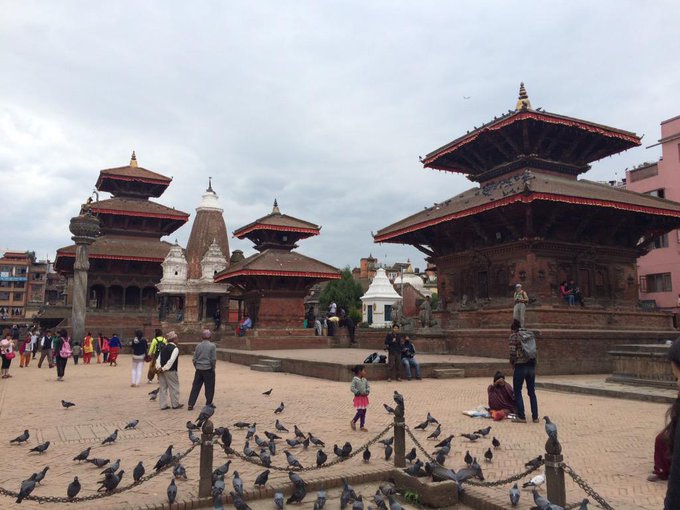
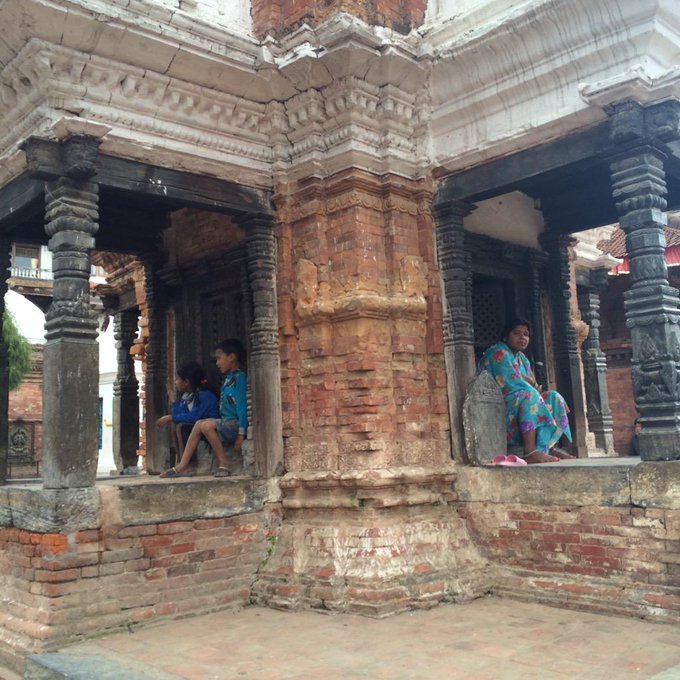
Journalist Siobhan Heanue, of ABC News Australia, was in Kathmandu when the quake struck. She tweeted the following shocking before-and-after images:

I took these photos an hour apart. Was wandering when quake demolished temples before my eyes. Heartbreaking.

This Flight Attendant “goes the extra mile ” to Help a Sick Pax ….

A FLIGHT attendant has been praised for “going the extra mile” to help a passenger.

Approximately three hours into a Turkish Airlines flight from Osaka to Istanbul, a Japanese passenger fainted, hitting her head. Her glasses shattered, cutting her cheek.

That’s when crew member Burcu Kirmaci sprung into action, according to local news site Bgnnews.com.

She applied first aid and looked after the passenger until the flight landed in Istanbul 10 hours later, but didn’t stop there. Ms Kirmaci escorted the passenger to hospital to get stitches, after realising the difficulty she would have

experienced there without knowing the local language.

“I knew I was the only one who could fully help the passenger given that I speak Japanese,” Ms Kirmaci said.

The woman was injured on a Turkish Airways flight.

The woman was injured on a Turkish Airways flight. Source: Getty Images

She liaised with the Turkish doctor and the passenger, and took charge of the rest of the injured woman’s itinerary. She refused to leave her side, accompanying the passenger back to her final destination at approximately 10.30pm that night.

Fellow Japanese passengers from the flight voiced their appreciation and tried to offer Ms Kirmaci gifts.

She said her decision “was not an act of responsibility but rather an act of empathy”.

news.com.au has contacted Turkish Airlines for comment.

Flight attendant’s extraordinary act

Ms Kirmaci was empathetic. Source: Facebook 

Source……..www.news.com.au

Natarajan

” A Bad Prank by a Pax on Board …. It Went Wrong For the Crazy Pax anyway …”

A man has been arrested over an incident on an Air India flight.

A man has been arrested over an incident on an Air India flight. Source: Getty Images 

A PASSENGER attempts to chat up a flight attendant, but she resists his “charms” and walks away. What could possibly go wrong?

As it turns out, a lot!

Yousuf Sharif, 35, allegedly sparked hijacking fears on board an Air India flight from Dubai to Hyderabad, India on Tuesday. And it was all because of a very bad prank he decided to play on a flight attendant, the Times of India reports.

Sitting in business class, the Indian resident asked the crew member if she would take a selfie with him on his phone. He also asked if he could photograph the cockpit.

“He was requesting the crew member to pose for a selfie and tried to engage her in a conversation, to which she objected,” Police officer T Sudhakar, who works for Rajiv Gandhi International Airport, where the plane landed, told local news website the DeccanChronicle.

Police allege the man had been trying to flirt with the staff member and when she refused to talk to him, he decided to scare her with a hijacking prank.

“When the air hostess rejected his request and started walking away, Yousuf told her that he will hijack the flight,” Deputy Commissioner of Police Shamshabad AR Srinivas said. “She immediately alerted the pilot.”

The man was questioned once the flight touched down, no charges have yet been laid.

news.com.au has contacted Air India for comment.

He allegedly threatened to hijack the plane as a prank. Picture: Stefan Krasowski

He allegedly threatened to hijack the plane as a prank. Picture: Stefan Krasowski Source: Flickr 

Source….www.news.com.au

Natarajan

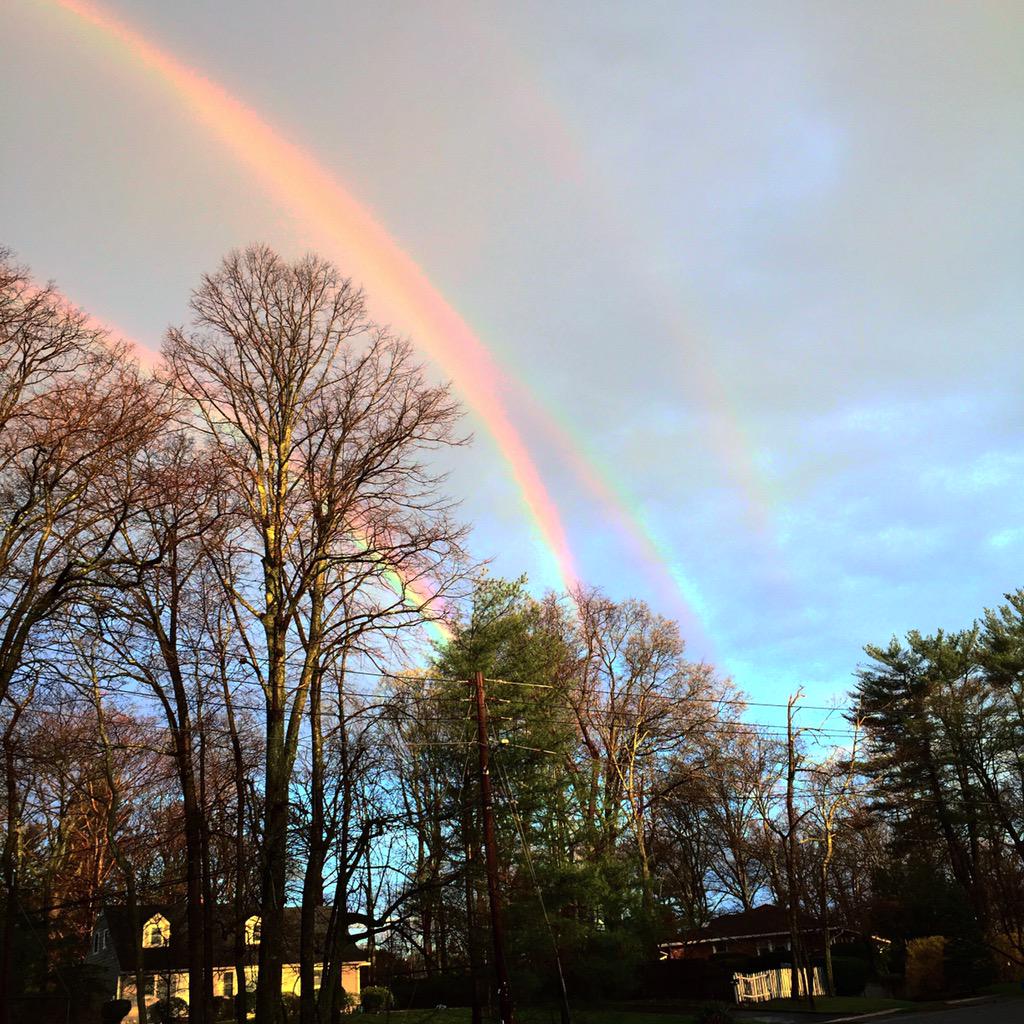
Image of the Day…” Quadruple Rainbow …” !!!

Yes, the quadruple rainbow photo is real

Amanda Curtis’ rare sighting of a quadruple rainbow over Long Island on April 21, 2015 is the real thing. It’s what’s called a reflection rainbow …

Amanda Curtis, CEO of 19th Amendment, is having a very lucky day. While waiting for a train in Long Island this morning she caught this heavenly vision, a rare quadruple rainbow.

View image on Twitter

Amanda’s photo, which quickly went viral turns out to be what Les Cowley of the great website Atmospheric Optics calls a reflection rainbow. A reflected double rainbow! Bad Astronomer Phil Plaitat Slate agrees. In other words, according to Phil:

The angle of the weirder, more vertical bows is what gives it away. If the light forming rainbows reflects off a body of water (say, a lake, pond, or even standing water on a road) you get another set of rainbows cast at a different angle.

Les explains that reflection rainbows are:

… produced by sunlight beaming upwards after reflection from calm water or wet sand …

The Scottish Western Isles are favored places for reflection bows. The prevailing warm south westerlies from the Atlantic Ocean bring frequent showers of fine rain interspersed by skies of exceptional purity whose sunlight is reflected in the many bays and inlets.

But today, thanks to Amanda Curtis, we can all enjoy this rare optical phenomenon!

Thanks for sharing your pic with us at EarthSky, Amanda!

P.S. This reflected double rainbow is a different phenomenon, by the way, from what experts in atmospheric optics call tertiary or quaternary bows. They are even more rare. Read the latest on them – from 2011 – here: First-ever photos of triple and quadruple rainbows

Bottom line: Amanda Curtis’ rare photo of a quadruple rainbow, seen over Long Island on April 21, is the real thing. It’s a reflected double rainbow.

Source…….www.earthsky.org

Natarajan

How India Brought Over 5000 Indians back From war -torn Yemen …

The evacuation mission mounted by the government helped more than 5,000 Indians leave war-torn Yemen. The author goes behind the scenes to find out how this was achieved .

Evacuees from Yemen rest on the deck of INS Sumitra as they make their way home from Djibouti. Photograph: @spokespersonMoD/Twitter 

General sahab, aap march kijiye (General, please march),” Prime Minister Narendra Modi said, looking at former army chief V K Singh. The senior ministers, intelligence officials and three service chiefs attending the meeting hurriedly convened by Modi on March 30 nodded their assent. The situation in Yemen was dire after a coalition of countries led by Saudi Arabia had launched an offensive three days earlier against the anti-government Zaidi Shia rebels known as the Houthis.

The contours of what was to become Operation Rahaat, a massive evacuation exercise to bring back hundreds of Indians from Yemen, were discussed at the meeting and Singh, minister of state in the external affairs ministry, was asked to immediately embark for the troubled country at the southern end of the Arabian Peninsula. He was to oversee the withdrawal of Indians from Yemen’s capital, Sana’a, and the cities of Aden, Ash Shihr, Al Mukalla and Al Hudaydah.

Singh took the only available flight on the evening of March 31 and landed in Djibouti in Africa, from where Sana’a is an hour’s flight across the Gulf of Aden. By then, the government had pulled out two merchant ships, MV Kavaratti and MV Corals, from their regular services and directed them to leave for Djibouti, which was to become Ground Zero for the Indian rescue operations over two weeks.

On the night of March 30, Indian Navy’s INS Tarkash, a stealth frigate, and INS Mumbai, a destroyer, also left for Djibouti. INS Sumitra, which was already on anti-piracy patrolling in the Gulf of Aden, reached the Yemeni port of Aden on the night of March 31.

General V K Singh (retd) interacts with evacuees who are on their way home. Photograph: @GenVKsingh/Twitter

The control rooms of the three branches of the armed forces, external affairs ministry and Air India in New Delhi were connected with one another and with the Indian missions concerned on a real-time basis. A makeshift control room was set up at the Kempinski Hotel in Djibouti. An Indian Navy satellite was repositioned to provide minute-to-minute data on the ground situation. A navy personnel later said the satellite streaming was so flawless that those monitoring the control room could actually count the number of people moving around in Yemen, a scene straight out of a Hollywood movie.

Singh, with his years of army training, got the operation going smoothly. He held the first briefing at the Kempinski control room at 9.30 am on April 1, after which he went to meet the first tranche of 349 Indians who had arrived at Djibouti on board INS Sumitra from Aden. “After disembarking, many of them started chanting ‘Bharat mata ki jai, Indian Navy ki jai’,” recounts an official who was present at the scene. The rescued citizens rested in a commodious marriage hall at the hotel till the Indian Air Force and Air India aircraft arrived.

Indian Navy personnel help people aboard a ship. Photograph: @spokespersonMoD/Twitter

The navy official says the rescue of the first 349 passengers was one of the toughest challenges he had faced ever. The warring Yemeni factions were engaged in a gun battle at Aden and the immigration officers had abandoned the port.

This forced Indian naval troops to first secure the port before INS Sumitra could lower its boats to ferry the stranded Indians. The task was tough also because the Saudis, who had control over the Yemeni airspace, had refused the Indian Air Force permission to land its airplanes in Sana’a.

It was Air India that had to take up the task of bridging Sana’a and Djibouti. “The Saudis gave us permission to fly for only two-and-a-half hours in a day,” Singh says. “The situation in Sana’a was so chaotic that it was difficult to land two planes, segregate passengers for Kochi and Mumbai, check their papers, get them on board and fly them back within the stipulated 150 minutes.” A big problem was handling people who wanted to return home, but didn’t have relevant documents or exit visas and permission from the employers. “It was costly, but the government had to arrange emergency exit documents for them,” says Singh.

A man embarks from a plane as he returns to India from war-torn Yemen. Photograph: @spokespersonMoD/Twitter 

Singh flew five times to Sana’a and even stayed a night there to get a first-hand experience, all the while remaining in constant touch with External Affairs Minister Sushma Swaraj. On his last flight to Sana’a, where around 450 Indians and 120 foreign nationals awaited to be extricated, Singh and his staff were told to turn back to Djibouti since the coalition fighter planes were bombing areas close to the airport. It was a tight situation — an Indian minister was on a flight that was allegedly encroaching into the airspace controlled by the Saudis.

An official recalls the event: “As the plane was approaching the Sana’a airport, we got the shock of our life with the news that fighter planes were carrying out bombings and the pilot of our aircraft had been asked to return to Djibouti immediately. The plane was diverted, but all of us, though very nervous, were anxious to reach Yemen. Amid all this, Singh stood up and said that there was no question of going back. He calmly remarked that there must be some funny military exercises going on and that we had to land at Sana’a to evacuate the last group of Indians and nationals of other countries waiting there.

Singh then approached the cockpit and spoke to the pilots and told them what to convey to the Air Traffic Control at Sana’a. Having taken an arc back to Djibouti after the initial order, the aircraft did an about turn and again headed towards the Yemeni capital. “Upon landing, we came to know that the area near the airport had been bombed not long before our plane touched down,” says Singh.

Till April 9, Indian Navy, Indian Air Force, and Air India jointly evacuated 4,640 Indian citizens and around 960 foreign nationals from 41 countries from the strife-torn country. They were brought in the five vessels assembled by the government to Djibouti from where they were flown to India on Air India planes and Indian Air Force C-17 Globemasters.

INS Tarkash and INS Mumbai have since returned to India, and the Indian embassy in Sana’a is now closed. INS Sumitra has returned to its patrolling duty in the Gulf of Aden.

Singh attributes the success of Operation Rahaat — the second-largest undertaken by the government of India after Operation Safe Homecoming in Libya in 2011 when 15,000 Indians were evacuated — to team work. “It was not only the government officers who worked hard to help the stranded people, but also the local Bohra community and the Indian associations there,” he says.

Source……www.rediff.com

Natarajan

Southern California’s Logistics Airport….” Official boneyard ” for Yester Years Jumbo Jets !!!

The days of the jumbo jet are numbered. Since their debut in the late 1960s, Boeing 747 and McDonnell Douglas DC-10 have been the undisputed queens of the sky.

Unfortunately, the size, four-engine dependability, and range of these big planes are no longer enough of a competitive advantage to justify their operating costs. These relics of the 20th century often end up in places such as the Southern California Logistics Airport – more commonly known as the “bone yard.”

The Southern California Logistics Airport is located in Victorville, California — about 80 miles northeast of Los Angeles.
Due to its location in the Mojave desert, Victorville’s warm and dry climate make it the perfect place to keep aging airplanes for extended periods of time.
Due to its location in the Mojave desert, Victorville's warm and dry climate make it the perfect place to keep aging airplanes for extended periods of time.
Airplanes here have either been retired or declared “surplus” – not needed for immediate operations.
After they arrive, some planes are preserved so they can, one day, return to service with the airline or …
be sold to another airline
Those planes have their windows covered in foil and their fluids drained as they prepare for to sit in the desert for the long haul.
The aircraft’s engines — the most valuable parts of the plane – are also removed.
However, others — like this ex-Orient Thai Boeing 747 — are broken up and sold for parts.
After the valuable parts, such as the electronics, interior trim, and other reusable components have been harvested, the remaining pieces are chopped up and sold for scrap.
As of March 2015, British Airways has quite a few 747s at the bone yard.
The airline has a massive fleet of more than 50 747-400s.
But as the average age of their 747 fleet near 20 years, British Airways is slowly retiring its older birds.
In addition to BA, Singapore Airlines, Air New Zealand, and Cathay Pacific have sent their 747s to Victorville.
The Southern California Logistics Airport is located in Victorville, California — about 80 miles northeast of Los Angeles.
Due to its location in the Mojave desert, Victorville’s warm and dry climate make it the perfect place to keep aging airplanes for extended periods of time.
Due to its location in the Mojave desert, Victorville's warm and dry climate make it the perfect place to keep aging airplanes for extended periods of time.
Airplanes here have either been retired or declared “surplus” – not needed for immediate operations.
Airplanes here have either been retired or declared "surplus" – not needed for immediate operations.
After they arrive, some planes are preserved so they can, one day, return to service with the airline or …
After they arrive, some planes are preserved so they can, one day, return to service with the airline or ...
… be sold to another airline.
... be sold to another airline.
Those planes have their windows covered in foil and their fluids drained as they prepare for to sit in the desert for the long haul.
The aircraft’s engines — the most valuable parts of the plane – are also removed.
The aircraft's engines — the most valuable parts of the plane – are also removed.
However, others — like this ex-Orient Thai Boeing 747 — are broken up and sold for parts.
After the valuable parts, such as the electronics, interior trim, and other reusable components have been harvested, the remaining pieces are chopped up and sold for scrap.
As of March 2015, British Airways has quite a few 747s at the bone yard.
The airline has a massive fleet of more than 50 747-400s.
But as the average age of their 747 fleet near 20 years, British Airways is slowly retiring its older birds.
In addition to BA, Singapore Airlines, Air New Zealand, and Cathay Pacific have sent their 747s to Victorville.
FedEx is also a major tenant.
The cargo carrier is in the process of updating its massive fleet of mostly older jets.
Other airlines include, Air China, Evergreen International, Lufthansa, and United Airlines.
The bone yard is an ever-changing aviation landscape. As old tenants of broken up or sold, new arrivals fresh from mainline service are flown in.
As airlines retire their 747s, one wealthy individual bought a new jumbo to be his private jet…
As airlines retire their 747s, one wealthy individual bought a new jumbo to be his private jet...

Source……..www.businessinsider.in

natarajan

” The ’11th’ Seat in AirBus 380 Super Jumbo …!!!

Want to fly on the Airbus A380 superjumbo? Get ready to feel the squeeze. Airbus has proposed a new cabin layout that would add an 11th seat to the super jumbo’s economy cabin.

Introduced this week at the World Aircraft Interior Expo in Hamburg, the new layout features three seats on either side with five seats in the middle section — making the sought-after aisle seat even more coveted. Currently, the vast majority of A380s in service are configured with 10 seats per row in economy with three seats on either side and just four seats in the middle.

According to USA Today, the new 11 across-layout called “Economy Choice” could be installed in new Airbus A380s as soon as 2017.

But why would Airbus want to do this? Airbus is desperate to expand its customer base for the A380. Of the 317 superjumbos ordered, 140 have of them have been bought by one airline — Emirates.

Only 13 airlines around the world operate the mammoth double decker. For such a heavily hyped and expensive aircraft ($US25 billion development cost), the reception for the airlines have not been as warm as expected by Airbus. In fact, the company has not had a single A380 order from an airline since 2013 — and that, unsurprisingly, was by Emirates.

Sadly, this increased load capacity will mean less elbow room for those unfortunate enough to be stuck in “sardine class.”

Source……….www.businessinsider.com.au

Natarajan