Message For the Day…” Bhajan , Bhojan, and Pujan are Offering to the Divine …”

“Maam anusmara – With Me in memory ever,” said Lord Krishna! In your daily life, do not distinguish one task as bhajan, another as bhojan (eating), and the third as pujan (worship of God) – all acts are offering to the Divine. The food you partake is given by Him and digested by Him, so that it yields strength to do His work. Each moment is worthwhile, for He gives it, He uses it, He fills it, He fashions it, and He fulfils it. When He is fully suffused in your every breath, you can achieve the sovereign task of merging in Him. You have that might within you; The Divine cannot be gained by the weak. The remembrance can become permanently established only when you are free from the shackles of spite and envy. Be An-asuya – without the trace of pride or envy, malice or hate, egoism or conceit. The Lord permanently resides in the heart kept assiduously clean.

Sathya Sai Baba

‘பாரதி’ பிறந்த கதை !!!…. பாரதியார் பிறந்த நாள் …11th Dec …

பாரதி பிறந்தநாள் டிசம்பர்: 11

சுப்ரமணிய பாரதியின் அப்பா சின்னசாமி, அந்தக் காலத்திலேயே பருத்தி ஆலை வைச்சிருந்தாரு. எதிர்காலத்தில் தொழிற்பேட்டை ஒன்றை உருவாக்கும் கனவோட இருந்தாரு. மகன் வளர்ந்தவுடன் அந்தத் தொழிற்பேட்டையை கவனித்துக் கொள்வான்னு நினைச்சாரு.

சுப்ரமணியனோட அம்மா ஐந்து வயசுலேயே இறந்து போயிட்டாங்க. அதோட சுப்ரமணியனுக்குப் படிப்புல பெரிசா ஆர்வம் இல்ல. பள்ளிக்கூடம் முடிஞ்ச ஒடனே தோப்பு, தோட்டம்னு சுத்திப் பார்க்கக் கிளம்பிடுவாரு. அப்புறம் அடிக்கடி தாத்தாவோட வீட்டுக்கும் போவாரு. அவரோட தாத்தா இலக்கியம், பாட்டெல்லாம் வாசிச்சுக் காட்டுவாரு. சுப்ரமணியனுக்குத் தமிழ் இலக்கணமும், தமிழ்க் காப்பியங்களும் ரொம்பவும் பிடிச்சிருந்துச்சு.

மற்றொரு பக்கம் பாடத்தைப் படிக்காமல், வீட்டுப் பாடம் செய்யாம பள்ளிக்கூடம் போன சுப்ரமணியனுக்குத் தண்டனை வழங்கினாங்க. “எனக்கு என்ன பிடிக்கிதோ, அதை யாரும் சொல்லித் தர மாட்டாங்களா”ன்னு சுப்ரமணியன் ஏங்கினான்.

சீக்கிரத்திலேயே பார்வையற்ற ஒரு படிப்பாளியைக் கண்டுபிடிச்சு, அவர்கிட்ட கம்ப ராமாயணத்தைக் கத்துக்கிட்டான். அதுக்கப்புறம் சொந்தமாகவே சுப்ரமணியன் தமிழ் இலக்கணம் கத்துக்க ஆரம்பிச்சான்.

ஒரு நாள் சுப்ரமணியனோட நண்பன் ஒருவன் எட்டயபுரம் ராஜாவோட அரண்மனைக்கு அழைச்சுட்டுப் போனான். ஏதாவது ஒரு குறளின் முதல் வார்த்தையையோ அல்லது ஒரு வெண்பாவின் ஒரு பகுதியையோ சொன்னால், சுப்ரமணியன் உடனடியா எஞ்சிய அடிகளைச் சொன்னான். சுப்ரமணியன் நகைச்சுவையா பேசுறதையும் கவிதை சொல்றதையும் எட்டயபுரம் ராஜா ரசிச்சார்.

“இவன் ஒரு குழந்தை மேதை. பெரிய கவிஞன் ஆவதற்கான அறிவு, உங்க மகன்ட்ட இருக்கு”ன்னு சுப்ரமணியனோட அப்பாகிட்ட சொன்னார் எட்டயபுரம் ராஜா.

ஏற்கெனவே சுப்ரமணியன் செஞ்ச விஷயங்கள் பிடிக்காம இருந்த அவனோட அப்பா, தன் மகன் இப்படிக் கவிதையே கதின்னு இருந்துறக்கூடாதுன்னு நினைச்சாரு. அதனால திருநெல்வேலில ஒரு ஆங்கிலப் பள்ளிக்கு சுப்ரமணியனை படிக்க அனுப்பினார். அப்படிச் செஞ்சா எல்லாம் மாறிடும்னு அவர் நினைச்சாரு.

அங்கேயும் சுப்ரமணியனோட நகைச்சுவை உணர்வும், கவிதை எழுதுற திறனும் சக மாணவர்கள்கிட்ட பிரபலமாச்சு.

ஒரு நாள் வகுப்பறையில சுப்ரமணியன் கொஞ்சம் கண் அசந்துட்டான். சுப்ரமணியனை எழுப்பி, நடத்துன பாடத்தில இருந்து ஆசிரியர் கேள்வி கேட்டார். சுப்ரமணியனுக்கோ பதில் தெரியல. கோபமடைஞ்ச ஆசிரியர், “மேகம் மழையைப் பொழியறது போல, நீ கவிதை சொல்வேன்னு கேள்விப்பட்டேன். ஆனால், நான் கேட்ட கேள்விக்கு உன்கிட்ட பதிலே இல்லையே”ன்னு கேட்டாரு.

“மெத்தப் படித்த ஆசிரியரே, ஒரு விஷயத்தை நீங்க மறந்துட்டீங்க. மேகங்கள் மகிழ்ச்சியை வெளிப்படுத்தத்தான் மழை பொழிகின்றன. நீங்க கேள்வி கேட்கிறதால இல்ல”ன்னு பட்டென்னு பதில் சொன்னான் சுப்ரமணியன். ஆனா, இறுதிப் பரீட்சைல ஃபெயிலான அவன் ஊருக்குத் திரும்பினான்.

இதனால் வருத்தப்பட்ட அவனுடைய அப்பா, எட்டயபுரம் ராஜாவைப் பார்த்து அரசவை பணியில சுப்ரமணியனைச் சேர்த்துவிட்டார். ராஜாவோட நண்பர்கள் சிலருக்கு சுப்ரமணியனைப் பிடிக்கல. அவர்கள்ல ஒருத்தர், “நீங்க பெரிய புத்திசாலி போலத் தெரியுது. ஆனா, பரீட்சைல தோத்துப் போயிருக்கீங்களே” என்று மறைமுகமாகக் கிண்டல் செய்ய ஆரம்பிச்சாரு.

இதனால ரெண்டு பேருக்கும் இடையே வாக்குவாதம் ஏற்பட்டுச்சு. கல்வியைப் பற்றி ஒரு விவாதம் நடத்தலாம்னு முடிவாச்சு. முதல்ல எதிர்த் தரப்பு ஆள் பேசினார். அடுத்ததாகப் பேச ஆரம்பிச்ச சுப்ரமணியன், எல்லோரும் ஆச்சரியப்படுற மாதிரி அற்புதமாகப் பேசினார். அவருடைய வாதம் எதிராளியையும் வசப்படுத்துச்சு.

அந்த விவாதம் முடிஞ்சதும், ஒரு முதிர்ந்த பண்டிதர் எழுந்து சுப்ரமணியன்கிட்ட போனாரு. “நீ உன் வயசை மீறுன புத்திசாலித்தனத்தோட இருக்கிறாய். அதனால், நீ ஒரு பாரதி (அனைத்தும் அறிந்த பண்டிதர்)”ன்னு பட்டம் சூட்டினார்.

அதுக்கப்புறம் சுப்ரமணியனை, எல்லோரும் பாரதின்னே கூப்பிட ஆரம்பிச்சாங்க. உலகம் போற்றும் கவிஞரா மாறின அவர், சுப்ரமணிய பாரதியாராக ஜொலித்தார்.

SOURCE:::: http://www.tamil.the hindu.com
Natarajan

Nobel Prize Winning Indians… 1913 to 2014 !!!

Rabindranath Tagore was the only Indian Nobel literature laureate. In 1913, In his acceptance speech, he said, “I beg to convey to the Swedish Academy my grateful appreciation of the breadth of understanding which has brought the distant near, and has made a stranger a brother.”
Sir C.V. Raman won the Nobel Prize for Physics in 1930 for his work in the field of light scattering. This effect is now named after him — the Raman scattering. In his speech, he said he was inspired by the “wonderful blue opalescence of the Mediterranean Sea”, during a voyage to Europe in 1921.
Hargobind Khorana (Far right) shared the Nobel Prize for Medicine in 1968, with Marshall W. Nirenberg and Robert W. Holley by showing the the order of nucleotides in nucleic acids. In his speech, he thanked ” a very large number of devoted colleagues, chemists and biochemists” .
S. Chandrasekhar, along with William A. Fowler won the Nobel Prize in Physics in 1983 for their mathematical theory of black holes. The Chandrasekhar limit is named after him. In his speech, he quoted Tagore’s Gitanjali and said, “May I, on behalf of my wife and myself, express our immense gratitude to the Nobel Foundation for this noble reception in this noble city?”
Again a first and only, Amartya Sen won The Prize in Economics in 1998. In his speech, which he began with a “silly thought”, he said, “economists too can learn from the kind of open minded reasoning employed by Tagore and Chandrasekhar”.
Mother Teresa won the Nobel Peace prize in 1979. In a lecture played on the day of the ceremony, she said, “We must give each other until it hurts. It is not enough for us to say: I love God, but I do not love my neighbour.”
Venkatraman Ramakrishnan won the Nobel Prize in Chemistry in 2009, along with Thomas A. Steitz and Ada E. Yonath, “for studies of the structure and function of the ribosome”. In his speech, he thanked “the dedicated work and intellectual contributions of generations of talented postdocs, students and research assistants”.
Kailash Satyarthi who won the Nobel Peace Prize 2014 at his Bachpan Bachao Aandolan office soon after announcement of the prize, in New Delhi. An avid follower of Gandhian philosophy, he vowed that “the fight would continue”. Photo: V. Sudershan
SOURCE:::: http://www.the hindu.com
Natarajan

” All You Need to Know About Nobel Prizes…”

  • The 1936 Nobel Peace Prize

    The 1936 Nobel Peace Prize

From 1901 till this year, Nobel prizes have been awarded 567 times to 864 Laureates and 25 organisations with the youngest winner being Peace Prize awardee Malala Yousafzai of Pakistan at 17 years.

By winning the Peace Nobel at this tender age along with India’s Kailash Satyarthi, Ms. Yousafzai beat the previous record of Lawrence Bragg, who won the Physics Nobel in 1915 at the age of 25.

Kailash Satyarthi (left) and Malala Yousafzai

The word “Laureate” signifies the laurel wreath awarded to winners of athletic competitions and poetic meets in Ancient Greece. In Greek mythology, god Apollo is represented wearing on his head a laurel wreath, a circular crown made of branches and leaves of the bay laurel.

The statutes of the Nobel Foundation say, “If none of the works under consideration is found to be of the importance indicated in the first paragraph, the prize money shall be reserved until the following year.”

“If, even then, the prize cannot be awarded, the amount shall be added to the Foundation’s restricted funds.”

On 27 November 1895, Alfred Nobel signed his last will and testament, giving the largest share of his fortune to a series of prizes in Physics, Chemistry, Physiology or Medicine, Literature and Peace.

In 1968, Sweden’s central bank Sveriges Riksbank established The Sveriges Riksbank Prize in Economic Sciences in memory of Nobel.

At the Nobel Award ceremonies on December 10, the Laureates receive three things: a Nobel Diploma, a Nobel Medal and a document confirming the Nobel Prize amount.

Each Nobel Diploma is a unique work of art, created by foremost Swedish and Norwegian artists and calligraphers.

The Nobel Medals are handmade with careful precision and in 18 carat green gold plated with 24 carat gold.

The Nobel Prize amount for 2014 is set at Swedish kronor (SEK) 8.0 million per full Nobel Prize.

Interesting facts

The average age of all Nobel Laureates in all prize categories between 1901 and 2014 is 59 years.

Two most common birthdays among the Nobel Laureates are May 21 and February 28.

Since 1901, prizes have not been awarded 50 times, most of them during World War I (1914-1918) and II (1939-1945).

Leonid Hurwicz has the distinction of being the oldest Nobel recipient at the age of 90 for Economics in 2007.

Till now, 47 women have won the Nobel while two Laureates declined the prize.

Jean-Paul Sartre, awarded the 1964 Nobel Prize in Literature, declined it as he had consistently declined all official honours.

Jean-Paul Sartre

Le Duc Tho, awarded the 1973 Nobel Peace Prize jointly with U.S. Secretary of State Henry Kissinger for negotiating the Vietnam peace accord, said he was not in a position to accept the award, citing the situation in Vietnam as his reason.

Four Laureates were forced by authorities to decline the Nobel.

Adolf Hitler forbade three Germans Richard Kuhn, Adolf Butenandt and Gerhard Domagk, from accepting the Nobel Prize.

They, however, received the Nobel Prize Diploma and Medal later but not the prize amount.

Boris Pasternak, the 1958 Nobel Laureate in Literature, initially accepted the Prize but was later coerced by authorities of his native country the Soviet Union to decline the award.

Three Peace Laureates — Germany’s Carl von Ossietzky, Myanmar’s pro-democracy icon Aung San Suu Kyi and Chinese rights activist Liu Xiaobo — were under arrest at the time of the award.

The International Committee of the Red Cross (ICRC) was given the Nobel Peace Prize thrice while its founder Henry Dunant won the first Peace Prize in 1901.

Linus Pauling has the distinction of being the only person to have been awarded two unshared Nobel Prizes — the 1954 Prize in Chemistry and the 1962 Peace Prize.

Why is Nobel Peace Prize given by Norway?

Since 1901, when Nobel Prizes were first given, Peace Prize has been awarded by a committee of five, appointed by the Norwegian Parliament Storting in accordance with Alfred Nobel’s will.

Alfred Nobel never disclosed why he didn’t give the task of awarding the Peace Prize to a Swedish body.

The reasons are speculative.

One argument is that Nobel admired Norwegian patriot and leading author Bjornstjerne Bjornson while another is that the Storting was the first national legislature to vote in support for the international peace movement.

Nobel may also have favoured distribution of the tasks related to the Nobel Prizes within the Swedish-Norwegian union or he may have feared that given the highly political nature of the Peace Prize, it might become a tool in power politics thus reducing its significance as an instrument for peace.

“It is my express wish that in awarding the prizes no consideration be given to the nationality of the candidates, but that the most worthy shall receive the prize, whether he be Scandinavian or not,” Nobel wrote in his will.

During the 20th century, eight Scandinavians have won the Peace Prize — five Swedes, two Norwegians and one Dane.

In the nomination and selection process, the committee has the assistance of a secretary and since the establishment of the Norwegian Nobel Institute in 1904, this person is also the institute’s director.

There have been several criticism and protests against decisions of the Norwegian Nobel Committee since 1901.

The selection process

The Peace Prize award ceremony on December 10 is the culmination of a long selection process.

According to rules, there can be a maximum of three Laureates in a category every year.

The Norwegian Nobel Committee begins the whole process by inviting nominations which can be submitted by February 1 each year.

Who are entitled to nominate candidates for the Nobel Peace Prize?

Present and past members of the Nobel Committee and advisers at the Nobel Institute; members of national assemblies and governments, and members of the Inter-Parliamentary Union; members of the Permanent Court of Arbitration and the International Court of Justice at the Hague and members of the Commission of the Permanent International Peace Bureau.

Besides them, members of the Institut de Droit International and present university professors of law, political science, history and philosophy; and holders of the Nobel Peace Prize can also nominate.

After reviewing their qualifications, a shortlist of the candidates is made.

The announcement of the Laureate’s name is often made on a Friday in mid-October at the Nobel Institute building and the award is presented annually on December 10, the day Alfred Nobel died in 1896.

SOURCE:::: http://www.the hindu.com

Natarajan

” Miracles Of Aviation History …With Happy Endings” !!!

Dietmar Eckell travels the world to photograph plane wrecks where everyone survived. He told BBC Culture why he decided to find crashes with happy endings.

Fairchild C-82A Packet, Alaska

January 1965, Alaska. A Fairchild C-82 is flying above the Arctic Circle when it encounters trouble. “The plane’s electric system failed and they crash-landed in the night in the tundra forest, cutting down many trees. They survived at -45 degrees Celsius by making a big fire from the wood they had cut. It is very remote up there: they were really lucky that the fire was spotted by another plane three days later and they were rescued.” German photographer Dietmar Eckell is describing one of the stories he discovered while researching his Happy End project, which records plane crashes that had no fatalities. He has even been contacted by those who survived: raising the money to print a book of the photos last year, he was contacted by the pilot of this Fairchild C-82. “He sent me an email to thank me for writing down his story and documenting his plane almost 50 years after the crash.”


Cessna 310, Australia

Eckell became interested in documenting wrecks where everyone survived after he had his own crash: flying a paraglider with an engine to take aerial shots over the Mojave Desert in California, he went into a tailspin and landed alone with a broken ankle. “While recovering from surgery I had time to search the internet for crash landings in remote locations with no fatalities.” He makes sure they were happy endings before he documents them: “I found planes where all survived the landing but a few started walking and were never found – if [even] one passenger did not make it, the plane is not included in the series.”

Grumman Hu-16 Albatross, Mexico

He finds the planes online, via “pilot forums, archives, accident reports and websites about World War Two history”. Pinpointing the exact location can be tricky. “Once the story is confirmed I try to find it on Google Earth. If the resolution is not good enough I ask at the local airport and most of the time pilots can help. Sometimes I have to hire a plane to search from above. Then I hike out there.” This plane is on a beach 70km south of Puerto Escondido. Eckell photographed it in September 2010, six years after it crashed: “It was half sunk and already broken in two pieces. On the pictures I saw [online] from 2006 … the engines looked like they would still work. But in four years the Pacific had done massive damage.” He happened to be shooting when a storm was passing. “The clouds were changing every minute. The scenery looked unreal through the viewer of my camera … more like a painting – surreal – with different lines of clouds towards the horizon.” It might not be there for much longer. “With the force of the waves the wreck is disappearing fast.”


Bristol Type 170 Freighter, Northwest Territories, Canada

Eckell has even tracked down planes that locals don’t know about. “One time I needed a float plane to get to a lake 400km away and could not afford a charter. After three days I found a retired pilot who was willing to take me there – although he did not believe that I had the location of an abandoned plane that he had never heard of in his 30 years as a local pilot. He was very surprised when we found the plane in great condition resting on the side of the lake, where it had been since 1956.”


Avro Shackleton, Western Sahara

The journey on foot to a plane can be hard-going. “Physically the hikes through swamps with all your gear are tough because your feet are wet all day, there are mosquitos and every kilometre feels like 5km.” He remembers his attempt to reach this plane in Western Sahara as particularly dangerous. “It’s in an area that is controlled by Polisario rebels. After a 30-hour car ride from Morocco to Mauritania and a 26-hour ride on an ore train, I got to a mining town and there had to convince the local Polisario leader to take me over the border to the Western Sahara. I had the plane’s GPS location and we drove cross country to avoid getting caught by the Mauritanian military. We had a very old car and after an hour it developed a flat tyre; but everything worked out and I got great shots of an Avro Shackleton. What I found interesting was that the same rebel group also rescued the 19 passengers in 1994.”


Douglas C-53 Skytrooper, Australia

Happy End is part of a longer-term project, called Restwert. “It started in the days before GPS when I was riding my motorbike in the remote Sahara following track descriptions with a map and compass. Some of the described landmarks along the way were car wrecks.” After photographing these ‘landmark wrecks’, Eckell went on to document abandoned mobile homes in the Mojave Desert. “With my photography I try to create curiosity for the story behind the picture.” This is one of the planes he has photographed most recently. It was forced to land in 1942 when the pilot missed the airport and ran out of fuel.


Douglas C-47 Skytrain, Yukon, Canada

There is an eerie dissonance between the wrecks and the majestic landscapes in the background, one that Eckell exploits to tell his story. “My ‘restwert’ photography is about abandoned objects forgotten in nowhere. When viewers see a photograph of a plane resting on a mountain or a tank sitting on a coral reef they want to know what happened … ‘Restwert’ is German for ‘residual value’ – the material value is written off, but the beauty, stories, and associations they trigger remain. I document these objects before nature takes them back to preserve their memory.” Ten people survived when this plane flew into the side of a mountain in February 1950. Eckell has visited the site twice. “I spent two hours at the wreck and still cannot imagine how they survived in February 1950 with temperatures in the -40s up there.”


Curtiss C-46 Commando, Manitoba, Canada

He sees the wrecks as beautiful, both because they represent a happy ending and because many of the planes have survived the ravages of nature. “Old airplanes, like the DC-3 or Curtiss Commando, are design classics and timeless beauties. Aluminium does not erode so they still look pretty good even after 70 years in the bush.” Eckell draws on artists from a different age. “I was inspired by the shipwreck painters of the Romantic period and in my photography also look for dramatic skies, late light or fall colours.”


B-24 Liberator, Papua New Guinea

“The locals in Papua New Guinea called this wreck ‘Swamp Ghost’,” says Eckell, who photographed it in March 2013. “When we arrived a heavy rain started and we had to hide under the wing for over an hour.” Trying to get the shot he wanted from a high vantage point, he climbed a tree. “Soon after I noticed that it was the home of giant ants. By the time I could get to a decent shot position they were all over me and it was difficult to focus.” The B-24 was forced to land in a sago swamp in October 1943, after running low on fuel after a bombing mission. The crew successfully parachuted to the ground, and the two pilots were unhurt in the crash landing.


Curtiss C-46 Commando, Manitoba, Canada

“I was in Calgary documenting the abandoned Olympic Ski Jump,” says Eckell, describing his journey to photograph this plane, which crashed near Churchill in 1979. “I took my octocopter which got a lot of attention from the biologists on the train who work at the Polar Bear Research Centre in Churchill. It’s not a good idea to walk out to the wreck – this is polar bear country and they are hungry in summer because they haven’t eaten anything since the ice melted.” He got a lift from a local, and took the pictures quickly. “The plane is sitting on huge rocks – the crew was lucky to crash in November with snow softening the impact.”

SOURCE:::: Fiona Macdonald  in http://www.bbc.com

Natarajan


Good Bye 2014 !!!…Few ” Good Times ” and Inspirational Stories of 2014 !!!

Ladakh’s first female tourist guide

A top cardiac surgeon who didn’t let his humble roots come in the way of his success

A mother who has gone back to school for the sake of her daughters

Two young men who quit high-paying jobs in the US to fix India’s garbage problem

We look back at some of the most inspirational stories featured on Rediff Get Ahead in 2014.

As the year draws to a close, it seems an apt time to look back at some of the stories that brought a smile to our faces and inspired us to look beyond ourselves.

1. Sheetal Jain

Twenty-year-old Sheetal Jain is the daughter of a bar dancer and grew up in Mumbai’s red light district.

But she isn’t letting that define her identity.

Even as you read this, Sheetal is pursuing a course in drumming at the Levine School of Music in Washington DC.

Jain is part of Kranti, an NGO that earlier helped another young lady Shweta Katti to travel the US for further studies.

From being a victim of sexual abuse at the hands of her stepfather to being locked up for months because she had a boyfriend, Sheetal Jain has come a long way.

This is her story!

Photograph courtesy: Kranti


2. Thinlas Chorol
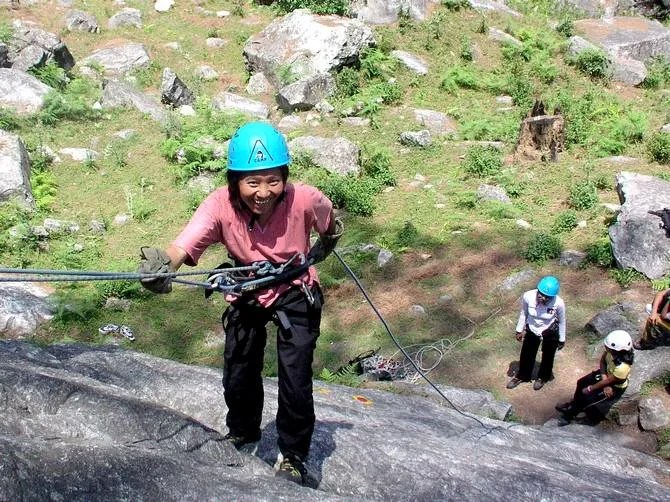
When tourism companies in Ladakh refused to employ her services as a travel guide because she was a woman, Thinlas Chorol decided them a suitable answer.

In 2009, when she was all of 27, Chorol started her own company, the Ladakhi Women’s Travel Company and became Ladakh’s first female tourist guide

Thinlas Chorol has been awarded by the Ladies’ Wing of the Indian Merchants’ Chamber and only employs women in her company.

Read the fascinating story about a young lady breaking traditions here!

Photograph courtesy: Ladakhi Women’s Travel Company


3. Dr Ramakant Panda

The biggest challenge was to keep away from getting astray,” Dr Ramakant Panda says as he recalls his childhood in Damodarpur in Odisha’s Jashpur district.

Panda, who would walk 7 km every day to and from school for six years, has done well for himself.

But being serious about studies in a village in the ’60s where education wasn’t necessarily on top of everyone’s mind was a challenge.

Dr Panda has come a long way from there.

He has performed more than 18,000 heart surgeries including one on the former Prime Minister Manmohan Singh is the vice-chairman and managing director at Mumbai’s Asian Heart Institute, of one of India’s best cardiac care hospitals.

Do read his story!

Photograph courtesy: The Asian Heart Institute


4. Mani Vajipey and Raj Madangopal

The general filth and squalor in India deeply disturbed Mani Vajipey who was pursuing a doctorate in electrical engineering at the University of Delaware.

Along with Raj Madangopal, a friend with whom he bunked classes, Vajipey returned to his homeland and formed Banyan Nation, an organisation that aims to address the garbage crisis in India through technological innovations, better practices and grassroots activism.

Their inspirational story has been documented here!

Photograph courtesy: YourStory.com


5. Malvika Iyer

When she was 13, a freak accident cost Malvika Iyer both her hands and severely damaged her legs.

No one knew if she would ever be able to walk again.

But young Malvika braved the odds and emerged victorious.

She graduated in economics from the prestigious St Stephen’s College in New Delhi, met the then President, Dr APJ Abdul Kalam, went on to become a social worker and a motivational speaker.

Along the way, she also became a part of the Global Shapers Community, an initiative of the World Economic Forum.

If this story doesn’t inspire you, we really don’t know what will.

Photograph courtesy: Malvika Iyer


6. Pavithra YS
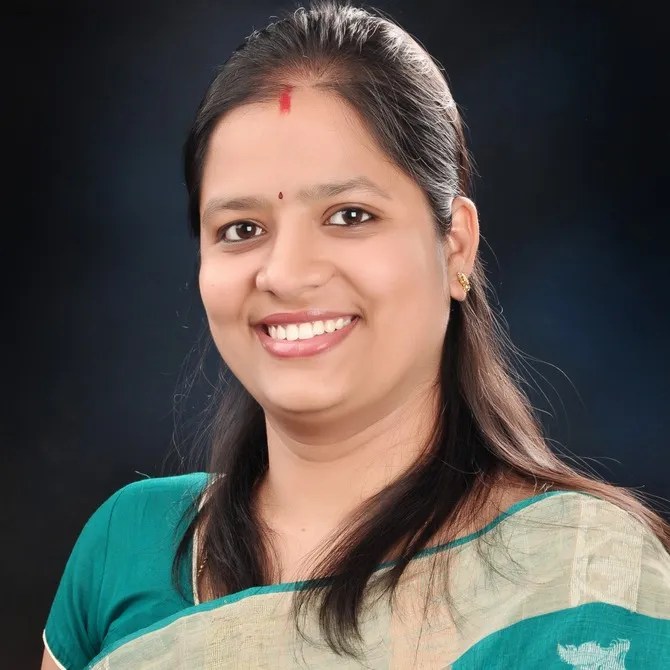
Vindhya E-Infomedia is a business processes outsourcing company based in Bengaluru.

With over 600 employees, Vindhya is probably just a speck in the booming BPO market.

What sets it apart is that everyone on its floor operations and most of its 600-plus employees are differently-abled.

Vindhya is the brainchild of Pavithra YS who started this unique company when she was all of 22!

This is her inspiring story!

Photograph courtesy: Vindhya E-Infomedia


7. Shadab Hassan

When he was a child, Shadab Hassan sold balloons and candies so he could go to school.

Hassan went on to complete his master’s course in business administration from the Birla Institute of Technology, Mesra.

But instead of taking up a plush corporate job in an MNC, he decided to start a school in his hometown in Ranchi where so no child would ever have to sell balloons and candies for their school fees.

More on that here!

Photograph courtesy: HH High School’s Facebook page


8. Jayashree Kanam

Seven years after the Mumbai floods of July 26, 2005 took her husband away from her,Jayashree Kanam decided to pick up the pieces of her life and move on.

So, she went back to school and started where she had left from more than 20 years ago.

If you thought your life was difficult, this story of a mother returning to school so she can give her daughters a better future is what you should be reading!

Photograph courtesy: Abishek Mande Bhot/Rediff.com


9. Mehvish Mushtaq

Information in Srinagar is difficult to come by.

Mehvish Mushtaq learnt it when she wanted to telephone a cousin’s school some years ago.

The school’s website was down.

She didn’t have a phone book handy and there weren’t any directory services that could help her with it.

After considerable search, that included calling up the cousin’s classmates, she finally got the number.

Then there were occasions when a hospital’s number wasn’t easy to come by.

Each time a situation arose, she would scramble for information.

So when Mehvish Mushtaq was asked to create an app as part of an online course in Android application development, she knew just what she wanted to make.

She created Dial Kashmir that lists out everything there is to know about Jammu & Kashmir — from phone numbers and addresses of essential services and tourist attractions to contact details of local business and prayer timings.

This is the story of Mehvish Mushtaq, the first Kashmiri girl to develop an Android app. Do read!

Photograph courtesy: Mehvish Mushtaq


10. Chitra Vishwanathan

Chitra Vishwanathan is better known to her readers as Chitvish.

On her eponymous app, Chitvish dishes out recipes, kitchen advice and handy tips for amateur cooks.

Chitvish, as you would have gathered from the picture above, isn’t your typical Internet wizkid.

How did this 75-year-old take her passion for cooking to the Internet and break a few hundred stereotypes along the way?

We leave you with this fascinating story of Chitra Vishwanathan, which will teach you that you are never too old to learn anything new.

Photograph: Sreeram Selvaraj

SOURCE:::: http://www.rediff.com

Natarajan

Message For the Day…” What is Bhagavatha …” ?

God assumes many forms and enacts many activities. The nameBhagavatha is given to the descriptions of the experiences of those who have realised Him in those forms and of those who have been blessed by His grace and chosen as His instruments. The great epic called Bhagavatha is a panacea that cures physical, mental and spiritual illnesses. By Bhagavatha we also mean those with attachment to God, those who seek the companionship of God. Being in the midst of such Bhagavathas fosters one’s own devotion. Unless you have a taste for God-ward thoughts, you will not derive joy therefrom. To create that taste, the Bhagavatha tells stories to the earnest inquirer that relate to incarnations. Then one develops the yearning to experience the thrill of God, through all the levels of consciousness. One who has this intense yearning can alone be a true Bhagavatha.   

Sathya Sai Baba


” Hard Nut To Crack … ” !!!

Korean Air flight delayed by bag of nuts

The nuts had been handed to her without a plate

Nut rage delays Korean Air flight

A flight was delayed after the daughter of Korean Air’s chief executive reportedly demanded an air steward be removed for offering her nuts

While some people are allergic to nuts, Cho Hyun-ah’s concern was more that the nuts – macadamias in this case – had been given to her without her asking for them.

She was also furious, reports claim, that the nuts had been handed to her without a plate.

Cho Hyun-ah, who had been travelling in first class, held up the plane while claiming that the steward in question was incapable of keeping passengers safe.

The man was subsequently taken off the flight which was due to travel from New York to Seoul on Friday

The plane was already taxing down the runway when the offending nuts were produced but the pilot then returned to the terminal JFK airport.

The switch in staff added an 11-minute delay to the journey for the plane’s 250 passengers.

Cho is the eldest daughter of Cho Yang-ho and herself an executive vice president of South Korea’s national carrier.

The airline told Korea Times that checking of quality of service was one of Cho’s jobs, as she is in charge of in-flight service for the carrier.

A spokesman for the main opposition party in South Korea said: “Why did she have to make all that fuss because of some stupid macadamia nuts? She soiled the reputation of our flag carrier.”

Cho Hyun-ah is executive vice president of Korean Air

Korea’s transport ministry is apparently looking into the incident to determine whether Cho’s actions, in demanding the plane turn around, infringed aviation law.

source::::http://www.telegraph.co.uk/

Natarajan

Message For the Day….” Keep The Name of God Always Radiant in your Tongue and Mind …”

Keep the Name of the Lord always radiant on your tongue and mind. That will keep the antics of the mind under control. When the lamp is burning, darkness will not spread its fumes around you. When the word for Brahman (Supreme Universal Reality), Om, is spelt with the last breath by the one dying, they attain the Divine. To make that final utterance of Om, just as the flower blossoms on the creeper of life, you need to dwell upon Om all through the years of your current life. The Geeta advocates the process of continuous meditation in a neat little formula: mam anusmara yuddhya cha! – “Keep Me in your memory and fight!” The cue here for you is to fight the battle of life, have God in your consciousness as your Charioteer at all times. This is not merely a direction for Arjuna; it is a prescription for all humanity.

Sathya Sai Baba


Message For the Day…” How to Attain Spiritual Wisdom … ” ?

The Kaivalya Upanishad declares: “Not by means of works, not by means of human power, not by means of wealth, but by renunciation alone can immortality be attained.” The ‘works’ referred to are rituals like sacrifices, vows, charities, donations, pilgrimages, etc. Through such activities, one cannot achieve liberation; that is to say, one cannot get rid of the veil of ignorance. ‘Human power’ means acquisition of positions of authority, of skill and intelligence which can manipulate people and things, of fame and supremacy, of personal charm, of health and happiness, or of a large family with many children – these cannot confer liberation. The works mentioned above and the acquisition referred to can succeed only when one has ‘wealth’. But the Upanishad announces that spiritual wisdom is not related to riches. So liberation cannot be earned by means of wealth. Renunciation alone can confer immortality.

Sathya Sai Baba