How Barefoot College Trained 700 Rural Grandmothers to Be Solar Engineers & Electrified 20000 Homes…?

A vocational training college in Rajasthan, started by well known educator and activist Sanjit Bunker Roy, is responsible for lighting up the homes of thousands of poor villagers across the world.

Tilonia is a small village in Rajasthan’s Ajmer district. On the face of it, Tilonia is like any other village in India. One can see large tracts of semi-arid land, flocks of sheep on the roads, and women whose heads are covered with the pallus of brightly coloured sarees.

However, what sets Tilonia apart is that it is home to the Social Work and Research Centre, popularly known as Barefoot College. This institute is known all over the world for training rural people in vocational skills.

In the 1970s, Sanjit Bunker Roy, an educator and social activist decided to give something back to society and set up Barefoot College in Tilonia.

bunker roy

Photo source: Youtube

The college is spread over eight acres and runs completely on solar energy.

Bunker, who studied at Delhi University, says: “My elitist education almost destroyed me. In fact, the biggest reasons why the poor will always remain poor are the literate man and woman — products of the formal education system. This system makes you look down on villages.”

According to him, the formal system of education demeans and devalues the traditional knowledge and practical wisdom that the poor value. He says his real education started during his initial years in Tilonia when he was working as an unskilled labourer — blasting wells for water.

“I lived with very poor and ordinary people under the stars and heard the simple stories they had to tell of their skills, knowledge, and wisdom that books and university education can never teach you. My real education started when I saw amazing people – water diviners, traditional bonesetters and midwives – at work. That was the humble beginning of the Barefoot College,” he adds.

Though the college started with the aim of providing solutions to the water problems of rural India, its mission soon changed to sustainable development and empowerment of the marginalised. In fact, the courses offered at the institute are rooted in the Gandhian philosophy of making villages self-reliant.

“But it was not Gandhi or Marx who inspired the work of the college, but very ordinary people with grit, determination, and the amazing ability to survive with almost nothing,” says Bunker.

Students, primarily women, are selected from the poorest of villages and are taught vocational skills in different areas like solar energy, healthcare, education, handicrafts, and so on. The college provides basic health services to the villages through a team of doctors, midwives, and dentists.

It imparts education to women and children by keeping their different needs in mind. There are crèches for small children whose mothers work all day. There are night schools for children who help in the fields or tend to animals during the day. And bridge courses for those among them who wish to join day school. There is an emphasis on hands-on learning. Even the lessons offered are practical in nature. The children are taught about how democracy works, how to take care of a sick animal, how land is measured, etc.

Barefoot College is probably best known for producing hundreds of ‘barefoot’ solar engineers.

The Better India (4)

In 2003, the college decided to train illiterate rural women as solar engineers. The biggest challenge at the time was to convince donors, policy makers, as well as the male members of the community to accept the ‘impossibility’ that these women could be trained.

“Do you know why we insisted on women? Because training men is pointless. They will grow restless and go to big cities in search of jobs. Women have more patience to learn the skill. And especially since they are from poor families, they will stay back home and prove their worth to their communities,” says Bunker.

This training of women — to teach them how to install, repair, and maintain solar lighting units — did not stop in Rajasthan. Today, the institute trains women from countries like Afghanistan, Bhutan, Sierra Leone, Mozambique, Fiji, etc. It boasts of having over 700 solar ‘mamas’ in 70 of the least developed countries in the world. These women, from isolated and non-electrified villages, congregate in Rajasthan for a few months. To overcome the language barrier, they are taught through sign language.

They memorise the permutations and combinations of wires through colour codes.

The Better India (3)

Barefoot College brought three women from Afghanistan to Tilonia and trained them. After they went back, their village became the first ever solar-electrified village in the country. These women went on to train 27 others and now there are over a 100 solar-electrified villages in Afghanistan.

The College also trained grandmothers from Sierra Leone. They lit up the first village in the country with the sun’s energy.

The idea caught on and now there is a Barefoot Vocational Training Centre in Sierra Leone.

Under the India Technical Economic Cooperation Programme of the Ministry of External Affairs, the Barefoot College has trained nearly 700 rural grandmothers to be solar engineers and electrify over 20,000 houses in different countries.

Barefoot College is funded by various organisations and grants. Barefoot College applied for the HCL Grant and through this grant, it wanted to implement the Barefoot model of alternate community-based education and skill development in the five districts of Rajasthan, by empowering and educating children, women, and youth and setting up 25 crèches and 50 bridge schools in these districts. To know more about Barefoot College, contact the team on their website.

About HCL Grant

There are about 3.3 million NGOs in India doing commendable work in various areas aimed at inclusion and development. The HCL Grant has been launched to support the institutionalization of the Fifth Estate comprising individuals and institutions formed and led by the citizens of the country through the creation of strong governance frameworks and management capabilities. An endeavour of the HCL Foundation, HCL Grant envisions to build sustainable communities by supporting NGOs and individuals who are doing path-breaking work towards high impact transformation in rural India. In the first year, HCL Grant has identified the best NGOs in the area of rural education. To know more about the HCL Grant: http://www.hcl.com/hcl-grant

source……..Meryl Garcia in http://www.the betterindia.com

Natarajan

Message for the Day…” Ways of God’s Showering Grace on HIS Devotee…”

Sathya Sai Baba

Even when you attain the state of living with God and merger in a divine form (sarupya-mukti), there is still a trace of differential feeling. Just because a devotee has a form like the Lord’s, one may not have the powers of creation, preservation, and destruction that the Lord has. Only when all trace of difference disappears and unity is attained, the highest stage is reached. This is real union (Sayujya). This comes of divine grace won by the essence of the spiritual practice of each; it cannot be claimed as the fruit of effort. The devotee wishes to serve the Lord as one pleases and to experience the joy of the form that one has attributed to the Lord. But the Lord, out of His grace, gives the devotee not only existence with the Lord, witnessing always the glory of the Lord, and being suffused with God-consciousness but also Sayujya – union with Him! The path of devotion results also in attainment of ultimate knowledge (Brahma-jnana). Even if the devotee does not crave it, the Lord Himself vouchsafes it to the devotee.

Image of the Day…Space Station Flyover of the Mediterranean…

Nighttime photograph from low Earth orbit of Mediterranean showing clouds and city lights

Expedition 46 flight engineer Tim Peake of the European Space Agency (ESA) shared this stunning nighttime photograph with his social media followers on Jan. 25, 2016, writing, “Beautiful night pass over Italy, Alps and Mediterranean.”

Image Credit: ESA/NASA

Source…….www.nasa.gov

Natarajan

Message for the Day..” Need for Rigorous Practice of Right conduct in one’s life …”

If you are careless about the discipline of truth, every duty laid on you by dharma and every action prompted by dharma will hang heavy as a burden. Hence, you must search for the reality behind all these phenomena in your daily living, and that search will make all your duties, which are dharmic actions, light and pleasant. The Lord has designed people such that they are inclined towards God and are delighted at the expansion of their vision, and are happy when they are moral and virtuous. So, people must serve their own best interests by adhering to their basic nature, by concentrating on the Divine (Brahman), by assiduously cultivating truth, and by rigorously practicing right conduct (dharma).

Sathya Sai Baba

Neft Dasları: A City Built On Oil Platforms…!!!

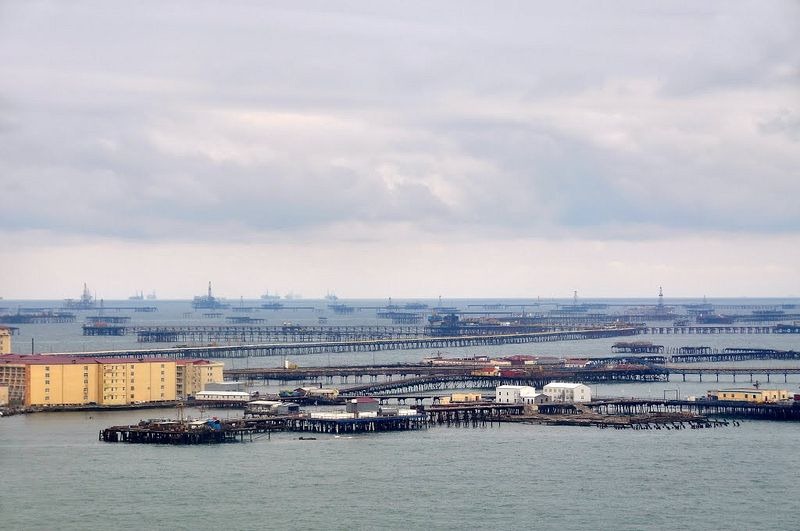
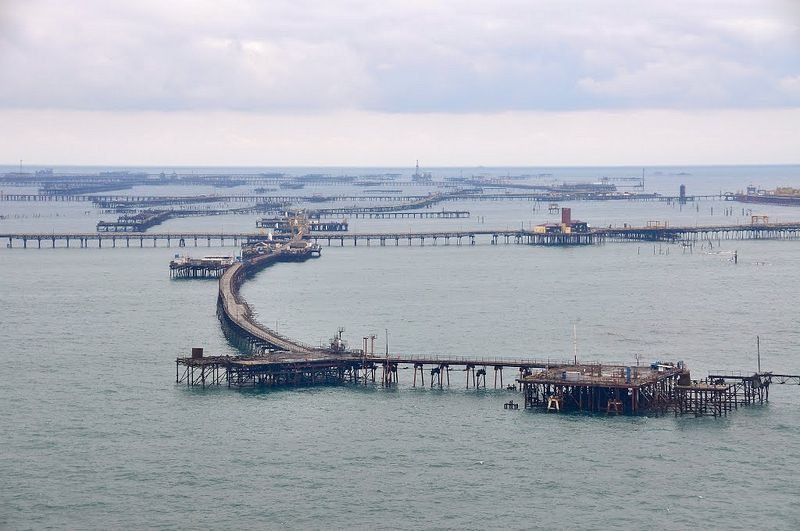
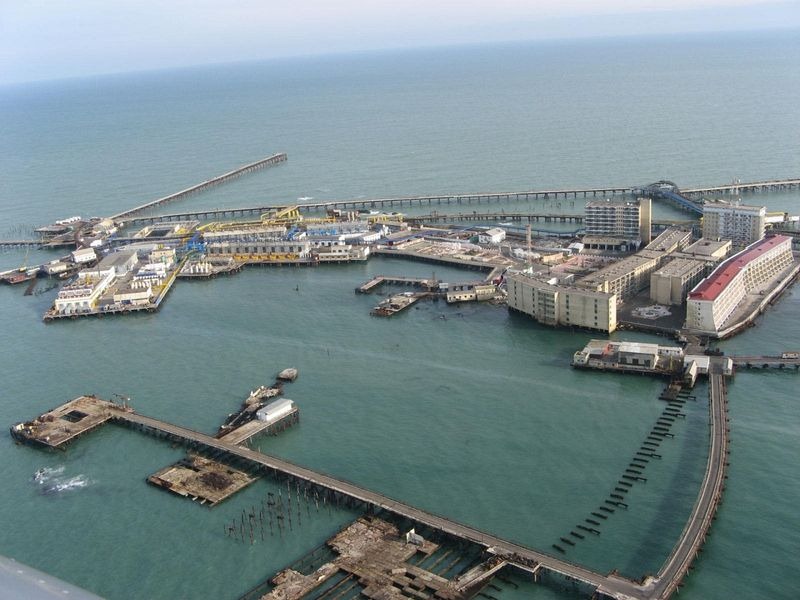
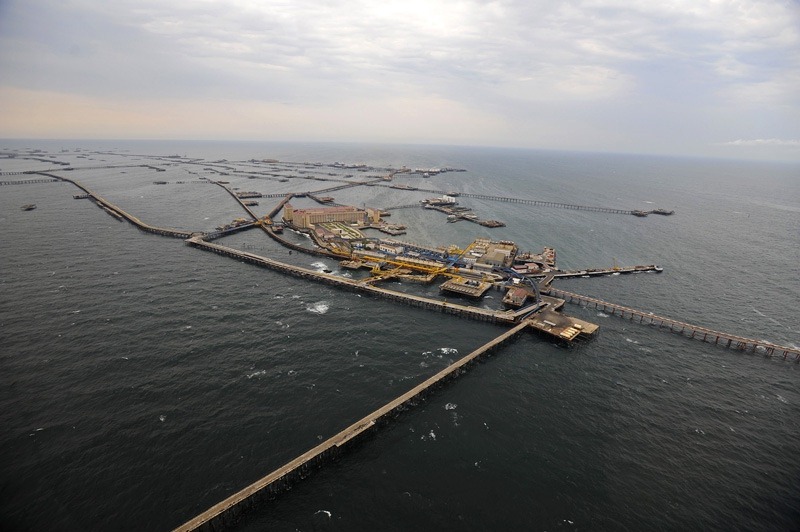
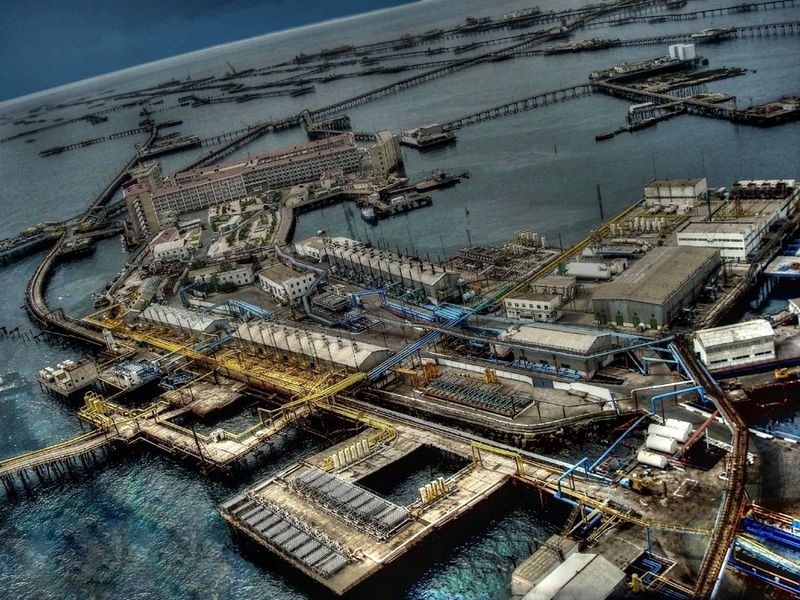
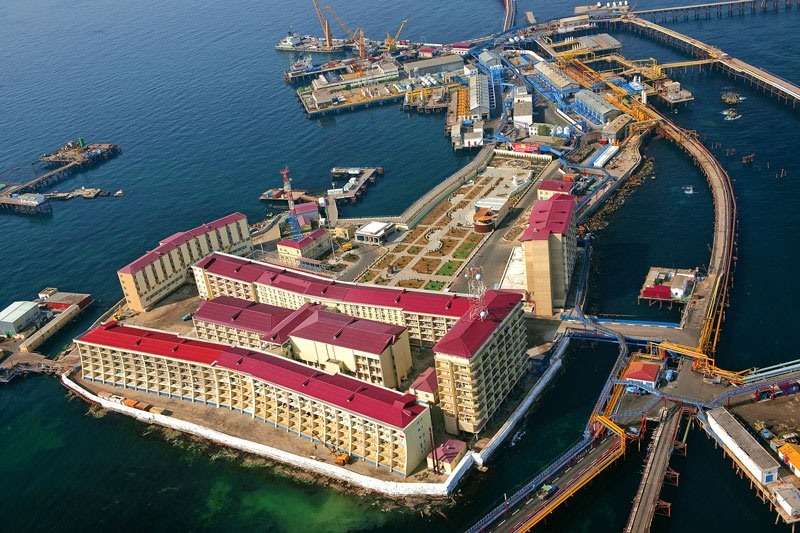
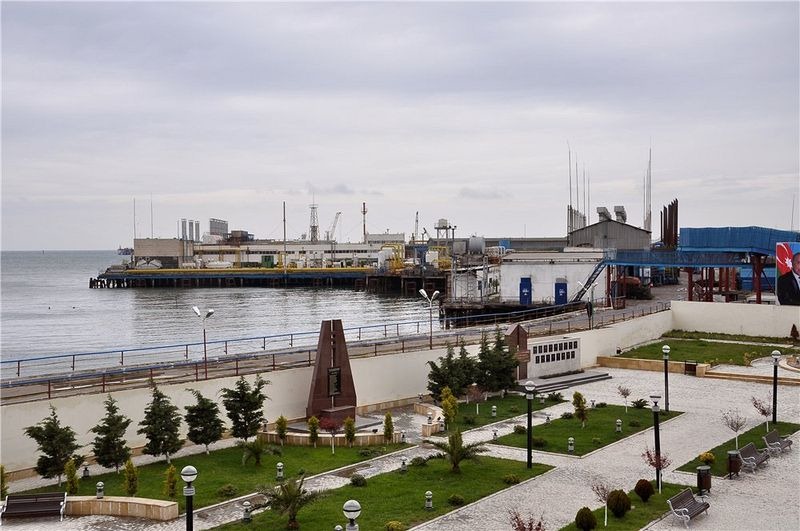
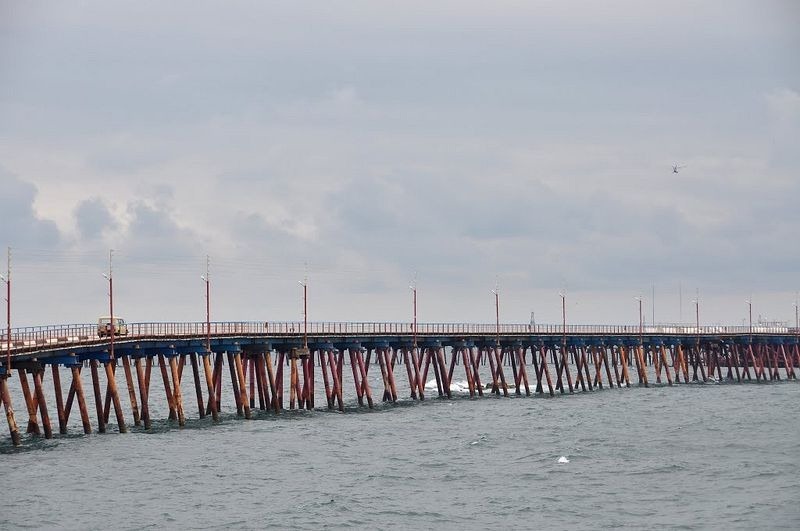
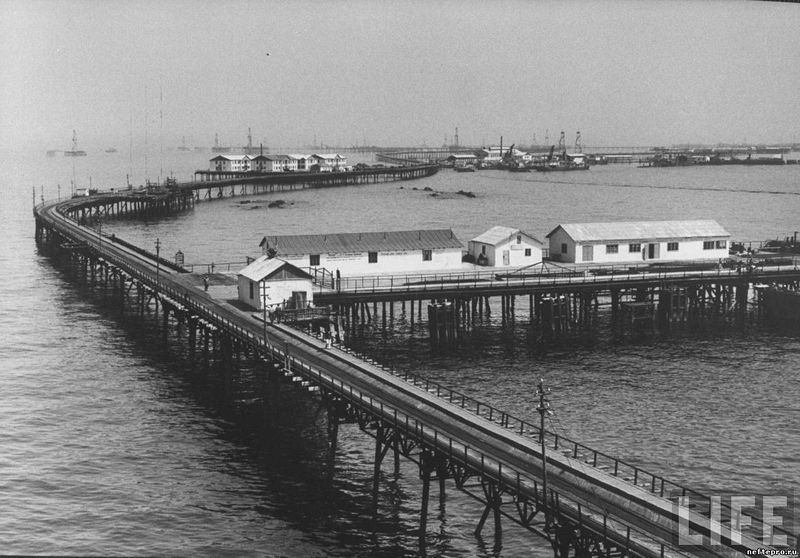
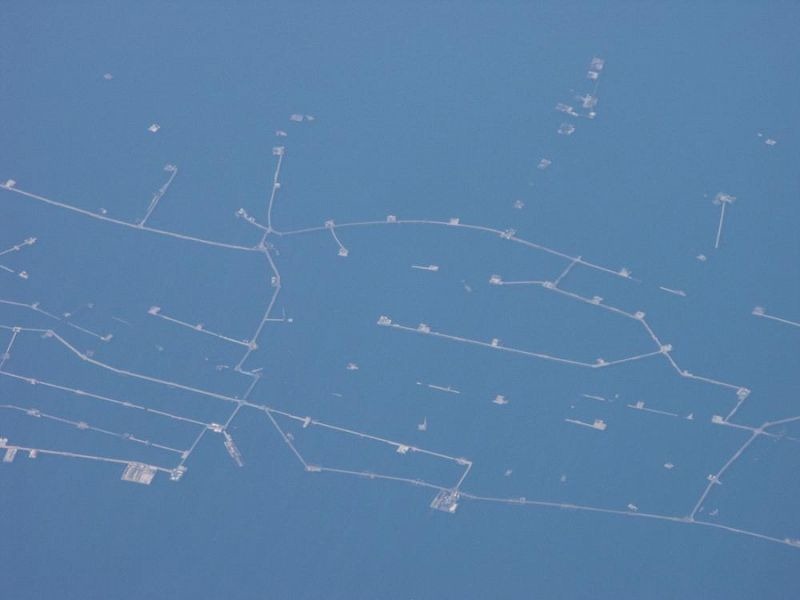
Far out into the Caspian Sea, a hundred kilometers away from the Azerbaijani capital Baku, lies one of the most incredible settlements in the world. A fully functional city of 3,000 living in a network of oil platforms and artificial islands connected by 300 km of trestle bridges. This is Neft Daslari, also known as Oil Rocks, and it lies fully within the world’s largest lake at an incredible distance of 55 km from the lake’s shore.

Azerbaijan has been famed for its rich oil resources since ancient times. There is evidence of oil drilling and actual trade in petroleum as early as the 3rd and 4th centuries. Historical accounts of the area’s oil and natural gas seepage can be found in old Arabic and Persian manuscripts, as well as in the writings of famous travellers such as Marco Polo. The Persians called the area the “Land of Fire”.

neft-dasları-18

Photo credit: geozet.ru


Modern drilling began in 1870 after Russia conquered the territory. By the start of the First World War, Azerbaijan’s oil wells were already supplying 175 million barrels of crude oil a year, or 75 percent of the country’s entire oil production. After the war, while exploring for oil in the Caspian Sea, Soviet engineers struck top-quality oil at a depth of 1,100 meters below the seabed. Shortly thereafter, the world’s first offshore oil platform was built at the spot, and Neft Daslari was born.

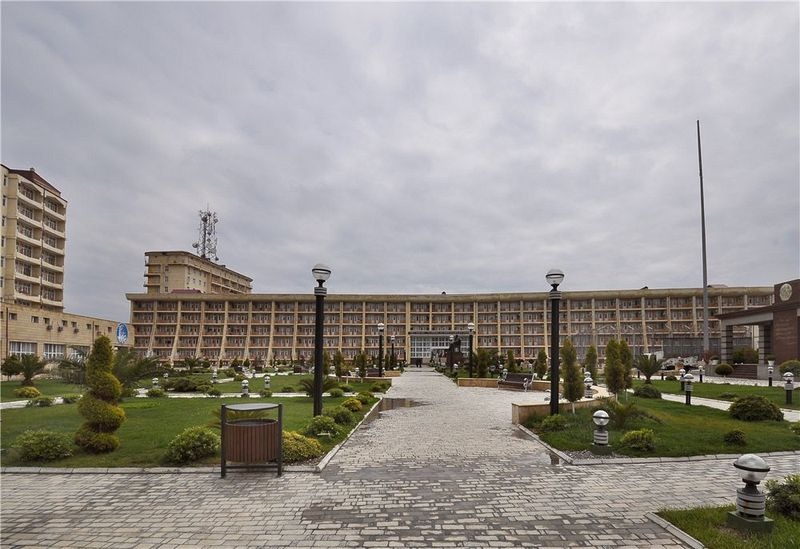
The original foundation of Neft Daslari consisted of seven sunken ships including the world’s first oil tanker. Over the decades this grew to some 2,000 drilling platforms spread in a 30-kilometer circle, joined by a network of bridge viaducts spanning 300 kilometers. Over these platforms, workers built eight-story apartment blocks, a beverage factory, soccer pitch, library, bakery, laundry, 300-seat cinema, bathhouse, vegetable garden and even a tree-lined park for which the soil was brought from the mainland. During its heydays, some 5,000 workers lived here.

Neft Daslari’s decline began with the collapse of the Soviet Union and the discovery of new oilfields elsewhere. The workforce was reduced and many oil rigs were abandoned. Neglect and lack of maintenance caused many of them to collapse into the sea. Others are in the process of crumbling. Out of the 300 kilometers of roads, only 45 kilometers remain usable, and even they have fallen into disrepair. To the government, however, the place is still the proud, closely-guarded secret it was in Soviet times. It is still very hard for foreigners to gain access to the city. You can’t even zoom into it on Google Maps.

neft-dasları-5

Photo credit: IPAAT/Panoramio

neft-dasları-6

neft-dasları-17

Photo credit: infoglaz.ru

neft-dasları-21

neft-dasları-1

Photo credit: infoglaz.ru

neft-dasları-19

Photo credit: infoglaz.ru

neft-dasları-7

Photo credit: IPAAT/Panoramio

neft-dasları-13

neft-dasları-15

neft-dasları-8

neft-dasları-11

neft-dasları-12

neft-dasları-20\

neft-dasları-3

Photo credit: geozet.ru

Sources: Spiegel / Wikipedia

Source……www.amusingplanet.com

Natarajan

The Circular Laguna Garzon Bridge in Uruguay……

When building bridges, engineers and architects don’t always look for the shortest possible crossing. The new ring-shaped bridge across Laguna Garzon in Uruguay’s southern coast is such an example.

The concrete structure consist of two semi-circular bridges, joined at either end to create a ring, and was built to replace a raft crossing between the cities of Rocha and Maldonado. On the bridge’s unusual circular design, its architect Rafael Viñoly has a perfectly logical and functional explanation: the curved design will force drivers to slow down the speed of their cars while also prove an opportunity to enjoy the panoramic views of this amazing landscape. The bridge also has a pair of pedestrian walkways.

laguna-garzon-bridge-4

Before the bridge was built, the raft crossing allowed only two cars to cross at a time. The raft operated only at certain times of the day, and during windy or stormy days it remained closed. The poor connection has kept the region of Rocha away from further developments compared to what Maldonado has been experiencing in the last decades.

The new bridge will allow some 1,000 vehicles to cross the lagoon, and is expected to help drive the development of Rocha’s coastline.

laguna-garzon-bridge-3

laguna-garzon-bridge-1

laguna-garzon-bridge-5

via Dezeen

Source…….www.amusingplanet.com

Natarajan

Message for the Day……..”What is being always with God …” ?

Worship with deep-rooted consciousness on the Divine, purity of feeling, and being free from all extraneous thought, becomes itself mental union with the Divine (bhava-samadhi). As a result of this mental union, the Lord appears before the inner eye of the devotee in the form that they have chosen for worship. The vision is not merely a matter of imagination; it is a ‘face-to-face’ experience. Without changing location, the devotee can abide in the presence of the Lord in the self-same place. This is called ‘being always with God (salokya-mukti)’. Besides being always with the Lord, the devotee realises all that they see as the glory of the Lord. The experience is referred to as ‘seeing always the glory of the Lord (samipya-mukti)’. Existing ever with the Lord, witnessing always the glory of the Lord, and becoming suffused with God-consciousness is merger in the divine form (sarupya-mukti). This is the final fruit of devotional scriptures.

Sathya Sai Baba

We Must Salute this Hero …

The terrorists were armed with AK-47s, grenades, pistols, knives, many rounds of ammunition.

Sepoy Jagdish Chand’s weapons were his bare hands and enormous courage. He died, but not before he had felled one of India’s enemies.

Archana Masih/Rediff.com speaks to the family of Sepoy Jagdish Chand, one of the 7 soldiers martyred in the terrorist attack on the Pathankot Air Force Station, who was awarded the Kirti Chakra posthumously for his courage on Republic Day.

Martyred soldier Sepoy Jagdish Chand

Martyred soldier Jagdish Chand in a photograph taken when he was posted in Kashmir. Photographs: Kind courtesy: Kiran Bala.

Last week Snehalata returned to her home in Basa village in Himachal Pradesh’s Chamba district after immersing her martyred husband’s ashes in the Ganga in Haridwar.

Sepoy Jagdish Chand, 48, died battling terrorists at the Indian Air Force base in Pathankot on January 2. He was in the cookhouse when terrorists launched an attack and killed three of his mates.

Unarmed, the trooper ran after one of the terrorists and wrestled him to the ground. The terrorist was armed with an AK-47, grenades, knives, many rounds of ammunition. Sepoy Jagdish Chand’s weapons were his bare hands and enormous courage. He turned the terrorist’s own rifle on him and shot him dead. Tragically, he was felled by another terrorist’s bullet.

Sepoy Jagdish Chand had served 25 years in the Indian Army’s 7 Dogra Regiment and was re-employed by the Defence Security Corps after retirement from the army. He had served in Srinagar, Leh and with the Indian Peace Keeping Force in Sri Lanka, where he had won two medals for duty, says his family.

Martyred soldier Sepoy Jagdish Chand

IMAGE: Martyred soldier Sepoy Jagdish Chand served in the Indian Army for two-and-a-half decades and served in Indian Peace Keeping Mission in Sri Lanka.


The family in Basa received the news of his passing at 10.30 the following morning. They had seen him just a couple of days ago when he had stopped en route to Pathankot where he had been posted from Leh in Jammu and Kashmir.

“He was very particular about his attendance and very proud of the fauj,” says his daughter Kiran Bala on the telephone.

“He spent that day going to the post office, transferred some money into our account and in the evening called some relatives over for a meal. He loved his food and enjoyed inviting our relatives who lived nearby,” says Kiran who is doing an MA in Economics.

At 6 the next morning, the soldier bade his family goodbye. His wife quickly packed his tiffin and he was off with another fauji friend who was also returning to base.

In less than 48 hours Sepoy Jagdish Chand was dead. The news of the Pathankot siege had started coming on television and the worried family called his mobile phone several times only to find it switched off.

As a trooper for the Defence Security Corps, which is entrusted to guard military installations, he was stationed at the Pathankot airbase, one of India’s frontline airbases. He was posted at the DSC mess when the terrorists opened fire.

As his family followed the news, their hearts raced in anxiety. His phone went unanswered repeatedly. “We called his friend there and were told that he was alright. So we thought of nothing untoward,” says daughter Kiran.

“On the first day the press was reporting the names of two other soldiers who had been martyred. My father’s name was not among them,” she adds.

The next day someone called from the Pathankot Air Force Station and when she answered the phone, the caller asked for a male member of the family. The girl called a cousin who was given the sad news.

Martyred soldier Sepoy Jagdish Chand

IMAGE: Martyred soldier Sepoy Jagdish Chand had visited his family a couple of days before his death.

Two jawans killed in the Pathankot attack were from Himachal Pradesh. Last year, seven of the state’s soldiers from the 6 Dogra Regiment were among the 18 killed in a terrorist ambush in Manipur.

Himachal Pradesh has had a long tradition of sending its men to the armed forces. Three Param Vir Chakra awardees, including the first Param Vir Chakra recipient Major Somnath Sharma, hail from the state. Fifty-two soldiers from Himachal Pradesh died in the Kargil War of 1999.

“Three generations of my family have been in the army. My grandfather, father and now us — among we four brothers, three joined the army,” says retired soldier Piar Singh, 58, Sepoy Jagdish Chand’s elder brother.

One brother is still serving in the Indian Army.

In every other house in the village, he says, resides a retired soldier. At one time every house sent a soldier or two to the armed forces. “There are only a few serving jawans in the fauj now. Nowadays our boys are not able to qualify in the selection process and are getting rejected,” says Piar Singh.

Martyr Sepoy Jagdish Chand's son immerses his ashes in the Ganga

IMAGE: Son Rajat and wife Snehalata immerse Martyr Sepoy Jagdish Chand’s ashes in the Ganga.

Sepoy Jagdish Chand’s son Rajat, 21, had tried getting recruited into the army, but was unsuccessful.

Kiran says she is encouraging her younger sister to try for the armed forces.

The family has received Rs 20 lakhs (Rs 2 million) in two cheques and a cash amount of Rs 45,000 so far. Since the death will be treated as a battle casualty, his family will continue to receive the pay he drew. Sepoy Jagdish Chand’s funeral was attended by state ministers, officials, defence personnel and many locals.

Kiran, the oldest of the martyr’s children, has been told by many to be strong. ‘You are the eldest; you have to be a source of strength to your mother and siblings,’ she was counselled by those who came for the funeral.

She does not remember much of what happened that day. It is a haze of permanent grief.

“It’s a day we never want to remember. It’s the day the world ended for us.”

Source……….Archana Masih / Rediff.com  in http://www.rediff.com

Natarajan

These 25 Children Received the National Bravery Award This Year. Here Are Their Inspiring Stories…

They saved their friends, parents, and neighbours from drowning, electrocution, thieves and a lot more – these 25 children, who were honoured with the National Bravery Award this year, displayed immense courage and risked their lives to protect their loved ones. Here are their awesome stories.

New Delhi witnessed the gathering of some of India’s bravest children on January 24, when Prime Minister Narendra Modi presented the National Bravery Awards to them. From a 16-year-old who fought off a tiger, to a 13-year-old who lost his life while trying to save his friend from drowning – these three girls and 22 boys showed incredible bravery in the face of some very dangerous situations.

“For the award winners, this act of bravery should not become an end in itself. Life must continue to evolve and the children should continue to develop their careers and continue to serve society to the best of their abilities,” the Prime Minister told them during the event.

The National Bravery Award scheme, initiated by the Indian Council for Child Welfare (ICCW), was started with the aim of awarding children in the age group of 6-18 years, who display outstanding bravery and inspire other children with their actions. The awards consist of five categories including the Bharat Award, Sanjay Chopra Award, Geeta Chopra Award, Bapu Gaidhani Award and the General National Bravery Awards. The awardees receive a medal, a certificate, and a cash prize. Bharat Award winners get a gold medal, while the others receive silver. As a part of ICCW’s sponsorship program under the Indira Gandhi scholarship scheme, each child is also receives the financial assistance to complete his or her schooling.


Here are the astounding stories of this year’s winners.

1. Shivampet Ruchitha, Telangana

bravery1

8-year-old Shivampet Ruchitha became the youngest person to receive the award this year. On July 24, 2014, Ruchita saved two of her school mates when a train hit their school bus. She noticed that their bus had stopped on a railway track and a train was coming towards them. Showing extraordinary presence of mind, she pushed two students out of the window and jumped off the bus herself too. Unfortunately, she could not save her younger sister who was sitting in the front row. Her younger brother sustained severe injuries, but he has recovered now. 16 students, the driver, and the conductor lost their lives in that accident. She was honoured with the Geeta Chopra award.

“It feels good to have the limelight and get an award from the Prime Minister. But I wish I was able to save my sister, too, as we all miss her,” she told The Indian Express.

2. Arjun Singh, Uttarakhand

bravery2

In July 2014, a tiger entered 16-year-old Arjun Singh’s house in Uttarakhand. He showed extreme courage and fought it off, saving his mother’s life who had fainted as soon as the tiger entered. Arjun went into a room and picked up a sickle to fight the tiger. As it was too small to hit from a distance, Arjun grabbed a stick and waved it towards the tiger. He did not stop until the villagers reached there and the animal ran away on seeing the crowd. Arjun received the Sanjay Chopra award.

3. Late Shivansh Singh, Uttar Pradesh

bravery3

Shivansh Singh, a 14-year-old medal-winning swimmer from Faizabad, was posthumously honoured with the prestigious Bharat Award. He lost his life while trying to save his friend from drowning in the Saryu River.

“I wish he was here. Seeing all these boys and girls enjoy their moment of glory, I wish my son could have been part of this,” his mother, Neelam Singh, told The Telegraph.

4. Late Gaurav Kawduji Sahastrabuddhe, Maharashtra

bravery4

Gaurav was only 15 when he lost his life while rescuing four of his friends from drowning in the Ambazari lake. He was a good swimmer and had gone to the lake one afternoon in June 2014. While playing in the water, his friends suddenly started drowning. According to the police, Gaurav swam for 20 minutes and rescued them all. But while trying to pull out the last boy, he hit his head on a submerged stone and drowned. He received the Bharat Award.

5. Aromal SM, Kerala

bravery5

12-year-old Aromal is one of the six winners from Kerala. He saved two women from drowning in a 14-feet pond and was honoured with the Bapu Gaidhani Award.

6. Rakeshbhai Shanabhai Patel, Gujarat

bravery6


This 13-year-old received the Bapu Gaidhani Award for saving a boy who accidentally fell into a well.

7. Ramdinthara, Mizoram

bravery7

On January 2, 2015, Ramdinthara saved two boys who were stuck on a transformer fence. The 15-year-old pulled the boys out with his bare hands and took them to the hospital. Son of a tea-seller, Ramdinthara was walking past the transformer when he saw that two boys were struggling to free themselves after falling on the fence. He overcame his fear in just a few seconds and grabbed their hair to pull them up. He received the Bapu Gaidhani Award.

8. Abinash Mishra, Odisha

bravery8

Abinash Mishra, 12, saw his friend drowning in Kushabhadra River. Without thinking twice, he just jumped into the river and swam to the shore after saving his friend. He is one of the recipients of the General National Bravery Award.

9. Chongtham Kuber Meitei, Manipur

bravery9

13-year-old Chongtham Kuber Meitei became a local hero after he jumped into a 10-feet deep well to save a girl from drowning. He was awarded with the General National Bravery Award.

“I won’t lie, I was really scared. But I had to jump into the well to get to her. She would have drowned,” he told The Telegraph.

10. Kashish Dhanani, Gujarat

bravery10

10-year-old Kashish protected his 15-months-old sibling from a German Shepherd. He received the General National Bravery Award.

11. Muhammad Shamnad, Kerala

bravery11

14-year-old Muhammad Shamnad showed outstanding courage when he risked his life to save a little girl from drowning in a pond. He received the General National Bravery Award.

12. Mohit Mahendra Dalvi, Maharashtra

bravery12

14-year-old Mohit saved his 10-year-old neighbour from drowning in Banganga Lake last year. When Krishna Pashtye slipped into the lake, Mohit was the only one of the hundreds of onlookers who had the courage to dive into the lake and save her. He was honoured with General National Bravery Award.

“I knew how to swim and so jumped in confidently. I saw the girl’s leg had stuck in mud in a ditch. I tried to get her leg out and managed to pull her out. When we came out, others rushed and helped us,” said Mohit, an orphan who lives with his paternal aunt.

13. Abhijith K.V, Kerala

abraery13

abraery13

15-year-old Abhijith was honoured with the General National Bravery Award for saving his friend from drowning in a 25 feet deep pond.

14. Sarwanand Saha, Chhattisgarh

bravery14

Sarwanand Saha received the General National Bravery Award for saving a man from drowning in Mahanadi River.

15. Sai Krishna Akhil Kilambi, Telangana

bravery15

This 15-year-old saved his mother from electrocution. His mother came in contact with a live electric wire at their residence in Agapura when she was washing the floor. Sai Krishna was quick to think on his feet and he instantly rushed forward to turn off the mains supply while making sure that he did not step into the water. He was honoured with the General National Bravery Award.

16. Dishant Mehndiratta, Haryana

bravery16

On April 4, 2015, Dishant Mehndiratta was at his home in Panchkula, with his mother and younger brother. His father had just left for work when a stranger knocked at the door asking for him. The family invited him in and Dishant’s mother, Archana, called her husband to inform about the visitor. His father couldn’t recognise the man and asked him to come later. This was when the stranger asked if he could use the toilet. And while Archana was leading the way to show him the bathroom, he suddenly took out a knife and put it on her neck. He started threatening the children, asking them to bring out all the cash and valuables. Dishant made a quick plan and fell down on the man’s feet pretending to plead with him. And after a few seconds, he suddenly stood up, grabbed the knife from his hand, and threw it away. The family raised an alarm and got him arrested. Dishant received the General National Bravery Award for this courageous act.

17. Joena Chakraborty, Chhattisgarh

bravery17

When a man snatched away her father’s mobile phone, 10-year-old Joena Chakraborty started running after him without wasting a single second, and brought the phone back.

“I knew he would head for a narrow alley, so I reached there before him and caught his legs even though people were shouting that he had a knife,” she said.

18. Nilesh Bhil, Maharashtra

rbravery18

Nilesh Bhil from Kothli was awarded the General National Bravery Award for saving a boy from drowning.

19. Beedhovan, Kerala

bravery19

14-year-old Beedhovan saved a boy from electrocution and was honoured with the General National Bravery Award.

20. Nithin Philip Mathew, Kerala

bravery20

13-year-old Nithin was honoured for saving his neighbour’s family after their house caught fire in a cylinder blast.

21. Bhimsen, Uttar Pradesh’

bravery21

On November 16 last year, a boat got overturned in Sarayu River. 12-year-old Bhimsen, who was present on his own boat, jumped into the water and saved 14 people from drowning.

22. Angelica Tynsong, Meghalaya

bravery22

Angelica Tynsong, 13, from Ri Bhoi district, saved her 7-month-old brother when their house caught fire on February 1, 2015. Her brother was sleeping while she was washing clothes, and their parents were not present in the house at the time of the incident.

23. Anandu Dileep, Kerala

bravery23

14-year-old Anandu Dileep was going to his tuition class with his friends. They were crossing a bridge when his friend slipped and fell into the 10-feet-deep canal. Anandu jumped into the water and rescued him.

24. Maurice Yengkhom, Manipur

bravery24

Maurice was playing on the terrace with his friend who suddenly got an electric shock. Had it not been for Maurice’s presence of mind, his friend would have lost his life. The 14-year-old picked up a cane chair and started hitting him till he was free.

25. Vaibhav Ramesh Ghangare, Maharashtra

bravery25

Vaibhav Ramesh Ghangare from Wardha also received the General National Bravery Award. He saved a 6-year-old child from drowning.

All pictures: Twitter

Source……..Tanaya  Singh in http://www.the betterindia.com

Natarajan


This 81-Year-Old Has Walked over 5,70,000 Km to Spread Awareness Against Tobacco & Alcohol…

At an age when many people want to relax and lead a peaceful life, 81-year-old Bagicha Singh is on a unique mission. He has been walking since the last 23 years and has covered the length and breadth of India more than 21 times. His aim? To spread awareness against tobacco and alcohol consumption, child labour, corruption, and other such social issues.

He has covered over 5,70,000 km till now, and won’t stop as long as he has the strength to serve the nation.

bagicha singh

Source: Facebook

A resident of Panipat, Bagicha Singh started his non-stop journey from Jammu to Kanyakumari on February 22, 1993. After his Class 12 exam, he told his parents that he will never get married because he wants to dedicate his life to the country. He carries a 90 kg backpack with two Indian flags waving on 18 feet long poles.

Throughout his journey, Bagicha Singh met many people including politicians and celebrities. And he has several interesting stories to share:

“On my way from Tezpur to Guwahati in Assam, I had to cross a forest… One has to carry dozens of bananas to cross the forest, as herds of elephants stop their human counterparts and don’t let them go unless they are given their ‘tax’. I carried six kilo bananas, and indulged the elephants. Not far ahead on this journey, I was surrounded by a group of Naga tribesmen…They demanded that I hand over all my belongings…That’s when the elephants came to my rescue! The biggest one among them ran towards the group. The men panicked and fled. The elephant then picked up my bag with its trunk and the whole herd walked with me. Once we reached the road, I was given my bag and the herd walked back in,” he told The Time of India in November 2015, when he was on a break in Hyderabad during his 22nd trip.

After waking up at 5:00 each morning, he walks till 12:00 noon, rests for an hour, and again walks till 7:00 pm. Freedom fighters like Subhash Chandra Bose, Chandra Shekhar Azad and Bhagat Singh inspire this octogenarian, who takes a new route in every trip.

Bagicha Singh hopes that the country’s youth will slowly understand the ill effects of tobacco and alcohol. Watch him talk about his journey here:

Source…..Tanaya  singh in http://www.the better india .com

Natarajan