How a school dropout built a Rs 60 crore business…? …An Inspiring Story !!!

From extreme poverty to building a company worth Rs 60 crore, Raja Nayak’s incredible rags-to-riches story is an inspiration.

Raja Nayak

At 17, Raja Nayak ran away from home.

Like millions before him, he wanted to escape the punishing life that poverty inflicts on its victims.

“I knew I had to earn money. I wanted to earn big money. That was my only focus then,” Raja Nayak, 54, tells me as we settle down in his plush new office in Bengaluru for the interview.

“I had realised as a young boy that it was very hard for my parents to send me and my four siblings to school. My father did not have a steady income and my mother had little to make ends meet often pawning whatever little valuables she had,” he says.

The penny dropped when Raja was loitering with his neighbourhood friends and was persuaded to watch a Hindi movie.

It was the 1978 film, ‘Trishul’, where a penniless Amitabh Bachchan eventually goes on to become a real estate baron.

Those three hours in the dark theatre ignited Raja’s mind and future path as it were.

“I was really taken up by the story. It felt so real to me. Suddenly, I believed that it was possible to make my dreams come true. I wanted to be a real estate baron too,” Raja says with a smile, quickly brushing off the source of his inspiration.

Riding on this belief, he escaped to Mumbai (Bombay then).

But it wasn’t going to be that easy, was it?

He returned home heartbroken, but his mind was constantly engaged in finding the right break.

Today, Raja has a total turnover of Rs 60 crore from his various enterprises that include MCS Logistics, a company he established in 1998 in international shipping and logistics, Akshay Enterprises that’s into corrugated packaging, Jala Beverages that manufactures packaged drinking water, Purple Haze that is in the wellness space with three beauty salon-and-spa centres in Bengaluru.

Nutri Planet (with three other directors and partners) that is working with Central Food Technological Research Institute (CFTRI) to bring products like energy bars and oil made out of Chia rice.

Besides these, he also runs schools and a college under the banner of Kalaniketan Educational Society for the underprivileged and disadvantaged sections of society.

Raja is also the President of the Karnataka chapter of Dalit Indian Chamber of Commerce and Industries (DICCI), where he says, they are inspiring the disadvantaged sections of society to dream big.

“We are making them aware of the opportunities available to make their dreams come true,” he says.

The first take: Small but sure

Son of Dalit migrants from a village in Karnataka, Raja was born in Bengaluru (Bangalore then) and spent the first 17 years of his life in the city without much exposure to the life outside.

Back then in the late 70s and 80s, Bangalore was a sleepy town. But I had this Punjabi friend, Deepak (who is no more), who had seen many more places than I because his father had a transferable government job. We lived in the same locality and I would end up spending most of my time with him.”

Raja gave up studies while he was in first pre-university course (PUC), and with Deepak as his partner, decided to sell shirts on the footpath.

“I had seen people selling wares on the footpath and some traders had even offered us money to sell it for them. We realized if they could make a good business out of this, why not us?” recalls Raja, who was quick to grasp this as an exciting opportunity.

Between them, the two friends collected Rs 10,000 and set out for Tiruppur in Tamil Nadu, a major garment and textile hub.

“My mother would sometimes hide some money in kitchen containers, and because I was her favourite she gave it to me.”

In Tiruppur, they bought export reject surplus shirts for Rs 50 each. They bundled them in a state road transport bus and came back to Bangalore, setting up ‘shop’ on the footpath outside the Bosch office.

“We had seen hawkers outside their gate before and thought it would be a good place to start, more so because it was near our neighbourhood,” says Raja.

It was a perfect plan. Most of the shirts that they had bought were either shades of blue or white.

The male employees of Bosch have a blue shirt as their uniform.

During the hour-long lunch break, Raja and his friend had sold all the shirts at Rs 100 each, making a tidy profit of Rs 5000.

“I had never seen so much money in my life. I was ecstatic,” Raja tells me, reliving that fantastic moment from his past.

Intoxicated by this early success, the two friends reinvested the amount and included more items to sell, going from one place to another to procure them.

“It was like we had wheels on our feet. This was just the beginning. We were not resting till we had made lots of money,” he says smiling.

They would buy cotton hosiery items and inner wear in kilos and set up stalls at large exhibitions employing a few boys to manage them. Whatever was left over, they would hawk them on footpaths.

In three years, they had set up a well-oiled business.

The two friends diversified into Kolhapuri chappals and footwear.

“Till now, no one had asked me which caste I belonged to. Most often people associate cobblers with the Dalit community, and it was here that I would be asked about my caste,” says Raja, replying to my earlier question if his caste ever came in the way of his business.

The bold scene: Take risks

According to Raja, “In all our businesses, we never lost any money.”

However, his friend had to move out of Bangalore, leaving Raja to continue the business on his own.

Around 1991, in the post liberalisation era, Raja started a corrugated packaging business, Akshay Enterprises, with another partner who had the knowhow of this market.

He says, “Wherever there was an opportunity, I encashed it.”

Real estate was also booming around this time, and Raja invested in property, making and reinvesting neat sums along the way.

So you see the pattern? He wanted to make money like everyone else, but what separated him from others was that instead of just wishing or whining, he kept his ear to the ground for any opportunity and never shied away from hard work.

“Like many people, I have also faced hurdles, but fortunately, the risks I took in business paid off,” says Raja.

It is in his personal associations and interactions that, he says, he was cheated by many people but refuses to elaborate.

“I often say this to people and students when I am invited to address them. Do not take my life as an example. It was all luck.”

But seriously, was it just luck?

If so, may be then fortune favours the brave. Because as Raja believes, taking risks is important if you want your dreams to come true.

“My neighbours and friends who I grew up with are still where they were — either employed in some company as clerks or as labour. Sometimes they come to me asking for money which I give. But those days, their condition was better than mine. Their father had a job, they went to school. I could not. But today, I share the dais with the VIPs of India. It is not only because of money. It is because of all the hard work and status I have built over the past 35 years,” he says, emphasising how the risks he took paid off.

The silent, angry young man Raja claims that he never faced discrimination based on his caste. Perhaps, he is being politically correct.

But sometimes silence speaks more than words.

Consider this — In the same lane where Raja and his family lived in Bengaluru in a house smaller than his new office where we are meeting (it is the latest Purple Haze outlet which was inaugurated earlier in the morning), Raja went on to build a four-storey building that houses his office on the top floor and his school below.

The school was started because not only was he unable to complete his education, but his sister was also denied admission.

“When I had some money, I rented a small house, hired a few teachers and started a nursery school for underprivileged children,” he informs me.

Clearly, the soft-spoken, suave entrepreneur I am talking to was an angry young man once.

There’s also this prejudice in society about not eating or drinking water from a low caste person.

So Raja decided to venture into the food business.

Though the eatery he started has shut down, the bottled drinking water venture, Jala Beverages, is doing well in the market.

The romantic interlude

The other driving force behind Raja’s multiple business ventures was his life partner, his wife Anita. “I kept diversifying because I knew there was someone to look after these businesses,” he says.

Anita came to Raja’s school looking for a job when she was around 16.

She is also a school dropout from a poor Dalit home. Her father was an autorickshaw driver.

Anita started helping around the school and later learned the administrative ropes.

“We actually eloped and got married in a temple. The only witness was one of the school staff,” reveals Raja, adding, that till today they do not have a formal marriage certificate.

A happy end

A lot has been written and debated about the suicide of a promising Dalit student in Hyderabad University recently, but stories like Raja’s give hope to the millions who feel oppressed because of a discriminating society like ours.

“I did not climb up using any reservation provisions. Nor have my children studied under any reservation quota (he has three sons). I put them in my school because I believe you do not need a fancy building to learn better. For me, a good school was where good English was taught.”

Raja says that it is not concessions, but connections that he seeks as a Dalit.


“Unfortunately, people from my community are only after government jobs. They do not look at self-employment favourably. At DICCI, we are trying to make them aware of the opportunities available to them. We want to have job creators rather than job seekers,” he says.

Though it took Raja a lot more than three hours to turn his life into a miracle that he witnessed on the silver screen as a teenager, he still has one big dream. “I want to be in the Rs 100-crore club. There are some companies there. Toh unse bhi milenge (I shall rub shoulders with them too).”

Yeah, that’s a great leveler.

For as Raja says, when it comes to business only money talks.

Source……….Dipti Nair Mumbai  in www. rediff.com

Natarajan

Message for the Day….”All the good qualities automatically accumulate with the person who practices control of speech and constant contemplation of God…”

Sathya Sai Baba

Look at the crane; it walks pretty fast while in water. But while walking, it can’t catch fish; for that purpose, it must become quiet and stand motionless. So also, if you lead your daily life with greed, anger, and similar qualities, you cannot secure the fish of truth (sathya), dharma, and peace (shanti). Whatever spiritual practice one may be engaged in, one must practise uninterrupted remembrance of the Lord’s Name (nama-smarana). Only then can you master the natural attributes of greed, anger, etc. All the scriptures (sastras) teach this one lesson: since the Lord is the universal goal and this journey of life has Him as the destination, keep Him constantly in view and subdue the mind so that you do not stray from your chosen path. All the good qualities automatically accumulate with the person who practices control of speech and constant contemplation of the Lord.

The Mystery of the Margate Shell Grotto….!!!

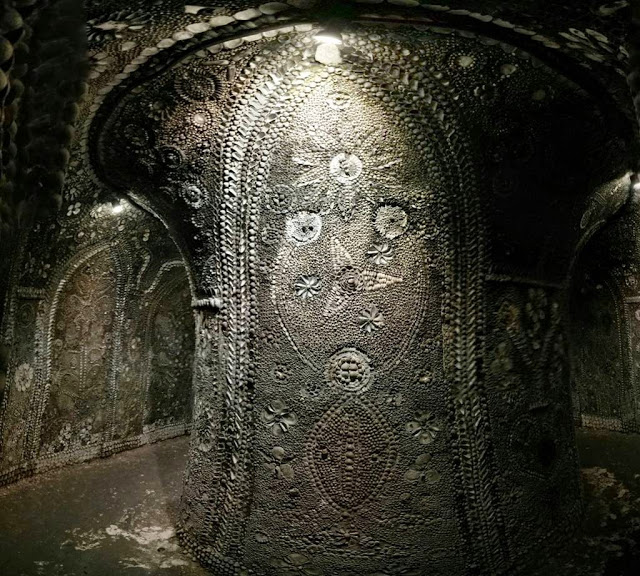
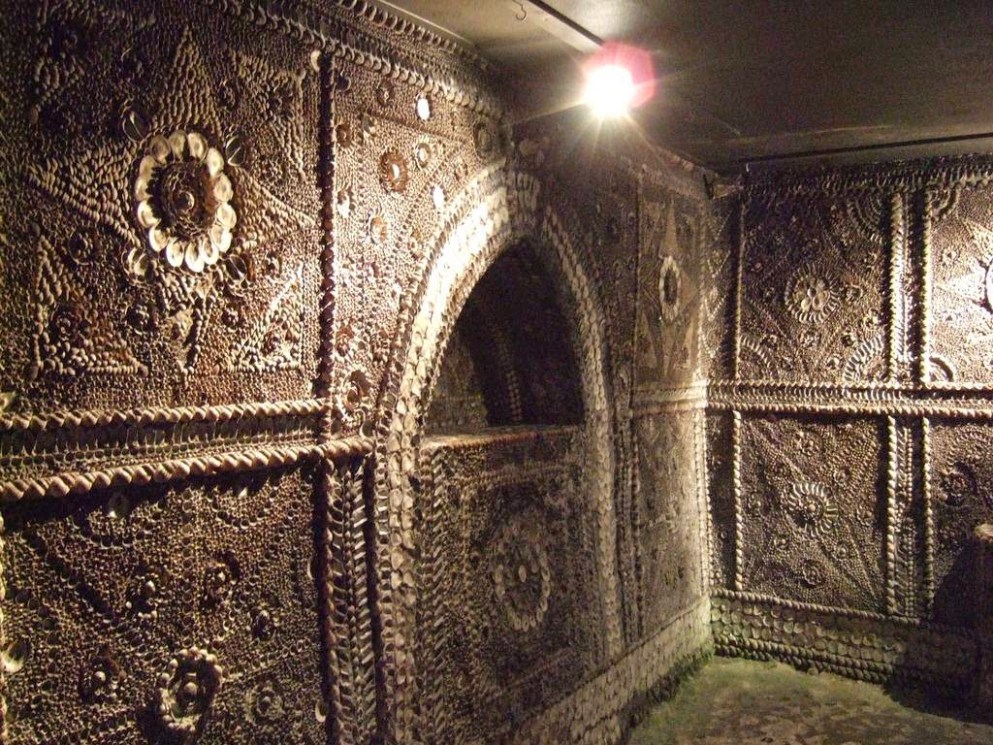
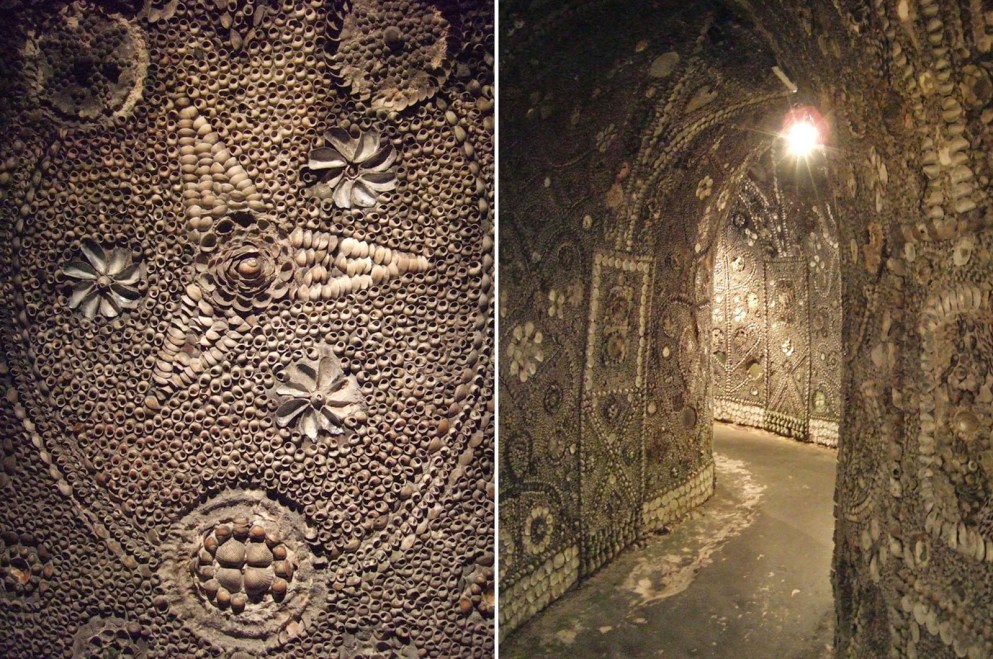
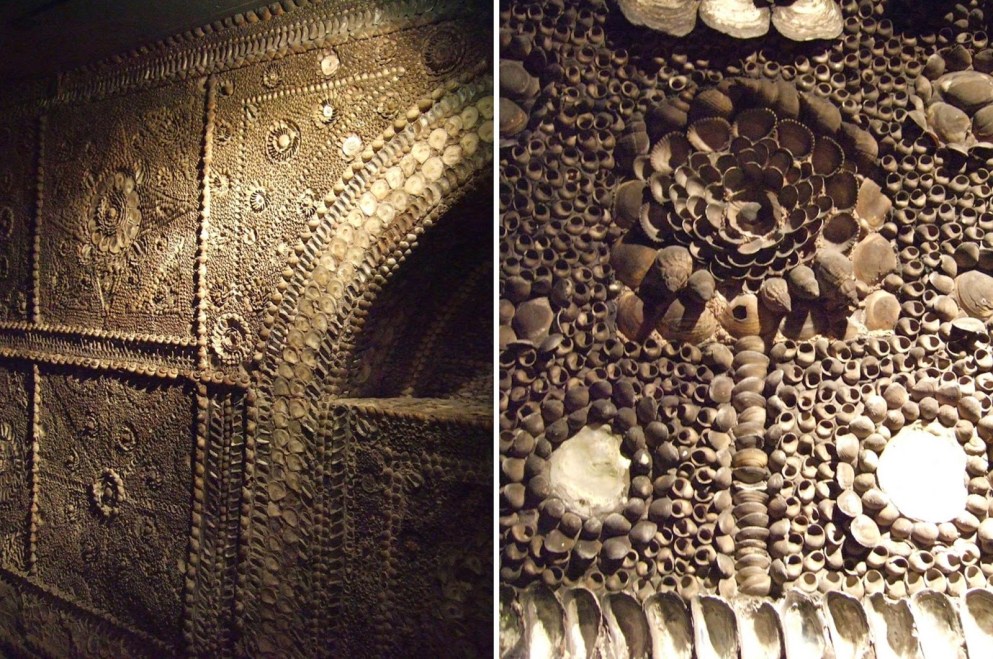
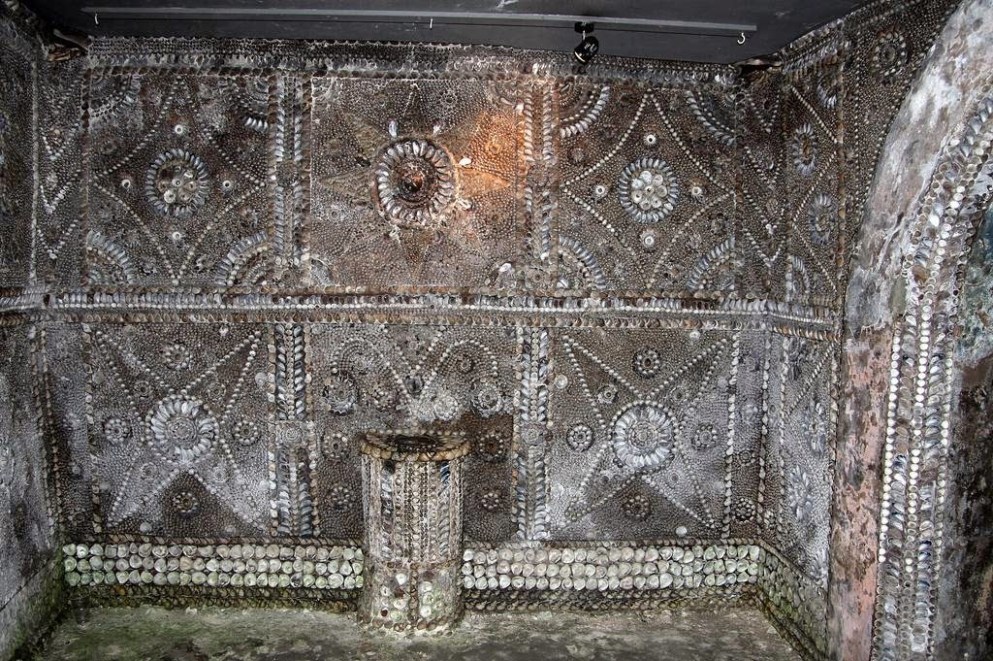
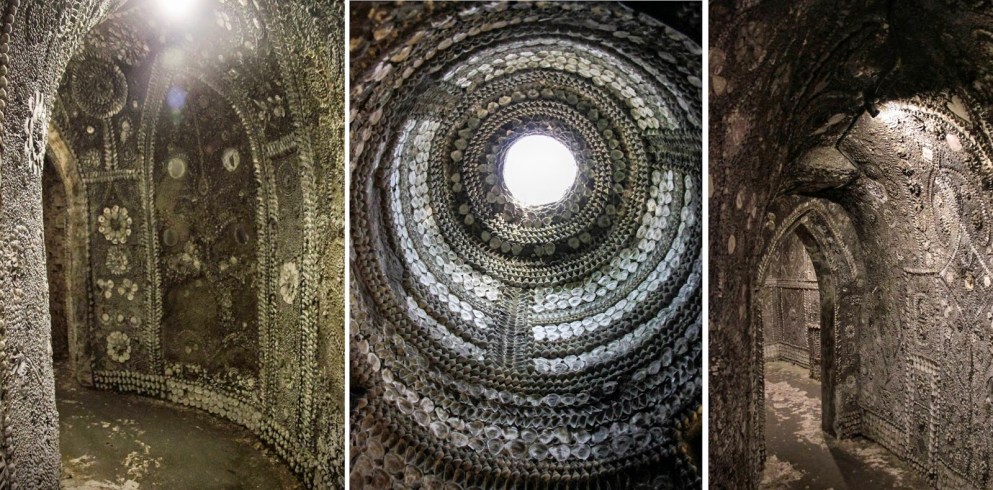
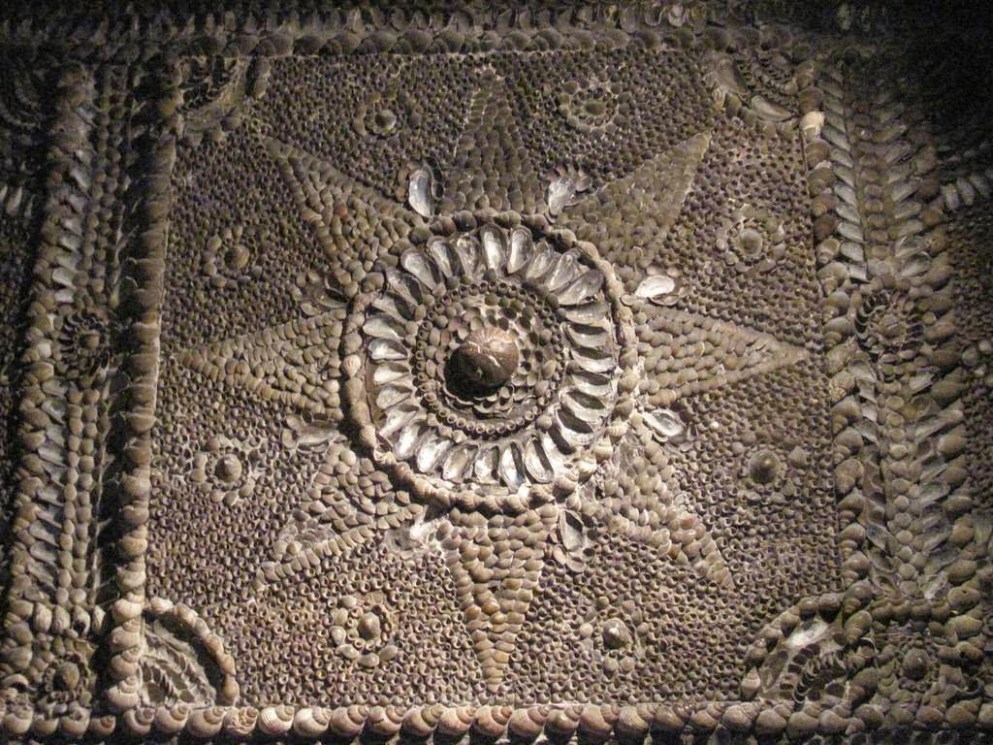
In 1835 a labourer was digging a field just outside the English seaside town of Margate.  His work was interrupted when he thrust his spade in to the soil and it simply vanished in to the ground.  The master of the nearby Dane House School, James Newlove, was made aware of this strange disappearance.  He volunteered his young son, Joshua, for the task of being lowered, candle in hand, in to the void via a length of rope

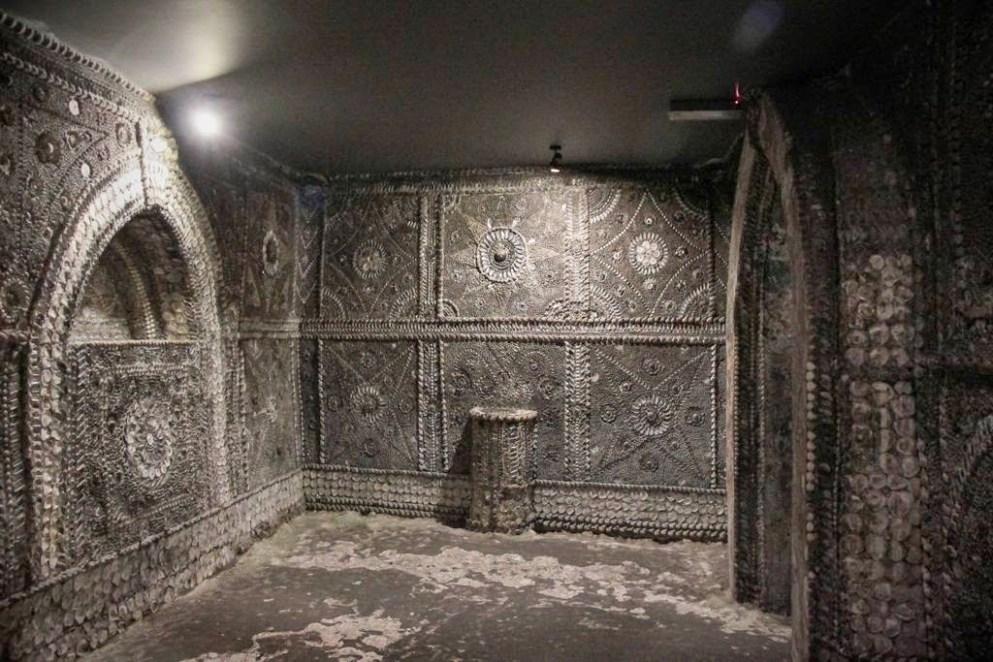
Regardless of our modern sensibilities about the health and safety of children, when Joshua was pulled back to the surface his wide-eyed tale astonished everyone. He told of a magical temple adorned in shells, hundreds, thousands… millions of them.  All told, 4.6 million.

Image Credit DeadManJones

Image Credit Krondol
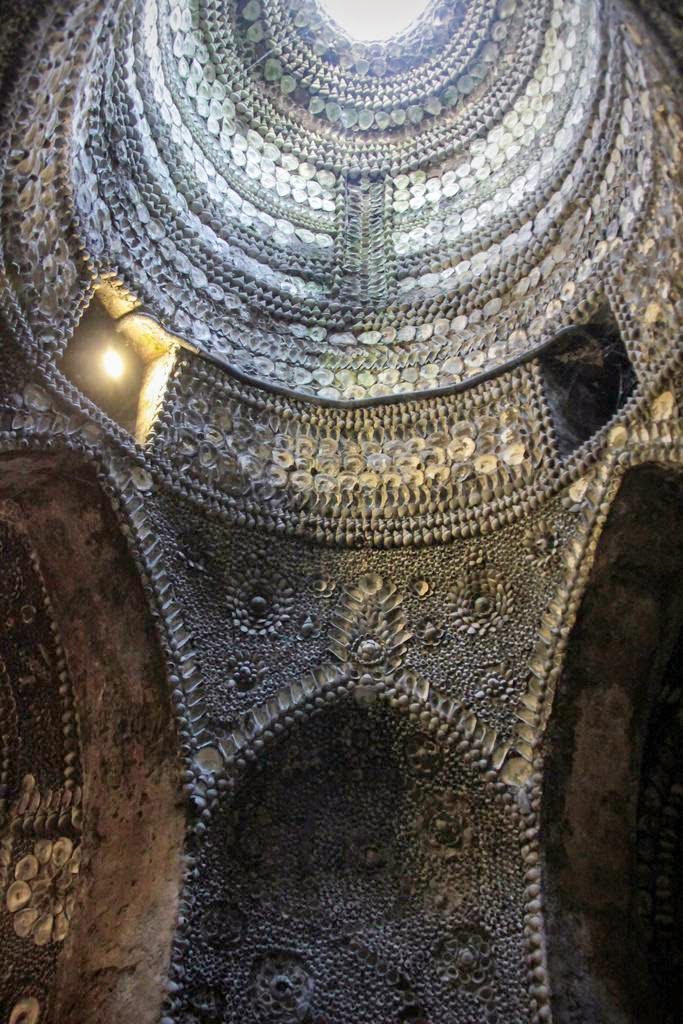
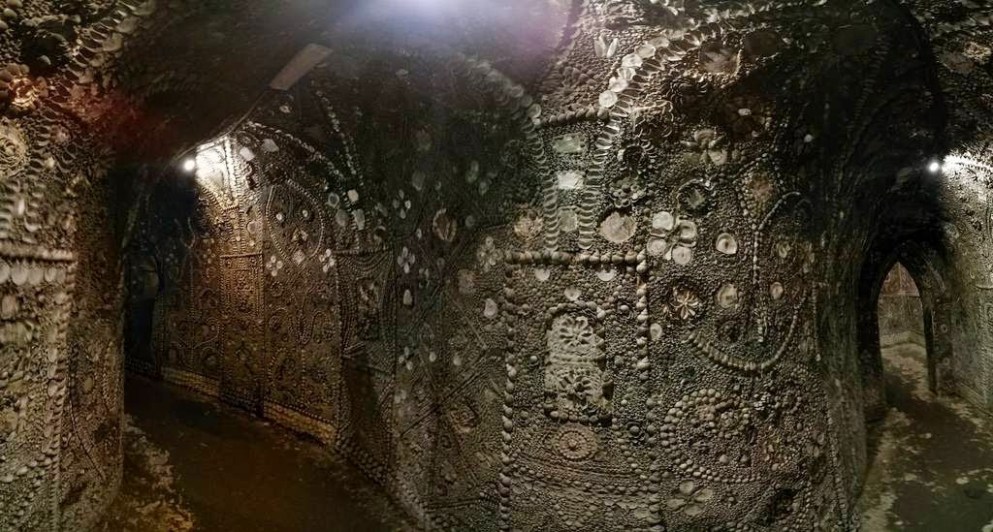
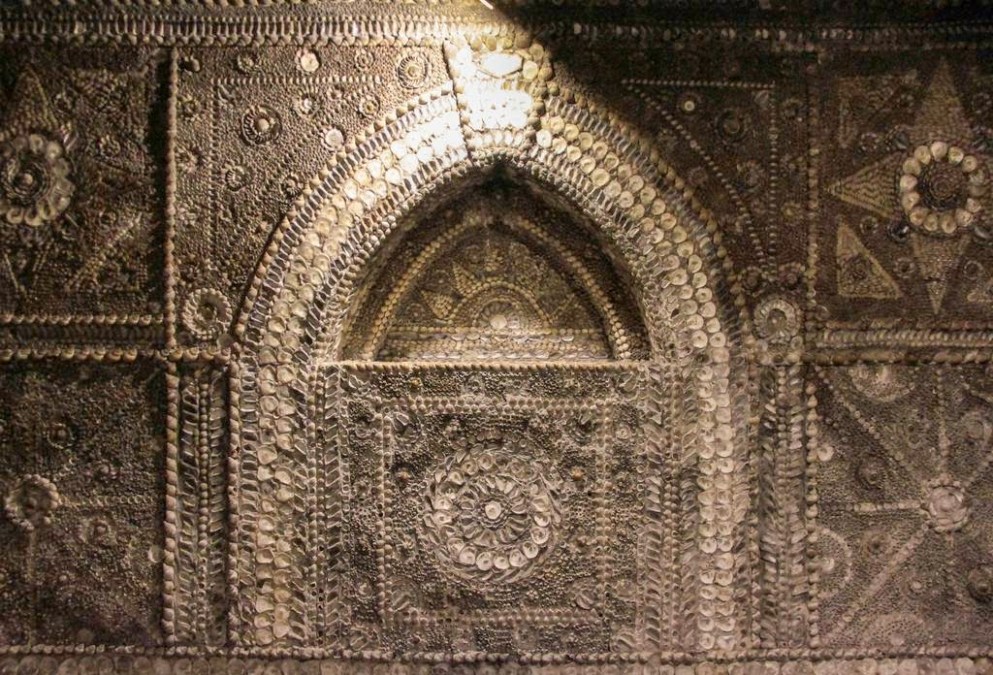
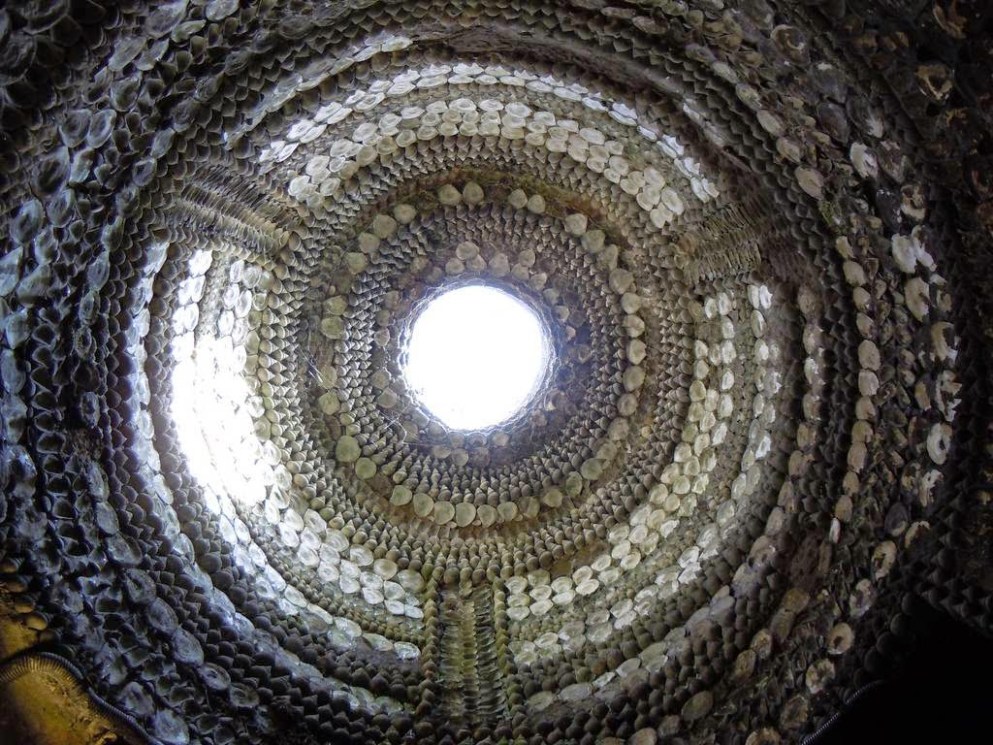
Joshua’s tale was nowhere near as tall as people may have at first imagined.  When the hole was widened enough for adults to enter they too witnessed the wondrous contents of the winding subterranean passageway, complete with an altar chamber and rotunda.  Newlove senior, a canny schoolmaster if ever there was one, was first to consider the financial benefits such a discovery might reap.  He hurriedly purchased the land above the mysterious chamber and began to adapt it so that visitors might enter – for a small charge of course. In 1837, just two years after its discovery, the grotto opened to a curious public.  Yet to this day debate rages (in a very English way, of course, involving polite discussion over tea and cucumber sandwiches) about it origins.

Image Credit Ben Sutherland
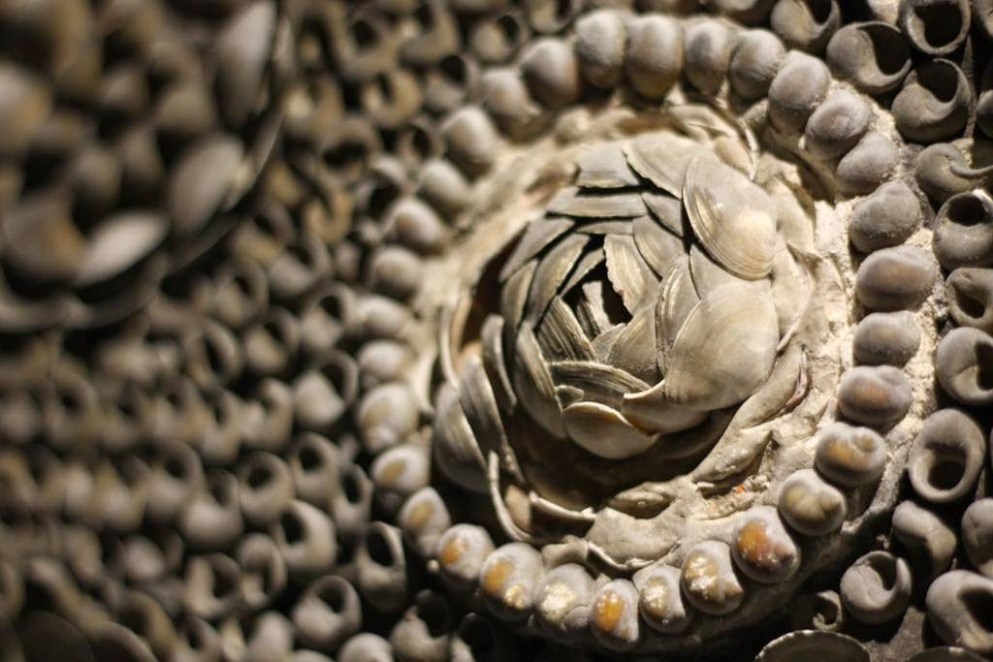
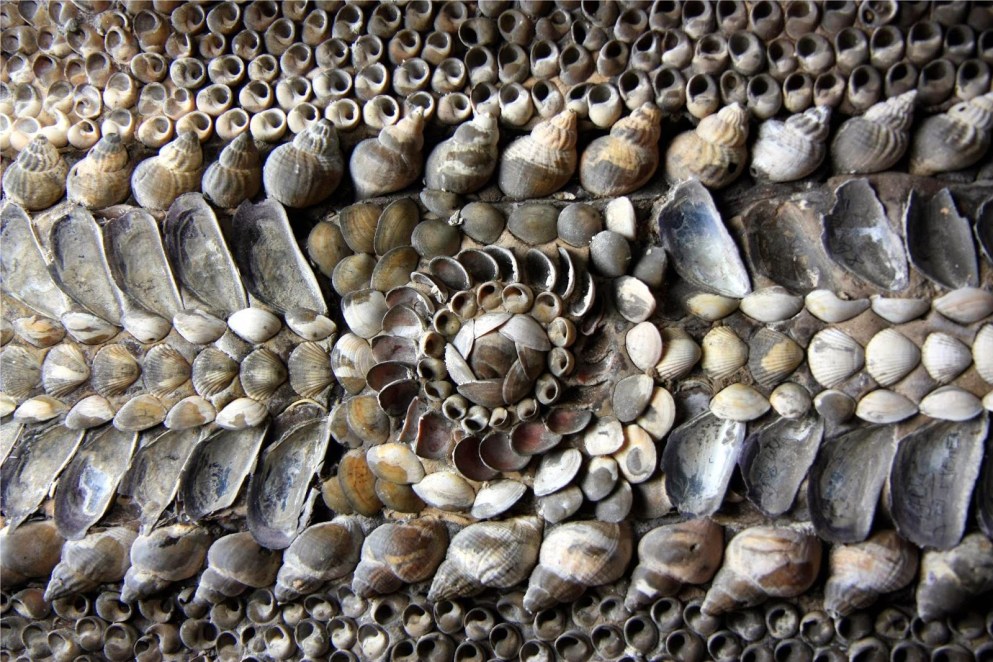
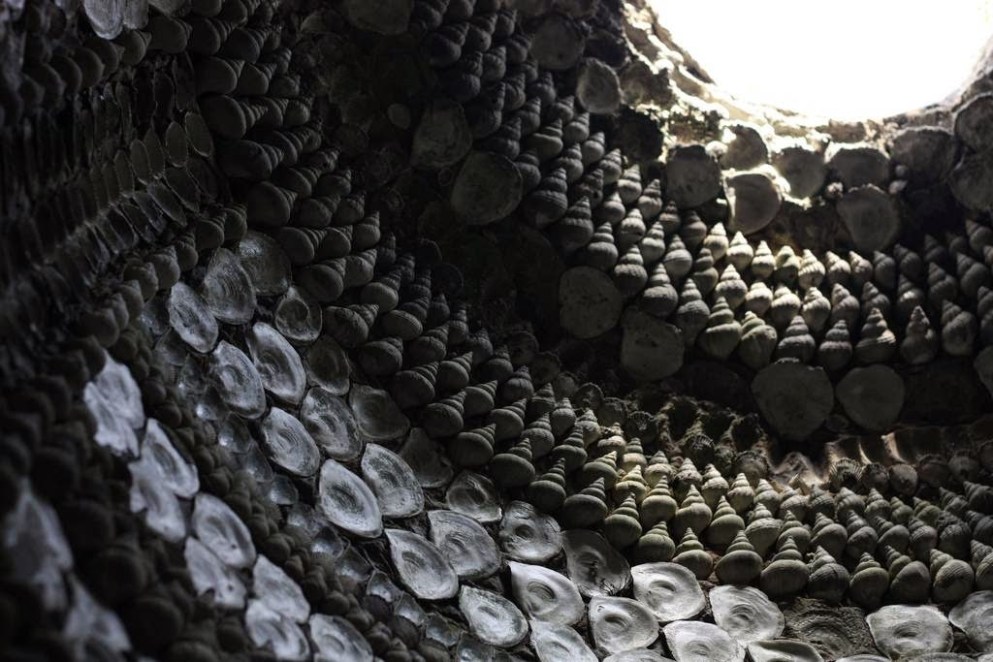
How it came to be originally built remains unexplained.  However, the 2000 square feet of mosaics, created from mussel, cockle, whelk and oyster shells have provoked a multitude of explanations none of which have been confirmed with any total surety.

Image Credut Ben Sutherland
Shell grottoes of this type were extremely popular in the Europe of the 1700s. Many suppose that this was the result of a local bigwig embarking on the Grand Tour and returning with a desire to recreate a highlight of his or her European expedition.  Yet although this is not without the realms of possibility, the land above the grotto never formed part of any large estate, which is where you would expect such an extravagance to be positioned – close enough to the big house to easily chaperone curious guests to its confines. These visitors would be impressed both by the owner’s wealth and aesthetics because, frankly, this kind of thing was built to do both.

Image Credit Kotomi

Image Credit Simon Lee
Moreover, had the grotto been built in the 1700s then there would have been some vestigial local memory (or legend) of its construction.  In order to get millions of shells in to this underground passage many local people would have to have been involved in their transport.  Yet the discovery in 1835 was a surprise to all – no one stepped forward with any explanation.

Image Credit Ben Sutherland
It has been suggested that the grotto was a smuggler’s cave – almost all the shells are British and so it could have been a hideaway made by locals for stolen and contraband goods.  Yet this idea doesn’t hold much water either. Although near to the sea, the waves remain stubbornly a number of miles away and there are no tunnels from coast to ‘cave’. Plus with a distinct lack of an escape route any smuggler would have been mad to hide their booty here – not to mention the fact that they would have had to spend more of their time decorating the place than doing any actual smuggling. So, it’s a no to that theory as well.

Image Credit Krondol

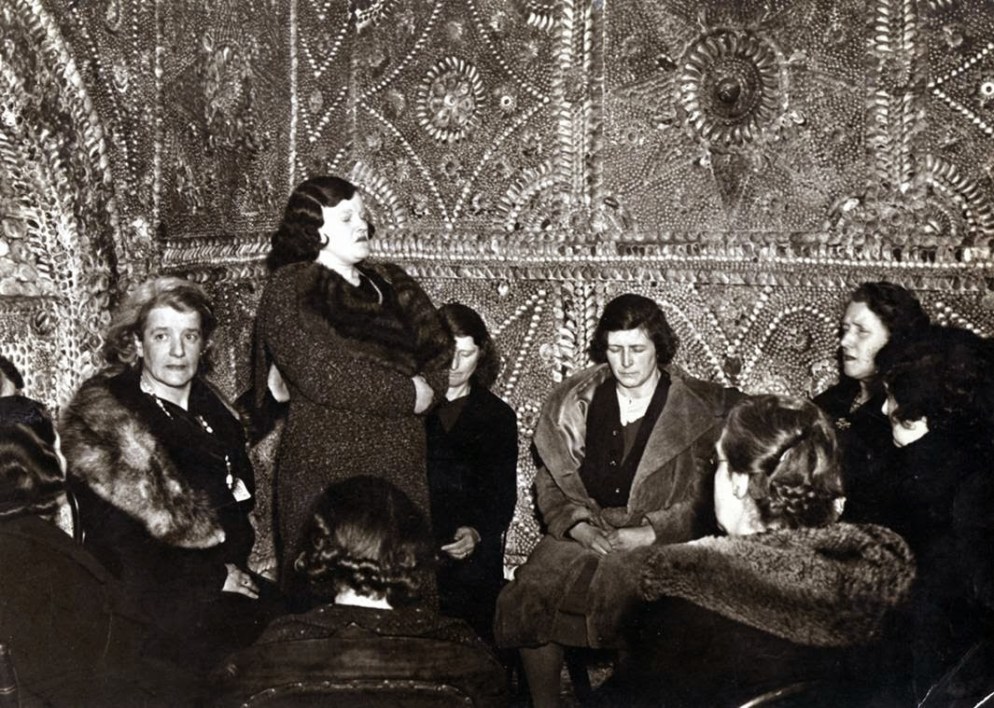
Could it be a Roman temple?  A remnant of dark-age rituals?  A prehistoric astronomical calendar? Make up a theory and it could well be feasible – and many have.  There have even been séances held in the grotto to try and contact the spirits of the builders, such as the one from the 1930s above.

Image Credit John C Bullas

Image Credit Feribrulu
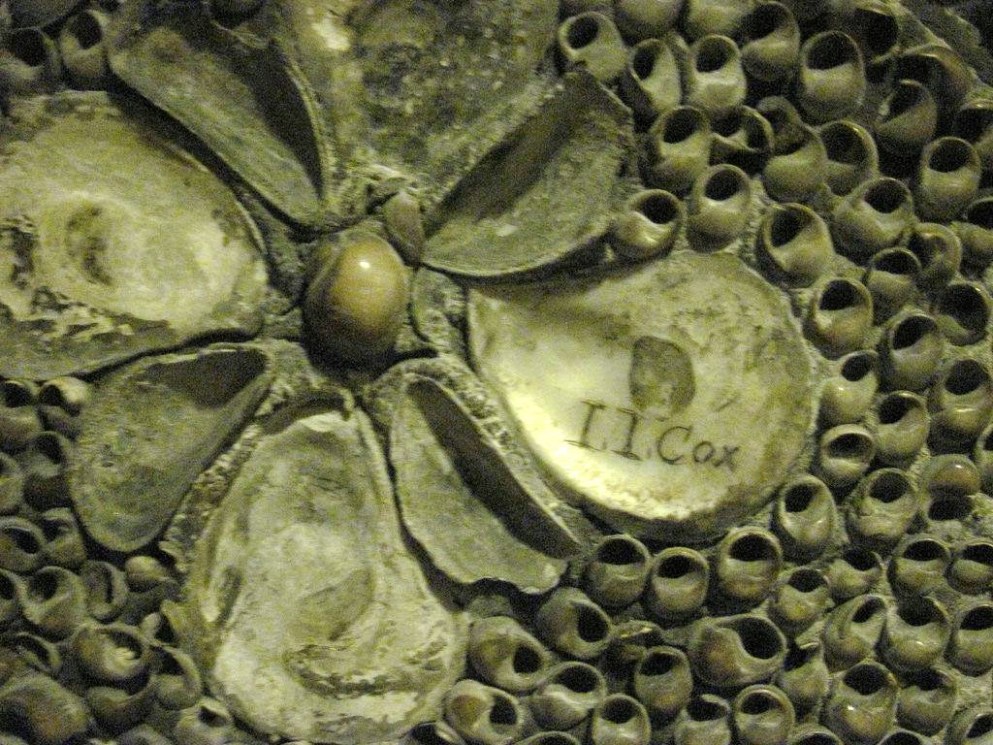
A number of the shells have been vandalised over the years by visitors.  Even though this is difficult to condone it adds an extra layer of history to the place.

Image Credit Kotomi

 
Image Credit Mr Moss
The latest research which took place in 2006 points towards an explanation which might please Indiana Jones fans.  Mick Twyman of the Margate Historical Society put forward the suggestion that the grotto was built by the Knights Templar or their associates sometime in the middle 1100s.  He has suggested this after a painstaking measurement of angles inside the grotto (a temple now, perhaps?) and the way that the sunlight is projected in to the inside of the dome.   The altar chamber certainly looks the part of an early temple for masonic rituals. Yet this kind of theory, unlike its scientific namesake, isn’t proof – just conjecture however sensible and enlightened.

Image Credit Simon Lee
Why not get the shells carbon-dated?  This is certainly a possibility for the current owner (the grotto has always been in private hands although recent restoration work has been done in partnership with English Heritage, the charity that looks after the National Heritage Collection of the country).  However, this has been advised against for a number of reasons.  First and foremost quite a number of shell samples would be needed to ensure that dating caught the earliest shells and not just those used in previous (unknown) restoration work over the centuries.  Secondly it’s expensive and money needs to be more urgently spent on conservation rather than speculative investigation, however scientific and potentially illuminating.

Image Credit Feribrilu

Image Credit Kotomi
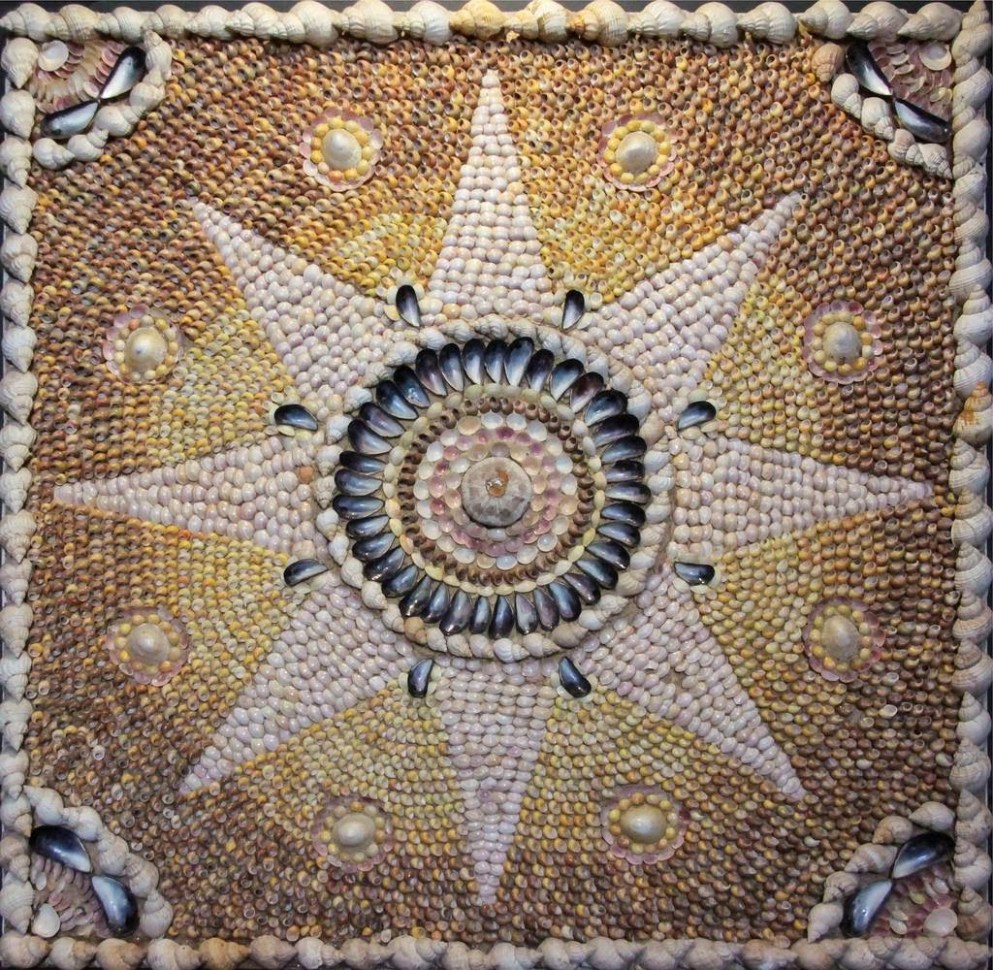
How did the shells look before the decades of gas-lit exhibition and when water damage had not bleached them? A modern recreation of a panel from the grotto shows how it must have dazzled visitors in its heyday.

Image Credit Kotomi
Yet, perhaps it is best to leave well alone in terms of a definitive origin story.  After all, even a secure dating of the oldest shells in the grotto would only establish their age – it would hardly go any further in discovering who built the grotto and why.  Sometimes it’s simply best to allow imagination to flourish and allow visitors to create their own history for this amazing place.

If you want to visit the Margate Shell Grotto, please check out its website for opening times.

Source…….www.kuriositas.com
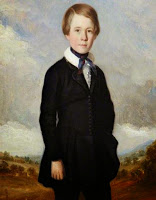
The picture of the c1835 schoolboy is by William McTaggart
First Image Credit DeadManJones


Natarajan

Message for the Day….” When your Heart is filled with Bliss …”

If you are ill or if your mind is pre-occupied , you will not Ienjoy the taste of delicious food. So also if your heart is full of ignorance (tamas) or is straying, no joy will be experienced, even if you are engaged in remembrance of the name (namasmarana), devotional singing (japa), or meditation. The tongue will be sweet as long as there is sugar on it. Likewise if the pillar of light called devotion continues to burn in the corridor of the heart, there will be no darkness. The heart will be illumined in bliss. A bitter thing on the tongue makes your whole tongue bitter; when qualities like greed and anger enter the heart, the brightness disappears, darkness dominates the scene, and one becomes the target of countless griefs and losses. Therefore those who aspire to attain the holy presence of the Lord must acquire certain habits, disciplines, and qualities. You must modify your daily living through spiritual discipline.

Sathya Sai Baba

வானவில் பெண்கள்: “எழுபதுக்குப் பிறகும் சாதிக்கலாம்!”

விளையாட்டுக்கும் வயதுக்கும் சம்பந்தமில்லை என்பதைத் தனது வெற்றிகள் மூலம் நிரூபித்துவருகிறார் எழுபது வயது லட்சுமி லோகநாதன். கோவையைச் சேர்ந்த இவர், சர்வதேச விளையாட்டுப் போட்டிகளில் பங்கேற்று பதக்கங்களைக் குவித்துவருகிறார்.

உள்ளூர் முதல் ஒலிம்பிக் வரை

கோவை ஹோப் காலேஜ் ஸ்ரீநகரில் இருக்கும் லட்சுமியின் வீடு முழுக்க பதக்கங்களும் கோப்பைகளும் நிரம்பிவழிகின்றன. மூத்தோர் தடகளப் போட்டிகளில் ஓட்டப் பந்தயம், உயரம் தாண்டுதல், போல்வால்ட் ஆகிய விளையாட்டுகள் எங்கு நடந்தாலும் அங்கே லட்சுமியைப் பார்க்கலாம். பங்கேற்கும் போட்டிகள் அனைத்திலும் பதக்கங்கள் வெல்வது இவரது சிறப்பு.

கடந்த 2003-ம் ஆண்டு தொடங்கியது இவரது இந்தத் தடகளப் பயணம். கடந்த 13 ஆண்டுகளில் மாவட்டம், மாநிலம், தேசிய மற்றும் சர்வதேசப் போட்டிகளில் பங்கேற்று 83 பதக்கங்களை வசப்படுத்தியுள்ளார். குறிப்பாக, கடந்த 2004 முதல் 2014-ம் ஆண்டுவரை நடந்த ஆறு ஆசிய விளையாட்டுப் போட்டிகளில் பங்கேற்றுத் தொடர்ச்சியாக 16 பதக்கங்களை வென்றுள்ளார். இதில், ஆறு தங்கப் பதக்கங்களும், மூன்று வெள்ளிப் பதக்கங்களும், ஏழு வெண்கலப் பதக்கங்களும் அடங்கும். இதைவிட கூடுதல் சிறப்பாக, 2009-ம் ஆண்டு பின்லாந்தில் நடைபெற்ற உலக மூத்தோர் ஒலிம்பிக் போட்டியில் கழியூன்றித் தாண்டுதல் (போல்வால்ட்) போட்டியில் வெண்கலப் பதக்கம் வென்றுள்ளார்.

பயிற்சிக்காக தினமும் இரண்டு மணி நேரத்தை ஒதுக்கிவிடும் லட்சுமி, இத்தனை வெற்றிக்கும் முக்கியமான காரணம் தனது கணவர் லோகநாதன் என்பதைச் சுட்டிக்காட்டுகிறார்.

துணை நிற்கும் துணை

“கோவை வெள்ளலூர்தான் சொந்த ஊர். திருமணத்தின்போது பி.யு.சி. வரை மட்டுமே படித்திருந்தேன். அது 1965 காலகட்டம். திருமணம் முடிந்ததும் என்னை வீட்டிலேயே முடக்கிவிட எனது கணவர் விரும்பவில்லை. எனக்கு சிறு வயதில் இருந்தே விளையாட்டில் ஆர்வம் இருந்ததை அறிந்துகொண்ட அவர், உடற்கல்வி ஆசிரியர் பயிற்சி வகுப்பில் என்னைச் சேர்த்தார்.

அதை முடித்தவுடன் சில ஆண்டுகளில் அரசு பள்ளியில் உடற்கல்வி ஆசிரியர் பணி கிடைத்தது. பணிக் காலத்தில் தடகளப் போட்டிகள் எதிலும் பங்கு கொள்ளவில்லை. ஆனால், நிறைய விளையாட்டு வீரர்களை உருவாக்கியுள்ளேன்” என்று சொல்லும் லட்சுமி, கடந்த 2001-ம் ஆண்டு விருப்ப ஓய்வில் பணியை விட்டு விலகினார். அதன் பிறகு இரண்டு ஆண்டுகள் வீட்டில் இருந்தார். இவரது கணவர் லோகநாதனும் ஓட்டப் பந்தயம், ஈட்டி எறிதல் ஆகிய போட்டிகளில் ஆர்வம் கொண்டவர்.

“வீட்ல சும்மா இருப்பதற்கு பதிலாக ஏதாவது ஒரு விளையாட்டில் கலந்து கொள், பதக்கம்கூட முக்கியமில்லை என்று சொல்லி என்னை அவர் அழைத்துச் சென்றார். அவருடன் சென்று ஓட்டப் பந்தயத்தில் கலந்துகொண்டு பதக்கங்களை வென்றேன். அதுதான் எனது வாழ்வின் திருப்பு முனையாக அமைந்தது. அந்த போட்டியைத் தொடர்ந்து மாநிலப் போட்டிக்கு தகுதி பெற்றேன். பின்னர், தேசியப் போட்டிகளில் வெற்றி பெற்று முதல் முறையாக 2004-ம் ஆண்டு பாங்காக்கில் நடந்த ஆசிய போட்டிக்குள் நுழைந்தேன்” என்று சொல்கிறார் லட்சுமி லோகநாதன்.

யோகா பயிற்சியில் பெரும்பாலான ஆசனங்களையும் எளிதாகச் செய்யும் இவர், சமையலிலும் கலக்குகிறார். ஆறு ஆண்டுகளாக முயற்சித்து, கடந்த டிசம்பர் மாதம் உடற்கல்வி மற்றும் யோகா பயிற்சி என்ற பாடப்பிரிவில் பி.எச்டி. முடித்துள்ளார். எம்.ஏ., எம்.பி.எட்., பி.எட்., எம்.ஃபில்., பி.எச்டி., என இவரது கல்வித் தகுதி நீள்கிறது. பல்வேறு விஷயங்களில் சிறப்பாகச் செயல்படுவதற்கு நேர மேலாண்மையே கைகொடுக்கிறது என்கிறார் லட்சுமி.

சாதனைகள் சாத்தியமே

இத்தனை உயரத்தை இவர் மிக எளிதில் எட்டிப்பிடித்துவிடவில்லை. மூத்தோர் தடகளப் பிரிவில் 2011-ம் ஆண்டு சண்டீகரில் உயரம் தாண்டுதல் போட்டியில் பங்கேற்றபோது வலது முழங்காலில் எலும்பு முறிவு ஏற்பட்டு, ஓர் ஆண்டுவரை நடக்க முடியாத நிலை ஏற்பட்டது. விளையாட்டுக்கு முழுக்குப் போட்டுவிடுமாறு மருத்துவர்கள் எச்சரித்த பிறகும் தன்னம்பிக்கையைத் தளரவிடவில்லை. கடுமையான போராட்டத்துக்குப் பிறகு அதிலிருந்து மீண்டு வந்தார். சர்வதேசப் போட்டிகளில் கலந்துகொள்ளும்போது ஆகும் செலவுதான் பெரிய இடையூறாக இருக்கிறது என்றும் அவர் குறிப்பிடுகிறார்.

“போக்குவரத்துச் செலவை நாங்கள்தான் சமாளித்துக்கொள்ள வேண்டும். போட்டியில் பதக்கம் வென்றால் மட்டும் அரசு சார்பில் 30 ஆயிரம் ரூபாய் ஊக்கத்தொகை வழங்கப்படும். ஆனால், வெளிநாடுகளுக்குச் சென்றுவிட்டு திரும்பினால் குறைந்தபட்சம் 2 லட்சம்வரை ஆகிறது. இதைவிட, அந்த நாடுகளில் உள்ள சீதோஷ்ண நிலை எங்களை வாட்டி வதைத்துவிடும். பின்லாந்து உலகப் போட்டியில் கலந்து கொண்டபோது அங்கு 6 மாதம் தொடர்ச்சியாக, பகல் மட்டுமே இருந்த காலம்.

அந்த சீதோஷ்ண நிலையை 20 நாட்கள் எதிர்கொள்வதற்கு எனது தள்ளாத வயதில் மிகவும் சிரமப்பட்டேன்” என்று வெளிநாட்டுப் பயணம் சார்ந்த தன் அனுபவங்களைப் பகிர்ந்துகொள்ளும் லட்சுமிக்கு சைவ உணவு கிடைப்பதிலும் சிக்கல் ஏற்பட்டதாம்.

“எத்தனை கஷ்டம் இருந்தாலும் பதக்கம் வெல்கிற அந்த நொடி, அத்தனை துயரங்களையும் மறக்கடித்துவிடுகிறது” என்று கை உயர்த்திப் புன்னகைக்கிறார் லட்சுமி.

Source…..ம. சரவணன் in http://www.tamil.thehindu.com

Natarajan

Message for the Day…..”The Right Attitude to March Forward to attain the Presence of God …”

Sathya Sai Baba

A farmer clears and levels the land, removes the stones and thorns, ploughs and prepares the field, manures and strengthens the soil, waters and fertilizes it. Then after sowing, transplanting, weeding, spraying, and waiting, he reaps the crop. After winnowing and threshing, he stacks the corn. All these various processes are for the sake of feeding the stomach. So too one must feel that all hunger and thirst, joy and sorrow, grief and loss, suffering and anger, food and appetite are but impulses that help us march forward to attain the Presence of the Lord. When you have this attitude, sin will never tarnish any of your activities. Your appetite for hunger and material desires will also vanish, without a vestige of name or form. On the other hand, if you treat the appetites as more important, you will be sure to earn only sorrow, not joy. It will be impossible to acquire peace.

Children in Rural India Have Found a New Way to Travel the World. And It’s Heartwarming…

With the motto ‘Inform, Communicate & Empower!’, New Delhi-based organisation Digital Empowerment Foundation (DEF) finds sustainable ICT solutions for marginalised communities to overcome information poverty and enable better access to benefits and rights in rural India.

Udita Chaturvedi witnessed a positive change in Rajasthan’s villages. Parents and children are embracing computer literacy. Read about her experiences.

Last month, I was in Alwar district of Rajasthan (Alwar is about 160 km from Delhi), accompanying two foreign nationals who’re shooting for a film in India.  They are documenting how lives are changing in this country due to digital literacy.

While the filmmakers were busy shooting in a Community Information Resource Centre (CIRC), established byDigital Empowerment Foundation (DEF) to promote digital literacy and social awareness, I was sitting among some mothers and their children, discussing their lives and understanding the difficulties they face.

It was during this conversation that I learnt that most of the mothers in Mungaska, a slum-like locality in Alwar, are either illiterate or school dropouts. While they chose not to study or were forced to drop out of school, they all wanted proper education for their children.

Meena is the mother of an extremely talented eight-year-old boy. The boy, Aman, is born into a family of professional bhapang players and is, in fact, the youngest bhapang player himself — he started learning at the age of three!

Eight-year-old Aman is the youngest bhapang player in the village. Photo source: Udita Chaturvedi

Eight-year-old Aman is the youngest bhapang player in the village. Photo: Udita Chaturvedi

Aman, his elder brother, and sister are the first school-going generation of the family. While several efforts are being made by the family to ensure that bhapang doesn’t prove to be a dying art, it is not the reason the younger generation is attending school. The reason is that Meena believes, “Education can make or break a person, but mostly make.”

Aman’s mother only studied till class 5, because, back then, there was no school in Mungaska for students who wanted to study beyond class 5. “Education is important for everything today. Whether you want to use a computer or get a government job, school education has become a must,” says Meena.

But what made her realise this?

“I have seen smart children grow up, playing in the lanes of our colony. There’s nothing wrong in playing. In fact, I encourage Aman to play after school. But I’ve seen those smart children grow into useless 20-year-olds as well. They still play cricket in the lanes all day long and live off their father’s income. What will they do when their father is no more? How will they feed their wife or children?” she questions.

Meena is very sure she wants Aman to study, and not just till class 12. She wants him to go to college. At the same time, she doesn’t want Aman to give up on his musical talents. In fact, she believes Aman will be able to take their family’s music to a wider audience around the globe, if he’s well educated and digitally literate.

“He can do so much with the Internet,” she says.

Rimpy, a young mother of three children — two girls and a boy, has similar views. Rimpy never went to school because she “wasn’t interested in studying”. However, when her children give her the same excuse in the morning, they’re scolded and pushed out of the house.

“Education makes people independent. It helps them get a job, or even fight society. I know my life could have been very different had I been to school. If nothing else, I could have at least brought in some extra income into the house. Maybe my family would even listen to my opinions more,” she says.

Rimpy, a mother of three, believes education can make a person independent. Photo: Udita Chaturvedi

Rimpy is a housewife. One of her friends studied till class 12 and got married. However, a year later her husband died and she returned to her parents’ house in Mungaska. Here, she enrolled at a CIRC, established by DEF, and took computer lessons. Rimpy wishes she had been to school too, because learning computers at the age of 30, with no education at all, was far more difficult than she had imagined. While her widow friend aced, she lagged behind. Now, Rimpy doesn’t want her children to face a similar fate.

“School education is as important as computer training. In fact, all schools should also teach children how to use computers,” she says.

There are many others like Meena and Rimpy who understand the value of education — both traditional and digital — because they themselves have been deprived of it for some reason or the other.

In today’s time, where knowledge of computers has become crucial, English has become an aspirational language and a degree has become mandatory for jobs. It is silly to not go to school or learn computers, believes Rafia, the mother of a nine-year-old girl. “Even Modi (Indian Prime Minister Narendra Modi) wants the youngsters to learn computers today,” she adds.

However, I would be lying if I say that every child in Mungaska understands the importance of education. While a lot of them enjoy going to school or learning computers in a group at the CIRC, there are some who only attend school because they’re forced by their parents or only because they get to play games or use Google Search after an hour of practicing on Microsoft Office.

Google Search, in fact, seemed like the second favourite — after Facebook, of course — feature of the Internet for most children.

Aman uses Google Search to travel, though his travel has been restricted to Alwar and Delhi so far. He says, “The day before, I searched for Qutub Minar on Google after I read about it in my school textbook. Do you know how tall it is? It’s 240 feet tall.” He was right, I cross-checked on the Internet.

The story was no different in Chandauli village where Sahil was coincidentally looking up the Taj Mahal, when I entered the CIRC there.

When I asked him what he was doing, he replied, “People from America come to India to see the Taj Mahal, so I wanted to see it too. But I can’t travel to Agra, it’s very far. So I am looking it up on Google.”

A student explores the Taj Mahal through Google Images. Photo: Udita Chaturvedi

Sahil showed me at least a dozen different pictures of Taj Mahal, each from a different angle. By the time he finished, he had inspired other children at the centre to look up some city or the other. Somebody used Google Search to travel to Agra while another travelled to Jaipur.

A kid even asked Will, one of the filmmakers in our group, where he was from and then looked up “America”. But he soon lost interest and searched for the Red Fort in Delhi instead.

The visit to Alwar gave me a whole new perspective about how these CIRCs are impacting society. It’s not just about digital literacy and learning how to operate Microsoft Office tools, but so much more. DEF has eight CIRCs in as many villages of Alwar district (and a total of 150 across 23 Indian states) where the poorest of the poor spend their time learning computers, playing with the Internet, and utilising various digital tools. It is interesting how these digital resource centers are making children, youth — both, boys and girls — and their families look at education in a non-traditional manner.

At these centers, the locals, who had never stepped out of their village, are now travelling to various parts of the country and the world, and learning about things that they had only heard of. These villagers, who are first-time learners of digital tools, are not just learning but are also teaching us that a connected digital device is just not a tool for digital literacy, but a tool that impacts them socially, behaviourally, economically and perhaps even responsibly.

Featured image source: Facebook

Source…….About the author: Udita Chaturvedi is a former journalist who now works with Digital Empowerment Foundation and writes stories of impact in the areas of digital literacy,education, and women empowerment. She can be reached atudita@defindia.org or through her Twitter handle @uditachaturvedi.    .www.the betterindia.com

Natarajan

IN PICTURES: An Indian Artist Portrays Train Engines in a Way They Were Never Seen Before!

Kishore Pratim Biswas used to live near a locomotive workshop in Kolkata when he was a child. It was very easy for one to spot steam locomotives every now and then, and as an enthusiastic 5-year-old kid, he loved to run out and watch them go. He would then come back home and sketch what he saw. A giant locomotive surrounded by steam – the aura of that picturesque scene attracted him tremendously, and inspires him even today. The firemen and drivers at the workshop became his friends, and they would usually gather around to look at his sketches. He remembers listening to their stories and trying to sketch all their emotions on a piece of paper.

Today, 42-year-old Kishore has his art studio in Mumbai and he is working on a series of paintings based on this memory. He calls the series the ‘Nostalgia of Steam Locomotives’. He graduated in Fine Arts from Government College of Art & Craft, Kolkata, spent a few years in his hometown, and then moved to Mumbai in 2009.

In spite of all the years that have passed, the nostalgia still lingers on. Have a look at these incredible sketches to understand his bond with locomotives.

kishor10

kishor9


kishor8

kishor7

kishor6

kishor5

kishor3

kishor1


Source………Tanaya Singh in http://www.the betterindia.com

Natarajan

Kolkata Girl Makes It to Forbes 30 Under 30 List for Developing Pathbreaking Underwater Drones…

28-year-old Sampriti Bhattacharyya, a PhD scholar from Massachusetts Institute of Technology, has designed an underwater drone that can map ocean floors at places where GPS does not work. She is the founder of Hydroswarm – a startup that designs and markets small, autonomous drones for ocean exploration and maritime big data. These drones are shaped like an egg and are roughly the size of a football.

Sampriti, who hails from Kolkata, has been featured among Forbes’ top 30 most powerful young change agents of the world.


drone

She pursued engineering from St. Thomas’ College of Engineering & Technology in Kolkata and then went to Ohio State University to study aerospace engineering. She later switched to robotics at MIT.

The absence of any easy way to study ocean floors inspired her to create an underwater robot. As of now, remotely operated autonomous underwater vehicles (AUV) are used to explore the deep sea. They are deployed for missions like studying oil spills, environmental monitoring, search operations, etc. But AUVs are very costly and mission-oriented. They are not used to study the ocean on a day-to-day basis to understand the underwater environment better.

This is what Sampriti wants to change with Hydroswarm, by developing drones that can roam the oceans and collect data all the time.

drone1

“Underwater navigation has been a reality for many years but for advanced searches you need maps that are as refined as, say, the Google map. This is where my drone comes in. It can map the ocean, sitting on its bed, and you can zero in on the minutest objects, living or non-living. You can even map underwater pollution with the help of his drone,” she told The Times of India when she was in Kolkata for some time recently.

These drones can withstand the immense pressure in deep oceans, can cover up to 100 square meters in one hour, and can swim across the ocean floors mapping the topography, studying aquatic life, etc.

To commercialize her drone by starting a company, Sampriti joined a business programme at Harvard Business School. She was one of the top eight contenders to reach the finals of MIT $100K Entrepreneurship Competition, winning $15,000.

All pictures: Twitter

Source……..Tanaya Singh in http://www.the betterindia.com

Natarajan

Message for the Day……” Discipline Consists of….”

Sathya Sai Baba

You must seek Truth and test it thoroughly with all the canons of reasoning. The discipline consists of: 1) The heroism to observe dharma rigorously (Ojas). 2) Fearless self-control (Tejas). 3) Discarding of all feelings of joy or sorrow with equanimity, due to the peaks and troughs of life. 4) Having unshakable faith in dharma and truth(Sahana). 5) Mental and physical health of the most excellent kind, earned by discipline and celibacy (bala). 6) The desire and ability to speak sweetly and straight, won by the practice of truth and love. 7) Withdrawal of the five senses of wisdom (Jnanendriyas) and the five senses of action (karmendriyas) from vice and sin, and the sublimation of all the senses to serve truth (indriya-moha).8) Victory over Self resulting in acceptance by the world. 9) The destruction of one’s prejudices and the pursuit of truth at all times (dharma). It is essential that all humanity today acknowledges the glory of this universal dharma. You must earnestly pray, “May all this be conferred on me” as found in the ‘Chamakam’ hymn.