Source….www.thehindu.com
Natarajan
Magic shows are always fun to watch. They’re especially entertaining when a story line is involved. What makes this particular magic trick even more unique is the use of technology. Let these identical twins dazzle you with magic.
Source…www.ba-ba mail.com
Natarajan
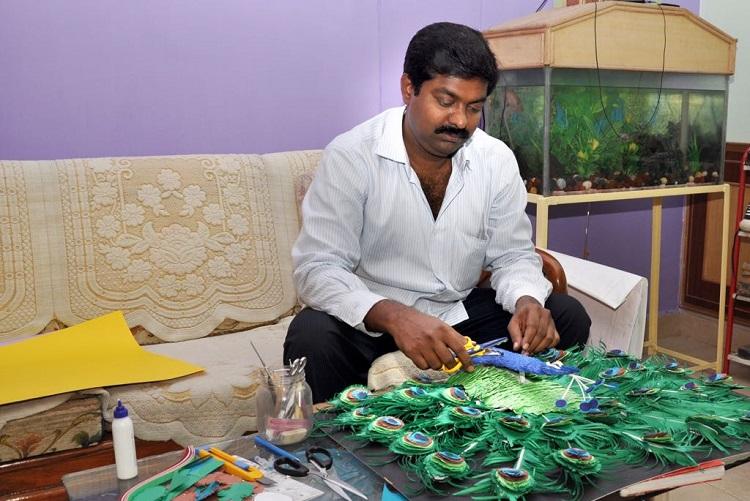
The word sculptor usually brings to mind a man busy chiselling away on metal or plaster, but Moka Satish Kumar, a Visakhapatnam-based artist, plans to change that perception.
Completely self-taught, Satish began with small subjects like birds and insects before gradually moving on to exotic sculptures.
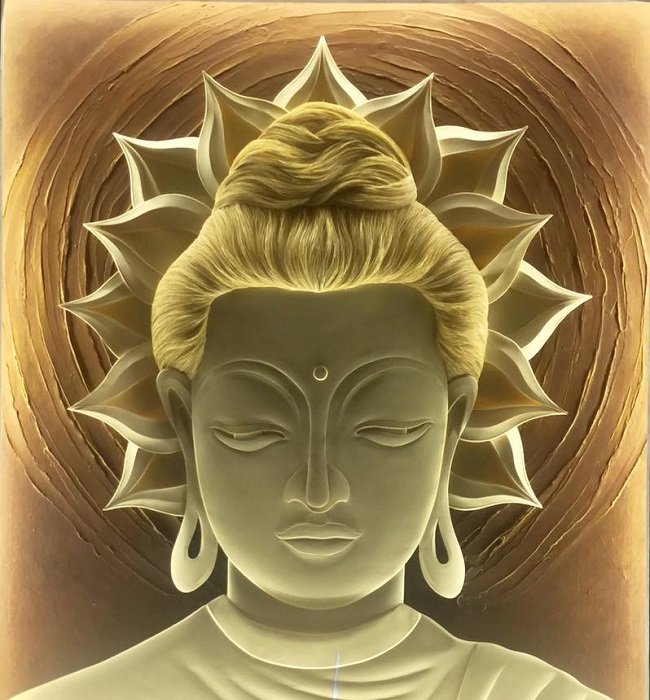
A paper sculptor, Satish is gaining recognition for intricate sculptures carved by him using nothing but paper.
Born, raised and educated in Visakhapatnam, Satish has been sculpting these three-dimensional sculptures for close to 12 years now.
“I come from a commerce background and have no formal training in the arts field. It all started when I began observing paper collages. I was drawn to the subtle way in which light and dark colour paper are assembled to create an image,” says Satish, who used to work in the private sector.
“However, with sculptures, it’s far more realistic as the effect of a shadow is created by the subject itself,” he adds.
Since Satish is completely self-taught, he began with small subjects like birds and insects before gradually moving on to some exotic sculptures. Here are a few examples.


The outline of the art is first drawn on the paper before Satish cuts them out and gets to work. The sculptures are made using a combination of cutting, folding and embossing techniques.
“Embossing is nothing but adding an extra layer on top of a paper to give it a certain finish and 3D effect. For example, the finish you find on wedding cards is from preset designs, which are pressed onto the card,” Satish explains.
“However, I do it manually to ensure that the final product is smooth. The paper should also be handled with care as it is generally a delicate thing,” he adds.
Meticulous effort
Making a sculpture is not easy work, as even a basic 2×2 feet portrait can take up to 250 hours, says Satish.
“The sculptures are also expensive for the same reason. Only those who put in the hard work will understand. No corrections can be made to the art work… even a minor mistake means that the sculptor has to start over again,” Satish says.
While paper sculpting is relatively more common in western countries, very few Indians indulge in the art form. Therefore, Satish has also opened an institute and is presently teaching three students in his workshop.
“I also need labour. I can’t mass produce these sculptures, so I’m working on teaching it to more people. I also plan to approach the Andhra Pradesh government with my work,” he says.
Source…Nitin.B. in http://www.the news minute.com
Natarajan

One of India’s most recognisable and loved mascots, Air India’s portly Maharajah with folded hands has held a special place in the hearts of its citizens for years.
“We can call him the Maharajah for want of a better description. But his blood isn’t blue. He may look like royalty, but he isn’t royal. He is capable of entertaining the Queen of England and splitting a beer with her butler. He is a man of many parts: lover boy, sumo wrestler, pavement artist, vendor of naughty post cards, Capuchin monk, Arab merchant…”
These are the words of Bobby Kooka, the man who conceived Air India’s Maharajah nearly 72 years ago. One of India’s most recognisable and loved mascots, this portly figure in regal garb has held a special place in the hearts of its citizens for years.
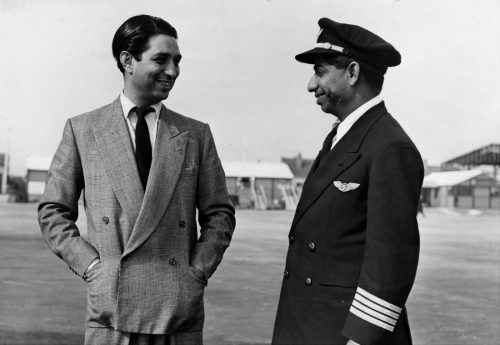
A part of Air India’s campaign to distinguish itself from its peers, the jovial and rotund Maharajah first made his appearance on an in-flight memo pad in the mid-1940s. He was conceived by SK (Bobby) Kooka, who was then a Commercial Director with Air India and sketched by Umesh Rao, an artist at J Walter Thompson in Bombay.
Back then, India was known as the “Land of the Maharajas” and Air India was its only international carrier, flying to destinations such as Cairo, Prague, Damascus, Zurich and Istanbul. So Kooka wanted to create an illustration for Air India’s letterhead that would symbolise graciousness and elegant living.
For the next few years, the Maharajah was ingeniously used by India’s national airline to introduce new flight routes. His funny antics and quirky puns also allowed Air India to promote its services with subtle humour and unmatched panache.
For instance, one of the posters from Air India’s “retro collection” shows the Maharajah as a Russian Kalinka dancer to advertise its flight to Moscow. Another one shows him on a speedboat surfing in Australia with the boat replaced by two mermaids. Yet another one shows him being carried as a prey, hands and feet tied, by two lions in the jungles of Nairobi.
 Photo Source: Air India on Imgur.
Unsurprisingly, the Maharajah has won numerous national and international awards for Air India for originality in advertising and publicity.
Interestingly, at one point in time, the mascot’s regal connotations triggered a controversy with politicians expressing doubts about using such a symbol to represent a nation with socialist aspirations. As a result, Air India did away with the Maharajah in 1989. But there was such a hue and cry from various quarters that the popular mascot had to be brought back.
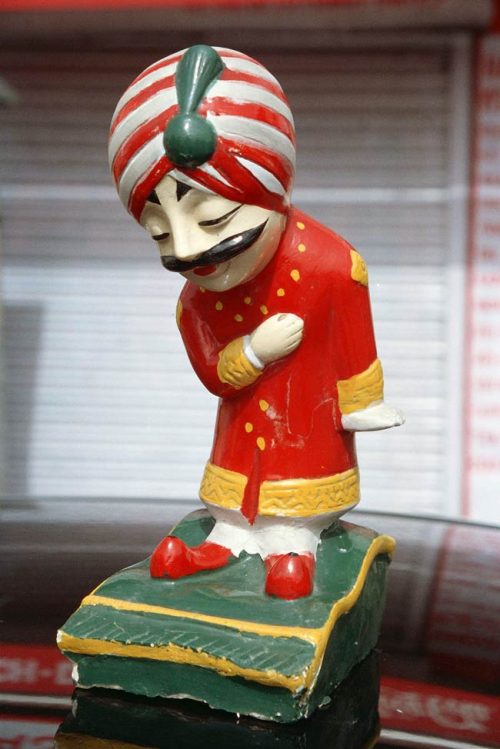
So like all great men, the Maharajah has had his critics. But the millions of travellers who love him far outnumber them. For many of them, the inimitable mascot is a real person, almost like a friend who reaches out with warmth and hospitality, even to the farthest corners of the world.
As Rahul Da Cunha, the ad man behind the equally iconic Amul India campaign, once said,
“The Amul girl and the Air India Maharaja are the most brilliant characters ever created. The Maharaja encapsulates everything Air India should be: Indian luxury, hospitality, services and above all, royalty. It is royalty combined with humility. What can be a more iconic symbol for an Indian carrier?”
Source….SanchariPal
http://www.the better india.com
Natarajan


 Take off with Natarajan