Madras …then and now….

Change has always been beautiful and always will be. You go down the memory lane while seeing the old photos and reminiscing the time that passed by. And it may be anything – school friends, best friend or your hometown. Can you imagine how much of an impact it would create if the photos were merged into one and you couldn’t help but notice the stark difference and revel in that moment?

This Indian photographer, Raunaq Mangottil, has clicked photographs of Chennai. And these are not just photographs that hold aesthetic value, but it makes you realise the change that city has undergone over the years. When you look at it, you would realise that so many things have changed but even then, some things haven’t.

1. Statue of Thomas Munro, Park Town


Then: Thomas Munro, an official of East India Company who came to Chennai in 1789 and was responsible for Ryotwari system. After he died, his statue was made here.

Now: One of the blissful places of Chennai now. Free from traffic, this area is now taken care of by the military.


2. The Hindu Office

Then: The balcony of this office was used to keep a check on the test match scores, as can be seen in the picture.

Now: The never ending traffic has put an end to that.


3. Spencer Plaza Signal, Mount Road

M 3

Then: Bullock carts were a common sight then and the Kashmir Art Palace, the Old Curiosity Shop, and Agurchand Mansion leading to the LIC Building is quite evident.

Now: Only frustrating one-ways.


4. Corporation Of Madras

M 4

Then: This was constructed in a Neoclassical style and stands to be one of the finest structures of Chennai.

Now: Passers-by are not allowed  and is now shielded by Metro Construction blue sheets.


5. Higginbotham’s & Poompuhar

M 5


Then: This one was for all book lovers. This was India’s then largest bookstore. The building next to Higginbotham’s is Poompuhar, the popular textile shop.

Now: Though the bookstore is there even now, you’re most likely to be pulled over by the cops because of parking problems. It has a brilliant English-language selection, including Lonely Planet books, and a good range of maps now.


6. Casino Theater

M 6

Then: Mount Road was a cart track leading from Fort St.George to St.Thomas Town, as well as functioning as a heavenly treat for film buffs.

Now: Unfortunately, a terribly managed and a lost landmark now.

7. Chennai Central

M 7

Then: This station was relatively a calm place. People used cycles for commuting other than the much acclaimed Ambassador cars then.

Now: It is filled with the ever increasing population, but it stands majestic even now.


8. Egmore Station

M 8

Then: Madras Egmore was previously called the Egmore Redoubt, a place to store ammunition for the Britishers.

Now: Still retains its old charm, but with an added advantage of CCTV Cameras and round-the-clock security.


9. Rajaji Salai

M 9

Then: This was one of the main commercial centers of Chennai. Walking on this road used to be a pure bliss.

Now:  Traffic runs incessantly between SBI Buildings and Burma Bazaar now.

See, he hasn’t just rummaged through the internet for old pictures. It is a brilliant collection which is guaranteed to make you go nostalgic.

News Source: I am Madras


Source….Aparajta Mishra….www.storypick.com

Natarajan


” These Chennai Scientists Are Trying To Solve An Impending Agricultural Crisis…”

SALICORNIA BRACHIATA

VEDARANYAM, Tamil Nadu — On a sun-scorched wasteland near India’s southern tip, an unlikely garden filled with spiky shrubs and spindly greens is growing, seemingly against all odds.

The plants are living on saltwater, coping with drought and possibly offering viable farming alternatives for a future in which rising seas have inundated countless coastal farmlands.

Sea rise, one of the consequences of climate change, now threatens millions of poor subsistence farmers across Asia. As ocean water swamps low-lying plots, experts say many could be forced to flee inland.

“It’s hard to imagine how farmers will live,” said Tapas Paul, who as a World Bank official helped channel about $100,000 to help build the small garden a decade ago in a swampy, seaside town dominated by salt flats in southern Tamil Nadu state. “In the places subject to inundation and sea level rise, there are few options.”

A team of Indian scientists is searching for solutions to what they describe as a fast-approaching agricultural crisis. Their neatly plotted rows of naturally salt-tolerant plants, known as halophytes, could be a part of the answer. The scientists from the M.S. Swaminathan Research Foundation are also trying other approaches: tweaking genes and cross-breeding plants by conventional means to discover which might grow and even flourish.

“Sea level rise is inevitable, and we are not prepared,” said Swaminathan, who pioneered high-yield wheat and rice varieties for India in the 1960s. “The biggest problem in India is just the very large population. We can say people can relocate, but where could we even accommodate all those who need to move inland?”

Saltwater for a farmer long meant certain crop failure. Wartime foes sowed enemy fields with salt to ensure social collapse. Natural disasters such as the 2004 Asian tsunami left countless plots unproductive for years.

Asia’s coastal farmers, including millions impoverished in India, now face such problems. Climate change will bring stronger storms and warmer temperatures that expand ocean waters and melt ice caps and glaciers. As a result, seas are set to rise up to 1 meter (3.2 feet) in this century, according to the latest scientific forecasts.

Chellammal, a graceful, 65-year-old farming housewife in the Tamil Nadu village of Tetakudi, knows the nightmare of farming on salt-contaminated land too well.

“I struggled so long to get things to grow, but nothing worked,” said Chellammal, who goes by one name. “Every year just got worse until there was nothing left,” she said, crouched in a bright pink sari by her fields.

The land her family had saved for decades to buy went completely barren about five years ago, after a neighboring village took up shrimp farming when flooding from a nearby ocean canal salted their lands. The shrimp ponds were never lined properly, so their saltwater seeped into surrounding soils.

The farmland lost by Tetakudi’s 200 households now supports little more than a vast expanse of salt-tolerant shrubs called Suaeda maritime along with succulents called Salicornia brachiata, known to locals as “chicken feet.”

To the villagers, the bright green bushes are no better than weeds. Already, 12 families have boarded up their homes and left.

But scientists say suaeda is good for firewood. And salicornia species, which can tolerate nearly twice the salinity of seawater, have enormous potential as a biofuel crop, with seeds containing high concentrations of oil.

The problem, however, lies in realizing profits. For any crop to work on a large scale, inexpensive methods and machinery for harvesting will have to be developed. Then processing plants, production lines and markets would need to be built. As of now, none of that exists.

Chellammal is dubious, but interested.

“If we can make money from what we grow, we’ll try it. Why not?” she said. “Maybe all is not lost.”
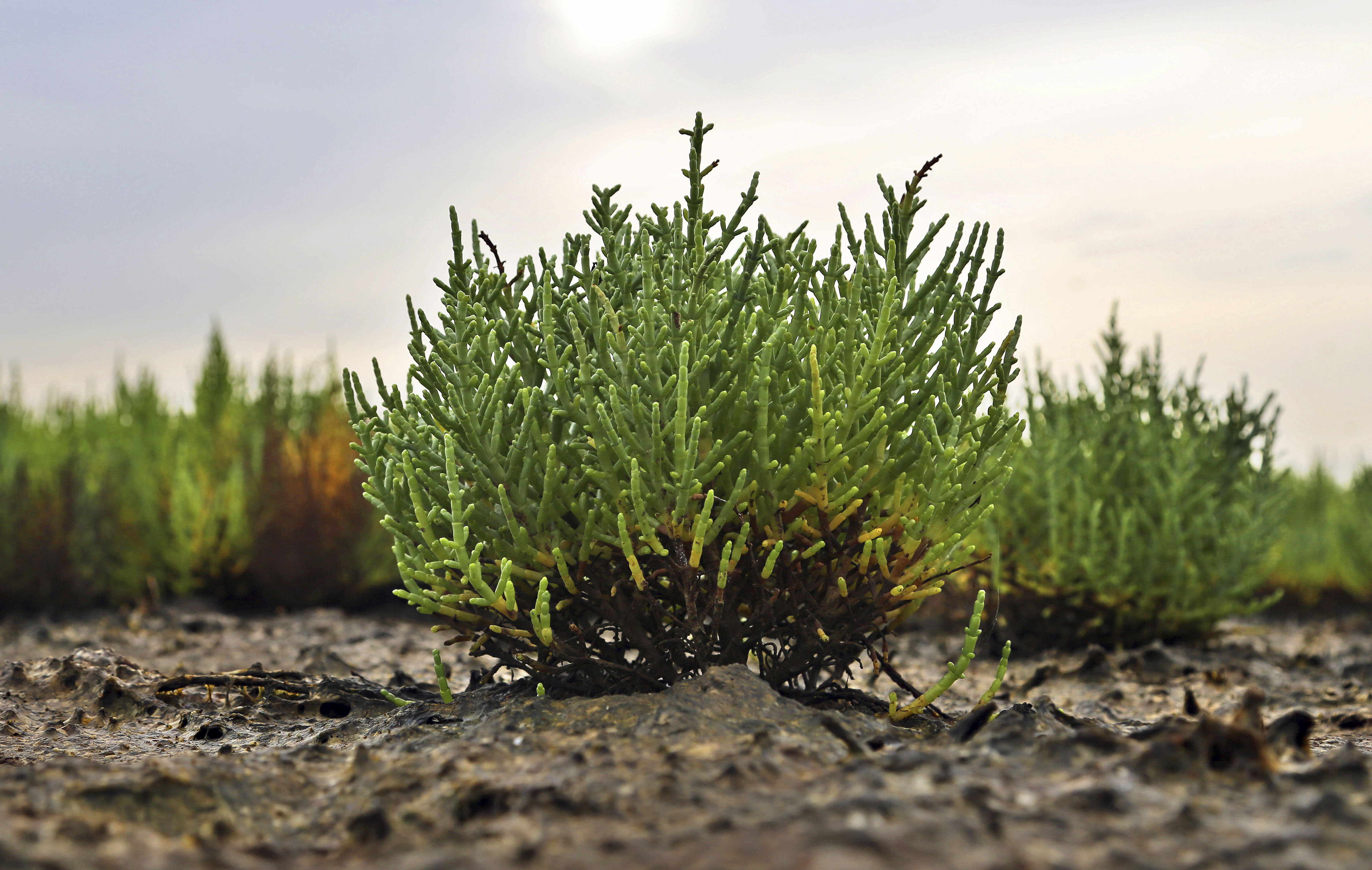
 

salicornia brachiata

In this June 16, 2015 photo, a wild-growing Salicornia brachiata, a halophyte known to locals as ‘€chicken feet’, thrives on fields tainted by saltwater from a neighbouring shrimp farm near Velankanni, India.

The timing for an agricultural crisis due to sea rise couldn’t be worse. India’s poor farmers already struggle with frequent flooding, drought and soils degraded by agrochemical overuse. Those on the coast are also hit by storms, with at least 27 of the 35 deadliest cyclones in history barreling through the Bay of Bengal before slamming into either India or Bangladesh.

India’s freshwater sources are also in peril, with over-tapped groundwater reserves so low the country is expected to have only half the water it needs by 2030. Grain production, meanwhile, has stalled around 260 million tons in recent years, despite global pressure for India to boost yields, eliminate waste and eradicate widespread poverty and malnutrition.

To feed its growing 1.26 billion population, India must increase food production 45 percent by 2050, for which experts say it may need to cultivate more land. Instead, about 1.2 million hectares (3 million acres) of its coastal farmland has been degraded by salt, according to India’s Central Soil Salinity Research Institute.

Inland, India has lost another 5.5 million hectares of arable farmland, out of its nationwide total of 163 million hectares, though India’s soil salinity troubles are exacerbated by industrial salt flats, a growing number of shrimp farms and the depletion of groundwater reserves. The trend will only continue as seawater creeps onto low-lying lands along the 7,500-kilometer (4,700-mile) coast that outlines the country along the Bay of Bengal, Indian Ocean and Arabian Sea.

“Saltwater agriculture is considered a futuristic area. But it really shouldn’t be,” said marine biologist V. Selvam, the M.S. Swaminathan foundation’s mustachioed director of coastal research. “Very soon there won’t be enough land and water to meet our needs.”

And India is not alone. Countries including Egypt, Bangladesh and much of Southeast Asia also face heavy saltwater intrusion and loss of farmland. Already, 62 million hectares, or 20 percent, of the world’s total 300 million hectares of irrigated farmland has been salinized to some extent. Another 50 centimeters (1.6 feet) of sea rise, which is just half of what’s expected by 2100, would swamp up to 1.9 million more hectares, the Intergovernmental Panel on Climate Change has said.

That will undermine the world’s ability to find the additional 120 million hectares of farmland it needs for a staggering 70 percent increase in food production to feed the world by 2050, according to the U.N. Food and Agricultural Organization.

Experts say there will be little choice but to grow some non-food crops along the coasts.

The world’s irrigated acreage could be increased by about 50 percent by reusing saline water and salinized crop fields for halophytes, said University of Arizona environmental sciences professor Edward Glenn.

“As with aquaculture replacing wild fisheries, it is inevitable that halophytes will have their day,” he said.

Sesuvium portulacastrum. Paspalum vaginatum. Prosopis juliflora.

These are just a few of the 350 known species of salt-tolerant plants that are candidates to become crops for the future. Saltwater plants are unlikely to become staple foods, because while often high in nutrients they’re also very salty and so should be eaten in moderation.

Species such as Salicornia europaea, also known as glasswort or samphire, are already sold in European markets as a fancy salad addition or side dish. The bright purple-and-white blossoms of Limonium are a florist’s delight, while another species called Atriplex or saltbush is eaten by sheep.

Supporters note a host of potential uses to make harvests profitable, including firewood, decorative flowers, kitty litter, nutritional supplements, cooking oil and biofuel. Cattle fodder is another possibility, and Indian herders already graze their cattle on thorny shrubbery by the sea.

Despite the potential, saltwater agriculture is still seen as a fringe topic, even after decades of research by universities worldwide along with studies and pilot projects in countries including Mexico, Pakistan, Jordan and Eritrea. The aviation company Boeing is also researching biofuels from saltwater plants.

India’s scientists aren’t waiting for markets to develop. Nor are they relying on just the halophyte garden to offer up new options.

They’re scouring coasts for wild grain species that might naturally tolerate some salinity, and using arduous breeding methods to create new salt-tolerant strains.


The foundation has also developed genetically modified rice using genes from mangrove trees. It says the resulting plant can tolerate salt concentrations of 12-15 grams per liter. Seawater is typically two to three times saltier, but that’s still a major improvement from currently cultivated rice varieties, which can handle only up to 3 grams per liter.

Genetic modification is considered the most difficult approach, because salt tolerance is a trait that involves numerous genes. But the molecular biologist leading the development of GM halophytic rice believes it’s essential.

“Conventional breeding just takes too long, and this problem is urgent,” said Ajay Parida, the foundation’s executive director. His work stalled in 2007 under an effective moratorium on field testing GMOs, but the Indian government is considering shifting its GM testing policy and Parida now expects his trials to start soon.

“We could eventually be cultivating wastelands and places considered entirely unsuitable,” he said. “But it’s only after crisis hits that people realize the magnitude of the problem and start pushing for an answer.”

Source….  |  Katy Daigle….www.huffingtonpost.com

Natarajn


” சென்னை சாலைகள் ….பெயர் காரணம் ….ஒரு அலசல் …”

சென்னையில் இருக்கும், முக்கிய சாலைகள் பலவற்றின், பெயர் காரணம் குறித்து, திண்ணைப் பெரிசு ஒருவர், சொன்ன விவரம்:


சார்லஸ் பின்னி என்பவர், 1769ல், இந்தியாவில், வாணிபம் செய்ய வந்தார். இவர் பெயரில், பின்னி தெரு உள்ளது. இது, அண்ணா சாலையையும், கமாண்டர்- இன் -சீப் பாலத்தையும், இணைக்கும் சிறிய தெரு. இங்கு, பின்னி வாழ்ந்த மாளிகைதான், இப்போது கன்னிமாரா ஓட்டலாக உள்ளது.
கிழக்கிந்திய கம்பெனி காலத்தில், ஐரோப்பிய குடியேறிகளின், பொழுதுபோக்கு மன்றமாக இருந்த இடம் பாந்தியன் எனப்பட்டது. (அதுவே இன்றைய மியூசியம் தியேட்டர்) இதை நினைவுபடுத்தும் வகையில், இங்குள்ள சாலைக்கு, ‘பாந்தியன் சாலை’ எனப் பெயரிடப்பட்டது.
ரிச்சர்ட் எல்டாம்ஸ் என்பவர், பிரபல ஆங்கிலேய வர்த்தகர். இவர், சென்னை மேயராக இருந்து, 1820ல், இறந்தார். இவர் பெயரில் தான், எல்டாம்ஸ் சாலை உள்ளது.
ஜேம்ஸ் டெய்லர் என்பவர், 1795ல், சென்னையில், நிர்வாக அதிகாரியாக இருந்ததால், கீழ்பாக்கத்தில், இவர் பெயரில், டெய்லர்ஸ் சாலை உள்ளது.
சிங்கண்ணை செட்டி என்பவர், செயின்ட் ஜார்ஜ் கோட்டைக்குள், அடகுக்கடை வைத்திருந்தார். இவர் பெயரில், சென்னையில் மூன்று தெருக்களும், சிந்தாதிரிப் பேட்டையில் இரண்டு சந்துகளும் உள்ளன.
ஆளுநரின் பாதுகாவலர் இருந்த வீதிக்கு, பாடிகார்ட்ஸ் சாலை என்று பெயர். அக்காலத்தில், கப்பல்படை வீரர்களுக்குப் பயன்பட்ட இடத்திற்கு, ஓல்டுநேவல் மருத்துவமனை சாலை என்று பெயரிட்டு, பெரியமேட்டில், ஒரு வீதி உள்ளது.
‘தி மெட்ராஸ் ஆர்மி’ என்ற பெயரில், சென்னைக்கு பிரத்யேகமாக, ஒரு தனிப்படை ராணுவம் இருந்தது. இதன் தளபதி இருந்த இடம்தான், ‘கமாண்டர் – இன்- சீப் சாலை’ என, அழைக்கப்படுகிறது.
வெள்ளையர் அரசால், நடத்தப்பட்ட கல்லூரி இருந்த இடம், கல்லூரி சாலை என்ற பெயரில் உள்ளது.
வேப்பேரியில், டவுட்டன் பிராட்டஸ்டண்டு கல்லூரி இருந்த இடம், சுருக்கமாக, டவுட்டன் என்று அழைக்கப்பட்டது. இன்றும், அதுவே பெயர்.
இந்தியர்கள் வாழும் பகுதி கறுப்பர் தெரு, (பிளாக்கர்ஸ் ஸ்ட்ரீட் ) என அழைக்கப்பட்டு, இன்றும் அதே பெயரில் உள்ளது. கெயிட்டி தியேட்டர் இருக்கும் சாலை இது.
பஞ்சாமிர்தம் (1925) இதழ் ஆசிரியர், அ.மாதையா எழுதிய கட்டுரையிலிருந்து…
சென்னையில், குஜிலியின் முக்கில், ஒரு வீதிக்கு, ‘ஈவினிங் பஜார்’ என்றும், அடுத்த வீதிக்கு, ‘தீவிங் பஜார்’ என்றும் பெயர் இருந்தது. இதை, நான் முதலில் கவனித்த போது, உண்மை எவ்வாறிருப்பினும், ராஜதானி நகரத்தில், ஒரு வீதிக்கு, ‘தீவிங் பஜார் சாலை’ அதாவது, ‘திருட்டுக் கடை தெரு’ என்றிருப்பது நகரவாசிகளுக்கும் போலீசாருக்கும் கவுரவம் தருவதன்று என்று நினைத்து, அப்போது முனிசிபல் கமிஷனராயிருந்த என் நண்பர், மலோனி துரைக்கு அதைப்பற்றி எழுத, அவர், ‘தீவிங் பஜார்’ என்ற பெயரை, ‘குஜிலி பஜார்’ என்று மாற்றினார்.

‘அமரர் கல்கியின் ஹாஸ்யம்’ நூலிலிருந்து: வைணவ மதம், ரொம்ப ருசியான மதம் என்பது பிரசித்தம். கண்ணனை வெண்ணெய் திருடும் கடவுளாகச் செய்தவர்கள், ரொம்பவும் சுவை அறிந்த மனிதர்களாகத் தானே இருக்க வேண்டும். இன்னும், வைணவ மதத்தின் ருசியை, ஸ்ரீரங்கம் மற்றும் காஞ்சிபுரம் கோவில் பிரசாதங்கள் எவ்வளவு தெளிவாக நிரூபிக்கின்றன!
தன்னை விட, 153 மடங்கு உயரமான ஈபிள் டவரை கட்டி, சாதனை படைத்திருக்கிறான் மனிதன். ஆனால், கரையான் புற்றை, கரையான், தன்னை விட, 1,000 மடங்கு உயரமாக கட்டுகிறது. ஆனால், அதை சாதனையாக அவை வெளியே சொல்வதில்லை.
குப்பண்ணா சொன்னது.

Source….www.dinamalar.com

Natarajan

Will the Mist Lift in Kodaikanal….?

“If the company accepts its mistake and compensates us, it would serve as justice.” Helen Margaret with her mentally-disabled son Nitesh Kumar. Photo: Sruthisagar Yamunan

The focus on mercury poisoning following a popular rap song raises hopes for victims in Kodaikanal

The serene view of the Kodaikanal hills from the ‘Coaker’s Walk’ hides a tale of melancholy and everyday struggle. As she flitted from one pushcart to another attending to a rare tourist in this off-season, Helen Margaret, now 39, recalled in a tremulous voice her days as a worker at the defunct thermometer factory of Hindustan Unilever on St. Mary’s road. “In the three years from 1996 when I worked there, I did not know the hazards of mercury. We used to play with the silvery liquid, often throwing it at each other,” she recollects, making the “bhoni” (first sale of the day) of her small fruit cart.

Playing with mercury, recognised as one among top ten chemicals of major public health concern, came with a price, she says. Her second son Nitesh Kumar was born with mental disability in 2000.

Subsequently, her husband, a chronic diabetic, died. Today, Ms. Margaret takes care of three school-going sons from a meagre income of Rs 150 a day. “I cannot leave Nitesh alone for a minute. He studies at the Church-run school for the disabled nearby. I make multiple visits to check on him. My life is a struggle that I cannot explain,” she rues, outraged by a recent comment by Unilever CEO Paul Polman that he wants only facts and not “false emotions” on Kodaikanal.

The ‘Kodaikanal Won’t’ rap video released this month has brought focus to the plight of these former workers, and the pristine environment of this Western Ghat hill station.

According to the World Health Organisation, foetuses are most susceptible to developmental effects due to mercury. “It can adversely affect a baby’s growing brain and nervous system. The primary health effect of methylmercury is impaired neurological development.” Industrial processing is listed as one of the two important ways of exposure to mercury. And former workers say they were exposed to a lot of mercury.

“I never wore a glove when I handled the thermometer. I had severe skin rashes, which were treated as allergies. It was only after the factory was shut in 2001 that we came to know of the dangers of mercury. We were never told about it when we worked,” says P. Sangeetha, who claims to have worked at the site in 1996 when she was just 14 years old.

The company maintained women were never allowed to work in mercury area.

Her father, Govindhan, was contractually employed as a security staffer which involved several inspection rounds around the site. In 2000, Govindhan died following an alarming drop in haemoglobin levels.

An HUL-driven study published in 2006 in the Indian Journal of Occupational and Environmental Health, based on the examination of 255 employees and contract workers in 2001, found many showing symptoms of various possible disorders that activists state were the result of exposure to mercury vapour. However, supported by clean chits from three institutions of repute–the All India Institute of Medical Sciences , National Institute of Occupational Health and Industrial Toxicology Research Centre–the company has maintained that mercury in its factory had nothing to do with the health issues of the workers. Nor has it had any effect on the environment.

S.A. Mahindran of the 550–strong Ex-Mercury Employees Welfare Association, which has approached the Madras High Court for compensation to workers, states that the three reports cited by HUL were given by experts without meeting any of the workers. “On the contrary, a Ministry of Labour constituted committee concluded that there was prima facie evidence that not only ex-workers, but also their children have suffered on account of mercury exposure. This committee met the workers in October 2011 and was a first-hand study.”

In many cases, the company has replied that it does not possess records of annual medical check-ups of workers.

Many though claim to have continuing symptoms while over 40 former workers have allegedly died due to mercury-related issues, the association says. K.M. Gias Mohammed Gori was one of the first to join the thermometer plant when it opened in 1984. “At that time, Kodaikanal had no industries. People were begging for employment. When the plant opened, we all rushed to join and saw it as a blessing,” he recalls. But within a year or two, Mr. Gori began experiencing loss of teeth, which the committee in 2011 noted as one ill-effect of mercury exposure. “Soon, I experienced severe fatigue and backache and left the job. I live in poverty in this 10 ft x10 ft thatched hut. Let Mr. Polman come and see if my emotion is fake,” he says.

The long-drawn legal battle has also tired out the workers. The Madras High Court has not heard the matter since 2013 even as workers complain of great financial burden from medical expenses.

On the environment front, the battle has been raging on the standards to which the mercury contaminated soil needs to be cleaned up. Citing media reports, Member of Parliament and Pattali Makkal Katchi leader, Anbumani Ramadoss, one of the first to react, stated that the company was proposing a remediation norm that was 25 times laxer than those prevalent in the United Kingdom, where Unilever has its headquarters.

“They are providing techno-commercial reasons as justification of the lax standard. In the UK, the permissible mercury level is 1mg/kg whereas the company wants a standard of 20-25mg/kg of soil here. By its own estimation, it let out 1.2 tonnes of mercury into the Pambar Shola forests. This is environmental colonialism,” says environment activist Nityanand Jayaraman, who has worked on the issue since 2001 when the company was shut by the Tamil Nadu Pollution Control Board (TNPCB) after evidence emerged that mercury-contaminated glass was sold to scrap dealers a few kilometers away from the factory site.

With the rap song, viewed over two million times on YouTube, building up pressure, HUL has now submitted the Detailed Project Report (DPR) for remediation in Kodaikanal to the TNPCB. However, questions from The Hindu on what the cleaning standard the DPR proposed went unanswered. An HUL spokesperson said via email that preparatory work for the process will begin immediately. In 2003, an expert decontamination team from the U.S. removed tonnes of partially treated mercury sludge from the site. The workers have accused TNPCB of collusion.

With upcoming Assembly elections, the Kodaikanal Municipality, blamed for being silent all along, has got into the act, with its chairman M. Sridhar committing to pass a resolution against the company with a demand for compensation for environmental degradation during a public consultation meeting on August 12.

Activists note that water flowing through contaminated soil finally reaches the Vaigai dam, which irrigates thousands of hectares in South Tamil Nadu. “We have also decided to campaign for the boycott of Unilever products and to boycott elections if no solution is found,” says Mr. Mahindran.

But these technicalities have very little relevance for Ms. Margaret. “If the company accepts its mistake and compensates us, it would serve as justice and would reduce the burden on our lives,” she says, as she helps her son Nitesh back into the classroom.

Timeline:

2001 TNPCB shuts down the HUL thermometer factory after sale of mercury contaminated glass to scrap dealers is detected. Health study of workers done
2003 Large amount of mercury scrap sent back to the U.S.
2006 Ex-employees move Madras High Court against Unilever. Health effects such as miscarriages, kidney and nervous system damages, mental disability in children etc. stated
2011 Committee constituted by Ministry of Labour concludes there was prima facie evidence of mercury-related ailments in workers
2015 Unilever CEO Paul Polman says he is determined to solve the issue after international focus following rap song

Source…..

Natarajan

“வேப்பம்பூ பச்சடி எப்படிச் செய்கிறீர்கள்?”….

ஜகத்குரு தரிசனம்
வேப்பம்பூ பச்சடி
(எழுசீர் விருத்தம்: காய் விளம் விளம் தேமா . காய் காய் காய் )


வேப்பம்பூ புளியுடன் வெல்லமும் நாங்கள்
. வேதமுனி அவைதன்னில் சமர்ப்பித்தோம்
வேப்பம்பூ பச்சடி செய்விதம் என்ன
. மேதையவர் எங்களிடம் கேட்டாரே
யாப்பென்றே அவரிடம் ஓர்முறை சொன்னோம்
. யாதுமறி யாதவர்போல் செவிமடுத்தார்
சாப்பாட்டுக் கித்துடன் தேனுடன் நெய்யும்
. சற்றேசேர் பச்சடியில் சுவைகூடும்! … 1

பக்குவமாய்ச் செய்தபின் பச்சடி அம்பாள்
. பாதத்தில் நைவேத்யம் செய்வீரே
முக்கண்ணி நம்மிடம் வசப்படு வாளே
. முன்வந்தே அருள்செய்து காத்திடுவாள்
அக்கணத்தில் கேட்டது சரியெனச் சொல்வார்
. அகமுடையான் பச்சடியை உண்டாலே!
சிக்கலின்றி பணிகளைச் செய்வரே செய்வோர்
. சீர்மிக்க பச்சடியின் மகிமையன்றோ! … 2

பக்குவமாய்ப் பச்சடி செய்திடச் சொல்லிப்
. பணித்தாரே திருமடத்தின் பிரசாதம்!
சிக்கனமாய்ப் பச்சடி தந்தவர் கேட்டார்
. தெரிகிறதா நான்தந்த காரணமே?
தக்கபடிப் பெரியவர் சொல்வது உள்ளம்
. தங்கிடவே என்றுரைத்தாள் ஓர்மங்கை
முக்கண்ணி பக்தியில் எந்நாளும் நீங்கள்
. முழுகிடவே தந்தேன்நான் என்றாரே. … 3

புதுக்கோட்டை பத்தராய்த் தரிசனம் செய்தே
. புண்ணியங்கள் பெற்றோமே நாங்களெலாம்!
எதுசொன்னா லுமதிலோர் தத்துவம் காட்டி
. எங்களுக்கு வழிசொல்லும் காஞ்சிமுனி
பொதுவான அறமென உள்ளதைச் செய்தால்
. பொலிவுடனே வாழ்ந்திடலாம் என்றாரே
எதுநல்ல காரியம் என்றுநாம் தேர்ந்தே
. இறைபக்தி உடன்சேரச் செய்வோமே! … 4

–ரமணி, 13/08/2015
Source…www.periva.proboards.com

Natarajan
Read more: http://periva.proboards.com/thread/9877?page=1&scrollTo=16638#ixzz3ihamzKId

The Weekend Agriculturist… Meet Harish Srinivasan and his friends…

Tired of weekend parties, discotheques and pubs? Have aimless visits to the mall and the latest movies lost their charm?

Are you looking for something more meaningful? Something fun and challenging as well?

Then this weekend, join Harish Srinivasan and his friends at a farm near Chennai.

The Weekend Agriculturist

Like thousands of youngsters in the city, Harish has a regular job during weekdays.

But his weekends are anything but regular.

This 29-year-old is the founder of The Weekend Agriculturist, an informal group of enthusiastic youngsters, who offer free labour to small and marginal farmers on weekends.

“My plan is simple: offer free labour to the farmers, who cannot afford to hire help.

“I started a Facebook page outlining my mission and vision for the group. That was about three years ago. Today our group has nearly 5000 volunteers from all walks of life — IT professionals, doctors, teachers, entrepreneurs, social activists and students,” says Harish.

J Satish Kumar, SEO Associate, CoreLead Interactive, Chennai, is part of the core group of volunteers.

“We may have been born and brought up in the city, but agriculture is in our genes,” he points out.

“Go back a few generations and most of us will find that our ancestors were farmers. All of us have a deep connection with the land and we probably just need to be reminded about it.”

The Weekend Agriculturist

Satish was invited to an event organised by The Weekend Agriculturist (TWA) 18 months ago “and since then I have been completely hooked.”

The teams assist with everything from preparing the soil, planting the seed, transplanting, weeding and harvesting.

“Whatever help they require, we provide. In the process, we learn so much. There is nothing like first-hand experience to understand the problems that plague our farmers,” Satish says.

For founder Harish Srinivasan it all started after reading MoondramUlagaPor (Third World War), a novel by Tamil poet and lyricist Vairamuthu.

“Though I have no agricultural background, the plight of our farmers has always moved me. But it was only after reading MoondramUlagaPor that I was actually jolted into doing something.

“The book described in painful detail the untold sufferings of our farmers. I knew that I had to do something.

“Blaming the politicians and debating endlessly about who is responsible, while we go about our lives in the city, content with buying our food from the supermarket, was not going to solve the problem,” says the 29-year-old who is senior consultant at Virtusa India Pvt Ltd in Chennai.

“It is ironic that farmers, who provide our food, have to go hungry,” Harish points out. “Isn’t it a national shame that they believe their only solution is suicide?

“Farmers, who for generations have depended on agriculture for their survival, today encourage their children to find other employment.

The Weekend Agriculturist

“How much longer are we going to wait? No superhero is going to come save them.”

Harish acknowledges that it was not easy to convince farmers that they were serious.

But persistence and sincerity paid off.

“We convinced some of the big, more educated farmers, who took us in and taught us some of the basics. We went back week after week until they realised that we really had their best interests at heart.”

They spend their own money for travel and usually spend the night in open terraces, schools or small hostels.

The core group of volunteers is between the ages of 20-30, but there are older volunteers and some bring their families as well.

T R Sarathy, 45, lives in the small village of Alathur, in Thiruvallur district of Tamil Nadu. He belongs to a family of farmers. Six years ago, he gave up farming and ventured into brick making, which, he says, is much more profitable.

“Until about six years ago, farming was all we knew. For generations our family survived growing seasonal crops, but it was becoming harder every year.

“When a few villagers ventured into brick making, I too gave up farming,” says Sarathy who is a huge support to Harish and his team. He scouts the nearby farms to find out who needs help.

He says most of the farmers have small farms and cannot afford the Rs 250-300 that the labourers demand.

They grow rice, vegetable and also some flowers like roses and kanakambaram (an orange flower that women put on their hair).

Harish lets him know in advance when the group will be coming. He identifies the farmers who need help most.

They groups are of 10-20 and they work for two days from 6:30 in the morning to about 4 in the evening, doing whatever needs to be done.

“I was forced to give up farming, but today I am happy that at least I am helping my brothers survive,” Sarathy says.

The Weekend Agriculturist

Prachi Ghatwal, 25, from Goa, a mobile app developer at Creative Capsule India Pvt Limited was an active part of TWA before she went back to her hometown.

“When I was in Chennai, I used to travel with the other volunteers to the farms. Most of the farms are family owned and can barely afford any extra manpower. They are grateful for any kind of help and it is hugely satisfying seeing your work make some difference to their lives.”

She now helps with registrations and provides some technical support. “We are working on a mobile app that will facilitate better and easy registration of volunteers for the various events planned by TWA,” she says.

The group not only offers free services, they also bring in consultants, who offer expert advice and provide solutions based on the individual needs of each farmer.

The consultants educate the farmer on how to improve the quality and yield of crops. They work on sustainability and increasing growth and profitability.

They are also trying to make them adopt the traditional, healthier practices of farming.

“Our work is not over with just the weekend; we are constantly exploring new avenues to help the farmers,” says Satish.

“For the last 30-40 years, our farmers have relied on chemical fertilisers and pesticides to boost crop production without understanding its long-term effects. Most of the food on our table today is loaded with toxins.

“We are teaching the farmers the benefits of going organic, but it is not an easy task. A few have agreed to go organic on a small patch of their land.”

Volunteers are also taught how to grow their own organic vegetables.

“Vegetables like brinjal, chilly, or tomatoes can be grown very easily. I myself harvest about three or four kilos of brinjal every month in my garden. Growing your own food is a totally exhilarating experience,” Satish claims.

The Weekend Agriculturist

The volunteers are encouraged to buy produce from the farmers.

“These poor farmers sell their produce to middlemen, who buy for as low as Rs 5-6 per kg and sell for Rs 40-50 in the city. We are currently working to get corporates interested in building a direct link between the farmers and consumers, to help farmers get a better rate for their produce,” says Harish.

TWA has been in operation for three years and Harish is happy with the results.

“Today, we are appreciated for our work. Occasionally youngsters from Coonoor, Erode and Bangalore join us. There are plans to encourage such groups in other cities too.”

He says farmers too are encouraged at getting the help. “Our desire to help them is a huge motivation for them. They are happy to know that somebody cares.”

Source….Saraswathi in http://www.rediff.com

Natarajan

சாப்பிடும்போது போன் எதற்கு?- கூகுளின் புது சி.இ.ஓ. சுந்தர் பிச்சை நேர்காணல்…

குள் நிறுவனத்தின் புதிய தலைமை நிர்வாக அதிகாரி, சென்னையைச் சேர்ந்த சுந்தர் பிச்சை. கூகுள் க்ரோம், கூகுள் டிரைவ், ஜி-மெயில் ஆப்ஸ், கூகுள் மேப்ஸ் ஆகியவற்றின் தயாரிப்பில் முக்கியப் பங்குவகித்த சுந்தர் பிச்சை கூகுளின் தலைமைப் பீடத்தில் உட்கார்ந்ததன் மூலம், ஒட்டுமொத்த இந்தியாவின் கவனத்தையும் ஈர்த்திருக்கிறார். “எப்போதுமே ஒரு தரப்பினருக்கு மட்டுமான தொழில்நுட்பத்தை உருவாக்குவதல்ல கூகுளின் வேலை. கடைக்கோடியில் வசிக்கும் கிராமத்துச் சிறுவனுக்கும் சரி, ஹார்வர்டு பேராசிரியருக்கும் சரி, ஒரே மாதிரிதான் கூகுள் தேடுபொறி வேலை செய்யும். இதைத்தான் கூகுள் தொடர்ந்து செய்ய வேண்டும் என்று நினைக்கிறேன். சமநிலையைச் சாத்தியப்படுத்தும் சக்தியாகவே கூகுளை நான் பார்க்கிறேன்” என்கிறார். ஒட்டுமொத்த உலகமும் ஸ்மார்ட் போன் சூழ் உலகமாக மாறிவரும் சூழலில் – சுந்தர் பிச்சையின் யுகத்தில் கூகுளின் வணிக இலக்குகளிலும் ஸ்மார்ட் போன்களுக்கு முக்கிய இடம் உண்டு – தொழில்நுட்பம், மனித வாழ்க்கை இரண்டுக்கும் இடையேயான எல்லைகள் எது என்பதைப் பற்றி மிகுந்த சுவாரஸ்யமாகப் பேசுகிறார் சுந்தர் பிச்சை.

நாம் ஸ்மார்ட் போன் சூழ் வாழ்க்கையை நோக்கி நகர்ந்துகொண்டிருக்கிறோமா, அதாவது மொபைல் போன்களின் மோகம் பெருகியுள்ளனவா?

எனக்கு அப்படித் தோன்றவில்லை. நிச்சயமாக மனிதர்கள் வாழ்க்கையில் போன்கள் முக்கிய இடம் பிடித்துள்ளன. அதனால், மக்கள் அதிக அளவில் பயனடைகிறார்கள். அதே போல இடைஞ்சலும் அதிகரித்துள்ளது. ஆனால், இது ஆரம்ப காலக்கட்டத்தின் பலவீனம்தான். மிஞ்சிமிஞ்சிப்போனால் கடந்த ஐந்து, ஆறு வருடங்களாகத்தானே மொபைல்போனைப் பயன்படுத்துகிறோம். சொல்லப்போனால், மக்கள் தினசரி ஆறு மணி நேரம்வரை தொலைக்காட்சி பார்க்கின்றனர். அந்த மோகம் போன்களின் பக்கம் திரும்பியுள்ளது, அவ்வளவே!

பயனாளரை மையப்படுத்திய சாதனங்கள் என நீங்கள் அடிக்கடி சொல்வதன் அர்த்தம் என்ன?

எதை உருவாக்கினாலும் அதன் இலக்கு பயனாளர் களின் சிக்கலுக்குத் தீர்வளித்து, வாழ்வை மேம்படுத்தி, மகிழ்ச்சி அளிக்க வேண்டும் என்பதே. இன்னும் சரியாகச் சொல்வதானால், கணவன் அல்லது மனைவியின் அழைப்பையும் பிறருடைய அழைப்பையும் வேறுபடுத்திக் காட்டும் அளவுக்குத் தொழில்நுட்பம் நுணுக்கமாக வடிவமைக்கப்பட வேண்டும் என முயற்சித்துக் கொண்டிருக்கிறேன்.

போன் நமது வாழ்வை எளிமையாக்கியுள்ளது என்பதை மறுப்பதற்கில்லை. இருந்தாலும், இரவு உணவு சாப்பிடும்போதுகூட மின்னஞ்சலைப் பார்க்கும் பழக்கம்வந்துவிட்டதே… எந்நேரமும் போனில் மூழ்கிக்கிடப்பதை மாற்ற கூகுள் ஏதேனும் முயற்சித்துள்ளதா?

தொழில்நுட்பத்துக்குச் சிறிதும் தொடர்பற்ற கேள்வி இது. சாப்பிடும்போது எதற்காகக் குழந்தைகள் மொபைலைப் பயன்படுத்த வேண்டும், எனக்குப் புரியவில்லை. குழந்தைகள் வளர்ப்பில் உள்ள சிக்கல் இது.

நான் கேட்டது குழந்தைகளைப் பற்றி அல்ல… பெற்றோர்களைப் பற்றி?

பெற்றோர்களும் இரவு உணவின்போது தொலைக்காட்சி பார்க்கிறார்களே!

ஒரு சந்திப்பு நடைபெறும்போது எத்தனை நபர்கள் போன்களைத் துழாவுகிறார்கள் என்பதை வைத்துக் கூட்டம் நடத்துபவரின் முக்கியத்துவத்தைச் சொல்லிவிடலாம் என்பார்கள். கூகுள் நிறுவனத்தின் உயர் அதிகாரியான நீங்கள், கூட்டங்கள் நடத்தும்போது பங்கேற்பாளர்கள் போனைத் துழாவக் கண்டதுண்டா?

போன்கள் வரத்துக்கு முன்பு அமெரிக்கக் கார்ப்பரேட் நிறுவன ஊழியர்கள் கூட்டங்களின்போது லேப்டாப்பைத் துழாவுவது வழக்கம். அப்படி முக்கியக் கூட்டங்களுக்கு இடையில் லேப்டாப்பும் கையுமாக இருப்பவர்கள் பலரை நான் பார்த்திருக்கிறேன். இது பயன்படுத்தும் விதத்தைப் பொருத்ததே. நான் பகல் நேரங்களில் மின்னஞ்சல் அனுப்பவே மாட்டேன். நான் சதாவதானியும் அல்ல. கூட்டத்தில் சுறுசுறுப்பாகக் கலந்துகொள்ளும் அதே வேளையில், மின்னஞ்சலும் அனுப்பும் திறமை எனக்குக் கிடையாது. ஆனால், சிலர் இரண்டையும் சாதுரியமாகக் கையாள்கிறார்கள்.

இரண்டு வருடங்களுக்கு முன்பு நீங்கள் முதல் ஆண்ட்ராய்டு வாட்ச் அறிமுகப்படுத்தியபோது, ‘நீங்கள் இரவு உணவருந்தும்போதுகூட போனைப் பயன்படுத்தாமலேயே இந்த வாட்ச் மூலம் மின்னஞ்சல் பார்க்கலாம்’ என விளம்பரம் கொடுத்தீர்களே?

உங்களுக்குத் தேவைப்படும்போது தகவல்கள் கிடைக்கச் செய்வதுதான் என் நோக்கம்; இடைஞ்சல் தருவது அல்ல. உதாரணத்துக்கு, நீங்கள் வாகனம் ஓட்டும்போது போனைப் பயன்படுத்துவது அபாயகரமானது. அதற்காகத்தான் ஆண்ட்ராய்டு ஆட்டோ உருவாக்கினோம். இதன்மூலம் உங்கள் போனைத் தொடாமலேயே அழைப்புக்குப் பதிலளிக்கலாம். தேடும் தகவல்களைப் பெறலாம். இப்படி உங்களுக்குத் தேவையான பொருளைச் சரியான நேரத்தில் கொடுக்க நாங்கள் முயல்கிறோம். இன்றைய பயனாளர்களுக்குப் பல சுமைகள் உள்ளன. அந்தச் சுமைகளை நாங்கள் ஏற்றுக்கொள்கிறோம்.

எல்லாவற்றுக்கும் தொழில்நுட்பத்தை மக்கள் சார்ந்திருக்க வேண்டும் என்பது உங்கள் எண்ணமா? பித்துப்பிடித்தார்போல எந்நேரமும் மக்கள் மின்னஞ்சலைத் திறந்து பார்த்துக்கொண்டே இருக்கிறார்கள். விருப்பப்பட்டுப் பார்ப்பது வேறு, அலுவலக உயர் அதிகாரிகளிடமிருந்து தகவல் வந்திருக்குமோ எனப் பதற்றத்தோடு பார்க்கும் காலம் வந்துவிட்டதே?

ஜி-மெயில் வழங்கும் ‘ப்ரயாரிட்டி இன்பாக்ஸ்’ஆப்ஷனைக் கிளிக் செய்வதன் மூலம் முக்கிய மின்னஞ்சல்களை மட்டும் நீங்கள் பார்த்துக்கொள்ளலாமே! மோசமான பயன்பாடும் இருக்கத்தான் செய்கின்றன, மறுப்பதற் கில்லை. எதுவாக இருந்தாலும், மனிதர்களின் அறிவுத் திறன், விருப்பம், பயன்பாடு என அத்தனையும் மனதில்கொண்டுதான் தரத்தை மேம்படுத்த நாங்கள் தொடர்ந்து பயணித்துக்கொண்டிருக்கிறோம்.

கூகுள் காலண்டர் போன்ற அம்சங்கள் இருப்பதால் யாரும், எதையும் நினைவில்வைக்க முயற்சிப்பதில்லை. இப்படி எதையும் பொருட்படுத்தாத மக்களை உருவாக்க நினைக்கிறீர்களா?

எவ்வளவு சிறப்பான சாதனமாக இருந்தாலும், சில வரை யறைகள் வேண்டும். என் உடல் ஆரோக்கியத்தைப் பராமரிக்க ‘ஃபிட்னஸ் ஆப்ஸ்’ உதவ முடியாது. அதேநேரம், என் குழந்தையின் பிறந்த நாளை நான் மறக்க நேரிட்டால், என்னைப் பார்த்து அலற ஒரு போன் வேண்டும் என நான் நினைக்கிறேன்.

எதற்காக போனைக் கையில் எடுத்தோம் என்பதே தெரியாமல் போனைச் சட்டெனக் காதில் வைத்ததுண்டா?

பல முறை! தேவையே இன்றிப் பழக்கதோஷத்தில் போனை எடுப்பதுண்டு. காரணமே இல்லாமல் அதை வெறித்துப் பார்த்துக்கொண்டிருப்பதும் உண்டு.

வீட்டைச் சுற்றிச் சுற்றி நடந்தபடி போன் பேசக் கூடாது என நான்முடிவெடுத்துள்ளேன். இதுபோல போன் பயன்படுத்தாத நேரம் என நீங்கள் திட்டமிட்டது உண்டா?

கூகுள் ஐ / ஒ தொடங்குவதற்கு முந்தைய நாள் இரவு. தலைமை உரை நிகழ்த்துவதற்குச் சில மணி நேரங்களுக்கு முன்பு, எங்கள் குழுவினர் போன்களை எல்லாம் ஒரு கூடையில் போட்டுவிட்டு எல்லோரும் மகிழ்ச்சியாக இரவு உணவு சாப்பிட்டோம்.

பின்னணியில் கரைந்துபோகும் தொழில்நுட்பத்தைத் தயாரிக்கிறோம் என நீங்களும் கூகுள் துணை நிறுவனர் லாரி பேஜும் சொல்வதன் பொருள் என்ன?

தொழில்நுட்பத்தைப் பயனாளிகளிடம் கொண்டு சேர்ப்பதல்ல எங்கள் நோக்கம். அதை ஒரு அழகிய அனுபவமாக மாற்றுவதே! ‘க்ரோம்’ உருவாக்கியபோது கூடுமான வரை எந்தச் சிரமமும் இன்றிப் பயனாளிகள் லகுவாகத் தொழில்நுட்பத்தைப் பயன்படுத்தச் செயல்பட்டோம்.

நீங்கள் தேடும் தகவலைச் சரியாகக் கொண்டுவந்துசேர்க்க ‘கூகுள் சர்ச்’ மிகக்கடினமான தொழில்நுட்பத்தைப் பிரயோகிக் கிறது. ஆனால், உங்களுக்குத் தேவை தகவல் மட்டுமே. ஆகையால், கரடு முரடான தொழில்நுட்பம் பின்னணியில் மறைந்துபோகத்தான் விரும்புவீர்கள்.

ஆனால், சில நேரங்களில் அனுபவமே இல்லாமல் போகும் நிலை உண்டாகின்றனவே?

ஒரு நல்ல சாதனத்தை உருவாக்கும்போது இப்படி நிகழத்தான் செய்யும். ஏற்கெனவே சொன்ன மாதிரி, என் வாழ்வின் முக்கியத் தருணத்தை நான் இழக்க நேரிடும் போது என் போன் என்னைப் பார்த்து அலற வேண்டும் என நான் நினைப்பேன். ஒரு வேளை, நான் முக்கிய வேலையில் ஈடுபட்டிருக்கும்போது போனில் வேறு தகவல் வந்தால் புறக்கணிப்பேன், அவ்வளவுதான்! என்னைப் பொறுத்தவரை பயனாளர்களின் தேவையைச் சரியாகப் பூர்த்திசெய்ய வேண்டும். அது ஒரு தொடர் முயற்சி. அந்தப் பயணத்தில் நாங்கள் உருவாக்கிய தொழில்நுட்பம் வழிமறிக்காமல் கண் காணாமல் மறைந்துபோவதும் அவசியமாகிறது.

© ‘தி நியூயார்க் டைம்ஸ்’   கொனார் டவுகர்டி

தமிழில் சுருக்கமாக: ம.சுசித்ரா

The quiet, nerdy schoolboy who went all the way….Read What SundarPichai’s Grandmother says about him ….

Sundar Pichai was inquisitive and eager to learn, says grandmother Ranganayaki

Kamikaze auto drivers on Chennai’s streets may make you fear for life and limb. But as a school-boy, auto rides to school did not faze the newly-anointed CEO of Google Sundar Pichai, who, a school-mate who shared the rides recalls, had his nose in his books all the way to school.

Quiet, nerdy and studious is how friends of Pichai remember him from his days at Jawahar Vidyalaya, a CBSE school in Ashok Nagar, Chennai. Pichai was so focused on studies and wanted to fare well in academics that most of his associates don’t remember him participating in sports or any other extra-curricular activities.

A classmate recalls, “Sundar was academically bright, though he wasn’t the first in class. He was always ranked third, behind two girls, who took the first two ranks. He wasn’t very participative and kept to himself.”

Cool guy

Another classmate, chary of having her name on record, recalls that he always had a smile on and never got upset over anything.

The school put all the brightest students and achievers in the 9th standard in section A, where Pichai too was placed. Though, of course, there was nothing to indicate that one day he would go on to head a major global corporation.

That he could be fiercely competitive was, however, evident as this classmate recalls: “When the mark-sheets were distributed in class, he would be the first one to rush to take them from the teacher and compare his marks with other toppers in the class.”

Pichai moved out of Jawahar Vidyalaya to join Vana Vani, a school inside the IIT-Madras campus to pursue his Plus Two under the Tamil Nadu State board syllabus.

Born in Madurai, Pichai grew up in Chennai, where his father worked for switchgear-maker English Electric Co Ltd. Pichai did not have very many friends but he was inquisitive and eager to learn, even at a young age, says Ranganayaki, Pichai’s grandmother, who is 92 years old and lives in the same modest house in a quiet lane in Ashok Nagar where Pichai grew up.

Street cricket

Ranganayaki, her memory still strong, recalls that Rajesh, as Pichai is called at home, hated wasting time and was diligent when it came to his studies.

“Both the brothers liked to play cricket in front of the house after school, though it was mostly just the two of them,” she says.

Another classmate, who is still in touch with him from his school days, says Pichai remains the same quiet person he always was.

“It’s difficult for us to imagine that he now heads Google,” she says.

(This article was published on August 11, 2015)
Source…..

    SWATHI MOORTHY and,
    Natarajan

கம்பனும் மதுவிலக்கும்…..

மது அருந்துவது தீய பழக்கம் என்று கம்பராமாயணத்தில் பல இடங்களில் பதிவுசெய்கிறான் கம்பன்

ஆங்கிலேயரது ஆட்சிக் காலத்திலேயே தமிழ்நாட்டில் மது விலக்குக்காக 1886-ல் மதராஸ் அப்காரி சட்டம் என்ற ஒரு சட்டம் இயற்றப்பட்டது. அப்காரி என்ற சொல்லுக்குப் போதை ஊட்டும் பானங்களையோ மருந்துகளையோ தயாரிப்பது அல்லது விற்பது என்பது பொருளாகும். இச்சொல், பெர்ஷிய மொழிச் சொல்லாகும். இந்தச் சொல்லுக்கு இன்னொரு பொருள் மதுபானம் மற்றும் மருந்துகள் தயாரிப்பது அல்லது விற்பதற்கு விதிக்கப்படும் வரி என்பதாகும்.

மதராஸ் அப்காரி சட்டம், 1905, 1913, 1929 ஆகிய ஆண்டுகளில் திருத்தம் செய்யப்பட்டு, அதன் பின்னால் ஒரு புதுச் சட்டமாக 1937-ம் ஆண்டு தமிழ்நாடு மதுவிலக்குச் சட்டம் இயற்றப்பட்டது. இந்தச் சட்டத்தின் முதல் நோக்கம் என்னவென்றால், போதையூட்டும் பானங்களையும், மருந்துகளையும் தயாரிப்பது, விற்பது மற்றும் அருந்துவது ஆகிய அனைத்தையும் தடை செய்வதாகும். ஆனால் பின்னாளில், மதுபானங்களின் தயாரிப்பு, விற்பனை மற்றும் அருந்துதலை ஒழுங்குபடுத்தும் சட்டமாக இது மாற்றப்பட்டுவிட்டது.

1947-ல், இந்திய நாடு சுதந்திரம் அடைந்த பிறகு, 26.1.1950-ல் நமது அரசியல் நிர்ணயச் சட்டம் அமலுக்கு வந்தபிறகு, அதில் மருத்துவத் தேவையைத் தவிர மற்ற எந்தக் காரணத்துக்காகவும் மது அருந்துவதைத் தடை செய்வதற்கு எல்லா மாநிலங்களும் தீவிர முயற்சி எடுக்க வேண்டும் என்னும் உறுதிப்பாடு, பிரிவு 47-ல் கொண்டுவரப்பட்டது. இது ஏட்டளவில் நின்றுபோய், பெருவாரியான மாநிலங்கள் மது விலக்கைத் தளர்த்தி, குறைந்தபட்சம் இரண்டு தலைமுறைகளை உடல் மற்றும் மனவளம் குன்றியவர்களாக ஆக்கிவிட்டது. கடந்த 67 ஆண்டுகளாகச் சுதந்திர இந்தியாவில் பல மாநிலங்கள் மது விற்பனையால் வரும் வருமானத்தைக்கொண்டே மக்கள் நலத் திட்டங்களை அமல்படுத்துவதாகக் கூறுகின்றன. கண்ணிரண்டும் விற்றுச் சித்திரம் வாங்குவது போலவும், கோயிற்பசை செய்வோர் சிலையைக் கொண்டு விற்றல் போலும், வாயிற் காத்து நிற்போர் வீட்டை வைத்து இழத்தல் போலும், நம் நாட்டின் மதுவிலக்குக் கொள்கை அமைந்துவிட்டது.


கம்பன் கண்ட கோசல நாடு, கிஷ்கிந்தை மற்றும் இலங்கை கூட, இந்தக் குழப்பத்துக்கு விதிவிலக்குகளாக அமையவில்லை போலும். எனவே, கம்பன் பல இடங்களில் கோசல நாட்டு மக்கள், கிஷ்கிந்தை மற்றும் இலங்கை மக்கள் கொண்டிருந்த குடிப் பழக்கத்தை ஆங்காங்கே காட்டிவிட்டு, அதேசமயம், பல இடங்களில் இப்பழக்கத்தைக் கண்டிக்கவும் செய்கிறான்.

யுத்த காண்டம், பிரம்மாத்திரப் படலத்தில், இந்திரஜித்தனின் பிரம்மாஸ்திரத்தால் அனைவரும் கீழே விழுந்து கிடக்கும் செய்தியைக் கேள்விப்பட்ட ராவணன், ஒரு வெற்றிவிழாக் கொண்டாட்டத்துக்கு ஏற்பாடு செய்கிறான். இந்தக் கொண்டாட்டங்களைக் களியாட்டுப் படலத்தில், கம்பன் கற்பனை வளத்தோடு விவரிக்கிறான். அந்தக் கொண்டாட்டத்தில், அரம்பையர்கள், அரக்கியர்கள், அசுரப் பெண்கள், நாக கன்னியர்கள் ஆகியோரை ராவணன் ஆடவைக்கிறான். அப்போது, கள்ளுண்டு ஆடியவர்களுடைய நிலை எப்படி இருந்தது என்பதைக் கம்பன் சொல்கிறான் :

நல் பெருங் கல்விச் செல்வம் நவை அறு நெறியை நண்ணி,

முன் பயன் உணர்ந்த தூயோர் மொழியொடும் பழகி, முற்றி,

பின் பயன் உணர்தல் தேற்றாப் பேதைபால், வஞ்சன் செய்த

கற்பனை என்ன ஓடிக் கலந்தது, கள்ளின் வேகம்.

அதாவது, நல்ல கல்விச் செல்வத்தால் பெரியோர் களது உபதேச மொழிகளை அறிந்து அவற்றால் வரும் பயனைத் துய்க்க வேண்டிய தருணத்தில், ஒரு மூடன் மனதில் ஒரு வஞ்சகன் வைத்த கற்பனை எப்படிப் பரவி நிற்குமோ அப்படிக் கள்ளின் வேகம், மகளிர் கூட்டத்தில் பரவியது என்பது இப்பாடலின் பொருள். கல்வியால் பெறும் தெளிவைக் கள்ளினால் வரும் மயக்கம் அழித்துவிடும் என்னும் உறுதியை இப்பாடலில் கம்பன் காட்டுகிறான். இதில் பின்னால் வரும் இன்னொரு பாடலில் கள்ளுண்டு ஆடிய காரணத்தால் தாளமும், காலமும் தவறி ஆடிய பெண்களைக் கம்பன்,

‘பாணியின் தள்ளி, கால மாத்திரைப் படாது பட்ட நாணியின் முறையின் கூடாது, ஒரு வழி நடையின் செல்லும் ஆணியின் அழிந்த பாடல் நவின்றனர்’

என்று விவரித்தான். கள்ளுண்ணுதல் பெரும் பாவம் என்னும் கருத்தையும் பல்வேறு இடங்களில் குறிப்பிடுகிறான்.

யுத்த காண்டம், நிகும்பலை யாகப் படலத்தில், தன்னை இகழ்ந்து பேசும் இந்திரஜித்தனுக்கு மறுமொழி உரைக்கும் வீடணன், தான் குற்றமற்றவன் என்பதற்கு அத்தாட்சியாக

‘உண்டிலென் நறவம் பொய்ம்மை உரைத்திலென் வலியால் ஒன்றும் கொண்டிலென் மாய வஞ்சம் குறித்திலென், யாரும் குற்றம் கண்டிலர் என்பால்;

என்று உரைக்கிறான். எனவே, மது அருந்துவது என்பது, பொய் சொல்வதற்கும், பிறர் பொருளைக் கவர்வதற்கும், வஞ்சம் செய்வதற்கும் இணையான குற்றம் என்பதையும் கம்பன் பதிவு செய்கிறான்.

‘ஏயின இது அலால், மற்று, ஏழைமைப் பாலது என்னோ?

“தாய் இவள், மனைவி” என்னும் தெளிவின்றேல், தருமம் என் ஆம்?

தீவினை ஐந்தின் ஒன்று ஆம் அன்றியும், திருக்கு நீங்கா

மாயையின் மயங்குகின்றாம் மயக்கின்மேல் மயக்கும் வைத்தாம்!

‘கள்ளுண்ணல் ஐம்பெரும் பாதகங்களில் ஒன்று. தாயையும் மனைவியையும் வேறுபடுத்தி அறியும் அறிவைக் கள் அழிக்கும். மற்ற எல்லா அறங்களைப் பின்பற்றி வாழ்ந்தாலும், கள் அருந்துபவனுக்குப் பிற அறங்களால் என்ன பயன்? மனிதப் பிறவி எடுத்தவன் ஏற்கெனவே மாயையின் மயக்கத்தில் ஆழ்ந்து கிடக்கும் போது, அந்த மயக்கத்தின் மேல் இன்னொரு மயக்கத்தை ஊட்டுவது எஎவ்வளவு விந்தை’ என்று ஒரு மாயையின் தத்துவத்தை இப்பாடலில் சுக்ரீவன் பேசுகிறான்.

‘வஞ்சமும், களவும், பொய்யும், மயக்கமும், மரபு இல் கொட்பும்,

தஞ்சம் என்றாரை நீக்கும் தன்மையும், களிப்பும், தாக்கும்

கஞ்ச மெல் அணங்கும் தீரும், கள்ளினால் அருந்தினாரை

நஞ்சமும் கொல்வது அல்லால் நரகினை நல்காது அன்றே?

விஷம்கூட அருந்தியவரைக் கொல்லுமே தவிர, நரகத்தில் தள்ளி விடாது. ஆனால், மது அருந்துவதால் வஞ்சனை, திருட்டு, பொய், அறியாமை, தொன்று தொட்டு வந்த மரபுக்கு மாறான கொள்கை, அடைக் கலமாக வந்தவரைக் காப்பாற்றாத தன்மை, ஆணவம் ஆகியவை வந்து சேர்ந்து நரகத்தில் கொண்டு விட்டுவிடும் என்கிறான் சுக்ரீவன்.

இப்படி சுக்ரீவன் மூலமாக மது ஒழிப்புக்கு ஒரு மிகப் பெரிய அடித்தளத்தை அமைத்துக் கொடுத்த கம்பன், இந்திய அரசியல் நிர்ணயச் சட்டம் பிரிவு 47-ல் கொள்கையளவில் ஏற்றுக்கொள்ளப்பட்ட மது விலக்கு, நடைமுறையில் காற்றில் பறக்க விடப்பட்டதை நமக்கு நினைவுபடுத்திக் காட்டுகிறான்.

– உயர் நீதிமன்ற நீதிபதி வெ.இராமசுப்பிரமணியன் எழுதிய ‘கம்பனில் சட்டமும் நீதியும்’ நூலிலிருந்து தேர்ந்தெடுக்கப்பட்ட பகுதிகள் (வெளியீடு: வானதி பதிப்பகம்).

source….வெ.இராமசுப்பிரமணியன் in http://www.tamil.thehindu.com

Natarajan

” சுந்தர் பிச்சை: இணைய சாம்ராஜ்யத்தின் தமிழ்ப் புயல்…”

சுந்தர் பிச்சை | கோப்புப் படம்: கமல் நரங்

சுந்தர் பிச்சை | கோப்புப் படம்: கமல் நரங்

இது கூடத் தெரியாதா உனக்கு? போய் கூகுள் பண்ணுப்பா’ என்று அறிவுறுத்துகிற புதிய வழக்கு உருவாகிவிட்டது. தேடுதல் என்ற வார்த்தைக்குச் சமமாக இன்று கூகுள் என்ற இணையத் தேடுபொறி மாறிவிட்டது. 2006-ம் ஆண்டு ஆக்ஸ்போர்டு டிக்ஷனரியிலும் அந்தச் சொல் சேர்ந்துவிட்டது.

கூகுள் சாம்ராஜ்யம்

எந்த ஒரு விசயத்தைப் பற்றி நாம் கேட்டாலும் அதனை கோடிக்கணக்கான இணையதளங்கள் செயல்படுகிற கணினிகளில் இருந்து தேடி எடுக்கிறது கூகுள். நல்லது, கெட்டது, சரி, தவறு எல்லாவற்றையும் நம்முன் படைக்கிறது. அதிலிருந்து அன்னப்பறவை போல உங்களுக்கு தேவையானதை எடுத்துக்கொள்ள வேண்டும்.

இன்றைய இணைய உலகில் கூகுள் ஓர் அசைக்க முடியாத நிறுவனமாக மாறிவிட்டது. உலகம் முழுவதும் பத்து லட்சத்துக்கும் அதிகமான ஆதார தகவல் மையங்களை அது வைத்துள்ளது. அமெரிக்காவை மையமாகக் கொண்டு உலகின் பல நாடுகளில் கூகுள் செயல்படுகிறது. 52 ஆயிரம் பேருக்கும் மேலாக தற்போது இந்த கம்பெனியில் பணியாற்றுகின்றனர்.

அத்தகையப் பெரும் இணைய சாம்ராஜ்யத்தின் தலைமை செயல் அதிகாரி (சி.இ.ஓ) ஆக தமிழகத்தைச் சேர்ந்த சுந்தர் பிச்சை நியமிக்கப்பட்டுள்ளார். ‘ஆண்ட்ராய்ட் ஒன்’ என்பதைப் புதிதாக கூகுள் அறிவித்தபோது அவர் பிரபலமடைந்தார்.

ஆலமரமாய்…

சுந்தர் பிச்சை 2004-ம் ஆண்டு கூகுளில் இணைந்துள்ளார். 2011- ல் கூகுள் குரோம் ப்ரவுசர், ஜிமெயில், ஆப்ஸ் உள்ளிட்ட பிரிவுகளுக்கான உலகளாவிய பொறுப்பாளராக அவர் நியமிக்கப்பட்டார். 2013 முதல் ஆண்ட்ராய்ட் மென்பொருளுக்கான பொறுப்பாளராகவும் அவர் நியமிக்கப்பட்டுள்ளார்.

1998-ல் லாரி பேஜ் மற்றும் சேர்ஜி பிரின் எனும் இரண்டு நண்பர்களால் இந்த கூகுள் நிறுவனம் தொடங்கப்பட்டது. உலகிலுள்ள தகவல்களை ஒருங்கிணைப்பதே கூகுளின் நோக்கமாகும்.

ஒரு நாளில் 100 கோடிக்கும் மேலான தகவல்கள் கூகுளில் தேடப்படுகின்றன. அதி விரைவாக கூகுள் வளர்ச்சியடைந்துள்ளது. பல புதிய மென்பொருள் சேவைகளும் அதனால் வெளியிடப்பட்டுள்ளன.

ஜிமெயில் எனப்படும் கூகுள் மெயில், கூகுள் டாக்குமெண்டுகள், கூகுள் பிளஸ், கூகுள் டாக், கூகுள் மேப்ஸ், கூகுள் நியூஸ், பிளாக்கர், யூ ட்யூப் போன்ற பல்வேறு கிளைகளை பரப்பி பிரம்மாண்டமான ஆலமரமாய் அது வளர்ந்துள்ளது.ஆண்டுதோறும் லட்சக்கணக்கான கோடிகள் ரூபாய் மதிப்பில் அதன் வியாபாரம் விரிந்துள்ளது.

விரியும் ஆதிக்கம்

சமீபத்தில் குரோம் ப்ரவுசர் என்னும் இணைய உலவியையும் கூகுள் வெளியிட்டது. அது தற்போது இணைய ப்ரவுசர்களின் மார்க்கெட்டில் 32 சதவீதத்தை கைப்பற்றி உள்ளது. ஆண்ட்ராய்டு என்னும் செல்போனை இயக்கும் மென்பொருள்தளத்தையும் அது வெளியிட்டது. அதனால் செல்போன்களின் துறையில் பெரும்தாக்கம் ஏற்பட்டுள்ளது.

உங்கள் கைகளில் விளையாடும் டச் ஸ்கிரீன் செல்போன்களில் ஏற்பட்டுள்ள புதுமைகளுக்கு எல்லாம் ஆண்ட்ராய்ட் இயங்குதளம் எனும் மென்பொருளும் ஒரு காரணம். தற்போது செல்போன் உள்ளிட்ட 120 கோடி கருவிகளில் ஆண்ட்ராய்ட் மென்பொருள் பயன்படுகிறது.

சென்னையின் புதல்வர்

சுந்தர் பிச்சை சென்னையில் பிறந்தவர். மேல்படிப்புக்காக மேற்குவங்கத்தை சேர்ந்த கரக்பூரில் உள்ள ஐஐடியில் சேர்ந்து படித்தவர். அமெரிக்காவின் ஸ்டான்ஃபோர்டு பல்கலைக்கழகத்தில் எம்.எஸ் பட்டமும், பென்சில்வேனியாவில் இருக்கும் வார்டன் கல்லூரியில் எம்.பி.ஏ. பட்டமும் பெற்றவர். கூகுள் நிறுவனத்தில் சேருவதற்கு முன்பு மெக்கென்சி நிறுவனத்தின் சாஃப்ட்வேர் நிறுவனங்களுக்கு கன்சல்டன்டாக இருந்திருக்கிறார்.

சுந்தர் பிச்சையைப் பற்றி கூகுளின் இணை நிறுவனரான லாரி பேஜ் “அவர் ஆழமான தொழில்நுட்ப அனுபவம், உற்பத்தி மீதான சிறப்பான கண்காணிப்பு, தொழில் முனைப்புத் திறமை ஆகியவற்றின் அரிய ஒருங்கிணைப்பாக இருக்கிறார்” எனப் பாராட்டுகிறார்.

சுந்தர் பிச்சையின் அப்பா சென்னையில் உள்ள பிரிட்டிஷ் பன்னாட்டு கம்பெனியான ஜிஇசியில் எலக்ட்ரிகல் இன்ஜினீயராக இருந்துள்ளார். சுந்தர் பிச்சைக்கு 12 வயதில் ஒரு மகள் இருக்கிறார்.

அடுத்த பாய்ச்சல்

கூகுள் நிறுவனம் ஆண்ட்ராய்ட் மென்பொருள் மூலம் தனது அடுத்த தயாரிப்புகளைத் திட்டமிட்டு செயல்படுத்தி வருகிறது. இவை போன்ற தயாரிப்புகள் எல்லாம் மனித வாழ்வில் பெரிய தாக்கத்தை ஏற்படுத்த உள்ளன. இத்தகைய திட்டங்களில் முக்கிய பங்காற்றுபவராக சுந்தர் பிச்சை இருக்கிறார்.

ஆண்ட்ராய்ட் ஜீனியஸ் என அழைக்கப்படும் சுந்தர் பிச்சை இப்போது சி.இ.ஓ.வாக நியமிக்கப்பட்ட நிலையில், கூகுளின் அடுத்த பாய்ச்சல் நிச்சயம் மகத்தானதாக இருக்கும் என்ற எதிர்பார்ப்பு கூடியிருக்கிறது.

Source….த.நீதிராஜன்  in http://www.tamil .thehindu.com

Natarajan