The difference between Green and Black Tea ….

Both black and green tea is harvested from an evergreen, tree-like shrub known as camellia sinensis. Most likely originating in China, the camellia sinensis is thought to have first been used to brew a medicinal elixir during the Shang Dynasty (1600 BC to 1046 BC). By the Qin Dynasty in the third century BC, it had become a relatively popular drink using only the leaves from this plant, rather than mixed with other things as seems to have been common when used medicinally.

As for the plant itself, camellia sinensis can grow as tall as 30 ft if left untended, but is generally kept significantly shorter, usually only 3-6 ft tall, to make it easier to harvest the buds and leaves. It is those that are then processed to become green or black tea, among other types.

The difference between these teas is achieved via different processing methods. Manufacturers create green tea by picking the leaves off the plant and then heating them immediately afterwards. This is commonly done by pan firing the leaves or steaming them. Sufficient heat stops the leaves from oxidizing, allowing them to maintain their green color.

Leaves that are going to be used for black tea are allowed to ferment, or oxidize, completely. The general process here is to roll, tear, or crush the leaves to help along the oxidation process (similar to why the inside of an apple turns brown when you expose it to air). The leaves are then dried out, sometimes in the Sun or otherwise using machines. As the leaves oxidize, they gradually turn from green to black.  Other common types of tea include white and oolong.  Oolong is initially generally processed in the same way as black tea, but isn’t allowed to oxidize for as long.  Once the desired oxidation level has been reached, which varies quite a bit by type and manufacturer (some oolong tea is closer to green tea, while others is closer to black in oxidation levels), the leaves are fired similar to green tea to stop the oxidation process at that point.

White tea is made by picking the leaves and buds early in the year while the bud is still closed.  From here, the leaves may be placed out to dry in the Sun or may be dried out in some other fashion, in either case attempting to minimize oxidation during this process.

Source…www.today i foundout.com

Natarajan


The Pyramid of Austerlitz…

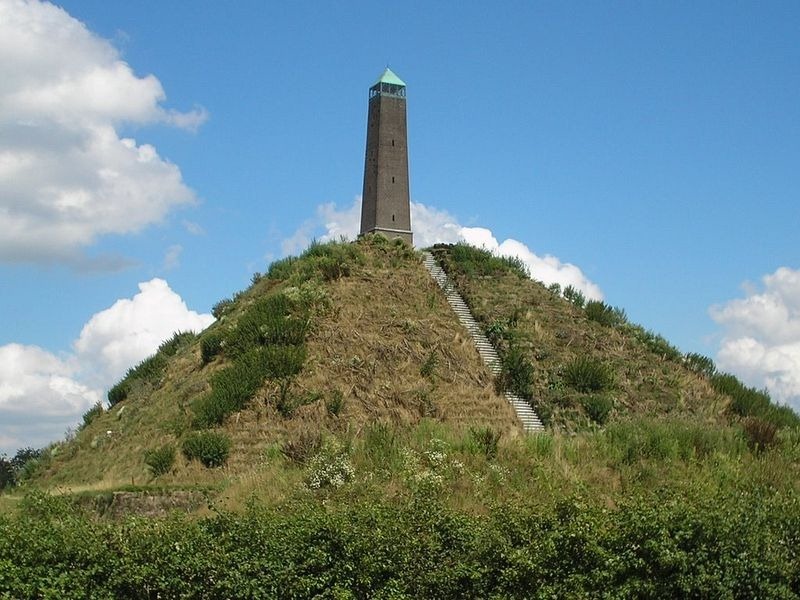
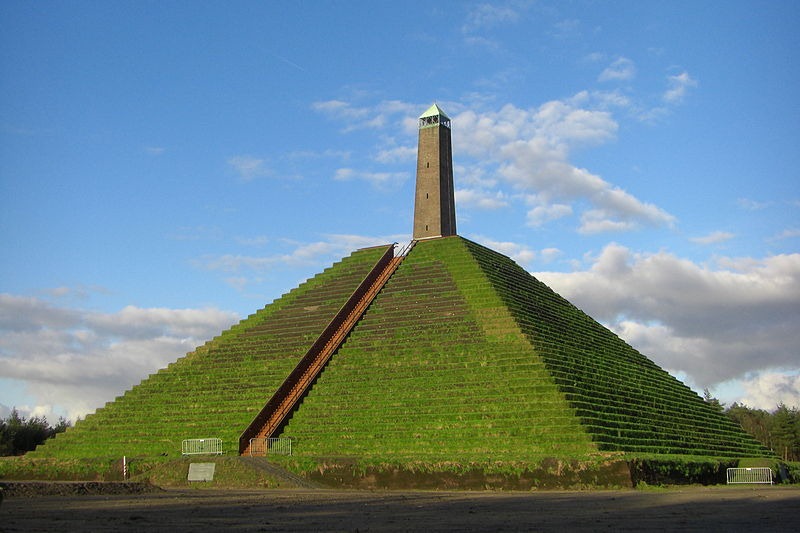
At the highest point of the Utrecht Ridge, in the Dutch village of Woudenberg, stands Europe’s only pyramid. The 36-meter-tall earthen hill was built in 1804 by Napoleon’s soldiers, under the direction of General Marmont as a tribute to his friend and example Napolean Bonaparte (although Marmont betrayed Napolean later). Marmont called it “Mont Marmont”. But in 1806, despite protest from General Marmont, Louis Napoleon, the new king of Holland, renamed the hill the Pyramid of Austerlitz in memory of the Battle of Austerlitz in which Napoleon decisively defeated the Russians and Austrians.

pyramid-of-austerlitz-4

Photo credit: Kattjosh/Flickr

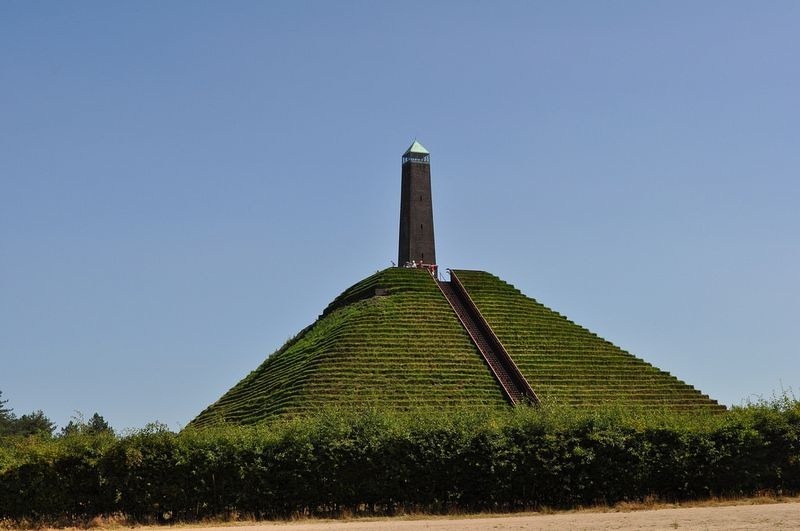
In 1804 the French General Auguste de Marmont established an army camp in this central location in the Batavian Republic, the present Netherlands, where over a period of several months he managed to forge together various battalions into a large, well-trained army, capable of beating the British enemy should there be any repetition of the invasion of 1799. Satisfied with the military power of the new army, and to occupy his bored soldiers, in the autumn of 1804 Marmont had his soldiers build an earth and turf monument inspired by the pyramid of Giza, which Marmont had seen in 1798 during Napoleon’s Egyptian campaign. Even the erosion-exposed stepped surface was imitated.

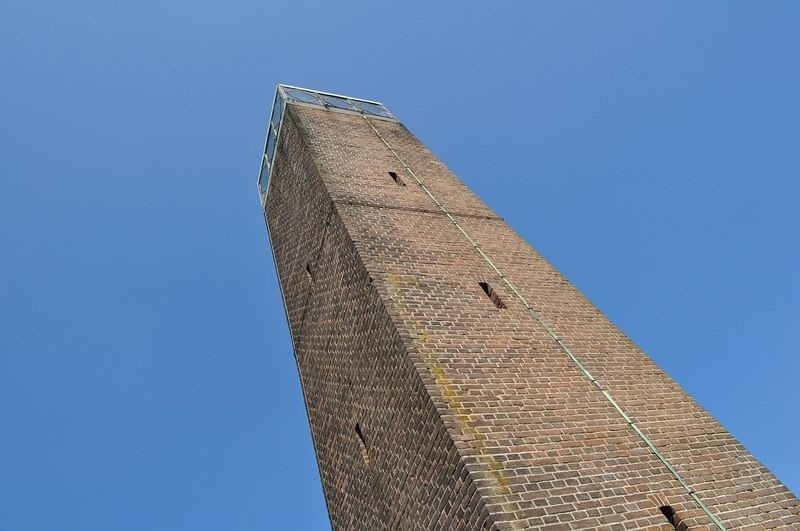
Construction took a mere 27 days and the structure rose to 36 meters. The apex of the pyramid was flat where was erected a 13-meter-tall wooden obelisk. Marmont was, however, too haste in its construction. There wasn’t even a proper foundation to the structure. It was simply a pile of earth and sand. Naturally, the pyramid started to collapse not too long after it was built. Marmont struggled to keep it in good repair, but when locals vandalized it by removing the stone plaques, the frustrated General sold the pyramid and the surrounding land to the Hubert M.A.J. van Asch van Wijk, who would later become mayor of the nearby city of Utrecht.

The pyramid remained neglected throughout the 20th century, until its restoration in 2004. The Pyramid and the surrounding area is now a popular tourist attraction and recreation spot.

pyramid-of-austerlitz-1

The Pyramid before it was restored. Photo credit: Fernambukk/Panoramio

pyramid-of-austerlitz-2

Photo credit: Traveling Tourist/Flickr

pyramid-of-austerlitz-3

Photo credit: Traveling Tourist/Flickr

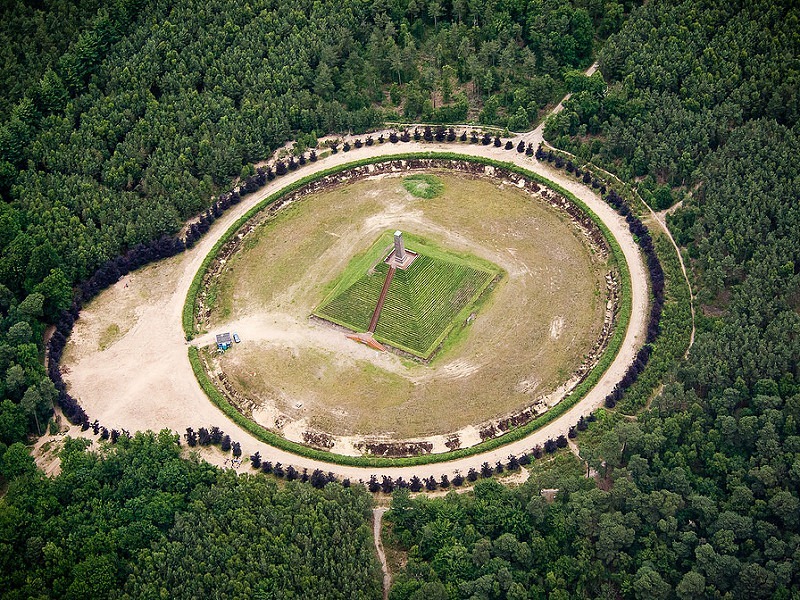
pyramid-of-austerlitz-5

Photo credit: Marc Rauw/Flickr

Source…www.amusingplanet.com

natarajan

Message for the Day…” Offer your heart to God…and gladly undergo transformation under HIS hands…”

Sathya Sai Baba

Offer your entire self, your life Unto Him; then your adoration will transform and transmute you so fast and so completely that you and He can be merged into One. He thinks, feels and acts as you do; you think, feel and act as He does. You will be transformed as a rock is transformed by the sculptor, into an idol, deserving the worship of generations of sincere men. In the process you will have to bear many a hammer stroke, many a chisel-wound, for He is the sculptor. He is but releasing you from petrification! Offer your heart to the Lord, and gladly suffer transformation at His hands. Do not defile time, or the physical sheath, or this life’s chance, using them for paltry ends. Your life is but one long pilgrimage which you entered when you were born, and may not end even when you die. Never forget that. Be pure, alert and humble as pilgrims ought to be.

Bartered, Gifted, Stolen, But Never Sold, the Elusive Kohinoor Diamond is Still Making History…!!!

Entrenched in history, having been passed down by some of the greatest rulers of massive empires in the Indian subcontinent, the Kohinoor diamond is the most desirable, priceless stone.

It’s a clear stone the size of a ping pong ball and it fits in the palm of the hand. But the Kohinoor Diamond is priceless, with a deep history engraved in its essence. The stone has seen bloodshed, violence, greed, wonder, deception and wars. It has seen men go mad with power, it has seen men fall from grace. It has seen the thirst, the hunger and the dreams that make humans essentially human. The stone has been brought down through the ages, changing hands and making history on its way.

The assertion of ownership over the stone is still an elusive decision. India, Pakistan and Afghanistan all want the stone back, claiming ownership, while Britain vehemently refuses to part with their most prized possession. As theIndian government claims to bring back to stone ‘amicably’, here’s a look at why this legendary, brilliant cut 106-carat stone is so remarkable and desirable.

From India to Present-day Uzbekistan to England

kohinoor

The Kohinoor Diamond on the royal crown

Source: Wikimedia Commons

According to legends, in the 13th century, the diamond was found in Guntur, in Andhra Pradesh. The first known record of the possession of the diamond was with the Kakatiya Dynasty in South India, and then with the Rajas of Malwa. When the Delhi Sultanate took over the South of India in 1300s, Alauddin Khilji held the stone in his palace.

In 1339, it was taken to Samarkand (present day Uzbekistan), which was its home for the next 500 years. Sultan Ibrahim Lodi gifted it to Babur. After three generations, it was passed on to Shah Jahan. Then his son Aurangzeb took over and imprisoned him, and guarded the stone with his life. It was passed on to Bahadur Shah I and later to his great grandson, Muhammad Shah. Being a weak ruler, the stone was taken from Muhammad by Nader Shah. In 1747, he was assassinated, and his general, Ahmad Shah Durrani, passed on the stone to his grandson, Shah Shuja Durrani.

Durrani took the stone to India, and gifted it to the founder of the Sikh Empire, Ranjit Singh in 1813, in return for help to take down the Afghani throne. Emporer Ranjit Singh had instructed the stone to be part of Jagannath Temple in Puri after his death in his will. But when the East India Company and the British Empire took over the Sikh Empire in 1849, the stone was confiscated, and stored at a treasury in Lahore. Finally, it was taken to the Queen in 1850. Today, it is part of the Crown Jewels, placed in the Tower of London in the UK

The Curse of the Mountain of Light

In Persian, Koh-i-Noor means the mountain of light. However, the name didn’t come about till the stone reached Nader Shah in the mid-1700s. Legend has it that in 1306, someone wrote that the stone was cursed. According to the curse, any man who owns the stone is likely to own all the riches and power of the world, but also suffer great misfortunes. Only a god or a woman can carry or wear the stone with no ill consequences.

A New, Lighter Cut

kohinoor

The size of the stone before 1852

Source: Kohinoordiamond.org

When the stone was discovered, it was allegedly 793 carats, uncut. By the time it reached the British Empire in 1849, the stone weighed 186 carats. The Queen ordered the stone to be cut in 1852, as it wasn’t as brilliant and beautifully shaped when compared to other cut diamonds in their possession at the Crystal Palace. The stone was cut into an oval shape, and weighed 42% lighter at 105.602 carats.

The Priceless Gem

In the 1500s, Babur had declared that the Kohinoor was worth half the world’s total production costs in a day. However, there’s no certain way of determining the price of the stone. It has changed hands through history mainly because it was bartered, gifted or stolen. Compared to other stones in the world that weigh somewhere close, like the 100-carat flawless diamond sold by Sotheby’s at an auction in 2015, it should cost around $22-30 million (Rs 146 crores). But considering that the stone has been possessed by many of the greatest legends in Indian and world history, the premium for it could be priceless.

The Tug of War

kohinoor

Source: Wikimedia Commons, Kohinoordiamond.org

When India got its independence in 1947, it asked for the stone back, believing it was supposed to be in India. Even after consequent requests in 1953 and 2000, the British government refused, citing that it was nearly impossible to decide who the stone belonged to, given its various owners throughout history. In 1976, Pakistan laid claim to the stone, but was refused by then-Prime Minister of the UK, James Callaghan, claiming that in a treaty with the Maharaja of Lahore in 1849, the stone was ordered to be transferred to the British Crown. Afghanistan too claimed that the stone should be returned to them.

In 2010, Prime Minister David Cameron said, in a quote that’s now popular, “If you say yes to one you suddenly find the British Museum would be empty. I am afraid to say, it is going to have to stay put.”

It might be a while before a concrete decision has been made about the ownership of the diamond. Until then, it’ll take you a ticket to London to appreciate this beauty, steeped in historical legends!

Source…..Neeti VijiayKumar in http://www.the better india .com

Natarajan
Operation Sulaimani: A District Collector’s Mind Blowing Initiative to Feed the Hungry in Kozhikode…!!!

The people of Kozhikode are silently funding an initiative that feeds anyone who is hungry for free, with utmost dignity.

“Nalla Manushyar Aanu” – “They are good people.” This is a default comment that you will hear about the people of Kozhikode, Kerala. From its fabled auto drivers who return every penny of change, to its palliative clinic that provides free care for the terminally ill, to simple heart-warming selfless conversations, the tales of Kozhikode’s good hearted people are greatly cherished.

Now here is a reason why you will also chime in with some words of praise – Kozhikode makes sure no one in the city goes hungry! Be it the poorest, the not so poor, be it you or me – the hungry will be served food for free, with utmost dignity.

People in need can collect a free meal coupon from any of the distribution centres and walk into any restaurant in the city – a meal will be served, no questions asked, no explanations sought.

K2

Restaurants in Kozhikode serve meals to the hungry in exchange for free coupons given away by the authorities.

Pic for representation purposes only: kerala.in

“We cannot ask a hungry person to get his hunger attested by a certified gazetted officer! That is why we insisted on the philosophy that ‘no questions will be asked’. If you ask for a food coupon, you will get it, it is as dignified as that,” says District Collector of Kozhikode, Prashant Nair, the chief architect of this project called ‘Operation Sulaimani’, eponymous of Kozhikode’s very own local black tea, served with a dash of lemon and cardamom.

The project was launched by Kozhikode’s District Collector, Prashant Nair, who envisaged this as a community owned and community driven initiative in its entirety. The Collector’s office initiated it and the Kerala State Hotel and Restaurants Association roped in over 125 city restaurants to become a part of this.

But, there are no big sponsors nor do any government funds flow in. The small and big contributions by the citizens are dropped into little boxes with ‘Operation Sulaimani’ inscribed on them.

K4

The volunteer team has placed the boxes across the city, into which nameless donations are made. This money is used to reimburse the meal coupons that are collected at the restaurants. Interestingly, Team Sulaimani does not take a penny from the collected money to meet its administrative costs. This money is meant only to feed the hungry, they insist.

In April 2015, Operation Sulaimani made the free meal coupons available at the Collectorate, Village and Taluk offices. Coupons were also distributed along with newspapers with the intent that people who read newspapers can offer the coupons to those in need. An army of volunteers went around the city to spread the word and distributed the coupons.

Just two days after the launch of Operation Sulaimani, the Collector got a massive one crore donation offer, which he refused. Yes, he refused!

Kozhikode Collector, Prasanth Nair

Kozhikode Collector, Prasanth Nair

The team believe that the spirit of Operation Sulaimani lies in the collective responsibility taken by the people to care for each other rather than an act of benevolence by any individual or organization.

This collective spirit has proved to be indeed powerful by feeding 9000 people in the last one year, not running out of funds, and not showing signs that the city’s good spirit will allow them to run out too.

One of the striking aspects of Operation Sulaimani is the fact that it gets fulfilled within the capabilities of existing systems. No big kitchens to feed the hungry were built and no massive funds were sought in the name of hunger eradication. By leading people to any restaurant in any part of the city, it blended the cause into the everyday function of Kozhikode’s restaurants.

The District Collector adds, “There is no food wastage nor do we have to worry about the safety of the food. If we had chosen to build a large kitchen to supply free food, we would have all these problems. But we just decided to use the existing system and make the best use of it.”

One of the restaurants in the vicinity of the city mental hospital feeds several people who come in with coupons. The restaurant owner says his life has never before felt so blessed.

sulaimani1

Coupons can be exchanged at local restaurants for free meals.

Many restaurant owners like him do not want to take the reimbursements but Team Sulaimani insists that they are paid.

Some people doubt if such a facility will be misused, but the team is not worried about that. Rather, it is finding it challenging to reach more people who are in need. The members found that hunger is not just about the people on the streets, the homeless, it is also discreetly present within our communities. Reaching these people and making them aware that food is the last thing they need to worry about is what the team is obsessed with.

If you noticed, we haven’t got any quotes from any beneficiary of Operation Sulaimani nor put up their photos. Team Sulaimani believes that the dignity of the people should not be infringed on, and we salute that spiri

Source…..Ranjini Sivaswany in http://www.the betterindia.com

Natarajan

The story of the World War II gunner who fell 22,000 feet without a parachute and lived…

Paratroopers make a big deal about jumping out of planes from 800 feet, but U.S. Army Air Force Staff Sgt. Alan Magee fell out of a plane at 22,000 feet without a parachute while the plane was on fire.

And he lived.

ball turret gunner

Magee was a ball turret gunner in a B-17 named “Snap! Crackle! Pop!” after the three mascots for Rice Krispies cereal. That plane, along with others from the 360th Squadron, was sent to bomb German torpedo stores in St. Nazaire, France on Jan. 3, 1943.

During the mission, the plane was shot by anti-aircraft guns and became a ball of flames. Magee climbed into the fuselage to get his chute and bail out, but it had been shredded by the flak. As Magee was trying to figure out a new plan, a second flak burst tore through the aircraft and then a fighter blasted it with machine gun fire.

b17 bomber liberty belle


Magee was knocked unconscious and thrown from the aircraft. When he woke up, he was falling through the air with nothing but a prayer.

Magee told God, “I don’t wish to die because I know nothing of life,” according to reports from the 303rd Bomb Group.

Magee, struggling with a shortage of oxygen and likely in shock from the events of the past few minutes, passed out again and God seemingly answered his prayer. The young noncommissioned officer fell into the town of St. Nazaire and through the glass roof of the train station. He was later found dangling on the steel girders that supported the ceiling.

The glass had slowed his fall and he regained consciousness as German soldiers took him to medical care. Magee’s right leg and ankle were broken, he had 28 wounds from shrapnel and glass, and his right arm was cut nearly the whole way off. He had also suffered numerous internal injuries.

“I owe the German military doctor who treated me a debt of gratitude,” Magee said. “He told me, ‘we are enemies, but I am first a doctor and I will do my best to save your arm.'”

GErman prison camp wwii

French POWs at work at a farm in Westscheid bei Mennighüffen.

Magee was able to keep his arm and eventually made a full recovery. He spent most of the rest of the war as a POW.

In 1995, Magee was invited back to France as part of a ceremony sponsored by French citizens to thank Allied service members for their efforts in the war. Magee was able to see monuments to the crew of Snap! Crackle! Pop!, including the nose art which had been used as a Nazi trophy until after the war when a French man recovered it. It was restored in 1989.

Magee died in 2003.

Read the original article on We Are The Mighty. Copyright 2016. Follow We Are The Mighty on Twitter.

Source….www.businessinsider.com

Natarajan

Message for the Day…” Meaning of Sai baba…”

Sathya Sai Baba

Consider the meaning of the name ‘Sai Baba’. ‘Sa’ means Divine; ‘ai’ or ‘ayi’ means mother, and ‘Baba’ means father. Your physical parents exhibit love with a dose of selfishness; but Sai, your Divine Mother and Father, showers affection or reprimands only to lead you towards victory in the struggle for self-realisation. Sai descended as Avatar to achieve the supreme task of uniting the entire mankind as one family through the bond of brotherhood, of affirming and illumining the Divine (Atmic) reality in every being. Divinity is the basis for the entire cosmos, and My mission is to instruct all to recognise the common divine heritage that binds one person to another, so that you can rid yourself of the animal, and rise to the Divine! I desire that you contemplate on this, derive joy and be inspired to observe the spiritual disciplines I laid down to progress toward the goal of realising Sai, who shines in your hearts.

Message for the Day….” My Grace is ever available to my Devotees who have steady love and faith …”

Sathya Sai Baba

Since I moved freely among people, talking and singing with them, even intellectuals were unable to grasp My truth, My power, My glory, or My real task as Avatar. I can solve any problem however knotty. I am beyond the reach of the most intensive enquiry and the most meticulous measurement. Only those who have recognised My love and experienced it can assert that they have glimpsed My reality. Do not attempt to know Me through the external eyes. When you go to a temple and stand before the image of God, you pray with closed eyes, don’t you? Why? Because you feel that the inner eye of wisdom alone can reveal Him to you. Therefore do not crave from Me trivial material objects; but, crave for Me from within, and you will be rewarded. The path of Love is the royal road that leads mankind to Me. My grace is ever available to devotees who have steady love and faith.

Image of the Day….Smallest full Moon Of 2016….April 22 …

Curtis Beaird in south Georgia captured this shot.

EarthSky Facebook friend Curtis Beaird in south Georgia captured the shot above.

Tonight – April 22, 2016 – it’s the farthest full moon, and smallest full moon, of the year. We’ve heard it called the micro-moon or mini-moon. This full moon comes less than one day after reaching lunar apogee, the moon’s farthest point in its monthly orbit. It lies some 30 thousand miles (50 thousand km) farther from Earth than 2016’s closest full moon – a supermoon – due on November 14.

Every year has a closest full moon, and a farthest full moon. The mini-moon often returns about one month and 18 days later with each passing year, meaning that, in 2017, the year’s smallest full moon will come on June 9.

In 2018, the year’s smallest full moon will fall on July 27; and in 2019, the smallest full moon will occur on September 14. The micro-moon or mini-moon frequently recurs in periods of 14 lunar months (14 returns to full moon).

The crest of the moon’s full phase comes on April 22, 2016 at precisely 5:24 Universal Time.

Although the full moon occurs at the same instant all around the world, our clocks read differently in various time zones. In the United States, the moon turns exactly full on April 22, at 1:24 a.m. EDT, 12:24 a.m. CDT, and on April 21 at 11:24 p.m. MDT and 10:24 p.m. PST.

So in the Americas, the full moon happens on the night of April 21-22, and may have already passed by the time you are reading this post.

Meanwhile, your calendar probably says that April 22 is the full moon.

No matter where you live worldwide, look for the moon to look plenty full on the night of April 22. As with any moon near the vicinity of full moon, it’ll light up the nighttime from early evening until dawn.

In North America, we often call the April full moon by the names of Pink Moon, Grass Moon, Egg Moon or Fish Moon.

But in recent years, we’ve also heard the term micro-moon to describe the year’s smallest full moon. It’s not a name (like Pink Moon) tied to skylore. It’s not bound to a particular month or season.

It’s just a modern term to describe the year’s smallest moon.

Day and night sides of Earth at the instant of the April 2016 full moon (2016 April 22 at 5:24 Universal Time. Image via Earth and Moon Viewer

Day and night sides of Earth at the instant of the April 22, 2016 full moon (at 5:24 Universal Time). Image via Earth and Moon Viewer

Like most astronomers, we at EarthSky used to call the year’s smallest full moon an apogee full moon.

The terms mini-moon and micro-moon stem from popular culture. They roll off the tongue more easily than apogee full moon. As some indication of the appellation’s growing popularity, we’ve found that theNASA Astronomy Photo of the Day and timeanddate.org sites both like to call the year’s smallest full moon a micro-moon.

In many respects, the micro-moon is the antithesis of a supermoon. The micro-moon, or the full moon aligning with apogee, is the polar opposite of a full moon supermoon, the full moon coinciding with perigee.

Every month for the next seven months, the full moon will come closer and closer to Earth until the November 14 supermoon, closest full moon of the year.

That November full moon will be the year’s biggest and brightest moon, only 221,524 miles (356,509 km) away. That’s in contrast to the moon’s mean distance from Earth of about 384,400 kilometers (238,855 miles).

In fact, the November 14, 2016, supermoon will be closer to Earth than the moon has been thus far in the 21st century (2001-2100). The moon won’t come so close again until the full moon of November 25, 2034.

But it’s the December, 2052, full moon that’ll outdo them all. It’ll stage the closest and largestsupermoon of the 21st century (2001 to 2100).

The moon looks full for several days around full moon.  William Vann caught this rising almost-full moon on March 4, 2015.

The moon looks full for several days around full moon. William Vann submitted this shot in 2015.

Bottom line: The micro-moon or mini-moon – smallest full moon of 2016 – comes on April 22. It lies about 30,000 miles (50,000 km) farther away from Earth than the full moon supermoon of November 14, 2016.

Source….www.earthsky.org

Natarajan

Message for the Day….” It is your duty to follow and practice the twin principles of Truth and Righteousness…”

Sathya Sai Baba

Ravana (the villain in Ramayana) sought wealth and gratification of desire, utterly violating the principle of dharma. He was a scholar par excellence. He had mastered the sixty-four disciplines of learning whereas Rama had mastered only thirty-two. However Rama put them into practice and thereby digested them, whereas Ravana failed to digest them. The indigestion on the part of Ravana arose in the form of desire (kama), which ultimately destroyed him. While Rama was the embodiment of Dharma, Ravana remained as the embodiment of kama. Thus there arose a conflict between righteousness and unrighteousness. Rama transformed Himself into the embodiment of sathya (Truth), since He followed the principle ofdharma. Since Ravana violated dharma, he became the embodiment of asathya (untruth). There is an eternal warfare between righteousness and unrighteousness, truth and untruth. It is your duty to follow and practice the twin principles of truth and righteousness.