The Most Expensive Book In the World !!!

A copy of John James Audubon’s Birds of America was sold at an auction in London for £7.3 million ($11.5 million), and thus became the most expensive book ever sold. The auction was a rare chance to own one of the best-preserved editions of the 19th- century masterpiece, with its 435 hand-colored illustrations. The winning bid was placed by London-based art dealer Michael Tollemache, who outbid three others during the auction.Don’t miss the video of the book at the bottom!
most expensive book
Only 120 complete sets of Audubon’s 435 hand-colored, life-sized engravings of America’s birds are believed to exist today, with the majority (107) owned by institutions. The last full edition of The Birds of America, which went up for auction in 2010, sold for £7.3m at Sotheby’s, breaking the world record for a single book.
most expensive book
“Birds of America is most significant for its sheer beauty. It’s a masterpiece of illustration,” the words of Richard Davies, a rare and used books specialist. “Aside from being famous in the rare book world, Birds of America also has immense historical and ornithological importance. Some of the birds John James Audubon painted are extinct, and he also discovered new species.”
most expensive book
Measuring over three feet in height and running to four volumes, The Birds of America was created by Audubon between 1827 and 1838.  Son of a French sea captain , Audubon was an itinerant artist who traveled America’s wilderness drawing the birds he loved. He was insistent that The Birds of America was made up of life-size illustrations and that it showed all the known species of north America, making the finished volume
most expensive book
Each of the printed books were colored by hand, and it was an extremely laborious process. Even by today’s standards, the vividness of its illustrations of birds is extraordinary but when it was being released in the 1830s it was mindboggling. Audubon employed a rather shocking technique to produce the book. He hunted the birds down and shot them before propping them up on wires to paint. Each drawing would take about 60 hours to complete. Ironically, many of his beautifully rendered subjects are now extinct, such as the Carolina Parakeet, Passenger Pigeon, Labrador Duck, Great Auk, Esquimaux Curlew, and Pinnated Grouse.
most expensive book
Picking up a copy of the “book” is a two-person job, said the dealer, who examined an edition at Sotheby’s once prior to the auction. “The (very nervous) resident expert and I (gingerly) turned the pages together, him at the top and me at the bottom, and peeled them back (respectfully) into just the right conjunction with the rest of the plates,” said Gekoski. “You have to be careful how you handle a gargantuan book worth more than 10 million dollars.”
most expensive book
most expensive book
most expensive book
most expensive book
most expensive book
most expensive book
most expensive book
most expensive book
most expensive book
most expensive book
most expensive book
most expensive book
most expensive book
most expensive book
most expensive book

Video Link  ….

SOURCE::::: http://www.ba-bamail..com  and You Tube

Natarajan

LZ-129 Hindenburg: …Airships Which Ruled The Skies Prior to Airliners !!!

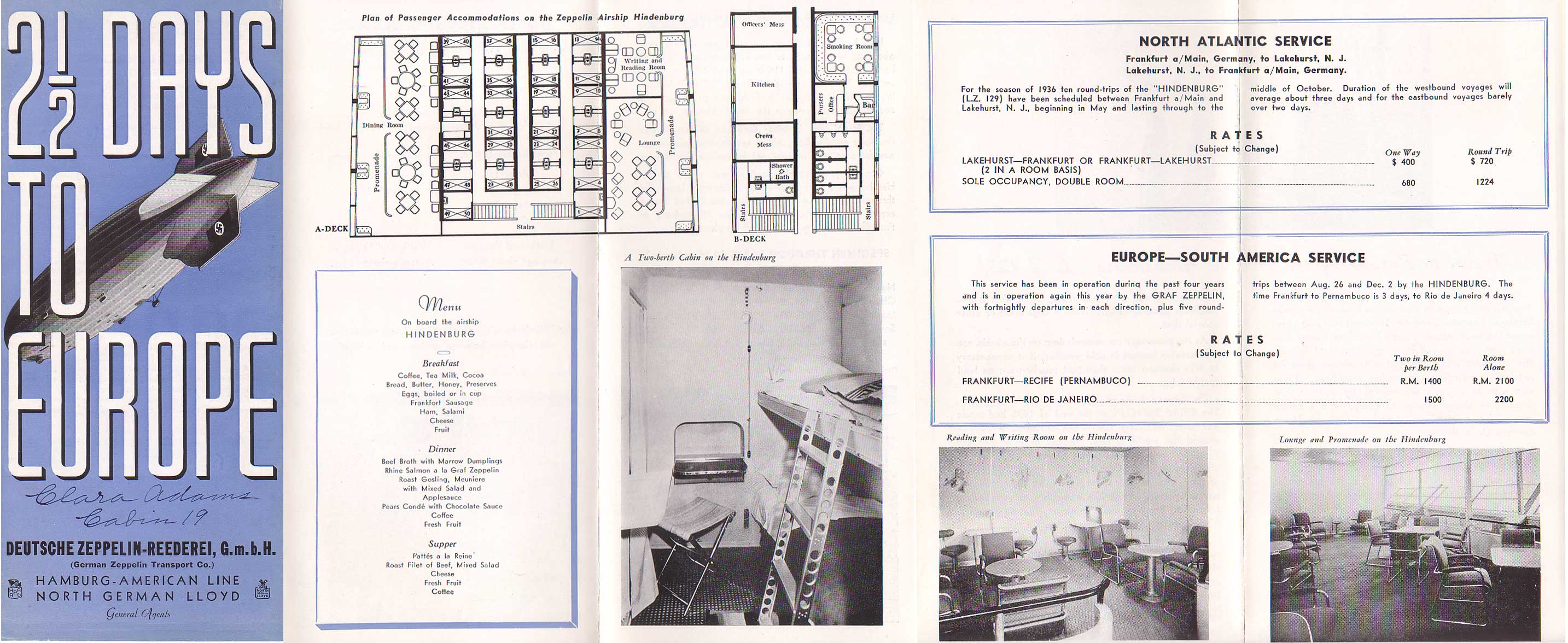
Prior to the age of the airliner, Zeppelin airships ruled the skies over the north Atlantic — connecting cities like New York with Western Europe. Zeppelin’s fleet of airships included such colossal creations like the Graf Zeppelin and the Hindenburg  along with the less famous Graf Zeppelin II.

Before the modern jumbo jet and its first class suites, the biggest and grandest thing in luxury air travel was the German Zeppelin Airship.

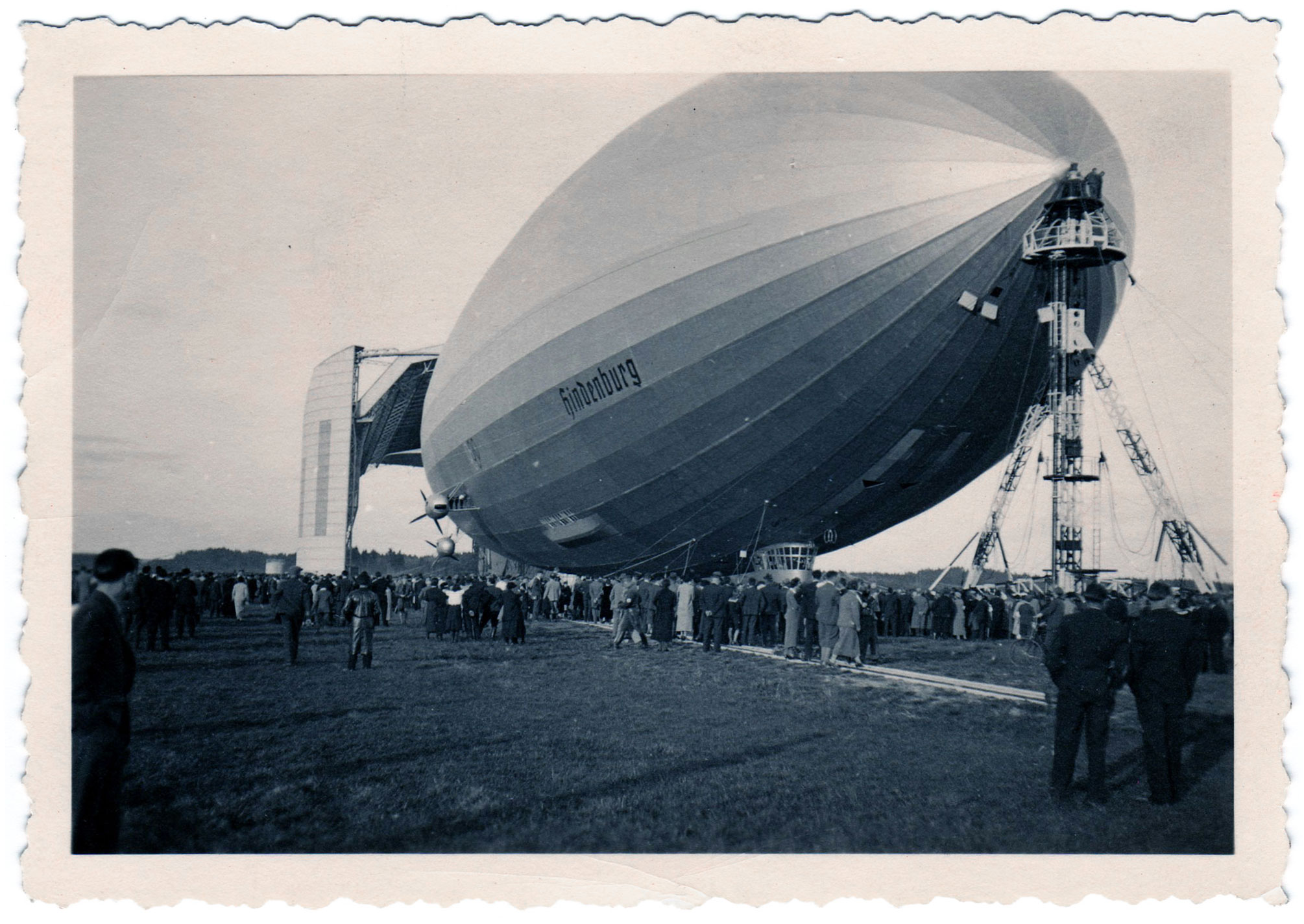
Of all the massive Zeppelin’s constructed, the most famous was the Hindenburg. The Hindenburg was designed to ferry passengers across the Atlantic in serenity, with the dirigible floating smoothly through the clouds.

The Hindenburg was the first of two “Hindenburg” Class airships constructed by the Zeppelin Company. Construction of the airship began in 1931 and was completed in 1936. The Hindenburg, along with its highly successful predecessor, the Graf Zeppelin, made numerous trans-Atlantic crossings in their brief but illustrious career.

Constructed out of an aluminum alloy called duralumin, the Hindenburg’s massive frame work was filled with 7 tons of hydrogen. Hydrogen is much lighter than air, and allows the massive Zeppelin to carry more people in greater levels of luxury. However, with an ignition source, an oxidizer, and right concentration, hydrogen can also be incredibly flammable.

The Hindenburg entered passenger service in May of 1936 and carrier up 50 passengers in luxury across the Atlantic.

The legend of the Hindenburg’s luxurious amenities are well know, but most have not seen them in living color. So take the opportunity to check out these wonderful photos of the Zeppelin’s passengers spaces courtesy of airships.net and the German Federal Archive.

 http://www.airships.net/hindenburg/interiors
 SOURCE :::: http://www.airships.net/hindenburg/
Natarajan


Message For the Day…” Duty First…Rights Next …”

Life will be unfulfilled by merely spending time. When you enquire earnestly whether duty comes first or right comes first, several people insist upon ‘rights’. Ask yourself – Where did ‘rights or entitlements’ come from? When you perform your duty, its fruit, in the shape of rights, accrues to you! How can a child exist without the mother? So also, when you perform your duties sincerely, the result of that action comes as rights. When you enquire into the fact whether rain comes first or the flow of water, it becomes clear that flow of rainwater follows rain. Without rain, there cannot be a flow. The flow can be compared to one’s ‘rights’ and rain to ‘duty’. Therefore accord your highest priority to your duties!

Sathya Sai Baba

Health Benefits of Home Grown Herbs….

Herbs are some of the best things you can grow around your house and garden. They are mostly easier to grow then many kinds of vegetables and fruits and yet they can be just as healthy and tasty to eat. These are 10 of the easiest, healthiest and most recommended herbs for you to grow, each with important tips on where and how to grow them. They are guaranteed to make your food taste better, your house smell nicer and your overall health better than ever before.

Rosemary:

A good for source of iron, calcium, and vitamin B6, rosemary has been found to be helpful with enhancing memory and concentration as well as providing neurological protection. It is an herb that’s perfect to grow in a pot, but not in direct sunlight, so you don’t even need to have a garden. Use dry or fresh rosemary to add a great taste to pizzas or baked potatoes.

Thyme:

Thyme is a powerful herb that can help you with many types of breast and colon cancer, bacterial infections and skin problems. Thyme is commonly used for the treatment of diarrhea, stomachache, arthritis, sore throat and bronchitis. The plant is very hardy and is easy to grow, it is also safe to harvest without constant fear of the plant dying. It is best used in deep stews and meat marinades.


Sage:

Sage is used in medicine to help alleviate symptoms of mental disorders such as Alzheimer’s and depression. It can also be used to solve digestive problems, improve memory and help type 2 diabetes patients with lowering cholesterol and triglyceride levels. A sage plant requires plenty of sunshine, good drainage and good air circulation. Sage is most often used with poultry and pork but can also be used to flavor cheese.

Lemon Balm:

Many people believe that lemon balm has calming effects that can reduce anxiety and sleep problems, it is also used for digestive problems like upset stomach, intestinal gas, vomiting and colic. This useful plant tends to be naturally pest and disease resistant, all it really needs is some decent soil, protection from punishing heat and a regular watering schedule. This herb can be used for making homemade tea and as a yummy salad addition.

Parsley:

Parsley contains more vitamin C and K than basically anything else you eat, it works wonders for people with kidney stones, gastrointestinal disorders, constipation, diabetes, cough, and asthma. If you plan on planting some parsley seeds in your garden do so in moist, rich soil and plant each seed about 7 inches (18 cm) apart. Chop parsley and sprinkle it on any dish you want to add a little life and color to, it’s mild on flavor and yet very refreshing.

Chives:

Chives is nutrient-dense herb, its low on calories and high on beneficial nutrients like vitamins, minerals and antioxidants. Chives contains choline, an important nutrient that helps with sleep, muscle movement, learning and memory. It has no problems growing in-doors or out-doors but it prefers full sun light, it is also important to give chives consistent watering in the growing season, to ensure high yields. Add a bit of chives to salads or other dishes spiced with herbs to give them an unexpected twist.

Mint:

Best grown in a pot, as it grows to fill whatever space you give it, mint is a very useful herb to have around the house. It can be used as a simple answer to allergies, colds, Irritable bowel syndrome and abdominal pains. Use mint to make home-made natural tea, add to your salads, and even just crush a bit of leaves and add to water with some lemon juice for a great healthy drink.

Oregano:

This plant will glow at ground level but won’t spread too aggressively which means its best gown out-doors or in large containers. Not only does this herb provide food flavor and an amazing smell, it’s also high on potent antioxidants and anti-bacterial ingredients. Water the oregano only when the soil is dry, they are native to arid regions and don’t like too much water. Use it when you are making some home-made pizza, mix it in with your pasta sauce and even try adding a bit to your morning’s scrubbed eggs.

Tarragon :

Tarragon has been used as a traditional remedy to stimulate appetite and alleviate anorexic symptoms. It is a rich source of vitamins such as vitamin C and vitamins A and B, and other minerals like calcium, manganese, iron and magnesium. Keep tarragon in a spot of the garden that enjoys full sun in the morning with dappled light in the afternoon. It can tolerate full afternoon sun in locations that don’t get too hot but it should be kept well watered. Tarragon is a tasty spice for any dish with rice or chicken and can also add a refreshing, but not overpowering, taste to fish.

Basil:

Consider planting this herb in your garden and house just for the smell if not for its many possible heath benefits. Rich in antioxidants and anti-aging properties, basil is a good source for vitamin A, vitamin K, vitamin C, magnesium, iron and potassium. During dry periods water the plants freely, basil loves moist ground, and also be sure to pick the leaves regularly to encourage growth throughout the summer. Commonly used in Italian cooking, basil combines wonderfully with anything that includes tomatoes and cheese.

Source: Jimmy R. in ba-ba mail site

Natarajan

Message For the Day…” Everyone Must Preserve to Protect The Practice of Truth…”

A real student is one who contemplates and understands the value of the education being received. Higher knowledge (Vijnana) and Supreme wisdom (Prajnana) are not merely products of education that can be acquired by learning or listening. Everyone can develop these sacred powers through culture and refinement gained through education and consistent practice. What is culture? Culture is the conscious effort put in by every being to achieve a transformation in their daily lives from untruth to truth, from non-conformance to scriptures to conformance to scriptural authority, and from evanescence to eternity. It is a spiritual journey towards Divinity. Human beings are embodiments of truth. Everyone must persevere to protect the practice of Truth (Sathya) and Righteousness (Dharma), which in turn will protect the Universe. If you succeed in doing so, the whole world will enjoy peace and prosperity.

Sathya Sai Baba

” Google’s Internet Balloons Have already Traveled 3 Million Kilometers…” !!!

Google‘s Internet balloons, part of an ambitious experiment called Project Loon to bring web connectivity to remote areas, have cumulatively traveled 3 million kilometers since 2013, the company said Thursday.

Since announcing the project last July, the search giant‘s experimental wing, Google X, has refined the manufacturing process so balloons last 10 times longer—so far, a record of 130 days—in the stratosphere compared with balloons from last year. Furthermore, with automated processes, Google can now launch up to 20 balloons a day. The company is also using computer trajectory simulations to maneuver balloons accurately to their targets.

Google’s made big progress on Project Loon, but it’s not the only company aiming to blanket the world with Internet access. Facebook is also building an army of drones, airplanes, and satellites to bring the web to remote areas lacking Internet infrastructure.

For now, though, take a moment and think about what it means to travel 3 million kilometers:

“That distance would take you around the earth 75 times, or get you to the moon and back nearly 4 times over,” according to Google.

[Screenshot: via Project Loon]

SOURCE::::www.fastcompany.com

Natarajan

This 110 Years old Light Bulb That’s is Never Been Turned Off …!!!

The 110 Year-Old Light Bulb That's Never Been Turned Off

The oldest lightbulb in continuous use was installed before the Wright Brothers took flight, is 110 years old, and is still as beautiful as the day she was born. In fact, it’s likely the oldest electrical device in continuous use period. Take a moment and consider just how much the world has changed around this one, singular device.

It was a hot summer evening in Livermore, California in 1901 and the band concert across the street was just about to conclude, but the fire captain had an announcement. The Fire Department Hose Cart House on L Street had just installed a new modern technological marvel, one of the first electric carbon lightbulbs in town and invited anyone curious to stop by and witness this new invention. This was the “Improved Incandescent Lamp” was the lightbulb of choice and it was an incredible design. In many cities the Fire Departments were motivating people to consider using this relatively new invention for safety. And of course this came by years of heartbreaking experience.

The 110 Year-Old Light Bulb That's Never Been Turned Off

A lost era when companies had so much pride about who they were, where they were and what they built.

Genius Inventor

This amazing light bulb was invented by Adolphe A. Chaillet and manufactured by the Shelby Electric Company. The beautiful handblown glass bulb with a uniquely shaped carbon filament beamed a consistent ~10 watts (perhaps more). This light bulb has been turned on ever since, over 40,150 days. The only rest she took was for about 7 days during a renovation and the random power outages over the decades. She always woke up.

You can check in on how she is doing, still proudly casting her light and reporting for duty for the last 110 years at this live webcam.

Bad For Business

Known as the Centennial Light, the Livermore Fire department is really quite proud of the bulb and the built to last American engineering and manufacturing that went into it. Sadly Adolphe’s superior lightbulb design and the Shelby Electric Company did not survive for a number of reasons.

The 110 Year-Old Light Bulb That's Never Been Turned Off

One of the many reasons tweets would not work in 1901.

Some suggest that it was a plan of planned obsolescence that was taking over the industry that finally drew the end of Adolphe’s design. Some may suggest that the Shelby technology did not survive because in some way it was inefficient or high wattage or bright light was not possible. This is not the case at all. When the Shelby bulb was installed in 1901 it was brighter than a standard Edison bulb. Shelby also had bulbs of up to 60 watts in 1901 with color tonality of light orange to almost bright white this was far better than any other product.

Shelby was sold in a roll-up of a vast majority of Lightbulb companies in the United States. The National Electric Lamp Association a division of the General Electric Company purchased the Shelby Electric Company and with-in a year stopped all production on Adolphe A. Chaillet amazing design.

The 110 Year-Old Light Bulb That's Never Been Turned Off

Still Here

The many advancements Adolphe made are lost to the sands of time. The exact processes may not have been saved, his knowledge is gone. Although there were three tantalizing patents issued in his life, they do not explain how he made his amazing carbon filament. What Adolphe really created was almost erased from popular history.

The 110 Year-Old Light Bulb That's Never Been Turned Off

Yet this 110 year old light bulb is proof of what one person can achieve. It’s very existence proudly states, I am still here. It is proof that there is far more to all technologies than we can ever imagine. It is proof that true history matters. If only to pay tribute to the genius that got us so very far.

This proud 110 year old girl elegantly reminds us of all of the past, present and future Adolphe A. Chaillet’s of the world.

My deepest wish is that this light never goes out and can be contemplated perhaps a thousand years from now. May she serve as a living reminder of how we can make even the most simple useful things heroically beautiful.

The 110 Year-Old Light Bulb That's Never Been Turned Off

The world may change and still she glows.

SOURCE:::: Brian Roemmele – Quora  IN  www.gizmodo.com

Natarajan


Awesome Zen Stories that Will Teach you Important Life Lessons….

Awesome Zen Stories That Will Teach You Important Life Lessons

Zen has a rich tradition of storytelling. Actually, just about the entire human race has a rich history of storytelling. Why do we like stories so much? Because we can identify with them. Stories, whether real or not, pull and tug at our emotions. We connect personally with stories.

Whereas someone can tell us that it’s important for us to appreciate and care for our parents, another person can tell us a story about the life of a daughter and her mother, and about how neither could ever see eye-to-eye all the way up until the day that the mother passed away.

Even if you aren’t a daughter, but a son, or if it was your father whom you had that type of relationship with, or even if you just feel like you don’t appreciate your mother or father (or both) enough, regardless, a story like that can touch you in a way that someone simply telling you, “hey, it’s important that you appreciate your parents”, could never do.

We need to experience something directly in order to really learn what it’s about. This is wisdom, as opposed to knowledge much like you’d acquire in a class at school, a parrot-like type of learning that serves as a nice basis for establishing the necessary foundation for certain larger tasks, but which can serve little real use elsewhere particularly in advancing your well-being.

I love Zen stories. Not just because I find them fun, because I do (most Zen stories require some level of meditative contemplation to figure out), I love them because their purpose is to teach a lesson. Also, Zen stories go beyond just Zen. They’re really just stories about life. So keep in mind I only say Zen stories because they originated from the Zen Buddhist tradition. They speak of truths which everyone can learn from though (as does all of Zen).

The lesson can be anything- any undeniable life truth which can be discovered through a life devoted to looking within yourself. This is the life of any Buddhist, many non-Buddhists, and should be the life of anyone who cares to find the path to true peace and happiness.

These stories only seek to point the way. Don’t take any of them for the truth without investigating them for yourself. The point isn’t to believe blindly, it’s to develop confidence in your life and in the way. By the way, I mean the way to live our best life and ultimately find peace within ourselves and with others. Here’s some of my favorite Zen stories:

6 Awesome Zen Stories That Will Teach You Important Life Lessons

1. Everything changes

“Suzuki Roshi, I’ve been listening to your lectures for years,” a student said during the question and answer time following a lecture, “but I just don’t understand. Could you just please put it in a nutshell? Can you reduce Buddhism to one phrase?”

Everyone laughed. Suzuki laughed.

“Everything changes,” he said. Then he asked for another question.

Explanation: One of the foremost teachings in Buddhism is that everything in life is impermanent. Suzuki Roshi (Shunryu Suzuki of Zen Mind, Beginner’s Mind) is referring to this impermanence by saying “everything changes”. This is a very deep teaching, but I’ll attempt to sum it up in a way that can be understood and immediately helpful in a few words.

Because it encompasses everything, you can contemplate for hours on end and not realize the full magnitude of the principle of impermanence. You are impermanent, your loved ones are impermanent, your home is impermanent, even our planet is impermanent.

Why is this important? Because it teaches us that grasping onto things is one of the major reasons as to why we suffer. We need to live being aware of the ever-changing nature of reality and appreciate the present moment. It’s not about letting go, it’s really about not grasping in the first place. If we can learn to live in this way, we can find peace in everyday life.

2. Empty your cup

Nan-in, a Japanese master during the Meiji era (1868-1912), received a university professor who came to inquire about Zen.

Nan-in served tea. He poured his visitor’s cup full, and then kept on pouring. The professor watched the overflow until he no longer could restrain himself. “It is overfull. No more will go in!”

“Like this cup,” Nan-in said, “you are full of your own opinions and speculations. How can I show you Zen unless you first empty your cup?”

Explanation: The story tells it how it is, so I’ll leave it at that.

3. Non-judgment 

Once upon the time there was an old farmer who had worked his crops for many years. One day his horse ran away. Upon hearing the news, his neighbors came to visit. “Such bad luck,” they said sympathetically.

“Maybe,” the farmer replied.

The next morning the horse returned, bringing with it three other wild horses. “How wonderful,” the neighbors exclaimed.

“Maybe,” replied the old man.

The following day, his son tried to ride one of the untamed horses, was thrown, and broke his leg. The neighbors again came to offer their sympathy on his misfortune.

“Maybe,” answered the farmer.

The day after, military officials came to the village to draft young men into the army. Seeing that the son’s leg was broken, they passed him by. The neighbors congratulated the farmer on how well things had turned out.

“Maybe,” said the farmer.

Explanation: The farmer is practicing non-judgment. He understands the true nature of life, that you can’t judge any event as an “end” in a way. Our life doesn’t play out like a work of fiction. There aren’t definite breaks that separate one moment versus another, and there isn’t a perfectly formulated end which everything builds to.

There’s always tomorrow. And whether the day was good or bad, there’s a million effects which can arise from one event. Good and bad are interconnected. They are, in fact, two sides of the same coin. If things seem perfect, they aren’t. If it seems like it’s Armageddon in your corner of the world, it’s not. Things can change in an instant, at all times. And they will at some point or another.

This doesn’t mean that we can’t be happy. On the contrary, it means that we need to realize this truth and live in a way that we’re constantly aware of it in order to find peace and happiness. Don’t let this change the way you live too much just yet though. For now just think on it, observe your life through the lens of this infinitely co-arising universe. This act in itself can bring you a great sense of peace.

4. Right and Wrong

When Bankei held his seclusion-weeks of meditation, pupils from many parts of Japan came to attend. During one of these gatherings a pupil was caught stealing. The matter was reported to Bankei with the request that the culprit be expelled. Bankei ignored the case.

Later the pupil was caught in a similar act, and again Bankei disregarded the matter. This angered the other pupils, who drew up a petition asking for the dismissal of the thief, stating that otherwise they would leave in a body.

When Bankei had read the petition he called everyone before him. “You are wise brothers,” he told them. “You know what is right and what is not right. You may go somewhere else to study if you wish, but this poor brother does not even know right from wrong. Who will teach him if I do not? I am going to keep him here even if all the rest of you leave.”

A torrent of tears cleansed the face of the brother who had stolen. All desire to steal had vanished.

Explanation: This story is pretty straightforward, but it certainly doesn’t make you think any less than the rest. How quickly would most people turn their back on someone who commits a crime like stealing, just as the pupils did. But look deeper and you might just see another human being. Someone that simply needs to be shown the path.

Don’t write people off so easily. Expressing compassion isn’t always easy, but we’re all together in this life, so we can’t just help those that keep good behavior. Those people who commit such crimes are often some of the people that need help with the most basic spiritual and human principles, such as right and wrong.

If you have a loved one who’s committed a crime before you’ll know exactly what I mean. You know they can be better and they shouldn’t be thrown out just because they did something wrong at some point. Sure, we need to keep order, so they should be disciplined for their behavior, but we also need to take time to teach them right and wrong. We should strive to lift them up just as we strive to lift ourselves and those we love up despite their own flaws.

5. Be the boss

A horse suddenly came galloping quickly down the road. It seemed as though the man had somewhere important to go.

Another man, who was standing alongside the road, shouted, “Where are you going?” and the man on the horse replied,

“I don’t know! Ask the horse!”

Explanation: This is a short but well-known Zen story with a powerful meaning behind it. The horse symbolizes our habit energy. The story explains the way we usually live, at the mercy of our old habit energies which have been established not by our intentional actions, but by our surroundings and mindless activity.

The horse is pulling us along, making us run here and there and hurry everywhere and we don’t even know why. If you stopped to ask yourself from time to time why exactly you’re running around so much, sometimes you might have an answer, but it’s never a very good one. You’re just used to it, it’s how we’re taught to live.

But as much as we run, it gets us nowhere. We need to learn how to take back the reigns and let the horse know who’s boss.

You’re the boss, you’ve always been the boss, so start acting like it.

6. Watch yourself

There was once a pair of acrobats. The teacher was a poor widower and the student was a young girl by the name of Meda. These acrobats performed each day on the streets in order to earn enough to eat.

Their act consisted of the teacher balancing a tall bamboo pole on his head while the little girl climbed slowly to the top. Once to the top, she remained there while the teacher walked along the ground.

Both performers had to maintain complete focus and balance in order to prevent any injury from occurring and to complete the performance. One day, the teacher said to the pupil:

‘Listen Meda, I will watch you and you watch me, so that we can help each other maintain concentration and balance and prevent an accident. Then we’ll surely earn enough to eat.’

But the little girl was wise, she answered, ‘Dear master, I think it would be better for each of us to watch ourself. To look after oneself means to look after both of us. That way I am sure we will avoid any accidents and earn enough to eat.’

Explanation: This one isn’t a specifically Zen story, but it’s said to have been told by the Buddha himself. This story is meant to illustrate that taking care of yourself is the most important thing you can do to take care of others.

By learning how to nourish your mind and body you’ll naturally begin to treat those around you with more compassion, love, and kindness and create a more positive impact on the world around you as a whole. There is no division, taking care of yourself (in a spiritual sense, not in a material “buy myself things” kind of sense) equals taking care of others.

Specifically, by taking care of yourself, the Buddha was referring to mindfulness. The Buddha also said that by taking care of others, by showing them compassion and loving-kindness, we take care of ourselves.