Do You Know Tyre Furniture Is the Rage in Hyderabad’s Govt. Offices? All Thanks to This Couple.

This couple went searching for furniture for their new home. And ended up making bamboo houses for others. Now, they have moved on to manufacturing all things recyclable.

Newlyweds Prashant Lingam and Aruna were out shopping for furniture to set up their new home when they realised the market is inundated with plastic, iron, and steel furniture. They decided they weren’t going to succumb to buying something commercial but would look for eco-friendly products.

So, the Hyderabad-based couple did some research and found that bamboo furniture was very common overseas, although it wasn’t very popular in India as yet. Attracted by the idea, they started looking for manufacturers of such furniture – their search eventually took them to a far-off village in Tripura called Katlamara, on the Indo-Bangladesh border.

“This sleepy little village surprised us. There were artisans in this village who were highly skilled in working with bamboo. Though they had the skills, they were finding it difficult to sustain their trade due to lack of buyers,” says Prashant.

Sensing a future in the bamboo business, the couple decided to undertake an extensive tour of places where artisans make handicrafts and furniture from bamboo.

“Our family and friends thought we were crazy. We had just been married for a year. Aruna dropped her PhD plans while I decided to take my focus away from my business. It was a big risk. But our hard work and research eventually paid off,” he adds.

In May 2008, the couple started Bamboo House India – a social enterprise that provides livelihood opportunities to marginalised communities working in the bamboo sector.

The Better India (56)

The organisation practises fair trade and ensures artisans are adequately compensated for their time, labour and raw materials used in making each product.

India is well-endowed with bamboo. It grows on millions of hectares of forest as well as private land. Since it is a grass, the plant is not killed when it is cut. Instead, it grows back. Bamboo can be harvested thrice a year. Because most bamboo grows in forest areas, Prashant and Aruna faced constraints in sourcing and transporting the raw material. But the couple overcame these barriers slowly. They funded their venture from their own personal savings and some money borrowed from family and friends.

Today, Bamboo House India is supported by the National Mission of Bamboo Applications, Andhra Pradesh Technology Development Centre, IIT-Delhi, and others.

After successfully creating aesthetically appealing houses, furniture, and other products made with bamboo, Prashant and Aruna decided to venture into making other eco-friendly products as well.

“Customers for whom we were building bamboo huts started requesting us to provide them with furniture also. We were wondering what new innovation we could come up with. This is when we hit upon the idea of using tyres to make furniture,” says Prashant.

This was again a challenging time for the couple. They had no idea as to how to use tyres as raw materials.

It took their research and development team almost a year to come up with the first prototype of a product.

DSC09448

During the process of studying tyres, Aruna and Prashant landed up at the municipal dump yard in Secunderabad. “There were acres of end-of-life tyres just lying around. We were stunned at the sheer volume. Because tyres hardly fetch any money, the authorities wouldn’t even auction them regularly. It was a breeding ground for mosquitoes as well,” he adds.

After seeing the pathetic state of the dump yard, the couple became firm in their resolve to do something with tyres. Initially, there were accidents in their workshop as nobody had any clue about cutting tyres. But they managed to put a safe system in place finally.

Bamboo House India now makes furniture, flower pots, etc., out of these recycled tyres. And the best part is the company sells these products back to the municipal authorities.

After teaming up with the Greater Hyderabad Municipal Corporation (GHMC), the company first provided furniture to the North Zone GHMC Office. There has been no looking back since then.

Today, Bamboo House India’s goods made from recyclable materials like tyres, drums, PET bottles, etc., adorn government offices, bus stops and parks in Hyderabad.

tyres

“The government officials are so happy with the development that they want to replicate this practice across Andhra Pradesh and Telangana. The State Bus Corporation has asked us to design furniture for bus stands. For the authorities it is a win-win situation actually. We use junk from their backyard and sell products back to them. They are also saving on a lot of money. The tyre pots last a long time compared to the cement pots they buy every year,” says Prashant.

The products are reasonably priced and cost between Rs. 500 and Rs. 1500. Bamboo House India has a margin of only 15-16% on these products.

The couple is now looking for social investors to scale up the business.

DSC09838

“The satisfaction we get ultimately is not only from using eco-friendly products but also from providing employment to the men and women from underprivileged backgrounds who work with us,” Prashant says.

When asked about his vision for the company, Prashant says it would be great if other social entrepreneurs across India get inspired by this model and replicate it in different parts of the country.

For more details, visit their page on Facebook.

Source……. Meryl Garcia in http://www.the better india.com

Natarajan

Waste to Valuable: Used Flowers in Religious Shrines Are given a New Life by These 2 Friends…

Two friends in Kanpur were shocked by the amount of flowers that are dumped into the Ganges every single day, choking the river with pesticides and chemical fertilisers. They started collecting the flowers from temples and mosques in the city, and turned them into some brilliant eco-friendly products.

Enter a temple, mosque, gurudwara or church in India and the first thing you’ll probably notice is the abundance of flowers at the place of worship. There are flower sellers at the entrance, flowers strewn all over the shrine’s floor, devotees receiving flowers in the form of blessings – there seems to be no limit. Ever wonder what happens to those sacred flowers once we are done with our prayers?

According to many religious beliefs, flowers that are offered during prayers are sacrosanct and cannot be dumped into the garbage once they’ve wilted. This is one of the reasons why people prefer to discard them in rivers, lakes and other water bodies. But not many of us think about the fertilizers and pesticides that might have been used to grow these flowers, which then mix with the water and pollute it.

Ankit Agrawal and Karan Rastogi, two friends from Kanpur, had often thought of this issue. While growing up, the river Ganges had been an important part of their lives and it pained them to see it become increasingly polluted as the years went by.

organic products

Karan and Ankit

“Karan and I have been friends since childhood and some of our friends live abroad as well. Whenever all of us meet in Kanpur, there isn’t much to show them in the city. And when our friends see the river, their first reaction always has to do with how polluted it is. That was the starting point for our idea. Karan used to go to the temple every day and he would see the waste flowers being collected to be dumped in the river. So we thought of doing something to treat these flowers,” says 27-year-old Ankit.

According to him, every year, approximately 80, 00,000 tons of waste flowers are dumped into Indian rivers.

So, Ankit and Karan started thinking of a way to convert these flowers into an eco-friendly business venture. They started research in 2012 and a brilliant idea had taken shape by 2014 after several experiments. In May 2015, they founded Helpusgreen with the aim of utilizing the disposed flowers and turning them into bio-fertilisers and lifestyle products.

The duo picks up flowers from different places of worship every day – approximately 500 kg of them. Since they don’t have a factory, they divide the amount equally between themselves and take the flowers to their respective homes.

The flowers are then mixed with organic cow dung and treated with about 17 natural components like coffee residue, corn cobs, etc. These help increase the nitrogen content in the end-product. After a few days, earthworms are added to the mix. These worms consume the mixture and lead to the formation of vermicompost after 60 days. In this process, earthworms ingest the organic waste and then excrete it in a digested form. The excreta, called worm cast, is a dark, odourless and nutrient rich material that works as a great soil conditioner. Worm casts or vermicompost is a ready-to-use fertilizer.

Karan and Ankit have named this product Mitti and it helps improve soil texture for the better growth of plants.\

organic products

Helpusgreen product range

While 80% of the flowers are used to make vermicompost, the rest are crushed and made into incense sticks andyajna/havan items.

For manufacturing these items, the duo has employed 85 women from different self-help groups in villages around Kanpur, thus providing them with a source of income.

organic products

Women from self-help groups

organic products

“The women take the flower dough home and work for about four hours a day. We don’t use any chemical fragrances to make these products. Everything is natural,” says Ankit.

organic products

Most temples and mosques in Kanpur have management committees that collect the flowers inside the shrines and put them in bins. From here they are sent to be thrown into the river. Helpusgreen collects the flowers directly from the places of worship. According to Ankit, 2400 kg flowers are discarded in Kanpur on a daily basis. But Helpusgreen is only in a position to treat about 500 kg flowers a day, collected from 13 temples and three mosques.

Another great feature of Helpusgreen products is that they use recycled packaging, made from discarded cartons from a liquor factory in Kanpur.

organic products

Additionally, because they know people usually don’t throw away packets that have pictures of gods and goddesses on them, Ankit and Karan pack the havan/yajna items in seed paper that is embedded with tulsi seeds.

The discarded packets will grow into beautiful plants when they come into contact with soil.

organic products

Currently, they are exporting most of their products to Switzerland and Germany. And they are also making them available on e-commerce websites like Amazon, Flipkart, etc.

“We have produced 1.5 lakh kg flower compost till now. My mom was the target customer for us in the beginning. We had decided to keep working on the products till she approved of them. And the best feedback came from her. She loves it,” says Ankit laughing.

While most of us leave it to the gods to take care of the flowers we offer up in places of worship, kudos to Ankit and Karan for turning at least a part of the offerings into such amazing and environment-friendly products.

Visit here to know more about Helpusgreen. You can purchase these products here and here. Contact the founders at hola@helpusgreen.com.

Source……..Tanaya Singh in http://www.the betterindia.com

Natarajan

” Perfect ” Images for the Day …!!!

Too much perfectionism at work will slowly kill you, but just the right amount of it is…perfect. Especially when it results in a meticulously stacked pile of carrots in a supermarket. You might be wondering if you’re in an art gallery!

Bored Panda collected a bunch of satisfying examples of perfectionism at work.


This Driver Is Suffering From Perfectionism


These Piles Of Spice At A Market In Marrakesh


Good It Department

This Is How My Local Tire Shop Keeps Their Used Tires

The Way This Is Cut

Carrots Stacked At The Supermarket

I Can't Stop Looking At It

This Column Of Textbooks

Miami Design District

This Cookie Jar

Source….www.boredpanda.com

Natarajan

The Stopping of Niagara Falls in 1969…!!!

Endeavor to change the course of history, has always been a primary motive of human civilization, through several centuries. It has been observed throughout history, that several times people have tried to undertake a feat which brings them in direct face-off with nature. May it be the intent to master the air by inventing airplanes, building mega-structures such as pyramids, or even stopping the flow of one of the world’s largest water resources, “The Niagara Falls”.

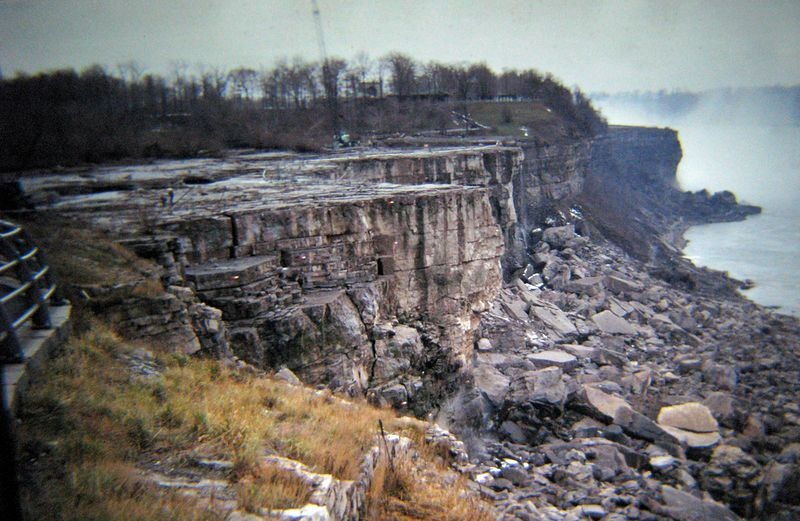
Niagara Falls consists of Horseshoe Falls and the American Falls. Due to several years of rocks falling in, between the year 1931 and 1954, the American Falls faced erosion, which if not prevented would have resulted in the permanent extinction of the American Falls. With resulting public outcry and protests to save the American Falls, the United States Army Corps of Engineers (USACE) – Buffalo district was encumbered with the immense responsibility of dewatering the American Falls for repairs. Taking up this historic challenge, a cofferdam was constructed, that took 3 days after working in two 11-hour shifts, resulting in cutting off of the flow of the Falls from 60,000 gallons per second to one-fourth of its capacity of 15,000 gallons per second.

niagara-falls-turned-off-1969-5

Photo credit: Russ Glasson/Flickr

This gigantic effort, comprising 1,264 truck loads, carrying 27,800 tons of sand and earth, was carried out to fill the cofferdam. Another minor discovery, which emerged from the De-watering Project, was that of a dead-body of a woman, which would never have been possible if the American Falls had been in full-flow. The woman was wearing a gold band, with the tragic inscription ‘forget me not’ on the inside.

Rochester Shale, a type of rock, which started crumbling due to the de-watering project, was a major concern for the geologists who wanted to carry out tests. Pipes totaling 800 feet of length and approximately six inch diameter were laid to moisten the shale.

The motive behind the endeavor to pull off such a huge feat was to conduct tests to prevent further erosion and test the structural integrity of the American Falls. Having planned through all the tests, and having implemented their staggering efforts, USACE estimated that the work will be completed by 1972. A battery of tests consisting of chemical analysis of the rocks, microscopic inspections, and several other tests were conducted accumulating large amounts of engineering, geological, and other data.

After an effort of more than 5 years, the International Joint Commission in 1975 concluded that 385,000 tons of Talus had accumulated at the base of American Falls, and had resulted in reduction of waterfall from 100 feet to 45 feet, while the depth of the Talus ranged from 25 feet to 50 feet.

As per the consensus taken from the public, there was to be no noticeable change in the appearance of American falls. But, it was accepted that there would always be some risk involved in the viewing of falls owing to continued erosion around the Falls.

The important lesson that the effort taught the engineers, and which is also a lesson for all humanity, is that everything has a life span and nothing escapes mortality. May it be flesh and blood humans, or even a stupendous spectacle for humanity such as the Niagara Falls. As is well said, that change is inevitable, and so is the mere existence of everything. It is an important question to be asked that whether something is too big to fall such as the American Falls, or something is too small to rise, like the Talus which over the years caused near extinction of American falls. The dewatering of Niagara Falls in 1969 is abject lesson in the Power of Human effort as compared to the might of Powerful Nature.

niagara-falls-turned-off-1969-1

Photo credit: Russ Glasson/Flickr

niagara-falls-turned-off-1969-6

Photo credit: Russ Glasson/Flickr

niagara-falls-turned-off-1969-7

Photo credit: unknown

niagara-falls-turned-off-1969-8

niagara-falls-turned-off-1969-2

Photo credit: Russ Glasson/Flickr

niagara-falls-turned-off-1969-4

Photo credit: Russ Glasson/Flickr

Source………www.amusingplanet.com

Natarajan

The Coconut Palace, Philippines…!!!

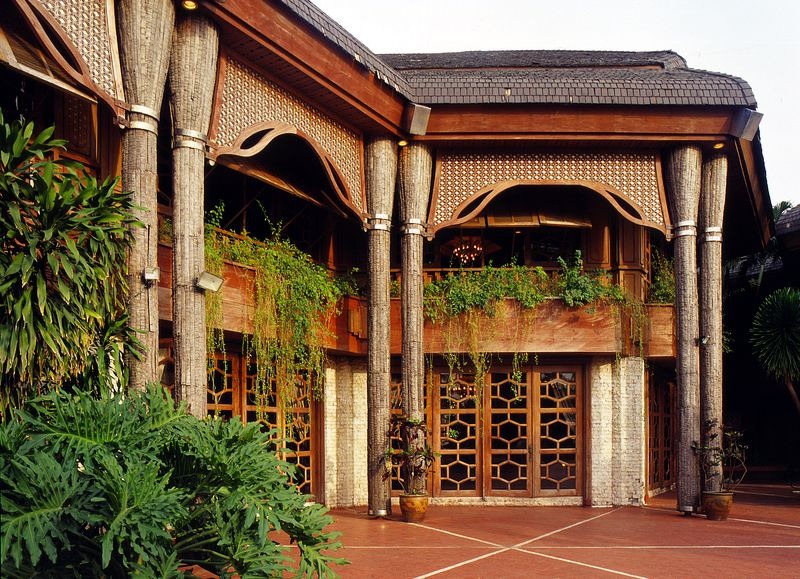
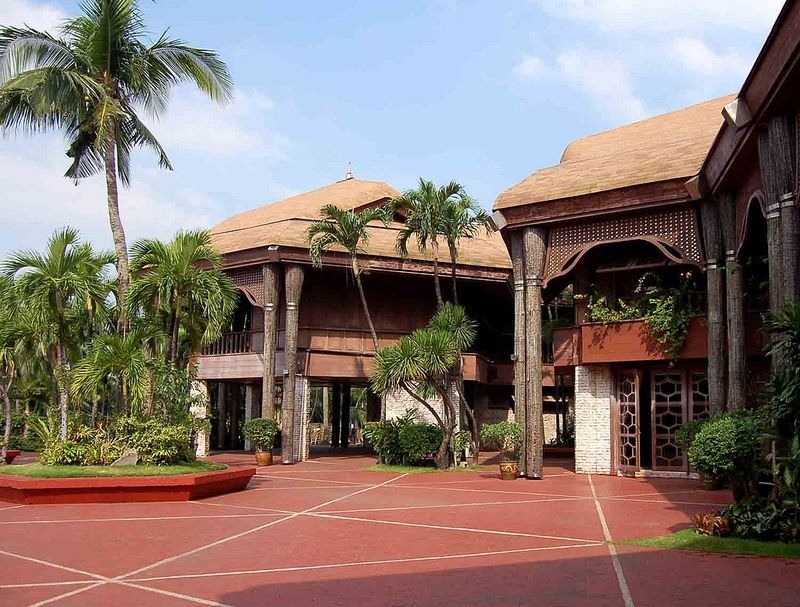
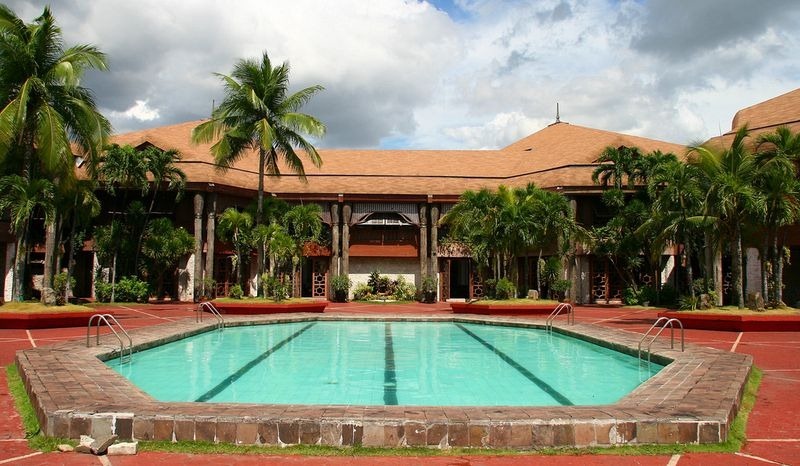
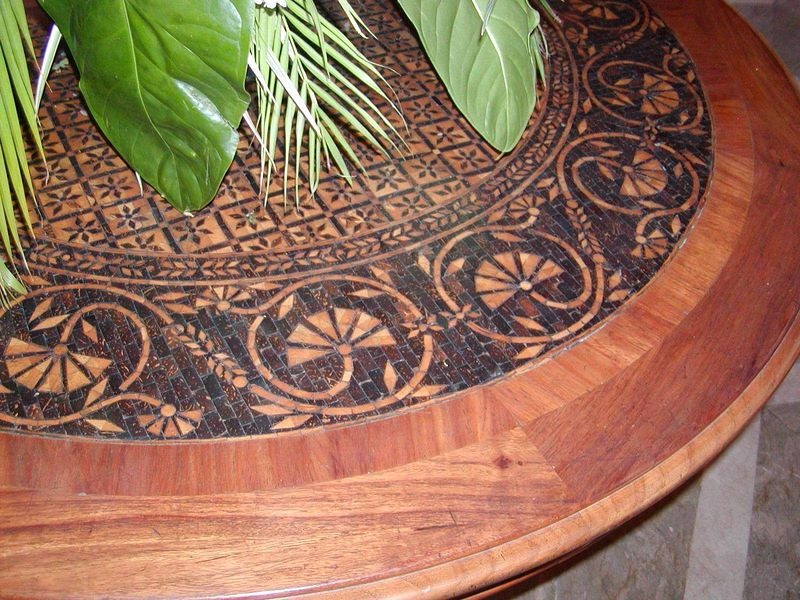
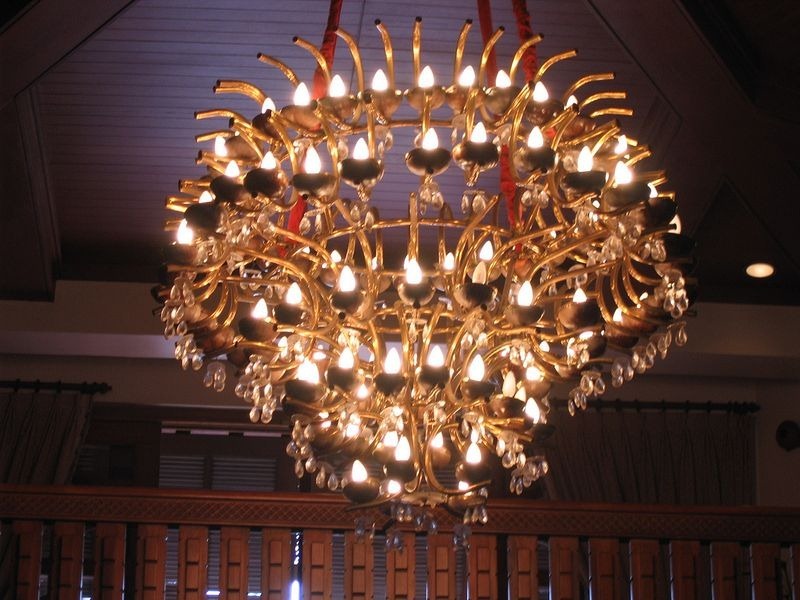
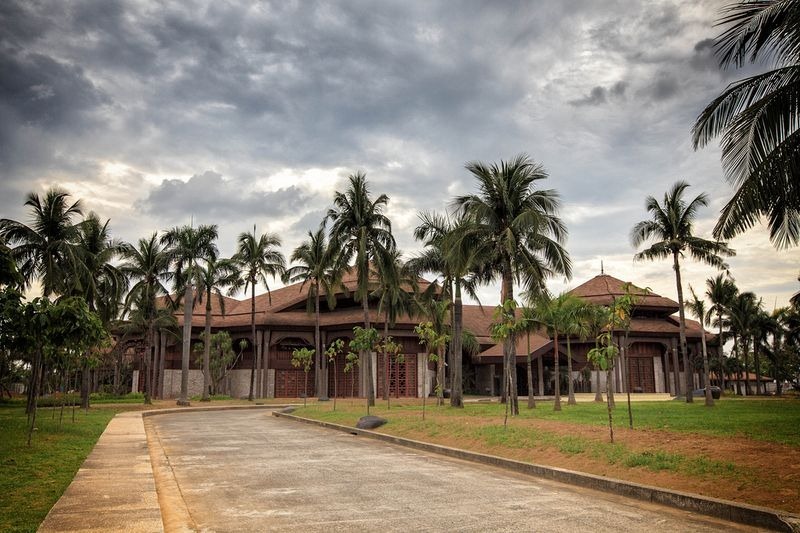
The official residence and workplace of the Vice President of the Philippines, in Manila, is a curious attraction. The building is called Coconut Palace, or Tahanang Pilipino, because of the extensive use of coconut lumber and various parts of the coconut tree in its construction. The roof is made from coconut wood shingles, while the columns are inverted coconut trunks, with their distinctive bulge at the root end forming the capitals. Coconut wood parquetry covers the floors, carpets are made of coconut fiber and wallpaper from the fibrous sheath. The massive chandelier made from 101 coconut shells is worth seeing, and so is the dining table of 40,000 tiny pieces of inlaid coconut shells.

coconut-palace-1

Photo credit: www.manosa.com

It is said that nearly 70% of the structure is made from the coconut tree. Everything from the tree’s roots to its trunk, bark, fruit, flower and shell were used to design and decorate the palace as a demonstration of the versatility of the humble coconut. No wonder the Philippines call the coconut tree the “tree of life”.

The Coconut Palace also has a certain notoriety. It was built during the regime of President Ferdinand Marcos who along with his wife First Lady Imelda Marcos, looted the Philippine treasury of at least USD 10 billion before he was ousted from his position. With the illegally accumulated wealth, the couple bought several palatial homes in the United States and Philippines, more than a hundred expensive paintings by old masters such as Van Gogh, Rembrandt, Rafael and Michelangelo, silver tableware, gold necklaces, diamond tiaras and all the best and precious the world had to offer.

imelda-marcos-shoes-1

A museum employee displays some of the shoes of former Philippine first lady Imelda Marcos, next to her portrait at the shoe museum in Manila. Photo credit: Ted Aljibe

Imelda Marcos lived a famously extravagant lifestyle and was known to have a massive wardrobe featuring at least a thousand pairs of shoes. (Her shoe collection are now on display at the Marikina Shoe Museum in Manila). It was Imelda Marcos who came up with the wacky idea of building an elegant guest house, the Coconut Palace, in order to receive Pope John Paul II when he visited the Philippines in 1981. But when the Pope learned that it was built at the cost of 37 million Philippine pesos, or USD 10 million at that time, he refused to set foot in the palace because he knew the opulent place was built at the expense of the country’s citizens who still lived in poverty.

Surprised and possibly embarrassed at the Pope’s refusal, Imelda seized a couple of average Hollywood celebrities like Brooke Shields and George Hamilton for a gala opening. Later, the palace was turned into a venue for weddings and parties before it became the Vice President’s office and official residence. The Coconut Palace was opened for public tours on 2011.

coconut-palace-2

Photo credit: Paul Shaffner/Flickr

coconut-palace-3

coconut-palace-7

Coconut inlaid onto a table. Photo credit: hoagland.org

coconut-palace-5

The coconut chandelier. Photo credit: bigbark/Flickr

coconut-palace-6

Photo credit: Adam Brill/Flickr

Sources: Wikipedia / Philippines Travel Guide / Lonely Planet / BBC / www.manosa.com

Source……www.amusing planet.com

Natarajan

The World’s Only Floating National Park Is Located in India. And It Is Amazing….!!!

Imagine standing on a piece of land that floats on water. No, not for some fictitious narration or a movie scene, but in real life – this is something that’s actually possible in Manipur.

Welcome to Loktak Lake, the largest freshwater lake in Northeast India. This iconic lake, located in Bishnupur district, at a distance of 53 km from Imphal, is known for its circular floating swamps (called phumdis in the local language).

loktak lake1

Source: Wikimedia

The term phumdis refers to a collection of heterogeneous mass of vegetation, soil, and organic matter at various stages of decomposition. Resembling miniature islands, these phumdis are found in various forms, floating on the lake.

Covering an area of 300 square metres, the lake is a lifeline for many people. It serves as a source of water for hydropower generation, irrigation and drinking water supply in the region, other than being the source of income for many fishermen who largely depend on it. Children of the fishermen can even be seen playing and running around on these phumdis.

“Loktak is our mother. Since time immemorial, the lake has been feeding the people of Manipur and nourishing us”, a fisherwoman told The Northeast Today.

The Sendra Tourist Home, located on a large phumdi island, also makes for an ideal tourist spot.

The lake is home to 233 species of aquatic plants, more than 100 species of birds, and 425 species of animals, including the Indian python and sambhar.

loktak3

Photo: Flickr/Zehawk

What makes the Loktak Lake even more special is the Keibul Lamjao National Park located at the south western part of the lake. It is the world’s only floating national park and is home to the endangered Manipuri brow-antlered deer, Sangai.

Sangai is the state animal of Manipur. Its hooves are adapted to walk on the phumdis.

loktak lake2

Source: Wikimedia

This park, which was initially declared as a Sanctuary in 1966, was subsequently declared a National Park in 1977.

16495734198_148f6a99c9_b

Photo: Flickr/Zehawk

Loktak is a birder’s paradise. The most commonly sighted birds in the region include black kite, northern hill myna, East Himalayan pied kingfisher, lesser skylark, lesser eastern jungle crow, Burmese pied myna, and more.

The lake is now endangered, with innumerable threats like pollution, decline in diversity of avifauna and thinning of phumdis.  All this, in turn, threatens the Sangai deer. Phum Shang, an investigative documentary directed by Hao Bam Pabankumar, which examines the serious environmental concerns facing Loktak Lake, won the Golden Conch award for Best Documentary in the Mumbai International Film Festival recently.

Source…….www.the betterindia.com

Natarajan

Construction Worker Becomes Sarpanch & Teaches Villagers How to Use Computers Too !!!

Nauroti Devi is not any ordinary 70-year-old. This Dalit woman from Harmada village in Ajmer district of Rajasthan never went to school. But she got elected as the sarpanch of the village and is famous for overcoming the domination of the Jat community in the village.

Can you believe that Nauroti is the one who taught the panchayat secretary how to operate a computer?

She has also trained many other women from her village to use computers.

sarpanch

Photo source: dalitjagran.blogspot.in

According to The Hindu, she says “I carried the computer and printer into the office and used it for regular communication and also to take out printouts of notices.”

In the 1980s, Nauroti joined The Barefoot College in Tilonia. It is here that she joined adult literacy classes and learnt to operate a computer.

During her five-year term as sarpanch, Nauroti Devi managed to do a lot of work for the community. She constructed toilets and houses for those living below the poverty line.  She restored a burial ground and fenced it to stop encroachment. She started work on a long-pending Primary Health Center in the village. She also waged a battle against the alcohol mafia. When Nauroti ended her term, she left a surplus of Rs. 13 lakh in the panchayat account.

Nauroti has always been a woman of great resolve. Prior to joining the Barefoot College, she used to work at a construction site as a stone worker. When she was not paid the minimum wage, she managed to mobilise other construction workers and fought for a raise. The workers finally got justice when their case was taken to the court by an NGO.

She was disqualified from contesting in the 2015 panchayat elections for being illiterate. And for this, she has filed a writ petition in court.

Even though she’s no longer a sarpanch, she continues to be a voice for the marginalised in her community.

Source……Meryl Garcia in http://www.the better india .com

Natarajan

Parents Don’t Have to Worry About Their Child’s School Bus Anymore. All Thanks to This 15-Year-Old!

Parents are often worried about the safety of their children whenever they are going to or coming back from school. Why is the bus late? Did my child reach safely? Did my child get on the bus? But not anymore! A 15-year-old has developed a solution in the form of an app.

Getting irritated because your school bus is stuck in a traffic jam due to heavy rains is one thing. But to reach home late, find your parents worried, and develop an app so they won’t be stressed the next time – that’s called combining innovation with care. Arjun S. is a 15-year-old student of Class 10 in Velammal Vidhyashram School in Chennai. He has developed an app that can help parents track the position of their children’s school buses whenever they want.

“I got the idea after a cyclone hit Chennai in 2012. I reached home late one day and my parents were really scared because they had no way of finding out if I was safe. I thought that if there could be a way to track school buses easily, it would be so much better for parents and school authorities. I was learning more about building apps and the android programming language at that time, and decided to find a solution,” says Arjun.

The young boy’s love for technology led to the development of LOCATERA – an app to find out where exactly a school bus is located at any given time, and to know if a particular child is there in the bus or not.

track a school bus

“I have been using computers since the age of two. My dad had a system and I would stack up some pillows on the chair to reach the keyboard to use some basic electronics simulation software. My parents were always careful about giving me age-appropriate tools for using the system,” he says, talking about his interest in this field.

The first app developed by Arjun was called Ez School Bus Locator. He shared it with many schools, including his own, and collected the feedback from administrators and parents about their specific requirements. “I collected the information about the schools’ basic requirements and modified the app accordingly. LOCATERA is a modified version of Ez School Bus Locator, and it came two years after the first one. Unlike other solutions that require some kind of hardware installation, all this app needs is the presence of a phone inside the bus,” he adds.

LOCATERA is basically a tri-app solution, which means three apps working together. These include the attendant, admin, and parent apps.

1. LOCATERA attendant:

track a school bus

This app captures the location of the bus and shares it with parents and the school if required. The bus attendant can install and keep it on his/her phone. The attendant adds all students to the app by scanning their Quick Response (QR) Code-based ID cards, using bar code scanning, as and when the students board or get off the bus. Student activities are recorded on the Cloud – to be used by schools in case of emergencies.

2. LOCATERA admin:

track a school bus

The admin version has to be with the administrator of the school transport system so he/she can see all the buses together, locate the position of a particular bus, get information about it, and find out which students are present in the bus at any given time.

3. LOCATERA parent:

track a school bus

Parents have to get their mobile numbers verified before they get access to the app. Once they are in, they can find the location of the bus by clicking on the ‘Bus on Map’ option. Alternatively, they can tap on ‘Bus Location’ and ‘Distance & Time’ options to find out the exact address of the bus and how soon the child will reach home. To find out if the child is there in the bus or not, they just have to select the ‘Child in Bus’ option. Parents who don’t have android phones can give a missed call to the attendant’s phone whenever they want the information. The LOCATERA attendant looks into the bank of registered numbers to find out which parent has called. He/she then sends an SMS with information about the child and the bus location.

Arjun used Massachusetts Institute of Technology (MIT)’s programming tool called MIT App Inventor to develop LOCATERA. It is basically a programming language tool with a more graphical user interface, instead of codes.

Arjun submitted the app to ‘Google India Code to Learn Contest 2015’ and was declared the winner. He also won the MIT ‘App of the Month (Best Design)’ award in December 2012 for Ez School Bus Locator.

Among other awards, he also received the 2014 ‘National Child Award for Exceptional Achievements for Computer Technology’, which was initiated by the Ministry of Women and Child Development, Government of India.

track a school bus

“I would like to work in the field of computer science itself, and would like to go to IIT or MIT or something like that,” says Arjun, talking about his future plans.

He also started a company named LateraLogics in 2012, which has several products including some other apps that Arjun has developed over the past three years. Currently, only the demo version of LOCATERA is available on Play Store, for all three stakeholders. Those who want to use the complete version can fill out the LOCATERA Flexi Plan Enquiry Form to receive the pricing details for that particular school. Arjun keeps receiving constant feedback from the schools that are already using it.

As he is also preparing for his board exams, Arjun has a tough time juggling his studies and his passion. “But I somehow manage it,” he says.

track a school bus

Arjun at the award ceremony

He also likes to play the keyboard, and is a badminton enthusiast in his free time.

“We have been supporting Arjun from a very young age…He has always been passionate about technology. We gave him the right kinds of tools from the start and he has always been serious about what he does. He does a lot of research and discusses his ideas before finalising anything. We are also in touch with the state and Central government to see how the app can be implemented all over the country. The Ez School Bus Locator version is free of cost and it is being used in more than 10 countries right now. We think it can be used in India as well,” says Arjun’s father Santhosh Kumar.

The agreement for using the app for one academic year includes a one-time activation fee (per child, per year) and a monthly maintenance fee option (per month, per child). After a successful pilot project in his school, Arjun is having discussions with other schools for implementation the same. Trial runs have been scheduled for some schools in Tamil Nadu, Kerala, and other parts of the country as well.

The agreement for using the app for one academic year includes a one-time activation fee (per child, per year) and a monthly maintenance fee option (per month, per child). After a successful pilot project in his school, Arjun is having discussions with other schools for implementation the same. Trial runs have been scheduled for some schools in Tamil Nadu, Kerala, and other parts of the country as well.

“Look for problems around you and get inspired by them. You’ll see a lot of opportunities to make this world a better place using your own skills,” is Arjun’s advice to other youngsters like him.

Download the demo versions of the app here:
LOCATERA attendant
LOCATERA admin
LOCATERA parent

You can find other details about installing the app here.

Source…….Tanaya Singh in http://www.the betterindia.com

Natarajan

படித்தது ….மனதை தொட்டது …”வேர்களை இழந்து விட வேண்டாம்….”

காமராஜரின் இல்லத்தில் ஈ.வி.கே.சம்பத், குமரி அனந்தன் இருவரும் அவரோடு உரையாடிக் கொண்டிருந்தனர். அப்போது காமராஜர், “ஏம்பா…இந்த கோயில் கோபுரங்களை எல்லாம் ஏன் உசரமா கட்டியிருக்காங்க?” என்று கேட்டார். ஒருவர் சொல்லின் செல்வர், மற்றொருவர் இலக்கியச் செல்வர். கேட்கவா வேண்டும்…“அது நமது ஆன்மிக, கலை, கலாசாரப் பண்பாட்டுப் பெருமை, அழகு, அடையாளம்” என இருவரும் காரணங்களை அடுக்குகின்றனர்.
“அட… அதுக்கெல்லாம் இல்லைப்பா” என்று மறுத்த காமராஜர் கூறினார், “அந்த காலத்தில் ஒரு ஊரில் இருந்து இன்னொரு ஊருக்குப் போகணும்னா நடந்துதான் போகணும், சாலை வசதி, வாகன வசதியெல்லாம் கிடையாது. அப்படி போகிறவர்கள் தாகத்தோடும், பசியோடும் போவார்கள். எங்காவது கோபுரம் கண்ணுல தென்பட்டதுண்ணா… கோபுரம் இருந்தா கோயில் இருக்கும், கோயில் இருந்தா மக்கள் இருப்பார்கள், மக்கள் இருந்தால் நம் பசியும், தாகமும் தீர்வதற்கு வழி பிறக்கும் என்பதை அடையாளப்படுத்தத்தான் கோயில் கோபுரத்தை உசரமா கட்டியிருக்காங்க!” என்று பதில் அளித்தாராம்.
எனக்கும், உங்களுக்கும் கோயில் கோபுரத்தைப் பார்க்கும் போது இந்த எண்ணம் தோன்றியதுண்டா? பெருந்தலைவருக்கு மட்டும் தோன்றியது என்றால் என்ன காரணம்? அவர் எப்பொழுதும் மக்களைப் பற்றி மட்டுமே சிந்தித்துக் கொண்டிருந்த தலைவர் என்பதால்தான்.
மேற்கண்ட தகவல், தமிழகப்பண்பாட்டின் உச்சத்தைத் தொட்டுக் காட்டுவதாக அமைந்துள்ளது. விருந்து முதலான நம் பாரம்பரிய மரபுகள் அனைத்தும் மனிதத்துவம் சார்ந்தவை. இத்தகைய நம் பாரம்பரிய பண்பாடுகள் பலவற்றை இன்று நாம் இழந்து வருவதோடு,
இலக்கிய வாசிப்பின்மையால் அது குறித்த சிந்தனைகளையும் இழந்து வருகிறோம்.கவிதை சொல்லும் சேதி பூதை தேசிகன் பாடிய கவிதை ஒன்று.
‘என் பாட்டியின் மாமியார்
என் பாட்டியிடம் சொன்னாளாம்…

இந்தப் பானையில் அரிசி
இருக்கிறது
இந்தப் பானையில் உளுந்து இருக்கிறது
இந்தப் பானையில் புளி இருக்கிறது’
என்பாட்டி என் அம்மாவிடம் சொன்னாளாம்…
‘இது அரிசி இருந்த பானை
இது உளுந்து இருந்த பானை
இது புளி இருந்த பானை’
இப்போது என் அம்மா
என் மனைவியிடம் சொல்கிறாள்…
இது அரிசிப்பானை இருந்த இடம்
இது உளுந்துப் பானை இருந்த இடம்
இது புளிப்பானை இருந்த இடம்’
அரிசி போய், அரிசி பானை போய், அரிசி பானை இருந்த இடம் மட்டும் இன்று காலியாக இருக்கிறது. இந்தக் கவிதை, நமது பாரம்பரிய பண்பாட்டுச் சரிவை மிகச் சரியாக அடையாளப்படுத்தி உள்ளது.
விரிந்து கிடந்த திண்ணைகள்
ஒரு காலத்தில் திறந்த மனசு போல வீட்டு வாசல் கதவு திறந்திருக்க… வருகின்றவர்களை அரவணைப்பதற்கு விரியும் கரங்கள் போல வீட்டின் முன் இருபக்கமும் திண்ணைகள் விரிந்து கிடந்தன. ஒரு யாசகனோ, வழிப் போக்கனோ அதில் அமர்ந்தால் தாகமும், பசியும் நீங்கிச் செல்வதற்கு உத்தரவாதம் இருந்தது. இன்று கிராமங்களில் கூட வீடுகளின் முன் திண்ணைகளைக் காண முடியவில்லை.
அதனால்தான், “அன்றைக்குத் தமிழர்கள், முன்பின் தெரியாத மனுசாள உபசரிக்க, வீடுகளுக்கு முன்னால் திண்ணைகளைக் கட்டி வைத்தார்கள். இன்றைக்கோ நாய்களைக் கட்டி வைக்கிறார்கள்” என்றார் திருமுருக கிருபானந்த வாரியார்.
வேர்களை இழந்துவிட்டு விழுதுகளின் பலத்தில், நிழல் தேடும் சமூகமாக நாம் மாறிவருகிறோம். நமது பண்பாடு வளர்த்தெடுத்த அர்த்தமுள்ள வாழ்வியல் மரபுகளை, மீட்டுருவாக்கம் செய்ய வேண்டிய காலத்தில் நாம் வாழ்ந்து கொண்டிருக்கிறோம்.

மாறிய காட்சிகள் அதிகாலையில் வீடுகளுக்கு முன்னால் சாணம் மெழுகி, தண்ணீர் தெளித்து, மாக்கோலம் இட்ட காட்சிகளை இன்று கிராமங்களில் மட்டுமே காணமுடிகிறது. நகரியப் பகுதிகளில் அடுக்குமாடி குடியிருப்புகளில் அடைபட்டுக் கொண்ட தமிழர்கள் ஸ்டிக்கர் கோலம், பெயின்ட் கோலத்தில் திருப்தி அடைந்து விடுகின்றனர். மண் முற்றத்திற்கு எங்கே செல்வது?
வீடுகளுக்கு முன்னால் அடுப்பு கூட்டி, கரும்புகள் நட்டு, அறுவடை நெல்லின் புத்தரிசியை புதுப்பானையில் சர்க்கரையுடன் இட்டு, முந்திரி, ஏலம் மணக்கப் பொங்கலிட்டனர். பொங்கி வழியும் வெண்நுரையில் வாழ்வின் வசந்த அபிவிருத்தியைக் கண்டு, ‘பொங்கலோ! பொங்கல்!’ என்று ஆனந்தக் குரல் எழுப்பினர். இத்தகைய குடும்பங்களில் ஒருவராக இருக்கும் பேறு, இன்று எத்தனைத் தமிழர்களின் வாரிசுகளுக்கு வாய்த்திருக்கிறது?
எங்கள் வீட்டில் புது மண்பானையில் புது அரிசிப் பொங்கலிட்டது உண்டு. மாடுகளைக் குளிப்பாட்டி கொம்புகளுக்கு வர்ணம் பூசி அவற்றை போசித்தது உண்டு. இன்று வீட்டில் மாடுகளும் இல்லை, பொங்கலைக் கொண்டாடிய மூத்த தலைமுறையின் மனசும் இல்லை.
இன்றும் பொங்கல் பானையின் தலையில் வெண்நுரை பொங்கி நிற்கும் காட்சியைப் பார்க்கும் போதெல்லாம், என் பாட்டன், தமிழ் அடையாளத்துடன் தலையில் தொப்பியோ, தலைப்பாகையோ அணிந்திருந்த கம்பீரத் தோற்றம்தான் நினைவிற்கு வருகிறது.
இது ஒருபுறம் இருக்க, தமிழர்களை ஒருங்கிணைத்த கூடிக் குதுாகலிக்கச் செய்த பொங்கல் விளையாட்டுக்களும் அருகிவிட்டனவே. பொங்கலின் கொண்டாட்டங்களான உறி அடித்தல், சடுகுடு, மாடு பிடித்தல், சிலம்பம் போன்ற வீர விளையாட்டுக்களை அரிதாகவே சில கிராமங்களில் நடந்ததை பார்க்க முடிந்தது. இந்த வீர விளையாட்டுக்கள் எல்லாம், கிராமங்களின் அசல் முகம் என்பதற்கு இனி திரைப்படங்களின் பதிவுகள் மட்டுமே சாட்சிகளாகி விடுமோ?
தேசபாதுகாப்பு என்னவாகும் ஜல்லிக்கட்டு கூட இன்று விமர்சனத்துக்கும், சட்ட ரீதியான தடைக்கும் உள்ளாகி நிற்கிறது. ஜல்லிக்கட்டு போன்ற வீர விளையாட்டுக்களைத் தடை செய்து விட்டால், தேசத்தின் வருங்காலப் பாதுகாப்பே கேள்விக் குறியாகி விடும்! தேசப் பாதுகாப்பிற்காக ராணுவத்திற்கு ஆள் எடுத்தால், நம் கிராமங்களில் இருந்து தான் ஆயிரக்கணக்கில் இளைஞர்கள் செல்வார்கள். ஏனென்றால், இயல்பான ஆற்றலை, முனை முகத்து நிற்கும் துணிச்சலை வீர விளையாட்டுக்கள் மூலம் அவர்கள் பெற்றுள்ளதுதான் காரணம்.
ஜல்லிக்கட்டு போன்றவை தடை செய்யப்பட்டால், வீரம் சார்ந்த விளையாட்டுக்கள் முக்கியத்துவம் இழந்தால், அது தேசத்தின் பாதுகாப்பையே உறுதியில்லாமல் ஆக்கிவிடாதா?
எனவே இயற்கையைப் போற்றல்! வேளாண்மையைக் கொண்டாடுதல்! உழவுக்கும் தொழிலுக்கும் உடன் உழைக்கும் ஜீவன் மாடுகளைச் சிறப்பித்தல்! வீரத்தை விளையாட்டுக்கள் மூலம் வளர்த்தெடுத்து அதனை சமூகப் பாதுகாப்புக்கு உரியதாக்கல்! ஜாதி, சமய அடையாளங்களைக் கடந்து, பண்டிகைகள் மூலம் ஒன்றுபடுதல் என தமிழனது பண்பாட்டு மரபுகளைப் போற்றுவோம்!

Source…….
-பேராசிரியர்.மு.அப்துல்சமது,தமிழ்த்துறை, ஹாஜி கருத்த ராவுத்தர் கல்லுாரி,உத்தமபாளையம்.93642 66001

http://www.dinamalar.com

The Gold Mines of Serra Pelada…….!!!

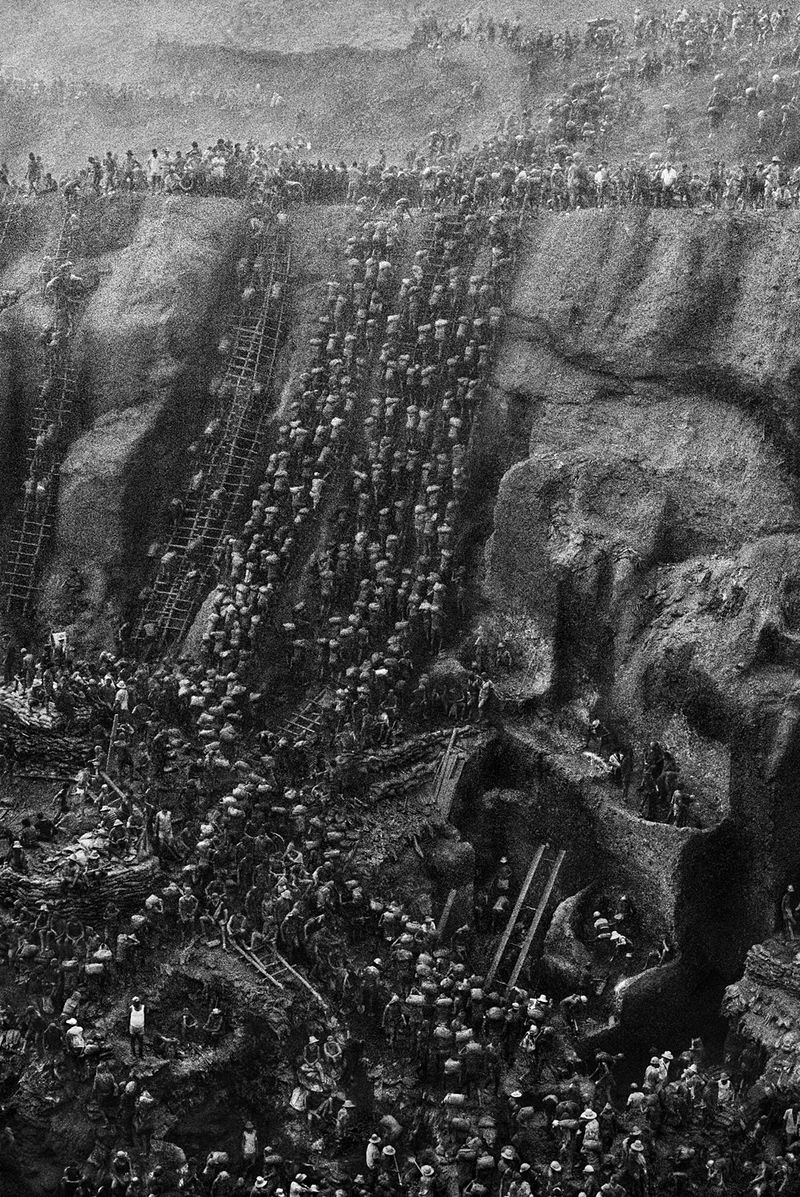
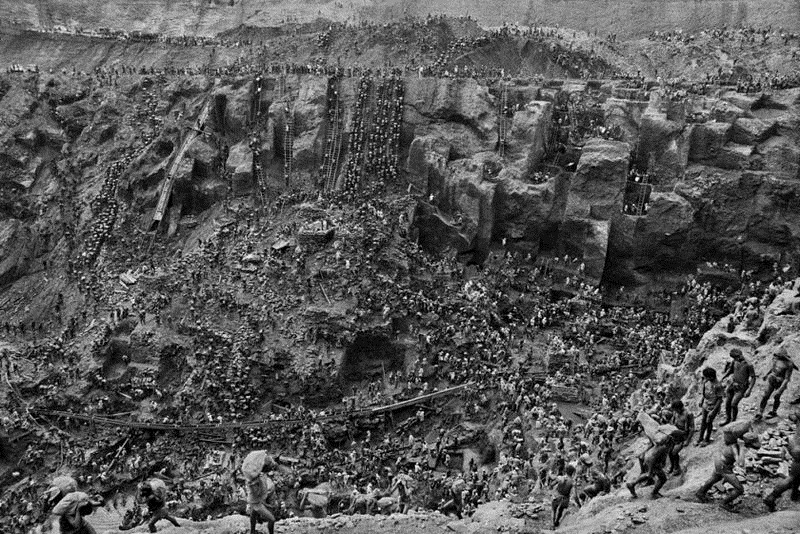
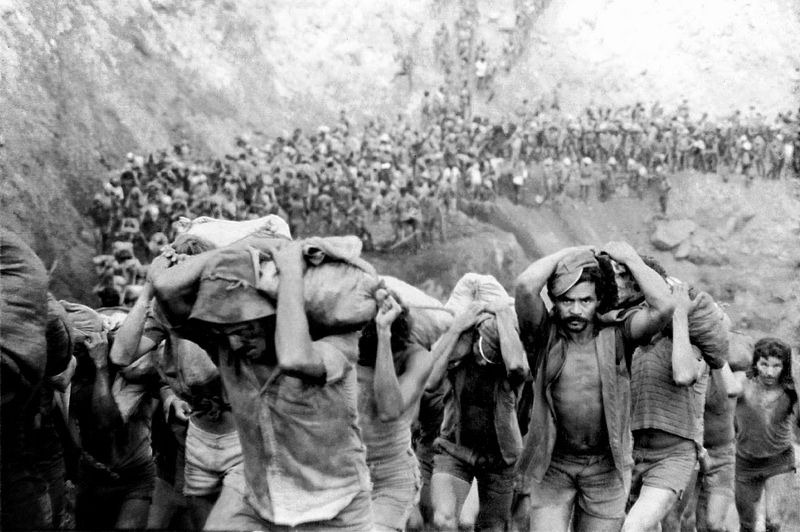
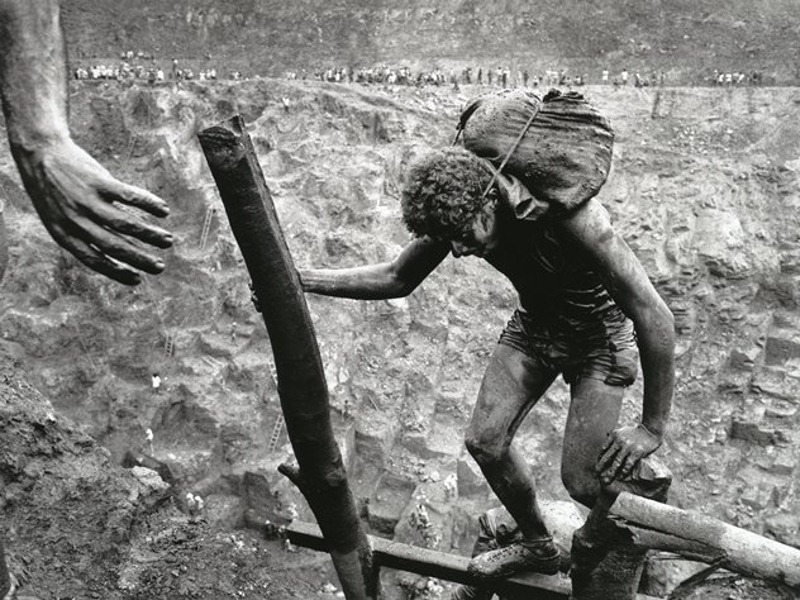
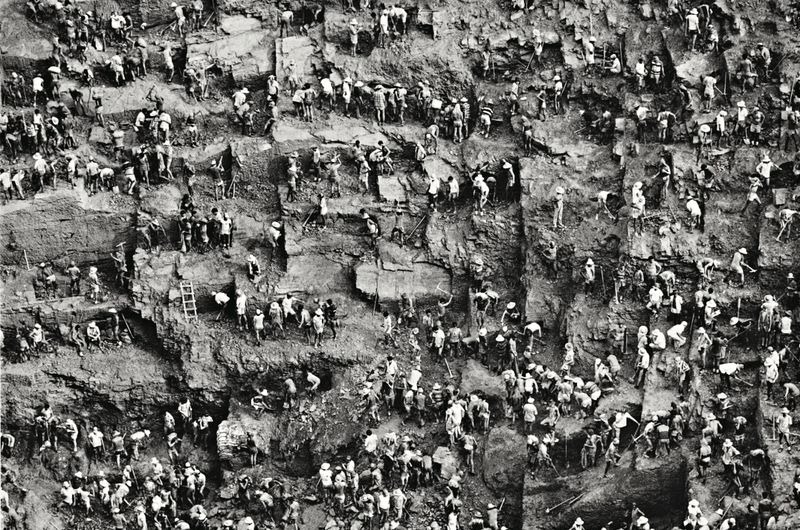
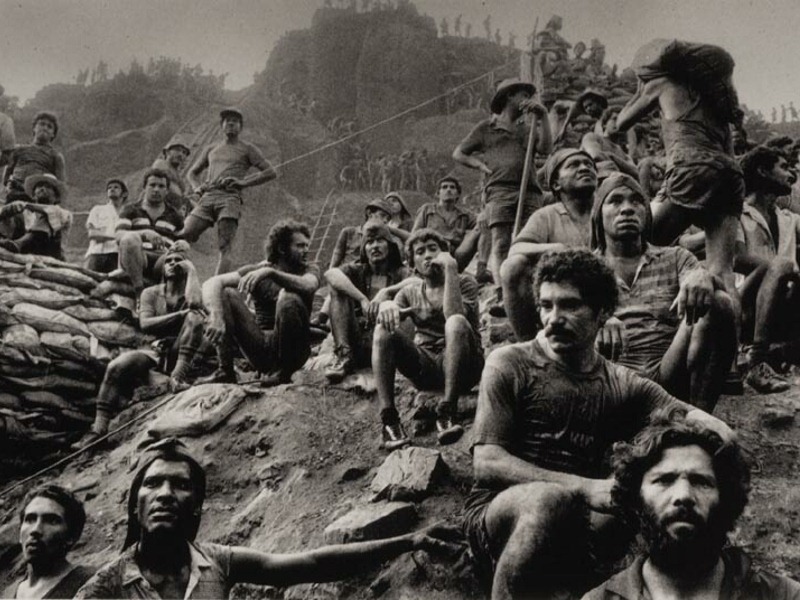
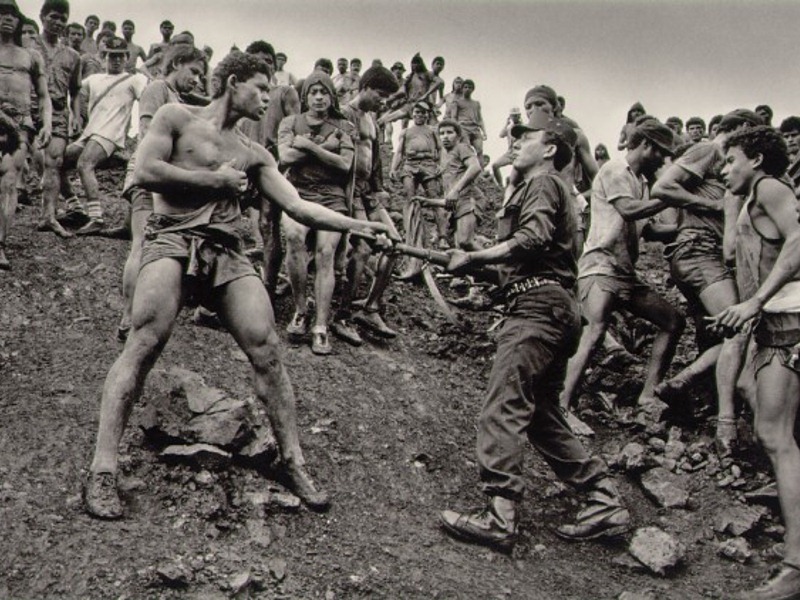
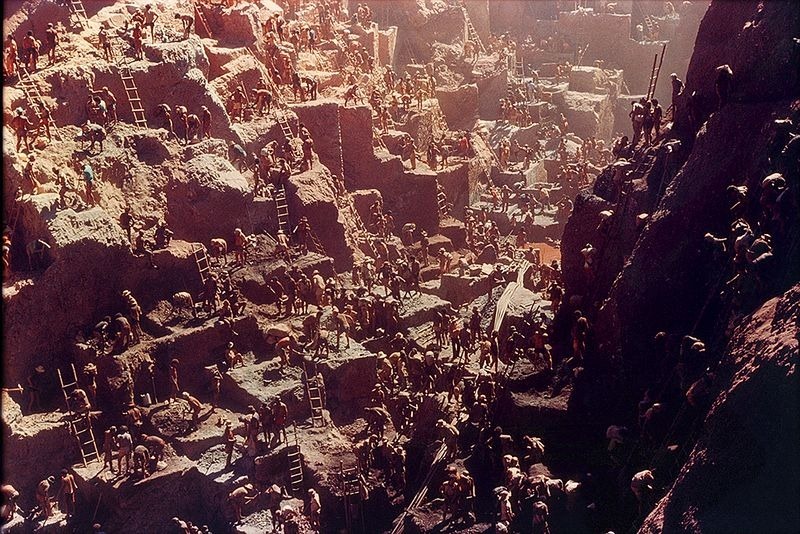
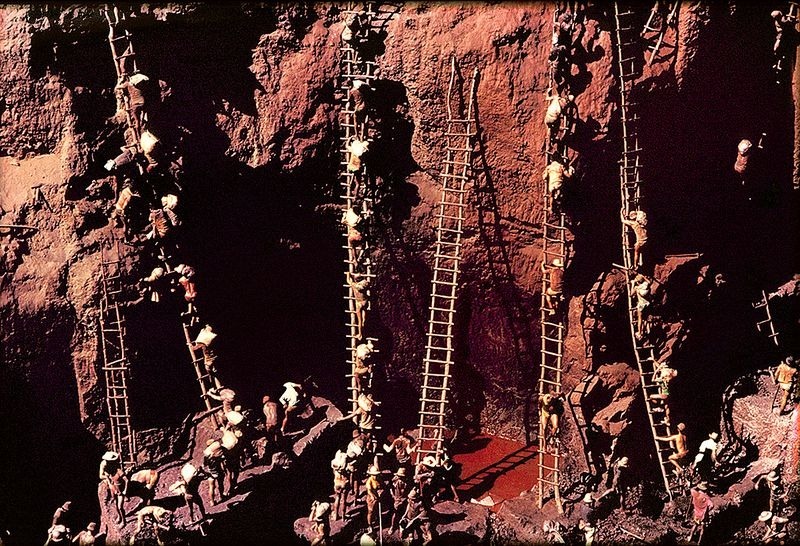
In the early 1980s, Brazilian photographer Sebastião Salgado travelled to the mines of Serra Pelada, some 430 kilometers south of the mouth of the Amazon River, where a notorious gold rush was in progress. A few years earlier, a child had found a 6-grams nugget of gold in the banks of a local river, triggering one of the biggest race for gold in modern history. Motivated by the dream of getting rich quickly, tens of thousands of miners descended into the site swarming like ants in the vast open-air pit they had carved into the landscape. Salgado took some of the most haunting pictures of the workers there, highlighting the hazardous conditions in which they worked and the sheer madness and chaos of the operation.

serra-pelada-1

Photo credit: Sebastião Salgado

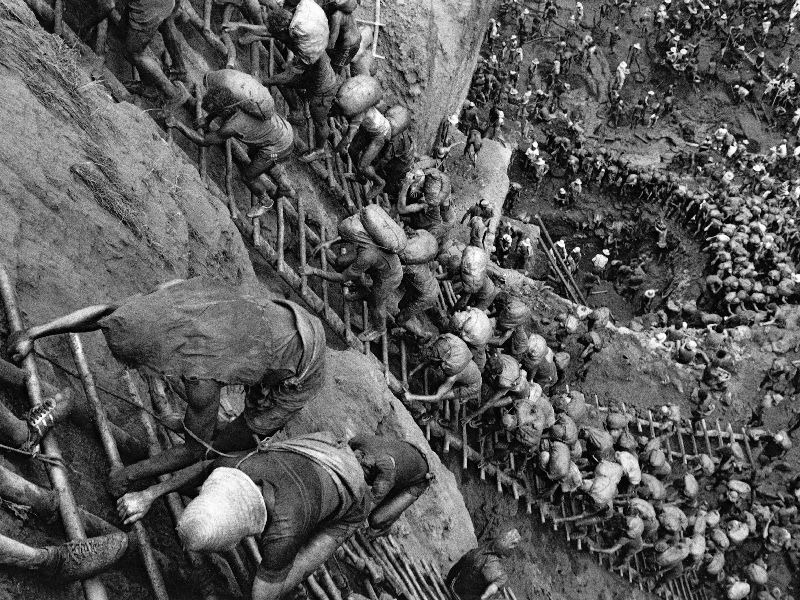
One of the most vertigo-inducing photograph of the series showed hundreds of workers swarming up tall ladders, scaling the cliff-like sides of a hellish hole. Later, when talking about the captivating images, Sebastião Salgado had said: “Every hair on my body stood on edge. The Pyramids, the history of mankind unfolded. I had travelled to the dawn of time.”

During its peak, the Serra Pelada mine employed some 100,000 diggers or garimpeiros in appalling conditions, where violence, death and prostitution was rampant. The diggers scratched through the soil at the bottom of the open pit, filled it into sacks each weighing between 30 to 60 kilograms, and then carried the heavy sacks up some 400 meters of wood and rope ladders to the top of the mine, where it is sifted for gold. On average, workers were paid 20 cents for digging and carrying each sack, with a bonus if gold was discovered. Thousands of underage girls sold their bodies for a few gold flakes while around 60–80 unsolved murders occurred in the nearby town, where the workers lived, every month.

Three months after the gold’s discovery, the Brazilian military took over operations to prevent exploitation of the workers and conflict between miners and owners. The government agreed to buy all the gold the garimpeiros found for 75 percent of the London Metal Exchange price. Officially just under 45 tons of gold was identified, but it is estimated that as much as 90 percent of all the gold found at Serra Pelada was smuggled away.

Mining had to be abandoned when the pit became flooded preventing further exploration. Geological surveys estimate that there could still be 20 to 50 tons of gold buried under the muddy lake, which the pit has now become.

In 2012, after remaining largely untouched for the last 20 years, a Brazilian cooperative company was granted an exploration license for the property in a bid to develop Serra Pelada.

serra-pelada-11

Photo credit: Sebastião Salgado

serra-pelada-12

Photo credit: Sebastião Salgado

sebastiao-salgado-serra-pelada-6

Photo credit: Sebastião Salgado

sebastiao-salgado-serra-pelada-8

Photo credit: Sebastião Salgado

serra-pelada-14

Photo credit: Sebastião Salgado

sebastiao-salgado-serra-pelada-4

Photo credit: Sebastião Salgado

sebastiao-salgado-serra-pelada-5

Photo credit: Sebastião Salgado

serra-pelada-9

Photo credit: Sebastião Salgado

serra-pelada-2

Photo credit: Rudi Böhm

serra-pelada-3

Photo credit: Rudi Böhm

Sources: Aljazeera / www.beetlesandhuxley.com / Buried in Mud, Digging for Gold / Wikipedia

Source………www.amusingplanet.com

Natarajan