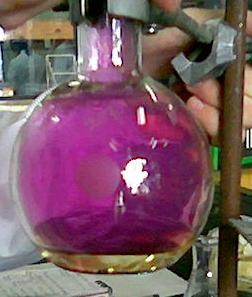
Why iodine is added to Salt ….?


Iodine in a gaseous state. The fact that it is purple in this state is how it got its name, from the Greek for violet (iodes)

Today I found out why iodine is added to salt.

Iodine first began being added to salt commercially in the United States in 1924 by the Morton Salt Company at the request of the government.  This was done as a response to the fact that there were certain regions in the U.S., such as around the Great Lakes and in the Pacific Northwest, where people weren’t getting enough iodine in their diets due to it not being prevalent in the soil in those regions.  Among other problems, this caused many people to develop goiters (swelling of the thyroid gland, also sometimes spelled “goitre”).

About 90% of people who develop a goiter do so because of a lack of iodine in their diets, so the simple solution was to add iodine to something pretty much everyone consumes fairly regularly, namely salt. This practiced was not thought up by the U.S., but was copied from the Swiss who were adding iodine to salt at this time for the same reason.  This resulted in researchers at the University of Michigan testing this practice out with good results and subsequently Morton Salt Company adopting the practice on a national level.

This ultimately didn’t cost Morton and the other salt companies that followed suit much money, only a few cents per person per year in iodine, but drastically cut the number of people who developed goiters in the United States and beyond as the practice gradually became adopted throughout much of the developed world.

Today because most food in developed countries like the United States often isn’t grown locally, coming from all over the country and world, depending on the food item, continuing to add iodine to salt isn’t strictly necessary.  People in regions where the soil is lacking in iodine will likely consume plenty of food from regions where it is not, thus getting the iodine their bodies need, particularly because our thyroids don’t need much to function properly.

For reference, the U.S. Food and Drug Administration recommends that you consume about 150 micrograms of iodine per day and, on average, men in the United States gets about double that amount per day and women each consume about 210 micrograms of iodine per day.  Your thyroid itself only needs about 70 micrograms per day to function properly.

Even though most people get plenty of Iodine in their diets, because Iodine is so critical to our bodies functioning properly and the Tolerable Upper Intake Level is so high (about 1100 micrograms per day, and you won’t take a fatal dose unless you ingest about 2 million micrograms, or 2 grams), adding it to salt is still recommended by many government health agencies the world over to stave off certain health problems.

Specifically, Iodine is a critical element used by your thyroid in being able to synthesize certain gland secretions which, among other things, influences your heart, metabolism, nerve responses, etc.  Further, a lack of iodine during pregnancy and in the baby’s diet after being born can cause a myriad of significant health and developmental problems.  Iodine deficiency has also been linked to increased difficulty with information processing, diminished fine motor skills, extreme fatigue, depression, weight gain, and low basal body temperatures, among other things.

Bonus Facts:

  • Iodine deficiency, besides being a leading cause of goiters in the world, is also currently the number one easily preventable cause of mental retardation in the world, due to the fact that, despite iodized salt being fairly prevalent, there are still about two billion people in the world today that are iodine deficient.
  • Iodine was discovered by accident by the son of a saltpeter manufacturer, Bernard Courtois, in 1811.  This was thanks partially to the Napoleonic Wars which resulted in saltpeter, for gunpowder, being in high demand (the Napoleonic Wars also helped give us canned food and cheap and easily made pencils, read more at the links).  In the process of producing saltpeter, sodium carbonate was needed.  In order to get the sodium carbonate, the saltpeter manufacturers would isolate it from seaweed by burning the seaweed and washing the ash with water.  The waste from this process was then destroyed with sulfuric acid.  At one point, Courtois accidentally added too much sulfuric acid to the waste and he observed a purple vapor, which crystallized on cold surfaces.  He then gave samples of this substance to others to study in more detail as he suspected he’d discovered a new element.  One person he gave the substance to was chemist Joseph Louis Gay-Lussac, who subsequently  announced at the Imperial Institute of France that Coutois’ discovery was either a new element or was some compound of oxygen.  Another scientist, Humphry Davy, also studied the substance and determined that it was indeed a new element.
  • During the Cold War, it was a common practice for people to have iodine pills on hand in case of a nuclear strike.  Among many other problems we’d all have during a nuclear war is the issue of radioactive iodine accumulating in our thyroids.  In order to combat this accumulation, the idea was to take an iodine pill and give your thyroid so much iodine that it wouldn’t be able to absorb the radioactive iodine.
  • The first confirmed people to figure out how to cure most goiters were the Chinese during the Tang Dynasty (618-907).  During that time, they treated people with goiters by grinding up the thyroids of sheep and pigs to form a powder which was then consumed in a pill or in powdered form.  These animal thyroids are very iodine rich, so this cure worked quite well, though they didn’t realize why at the time.
  • The Pharmacopoeia of the Heavenly Husbandman also implies that as early as the 1st century BC the Chinese cured goiters with sargassum (a type of seaweed), which also contains significant quantities of iodine.  Whether this dating is accurate or not, at least as far as recorded history goes, it appears that the Chinese were the first to come up with an effective cure for a goiter.
  • Seafood typically contains relatively large amounts of iodine, so if you eat much seafood, you’re very likely getting more than enough iodine, without consuming salt laced with it.
  • According to a study done at the University of Texas about 47% off major salt manufacturers no longer put enough iodine in their salt to meet the U.S. Food and Drug Administration’s recommended levels.  This problem is further exacerbated when salt is exposed to air or in humid regions.  This will gradually lower the iodine content in the salt over time.
  • Salt is typically iodized by spraying it with potassium iodate at a rate of 60 ml per one ton of salt (which comes to a little over $1 of potassium iodate per ton of salt).
  •  Salt with iodine added makes for a poor choice for curing, as the iodine in large enough quantities will add a certain amount of bitterness to the cured food.
  • While pure salt doesn’t technically expire, when iodine is added, it does, having a shelf life of about five years on average, according to Morton Salt Company.
  • Calcium silicate is typically added to table salt as an anti-caking agent, to keep the salt flowing smoothly, rather than clumped together as it absorbs moisture.  Around .5% of the contents of a typical table salt container is calcium silicate.
  • Iodine was originally named “iode” by Gay-Lussac from the Greek word for violet (iodes), due to the purple vapor observed which formed the crystals.

Source….www.today i foundout.com

Natarajan

வாரம் ஒரு கவிதை…” என் ஓட்டம் என் இலக்கு ” …


என் ஓட்டம் …என்  இலக்கு
………………………
என் ஓட்டம் …ஓடும் நதியோட்டம் ..  என்  உயிரோட்டம் … என் இலக்கு… நதி நீர்
இந்த  மண்ணுக்கும் …மண்ணில்  விளையும்  பயிருக்கும் !
விதி விலக்கு இதில் எதுவும் இல்லை எனக்கு … ஓடிக்கொண்டே   இருக்கும்
நதி எனக்கு , நீயும் பிள்ளைதான் , அவனும்  பிள்ளைதான் !
மதி கெட்டு   நதி நீர் “எனக்கு”  மட்டும்தான்  என்று ஆணவக்
கூக்குரல் எதற்கு மனிதா? மமதையுடன் மண்ணுக்கும் , தண்ணீருக்கும்
உரிமைக்  குரல்  எழுப்பும்  நீ அந்த விண்ணுக்கும் , விண்ணில் உள்ள
நிலவுக்கும் ,பகலவனுக்கும்   தனி  உரிமை கோர முடியுமா சொல்லு  ?
நதி மூலம் அறியாமல் உன் மதி மயங்கி  ஒரு நதியின்  ஓட்டத்தை
தடுக்க நினைக்காதே ! உன்   அரசியல் விளையாட்டுக்கு எல்லாம்
நதி என்னை பகடைக் காயாக்காதே !
நதி என்னை என் வழியில் ஓட விடு ..என் ஓட்டத்தையும்
இலக்கையும்  குலைக்க  நினைக்காதே !
Natarajan
13 sep 2016

Paralympics Gold Medallist Mariyappan Thangavelu’s Story Is A Lesson In Grit…

http-%2f%2fo-aolcdn-com%2fhss%2fstorage%2fmidas%2ff79efe9e062cbc45337168c7ca47d3b6%2f204309037%2f601342684


In May this year, Mariyappan Thangavelu said during an interview, “It’s not beyond me.” India’s rising star in para-athletics had just cleared a distance of 1.78m in the men’s high jump T42 event at the IPC Grand Prix in Tunisia. So what was not beyond him? A gold at the Paralympics, he said.

Three months later Thangavelu has showed the country what walking the talk is supposed to look like.

Not only is he the first athlete to bag a gold in this year’s Paralympics, he is also the first Indian high jumper to win a gold in the history of Paralympics.

According to NDTV, ‘T-42 is a disability sport classification for differently-abled track and field athletes with single ‘above the knee’ amputations or a disability that is comparable’.

Born in a small village of Periavadagampatti, 50km from Salem, in Tamil Nadu, Mariyappan’s brush with unpredictability of life, occurred at a tender age of five. Fifteen years ago, Mariyappan was on his way to school in his village, when he met with a terrifying accident. A bus took a wrong turn, spun out of control and hit the five-year-old, running over his right leg and crushing it in process.

Later, when he was old enough to comprehend the tragedy that had hit him, he was told that the driver of the bus was drunk. However, that information did nothing to comfort him or ease the difficult road that lay ahead of him. In an interview to The Hindu, Mariyappan said, “It doesn’t matter. My right leg is now stunted — it is still a five-year-old’s leg; it has never grown or healed.”

A report on Sportskeeda states that Mariyappan’s mother had then taken a loan of Rs 3 lakh to pay for his treatment. Years later, the vegetable vendor is still repaying the money.

The same article traces Mariyappan’s interest in sports back to his physical education teacher, who encouraged him to take up athletics and nurtured his interest in high jump. He also played volleyball.

“His coach Satyanarayana spotted him at the National Para-Athletics Championship when he was just 18. After rigorous training in Bengaluru, he became the World Number 1 in 2015, his first year of senior-level competition,” Sportskeeda reports.

His first competitive event was when he was 14 years old and participated in an athletics meet with other able-bodied students. He finished second.

“At first, my classmates didn’t believe I could do it. But once I made that first jump, they were all excited. After that day, a lot of people came to support me whenever I competed in the district,” he told The Hindu. 

Source…..www.huffingtonpost.com

Natarajan

Why the word ” May Day ” in distress calls ….?


Why People on Planes and Ships Use the Word Mayday When in Distress and What SOS Really Stands For

In 1923, a senior radio officer, Frederick Stanley Mockford, in Croydon Airport in London, England, was asked to think of one word that would be easy to understand for all pilots and ground staff in the event of an emergency.

The problem had arisen as voice radio communication slowly became more common, so an equivalent to the Morse code “SOS” distress signal was needed. Obvious a word like “help” wasn’t a good choice for English speakers because it could be commonly used in normal conversations where no one was in distress.

At the time Mockford was considering the request, much of the traffic he was dealing with was between Croydon and Le Bourget Airport in Paris, France. With both the French and English languages in mind, he came up with the somewhat unique word “Mayday,” the Anglicized spelling of the French pronunciation of the word “m’aider,” which means “help me.”

Four years later, in 1927, the International Radiotelegraph Convention of Washington made “Mayday” the official voice distress call used only to communicate the most serious level of distress, such as with life-threatening emergencies.

When using Mayday in a distress call, it is traditional to repeat it three times in a row, “Mayday, Mayday, Mayday.” This is to make sure it is easily distinguishable from a message about a Mayday call and from any similar sounding phrases in noisy conditions or garbled transmissions.

In situations where a vessel merely requires assistance, but is not in grave and imminent danger, a distress call of “pan-pan” can be used instead. Essentially, it means you need aid, but you don’t need support personnel to necessarily drop what they’re doing right that instant and come help you, as with a Mayday.

Like Mayday, pan-pan is the Anglicized spelling of a French word, in this case “panne,” which means “broken / failure / breakdown.” Also, as with Mayday, one should state it three consecutive times: “pan-pan pan-pan pan-pan,” followed by which station(s) you are addressing and your last known location, nature of your emergency, etc.

If there is no reply to a Mayday or pan-pan call by the Coast Guard or other emergency agency, and a couple minutes have passed since the last call, some other radio source, such as another ship or plane that received the call, should transmit their own Mayday call, but on behalf of the ship or plane that first made the call, repeating the pertinent information they heard when they received the Mayday message.

Source……www.today i foundout .com

Natarajan

How the Five Day week work became popular ?


On September 25, 1926, the Ford Motor Company instituted a five-day, 40-hour work week for its factory employees. While Ford wasn’t the first to do this, they were arguably one of the most influential.

This action, at least initially, did not win Ford many friends among his fellow business owners, some of whom believed giving the working man any time off just encouraged them to indulge in drink even more than they already did. (To be fair, that was a real problem around this era. It was not from nothing that excessive drink was blamed for many of society’s woes at the time, ultimately inspiring Prohibition, which even a very large percentage of said drinkers supported in the beginning. But, of course, if you had to work 14-16 hour days, 6 days per week from your very early teen years on- for reference in 1890 the average work week in the United States for a blue-collar factory worker was 90-100 hours- you might be driven to drink excessively too. ;-))

Beyond this, many competing employers were still miffed at Ford for raising his (male) workers’ salaries up to five dollars per day (about $116 today) back in 1914, double the former going rate, and around the same time cutting the typical work week down to 48 hours at his factories. (Women had to wait until 1916 to command the same wage.) But since Ford was one the world’s largest manufacturers, most in the industry were compelled for various reasons to follow their example, like it or not.

Ford stated in his company’s newsletter,

“Just as the eight-hour day opened our way to prosperity in America, so the five-day work week will open our way to still greater prosperity … It is high time to rid ourselves of the notion that leisure for workmen is either lost time or a class privilege.”

Of course, Ford wasn’t just doing this out of the goodness of his heart. He understood that a five-day work week with “eight hours labour, eight hours recreation, eight hours rest” would encourage working people to vacation on weekends, shop on Saturdays, and have ample free time to fill during their daily 8 hour recreation time. (See: Why a Typical Work Day is Eight Hours Long) People with more leisure time required more clothing, ate a greater variety of food and, of course, were far more likely to be in the market to buy an automobile to travel around in. Workers who were paid more also were more likely to be able to afford such an automobile.

Beyond benefiting sales as other companies followed suit, he had also observed that happy workers (both in their home and work life) meant better and more efficient workers.

Now, Ford expected his workers to produce in those shorter working hours, but with the higher pay and weekends off, there were very few complaints from any of his employees. They were happy to put the pedal to the metal Monday through Friday for their excellent salary and five-day, 40 hour work week.

As Ford had thought, after instituting these changes, productivity skyrocketed, meaning he was getting more results from significantly fewer work hours and company loyalty and pride among Ford employees was equally boosted. Beyond low-skilled laborers banging down the doors to get work at Ford, he also now had the luxury of having the top talent in each of the high-skilled fields he needed workers for applying in droves. Needless to say, manufacturers all over the world would soon follow Ford’s example, which played right into his hands.

Edsel Ford, Henry’s son and then company president, was quoted in March of 1922 in the New York Times as saying of all this, “Every man needs more than one day a week for rest and recreation….The Ford Company always has sought to promote [an] ideal home life for its employees. We believe that in order to live properly every man should have more time to spend with his family.”

Ford himself laid it all out in black and white:

“The harder we crowd business for time, the more efficient it becomes. The more well-paid leisure workmen get, the greater become their wants. These wants soon become needs. Well-managed business pays high wages and sells at low prices. Its workmen have the leisure to enjoy life and the wherewithal with which to finance that enjoyment.”

Bonus Fact:

  • In the early 19th century in Britain, a series of “Factories Acts” were passed meant to help improve working conditions for workers, particularly for children. One of the first of these was in 1802 and stipulated children under the age of 9 were not to be allowed to work and, rather, must attend school. Further, children from the ages of 9-13 were only allowed to work eight hours per day and children from 14-18 could only work a maximum of 12 hours per day. Unfortunately, this law was largely ignored and almost never enforced in any way. Further, even when it rarely was enforced, the fines were small enough that it was more profitable for factory owners to break this law and pay the fine, than to follow it. The act also did nothing for adults except require that factories be well ventilated, though it did not stipulate what defines “well ventilated”, so factory owners could easily ignore this part of the act as well.

Source….www.today i foundout.com

Natarajan

படித்து நெகிழ்ந்தது …”திருவள்ளுவரின் நாலு அடி பாடல் …” !!!


இப்படியும் ஒரு மனைவி இருந்திருக்கிறாளா..?
பல நூறு ஆண்டுகளுக்கு முன்…ஒரு புலவரின் மனைவி… இறக்கும் தருவாயில் தன் கணவனை அருகே அழைத்தாளாம் …
என்னவென்று கேட்டு , கலங்கிய கண்களோடு கணவன் அவள் பக்கத்தில் வர…மனைவி தயக்கத்துடன் இப்படிக் கேட்டாளாம் …
“என் உயிர் எப்போதோ என்னை விட்டுப் பிரிந்திருக்க வேண்டும்..ஆனால்..ஒரே ஒரு கேள்வி ..என் நெஞ்சுக் குழியில் நின்று கொண்டு , என் உயிர் இந்த உடலை விட்டுப் பிரியாமல் தடுத்துக் கொண்டிருக்கிறது.. அந்தக் கேள்வியை இதுவரை உங்களிடம் நான் கேட்டதில்லை…இப்போதாவது கேட்கலாமா..?”
புலவனான அந்தக் கணவன் , புரியாமல் அந்தப் புனிதவதியைப் பார்க்க…அந்த மனைவி கேட்டாளாம் இப்படி:
“இதுவரை உங்களிடம் நான் கேட்காத அந்தக் கேள்விக்கு , இப்போதாவது பதில் எனக்குத் தெரிந்து விட்டால்…நிம்மதியாக கண்களை மூடுவேன்.. அந்த நிம்மதியான மரணத்தை எனக்குத் தருவீர்களா.?”
கணவன் மௌனமாக தலையசைத்து சம்மதம் தெரிவிக்க …மனைவி தன் நெடுநாள் சந்தேகத்தை கேட்டு விட்டாளாம்..
“ஒவ்வொரு நாளும் நீங்கள் உணவு அருந்தும்போது ஒரு கொட்டாங்குச்சியில் தண்ணீரும், ஒரு ஊசியும் கொண்டு வரச் சொல்லி , அதைப் பக்கத்தில் வைத்துக் கொண்டுதான் சாப்பிடுவீர்கள்…அப்படித்தானே..?”
கணவன் இதற்கும் மௌனமாக தலையசைக்க , மனைவி கேட்டாளாம் ..”இதுவரை அதற்கான காரணத்தை ஒருபோதும் நான் உங்களிடம் கேட்டதில்லை… காரணம்..கணவன் சொன்னதற்கு மறுபேச்சு பேசி , நான் அறிந்ததில்லை… இப்போது என் வாழ்வின் இறுதி மூச்சில் இருக்கிறேன்…இப்போதாவது சொல்லுங்கள்.. அந்த கொட்டங்கச்சியும் , தண்ணீரும் எதற்காக..?”
இதைக் கேட்டுவிட்டு , இதற்கான பதிலை எதிர்பார்த்து அந்த மனைவி , புலவனான கணவன் முகத்தைப் புரியாமல் பார்த்திருக்க , அந்தக் கணவன் சொன்னாராம்.. “ அது வேறொன்றும் இல்லை… பரிமாறும்போது தவறுதலாக சோற்றுப்பருக்கை கீழே சிந்தி விட்டால் , அதை அந்த ஊசியில் குத்தி , கொட்டாங்குச்சியில் உள்ள தண்ணீரில் கழுவி மீண்டும் சோற்றில் கலந்து உண்ணத்தான் அந்தக் கொட்டங்கச்சி நீரும்..ஊசியும்..”
கணவன் பதில் சொல்லியும் மனைவியின் குழப்பம் தீரவில்லை…அவள் கேட்டாள் .. “ஆனால் ஒருபோதும் நீங்கள் அந்த ஊசியையும் , கொட்டாங்கச்சியையும் பயன்படுத்தி நான் பார்த்ததே இல்லையே..?”
மனைவி இப்படிக் கேட்டதும்…குரல் உடைந்து போன கணவன்…குமுறும் அழுகையை அடக்கிக் கொண்டு சொன்னாராம்… “ உண்மைதான்…ஒரு நாளும் நான் அதைப் பயன்படுத்தவில்லை..!
ஏனென்றால் ஒரு நாளும் நீ எனக்குப் பரிமாறும்போது , ஒரு சோற்றுப் பருக்கையைக் கூட சிந்தவே இல்லையே….!”
கணவன் பதில் அறிந்த மனைவி.. புன்னகை செய்தாளாம்…. அவ்வளவுதான்…! போய் விட்டாளாம்..!!
நெகிழ்ச்சியோடு நெடு நேரம் நின்ற கணவன் ..அந்தப் புலவன்…கண்ணீரோடு தன் அன்பு மனைவிக்காக உடனே ஒரு கவிதை எழுதினானாம் …
இதுநாள் வரை தன் வாழ்நாளில் அவன் எழுதியதெல்லாம் …இரண்டு வரிப் பாடல்கள்…அதில் ஏழே ஏழு வார்த்தைகள்..! அவ்வளவுதான்…அதுதான் அந்தப் புலவன் தன் பாட்டுக்கு ஏற்படுத்திக் கொண்ட பார்முலா..விதி..!
இப்போது…. தனது செய்யுள் விதியை…தானே தளர்த்திக் கொண்ட அந்தப் புலவன்… தன் வாழ்வில் முதன் முதலாக , நாலு வரிப் பாட்டு ஒன்றை எழுதினானாம்…அந்த நாலு வரிப் பாடல்:
“அடியிற்கினியாளே அன்புடையாளே
படிசொல் தவறாத பாவாய்- அடிவருடி
பின்தூங்கி முன்னெழும்பும் பேதாய்-
இனிதா(அ)ய் என் தூங்கும் என்கண் இரவு”
# ஆம்… இந்த நாலு வரிப் பாடலை எழுதிய அந்தப் புலவர் ..திருவள்ளுவர்….!
கணவன் சொல் தட்டாத அந்த கள்ளமற்ற அன்பு மனைவி ..வாசுகி…!
அந்தப் பாடலின் பொருள் :
“அடியவனுக்கு இனியவளே! அன்புடையவளே! என் சொல்படி நடக்கத் தவறாத பெண்ணே! என் பாதங்களை வருடி தூங்கச் செய்தவளே! பின் தூங்கி முன் எழுபவளே! பேதையே! என் கண்கள் இனி எப்படித்தான் இரவில் தூங்கப் போகிறதோ!”
# இன்னொரு வள்ளுவன் எதிர்காலத்தில் பிறக்கலாம்…!


ஆனால்..இன்னொரு வாசுகி….?

Source…..Facebook post of Sridharan Sivaraman

Natarajan

படித்ததில் பிடித்தது …” கோயில் இல்லா ஊரில் குடி இருக்க வேண்டாம் …”


முற்காலத்தில் ஊரில் கோயில் கோபுரத்தை விட உயரமாக எந்தக் கட்டிடமும் இருக்கக் கூடாது என்று ஒரு எழுதாத சட்டம் இருந்தது. என்ன காரணம்?!
கோயில்களையும் உயரமான கோபுரங்களையும் அதன் மேல் இருக்கும் கலசங்களையும் பார்த்திருப்பீர்கள். அதன் பின் ஒளிந்திருக்கும் ஆன்மிக உண்மை தெரியவில்லை. ஆனால் அதன் பின் எவ்வளவு பெரிய அறிவியல் ஒளிந்திருக்கிறது என இப்போதுதான் தெரிகிறது.
கோபுரத்தின் உச்சியில் தங்கம், வெள்ளி செம்பு(அ) ஐம்பொன்னால் செய்யப்பட்ட கலசங்கள் இருக்கும். இக்கலசங்களிலும் அதில் கொட்டப்படும் தானியங்களும், உலோகங்களும் மின் காந்த அலைகளை ஈர்க்கும் சக்தியை கலசங்களுக்குக் கொடுக்கின்றன.
நெல், உப்பு, கேழ்வரகு, தினை, வரகு, சோளம், மக்கா சோளம், சலமை, எள் ஆகியவற்றைக் கொட்டினார்கள். குறிப்பாக வரகு தானியத்தை அதிகமாகக் கொட்டினார்கள். காரணத்தைத் தேடிப் பார்த்தால் ஆச்சர்யமாக இருக்கிறது. வரகு மின்னலைத் தாங்கும் அதிக ஆற்றலைப் பெற்றிருப்பது என இப்போதைய அறிவியல் கூறுகிறது.
இவ்வளவுதானா? இல்லை, பன்னிரெண்டு வருடங்களுக்கு ஒரு முறை குடமுழுக்கு விழா என்ற பெயரில் கலசங்களில் இருக்கும் பழைய தானியங்கள் நீக்கப்பட்டு புதிய தானியங்கள் நிரப்பப்படுகிறது. அதை இன்றைக்கு சம்பிரதாயமாகவே மட்டும் கடைபிடிக்கிறார்கள். காரணத்தைத் தேடினால், அந்த தானியங்களுக்குப் பன்னிரெண்டு வருடங்களுக்குத்தான் அந்த
சக்தி இருக்கிறது. அதன் பின் அது செயல் இழந்து விடுகிறது!! இதை எப்படி அப்போது அறிந்திருந்தார்கள்..?!
ஆச்சர்யம்தான். அவ்வளவுதானா அதுவும் இல்லை. இன்றைக்குப் பெய்வதைப் போன்று மூன்று நாட்களா மழை பெய்தது அன்று? தொடர்ந்து மூன்று மாதங்கள் பெய்தது. ஒரு வேளை தானியங்கள் அனைத்தும் நீரில் மூழ்கி அழிந்து போனால், மீண்டும் எதை வைத்துப் பயிர் செய்வது? இவ்வளவு உயரமான கோபுரத்தை நீர் சூழ வாய்ப்பில்லை. இதையே மீண்டும் எடுத்து விதைக்கலாமே!
ஒரு இடத்தில் எது மிக உயரமான இடத்தில் அமைந்த இடி தாங்கியோ அதுதான் முதலில் ‘எர்த்’ ஆகும். மேலும் அது எத்தனை பேரைக் காப்பாற்றும் என்பது அதன் உயரத்தைப் பொறுத்தது. அடிப்படையில் கலசங்கள் இடிதாங்கிகள். உதாரணமாக கோபுரத்தின் உயரம் ஐம்பது மீட்டர் என்றால் நூறு மீட்டர் விட்டம் வரைக்கும் பரப்பில் எத்தனை பேர் இருந்தாலும் அவர்கள் இடி தாங்காமல் காக்கப்படுவார்கள். அதாவது சுமார் 75008 மீட்டர் பரப்பளவிலிருக்கும் மனிதர்கள் காப்பாற்றப்படுவார்கள்!
சில கோயில்களுக்கு நான்கு வாயில்கள் உள்ளன. அது நாலாபுறமும் 75000சதுர
மீட்டர் பரப்பளவைக் காத்து நிற்கிறது! இது ஒரு தோராயமான கணக்கு தான்.
இதைவிட உயரமான கோபுரங்கள் இதை விட அதிகமான பணிகளை சத்தமில்லாமல் செய்து வருகின்றன.
“கோயில் இல்லா ஊரில் குடியிருக்க
வேண்டாம்”
என்ற பழமொழி நினைவுக்கு வருகிறது.

Source…..Facebook Post from Sridharan  Sivaraman

Natarajan

The end of an era: Iconic Indian brands and establishments which shut shop…


Till recently, one of the most delightful moments on a train journey through the western suburbs of Mumbai, was passing through Vile Parle station and inhaling the delicious baking smells that used to waft in to the train. The aroma was that of the Parle G biscuits being baked at the Parle factory, located near the station. But, with the closure of the iconic 87 year old factory, came an end to a fragrant era. While, Parle G will continue manufacturing its much loved biscuits from its other factories across the country, the Parle factory at Vile Parle would be deeply missed.

Over the recent years, a number of iconic Indian establishments and brands have shut shop or stopped production across the country, due to legal issues, falling sales, competition, or not being able to stand up to the times. While modern businesses constantly fold up, and not much thought is given to them, these are icons that have served the country for decades, and have left behind nostalgic memories. We pay tribute to some of them:

HMT watches: Much before Titan, Swatch, Omega, Casio, and the rest of the popular watch brands told time, HMT adorned our wrists and dominated the watch market. The watch maker set up its first factory in Bangalore in 1961, in collaboration with Japan’s Citizen Watch Co, and the first batch of the Hand Wound Wrist Watches manufactured by HMT, was released by the then PM Jawaharlal Nehru. The watches continued to be an integral part of the average Indian attire in the 60’s, 70’s and 80’s until competition and technological changes led to the watch maker facing growing losses. HMT Watches finally chimed its last in May, this year as it shut down its last manufacturing unit in Tumakuru.

Gold Spot: When foreign brands such as Coca Cola and PepsiCo exited the Indian market in the late 1970s, because the Foreign Exchange Regulation Act (FERA) was making it difficult for them to continue in the country, Parle decided to launch its own line of soft drinks. Gold Spot, with the tag line ‘The Zing Thing’, was one of them. The drink, along with Limca and Thumbs Up, gained popularity in the country, and was much sought after by youngsters, and the older generation alike. With the re-entry of Coca Cola in the 1990’s, came the slow decline of the soft drinks. Parle sold its soft drinks to Coca-Cola in 1993, and, while the other two ( Limca and Thumbs Up) still remain in the market, the much loved Gold Spot was withdrawn to make space for Fanta.

Rhythm House: With the shutting of Mumbai’s Rhythm House came the end of a golden era for music lovers and city dwellers. The shop, which was established in 1948, offered its patrons a wide collection of Indian and western music, across all genres – filmy, non-filmy, classical and modern. Customers and passersby would walk in to browse through the albums of their favourite artists. And, if they could not find what they were looking for, it would be ordered for them. But, with the advent of technology, MP3s, downloadable music and Apple’s Music Store, the music shop started to feel the heat. After facing much losses and trying to stay afloat, it finally downed its shutters in March, 2016.

Ghantewala Sweets: A sweet shop that dated back to 1790, The Ghantewala Halwai had among its distinguished clientele emperors, Prime Ministers and Presidents, along with the common man. Set up by Lala Sukh Lal Jain, a small time sweet maker from Rajasthan, Ghantewala Sweets, in Delhi’s Chandni Chowk, the sweet shop earned its name from when Jain started off by selling the sweets on a brass plate, balanced on his head, ringing a brass bell. As his business grew, Jain built a shop, which continued growing in fame. Known for its Sohan Halwa, the shop has even played a role in BR Chopra’s 1954 film, Chandi Chowk, where a replica was created in Mumbai. However, legal and licensing problems, as well as the changing customer tastes, led to the closure of the sweet shop in July, last year.

Vijayanand Talkies: The historic cinema house where the Father of Indian cinema, Dadasaheb Phalke used to screen his motion pictures using a projector, finally downed its curtains in November, 2015. Vijayananad Talkies, located in Nashik, was one of the few remaining single screen cinemas of its generation, and had been conferred the ‘Oldest Exhibitor in India’ Award by the President in 2013 for being one of the longest operating cinema hall in the country. The historical Talkies had to shut shop due to non-renewal of its license by the government.

Ambassador cars: Once the car that India drove – from the politicians in their ostentatious white, beaconed cars, to the taxi drivers in their kaali peeli ones, the Ambassador was known for its sturdy body and powerful engine. The original made in India car was modeled on the Morris Oxford series III, and was in production from 1958. The once ubiquitous Ambassador had even been crowned the best taxi in the world by BBC’s Top Gear programme. The car zoomed in popularity through the 60’s and 70’s, until the Maruti Suzuki 800 brought its low cost car into the country. The opening up of the automobile sector and the entry of numerous other auto brands into the country led to its demise, with Hindustan Motors halting production in 2014.

AA Husain & Co: The go-to place for book lovers in Hyderabad, AA Husain & Co, which was started more than 65 years ago, shut shop in March, 2015. The much-loved book store, which saw the likes of painter MF Hussain, actors Dilip Kumar and Suresh Oberoi, and cricketer Sunil Gavaskar as its patrons, was closed down to make way for a mall which is being built on the Arasu Trust Complex, a Waqf property that housed the shop. The bookstore was started by Abid Asgar Husain, a surgeon of the 6th Nizam, in the mid-1940s, as a store for imported products. It was converted into a bookstore in 1949 by Asif Husain Arastu, his son.

Cafe Samovar: It was with tears that many of its loyal patrons bid the legendary cafe goodbye in March, last year. Surrounded by history and culture, the five-decade-old Cafe Samovar, situated in the Jehangir Art Gallery, with landmarks such as Chhatrapati Shivaji Museum, the Kala Ghoda square, David Sassoon Library and Lion Gate, within walking distance, was a popular haunt among city’s intellectuals, students and general public. Opened by Usha Khanna, the niece of noted Indian actor Balraj Sahni, the Cafe was especially known for its pudina chai and pakoda platter, and any food that came cold or was spilled, would be replaced free of cost. The Cafe had to down its shutters since the Jehangir Art Gallery has been looking to expand its space.

Source….www.in.news.yahoo.com

Natarajan

A Syrian refugee who was swimming across borders a year ago is now in the Olympics…


One year ago, Syrian refugee Yusra Mardini was swimming for her life as she fled Damascus, Syria with her older sister. Today, she is a member of the Olympic refugee team competing in Rio.

The 18-year-old is one of ten athletes competing for the Refugee Olympic Athletes in three sports.

Below, read about Mardini’s tenacious and heroic journey, via Alexander Hassenstein of Getty.

Before that, Mardini and her sister have been swimmers for many years. They were known as shining stars at their swimming club in Syria, until the war disrupted their training.

Their parents tried their hardest to keep them away from the intense war zones — they moved multiple times to avoid the conflict, but the war shortly became too dangerous. They decided to pick up and move all together after their house was destroyed.

Mardini and her sister left Damascus, Syria in early August. They boarded an inflatable boat in Turkey that was headed for the Greek island of Lesbos, alongside 20 other refugees.

Not too long into their journey, the motor on the boat broke down. Mardini and her sister were the only two swimmers on the boat, so they jumped into the water to swim the boat to shore.

They swam while helping the boat stay above water for three and a half hours, saving everyone on the boat.

After swimming all of the passengers to safety, the sisters continued their journey to make it to Germany.

They then travelled through five more countries, on land.

They faced many problems — they were arrested at borders, lost money, and had many items stolen from them. Despite all of these problems, the sisters remained strong. They were not going to give up.

After 35 days of fleeing, the sisters finally made it to Germany.

Now, they are safe with their parents in Berlin.

Shortly after their arrival in Berlin, they were introduced to a swimming coach at a local swimming club.

Mardini’s goal was originally to make it to the 2020 Olympics in Tokyo, but her coach said she had progressed so well that there was a good chance that she could qualify for the International Olympic Committee’s (IOC) refugee team for the 2016 Olympics in August.

Since she lost everything and faced a treacherous journey, she was given a IOC Olympic Solidarity scholarship — a scholarship to help athletes qualify for the Olympics.

Her daily schedule leading up to the Olympics involved school and intensive training.

Mardini hopes to encourage refugees and make them proud of her.

In the meantime, she seems to be having the time of her life in Rio.

Source…www.businessinsider.com.au

Natarajan

How Much are Olympic Gold Medals Worth….?


As far as the value of the raw materials in them, this varies from Olympiad to Olympiad.  For the recent 2012 Olympics in London, the medals were the largest of any in Summer Olympic history up to that point, weighing in at 400g for the gold medal.  Of this 400g, 394g was sterling silver (364.45g silver / 29.55g copper) with 6g of 24 karat gold plating.  At the price of gold and silver when these medals were won by various Olympians, this means a gold medal in the London Olympics was worth about $624, with $304 of the value coming from the gold plating and about $320 coming from the sterling silver. Since then, the price of gold has dropped about 18% and the price of silver has dropped about 39%.

For the current 2016 Rio Olympics, the gold medals are one-upping the London Games, weighing in at a a half a kilogram, with about 462g of it silver, 6g gold, and the rest copper.  So by current gold and silver prices as of July 13, 2016, these medals are worth about $561 total, with approximately $301 of the value from silver and $260 from gold. So, despite being 1/5 more massive than the London Games Olympics medals, and having the same amount of gold and much more silver, due to the significant drop in gold and silver prices since 2012, the Rio gold medals are worth less at their awarding than the London Games medals were worth when they were awarded.

Of course, athletes can often get much more than this selling the medals on the open market, particularly for momentous medals, like the “Miracle on Ice” 1980 men’s U.S. hockey team gold medal.  Mark Wells, a member of that team, auctioned his medal off in 2012 and received $310,700 for it, which he needed to help pay for medical treatment.
Most auctioned medals don’t go for nearly this much, though.  For instance, Anthony Ervin’s 50 meter freestyle gold medal won in 2000, even with all proceeds going to the victims of the Indian Ocean tsunami, only sold for $17,100.  John Konrads’ 1500 meter freestyle gold medal won in 1960 only sold for $11,250 in 2011.  This is a great return in terms of what the raw value of the materials are worth, but certainly nowhere close to Mark Wells’ medal.

Gold medals in the Olympics weren’t always made mostly of silver.  Before the 1912 Olympics, they were made of solid gold.  However, they tended to be much smaller than modern medals.  For instance, the 1900 Paris gold medals were only 3.2 mm thick, with a 59 mm diameter, weighing just 53g.  For perspective, the London 2012 medals were 7 mm thick, with a diameter of 85 mm and, as mentioned, weighed 400g.  The 1900 Paris gold medals at today’s value of gold are worth about $2300.  For the 1912 games in Stockholm, the last year the gold medals were made of solid gold, the value of the gold medals at current prices of gold would be around $870.

If the current 2016 Olympic gold medals were made out of solid gold, they’d be worth about $21,625 each.  This may seem feasible, considering how much money the Olympics brings in, until you consider just how many medals are awarded during each summer Olympics.  For instance, in these 2016 Olympics, about 2,488 medals have been produced, including 812 gold medals. At $21,625 each, that would be just shy of $18 million dollars for the gold medal materials alone.

As it is, with the current gold medals having about $561 worth of materials, then $305 for the silver medals, and about $5 for the bronze (which are mostly made of copper, with a very small amount of zinc and tin), about $708,000 is still being spent on the raw materials alone for these medals, not to mention the cost of having them minted.

Source……..www.today i foundout.com

Natarajan