11 Common Beliefs About Food That Are Actually Not True….

Let’s face it – we are all foodies. Some of you are complete gluttons, like me, and some might keep what they eat in check, but we all love to eat. Then again, none of us like any added problems like, obesity or cholesterol that come with eating (overeating, in my case), right!

That is the reason why we often vow to eat healthy, and try to follow certain diets that celebrities apparently follow, to get in shape. What we fail to realize is that more often than not, we end up believing in myths circulated by companies trying to sell stuff or know-it-all self-claimed diet experts. Take these 11 myths about food for example, that I used to think were true, until now.

1. Artificial sweeteners are better than sugar

Image source

Not really. Though using artificial sweetener can decrease the calorie intake and help with your weight control, on the other hand, it might contribute to diabetes and other health troubles!

Source


2. You need to eat meat to get enough protein

Image source

Nature is rich in nutrients, luckily, and you can very well get your required amount of protein without having to eat meat. Quinoa, avocado, peas etc are also quite rich in proteins.

Source

3. Fats are bad for you

Actually, some fats are essential for health, like monounsaturated and polyunsaturated fats, along with omega-3 fatty acids; these are normally found in nuts, seeds, olive oil, etc. They protect us from heart diseases and cancer.

Image source


Source


4. Fresh vegetables are more nutritious than frozen ones

Image source

Rather than ‘fresh’ vegetable kept for long, frozen vegetables are generally frozen when they are their most fresh, with most of the nutrition value remaining intact!

Source


5. Fried food is always too fatty

Image source

Though fried food is always considered one of the biggest culprits creating heart troubles and such, they are kind of wrongly accused. The health risk often depends on the kind of oil used, and how fried the stuff is, along with what stuff is being fried; just because it’s fried, doesn’t mean it’s bad.

Source


6. All saturated fats increase cholesterol


Image source

Nope. In fact, polyunsaturated fats, generally found in corn oil or sunflower oil, help to reduce harmful LDL cholesterol, and improve the cholesterol profile of our body.

Source


7. Eating eggs is not exactly excellent for your health

Image source

On the contrary, eggs are rich in several nutrients like betaine and choline that contribute towards keeping your heart healthy. Eggs are also a great source of healthy proteins.

Source


8. Added sugar is always bad for health

Image source

No way. We need sugar to function properly, as it supplies ready energy to fuel our muscles, and also helps to keep our brains active. Though I wouldn’t suggest you to binge on sugar, a little bit of it won’t hurt, really.

Source

9. Organic food has better nutrition value


Image source

There is not much extra health benefit of organic food over conventional food, a team of Stanford scientists have found after an extensive study.

Source

10. Carbohydrates are fattening

Image source

Carbs are not always your worst nightmare, despite all the diets asking you to cut it down. Rather, cutting carbs down can affect your metabolism, increase stress hormones, and decrease thyroid function.

Source


11. Calories we eat at night stick to our body more than when taken during the day

Image source

Your weight gain depends on the amount of calorie you are taking in, not on when you are taking it in.

Source

Folks, don’t just give in to excessive advertisements or slimming diets claiming to thin you down in a few days. Eat well, live well.

Source….   Anwesha Maiti…www.storypick.com

natarajan

Why Do we Touch the Feet of Our Elders….?

1. Why do we touch the feet of our elders?

Why do we touch the feet of our elders?

Touching the feet of elders as a mark of respect is an age old practice in Indian tradition. Often this practice is looked upon with derision by some people as feet are generally considered unclean and such people argue that there could be other better ways of conveying the respect. However, there are a number of reasons behind the practice of touching the elders’ feet that indicate how wonderfully beneficial and meaningful this practice is.

2. Foundations for Buildings

Foundations for Buildings

Feet are for the body as the foundations are for buildings. The entire weight of a person is borne by the feet when he stands and moves about. Except birds and some rare cases of mammals, humans are endowed with the gift of being able to walk erect in two feet. When we bend down and touch the feet of our elders, our ego is also automatically subdued and we indicate that we respect their age, wisdom, achievements and experience. Being pleased of our humility, they in turn bless us.

3. Padasparshan

Padasparshan

Usually, those that command padasparshan (touching the feet) include spiritual masters, teachers, grand parents, parents, elder brothers and senior citizens. Usually, these people have accumulated a lot of virtues, knowledge and experience. Their maturity shall have enabled them with a good insight into the truths and realities of life. The thoughts, vibrations and the words emanating from them shall be so powerful in immensely benefiting those who seek their blessings.

4. Way of Touching the feet of Elders


There is a particular way of touching the feet of elders. The person touching their feet must bend down in front of them with the back hunched and hands stretching forward. Usually, when the hands are stretched to touch their feet, it is advised that the hands are crossed in a way the right hand touches their right foot and the left hand touches their left foot. Yet another prescription states that the left hand should touch their right foot and the right hand should touch their left foot.

5. Positive Energy

Positive Energy

In either case, when the hands touch the feet, there is a closed circuit establish between those seeking the blessings and those blessing them. The result is a highly positive energy flowing from their feet to the other person transferring a lot of good will and healing energy. Also, the person whose feet are touched usually stretches his or her hands to touch the upper head of the person with a gesture of blessing. This connection forms yet another circuit again transferring energy and blessings.

6. Benefits

It is matter of fact that only elders who seek your well being and those who are noble in their attitude and conduct are to be touched thus. Generally one’s grand parents, teachers, parents, elder brothers and noble people would naturally bless from their heart genuinely seeking the welfare of those who touch their feet. Therefore, this act shall confer incomparable benefits. Psychologically this act confers humility and cultivates a sense of respect enjoining people in the right path.

7. Hindu Tradition

Hindu Tradition

The Hindu tradition states that by touching the feet of elders, people are blessed with strength, intellect, Knowledge and fame. The underlying symbolism of this act is that the elders have walked on this earth longer than you and have accumulated a great amount of wisdom. You can in fact immensely benefit even from the dust that their feet have gathered all along the way.

Source….www.speakingtree.in

Natarajan

Finding Indian food in ‘alien’ land….

Finding Indian food in 'alien' land

Long vacations in the UK, US and south-east Asia no longer involve the culinary nightmares of 20 years ago for Indian tourists. When they tire of bland local fare, there’s no dearth of Indian restaurants, run by the vast Indian diaspora and reasonably authentic, to get a taste of home.

The news, though, is that these destinations are becoming passé. Increasingly, it’s to countries in Indo-China, the Balkans, West Asia (the parts that are still peaceful, that is) and South America to which rich and upper middle-class Indians are heading to spend the generous forex allowance the Indian government now permits.

But as a Vietnamese restaurateur once told me, “Indians no eat all foods; velly big ploblem”. True enough, Indians with their many particularities of diet can find mealtimes a chore in many countries off the regular tourist beat. Yet where many Indians go boldly, can be far behind?
As the listing here shows, there are Indian options available in cities from Dubrovnik to Peru for tourists who are so inclined. The names can be misleading, however: Oh Calcutta in Auckland, an award-winning restaurant, bears no resemblance to the well-known Bengali restaurant chain in India.

The restaurant, run by a chef called Meena Anand, has the standard north Indian/Mughlai fare. This, sadly, is true of almost all the menus on offer — the infinite varieties of the Indian sub-continent are largely absent. In Luang Prabang, the stunning UN heritage town in Laos, Nisha restaurant will give you an authentic dhaba experience: it offers, among other things, aloo ghobi, aloo mutter, “Dhal Fry” and rotis. It could be a comforting break from a bewildering local menu that may contain: dog, frog and, yes, even beef!

A gourmet itinerary


Vietnam
Mumtaz Restaurant
Ho Chi Minh City


Foodshop 45
Hanoi


Laos
Nisha Restaurant
Luang Prabang


Taj Mahal Restaurant
Vientiane


Cambodia
Dosa Corner
Phnom Penh


Taste Budz
Phnom Penh
Samsara
Siem Reap
Croatia
Royal Indian Restaurant
Zagreb
Incredible India Cuisine
Dubrovnik
Iran
Taj Mahal
Tehran
Jordan
Tandoori Oven
Amman
Peru
Guru Kebab & Curry
Lima
Brazil
Taj Bar
Iguasu
Gopala Hari
Sao Paulo
Veggie Govinda
Rio
Mexico
El Tandoor
Mexico City
New Zealand
Oh Calcutta
Auckland
Chilis Bistro and Tandoor
Wellington
Maharaja Indian Restaurant
Christchurch
The Spice Room
Christchurch
China
Masala Art
Shanghai
Punjabi Indian Restaurant
Beijing
South Africa
Royal Punjab
Johannesburg
Bukhara
Cape Town
Portugal
Passage to India
Lisbon
Data courtesy: Ashish Chadha, group managing partner, Leisure Ways, New Delhi
 Source…www.business-standard.com
Natarajan

Message for the Day….” What is the True Divine Offering …’ ?

How amazing is this! You can get sacrifices of the highest order performed by yourself or through scholars versed in Vedic ritual. You can visit and praise the holiness of diverse shrines and inspire others to journey thereto. Similarly you can master the highest scriptures and teach them to many and make them experts. But how many of you have succeeded in mastering your own bodies, senses and wayward minds, and turned them inward to gain perpetual and unchanging equanimity? You embark upon an undertaking with a purpose, goal, or an end in view. But the endeavour is sublimated into a yajna (sacrificial rite) only if the purpose, goal or end is the glorification of God. God is the yajna,for He is the Goal. His grace is the reward. His creation is used to propitiate Him; He is the performer as well as the receiver. Every act, where the ego of the doer does not surface, becomes a Divine offering.

Sathya Sai Baba

” Childhood is Wonderful …No Matter Wherever You Go …” !!!

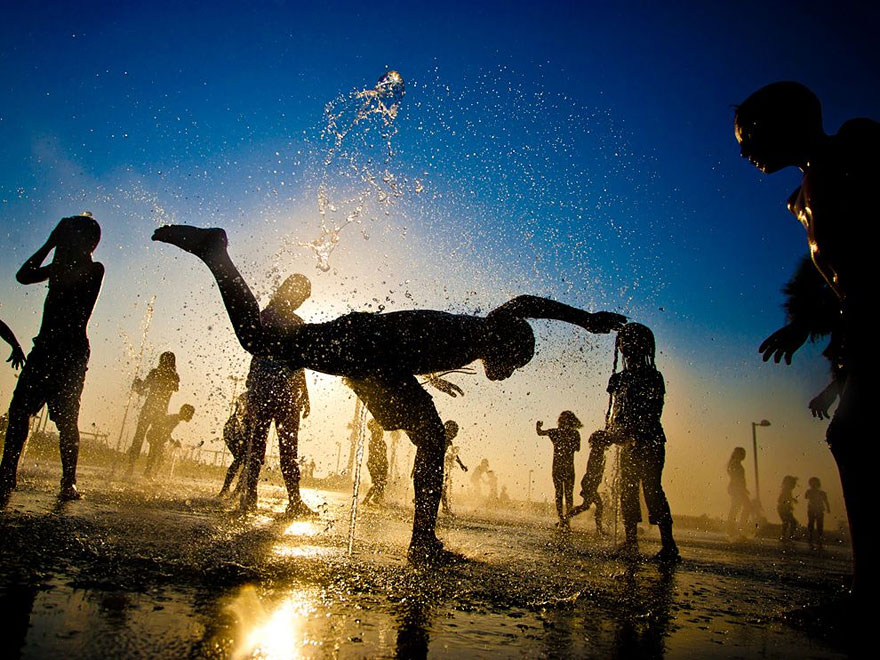
No matter their cultural background, no matter their economic situation, kids will always find imaginative ways to have fun. Their wild imaginations and magical childhood moments, when captured on camera by talented photographers, can make for truly wonderful photos. These 33 images we collected will prove that childhood can be wonderful no matter where you go.

Many in the Western world fear that technology is making today’s children lose touch with nature and with their own creativity, and while there are arguments to be made for the intellectual stimulation that apps and programs for children can bring, there’s also something to be said for simply playing with a stick in the mud or chasing dandelion seeds though an open meadow.

For better or worse, the children in these photos seem entirely content making their own fun. For us adults, it’s important not to let our world-weary and jaded experience stifle our childish hopefulness and imagination!

Indonesia

Image credits: Ipoenk Graphic

children-around-the-world-70

Image credits: Agoes Antara

Image credits: I Gede Lila Kantiana

Image credits: Gede Lila Kantiana

Russia

Image credits: Светлана Квашинa

Image credits: Elena Shumilova

Burkina Faso

Image credits: Òscar Tardío

Myanmar

children-around-the-world-65

Image credits: Chan Kwok Hung

Tajikistan

Image credits: Damon Lynch

India

children-around-the-world-60

Image credits: Sandee Pachetan

chidren-playing-around-the-world-55

Image Credits: Sudharsan Ravikumar

Image credits: Mukund Images

Vietnam

chidren-playing-around-the-world-51

Image Credits: HT KëñShi

Ghana

children-around-the-world-61

Image credits: Terry White

Estonia

children-around-the-world-54

mage credits: Elika Hunt

Thailand

Image credits: Sarawut Intarob

Image credits: Sarawut Intarob

Image credits: Sarawut Intarob

South Africa

children-around-the-world-55

Image credits: Muhammed Muheisen

children-around-the-world-60

Source: tinosoriano.com

Peru

children-around-the-world-52

Image credits: Enrique Castro-Mendivil

Ethiopia

children-around-the-world-50

Image credits: Csilla Zelko

Italy

children-around-the-world-61

Image credits: Michael Potyomin

Israel

children-around-the-world-64

Image credits: Dima Vazinovich

USA

Image credits: Jake Olson

Indonesia #2

Image credits: Rio Rinaldi Rachmatullah

Image credits: James Khoo

children-around-the-world-53

Image credits: Hendrik Priyanto

chidren-playing-around-the-world-50

Image Credits: Mio Cade

Uganda

Image credits: John Van Den Hende

Romania

Image credits: Elena Simona Craciun

Russia

Image credits: Elena Shumilova

Source…..www.boredpanda.com

natarajan


How a Mobile App Is Bringing Better Maternal Health Care to Rural Karnataka in India….

An Auxiliary Nurse Midwife (ANM) is often the first point of contact between a health centre and a mother or expectant mother in India. She takes care of activities as basic as registration of pregnant women to more advanced interventions like routine immunization, identifying medical complications and providing referrals. An ANM has a lot of responsibilities and this simple, mobile-based intervention, Suyojana, enables her to effectively carry out her duties.

Rohini, from Chamrajnagar, Karnataka, is an Auxiliary Nurse Midwife (ANM), working in rural areas of the state. Despite the fact that she is proactive and interested in her work, Rohini often finds herself struggling to remain on top of all the information required to serve her patients effectively. From tracking crucial health parameters to scheduling important visits for critical cases, Rohini finds herself swamped with details that she is unable to handle in an organized manner.

Recently, however, Rohini began using Suyojana, a mobile-based application that improves the decision-making processes in maternal and child care activities undertaken by ANMs.

“The Suyojana application guides me from one step to another, within examinations and investigations, and does not let me skip a single step. This has made my work way more organized and systematic. The application has also made it very easy to identify high-risk cases and refer the patients on time to better facilities. The tool helps me take the right decisions at the right time,” says Rohini.

ANMs can keep track of their patients in a better way and also take necessary actions on time.


ANMs can keep track of their patients in a better way and also take necessary actions on time. –

Rohini is just one among several ANMs who have benefitted from the simple technology, Suyojana, launched by Swasti, a health resource centre established to provide health services to socially backward communities, in collaboration with D-Tree International and Karuna Trust.

“Swasti has been working in this field for 11 years now and work on improving different aspects of public health. Since ANMs do such important work at the grassroots level, we thought it was necessary to make decision-making easier for them through this mobile intervention,” says Shama Karkal, Director, Swasti.

The issue

The app does not let an ANM update her patients' profile until all the fields in the app are filled.

The app does not let an ANM update her patients’ profile until all the fields in the app are filled. –

As par-medical professionals who are closest to the rural communities, ANMs play a crucial role. They are required to use their knowledge in order to take requisite actions on time.

Though ANMs undergo training, many times they are unaware of the basic practices they should follow. Shama recalls that ANMs met during the pilot did not carry blood pressure or weighing machines during home visits. “Everyone assumes that they know what they are doing. Even ANMs are not aware of what they could do better and there is no system to monitor the quality of the care they provide.

Without the application, ANMs can skip many of the examinations and other critical components of an ante-natal or post-natal visit.

This results in incomplete and in-accurate health monitoring of pregnant women and children.

The solution 

This is where Suyojana plays a crucial role. This mobile-based clinical-decision support system (DSS) provides ANMs with consistent guidance with antenatal care (ANC), postnatal care (PNC), and neonatal care.

The mobile app takes ANMs through all the procedures and guidelines to identify the person’s conditions and provides options for decision making. The app uses the national guidelines maternal and neonatal care to guide the ANM. The app also allowsANMs to track patients they have visited, their expected clinic visit dates, their medication, etc. This also helps ANMs to identify those women who are due for their next appointment, both in-clinic visits and home visits.

“The app has various forms which ANMs complete during different visits. The forms in the application include registration, antenatal history (for ANC clients), pregnancy outcome (for PNC clients), danger signs, physical examination, investigation tests, intervention, and counselling. Basic care and monitoring of the child is also included — from foetal heart rate to neonatal danger signs, pre-referral treatments and home-based new-born care counselling. Required fields in the app must be completed in order to complete the visit and record it. This way, every aspect of the care provided is tracked,” says Shama.

With the app the ANMs do not need to maintain multiple registers. The app generates the standard reports which can be further customized.

Another interesting aspect of the app is that it also runs offline and synchronizes with the server using general packet radio service (GPRS) for back up, reporting and analysis.

The impact

With the app the ANMs do not need to maintain multiple registers.

With the app the ANMs do not need to maintain multiple registers.

Thanks to the easily available data, a supervisor can track the details from the server and can identify maternal health trends in a particular area. This way ANMs can also take expert advice from remote locations and can decide the next step they need to take on time.

“This application will help us in quickly referring a complicated case to higher public health facilities and will replace the cumbersome procedure of checking registers and day books. All we would be required to do is click on the app to get all the details. This would be a great relief for us and reduce our workload,” says Saraswathi, yet another ANM from Karnataka.

The interesting initiative, which was launched as a pilot project in March 2014 in Chamarajanagar district, involved 31 ANMs in four districts of Karnataka, including Chamarajanagar, Ramanagara, Bijapur, and Chikkaballapur.

To make the app more user-friendly, all the information is available in Kannada. The ANMs are first given formal training before they actually start using this app. Once the training is complete, ANMs using this app and sync the data collected by them on a regular basis. There is also a full-time supervisor who assists the ANMs in case of difficulties.

“We launched it on mobile phones since they are easier to use and are more handy. Currently, we install the app on the mobile phones of ANMs and it is not available for the general public to use,” says Shama.

Though the simple mobile app looks like a feasible solution to address difficulties of ANMs and the quality of care provided by them, the team is still struggling to have it accepted with the government.

The pilot was funded by D-Tree International, has a small team of four members, who are looking forward to expanding the initiative to cover many more districts and ANMs.

To know more about the initiative, contact Angela at – angela@swasti.org or check out their website.

Source…..Shreya Pareek….www.the betterindia.com

Natarajan

Message for the Day…” Follow the Righteous Way of Life to Reach the Road of Self Realisation…”

Sathya Sai Baba

People everywhere are degrading themselves from their status as children of eternity (amrita-putra) to that of children of futility (anrita-putra)! Holding nectar in their grasp, they are drinking the poison of sensual pleasure. Neglecting the joy of contemplation of the fundamental divine reality of the universe, they are entangling themselves in the external trappings of this objective world of appearances. This immortal dharma (amrita-dharma) is described in the Upanishads, and since the Gita is the kernel of the Upanishads, the same is emphasized in the Gita too. The Gita teaches Arjuna to develop certain qualities that help the practice of the Atma Dharma (the righteousness that springs from the True Self). These are delineated in verses 13 to 20 of Chapter 12. The dharmic (righteous) way of life is like the very breath; it is the road to self-realization. Those who walk along it are dear to the Lord.

Here’s what it’s like to live in space….

A $US150-billion contraption floating 270 miles above Earth is one of the most impressive achievements of humankind.

It’s called the International Space Station (ISS), and a rotating astronaut crew has occupied it since 2000. The work of those astronauts has yielded some incredible scientific insights.

Astronaut is not a profession where you get to go home at the end of the day though. One ticket from Earth to the ISS costs about $US70 million, so normally each crew lives and works on the station for a six-month shift.

Right now NASA astronaut Scott Kelly and Russian cosmonaut Mikhail Kornienko are in the middle of a year-long shift aboard the ISS. They will be the first humans to spend a consecutive year living in space.

But what is it like to actually live on the ISS?

The first step to living in space is getting there. All astronauts hitch a ride to the ISS on board a giant space shuttle that launches from Russia.

NASA

The shuttle takes astronauts all the way up to the ISS, which floats about 250 miles above the planet.

NASA

The station is a system of labs, living quarters, and control rooms, and it spans about the length of a football field. A rotating crew of six astronauts share the space.

NASA

The ISS is hurtling around the Earth at about 17,150 miles per hour. That extreme velocity puts the ISS in a constant free fall around the planet.

So everything on board experiences weightlessness, including the astronauts.

So they get around the station by floating. Which means sometimes it’s too hard to resist the temptation to strike a Superman pose.

Weightlessness causes a lot of weird problems though — the kind of problems we never experience here on Earth thanks to gravity.

NASA

For example, sweat doesn’t evaporate. Instead, it pools on astronauts’ bodies, so they are constantly toweling off sweat. You can see sweat droplets escape from this astronaut’s towel after he wipes his head.

If objects escape inside the ISS, they can float away, get lodged in equipment, and cause malfunctions.

For example, even small tasks like clipping your nails become a problem. Astronauts clip them near a vent, so that tiny pieces of nail don’t end up floating all over the station.

RAW Embed

Water is also difficult to manage. It likes to stick together in a big blob.

So washing and showering is a challenge. Astronauts squirt a few lines of water on their skin and hair and then use no-rinse soap and shampoo to clean themselves.

The station only gets resupplied every few months, so astronauts have to be mindful of their supplies. Luckily, over 90% of the water on board gets recycled and reused.

That includes everything from dirty wash water, water from astronauts’ breath, and yes, even urine is recycled. It’s all sent through this high-tech water filter on board.

YouTube/Canadian Space Agency

The water is perfectly safe to drink after it’s run through the filter (it’s actually cleaner than the water we drink on Earth), but many astronauts say they try not to think about it too much when they refill their water pouches.

YouTube/Canadian Space Agency

Getting back to that urine thing, ‘How do you go to the bathroom?’ is one of the most common questions astronauts get.

YouTube/ESA

If you’re going number one, it gets sucked into this tube through the yellow nozzle.

YouTube/ESA

Things are little more complicated when you need to go number two. There’s a tiny seat, a container for the waste, and a suction pump.

YouTube/ESA

Once you do your business and suction it away, you have to change out the ‘poop bag’ for the next person.

YouTube/ESA

Still, all the complications that come from weightlessness don’t get in the way of what astronauts are really there for. They spend most of their time working on various research projects and repairing the station.

NASA

Sometimes that even involves venturing out into the dangerous vacuum of space. Trips outside the station are called ‘spacewalks,’ and they take a lot of preparation and safety training.

NASA

One wrong move and an astronaut could just float off into the vacuum of space (like George Clooney in ‘Gravity’). They also have to watch for leaks in the spacesuits that protect them from the bitterly cold temperatures and radiation in space.

NASA

When they aren’t working, astronauts still have to stick to a pretty tight schedule. They have mandatory workouts so they don’t lose too much muscle mass in the weightless environment. (Since they don’t have to fight gravity, they get a lot less exercise while moving around.)

You can easily lift hundreds of pounds in a weightless environment, so astronauts have a cleverly designed machine for weight lifting.

After a good work out, you gonna eat. Space meals are stored in dehydrated packets. Once you add a little water, dinner is served.

And the menu isn’t half bad. Here’s an astronaut enjoying a milkshake.

NASA

After dinner it’s time for bed. The middle section of the station is where most of the crew sleeps. Labs and work spaces make up the rest of the structure, and the giant yellow panels collect sunlight to help power everything.

YouTube/Canadian Space Agency

Each astronaut has their own tiny room that includes a work space and a sleeping bag strapped to the wall. You can see on the screens that it appears astronaut Scott Kelly is chatting on Facebook.

NASA

Sleeping in space is hard to get used to since you don’t feel the sensation of lying down. Astronauts zip themselves into a sleeping bag every night so they don’t float around in their sleep.

And they have to keep careful track of their sleep schedule since days don’t pass the same on the ISS as they do on Earth. The station is whizzing around the planet so quickly that the crew sees about 16 sunrises and sunsets during a 24-hour Earth day.

NASA

When it’s time to return to Earth, a shuttle flies up to the station to pick up the astronauts. Then they parachute back down to Earth in a landing pod.

NASA

Astronauts are a little wobbly on their feet when they first land, but it doesn’t take long to readjust to a weighted environment.

NASA

Living on the ISS is no picnic, but it’s a once in a lifetime opportunity. Most astronauts say they wouldn’t trade the experience for anything.

Natarajan

நண்பர்களை நம்பர்களாக்கும் வாட்ஸ்ஆப் வாழ்க்கையைத் துறந்த தருணம்…

“ஹலோ எழுத்தாளரே, எப்படி இருக்கிறீர்கள்?”

பழைய நண்பன் ஒருவனின் குரலை, காலையிலேயே கேட்க ஆச்சரியமாக இருந்தது. எனக்கும் பேச ஆசைதான். ஆனால் அதிகாலை நேரத்தில், பல மாதங்களுக்குப் பின்னர், பழைய நண்பனின் குரலைக் கேட்டால் எப்படி இருக்கும்? அதுவும் வருடத்துக்கு ஒரு தடவை (என்னுடைய பிறந்தநாளுக்கோ அல்லது அவனுடைய பிறந்தநாளுக்கோ), அதிகபட்சமாய் மூன்று நிமிடங்கள் பேசும் நண்பனின் குரல் அது!

பேராவலுடன் என்ன விஷயமாக இருக்கும் என்று யோசித்தேன். பெரியதாக ஒன்றுமில்லை. அவன் க்ரூப் அழைப்பை அனுப்பியதை நான் ஏற்றுக்கொள்ளவில்லை. அதனால்தான் கூப்பிட்டிருக்கிறான். சீரியஸான பல கேள்விகள் மற்றும் பதில்களுக்குப் பிறகு, அது ‘வாட்ஸ்ஆப் க்ரூப்’ என்பது புரிந்தது. அதில் என்னைத்தவிர எல்லா முன்னாள் வகுப்புத் தோழர்களும் இருக்கிறார்களாம். ”நீ மட்டும் அதில் இல்லை, அதன் சந்தோஷங்களில் கலந்துகொள்ளவில்லை” என்றான் அவன். என்னால் சிரிக்கமட்டுமே முடிந்தது.

முதன்முதலாக நான் ஒன்றரை வருடங்களுக்கு முன்னால் வாட்ஸ்ஆப்பில் நுழைந்தேன்; அதுவும் துளிகூட விருப்பமே இல்லாமல். தொழில்நுட்பத்தில் பின்தங்கி இருப்பதால், புதிதாக வரும் விஷயங்களைத் தெரிந்து கொள்வது கடினமாகி விடுகிறது. எனக்கு ஆர்க்குட் அறிமுகமான சமயத்தில், உலகமே ஃபேஸ்புக்கை நோக்கி நகரத்தொடங்கி இருந்தது. கஷ்டப்பட்டு ஃபேஸ்புக் அக்கவுண்டைத் திறந்தபோது, கூகுள் ப்ளஸ் வந்திருந்தது. அதுசரி டிவிட்டருக்கு என்ன ஆனது என்கிறீர்களா? கொஞ்ச நாளைக்கு அந்தப்பக்கம் போகாமலே இருப்போமே. அதனால் இயல்பாகவே வாட்ஸ்ஆப்பைப் பற்றிய எந்த அறிகுறியும் எனக்கு வரவில்லை. உறவுக்காரி ஒருத்தி அதை அறிமுகப்படுத்தி வைத்த பின்னரும், வாட்ஸ்ஆப் பற்றி பெரிதாக எதையும் யோசிக்கவில்லை.

சகாக்களின் நெருக்கடியை எந்த வயதிலும் பொறுத்துக்கொள்ள முடியாது. 35 வயதே ஆனாலும் கூட. என்னுடைய மருத்துவர், செவிலி, டெய்லர் என எல்லாருமே ‘இதை வாட்ஸ்ஆப் பண்ணி விடுங்கள்’ என்கின்றனர். அவர்கள் யாருமே வழக்கமான குறுஞ்செய்திகளை கண்டுகொள்வதாகக் கூடத் தெரிவதில்லை. நண்பர்கள் மற்றும் உறவினர்களின் பல மாத வற்புறுத்தலுக்குப் பின்னர், என்னுடைய மருத்துவரையும், கடைக்காரர்களையும் நோக்கி ஒரு பார்வையைச் செலுத்திவிட்டு, வாட்ஸ்ஆப்பில் நுழைந்தேன். ஒரு அழகான காலையில், உலகத்தையே பெருந்தன்மையுடன் பார்த்த தருணம் அது.

ஆரம்பத்தில் வாட்ஸ்ஆப்பில் எதுவுமே எனக்குப் புரியவில்லை. அது என்ன என்று தெரிந்துகொள்ளவே பல நாட்களானது. நிலத்தை, உடையை, ஏன் அழகை வாங்கச் சொல்லிக் கூவும் விளம்பரங்களை மட்டுமே கண்டுபிடிக்க முடிந்தது. சம்பந்தமே இல்லாத க்ரூப்புகளில் இணைக்கப்பட்டேன். நாய்க்குட்டிகள், பூனை, குழந்தை, சமயத்தில் பன்றிக்குட்டிகளின் படங்கள் மட்டுமே அதில் பகிரப்பட்டன. நான் புதிதாகச் சேர்ந்ததற்கான எந்த அடையாளமும் அதில் காண்பிக்கப்படவில்லை.

”உன்னுடைய வருகையை முதலில் அறிவிக்க வேண்டும்” என்றாள் ஒருத்தி. எனது முதல் நிலைத்தகவலை அதில் இட்டேன். “தவலை இப்போது கிணற்றின் வெளியே வந்துவிட்டது!” என்று. அந்த யுக்தி பலித்தது. ”பைத்தியம், அது தவலை இல்லை; தவளை” என்று ஏராளமான செய்திகள் வந்து குவிந்தன. தொடர்ந்த சில நாட்களில் வருடக்கணக்காக என்னுடைய நண்பர்களாக இருந்தவர்கள், போனில் வெறும் நம்பர்களாகிப் போனார்கள். செல்பேசியின் திரையை விட்டு கண்ணை எடுக்காத போதை, என்னை மெல்ல மெல்ல ஆக்கிரமித்தது.

ஸ்மார்ட் போனையோ அல்லது சமூக ஊடகங்களையோ நான் எதிர்த்ததற்கான முக்கியக் காரணமே, உள்ளங்கையில் மறைந்துவிடும் ஒற்றைச் சாதனம் நம்மை அடிமையாக்கிவிடக் கூடாது என்பதற்காகத்தான். உண்மையான உலகத்தை விட்டுவிட்டு மெய்நிகர் உலகத்தில் வாழ்வதை என்னால் ஏற்றுக்கொள்ள முடிந்திருக்கவில்லை. ஆனால் எதை நினைத்து பயந்தேனோ அது நன்றாகவே நடந்தது.

ஒரு சில மாதங்களிலேயே, எதுவும் பேசுவதற்கு இல்லாத நிலையிலிருந்து, பேசுவதற்கும், எழுதுவதற்கும், டைப்புவதற்கும் ஏகப்பட்ட விஷயங்கள் குவிந்தன. வீட்டு வேலைகளை தள்ளிப்போட்டேன். தூக்கம் குறைந்தது; கணவரையும், வீட்டையும் சேர்த்து குழந்தைகளையும் புறக்கணித்தேன். செல்பேசியோடு சேர்ந்து உறங்கி, அதனுடனேயே எழுந்தேன். சில நேரங்களில் தூக்கத்திற்கு இடையில் விழித்து போனைப் பார்க்கத் தொடங்கினேன். செல்பேசியை விட்டுத் தள்ளி இருக்கும் சமயங்களில்கூட, அதன் ஞாபகமாகவே இருந்தது. இவைகளோடு இன்னொரு முக்கியமான நிகழ்வும் நடந்தது.

குறுஞ்செய்தி அனுப்புவது, பகிர்ந்துகொள்வது, பேசுவது, அழுவது, சிரிப்பது என எல்லாமே மெய்நிகர் உலகத்தில் மட்டுமே நடந்தது. அன்றாட வாழ்க்கைப் பேச்சுகள் வெகுவாகக் குறைந்திருந்தன. இனி இதைப் பற்றிச் சொல்வதற்கு எதுவுமில்லை என்றுதான் நினைக்கிறேன்.

ஒருமுறை, நெடு நாட்களுக்குப் பிறகு, என்னுடைய நண்பனைப் பார்த்தேன். வெகு நேரம் இருவரும் எதுவுமே பேசவில்லை. அவன் போனையே நோண்டிக் கொண்டிருக்க, நான் வானத்தையே வெறித்துக் கொண்டிருந்தேன். அந்த நொடியில்தான் இந்த வலையில் இருந்து வெளியே வரவேண்டும் என்று முடிவு செய்தேன்.

ஆனால் அது அத்தனை சுலபமாக இருக்கவில்லை. வாட்ஸ்ஆப்பினுள் நுழையாமல், தனியாக அமர்ந்து, சுவர்களையே கொஞ்ச நேரம் பார்த்தவாறு அமர்ந்திருந்தேன். ‘அங்கே அவர்கள் எல்லோரும் பேசுவார்கள்; சிரிப்பார்கள்; சண்டை போட்டு ரசிப்பார்கள்’ என்று தோன்றியது. உண்மையே இல்லாத மெய்நிகர் உலகம் என்னைக் கவர்ந்து இழுத்துக்கொண்டே இருந்தது. ஆனால் அதற்கு திரும்பிவிட வேண்டும் என்ற எண்ணம் வரும்போதெல்லாம், புத்தகம் படித்தேன்; கேக் தயாரித்தேன்; பேசாமல் தவறவிட்டிருந்தவர்களிடம் பேசினேன். அடிக்கடி அம்மா, மாமியாரின் நலம் விசாரித்தேன். கிசுகிசு பேசத் தோன்றிய போதெல்லாம், என் பெண்களுடன் கதை பேசினேன்.

ஒரு வழியாக அந்த மாய உலகில் இருந்து வெளியே வந்துவிட்டேன். என் நண்பர்கள், உறவினர்கள், பக்கத்து வீட்டுக்காரர்கள் என எல்லோரிடமும் இயல்பாகப் பேச முடிந்தது. வழக்கமான அழைப்புகள் தொடர்ந்து வந்து கொண்டேதான் இருந்தது. முன்னர் பேசியதைவிட இன்னும் தெளிவாக, ஆழமாக, அழகாக பேச முடிந்தது. அன்று தொடங்கி இப்பொழுது வரைக்கும், எல்லா சந்தோஷங்களையும் நிஜ உலகத்திலேயே பெற்றுக் கொள்கிறேன்.

அனுபுதி கிருஷ்ணா

தமிழில்: க.சே.ரமணி பிரபா தேவி….www.tamil.thehindu.com

Natarajan

Ten legendary eateries in Madras you simply cannot miss …

It is Madras Day – the day a city celebrates its birthday. And what is a birthday without a party and great food? So along with a friend and a foodie Vasudevan,  I decided to get all nostalgic and celebrate by heading to some of the oldest eateries in the city that we personally like and recommend.

I am not too much of a lunch or a dinner person, but as a kid, it is the tiffin that has always fascinated me. So I decided to stick to just places we would go for breakfast or for a quick evening meal. While I have been to some of these eateries since childhood – food, being a great favourite of both my parents, it is Vasudevan who curated the list.

We just went to two areas mainly – Mylapore and Sowcarpet with a stop over at Triplicane. This is by no means an exhaustive list and we hope to add to it as we go by.

We also looked at eateries which are fairly old and are favourites with almost every citizen of Madras. The only street vendor we include is Amudha’s Bhajji stall in Mylapore. I dont think there is a name for the stall, but Amudha is in demand. She has an entire set up in Mylapore, near Kapaleeshwar temple on the road and she is flocked by people, even before she prepares her dough. I met her during the Myalpore Festival and I decided to feature her here.

Amudha at her bhajji stall

All these eateries mean more to us than just food. They have a story, a memory locked inside them. I am sure that all of you resonate with the thought as well. So let the emotions flow like the sambar as we go on this first food trail of Madras or Chennai as we know it today as we go on this tiffin trail.


Ratna Cafe, Triplicane

Our first stop of the day is to Triplicane, an area that fascinates me immensely for its heritage, its architecture, its melange of cultures and the food. I want to stop at the Parthasarathy temple for a quick darshan and the puliodharai, but we are a bit late. So we say a silent prayer and continue to one of the oldest eateries in Triplicane, a landmark by itself – Ratna Cafe.

Started in 1948 by a man from Mathura, Triloknath Gupta, the family still manage this very popular eatery. –

Idly at Ratna Cafe

If there is one moment that defines our breakfast in Ratna Cafe, it is this – the waiter brings a contraption that looks like a saucepan and he pours the hot red sambar on the fluffy white idlis, until they are soaked in it. We order a plate of idli and vadai and top it with a plate of crispy golden brown ghee roast dosai,  on the recommendation of a friend, Giridhar on Twitter.

The menu is packed in the evenings with so many dishes to choose from. A board announces the same right at the entrance.

Rayar’s  Mess, Mylapore

Our next halt. One of the oldest and humble abodes which is very popular with most citizens of Madras, the Rayar’s Mess which has been around for more than 75 years in Mylapore. If there is one dish that is the signature dish, it is the kara chutney. Every foodie, including my father and his friends swear by it. Vasudevan specifically likes the over fermented super soft idlis which literally melts in the mouth.

Breakfast at Rayar’s Mess is usually idli, vadai, pongal served with a variety of chutneys, including the famous kara chutney, sambar and molagai podi. Top it up with filter kaapi.  This is what I call elaipotta tiffin (tiffin served on a banana leaf).

Rayar Mess Tiffin

The eatery comes alive in the evening with bondas, rava dosai, kal dosai, adai, vadai, a variety of sweets and more dishes.

We speak to Kumar, the third generation owner, whose grandfather Srinivasa Rao started this. They were Kannadigas who had settled in Tamil Nadu ages ago and it reflects in the food – the recipes are probably the best of both worlds.


Karpagambal Mess, Mylapore

It feels like you are entering a temple. Right from the rangoli or the kolam on the steps to the large pictures of Gods and Goddesses on the walls to the various podis (powder) and pickles that is sold, everything about Karpagambal Mess is an ode to tradition.

Keerai Vadai at Karpagambal Mess

My earliest memory to the place was when it I could not say no to a sweet, Vasudevan recommends kasi halwa, but we finally have wheat halwa.  There is also rich badam halwa for those who want to binge further. We stop right here as we have another six more eateries to visit.


Mami’s Mess, Mylapore

Next to Bharatiya Vidya Bhavan in Mylapore is another famous eatery, popular with old timers and the young alike Mami’s Mess. Vasudevan and another friend on twitter – Degreekaapi recommends that we head there to taste thavala vada. But we are unlucky. However our appetite is satiated with the bhajjis and bondas around. Customers flock to buy Kozhukattai, a sweet dumpling made with rice flour filled with wheat and coconut. Although it was renovated recently it is still more than 50 years old.

Bondas at Maami Mess

The dish according to us, that you must eat here is keerai vadai. Vasudevan is also tempted by the vazhai poo adai served with avial, which is absolutely delicious.

Vasantha Mami apparently came from a small little village called Alvarkurichi in Tirunelveli which is very close to our ancestral village and she started this eatery in Mylapore. Her sons take care of it now.


Jannal Bhajji Kadai, Mylapore

            Bhajji Kadai was not open

In a little lane around the Kapaleeshwar temple is a small green grilled window on the wall that serves sinfully delicious bhajjis. You stand here and eat to your heart’s fill, be it bhajjis or upma or idlis. Sadly they were shut as they had a wedding in the family. Vasudevan says the Vazhakkai Bhajji is extremely good and my parents are a bit disappointed that I cannot not buy some bhajjis for home, but then, there is always another time.


Kalathi Stall, Mylapore

All in the same vicinity, it is very easy to miss this little news mart, a small shop hidden by trees. The headlines here scream of Rajinikanth and Sachin Tendulkar but what it does not scream about is the recipe of the rose milk which Mani and his family has safely guarded for over 80 years and sells it here fresh. I gulp glasses while Vasudevan buys the rose essence . A couple of women get off their two wheeler to drink panner soda, another speciality. Mani says celebrities have flocked to his shop.

Rosemilk at Kalathi Stall


Novelty Tea House, Mint Street

It is almost dark when we reach Mint Street and walking down the mini streets of Broadway and Parrys Corner is a delight in itself. As we navigate pedestrians, cows, cycle rickshaws, autos, tempos and cars, we find ourselves wondering if we are in Old Delhi or even Ahmedabad. Sowcarpet is one of the oldest locales in Chennai and my father who used to work here knows almost every eatery in the lanes.

Pudhina Dosa at Novelty

We head to Novelty Tea House at the recommendation of my uncle, Kannan and a mutual friend of Vasudevan and mine on Facebook – Sreemathy Mohan. The pudhina onion dosai is what she recommended and that is what we order. I definitely recommend it as well along with the pav bhajji.

Novelty Tea House started as a tea stall in the late 50s by Chandrakant Moolchand Shah and it is now managed by the third generation. They do have branches everywhere, but do not miss the oldest eatery in Mint Street. The atmosphere is an experience in itself.


Mehta’s Vada Pav, Mint Street

There is a branch near my house near Purasaiwalkam but Vasudevan tells me that the the original should not be missed. So in a little stall, barely enough to house a man and his delicacies, is one of the oldest stalls here which sells vada pav and mirchi bhajji. Bhavin Mehta who has been here for more than 50 years proudly says that his is the best. Vasudevan agrees . And you thought, Madras is all about idli and dosai.

Kachoris at Mehtas


Kakada Ramprasad, Mint Street

I know of them since I was a kid as my father used to bring sweets and savouries home. Yet, when I land there today I am surprised to find a huge building, selling everything from jalebis to fafdas, chaats to badam milk. We decide to try out two of their most famous specialities – the aalu tikki chaat and the hot hot jalebis. I am a loss for words. You just have to eat it, sorry, devour it to experience it.

Aloo Tikki at Kakada Ramprasad


Anmol Lassi, Mint Street

They say eat, drink and be merry. We are eating and we are merry, but the drink is missing. So next door to Kakada Ramprasad, is the a former wrestler who speaks flawless Tamil with a great sense of humour, who came to Chennai from Patiala 27 years ago. The board says “Anmol Mohit Patiala, specialist in Kesar Lassi.”  He also serves masala butter milk . He says he stands here everyday from morning till night, except on Sundays. ” My wife will divorce me otherwise, ” he says with a laugh as we gulp down the cold icy lassi down our throats.

Kesar Lassi

And finally the rains tumble down as we want to explore more eateries, but we run for cover and walk down the lanes to digest the entire spread from morning. I probably have to starve for the next couple of days and run miles to burn the calories, but then my love affair with Madras just got deeper. Bon appetite and enjoy the many flavours of the city.

If you have not visited all these stalls, you have not lived Madras yet. -!!!!!!!

This was originally posted here.

Source…..Lakshmi Sharath….www.thenewsminute.com

natarajan