Puzzling Gravestones….

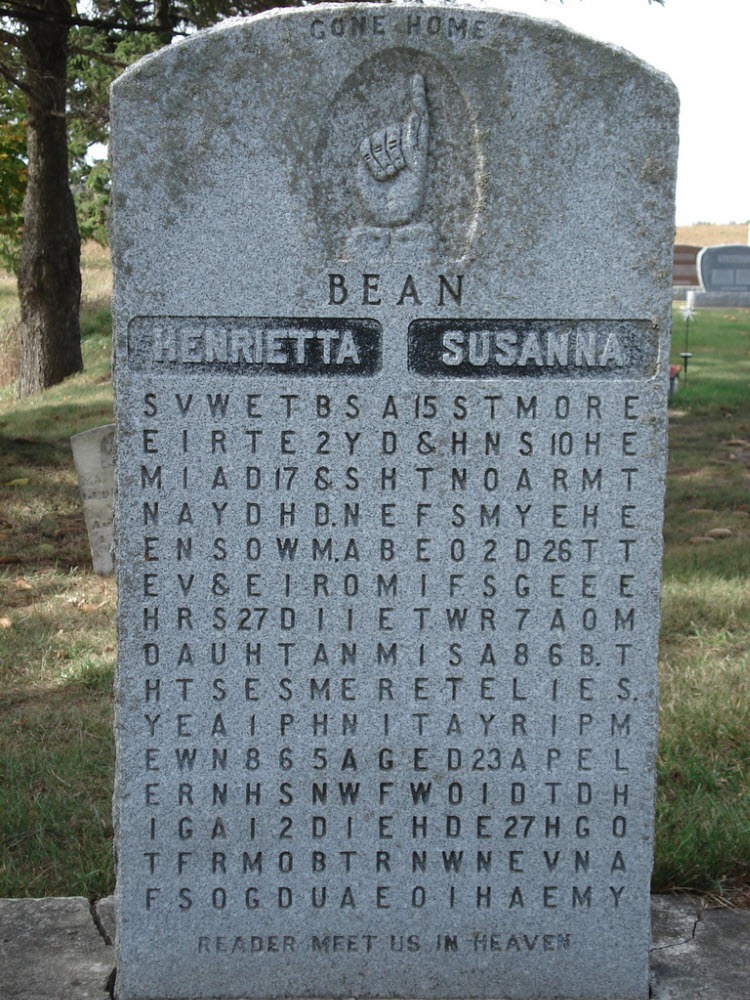
When Canadian doctor Samuel Bean lost his first two wives, Henrietta and Susanna, within 20 months of each other, he decided that the was best way to honor them would be to create a tombstone dedicated to a hobby they both enjoyed —solving puzzles. The doctor had them buried side by side in Rushes Cemetery near Crosshill, Wellesley Township, Ontario, and a single gravestone was placed over their graves. The gravestone bore a puzzle, one that had kept historians stumped and amateur cryptologists busy for the next eighty years.

A replica of the gravestone can still be seen in Rushes Cemetery. The original stone was badly weathered and was replaced with this durable granite replica in 1982. The stone is about 3 feet high, and features a finger pointed skyward with the words “Gone Home” above the two women’s names. Underneath the names is a grid carved with 225 seemingly random numbers and letters.

Without doubt, Dr. Samuel Bean must have received many requests to reveal the meaning of the cryptic message, but he would have none. Then in 1904, while holidaying in Cuba, Dr. Bean fell overboard from a sailboat and drowned. The secret of the coded gravestone was forever lost.

It was in 1947, some eighty years after Dr. Bean’s wives were buried, that the puzzle was first deciphered by the cemetery caretaker John L. Hammond, whose own grave is nearby. Hammond had copied the inscription, took it home and over the course of several months figured it out.

To solve the puzzle, start at the seventh column from the left and at the seventh letter from the top and read in a zig-zag way. If solved correctly, it should read:

IN MEMORIAM
HENRIETTA 1ST WIFE OF S BEAN M. D.
WHO DIED 27TH SEP 1865 AGED 23 YEARS 2 MONTHS & 17 DAYS
& SUSANNA HIS 2ND WIFE
WHO DIED 27TH APRIL 1867 AGED 26 YEARS 10 MONTHS & 15 DAYS
2 BETTER WIVES 1 MAN NEVER HAD
THEY WERE GIFTS FROM GOD BUT ARE NOW IN HEAVEN
MAY GOD HELP ME S. B. TO MEET THEM THERE

However, the puzzle appears to have a few errors, as TheRecord.com observes:

There is a single letter-discrepancy between the two stones. In line 7, column 8, the original’s “D” became an “E” on the replica — as it should be. However, there remains one seeming error: in line 8, column 14, each stone shows “B” but this has no place in the puzzle. If made an “O” it completes the word “SO” in the puzzle’s final phrase. I like to think that Samuel had these false letters engraved into the original marble to have the last laugh on his township neighbours.

Photo credit: Mac Armstrong/Flickr

Dr. Bean wasn’t the first to incorporate puzzles into headstones.

At the eastern end of the churchyard of St Mary’s Priory Church, in Monmouth, Wales, there is the gravestone of John Renie, a house painter who died in 1832. Renie’s gravestone comprises a rectangular carved 285-letter acrostic puzzle. From the larger H on the center square the sentence “Here lies John Renie” may be read in any direction. It is claimed that the sentence may be read a total of 46,000 different ways. It is believed that Renie carved the stone himself, possibly in a bid to confuse the Devil, so ensuring Renie a safe passage to heaven.

Source….Kaushik in http://www.amusingplanet.com

Natarajan
Why you can’t fly a plane to space…?


Why can’t you fly a plane to space?

Turns out, you couldn’t even make it halfway. Part of the problem is Earth’s gravity. You need to escape it in order to reach space.

This requires a minimum speed of mach 33 (25,000 mph). The current world record for fastest plane is only mach 6.7 (5,140 mph). The other problem is the atmosphere.

As you fly higher, the atmosphere grows thinner. This creates two serious issues:

Issue 1: Fewer air molecules means it’s harder for the plane to stay airborne.

Issue 2: Less oxygen means less combustible fuel to power the engine.

So how high can planes actually fly? Commercial airliners generally don’t surpass 45,000 feet. But some pilots have pushed their planes to extreme limits.

In 1977, Alexandr Fedotov flew to 123,532 feet. This is the highest any ground-launched plane has reached. Yet, Fedotov only made it about 1/3 the way to space.

Another plane, SpaceShipOne reached 367,500 feet in 2004. It had rocket engines and was flown to an initial 43,500 feet before launch.

Looks like its best to leave spaceflight to the real rocket ships.!!!

Source….NATHANIEL LEE,JESSICA ORWIG  in http://www.businessinsider.in

Natarajan

வாரம் ஒரு கவிதை… ” பிஞ்சு மனங்களும் செல்ல மழையும் “


பிஞ்சு மனங்களும்  செல்ல மழையும் 
…………………………………………………………………
 
என் பிஞ்சு கைகளை ஆட்டி  கொஞ்சும்
மழலையில் நான் சொல்லிவிடுவேன் என்ன
வேண்டும் எனக்கு என்று !
எந்த மொழி பேசினாலும்  என் மழலை
மொழி புரியனுமே    என் அம்மாவுக்கும்
அப்பாவுக்கும் !
என் மழலை கேட்டு அம்மா  அப்பா கொட்டும்
செல்ல மழையில்  நனையனும் நான் எப்போதும் !
என் மழலை வயதில் உங்க செல்ல மழை
மட்டுமே  வேண்டும் எனக்கு அம்மா …. அது ஒரு
இனிய தூறல் மழை ! பாசத்தின் சாரல் மழை !
இடி  மழை  எனக்கு வேண்டவே வேண்டாமே
இந்த பிஞ்சு வயதில் …தாங்க முடியுமா நான்
ஒரு இடி முழக்கத்தை இந்த வயதில் ?
புரிஞ்சுக்கணும் ஒரு பிஞ்சின் மனதை நீங்க
செல்ல மழை  பெய்ய வேண்டிய நேரத்தில்
தப்பாமல் பெய்ய வேண்டும் செல்ல மழை !
உங்க மனசு நான் புரிஞ்சு நடக்கும் காலம்
மலரும் நேரம்…. சொல்லாமல்
கொள்ளாமல்  ஓய்ந்து விடும் செல்ல மழை !
My Kavithai in http://www.dinamani.com  on 17th Sep 2017
Natarajan

வாரம் ஒரு கவிதை…” நிலைக்கும் என்றே ….”


நிலைக்கும் என்றே …
———————
மாற்றம்  ஒன்றே நிரந்தரம் …அது ஒன்றே
நிலைக்கும் என்றென்றும் என்ற ஆன்றோர்
வாக்கு பொய்க்காதே தம்பி …
ஆன்றோர் சான்றோர் சொல் மறந்து என்றும்
நிலைக்கும் என் பதவியும் பணமும் என்று
நீ நினைக்க வேண்டாம் தம்பி !
மாற்றம் கொடுக்கும் ஏற்றம் ஒருவனுக்கு !
அதே மாற்றம் ஒருவனுக்கு ஏமாற்றம் !
இது உலக நியதி !  விதி விலக்கு ஏதும்
இல்லையே இதில் !
வாழ்வில் சுகமும் துக்கமும் என்றும் உன் வாழ்வில்
நிலைக்கும் என்றே எண்ணி விடாதே தம்பி !
“இதுவும் எதுவும்  கடந்து போகும்” என்று சொல்லி
நீ நேர்  வழி நடந்தால் உன் பெயர் மற்றவர்
மனதில் நிலைத்து நிற்கும் இன்றும் என்றும்
என்றென்றும் !
My Kavithai in http://www.dinamani.com dated 3rd Sep 2017
Natarajan

Legends of Onam: Let us all welcome Maveli, the righteous king!…


Onam is one the most anticipated festivals celebrated with much fanfare and merriment by the people in Kerala, irrespective of one’s caste or creed.

Usually coinciding with crop harvests in the region, the story behind how the festival came into being goes all the way back to Vedic and Puranic ages.

The mythical King Mahabali, considered to be one of the greatest kings to have ever ruled Kerala, is believed to ascend to Earth from the netherworld to meet his subjects once every year.

It is his homecoming that is celebrated as the festival of Onam, as we know it today.

The king remains quite popular in Kerala even to this day, as testified by the folk song, Maaveli Naadu Vannidum Kaalam (When Maveli, our King, ruled the land), that speaks of his reign being one where all were equal.

According to the traditional legend, the king’s growing popularity amidst the common people became a rising concern for the jealous gods, Indra in particular.

According to Hindu beliefs, when a king or an emperor has a considerable number of fair and just deeds to his credit, he has the power to dethrone even Indra, who is the god of the gods.

Threatened by Mahabali’s rising greatness, they decided to hatch a scheme against the king and rope in the supreme god Vishnu.

Taking the form of a poor Brahmin monk named Vamana, Vishnu approached the king and asked to be granted a boon. Mahabali, who was known for his altruistic qualities, readily agreed to the monk’s request. 

An ancient illustration depicting Vamana casting the king to netherworld. Source: Wikimedia
Vamana wished for a parcel of land that he could cover in three paces or steps. Amused by such a trivial request, the king granted his wish. However, the ‘simple’ monk soon transformed into a giant – and covered all of the king’s lands in just two steps.

Where to put the third step? The king could not go back on his word. Having nothing left that he could pledge, Mahabali offered his head to the monk as the third step. Vamana’s final step pushed the king to the netherworld, thus robbing him of his earthly commitments and his throne to heaven.

Vishnu offered the king a chance to visit his kingdom once every year, for his attachment to his subjects was well known even amidst the gods.

And thus, the festival of Onam came into being, marking the homecoming of the noble king, who is lovingly called Maaveli by his people.

Different rituals are practised even today that celebrate the reign of the king, which is considered to be a golden era in the history of Kerala.

Interestingly, despite the role that Vamana had in the banishment of Mahabali, he is not written off as a villainous character in the state.

In fact, one of the major instalments of the festivities includes statues of both figures. These are circulated in homes of people as a representation of the king’s visit as well as the god’s.

While the statue of Mahabali is known as Onathappan, Vamana’s form goes by the name of Thrikkarayappan, the lord of the land covered in three paces. And both make way into the floral arrangement of Pookalam on Pooradam, the eighth day of Onam.

And as the month of Chingam falls by year after year, the people of Kerala continue to await the visit of their beloved king and seek his blessings.

Source….LekshmiPriya .S in http://www.betterindia.com

Natarajan


வாரம் ஒரு கவிதை…” கண்ணால் காண்பதும் …”


கண்ணால் காண்பதும் …
——————–
கண்ணால் காண்பதும் பொய் …காதால்
கேட்பதும் பொய்… தீர விசாரிப்பதே மெய் !
இது சான்றோர் வாக்கு !
பதவியும் பணமும் இருக்கும் வரை உன்னை சுற்றி
ஒரு கூட்டம் இருக்கும் எப்போதும் !…நீ உன் கண்ணால்
பார்த்தாலும்  அந்த கூட்டம் ஒரு பொய் !
நீ உன் காதால் கேட்டாலும் உன் புகழ் பாடும்
அந்த கூட்டத்தின் பாட்டும் ஒரு பொய்தான் !
மயங்கி விடாதே தம்பி  நீ …ஒரு பொய்யின்
அழகில் ! மதி மயங்கி உன்னை இழந்து விடாதே
ஒரு மாய வலையில் சிக்கி !
கண் கொண்டு எதை நீ பார்த்தாலும் , உன்
காதால் எதை நீ கேட்டாலும்
உன் கண்ணுக்கு தெரியாத உன் மனம் மட்டும்
சொல்லும் நீ செய்வது சரியா இல்லை தவறா என்று !
உன் மனது சொல்லும் வாக்கே மெய் வாக்கு !
கண்ணுக்கு தெரியாத உன் மனத்தின் மெய் வாக்கை
நீ காது கொடுத்து கேட்கவேண்டும் தம்பி …
கேட்டு உன் மனம் காட்டும் நல் வழியில் நீ நடந்தால்
கூட்டத்தில் ஒருவனாய் நீ இருக்க மாட்டாய் தம்பி !
உன் வீட்டையும்  நாட்டையும் நல்  வழி நடத்தும்
ஒரு நல்ல தலைவனாய் நீ மிளிர்வாய்  தம்பி !
உன் மனம் சொல்லும் மெய் வாக்கு  கேட்டு  நீ நடந்தால்
நீ சொல்லும் ஓவ்வொரு சொல்லும் ஒரு
வேத வாக்கு …அதுவே உன் செல்வாக்கு !
K.Natarajan
as appeared in http://www.dinamani.com dated 27th august 2017

12 of the Late Jerry Lewis’ Funniest Sketches….


Many people will have a heavy heart having heard the sad news that comedy legend, Jerry Lewis, has passed away at the age of 91. Although he fell in and out of favor with his adoring public throughout his career, there’s no denying that he was both immensely talented and incredibly generous – he ran a Labor Day telethon each year from 1966 to 2010 in order to raise money for the Muscular Dystrophy Association, raising some $2.5 billion in the process. Enjoy 12 of the most famous sketches and songs from his career below:

Source….www.ba-bamail.com

natarajan

வாரம் ஒரு கவிதை ….


என்ன தவம் செய்தேன்…
———————-
அம்மா என்னும் பதவி கிட்டியது எனக்கு
உன்னால்தானே என் செல்லமே ! என்ன
தவம் நான் செய்தேன் செல்லமே நீ வந்து
என் கையில் தவழ !
உன் ஒருவன் வரவில்  எத்தனை பேருக்கு
பதவி உயர்வு ஒரு குடும்பத்தில் !
உன் அப்பாவுக்கு தந்தை என்னும் உயர்வு…
பாட்டி தாத்தாவுக்கும் பதவி உயர்வு …
அம்மா அப்பா என்னும் நிலையிலிருந்து !!!
தம்பி பாப்பா நீ வந்ததால் இந்த வீட்டுக் குட்டி
பாப்பாவுக்கும்  அக்கா என்னும் ப்ரோமோஷன் !
இத்தனை பேருக்கும் பதவி உயர்வு ஒரே நாளில்
உன் வரவால் !…
என்ன தவம் செய்தேன் நான் இத்தனை “சக்தி “
பெற்ற உன்னை நான் பெற்றெடுக்க !
Natarajan ….in http://www.dinamani.com dated 20th August 2017

THE MAN WHO ACCURATELY ESTIMATED THE CIRCUMFERENCE OF THE EARTH OVER 2,000 YEARS AGO….


pillars

Today I found out about a man who fairly accurately estimated the circumference of the Earth well over 2,000 years ago: Eratosthenes of Cyrene.

Born around 276 B.C. in Cyrene, Libya, Eratosthenes soon became one of the most famous mathematicians of his time. He is best known for making the first recorded measurement of the Earth’s circumference, which was also remarkably accurate.  (And, yes, people at that point had known for some time that the world wasn’t flat, contrary to popular belief.)

Eratosthenes was able to accomplish this in part because of his education in Athens. There, he became known for his achievements in many different fields, including poetry, astronomy, and scientific writing. His activities became so talked about, in fact, that Ptolemy III of Egypt decided to invite him to Alexandria to tutor his son. Later, he would become the head librarian of the Library of Alexandria.

The mathematician must have been thrilled to have this opportunity. The Library of Alexandria was a hub of learning at the time, attracting scholars from across the known world. Eratosthenes was able to rub shoulders with the likes of Archimedes while continuing his own learning.

It was probably in the Library of Alexandria that he read about a curious event that took place in Syene (now Aswan, Egypt) at the summer solstice. Syene sat to the south of Alexandria. At high noon, the sun would shine directly overhead and there would be no shadows stemming from the columns. However, Eratosthenes realized that at the same moment in Alexandria, columns clearly did have shadows. Being a good mathematician, he decided to use this knowledge to do a few calculations to figure out the circumference of the Earth.

To do this, Eratosthenes measured the shadow of an obelisk on June 21 at noon. He discovered that the sun was about 7°14’ from being directly overhead. He realized that, because the Earth is curved, the greater the curve, the longer the shadows would be.

Based on his observations, he hypothesized that Syene must lie 7°14’ along a curve from Alexandria. Furthermore, he knew that a circle contained 360°, which meant that his calculation—7°14’—was roughly one fiftieth of a circle. Therefore, Eratosthenes thought, if he multiplied the distance between Syene and Alexandria by 50, he would have the circumference of the Earth.

The missing information was simply how far away Syene was from Alexandria. He measured the distance in stadia. There isn’t an exact modern day conversion to stadia, and it isn’t perfectly clear which version of the stadia Eratosthenes was using, but regardless, from what is known, his estimation was remarkably accurate.

There are two theories as to how Eratosthenes figured out the distance: first, that he hired a man to walk there and count the steps. Second, that he heard a camel could travel 100 stadia a day, and it took a camel about 50 days to travel to Syene. Whatever the case, he estimated the distance between Syene and Alexandria was 5,000 stadia. If that was the case, then using his formula, the earth was 250,000 stadiaaround.

Due to the uncertain distance that stadia represents (and particularly which stadia he was using), historians believe that Eratosthenes’ conclusion was between .5% and 17% off the mark. Even if the latter case was true, it was astoundingly accurate given the limited technology he was dealing with at the time. But many scholars think it likely that he was using the Egyptian stadia (157.5 m), being in Egypt at the time. This would make his estimate only about 1% too small.

There had been previous attempts at discovering the Earth’s circumference (which don’t count as “first recorded” because their methods didn’t survive, though we have references to them) which resulted in a 400,000 stadia figure, 150,000 more than Eratosthenes’—obviously far from accurate.

While finding the approximate circumference of the Earth was probably Eratosthenes’ largest contribution to scholarship at the time, it was by no means the only one. Eratosthenes is also credited with coming up with a way to map out the known world by drawing lines north-south and east-west—early latitude and longitude lines. However, these lines were irregular and often drawn through known places, meaning they weren’t entirely accurate. Nevertheless, it provided a precursor for maps we know today.

He is also remembered for the Sieve of Eratosthenes, a simple algorithm that makes it easy to find all prime numbers up to a certain limit. Though none of Eratosthenes’ personal work on the sieve survives, he was credited with the creation of the algorithm by Nicomedes in his Introduction to Arithmetic.

Not only that, but Eratosthenes estimated the distance to both the sun and the moon, and measured the tilt of the Earth’s axis all with amazing accuracy.

He also wrote the poem Hermes, correctly sketched the route of the Nile, and even gave a more-or-less accurate account of why the Nile flooded, something that had baffled scholars for centuries. He worked on a calendar that included leap years and he also estimated and corrected the dates of various historical events beginning with the Siege of Troy.

Despite these accomplishments and many more like them, Eratosthenes was often nicknamed “Beta.” Beta is the second letter in the Greek alphabet and referred to Eratosthenes being second-best in everything he did.

Eratosthenes died around 194 B.C. and is thought to have starved himself to death. It is believed that he started going blind in his later years and, unable to continue his work, he simply stopped eating.

Bonus Fact:

  • A man named Posidonius copied Eratosthenes’ basic method about a century later, using the star Canopus, Rhodes, and Alexandria as starting points. However, he didn’t measure the distance between Rhodes and Alexandria correctly, resulting in a circumference that was smaller than Eratosthenes’ estimation. It was this circumference that was recorded by Ptolemy in his geography treatise and later used by explorers looking for a quicker way to the Indies.

Source…www.todayifoundout.com

Natarajan

வாரம் ஒரு கவிதை ….” மழை நீர் போல …”


மழை நீர் போல …
——————–
வறண்டு கிடக்கும் பூமி …வானம் திறக்குமா கண் ?
மேலும் கீழும் பார்ப்பது உழவன் மட்டுமல்ல இன்று !
அடுக்கு மாடி கட்டிடக் குவியல் கூட்டில் குடி இருக்கும்
நகரத்துப் “பறவைகளும்” மழை தேடி வானிலை
அறிக்கையை காலையும் மாலையும் அலசும் அவலம் இன்று !
மழை நீரை முத்தமிட துடிக்கும்  வறண்ட பூமி நனையுது
மழை நீர் போல பெருகி வரும் உழவன் அவன் கண்ணீரில் !
குடிக்க நீர் இன்றி தவிக்கும் அடுக்கு மாடி “பறவைகள்”
வழி மேல் விழி வைத்து காத்திருக்குது  தினமும் ஒரு
லாரி தண்ணீருக்கு !
தண்ணீரும் பணமாக மாறும் காலம் இது ..மழை
நீர் சேமிப்பின் மதிப்பு உணராத மனிதன் கொடுக்கிறான்
நீருக்கு ஒரு விலை இன்று !
மழை வெள்ளம் வரும் நேரம் “இது என்ன பேய் மழை”
என்று அலறிய மனிதன் குரல் கேட்டு வானமும்
மனம் உடைந்து “கண்ணீர் ” விடவும் மறந்து போனதோ ?
தினம் தினம் தண்ணீர் தண்ணீர்  என்று மனிதன்
கண்ணீர் விட்டு என்ன பயன் இன்று ?
மாற வேண்டும்  மனிதன்… மாற்றி யோசிக்கவும்
வேண்டும் …வானமும் மகிழ்ந்து  தன் ஆனந்தக்
கண்ணீரால்  நனைக்க வேண்டும் இந்த பூமியை !
மனிதனுக்கும் புரிய வேண்டும்  எந்த நீர்
ஆனாலும்  மழை நீர் போல ஆகுமா  என்று !
Natarajan….
in http://www.dinamani.com dated  13th August 2017