Meet Alphabet, Google’s New Corporate Boss As Sundar Pichai Takes Over The Search Company…

Google just rocked the world with some light news on a Monday. It has restructured the company and everything will now report up to “Alphabet Inc.” a new corporate name. That includes Google, which will now be CEO’d by Sundar Pichai (one less Twitter CEO candidate).

Its site? https://abc.xyz/. Strangely enough, Google doesn’t own Alphabet.com (yet?).

BONUS: Click this period and the site links to hooli.xyz (a Silicon Valley reference)

The CEO of Alphabet will be Google CEO and co-founder Larry Page. His missive on Google’s blog (headlined G is for Google) explains what the new holding company is:

What is Alphabet? Alphabet is mostly a collection of companies. The largest of which, of course, is Google. This newer Google is a bit slimmed down, with the companies that are pretty far afield of our main Internet products contained in Alphabet instead.

Sergey Brin, co-founder of Google, will serve as Alphabet’s president (which includes the X lab), and Eric Schmidt will be chairman. In fact, he digs the new name:

Page went on to say:

Our company is operating well today, but we think we can make it cleaner and more accountable. So we are creating a new company, called Alphabet. I am really excited to be running Alphabet as CEO with help from my capable partner, Sergey, as President.

I guess we don’t want to have a Google+ or Glass kerfluffle again, where a product drags the mothership through the mud. Page basically confirms this by saying:

…the whole point is that Alphabet companies should have independence and develop their own brands.

If they fail, they die. But they do less damage to the umbrella.

The stock will be changing over from Google to Alphabet, but still trading under GOOGL and GOOG (which were set up after its stock split). The company says this will allow them to focus on Google as a product even more than before, and at the same time, Google will also be able to regain its focus on its own products.

Google’s main business will include search, ads, maps, apps, YouTube and Android and the related technical infrastructure. Nest will report up to Alphabet.

It didn’t seem that Pichai, who heads up all of Google’s most important products, had a chance at becoming Google’s CEO (ahead of Page) anytime soon. Pretty creative way to work around that, I’d say.

It looks like the stock market is reacting favorably to the announcement. Google’s…er Alphabet’s stock is up over 6 percent after hours.

Source…. ,

Sundar Pichai …Now CEO of Google …

Sundar Pichai is Google CEO

Sundar Pichai is Google CEO

Google announces formation of new umbrella firm Alphabet

In a significant restructuring at Google, India-born Sundar Pichai has been named the new CEO of the technology giant as the company co-founder Larry Page today announced the formation of a new umbrella firm Alphabet, of which Google will be a part.

Page, in a blog post, announced the formation of the new parent company Alphabet, of which he will be the CEO and Google co-founder Sergey Brin will be its President.

Chennai-born Pichai, 43, has been named CEO of the new Google, which Page said will be a “a bit slimmed down.”

“Our company is operating well today, but we think we can make it cleaner and more accountable. So we are creating a new company, called Alphabet. I am really excited to be running Alphabet as CEO with help from my capable partner, Sergey, as President,” Page said.

He said Pichai will be a “key part” of the new structure that will “allow us to keep tremendous focus on the extraordinary opportunities we have inside Google.”

He has really stepped up since October of last year, when he took on product and engineering responsibility for our internet businesses. Sergey and I have been super excited about his progress and dedication to the company. And it is clear to us and our board that it is time for Sundar to be CEO of Google,” Page said.

“I feel very fortunate to have someone as talented as he is to run the slightly slimmed down Google and this frees up time for me to continue to scale our aspirations. I have been spending quite a bit of time with Sundar, helping him and the company in any way I can, and I will of course continue to do that,” Page added.

Source….www.thehindubsinessline.com

Natarajan

” Forget the Crocodile Hunter, Here ‘s a Crocodile Rider…” !!!

 ‘Barefoot Bushman’ keeps dozens of giant reptiles on his farm including an 800kg monster named Brian… despite been bitten 40 times

  • A 65-year-old man from Queensland, Australia, likes nothing better than to spend his time riding crocodiles
  • Coined the ‘Barefoot Bushman’, Rob Bredl owns a wildlife park on his 175-acre farm 
  • The Bushman has been bitten 40 times by crocodiles and other venemous creatures
  • Mr Bredl enjoys riding his 800 kilo crocodile named Brian and owns 40 juvenile and 8 adult crocodiles as well
  • The bushman’s family is also involved in his wildlife park that began with his father in 1970

A 65-year-old man from Queensland, who likes nothing better than to hitch a ride on crocodiles’ backs, is giving even the crocodile hunter a run for his money.

Rob Bredl, coined ‘The Barefoot Bushman,’ has been bitten more than 40 times by crocodiles and venomous snakes but won’t stop ‘playing’ with his 800 kilo croc named Brian.

Bredl owns eight adult crocs and 40 juvenile, many up to 15 feet in length.

Rob Bredl is the crocodile riding man from Queenslan who is giving the crocodile hunter a run for his money

Rob Bredl is the crocodile riding man from Queensland who is giving the crocodile hunter a run for his money

The 65-year-old (left), coined 'The Barefoot Bushman', has been bitten more than 40 times by crocodiles and venomous snakes but won't stop 'playing' with his 800 kilo croc named Brian (right)

Ride 'em cowboy! Mr Bredl owns eight adult crocs and 40 juvenile ones, many up to 15 feet in length

Ride ’em cowboy! Mr Bredl owns eight adult crocs and 40 juvenile ones, many up to 15 feet in length

The family of reptiles and the Bushman live on a 175-acre farm in Airlie Beach in the Whitsunday’s region of Queensland and are part of a conservation program lead by Bredl.

As well as breeding the crocodile, Bredle has opened up his home to the public to watch and learn about vicious reptile, he’s lovingly nicknamed ‘salties.’

Bredl is well known for his antics with crocodiles, which include sitting on their backs, and enticing them to the water’s edge and grabbing them out of the water head first.

The family of reptiles and the Bushman live on a 175-acre farm in Airlie Beach in the Whitsunday's region of Queensland and are part of a conservation program lead by Bredl

Now sit! As well as breeding crocodiles, Bredle has opened up his home to the public to watch and learn about the vicious reptiles, he's lovingly nicknamed 'salties'

Despite the theatrical wrestling seen on the farm, Bredl has no illusions about how dangerous the animals are

Despite the theatrical wrestling seen on the farm, Bredl has no illusions about how dangerous the animals are

Alongside ‘salties’ the farm is home to emus, koalas, wallabies, snakes, birds and a range of other reptiles.

Bredl told Daily Mail Australia: ‘When it comes to crocs, everyone wants the drama, the danger…They freak out.’

With groups of 20 or more coming to watch the bizarre relationship between Bredl and his reptilian pets, the bushman said: ‘It blows them away what I can do with the crocs.’

Bredl believes he's the 'luckiest, crazy person who has ever lived'. He continued: 'I have been bitten by snakes and crocodiles and I'm still here'

Bredl believes he’s the ‘luckiest, crazy person who has ever lived’. He continued: ‘I have been bitten by snakes and crocodiles and I’m still here’

Mr Bredl has been bitten over 40 times by both crocs and venemous snakes. He said: 'I have had four bites from deadly snakes, but on those occasions no venom was released'

He is well known for his antics with crocodiles, which include sitting on their backs, and enticing them to the water's edge and grabbing them out of the water head first

With groups of 20 or more coming to watch the bizarre relationship between Mr Bredl and his reptilian pets, the bushman said: 'It blows them away what I can do with the crocs'

With groups of 20 or more coming to watch the bizarre relationship between Mr Bredl and his reptilian pets, the bushman said: ‘It blows them away what I can do with the crocs’

With a brain the size of your thumb, the Saltwater Crocodile (pictured) is an extremely dangerous creature, despite their slow movements on land

With a brain the size of your thumb, the Saltwater Crocodile (pictured) is an extremely dangerous creature, despite their slow movements on land

The Barefoot Bushman also used his nickname for a documentary that he filmed of his endeavours

Tine for a rest: With a family history in dealing with exotic animals Mr Bredl involves his whole family in the farm's operation

‘Their actions are all totally instinctive,’ said Bredl.

‘They are much more dangerous when they are in the water. Once they are out of the water, they can’t run, despite what others have said.’

Earning his name for walking barefoot through the Outback, the Barefoot Bushman also used the name for a documentary that he filmed of his endeavours.

Alongside his niece, Bredl's father Josef and mother Rita set up one of the first private zoos in Australia and in 1970 set up the crocodile farm to breed them

‘My niece, Karla Bredl, was an attendant at our wildlife park and was attacked in 1997 when she was 21. She was bitten by a croc called Solomon, who had no teeth,’ he explained.

The jaws of the animal are strong enough to crush bones and left Karla with a broken thigh and pelvis.

Alongside his niece, Bredl’s father Josef and mother Rita set up one of the first private zoos in Australia and in 1970 set up the crocodile farm to breed them.

But despite recently turning 65, Bredl has no plans for retirement: ‘I will probably keep going until I fall over. I have a bit of arthritis now, and am slowing down, but the good thing is that as the crocodiles get bigger, they also slow down.’

Alongside 'salties' the farm is home to emus, koalas, wallabies, snakes, birds and a range of other reptiles (pictured)

Alongside ‘salties’ the farm is home to emus, koalas, wallabies, snakes, birds and a range of other reptiles (pictured)

Source….www. dailymail.co.uk

Natarajan


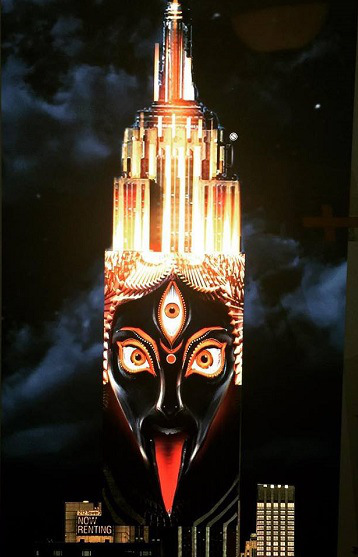
The Epic Moment When Goddess Kali Took Over The Empire State Building In New York…

Goddess Kali is regarded as the Goddess of death but the death of an ego. Of all the forms of Devi, she is considered to be the most compassionate one because she provides moksha or liberation to her children. And now, people in New York would know about Her. Yeah, you read that right.

Goddess Kali was displayed on to the iconic Empire State building in New York which is considered to be the tallest building and also the key piece of NYC skyline.

Empire State building had started a new trend to feature extinct species across the world. But, featuring Goddess Kali was a class apart. Android Jones is the artist who designed the portrait of Kali.

Why Goddess kali? Because She represents the destruction of evil, Android thought it would be a good idea to feature Her. Hence, he opines that She would work as the epitome to fight dangers and pollution.

Recently, the much touted Cecil the lion was also featured there. The death of this lion by an American dentist had caused international outrage. It was broadcast in a picture more than 350 feet tall and 180 feet wide. Other than this, many animals were featured to garner people’s attention and subsequently, create awareness.

Source….Aparajita Mishra in http://www.storypick.com

Natarajan


Interesting Information and Fascinating Facts…

Fascinating Facts

Fascinating Facts

Fascinating Facts

Fascinating Facts

Fascinating Facts

Fascinating Facts

Fascinating Facts

If you like to enrich your general trivia knowledge, or just learn some odd, interesting, and surprising pieces of information, then the above facts should satisfy your hunger for knowledge, and give you some great topics for conversation!

Source…www.ba-bamail.com

Natarajan

Risk of future Nepal-India Earthquake increases….

Aftermath of Nepal earthquake

There is an increased risk of a future major earthquake in an area that straddles the west of Nepal and India, scientists warn.

New data has revealed that the devastating quake that hit Nepal in April did not release all of the stress that had built up underground, and has pushed some of it westwards.

The research is published in the journals Nature Geoscience and Science.

Its authors say more monitoring is now needed in this area.

Prof Jean-Philippe Avouac, from the University of Cambridge, told BBC News: “This is a place that needs attention, and if we had an earthquake today, it would be a disaster because of the density of population not just in western Nepal but also in northern India, in the Gangetic plain.”

The 7.8 magnitude earthquake that struck Nepal earlier this year killed about 9,000 people, and left many thousands more injured and homeless.

It occurred in a geological collision zone, where the Indian tectonic plate pushes north into the Eurasian plate, moving the ground an average of 2cm a year.

Tectonic plate

Over decades, stress built up along a stretch of the fault line, which is called the Main Himalayan Thrust fault, close to Nepal’s capital Kathmandu.

The boundary between the two plates in this area had become locked – stuck together by friction, and so immobile – building up energy that only a major earthquake could release.

However, the quake on 25 April only released part of this pent-up pressure.

“If the earthquake had ruptured all the locked zone all the way to the front of the Himalayas, it would have been a much larger earthquake,” said Prof Avouac.

Instead, the researchers believe that some of this stress has shifted west, to an area stretching from the west of Pokhara in Nepal to the north of Delhi in India.

A major earthquake there is already long overdue: the last happened in 1505 and is estimated to have exceeded M8.5. The researchers say the new stress that has moved there could already be adding to the tension that has been building up over five centuries.

At the moment, we are quite worried about western Nepal,” said Prof Avouac.

Aftermath of Nepal earthquake

The earthquake triggered an avalanche on Everest – but experts say the damage could have been worse

The team says extra monitoring by the research community is now needed, although it is impossible to predict accurately when the natural disaster might strike.

“We don’t want to scare people, but it is important they are aware that they are living in a place where there is a lot of energy available,” Prof Avouac explained.

“A lot of families are building their own houses in Nepal. With minimum care, it is possible to build small buildings that can withstand large earthquakes.”

Commenting on the research, Prof David Rothery from Open University said: “Monitoring techniques have now advanced to the stage where we can work out how a previously ‘locked’ fault has ‘unzipped’ during the couple of minutes that it takes a major earthquake to happen.

“Lives would be saved by drilling school children in western Nepal and the nearby plains of northern India in how to react in the event of an earthquake, and in ensuring that at least school buildings are adequately constructed to survive seismic shaking.”

Data from advanced GPS stations has also revealed that the death toll could have been far higher. These stations track tiny shifts in ground position, at a rate of five measurements every second.

Scientists say the seismic waves travelling underground were a lower frequency than expected, causing the ground to vibrate more gently.

Prof Avouac said: “When I heard about this M7.8 earthquake happening so close to Kathmandu, I was prepared for a death toll in the order of 300,000 or 400,000 people.

“But this earthquake didn’t generate a lot of high frequency waves, which would have been devastating for the small buildings in Kathmandu. They could withstand the earthquake because of the characteristics of the ‘pulse’ – and its relative smoothness.”

Follow Rebecca on Twitter

source…Rebecca Morelle  in http://www.bbc.com

Natarajan

Message for the Day…” prema”…This one Dedicated act leads on to all activity being dedicated…”

Sathya Sai Baba

Prema (pure love) is filial piety when directed towards parents, companionship when it flows towards friends, love when it is felt towards the partner, respect when it is expressed to elders, and affection when you are drawn towards children. Bhakthi (devotion) affects your acts in three forms: first, you do some acts consciously in order to express your love or give shape to the Prema that animates you; second, you do acts as dedicated offerings to enhance the glory of the Lord, in a spirit of worshipful humility, as if you are offering at His feet all that you are and all that you are capable of; and third you do acts which are full of Prema towards all, as part of your mere existence, automatically, without any tinge of violence upsetting the perfume of the act. One dedicated act leads on to all activity being dedicated; theAananda you experience makes you feel that your effort has been worthwhile. That is the end, the aim and the inspiration.


” Save Your Spine…. Stop Staring at Your Cellphone Always…”

Saving Your Spine While Texting

It seems that we are growing more attached to our cell phones every day, but we never really stop to consider the amount of pressure our spines go through each time we bend our necks down. The poor posture is more commonly referred to as “text neck”, which can add anywhere between 30-60lbs (15-30kg) of pressure on the lumbar region by the awkwad spinal angles.

The force increases by approximately 27 pounds (12.2kg) at a 15-degree angle, 40 pounds (18kg) at a 30-degree angle, 49 pounds (22kg) at a 45-degree angle and 60 pounds (27kg) at a 60-degree angle. That would be like having a small child sitting on your neck while you type!

The Symptoms & Consequences of “Text Neck”
Having your neck in a downward position for extended periods of time can result in severe stretching of the spinal tissue, which could potentially lead to pinched nerves, herniated disks, and even spinal surgeries. Texting can also strain your eyesight, especially when  you have to squint down further to read the words or titles. Some of the symptoms of “text neck” can include; tightness across the shoulders, soreness of the neck (stiff neck), and chronic headaches.
Dr. Kenneth Hansraj, who is the chief of spine surgery at New York Spine Surgery and Rehabilitation Medicine, wrote about how texting drastically affects the spine with bad posture, and published it in the U.S. National Library of Medicine. The research suggested that keeping good posture is ideal to prevent spinal injuries from occurring.
Dr. Hansraj points out a safer alternative to “text neck”. He suggests that your ears should be aligned with the shoulders, while the shoulder blades are retracted. This position reduces the amount of stress on the spinal region. Dr. Hansraj also suggests that you should look down at your cell phones and tablets, by moving your eyes down in favor of bending the neck.
Preventing “Text Neck”:
  • Make sure your neck isn’t tilted when you’re glancing down at the phone. Instead, try scrolling with your eyes only, while keeping your neck in a neutral position.
  • Keep your neck and spine comfortably rested on a few pillows if you’re going to text while in bed.
  • Keep your ears aligned with the shoulders, and your shoulder blades retracted. This is important posture for texting while sitting inside a moving vehicle or train.
  • Avoid eye strain by making the fonts on the phone or tablet larger when possible. You can enter the display settings and simply change the fonts to a larger size.
  • Hold a tablet straight in front of you at a 30 degree angle when typing to keep your neck and wrists protected.
  • Take a break every 15 minutes or so by looking up and bringing the neck back into the neutral position.

All it takes is a few slight adjustments to maintain proper posture, and you can limit the potential for unwanted cervical spinal stress.

Cover image courtesy of stockimages / freedigitalphotos.net

Source……..www.ba-bamail.com

Natarajan

சிங்கப்பூரின் பொன்விழா….

சிங்கப்பூர் நிகழ்த்திவரும் சாதனைகளும் அதன்முன் உள்ள சவால்களும்.

சிங்கப்பூர் தனி நாடானது ஆகஸ்ட் 9, 1965. ஆனால், யாரும் ஆடவில்லை பள்ளுப் பாடவில்லை. ஆனந்த சுதந்திரம் அடைந்துவிட்டோமென்று கொண்டாடவும் இல்லை. அடுத்த 25 ஆண்டுகளுக்கு சிங்கப்பூரின் பிரதமராக இருக்கப்போகும் லீ குவான் யூ மிகுந்த கலக்கத்திலிருந்தார். இந்த நகரை எப்படி ஒரு தனிநாடாக மாற்றப்போகிறோம் என்று மலைத்துப்போயிருந்தார். மழை நசநசத்துக்கொண்டிருந்தது. எங்கும் புழுக்கம். தனது உணர்ச்சிகளைக் கட்டுப்படுத்த முடியாமல் செய்தியாளர் சந்திப்பை 20 நிமிடங்கள் தள்ளி வைத்தார். சிங்கப்பூர் மலேசியாவுடன் இணைந்திருப்பதையே லீ விரும்பினார். ஆனால், மலேசியா விரும்பவில்லை. அது சிங்கப்பூரை வெளியேற்றியது.

ஓர் இந்தோனேசியத் தலைவர் காழ்ப்போடு குறிப்பிட்டார்: ‘உலக வரைபடத்தில் சிங்கப்பூர் ஒரு சிவப்புப் புள்ளி’ என்று! பரப்பளவு வெறும் 718 ச.கி.மீ. சிங்கப்பூரில் இயற்கை வளங்கள் குறைவு. தண்ணீரே மலேசியாவிலிருந்துதான் வர வேண்டும். அன்று தொழிலும் வணிகமும் சொல்லிக்கொள்ளும்படி இல்லை. மொழியால், இனத்தால், பண்பாட்டால், வேறுபட்ட சீனர்களையும் மலேசியர்களையும் இந்தியர்களையும் உள்ளடக்கிய நாடு. இனக் கலவரம் தொட்டால் பற்றிக்கொள்ளும் நிலையிலிருந்தது. அண்டை நாடுகளான மலேசியாவுடனும் இந்தோனேசியாவுடனும் நல்லுறவு இல்லை. லீ-யின் கவலையில் நியாயமிருந்தது.

ஆடுவோமே பள்ளுப்பாடுவோமே

50 ஆண்டுகள் கழிந்துவிட்டன. இப்போது தேசிய தினத்தின் பொன்விழா கோலாகலமாக நடக்கிறது. வாண வேடிக்கை, கண்காட்சிகள், இசை நிகழ்ச்சிகள்… அரசு ஊழியர்களுக்கு போனஸ், பள்ளிப் பிள்ளைகளுக்கு லீகோ விளையாட்டுப் பெட்டி, ஒவ்வொரு வீட்டுக்கும் நினைவுப் பரிசு. நான்கு நாள் கொண்டாட்டங்களை அறிவித்திருக்கிறார் லீ குவான் யூ-வின் மகனும் இப்போதைய பிரதமருமான லீ சியன் லூங்.

இந்தக் கொண்டாட்டங்களுக்குக் காரணம் இருக்கிறது. இன்று சிங்கப்பூர் உலகின் செல்வந்த நாடுகளின் பட்டியலில் அமெரிக்கா, சுவிட்சர்லாந்து, ஆஸ்திரேலியா போன்ற நாடுகளைப் பின்னுக்குத் தள்ளிவிட்டு, மூன்றாவது இடத்தில் இருக்கிறது. பொதுத் துறைகள் திறமையானவை. வரிகள் குறைவானவை. சேவைகள் தரமானவை.

சிங்கப்பூரும் ஹாங்காங்கும்

ஆய்வாளர்கள் ஹாங்காங்கையும் சிங்கப்பூரையும் எப்போதும் ஒப்பிடுவார்கள். இரண்டு இடங்களிலும் உள்ள துறைமுகங்களும், விமான நிலையங்களும், உள்கட்டமைப்பும் உலகத் தரமானவை. குற்றச் செயல்கள் குறைவானவை. ஊழலற்ற ஆட்சி நடக்கிறது. அதனால், முதலீட்டாளர்கள் படையெடுக்கிறார்கள். ஆனால், சில முக்கியமான புள்ளிகளில் சிங்கப்பூர் வேறுபடுகிறது. ஹாங்காங், மக்கள் சீனக் குடியரசின் கீழ் தன்னாட்சி அதிகாரத்துடன் இயங்குகிறது; பாதுகாப்புக்காக ஒரு சதவீதம்கூடச் செலவழிப்பதில்லை. ஆனால், சிங்கப்பூர் தனது உள்நாட்டு உற்பத்தியில் ஐந்து சதவீதத்துக்கும் மேல் பாதுகாப்புக்காக ஒதுக்குகிறது. 18 வயது நிரம்பிய நிரந்தரக் குடியுரிமை பெற்ற ஆண்கள் அனைவரும் இரண்டு வருட ராணுவப் பயிற்சி பெற வேண்டும். இன்னொரு முக்கிய வேறுபாடு ஹாங்காங் ஜனநாயகத்தில் எதிர்க் குரலுக்கு இடமுண்டு. சிங்கப்பூரில் அது கட்டுப்பாடுகளுக்கு உட்பட்டது.

சிங்கப்பூரின் வெற்றிக்குப் பின்னால் உள்ள காரணிகளில் மூன்றை இங்கே குறிப்பிடலாம். முதலாவதாக வீட்டுவசதி. சிங்கப்பூரில் சேரிகள் இல்லை. 1974-ல் 40% மக்களுக்குச் சொந்த வீடு இருந்தது. இப்போது 80% ஆக உயர்ந்திருக்கிறது. இதற்குக் காரணம் வைப்பு நிதி. நிரந்தரக் குடியுரிமை பெற்ற ஊழியர்கள் தமது ஊதியத்தில் 20%-ஐ வைப்பு நிதியில் செலுத்த வேண்டும். முதலாளிகள் 17% செலுத்துவார்கள். இதை வீடு வாங்கப் பயன்படுத்தலாம். குடியுரிமை உள்ள அனைவரும் வீடு வாங்கிவிடுவது அதனால்தான்.

இரண்டாவதாக, பல் இன மக்களிடையே நிலவும் இணக்கத்தைச் சொல்லலாம். பெரும்பாலான மக்கள் சொந்தக் கூரையின் கீழ் வசிக்கிறார்கள். வேலையில்லாதவர்கள் 2%-க்கும் குறைவு. அடிப்படைத் தேவைகள் நிறைவேறிவிடுவதால் பூசல்கள் இல்லை. 2013 மக்கள்தொகைக் கணக்கெடுப்பின்படி சீனர்கள் 74%, மலேசியர் 13%, இந்தியர்கள் 9%. இந்தியர்களில் 58% தமிழர்கள். மெட்ரோ ரயிலில் ஆங்கிலமும் சீனமும் மலாயும் கேட்கலாம். கூடவே, தேமதுரத் தமிழோசையையும் கேட்கலாம். நான்கும் ஆட்சி மொழிகள். தாய்மொழிக் கல்வி கட்டாயம். தமிழ்ப் பாடநூல்கள் தரமானவை.

சிங்கப்பூர் வெற்றிக்கு இன்னொரு காரணி, வெளியுறவுக் கொள்கை. 1967-ல் துவங்கப்பட்ட தென்கிழக்காசிய நாடுகளின் ஒருங்கிணைப்பான ஆசியானில் சிங்கப்பூர் முன்கை எடுத்துச் செயலாற்றிவருகிறது. இது பிராந்திய ஒத்துழைப்புக்கு உதவுகிறது. இன்று மலேசியாவுடனும் இந்தோனேசியாவுடனும் உறவு சுமுகமாக இருக்கிறது.

சிங்கப்பூரின் சவால்கள்

இந்த இடத்தில் சிங்கப்பூர் எதிர்நோக்கும் சவால்களைப் பற்றியும் பேச வேண்டும். கடந்த 50 ஆண்டுகளாக லீ குவான் யூ-வின் மக்கள் செயல் கட்சிதான் பெருவாரியான வாக்குகளைப் பெற்றுவருகிறது. தூய்மையான, திறமையான ஆட்சி என்பது முக்கியமான காரணம். எதிர்க் கட்சிகள் பலவீனமானவை என்பதும் ஒரு காரணம். கடுமையான தேர்தல் விதிகளும், கட்டுப்பாடுகளுடன் கூடிய பேச்சுச் சுதந்திரமும் நிலவுவதால் எதிர்க் கட்சிகளால் ஒரு சக்தியாக உருவாக முடியவில்லை. 2011 தேர்தல் இதில் சிறிய மாற்றத்தை ஏற்படுத்தியது. இந்தத் தேர்தலிலும் ஆளுங்கட்சி 93% இடங்களைப் பிடித்தது. ஆனால் 60% வாக்குகளையே பெற்றது. கடந்த 50 ஆண்டுகளில் இது மிகக் குறைவானது.

அரசியல் நோக்கர்கள் இந்தப் பின்னடைவுக்குச் சொல்லும் காரணங்களில் பிரதானமானதாகச் சொல்வதைக் கேட்டால், அது விநோதமாகத் தோன்றலாம் – சிங்கப்பூரின் தரமான கல்வி. உலகத் தரமான பல்கலைக்கழகங்களில் நவீன கல்வி கற்ற இளைஞர்களுக்கு அரசின் கடுமையான சட்ட திட்டங்கள் உவப்பாக இல்லை; கூடுதல் சுதந்திரத்தை அவர்கள் எதிர்பார்க்கிறார்கள் என்கிறார்கள். சிங்கப்பூர் அரசு இதை உணர்ந்திருப்பதாகவே தோன்றுகிறது. மாற்றங்களுக்கு அது எப்போதும் தயாராகவே இருந்திருக்கிறது.

கடந்த மார்ச் மாதம் தனது 91-வது வயதில் லீ குவான் யூ காலமானார். மக்கள் மணிக்கணக்கில் வரிசையில் நின்று மரியாதை செலுத்தினார்கள். அவரது மரணம் ஒரு வகையில் சிங்கப்பூர் மக்களிடையே உள்ள இணைப்பை வலுவாக்கியிருக்கிறது என்றார்கள். நாளைய பொன்விழாக் கொண்டாட்டங்கள் அதை மேலும் உறுதிப்படுத்தும்.

– மு. இராமனாதன், ஹாங்காங்கின் பதிவுபெற்ற பொறியாளர், தொடர்புக்கு: mu.ramanathan@gmail.com

ஆகஸ்ட் 9, 2015 சிங்கப்பூரின் 50-வது தேசிய தினம்

Source….www. tamil.thehindu.com

Natarajan

Rare Animal Species that Live in Only One Place in the World….

Every animal species has a natural habitat that suits the conditions it was specialized to live in. Some particular species are so specialized that their habitats are limited to only one place in the world, making them extremely rare and a precious hyper-endemic species. If you spot one of these species, you must definitely consider yourself lucky, especially since some of them boast the most bizarre characteristics you’ve ever seen or heard of.
1. Thorny Devil Lizard – Australia

10 Animals That Live in Only One Place in the World

The thorny devil lizard, Moloch horridus, looks dangerous due to the fearsome spikes on its skin, however in reality it is generally harmless. This species has one odd specialization that enables it to drink water through its skin, not by absorption but rather through capillary action. Therefore, if this animal puts its foot in a water puddle, a network of channels in the scales act as tiny straws and carry the water to its mouth.

Source: Steve Shattuck

2. Wilson’s bird-of-paradise – Indonesia

10 Animals That Live in Only One Place in the World

Wilson’s bird of paradise, Cicinnurus respublica, is found on only two tiny islands, Waigeo and Batanta, in the remote collection of islands called Raja Ampat, off West Papua, an Indonesian province of New Guinea. Although it’s hard to find, it’s easy to recognize with its plumage being so vibrant: A turquoise crown, emerald green breast and tail feathers curled round like Captain Hook’s moustache. This animal has a particular way of preparing for a mating display – it creates an arena by obsessively clearing away loose leaves and twigs.

Source: Serhanoksay, Wikimedia Commons

3. Brookesia micra – Madagascar

10 Animals That Live in Only One Place in the World

Brookesia micra is the smallest chameleon in the world, measuring only up to 1.2 inches long when fully grown. They are only found on a tiny rock islet called Nosy, off the northern tip of Madagascar, which was only recently discovered. Here, they live in the cracks of the island’s rocky terrain. They have a limited range of movement, which is said to be explained by their extreme dwarfism.

Source: Frank Glaw, PLOS, Wikimedia Commons

4. Texas blind salamander – Texas

10 Animals That Live in Only One Place in the World

As the name suggests, Texas blind salamander, Eurycea rathbuni, lacks vision because of an unusual absence of eyes. It also hasn’t got any skin pigment, and it’s got frond-like external gills coming out of its neck. Most of the time, you’ll find it roaming in the water-filled caves connected to the Edwards Aquifer in Hays County, Texas, where it lives in absolute darkness. Despite its limited vision, this species makes a very skilled predator of snails and shrimp, which it catches by sensing pressure waves in the water.

Source: Brian Gratwicke, Flickr

5. Papuan jellyfish – Palau

10 Animals That Live in Only One Place in the World

In a marine lake found on one of the islands in the Pacific Island chain of Palau, Eil Malk, an overwhelming population of golden jellyfish can be found. These golden jellies, Mastigias papua etpisoni, have been cut off from their oceanic relatives for millions of years, and as a result, lost much of their sting. They have developed a symbiotic relationship with the algae that live in their tissues, giving them their distinctive golden color. In order to live on these algae, the jellyfish have to make a daily migration across the lake, following the arc of the sun.

Source: Brian Gratwicke 

6. Matschie’s tree kangaroo – Papua New Guinea

10 Animals That Live in Only One Place in the World

The Matschie’s tree kangaroo, Dendrolagus matshiei, may be spotted munching leaves in the treetops of the cloud forests in Huon Peninsula, Papua New Guinea. This magnificent animal actually spends most of its life doing this. It’s got brown fur and golden paws, belly and tail, and like other kangaroos, a pouch for carrying and nursing its joeys.

Source: Richard Ashurst
7. Golfo Dulce Poison Dart Frog – Costa Rica

10 Animals That Live in Only One Place in the World

Costa Rica’s Osa Peninsula has to be the most biologically diverse spot in the country, home to nearly half of the country’s flora and fauna. Amongst all the creatures is the striking Golfo Dulce poison dart frog, Phyllobates vittatus, which is distinguished by the unique red stripes along the sides of its body, contrasting strongly against the black color of its back. This frog’s skin holds a powerful neurotoxin that can be seriously poisonous, possibly even causing seizures and paralysis.

Source: Thor Hakonsen

8. Gelada – Ethiopia

10 Animals That Live in Only One Place in the World

This particular monkey species, the Gelada, Theropithecus gelada, is endemic to the highlands of Ethiopia, where it can be found sitting in fields chewing on grass. Its baboon-like features and the red bare-skin triangles found on the chests of both males and females give this beautiful species its identity. At night, the Geladas climb cliff faces in search for the right ledges to sleep on.

Source: Christoph Lorse


9. Pink Land Iguana – Galapagos Islands

10 Animals That Live in Only One Place in the World

One of the rarest species found on the Galapagos Islands is the pink land iguana, Conolophus marthae, which lives in a stretch of 25 square kilometers on top of the Wolf Volcano on Isabela Island. It is said that this species has split from other land iguanas for over 6 million years. Unfortunately, researchers claim that the small numbers of this unique iguana renders them seriously threatened.

Source: Galapagos National Park Directorate

10. Pebble Toad – Venezuela

10 Animals That Live in Only One Place in the World

The highlands of Venezuela, where the flat-topped mountains (tepuis) form isolated islands in the clouds, is home to the tiny, rough-textured Pebble Toad, Oreophrynella nigra. This toad species has one bizarre defense mechanism it uses when being attacked by a predator (such as the tarantula) – it shapes its body into a ball and rolls downhill, bouncing away from danger like a loose stone.

Source: Gérard Vigo, Wikimedia Commons

Source…www.ba-bamail.com

Natarajan