படித்து ரசித்தது …”ஆசிரியர் , மாணவர் …ஒரு உதாரணம் …”!

‘பெரியோர்கள் வாழ்விலே’ நூலிலிருந்து: கல்வி வள்ளல் அழகப்ப செட்டியார், ஒருமுறை கேரளாவுக்கு செல்லும் போது, வழியில், கோவையில், சர்.ஆர்.கே. சண்முகம் செட்டியார் இல்லத்தில் தங்கினார். அப்போது, தன் தமிழ் ஆசிரியரான பலராம ஐயர், அவ்வூரில் வாழ்ந்து வரும் தகவலை அறிந்தார்.
உடனே, ஆசிரியரை சந்திக்க விரும்பி, கைப்பட கடிதம் எழுதி, தன் ஊழியரிடம் கொடுத்து, அவரை அழைத்து வரச் சொல்லி, தன் காரை அவர் இல்லத்திற்கு அனுப்பி வைத்தார்.
கடிதத்தை வாங்கி படித்த ஆசிரியர், உடனே பதில் கடிதம் தந்தார். அதில், தன் மாணவன் இன்று நல்ல நிலையில் இருப்பதற்கு தன் மகிழ்ச்சியையும், வாழ்த்தையும் தெரிவித்து, மூன்று காரணங்களால், அவரை சந்திக்க வருவது, சாத்தியமில்லை என்று குறிப்பிட்டிருந்தார். அது, ‘முதலாவதாக, நான் வயோதிகன்; நீ இளைஞன். இரண்டாவதாக, நான் ஆசிரியன்; நீ மாணவன். மூன்றாவதாக, நான் வறியவன்; நீ செல்வந்தன். எனவே, நான் வந்து உன்னை பார்ப்பது பெருமையல்ல…’ என்ற, பொருள்பட ஆசிரியரின் கடிதம் இருந்தது.
அதைப் பார்த்ததும், பதறி, ஆசிரியரை பார்க்க, தானே அவர் இல்லத்திற்கு புறப்பட்டார் அழகப்ப செட்டியார்.
பூ மற்றும் பழங்கள் வாங்கி சென்ற அழகப்பர், கையில் தயாராக வைத்திருந்த மாலையை ஆசிரியருக்கு அணிவித்து வணங்கி, ‘இங்கிதம் அறியாமல், தங்களை அழைத்து வருமாறு கூறி விட்டேன்…’ என்று வருத்தம் தெரிவித்தார். ஆசிரியரும் மனம் நெகிழ்ந்து, தன் மாணவரோடு மனம் விட்டு அளவளாவினார்.
அழகப்பர் விடை பெறும்போது, ஒரு வெள்ளி தட்டில், 100 ரூபாய் கட்டுகளை வைத்து, அதை ஏற்று கொள்ளுமாறு ஆசிரியர் முன் சமர்ப்பித்தார்.
ஆசிரியரோ, புன்சிரிப்பை உதிர்த்து, ‘உன் அன்புக்கு மிக்க மகிழ்ச்சி; ஆனால், இந்த பணத்தால், பலனடையும் வயதை தாண்டி விட்டேன். எனவே, என்னை வற்புறுத்தாமல் நீயே இதை எடுத்துக் கொள்…’ என்றார்.
ஆசிரியருக்கு அவரும், மாணவருக்கு இவரும் உதாரணம்!

Source…….www.dinamalar.com

Natarajan

” You’re Never Too Old to Play Holi. This Ad Proves That Age is no Bar…” !!!

You're Never Too Old to Play Holi. This Ad Proves That Age is no Bar

Screengrab taken from YouTube video uploaded by ParachuteAdvansed

It’s the festival of colour, eating gujiyas and creating mayhem with buckets of water but most of all Holi is about having fun with your loved ones – age no bar whatsoever.

This new ad, made by a popular hair product brand, is set in a senior citizens’ home and shows that you are never too old to play Holi. The video shows an excited resident waking up at the break of dawn to prep for the festival. He changes into an old kurta, waves away his morning tea and pockets gulal to smear on his friends at the old age home. No one notices his excitement except a female resident.

So he goes to the verandah ready to have some fun – only no one else seems interested in playing Holi the way he planned. Even the youngsters who come to visit the residents only sprinkle a dusting of colour as a festive greeting.

As the senior citizen Holi enthusiast sits by disappointed, both fists full of gulal, something awesome happens. We’ll let you watch the video to see how one person’s infectious excitement manages to bring colour to an entire home.

https://youtu.be/gPMjKIUNGDI
Source…..www.ndtv.com and http://www.you tube.com
Natarajan

This date in science: Yuri Gagarin’s birthday….9th March

He was a Russian Soviet pilot and the first human to travel to space, in 1961. Later, he became one of the world’s true heroes …


“Let’s go! (Poyekhali!)” Image via ESA.

March 9, 2016. Yuri Alekseyevitch Gagarin (1934 – 1968) would have been 82 today. He became the first human ever to travel into space on April 12, 1961, flying into orbit around Earth for 89.1 minutes in Russia’s Vostok 1 spacecraft. He circled the Earth once and flew as high as 200 miles (327 km). The entire mission, from launching to landing lasted 108 minutes.

Yuri was born on a small farm west of Moscow. His father was a bricklayer, a carpenter, and a farmer. His mother was a milkmaid. He was the third in a family of four children.

During the Second World War, the Gagarin family was broken apart as two of Yuri’s older sisters were taken into labor camps by the Nazis. The Gagarins were forced out of their house, and dug a hideout in the ground, where they stayed until the end of the war. After the war, the family moved to Gziatsk.

Gagarin was inspired to become a pilot while still a teenager. When a Russian Yak fighter plane was forced to land in a field near his home, the praise those pilots received left a mark on the young Gagarin. He wanted to be like them.

He studied to become a foundryman (a foundry is a factory that melts metals in special furnaces and pours the molten metal into molds for making products). He was singled out for his skillfulness to further his studies in the Saratov Technical School.

Vostok 1 via Wikimedia Commons.

Vostok 1 via Wikimedia Commons.

There, his dream to become a pilot took root, as during his 4th and last year at Saratov, he had the chance to join a local flying club. He learned to operate a plane, and flew by himself for the first time in 1955.

That same year, he also graduated from school, and was recruited by the Soviet Army.

At the advice of his flying mentor, he joined the Soviet Air Force, and went on studying at the Orenburg School of Aviation. There, he was taught to fly MIGs.

During his studies at Orenburg, he also met his future wife, Valentina Ivanova Goryacheva, who was a nursing student at the time.

In November, 1957, when Gagarin was 23, he graduated from Orenburg with honors and married Valentina. Later, the couple had two girls, Yelena, and Galina.

In 1959, after the Russians succeeded at photographing the far side of the moon for the first time with Luna 3, many – including Yuri – felt it was about time for the first man to be sent to space. He and a few other men were accepted for cosmonaut training in 1960 after a lot of selection.

The selected candidates underwent not only physical training, but also mental and psychological training.

Gagarin was known for his good humour, perseverance, and calm.

On April 12, 1961, the Russians amazed the world by launching Vostok 3KA-3 (Vostok 1) from the Baikonur Cosmodrome with Yuri Gagarin aboard. Vostok means East in Russian.

East for sunrise, and for the rise of the Space Age.

Hear a recording of Yuri Gagarin saying “poyekhali” (“let’s go”) before the launch.

Yuri  Gagarin in Warsaw in 1961.  Image via Wikimedia Commons.

Yuri Gagarin in Warsaw in 1961. Image via Wikimedia Commons.

Gagarin on a visit to Sweden, 1964.  Image via Wikimedia Commons.

Gagarin in Sweden in 1964. Image via Wikimedia Commons.

After coming back from space, Gagarin became an international celebrity. Khrushchev awarded him with the title of Hero of the Soviet Union.

His dream had come true.

Gagarin and his wife began touring the world, where Yuri was decorated for his legendary accomplishment. It’s rumored that Gagarin didn’t handle his fame very well, however.

In 1962, he was appointed as a deputy of the Soviet Union, and he was elected to the Central Committee of the Young Communist League. But Gagarin was not entirely happy. He felt he didn’t train to fly only once. He wanted to fly more, but – according to the stories about him – those around him tried to stop him for fear of losing the great Soviet hero.

In 1963, Gagarin later became deputy training director of the Cosmonaut Training Center outside Moscow. Later, the training center was named for him.

The following year he started extensive training to become a fighter pilot. He died on March 27, 1968, at the age of 34 due to the crash of a MiG – 15UTI that he and colleague Vladimir Seryogin were flying from the Chkalovski Air Base.

Their bodies were collected near the small town of Khirzach, and were cremated. Their ashes are a part of the Kremlin Building in the Red Square, in Moscow.

Yuri's plaque at the Kremlin in Moscow, via Wikimedia Commons.

Yuri’s plaque at the Kremlin in Moscow, via Wikimedia Commons.

Bottom line: Born on March 9, 1934, Yuri Alekseyevitch Gagarin (1934 – 1968) was the first human being ever to travel into space. His historic flight took place on on April 12, 1961, when he orbited Earth for 89.1 minutes in Russia’s Vostok 1 spacecraft.

Source……www.earthsky.org

Natarajan

Celebrating International Women’s Day….

NASA astronauts and JAXA astronaut at work inside International Space Station's Robotics Workstation

In this April 8, 2010 photograph, STS-131 mission specialists Stephanie Wilson of NASA, Naoko Yamazaki of the Japanese Aerospace Exploration Agency (JAXA), Dorothy Metcalf-Lindenburger of NASA, and Expedition 23 flight engineer Tracy Caldwell Dyson (top left) work at the robotics workstation on the International Space Station, in support of transfer operations using the station’s Canadarm2 robotic arm to move cargo from the Multi-Purpose Logistics Module.

The STS-131 mission’s seven-member crew launched aboard space shuttle Discovery on April 5 from NASA’s Kennedy Space Center, joining the six residents of the space station when the shuttle docked on April 7. The merging of the two crews marked the first time four women were in space at the same time.

Image Credit: NASA

Source….www.nasa .gov

Natarajan

The Mysterious Caves of Mustang, Nepal……

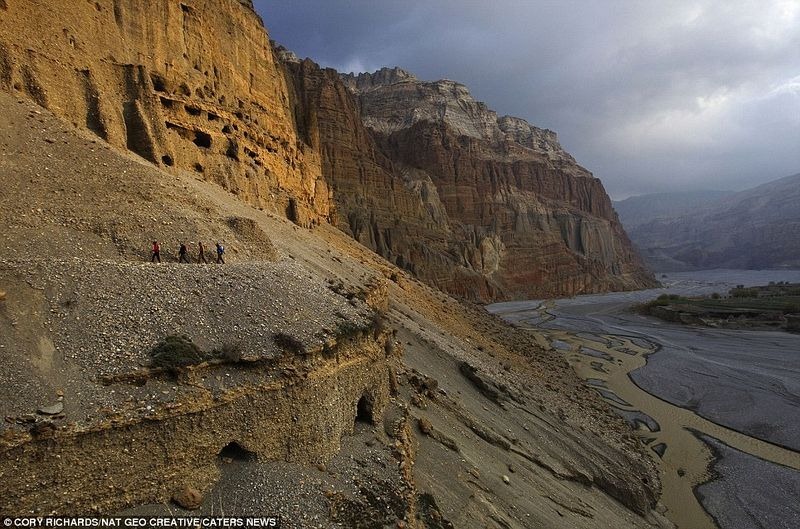
The Kingdom of Mustang, bordering the Tibetan plateau, is one of the most remote and isolated region of Nepalese Himalaya. Once an independent Buddhist kingdom, Mustang was annexed by Nepal at the end of the 18th century, but retained its status as a separate principality until the 1950’s when the area was more closely consolidated into Nepal. Because of its sensitive border location, Mustang was off-limits to foreigners until 1992. The relative isolation of the region from the outside world has helped Mustang preserve its ancient culture which is more closely tied to Tibet than to Nepal.

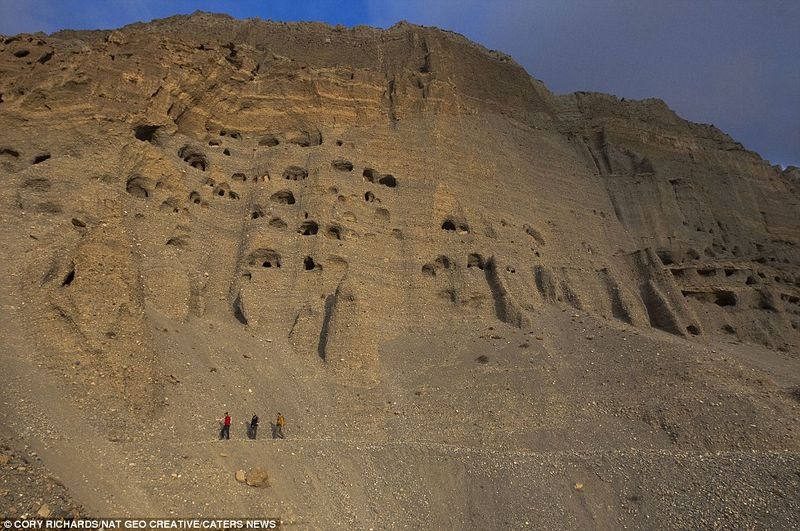
The landscape is also unlike anything that is to be found anywhere else in Nepal —deep gorges carved by the Kali Gandaki River, and strangely sculptured rock formations. The cliffs’ face are pitted with an estimated 10,000 ancient cave dwellings, some of which are perched more than 150 feet above the valley floor. No one knows who dug them, or how people even scaled the near vertical rock face to access them. Some of the caves appear almost impossible to reach even to experienced climbers.

mustang-caves-4

Photo credit: National Geographic

Most of the caves are now empty, but others show signs of domestic habitation —hearths, grain-storage bins, and sleeping spaces. Some caves were apparently used as burial chambers. The several dozen bodies that were found in these caves were all more than 2,000 years old. They lay on wooden beds and decorated with copper jewelry and glass beads.

In other caves, skeletons dating from the 3rd to the 8th centuries, before Buddhism came to Mustang, had cut marks on the bones that may have been inflicted during the practice of sky burial, where the body’s flesh is sliced into small pieces and left to be eaten by vultures. Sky burial is still practiced in many remote regions in the Himalaya.

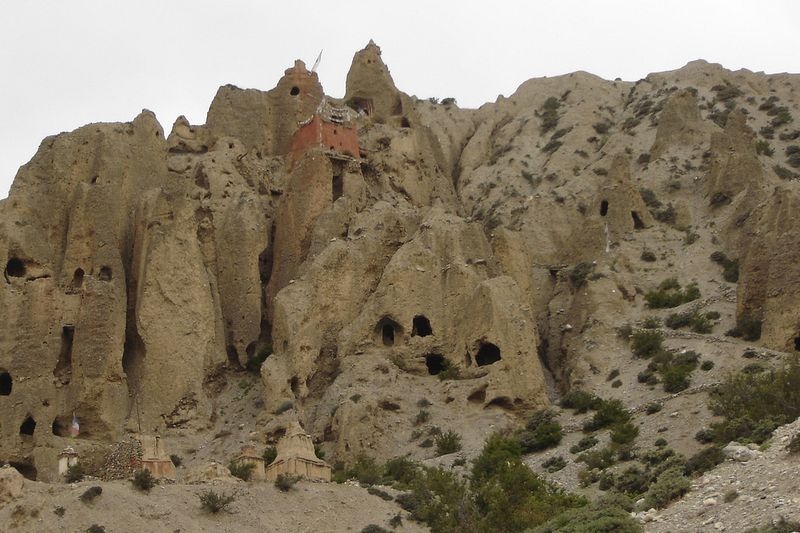
Archeologists believe that the caves in Mustang were used in three general periods. They were first used some 3,000 years ago as burial chambers. Then around 1,000 years ago, they became primarily living quarters, perhaps to escape battles and intruders into the valley. Finally, by the 1400s, most people had moved into traditional villages and the caves became places of meditation. Some of these caves were turned into monasteries such as the Luri Gompa, the Chungsi Cave monastery and the Nyiphuk Cave Monastery, all of which were built around and inside the caves.

Luri Gompa is one of the most famous in Mustang. The monastery is set on a ledge, at least a hundred meter high from the ground, in one of the many natural pillar like sandstone structures. A winding footpath climbs all the way from the bottom of the valley to a single entrance door that leads into two interconnecting chambers. The outer chamber contains a shrine, while the inner chamber —the main treasure of Luri Gompa— is beautifully decorated with a series of paintings depicting Indian Mahasiddhas — saints who were said to have achieved siddhi, or extraordinary powers by meditation. No documentation pertaining to this mysterious gompa or monastery has been found, but the wall paintings appear to be have been made in the 14th century or even earlier.

mustang-caves-1

Photo credit: National Geographic

mustang-caves-3

Photo credit: National Geographic

mustang-caves-5

Photo credit: National Geographic

mustang-caves-6

mustang-caves-7

Photo credit: nepaladvisor.com

mustang-caves-8

Photo credit: David Rengel/Washington Post

luri-gompa-2

Luri Gompa. Photo credit: Bob Witlox/Flickr

luri-gompa-3

luri-gompa-4

Frescos in the ceilings of Luri Gompa. Photo credit: library.brown.edu

Sources: Nat Geo / library.brown.edu / www.oneworldtrekking.com

Source……..www.amusingplanet.com

Natarajan

” I Survived the Pan Am Hijack During Which Neerja Bhanot Lost Her Life…”

Musician Nayan Pancholi recounts how he lost his eye but survived the Pan Am flight hijack in 1986.

It was September 5, 1986. Our tickets got confirmed at the last moment on Pan-Am Flight-73, which was headed from Mumbai to New York, via Karachi and Frankfurt. We were a group of singers and music composers from Ahmedabad, who were going to perform in different cities of USA. At that time, I was just 21 years old. Our flight took off from Mumbai and landed in Karachi around 4.30 a.m. There were some passengers who got off at Karachi. Cleaners entered the aircraft and were just about the leave. This is when four armed men in airport security clothes entered the aircraft from the business class side. We were seated in economy class at the rear of the plane.

Suddenly, there were screams and three or four shots were fired in the air. One terrorist had a machine gun in his hand, another had grenades and a belt full of bullets, while the other two had many guns and grenades with them.

Everyone was told to have their hands locked above their heads. I just can’t forget that sight. Two terrorists were standing in the front and the other two were standing near the rear. In no time, Neerja Bhanot, the senior flight purser, informed the captain and the other crew members in the cockpit to flee the aircraft.

The captain, the co-pilot, and the cockpit crew had left the aircraft. Except Neerja, all other flight attendants were tied up with ropes. The terrorists used Neerja to communicate with the airline.

There were more than 350 passengers in the plane. To scare us, they even killed a person named Rakesh Kumar and threw him out of the plane.

Then, they started collecting our passports. Somehow, Neerja hid some passports of American citizens under the seats. They kept on shouting and screaming at us in Arabic and continued firing shots in the air. After some time, in the afternoon, they offered us sandwiches. But who on earth can eat food in such a difficult situation?

In the evening, they allowed everyone to go to the toilet, one after the other, by crawling on the floor with our hands locked over our heads.

I still remember, exactly after 17 hours of them hijacking the flight, the fuel ran out. Due to this, the generator of the plane went off, leading to darkness. After the lights went off, the terrorists panicked and started firing aggressively at us. They also started throwing grenades.

I saw many people die in front of my eyes.

Nayan Pancholi was just 21 years old, when the Pan Am flight was hijacked in Karachi.

Nayan Pancholi was just 21 years old when the Pan Am flight was hijacked in Karachi.

My own group director and another girl from the group were shot dead.

I was seated near the emergency exit. I tried to open the emergency exit door, but couldn’t do it. After giving it a second try, it opened, but at the same time a grenade hit me in the left eye. And in a moment, I was down on the ground.

After that, I was taken to the terminal by the army and was later shifted to the hospital. I was given treatment at a hospital in Karachi. After 48 hours, the Indian Airlines flight took all the Indians back home. I was then taken to Jaslok Hospital in Mumbai. But, my eye couldn’t be treated there. So, I was taken to Chicago in the US for treatment, but the doctors there too couldn’t save my left eye.

This incident has had a deep impact on me. It was a very bad day for humanity. That day, nobody saw religion, caste, or creed in each other. That day we saw each other as humans and wanted to help and save each other. It’s as simple as that in end.

This article has been shared via Humans of Amdavad.

About the author: Nayan Pancholi is a singer and composer based in Ahmedabad. He is one of the survivors of the Pan Am plane hijack in 1986.
Source…..www.the betterindia.com
Natarajan

This date in science: John Glenn first American to orbit Earth….

On February 20, 1962, John Glenn became the first American to orbit the Earth. He made three turns around the planet before returning safely.

John Glenn and Friendship 7

February 20, 1962. John Glenn became the first American to orbit the Earth on this date. He made three turns around the planet before returning safely in his space capsule, which was called Friendship 7. He followed two Russian cosmonauts in making this early orbit of our planet: Yuri Gagarin ( April 1961) and Gherman Titov (August 1961).

While Glenn was in orbit, NASA controllers received an indication that the heat shield on his craft had come loose. They instructed Glenn not to jettison the rockets underneath the heat shield during re-entry, because the rockets might be able to hold the shield in place. Fortunately, the indication turned out to be a false alarm.

Glenn returned to space at age 77 aboard the space shuttle Discovery in 1995, making him the oldest person to fly in space. His mission’s primary scientific aim at that time was to study the effects of spaceflight on seniors.

John Glenn climbs into the Friendship 7 spacecraft just before making his first trip into space on February 20, 1962. Photo via NASA

John Glenn and Friendship 7

John Glenn and Friendship 7

Here's What John Glenn saw on February 20, 1962.  Just 5 minutes and 44 seconds after launch, Glenn offered his first words about the view from his porthole: “This is Friendship 7. Can see clear back; a big cloud pattern way back across towards the Cape. Beautiful sight.” Three hours later, at the beginning of his third orbit, Glenn photographed this panoramic view of Florida from the Georgia border (right, under clouds) to just north of Cape Canaveral. His American homeland was 162 miles (260 kilometers) below. “I have the Cape in sight down there,” he noted to mission controllers. “It looks real fine from up here. I can see the whole state of Florida just laid out like on a map. Beautiful.”  Image via NASA

Here’s what John Glenn saw on February 20, 1962. Just 5 minutes and 44 seconds after launch, Glenn offered his first words about the view from his porthole: “This is Friendship 7. Can see clear back; a big cloud pattern way back across towards the Cape. Beautiful sight.” Three hours later, at the beginning of his third orbit, Glenn photographed this panoramic view of Florida from the Georgia border (right, under clouds) to just north of Cape Canaveral. His American homeland was 162 miles (260 kilometers) below. “I have the Cape in sight down there,” he noted to mission controllers. “It looks real fine from up here. I can see the whole state of Florida just laid out like on a map. Beautiful.” Image via NASA

Bottom line: John Glenn became the first American to orbit Earth on February 20, 1962. His space capsule was called Friendship 7.

Source……www.earthsky.org

Natarajan
Images for the Day….

A picture might be worth a thousand words but National Geographic photographs leaves us speechless. Known for their captivating daily pictures, they also offer an opportunity to dive into the archives of previously unpublished or forgotten images.

The project called Found was established in 2013 to honor NatGeo’s 125th anniversary. The project’s team says that their mission is to bring the pictures back to life by sharing them to new audiences. And even some of the dates or locations are missing, the images capture perfect moments making them timeless.

The photographs are dug up by Guardian of the Collection William Bonner, who still finds them highly inspiring even after years spent in the archives. Together with editor Janna Dotschkal’s love for aesthetics, they make the vintage material shine as new.

More info: NatGeo Found (h/t: DeMilked)

A White Fallow Stag Stands In A Forest In Switzerland, 1973

A White Fallow Stag Stands In A Forest In Switzerland, 1973

Loggers And The Giant Mark Twain Redwood Cut Down In California, 1892

Loggers And The Giant Mark Twain Redwood Cut Down In California, 1892


Boys Dressed Up In School Uniforms Pose With King Penguins At The London Zoo, 1953

Boys Dressed Up In School Uniforms Pose With King Penguins At The London Zoo, 1953

A Man Stands Dwarfed Under The Ape-ape Leaves Of Puohokamoa Gulch In Maui, Hawaii, 1924

 A Man Stands Dwarfed Under The Ape-ape Leaves Of Puohokamoa Gulch In Maui, Hawaii, 1924

Source……www.boredpanda.com

Natarajan


” What is the Value of Life ….” ?

A man went to God and asked, “What’s the value of life?”

God gave him one stone and said, “Find out the value of this stone, but don’t sell it.”

The man took the stone to an Orange Seller and asked him what its cost would be.

The Orange Seller saw the shiny stone and said, “You can take 12 oranges and give me the stone.”

The man apologized and said that the God has asked him not to sell it.

He went ahead and found a vegetable seller. “What could be the value of this stone?”

he asked the vegetable seller.
The seller saw the shiny stone and said, “Take one sack of potatoes and give me the stone.”

The man again apologized and said he can’t sell it.

Further ahead, he went into a jewellery shop and asked the value of the stone.

The jeweler saw the stone under a lens and said, “I’ll give you 50 Lakhs for this stone.”

When the man shook his head, the jeweler said, “Alright, alright, take 2 crores, but give me the stone.”

The man explained that he can’t sell the stone. Further ahead, the man saw a precious stones shop

and asked the seller the value of this stone.
When the precious stone seller saw the big ruby, he lay down a red cloth and put the ruby on it.
Then he walked in circles around the ruby and bent down and touched his head in front of the ruby.

“From where did you bring this priceless ruby from?” he asked. “Even if I sell the whole world, and

my life, I won’t be able to purchase this priceless stone.

Stunned and confused, the man returned to the God and told him what had happened. “Now tell me

what is the value of life, God?

God said, “The answers you got from the Orange Seller, the Vegetable Seller, the Jeweler and the

Precious Stone’s Seller explain the value of our life… You may be a precious stone, even priceless,
but people may value you based on their level of information, their belief in you, their motive behind
entertaining you, their ambition, and their risk taking ability. But don’t fear, you will surely find someone
who will discern your true value.”

In the eyes of God you are very very precious. Respect yourself. You are Unique. No one can Replace you!

Source…..unknown….input from a friend of mine
Natarajan

படித்ததில் பிடித்தது ….” அழுது உழும் உழவன் வாழ்வு உயர வேண்டும்!”

உண்பது நாழி; உடுப்பது இரண்டே என்ற நிலையில் நிம்மதியாக வாழ்பவர்கள். தினையளவு இருந்தாலும் பனையளவாகக் கருதி பகிர்ந்து உண்ணும் பாட்டாளி மக்கள். வெற்றிலை போட்டக் காவிப் பல்லிலும் அவர்களின் கடமை உணர்ச்சி தெரியும். உழைப்பின் களைப்பால் காப்புக் காய்ச்சுப் போன கைகளை உடையவர்கள், வெள்ளை உள்ளம் கொண்ட நல்ல மனிதர்கள்.
பங்காளிச் சண்டையிலும் தங்கள் பங்களிப்பு என்ன என்பதை பறைசாற்றும் போராளிகள். எளிமையே அவர்களிடம் இனிமையாகக் குடியிருக்கும்.தகப்பன்- மகன் உறவில் தெரியும் வீரம். பெண் குழந்தை பிறப்பில் குலதெய்வம் கண்ட குதுாகலம் இருக்கும். அவர்கள், அடிமனதில் ஆழப் பதிந்து போன வறுமைக்கு, வாக்கப்பட்டவர்கள். என்றாலும் சங்கடங்களை எல்லாம்
சாதனையாக மாற்றி விடுவர்.உலகில் வாழும் மக்களுக்கு எல்லாம் உணவளிக்கும் உத்தமர்கள். எதையும் நாசுக்காகப் பேசும் நயவஞ்சகமில்லா நாக்கிற்குச் சொந்தக்காரர்கள். இவற்றிற்கெல்லாம் சொந்தக்காரர்கள் கிராமங்களில் வசிக்கும் விவசாயப் பெருமக்களே! அவர்கள் மண்வாசனை மாறாது. மனதிற்கு இனிய கதைகள், பாடல்கள் மூலம் நல்ல விஷயங்களை நாட்டிற்குக் கூறிய புத்தி
சாலிகள்.சிந்தனை துாண்டுபவர்கள் பகலெல்லாம் உடல் உழைப்பு; மாலையில் உடல் ஓய்வெடுக்க, அறிவு செயல்பட ஆரம்பிக்கிறது. தங்கள் குழந்தைகளுக்கு சிறுசிறு விளையாட்டுக்களைச் சொல்லிக் கொடுத்து மகிழ்வர். அந்தவகையில் நாட்டுப்புற விவசாய பெருமக்கள் கூறும் அழிப்பாங்கதைகள் (விடுகதைகள்) சிந்தனைகளைத் துாண்டக்கூடியது. குழந்தைகள் யோசித்து பதில் சொல்லும் போது, தானாகவே அவர்கள் மூளைக்கு ஒரு பயிற்சி கொடுக்கப்படுகிறது.

தோட்டத்தில் வேலை செய்யும் பெண்ணைப் பார்த்து ஒரு வழிப்போக்கன் கேட்கிறான்.’பூ மேலே பூ வைத்துப் போற பெண்ணே மானாமதுரைக்குப் போற வழி எது?’இவன் நம் குறையை அல்லவா சுட்டிக்காட்டுகின்றான் என்று, அப்பெண்ணிற்கு கோபம் வருகிறது. உடனே அவன் பாணியிலே அவள் வழி சொல்கிறாள்.
‘அட பட்ட மரத்தில போறகெட்ட மனுசா! இது தான் மானாமதுரைக்குப் போற வழி’எவ்வளவு அழகான விடுகதை. அதற்கான விடையைப் படியுங்களேன். அவர்கள் அதிமேதாவியா? அல்லது படித்த நாமா? என்பது புரிந்து விடும். தோட்டத்தில் வேலை பார்க்கும் பெண்ணிற்கு கண்ணின் கருவிழி கொஞ்சம் வெள்ளையாக
இருக்கிறது. அதனைக் கிராமத்தில் கண்ணுல பூ விழுந்திருக்கு என்று கூறுவர். அதைக் குறையாகக் கூறாது. மாரியாத்தா மகிமை; ராசிக்காரப் பொண்ணு என்று குறையை நிறைவாகக் கூறுவர்.
அதை இந்தவழிப்போக்கன் கேலி செய்கிறான். கண்ணில் பூ விழுந்திருக்கு; தலையில் பூச்சூடி இருக்கின்றாள். அதைத் தான் (கண்ணில்) பூ; மேலே (தலையில்) பூ வைத்திருக்கும் பெண்ணே என்கிறான். அதற்கு அவள் கூறும் பதில்.
அவனுடைய கால் ஊனம். கட்டை மாட்டியிருக்கின்றான். அதனைக் கட்டக்கால் என்பர். அதைப் பார்த்துத்தான் அவள் கட்டையில போற கெட்ட மனுஷா (என்னைக் கேலி செய்பவனே) இது தான் வழி என்று கூறுவதாக
இவ்விடுகதை அமைகிறது. இது போல இன்னும் எத்தனை? எத்தனை?நாக்கு பயிற்சி விடுகதை ‘கோணல் மாணல் (வளைந்த நெளிந்த) புளியங்கா கொங்கு நாட்டுப் புளியங்கா. எங்க நாட்டுல இருந்து உங்க நாட்டுக்கு வருகின்றது’என்று பாதையைப் (வழி) பற்றிக் கூறும் விடுகதை. அடுத்ததாக நாக்கிற்கு பயிற்சி கொடுக்கும் பாங்கு அனைவரும் அறிந்ததே.
‘நாலு சோளத்துக்கு ஏழு சோளத் தோசைஅதில ஒரு தோசை தீஞ்ச (கருகிப் போனது) தோசை”(இதை விரைவாகச் சொல்லனும்)ஆறு அரளி விளாருல
ஒரு அரளி விளாருஒடஞ்ச விளாரு – (இதை விரைவாகவும் சரியாகவும் சொல்ல வேண்டும்)இப்படி பயிற்சியளிக்கும் பொழுதாக அன்றைய மாலைப் பொழுது, கிராமத்து விவசாயிக்கு அமைந்தது.வெள்ளந்தி மனிதர்கள் சில நேரங்களில் முகத்துக்கு முன்னால், பல நேரங்களில் முதுகுக்குப் பின்னால், வார்த்தை விமர்சனங்கள் வெடித்தாலும் எதையும் கண்டுகொள்ளாத வெள்ளந்தி மனிதர்கள். ஒரு நேரம் கூர்மையான விமர்சனமாகவும், மற்றொரு நேரம் கெட்டிதட்டிப் போன விரத்தியாகவும், இருமுகங்களோடு மறுப்பும் எதிர்ப்புமாகிப் போன வாழ்க்கையில் உறுதியோடு மனதிடமாக வாழ்க்கையைச் சந்திப்பவர்கள். சொலவடைகளால் வாழ்க்கையை சுகமாக்கிக் கொண்டவர்கள்.

குத்துப்பட்டவன் துாங்கினாலும் கொற வயித்துக்காரன் துாங்கமாட்டான்”ஆடுகுட்டி இல்லாதவன்அடைமழைக்கு ராஜா; புள்ள குட்டி இல்லாதவன் பஞ்சத்துக்கு ராஜா’இப்படி எல்லாம் பேசி சமாதானமாகி விடுபவர்கள். பொருள் ஏவலுக்கேற்றாற் போல் வீட்டுக்குள்ளே ஒரு வியாக்கியானத்தைநடத்துபவர்கள் அவர்கள். இயற்கை பொய்த்துப் போனாலும் தன் மண்ணோடு மல்லுக்கட்டி பூமித்தாயை வளமாக்குபவர்கள் விவசாயிகள்.அழிந்த ஆவணங்கள் ‘சுழன்றும் ஏர் பின்னது உலகம்” என்றார் வள்ளுவர். இந்த மகானுடையவாக்கு, நாட்டை ஆண்ட, ஆளும் மகான்களுக்குத் தெரியவில்லை. இன்று விவசாயம் மெல்ல மெல்ல அழிய, விவசாயியின் சிந்தனைத்திறனும் குறைந்து போயிற்று. அன்றாட வாழ்விற்காக விவசாயி போராடுகின்ற நிலை. விவசாயம் மட்டும் அழியவில்லை.

அவர்களுடைய வாழ்வியலோடு கலந்த கலாசாரமும், அவர்கள் நமக்குத் தந்து விட்டுப் போன அறிவு சார்ந்த ஆவணங்களும் அழிந்து கொண்டே வருகின்றன.
அவற்றை இனியாவது பாதுகாப்பது நம் கடமை. நம் முயற்சிகள் எல்லாம் அவர்கள் வாழ்வில் சுடராகி வெளிச்சம் தர வேண்டும். உழவன் அழுதாலும் உழுது கொண்டு இருப்பவன். அவன் வாழ்வு உயர வேண்டும். விவசாயத்தை காப்போம்; விவசாயியை காப்போம்! நம் பழம் பெருமையை மீட்டெடுப்போம்!’அறிவின் உழைப்பால் அகிலம் உயரும்உடல் உழைப்பால் ஆரோக்கியம் வளரும்”.

முனைவர் கே.செல்லத்தாய்தமிழ்த்துறை தலைவர்எஸ்.பி.கே. கல்லுாரி,
அருப்புக்கோட்டை

source……www.dinamalar.com

natarajan