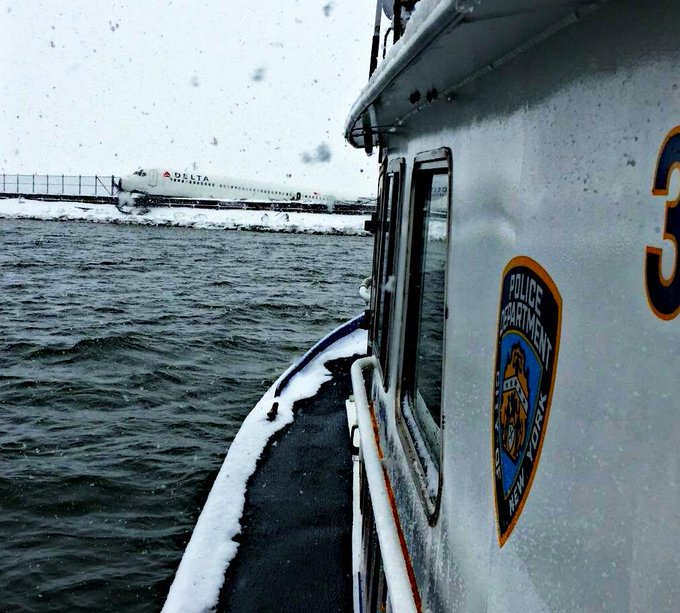
Look Where This Aircraft Stopped … !!!

A PLANE has skidded off a snowy runway at New York’s LaGuardia Airport​, crashing through a seawall fence​ before stopping just metres from the water’s edge.

None of the 125 passengers and five crew members on board was seriously hurt, but six people suffered minor injuries, sources told The New York Post.

Fuel was leaking from the MD-88 jet and emergency responders were spraying foam to prevent a potential fire after the wing was shorn off.

Sources said Delta Flight 1086 from Atlanta was landing during a snowstorm when it slid off the side of Runway 13 and crashed into a Flushing Bay seawall around 11am Thursday (3am Friday AEDT.

Supplied Editorial DELTA SKID LGA

View image on Twitter

Frightening … a Delta passenger plane has skidded on the runway at LaGuardia Airport. Picture: Instagram/veeestchicSource: Supplied 

Delta Airlines said in a statement: “Customers deplaned via aircraft slides and have moved to the terminal on buses. Our priority is ensuring our customers and crew members are safe.

“Delta will work with all authorities and stakeholders to look into what happened in this incident.”

Passenger Sam Stern, 64, of Sarasota, Florida, was seated with his wife in an emergency-exit row and had to yank out the window so everyone could escape.

“We came in for landing, the plane hit the ground. As it started to apply the brakes, it started skidding. It didn’t spin around or anything,” he said. “It ended up hitting the embankment. The wing broke off.”

“I’m fine, I hurt my back. Everybody was shaken up, but everyone remained calm and was very caring about everybody else,” he added.

View image on Twitter View image on Twitter

A first responder on the ground was also heard asking if the controller was in touch with the Flight 1086 pilot.

“I’m calling up … no response,” the controller said.

“OK, sir, he is leaking fuel on the left side of his aircraft … heavily. His wing is ruptured,” the responder said.

The incident marked Delta’s first mishap since December 5, 2013, when a 767 returned to land at Madrid-Barajas Airport in Spain after a tire failure at takeoff, according to the Aviation Safety Network.

This story originally appeared in The New York Post.

SOURCE:::: http://www.news.com.au

Natarajan

Image of the Day…. Smallest Full Moon On March 5 2015…

Curtis Beaird in south Georgia captured this shot.

EarthSky Facebook friend Curtis Beaird in south Georgia captured the shot above.

Tonight’s full moon is the smallest full moon of the year. We’ve heard it called the micro-moon or mini-moon. This March 5, 2015 full moon lies about 50,000 kilometers (30,000 miles) farther away from Earth than will the year’s closest full moon – the full supermoon and Northern Hemisphere’s Harvest Moon – on September 28. The March 5 moon is the year’s farthest full moon because full moon and lunar apogee – the moon’s farthest point in its monthly orbit – both fall on the same date.

Every year has a closest full moon, of course. The mini-moon returns about one month and 18 days later with each passing year, meaning that, in 2016, the year’s smallest full moon will come on April 22. In 2017, it’ll come June 9. In 2018, the year’s smallest full moon will come on July 27. And so on, no doubt until our earthly calendars are long forgotten.

By the way, as an aside, mark your calendar for that September 28, 2015 full moon – the Harvest moon – and closest full moon of this year. It’ll also stage a total eclipse of the moon, which some will call a Blood Moon eclipse. It concludes a series of four straight total lunar eclipses that started on April 15, 2014.

The crest of the moon’s full phase comes on March 5, 2015 at precisely 18:05 Universal Time.

Although the full moon occurs at the same instant all around the world, our clocks read differently in different time zones. In the United States, the moon turns exactly full onThursday, March 5, at 1:05 p.m. EST, 12:05 p.m. CST, 11:05 a.m. MST or 10:05 a.m. PST. So the Americas won’t see the moon at the instant it turns full because it happens during the daytime hours, when the moon is below the horizon and under our feet.

The moon looks full for several days around full moon.  William Vann caught this rising almost-full moon on March 4, 2015.

The moon looks full for several days around full moon. William Vann submitted this shot. It’s the rising almost-full moon on March 4, 2015.

No matter where you live worldwide, look for the full moon tonight, lighting up the nighttime from Thursday nightfall until dawn Friday. As with any moon at the vicinity of full moon, tonight’s moon rises in the east at early evening, climbs highest in the sky around midnight and sets in the west in the vicinity of sunrise.

In North America, we often call the March full moon by the names of Sap Moon, Crow Moon, Worm Moon or Lenten Moon. But in recent years, we’ve also heard the term mini-moon to describe the year’s smallest full moon. It’s not a name (like Sap Moon). It’s not bound to a particular month or season. It’s just a term to describe the year’s smallest moon.

What is a mini-moon or micro-moon? Like most astronomers, we at EarthSky have always referred to the year’s smallest full moon as an apogee full moon. The terms mini-moon andmicro-moon stem from popular culture. They roll off the tongue more easily than apogee full moon. As some indication of the appellation’s growing popularity, we’ve found that theNASA Astronomy Photo of the Day and timeanddate.org sites both like to call the smallest full moon a micro-moon.

Billie C. Barb caught this shot of the rising moon on March 4, 2015 from the state of Washington, saying it was

Billie C. Barb submitted this photo of the rising moon on March 4, 2015 from the state of Washington, saying it was “. . . a love affair between the moon and the evergreens.”

Bottom line: The micro-moon or mini-moon – smallest full moon of 2015 – comes on March 5, 2015 It lies about 50,000 kilometers (30,000 miles) farther away from Earth than will the full moon supermoon of September 28, 2015.

SOURCE:::: http://www.earhskynews.org

Natarajan

” Tippi Degre “…A Little Girl…A Modern Version of Mowgli of ‘ Jungle Book ‘ !!!

Tippi Degre: A Child of the Wilderness

With a best friend that weighs 5 tons, a group of cheetahs to hang around with and a giant bullfrog as a Teddy bear, Tippi Degre is hardly your average little girl. Perhaps a modern version of Mowgli, the boy from the famous ‘Jungle Book’ novel, she was born in Namibia to French wildlife photographer parents, who raised her in Africa.
Today, her parents published a book with her story and remarkable photos from when she was growing up, the first 10 years of her life spent almost entirely in the wild.
wild child animals
Tippi has spent all of her childhood running and playing with animals you don’t meet every day – Lion cubs, snakes, mongoose, cheetahs, a zebra, giraffes and even crocodiles. The adorable girl sees nothing wrong with her childhood, she had no friends and so the animals became the only friends she had other than her parents.
wild child animals
wild child animals
wild child animals
wild child animals
wild child animals
wild child animals
wild child animals
wild child animals
wild child animals
wild child animals
wild child animals
wild child animals
wild child animals
wild child animals
wild child animals
wild child animals
wild child animals
SOURCE::::: www. ba-bamail.com
Natarajan

Image of the Day…. ” Astronaut Salutes Leonard Nimoy From Orbit…”

International Space Station astronaut Terry Virts (@AstroTerry) tweeted this image of a Vulcan hand salute from orbit as a tribute to actor Leonard Nimoy, who died on Friday, Feb. 27, 2015. Nimoy played science officer Mr. Spock in the Star Trek series that served as an inspiration to generations of scientists, engineers and sci-fi fans around the world.

Cape Cod and Boston, Massachusetts, Nimoy’s home town, are visible through the station window.

SOURCE:::::: http://www.nasa.gov

Natarajan

” இப்போ போட்டோ எடுத்துக்கோ…” !!!

புகைப்படம் எடுப்பது எனக்குப் பிடித்தமான பொழுதுபோக்கு.

பெரியவாள் முன்னிலையில், slide viewer –ல் ஸ்லைடுகளைப் போட்டுக் காண்பித்துக் கொண்டிருந்தேன். அது, ஸ்லைடில் உள்ள படங்களை நான்கு மடங்கு பெரிதாகக் காட்டும். படங்களைப் பார்த்துக் கொண்டிருந்த பெரியவாள், “இதில் ஸ்லைடு வைக்குமிடத்தில் நெகடிவ் பிலிமைப் போட்டால், நன்றாகத் தெரியுமா?” என்று கேட்டார்.

(பெரியவாளுக்குப் புகைப்படக் கலையின் ஒவ்வொரு நுட்பமும் தெரியும். ஆனால், தனக்குத் தெரிந்ததாகக் காட்டிக் கொள்ள மாட்டார்கள் என்பதும் எனக்குத் தெரியும்! ஆனால், என்னுடைய அக்ஞானம் என்னை விட்டுப் போய்விடுமா என்ன?)

”நெகடிவ் போட்டால், திரைப்படத்தில், கறுப்பு வெள்ளையாகவும், வெள்ளை கறுப்பாகவும் தெரியும்..”

பெரியவாள் உடனே, “அதுதான் எனக்கு வேணும்.. நரைத்துப் போன என் தலைமுடி, கறுப்பாகத் தெரியும்! நான் இன்னும் இளைமையாக இருப்பேனோல்லியோ…”

அருகிலிருந்து கேட்டுக் கொண்டிருந்தவர்கள் அட்டகாசமாகச் சிரித்து மகிழ்ந்தார்கள்.

பெரியவாளுடைய நகைச்சுவை உணர்வு, எவரெஸ்டுக்கு மேலே பத்து அங்குலம்!

ஜெய ஜெய சங்கர! ஹர ஹர சங்கர!!

***********

வானகரத்தில் ஒரு சவுக்குத் தோப்பில் உட்கார்ந்திருந்தார் பெரியவா. முன்னர் எடுத்திருந்த புகைப்பட ஆல்பத்தைக் கொடுத்தேன். அப்போது, பல்வேறு காரணங்களால் புகைப்படங்களில் குறைகள் ஏற்பட்டிருந்தன.

இந்தத் தோப்பில் எவ்விதக் குறைகளுமில்லாமல் புகைப்படம் எடுக்க முடியும் என்பது என்னுடைய துணிபு.

பெரியவா, ஒரு சிஷ்யரைக் கூப்பிட்டு, ஒரு தாழங்குடை கொண்டுவரச் சொல்லி, அதைத் தன் தலைக்கு மேல் பிடிக்கச் சொன்னார்.

“இப்போ போட்டோ எடுத்துக்கோ…”

அப்போது நான் எடுத்த புகைப்படம் மிக அருமையாக வந்திருந்தது. (பின்னால் கல்கி தீபாவளி மலர் ஒன்றில் ஸ்ரீருத்ர வாக்கியமான, ‘நமோ வன்யாய ச கக்ஷ்யாய ச’ என்ற விளக்கத்துடன் முகப்புப் படமாக வெளியாயிற்று).

பெரியவாள் தாழங்குடையைப் பிடிக்கச் சொன்னதற்கும் காரணம் இருந்தது. மரங்கள் வழியே வந்த ஒளி, அவர்கள் மேல் திட்டுத் திட்டாக விழுந்து கொண்டிருந்தது. அந்த நிலையில் படம் எடுத்தால் நன்றாக வராது என்பதால், அந்த ஷாட் நன்றாக அமைய வேண்டும் என்பதற்கான சூழ்நிலையை உண்டாக்கிக் கொடுத்தார்கள்.

மெய்ப் படங்களைக் கற்றுத் தேர்ந்தவர்கள் அவர்கள். நிழற் படங்களின் நுட்பங்களை எந்தக் குருகுலத்தில் கற்றுத் தெளிந்தார்கள்?
ஆயிரம் படம் படைத்த ஆதிசேஷ்னே அறிவார்!

ஜெய ஜெய சங்கர! ஹர ஹர சங்கர!!

மூலம் : மஹா பெரியவா தரிசன அனுபவங்கள் – ஐந்தாம் பாகம்
நினைவு கூர்ந்தவர் : எஸ். சீதாராமன், சென்னை – 28.
SOURCE:::: http://www.proboards.com

Natarajan

Read more: http://periva.proboards.com/thread/4494/maha-periyavaa-photographer#ixzz3T79zOjwl

Picture of the Day… Half Moon !!!


Photograph of Half Moon  as appeared on the clear blue  sky of Brisbane  on 25 th Feb Evening.

This Picture was Taken by my son Senthil Natarajan  right from the front lawns of his Home at  Brisbane , Australia .

He is not a Professional Photographer , but has got a keen interest in photography and enjoys  his moments with his camera.

I admire his skill and this Picture in particular … Looks like a PICTURE  captured by the crew of International Space Station  from Spaceship !!!

He has posted this picture  in his FB Column … Having appreciated my son for this photograph , i thought that i should share this  picture with my friends and followers of my site thro this Post

Image Credit….Senthil Natarajan

Natarajan


Watch Sunday Spacewalk on March 1…

NASA astronaut Terry, Virts Flight Engineer of Expedition 42 is seen working to complete a cable routing task while near the forward facing port of the Harmony module on the International Space Station. February 21, 2015. Image credit: NASA

NASA astronaut Terry, Virts Flight Engineer of Expedition 42 is seen working to complete a cable routing task while near the forward facing port of the Harmony module on the International Space Station. February 21, 2015. Image credit: NASA

On Sunday (March 1, 2015) two NASA astronauts aboard the International Space Station (ISS) will perform the last of Expedition 42’s scheduled spacewalks. The spacewalk will begin around 6:10 a.m. Central Time and is expected to last about 6 hours, 45 minutes. NASA Television coverage on Sunday will begin at 5 a.m. Central time. Watch here

NASA astronauts Barry Wilmore and Terry Virts completed the first spacewalk on February 21 and the second on Wednesday (February 25.)

The spacewalks are designed to prepare the orbiting laboratory for future arrivals by U.S. commercial crew spacecraft. The astronauts are laying cables along the forward end of the U.S. segment to bring power and communication to two International Docking Adapters slated to arrive later this year. The new docking ports will welcome U.S. commercial spacecraft launching from Florida beginning in 2017, permitting the standard station crew size to grow from six to seven and potentially double the amount of crew time devoted to research.

When astronaut Terry Virts returned the airlock after Wednesday’s spacewalk, he reported a minor seepage of water in his helmet. The Mission Management Team reviewed the status of spacewalk preparations as well as an analysis of the minor seepage of water and on Friday morning, the team expressed a high degree of confidence was that the suit’s systems are all in good shape and gave approval to proceed with Sunday’s spacewalk as planned.

Spacewalk specialists reported that Virts’ suit — serial number 3005 — has a history of what is called “sublimator water carryover”, a small amount of residual water in the sublimator cooling component that can condense once the environment around the suit is re-pressurized following its exposure to vacuum during a spacewalk, resulting in a tiny amount of water pushing into the helmet.

Spacewalkers Terry Virts and Barry Wilmore work outside Pressurized Mating Adapter-2. Image credit: NASA TV

Spacewalkers Terry Virts and Barry Wilmore work outside Pressurized Mating Adapter-2. Image credit: NASA TV

NASA astronaut Barry Wilmore works outside the International Space Station on the first of three spacewalks preparing the station for future arrivals by U.S. commercial crew spacecraft, Saturday, February 21, 2015. Fellow spacewalker Terry Virts, seen reflected in the visor, shared this photograph on social media.  View larger. \  Image credit; NASA

NASA astronaut Barry Wilmore works outside the International Space Station on the first of three spacewalks preparing the station for future arrivals by U.S. commercial crew spacecraft, Saturday, February 21, 2015. Fellow spacewalker Terry Virts, seen reflected in the visor, shared this photograph on social media.
View larger. | Image credit: NASA

During Sunday’s spacewalk, Virts and Expedition 42 Commander Barry Wilmore will deploy 400 feet of cable along the truss of the station and install antennas as part of the new Common Communications for Visiting Vehicles (C2V2) system that will provide rendezvous and navigational data to visiting vehicles approaching the station, including the new U.S. commercial crew vehicles

NASA astronaut Terry Virts Flight Engineer of Expedition 42 on the International Space Station is seen working to complete a cable routing task while the sun begins to peak over the Earth’s horizon on February 21 2015. Image credit: NASA

NASA astronaut Terry Virts Flight Engineer of Expedition 42 on the International Space Station is seen working to complete a cable routing task while the sun begins to peak over the Earth’s horizon on February 21 2015. Image credit: NASA

All three spacewalks are in support of the long-planned ISS reconfiguration from its current configuration, which was designed to support visiting Space Shuttles, to its new configuration optimived for future visiting commercial crew and cargo vehicles.

While cargo vehicles attach to the ISS using the process of berthing, whereby they are captured with the station’s robotic arm and positioned below a berthing port prior to being bolted into place, commercial crew vehicles will not use this method.

This is because the process of un-berthing takes a long time to complete, since cables and ducting between the visiting spacecraft and the ISS must first be manually disconnected, control boxes installed, hatches closed, and then the visiting spacecraft must be maneuvered away from the station with the robotic arm.

This means that berthing ports cannot support a rapid evacuation of crew from the ISS should it ever be necessary, which will be one of the primary roles of the commercial crew vehicles as they serve as “lifeboats” during their crew’s stay at the ISS.

Instead, crewed vehicles will attach to the ISS via a process of docking, whereby the visiting spacecraft flies itself all the way into its docking port and attaches via a capture ring striking a corresponding attachment mechanism..

The leading end effector of the Canadarm2 (bottom foreground) will be lubricated Wednesday when astronauts Barry Wilmore conduct their second spacewalk.  Imge credit: NASA TV

The leading end effector of the Canadarm2 (bottom foreground) will be lubricated Wednesday when astronauts Barry Wilmore conduct their second spacewalk. Image credit: NASA TV

Bottom line: NASA astronauts Barry Wilmore and Terry Virts aboard the International Space Station (ISS) completed the first of three spacewalk on February 21, 2105 and the second on February. On Sunday (March 1, 2015) they will perform the last of Expedition 42’s scheduled spacewalks. The astronauts are securing cables to prepare the orbiting laboratory for future arrivals by U.S. commercial crew.

SOURCE::::www.earthsky.org

Natarajan