The Carved Stone Balls of Scotland…. !!!

For the last 150 years archeologists have been digging up a peculiar class of objects in north-east Scotland. They are small carved stone balls of a relative similar size and decorated with carved evenly-spaced patterns of circular bosses or knobs around the surface of the sphere. Some balls have as few as three knobs, while some have up to one hundred-sixty, but mostly they have six knobs. Some of the knobs are further decorated with spirals or concentric circles and some have patterns of straight incised lines and hatchings.

The absence of damage or any sign of use on these carved balls or the context in which they have been found have been baffling archeologists because they are unable to tie these objects to a specific function. Some believe these carved balls served simply as totems of power and prestige, yet their precise symmetrical form cannot be ignored. So far over 400 stone balls have been discovered and nearly all of them conform to a type of geometrical form known as Platonic solid, suggesting that the knowledge of geometry prevailed as early as the Neolithic age.

carved-stone-balls-scotland-8

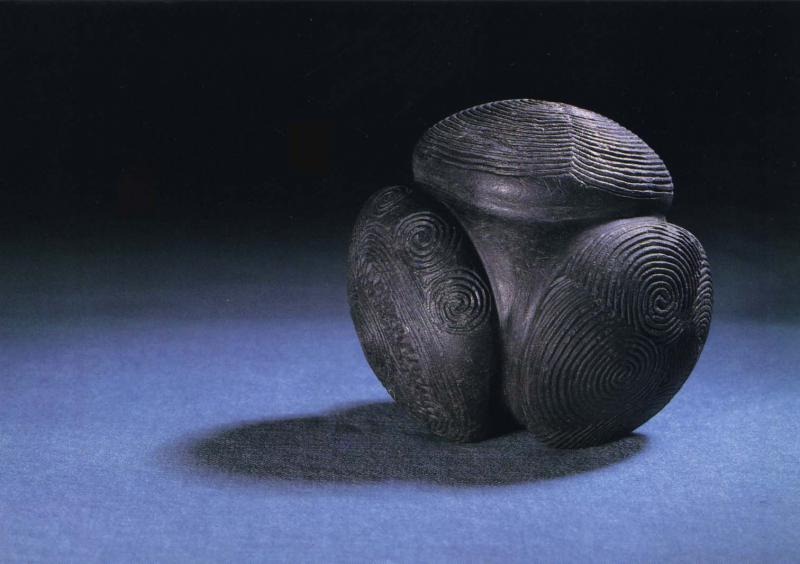
The Towie ball.

The Platonic solids are prominent in the philosophy of Plato. He taught that these five solids were the core patterns of physical creation, associating each form to the four classical elements (earth, air, water, and fire), while the fifth one was held to be the building block of heaven itself. Examples of Platonic solids in nature are plenty —crystal structures, many viruses, and the arrangement of atoms in a molecule.

One of the most outstanding specimen is the so called “Towie ball”, so named because it was found in Towie, in Aberdeenshire. It is believed to date from about 2500 BC. This carved stone ball is about three inch in diameter and has four knobs, three of them decorated with spirals or dots and rings. The designs closely resemble those pecked into the stones of the passage mound at Newgrange in Ireland.

“In my view, these Neolithic people were experimenting with solid geometry and making wonderful finds,” writes Ian Begg, a retired Scottish architect, who is currently designing a planetarium whose structure will be based on these mysterious carved stones.

“These stone balls are very important and shows what we’ve seen demonstrated by Pythagorus nearly 2,000 years after the Scots,” he said.

Not everyone believes the stones were created specifically to study geometry. Some say the balls were used as bolas —a kind of trap made of weights on the ends of interconnected cords, designed to capture animals by entangling their legs, while others suggest they served as movable poises on a primitive weighing machine, or in the working of hides.

The purpose of the balls are still a mystery.

carved-stone-balls-scotland-3

carved-stone-balls-scotland-5

Sources: www.ashmolean.org / Ancient Wisdom / www.ianbeggarchitect.co.uk / Wikipedia

http://www.amusingplanet.com

Natarajan

வானவில் பெண்கள்: “எழுபதுக்குப் பிறகும் சாதிக்கலாம்!”

விளையாட்டுக்கும் வயதுக்கும் சம்பந்தமில்லை என்பதைத் தனது வெற்றிகள் மூலம் நிரூபித்துவருகிறார் எழுபது வயது லட்சுமி லோகநாதன். கோவையைச் சேர்ந்த இவர், சர்வதேச விளையாட்டுப் போட்டிகளில் பங்கேற்று பதக்கங்களைக் குவித்துவருகிறார்.

உள்ளூர் முதல் ஒலிம்பிக் வரை

கோவை ஹோப் காலேஜ் ஸ்ரீநகரில் இருக்கும் லட்சுமியின் வீடு முழுக்க பதக்கங்களும் கோப்பைகளும் நிரம்பிவழிகின்றன. மூத்தோர் தடகளப் போட்டிகளில் ஓட்டப் பந்தயம், உயரம் தாண்டுதல், போல்வால்ட் ஆகிய விளையாட்டுகள் எங்கு நடந்தாலும் அங்கே லட்சுமியைப் பார்க்கலாம். பங்கேற்கும் போட்டிகள் அனைத்திலும் பதக்கங்கள் வெல்வது இவரது சிறப்பு.

கடந்த 2003-ம் ஆண்டு தொடங்கியது இவரது இந்தத் தடகளப் பயணம். கடந்த 13 ஆண்டுகளில் மாவட்டம், மாநிலம், தேசிய மற்றும் சர்வதேசப் போட்டிகளில் பங்கேற்று 83 பதக்கங்களை வசப்படுத்தியுள்ளார். குறிப்பாக, கடந்த 2004 முதல் 2014-ம் ஆண்டுவரை நடந்த ஆறு ஆசிய விளையாட்டுப் போட்டிகளில் பங்கேற்றுத் தொடர்ச்சியாக 16 பதக்கங்களை வென்றுள்ளார். இதில், ஆறு தங்கப் பதக்கங்களும், மூன்று வெள்ளிப் பதக்கங்களும், ஏழு வெண்கலப் பதக்கங்களும் அடங்கும். இதைவிட கூடுதல் சிறப்பாக, 2009-ம் ஆண்டு பின்லாந்தில் நடைபெற்ற உலக மூத்தோர் ஒலிம்பிக் போட்டியில் கழியூன்றித் தாண்டுதல் (போல்வால்ட்) போட்டியில் வெண்கலப் பதக்கம் வென்றுள்ளார்.

பயிற்சிக்காக தினமும் இரண்டு மணி நேரத்தை ஒதுக்கிவிடும் லட்சுமி, இத்தனை வெற்றிக்கும் முக்கியமான காரணம் தனது கணவர் லோகநாதன் என்பதைச் சுட்டிக்காட்டுகிறார்.

துணை நிற்கும் துணை

“கோவை வெள்ளலூர்தான் சொந்த ஊர். திருமணத்தின்போது பி.யு.சி. வரை மட்டுமே படித்திருந்தேன். அது 1965 காலகட்டம். திருமணம் முடிந்ததும் என்னை வீட்டிலேயே முடக்கிவிட எனது கணவர் விரும்பவில்லை. எனக்கு சிறு வயதில் இருந்தே விளையாட்டில் ஆர்வம் இருந்ததை அறிந்துகொண்ட அவர், உடற்கல்வி ஆசிரியர் பயிற்சி வகுப்பில் என்னைச் சேர்த்தார்.

அதை முடித்தவுடன் சில ஆண்டுகளில் அரசு பள்ளியில் உடற்கல்வி ஆசிரியர் பணி கிடைத்தது. பணிக் காலத்தில் தடகளப் போட்டிகள் எதிலும் பங்கு கொள்ளவில்லை. ஆனால், நிறைய விளையாட்டு வீரர்களை உருவாக்கியுள்ளேன்” என்று சொல்லும் லட்சுமி, கடந்த 2001-ம் ஆண்டு விருப்ப ஓய்வில் பணியை விட்டு விலகினார். அதன் பிறகு இரண்டு ஆண்டுகள் வீட்டில் இருந்தார். இவரது கணவர் லோகநாதனும் ஓட்டப் பந்தயம், ஈட்டி எறிதல் ஆகிய போட்டிகளில் ஆர்வம் கொண்டவர்.

“வீட்ல சும்மா இருப்பதற்கு பதிலாக ஏதாவது ஒரு விளையாட்டில் கலந்து கொள், பதக்கம்கூட முக்கியமில்லை என்று சொல்லி என்னை அவர் அழைத்துச் சென்றார். அவருடன் சென்று ஓட்டப் பந்தயத்தில் கலந்துகொண்டு பதக்கங்களை வென்றேன். அதுதான் எனது வாழ்வின் திருப்பு முனையாக அமைந்தது. அந்த போட்டியைத் தொடர்ந்து மாநிலப் போட்டிக்கு தகுதி பெற்றேன். பின்னர், தேசியப் போட்டிகளில் வெற்றி பெற்று முதல் முறையாக 2004-ம் ஆண்டு பாங்காக்கில் நடந்த ஆசிய போட்டிக்குள் நுழைந்தேன்” என்று சொல்கிறார் லட்சுமி லோகநாதன்.

யோகா பயிற்சியில் பெரும்பாலான ஆசனங்களையும் எளிதாகச் செய்யும் இவர், சமையலிலும் கலக்குகிறார். ஆறு ஆண்டுகளாக முயற்சித்து, கடந்த டிசம்பர் மாதம் உடற்கல்வி மற்றும் யோகா பயிற்சி என்ற பாடப்பிரிவில் பி.எச்டி. முடித்துள்ளார். எம்.ஏ., எம்.பி.எட்., பி.எட்., எம்.ஃபில்., பி.எச்டி., என இவரது கல்வித் தகுதி நீள்கிறது. பல்வேறு விஷயங்களில் சிறப்பாகச் செயல்படுவதற்கு நேர மேலாண்மையே கைகொடுக்கிறது என்கிறார் லட்சுமி.

சாதனைகள் சாத்தியமே

இத்தனை உயரத்தை இவர் மிக எளிதில் எட்டிப்பிடித்துவிடவில்லை. மூத்தோர் தடகளப் பிரிவில் 2011-ம் ஆண்டு சண்டீகரில் உயரம் தாண்டுதல் போட்டியில் பங்கேற்றபோது வலது முழங்காலில் எலும்பு முறிவு ஏற்பட்டு, ஓர் ஆண்டுவரை நடக்க முடியாத நிலை ஏற்பட்டது. விளையாட்டுக்கு முழுக்குப் போட்டுவிடுமாறு மருத்துவர்கள் எச்சரித்த பிறகும் தன்னம்பிக்கையைத் தளரவிடவில்லை. கடுமையான போராட்டத்துக்குப் பிறகு அதிலிருந்து மீண்டு வந்தார். சர்வதேசப் போட்டிகளில் கலந்துகொள்ளும்போது ஆகும் செலவுதான் பெரிய இடையூறாக இருக்கிறது என்றும் அவர் குறிப்பிடுகிறார்.

“போக்குவரத்துச் செலவை நாங்கள்தான் சமாளித்துக்கொள்ள வேண்டும். போட்டியில் பதக்கம் வென்றால் மட்டும் அரசு சார்பில் 30 ஆயிரம் ரூபாய் ஊக்கத்தொகை வழங்கப்படும். ஆனால், வெளிநாடுகளுக்குச் சென்றுவிட்டு திரும்பினால் குறைந்தபட்சம் 2 லட்சம்வரை ஆகிறது. இதைவிட, அந்த நாடுகளில் உள்ள சீதோஷ்ண நிலை எங்களை வாட்டி வதைத்துவிடும். பின்லாந்து உலகப் போட்டியில் கலந்து கொண்டபோது அங்கு 6 மாதம் தொடர்ச்சியாக, பகல் மட்டுமே இருந்த காலம்.

அந்த சீதோஷ்ண நிலையை 20 நாட்கள் எதிர்கொள்வதற்கு எனது தள்ளாத வயதில் மிகவும் சிரமப்பட்டேன்” என்று வெளிநாட்டுப் பயணம் சார்ந்த தன் அனுபவங்களைப் பகிர்ந்துகொள்ளும் லட்சுமிக்கு சைவ உணவு கிடைப்பதிலும் சிக்கல் ஏற்பட்டதாம்.

“எத்தனை கஷ்டம் இருந்தாலும் பதக்கம் வெல்கிற அந்த நொடி, அத்தனை துயரங்களையும் மறக்கடித்துவிடுகிறது” என்று கை உயர்த்திப் புன்னகைக்கிறார் லட்சுமி.

Source…..ம. சரவணன் in http://www.tamil.thehindu.com

Natarajan

” Why My 92-Year-Old Grandfather Left the City to Build a School in His Village…” ?


Shalini Narayanan’s 92-year-old grandfather has started a school for children in Sikhra village of Uttar Pradesh. He left behind the comforts of a city life, and decided to go back to his native place to help students get access to quality education. Amidst several challenges, and the problems of living in a village, this is how he did it all.

Seven years ago, my grandfather decided to give up the comforts of urban life to return to his native village and start a school there. He is 92 years old today – his dream school is up and running, and he has been changing many lives for the past few years.

Located in Sikhra village in Hathras district of Uttar Pradesh, this school has been built with the aim of providing easily accessible education to children living there.

Schools in Rural India

My grandfather at the school reception

My grandfather had left his village and lived in the city for about half a century. But when he looked behind after having spent several years of life working for his family, he realised that he had enough money, but there was no one around him who needed it. That was when he decided to set up a school. Sikhra already had a government school for students till Class 8. But after that, children had to travel for about 7km to reach the school where they taught students of Class 9 and beyond. That is why most of the girls and several boys dropped out after class 8.

So he started the Tikaram Smarak Inter-College, an English-medium high school affiliated to the State Board, where students from Class 9 to 12 would study. But he realised his mistake within a couple of years. Students coming from government schools were not qualified enough for higher classes. Unless he thought of something else, there was no way he could get them ready for the board exams. That was when he started the primary wing in the school, which has around 200 children now.

While his age makes it very difficult for grandpa to live in a village, but he continues to stay there even during the winters. I can picture him sitting in his dark, cold room during the nights, thinking about the past and the present. But each morning comes with some hope.

His inspiring spirit defies his age, as he gets ready to welcome the little ones for their lessons.

Schools in Rural India

Some students at school

Not many have the courage to wish him good morning or interact with him. People in the village respect him a lot, and everyone calls him ‘Baba’. One angry rebuke and the entire class is silent. I think this is what keeps him glued to the project – the way he inspires respect, the way students touch his feet, and how everyone greets him when they see him.

But even after the school building was ready, and it received the affiliation, there was still no time for  him to rest on his laurels. Who would manage the school after him – that was his biggest worry. In the last four years, he approached many institutions and missionaries that are running schools in Delhi, corporate organisations working in rural India and other education trusts, but nothing materialised. Nobody is interested in his project because the school is located in a very remote area. He is still trying to negotiate with different organizations.

Additionally, there are other daily occurrences that add on to the pressure – like many children don’t come to school during the harvesting season, parents keep asking him to excuse their child from some classes, and more. The school makes no profit and barely manages to run with the funds coming from my grandfather’s fixed deposits. But it is operational. Children now have an option to attend a school that actually provides education.

I remember visiting the school two years ago and meeting a little girl who had won the school essay competition. Her parents were so proud! That same girl went on to score 88 percent in high school.

Thinking about my grandfather reminds me of a quote by my Hindi teacher – “Be your own guru, your own teacher. Light the lamp and march on without fear.”

Source……Shalini Narayanan in http://www.the betterindia.com

Natarajan

Children in Rural India Have Found a New Way to Travel the World. And It’s Heartwarming…

With the motto ‘Inform, Communicate & Empower!’, New Delhi-based organisation Digital Empowerment Foundation (DEF) finds sustainable ICT solutions for marginalised communities to overcome information poverty and enable better access to benefits and rights in rural India.

Udita Chaturvedi witnessed a positive change in Rajasthan’s villages. Parents and children are embracing computer literacy. Read about her experiences.

Last month, I was in Alwar district of Rajasthan (Alwar is about 160 km from Delhi), accompanying two foreign nationals who’re shooting for a film in India.  They are documenting how lives are changing in this country due to digital literacy.

While the filmmakers were busy shooting in a Community Information Resource Centre (CIRC), established byDigital Empowerment Foundation (DEF) to promote digital literacy and social awareness, I was sitting among some mothers and their children, discussing their lives and understanding the difficulties they face.

It was during this conversation that I learnt that most of the mothers in Mungaska, a slum-like locality in Alwar, are either illiterate or school dropouts. While they chose not to study or were forced to drop out of school, they all wanted proper education for their children.

Meena is the mother of an extremely talented eight-year-old boy. The boy, Aman, is born into a family of professional bhapang players and is, in fact, the youngest bhapang player himself — he started learning at the age of three!

Eight-year-old Aman is the youngest bhapang player in the village. Photo source: Udita Chaturvedi

Eight-year-old Aman is the youngest bhapang player in the village. Photo: Udita Chaturvedi

Aman, his elder brother, and sister are the first school-going generation of the family. While several efforts are being made by the family to ensure that bhapang doesn’t prove to be a dying art, it is not the reason the younger generation is attending school. The reason is that Meena believes, “Education can make or break a person, but mostly make.”

Aman’s mother only studied till class 5, because, back then, there was no school in Mungaska for students who wanted to study beyond class 5. “Education is important for everything today. Whether you want to use a computer or get a government job, school education has become a must,” says Meena.

But what made her realise this?

“I have seen smart children grow up, playing in the lanes of our colony. There’s nothing wrong in playing. In fact, I encourage Aman to play after school. But I’ve seen those smart children grow into useless 20-year-olds as well. They still play cricket in the lanes all day long and live off their father’s income. What will they do when their father is no more? How will they feed their wife or children?” she questions.

Meena is very sure she wants Aman to study, and not just till class 12. She wants him to go to college. At the same time, she doesn’t want Aman to give up on his musical talents. In fact, she believes Aman will be able to take their family’s music to a wider audience around the globe, if he’s well educated and digitally literate.

“He can do so much with the Internet,” she says.

Rimpy, a young mother of three children — two girls and a boy, has similar views. Rimpy never went to school because she “wasn’t interested in studying”. However, when her children give her the same excuse in the morning, they’re scolded and pushed out of the house.

“Education makes people independent. It helps them get a job, or even fight society. I know my life could have been very different had I been to school. If nothing else, I could have at least brought in some extra income into the house. Maybe my family would even listen to my opinions more,” she says.

Rimpy, a mother of three, believes education can make a person independent. Photo: Udita Chaturvedi

Rimpy is a housewife. One of her friends studied till class 12 and got married. However, a year later her husband died and she returned to her parents’ house in Mungaska. Here, she enrolled at a CIRC, established by DEF, and took computer lessons. Rimpy wishes she had been to school too, because learning computers at the age of 30, with no education at all, was far more difficult than she had imagined. While her widow friend aced, she lagged behind. Now, Rimpy doesn’t want her children to face a similar fate.

“School education is as important as computer training. In fact, all schools should also teach children how to use computers,” she says.

There are many others like Meena and Rimpy who understand the value of education — both traditional and digital — because they themselves have been deprived of it for some reason or the other.

In today’s time, where knowledge of computers has become crucial, English has become an aspirational language and a degree has become mandatory for jobs. It is silly to not go to school or learn computers, believes Rafia, the mother of a nine-year-old girl. “Even Modi (Indian Prime Minister Narendra Modi) wants the youngsters to learn computers today,” she adds.

However, I would be lying if I say that every child in Mungaska understands the importance of education. While a lot of them enjoy going to school or learning computers in a group at the CIRC, there are some who only attend school because they’re forced by their parents or only because they get to play games or use Google Search after an hour of practicing on Microsoft Office.

Google Search, in fact, seemed like the second favourite — after Facebook, of course — feature of the Internet for most children.

Aman uses Google Search to travel, though his travel has been restricted to Alwar and Delhi so far. He says, “The day before, I searched for Qutub Minar on Google after I read about it in my school textbook. Do you know how tall it is? It’s 240 feet tall.” He was right, I cross-checked on the Internet.

The story was no different in Chandauli village where Sahil was coincidentally looking up the Taj Mahal, when I entered the CIRC there.

When I asked him what he was doing, he replied, “People from America come to India to see the Taj Mahal, so I wanted to see it too. But I can’t travel to Agra, it’s very far. So I am looking it up on Google.”

A student explores the Taj Mahal through Google Images. Photo: Udita Chaturvedi

Sahil showed me at least a dozen different pictures of Taj Mahal, each from a different angle. By the time he finished, he had inspired other children at the centre to look up some city or the other. Somebody used Google Search to travel to Agra while another travelled to Jaipur.

A kid even asked Will, one of the filmmakers in our group, where he was from and then looked up “America”. But he soon lost interest and searched for the Red Fort in Delhi instead.

The visit to Alwar gave me a whole new perspective about how these CIRCs are impacting society. It’s not just about digital literacy and learning how to operate Microsoft Office tools, but so much more. DEF has eight CIRCs in as many villages of Alwar district (and a total of 150 across 23 Indian states) where the poorest of the poor spend their time learning computers, playing with the Internet, and utilising various digital tools. It is interesting how these digital resource centers are making children, youth — both, boys and girls — and their families look at education in a non-traditional manner.

At these centers, the locals, who had never stepped out of their village, are now travelling to various parts of the country and the world, and learning about things that they had only heard of. These villagers, who are first-time learners of digital tools, are not just learning but are also teaching us that a connected digital device is just not a tool for digital literacy, but a tool that impacts them socially, behaviourally, economically and perhaps even responsibly.

Featured image source: Facebook

Source…….About the author: Udita Chaturvedi is a former journalist who now works with Digital Empowerment Foundation and writes stories of impact in the areas of digital literacy,education, and women empowerment. She can be reached atudita@defindia.org or through her Twitter handle @uditachaturvedi.    .www.the betterindia.com

Natarajan
IN PICTURES: An Indian Artist Portrays Train Engines in a Way They Were Never Seen Before!

Kishore Pratim Biswas used to live near a locomotive workshop in Kolkata when he was a child. It was very easy for one to spot steam locomotives every now and then, and as an enthusiastic 5-year-old kid, he loved to run out and watch them go. He would then come back home and sketch what he saw. A giant locomotive surrounded by steam – the aura of that picturesque scene attracted him tremendously, and inspires him even today. The firemen and drivers at the workshop became his friends, and they would usually gather around to look at his sketches. He remembers listening to their stories and trying to sketch all their emotions on a piece of paper.

Today, 42-year-old Kishore has his art studio in Mumbai and he is working on a series of paintings based on this memory. He calls the series the ‘Nostalgia of Steam Locomotives’. He graduated in Fine Arts from Government College of Art & Craft, Kolkata, spent a few years in his hometown, and then moved to Mumbai in 2009.

In spite of all the years that have passed, the nostalgia still lingers on. Have a look at these incredible sketches to understand his bond with locomotives.

kishor10

kishor9


kishor8

kishor7

kishor6

kishor5

kishor3

kishor1


Source………Tanaya Singh in http://www.the betterindia.com

Natarajan

Kolkata Girl Makes It to Forbes 30 Under 30 List for Developing Pathbreaking Underwater Drones…

28-year-old Sampriti Bhattacharyya, a PhD scholar from Massachusetts Institute of Technology, has designed an underwater drone that can map ocean floors at places where GPS does not work. She is the founder of Hydroswarm – a startup that designs and markets small, autonomous drones for ocean exploration and maritime big data. These drones are shaped like an egg and are roughly the size of a football.

Sampriti, who hails from Kolkata, has been featured among Forbes’ top 30 most powerful young change agents of the world.


drone

She pursued engineering from St. Thomas’ College of Engineering & Technology in Kolkata and then went to Ohio State University to study aerospace engineering. She later switched to robotics at MIT.

The absence of any easy way to study ocean floors inspired her to create an underwater robot. As of now, remotely operated autonomous underwater vehicles (AUV) are used to explore the deep sea. They are deployed for missions like studying oil spills, environmental monitoring, search operations, etc. But AUVs are very costly and mission-oriented. They are not used to study the ocean on a day-to-day basis to understand the underwater environment better.

This is what Sampriti wants to change with Hydroswarm, by developing drones that can roam the oceans and collect data all the time.

drone1

“Underwater navigation has been a reality for many years but for advanced searches you need maps that are as refined as, say, the Google map. This is where my drone comes in. It can map the ocean, sitting on its bed, and you can zero in on the minutest objects, living or non-living. You can even map underwater pollution with the help of his drone,” she told The Times of India when she was in Kolkata for some time recently.

These drones can withstand the immense pressure in deep oceans, can cover up to 100 square meters in one hour, and can swim across the ocean floors mapping the topography, studying aquatic life, etc.

To commercialize her drone by starting a company, Sampriti joined a business programme at Harvard Business School. She was one of the top eight contenders to reach the finals of MIT $100K Entrepreneurship Competition, winning $15,000.

All pictures: Twitter

Source……..Tanaya Singh in http://www.the betterindia.com

Natarajan

The Parallel Worlds Of Puddles In Toronto…!!!

With my Instagram account I try to demonstrate that you don’t need a professional camera to take a nice picture. With the use of a smartphone, one can take a beautiful picture that tells its own story.

Many people don’t like rain, but the puddles left behind can be more than magical. Every time I see a puddle I take out my smartphone and put my camera lens as close as I can to the water and capture its parallel world. These are some of my puddle reflections I have taken in Toronto, Canada last month.

More info: Instagram

Source………Guigurui

Guigurui

Community Member  in http://www.boredpanda.com

Natarajan

Elephants Do The Most Precious Thing Every Time They See This Sanctuary Worker…!!!

Need a boost to help you power through your work week? Check out this adorable video of a group of elephants rushing over when they see their best friend — a tractor driver named Darrick, who works at theElephant Nature Park in Thailand.

Every morning when Darrick gets to work, a younger elephant named Kham La runs over for some cuddles.

We all know that elephants are brilliant, so it only makes sense that they’d recognize their favorite guy every day. What a lucky man Derrick is to have such beautiful friends to take care of!

Source……….www.viralnova.com and http://www.youtube.com

Natarajan

Australian Farmer Fights Soil Erosion With Land Art……

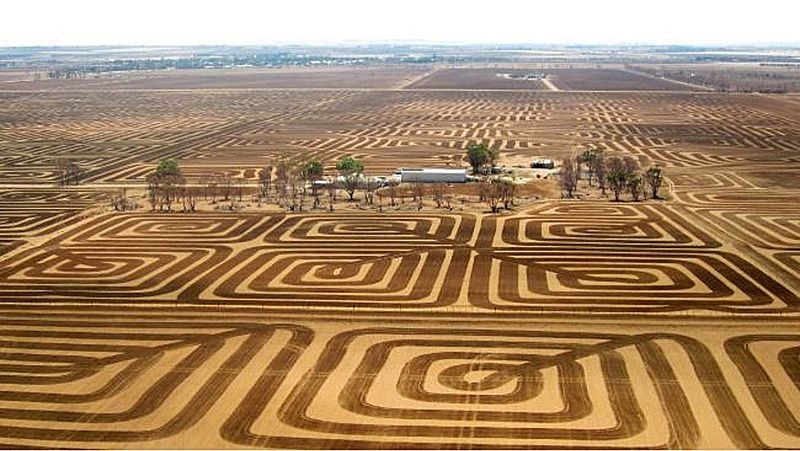
After a recent bushfire consumed all vegetation on his land, a South Australian farmer Brian Fischer decided to etch a gigantic geometric pattern on the bare ground in a bid to fight soil erosion. Without vegetation, the topsoil was vulnerable to erosion by gusting winds. So Fischer ploughed his land in a patchwork of spirals creating long furrows in the topsoil. Now no matter which direction the wind blows there will always be a furrow to catch the soil. Fischer says the pattern cost him a few days to make, but he expects to save 15 cm of topsoil that would have otherwise been lost, until the fields are green again.

The clever erosion-fighting technique came from his dad, who used it on the farm as early as 1944 during one of the worst droughts South Australia experienced. More than one million hectares of land were destroyed by a raging bushfire in Victoria, prompting some farmers to come up with this unique solution.

brian-fischer-1

Photo credit: Brian Fischer

brian-fischer-2

Photo credit: Brian Fischer

via The Guardian

Source….www.amusingplanet.com

Natarajan