How One Award-Winning Radio Channel Forever Changed an Underserved Community in Haryana …


Everyone should be in a position to speak, say, listen and be heard,” says Archana Kapoor. As the founder of a national award-winning community radio initiative in Mewat, Haryana, she is certainly giving voice to many who have long been quiet in this backward community

“I was buying a register during my exam from the nearby shop. The shopkeeper charged me Rs. 184. When I reached home, I opened the packet and saw that the printed rate was Rs 124. I had heard in the ‘Jano Grahak Jano’ program on Radio Mewat that no one can charge you more than the printed rate. So I went back and confronted the shopkeeper. He said as it was exam time the demand was more – I could take it or leave it. I told him that I would go to Radio Mewat and get it announced. Sheepishly he called me back and returned Rs 60 to me.” – Irfan, a resident of Mewat, Haryana.

This is one of the many stories shared by Archana Kapoor, the founder of Radio Mewat and the NGO SMART (Seeking Modern Applications for Real Transformation).

archana

SMART is dedicated to ‘bringing about real transformation in the lives of socially and economically backward communities’ with the use of mass media and different tools of communication, according to Archana who started this NGO in 1997, at the age of 37. She is also known for her work as a publisher, filmmaker, author and activist.

Why Radio Mewat?

RM1

Radio Mewat, one of the many initiatives of SMART, is the first community radio station in Mewat, an extremely underprivileged district in Haryana that is located about 70 km from Delhi.

“The community radio was set up in September 2010. The one and only focus of the radio is to disseminate information that benefits the community, empowers them, gives them an identity and provides a platform for the marginalized and vulnerable sections of society to share their stories and talk about their issues.”

The radio station has received two national awards from the Union Ministry of Information and Broadcasting. It also won an award for being the ‘Most Sustainable Community Radio Station‘ in 2011 and for the ‘Most Creative and Innovative Programming‘ in 2012.

The radio station, the reporters and the team

RM2

While Archana used to visit Mewat every single day when she started out, she now has to go only once in a while because the community is learning to take over. Currently, there are 11 full time reporters, a committed managerial team and an administrative team — 75 per cent of them being from the local community.

But is it a challenge to find people who would be interested to work for the radio?

Archana does not feel so. She has seen the youth in the community being very excited about the entire set up since day one. “They love what they do. The station has given them a status and acceptance in the society. The radio has not only trained over a 100 local people, but has also provided opportunities of employment and exposure…Their involvement is beyond programming and broadcasting. If an FIR is not being lodged, Radio Mewat is expected to intervene; if a ration card is not being issued, we will be asked to help … so it a 24×7 engagement.”

The Impact

RM3

Radio Mewat broadcasts 17 hours a day and that shows the kind of impact it is having on the community. As the proud founder points out – “People are getting information which they never had access to…the administration has become an integral part of the station as repeated demands from the community and airing of grievances have forced them to provide answers. Transparency in governance has increased. Panchayats have been made more accountable. For the first time in the history of Mewat, Gram Sabhas were held. This happened only after a sustained intervention through the community radio station.”

Here are some stories from and about people in the community for a clearer picture of how a radio station is actually changing lives:

RM4

“I heard about the symptoms of TB from Radio Mewat and called the station. Their reporter came to see me and took me to the hospital for the tests. I am now getting my treatment done and am not ashamed of sharing this story. I am in fact telling everyone to get their sputum tested. I now know that TB is curable.” – Shahid –

RM5

Ever since she was a child, Zainab, a 29-year-old woman, wanted to study. But her parents did not let her continue with her education after grade 5. Today, she is married and lives in Palladi village in Mewat. Last year, when the radio came up with a program called ‘Masti ki Paathshala’, where they were teaching Math, she was very excited to join it.

“In this program, for every right answer to questions discussed during the program, we give the listener a star. Zainab is also participating. She listens to it regularly and calls when she has the answer. She has already collected seven stars and says that it is really good that she is able to learn Maths now. This is something she always wanted to do. So even if it is after ten years, she is able to learn now. And it is not just her; she makes her children and everybody in the family sit and listen to the program. On earning ten stars, she will get an award, even if it is a small thing,” says Archana.

The Challenges

RM6

While the team has overcome many initial challenges, there are still some that prevail. The most important one of them being the employment of women at the station, as families are still hesitant to send girls to work in the media sector. Archana is aiming for at least half of the content to be produced and broadcast by women. Then there are issues revolving around demands for increased remuneration, and the financial crunch. The team also has to deal with technical challenges because of limited resources.

“I have about 16 people working for me, so I had to get projects to sustain them and for their salaries. Because the guidelines are so strict, we cannot get sponsors from the private sector. So we end up looking at the government for sponsored projects…We have been able to break even now. We have been able to pay the salaries, keep the equipment working, and to keep afloat for five years.”

The Future

Archana now wants Radio Mewat to slowly become an independent community run entity, where the community realises the wisdom in supporting and running it. –

Source…..Tanaya Singh ….www.thebetterindia.com

Natarajan


” On My 25th Birthday, I Gave Society a Return Gift to Remember…” Says Sushrut Ahale …

Sushrut Ahale wanted to do something special on his birthday, and to make the day a happy one for many people around him. This is what he did.

I am a student pursuing a master’s degree in Ophthalmology from the Institute of Ophthalmology – Joseph Eye Hospital, located in Tiruchirapalli, Tamil Nadu. And this year, on my 25th birthday, I decided to do something that would help me thank all my friends and relatives for their heart-warming wishes and blessings in a much better manner than just saying thank you. I wanted to make my birthday a happy day for one and all around me, and a simple ‘thank you’ did not seem sufficient.

So this is how I went about it.

My college falls under the administration of the Tamil Evangelical Lutheran Church. Now, the church is located inside a large campus which consists of staff quarters, a primary and secondary school, the college and a park called the Luther Park.

It’s a small park in the vicinity of our college – disdained and neglected, it once wore a very shabby, saddening, and haunted look. One could only spot wildly grown weeds and creepers, dead and dried bushes, and thorny shrubs there. The park was also used as a dumping ground for plastic waste, broken glass and garbage in general.

I used to notice that park every day. And this October, it struck me that it would be a great idea to rejuvenate the place and make it brighter, cleaner, and more accessible for people inside the campus. This, I wanted to do just as a gesture of returning back to the society. So I went ahead and requested the church officials to allow me to take up this project. And fortunately, I got their approval.

The authorities were more than happy to let me proceed. One staff member, Mr. Stephan, even arranged for a spade, sickle, plough and some brooms that were required for cleaning up the place.

Finally, on a hot Saturday evening, I started my work – that of cleaning up and planting saplings in the park. While I began all alone, some very encouraging incidents took place within a matter of few hours, and they motivated me to continue. About half an hour after I started, a 10-year-old boy came up to me and asked if he could help. I was pleased and gave him some simple things to do. He was then followed by a gardener who came about an hour later and joined us. In two hours’ time, we were a small group of 10-12 people working together – all strangers, but all motivated towards the same cause.

And lastly, with the help of that gardener, some energetic school boys, a few friends and a couple of locals who had joined me, we successfully removed more than a trolley-full of garbage from the park. This was accompanied by the plantation of 16 saplings. The task got competed on Oct. 19 – my birthday.

At the end of it, my small team sang the birthday song for me. It was a really amazing feeling. This small deed made me realise that money isn’t always the best award we can get in return for doing something good. It’s goodwill and kindness that give one the satisfaction after a hard day’s work.

Here is a look at our work:

park_8

park7

park6

park_5

park_4

park_2(1)

park1

image10

image9


– Sushrut Ahale

Source…www.thebetterindia.com

Natarajan


Launched in India – a ‘Scientifically Validated’ Anti-Diabetes Herbal Drug…

A Council of Scientific and Industrial Research (CSIR) lab in Lucknow launched a scientifically validated anti-diabetes herbal drug called BGR-34.

The drug is a based on Ayurveda, and is meant to treat type-II diabetes mellitus. It is basically a combination of natural extracts obtained from plants.

diabetes

Photo Credit: Flickr

Two CSIR laboratories have jointly developed BGR-34. The two labs are the National Botanical Research Institute (NBRI) and Central Institute for Medicinal and Aromatic Plant (CIMAP). It was launched on Oct. 25, which is also the 62nd annual day of NBRI.

“The drug has extracts from four plants mentioned in Ayurveda and that makes it safe,” Dr AKS Rawat, senior principal scientist at NBRI told The Times of India.

According to reports, the drug is animal tested and scientific studies show that it is safe with no side effects. Clinical trials of the drug have also shown a 67% success rate. Hence, while other herbal drugs for diabetes are already available in the market, this one is backed by scientific validation. According to a report in Live Mint, the drug was approved by AYUSH, the ministry for traditional Indian medicines. It has been tested on 1,000 patients over a period 18 months across Delhi, Himachal Pradesh, Haryana, Punjab and Karnataka.

The functions of BGR-34 include the following:

  • It boosts the immune system
  • Works as antioxidant
  • Helps maintain normal blood glucose levels
  • Reduces chances of complications caused by persistent high blood glucose levels
  • Improves the quality of life for patients with high blood sugar levels

In February last year, Vice-President Hamid Ansari had already launched the drug at Vigyan Bhawan in New Delhi. But now it has been launched commercially to be manufactured and sold by M/s Aimil Pharmaceuticals Pvt Ltd, New Delhi.

According to V S Kapoor, marketing head of Aimil Pharmaceuticals for UP and Delhi, the drug will be available in the market soon, in about 15 days. The estimated price is said to be Rs. 500 for 100 tablets. He also added that the drug will be sold in Delhi and Himachal Pradesh to begin with, and they will reach out to doctors through medical representatives to explain its benefits.

About 90% of cases of diabetes are type II diabetes, while the other 10% are primarily diabetes mellitus type 1 and gestational diabetes. The primary cause of type II diabetes is considered to be obesity, and it is also found in people who are genetically predisposed to the disease.

CSIR, which developed the drug, is an autonomous body and India’s largest research and development (R&D) organisation. It includes 37 laboratories and 39 field stations spread across the nation, with a total of over 17,000 people.

Source…..Tanaya Singh….www.thebetterindia.com

natarajan


Image of the Day…” Moon over Metéora monastery in Greece…”

Photo of rising moon on October 26, 2015 by Aimilianos Gkekas.

Last night’s rising moon behind a Greek monastery first settled in the 11th century.

Aimilianos Gkekas submitted this photo of last night’s moon – October 26, 2015 – rising behind theMetéora monastery in Greece. It’s one of the largest and most important complexes of Greek Orthodox monasteries in Greece, second only to Mount Athos. Both Metéora and Mount Athos are designated as UNESCO World Heritage Sites. UNESCO spoke of Metéora this way:

In a region of almost inaccessible sandstone peaks, monks settled on these ‘columns of the sky’ from the 11th century onwards.

Source….www. earthsky.org

Natarajan

There’s a hidden message written on the back of this family portrait that an Apollo astronaut left on the moon…

On April 20, 1972, Apollo 16 astronaut Charles Duke took his first steps on the moon. He was 36 at the time and is the youngest human in history to ever walk on the lunar surface.

But that’s not the only achievement of Duke’s that lives on in American history.

NASA John W. Young    Astronaut Charles M. Duke Jr., Lunar Module pilot of the Apollo 16 mission, is photographed collecting lunar samples at Station no. 1 during the first Apollo 16 extravehicular activity at the Descartes landing site.

While he was on the moon, he snapped this family portrait of him, his two sons, and his wife, which remains on the moon to this day.

DUKE

On the back of the photo Duke wrote:

“This is the family of astronaut Charlie Duke from planet Earth who landed on the moon on April 20, 1972.”

Here’s a clearer copy of the photo Duke gave us. On the far left is his oldest son Charles Duke III who had just turned seven. In the front in red is his youngest son, Thomas Duke, who was five. Duke and his wife, Dorothy Meade Claiborne, are in the background:

Portrait

Courtesy of Charles Duke

“I’d always planned to leave it on the moon,” Duke told Business Insider. “So when I dropped it, it was just to show the kids that I really did leave it on the moon.”

The photo has since been featured in numerous popular photo books and is a great example of the “human side of space exploration,” Duke said.

When Duke was training to be an Apollo astronaut, he spent most of his time in Florida. But his family was stationed in Houston. As a result, the children didn’t get to see much of their father during that time.

“So, just to get the kids excited about what dad was going to do, I said ‘Would y’all like to go to the moon with me?’” Duke said. “We can take a picture of the family and so the whole family can go to the moon.”

More than 43 years have passed since Duke walked on the moon. And while the footprints that he made in the lunar soil are relatively unchanged, Duke suspects the photo is not in very good shape at this point.

“After 43 years, the temperature of the moon every month goes up to 400 degrees [Fahrenheit] in our landing area and at night it drops almost absolute zero,” Duke said. “Shrink wrap doesn’t turn out too well in those temperatures. It looked OK when I dropped it, but I never looked at it again and I would imagine it’s all faded out by now.”

Unfortunately, there is no way to determine just how faded the photo is because it’s too small for lunar satellites to spot.

Regardless, the photos “was very meaningful for the family,” Duke said. In the end, that’s all that matters, right?

Source…..JESSICA ORWIG……..www.businessinsider.com.au

Natarajan


தமிழருக்குப் பெருமை: ஆஸ்திரேலியாவின் உயரிய விருதை வென்ற தமிழர்….

விருதுடன் டாக்டர் ராமமூர்த்தி

தமிழகத்தைப் பூர்வீகமாகக் கொண்டு, ஆஸ்திரேலியாவில் மருத்துவராகப் பணியாற்றி வரும் டாக்டர் ராமமூர்த்தி ஜெயராஜ், ஆஸ்திரேலியாவின் உயரிய ‘பிரைடு ஆஃப் ஆஸ்திரேலியா’ (Pride of Australia) என்ற விருதைப் பெற்று தமிழருக்குப் பெருமை சேர்த்துள்ளார்.

புற்றுநோய் ஆராய்ச்சிக்காகவும், மருத்துவ மாணவர்கள் மற்றும் செவிலியருக்கான கல்வித் தொண்டுக்காகவும், ஆஸ்திரேலிய பழங்குடியினர் பற்றி ஆராய்ச்சிக்காகவும், டாக்டர் ராமமூர்த்திக்கு இந்த உயரிய விருது வழங்கப்பட்டுள்ளது. இந்தியாவில் வழங்கப்படும் பத்மஸ்ரீக்கு விருதுக்கு இணையானது இந்த பிரைடு ஆஃப் ஆஸ்திரேலியா விருது என்பது குறிப்பிடத்தக்கது.

டார்வினில் உள்ள நாடாளுமன்ற அலுவலகத்தில் அக்டோபர் 7-ம் தேதி நடைபெற்ற விழாவில், மாகாண முதல்வர் ஆடம் கில்ஸ் அவர்கள் இந்த விருதை டாக்டர் ராமமூர்த்திக்கு வழங்கினார்.

மாகாண முதல்வர் மற்றும் குடும்பத்தினருடன்

தமிழகத்தில், நாமக்கல் மாவட்டம் சேந்தமங்கலத்தைச் சேர்ந்த டாக்டர் ராமமூர்த்தி, சென்னை கால்நடை மருத்துவக் கல்லூரியில் இளநிலை மற்றும் முதுநிலைப் பட்டம் பெற்ற இவர், தற்போது ஆஸ்திரேலியாவின் வடக்கு மாகாணத்தில் உள்ள சார்லஸ் டார்வின் பல்கலைக் கழகத்தில் மூத்த விரிவுரையாளராகவும் புற்றுநோய் ஆராய்ச்சியாளராகவும் பணியாற்றி வருகிறார்.

கடந்த ஒன்பது ஆண்டுகளாக, ஆஸ்திரேலியாவின் வடக்கு மாகாணத்தில் வாழும் ஆஸ்திரேலிய பழங்குடியினர் குறித்து ஆராய்ச்சிகளை டாக்டர் ராமமூர்த்தி மேற்கொண்டு வருகிறார்.

ஆஸ்திரேலியாவின் பெருமை மிகு இவ் விருதைப் பெற்ற முதல் தமிழர் என்ற பெருமைக்குச் சொந்தக்காரராகத் திகழ்கிறார் டாக்டர் ராமமூர்த்தி. கடந்த 13 ஆண்டுகளாக ஆஸ்திரேலியாவில் வசித்து வரும் இவர், 2009 முதல் 2013-ம் ஆண்டு வரை வடக்கு மாகாண தமிழ்ச் சங்கத்தின் துணைத் தலைவராகப் பொறுப்பு வகித்துள்ளார். அத்துடன், ஆஸ்திரேலியாவில் உள்ள தமிழ்ச் சங்கங்களுடன் நெருங்கிய தொடர்பும் வைத்துள்ளார்.

Source….www.dinamani.com

Natarajan

When Thousands of Indians and Pakistanis Changed Their Profile Pictures for a Special Reason …

Check out any social media page related to India or Pakistan today, and chances are that you will find many comments that do nothing but spread hatred between the two nations.

In a time like this, it is up to the users to realise the power of social media, and understand how it can be used for a better purpose instead. Fortunately, there are some people who are already doing so. Among the thousands of those who spread hatred on such pages, there are also a few who are out there to spread love and bridge the gap between the two countries.

Mumbai-based artist, Ram Subramanian, is one of those people. He started a social media campaign called #ProfileforPeace to show the world that he is not alone in being an Indian who does not hate Pakistan.

The man behind the campaign.

The simple campaign required people from India and Pakistan to change their profile pictures on social media to one in which they have a little note that informs where they are from, and says that they don’t hate the other country, but are only being divided because of hate politics.

Soon after the launch of this campaign, hundreds of citizens from India and Pakistan took to Facebook, Twitter and Instagram to extend their support through their love notes and new display pictures. The campaign went viral and even Indians and Pakistanis living in the US, UK and UAE, became a part of it.

The 36-year-old artist started the campaign after the recent incidents when Shiv Sena tried to ban Pakistani artists and writers in Mumbai.

peace9

Earlier this month, organisers of a concert by Pakistani singer Ghulam Ali had to cancel the event after Shiv Sena threatened them saying that they would face poor consequences if they went ahead with the performance. The next day, organisers in Pune had to cancel his event too.

The hatred did not just end there. A few days later, Sena members tried to stop the launch of a book written by ex-Pakistan foreign minister, Khurshid Mahmud Kasuri. For this, they threw black ink on the face of the organiser, Sudheendra Kulkarni. However, the attack did not stop Kulkarni from going ahead, and he continued with the launch as planned.

Thus on Dussehra night, Ram Subramanian decided to express his views through a selfie with a note which read, “I am an Indian. I am from Mumbai. I don’t hate Pakistan. I am not alone. There are many people like me!

peace2

This is the idea. Do join in if you believe in peace being the way forward. write this message on a post it note, take a selfie and make it your profile picture#ProfileForPeace. No more artists being banned. This is my voice. This is our voice for our Mumbai, our India. Enough of hate politics. #SpeakUp,” he posted on Facebook.

As citizens of both the countries joined hands for a better cause, there was no looking back. Here are some amazing pictures from the campaign-

peace3

peace4

peace5

peace8

peace7

peace6

All photos: Facebook

Source….. Shreya  Pareek   ………www.thebetterindia.com

Natarajan


An Indian Artist’s Journey to Challenge Borders….

Akram Feroze travels by camel as part of his mission to travel along India's border

Mr Feroze, who does not believe in borders, carries a world passport

Theatre actor-director Mohammad Akram Feroze recently set off on foot to travel along India’s 10,000km-long border, stopping to perform plays at villages with – and for – their inhabitants.

Mr Feroze, who does not believe in borders, carries a world passport – as part of a global movement established under Article 13(2) of the Universal Declaration of Human Rights which says “everyone has the right to leave any country, including his own, and to return to his country”.

His journey, however, was cut short just a little over a month after he set off – at the India-Pakistan border, local police accused him of “breach of peace” and arrested him.

After spending two weeks in prison, he was freed on bail, but he says the time he spent travelling has taught him some invaluable lessons.

These are some of the highlights of his journey, as told to BBC Hindi’s Divya Arya:

Invisible Theatre

Akram Feroze with some residents from a border village in India

‘In one village, the residents only warmed up to me when I told them that my family was originally from Pakistan’

The whole idea of my journey was to understand, engage and plant new ideas in the minds of people living in border villages.

Invisible theatre was a very effective – though risky – tool for this. It meant taking on a completely different identity to my own, when interacting with people.

I did this because I wanted villagers to interact with me as a random traveller, rather than as an artist on a project.

In one village, the residents only warmed up to me when I told them that my family was originally from Pakistan who lost everything they owned during partition when they migrated to India.

The villagers immediately grew sympathetic and, in fact, opened up about their opinions on partition and how the border had altered their lives.

One old man said, “Border tension is all hype, created and sustained by governments. On the ground, it is us ordinary people who continue to suffer.”

But such insights would more often than not be quickly swept away by passionate rhetoric about security. I would be told, “things have changed now, you shouldn’t go to the border, people on the other side have bad intentions, and there are terrorists”.

No shades of grey

A profile of an Indian villager

Attitudes towards borders changed depending on proximity to it’

The attitudes towards borders also changed depending on how close or far people lived from them.

It seemed to me that when it came to borders at least, people in the rest of the country understood grey, whereas those who lived on the border were more black-and-white.

One Hindu truck driver from the northern state of Uttar Pradesh who I hitched a ride with told me: “The terror across the border doesn’t worry me, my only worry is feeding my family.”

This was in sharp contrast with most border residents.

One man told me, “The threat of the enemy on the other side is real, our elders have seen violence, we fear those across the border and we have to defend ourselves.” A world passport according to him was “stupidity”.


Border children

Children from a border village act out a play

For children in the villages, the border was a physical end, not a political line’

I found the children a different experience altogether.

Wherever I met them, I would try to develop a play, to challenge their concept of borders and introduce the concept of a border-less world. But the dilemma was that they didn’t understand borders as political lines.

When I asked the first set of children, “what is a border?”, pat came the reply, “it’s the end”. Like the boundaries of boxes.

So first I had to show them a world map to explain country borders, and then ask them to imagine a world without them.

These were rural students who had only ever crossed the border of their village to go to a neighbouring Indian village. Life ended at the village and beyond that – their parents had explained – lay danger.

“Why? Were the people any different?” I asked. “No,” they replied in unison. Their own answer must have triggered some thought, because then a child stood up and asked, “What if I was born on the other side of the border?”


Beyond borders

Sharing a meal with residents from border villages

‘Explaining a border-less world to people who live along one is a challenging concept’

Talking about a border-less world to border villagers is challenging, to say the least, given that even the children have barriers built in their subconscious minds.

I would have to take a circuitous route. One play, titled ‘The educated ghost will scare away the ghost of superstition’, was to educate the villagers about the efficacy of medical treatment for epilepsy instead of prayers by local priests.

While developing the script, a child said there were no doctors in the village.

So, they had to be called from across the border from another village. It automatically drove home the point that people from outside or across the border, in this case a doctor, had good intentions.

What I was doing with them wasn’t really about what happened while I was there, but I hope that a lot of the impact will come later and these new thoughts begin to influence their actions.

Source…www.bbc.com

Natarajan

40 years on, victim of Vietnam napalm attack, Kim Phuc, finally gets burns treatment……

Kim Phuc shows the burn scars on her back and arms after laser treatments in Miami. Phuc was burned by a napalm bomb in Vietnam more than 40 years ago. Picture: AP Photo/Nick Ut

IN the photograph that made Kim Phuc a living symbol of the Vietnam War, her burns aren’t visible — only her agony as she runs wailing toward the camera, her arms flung away from her body, naked because she has ripped off her burning clothes.

More than 40 years later she can hide the scars beneath long sleeves, but a single tear down her otherwise radiant face betrays the pain she has endured since that errant napalm strike in 1972.

Now she has a new chance to heal — a prospect she once thought possible only in a life after death.

“So many years I thought that I have no more scars, no more pain when I’m in heaven. But now — heaven on earth for me!” Phuc says upon her arrival in Miami to see a dermatologist who specialises in laser treatments for burn patients.

Late last month, Phuc, 52, began a series of laser treatments that her doctor, Jill Waibel of the Miami Dermatology and Laser Institute, says will smooth and soften the pale, thick scar tissue that ripples from her left hand up her arm, up her neck to her hairline and down almost all of her back.

Even more important to Phuc, Waibel says the treatments also will relieve the deep aches and pains that plague her to this day.

With Phuc are her husband, Bui Huy Toan, and another man who has been part of her life since she was 9 years old: Los Angeles-based Associated Press photojournalist Nick Ut.

“He’s the beginning and the end,” Phuc says of the man she calls “Uncle Ut.” ‘‘He took my picture and now he’ll be here with me with this new journey, new chapter.”

A 9-year-old Kim Phuc, centre, runs with her brothers and cousins after a South Vietnamese plane accidentally dropped its flaming napalm on its own troops and civilians. Picture: AP Photo/Nick Ut

A 9-year-old Kim Phuc, centre, runs with her brothers and cousins after a South Vietnamese plane accidentally dropped its flaming napalm on its own troops and civilians. Picture: AP Photo/Nick UtSource:AP

It was Ut, now 65, who captured Phuc’s agony on June 8, 1972, after the South Vietnamese military accidentally dropped napalm on civilians in Phuc’s village, Trang Bang, outside Saigon.

Ut remembers the girl screaming in Vietnamese, “Too hot! Too hot!” He put her in the AP van where she crouched on the floor, her burnt skin raw and peeling off her body as she sobbed, “I think I’m dying, too hot, too hot, I’m dying.”

He took her to a hospital. Only then did he return to the Saigon bureau to file his photographs, including the one of Phuc on fire that would win the Pulitzer Prize.

Phuc suffered serious burns over a third of her body; at that time, most people who sustained such injuries over 10 per cent of their bodies died, Waibel says.

Napalm sticks like a jelly, so there was no way for victims like Phuc to outrun the heat, as they could in a regular fire. “The fire was stuck on her for a very long time,” Waibel says, and destroyed her skin down through the layer of collagen, leaving her with scars almost four times as thick as normal skin.

While she spent years doing painful exercises to preserve her range of motion, her left arm still doesn’t extend as far as her right arm, and her desire to learn how to play the piano has been thwarted by stiffness in her left hand. Tasks as simple as carrying her purse on her left side are too difficult.

“As a child, I loved to climb on the tree, like a monkey,” picking the best guavas, tossing them down to her friends, Phuc says. “After I got burned, I never climbed on the tree anymore and I never played the game like before with my friends. It’s really difficult. I was really, really disabled.”

Kim Phuc now lives in Canada. Picture: Nick Ut

Kim Phuc now lives in Canada. Picture: Nick UtSource:AP

Triggered by scarred nerve endings that misfire at random, her pain is especially acute when the seasons change in Canada, where Phuc defected with her husband in the early 1990s. The couple live outside Toronto, and they have two sons, ages 21 and 18.

Phuc says her Christian faith brought her physical and emotional peace “in the midst of hatred, bitterness, pain, loss, hopelessness,” when the pain seemed insurmountable.

“No operation, no medication, no doctor can help to heal my heart. The only one is a miracle, (that) God love me,” she says. “I just wish one day I am free from pain.”

Ut thinks of Phuc as a daughter, and he worried when, during their regular phone calls, she described her pain. When he travels now in Vietnam, he sees how the war lingers in hospitals there, in children born with defects attributed to Agent Orange and in others like Phuc, who were caught in napalm strikes. If their pain continues, he wonders, how much hope is there for Phuc?

Ut says he’s worried about the treatments. “Forty-three years later, how is laser doing this? I hope the doctor can help her. … When she was 18 or 20, but now she’s over 50! That’s a long time.”

Waibel has been using lasers to treat burn scars, including napalm scars, for about a decade. Each treatment typically costs $2000 to $2700, but Waibel offered to donate her services when Phuc contacted her for a consultation. Waibel’s father-in-law had heard Phuc speak at a church several years ago, and he approached her after hearing her describe her pain.

At the first treatment in Waibel’s office, a scented candle lends a comforting air to the procedure room, and Phuc’s husband holds her hand in prayer.

Phuc tells Waibel her pain is “10 out of 10” — the worst of the worst.

The type of lasers being used on Phuc’s scars originally were developed to smooth out wrinkles around the eyes, Waibel says. The lasers heat skin to the boiling point to vaporise scar tissue. Once sedatives have been administered and numbing cream spread thickly over Phuc’s skin, Waibel dons safety glasses and aims the laser. Again and again, a red square appears on Phuc’s skin, the laser fires with a beep and a nurse aims a vacuum-like hose at the area to catch the vapour.

The procedure creates microscopic holes in the skin, which allows topical, collagen-building medicines to be absorbed deep through the layers of tissue.

Waibel expects Phuc to need up to seven treatments over the next eight or nine months.

Wrapped in blankets, drowsy from painkillers, her scarred skin a little red from the procedure, Phuc made a little fist pump. Compared to the other surgeries and skin grafts when she was younger, the lasers were easier to take.

“This was so light, just so easy,” she says.

A couple weeks later, home in Canada, Phuc says her scars have reddened and feel tight and itchy as they heal — but she’s eager to continue the treatments.

“Maybe it takes a year,” she says. “But I am really excited — and thankful.”

Source…..www.news.com.au

Natarajan

Why Are Little Kids in Japan So Independent….?

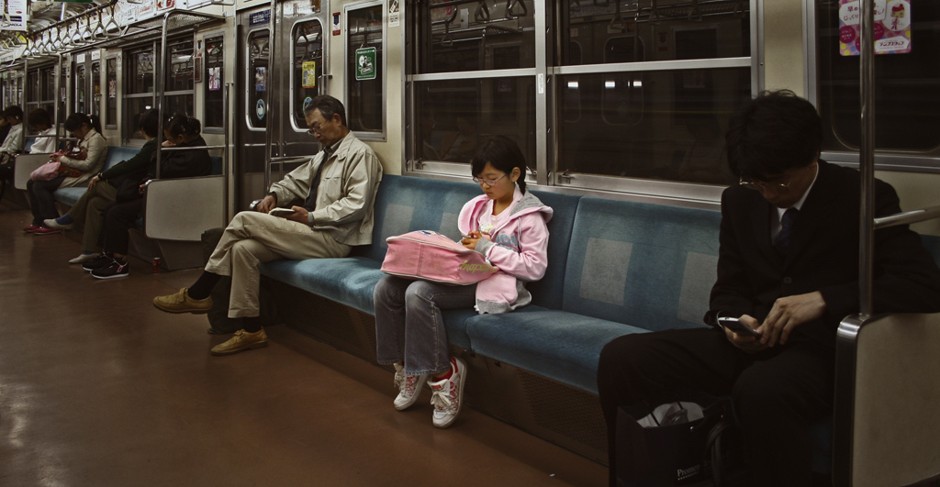
In Japan, small children take the subway and run errands alone, no parent in sight. The reason why has more to do with social trust than self-reliance.

Image Toru Hanai / Reuters

A schoolgirl walks through a Tokyo subway station. (Toru Hanai / Reuters)

It’s a common sight on Japanese mass transit: children troop through train cars, singly or in small groups, looking for seats.

They wear knee socks, polished patent leather shoes, and plaid jumpers, with wide-brimmed hats fastened under the chin and train passes pinned to their backpacks. The kids are as young as six or seven, on their way to and from school, and there is nary a guardian in sight.

Parents in Japan regularly send their kids out into the world at a very young age. A popular television show called Hajimete no Otsukai, or My First Errand, features children as young as two or three being sent out to do a task for their family. As they tentatively make their way to the greengrocer or bakery, their progress is secretly filmed by a camera crew. The show has been running for more than 25 years.

In this English-subtitled segment from My First Errand, a brother and sister head out to buy groceries for the first time, not without a few tears.

Kaito, a 12-year-old in Tokyo, has been riding the train by himself between the homes of his parents, who share his custody, since he was nine. “At first I was a little worried,” he admits, “whether I could ride the train alone. But only a little worried.”

Now, he says, it’s easy. His parents were apprehensive at first, too, but they went ahead because they felt he was old enough, and lots of other kids were doing it safely.

“Honestly, what I remember thinking at the time is, the trains are safe and on time and easy to navigate, and he’s a smart kid,” Kaito’s stepmother says. (His parents asked not to publish his last name and their names for the sake of privacy.)

“I took the trains on my own when I was younger than him in Tokyo,” his stepmother recalls. “We didn’t have cell phones back in my day, but I still managed to go from point A to point B on the train. If he gets lost, he can call us.”

What accounts for this unusual degree of independence? Not self-sufficiency, in fact, but “group reliance,” according to Dwayne Dixon, a cultural anthropologist who wrote his doctoral dissertation on Japanese youth. “[Japanese] kids learn early on that, ideally, any member of the community can be called on to serve or help others,” he says.

This assumption is reinforced at school, where children take turns cleaning and serving lunch instead of relying on staff to perform such duties. This “distributes labor across various shoulders and rotates expectations, while also teaching everyone what it takes to clean a toilet, for instance,” Dixon says.

Taking responsibility for shared spaces means that children have pride of ownership and understand in a concrete way the consequences of making a mess, since they’ll have to clean it up themselves. This ethic extends to public space more broadly (one reason Japanese streets are generally so clean). A child out in public knows he can rely on the group to help in an emergency.

A young girl riding the Tokyo subway alone (tokyoform / Flickr)

Japan has a very low crime rate, which is surely a key reason parents feel confident about sending their kids out alone. But small-scaled urban spaces and a culture of walking and transit use also foster safety and, perhaps just as important, the perception of safety.

“Public space is scaled so much better—old, human-sized spaces that also control flow and speed,” Dixon notes. In Japanese cities, people are accustomed to walking everywhere, and public transportation trumps car culture; in Tokyo, half of all trips are made on rail or bus, and a quarter on foot. Drivers are used to sharing the road and yielding to pedestrians and cyclists.

Kaito’s stepmother says she wouldn’t let a 9-year-old ride the subway alone in London or New York—just in Tokyo. That’s not to say the Tokyo subway is risk-free. The persistent problem of women and girls being groped, for example, led to the introduction of women-only cars on select lines starting in 2000. Still, many city children continue to take the train to school and run errands in their neighborhood without close supervision.

By giving them this freedom, parents are placing significant trust not only in their kids, but in the whole community. “Plenty of kids across the world are self-sufficient,” Dixon observes. “But the thing that I suspect Westerners are intrigued by [in Japan] is the sense of trust and cooperation that occurs, often unspoken or unsolicited.”

Source….