Message for the Day…….” When purity and love come together, there is Ananda {Bliss}….”

Sathya Sai Baba

Develop the quality of love. Fill your entire life with love. This was the prayer which the Gopikas addressed to Krishna. A life without love is utterly barren. You are the embodiment of love. Love has to be directed towards what is true. Such love must be your life-breath. Embodiments of the Divine Atma! Esteeming love as the essence of Divinity, you must engage yourselves in loving service to society. Why is it that so many lakhs of people have gathered here today? There must be some compelling reason for it. You must be seeking something which you have not found in your native place. Here there is Divine Love. What has drawn all people here is the power of Divine Love – that is the bond uniting hearts. At the root of all this is purity. Where there is purity, there love grows. When purity and love come together, there is Ananda (bliss). Whatever work we do, whatever sacrifices we perform, they are not of much use in the absence of love.


The Gold Mines of Serra Pelada…….!!!

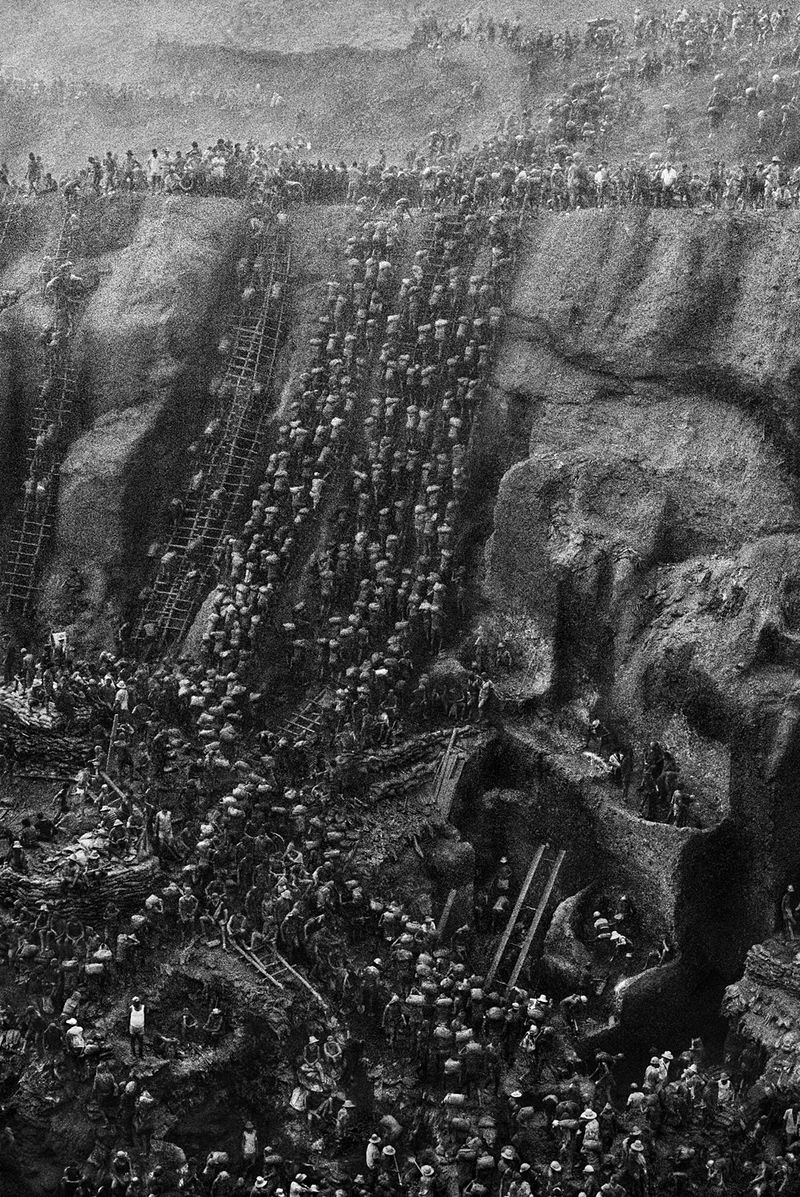
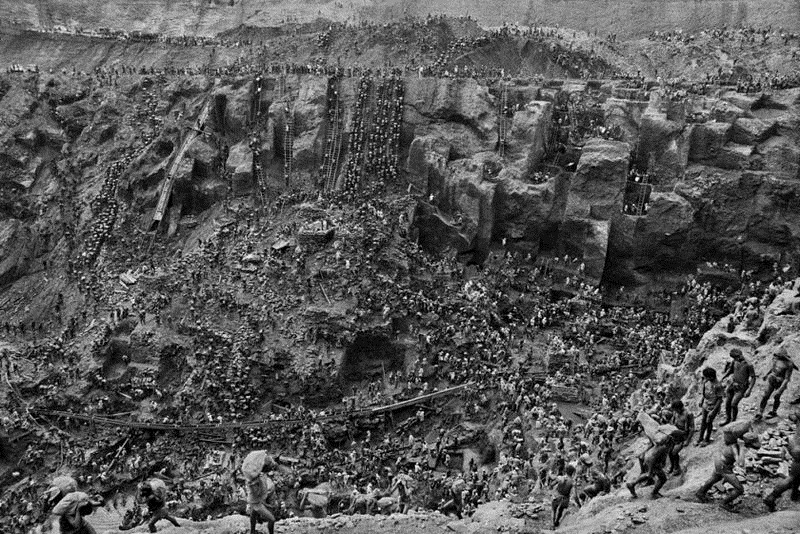
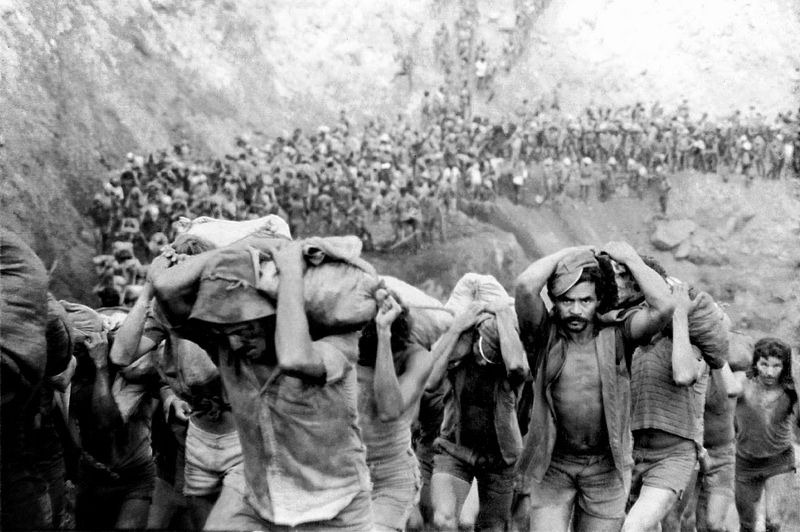
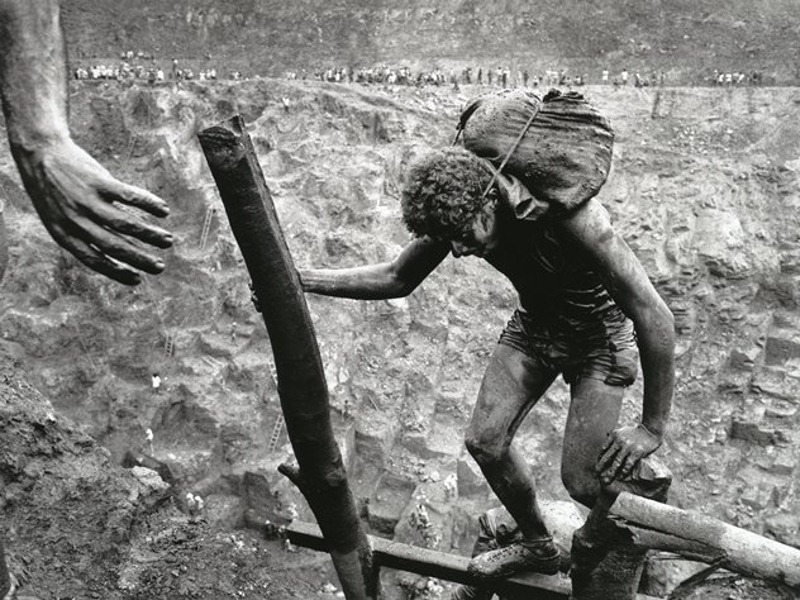
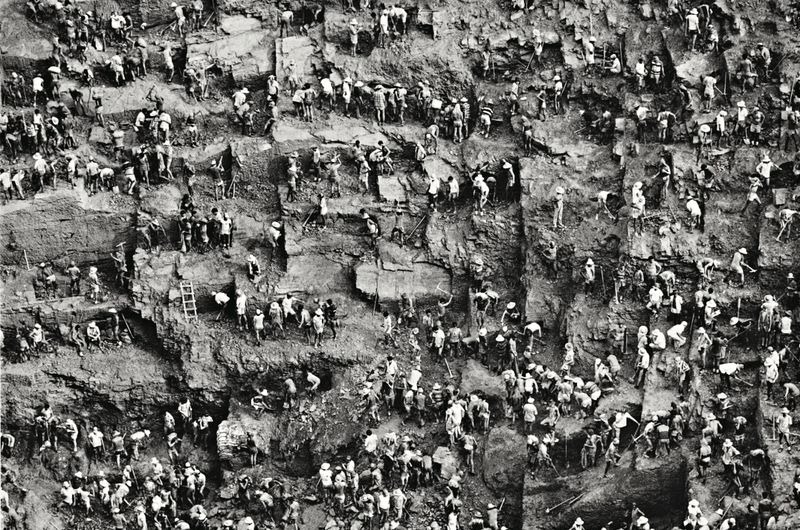
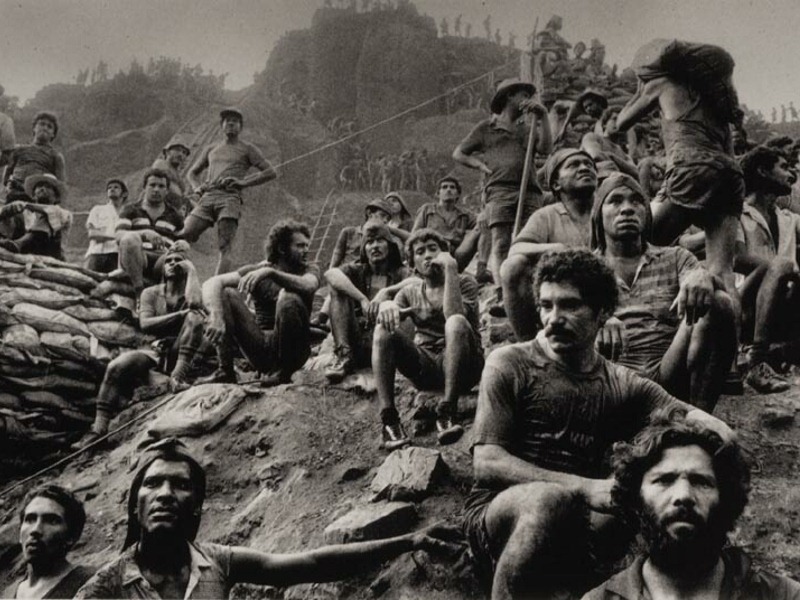
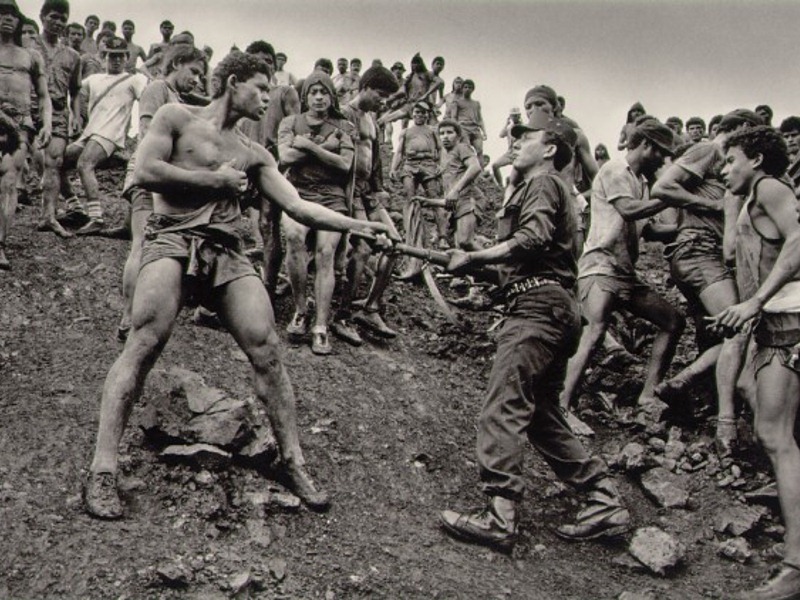
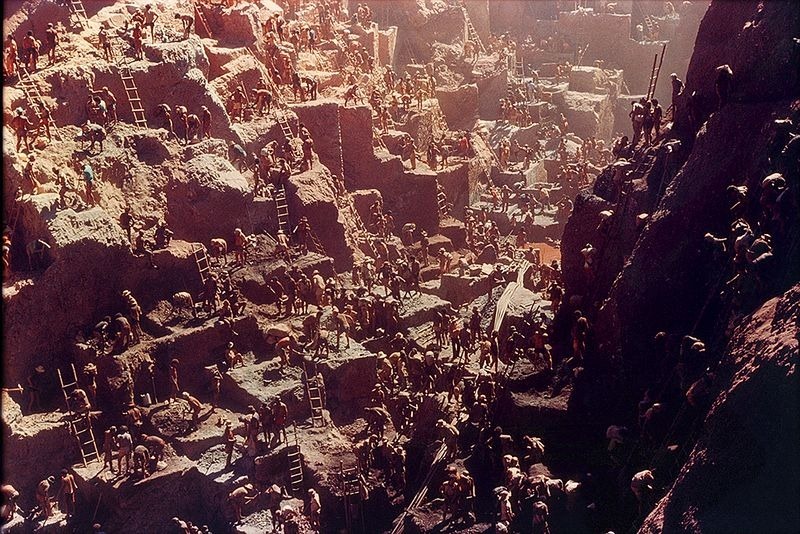
In the early 1980s, Brazilian photographer Sebastião Salgado travelled to the mines of Serra Pelada, some 430 kilometers south of the mouth of the Amazon River, where a notorious gold rush was in progress. A few years earlier, a child had found a 6-grams nugget of gold in the banks of a local river, triggering one of the biggest race for gold in modern history. Motivated by the dream of getting rich quickly, tens of thousands of miners descended into the site swarming like ants in the vast open-air pit they had carved into the landscape. Salgado took some of the most haunting pictures of the workers there, highlighting the hazardous conditions in which they worked and the sheer madness and chaos of the operation.

serra-pelada-1

Photo credit: Sebastião Salgado

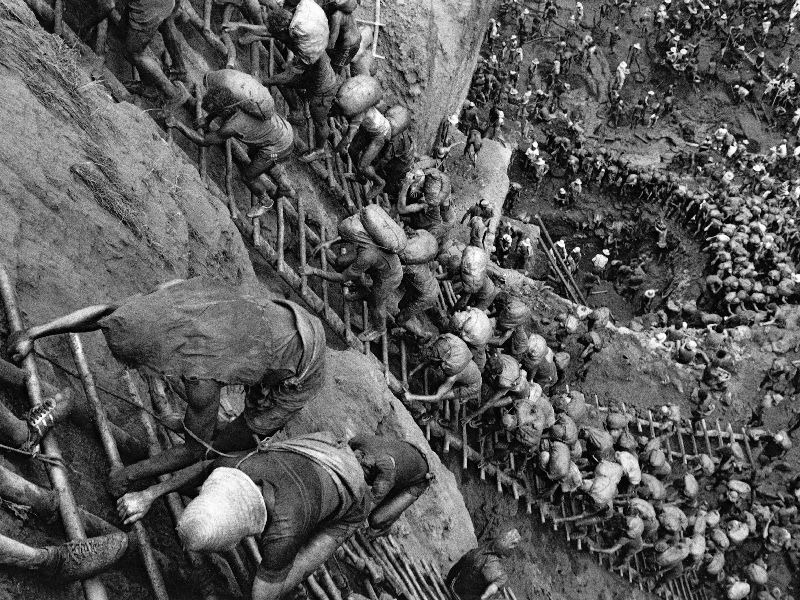
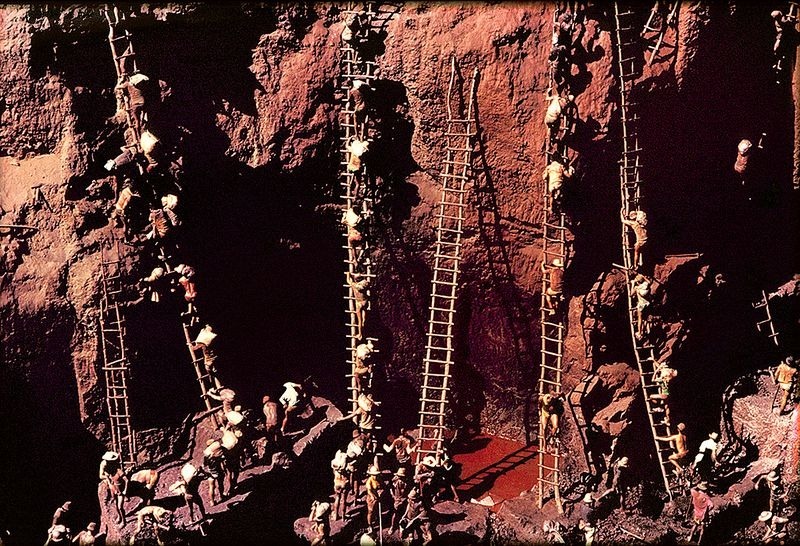
One of the most vertigo-inducing photograph of the series showed hundreds of workers swarming up tall ladders, scaling the cliff-like sides of a hellish hole. Later, when talking about the captivating images, Sebastião Salgado had said: “Every hair on my body stood on edge. The Pyramids, the history of mankind unfolded. I had travelled to the dawn of time.”

During its peak, the Serra Pelada mine employed some 100,000 diggers or garimpeiros in appalling conditions, where violence, death and prostitution was rampant. The diggers scratched through the soil at the bottom of the open pit, filled it into sacks each weighing between 30 to 60 kilograms, and then carried the heavy sacks up some 400 meters of wood and rope ladders to the top of the mine, where it is sifted for gold. On average, workers were paid 20 cents for digging and carrying each sack, with a bonus if gold was discovered. Thousands of underage girls sold their bodies for a few gold flakes while around 60–80 unsolved murders occurred in the nearby town, where the workers lived, every month.

Three months after the gold’s discovery, the Brazilian military took over operations to prevent exploitation of the workers and conflict between miners and owners. The government agreed to buy all the gold the garimpeiros found for 75 percent of the London Metal Exchange price. Officially just under 45 tons of gold was identified, but it is estimated that as much as 90 percent of all the gold found at Serra Pelada was smuggled away.

Mining had to be abandoned when the pit became flooded preventing further exploration. Geological surveys estimate that there could still be 20 to 50 tons of gold buried under the muddy lake, which the pit has now become.

In 2012, after remaining largely untouched for the last 20 years, a Brazilian cooperative company was granted an exploration license for the property in a bid to develop Serra Pelada.

serra-pelada-11

Photo credit: Sebastião Salgado

serra-pelada-12

Photo credit: Sebastião Salgado

sebastiao-salgado-serra-pelada-6

Photo credit: Sebastião Salgado

sebastiao-salgado-serra-pelada-8

Photo credit: Sebastião Salgado

serra-pelada-14

Photo credit: Sebastião Salgado

sebastiao-salgado-serra-pelada-4

Photo credit: Sebastião Salgado

sebastiao-salgado-serra-pelada-5

Photo credit: Sebastião Salgado

serra-pelada-9

Photo credit: Sebastião Salgado

serra-pelada-2

Photo credit: Rudi Böhm

serra-pelada-3

Photo credit: Rudi Böhm

Sources: Aljazeera / www.beetlesandhuxley.com / Buried in Mud, Digging for Gold / Wikipedia

Source………www.amusingplanet.com

Natarajan

Europe’s First Underwater Sculpture Museum…!!!

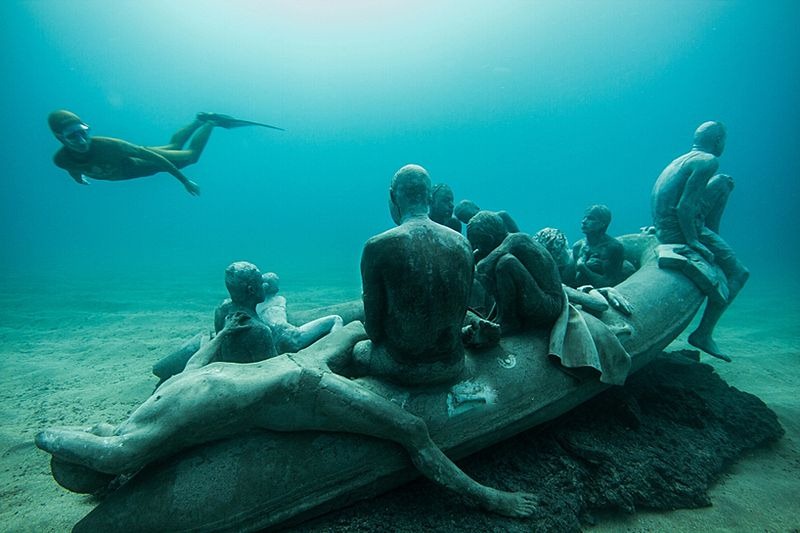
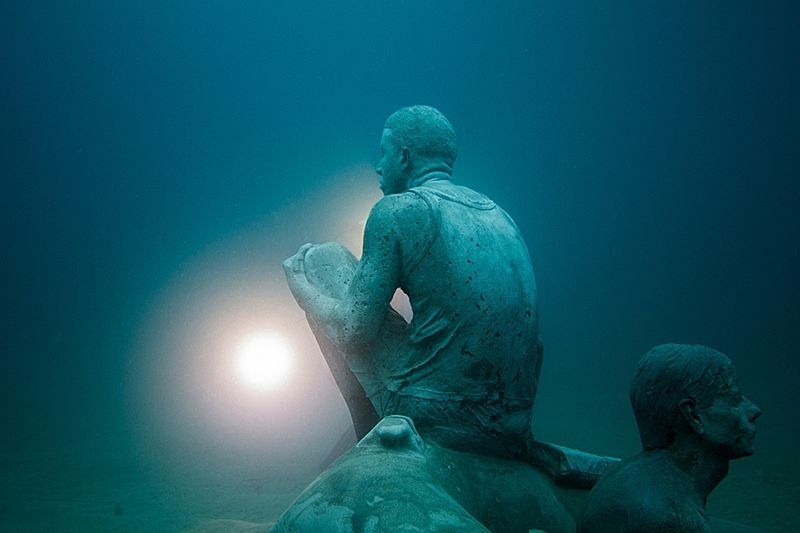
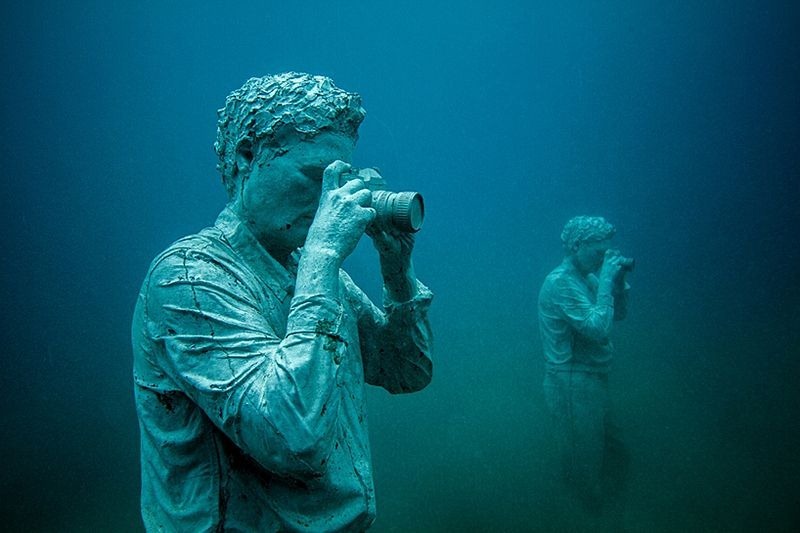
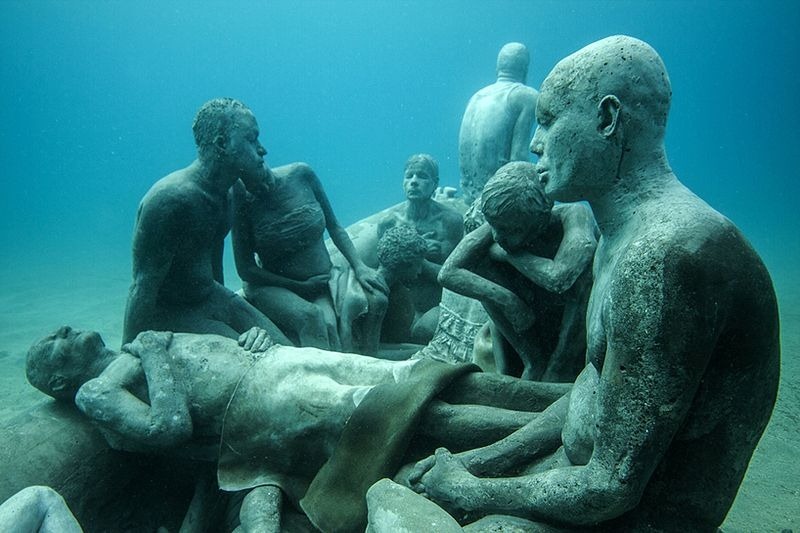
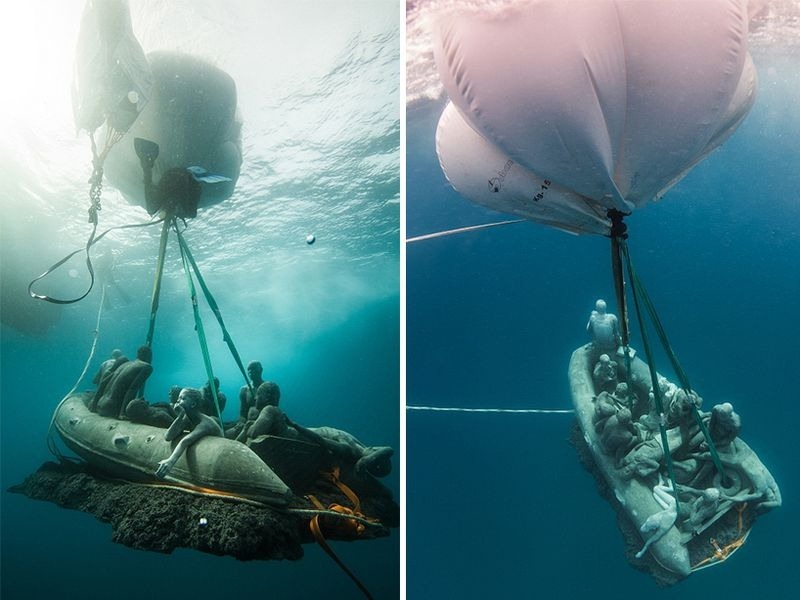
The island of Lanzarote in the Canary Islands, Spain, has set up of the first set of sculptures in what will be the first completely underwater museum in Europe. The museum is located off the coast of Lanzarote at a depth of 12-14 meters and features the works of British artistJason deCaires Taylor, who has created similar works in both Cancun, Mexico and Grenada in the West Indies. The sculptures on display include several human figures representing people engaging in mobile phones, walking, taking pictures and selfies. Another installation titled ‘the raft of lampedusa’ depicts a boat of figures desperately waiting for treatment and aid, representing the ongoing refugee crisis. The underwater sculptures will eventually attract and promote growth of plant and animal life, symbolizing the symbiotic relationship humans have with nature.

jason-decaires-taylor-lanzarote-6

A lot of marine life seek for shelter from predators, so they naturally gravitate toward submerged objects. As a diver, Taylor knows that if you place any object underwater they’re very quickly colonized.

Taylor’s team only chooses sites he describes as “barren and desolate.” Sometimes he positions the sculptures as a diversion from areas that gets lot of tourists so as to lure them away from the fragile and dangerous area.

The sculptures are made from a very inert type of marine cement designed to last for hundreds of years. He avoids using metals because they are corrosive and pollute the environment.

“The longer they are underwater the more the layers of calcium deposit will start to form, so they’ll start to get more and more unrecognizable over time,” Taylor told Good. “That’s one of the reasons I start out with a simple image or quite often a human figure, because I know however much you disfigure the human body you can still recognize some part of it as some identifying feature you can relate to.”

jason-decaires-taylor-lanzarote-1

jason-decaires-taylor-lanzarote-2

jason-decaires-taylor-lanzarote-4

jason-decaires-taylor-lanzarote-7

jason-decaires-taylor-lanzarote-8

jason-decaires-taylor-lanzarote-9

jason-decaires-taylor-lanzarote-11

jason-decaires-taylor-lanzarote-13

jason-decaires-taylor-lanzarote-14

jason-decaires-taylor-lanzarote-15


jason-decaires-taylor-lanzarote-16

jason-decaires-taylor-lanzarote-17

via Design Boom

 source……..www.amusingplanet.com
Natarajan

5 body language mistakes to avoid……

Did you know that nodding too much can make you seem spineless or sycophantic?

Read on to find out how you can perfect your body language.

Body language mistakesAre you questioning why certain things aren’t going your way even when you’re saying all the right things?

Maybe it’s not about your words at all. Maybe it’s something else.

In an interpersonal, normal interaction, our body talks a lot more than our mouth does.

It certainly doesn’t help that the message it puts across is vague and is perceived differently by different people.

You do not have to be saying something for your audience can easily read into it.

A simple action like flexing your fingers can speak a thousand words and give out messages that can either make or break the conversation.

Here are five body language mistakes we commit, but never notice.

#1. The lean

While making conversation, many of us get carried away and become unaware about our bodily movements.

The forward and backward lean is something that sneaks in and ruins our conversation without us even realising it.

Leaning slightly forward during a conversation signifies interest but a little more and you could be playing the risky terrain that is personal space.

The ideology of personal space varies across cultures and one must be mindful of maintaining a decent distance from the person they are conversing with.

Leaning backwards however screams blatant disinterest and disrespect.

It tells the opposite person that either you do not consider him worth listening to or are just going to counter him irrespective of what he says.

When the conversation is about your responsibilities, a backward lean could make you look laid back and uncaring.

To understand this little concept of leaning better, draw front and backward slanting lines on a piece of paper and concentrate on the emotions you counter while drawing each line.

#2. The limb cross

Crossing your limbs, be it your arms or ankles, is a statement your body is making.

This statement, however, is not a very positive one.

Crossing your arms during a conversation makes you look defensive and while answering questions, in fight mode

If you cross your arms during a seminar or a lecture, it gives off the ‘I don’t find you worth listening to’ vibe.

Crossing your ankles with your legs spread in front of you during a serious conversation is also a no-no. It makes you look disinterested and too relaxed.

#3. The excessive nod

It is a good practice to nod at people while listening to them as it shows you are interested in what they are talking and are paying attention.

Although sometimes, when we are bored, tired or genuinely do not wish to pay attention to the person talking, we nod too much to make up for it.

Now, you may not realize it, but the person you are talking to may find this constant nodding patronising and insulting.

This puts people off and gives of a very bad impression about you.

You can be assumed to be arrogant or too self-indulging, people won’t bother taking your exhaustion into account.

Also, nodding too much can make you seem spineless or sycophantic.

Next time when you are tired or disinterested to pay attention to the conversation, be mindful of how often you nod, you could also count to forty-five in your head before every nod.

#4. The constant eye-contact

What happens when you maintain constant eye-contact? You come off as creepy.

It is well known how important maintaining eye contact with your audience is, but if your audience is just one person, it is important to look away for a few seconds.

Looking at the person for too long will make them feel uncomfortable and make your conversation awkward.

Also remember to not look at the person’s mouth or forehead.

A safe area to look at is the triangle that the eyebrows and nose make.

Staring at the forehead intimidates the person while staring at the mouth seems inappropriate.

#5. The fidget mania

Everybody is familiar with this. Either you are guilty of it or have felt the irritation it causes.

Constant fidgeting is a sign of nervousness, insecurity and instability. It shows lack of confidence and trust.

During a conversation, fidgeting may also be perceived as a sign of dishonesty and deceit.

Constant shaking of your leg, twisting your fingers, tapping your fingers on a table or playing with a pen are some common blunders we sub-consciously commit and overlook.

In order to control your fidgeting, make sure your hands are relaxed by your side while standing and resting casually on your thighs while sitting.

Keep conscious of your legs and reduce wobbling. Also, no matter how anxious you feel, do not allow your hands to go anywhere near your face.

This is something many people do very often and don’t realise it.

Touching your face constantly doesn’t paint a very confident and reliable picture of you, so refrain from doing this.

With our usual mindless bodily actions creating space for unnecessary miscommunication, it is necessary to pay heed to the small blunders we commit.

How to use body language to your advantage

1. Exude power, spread your presence

Simply standing with your legs a little further apart and claiming more space through gestures, builds a powerful aura around you.

The more space you claim, more power you seem to command.

Since power helps calm, you will also do away with your nervousness.

2. Sit straight

Sitting straight will automatically make you look and feel attentive, confident and enthusiastic.

3. Gesture while talking

Usage of gestures (in a moderated amount) involves and invites your audience into the conversation.

It also gives you a more open and intelligent look.


Illustration: Dominic Xavier/Rediff.com

Source………www.rediff.com

Natarajan

Hyderabad Lab Claims It Has Made World’s First Zika Virus Vaccine…

Bharat Biotech, a Hyderabad based vaccines and bio-therapeutic manufacturer, claims it has made a breakthrough in developing the world’s first vaccine against the dreaded mosquito-borne Zika virus.

The World Health Organization recently announced that Zika, which causes serious birth defects in children, is now present in 23 countries. Brazil has the maximum number of cases (3,530) and the United States too announced its first case yesterday.

There is concern that the virus could soon spread to Asia and Africa as well. India too is not as safe as hoped, although the virus was last seen here over 60 years ago.

1

Pic Source


The virus causes only a mild illness in most people. However, in pregnant women it is linked to abnormally small heads in their babies, a birth defect called microcephaly.

Bharat Biotech International Limited in Hyderabad told NDTV that they have patented the vaccine.

“On Zika, we are probably the first vaccine company in the world to file a vaccine candidate patent about nine months ago,” said Dr Krishna Ella, Chairman and Managing Director, Bharat Biotech Ltd.

The company used a live Zika virus, imported officially, to develop not one but two candidate vaccines.

Dr. Ella says the company has sought help from the Indian Council of Medical Research (ICMR) to get this vaccine out to the world as soon as possible.

“We have just been informed about the Zika vaccine candidate that Bharat Biotech has. We will examine it from the scientific point of view and see the feasibility of taking it forward. It is a good example of a Make in India product,” said Dr. Soumya Swaminathan, pediatrician and Director General, ICMR.

Dr. Ella is also seeking the help of Prime Minister Modi in fast tracking the development and delivery of the vaccine to those parts of the world where it is needed most.

The company says it can make one million doses of the vaccine in four months.

Source…….Nishi Malhotra in http://www.the betterindia.com

Natarajan

Who is Amit Singhal? 10 facts about the IITian who redeveloped and ran Google Search for 15 years ….

Last night Amit Singhal announced that he was retiring from Google. Amit Singhal who? Well, those who keep an eye on Google know him fairly well. Although, he is not as well-known as Larry Page, Sergey Brin, and  Sundar Pichai, he is probably the single-most important person inside Google.

The reason why he is such a big deal in Google is because he runs the company’s core search operations. This means, if you use Google Search, whether on the web or on mobile, you use the ideas and features implemented, maintained and conceived by Singhal’s team. He is the man, who for the last 15 years, has kept Google the best damn search engine in the world.

Want to know more about him? Here you go:

1- Amit Singhal is so important to Google that when he retired last night, Danny Sullivan, a long-time Google watcher and founder of Search Engine Blog, compared it to Jony Ive leaving Apple. Now we all know how important Jony Ive is for Apple.

2- Amit Singhal was born in Jhansi. He still visits his family, friends and relatives in India.

3- According to Singhal, he spent “most of my boyhood in the foothills of the Himalayas”.

4- Singhal finished his BS in computer sciences from IIT Roorkee in 1989. He then went to the US.

5- In the US, Singhal studied computer science at University of Minnesota before completing his PhD in computer science from Cornell University.

6- At Cornell, Singhal studied with Prof Gerard Salton. Singhal describes him as “one of the founders of the field of IR (information retrieval).

7- Singhal worked at AT&T’s Bell Labs before he was persuaded to join Google by his friend Krishna Bharat. He joined Google in 2000. Incidentally, Bharat was the person behind Google News.

8- Singhal famously re-wrote the original Google algorithm that was created earlier by Larry Page. He reportedly changed it completely to suit the existing challenges. This apparently impressed Larry Page so much that Singhal was put in charge of Google’s secret sauce — its search algorithm — and was tasked to keep it fresh and relevant.

9- Singhal is a big fan of Star Trek universe and wants to build technologies, such as virtual assistant that understands voice commands, used in the USS Enterprise.

10- When mobile phones started becoming popular, Singhal conceived and developed the idea of “search without searching”. This formed the core of Google Now, a feature on Android phones that provides information to users even before they search for it.

Source……www.indiatoday.intoday.in
Natarajan

Joke for the Day…..” Thank God …” !!!

A man named Jack strides into John’s Stable looking to buy a horse.

“Listen here,” says John, the owner. “I’ve got just the horse you’re looking for. The only thing is he was trained by an interesting fellow. He doesn’t stop and go the usual way. The way to get him to stop is to yell ‘heyhey!’, and the way to get him to go is by yelling ‘Thank God!'”
Jim nodded his head.

“Fine with me. Can I take him for a test run?”

John agrees. A few minutes later, Jim is having the time of his life, thinking to himself that the horse sure could run fast. As he speeds down a dirt road, he panics as he realizes there’s a cliff-edge fast approaching.


“Stop!” screams Jim, to no avail.

He remembers what he has to say to make the horse stop just five feet from the edge and yells: “HEYHEY!”

The horse skids to a halt, with just an inch to spare before a sheer drop of hundreds of feet.

Gasping, Jim looks over the cliff-edge in disbelief at his good fortune.

He looks up to the sky, raises his hands in the air and breathes a deep sigh of relief. With conviction, he says: “Thank God!”


Source….www.ba-bamail.com

Natarajan

 

Message for the Day…..” Firm faith and pure Love are two essential tools for achieving anything in Life “….

For achieving anything in life two things are essential: firm faith and pure love. To experience pure, Divine love, you must be prepared to give up selfishness and self-interest. You must develop purity and steadfastness. With firm faith in the Divine, you must foster the love of God regardless of all obstacles and ordeals. You should never think that pleasure and pain are caused by some external forces; it is not so. They are the result of your own thoughts. There is no meaning in blaming others. If you develop love of God, that love will banish all sorrow and evil tendencies like attachment, anger and envy. One should pursue both spiritual education and secular studies. You have to realise that Nature is also a manifestation of God. Hence, Nature should not be ignored. Nature is the effect and God is the cause. Thus you should recognize the omnipresence of the Divine in the entire cosmos.

Sathya Sai Baba

How a school dropout built a Rs 60 crore business…? …An Inspiring Story !!!

From extreme poverty to building a company worth Rs 60 crore, Raja Nayak’s incredible rags-to-riches story is an inspiration.

Raja Nayak

At 17, Raja Nayak ran away from home.

Like millions before him, he wanted to escape the punishing life that poverty inflicts on its victims.

“I knew I had to earn money. I wanted to earn big money. That was my only focus then,” Raja Nayak, 54, tells me as we settle down in his plush new office in Bengaluru for the interview.

“I had realised as a young boy that it was very hard for my parents to send me and my four siblings to school. My father did not have a steady income and my mother had little to make ends meet often pawning whatever little valuables she had,” he says.

The penny dropped when Raja was loitering with his neighbourhood friends and was persuaded to watch a Hindi movie.

It was the 1978 film, ‘Trishul’, where a penniless Amitabh Bachchan eventually goes on to become a real estate baron.

Those three hours in the dark theatre ignited Raja’s mind and future path as it were.

“I was really taken up by the story. It felt so real to me. Suddenly, I believed that it was possible to make my dreams come true. I wanted to be a real estate baron too,” Raja says with a smile, quickly brushing off the source of his inspiration.

Riding on this belief, he escaped to Mumbai (Bombay then).

But it wasn’t going to be that easy, was it?

He returned home heartbroken, but his mind was constantly engaged in finding the right break.

Today, Raja has a total turnover of Rs 60 crore from his various enterprises that include MCS Logistics, a company he established in 1998 in international shipping and logistics, Akshay Enterprises that’s into corrugated packaging, Jala Beverages that manufactures packaged drinking water, Purple Haze that is in the wellness space with three beauty salon-and-spa centres in Bengaluru.

Nutri Planet (with three other directors and partners) that is working with Central Food Technological Research Institute (CFTRI) to bring products like energy bars and oil made out of Chia rice.

Besides these, he also runs schools and a college under the banner of Kalaniketan Educational Society for the underprivileged and disadvantaged sections of society.

Raja is also the President of the Karnataka chapter of Dalit Indian Chamber of Commerce and Industries (DICCI), where he says, they are inspiring the disadvantaged sections of society to dream big.

“We are making them aware of the opportunities available to make their dreams come true,” he says.

The first take: Small but sure

Son of Dalit migrants from a village in Karnataka, Raja was born in Bengaluru (Bangalore then) and spent the first 17 years of his life in the city without much exposure to the life outside.

Back then in the late 70s and 80s, Bangalore was a sleepy town. But I had this Punjabi friend, Deepak (who is no more), who had seen many more places than I because his father had a transferable government job. We lived in the same locality and I would end up spending most of my time with him.”

Raja gave up studies while he was in first pre-university course (PUC), and with Deepak as his partner, decided to sell shirts on the footpath.

“I had seen people selling wares on the footpath and some traders had even offered us money to sell it for them. We realized if they could make a good business out of this, why not us?” recalls Raja, who was quick to grasp this as an exciting opportunity.

Between them, the two friends collected Rs 10,000 and set out for Tiruppur in Tamil Nadu, a major garment and textile hub.

“My mother would sometimes hide some money in kitchen containers, and because I was her favourite she gave it to me.”

In Tiruppur, they bought export reject surplus shirts for Rs 50 each. They bundled them in a state road transport bus and came back to Bangalore, setting up ‘shop’ on the footpath outside the Bosch office.

“We had seen hawkers outside their gate before and thought it would be a good place to start, more so because it was near our neighbourhood,” says Raja.

It was a perfect plan. Most of the shirts that they had bought were either shades of blue or white.

The male employees of Bosch have a blue shirt as their uniform.

During the hour-long lunch break, Raja and his friend had sold all the shirts at Rs 100 each, making a tidy profit of Rs 5000.

“I had never seen so much money in my life. I was ecstatic,” Raja tells me, reliving that fantastic moment from his past.

Intoxicated by this early success, the two friends reinvested the amount and included more items to sell, going from one place to another to procure them.

“It was like we had wheels on our feet. This was just the beginning. We were not resting till we had made lots of money,” he says smiling.

They would buy cotton hosiery items and inner wear in kilos and set up stalls at large exhibitions employing a few boys to manage them. Whatever was left over, they would hawk them on footpaths.

In three years, they had set up a well-oiled business.

The two friends diversified into Kolhapuri chappals and footwear.

“Till now, no one had asked me which caste I belonged to. Most often people associate cobblers with the Dalit community, and it was here that I would be asked about my caste,” says Raja, replying to my earlier question if his caste ever came in the way of his business.

The bold scene: Take risks

According to Raja, “In all our businesses, we never lost any money.”

However, his friend had to move out of Bangalore, leaving Raja to continue the business on his own.

Around 1991, in the post liberalisation era, Raja started a corrugated packaging business, Akshay Enterprises, with another partner who had the knowhow of this market.

He says, “Wherever there was an opportunity, I encashed it.”

Real estate was also booming around this time, and Raja invested in property, making and reinvesting neat sums along the way.

So you see the pattern? He wanted to make money like everyone else, but what separated him from others was that instead of just wishing or whining, he kept his ear to the ground for any opportunity and never shied away from hard work.

“Like many people, I have also faced hurdles, but fortunately, the risks I took in business paid off,” says Raja.

It is in his personal associations and interactions that, he says, he was cheated by many people but refuses to elaborate.

“I often say this to people and students when I am invited to address them. Do not take my life as an example. It was all luck.”

But seriously, was it just luck?

If so, may be then fortune favours the brave. Because as Raja believes, taking risks is important if you want your dreams to come true.

“My neighbours and friends who I grew up with are still where they were — either employed in some company as clerks or as labour. Sometimes they come to me asking for money which I give. But those days, their condition was better than mine. Their father had a job, they went to school. I could not. But today, I share the dais with the VIPs of India. It is not only because of money. It is because of all the hard work and status I have built over the past 35 years,” he says, emphasising how the risks he took paid off.

The silent, angry young man Raja claims that he never faced discrimination based on his caste. Perhaps, he is being politically correct.

But sometimes silence speaks more than words.

Consider this — In the same lane where Raja and his family lived in Bengaluru in a house smaller than his new office where we are meeting (it is the latest Purple Haze outlet which was inaugurated earlier in the morning), Raja went on to build a four-storey building that houses his office on the top floor and his school below.

The school was started because not only was he unable to complete his education, but his sister was also denied admission.

“When I had some money, I rented a small house, hired a few teachers and started a nursery school for underprivileged children,” he informs me.

Clearly, the soft-spoken, suave entrepreneur I am talking to was an angry young man once.

There’s also this prejudice in society about not eating or drinking water from a low caste person.

So Raja decided to venture into the food business.

Though the eatery he started has shut down, the bottled drinking water venture, Jala Beverages, is doing well in the market.

The romantic interlude

The other driving force behind Raja’s multiple business ventures was his life partner, his wife Anita. “I kept diversifying because I knew there was someone to look after these businesses,” he says.

Anita came to Raja’s school looking for a job when she was around 16.

She is also a school dropout from a poor Dalit home. Her father was an autorickshaw driver.

Anita started helping around the school and later learned the administrative ropes.

“We actually eloped and got married in a temple. The only witness was one of the school staff,” reveals Raja, adding, that till today they do not have a formal marriage certificate.

A happy end

A lot has been written and debated about the suicide of a promising Dalit student in Hyderabad University recently, but stories like Raja’s give hope to the millions who feel oppressed because of a discriminating society like ours.

“I did not climb up using any reservation provisions. Nor have my children studied under any reservation quota (he has three sons). I put them in my school because I believe you do not need a fancy building to learn better. For me, a good school was where good English was taught.”

Raja says that it is not concessions, but connections that he seeks as a Dalit.


“Unfortunately, people from my community are only after government jobs. They do not look at self-employment favourably. At DICCI, we are trying to make them aware of the opportunities available to them. We want to have job creators rather than job seekers,” he says.

Though it took Raja a lot more than three hours to turn his life into a miracle that he witnessed on the silver screen as a teenager, he still has one big dream. “I want to be in the Rs 100-crore club. There are some companies there. Toh unse bhi milenge (I shall rub shoulders with them too).”

Yeah, that’s a great leveler.

For as Raja says, when it comes to business only money talks.

Source……….Dipti Nair Mumbai  in www. rediff.com

Natarajan

Message for the Day….”All the good qualities automatically accumulate with the person who practices control of speech and constant contemplation of God…”

Sathya Sai Baba

Look at the crane; it walks pretty fast while in water. But while walking, it can’t catch fish; for that purpose, it must become quiet and stand motionless. So also, if you lead your daily life with greed, anger, and similar qualities, you cannot secure the fish of truth (sathya), dharma, and peace (shanti). Whatever spiritual practice one may be engaged in, one must practise uninterrupted remembrance of the Lord’s Name (nama-smarana). Only then can you master the natural attributes of greed, anger, etc. All the scriptures (sastras) teach this one lesson: since the Lord is the universal goal and this journey of life has Him as the destination, keep Him constantly in view and subdue the mind so that you do not stray from your chosen path. All the good qualities automatically accumulate with the person who practices control of speech and constant contemplation of the Lord.