Message for the Day…” How do you remove the darkness within your heart …” ?


To light a lamp, you need four elements – a container, oil, wick and a match box. If any one of them are missing, you cannot light the lamp. This lit lamp can, however, remove only the external darkness. How do you remove the darkness within the heart? It can be removed only by the Light of Wisdom (Jnana Jyoti). How to light the spiritual light, the light of wisdom? It needs four elements too. Detachment (Vairagya) is the container. Devotion (Bhakti) is the oil. One-pointed concentration (Ekagrata) is the wick. Knowledge of the Supreme Truth (Jnana) is the match stick. Without all the four, the light of Spiritual Wisdom cannot be got. Of the four, the primary prerequisite is the spirit of renunciation (Vairagya). Detachment is absence of attachment to the body. The ego-feeling, which makes one think of ‘I’ all the time, should be given up. Without this detachment, knowledge of scriptures is of no avail.

“” Burn Ego…Not just Crackers…Be Sweet …not just eat Sweets …Wear New Values…not just new clothes…”

da8d8-baba2Celebrate Life ..Not just Diwali day…
Burn Ego..Not just Crackers…
Be Sweet ..Not just eat Sweets…
Meet and greet Hearts..Not just People…
Wear new Values ..Not just clothes …
Experience Joy and Peace..Not just Play and Fun…
Light Self Knowledge..Not just Lamps…
BE HAPPY…HAVE A GREAT DAY!
 4th Day of DIWALI
“NEW YEAR ”
0cc65-31_12_2011-776891
The Fourth day is called Padwa or VarshaPratipada that marks the coronation of King Vikramaditya and Vikaram-Samvat was started from this Padwa day.
The day after the Lakshmi Puja, most families celebrate the new year by dressing in new clothes, wearing jewellery and visiting family members and business colleagues to give them sweets, dry fruits and gifts.
On this day, Goverdhan Pooja is performed. As per Vishnu-Puran, the people of Gokul used to celebrate a festival in honour of Lord Indra and worshipped him after the end of every monsoon season. But one particular year the young Krishna stopped them from offering prayers to Lord Indra who in terrific anger sent a deluge to submerge Gokul. But Krishna saved his Gokul by lifting up the Govardhan Mountain and holding it over the people as an umbrella.
This day is also observed as Annakoot and prayers are offered in the temples. In temples especially in Mathura and Nathadwara, the deities are given milkbath, dressed in shining attires with ornaments of dazzling diamonds, pearls, rubies and other precious stones.

 source::::http://debu7370.blogspot.com/ 

natarajan

On Diwali Day Think of Young Kids of Sivakasi who Swelter in the Heat to Make Your Diwali Sparkle!!!!

Reblogged from my earlier Post dated  12 Nov2012

Diwali: Spare a thought for children of Sivakasi

source:::::: Article by Sriram Balasubramaniam in IBN lIVE Blog…

Natarajan

One of the first things that we would be looking in a yearly calendar is the day Diwali would be celebrated. The Indians living in India would be itching to celebrate while the Indians living abroad would make sure their Indian holiday plans are in sync with Diwali time. Joy derived from triumph of good over evil is the hallmark of Diwali. However, there are certain sections of people who need to be remembered, the same people who are the catalyst for making your Diwali as colourful as you want to be.

Every year, 90 per cent of the crackers for Diwali are made from a small place called Sivakasi in South India. This is the capital of the fireworks industry in India and one of the leading centers across the world. After Lui Yang, the Chinese city which is leader in the world production of crackers, Sivakasi is the next hub for global fireworks industries. This is something that we should be proud about, however, this empire has been built on a model of extreme low wages and high casualty rates. According to the Tamil Nadu Fireworks and Amorces Manufacturers Association (TNFAMA), 237 lives have been lost over the last 12 years in fireworks manufacturing plants. In September this year, 39 people lost their lives in a fire at Om Shakti Fireworks in Sivakasi due to lack of adherence to safety norms and regulations in the town. The flouting of safety norms is a norm rather than an aberration in the fireworks industry especially amidst the unorganized and small companies operating across the sector. Even though there has been widespread condemnation by civil society over the state of affairs in Sivakasi, year after year you see a similar situation unfolding. While accidents could happen in any city which produces firecrackers, it rarely happens with the sheer consistency and magnitude of Sivakasi in recent times. Besides the issue of safety, the issue of child labour has plagued the industry for long.

Lets come to terms with this fact; most of the crackers that you are bursting today have had involvement of child labour at some level or the other. Though this is alarming, it is not surprising considering the magnitude of child labour in the fireworks industry across the country. Child labour is regrettably rampant as much in many other industries but the exploitation of children to make crackers that are dangerous is simply unacceptable. According to a UN study published in the mid 1990’s there were 30,000 people employed in the match industry and 3,000 people employed in the fireworks industry in Sivakasi; all in between the age of 6-14. Some estimates suggest that the daily wage for these workers is less than 150 Rupees a day; an abysmal reality that makes it almost on par with the minimum wage for workers in the fireworks industry which has been set at Rs 99.98 per day. Besides the economics, the question is why should the children be doing what they are doing? Shouldn’t they be taken care of by the society and the state? What happened to the self acclaimed goal of education to all? All of these questions point to a greater role needed to be played by both the state and the society at large.

There has to be a systematic response from the government in terms of legislation that tightens the safety norms and action on the ground with more investment in safety monitoring systems. A report from the BBC states that Petroleum and Explosives Safety Organisation (PESO) had just 4 officers overseeing over 1,000 companies and factories in Sivakasi over the last year. Is this good enough? There has to be an increase in manpower in monitoring mechanisms and enhanced law and order which cracks down vehemently on the firecracker owners who are flouting rules. Though there have been raids on companies flouting the law, the issue requires more investment and action. Legislation such as the Child Labour (Prohibition and Regulation) Act of 1986 could be revamped to discourage children from working in family owned businesses etc. In addition, there has to be a sustained effort to educate the public, especially the people in the rural areas, on the impact of this on the children’s future in the years to come.

Society needs to stand up and address these concerns. I am not suggesting we boycott crackers but why not contribute to the upliftment of communities in the Sivakasi belt in the form of public private partnership? Why not work on evolving the best practices that the world’s leading fireworks manufacturing city Lui Yang has? Why not try and provide education tools to these young kids who are sweltering in the heat with their lives on the line? Why not just think about all that we could do to mobilize non governmental resources for this cause? Why not start thinking about all this during an auspicious day such as Diwali?

As you celebrate this Diwali, spare a thought for the people of Sivakasi; after all, they are the ones who make your Diwali sparkle

Wish you a very Happy Diwali!!

 source:::::: Article by Sriram Balasubramaniam in IBN lIVE Blog…
 Natarajan
25th OCT 2016

வாரம் ஒரு கவிதை….” ஜன்னல் நிலா ” !!!


My Tamil Kavithai in Dinamani Kavithaimani  on 24th oct 2016
 

Daniel The Emotional Support Duck Takes His First Plane Ride, Soars In Popularity…!!!


Daniel The Emotional Support Duck

Daniel The Emotional Support Duck Takes His First Plane Ride, Soars In Popularity

Daniel, an emotional-support duck, on board a recent American Airlines flight.

Mark Essig was settling into his puddle-jumper flight from Charlotte to Asheville, N.C., on Monday when he noticed an unusual passenger boarding the plane.

It was a duck. Making his way down the aisle.

Wearing red shoes. And a Captain America diaper.

The duck’s human introduced him to their fellow, now-amused passengers: This was Daniel Turducken Stinkerbutt, or Daniel for short. He is a 4 1/2-year-old Indian Runner duck and is her emotional support animal, she explained.

“I heard a few maybe semi-critical mutterings, like, ‘Now I’ve seen everything,’ ” Essig told The Washington Post. “But most everybody was delighted to have a duck on a plane. As they should be.”

Like many other passengers, Essig snapped a few photos while Daniel and his human were boarding. After takeoff, Essig tried to concentrate on light reading during the flight, but he kept inadvertently glancing toward the duck, just a row ahead and to the right of him.

When he saw the duck staring out the window, he couldn’t resist taking one more picture.

daniel-duck-wp_650x400_81477014972

After the flight, Essig posted his photos on Twitter.

“My seatmate, [from] CLT [to] AVL, is this handsome duck named Daniel,” Essig tweeted first. “His gentle quacking eases the sadness of leaving #SFA16,” the Southern Foodways Alliance conference in Mississippi.

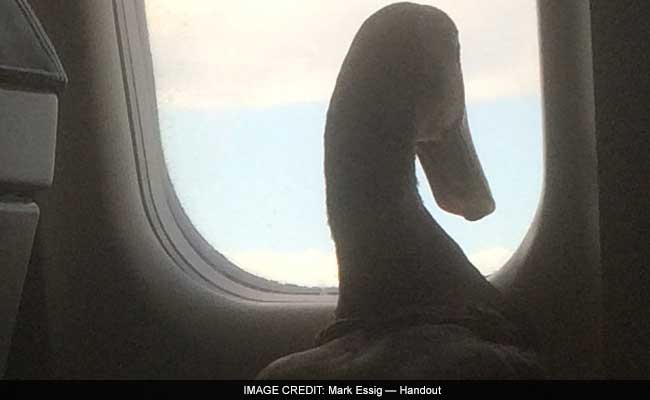
Daniel the emotional-support duck looking out the window during his flight.

“I was expecting that this might amuse a couple of my friends,” he said. What he didn’t anticipate was that the photos would go viral.

It turned out that a duck wearing shoes and a diaper on a plane was too much for the Internet to handle.

Essig posted two more photos and a video: one of Daniel in his full red-shoed, diapered glory, and another of the duck wagging his tail while his owner explains that it means that Daniel is happy. Both tweets were shared thousands of times.

The most popular one, however, was a picture of Daniel as the duck seemed to stare forlornly out the airplane window: “Daniel, the duck on my flight, likes to look at the clouds,” Essig stated simply. That photo had more than 5,000 retweets and more than 11,000 likes.

“A duck head is a very recognizable shape, and the shape of an airline window is a very recognizable shape, too,” Essig said. “So you’ve got two very recognizable shapes that don’t normally go together . . . it caught people’s eye.”

The encounter amused Essig but also piqued his curiosity about ducks as support animals — he happens to be the author of “Lesser Beasts,” a book about humans’ complicated relationship with pigs. After the flight, he looked up Daniel’s breed and discovered that Indian Runner ducks do not fly.

“My guess was that he was gazing out the window, looking at the clouds, and the sight triggered a deep ancestral memory of what it was like to fly himself,” Essig said, laughing. “I’m almost certain that’s [what] he was thinking.”

Within two days of Essig’s tweets, Daniel had become an Internet sensation, getting featured on BuzzFeed, ABC News and Cosmopolitan, among many other sites.

The attention surprised Daniel’s owner, Carla Fitzgerald of Wisconsin, “because to me, having an emotional support duck is normal – it’s my new normal.”

Fitzgerald adopted Daniel in 2012, when he was two days old, she told The Post in a phone interview Wednesday. Less than a year later, Fitzgerald, a former horse-and-carriage driver in Milwaukee, was involved in a serious accident.

“Someone who was paying more attention to the phone than the road hit me from behind, with enough force to bust up the carriage,” she said. Her horse was badly injured, and the crash sent Fitzgerald hurtling toward a metal-grated drawbridge. For months, she was immobile.

“It took them four months to teach me how to walk again,” Fitzgerald said. Along with the physical pain, she suffered post-traumatic stress disorder, something she describes as “hell.”

After the accident, Daniel knew things were different – and responded without ever having been trained.

“He would notice something wrong, whether it be my pain or my PTSD,” Fitzgerald said. “He would come and lay on me and [give me] lots of hugging and lots of kisses. And if he notices that I’m going to have a panic attack, he would give me a cue to lay down by trying to climb me.”

At home, Fitzgerald says Daniel communicates with her in other ways: If he needs a new diaper, he walks to his changing table. If he wants food, he walks to the refrigerator or to his feed bowl. Outside of bedtime, he always wears shoes and a diaper, she said, because he is so used to carpet and linoleum.

He apparently enjoys movies, but only “super G-rated” ones. (Daniel responded well to “The Peanuts Movie” but got upset during a chase scene in “The Good Dinosaur,” Fitzgerald said.)

“He doesn’t identify with other ducks because he’s imprinted on humans,” Fitzgerald said. “As far as he’s concerned, he thinks he’s people with feathers.”

Her living room is full of toddler toys that Daniel enjoys, particularly anything that has a button to push or makes a sound, such as keyboards and music boxes.

“And God forbid one of the batteries runs out,” Fitzgerald said. “He stomps his feet, he raises his hackles, he huffs and he gives you stink-eye. And if you don’t change those batteries right now, he gets snippy. He can also tell you when he needs a new diaper.”

Since the accident, Daniel has accompanied Fitzgerald everywhere, mostly car rides. Monday had been Daniel’s first time flying on a plane (or flying, period). She provided a note to the airline from her doctor, who has said it is in Fitzgerald’s best interest to have Daniel around for support, but otherwise had a smooth trip.
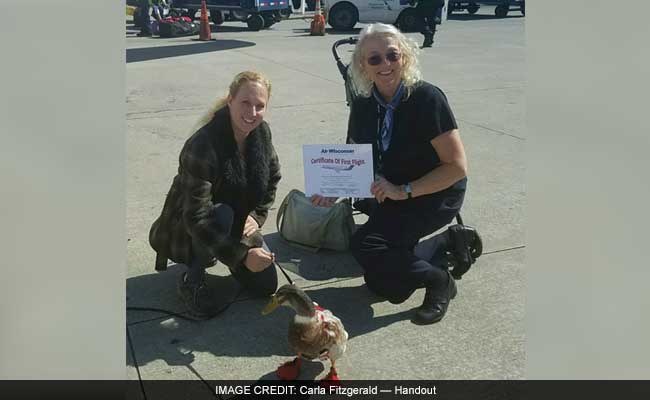
The crew on their first leg, before their connecting flight to Asheville, even insisted on posing for pictures with Daniel and presenting him with a “Certificate of First Flight.”
daniel-duck-wp_650x400_51477015109
The Transportation Department is debating new rules regarding accommodations for disabled people on airplanes, including reviewing rules for emotional-support animals, USA Today reported. The department began allowing emotional-support animals on planes, but the practice of bringing them on board has offended some passengers.”Here’s the thing. Who are we to say what is and what isn’t an emotional support animal or what can and cannot be a pet?” Fitzgerald said. “Or what they can do for people who have PTSD like I do? Having it is hell.”

For the time being, Fitzgerald does not have any other immediate travel plans but said that Daniel will no doubt accompany her on her next trip. She said she thinks that people responded positively to Daniel because he’s unique – but also because he keeps to himself.

“He is obedient and he wears a diaper harness, ” she said. ” I make sure before he goes in public that he has a shower, so there’s no smell to him. When he’s in public, he behaves. He’s not flapping and running around and chasing people.”

However, Fitzgerald might be a little more prepared next time since, as her friends put it, “Daniel broke the Internet” after his first plane ride.

“I didn’t know that a little Indian Runner duck who weighs six pounds could cause such an uproar,” she said.

Source…..www.ndtv.com
Natarajan

பெர்முடா முக்கோண மர்மம்… இதுதான் காரணமா?…


பெர்முடா முக்கோண மர்மம்… இதுதான் காரணமா?

  bermuda-triangle_15463


யற்கை மனிதகுலத்திற்குப் பல ஆச்சர்யங்களை தன்னுள் வைத்திருக்கிறது. ஆச்சர்யங்கள் அனைத்தையும் மனிதனால் ஒரே மூச்சில் கண்டுபிடிக்க முடியாவிட்டாலும், தொடர்ந்து பல ஆண்டுகள் ஆராய்ச்சியின் மூலம் அதைக் கண்டுபிடிக்கும் வண்ணம் தொழில்நுட்பம் வளர்ந்துவிட்டது. பூமியில் இன்னமும் தீர்க்கப்படாத சில சிக்கல்கள் இருக்கின்றன. அதில் முக்கியமானது ‘பெர்முடா முக்கோணம்’. அதை வைத்து எடுக்கப்பட்ட திரைப்படங்களும், புத்தகங்களும் கோடிக்கணக்கான வருவாயை அள்ளித் தந்துள்ளன. ஆனால், பெர்முடா முக்கோணத்தின் மர்மம் மட்டும் மர்மமாகவே இருந்தது.

பெர்முடா முக்கோணம் என்றால் என்ன ?

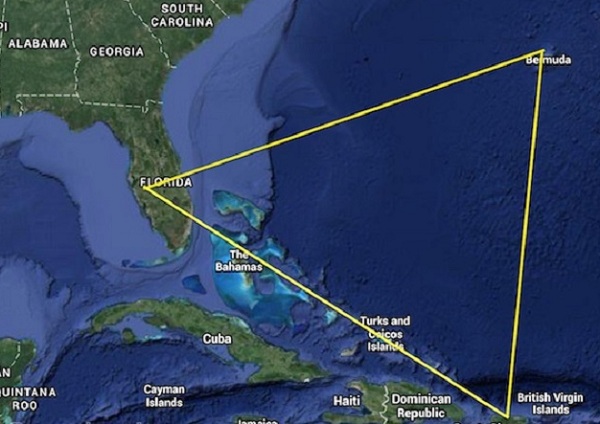
வடக்கு அமெரிக்காவுக்கு கிழக்கே, பனாமா கால்வாய்க்கு அருகில் அமைந்துள்ளது பெர்முடா தீவு. அதை ஒட்டி இருக்கும் மர்மமான பிரதேசத்துக்கு வைக்கப்பட்ட பெயர் தான் பெர்முடா முக்கோணம். இதை சாத்தானின் முக்கோணம் என்றும் மக்கள் அழைக்கிறார்கள். அதற்குக் காரணம், அந்தக் கடல் பகுதியில் செல்லும் விமானங்கள், கப்பல்கள் எல்லாம் மாயமாய் மறைந்து போவதுதான். பெர்முடா முக்கோணத்தின் அருகே செல்லும் போது திசை காட்டிகள் செயலிழக்கின்றன என்று முதன் முறையாகக் கண்டறிந்து கூறியவர் கொலம்பஸ். அந்தப் பகுதியில் வானத்தில் ஓர் எரிப்பந்தைக் கண்டதாகவும் அவர் கூறியிருக்கிறார். அதன்பின் 1872-ம் ஆண்டு ‘மேரி செலஸ்டி’என்கிற கப்பலும், 1918-ம் ஆண்டு ‘யு.எஸ்.எஸ் சைக்ளோப்ஸ்’ என்கிற கப்பலும் சில நூறு பயணிகளுடன் காணாமல் போனது.
1945-ம் ஆண்டு பிளைட் 19 வகையைச் சேர்ந்த 5 ராணுவ விமானங்கள் அந்தப் பகுதியில் பறக்கும்போது காணாமல் போயின. 1949-ல் ஜமைக்கா நாட்டுக்குச் சொந்தமான பயணிகள் விமானம் 39 பயணிகளுடன் மாயமானது. இப்படி நூற்றுக்கும் மேற்பட்ட சம்பவங்கள் அந்தப் பகுதியில் நிகழ்ந்ததாகப் பதிவாகி இருப்பதால், அது மர்மப் பிரதேசமாகவே திகழ்கிறது.

விமானியின் அனுபவம் 

இதுவரை அந்தப் பகுதியில் காணாமல் போன விமானங்களோ, கப்பல்களோ கண்டுபிடிக்கப்படவில்லை. ஆயிரத்துக்கும் மேற்பட்ட மனித உயிர்கள் பலியாகி இருக்கின்றன. அந்தப்பகுதியில் இருந்து தப்பி வந்த புரூஸ் ஹெனன் என்கிற விமானி சொன்ன அனுபவம் தான் பெர்முடா முக்கோணம் பற்றிய ஆராய்ச்சிக்கு விதையாக அமைந்தது. அவர் ஒருமுறை மியாமியிலிருந்து பனாமா கால்வாய் வழியாகத் திரும்பிக் கொண்டு இருந்தார். அப்போது தீடீரென்று அவரைச் சுற்றி கருமேகங்கள் சூழ்ந்தது, திசைகாட்டும் கருவி விடாமல் சுற்றிக் கொண்டே இருந்தது. அவரால் திசையைத் தீர்மானிக்க முடியவில்லை. இருப்பினும் தொடர்ந்து விமானத்தை இயக்கியவர், மேகக்கூட்டங்களுக்கு நடுவே ஒரு குகை போன்ற வழியைக் கண்டார். 16 கிலோமீட்டர் நீளமான அந்தக்குகை போன்ற மேகக்கூட்டத்தை 20 நொடிகளில் கடந்ததாக தனது புத்தகத்தில் குறிப்பிட்டு இருக்கிறார். அதுதான் ஆராய்ச்சியாளர்களை மேலும் சிந்திக்க வைத்தது.

காரணம் கண்டுபிடிப்பு

சமீபத்தில் பெர்முடா முக்கோணத்துக்குப் பின்னால் இருக்கும் மர்மத்தைக் கண்டுபிடித்து விட்டதாகச் சொல்லி இருக்கிறார்கள் ஆராய்ச்சியாளர்கள். ஒரு புதிய தியரியை வெளியிட்டு இருக்கிறார்கள். அதன்படி, அந்தப் பகுதியில் நீடிக்கும் அதிகப்படியான காற்றும், பருவநிலை மாற்றங்கள் ஏற்படுத்தும் அழுத்தமும், அறுங்கோண வடிவில் சுழலும் மேகங்கள் 170 மைல் வேகத்தில் ஏற்படுத்தும் காற்று அழுத்தமும்தான் அதற்குக் காரணம் என்று சொல்லி இருக்கிறார்கள். அந்தக் காற்றுப்படிமங்கள் கப்பல்களையும், விமானங்களையும் உள்ளிழுத்துக் கொள்ளும் சக்திவாய்ந்ததாக இருப்பதாகக் கண்டுபிடித்து இருக்கிறார்கள்.

இதுகுறித்து, வானியல் ஆராய்ச்சியாளர் ராண்டி சேர்வெனி குறிப்பிடும்போது, ‘செயற்கைக்கோள்கள் மூலம் எடுக்கப்பட்ட புகைப்படங்களில், இந்தக் காற்று வடிவங்கள் மிகவும் வினோதமான வடிவில் இருக்கின்றன. இவை ஏற்படுத்தும் வெடிப்புதான் அழுத்தத்துக்குக் காரணம் என்பது தெளிவாகத் தெரிகிறது’ என்றிருக்கிறார்

எப்படியோ இத்தனை ஆண்டு கால மர்மம் ஒருவழியாகத் தெளிவாகி இருக்கிறது.

Source…..மா.அ.மோகன் பிரபாகரன் in http://www.vikatan.com

Natarajan


மார்னிங் டூ ஈவினிங் : சர்வம் டிஜிட்டல்மயம்…!!!


முழுக்க டிஜிட்டல்மயமான இந்த கலர்ஃபுல் யுகத்தில் செல்போனும், இன்டர்நெட்டும் இல்லாமல் ஒரு நாளை ஓட்டுவதுதான் இப்போது ஒருவனுக்கு உச்சபட்சத் தண்டனையாக இருக்கும். இன்றைய ட்ரெண்டி சமூகத்தின் மக்களிடம் டெக்னாலஜியின் வெளிப்பாடு எப்படி இருக்கிறது……………..

என் போனுக்குக் காசு போடணும்’னு பத்து வருசத்துக்கு முன்னாடி யாராவது சொன்னால், நூறு ரூபாய்த் தாளை குறுக்குவாட்டில் மடிச்சு போனுக்குள்ள திணிக்கணும் போலன்னு நினைச்சுருப்போம். போன் லாக் ஓப்பன் ஆக மாட்டேங்குதுனு சொன்னதுக்காக, அதை அப்படியே வாங்கிக் கால் இடுக்கில் உட்கார வெச்சு சுத்தியலால் அடிச்சு பல துண்டாக்கிக் கொடுப்பாரே வடிவேலு. அந்த மாதிரி பேட்டரியைக் கழட்டுவதற்கு, ரெண்டு கையாலும் தூக்குச்சட்டி மூடியைக் கழட்ட முயற்சிப்பது போல போனை இழுத்துக்கொண்டு கிடப்பதும் ஒருகாலத்தில் நமக்கு நடந்திருக்கும். இப்போதெல்லாம் நிகழ்வு அப்படியே தலைகீழ். சின்னக் குழந்தைகளும் கேண்டி க்ரஷ் முதல் க்ளாஷ் ஆஃப் க்ளான்ஸ் வரை வருடக்கணக்காக விளையாடி விளையாடி டயர்டாகிப் போய்க் கிடக்கிறார்கள்.


* முன்னொரு காலத்தில் கம்ப்யூட்டரில், ‘ ஃபைல்ஸ் அனுப்பியாச்சா?’னு யாரிடமாவது கேட்கும்போது ‘பீரோவில் பத்திரமா வெச்சுருக்கேன். எடுத்துட்டு வரவா’னு கேட்டுக் கிச்சுக்கிச்சு மூட்டிய அப்பாவிச் சமூகத்துக்கும், இப்போ ‘வீட்டு விண்டோஸை க்ளோஸ் பண்ணிரும்மா’னு சொன்னாலே ‘அப்பவே சிஸ்டம் ஷட் டவுன் பண்ணிட்டேனே’ எனச் சொல்லும் டெக்னிக்கல் சமூகத்திற்கும் இடையே இருக்கும் ஈஃபிள் டவர் உயர வித்தியாசமே இந்தக் காலம் டிஜிட்டல் யுகமாகிப் போனதற்கான சான்று. கையகலக் கைபேசிக்குள் உலகமே ஒளிந்திருக்கும் விந்தைகள் தெளிவான பின்பு ‘இத்துனூண்டு போனுக்குள்ளேயா இம்புட்டு இருக்கு?’ எனச் சொல்லியபடியே பல் போன கிழவிகளும் காதில் செல்வைத்துப் பேசிக்கொண்டிருக்கிறார்கள்.

* தனியாக இருப்பதாக நினைப்பதே இப்போதெல்லாம் கையில் மொபைல் இல்லாத தருணங்களிலும், மொபைல் இருந்தும் சார்ஜ் இல்லாத கையறுநிலைகளிலும்தான். யார் எவ்வளவு தொலைவில் இருந்தால் என்ன? கண்காணாத இடத்துக்குக் கண்ணைக்கட்டி கொரியரில் அனுப்பப்பட்டாலும் ‘யாமிருக்க பயமேன்’ எனத் துணை நிற்கின்றன தொலைத்தொடர்பு சாதனங்கள். நவீன கருவிகள் மனிதனைச் சோம்பேறியாக்குகின்றன என ஆங்காங்கே ஆய்வறிக்கைகளில் சொல்லப்பட்டாலும், பள்ளிக்கூடம் போகும் சிறுவர்கள் மெசேஜ் டைப் செய்யும் வேகத்தைப் பார்த்தாலே அந்தக் கருத்து நம் மனதில் ஒரு நிமிடத்தில் உடைபட்டுப் போகும். முடியும்ம்மா…?

பிள்ளையாருக்கு எலி வாகனமானது போல இப்போது நம்மில் பலருக்குப் பேருதவி புரிந்துகொண்டிருப்பது மவுஸோ, ஸ்மார்ட்போனோதான். தூங்கி விழிக்கும்போதே மொபைல் போன், நோட்டிஃபிகேஷன் சத்தத்தோடு வெளிச்ச நட்சத்திரங்களைத் தூவி வரவேற்கின்றன. பல்லைக்கூட விலக்காமல் பெட் காபி சாப்பிடுவது போல் பெட்ஷீட்டுக்குள் புகுந்தபடி, வந்திருக்கும் வாட்ஸ்-அப், ஹைக் மெசேஜ்களுக்கு ரிப்ளைகளைத் தெறிக்கவிடுகிறோம். முதல்நாள் நள்ளிரவில் போட்ட செல்ஃபிக்கு வந்திருக்கும் போட்டோ கமென்ட்ஸ்களுக்கு பதில் கமென்ட்கள் இட்டு மனசைத் தேற்றிக்கொள்கிறோம். பத்து ‘ப்ப்பா..’ கமென்ட்களுக்கு மத்தியில் ஒற்றை ‘ஆசம்’ கமென்ட் தரும் பேரின்பம் ஃபேஸ்புக் வாழ் மக்களுக்கு மட்டுமே புரியும்.

* நல்ல விஷயங்களைப் பகிர வேண்டும்னு நமக்குப் பள்ளிக்கூடத்தில் சொல்லிக்கொடுத்த விஷயத்தை ‘இங்கு நல்ல மீன்கள் விற்கப்படும்’ங்கிற பார்த்திபன்-வடிவேலு காமெடிக் கதையாகிக் கடைசியில் ‘பகிரப்படும்’ எனும் வார்த்தையை மட்டும் கப்பெனப் பிடித்துக்கொண்டு நல்ல சேதி, கெட்ட சேதி, நாலு வருசத்துக்கு முன்னாடியே குழிதோண்டிப் புதைச்ச சேதினு எல்லாத்தையும் தோண்டியெடுத்துப் பகிரோ ‘பகீர்’னு ஷேர் பண்ணிக்கிட்டு இருக்கோம். வாய்க்கு வந்த எதையாவது சொல்லிட்டு விவேகானந்தரையும், ஐன்ஸ்டீனையும் இழுத்துத் தெருவில் விட்டுக்கிட்டு இருக்கோம்.

* போஸ்ட் பிடிக்கலைனா கம்முனு அடுத்த பேஜை ஸ்க்ரோல் பண்ணிப் பார்த்துப் போய்க்கிட்டே இருப்போம்ல, வாழ்க்கையிலும் அதே மாதிரி நல்லது, கெட்டதுனு தினந்தினம் ஆயிரமாயிரம் சம்பவங்கள் நடக்கும். நமக்குப் பிடிச்ச விஷயங்களை மட்டும் சிம்பிளா லைக் பண்ணிட்டு, சில நேரங்களில் ஹார்ட்டின் சிம்பள் போட்டு அபரிமிதமான விருப்பத்தைத் தெரிவிச்சுக்கிட்டு மகிழ்ச்சியாக வாழப் பழகிக்கணும். விரும்பத்தகாத நிகழ்வுகளை நிறுத்தி நிதானமாகப் பார்த்து உணர்ச்சிவசப்படுறதுக்குப் பதிலா அப்படியே அப்பீட்டாகி அடுத்த நல்ல நிகழ்வுக்கு ‘கிருட்டுக் கிருட்டு’னு ஜம்ப் பண்ணி ட்ராவல் ஆகிட்டே இருக்கணும்னு சுவாமி மார்க்கானந்தா தஞ்சாவூர் பக்கத்துல இருக்கிற தன்னோட டைம்லைன்ல எழுதி வெச்சுருக்கிறதா ஒரு ஷேரிங் ஸ்டேட்டஸ் சொல்லுது.

* ஒரு டேப்லட் அளவு மூஞ்சியில் ஒன்பது ஃபில்டர் அப்ளிகேஷன்களைப் போட்டுப் படுத்தியெடுத்து ப்ரொஃபைல் பிக்சரை மாத்திட்டு அதை லைக் பண்ணச் சொல்லி ஃப்ரெண்ட் லிஸ்ட்டில் இருக்கும் மூவாயிரம் பேருக்கும் ப்ரைவேட் சாட்டில் லிங்க் அனுப்பி ‘ஆதரவு தாரீர்!’ எனக் காலில் விழுந்து போட்டோக்கள் போட்டாலும் தானாகக் கிடைக்கிற முப்பது லைக்தான் நம்ம டைம்லைன்ல ஒட்டும். நாம் செய்யும் சில பல நல்ல விஷயங்களுக்கு ( நல்ல விஷயமா அப்படின்னா…?) ப்ரோமோஷன் கொடுத்து அடுத்தவர்களையும் அதைச் செய்யுமாறு ஊக்குவிக்கணும். அதுக்குக் கிடைக்கிற வெகுமதியை எப்படி இருந்தாலும் மனதார ஏத்துக்கணும். பில்டப் பண்றமோ, பீலா விட்றமோ… அது முக்கியமில்லை. நாம என்ன பண்ணினாலும் இந்த உலகம் நம்மை உத்துப் பார்க்கணும். அவ்ளோதான்.

சங்ககாலத்துல புறா விடு தூது, நாரை விடு தூதுன்னு பறக்கிற ஒரே காரணத்துக்காக பறவைகளோட காலில் லெட்டரைச் செருகி நாடுவிட்டு நாடு இதயங்களை அனுப்பி வாயில்லா ஜீவன்களை வதக்கி, வெயிலில் பறக்கச் சொல்லிப் பாடாய்ப்படுத்தியதெல்லாம் பழைய கதை. போகிறபோக்கில் பொண்ணைப் பார்த்தோமா பெயரைக் கேட்டோமா?, ஃபேஸ்புக் ஐடியைத் தேடினோமா? ஃப்ரெண்ட் ரெக்வெஸ்ட் கொடுத்தோமா? ப்ரோபோஸ் பண்ணினோமா?னு பலகட்டப் பரிமாற்றங்களையும் ஓவர் நைட்டிலேயே முடிச்சு அடுத்த நாள் பிக்கப் ஆகி, அதற்கடுத்த நாள் ப்ரேக்-அப் ஆனாலும் அசால்ட்டா அன்ஃப்ரெண்ட் பண்ணிட்டு அடுத்த வேலையைப் பார்க்கக் கிளம்பிடுவான் டிஜிட்டல் உலகத்து இளைஞன்.

* 4ஜி போன் இருக்கு. வீடியோ காலிங் ஆப்ஷனும் இருக்கு. பிறகென்ன, எல்லோருக்கும் கான்ஃபரன்ஸ் கால்ல மீட்டிங்கைப் போட்டுப் பத்துமணிக்கு மேல் சியர்ஸ் சொல்லிப் பார்ட்டியை ஆரம்பிக்க வேண்டியதுதான். தூரத்து நண்பனின் அருகில் இருக்கும் கடலை பர்பியையும், மிக்சர் பாக்கெட்டிலும்தான் நினைத்தவுடன் கைவைத்து அள்ள முடியாது. மற்றபடி, ஸ்கைப்பிருக்க ஜாலிக்கும் அரட்டைக்கும் கொஞ்சமும் பஞ்சமில்லை. வெட்டியாய்க் கிடக்கும் வாட்ஸ்-அப் குரூப்பில் அவ்வப்போது பழங்கதை பேசி சாவடிக்குபோது, மகான் சசிகுமார் ‘மூடிக்கிட்டுப் படுங்கடா நொன்னைகளா…’ எனச் சொன்னதைப்போல… ‘குரூப்பைக் கலைச்சுத் தொலைங்கடா…’ எனக் கதறும் தூரம் தொலைவில் இல்லை.

ஆகவே மக்களே… எல்லாவற்றையும் டிஜிட்டல் யுகத்திற்கேற்றார்போல் மாற்றிக்கொண்டு ஆண்ட்ராய்டு, விண்டோஸ் ஜெட்களில் பறந்துகொண்டிருக்கும் நாம் எதிரில் வருபவர்களை எனிமிகளாய்ப் பார்த்து எரிக்கும் சிவப்பு மூஞ்சி எமோட்டிகான் போட்டுத்தான் கடந்து செல்வோம் என அடாவடித் திட்டங்களாகவே வைத்திருந்தால் எப்படி? சின்னதாய் ஒரு ஸ்மைலி போடலாமே ஃப்ரெண்ட்ஸ்!

– விக்கி….www.vikatan.com

Natarajan

வாரம் ஒரு கவிதை … “மனம் என்னும் மாயப் பேய் !!!”


மனம் என்னும் மாயப் பேய் !!!
……………………
மனம் ஒரு குரங்குதான் …இல்லை என்று சொல்லவில்லை  நான் !
இங்கும்  அங்கும் அலையும் மனக் குரங்கை அடக்கி வைக்கும் ஒரு
குரங்காட்டியாக  நீ இருக்கலாம்… தவறில்லை !
மனக் குரங்கு தறி கெட்டு நெறி தவறி அடங்கா குரங்காட்டம்
போடும் நேரம் உன் மனமே ஒரு பேயாக மாறும் ,உன்னை தன்
மாய வலையில்  சிக்கவைத்து ..! உன்னையும்  மாற்றும்
அந்த மாயப் பேய்  தன் கூட்டத்தின்  ஒரு அங்கமாக !
சிக்கவும்   வேண்டாம் அந்த  மாய வலையில் …மாயாவியாக
நீ மாறவும் வேண்டாம் !…  ஒரு நல்ல குரங்காட்டியாக மட்டும்
நீ இருந்தால்!   உன் மனக் குரங்கும்  ஒரு குரங்காக மட்டுமே
அலையும்  என்றைக்கும்…  நீ போடும் “கோட்டை”  தாண்டாமல் !
நல்லன ஏற்று  அல்லன ஒதுக்கி உன் மன சிற்பம்  நீ செதுக்கினால்
அல்லல் என்றும் இல்லை உனக்கு  தம்பி !  உன்
மனம் என்றும் நல்ல மனமாக மணக்கும் …உன் வாழ்வும் இனிக்கும் !
இந்த ஊரும்  நாடும் உன்னைப்  போற்றி  வணங்கும் !
Natarajan
http://www.dinamani.com  on 17th oct 2016

ELEPHANTS REALLY DO HAVE EXCEPTIONALLY GOOD MEMORIES…!


It is obviously impossible to say that elephants never forget anything- and it seems likely they do forget things- but studies have shown that elephants do have exceptionally long memories for certain types of things.

For instance, in 1999, an elephant named Jenny was living at The Elephant Sanctuary in Hohenwald, Tennessee. When she saw an Asian elephant named Shirley, who was new to the sanctuary, she became excited and anxious. After they were given a bit of time together, Shirley also became animated. Founder Carol Buckley described “an emotional reunion” between “two seemingly old friends.” The two elephants began trumpeting, and Buckley said she had never witnessed something that intense unless it was aggression.

Turns out, the two elephants really were old friends. They had both performed together for a few months in Carson & Barnes Circus. The clincher? They had last seen each other twenty-three years before their reunion at the sanctuary.

This excellent recall power, whether it be remembering a face or events that happen in the wild, is thought to be a huge part of how elephants survive outside of captivity. Elephants typically live up to eighty years in the wild and form family structures headed by a matriarch. The matriarch is typically one of the oldest female elephants in the group and is thought to have the best memory—though she also could simply be the most experienced.

How does this help in survival? One study by researchers from the University of Sussex showed that when presented with a stranger, elephants with a 55-year-old matriarch were more likely to huddle in a defensive position than elephants with a 35-year-old matriarch. The older elephants were more likely to have had an experience with a stranger who had started a conflict with a herd before and remembered what needed to be done to warn the stranger off or defend themselves.

In 1993, researchers studied three herds of elephants in Tanzania’s Tarangire National Park during a particularly severe drought. Two herds left the park when the resources dried up—each of those groups had matriarchs aged between 38 and 45. The herd that stayed in the park had a matriarch aged 33. Of the sixteen calves who died during the drought, ten were in the third, younger group alone. It was discovered that there had been another severe drought in the area in 1958-1961, meaning the two older matriarchs would have been at least five years old at the time and likely remembered the event and where to go when the usual food and water sources dried up, while the younger matriarch wasn’t old enough to remember and didn’t know where else to go.

Scientists haven’t been able to measure exactly how smart an elephant is, but they have been able to measure an elephant’s EQ, or encephalization quotient. This measures the size of an animal’s brain against the size scientists project it would be based on body weight. Elephants have one of the biggest brains, coming in at an average of 10.5 pounds, dwarfing a human’s 3-pound brain. However, humans typically have an EQ around 7, while elephants have an EQ of around 1.88. To compare, chimpanzees usually score around 2.5, and pigs have the low score of .27.  Using this method, elephants rank among the smartest creatures in the animal kingdom.

Elephants are also among an exclusive circle of animals that recognizes their reflections in a mirror. Further, the olfactory region of their brains—the one that recognizes smells—is particularly active (those big noses must be good for something, right?). Using their sense of smell alone, elephants have been tested to recognize as many as thirty female relatives based on the scent of their urine, regardless of the amount of time it’s been since they last saw, or in this cases, smelled them- which is saying something for creatures that live so long. Similarly, elephants show signs of grief when they encounter the corpse or bones of a deceased relative. In one study, scientists presented an array of objects to a family of elephants; they reacted most when presented with the bones and tusks of a deceased relative.

The smell and face of family members and the locations of feeding grounds are the most prominent things that an elephant seems to remember, among other survival skills. And, it is clear their memories can stretch over decades, aiding in their ability to survive for their relatively long lifespans. So to say an elephant “never forgets” is an exaggeration, but they do seem to have exceptional memories for certain things nonetheless.

Bonus Elephant Facts:

  • Elephants eat a huge amount of food each day—between 160 and 350 pounds! As they are herbivores, that’s an awful lot of plant material. Think about eating 160 pounds of salad in a day.
  • For day-to-day communication, elephants use over 70 vocalizations and 160 signals—kind of like elephant sign language. Very social creatures, elephants can often be seen touching each other with their trunks, which is considered a sign of affection.
  • If a calf is orphaned, it will usually be adopted by another member of the herd. Elephants show concern for other members of their family and will take care of the weak and injured. They also appear to grieve over dead family members.
  • One way elephants can locating another elephant is through their feet, using Pacinian corpuscles- nerves that sense seismic vibrations in the ground.
  • Herds of elephants are made up of a matriarch, her daughters, and her granddaughters. Male elephants leave the herd when they reach sexual maturity around the age of 14, called “being in musth.” Males will either join other groups of bachelor elephants or travel by themselves, meeting up with females only to mate.
  • When presented with harsh weather like a drought, herds will often band together to share resources rather than develop an “every elephant for herself” mentality.
  • Elephants are a “threatened” species, largely due to humans hunting them for their tusks. Though the practice is now illegal, it hasn’t yet been eliminated. Human poaching is a huge reason for young matriarchs in herds—older matriarchs tend to have some of the biggest tusks, making them the most appealing targets. A younger matriarch then has to step up to the position, but her youth and inexperience can often be detrimental to the herd.

Source……www.today i found out .com

Natarajan

A train journey and two names to remember….


Of two co-travellers who surprised the writer with their graciousness, 24 years ago

It was the summer of 1990. As Indian Railway (Traffic) Service probationers, my friend and I travelled by train from Lucknow to Delhi. Two MPs were also travelling in the same bogie. That was fine, but the behaviour of some 12 people who were travelling with them without reservation was terrifying. They forced us to vacate our reserved berths and sit on the luggage, and passed obscene and abusive comments. We cowered in fright and squirmed with rage. It was a harrowing night in the company of an unruly battalion; we were on edge, on the thin line between honour and dishonour. All other passengers seemed to have vanished, along with the Travelling Ticket Examiner.

We reached Delhi the next morning without being physically harmed by the goons, though we were emotionally wrecked. My friend was so traumatised she decided to skip the next phase of training in Ahmedabad and stayed back in Delhi. I decided to carry on since another batchmate was joining me. (She is Utpalparna Hazarika, now Executive Director, Railway Board.) We boarded an overnight train to Gujarat’s capital, this time without reservations as there wasn’t enough time to arrange for them. We had been wait-listed.

We met the TTE of the first class bogie, and told him how we had to get to Ahmedabad. The train was heavily booked, but he politely led us to a coupe to sit as he tried to help us. I looked at the two potential co-travellers, two politicians, as could be discerned from their white khadi attire, and panicked. “They’re decent people, regular travellers on this route, nothing to worry,” the TTE assured us. One of them was in his mid-forties with a normal, affectionate face, and the other in his late-thirties with a warm but somewhat impervious expression. They readily made space for us by almost squeezing themselves to one corner.

They introduced themselves: two BJP leaders from Gujarat. The names were told but quickly forgotten as names of co-passengers were inconsequential at that moment. We also introduced ourselves, two Railway service probationers from Assam. The conversation turned to different topics, particularly in the areas of History and the Polity. My friend, a post-graduate in History from Delhi University and very intelligent, took part. I too chipped in. The discussion veered around to the formation of the Hindu Mahasabha and the Muslim League.

The senior one was an enthusiastic participant. The younger one mostly remained quiet, but his body language conveyed his total mental involvement in what was being discussed, though he hardly contributed. Then I mentioned Syama Prasad Mookerjee’s death, why it was still considered a mystery by many. He suddenly asked: “How do you know about Syama Prasad Mookerjee?” I had to tell him that when my father was a post-graduate student in Calcutta University, as its Vice-Chancellor he had arranged a scholarship for the young man from Assam. My father often reminisced about that and regretted his untimely death [in June 1953 at the age of 51].

The younger man then almost looked away and spoke in a hushed tone almost to himself: “It’s good they know so many things …”

Suddenly the senior man proposed: “Why don’t you join our party in Gujarat?” We both laughed it off, saying we were not from Gujarat. The younger man then forcefully interjected: “So what? We don’t have any problem on that. We welcome talent in our State.” I could see a sudden spark in his calm demeanour.

The food arrived, four vegetarian thalis. We ate in silence. When the pantry-car manager came to take the payment, the younger man paid for all of us. I muttered a feeble ‘thank you’, but he almost dismissed that as something utterly trivial. I observed at that moment that he had a different kind of glow in his eyes, which one could hardly miss. He rarely spoke, mostly listened.

The TTE then came and informed us the train was packed and he couldn’t arrange berths for us. Both men immediately stood up and said: “It’s okay, we’ll manage.” They swiftly spread a cloth on the floor and went to sleep, while we occupied the berths.

What a contrast! The previous night we had felt very insecure travelling with a bunch of politicians, and here we were travelling with two politicians in a coupe, with no fear.

The next morning, when the train neared Ahmedabad, both of them asked us about our lodging arrangements in the city. The senior one told us that in case of any problem, the doors of his house were open for us. There was some kind of genuine concern in the voice or the facial contours of the otherwise apparently inscrutable younger one, and he told us: “I’m like a nomad, I don’t have a proper home to invite you but you can accept his offer of safe shelter in this new place.”

We thanked them for that invitation and assured them that accommodation was not going to be a problem for us.

Before the train came to a stop, I pulled out my diary and asked them for their names again. I didn’t want to forget the names of two large-hearted fellow passengers who almost forced me to revise my opinion about politicians in general. I scribbled down the names quickly as the train was about to stop:Shankersinh Vaghela and Narendra Modi.

I wrote on this episode in an Assamese newspaper in 1995. It was a tribute to two unknown politicians from Gujarat for giving up their comfort ungrudgingly for the sake of two bens from Assam. When I wrote that, I didn’t have the faintest idea that these two people were going to become so prominent, or that I would hear more about them later. When Mr. Vaghela became Chief Minister of Gujarat in 1996, I was glad. When Mr. Modi took office as Chief Minister in 2001, I felt elated. (A few months later, another Assamese daily reproduced my 1995 piece.) And now, he is the Prime Minister of India.

Every time I see him on TV, I remember that warm meal, that gentle courtesy, caring and sense of security that we got that night far from home in a train, and bow my head.

(The author is General Manager of the Centre for Railway Information System, Indian Railways, New Delhi. leenasarma@rediffmail.com)