“Harrison Ford is Not Only a Reel Hero… But A Real Hero …” !!!

Harrison Ford showed he takes flying as seriously as acting when he crashed

Officials examine Harrison Ford's vintage airplane on the Penmar Golf Course in Los Angeles, where he crash-landed it on Thursday.

DAMIAN DOVARGANES / THE ASSOCIATED PRESS

Officials examine Harrison Ford’s vintage airplane on the Penmar Golf Course in Los Angeles, where he crash-landed it on Thursday.

Harrison Ford is a hero.

Harrison Fords Jules Verne Award (cropped).JPG

If you said this to his face, of course, he’d scowl. He’d tap his Breitling Aerospace watch and give you 30 seconds to explain. Then you’d back up two steps and nervously recallhis brush with death on Thursday.

“Well, Mr. Ford, when the engine in your Ryan Aeronautical ST3KR conked out after takeoff from Santa Monica Airport, you made an emergency landing on a golf course. You steered away from houses and roadways. You were as cool as Han Solo, as focused as Indiana Jones. Strapped inside that vintage two-seater, you glided to safety without killing yourself or anyone on the ground. Just imagine if . . . ”

“. . . What’s your point?” Ford would cut you off, sounding a bit like his villainous character Dr. Norman Spencer in What Lies Beneath. “I’m no hero. I just take flying very seriously.”

The post-shock reaction to the crash, in which Ford was injured but is expected to fully recover, was predictable. There were stories suggesting the 72-year-old is a real lifedaredevil. There were headlines that wondered if the actor had “the experience to pilot the vintage WWII plane that crashed.”

This is what we do when a celebrity crashes. We theorize, speculate, inculpate, deconstruct and ask pointed questions. The exercise gets foggy and more feverish when those accidents are fatal. In 1997, John Denver was killed after crashing his experimental Rutan Long-EZ plane in Monterey Bay. Two years later, John F. Kennedy Jr., his wife Carolyn Bessette and her sister Lauren died when the Piper Saratoga he was piloting went down in the Atlantic.

We know travelling on a commercial airliner is now safer than at any time since the dawn of powered flight. An MIT study in 2013 concluded a person could fly every day for 123,000 years before getting into a fatal crash. But fear is not rational. And statistics are of cold comfort when we see footage of mishaps, as on Thursday morning when Delta Flight 1086 skidded off an icy runway at LaGuardia Airport.

Meanwhile, Sunday marks a grim anniversary: it has been one year since Malaysia Airlines Flight 370 vanished without a trace.

Accidents happen. Conditions in the sky and on the ground can be unpredictable. Pilots are not immune to error. There can be deadly mechanical failures, especially in aircraft not equipped with the automated systems and safety redundancies and sophisticated navigation computers found in commercial fleets.

Five years ago, a pilot died after his Cessna crashed eerily close to where Ford touched down near the eighth hole at Penmar Golf Course. Santa Monica Airport, where celebrities such as Tom Cruise and Arnold Schwarzenegger keep their planes, has been the point of departure or arrival for at least a dozen crashes since 1989.

So why is Ford a hero? Because during a terrifying few seconds, when everything could have gone terribly wrong, he calmly did everything right. He was flying a plane that was built in the same year he was born.

But as it turns out, Ford is a great pilot for the same reason he’s a great actor: he takes it seriously.

He immerses himself in the process. He masters the small details. He is respectful of the machines he controls and the physical laws he cannot. As he observed in a non-daredevil way in 1998: “Flying attracted me as a chance to develop a skill, build a body of knowledge, not as a way to seek danger. I try to observe a distinction between exciting and scary.”

That distinction has revealed itself in previous close calls.

In 1999, a number of experts were stunned when Ford walked away unscathed after crash-landing his helicopter during a training exercise in California. The next year, he made an emergency landing at Lincoln Municipal Airport in Nebraska due to wind shear. One official who witnessed Ford’s deft handling of the twin-engine Beechcraft Bonanza said: “He’s either very experienced or darn lucky.”

But this isn’t a binary equation. Ford is now both. And that he’s used his love of flying to help others — including rescuing a hiker in Idaho in 2000 and, the following year,finding a missing a Boy Scout in Yellowstone National Park — is proof Hollywood is not just a toxic sinkhole of ego and greed and narcissism.

Hidden behind the fame, lurking behind some of the most memorable characters of our time, stand real heroes.

vmenon@thestar.ca 

SOURCE::::: vinay menon , columnist in http://www.the star.com and http://www.you tube.com

Natarajan

Look Where This Aircraft Stopped … !!!

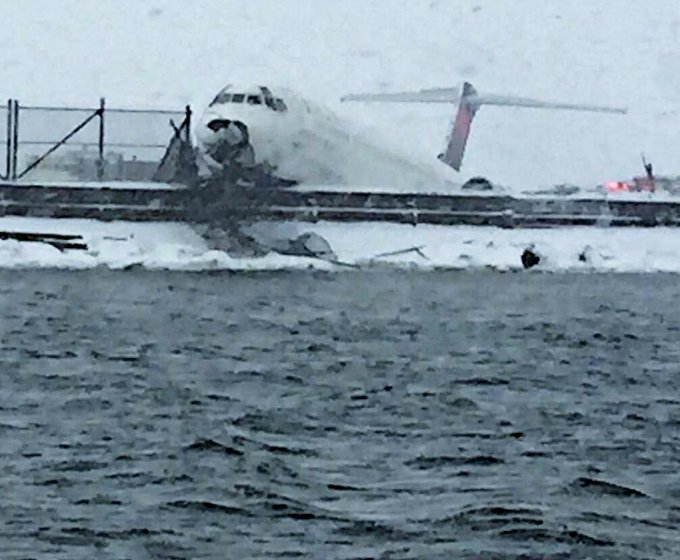
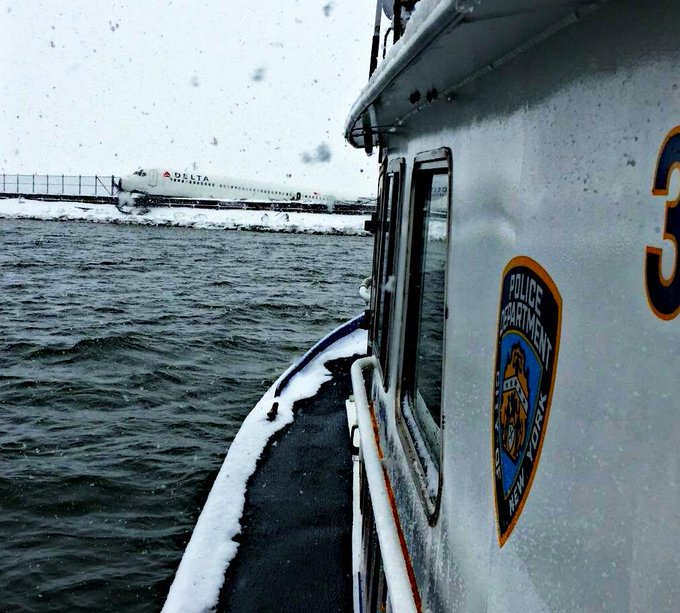
A PLANE has skidded off a snowy runway at New York’s LaGuardia Airport​, crashing through a seawall fence​ before stopping just metres from the water’s edge.

None of the 125 passengers and five crew members on board was seriously hurt, but six people suffered minor injuries, sources told The New York Post.

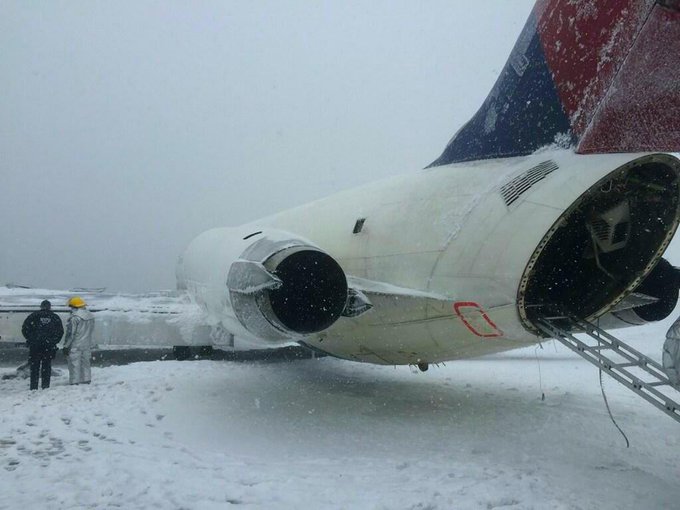
Fuel was leaking from the MD-88 jet and emergency responders were spraying foam to prevent a potential fire after the wing was shorn off.

Sources said Delta Flight 1086 from Atlanta was landing during a snowstorm when it slid off the side of Runway 13 and crashed into a Flushing Bay seawall around 11am Thursday (3am Friday AEDT.

Supplied Editorial DELTA SKID LGA

View image on Twitter

Frightening … a Delta passenger plane has skidded on the runway at LaGuardia Airport. Picture: Instagram/veeestchicSource: Supplied 

Delta Airlines said in a statement: “Customers deplaned via aircraft slides and have moved to the terminal on buses. Our priority is ensuring our customers and crew members are safe.

“Delta will work with all authorities and stakeholders to look into what happened in this incident.”

Passenger Sam Stern, 64, of Sarasota, Florida, was seated with his wife in an emergency-exit row and had to yank out the window so everyone could escape.

“We came in for landing, the plane hit the ground. As it started to apply the brakes, it started skidding. It didn’t spin around or anything,” he said. “It ended up hitting the embankment. The wing broke off.”

“I’m fine, I hurt my back. Everybody was shaken up, but everyone remained calm and was very caring about everybody else,” he added.

View image on Twitter View image on Twitter

A first responder on the ground was also heard asking if the controller was in touch with the Flight 1086 pilot.

“I’m calling up … no response,” the controller said.

“OK, sir, he is leaking fuel on the left side of his aircraft … heavily. His wing is ruptured,” the responder said.

The incident marked Delta’s first mishap since December 5, 2013, when a 767 returned to land at Madrid-Barajas Airport in Spain after a tire failure at takeoff, according to the Aviation Safety Network.

This story originally appeared in The New York Post.

SOURCE:::: http://www.news.com.au

Natarajan

Image of the Day… ” Photo of Meteor Shower Captured thro Airplane Window ” !!!

Another good reason to grab that window seat! Colin Legg captured this great photo of a meteor shower, seen from an airplane window.

View larger. | Alpha Centaurid Meteor Shower @ 40,000 ft by Colin Legg Photography

View larger. | Alpha Centaurid Meteor Shower @ 40,000 ft by Colin Legg Photography

Leave it to Colin Legg – one of the most amazing sky photographers we know – to catch a meteor shower from the window seat of an airplane. Colin wrote to EarthSky:

Valentines day (night), red eye flight back to Perth.

I had another go at night shots out the plane window … this time under very dark no moon conditions. Most of the flight was bumpy due to cold fronts, but things calmed down once we crossed the Western Australia coastline. I fired off a 20-minute burst of 1-second exposures, shielding the camera from cabin lights under a black hood.

Amazingly, the Alpha Centaurid meteor shower was also active!

Apologies for the excessive noise. Due to plane motion and minor turbulence, I couldn’t expose for much longer than 1 second and keep the stars sharp. Notwithstanding, it is quite amazing that modern day cameras can capture so much detail in 1 second on a no moon night.

Western Australia, ~40,000 ft, 10:50 -> 11:10 pm WST, Feb 14 2015

Bottom line: On Valentines Day night, 2015, Colin Legg caught the Alpha Centaurid meteor shower from the window seat of an airplane.

SOURCE:::: http://www.earthskynews.org

Natarajan

” Passengers Found Themselves in a Close Call after their Flight Flew into a Hailstorm “…

Damaged: A shock flight for passengers on Brazilian TAM Airlines Flight JJ 3307.

Damaged: A shock flight for passengers on Brazilian TAM Airlines Flight JJ 3307. Source: Supplied 

PASSENGERS on a Brazilian Airlines flight found themselves in a close call earlier this month after one of its jets unknowingly flew into a destructive hailstorm.

Brazilian TAM Airlines Flight JJ 3307 took off in Rio de Janeiro en route to the Brazilian city of Natal on February 9 and climbed to approximately 18,000 feet when the flight entered what has been described as a “cloud of hail”.

Local media Odia suggest lightning damaged the flight’s weather radar, steering the flight into dangerous territory and leaving its pilots powerless to know what lay ahead.

Reports indicate that as the plane was turning back, a hail strike hit, cracking the plane’s three-layered windscreen and crushing its nose. Pictures reveal the sheer power of the thunderstorm.

Despite the drama, the flight was able to make it to land safely within forty minutes.

No injuries were reported.

“In the path (the air) passed through a turbulent area and hail damage was not detected by radar,” TAM said in a statement.

“The landing was carried out at the Galeão International Airport, with complete safety for the passengers and crew.”

SOURCE::::: http://www.news.com.au

Natarajan

” Your Plane Could Be Operated by Remote Control , if the Latest Trial in Sweden Takes off …” !!!

The technology means air traffic controllers can work from anywhere. Picture: Saab

The technology means air traffic controllers can work from anywhere. Picture: Saab Source: YouTube

YOUR plane could soon be operated by remote control if the latest trial in Sweden takes off.

Örnsköldsvik airport in the northeast of Sweden has ditched its control tower and is now landing planes via remote control from an airport sitting 100km away. And there are plans for a similar system to come to Australia.

Air traffic controllers for Örnsköldsvik now sit in a computer simulated room at the larger Sundsvall airport surrounded by giant television screens beaming footage to them of Örnsköldsvik’s incoming planes.

Air traffic controllers sit in a room hundreds of kilometres away where they are beamed f

Air traffic controllers sit in a room hundreds of kilometres away where they are beamed footage of incoming planes. Picture: Saab. Source: YouTube

The only airport in the world to be managed by remote control, it is called the Remote Tower System (RTS) and is being trialled in Sweden as a way of improving accuracy and cutting costs.

It works by streaming high definition images of incoming planes at Örnsköldsvik to a Remote Tower Control room based in Sundsvall. Using high tech cameras, sensors and microphones — the RTS collects data about the plane to provide a simulated digital visual to the controllers as well as surround sound audio of the incoming plane.

The technology has been designed by Saab, the Swedish defence and security company, who says it provides “enhanced situational awareness” for air traffic controllers.

New features include object tracking and alerting, night vision, image enhancement, onscreen display of plane statistics, runway incursion warnings and options for zooming and switching to infra-red view in thick fog and darkness.

The system will use real time object tracking. Picture: Saab.

The system will use real time object tracking. Picture: Saab. Source: YouTube

Mikael Henriksson, the project manager of the RTS in Sundsvall, told NPR it’s a “paradigm shift” for the industry. “For the air traffic controller, this is like airline pilots going from propeller to jet,” he said.

NPR spoke to Erik Backman who runs the RTS in Sundsvall, who says he was dubious when he first saw the mock-up technology in 2004. However a decade later he says they’ve been landing planes remotely for months without any major problems.

The use of remote control towers has been explored by the aviation industry as a way of cutting costs at airports too quiet to warrant full time air traffic controllers.

Later this year a US airport, Leesburg Executive Airport in Virginia, will be installing the RTC, making it the first remote-controlled operated airport in the country.

This airport is operated by remote control... really?

Saab believes regional airports can be operated by remote towers. Picture: Saab. Source: YouTube

Australia is also considering installing the technology with plans to control planes at Adelaide airport by air traffic controllers sitting in Melbourne, 700km away.

Rob Walker, spokesman for Airservices Australia, told the Adelaide Advertiser that the increase in air traffic across Australia requires an upgraded and centralised air traffic system.

He said this system would allow controllers monitoring aircraft in Adelaide to be based in Melbourne and aircraft in Cairns to be monitored from Brisbane.

“There is no change in the number of controllers but only where the service is delivered from … and safety is not an issue,’’ he said. Changes will not be made until 2017.

SOURCE::::: http://www.news.com.au

Natarajan

” You Think Our City Roads are More Congested ? … Watch this Video clip !!!”


Both Europe 24 and North Atlantic Skies were designed to give an overview of the daily complexity and volumes of air traffic across the UK and Europe and to do so in a way that was cinematic and exciting to watch. I think we were able to do that to great effect, but we now want to take you a little deeper.

We are therefore very excited to publish UK 24 – your guided tour to some of what makes UK aviation work.

Our airspace is busy, complex and there is a lot going on. Each year we manage around 2.2 million movements, peaking at over 8,000 a day (although there are around 7,000 on this particular day), with only 5.5 seconds delay per flight attributable to NATS. Obviously there are the flows of large aircraft from the airports into and out of the UK, but there is also a lot of activity outside controlled airspace. UK 24 is designed to help visualise the breadth and depth of UK aviation and why airspace is such an important asset.

The day starts with the bow wave of transatlantic traffic heading towards the UK on their organised and separated tracks. This is quickly joined by traffic from Europe and the first waves of departures from UK airports. Over a short period of time the traffic levels grow to show the main trunk roads of airspace as well as the hubs around London, Manchester and central Scotland.

We then move to give a unique view of the holding stacks over London and how they are a fundamental part of the Heathrow operation, providing the constant flow of traffic that makes it the world’s busiest dual runway airport with 1,350 movements a day.

Our tour then take us around the UK, including the other major airports, our two control centres in Swanwick and Prestwick, some general aviation traffic and examples of military training off the east coast of England and near to North Wales. We then dwell on the spider’s web of helicopter tracks that originate from Aberdeen, taking people and vital supplies to and from the North Sea oil and gas rigs.

We hope you enjoy this insight into the complexity and beauty of a day of UK air traffic and the value of airspace as the invisible infrastructure that makes it all work.

Value of aviation to the UK economy

The aviation sector and its supply chain generates over £20bn per year in economic output and directly employs circa 220,000 people. At Heathrow alone, goods worth £133 billion were shipped in and out last year, more than the combined value of goods transiting through the UK’s two largest ports, Felixstowe and Southampton.

Aviation is on average a much more productive sector than the rest of the economy; each pound spent on upgrading our aviation infrastructure is expected to generate over £5 in return. In addition aviation is a significant growth sector within key regions for UK trade, for example China, the Middle East and Turkey have ambitious plans to more than double their capacity.

Without additional capacity in the UK, we risk the rapid growth in traffic and its associated commerce being focused elsewhere.

SOURCE:::: Brendan Kelly in http://www.nats.aero.blog

Natarajan Continue reading

Aero India Show Bengaluru … A Glimpse …

Aero India 2015, India’s largest airshow was underway at the Yelahanka Air Base in Bengaluru. Here are few glimpses of the aircraft in action.


Image: UK’s AeroSuperBatics team Breitling Wingwalkers performs in Bengaluru. Photograph: Shailendra Bhojak / PTI Photo

Image: Swedens aerobatic display team Scandinavian Air Show performs at Aero India 2015. Phortograph: Shailendra Bhojak/PTI
Photo

Image: A Rafale multi-role combat aircraft from Dassault Aviation of France manoeuvres at Asia’s premier air show at Yelhanka
Air Base. Photograph: PTI Photo

Image: The Red Bulls aerobatic display team performs in Bengaluru. Photograph: Ministry of Defence

Image: An SU-30 fighter aircraft takes off during the second day of Aero India. Photograph: PTI Photo

Image: Another great shot of India’s Light Combat Helicopter. Photograph: Twitter

Image: UK’s AeroSuperBatics team Breitling Wingwalkers performs in Bengaluru. Photograph: Shailendra Bhojak / PTI Photo

Image: A great shot of India’s Light Combat Helicopter. Photograph: MakeinIndia/Twitter

Image: A roaring take off by US F-16 at Yelahanka Air Base. Photograph: Ministry of Defence

Image: India’s Sarang aerobatic display team performing a routine. Photograph: Ministry of Defence

SOURCE::: http://www.rediff.com

Natarajan


Do you Know That the Largest Air Evacuation in History was done by India …?

When thousands of Indians were stuck in Kuwait during Gulf war, the Indian government executed the world’s largest air evacuation mission ever. The operation continued for almost two months and managed to airlift over 1,70,000 Indians. Here is all you need to know about the amazing effort!

Air India might be largely known today for delayed flights and poor service. But did you know that the largest air evacuation in the history of mankind was executed by the much aligned national airline of India? In 1990, the Indian government airlifted over 1,70,000 Indians from Kuwait with help of 488 flights in just 59 days. Air India entered into Guinness Book of World Records for the civil airline that had evacuated the most people till date.

Why the evacuation?

During the Gulf war in 1990, when Saddam Hussain invaded Kuwait, the Iraqis took over the city in a few hours leaving the entire country in a state of terror. This included the fairly significant Indian community there as well. While the Kuwaiti royal family escaped to Saudi Arabia, the general population suffered great tragedies and loss. The responsibility came on the Indian government to safely evacuate the Indian community from Kuwait and hence, the largest air evacuation mission took shape.

“We did not use the word ‘condemn’ in our statement [about the Iraqi attack], for two reasons: one, we were concerned about our nationals there; second, we still believed that there was some scope for a negotiated solution to the problem. We were keen to play a role. If we condemned the development openly, it would have been difficult for us to deal with Iraq,” said K.P. Fabian, former Ambassador of India who was head of the Gulf Division of the Ministry of External Affairs during the First Gulf War.

What made it difficult?

Evacuating the Indian community from Kuwait was not an easy task. People were not ready to leave behind everything they had spent their entire lives earning in Kuwait. They underestimated the gravity of the situation and were reluctant to leave their well-settled lives.

Also, many people living there did not have valid travel papers as they had handed them over to their employers who were either missing or dead.

“Meanwhile, another problem was brewing. One set of Air India crew was stranded in Kuwait, having flown in a flight earlier. The Air India pilots and staff threatened that unless we got this crew out, they would ground the flights. The threat was indeed serious. As per Ministry of Overseas Indians (MOIA) annual report 2012-13, there are over 25 million overseas Indians across the globe and whenever need arises, it is the government’s responsibility to bring back the country’s citizens safely. Not only just the evacuation during Gulf war, Indian government has successfully executed many such missions. It was decided that the Foreign Minister should go to Baghdad and Kuwaitand urgently arrange repatriation of our nationals” said Fabian.

Also, Indian people took shelter in various schools and other buildings in various parts of Amman. They had to travel from various places to the Amman airport. It could not be predicted when these people would arrive and due to this, flights got delayed a lot. The crew had to stay on duty for a much longer time than the stipulated duty hours which created a lot of tiffs.

How did they do it?

Indian government officials went to Kuwait to meet Saddam Hussain and get him on board the arranged repatriation of Indian nationals.

“We conveyed our official viewpoint and also our plans to evacuate our nationals. He listened to our views and repeated his known position, and agreed to facilitate the repatriation of our nationals,” said Fabian.

As the help reached on August 14 (12 days after the invasion had taken place), Indian citizens were angry as they were expecting a quicker intervention by the Indian government. But, the then Foreign Minister I.K. Gujral quickly brought the crowd under control and in no time had them shouting “Bharat Mata ki Jai”.

Initially, a few military aircrafts were arranged to evacuate the elderly, women and children. But due to a lengthy air space clearance procedure, this did not seem like a feasible solution. So the government turned to Air India for assistance.

You should have seen us. We were operating out of a hotel room in Amman with very little space and carrying out all our operations from there,” MP Mascarenhas, who organised the operation as the airline’s regional director in the Gulf & Middle East, told Scroll.

The Indian Air Force deployed its IL 76 aircraft for a steady communication link between Kuwait and Delhi government officials. The situation was severe and required immediate help and attention. The Kerala government came forward and dispatched food items for the Indian nationals in Kuwait.

“My suggestion was that we needed to first pick up mothers with babies, other children, women, sick and old people. And also, on the basis of some kind of distributive justice, we needed to select people from every region,” said Fabian.

There were far more people to be evacuated than expected. But, the coordination and team work of the people on the mission managed to evacuate all the Indian nationals out of the country. There was also a Pakistani Airline crew stranded in Kuwait and they wished to be evacuated by Indian aircrafts. On humanitarian grounds, the Indian officials agreed.

The successful operation that started on August 14 1990, continued for almost 2 months and created history, finally coming to an end on October 11.

Other notable achievements

This was not the only successful evacuation and heroic act by the Indian government. “Operation Sukoon” in 2006 by the Indian Navy was another great operation to evacuate Indian, Sri Lankan and Nepalese nationals, as well as Lebanese nationals with Indian spouses, from the conflict zone during the 2006 Lebanon War. Four naval ships – INS Mumbai, INS Betwa and INS Brahmaputra and oil tanker INS Shakti – executed the successful operation.

Another successful evacuation “Operation Blossom” took place in 2011 when mass protests against the military broke out in Libya. Around 8,000 Indians were evacuated with help from Indian Navy’s INS Jalashwa (an amphibious transport dock ship) and a destroyer INS Mysore – both these ships together could carry around 1,200 people at one go – and the fleet tanker the INS Aditya.

The Indian government has time and again proved that it leaves no stone unturned in bringing back its people safely to the country in times of distress anywhere in the world. Kudos to all the heroes who have showed immense courage and humanity in the toughest of times.

– See more at: http://www.thebetterindia.com/15179/heres-need-know-largest-air-evacuation-history-india/#sthash.53OtJbOP.dpuf

SOURCE:::: http://www.the betterindia.com

Natarajan

Flying Mega -Yacht …. Nicest Plane Ever !!!

(Photo: Greenpoint)(Photo: Greenpoint)

TSA guards with cold hands who insist on patting you down. Babies who spend the entire flight screaming in a piercing five-octave range. Flight delays so long you actually could have saved time walking.

All of those indignities we would happily bear, if only we could take all of our flights on this plane.

A ridiculously tricked-out Boeing 747-8, whose interior was refurbished by Washington-based Greenpoint Technologies, has just been delivered to an unidentified private owner. According to the Robb Report, it’s the first Boeing 747-8 (which is Boeing’s largest passenger jet) to receive Greenpoint’s VIP treatment.  And it is stunningly luxurious.


While Greenpoint hasn’t released many details about what Luxury Launches calls a “flying mega-yacht,” its website is full of digital art that give a hint as to what you’ll find aboard. It includes:

A conference room from which you and your enforcers can plot world domination:

(Photo: Greenpoint)(Photo: Greenpoint)

A luxurious office from which you can call everyone you’ve ever known and brag about your new plane:

(Photo: Greenpoint)(Photo: Greenpoint)

A master bedroom so large that allows you to scoff at the lie-flat first class seats in which “the paupers” are forced to recline:

(Photo: Greenpoint)(Photo: Greenpoint)

A pair of airy and spacious lounge areas in which to sit down with a drink and contemplate how awesome your life is that you can fly on a plane like this:

(Photo: Greenpoint)(Photo: Greenpoint)

How much does a flying palace like this cost? No one’s saying. But the Boeing 747-8, the world’s largest passenger jet, goes for about $350 million and the price tag for this VIP customization has been ball-parked at an additional $250 million

But if you have the means, this is just the plane to make you love flying again — where the worst part of the flight would be having to land.

SOURCE:::::  www.in.news.yahoo.com

Natarajan

Have you Heard about these Aircraft Designs … ?

The 20th century saw an amazing array of new vehicles – from cars to ships to submarines and airplanes. Some of these designs are still used today, their basic premise being so dead on. However, some designs were less than ideal, and what follows are the aircraft designs that just weren’t as good as the rest, but are still fascinating to see. Enjoy this collection of strangely designed planes.

weird planes

weird planes

weird planes

weird planes

weird planes

weird planes

weird planes

weird planes

weird planes

weird planes

weird planes

weird planes

weird planes

weird planes

weird planes

weird planes

weird planes

weird planes

weird planes

weird planes

weird planes

weird planes

weird planes

weird planes

weird planes

weird planes

weird planes

weird planes

SOURCE:::: http://www.ba-bamail.com

Natarajan