If you don’t know GOD, don’t make stupid remarks!A young Canadian paratrooper was taking some collegecourses between assignments. He had completed 3 tours of duty in Afghanistan. One of the courses had a professor who was an avowed
atheist and a member of the Canadian Civil Liberties
Association (CCLA).
One day the professor shocked the class when he came in. He looked to the ceiling and flatly stated,“GOD, if you are real, then I want you to knock me off this platform…I’ll give you exactly 15 min.”The lecture room fell silent. You could hear a pin drop.Ten minutes went by and the professor proclaimed,“Here I am GOD, I am still waiting.”It got down to the last couple of minutes when the soldiergot out of his chair, went up to the professor,
and cold-cocked him; knocking him clean off the platform.
The professor was down & out cold.The young soldier went back to his seat and sat there, silently. The other students were shocked and stunned, andsat there looking on in silence.
The professor eventually came to, noticeably shaken,looked at the soldier and asked,
“What in the world is the matter with you? Why did you do that?”
The young soldier stood up and calmly replied,
“GOD was too busy today protecting soldiers, who are protecting your rightto say stupid shit and act like an idiot. So He sent me.”
SOURCE::::: input from a friend of mine…Natarajan
The classroom erupted in cheers!
Attitude

Meet Sudhir and Bashir @ Adelaid Oval Today …!!!
Sudhir and Bashir, who have become national icons for their enthusiasm for cricket, can well sum up the essence of India-Pakistan sporting rivalry

- Sudhir Kumar Chaudhary and Mohammed Bashir at the Adelaide Oval on Saturday
You will struggle to find a pair of fans who can sum up the essence of India-Pakistanrivalry more emphatically than Sudhir Kumar Chaudhary and Mohammed Bashir.
You know of Sudhir — Muzaffarpur native, Sachin Tendulkar devotee, painted face, painted body, conch shell and all that. Bashir, on the other hand, is from Chicago. His family runs a very successful restaurant, Ghareeb Nawaz, on Devon Avenue. He has suffered three heart attacks. He is also diabetic and carries a plethora of medicines with him at all times.
Both made their presence felt at the Adelaide Oval on Saturday.
Sudhir was the first to arrive. No sooner than the Indian team started its match-eve preparations the 34-year-old made his way to the enclosure right below the Sir Donald Bradman pavilion. Within seconds, he took off his shirt
and revealed his extremely lean, well-toned physique replete with tri-colours and an emotional ‘Miss-u Tendulkar 10’ message on his back. Out came the flag and that conch shell too. Basically, Sudhir was in his element.
“India khele aur hum nahin aaye; kya kabhi aisa ho sakta hai? (India playing and me not coming; has it happened ever?)” he asks with a wink. The subject of dna’s JBM cover story (A decade of worship: Sachin Tendulkar’s biggest fan…) in October 2013, Sudhir then took out a letter from his bag. “See this! Boss wrote a letter on my behalf,” he said. The ‘boss’ in question was Tendulkar. And the letter was addressed to the visa officer of the Australian embassy in New Delhi.
“Dear Sir, I am writing to confirm that Mr Sudhir Kumar Chaudhary has been an ardent supporter of the Indian Cricket Team and has become a national icon due to his enthusiasm,” Tendulkar wrote. Providing details of Sudhir’s sponsors, he requested the officer to provide his biggest fan with a visa for the entire duration of the tournament. “I got visa in just one day,” Sudhir said. Soon, he was the most wanted man at the Adelaide Oval. The Indian team took a backseat.
About an hour later, Bashir appeared out of nowhere. Sporting a free-flowing green jubba with the words “Jis desh mein Ganga behti hai, us desh ki meri biwi hai (My wife hails from the land where river Ganga flows). Bashir took short, painful steps towards the practice area. “Has Dhoni arrived?” he enquired. When one answered in the affirmative, he said, “He is the one who gives me tickets. Everytime. He has been blessed with a baby girl. God willing he will win lead India to World Cup win again. Par kal toh jeetega bhai jeetaga, Pakistan jeetega (But tomorrow Pakistan will win),” It was a lesson in voice modulation.
Soon, the enclosure was brimming with fans of both countries. Mothers, grandmothers, children, grandchildren, boys, men… there was everyone. It was sloganeering at its intense best.
Luckily, no one was hurt.
Bashir then spoke about his wife, who hails from Hyderabad. “She is everything to me. But she keeps telling me “why do you get embarrassed. Every time India will win,” he said.
Bashir and Sudhir then joined the rest of the fans outside the stadium where they celebrated with dhols and what not. “This time there will be Diwali in Pakistan,” Bashir said.
“Yeah sure, but next year. Is baar toh jeetega bhai jeetega India jeetega (this time India will win),” Sudhir retorted.
A hug sealed the issue.
SOURCE:::: Derek Abraham in www .dnaindia.com
Natarajan


A Rewind…. When a 41 year old Former Captain came out of Retirement to Lead Australia against India
When the 41-year-old former captain came out of retirement to lead Australia against India…

India’s tour of Australia in 1977-78 was completely overshadowed by the arrival of Kerry Packer’s World Series Cricket (WSC), unleashed on the world six months earlier, which left the home side fielding a virtual third XI under Bob Simpson, a 40-something captain who had retired from the game a decade earlier. Despite that, the series proved exciting and Simpson’s comeback triumphant.

Bob Simpson drives on his way to 176 in Perth, in what was his fifth first-class match in a decade © ESPNcricinfo Ltd
In May 1977, news broke that media mogul Packer, frustrated by his inability to secure TV rights for cricket for his fledgling TV channel, had decided to organise games of his own. Capitalising on the low amounts cricketers were paid, particularly in Australia, he signed up more than 50 players for his enterprise.
With his “circus” – as the establishment and media dismissively labelled the venture – taking place in parallel to the Australian season, it meant that the national selectors sat down in October 1977 with almost two dozen of their more likely choices unavailable.
The Australian Cricket Board (ACB) did all it could to frustrate WSC, barring it from all major cricket grounds, and going to court to prevent it referring to games as Tests or from calling their side Australia.
Packer believed that given the national side was bereft of all the leading players – and most second-string ones as well – the public would turn their backs on the official Test series. The establishment feared the same.
A divided Australian team had lost the Ashes in England in the summer, and few seemed able to predict who they would pick to face the Indians, let alone who would lead them. Craig Serjeant, a 26 year-old batsman who had made his debut that summer, was one of the favourites, if only because he was one of the few established cricketers not to have signed for Packer. The other leading candidate was John Inverarity, a 33-year-old allrounder who had played the last of his six Tests five years earlier.
So the announcement that Simpson, a 41-year-old who had retired from the game in 1968, had been hauled out of retirement to lead the side was met with shock but almost no dissent. Indeed, journalists at the press conference at which the news was made public broke into spontaneous applause.
Among those close to the game there was a general belief Simpson was still good enough. “He has a wonderful batting technique,” Keith Miller said, “and is fitter at the moment than he has been for years.”
Simpson, who had been made the offer the previous month, had been a top player and had led Australia 28 times after taking over the captaincy from Richie Benaud in 1963. He averaged 48 with the bat in his 52 Tests and was a brilliant slip fielder and useful legspinner and had continued to play regularly after retiring and had scored a hundred for grade side Western Suburbs at the start of the season.
The ACB made clear it was not expecting miracles. Praising Simpson’s “experience and technical knowhow” it added: “Irrespective of the runs he may make Simpson will make a significant contribution to Australian cricket in the coming season.”
Simpson was an old-school leader and wasted no time in saying he felt that the Australians had become undisciplined. In England the side had come under fire for their slovenly appearance and attitude. “It starts in getting the players proud to represent their country,” he said. “I’ll be looking to restore some of the lost guidance.”
And whatever the board felt, he had no intention of not pulling his weight in the side. “I wouldn’t have made myself available if I didn’t think I would get runs. I have never surrendered my wicket easily. I have always considered it my obligation to my team, myself and spectators to get runs.
“Undoubtedly the success I have enjoyed in grade cricket in the past, and this year, made easier my decision to come back. If I had not been scoring runs, I would not have considered a return just as a figurehead.”
He admitted he had been approached “almost every year” to resume for his state in the decade since he retired, repeatedly declining as he felt New South Wales were good enough without him. But with Packer players missing from the Sheffield Shield, things had changed. “The special conditions this year have made it necessary for an experienced player to be at the helm.”
At the beginning of November, Simpson returned as captain of New South Wales, the side he led to their last Sheffield Shield title 12 years earlier. He had three matches before the first Test to find his feet.

In Perth, NSW lost to Western Australia by four wickets. Simpson made 14 and 5 and took three wickets. He then led his side to a nine-wicket win over South Australia, making 66 in his one outing. His final game was against the Indians, where he scored 58 and 94. He had proved he had not lost his ability with the bat, especially against spin.
India headed into the first Test with wins in all four of their matches against the states; on two previous tours of Australia they had never beaten a state side. But they were aware the opposition they had been facing were weak.
Australia’s squad contained six uncapped players. Simpson aside, they boasted 36 Test appearances between them, of which 22 belonged to Jeff Thomson – he had signed for Packer but subsequently changed his mind. Only Serjeant, named as vice-captain, Thomson and Kim Hughes survived from the XI that had played Australia’s previous Test at The Oval three months earlier.
In the fortnight before the opening Test, WSC had launched to poor attendances and a generally lukewarm response. The first Test between Simpson’s almost unknown Australia and India in Brisbane was nervously watched by both the ACB and WSC, as it directly clashed with Packer’s Supertest in Melbourne. The official Test was a cracker and attracted 32,000 to the Gabba; the Supertest drew a little over 13,000.
In Brisbane, Simpson was dismissed for 7 in the first innings, falling to the spin of Bishan Bedi. In his last Test before this one, in January 1968, he had been dismissed by Bedi, also for 7. Australia gained a slender 13-run lead on the first innings before Simpson made a vital 89 second time round. India, chasing an improbable 341 to win, fell 16 runs short.
The second Test, in Perth, was no less exciting. India took an eight-run first-innings lead – Simpson’s six-and-a-half hour 176 keeping them at bay almost alone – but lost by two wickets as Australia chased down 342 with 22 balls remaining. Again, crowds were larger than expected.
India kept the series alive with comprehensive wins in the third and fourth Tests, but Australia, anchored by Simpson’s 100 and 51, won the decider by 47 runs on the sixth day. Nevertheless, India made 445 in pursuit of 493, the highest losing total in the fourth innings of a Test; when they were 415 for 6, a remarkable win was still on the cards.
Simpson’s return had proved more successful than anyone had dared hope. Not only had he forged a winning side from a batch of youngsters, he had done so by leading from the front with 539 runs at 53.90. Financially, a thrilling Test series had won out over WSC’s garish, hyped Supertests.
But the tide was about to change. Shortly before the final Test, almost 25,000 watched a WSC limited-overs game under floodlights. Packer, with white balls, coloured clothing and a variety of gimmicks, had found what the public wanted. Cricket would never be the same again.
SOURCE:::: MARTIN WILLIAMSON in http://www.espncricinfo.com
Natarajan
This Date …Feb 13…. .. BirthDay of Chuck Yeager… The 1st Pilot to Break the Sound Barrier…
February 13, 1923. Chuck Yeager, the first pilot to break the sound barrier, was born in Myra, West Virginia on this date in 1923.
Yaeger enlisted in the Army Air Corps in September 1941, at the age of 18. He fought in World War II before being assigned to fly high-performance aircraft at Edwards Air Force Base in 1947.
On October 14, 1947, Yeager piloted a plane called Glamorous Glennis to Mach 1.06, just over the speed of sound.
Dubbed the fastest man alive, he also won the prestigious Collier Trophy in aviation even as he continued setting speed records.
The plane in which he broke the sound barrier is on display at the Smithsonian National Air and Space Museum in Washington, D.C.
Yeager’s adventures were popularized in a 1980s satirical book and movie, both called The Right Stuff.
He currently lives California.
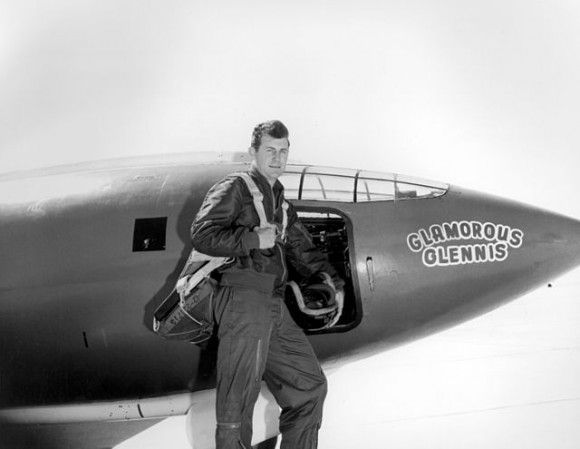

Bottom line: On February 13, 1923, Chuck Yeager, the first pilot to break the sound barrier, was born in Myra, West Virginia.
SOURCE:::: http://www.esrthskynews.org
Natarajan
2000 Year Old Rice Terrace of Philippines…

Photo credit: Jon Rawlinson
For at least two millennia, the Ifugao people have sculpted the sides of mountains into useable farmland. Located in the heart of the Cordillera mountain range in the northern Philippines, these rice terraces rise like wide, monumental staircases. The United Nations Educational, Scientific and Cultural Organization (UNESCO) added these feats of ancient engineering to its list of World Heritage Sites in 1995. According to UNESCO, the Philippine rice terraces “create a landscape of great beauty that expresses the harmony between humankind and the environment.”
The terraces, however, also epitomize the story of how modern tensions are putting a strain on that “harmony” worldwide. Yes, natural disasters and the perennial typhoons that lash the Philippines threaten the preservation of the Cordillera rice terraces. But the biggest pressure they face is a shift in human society. As the UNESCO advisory body has written, “the terraced landscape is highly vulnerable because the social equilibrium that existed in the rice terraces for the past two millennia has become profoundly threatened by technological and evolutionary changes.”
Young Ifugao are migrating to the cities where they can find higher paying, less backbreaking work. At the same, the once remote region is becoming more interconnected through large investments in infrastructure. In the next two years, the Philippine government plans to spend around $25 million in road construction and improvement in the Cordillera region.

Photo credit: Jon Rawlinson
One goal for the road project is to attract more tourists to the area and thereby bring more money to the regional economy. In 2013, according to Philippine government statistics, 1.1 million people visited the rice terraces. In the future, the government hopes to attract 10 million tourists annually. It is unclear whether this aspiration is misguided, since the arrival of foreign tourists can dramatically change the nature of a place. But Philippine officials are hoping tourism will also provide livelihoods to those Ifugao who otherwise might leave the boondocks for the cities.
Filipinos call the Cordillera rice terraces the Eighth Wonder of the World. UNESCO calls them “the priceless contribution of Philippine ancestors to humanity.” As shown in the expansive gallery below, this region of the Philippines has some of the most beautiful vistas on earth. This piece of humanity’s common heritage deserves to be preserved for generations to come.

Some of the terraces use mud walls, as pictured here; others use stone. (Photo credit: Flickr user Momo)
SOURCE:::: http://www.all that is interesting .com
Natarajan

 Take off with Natarajan