Message For the Day…” See Yourself as Your Self Unrelated To Others or Objects…”

Arjuna entered the battlefield, fully equipped and fanatically determined to destroy his enemies. But when he took his position in the battlefield, he saw ‘my teachers’, ‘my grandfather’, ‘my kinsmen’, ‘my cousins’, etc. and he was moved so much by this sense of ‘I’ and ‘mine’ that he discarded the bow and desired to return to the forest and beg for the rest of his life, than fight the war. The ‘I’ that has really nothing to do with earthly possessions, blinded him. Lord Krishna taught Bhagavad Gita and removed this delusion (moha). The lesson for you is “Be unmoved by duality”. Let not defeat or success affect your inner calm and inner joy. See yourself as your Self unrelated to others or the objective world. When you know your real Self, you are liberated! That is Moksha. Liberation (Moksha) is not a five-star HOTEL or a deluxe resort. It is just the awareness of your reality and the rejection of all contrary conceptions.  

Sathya Sai Baba


” No Need for India to Knock at the Doors of Elite Space Club …” !!!

The ‘New York Times’ Publishes Racist Comic About India’s Space

Mission

Last week, India became the first Asian nation to reach Mars, and the first in the world to do so on its first attempt.

The spacecraft called Mars Orbiter Mission (MOM) in English and “Mangalyaan” or “mars craft” in Hindi was launched in November and reached the orbit on Wednesday, to much jubilation from the public.

India’s first interplanetary mission is all the more creditable because, at $72 million, Mangalyaan cost just a fraction of NASA’s $670 million Maven, and $2 billion Curiosity Rover. It also cost less than to produce the film Gravity, and at Rs.7 or 11 cents, per kilometer, cost less than the per-kilometer cost of commuting by autorickshaw in most Indian cities.

So yesterday’s New York Times’ comic by Heng, titled “India’s budget mission to Mars” seems in poor taste.

2014-09-29-racistcomic.jpg

The comic depicts a poor Indian farmer in traditional garb, accompanied by a bored-looking cow, eagerly knocking on the door of “Elite Space Club”. The two people in the elite space club drinking wine and reading about India’s mission in the papers look perturbed and hesitant to open the door. It is also worth noting that the members of the elite space club are male, white, elderly and look wealthy. Whether meant to be funny or ironic, the racial, national and classist stereotyping is apparent.

In reaching Mars, the Indian Space Research Organization (ISRO) joins the ranks of Soviet space program, NASA and European Space Agency. It not only did so on a budget, but also battling “brain drain“. It’s a commonly lamented problem that many of the country’s brightest scientists and engineers end up working internationally, and tend to shy away from research in India, especially an area like space research, because it’s not as lucrative.

The comic strip comes at the time of Indian Prime Minister, Narendra Modi’s maiden visit to the United States. Addressing a 20,000 strong crowd at Manhattan’s iconic Madison Square Garden yesterday, he emphasized India’s new role on the world stage and its growing economic clout. “When people ask if we still play with snakes in our country, I tell them that now we play with the mouse,” Mr Modi said, drawing attention to the changing stereotype of India from a nation of snake charmers to one of technical prowess.

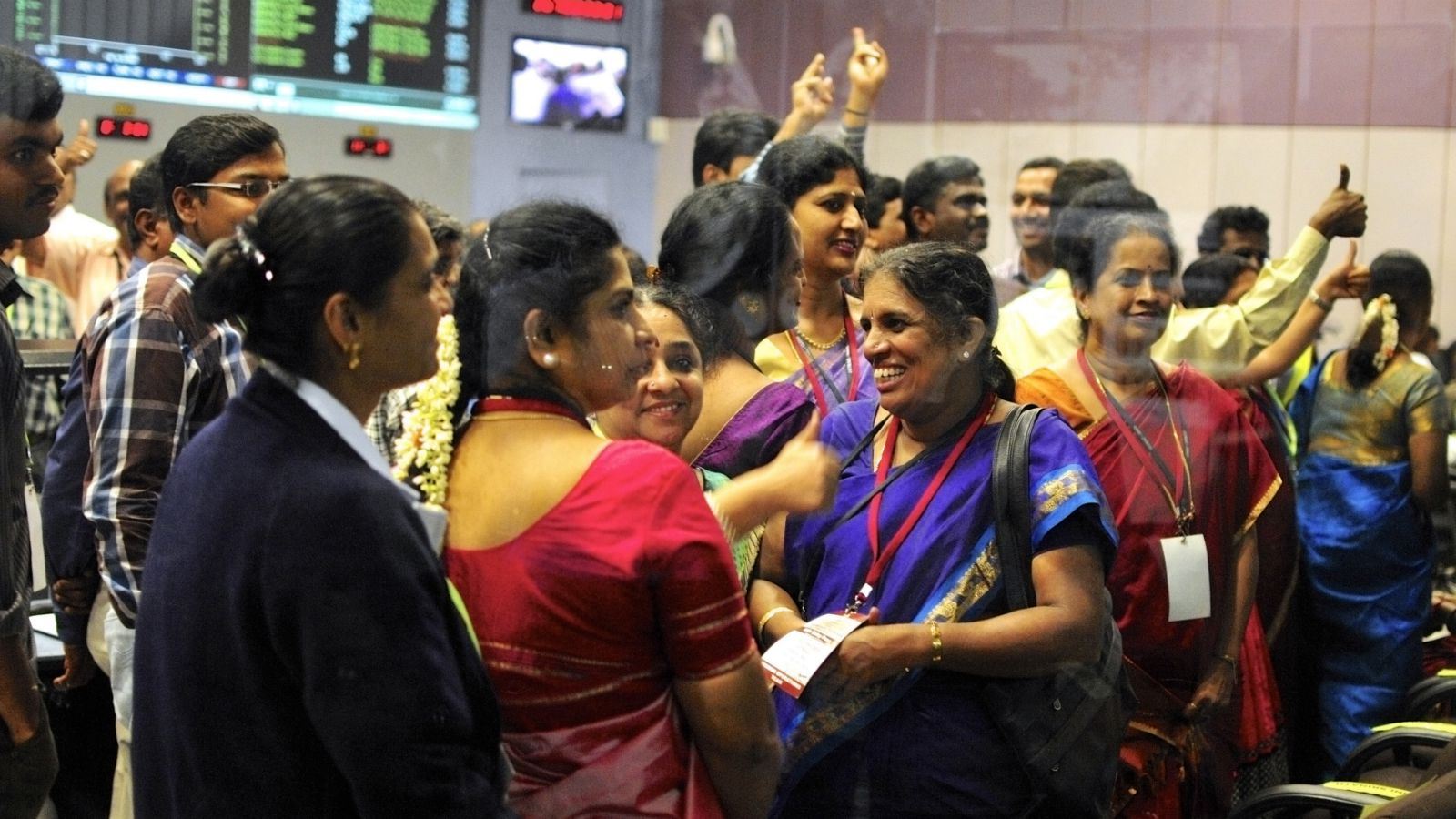
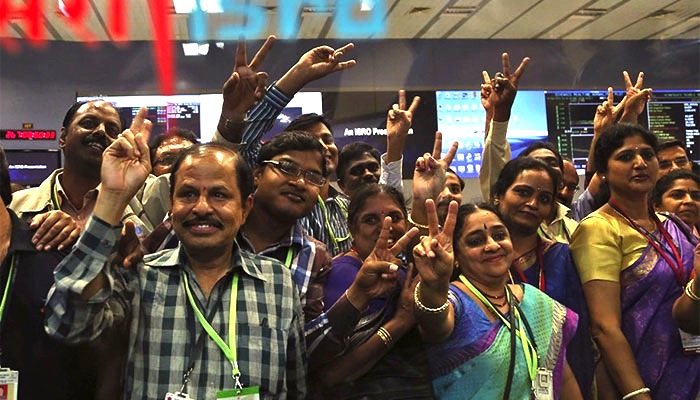
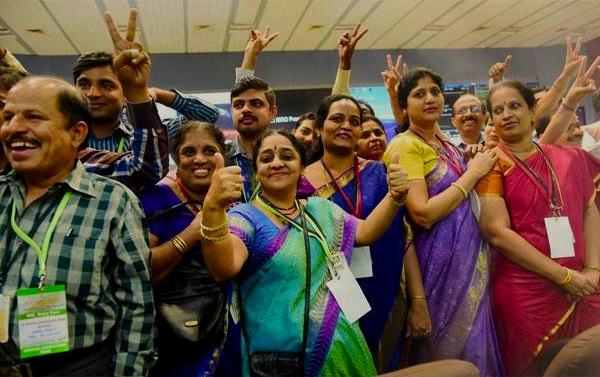
In case the Times is wondering what interplanetary-mission-heading Indian scientists look like then here you go, this is what they look like:

2014-09-29-isroscientists.jpg

And this:

2014-09-29-isro2.jpg

And this:

2014-09-29-isro3.jpg

The male engineers are wearing Western gear, while some of the female engineers are rocking traditional silk saris, the kind usually worn on special occasions, and jasmine flowers in their hair. On regular days, they work in full suits. There are no farm animals in sight at the ISRO office. And they certainly don’t look desperate for membership into some secret elite club. In fact, their jubilance says it all.

See, there are lots of socially and economically elite people in the world — being elite is like winning the lottery. But only a handful of human beings in history can claim to have sent a spaceship to another planet. That is brilliance and merit. That is actualizing human potential and literally moving humanity forward — like inventing the wheel, or, you know, sending a spaceship to Mars. One doesn’t have to be a rocket scientist to understand that.

SOURCE::::   IN  http://www.huffingtonpost.com/  

NATARAJAN

Management Lessons From India’s MANGALYAAN …

Management lessons from Isro’s Mangalyaan

India’s Polar Satellite Launch Vehicle, carrying the Mars orbiter, takes off from Sriharikota. Photo: Reuters/Isro

The resounding success of India’s Mars mission holds many lessons. Experts discuss the learning from the way the Indian Space Research Organisation (Isro) put its craft in the Mars orbit. Make a quality product R.D. Chandak, managing director and chief executive officer, KEC International The successful Mars Orbiter Mission, or the Mangalyaan, by Isro has many lessons for Indian manufacturers, says Chandak. The mission has shown that Indian companies can make a quality product at a competitive price, he says. To make India a manufacturing hub, Indian companies will have to make quality products on time, manage the logistics and produce at a very competitive cost, adds Chandak. Building the right team to deliver such projects is important. “Selecting the right team just doesn’t mean selecting the most qualified people; it also means selecting highly committed people,” he says. Teams also need to be empowered so that they can take critical decisions and ensure timely delivery of the project, he adds. Innovation is another major learning from the Mars mission. “Innovations need not be big advances in technology, but many small ones such as those that help reduce costs are important for corporates,” says Chandak. Every project has a certain amount of risk involved, and identifying the risks and managing them is important, he says. Time management, which is of paramount importance when executing such a project, is another lesson. “India wanted to send the Mars orbiter before China could. Having achieved the mission in a very strict time frame, it is a big example for Indian corporates in project management,” adds Chandak. It is also important for companies to learn not only from their own mistakes, but also from the mistakes of others, he says. Encourage team work Vinamra Shastri, partner, Grant Thornton India The scope of what a firm’s management can learn from the Mangalyaan project is very vast, says Shastri. However, there are a few takeaways that stand out. The mission became successful due to the collective effort and intelligence of stakeholders, not their individual genius, he says. Similarly, companies should consider encouraging teamwork and collaboration rather than pursuing individuals. “Every organization has people with different aptitude and skills. It is the responsibility of the senior leadership to ensure that they identify competencies and encourage teamwork,” says Shastri, adding the management should focus not only on the high performers, as different perspectives will only lead to more informed decision-making, resulting in better chances of success. Having a higher purpose for being in business is yet another key element, differentiating companies. Organizational goals should have a “higher purpose”—something which is unique and relevant, with which every stakeholder can relate to and have an emotional connect. A great example, he says, is the Tata group that has achieved more than its business goals. It stands for trust and responsibility. Similarly, the Mangalyaan project was launched not just to put India ahead of others in space research. Again, while Indian culture is appreciated on a personal or family level, the culture followed by Indian firms is often criticized by many. Mangalyaan could not be managed so efficiently within the specified time frame if the Indian Space Research Organisation did not have the right work culture, says Shastri. “(Management guru) Peter Drucker has said culture eats strategy for breakfast. Strategies formulated can only be executed when the work culture is conducive,” he adds. Plan for success, not failure K.G. Vishwanath, independent consultant The first lesson for Indian companies from the Mangalyaan Mars orbiter is to plan for success, not failure, says K.G. Vishwanath, an independent consultant and former Jet Airways (India) Ltd vice-president (investor relations). Vishwanath was part of the Jet Airways team that struck a deal to sell a 24% stake in the airline to Etihad Airways PJSC for $379 million. “Secondly, Isro had planned its production units across the country meticulously and tapped the best talent accompanied by the best planning tools,” he says. “They were not ready for taking any chances. They were planning not to fail. This is an inspiring lesson for any company and their boards.” Vishwanath says the third key lesson was about teamwork while handling egos. “Isro put all the team into one with a single objective. When a company stands together as one to achieve an objective, nothing can stop them and Mangalyaan proves that,” he says. He observes that choosing a team was purely based on merits irrespective of gender differences. “They just stood as one to accomplish the objectives,” he adds. “The last lesson is about passion. If you are doing anything, do it with passion. There are several examples of companies that have succeeded in the toughest MARKET conditions by showing inimitable passion,” he says. “Not to forget, Mangalyaan was accomplished with the lowest cost. It proves that while focusing on cheap cost, quality can still be maintained. Indigenous manufacturing means superior quality. That’s what we need now at a time when the nation is building a manufacturing base competing with China,” Vishwanath adds.

Read more at: http://www.livemint.com/Specials/3Y72VG1WlFbM5lBv7N1hSJ/Management-lessons-from-Isros-Mangalyaan.html?utm_source=copy

Source:::: Livemint.com

NATARAJAN

” What a Brilliant Way to Communicate an Important Message ” !!!


Kudos Volkswagen. What a brilliant way to communicate how risky it is to use mobile phones while driving.

 Everyone needs to see this one – WORTH SHOWING TO THE WHOLE FAMILY
This is pretty awesome, and it only takes a second!
A Hong Kong movie theater asked its patrons to leave their cellphones ON as they entered the movie house. 
Then they ran an eye opening ad produced by Volkswagen.  

Source :::: You Tube

Natarajan

Joke of the Day…” Where is My Sunday Paper …? “

“WHERE is my SUNDAY paper?!”


The irate customer calling the newspaper office, loudly demanded to know where her Sunday edition was.

“Madam,” said the newspaper employee, “today is Saturday. The Sunday paper is not delivered until tomorrow, on SUNDAY!”

There was quite a long pause on the other end of the phone, followed by a ray of recognition as she was heard to mutter, …..

“Well, damn, that explains why no one was at church either.”

 Source::: Input from a friend of mine

Natarajan

Message For the Day…” Giveup Selfishness and Strive for Self Realisation…”

Every being is suffused with love. It is only for our convenience, for our pleasure, and our own selfish purposes that we develop certain worldly relationships. Give up self­ishness and strive for self-realisation. You must enquire into yourself, “Who am I? Body, mind, intellect, chittha(memories) or ahamkara (ego)?” You are none of these. You are yourself – “I am I.” Recognise this truth. One must render selfless service. The fruit of all actions must then be sacrificed. Only a person, who denounces the fruits of all actions, deserves to be called a Yogi (renunciant). A Yogi is not one who merely sits under a tree, closes one’s eyes and meditates. Real sacrifice involves giving up your desires. Do not be narrow-minded. If you are inflicted with narrow-mindedness your whole life will become narrow. Develop broad-mindedness and cultivate selfless love.   

Sathya Sai Baba

பொற்காலத்தின் பொம்மைகள்….

பால பருவத்தில் நவராத்திரி என்றாலே விசேஷம்தான். ஒன்பது நாள் விடுமுறைக் கொண்டாட்டமாயிற்றே! நண்பர்களின் வீடுகளுக்குச் சென்று விதவிதமாகக் கொலு அமைக்க வேலை பார்ப்பேன். மணல், மண் கலந்து பரப்பிக் கடுகு தூவி தண்ணீர் தெளித்தால் புல் புல்லாகச் செடிகள் துளிர் விடும். அந்தத் தோட்டத்தில் பினாகா பற்பசையுடன் இலவச இணைப்பாகக் கிடைக்கும் குரங்கு, புலி, கரடி, மான் பொம்மைகள் மற்றும் ரப்பர் பாம்பு, பூரான், தேள், பல்லி எல்லாம் சேர்ந்து வரிசையாக நடப்பட்ட தீக்குச்சி வேலிக்குள் அட்டகாசமான ‘ஆஃப்ரிக்கன் சஃபாரி’யாகச் சுதந்திரமாக உலா வரும். இந்த இயற்கைத் தோட்டத்திலேயே இன்னொரு தீக்குச்சி வேலி அடைப்புக்குள் மரச் சறுக்கு மரம், சீசாப் பலகை, ஊஞ்சல் ஆகியவை நிறைந்த விளையாட்டு மைதானத்தில் குழந்தைகள் விளையாடுவார்கள்.

பளபள கோயில்

சரிவாக மண்மேடு அமைத்து உச்சியில் அருகருகே இரு குன்றுகளை உருவாக்கி அதன் ஒரு பக்கம் ஓடைக்கான குழிவுப் பாதை. உயரத்தில் திரைமறைவில் தகர வாளியிலிருந்து ரப்பர் குழாய் வழியாக ஓடையில் சலசலவென்று நீர். அதற்கு அருகிலேயே மலைப் பாதை. மனித பொம்மைகள் மேலேறும். உச்சிக் குன்றுகளுக்கு இடையில் காவிப் பட்டையும் வெள்ளைப் பட்டையும் அடிக்கப்பட்ட மதிலுடன் கூடிய பளபள கோயில்.

அடுத்த நாள் மாப்பிள்ளை காரைத் தூக்கிவிட்டு அங்கே பல்லக்கை வைத்து விட்டால் சுவாமி திருவீதி உலா. அதற்கும் அடுத்த நாள் பல்லக்குக்குப் பதிலாக வடம் பிடித்து இழுக்கும் மனிதர்களுடன் தேரை வைத்தால் தேர்த் திருவிழா. கலைடாஸ்கோப் காட்சிபோல் இந்த பொம்மைக் குழு தினம் தினம் உருமாறும்.

செட்டியார் பொம்மையும் செந்தேளும்

சின்ன வயதில் வறுமை. அதனால் வீட்டில் கொலு இல்லை. ஒவ்வொரு நவராத்திரியின் போதும் ஊரிலிருந்து பெரியம்மா பெண், சித்தி பெண் என்று யாராவது ஒரு டிக்கெட் ஆஜராகும். மாலையானவுடன் அந்த ‘அக்கா’வைச் சீவிச் சிங்காரித்து ‘போய் வெத்தலை பாக்கு வாங்கிட்டு வா…’ என்று அனுப்புவார்கள். துணைக்கு, சாணளவு ஆண்களான நான், சித்தி பையன் ராஜூ, அத்தை பையன் சத்யா.

தெருவில் காலை வைக்கும்முன் எங்கள் கைகளில் ஆளுக்கொரு மஞ்சப்பை தொங்க விடப்படும். புதுத்தெரு, நடுத்தெரு, கடலங்குடி தெரு என்று ஒவ்வொரு தெருவாக, ஒவ்வொரு வீடாகச் சென்று, அப்போது பிரபலமான ‘புன்னகை மன்னன் பூ விழிக் கண்ணன் ருக்மணிக்காக’ கொலுப் பாட்டைத் தேய் தேய் என்று தேய்த்துக் காகிதச் சுண்டல் பொட்டலங்களை மஞ்சப்பைகளில் சேகரித்து வருவோம்.

ஒரு நவராத்திரியின்போது மூன்று வயதுப் பெண் குழந்தை ஒன்றை அவ்வாறு மணையில் உட்கார வைத்து இந்தச் சடங்குகளையெல்லாம் செய்தார்கள். அதற்குச் சடங்குகளில் எல்லாம் பிரியம் இல்லை. கொலுவில் வைத்திருந்த செட்டியார் பொம்மை மீதே கண்ணாக இருந்தது. “மாமி இந்தப் பொம்மையை நானே வச்சிக்கவா?” என்று கேட்டுக்கொண்டே பொம்மையைக் கையில் எடுத்துவிட்டது. அந்த செட்டியார் பொம்மையின் அடிப்பாகத்தில் ஒற்றை ரூபாய் நாணயம் அளவுக்கு ஓட்டை. குழந்தை பொம்மையைக் கையில் எடுத்தவுடன் ஓட்டையிலிருந்து ஒரு ஜீவராசி தலை நீட்டியது. தொப்பென்று கீழே குதித்தது.

கொடுக்கை உயரத் தூக்கியபடி விரல் நீளத்துக்கு ஒரு செந்தேள். முன்னே பின்னே அந்தக் குழந்தை தேளைப் பார்த்ததில்லையாதலால், அதற்கு அந்தத் தேள் ஒரு காட்சிப் பொருளாகத் தோன்றியது. என்னவோ விளையாட்டுப் பொம்மை என்று தனது சின்ன உள்ளங்கையை அதன் மேல் வைக்கப் போக, சுற்றி நின்று பார்த்துப் பதைத்துக்கொண்டிருந்தவர்களெல்லாம் ‘ஐயோ’ என்று அலற, தேளோ பரபரவென்று அங்கே இருந்த சரஸ்வதி பொம்மையைச் சுற்றிவிட்டு வாசலைத் தாண்டி தெருவில் இறங்கி ஓடி மறைந்தது.

“மஹா பெரியவா சொன்னார்ங்கறதுக்காக நாங்க இந்த மாதிரி செய்ய ஆரம்பிச்சோம். இப்பவும் அவர்தான் கொழந்தையையும் தேளையும் காப்பாத்தியிருக்கார்…” என்று அந்த வீட்டு மாமி குரல் தழுதழுக்கக் கூறிவிட்டுக் குழந்தையை வாரி அணைத்துக்கொண்ட காட்சியை மறக்க முடியுமா?

துக்கத்தை மாற்றிய கொலு

ஒவ்வொரு கொலுவுக்கும் அய்யம்பேட்டையில் ஒரு ஜமீன்தார் வீட்டின் கிரிக்கெட் மைதானம் போன்ற முன் கூடத்தில் படிகள் அமைத்து முழுக்க பொம்மைகளாக அடுக்கி வைத்திருப்பார்கள். ஒவ்வொன்றும் ஒவ்வொரு விதம். கொலுவை வேடிக்கை பார்க்க வீட்டின் உள்ளே நுழைவதற்கு எங்களுக்குத் தைரியம் பத்தாது. அதனால் திண்ணையில் இருக்கும் ஜன்னல் வழியாகப் பத்துப் பதினைந்து பேர் முட்டி, மோதிக்கொண்டு வேடிக்கை பார்ப்போம். அங்கே நின்று வேடிக்கை பார்க்கும் ஐந்து, பத்து நிமிடங்களும் சொர்க்கம்!

அப்படி எதிர்பார்த்துதான் அந்த வருஷமும் திண்ணை ஏறினோம். ஜன்னல் வழியே தெரிந்த கூடம் வெறிச்சோடி இருந்தது. ஏமாற்றமென்றால் ஏமாற்றம் ஜமீன்தார் வெளியே வந்தார்.

“வளர்ந்த பையனைப் பறிகொடுத்துட்டு பரிதவிக்கிற வீட்ல கொலுவாவது இன்னொண்ணாவது. போங்கடா.. போங்க’’ என்று எங்களைப் பார்த்து தொண்டை அடைக்கக் கூறினார். எங்களில் ஒரு பையன் தைரியமாக அவர் முன்னால் சென்றான். “உங்க பையன் சாமிகிட்டத்தானே போயிருக்கான்? சாமி பொம்மைக்குப் பக்கத்திலேயே உங்க பையனோட பொம்மையையும் வெச்சுக் கொலு வைக்கலாம் இல்ல..?” என்று துடுக்குத்தனமாகக் கேட்டான். ஜமீன்தார் அவனை ஆழமாகப் பார்த்தார். சில விநாடிகள் தர்மசங்கடமான மவுனம். பின் அவரே மவுனத்தை உடைத்து, “அப்படியாடா… அப்ப நீங்க எல்லாம் நாளைக்கு வாங்க. தவறாம வரணும், என்ன?” என்றார்.

மறுநாள் ஜமீன்தார் வாசலிலேயே நின்றிருந்தார். எங்களைக் கைப்பிடித்து உள்ளே கூட்டிச் சென்றார். கூடத்தில் அமர்க்களமாகக் கொலு பொம்மைகள். கலர் கலராக சீரியல் பல்புகள் மின்னி மின்னி ஒளிர்ந்தன. அமர்க்களமான கொலு. படிகளின் நட்ட நடுவே, சாமி பொம்மைகளுக்கு இடையில் எங்கள் வயதொத்த ஒரு சிறுவனின் புகைப்படம் வைக்கப்பட்டு அதற்கு பொட்டு, மாலை அலங்காரம். எங்கள் எல்லோருக்கும் அன்றிரவு வயிறாரச் சாப்பாடு. அப்போது குஷியாக இருந்தது. இப்போது நெகிழ்வாக இருக்கிறது. மறக்க முடியுமா?

-சுபா, எழுத்தாளர், தொடர்புக்கு: dsuresh.subha@gmail.com

Nauru”s Downfall From Rich Nation to Sick Economy ….

The island of Nauru. Picture: Bradley Hunter

The island of Nauru. Picture: Bradley Hunter Source: News Limited

IT’S a deeply troubled nation that has been plunged into a nightmare scenario, struggling with a failed economy, health crisis and the destruction of its natural beauty. But life wasn’t always like this in Nauru.

At just 21 square kilometres, it’s the smallest island nation in the world and has a population of just over 10,000. Yet this former British colony, which lies approximately 4000km from Sydney in the Pacific Ocean, was once so prosperous that it was the envy of the entire world.

And it was all thanks to bird poo.

We’re not kidding. The discovery of huge deposits of fossilised bird poo that had accumulated for over 1000 years changed this nation forever. It made for an excellent fertiliser and sparked a huge mining effort, first by foreign companies, then by the islanders themselves in 1968 when they achieved independence from Britain.

By 1980 Nauru had become the wealthiest nation on the planet, per capita. A monumental achievement for such a tiny, remote island.

Secondary mining of phosphate in Nauru, 2007. Picture: Lorrie Graham

Secondary mining of phosphate in Nauru, 2007. Picture: Lorrie Graham Source: Flickr

Rolling in riches, the locals abandoned their traditional lifestyles and turned to unhealthy food, alcohol and cigarettes.

It wasn’t long before a health crisis hit, and hard.

Life expectancy plunged to just 50, while rates of diabetes, heart disease and other chronic illnesses skyrocketed along with their waistlines. In 2007, 94.5 per cent of its residents were identified by the World Health Organisation as overweight, and 71.7 per cent obese — the highest rate in the world. It was overtaken in the obesity stakes by Mexico in 2013.

These days, Nauru has the highest prevalence of type-two diabetes in the world, affecting 31 per cent of adults.

The downfall of the world’s richest country

Locals walk to fight obesity. Picture: DFAT Source: Flickr

That was just the start of their problems. The phosphates ran out in the early 1980s, along with the nation’s primary income source.

With so much of the island mined, all that was left was an environmental wasteland riddled with decay. The damage is so severe that 75 per cent of the country is uninhabitable.

While Nauru was formerly known as “Pleasant Island” due to its lavish tropical vegetation, it’s a harsh reality that it no longer lives up to this name.

A message in Nauru. Picture: Lorrie Graham

A message in Nauru. Picture: Lorrie Graham Source: Flickr

‘The effects of mining are very distinctive, because the phosphate develops within coral pinnacles, so you have to scoop the phosphate out from within the pinnacles themselves,” Professor John Connell, head of the School of Geosciences at the University of Sydney told the ABC. “So those scooped areas descend about three metres … So it produces an extraordinary landscape which is visually quite dramatic and is totally useless for anything else.”

The coral pinnacles of Nauru. Picture: Bradley Hunter

The coral pinnacles of Nauru. Picture: Bradley Hunter Source: News Limited

Locals were devastated at the loss of their once-stunning scenery.

“I wish we’d never discovered that phosphate,” Rev. James Aingimea, 84, the minister of the Nauru Congregational Church told the New York Times at the time. “I wish Nauru could be like it was before. When I was a boy, it was so beautiful. There were trees. It was green everywhere, and we could eat the fresh coconuts and breadfruit. Now I see what has happened here, and I want to cry.”

Health warnings in Nauru. Picture: DFAT

Health warnings in Nauru. Picture: DFAT Source: Flickr

Many residents had quit their jobs and went on huge spending sprees including expensive holiday and shopping trips, and importing sports cars – even a Lamborghini. So there was little cash left.

“Hardly anyone thought of investing the money. Dollar notes were even used as toilet paper,” a local told the BBC. “It was like every day was party day.”

In the years that followed, the island went virtually bankrupt. The government, who had made a series of bad investment choices, froze wages and started borrowing heavily from trusts.

The island. Picture: ARM, Wikipedia

The island. Picture: ARM, Wikipedia Source: Supplied

“A lot of money was invested in things which never actually turned out to work,” Professor John Connell, head of the School of Geosciences at the University of Sydney told the ABC. ‘For example, buildings in overseas countries, like Nauru House in Melbourne, hotels in some countries, phosphate factories, curiously, in countries like India and the Philippines, most of which never really survived.”

Now, many homes are run down, and those sports cars are rusted wrecks.

Locals enjoy a game of volleyball. Picture: DFAT

Locals enjoy a game of volleyball. Picture: DFAT Source: Flickr

With little financial options, in 2001 Nauru entered into an agreement with Australia to house a detention centre in return for foreign aid, of which they became reliant. As of this year, that amount Australia provides is $27.1 million.

Detention centre being constructed. Picture: Deidenang Clint

Detention centre being constructed. Picture: Deidenang Clint Source: Supplied

These days, for many Australians, the first thing we think of when Nauru is mentioned is the plight of asylum seekers there. But all that could soon change; the more than 1000 asylum seekers in Nauru could soon be moved to Cambodia under a new deal.

Source::::KATE SCHNEIDER, Travel Editor in news.com.au

Natarajan

Message For the Day…” Never Befriend a Bad Personality …”

The goal of celebrating the Dasara festival is to control the ten senses. Legend says that Goddess Chamundi killed the demon Mahisha during this occasion. The inner meaning of this story is that, under no circumstances, associate yourselves with demonic qualities. Always be in good company. If you join bad company, you will also become evil. Hence, never befriend a bad person. The moment you come across such people, just say ‘goodbye’ and move on. You need not develop hatred towards them. Whomever you come across, consider them as embodiments of Divinity and salute them. Even when you come across people who hate you, offer your salutations (pranams) to them and ask them, “How are you brother?” Then they too will respond in the same manner. A human being is one who is endowed with human values and also exhibits them. Always speak truth and observe righteousness (Dharma). Be peaceful. Be happy and blissful.

Sathya Sai Baba