Source….you tube ….Gaananjali’s music band Opus G7 has done the Madras song (Chennai song) which was selected by The Hindu group.
The music is composed and performed by Opus G7.
Natarajan
Source….you tube ….Gaananjali’s music band Opus G7 has done the Madras song (Chennai song) which was selected by The Hindu group.
The music is composed and performed by Opus G7.
Natarajan
Children seem to know something that adults have forgotten. They appear more confident, more courageous and enjoy life more intensely than we adults do. I often look back at my childhood years and cannot help but think of them as the best years of my life. I was a carefree spirit; I lived in the present moment; I had no anxieties and I had no fears. I often wish that I could return to the innocence and zest for life I once had when I was a child. I believe that we can all learn something from our younger selves to bring more clarity and joy into adulthood.
1. They see each day as a new beginning
Children have a beautiful ability to find joy all around them. They see silliness everywhere.
5. They cry if they feel like it
Crying is not often an emotion that adults feel comfortable expressing, yet children do so all the time. Crying helps release our emotions in a normal, healthy way. Yet, instead, we always make it a point to keep it in check. Consequently, we end up keeping our emotions to ourselves. At times, it’s okay for us to be a little more open and vulnerable with people we feel comfortable around.
6. Children are active
Thinking back to my younger years, it was a joy to play outside, running around until I was out of breath and my cheeks were rosy. I never thought of being active as exercise or daily fitness, for me, I was just playing and it was fun.
7. They are more willing to try new things
Children will attempt to play a sport that they have never tried before. They are more willing to jump on a trampoline or dive into a pool, or ski down a mountain, even if they have never done so before. Adults tend to have a fear of the unknown and prefer to stay in their comfort zone, rarely venturing out. Adventure though can make us feel exhilarated and awakened.
8. They are enthusiastic
Children often tend to have so much enthusiasm. They feel lots of excitement, and are hopeful and optimistic. We too should learn to approach life in a more optimistic way. As adults, we often tend to dwell on the negative
9. They nurture friendships
Observe children playing with their friends, they often find pure joy in doing so and are always keen to make new ones. Children tend to enjoy their many activities too – they join soccer teams, go to birthday parties and enjoy quite a number of after school activities too.
10. They notice the little things
The simple things that we often take for granted tend to bring incredible joy and profound inspiration to children. They notice the tiny miracles that surround them each day. How much more beautiful life could be if we noticed the same things they do?
Source….www.ba-bamail.com
Natarajan
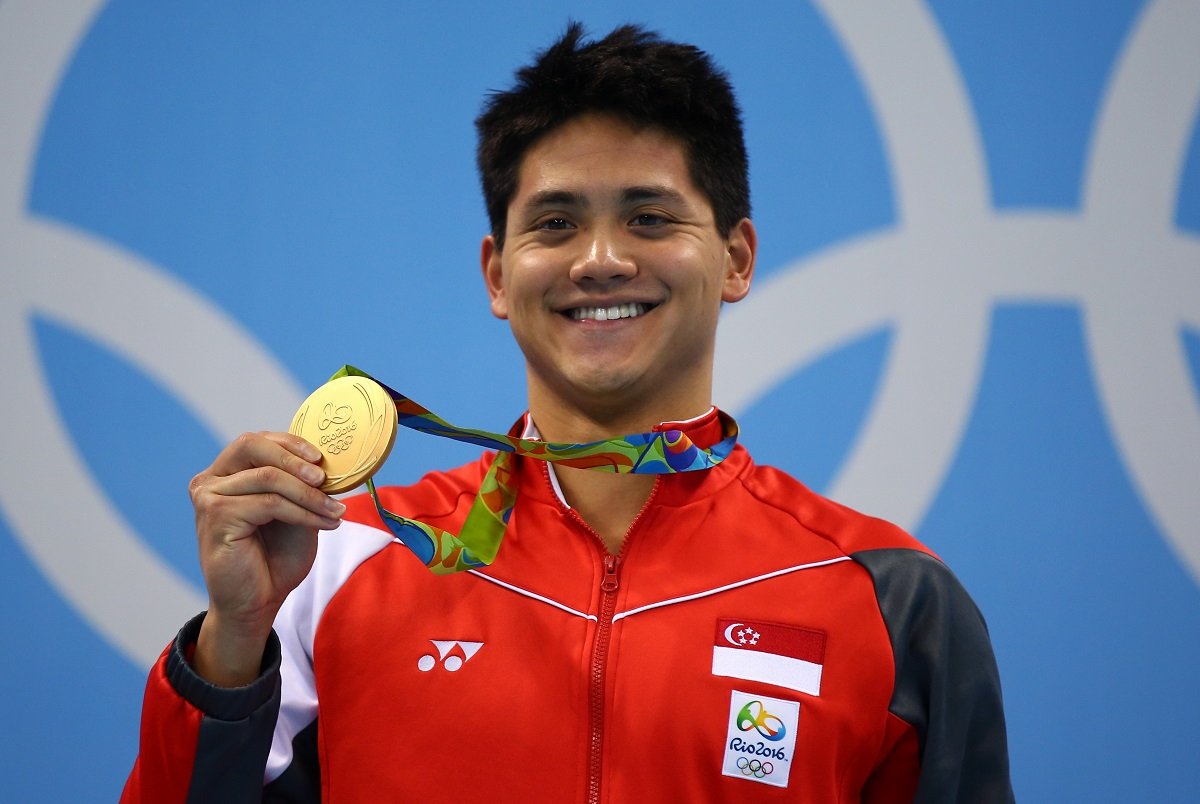
Michael Phelps might still be snagging gold medals, but a lot has changed since 2008.
Michael Phelps’ only silver medal of the Rio Olympics came at the hands of 21-year-old Singaporean swimmer Joseph Schooling. Schooling beat Phelps in the 100-meter butterfly, claiming his and Singapore’s first gold medal in Olympic history.
During the victory lap after the race, Schooling turned to Phelps and said, “Dude this is crazy, out of this world, I don’t know how to feel right now,” according to The Guardian. Phelps smiled and simply replied, “I know.”
For Schooling, beating Phelps also meant beating his swimming idol. Phelps and Schooling met for the first time in 2008. Here is a picture that has been circulating on social media that puts that meeting into perspective:
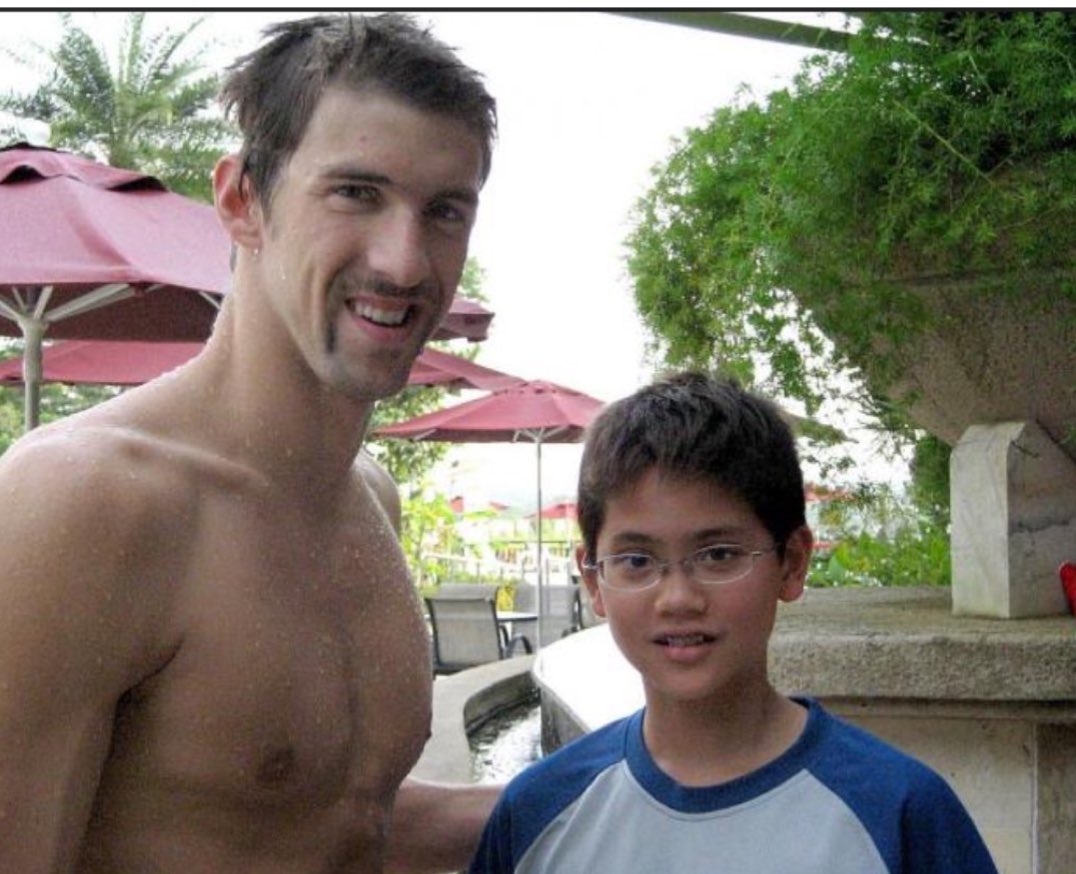
“They came to the country club that I trained at,” Schooling told The Guardian. “Everyone just rushed up and was like “it’s Michael Phelps! It’s Michael Phelps!’ and I really wanted a picture … It was very early in the morning and I was so shell shocked, I couldn’t really open my mouth.”
Now it’s Phelps’ turn to be shell shocked, as Schooling put him in a position he’s not used to: second.
And the gold medal isn’t the only thing Schooling will take away from these Olympics. He also just became a millionaire. Singapore tops the rest of the world in prize money for winning a gold medal. According to Fox Sports Australia, athletes who win Olympic gold medals get paid 1 million Singapore dollars for their achievements (roughly $983,000 American).
Source…..www.businessinsider.com.in
Natarajan
The man was Eric Moussambani Malonga, later nicknamed “Eric the Eel”. Moussambani is from Equatorial Guinea in Africa and only managed to get into the Olympics at all because of a wildcard drawing system put in place by the International Olympic Committee, designed to try to encourage developing countries to participate in various Olympic events.
Thanks to this drawing, Equatorial Guinea decided to send a swim team to the 2000 Olympics in Sydney, Australia. They put out an advertisement on the radio a few months before the Games to try to get people to come and tryout for the country’s new national swim team which would be going to the Olympics. Those who wished to tryout were to show up at the Hotel Ureca in Malabo, Equatorial Guinea. At the time, this hotel was the only place in the country that had a swimming pool (only 12 meters long).
Two people showed up, one woman, Paula Barila Bolopa (who was a grocery store cashier at the time), and one man, Eric Moussambani. Because of the lack of competition, the only thing the two had to do to get on the team was to demonstrate that they could in fact swim.
Previous to this, Moussambani didn’t know much about swimming, but contrary to what is often reported, he did know how to swim. Said Moussambani:
The first time I swam in the sea, I was 12 years old and was on vacation in my mother’s village. My first time in a swimming pool was on May 6, 2000 in the Hotel Ureca swimming pool…
They just told me to get my passport and a picture ready so they could send me to the Olympics. They said to me, ‘Keep on training.’ I asked them, ‘With who? I don’t have a trainer.’ They said: ‘Do what you can. Keep training because you are going to the Olympics.’
My preparation was very poor… I was training by myself, in the river and the sea. My country did not have a competition swimming pool, and I was only training at the weekends, for two hours at a time. I didn’t have any experience in crawl, breaststroke, or butterfly. I didn’t know how to swim competitively.
The Olympic Games was something unknown for me. I was just happy that I was going to travel abroad and represent my country. It was new for me. It was very far from Africa.
Just three months after hearing the advertisement and then getting selected to represent his country, Moussambani was on his way to the Olympics. He took a somewhat roundabout flight to Libreville (Gabon), then to Paris, then to Hong Kong, and finally to Sydney, a trip that took nearly three days to complete. Along with accommodations, he had £50 of spending money while at the games and an Equatorial Guinea flag for use in the opening ceremony.
Once at the Olympics, he got his first glimpse of an Olympic size swimming pool,
When I arrived, I just went to the swimming pool to see how it is. I was very surprised, I did not imagine that it would be so big…
My training schedule there was with the American swimmers. I was going to the pool and watching them, how they trained and how they dived because I didn’t have any idea. I copied them. I had to know how to dive, how to move my legs, how to move my hands… I learned everything in Sydney.
What makes Moussambani’s story even more compelling is that he would go on to win his heat in the 100m freestyle, albeit in a pretty unorthodox way. You see, at the time, he was to compete against just two other people in the qualifiers, Karim Bare from Niger and Farkhod Oripov from Tajikistan. Both of these two ended up getting disqualified for false starts, leaving just Moussambani, who at the time thought he had been disqualified, before it was explained to him that his competitors were the ones out and that he’d be swimming the heat alone in front of 17,000 spectators.
In order to qualify for the next round, he needed to beat 1 minute and 10 seconds… He didn’t quite manage that. However, for someone with such limited training and technique, he actually didn’t do too bad at the very beginning, even executing an OK dive and looking pretty fast for the first 10 or 15 seconds or so, then quickly faded. As he said,
The first 50 meters were OK, but in the second 50 meters I got a bit worried and thought I wasn’t going to make it… I felt that [it] was important [to finish] because I was representing my country… I remember that when I was swimming, I could hear the crowd, and that gave me strength to continue and complete the 100 meters, but I was already tired. It was my first time in an Olympic swimming pool.
He finished with a time of 1 minute 52.72 seconds (40.97 seconds at the halfway mark), which was about 43 seconds off the qualifying time. This was, of course, a new Equatorial Guinea swimming record, but also unfortunately was the slowest 100m freestyle swim pace in Olympic history. For his efforts, he was immediately a media darling, with fans and some other athletes loving his story. However, many felt that his being allowed to participate was embarrassing, as he had not a hope in the world of actually winning anything, and it was unfair to athletes in more privileged countries that could swim circles around Moussambani, but who weren’t given a chance to compete because lesser swimmers from developing countries were being included. The International Olympic Committee’s president, Jacques Rogge, was one of those, saying he would work to get rid of the wild card system and stated, “We want to avoid what happened in the swimming in Sydney; the public loved it, but I did not like it.”
Of course, the “father” of the modern Olympic Games, Baron Pierre de Coubertin, likely wouldn’t have agreed with this negative sentiment at all, as he wanted all countries to compete in the Games. He also once criticized English rowing competitions for not including working-class athletes. He further developed the Olympic motto (Citius, Altrius, Fortius- Faster, Higher, Stronger) after a portion of a sermon given by Bishop Ethelbert Talbo, which de Coubertin was fond of quoting
The most important thing in the Olympic Games is not to win but to take part, just as the most important thing in life is not the triumph but the struggle. The essential thing is not to have conquered but to have fought well.
Certainly Moussambani exemplifies that sentiment.
Bonus Facts:
Source….www.today i foundout.com
Natarajan
One year ago, Syrian refugee Yusra Mardini was swimming for her life as she fled Damascus, Syria with her older sister. Today, she is a member of the Olympic refugee team competing in Rio.
The 18-year-old is one of ten athletes competing for the Refugee Olympic Athletes in three sports.
Below, read about Mardini’s tenacious and heroic journey, via Alexander Hassenstein of Getty.
Source…www.businessinsider.com.au
Natarajan
GIRL: Have you come
to collect the book
titled “DADDY IS AT
HOME?” by
O Pamuk
BOY: No, I want that
book of hymns
called “WHERE
SHOULD I WAIT FOR
YOU?”
GIRL: I don’t have
that one but may
be you should take
the other one titled
“UNDER THE MANGO
TREE” by
Girish K
BOY: Fine, but don’t
forget to bring the new Retail Management guide
GIRL: I will also bring
you a new one
titled”I WON’T LET
YOU DOWN” by
C. Bhagat
DAD: Those books
are too many, will
he read them all?
DAD: Okay don’t
forget to give him
the one on the table
titled “OLD MEN ARE NOT
STUPID” by Robin
Sharma!
As a boat docked into a tiny seaside village, a visiting businessman complimented the local fisherman on the quality of his fish and asked how long it took him to catch them.
“Not very long,” answered the fisherman.
“But then, why didn’t you stay out longer and catch more?” asked the businessman. The fisherman explained that his small catch was sufficient to meet his needs and those of his family.
The businessman asked, “But what do you do with the rest of your time?”
“I sleep late, fish a little, play with my children, and take a siesta with my wife. In the evenings, I go into the village to see my friends, play the guitar, and sing a few songs… I have a full life.”
The businessman interrupted, “I have an MBA from Harvard, and I can help you! You should start by fishing longer every day. You can then sell the extra fish you catch. With the extra revenue, you can buy a bigger boat.”
“And after that?” asked the fisherman.
“With the extra money the larger boat will bring, you can buy a second one and a third one and so on until you have an entire fleet of trawlers. Instead of selling your fish to a middle man, you can then negotiate directly with the processing plants and maybe even open your own plant. You can then leave this little village and move to the city, Los Angeles, or even New York City! From there you can direct your huge new enterprise.
How long would that take?” asked the fisherman.
“Twenty, perhaps twenty-five years,” replied the businessman.
“And after that?”
“Afterwards? Well my Friend, That’s when it gets really interesting,” answered the businessman, laughing. “When your business gets really big, you can start selling stocks and make millions!”
“Millions? Really? And after that?” said the fisherman.
“After that you’ll be able to retire, live in a tiny village near the coast, sleep late, play with your children, catch a few fish, take a siesta with your wife and spend your evenings doing what you like and enjoying your friends.”
Source…….www.ba-bamail.com
Natarajan

If you live in Chennai and aren’t familiar with the frenzy surrounding Rajinikanth’s films, July 22 might come as a shock to you. The undisputed superstar of southern cinema is ready to enthrall his fans with his new film, Kabali, on Friday.
There’s no stopping Rajinikanth even at 65. Though his last two films – Lingaa and Kochadaiyaan – didn’t hit the bull’s eye at the box office, he is ready to reinvent himself. Probably the only superstar in the world who isn’t afraid of showing his balding head, Rajinikanth is a people’s man. From setting up retirement funds for his director friends to obliging politicians, he has done it all. And now his fans are ready to pay the star back for his courtesies.
With a fifteen-minute role in Apoorva Raagangal (1975), Rajinikanth launched a scintillating career that was to become synonymous with charisma, magic and miracles. The tricks learnt during his stint with the Karnataka State Transport Corporation turned Shivaji Rao Gaekwad aka Rajinikanth into the actor every fan of Tamil cinema was waiting for. With that style, that ruggedness, that majestic gait and that enchanting persona, things had little choice but to fall in place. By now, we have heard and read so much about the man that we almost believe Rajinikanth was born to be a superstar.
His Hindi films didn’t work, and even if they did, somebody else ended up taking the limelight. But then, he was not the same man then. Had the movies been released today, many of them would have crossed the Rs 100-crore mark. The things Rajinikanth can do naturally, contemporary stars cannot hope to achieve even with the help of technically adept camera crews and state-of-the-art editing softwares.
The recently released Robot (Enthiran) was also successful in Hindi. Shivaji the Boss and Chandramukhi are shown regularly on some film channels, and nobody objects to him romancing the likes of Shriya Sharan, Aishwarya Rai Bachchan, Deepika Padukone and Sonakshi Sinha. In fact, some die-hard fans would go to the extent of saying that these heroines can’t match up to Rajinikanth’s dancing, screen presence and looks.
Research scholars could do entire projects on the reasons behind Rajinikanth’s mass popularity in North India, a region where he hasn’t done any ‘original’ film since Bulandi in 2000. And, mind you, those who remember Bulandi do so only for this man and how Anil Kapoor copied him in the second half. In case you’re trying to remember, his name was Gajraj Thakur in the film.
Rajinikanth was initially all about jokes of the ‘Chuck Norris’ kind, but everything turned into respect for the thespian before anybody even realised it. Be it his pictures with ailing children or be it his photographs from the sets of his films, he always comes across as a genuine person. His personal life reflects the same. Unlike some other Southern superstars, who used stardom to destroy their own superstar status, Rajinikanth’s never entangled into any controversy that was personal. Whenever he spoke for a cause or about something political, he cared to keep his personal away from it.
It’s difficult for big stars to keep away from politics in Tamil Nadu and other South Indian states. The alluring seats of power attract with so much force that one lets go of legacy and jumps on to the favouring tides without thinking much of the people who made them the stars and masters of the local spheres.
We know of other actors who are desperately trying to fit into the shoes of Thalaiva. It’s so in-our-face yet the audience is making these ventures successful. You think it’s happening without Rajinikanth’s unseen help. He may not have asked for it, but the fans know their duty. They simply can’t see Thalaiva going out of prominence. Now, you understand why that Chennai Express song was such a perfect marketing gimmick.
The boss of Tamil cinema is ready to reclaim his throne with Kabali. Will the fans help him this time?
Follow the author at Twitter/@nawabjha
source….
Natarajan
“ஹைகூ ஒவ்வொன்றும் ஒரு தனிவார்ப்பு, பிசிறில்லாத சிறுசிற்பம், அலாதியான அழகு, கம்பீரம்” என ஹைகூ கவிதையின் திறத்தினைப் பறைசாற்றுவார் கவிஞர் தமிழ்நாடன். தமிழ்க் கவிதை உலகில் புதுக்
கவிதை அமைத்துத் தந்த தோரண வாயில் வழியாக 1984ல் தொடங்கிய ஹைகூ பயணம், இன்றளவும் தொடர்ந்து கொண்டிருக்கின்றது. வாழையடி வாழையெனப் புதுப்புதுக் கவிஞர்கள் தோன்றி, ஹைகூவின் வளர்ச்சிக்குத் தங்களின் பங்களிப்பினை நல்கி வருகின்றனர்.
நெல்லை சு.முத்துவின் பார்வையில்,
“மூன்றடிச் சொற்செட்டுநேரடி அனுபவ வெளிப்பாடு
மூன்றாவது அடி மின்தாக்கு”
– என்னும் மூன்று பண்புகளும் பொருந்தியதே சிறந்த ஹைகூ கவிதை. பாடுபொருளாலும் பாடும்முறையாலும் சிறந்து விளங்கும் ஒரு சில ஹைகூ
கவிதைகள் குறித்து காண்போம்.
விலகி இருக்கும் மனித உறவுகள்
‘வெறுங்கை என்பது மூடத்தனம் – விரல்கள் பத்தும் மூலதனம்’
என்னும் எழுச்சி மிகு வைர வரிகளுக்குச் சொந்தக்காரர் கவிஞர் தாராபாரதி. அவரது உடன்பிறப்பு மலர்மகன். அவரும் ஒரு சிறந்த மரபுக் கவிஞர் ஆவார். ‘தொடர்பு எல்லைகளுக்கு அப்பால்…’ என்பது அவர் வெளியிட்டுள்ள ஹைகூ
கவிதை தொகுப்பு. அதில் இடம் பெற்றுள்ள ஹைகூ இது: “ தொடர்பு எல்லைக்கு அப்பால் -உறவுகள்”
இன்று உலகின் எந்த மூலையில் இருந்தாலும் உடனுக்குடன் மனிதனால் தொடர்பு கொள்ள முடிகின்றது. தொடர்பியல் அந்த அளவிற்கு இமாலய வளர்ச்சி அடைந்துள்ளது. ஆனால், தொடர்பு எல்லைக்குள் வாழும் மனித உறவுகளோ விலகி இருக்கின்றன.
குடும்ப உறுப்பினர்கள் இடையே இடைவெளியும் விரிசலும் மிகுந்து காணப்படுகின்றன என்பதை நயமாகப் பதிவு செய்துள்ளார் மலர்மகன். இல்லற வாழ்வின் பதிவு
இல்லற வாழ்வில் நிம்மதியும் மகிழ்ச்சியும் நிலவ வேண்டுமானால், கணவன்–மனைவி ஒருவரை ஒருவர் புரிந்து கொண்டு, ஒருவருக்காக மற்றவர் விட்டுக் கொடுத்துப் போவது தான் முக்கியம். ‘ஒருவர் பொறை இருவர் நட்பு’ என்னும் ஆன்றோர் அமுத மொழி. தங்கம் மூர்த்தி நகைச்சுவை உணர்வுடன் இல்லற வாழ்வின் இன்றியமையாத பக்கம் குறித்து இங்ஙனம் பாடியுள்ளார்:
“பட்டிமன்றம் முடிந்துதாமதமாய் வீடு திரும்பினேன்
வழக்காடு மன்றம்”
கள்ளங்கரவு கொஞ்சமும் இல்லாத – சூதுவாது சிறிதும் அறியாத – வஞ்சமோ சூழ்ச்சியோ துளியும் தெரியாத – குழந்தைகள் உலகினைப் பற்றிய அற்புதமான ஹைகூ கவிதைகளின் தொகுப்பு வசீகரனின் ‘குட்டியூண்டு.’ கவிதைத் தொகுப்பின் தலைப்பிலேயே கவித்துவம் கொலுவிருக்கக் காண்கிறோம். குழந்தைகள் உலகினை நடப்பியல் பாங்கில் வசீகரன் உள்ளது உள்ளபடி படைத்துக் காட்டியுள்ள ஹைகூ:
“ தனித்து நின்ற குழந்தையிடம்யார்நீ என்றதும் சொன்னது:
‘எங்க அப்பாவுக்கு நான் பொண்ணு!’”
ஹைகூவின் உயிர்ப் பண்பு
ஹைகூவுக்கு வலிமையையும் வனப்பையும் சேர்ப்பது அதன் ஈற்றடியே. இதனை, ‘படுத்துக் கொண்டே படித்தேன், துாக்கி நிறுத்தியது, ஹைகூவின் கடைசி வரி’ என ஹைகூ வடிவிலேயே படம்பிடித்துக் காட்டுவார் தெ.வெற்றிச்செல்வன்.
“ சுதந்திர தினம்மனதிற்குள் துக்கம்வந்தது ஞாயிற்றுக்கிழமை”
சுந்திர தினம் ஞாயிற்றுக்கிழமை வந்தால், ஒரு நாள் விடுமுறை அல்லவா இல்லாமல் போகும்? மனத்திற்குள் துக்கம் பொங்கி வராதா என்ன? என்கிறார் கவிஞர் நவதிலக். இல்லாவிட்டால் கவிஞர் மீராவும் காதலியைக் குறித்து, ‘கிழமைகளில் அவள் ஞாயிறு’ என்று பாடி இருப்பாரா? தமிழனின் விடுமுறை மோகத்தினை மென்மையாகச் சாடும் கவிதை இது!
வாசகரும் கூட்டுப் படைப்பாளி
‘கவிஞன் இறங்கிக் கொள்ள, வாசகன் அதன் மீது பயணம் தொடர்வான். அதுதான் ஹைகூ’ என்பர் அறிஞர். வேறு சொற்களில் குறிப்பிடுவது என்றால்,
‘ஹைகூ ஓர் உணர்வு நிலை, வாசகனைக் கவிஞனின் நிலைக்கு உந்தி உயரத் தள்ளும் மிகச் சிறந்த வடிவம் அது.’ இவ்விலக்கணத்திற்குக் கட்டியம் கூறும் பா.உதயகண்ணனின் ஹைகூ…
“காரைத் துடைத்துக்காசு கேட்டான்
எட்டிப் பார்த்தது நாய்”
இங்கே காரைத் துடைத்து விட்டுக் காசு கேட்பது ஒரு குழந்தைத் தொழிலாளி என்று தெளிவாகத் தெரிகிறது. ஆயின், ‘எட்டிப் பார்த்தது நாய்’ என்னும் ஈற்றடியில் இடம் பெறும் ‘நாய்’ என்பது யார்? புதியவர் எவரையேனும் கண்டால் குரைப்பது நாயின் இயல்பு. அது போல், சிறுவனிடம் தனது வெறுப்பை உமிழும் – விரட்டி அடிக்கும் – காரின் உரிமையாளரும் ஒரு வகையில் பார்த்தால் ‘நாய்’ தான்! கூர்மையாகச் சிந்தித்துப் பார்த்தால் கவிதையில் ஆழ்ந்திருக்கும் கவிஞரின் உள்ளம் புலனாகின்றது.
“எவன் கண்பட்டதுவிற்கவே இல்லை
திருஷ்டி பொம்மைகள்”
என்பது வித்தியாசமான பாடுபொருளைத் தன்னகத்தே கொண்ட செ.ஆடலரசனின் ஹைகூ.
‘திருநெல்வேலிக்கே அல்வா’ என்பது போல், ‘திருஷ்டி பொம்மைகளுக்கே’ திருஷ்டியாம்!
காலத்திற்கு ஏற்ற பாடுபொருள்
ஹைகூ கவிதையின் தனித்தன்மை காலத்திற்கு ஏற்ற, குறிப்பாக, இந்த நுாற்றாண்டிற்கே உரிய பாடுபொருட்களைக் கையாளுவதாகும். அவற்றுள் ஒன்று விளைநிலங்கள் இன்று விலைநிலங்கள் ஆகி வரும் கொடுமை ஆகும். பச்சைப் பசேல் எனத் திகழ்ந்த நெல் வயல்கள் எல்லாம், இன்று வானளாவ உயர்ந்து நிற்கும் அடுக்கு மாடிக் கட்டிடங்களாக உருமாறிவிட்டன. இதனை ரத்தினச் சுருக்கமான
மொழியில் பதிவு செய்துள்ளது செந்தமிழினியனின் ஹைக்கூ:
“ விளை நிலங்கள்விலை நிலங்களாயினவீடுகள்”
‘எங்கும் தமிழ், எதிலும் தமிழ்’ என்பது பல்லாண்டு காலமாக அரசியல்வாதிகள் முதலாக தமிழ் ஆர்வலர்கள் வரை அயராது பறைசாற்றி வரும் கொள்கை முழக்கம். ஆயினும், நடைமுறையில் இன்னும் அந்தக் கனவு நனவாகவில்லை. இந்த கசப்பான உண்மையை – அய்யாறு ச.புகழேந்தி ஹைகூ கவிதை ஒன்றில் வெட்டு ஒன்று துண்டு இரண்டு என்றாற் போல், காரசாரமாகப் பதிவு செய்துள்ளார்:
“ எங்கும் தமிழ்எதிலும் தமிழ்இல்லை”
வாழ்வியல் பதிவு
எட்டு மணி நேரம் துாங்கும் மனிதன் – எட்டு மணி நேரம் உழைக்கும் மனிதன் – ஒரு நாளில் எத்தனை மணி நேரம் வாழ்கிறான் என்று கேட்டால், அவனால் பதில் சொல்ல முடியாது. இந்த வாழ்வியல் உண்மையைப் பொட்டில் அடித்தாற் போல் எடுத்துரைக்கிறது இ.பரிமளாவின் ஹைகூ ஒன்று:
“ வாழ்நாளில்வாழ்ந்த நாள்?
விரல்களுக்குள்”
வாடிய பயிரைக் கண்ட போதெல்லாம் வாடும் மென்மையான கருணை மனத்துக்குச் சொந்தக்காரர்கள் ஹைகூ கவிஞர்கள். பஞ்சு நெஞ்சு படைத்த அவர்கள், இலையுதிர் காலத்தில் உதிரும் இலைகளுக்காகக் கூட அழுகின்ற இயல்பினர். இவ் வகையில் நினைவுகூரத் தக்க ரமா ராமநாதனின் ஹைகூ இதோ:
“அடித்துத் துவைக்கமனமில்லை
சட்டையில் பூக்கள்!”
நிறைவாக ஈழத்து அறிஞர் கார்த்திகேசு சிவத்தம்பி குறிப்பிடுவது போல்,
“தமிழ்க் கவிதை என்ற நதி வற்றாது ஓடுகிறது. தமிழை வளப்படுத்துகிறது, தமிழால் வளம் பெறுகிறது.”
அவரது இக் கூற்று இன்றைய ஹைகூ கவிதைக்கும் பொருந்தி வரும்
உண்மையே.- பேராசிரியர் இரா.மோகன்எழுத்தாளர், மதுரைeramohan@gmail.com
Source….www.dinamalar.com
Natarajan

 Take off with Natarajan