Butcher’s Broom: Can Fruits Grow on Leaves…….?

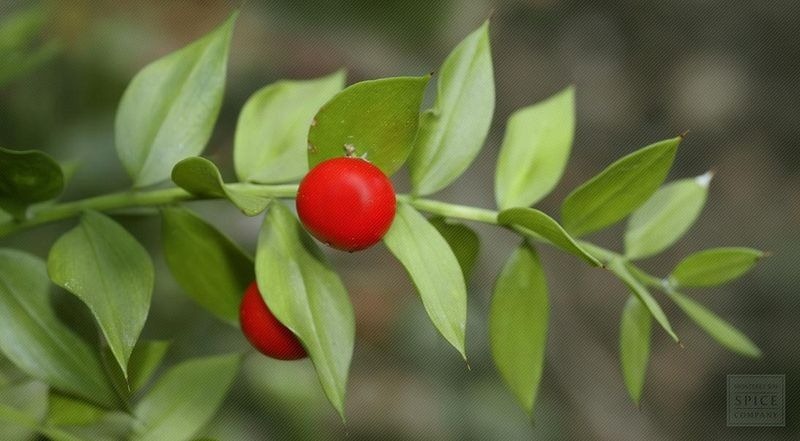
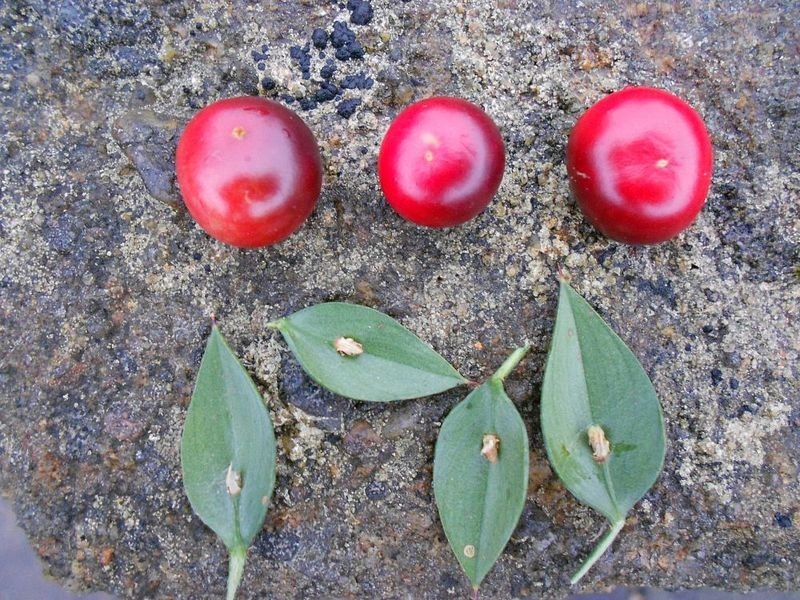
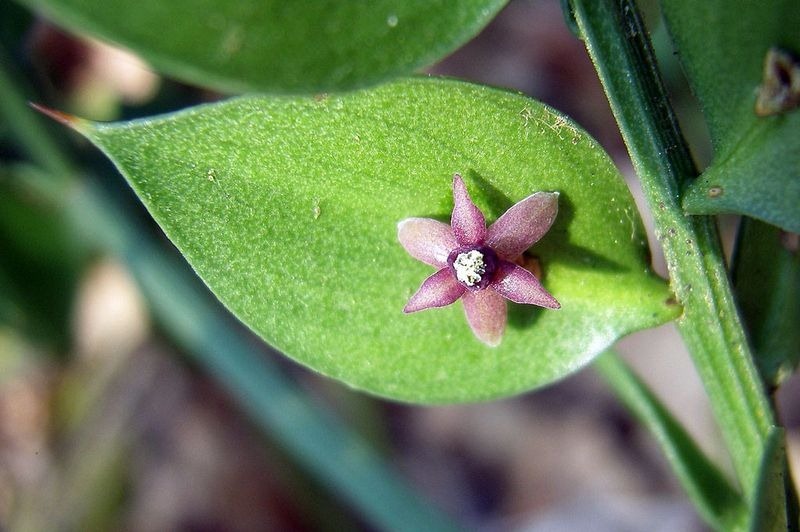
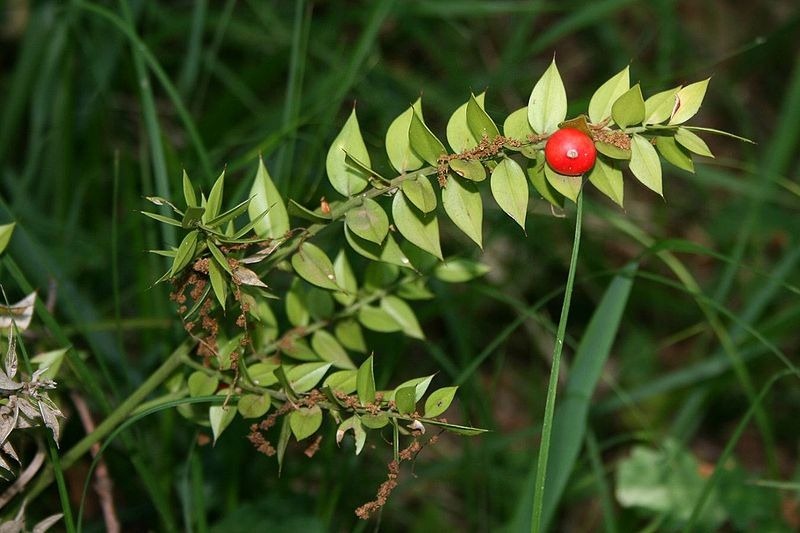
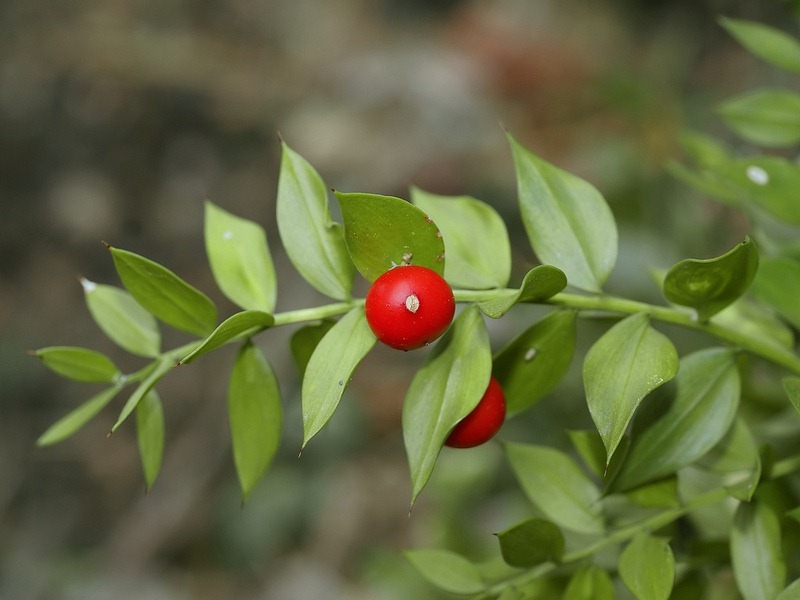
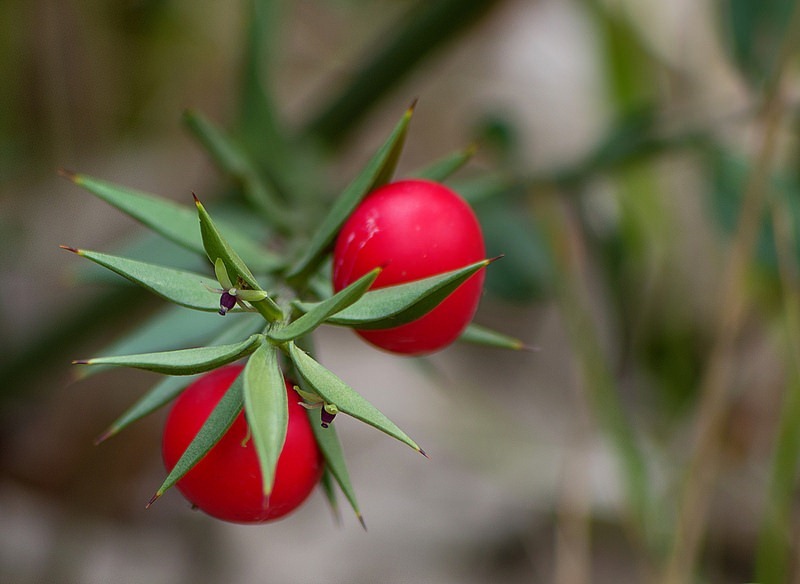
Butcher’s Broom, or Ruscus aculeatus, is a low-growing perennial shrub with tough, erect, stems and very rigid leaves that terminate in a sharp spine. From the center of the leaves grow small greenish-white flowers that blossom in early spring and develop into red berries in autumn. The tiny red berries are attached directly to the leaves by a short stem, making it a very strange looking plant.

The Butcher’s broom, however, is not breaking any rules of the plant kingdom, because what appears to be leaves are actually modified stems called cladodes, that have been flattened to not only look like leaves but serve their function as well.

ruscus-aculeatus-1

Photo credit: Gil Costa/Flickr


Butcher’s broom is widely distributed, from Iran to the Mediterranean and the southern United States. They have been used for more than 2,000 years as laxative and diuretic and to treat various ailments such as hemorrhoids, varicose veins, itching, and swelling. The young shoots of the plant are also eaten like those of asparagus. The stiff twigs were once bundled together and used by butchers to keep their cutting boards clean, from which came its common English name: butcher’s broom. It is also known by others names such as “Knee Holly”, because of its knee height, “Jew’s Myrtle”, for its use during the Feast of Tabernacles, “Sweet Broom” and “Pettigree”, although its meaning is not clear.

Extracts of butcher’s broom have been used throughout the ages, but the medicinal use of this plant did not become common until the last century. Investigation in the 1950s indicated that butcher’s broom could induce constriction of veins, because of which it is still widely used for treating certain circulatory diseases. It also contains an alkaloid which inhibits the passing of sodium ions across the cell membrane and thus is an effective anti-arrhythmic substance.

Butcher’s broom is also widely planted in gardens and its berries used as decorations.

ruscus-aculeatus-2

Photo credit: www.herbco.com

ruscus-aculeatus-3

Photo credit: stories.rbge.org.uk

ruscus-aculeatus-4

Photo credit: herbier.sesa-aude.fr

ruscus-aculeatus-6

Photo credit: Franz Xaver/Wikimedia

ruscus-aculeatus-7

Photo credit: Hans Hillewaert/Flickr

ruscus-aculeatus-8

Photo credit: Katya/Flickr

Sources: Drugs.com / Botanical.com / Plant World Seeds via mantisshrimp.wordpress.com

Source….www.amusingplanet.com

Natarajan

Soon, Eat Meat Without Killing Animals for It, Thanks to This Indian-American Scientist & His Team !!!

Memphis Meats Inc., a San Francisco-based company founded by three scientists, has developed a new technique to produce meat from stem cells of animals. Uma S Valeti, an Indian-American cardiologist, is the CEO and one of the co-founders of Memphis Meats.

By bringing meat production into the lab, this team can soon make it possible for people to eat meat without actually killing animals.

memphis1

Source: YouTube

According Uma Valeti, the meat is sustainable, healthier, safer, and cruelty free. It does not lead to any side effects like bacterial contamination or high saturated fat. Additionally, the technique produces 90 percent less greenhouse emissions and does not require antibiotics as used in traditional meat production.

For the production, the team identifies cells that are capable of renewing themselves, from a targeted animal. These cells are then provided with oxygen and nutrients like sugar, minerals, etc. while they develop inside bio-reactor tanks into skeletal muscle and can be harvested in nine to 21 days. The team is currently working on beef, chicken and pork cells, and have already conducted test runs on beef meat.

“Our goal is to be in restaurants in three years and retail in five years. In 2021, we want to be in retail or even earlier,” Uma Valeti told PTI.

The first manufacturing base will be set up in the US and he added that they are also exploring ideas about setting centres in India and China very soon.

Cardiologist Uma Valeti is an associate professor of medicine at the University of Minnesota and president of the Twin Cities American Heart Association. Other members of the team include Nicholas Genovese, a stem cell biologist, and Will Clem, a biomedical engineer who owns a chain of barbeque restaurants in Memphis, Tennessee.

Currently, even though the source cells can be collected without killing the animals, the process starts with the help of fetal bovine serum that is drawn from the blood of unborn calves. Memphis Meats is working on replacing the serum with a plant-based alternative very soon, to completely end the practice of extracting it from animals.

“Our concept is simple. Instead of farming animals to obtain their meat, why not farm the meat directly? To that end, we’re combining decades of experience in both the culinary and scientific fields to farm real meat cells—without the animals—in a process that is healthier, safer, and more sustainable than conventional animal agriculture,” says their website.

Source…Tanaya Singh in http://www.the betterindia.com

Natarajan


Image of the Day… Total solar eclipse of March 9 2016 …

View larger. | March 9, 2016, total solar eclipse from Palu, Indonesia.  Photo by Justin Ng of Singapore.

View larger. | March 9, 2016, total solar eclipse from Palu, Indonesia. Photo by Justin Ng of Singapore, who wrote: “Sun’s corona extends millions of kilometers into space and it is visible to the unaided eye during a total solar eclipse. During totality, temperature at my location dropped by 10 to 15 degrees Celsius and I was able to see planet Venus and Mercury when the area became dark. I took 12 different exposures during totality to cover as much dynamic range as possible and stacked them in Photoshop to produce this image.”

Source…..www.earthsky.org

Natarajan

The Health Benefits of Olive Oil…….!!!

Olive oil is widely thought of as being good for our health. In fact, in terms of its health benefits, olive oil is unrivaled. New research continues to reveal more benefits almost every day. Nevertheless, we are only beginning to understand the countless ways olive oil can boost our health and quality of life. What is it that makes olive oil so beneficial to our health?

olive oil benefits

Nutrient composition of extra virgin olive oil

Olive oil contains modest amounts of Vitamins E and K, as well as a wealth of beneficial fatty acids. To start, let’s take a look at the nutritional facts of extra virgin olive oil:

100g of olive oil contains:

  • 13.8% saturated fat
  • 73% monounsaturated fat
  • 9.7% Omega 6
  • 0.76% Omega 3
  • 72% RDA Vitamin E
  • 75% RDA Vitamin K

*RDA: Recommended Daily Allowance

However, one of olive oil’s well-known benefits is its antioxidant content, which helps the body fight serious diseases. Olive oil’s main antioxidants protect the body from oxidation (more on this below) and against LDL (bad) cholesterol. With these facts in mind, let’s look at how olive oil can benefit the body:

10 Health Benefits of Olive Oil

1. It reduces the risk of Type 2 Diabetes

A low-fat diet is typically recommended to prevent diseases such as heart disease and diabetes. In fact, studies have shown that high fat diets may increase the risk of certain diseases, such as cancer and diabetes. With that being said, it’s worth pointing out that it’s the type of fat intake rather than the amount that affects health most severely. Consequently, it has been found that a diet rich in monounsaturated fats (such as those found in olive oil, nuts and seeds) actually offers protection from many chronic diseases. Furthermore, according to a study published in the scientific journal Diabetes Care, it was shown that a Mediterranean-style diet rich in olive oil reduced the risk of Type II diabetes by almost 50% when compared to a low-fat diet. Type II diabetes is the most common and preventable form of diabetes.

2. Olive oil may help prevent a stroke

According to a study from France, published in the online issue of Neurology, older individuals who consume olive oil daily may be able to protect themselves from stroke. The study gathered information from medical records of 7,625 individuals over the age of 65 from three cities in France – Bordeaux, Dijon and Montpellier – none of whom had a history of stroke. The individuals were then categorized into three groups, based on their olive oil consumption. After five years, 148 strokes were reported. The results showed that individuals who frequently consumed olive oil had a 41% lower risk of stroke, compared to those that did not consume olive oil at all.

3. It keeps the heart young and healthy

As we grow older, our heart goes through a normal aging process. Artery function tends to decline with age, leading to a number of health problems. In a recent study, Spanish researchers discovered that a diet rich in olive oil or other monounsaturated fats could improve arterial function in elderly individuals.

olive oil benefits

4. It helps fight osteoporosis

A disease predominantly characterized by a decrease in bone mass, osteoporosis causes the architecture of bone tissue to become fragile, increasing the possibility of fractures, making even the slightest of bumps or falls potentially fatal. However, olive oil supplementation was found to positively affect the thickness of bones. While olive oil is not the only solution, scientists have concluded that it is very promising for the development of future treatments of the disease.

5. Olive oil helps fight depression

While olive oil has been found to be beneficial for a number of physical ailments, what about emotional health benefits? Spanish researchers from the University of Navarra and Las Palmas de Gran Canaria, found that a diet rich in olive oil can protect from mental illness too. It was recently discovered that a higher intake of olive oil and polyunsaturated fats found in fatty fish and vegetable oils lowered the risk of depression. According to the findings, cardiovascular disease and depression share some common mechanisms related to diet.

6. Olive oil has been found to prevent skin cancer

A recent study found that olive oil may contribute to the prevention of malignant melanoma (the most dangerous type of skin cancer). Nevertheless, the use of sunscreen remains the best way to prevent sunburn, however, consuming olive oil and other Mediterranean food could help counter the oxidizing effect of the sun.

7. It can reduce the risk of Alzheimer’s disease

Numerous studies have been conducted on olive oil and how it may help reduce the risk of Alzheimer’s disease. One study published in the journal of Chemical Neuroscience showed that the oleocanthal (a type of natural phenolic compound found in extra-virgin olive oil) has the potential to reduce the risk of Alzheimer’s disease and the cognitive decline that comes with aging. Olive oil polyphenols are powerful antioxidants, which may help reverse oxidative damage that occurs due to the aging process.

olive oil benefits

8. It may potentially protect against breast cancer

A diet rich in fats is directly related to a higher risk of cancer. However, the types of fats consumed can actually play a protective role against the development of tumors. Virgin olive oil is rich in oleic acid – a mono-unsaturated fatty acid, containing several bioactive compounds such as antioxidants. Research shows that a moderate and regular intake of olive oil reduces the risk of certain types of cancer, including breast cancer.

9. Olive oil has been found to reduce oxidative stress

Studies suggest that olive oil can protect the liver from oxidative stress. To test this theory, scientists exposed rats to a moderately toxic herbicide known to deplete antioxidants and cause oxidative stress. The findings showed that rats fed a diet containing olive oil were partially protected from liver damage.

10. It contains anti-inflammatory substances

Chronic inflammation is believed to be one of the leading causes of many diseases, including heart disease, cancer, metabolic syndrome, diabetes, Alzheimer’s and arthritis. However, one of the benefits of olive oil lies in its ability to fight inflammation. The oil’s anti-inflammatory effects seem to be mediated by the antioxidants in olive oil. One such antioxidant is oleocanthal – which has been shown to work like ibuprofen, an anti-inflammatory drug. In fact, it has been found that 50ml of extra virgin olive oil has an effect similar to 10% of the adult ibuprofen dosage for pain relief.

Source……www.ba-bamail.com

Natarajan


Message for the Day….” Dharma and Adharma …”

In the world the progeny of Dharma and Adharma (Righteousness and Unrighteousness) are continually growing. Consider this lineage: Unrighteousness (Adharma) married delusion (Mithya). Mithya is neither truth nor untruth. This couple had two children, a son calledAhamkara (egoism) and a daughter called Moha (infatuation). As both are the children of Ignorance, with no capacity to judge what is right and wrong, the unholy alliance between them resulted in the birth ofLobha (avarice) and Vanchana (deceit) as son and daughter. From the wrongful union of these two, Irshya (jealousy) and Krodha (anger) were born. Out of their union, Bheeti (fear) and Mrityu (death) were born. This lineage is known as Adharma Santhathi (the progeny of unrighteousness). Following this lineage of Unrighteousness, every union is improper.

Sathya Sai Baba

Your Next Must-Visit Destination in India: A Unique Garden Made of Threads in the Nilgiris…

Flowers that never wilt and leaves that don’t dry up, can only be found in a dimly lit greenhouse in the heart of Ooty. This evergreen artificial plant kingdom is the only one of its kind in the world. All the plants here are fabricated with thread and look so natural that they rival real ones in beauty.

One of the most fascinating tourist attractions of Ooty is the Thread Garden, located right opposite the Ooty Boat House. This magnificent display of flowers, plants and lawns is fabricated entirely from thread, with the help of canvas, wire and glue. This amazing garden is indeed a sight to behold.

A unique technique known as ‘four dimensional hand wound embroidery’ is used to make the plants in this garden.

Welcome to the unique garden. Photo credit : Sonika Sharma

Welcome to the unique garden.

Photo credit: Sonika Sharma

Mr Antony Joseph, the man who created this spectacular wonder, used to work as a lecturer in a private college. He gave up his job when his father passed away, to look after the family’s textile brushes and wooden accessories business. Production in this unit was mainly for Coats Vivella Group Companies, which helped him develop his relationship with Coats India.

Around this time, Antony started developing  other items too because of his interest in handicrafts.

Antony Joseph making a bouquet of flowers. Photo Credit: Thread Garden

Antony Joseph making a bouquet of flowers.

Photo Credit: Thread Garden

“Handicrafts have always been a passion and my initial research was in designing caps, wigs and brushes using Coats threads. The success of these items, at an exhibition conducted by Coats Vivella India Ltd, prompted me to increase the scope of my research. This resulted in the innovative technique of ‘hand wound embroidery.’ The company encouraged me to continue my research for designing novel hand wound embroidery crafts, supplying me the main raw material – the embroidery threads,” adds the proud designer.

In 1988, he started a unique research and work centre with nine ladies, making plants and flowers using this technique. Canvas is cut in the shape of the leaf or the petal. Glue is applied and the thread is wound neatly onto the piece of canvas. No needles and no machinery are used to make these beautiful plants. This painstaking technique is done with only the nimble fingers of the artisan and hence it takes very long to complete a project. Grass and stems, as well as the stamen and filaments of the flowers, are made with a wire base and embroidery thread is wound on the wire to complete the pieces.

The various parts of the plant, once ready, are glued together in such a manner that they look extremely natural. When a bunch of flowers is placed in a flowering pot it is very difficult to differentiate it from a natural bouquet, since the design and the colours of the threads used are so perfect.

Keen concentration and patience are the hallmark of every one of the artisans. They have to make sure the winding is perfect, without any overlapping of threads, knots and gaps between the threads.

Bird of Paradise created with threads Photo Credit: Sonika Sharma

Bird of Paradise created with thread

Photo Credit: Sonika Sharma

In the initial years, Antony Joseph had several opportunities to display these spectacular works of art in many parts of the country.

“People really wondered at these novel creations and my experimental pieces sold easily anywhere they were exhibited. This helped me to run my work centre back home in Koratty, near Thrissur, in Kerala,” he says.

In 1993, Coats India accepted this newly developed craft technology and published an article with colour transparencies in its magazine Needle ‘N’ Embroidery. The Crafts Council of India sent him a special message congratulating him on his invention of hand-wound embroidery, without the use of needles or machinery.

He received appreciative messages from almost every part of the country and this encouraged him to continue his research and create new varieties of plants.

Beautiful white flowers made of thread. Photo credit : Sonika Sharma

Beautiful white flowers made of thread.

Photo credit: Sonika Sharma

Antony wanted to establish a garden with many varieties of flowering and non-flowering plants using his unique embroidery technique. He was able to employ 50 women and train them in this craft. After 12 years of untiring work, they were able to successfully fabricate around 100 different plant species and were ready to set up a garden. He initially set up the Thread Garden in Mallampuzha, a popular dam site in Kerala. However, due to floods, he had to shift from there. In 2002, he chose the present location opposite the Ooty Boat House and ever since then this place, which looks so unassuming from the outside, has been on the tourist map of the Nilgiris.

For this amazing feat, Antony Joseph and his artificial garden have been mentioned in the following books of records – India Book of Records, Tamilnadu Book of Records, and Unique World Records – as the first thread garden in the world.

Plants in pots and water lily's in the water Photo credit: Thread Garden

Plants in pots and water lilies in the water

Photo credit: Thread Garden

Antony Joseph hopes that this garden gets a mention in the Limca Book of Records as well as the Guinness Book of World Records. There are some criteria yet to be met to achieve these accolades, which he is striving for.

“Making artificial pieces of flora look natural is the real challenge! This Thread Garden is a success story of overcoming this formidable challenge. Creation of each piece of art is an imaginative expression of nature as it is. To achieve the ultimate goal a permutation and combination of forms, light, shades and patterns has been used” he emphasizes.

This one of its kind evergreen garden. Photo credit: Thread Garden

The one of its kind evergreen garden.

Photo credit: Thread Garden

The garden, as such, is complete and there is nothing more to be added to it. However, the artisans still work on making these flowers, back home in Kerala. Their products are encased in glass cases and sold at the sales counter in the garden premises. A list of instructions on how to take care of the flowers in the glass case are given to every buyer.

The sale of these glass encased flowers helps promote the craft.

 Encased in glass, flowers sold at the sales counter Photo credit: Aparna Menon

Encased in glass, flowers sold at the sales counter.

Photo credit: Aparna Menon

Mr Antony Joseph can be reached on his mail id mail@threadgarden.com.

About the author: Aparna Menon is a freelance writer, writing for various newspapers for the past 10 years. Her main fields of interest are wildlife, heritage and history. A keen traveller, she loves to read and write and does a lot of art work too.

Source…..Aparna Menon in http://www.the betterindia.com

Natarajan

Message for the Day…” Who Can hope for enduring success in Life …” ?

The game of life you play is akin to the Mahabharatha war. On one side were the forces of evil, the Kauravas, and on the other the powers of good, the Pandavas. They played the game of life with the empire as the football. Until achieving complete victory, Lord Krishna was the sole chief for the righteous Pandavas, who completely surrendered to Him. The wicked Kauravas lost their commanders one after the other in the battle. The real contest today within you is the one between the evil qualities of desire, hatred, envy, pride, etc. and good qualities like truth, virtue, peace, nonviolence and love. Your body is the battlefield. One team’s captain is the embodiment of good qualities. The captain of the other is the embodiment of mundane desires. Those who adhere to ever changing and worldly desires will attain defeat. Only those who attach themselves to the unchanging and eternal Divine can hope for enduring success in life.

Sathya Sai Baba

How to see a solar eclipse at 35,000 ft in the air?…. Here’s the answer!

It’s very rare that a company fulfill its customer’s wish. And that too at about 35,000 feet in the air.

But Alaska Airlines has done that by changing its flight path on Tuesday, so that passengers could enjoy the view of solar eclipse.

IMAGE: Treat your eyes with this breathtaking view. Solar eclipse from Alaska Airlines flight. Photograph: Alaska Airlines/Twitter 

The airliner made this plan a year ago when one of the passengers, Joseph Rao, who is the associate astronomer at the American Museum of Natural History’s Hayden Planetarium, informed it that Alaska Airlines flight 870 from Anchorage to Honolulu would intersect the eclipse’s path.

But there was a catch. The flight’s scheduled departure time was 25 minutes too early to see the eclipse.

After several deliberations the airline decided to adjust the timing to give passengers a chance to witness the grand spectacle.

HERE (external link) is the full video.

IMAGE: Solar eclipse from Alaska Airlines flight. Photograph: Alaska Airlines/Twitter

Source…..www.rediff.com

Natarajan

One Doctor Is Quietly Building a World-Class Cancer Hospital for the Poor in Assam….

Dr. Ravi Kannan’s vision has turned a small cancer centre into a full-fledged hospital in Assam’s Barak valley.
Barak Valley is a remote area on the Indo-Bangladesh border in Assam. For years, the people in the area had limited access to medical care. In fact, the nearest hospital was in Guwahati, which is 350 km away. This journey would often take 24 hours to complete, due to the difficult terrain as well as the threat of landslides.

The high incidence of cancer in the region, possibly due to extensive tobacco use, prompted citizens of the valley to come together and set up a hospital in 1996.

dr 1

The Cachar Cancer Hospital Society faced multiple challenges, including a severe financial crunch and lack of infrastructure, right from the start. In fact, the hospital got its first radiation unit only in 2006.
The first qualified nurse came on board in 2008. Though there were other trained personnel in the region, they were choosing to migrate to bigger cities in search of better employment.

The hospital continued to reel under all these problems till 2007, when it got a saviour in the form of Dr. Ravi Kannan.

“When I got the offer to come and work in Assam, my wife was hesitant. But after coaxing her, we came and spent some time here. I worked at the hospital and interacted with the patients. Meanwhile, my wife and daughter mingled with the members of the community. All of us realised that there was much work to be done here and this is where we should be,” he says.

So Dr. Kannan, who was a renowned oncologist at the Adyar Cancer Institute in Chennai, and his family, packed their bags and moved to Silchar.

dr2

It was a big change for the family. For instance, his daughter, who studied in a school which didn’t have exams, had to take her first exam to get admission into Kendriya Vidyalya. The weather was different and so was the language. And life here was harder in comparison to their hometown of Chennai. However, slowly, they all settled into the new place and Dr. Kannan got to work.

“From day one, we just kept reacting to situations, whether they were related to finance or manpower or infrastructure,” says Dr. Kannan.

Over the years, this doctor and his incredible team managed to turn the place around.  There were only 23 staff members when he joined. Today, there is a 200-member strong team.

From 25 beds, the hospital now has 100 beds. And from 6, the number of nurses has grown to 102.

dr3

It is his selfless service and vision that have transformed this unknown cancer hospital into a comprehensive cancer centre that is providing free and heavily subsidised treatment to thousands of poor cancer patients every year,” says Rajeev Kumar, Dr. Kannan’s colleague.

In the early days, Dr. Kannan noticed that only a few patients who came for the initial check-up would come back again for a follow up. Every year, the hospital would conduct a review and find that most patients didn’t return a second time. Finally, it dawned on the administration that most people couldn’t afford the treatment.
Over 60% of the patients visiting the hospital have an income of Rs. 3,000 or less per month. As many as 80% are daily wage earners – labourers, tea garden workers and agricultural workers.

“We realised that most of them were the sole breadwinners of their families. They couldn’t afford to not work. The challenge was to figure out how to get them to undergo medical treatment, without taking away their daily bread,” he says.

This is how the hospital started home visits. The doctors started going to the villages to provide treatment to cancer patients. The patients do not have to pay for home-based care and follow up. Slowly, the hospital started satellite clinics for patients who are unable to travel long distances to visit the hospital. The doctors also provide phone consultations and stay in touch with patients who have returned home with prescriptions.

Dr. Kannan and his team discovered yet another way to get the patients to come in. They started employing those who come as attendants with the patients. These attendants help out in the garden or do other small tasks. Initially they were paid Rs. 30 but now they get about Rs. 100 per day for their work.

According to Dr. Kannan, because of the free food available at the hospital and the opportunity to work, some patients stay behind even after their treatment is completed.
The hospital has a desk in the outpatient department where the staff proactively assess the economic needs of the patients and assist them in getting treatment from the hospital at subsidised rates or for free.

They also provide patients with a better understanding of their treatment options.

“We make efforts to offer the best treatment possible to all the patients, irrespective of their socio-economic status. No one should be denied access to treatment due to want of money,” Dr. Kannan says.
The hospital now has a strict follow up policy. The supervisors of each ward are given cell phones. They are required to call up people and find out why they have missed their appointments. They maintain contact with patients and their families and motivate them to complete their treatment as advised.

At present, the hospital has an annual inflow of 3,000 new and 14,000 follow-up patients. It also gets patients from other states, as well as from neighbouring Bangladesh.
For Dr. Kannan and his team, every day presents a new challenge.

“There have been times when my colleagues and I have conducted surgeries in fields we have not specialised in. The patients cannot always go rushing to Guwahati. How can we say no to someone who is critical? By taking up these surgeries, we have also been pushed out of our comfort zones,” he says.

The hospital runs on the funds it receives from various organisations and individuals. A grant from the Indo-American Cancer Association helped establish the Department of Pain and Palliative Care in the hospital in 2011. A Department of Dental Surgery has also been set up. The pharmacy offers medicines at highly discounted prices. An ICU was started from the contributions made by individuals and NGOs.

The hospital is now awaiting permission to set up a blood bank in the region.

dr5

“The expenses just keep increasing. We rely on contributions to run this place and provide treatment to so many people. My amazing team has chosen to work here despite the fact that they would be better remunerated in bigger cities. The satisfaction we get from serving the community here is indescribable,” he says.

The Cachar Cancer Hospital Society is raising funds to support cancer patients. For more details visit its page onKetto.
To get in touch with Dr. Ravi, mail him at ravi.kannan@cacharcancerhospital.org

Source…….Meryl Garcia in http://www.the betterindia.com

Natarajan
Message for the Day…”Worrying is fruitless..there is no occasion for despair…you must try prayer, service to others, and mutual love and respect…”

Sathya Sai Baba

When there is no possibility of achieving and acquiring devotion, charity, peace, and truth, the great and good people who desire to achieve them pray to the Lord within themselves. When the Lord’s will, the needs of spiritual seekers, and the teachings of great persons unite, the happiness of the world will be assured and undiminished. If all humanity prays at one time for unrest, injustice, disorder, and falsehood to be transformed into peace, truth, love, and mutual service, things will certainly become better. There is no other way out. Worrying is fruitless. This is no occasion for despair. It is against the essential nature of people to plead weakness and want of strength. Therefore giving up the search for other means, people must try prayer, service to others, and mutual love and respect. They should delay no longer; they will soon acquire contentment and joy.