Image of the Day…Martian Lakebed …!!!

This evenly layered rock photographed by the Mast Camera (Mastcam) on NASA’s Curiosity Mars Rover shows a pattern typical of a lake-floor sedimentary deposit not far from where flowing water entered a lake.

The scene combines multiple frames taken with Mastcam’s right-eye camera on Aug. 7, 2014, during the 712th Martian day, or sol, of Curiosity’s work on Mars. It shows an outcrop at the edge of “Hidden Valley,” seen from the valley floor.  This view spans about 5 feet (1.5 meters) across in the foreground.  The color has been approximately white-balanced to resemble how the scene would appear under daytime lighting conditions on Earth. Figure A is a version with a superimposed scale bar of 50 centimeters (about 20 inches).

This is an example of a thick-laminated, evenly-stratified rock type that forms stratigraphically beneath cross-bedded sandstones regarded as ancient river deposits.  These rocks are interpreted to record sedimentation in a lake, as part of or in front of a delta, where plumes of river sediment settled out of the water column and onto the lake floor.

NASA’s Jet Propulsion Laboratory, a division of the California Institute of Technology, Pasadena, manages the Mars Science Laboratory Project for NASA’s Science Mission Directorate, Washington. JPL designed and built the project’s Curiosity rover.  Malin Space Science Systems, San Diego, built and operates the rover’s Mastcam. For more information about Curiosity, visit http://www.nasa.gov/msl and http://mars.jpl.nasa.gov/msl.

SOURCE::::www.nasa.gov/msl

Natarajan


” Miracles Of Aviation History …With Happy Endings” !!!

Dietmar Eckell travels the world to photograph plane wrecks where everyone survived. He told BBC Culture why he decided to find crashes with happy endings.

Fairchild C-82A Packet, Alaska

January 1965, Alaska. A Fairchild C-82 is flying above the Arctic Circle when it encounters trouble. “The plane’s electric system failed and they crash-landed in the night in the tundra forest, cutting down many trees. They survived at -45 degrees Celsius by making a big fire from the wood they had cut. It is very remote up there: they were really lucky that the fire was spotted by another plane three days later and they were rescued.” German photographer Dietmar Eckell is describing one of the stories he discovered while researching his Happy End project, which records plane crashes that had no fatalities. He has even been contacted by those who survived: raising the money to print a book of the photos last year, he was contacted by the pilot of this Fairchild C-82. “He sent me an email to thank me for writing down his story and documenting his plane almost 50 years after the crash.”


Cessna 310, Australia

Eckell became interested in documenting wrecks where everyone survived after he had his own crash: flying a paraglider with an engine to take aerial shots over the Mojave Desert in California, he went into a tailspin and landed alone with a broken ankle. “While recovering from surgery I had time to search the internet for crash landings in remote locations with no fatalities.” He makes sure they were happy endings before he documents them: “I found planes where all survived the landing but a few started walking and were never found – if [even] one passenger did not make it, the plane is not included in the series.”

Grumman Hu-16 Albatross, Mexico

He finds the planes online, via “pilot forums, archives, accident reports and websites about World War Two history”. Pinpointing the exact location can be tricky. “Once the story is confirmed I try to find it on Google Earth. If the resolution is not good enough I ask at the local airport and most of the time pilots can help. Sometimes I have to hire a plane to search from above. Then I hike out there.” This plane is on a beach 70km south of Puerto Escondido. Eckell photographed it in September 2010, six years after it crashed: “It was half sunk and already broken in two pieces. On the pictures I saw [online] from 2006 … the engines looked like they would still work. But in four years the Pacific had done massive damage.” He happened to be shooting when a storm was passing. “The clouds were changing every minute. The scenery looked unreal through the viewer of my camera … more like a painting – surreal – with different lines of clouds towards the horizon.” It might not be there for much longer. “With the force of the waves the wreck is disappearing fast.”


Bristol Type 170 Freighter, Northwest Territories, Canada

Eckell has even tracked down planes that locals don’t know about. “One time I needed a float plane to get to a lake 400km away and could not afford a charter. After three days I found a retired pilot who was willing to take me there – although he did not believe that I had the location of an abandoned plane that he had never heard of in his 30 years as a local pilot. He was very surprised when we found the plane in great condition resting on the side of the lake, where it had been since 1956.”


Avro Shackleton, Western Sahara

The journey on foot to a plane can be hard-going. “Physically the hikes through swamps with all your gear are tough because your feet are wet all day, there are mosquitos and every kilometre feels like 5km.” He remembers his attempt to reach this plane in Western Sahara as particularly dangerous. “It’s in an area that is controlled by Polisario rebels. After a 30-hour car ride from Morocco to Mauritania and a 26-hour ride on an ore train, I got to a mining town and there had to convince the local Polisario leader to take me over the border to the Western Sahara. I had the plane’s GPS location and we drove cross country to avoid getting caught by the Mauritanian military. We had a very old car and after an hour it developed a flat tyre; but everything worked out and I got great shots of an Avro Shackleton. What I found interesting was that the same rebel group also rescued the 19 passengers in 1994.”


Douglas C-53 Skytrooper, Australia

Happy End is part of a longer-term project, called Restwert. “It started in the days before GPS when I was riding my motorbike in the remote Sahara following track descriptions with a map and compass. Some of the described landmarks along the way were car wrecks.” After photographing these ‘landmark wrecks’, Eckell went on to document abandoned mobile homes in the Mojave Desert. “With my photography I try to create curiosity for the story behind the picture.” This is one of the planes he has photographed most recently. It was forced to land in 1942 when the pilot missed the airport and ran out of fuel.


Douglas C-47 Skytrain, Yukon, Canada

There is an eerie dissonance between the wrecks and the majestic landscapes in the background, one that Eckell exploits to tell his story. “My ‘restwert’ photography is about abandoned objects forgotten in nowhere. When viewers see a photograph of a plane resting on a mountain or a tank sitting on a coral reef they want to know what happened … ‘Restwert’ is German for ‘residual value’ – the material value is written off, but the beauty, stories, and associations they trigger remain. I document these objects before nature takes them back to preserve their memory.” Ten people survived when this plane flew into the side of a mountain in February 1950. Eckell has visited the site twice. “I spent two hours at the wreck and still cannot imagine how they survived in February 1950 with temperatures in the -40s up there.”


Curtiss C-46 Commando, Manitoba, Canada

He sees the wrecks as beautiful, both because they represent a happy ending and because many of the planes have survived the ravages of nature. “Old airplanes, like the DC-3 or Curtiss Commando, are design classics and timeless beauties. Aluminium does not erode so they still look pretty good even after 70 years in the bush.” Eckell draws on artists from a different age. “I was inspired by the shipwreck painters of the Romantic period and in my photography also look for dramatic skies, late light or fall colours.”


B-24 Liberator, Papua New Guinea

“The locals in Papua New Guinea called this wreck ‘Swamp Ghost’,” says Eckell, who photographed it in March 2013. “When we arrived a heavy rain started and we had to hide under the wing for over an hour.” Trying to get the shot he wanted from a high vantage point, he climbed a tree. “Soon after I noticed that it was the home of giant ants. By the time I could get to a decent shot position they were all over me and it was difficult to focus.” The B-24 was forced to land in a sago swamp in October 1943, after running low on fuel after a bombing mission. The crew successfully parachuted to the ground, and the two pilots were unhurt in the crash landing.


Curtiss C-46 Commando, Manitoba, Canada

“I was in Calgary documenting the abandoned Olympic Ski Jump,” says Eckell, describing his journey to photograph this plane, which crashed near Churchill in 1979. “I took my octocopter which got a lot of attention from the biologists on the train who work at the Polar Bear Research Centre in Churchill. It’s not a good idea to walk out to the wreck – this is polar bear country and they are hungry in summer because they haven’t eaten anything since the ice melted.” He got a lift from a local, and took the pictures quickly. “The plane is sitting on huge rocks – the crew was lucky to crash in November with snow softening the impact.”

SOURCE:::: Fiona Macdonald  in http://www.bbc.com

Natarajan


Good Bye 2014 !!!…Few ” Good Times ” and Inspirational Stories of 2014 !!!

Ladakh’s first female tourist guide

A top cardiac surgeon who didn’t let his humble roots come in the way of his success

A mother who has gone back to school for the sake of her daughters

Two young men who quit high-paying jobs in the US to fix India’s garbage problem

We look back at some of the most inspirational stories featured on Rediff Get Ahead in 2014.

As the year draws to a close, it seems an apt time to look back at some of the stories that brought a smile to our faces and inspired us to look beyond ourselves.

1. Sheetal Jain

Twenty-year-old Sheetal Jain is the daughter of a bar dancer and grew up in Mumbai’s red light district.

But she isn’t letting that define her identity.

Even as you read this, Sheetal is pursuing a course in drumming at the Levine School of Music in Washington DC.

Jain is part of Kranti, an NGO that earlier helped another young lady Shweta Katti to travel the US for further studies.

From being a victim of sexual abuse at the hands of her stepfather to being locked up for months because she had a boyfriend, Sheetal Jain has come a long way.

This is her story!

Photograph courtesy: Kranti


2. Thinlas Chorol
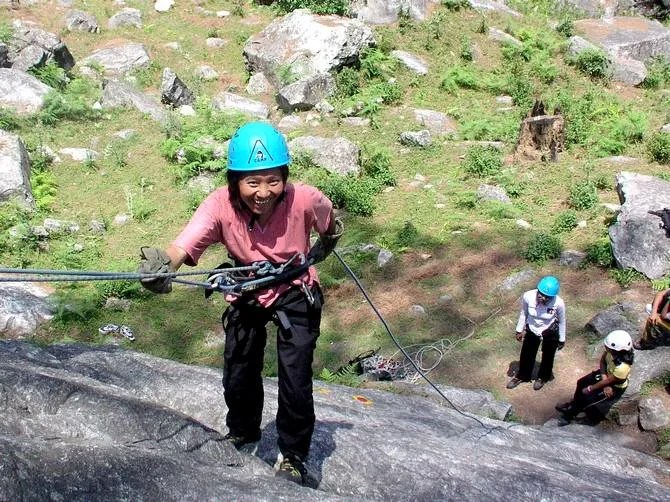
When tourism companies in Ladakh refused to employ her services as a travel guide because she was a woman, Thinlas Chorol decided them a suitable answer.

In 2009, when she was all of 27, Chorol started her own company, the Ladakhi Women’s Travel Company and became Ladakh’s first female tourist guide

Thinlas Chorol has been awarded by the Ladies’ Wing of the Indian Merchants’ Chamber and only employs women in her company.

Read the fascinating story about a young lady breaking traditions here!

Photograph courtesy: Ladakhi Women’s Travel Company


3. Dr Ramakant Panda

The biggest challenge was to keep away from getting astray,” Dr Ramakant Panda says as he recalls his childhood in Damodarpur in Odisha’s Jashpur district.

Panda, who would walk 7 km every day to and from school for six years, has done well for himself.

But being serious about studies in a village in the ’60s where education wasn’t necessarily on top of everyone’s mind was a challenge.

Dr Panda has come a long way from there.

He has performed more than 18,000 heart surgeries including one on the former Prime Minister Manmohan Singh is the vice-chairman and managing director at Mumbai’s Asian Heart Institute, of one of India’s best cardiac care hospitals.

Do read his story!

Photograph courtesy: The Asian Heart Institute


4. Mani Vajipey and Raj Madangopal

The general filth and squalor in India deeply disturbed Mani Vajipey who was pursuing a doctorate in electrical engineering at the University of Delaware.

Along with Raj Madangopal, a friend with whom he bunked classes, Vajipey returned to his homeland and formed Banyan Nation, an organisation that aims to address the garbage crisis in India through technological innovations, better practices and grassroots activism.

Their inspirational story has been documented here!

Photograph courtesy: YourStory.com


5. Malvika Iyer

When she was 13, a freak accident cost Malvika Iyer both her hands and severely damaged her legs.

No one knew if she would ever be able to walk again.

But young Malvika braved the odds and emerged victorious.

She graduated in economics from the prestigious St Stephen’s College in New Delhi, met the then President, Dr APJ Abdul Kalam, went on to become a social worker and a motivational speaker.

Along the way, she also became a part of the Global Shapers Community, an initiative of the World Economic Forum.

If this story doesn’t inspire you, we really don’t know what will.

Photograph courtesy: Malvika Iyer


6. Pavithra YS
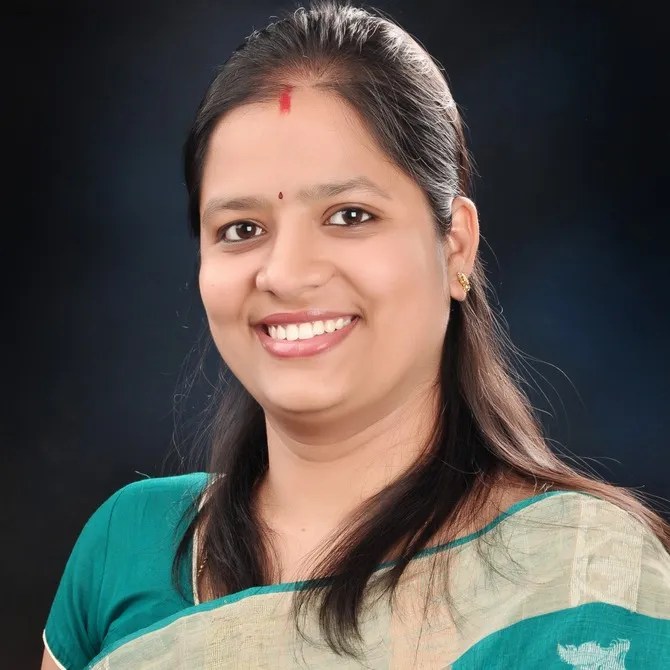
Vindhya E-Infomedia is a business processes outsourcing company based in Bengaluru.

With over 600 employees, Vindhya is probably just a speck in the booming BPO market.

What sets it apart is that everyone on its floor operations and most of its 600-plus employees are differently-abled.

Vindhya is the brainchild of Pavithra YS who started this unique company when she was all of 22!

This is her inspiring story!

Photograph courtesy: Vindhya E-Infomedia


7. Shadab Hassan

When he was a child, Shadab Hassan sold balloons and candies so he could go to school.

Hassan went on to complete his master’s course in business administration from the Birla Institute of Technology, Mesra.

But instead of taking up a plush corporate job in an MNC, he decided to start a school in his hometown in Ranchi where so no child would ever have to sell balloons and candies for their school fees.

More on that here!

Photograph courtesy: HH High School’s Facebook page


8. Jayashree Kanam

Seven years after the Mumbai floods of July 26, 2005 took her husband away from her,Jayashree Kanam decided to pick up the pieces of her life and move on.

So, she went back to school and started where she had left from more than 20 years ago.

If you thought your life was difficult, this story of a mother returning to school so she can give her daughters a better future is what you should be reading!

Photograph courtesy: Abishek Mande Bhot/Rediff.com


9. Mehvish Mushtaq

Information in Srinagar is difficult to come by.

Mehvish Mushtaq learnt it when she wanted to telephone a cousin’s school some years ago.

The school’s website was down.

She didn’t have a phone book handy and there weren’t any directory services that could help her with it.

After considerable search, that included calling up the cousin’s classmates, she finally got the number.

Then there were occasions when a hospital’s number wasn’t easy to come by.

Each time a situation arose, she would scramble for information.

So when Mehvish Mushtaq was asked to create an app as part of an online course in Android application development, she knew just what she wanted to make.

She created Dial Kashmir that lists out everything there is to know about Jammu & Kashmir — from phone numbers and addresses of essential services and tourist attractions to contact details of local business and prayer timings.

This is the story of Mehvish Mushtaq, the first Kashmiri girl to develop an Android app. Do read!

Photograph courtesy: Mehvish Mushtaq


10. Chitra Vishwanathan

Chitra Vishwanathan is better known to her readers as Chitvish.

On her eponymous app, Chitvish dishes out recipes, kitchen advice and handy tips for amateur cooks.

Chitvish, as you would have gathered from the picture above, isn’t your typical Internet wizkid.

How did this 75-year-old take her passion for cooking to the Internet and break a few hundred stereotypes along the way?

We leave you with this fascinating story of Chitra Vishwanathan, which will teach you that you are never too old to learn anything new.

Photograph: Sreeram Selvaraj

SOURCE:::: http://www.rediff.com

Natarajan

” Hard Nut To Crack … ” !!!

Korean Air flight delayed by bag of nuts

The nuts had been handed to her without a plate

Nut rage delays Korean Air flight

A flight was delayed after the daughter of Korean Air’s chief executive reportedly demanded an air steward be removed for offering her nuts

While some people are allergic to nuts, Cho Hyun-ah’s concern was more that the nuts – macadamias in this case – had been given to her without her asking for them.

She was also furious, reports claim, that the nuts had been handed to her without a plate.

Cho Hyun-ah, who had been travelling in first class, held up the plane while claiming that the steward in question was incapable of keeping passengers safe.

The man was subsequently taken off the flight which was due to travel from New York to Seoul on Friday

The plane was already taxing down the runway when the offending nuts were produced but the pilot then returned to the terminal JFK airport.

The switch in staff added an 11-minute delay to the journey for the plane’s 250 passengers.

Cho is the eldest daughter of Cho Yang-ho and herself an executive vice president of South Korea’s national carrier.

The airline told Korea Times that checking of quality of service was one of Cho’s jobs, as she is in charge of in-flight service for the carrier.

A spokesman for the main opposition party in South Korea said: “Why did she have to make all that fuss because of some stupid macadamia nuts? She soiled the reputation of our flag carrier.”

Cho Hyun-ah is executive vice president of Korean Air

Korea’s transport ministry is apparently looking into the incident to determine whether Cho’s actions, in demanding the plane turn around, infringed aviation law.

source::::http://www.telegraph.co.uk/

Natarajan

Message For the Day…” Significance of Yaga as Thankfulness to God …”

Yaga (ritualistic sacrificial prayers) is prescribed by the Karma Kanda (the parts that expound on actions or Karma as a spiritual path) of the Vedas. It is for sanctifying time and fulfilling the goal of human birth. The practice of renunciation and dedication through the rite of the yaga promotes worldly happiness as well as spiritual progress. It fosters charity and social cohesion. The ritual sacrifices pleases the deities presiding over the forces of Nature and so brings down rain, which helps growing crops, and increases food for man and beast. Activity that is divorced from spiritual goals, and devoid of reverence and humility, leads to conceit and authoritarianism. It makes one arrogant and cruel; but the sages of India laid down that all activity has to be done as a yaga, as offerings for the glory of God, in an atmosphere of thankfulness and awe, of humility and holiness. The goal of all activity was idealised as the happiness and peace of all living beings.

Sathya Sai Baba

” The Ridge “… An Incredible Bike Ride !!!


The Ridge is the brand new film from Danny Macaskill… For the first time in one of his films Danny climbs aboard a mountain bike and returns to his native home of the Isle of Skye in Scotland to take on a death-defying ride along the notorious Cuillin Ridgeline.

Explore mountain biking in Scotland here: http://www.visitscotland.com/see-do/a…

SOURCE::::www.you tube.com

Nataraja

Image of the Day…. Launch of Orion …

The United Launch Alliance Delta IV Heavy rocket, with NASA’s Orion spacecraft mounted atop, lifts off from Cape Canaveral Air Force Station’s Space Launch Complex 37 at at 7:05 a.m. EST, Friday, Dec. 5, 2014, in Florida. The Orion spacecraft will orbit Earth twice, reaching an altitude of approximately 3,600 miles above Earth before landing in the Pacific Ocean. No one is aboard Orion for this flight test, but the spacecraft is designed to allow us to journey to destinations never before visited by humans, including an asteroid and Mars.

Photo Credit: NASA/Bill Ingalls 

SOURCE::::www.nasa.gov

Natarajan

A Simple Guide For Fixing Wet Phones …!!!

A Simple Guide for Fixing Wet Phones

About 80% of the population today has cell phones, and they carry them around wherever they go. While they are incredibly high-tech and useful, they have one drawback, the worst enemy of nearly every electronic device: water. And it’s not just water, anything that gets your phone wet puts it at risk of shutting down, forever.

Nearly 30% of cell phone owners damage their phones by spilling drinks on them every year, and over 850,000 phones meet their end at the bottom of the toilet. However, just because your phone got wet or went for an unexpected swim, doesn’t mean it’s broken beyond repair. With this simple guide of do’s and don’ts, there is a good chance you can bring your phone back to life!

wet phoneThe first and most important thing you should do if your phone gets wet is to turn it off (if it’s still working). Do not try to turn it on “just to see if it works” as any water inside might cause a short circuit and damage vital parts of the phone. It’s better to first dry it off, using the following steps, and then see if it works once it’s safe to turn it on.
Another important thing is not to shake and move your phone too much. If any water has gotten inside, moving the phone around will just make the water flow into unaffected places that might still be dry. I know it’s hard not to panic, but acting in a slow and calm manner might save your phone.
wet phoneNow carefully take your wet phone and place it on a dry paper or cloth towel. Dry the outside of the phone as best as you can, and be gentle so you won’t force any more liquid inside.
wet phoneOnce you are done with the outside remove any cases, covers or shells the phone might have, and then remove the battery and the SIM card. Dry them using a dry towel the same way as you did the outside.
Now before we get to the next step on how to dry your phone, I want to go over some of the worst ways to do it. These are ways that might dry your mobile device, but destroy it at the same time. Never use any of these methods to dry your phone: Don’t blow on it with a hairdryer, place it on or under an oven, or put it in the microwave.
wet phone         wet phonewet phone
And now we get to how you should dry your phone, and the answer is very simple: the liquid absorbing power of rice. Use a big bowl or a bag and place the phone without its cover and battery inside. Fill the bowl with enough rice to completely cover the phone from all sides, simple white rice works best. Don’t be scrimpy, you need to have a good amount of rice around the phone to absorb all of the moisture.

The ideal time to leave your phone like this may change depending on how wet it got. The safest thing is to leave it in the rice overnight but in some cases even six hours will do. When you take the phone out gently clean it with a soft brush or a vacuum clear, put all the parts back together and turn it on.While it might not always work if your phone was too wet, or was in the water for too long, it’s still the best and safest way to dry it. Be sure to open the case from time to time after you get it working again to check for any possible corrosion. If your phone still doesn’t work go to a repair lab and hope that the electronic parts that were damaged can be replaced.

Good luck!


SOURCE:::::www.ba-bamail.com

Natarajan

10 Common Items That Were Invented by Accident …!!!

1) Teflon: Roy Plunkett, a chemist who worked for DuPont in the early 20th century, accidentally stumbled across the non-reactive, no stick chemical while experimenting with refrigerants, specifically looking for a non-toxic chemical to use for a refrigerant. After storing tetrafluorethylene (TFE) in gas form in small cylinders and having it frozen, the gas unexpectedly turned into a waxy solid.  Further experimentation showed this wax had some interesting qualities, such as the most well known one, it is one of the slipperiest substances known to man.  Dupont quickly patented it and today we know it as Teflon.

2) Post-It Notes: In 1968 Spencer Silver, a chemist working for 3M, stumbled across a “low-tack” adhesive while he was trying to make a super strong adhesive for use in airplane manufacturing. Silver thought the low-tack adhesive that left no residue and was somewhat reusable had value, but nobody agreed with him. He campaigned for its use for 5 years before someone at 3M listened and even then it took another 7 years of development, 3 of which where the Post-It Notes were made, but were just used internally because management at 3M thought they had very little commercial value.  Finally, they tried some test markets to sell the Post-It Notes and they flopped in the four test cities.  Nobody wanted them.  They tried one last ditch effort, giving them away for free to numerous businesses.  After that, everybody wanted them and today Post-It Notes are one of the most purchased office products in the world.

3)  Plastic:  In the early 1900s, shellac was the material of choice when it came to insulation. But due to the fact that it was made from Southeast Asian beetles, the material was not the cheapest thing to import. For this reason, chemist Leo Hendrik Baekeland thought he might be able to make some money by producing an alternative. What he came up with, however, was a moldable material that could be heated to extremely high temperatures without being distorted… plastic.

4) Microwave: Every single guy in the world should be grateful to Percy Spencer, a true genius who was an orphan and didn’t even finish grammar school (as an adult, though, he self educated himself to an amazing extent, teaching himself everything from calculus to metallurgy, and becoming one of the world’s leading experts in radar tube design).  While working as a radar specialist, he was tinkering around with microwave emitters and standing in front of one when he noticed the chocolate bar in his pocket had melted.  He soon ran some experiments, including exploding an egg, and realized the potential for microwaves to cook things. The year was 1945 and the world, or rather the kitchen, hasn’t been the same since.

5) Vulcanized Rubber: Charles Goodyear had spent ages trying to find a way to make rubber resistant to heat and cold. After a number of failed attempts, he finally stumbled across a mixture that worked. Before turning out the lights one evening, he accidentally spilled some rubber, sulfur, and lead onto a stove resulting in a mixture that charred and hardened but could still be used.

6) Play-Doh: Maybe it comes as no surprise that the smelly, gooey stuff kids have been playing with for decades was originally used as wallpaper cleaner. In the mid-20th century, however, people quit using coal to heat their homes which meant their wallpaper stayed relatively clean. Luckily for Cleo McVicker, the owner of the company that made this wallpaper cleaner (they had previously just copied the recipe from a common homemade wallpaper cleaner), his sister-in-law discovered another use while teaching children – modeling clay.  At her suggestion, they took out the detergent ingredient, added the almond scent and coloring and Play-Doh was born.

7) Super Glue: While developing plastic lenses for gun sights, Harry Coover, a researcher at Kodak Laboratories, stumbled across a synthetic adhesive made from cyanoacrylate. At the time, however, he abandoned his discovery. Nine years later, though, it was “rediscovered”, again by accident, this time Coover was supervising a project to try to develop heat resistant acrylate polymer.  During this project, one of his underlings, Fred Joyner, rediscovered super glue after making it and accidentally sticking two prisms together.  This time, when Coover heard of Joyner’s “discovery”, he decided not to abandon it and Super Glue, as a commercial product, was born.

8) Slinky:  During World War II, when navy engineer Richard James was developing a horsepower monitor for battleships which employed special springs to keep the instruments steady when out in the ocean, he accidentally dropped one of them. To his amusement, the spring “walked” from his desk onto a stack of books, and landed upright on the floor.  He and his wife immediately saw the potential for a toy.  He perfected the tension on the spring and the Slinky was the result. Like Post-It Notes, though, people needed to be shown what it did before they bought into it.  After making about 400 Slinkies, funded off a loan, and convincing a store to display them at Christmas, not a single one sold.  After several days, James himself went to the store to demonstrate the product.  All 400 Slinkies sold within 90 minutes of him doing this.

9)  Popsicles:  It was 1905 and soda pop had just become the most popular drink on the market. 11 year old Frank Epperson decided he wanted to try saving some money by making his own at home. Using a combination of powder and water, he got pretty close but then absentmindedly left the concoction out on the porch all night. Temperatures ended up dropping severely and when he came out in the morning he found his mixture frozen with the stirring stick still in it.  At first he didn’t do anything with this other than make himself tasty Popsicles every now and again, he was 11 after-all.  But 17 years later, he realized the commercial potential of Popsicles after he served them at a Fireman’s ball and everybody loved them.  A year later, he made a business out of it, and the rest is history.

10) Saccharin:  You know that pink packet of fake sugar that’s always sitting on the restaurant table? Well, as sweet as it is, you may be surprised to know where it came from. In 1879, Constantin Fahlberg, a chemist trying to find alternative uses for coal tar, came home after a long day of work only to notice that his wife’s biscuits tasted a lot sweeter. After asking her about it, he realized he hadn’t washed his hands after work, and voila, artificial sweetener.

SOURCE::: http://www.todayifoundout.com

Natarajan