This Date in Science…13 March…Discovery Of Uranus…Completely By Accident !!!

March 13, 1781. The 7th planet – Uranus – was discovered on this date, completely by accident. British astronomer William Herschel was performing a survey of all the stars that were of magnitude 8 – in other words, too faint to see with the eye – or brighter. That’s when he noticed an object that moved in front of the star background over time, clearly demonstrating it was closer to us than the distant stars. At first he thought he had found a comet, but later realized this object was a new planet in orbit around our sun – the first discovered since ancient times.

Later, it turned out, astronomers learned they had observed Uranus as far back as 1690. But it was Herschel who first realized the true nature of this distant light in our sky.

William Herschel's famous 40-foot telescope,  constructed between 1785 and 1789 at Observatory House in Slough, England. It was the largest telescope in the world for 50 years.   Image via Wikimedia Commons.

William Herschel’s famous 40-foot telescope, constructed between 1785 and 1789 at Observatory House in Slough, England. It was the largest telescope in the world for 50 years. Image via Wikimedia Commons.

Herschel proposed to name the object Georgium Sidus, after King George III, but those outside of Britain weren’t pleased with the idea. Instead, on the suggestion of astronomer Johann Elert Bode, astronomers decided to follow the convention of naming planets for the ancient gods. Uranus – an ancient sky god, and one of the earliest gods in Greek mythology – was sometimes called Father Sky and was considered to be the son and husband of Gaia, or Mother Earth.

King George III was still pleased, however. As a result of Herschel’s discovery, the king knighted him and appointed him to the position of court astronomer. The pension attached let Herschel quit his day job as a musician and focus his full attention on observing the heavens. He went on to discover several moons around other gas giant planets. He also compiled a catalog of 2,500 celestial objects that’s still in use today.

Voyager 2 gave us our first close-up image of the planet Uranus in 1986.  Its images showed a featureless gas giant world.

Voyager 2 gave us our first close-up image of the planet Uranus in 1986. Its images showed a featureless gas giant world.

In 1977, astronomers using the Kuiper Airborne Observatory made another serendipitous discovery – of rings around the planet Uranus. That discovery made Uranus the second known ringed planet in our solar system.

The closest we humans have come to Uranus was in 1986, when the Voyager 2 spacecraft swung by the planet. At its closest, the spacecraft came within 81,500 kilometers (50,600 miles) of Uranus’s cloudtops on Jan. 24, 1986. Voyager 2 radioed thousands of images and voluminous amounts of other scientific data on the planet, its moons, rings, atmosphere, interior and the magnetic environment surrounding Uranus.

Bottom line: British astronomer William Herschel discovered the planet Uranus – first planet to be discovered since ancient times – on March 13, 1781.

source::::: http://www.earthskynews.org

Natarajan

” Eat or Be Eaten …” How Some Creatures of Animal Kingdom Defy This Rule of Jungle !!!

Animals With Unusual Defense Mechanisms

The rule of the jungle is “eat, or be eaten”, but it fails to take into account the most extraordinary methods some animals employ to avoid being eaten. Some of these methods can be quite extreme or even disgusting, but they are all intriguing nonetheless.

(Some of the images are animated and may take longer to load)

1. Slow Loris
Defense Mechanisms
These adorable-looking primates are very slow, making them easy prey for predators. As a response, these tiny creatures developed poison glands, located near the armpits. A threatened Loris will coat itself with the poison, as well as cover its teeth with it. The poison is very powerful and can send predators into anaphylactic shock.
2. The Dormouse
Defense Mechanisms
Dormice are tiny rodents that, similarly to geckos, can sacrifice part of their tail to escape predators. The skin of the dormouse’ tail is very loose, so if they’re caught by the tail, it can still escape. However, unlike the gecko – the dormouse can only do this once, as the skin doesn’t grow back, and the tail falls off.
3. African Crested Porcupines
Defense Mechanisms
Unlike their North American cousins, the African porcupines have much longer quills, capable of causing serious harm to predators. When threatened, these guys will run backward at an attacker, trying to impale them on the quills. If chased, they will abruptly stop, forcing the predator onto their spiky backs.
4. Elephant Hawk Moth Caterpillars
Defense Mechanisms
If threatened, the elephant hawk caterpillars change their appearance to resemble a snake.
5. Pygmy Sperm Whales
Defense Mechanisms
These are some of the smallest species of whale, making them potentially easy prey. To escape danger, a threatened whale will release an anal “syrup” and stir it in the water to create a cloud of foul-smelling and tasting feces, which it then uses as cover.
6. Cuttlefish
Defense Mechanisms
Cuttlefish have some of the most effective camouflage abilities in nature. They can quickly change the color and even texture of their skin to resemble its environment.
7. Texas Horned Lizards
Defense Mechanisms
The spikes on its body are not the lizard’s primary defense mechanism – When attacked, these lizards pressure the sinus cavities in their eyes, forcing the blood vessels to burst. The lizard will then shoot a stream of blood at the attacker, from its eyes.
8. Motyxia Sequoiae
Defense Mechanisms
One may not notice these millipedes in daylight, but at night, they will use bioluminescence to warn predators away. If the light show doesn’t work, they secrete cyanide from pores along its body.
9. Skunks
Defense Mechanisms
With one of the most famous defense mechanisms in the world, skunks have quite a reputation. A threatened individual will spray a mix of sulfur and other chemicals at its attacker. The powerful mix wards off even bears and may cause temporary blindness.
10. Eurasian Roller Bird and Northern Fulmars 

Defense Mechanisms

Young, flightless chicks can vomit a foul-smelling liquid at attackers.
11. Bombardier Beetles
Defense Mechanisms

Potential predators of the bombardier beetle can be in for a painful surprise. Attacked beetles spray a mixture of enzymes, hydroquinone, and hydrogen peroxide. When the liquid encounters the air, it will catalyze and reach burning temperatures of nearly 100°c (212°f).
12. HairyFrogs
Defense Mechanisms

If attacked, the hairy frog will literally break the bones in its toes, forcing them through the skin to be used as claws. When the danger has passed, researchers believe that the bones retract back to place and begin healing.
13. Iberian Ribbed Newts
Defense Mechanisms

A threatened Iberian Newt will push its ribs through its chest, covering them in highly toxic poison and using them to fight the attacker back.
14. Stick Insects
Defense Mechanisms

When camouflage fails them, some stick insects can spray a liquid that is both foul-smelling as well as a powerful irritant.
15. Sea Cucumbers
Defense Mechanisms
Armed with two defense mechanisms, the sea cucumber can go both on offense and defense. When attacked, they can release a powerful and sticky toxin. Alternatively, a sea cucumber will contract its muscles, forcing part of its internal organs out, making it seem like it is already dead.
16. Octopoteuthis Deletron
Defense Mechanisms

Besides squirting ink, the Octopoteuthis deletron can also rip off one of its tentacles to allow it time to escape while the predator devours it.

17. Malaysian Exploding Ants
Defense Mechanisms

When predators attack these ants, they spray them with a corrosive venom that they store in specialized glands in their abdomen.
18. Opossum
Defense Mechanisms

The saying “playing possum” refers to the Opossum’s behavior when it is threatened – it will fall into a temporary comatose-state, making it seems like it is already dead. In addition, they can also spray a foul-smelling green liquid that can deter most predators.
19. Boxer Crabs
Defense Mechanisms

Boxer crabs carry small sea anemones in their pincers, making them look like tiny cheerleaders. Don’t let it fool you, the anemones are highly toxic.
20. Potato Beetle Larvae
Defense Mechanisms

The larvae of the potato beetle cover themselves with their own feces, which is both malodorous and toxic.
21. Hagfish
Defense Mechanisms

Hagfish have been around for nearly 300 million years. They survived thanks to their ability to expel a substance that, when mixed with water becomes sticky, clogging the gills of potential predators and effectively choking them.
22. Flying Fish
Defense Mechanisms
The flying fish has one of the most unique ways to avoid predators – it swims at high speeds (37mph) and then jumps out of the water, spreading its large fins and using them as gliders. A glide can be as long as 200 meters (656ft).
H/T: list25.com 

SOURCE:::: http://www.ba-bamail.com

Natarajan

Message For the Day…” Understand the Power of Creator…God…”

The cosmos is a magnificent wonder, a source of continuous amazement. It will impress anyone, whoever you are, as a supreme marvel. When an object has to be made, we know it needs someone with skill, intelligence, and power to make it. Without a maker, it is just impossible. Therefore, how could these visible objects — the sun, moon, stars, and constellations— move and behave as they do without a Supreme Creative Designer? Can they exist and function with any ordinary power? No. After observing the creation with such mighty capabilities, intelligent people can easily infer how immeasurable the power of the Maker must be. Not just that, look at the uniqueness and variety in creation! No one thing is the same as another; no one person resembles another. This can only be the sport (leela) of the phenomenon with limitless glory – God! No lesser power could be the source. From the mystery inherent in creation, understand the Creator.

Sathya Sai Baba

” A Jumbo Jet Made A Tricky Landing on a Short and Narrow Runway …” Why ?

The aircraft which is known as ‘The City of Canberra’ was cheered and applauded by a crowd of thousands as it made a tricky landing on the short and narrow runway.

FUN FRIDAY: Qantas Lands Jumbo Jet in Small Regional Airport

A Qantas jumbo jet has made history by landing at a regional airport in New South Wales to become the first 747-400 in the world to go on display.

The aircraft which is known as ‘The City of Canberra’ was cheered and applauded by a crowd of thousands as it made a tricky landing on the short and narrow runway.

Illawarra Airport’s runway, which is only 1,800 metres, is less than half the length of Sydney Airport’s runways and at just 30 metres wide, the aircraft’s wingspan of 64 metres caused the two engines to hang over the runway’s edge on landing.

The aircraft was retired to Wollongong after 25 years of service, where it will become a prized addition to the aviation museum based at Illawara Regional Airport.

Qantas’ final 747 flight departed Sydney Airport last weekend, and flew at just 4,000 feet and at a much slower speed for its 15 minute journey to Wollongong.

The Historical Aircraft Restoration Society who will be looking after the jumbo jet has Australia’s biggest collection of historical aircraft including a plane known as ‘Connie’, a Lockheed Super Constellation originally built for the US Air Force.

“It’s a bit sentimental but it’s going to a great home down here and we know it’s going to be looked after by the society volunteers,” Captain Greg Matthews said.

The City of Canberra is the oldest aircraft in the Qantas fleet and holds the record for the longest ever non-stop commercial flight for its trip from London to Sydney in 1989.

In total, the plane has flow 85 million kilometres, which is equivalent to 110 return trips to the moon. Its last commercial flight was in January this year between Johannesburg and Sydney.

SOURCE::::: Poppy Marello in http://www.routesonline.com

Natarajan

Unanswered Questions and Equally Startling Historical Wonders…

India has always been a land of great achievements, people, fables, anecdotes and what not. It goes without saying that it is indeed very difficult to understand and define India in one go. Other than the beauty, culture, rich history, diversity in nature so on and so forth, we have some mindboggling things that made scientist from the west and around the globe question their understanding.

Numerous things in India, including the ones that are mentioned below stand unanswered and beyond doubt startling for the world. Here they are;

1. Karna’s Kavach

Image source

Karna the child of Surya ( Sun god) was born with a shield that protected him from weapons and atrocities of the war. It might be similar to the organic shield like exoskeleton found in tortoise, still extremely solid. Not at all like fake exoskeleton used by people, Karna’s Kavach was mixed with his body. He later gave it to Indra, the father of Arjuna, who was threatened by Karna’s skill, perseverance and strength.

Fact Source


2. Hand Carved Sundials (clock ) at Konark Temple

Image source

This temple is dedicated to the Sun god Surya, and no wonder that it embodies an accurate clock, which dates back to 1250 A.D. The whole sanctuary is a flawlessly adorned chariot mounted on 24 wheels (for day clocks and night clocks), each around 10 feet in measurement and drawn by 7 strong stallions. The 7 steeds speak to the times of the week and the 12 sets of wheels speak to the 12 months of the year.

Fact Source


3. Shiva Lingam at Amarnath Cave

Image source

Arranged in a thin canyon at the elevation of 3,888 meters, the sacred Amarnath cave bears the world renown stalagmite of ice. The well known Amarnath Ice Linga is framed by dropping water through the mountain hole, which grows up vertically to form that Linga. People say that on the Shravan day, Lord Shiva described Amar Katha — the mysteries of the universe — to Goddess Parvati.

Fact Source


4. Fine architecture of Kailasa Temple Ellora Caves

Image source

As a world heritage site, Ellora caves invite plethora of visitors every year, in search of historical anecdotes, however, what lies ahead of that idea is the magnificent design, architecture, structure and individuality of the caves. The entire temple has been carved out of a huge mountain, a technique so unique and hard to accept from that period. It remains one of its kinds in the entire world. Looks like a well contemplated result of a very advanced civilization.

Fact Source


5. Ancient Indian Rope Trick

Image source

Even though, the world claims that nobody has seen the classic version, but what people are talking about is a much simpler version of the trick, which many believe as the amalgamation of numerous tricks at once. This rope trick showcases an erect rope that is sturdy enough to bear the weight of a human.

Fact Source


6. Gyanganj- The Land of Immortals

Image source

In numerous mythologies, mountains are common homes to celestial and godlike creatures. Accordingly, its no shock that the world’s mightiest mountain extend, the Himalayas, is liable to obscure whisperings of secretive creatures hidden away in the remote and inaccessible valleys of the Himalayan mountains. It is said to be an antiquated Indian and Tibetan story of a city-kingdom of complex and everlasting creatures. It is said that Gyanganj is shrewdly covered or actually existing in a totally distinctive plane of reality.

Fact Source


7. Ancient acoustic devices of Golconda Fort

Image source

Clap your fingers and you might be heard a division away. The basic thing anybody entering the Golconda Fort in Hyderabad does is a clap. As soon as you enter through the main entryway into the great patio, you’d clap because the fine architecture allows it to be heard at the other corner of the fort. Furthermore, this clap can be heard high up the slope outside the King’s chamber. When you finish your trek up there, you’d be able to hear other’s clapping on the other end.

Fact Source


8. Vacillating relationship or Ayurveda and Modern Science

Image source

When everything is said and done, we shall see the dwindling bond between the two. Even years of accuracy, perfection, validity and results kept the alliance weakly. Why hasn’t the amazing show of research into Ayurveda brought any explanation for modern medications? Why are these medications unique to cutting edge drug? It is safe to say that it is that Ayurveda takes a shot at confidence alone? Provided that this is true, what is one to make of the a great many “exploratory” studies contending for Ayurvedic medications?

Fact Source


9. Existence of Adam’s Bridge (Rama Setu)

Image source

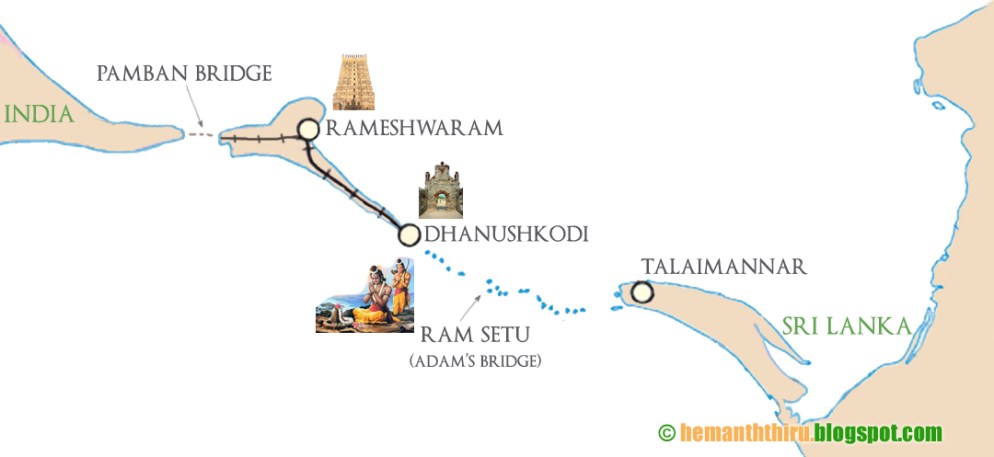
With a considerable amount of heated debate, people in agreement and the one’s against it; the bridge is 30 kilometers (19 miles) in length and differentiates the Gulf of Mannar (southwest) from the Palk Strait (upper east). The scaffold was initially specified in the old Indian Sanskrit epic Ramayana of Valmiki. It shaped piece of an area connects that joined Sri Lanka to the landmass of Asia amid the last ice age. Hindu devotees hold it as the bridge that Lord Rama and his armed force of gorillas and monkeys assembled to achieve evil spirit ruler Ravana’s Lanka.

Fact Source

Amazed, aren’t you?

SOURCE:::: http://www.storypick.com

Natarajan

How a Team of 70 is Helping People to Find Jobs …An Inspiring Story of “Mera Job “

Pallav Sinha and Girish Phansalkar of MeraJob

A team of 70 based out of Delhi is helping nearly 4 lakh job seekers find their careers across sectors. This is their story. 

Every year, thousands of people move from India’s villages and towns to its cities looking for employment opportunities.

They pack their bags and bid their families goodbye with no idea how their life will shape up in a city which is already crowded with people competing for every job opportunity.

On the other hand, there are companies that fall short of manpower because they struggle to find the right match.

When the supply is huge, why do companies still struggle to fill lower end white collar and skilled blue collar vacancies?

This is exactly the question Pallav Sinha, Founder and CEO of Mera Job, asked himself.

“I moved to India in 2008 and soon realised the challenge of hiring good resources. I knew from my past experience in building teams that there was plenty of talent available in the country but it missed the employer’s attention due to lack of right exposure,” shares Sinha.

He saw that no one was focusing on the mass recruitment segment and decided to tap this enormous potential and Mera Job was founded in 2012.

Mera Job is a hybrid talent acquisition startup that strikes a balance between offline and online hiring.

It offers a marketplace for lower end white collar jobs like telemarketing and sales executives, receptionist etc. and even skilled blue collar workers like drivers and delivery boys.

How is it different from similar players in the market?

Mera Job has a unique pre-screening process for jobseekers where they verify and match the skill set of the candidate with the employer’s requirement.

Jobseekers have an option to either get pre-screened online or call the tele-recruitment centre to go through the quick test.

The company plans to rely on its technology platform to gather unique data about registered candidates to analyse future behaviour.

“Once we know (through our data analysis) that a candidate is not looking for say a banking job and would prefer a company located in Ghaziabad we make a note of these preferences.

We don’t send a job recommendation to the candidate that doesn’t match his liking. This not only saves the jobseeker’s time but also helps employers screen candidate without arranging a telephonic or personal interview,” explains Girish.

Pallav, 51, co-founded Fullerton securities (now Dunia Finance) before Mera Job.

He met his co-founders Girish Phansalkar and Raman Thiagarajan at McKinsey, where the two were consulting Pallav on a project at Fullerton.

“I never thought that I would become an entrepreneur. I still feel that I might be the oldest in the startup lot in the country,” giggles Sinha with the enthusiasm of a 23 year old. Girish, in his self-assured and pragmatic style, shares the story of the bonding the founding team shares.

“Pallav, is the ‘ideas man’ in the team. He has vast understanding of consumer markets and Raman brings in high problem solving ability with global experience. I am a techie with years of technology and operational experience,” says Phansalkar, the IIM-A and IIT-B alumnus.

The MeraJob team

The initial idea of Mera Job was to make a repository of around two million profiles which can be accessed by employers through a subscription. But the team soon realised that with this model they would only burn resources in achieving scale without connecting with the employers.

They quickly pivoted and designed a systematic pre-screening process. They will soon be launching their mobile app.

During the discussion Pallav shared a very interesting trivia which changed my assumption about this market.

As many as 80 per cent of job seekers in the mass market own a smart phone.

When they come to the city they do not have a social circle hence they buy a smart phone which is their only source of entertainment.

With a team of 70 people, 400,000 job seekers, and operations in 12 cities, Mera Job raised its initial investment of $ 3 million from private investors and is looking for a series A funding by end of this year.

Their current revenues come from B2B transactions and all services for job seekers are free.

“We feel that skill development of the job seekers will become our focus in the coming months. We have sealed a partnership with NSDC and plan to add counselling and language training to our services portfolio,” adds Pallav. However, sourcing right candidates at the right time stays their biggest challenge.

Like any other businesses, managing efficiency throughout the value chain is critical to their operation.

Pallav feels that the work pressure you feel as an entrepreneur is a positive one as it helps you and your company evolve.

Girish however fears failure for a reason.

“I had an unsuccessful business before Mera Job. At that time failure did not matter much because I was bootstrapping. It was my own money at stake. Now I dread failure because my investors’ money and employees’ careers are at stake.”

The recruitment market in India is worth about $800 million and is growing at 20 per cent annually, according to data by Matrix partners.

We are seeing a second wave of online hiring firms post the Naukri, Monster era.

The new entrants in the market are targeting specific problems that exist in acquiring talent at different levels.

The Indian start-up ecosystem itself is predicted to create 300,000 new jobs in the next few years.

The recruiters however still struggle with piles of unsuitable resumes, long recruitment cycles and fleeting employee loyalties.

Ensuring retention of selected candidates in the lower end job segment is even more challenging as a hike of even a few thousand rupees leads to attrition.

Companies like Mera Job have to fight against the legends of the online hiring industry and find inventive ways of partnering with offline consultants who serve as industry insiders. But with clear focus and 40 years of collective core team experience, Mera Job has already bagged clients like HDFC Bank, Yatra, Britannia and JLL.

source::::: Reema Sathe  in http://www.rediff.com

Natarajan

Solar-Powered Plane on Its First ” Round-The-World ” Flight !!!!

Solar-powered plane begins first round-the-world flight

Swiss plane Solar Impulse 2 landed Monday in Muscat, Oman, the first stopover in the attempt to fly around the world powered by the sun alone. Follow the flight.

Image credit: solarimpulse.com

Image credit: solarimpulse.com

A Swiss plane called Solar Impulse 2 took off from Abu Dhabi, United Arab Emirates Monday morning (March 9, 2015) and later landed at its first stopover in Muscat, Oman. Solar Impulse 2 is the first plane to attempt to fly around the world without a drop of fuel, powered by the sun alone.

Solar Impulse founder Andre Borschberg was the pilot Monday morning at take-off. Borschberg will trade piloting with Solar Impulse co-founder Bertrand Piccard during stop-overs on the months-long journey, expected to end in late July or early August.

You can track the plane’s progress on the Solar Impulse website.

You can also follow Solar Impulse on Twitter or FlightRadar 24.


The solar-powered plane Solar Impluse 2 lands at the Al-Bateen airport in Emirati capital Abu Dhabi on March 2, 2015.

The solar-powered plane Solar Impluse 2 lands at the Al-Bateen airport in Emirati capital Abu Dhabi on March 2, 2015.

The Solar Impulse 2 is made of carbon fiber and has 17,248 solar cells built into the plane’s 236-foot (72-meter) wingspan. The solar cells recharge four lithium polymer batteries. Solar Impulse’s wingspan is larger than that of the Boeing 747, but the plane weighs only around 5,070 pounds (2300 kg) – about as much as a minivan.

On Tuesday, the plane will head for Ahmedabad, India, and after India, to China and Myanmar. The next leg is across the Pacific to land in Hawaii. Then it will head to Phoenix, Arizona, and New York City. The path across the Atlantic will depend on the weather and could include a stop in southern Europe or Morocco before ending in Abu Dhabi.

SOURCE::::: http://www.earthskynews.org

Natarajan

Pamban Bridge… A Fascinating One !!!


Pamban Bridge (named after the place at one end) lies between Indian main land
and Rameswaram island. It was the longest sea bridge for almost a century in India
(built in 1914) until Worli – Bandra sea bridge was built in Mumbai a few years ago.
Now it is the second.

Besides this, it is also a cantilever bridge that opens up in the middle to allow
ships to pass by like the Tower Bridge in London.

It was damaged in a cyclone in 1964 and was restored in just 46 days by E Sreedharan
the father of Delhi Metro.That cyclone had however damaged the link from Pamban to
Dhanuskodi town that vanished in the cyclone, thereby cutting the rail link between India
and Sri Lanka. Along with it went away the name Boat Mail for Madras – Dhanuskodi train.
Boat mail ? yes, because from Dhanuskodi, the passengers used to take a ferry to
Thalaimannar in Sri Lanka and continued their onward train journey all the way to Colombo.
Since the Madras train connected to a boat at the end of the journey, it was called
Boat Mail. This train was also known as Indo Ceylon Express in very early days.
https://i0.wp.com/static.panoramio.com/photos/large/41963310.jpg
https://i0.wp.com/i1.trekearth.com/photos/18313/img_2671.jpg
https://i0.wp.com/www.ramnad.tn.nic.in/images/Final_Scissors%20Bridge%20001.jpg
SOURCE:::: iNPUT FROM A FRIEND OF MINE
Natarajan

Image of the Day…Frozen Sea Waves…. !!!

View larger. | Slushy waves on a Nantucket beach, February 20, 2015.  Photo by Jonathan Nimerfrosh.

View larger. | Slushy waves on a Nantucket beach, February 20, 2015. See the complete collection here. Photos byJonathan Nimerfroh.

Sure, the ocean freezes. But this photo of partly frozen waves – caught by photographer and surfer Jonathan Nimerfroh – fascinated even the experts

As you well know if you live there, the eastern United States has been in a deep freeze throughout February, 2015. Wave after wave of ice and snowstorms have hit the region, and NASA says that hundreds (maybe thousands) of records have been set for daily low temperatures. Now, from a photographer and surfer in Nantucket, Jonathan Nimerfroh, we have this amazing photo from February 20, 2015 of an ocean wave, just before it freezes solid. He calls it a slurpee wave.

The New York Times has a great article about this photo and these slow-moving waves of slush. Jonathan’s photo has also been on the Weather Channel and other places (I first saw it on Facebook; thanks, Beverly Spicer!). Nimerfroh told the New York Times:

I just noticed a really bizarre horizon. The snow was up to my knees, getting to the water. I saw these crazy half-frozen waves. Usually on a summer day you can hear the waves crashing, but it was absolutely silent. It was like I had earplugs in my ears.

Enjoying EarthSky so far? Sign up for our free daily newsletter today!

Of course, the ocean does freeze. Salty sea water has a lower freezing point than the ice in your home freezer, not 32 degrees F but instead about 28.4 degrees F. And it was colder than that on that day in Nantucket, somewhere around 10 degrees F. Still, these waves are something very special, and even experts commented that they had not seen them before. Helen Fricker, a glaciologist at the Scripps Institution of Oceanography in La Jolla, California, who studies the dynamics of ice flows in Antarctica, told the New York Times that a full scientific explanation was “outside her expertise.” Erin Pettit, a glaciologist at the University of Alaska, Fairbanks, added that waves in Alaska tend to break up sea ice and said:

I have never seen frozen waves like this.

Nimerfroh said he returned the following day to the same beach. That day it was a few degrees colder still and the water had completely frozen. He said:

Nothing was moving. There were no waves anymore.

Shop the complete collection of Nantucket Slurpee Wave photos at Jonathan Nimerfroh’s website.

Bottom line: Wave caught in the act of freezing at a Nantucket beach, February 2015, by Jonathan Nimerfroh.

SOURCE::: http://www.earthskynews.org

Natarajan


Image For The Day…. Dwarf Planet Ceres as Seen From Dawn Spacecraft Of NASA…

NASA’s Dawn spacecraft has become the first mission to achieve orbit around a dwarf planet. The spacecraft was approximately 38,000 miles (61,000) kilometers from Ceres when it was captured by the dwarf planet’s gravity at about 4:39 a.m. PST (7:39 a.m. EST) Friday, March 6.

This image of Ceres was taken by the Dawn spacecraft on March 1, just a few days before the mission achieved orbit around the previously unexplored world. The image shows Ceres as a crescent, mostly in shadow because the spacecraft’s trajectory put it on a side of Ceres that faces away from the sun until mid-April. When Dawn emerges from Ceres’ dark side, it will deliver ever-sharper images as it spirals to lower orbits around the planet.

The image was obtained at a distance of about 30,000 miles (about 48,000 kilometers) at a sun-Ceres-spacecraft angle, or phase angle, of 123 degrees. Image scale on Ceres is 1.9 miles (2.9 kilometers) per pixel. Ceres has an average diameter of about 590 miles (950 kilometers).

Dawn’s mission is managed by NASA’s Jet Propulsion Laboratory, Pasadena, California, for NASA’s Science Mission Directorate in Washington. Dawn is a project of the directorate’s Discovery Program, managed by NASA’s Marshall Space Flight Center in Huntsville, Alabama. The University of California, Los Angeles, is responsible for overall Dawn mission science. Orbital ATK Inc., in Dulles, Virginia, designed and built the spacecraft. The German Aerospace Center, the Max Planck Institute for Solar System Research, the Italian Space Agency and the Italian National Astrophysical Institute are international partners on the mission team. For a complete list of acknowledgments, http://dawn.jpl.nasa.gov/mission.

Image Credit: NASA/JPL-Caltech/UCLA/MPS/DLR/IDA 

SOURCE:::: http://www.nasa.gov

Natarajan