” The Best Management Lesson I Have Learned….” See What Dr. Kalam Says …

l2007012512178

IndiaKnowledge@ Wharton : Could you give an example, from your own experience, of how leaders should manage failure?

Kalam: Let me tell you about my experience. In 1973 I became the project director of India’s satellite launch vehicle program, commonly called the SLV-3. Our goal was to put India’s “Rohini” satellite into orbit by 1980. I was given funds and human resources — but was told clearly that by 1980 we had to launch the satellite into space. Thousands of people worked together in scientific and technical teams towards that goal.

By 1979 — I think the month was August — we thought we were ready. As the project director, I went to the control center for the launch. At four minutes before the satellite launch, the computer began to go through the checklist of items that needed to be checked. One minute later, the computer program put the launch on hold; the display showed that some control components were not in order. My experts — I had four or five of them with me — told me not to worry; they had done their calculations and there was enough reserve fuel. So I bypassed the computer, switched to manual mode, and launched the rocket. In the first stage, everything worked fine. In the second stage, a problem developed. Instead of the satellite going into orbit, the whole rocket system plunged into the Bay of Bengal. It was a big failure.

That day, the chairman of the Indian Space Research Organization, Prof. Satish Dhawan, had called a press conference. The launch was at 7:00 am, and the press conference — where journalists from around the world were present — was at 7:45 am at ISRO’s satellite launch range in Sriharikota [in Andhra Pradesh in southern India]. Prof. Dhawan, the leader of the organization, conducted the press conference himself. He took responsibility for the failure — he said that the team had worked very hard, but that it needed more technological support. He assured the media that in another year, the team would definitely succeed. Now, I was the project director, and it was my failure, but instead, he took responsibility for the failure as chairman of the organization.

The next year, in July 1980, we tried again to launch the satellite — and this time we succeeded. The whole nation was jubilant. Again, there was a press conference. Prof. Dhawan called me aside and told me, “You conduct the press conference today.”

I learned a very important lesson that day. When failure occurred, the leader of the organization owned that failure. When success came, he gave it to his team. The best management lesson I have learned did not come to me from reading a book; it came from that experience.

What a wonderful leader!

Source::::::: http://www.mastegg.com

Natarajan

” Saina Nehwal …World No 1 in the Badminton Rankings Now…”

Saina Nehwal, Best in the World, Made in India

Saina Nehwal became the World No. 1 in the badminton rankings with the defeat of Carolina Marin to Ratchanok Intanon in the India Open semifinal. She is the first Indian woman badminton player to attain the feat.

Saina Nehwal 2015 India Open

A World No. 1 badminton player from India?

Ten years ago, anyone who followed Indian badminton even remotely would’ve laughed it off. Yes, India did produce a World No. 1 in Prakash Padukone. Way back in 1980. Yes, another Indian did win the All England title after him. Pullela Gopi Chand in 2001. A feat that got overshadowed by Harbhajan Singh’s hat-trick against Australia at the Eden Gardens in Kolkata on the very same day. But nothing as impactful, impressive or even promising in several years after that. (Saina Celebrates World No. 1 Rank with Crushing Win over Hashimoto)

But sport has its own way of scripting history. A promising youngster from Hisar in Haryana, who had badminton players for parents, Saina Nehwal shifted to Hyderabad midway through her school years. Waking up before anyone else in her class to make it to badminton training to Govardhan Reddy, one of her initial coaches, often falling off to sleep on her father’s scooter on her way back, but still managing to maintain her grades in school. That defined Saina’s first few years, as she started playing junior nationals and satellite tournaments across the country. (Want to be the Best, Says Saina Nehwal)

He’d spent all his savings on his daughter’s training, getting her shoes and racquets, but Dr Harvir Singh, an agricultural scientist, knew it would all be worth it. In 2006, Saina finished as a runner up in the Junior World Championships. But it was only in 2008, when she became the first Indian woman to reach the quarter final of the Olympics, is when the world sat up and took notice of Saina Nehwal. When she lost to Indonesia’s Maria Kristin Yulianti in 3 games in the quarter finals in Beijing, many told Saina this was her best shot at glory and fame, and she’d lost it. Saina still remembers those remarks.

But she knew, as did another man, that this was just the start. In Pullela Gopichand, Saina found the perfect mentor. And in Saina, Gopi found the ward who was forever willing to listen to him, to work as hard as he wanted her to, and follow the path he had chalked out for her future as a world class badminton player.

Under Gopi’s tutelage, Saina blossomed. The Super Series titles started rolling in, starting with the one in Indonesia in 2009. By the next year, Saina had added four more Super Series title to her kitty, and a Commonwealth Games gold and a career high world ranking of 2 to go with that.

Saina Nehwal India Open SF

More girls around the country started picking up racquets, badminton tournaments started getting televised regularly, and in what is extremely rare for sportspersons in India who are not cricketers, Saina even had endorsements. Yes, she was truly a game-changer.

But there was no time to stand and stare. An Olympic medal had to be won. And win she did in London in 2012, a bronze albeit. A brief split with her coach was pointless, as she later admitted.

“I realised after leaving Gopi Sir that I could not move ahead without his help. So I came back to him, I don’t know what had happened, but I want to say sorry now. This medal is my gift to him,” Saina said after the Olympics.

The episode would return to haunt her in a couple of years though. The two years following her Olympic bronze saw Saina go through a very lean patch. She was losing to lower ranked players regularly, and was sluggish on court. Some or the other injury bothered her throughout. And it was during this time that a young and a very hungry PV Sindhu, also a protege; of Gopichand, was snapping at her heels. It didn’t take the media too long to take their knives out, and start writing ‘The End’ to the career of a girls who had several firsts in Indian badminton.

They say that the mind can accommodate either worries, or faith. Not both. Saina chose the latter. And she had the guts to go with that.

In the summer of 2014, she took the decision of changing coaches in order to improve her game, and try something new. Indian badminton’s most successful partnership was thus brought to an end, as Saina chose Vimal Kumar, former national champion and coach to guide and help her out. It was a bold decision in Saina’s words, a risk that she was taking.

And boy did it pay off. In a new training environment with new players, and under a coach she was exchanging more ideas with, Saina was back. And on top of her game. By the end of the year, India’s shuttle queen had won the China Open Super Series, crawled back from 9th in the beginning of the year to 3rd by the end of it, in the world rankings.

Now on top of the world rankings, the first non-Chinese to do so since Tine Baun in 2010, Saina has shown yet again, that she is still the best India has, and the rest have a lot of catching up to do.

Saina has learnt and honed her talent right here in India, under an Indian coach, and made things work for her, just on the basis of sheer hard work and dedication. Yes, it’s come at a price. Hers is almost a monk-like life with no time or space for anything barring badminton.

But that’s how the best in the world get there, isn’t it?

source…www.sports.ndtv.com

Natarajan

NewDelhi is More Polluted than Beijing….

NEW DELHI, India — Weaving through traffic in central New Delhi, Bharat Singh takes his hand off the throttle of his sputtering, three-wheeled rickshaw — India’s cheap alternative to a taxi — and coughs into his fist.

“By the time evening comes around, I’m coughing like crazy and my eyes are red and burning,” he says, speaking Hindi.

“I can’t get to sleep because of the headaches, and when I finally do fall asleep, my coughing wakes me up again.”

Gaunt and rheumy eyed, the 20-year veteran of New Delhi’s congested roads is not alone.

Near daily stats show that the air in India’s capital is far more polluted than in Beijing, where a public outcry prompted the government to shut down factories and restrict the use of cars. And in New Delhi, rickshaw drivers, traffic cops and the underclass that travels by bus and bicycle are the worst affected, according to one new study.

But New Delhi’s problem might not be a lack of strict regulation. Instead, its overly harsh penalties for polluting the air could actually be to blame.

The 1981 air pollution control act — India’s answer to America’s 1963 Clean Air Act — gives regulators the power to ban dirty fuels, cut off water and electricity to factories and bring criminal charges against violators. But there’s no provision allowing them to levy fines. The harsh measures at regulators’ disposal are viewed as “nuclear options” and rarely used.

“Clearly, criminal liability is not working,” says Shibani Ghosh, an environmental lawyer at the New Delhi-based Center for Policy Research, an independent think tank.

“We certainly need to have criminal penalties for more egregious violations of the law. But criminal penalties also come with a higher evidentiary burden, because charges have to be proven beyond a reasonable doubt.”

Without question, the results are disastrous.

In May last year, a World Health Organization study found Delhi to have the world’s worst air pollution, based on the amount of floating particular — the superfine, microscopic particles that cause the worst damage to the lungs — in the city’s air. The Indian capital averaged 153 micrograms per cubic meter in 2013, compared with about 90 in Beijing.

New delhi

Emergency health warnings due to thick smog have been issued by the Indian government in the past.

As a point of reference, the US National Ambient Air Quality Standard is 12 micrograms per cubic meter.

For rickshaw drivers like Singh, living in Delhi means 12- to 16-hour days inhaling microscopic brick dust and other hazardous pollutants, such as lead and arsenic from diesel exhaust.

Worse still, while conducting a real-time study of air quality on the city’s roads, bus platforms and metro stations, the Center for Science and Environment found that levels in heavy-traffic areas were routinely two to four times higher than the average reported by the Delhi Pollution Control Committee. In one congested corner during rush hour, the levels of floating particular exceeded 1,000 micrograms per cubic meter.

Delhi’s pollution problem is the most infamous, but it’s by no means unique in the country. India accounted for a full 11 out of the worst 20 cities in the WHO study — with deadly consequences.

In 2010, a Global Burden of Disease study estimated that 627,000 Indians died prematurely due to outdoor air pollution (with the indoor variety a separate scourge), and experts fear that number could double or triple by 2030.

India Air Pollution

With statistics like those, the impulse is to treat polluters harshly. But, as it turns out, allowing violators to pay their way out of trouble — rather than mandating jail time — could be more effective, according to research by economists from the University of Chicago, Harvard and Yale.

“Criminal penalties are very expensive to enforce,” said Anant Sudarshan, one of the study’sauthors, and the head of the India division of the University of Chicago’s Energy Policy Institute at Chicago.

“You have to file a case and win that case, and that can drag on for years. And [criminal penalties] can be too severe for minor infringements.”

The problem is that while India mandates expensive pollution control standards for industry, it fails to enforce those standards because its regulators cannot don’t have the legal expertise — or endurance — to send violators to jail, Sudarshan’s colleagues Michael Greenstone and Rohini Pande wrote in a recent op-ed for the New York Times.

smog india

A rag picker collects recyclable materials in the polluted waters of river Yamuna amid dense smog in the old quarters of Delhi November 8, 2012.

Instead, they argue, India should follow the method that the US government used to fight acid rain in the 1980s. The United States implemented a “cap and trade” system, which creates financial incentives for industry to clean up its act — including stiff fines for exceeding norms.

Apart from making regulators less reluctant to penalize violators by giving them smaller bullets, such a system would also make companies themselves less likely to skirt the rules, Sudarshan said. Now, the regulators set a pollution norm and every factory has to meet it — it’s the same standard for a sponge iron producer spending $20 million and a garment maker spending $20,000. In contrast, cap-and-trade would let companies for whom reducing pollution is prohibitively expensive buy credits from firms in other industries.

“If you set limits on every plant individually, often those limits can be too expensive for some plants and too lenient for others,” Sudarshan said. “So command-and-control tends to enforce costs that are too high, which makes them more likely to be violated.”

That said, in other areas, such as traffic policing, India’s regulators view fines as an opportunity to pocket 10 percent in exchange for looking the other way. So it’s not hard to understand the skepticism of the average rickshaw driver.

“I don’t think anything can improve matters,” Singh said.

Even the much-vaunted Delhi Metro hasn’t made a dent, he argued. The new stations underway all over the city, he said, seem to have more than made up for any reduction in car commuters with an increase in construction dust and traffic snarls.

“You just sit there in the traffic jam breathing in the poison,” he said.

This article originally appeared at GlobalPost. Copyright 2015. Follow GlobalPost on Twitter

SOURCE:::::::::::: JASON OVERDORF, GLOBALPOST ….www.businessinsider.com

Natarajan

Indian Airports Hold Top 6 Positions in South Asia Aviation Market…

Here we look closely at the airports of South Asia and highlight the region’s top performers. 

DATA: What are the Fastest Growing Airports in South Asia?

Ahead of this year’s Routes Asia forum, Routesonline is providing a snapshot on the leading airlines and airports and most used aircraft types across the region.  Here we look closely at the airports serving South Asia and highlight the region’s top performers.

Scheduled Air Capacity From South Asia (2005 – 2014)

Our analysis of published schedules for the past ten years shows that air capacity within and from South Asia has risen from 69,033,731 available seats in 2005 to 158,760,706 available seats in 2014.  This represents a growth of 130.0 per cent across the period, an average annual increase of 14.4 per cent.  In the past year capacity increased 7.3 per cent.

Year Available Capacity
2005 69033731
2006 88368144
2007 109348747
2008 118056955
2009 117414226
2010 125066419
2011 143163209
2012 143648290
2013 148024633
2014 158760706

Top Ten Airports in the South Asian Market (2014) ….

Delhi (DEL)    Mumbai (BOM)      Bangalore (BLR      Chennai (MAA)      Kolkata (CCU)   Hyderabad (HYD)     Colombo (CMB)        Dhaka (DAC)       Cochin (COK

Indian airports hold the top six positions in the listing of largest facilities for air travel within and from South Asia, highlighting the key role new entrants into the local market and infrastructure growth at airports in the country will have on the future of aviation in this region.

The big metropolis hubs of Indira Gandhi International Airport in Delhi and Chhatrapati Shivaji International Airport in Mumbai lead the way with 16.8 per cent and 15.3 per cent shares of capacity within and from South Asia in 2014, respectively. With a faster rate of growth Delhi’s gateway has strengthened its prominence in the region with its share of available seats rising 0.3 percentage points between 2013 and 2014 following a 9.0 per cent rise in departure capacity.

The Indian airports hold seven of the top ten largest airports in South Asia with Kempegowda International Airport in Bangalore (6.2 per cent share); Chennai International Airport (6.1 per cent share); Netaji Subhas Chandra Bose International Airport in Kolkata (4.9 per cent share); Rajiv Gandhi International Airport in Hyderabad (4.5 per cent share) and Cochin International Airport (2.6 per cent share), the others.

The largest non-Indian airport in South Asia by departure capacity in 2014 was Bandaranaike International Airport, serving the Sri Lankan capital city of Colombo, which was ranked seventh with a 3.3 per cent share. The other non-Indian airports in the top ten were: Dhaka’s Shahjalal International Airport in Bangladesh (2.8 per cent share) and Karachi’s Jinnah International Airport in Pakistan (2.6 per cent share).

Fastest Growing Airports in the South Asian Market (2010-2014)

Looking at capacity data in the region across a five year period, it is Rajiv Gandhi International Airport in the Indian city of Hyderabad that has grown by the biggest margin with capacity up 68.6 per cent from 2010. The modern facility was opened in March 2008 as a replacement for the city’s former airport at Begumpet and is viewed upon as one of the most efficient facilities across the Asian market, regularly appearing highly in customer surveys.

The performance at Hyderabad over the last five years only just exceeded that of two other Indian airports. Pune Airport grew capacity 65.9 per cent between 2010 and 2014, while at Lucknow’s Chaudhary Charan Singh International Airport departure seats increased 60.6 per cent, despite capacity falling last year.

Outside of the dominant Indian market, Ibrahim Nasir International Airport, the main international airport in the Maldives, was the fastest growing airport in South Asia with departure capacity up 56.4 per cent over the past five years. Bandaranaike International Airport in Colombo, Sri Lanka also saw a notable 45.3 per cent capacity rise between 2010 and 2014, highlighting its emergence as a regional hub for the oneworld alliance and resurgence of tourism to the country.

SOURCE::::: www .routesonline.com

natarajan


Unanswered Questions and Equally Startling Historical Wonders…

India has always been a land of great achievements, people, fables, anecdotes and what not. It goes without saying that it is indeed very difficult to understand and define India in one go. Other than the beauty, culture, rich history, diversity in nature so on and so forth, we have some mindboggling things that made scientist from the west and around the globe question their understanding.

Numerous things in India, including the ones that are mentioned below stand unanswered and beyond doubt startling for the world. Here they are;

1. Karna’s Kavach

Image source

Karna the child of Surya ( Sun god) was born with a shield that protected him from weapons and atrocities of the war. It might be similar to the organic shield like exoskeleton found in tortoise, still extremely solid. Not at all like fake exoskeleton used by people, Karna’s Kavach was mixed with his body. He later gave it to Indra, the father of Arjuna, who was threatened by Karna’s skill, perseverance and strength.

Fact Source


2. Hand Carved Sundials (clock ) at Konark Temple

Image source

This temple is dedicated to the Sun god Surya, and no wonder that it embodies an accurate clock, which dates back to 1250 A.D. The whole sanctuary is a flawlessly adorned chariot mounted on 24 wheels (for day clocks and night clocks), each around 10 feet in measurement and drawn by 7 strong stallions. The 7 steeds speak to the times of the week and the 12 sets of wheels speak to the 12 months of the year.

Fact Source


3. Shiva Lingam at Amarnath Cave

Image source

Arranged in a thin canyon at the elevation of 3,888 meters, the sacred Amarnath cave bears the world renown stalagmite of ice. The well known Amarnath Ice Linga is framed by dropping water through the mountain hole, which grows up vertically to form that Linga. People say that on the Shravan day, Lord Shiva described Amar Katha — the mysteries of the universe — to Goddess Parvati.

Fact Source


4. Fine architecture of Kailasa Temple Ellora Caves

Image source

As a world heritage site, Ellora caves invite plethora of visitors every year, in search of historical anecdotes, however, what lies ahead of that idea is the magnificent design, architecture, structure and individuality of the caves. The entire temple has been carved out of a huge mountain, a technique so unique and hard to accept from that period. It remains one of its kinds in the entire world. Looks like a well contemplated result of a very advanced civilization.

Fact Source


5. Ancient Indian Rope Trick

Image source

Even though, the world claims that nobody has seen the classic version, but what people are talking about is a much simpler version of the trick, which many believe as the amalgamation of numerous tricks at once. This rope trick showcases an erect rope that is sturdy enough to bear the weight of a human.

Fact Source


6. Gyanganj- The Land of Immortals

Image source

In numerous mythologies, mountains are common homes to celestial and godlike creatures. Accordingly, its no shock that the world’s mightiest mountain extend, the Himalayas, is liable to obscure whisperings of secretive creatures hidden away in the remote and inaccessible valleys of the Himalayan mountains. It is said to be an antiquated Indian and Tibetan story of a city-kingdom of complex and everlasting creatures. It is said that Gyanganj is shrewdly covered or actually existing in a totally distinctive plane of reality.

Fact Source


7. Ancient acoustic devices of Golconda Fort

Image source

Clap your fingers and you might be heard a division away. The basic thing anybody entering the Golconda Fort in Hyderabad does is a clap. As soon as you enter through the main entryway into the great patio, you’d clap because the fine architecture allows it to be heard at the other corner of the fort. Furthermore, this clap can be heard high up the slope outside the King’s chamber. When you finish your trek up there, you’d be able to hear other’s clapping on the other end.

Fact Source


8. Vacillating relationship or Ayurveda and Modern Science

Image source

When everything is said and done, we shall see the dwindling bond between the two. Even years of accuracy, perfection, validity and results kept the alliance weakly. Why hasn’t the amazing show of research into Ayurveda brought any explanation for modern medications? Why are these medications unique to cutting edge drug? It is safe to say that it is that Ayurveda takes a shot at confidence alone? Provided that this is true, what is one to make of the a great many “exploratory” studies contending for Ayurvedic medications?

Fact Source


9. Existence of Adam’s Bridge (Rama Setu)

Image source

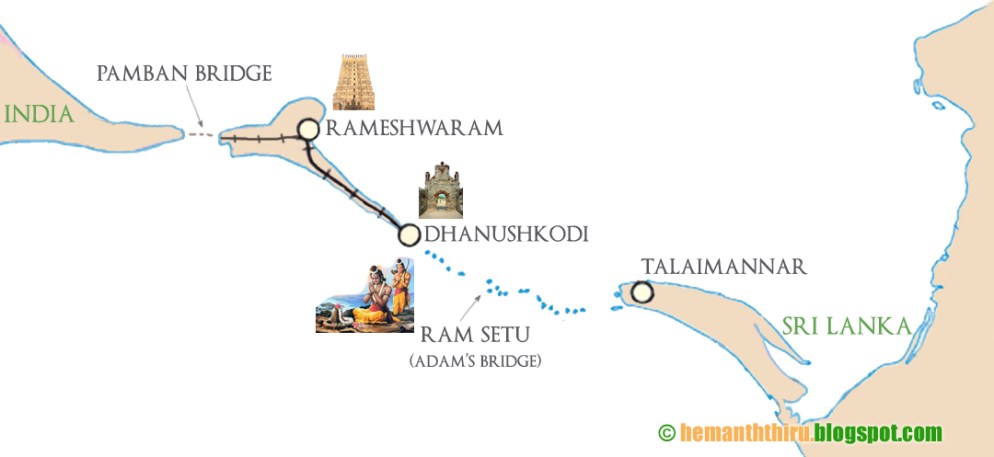
With a considerable amount of heated debate, people in agreement and the one’s against it; the bridge is 30 kilometers (19 miles) in length and differentiates the Gulf of Mannar (southwest) from the Palk Strait (upper east). The scaffold was initially specified in the old Indian Sanskrit epic Ramayana of Valmiki. It shaped piece of an area connects that joined Sri Lanka to the landmass of Asia amid the last ice age. Hindu devotees hold it as the bridge that Lord Rama and his armed force of gorillas and monkeys assembled to achieve evil spirit ruler Ravana’s Lanka.

Fact Source

Amazed, aren’t you?

SOURCE:::: http://www.storypick.com

Natarajan

How a Team of 70 is Helping People to Find Jobs …An Inspiring Story of “Mera Job “

Pallav Sinha and Girish Phansalkar of MeraJob

A team of 70 based out of Delhi is helping nearly 4 lakh job seekers find their careers across sectors. This is their story. 

Every year, thousands of people move from India’s villages and towns to its cities looking for employment opportunities.

They pack their bags and bid their families goodbye with no idea how their life will shape up in a city which is already crowded with people competing for every job opportunity.

On the other hand, there are companies that fall short of manpower because they struggle to find the right match.

When the supply is huge, why do companies still struggle to fill lower end white collar and skilled blue collar vacancies?

This is exactly the question Pallav Sinha, Founder and CEO of Mera Job, asked himself.

“I moved to India in 2008 and soon realised the challenge of hiring good resources. I knew from my past experience in building teams that there was plenty of talent available in the country but it missed the employer’s attention due to lack of right exposure,” shares Sinha.

He saw that no one was focusing on the mass recruitment segment and decided to tap this enormous potential and Mera Job was founded in 2012.

Mera Job is a hybrid talent acquisition startup that strikes a balance between offline and online hiring.

It offers a marketplace for lower end white collar jobs like telemarketing and sales executives, receptionist etc. and even skilled blue collar workers like drivers and delivery boys.

How is it different from similar players in the market?

Mera Job has a unique pre-screening process for jobseekers where they verify and match the skill set of the candidate with the employer’s requirement.

Jobseekers have an option to either get pre-screened online or call the tele-recruitment centre to go through the quick test.

The company plans to rely on its technology platform to gather unique data about registered candidates to analyse future behaviour.

“Once we know (through our data analysis) that a candidate is not looking for say a banking job and would prefer a company located in Ghaziabad we make a note of these preferences.

We don’t send a job recommendation to the candidate that doesn’t match his liking. This not only saves the jobseeker’s time but also helps employers screen candidate without arranging a telephonic or personal interview,” explains Girish.

Pallav, 51, co-founded Fullerton securities (now Dunia Finance) before Mera Job.

He met his co-founders Girish Phansalkar and Raman Thiagarajan at McKinsey, where the two were consulting Pallav on a project at Fullerton.

“I never thought that I would become an entrepreneur. I still feel that I might be the oldest in the startup lot in the country,” giggles Sinha with the enthusiasm of a 23 year old. Girish, in his self-assured and pragmatic style, shares the story of the bonding the founding team shares.

“Pallav, is the ‘ideas man’ in the team. He has vast understanding of consumer markets and Raman brings in high problem solving ability with global experience. I am a techie with years of technology and operational experience,” says Phansalkar, the IIM-A and IIT-B alumnus.

The MeraJob team

The initial idea of Mera Job was to make a repository of around two million profiles which can be accessed by employers through a subscription. But the team soon realised that with this model they would only burn resources in achieving scale without connecting with the employers.

They quickly pivoted and designed a systematic pre-screening process. They will soon be launching their mobile app.

During the discussion Pallav shared a very interesting trivia which changed my assumption about this market.

As many as 80 per cent of job seekers in the mass market own a smart phone.

When they come to the city they do not have a social circle hence they buy a smart phone which is their only source of entertainment.

With a team of 70 people, 400,000 job seekers, and operations in 12 cities, Mera Job raised its initial investment of $ 3 million from private investors and is looking for a series A funding by end of this year.

Their current revenues come from B2B transactions and all services for job seekers are free.

“We feel that skill development of the job seekers will become our focus in the coming months. We have sealed a partnership with NSDC and plan to add counselling and language training to our services portfolio,” adds Pallav. However, sourcing right candidates at the right time stays their biggest challenge.

Like any other businesses, managing efficiency throughout the value chain is critical to their operation.

Pallav feels that the work pressure you feel as an entrepreneur is a positive one as it helps you and your company evolve.

Girish however fears failure for a reason.

“I had an unsuccessful business before Mera Job. At that time failure did not matter much because I was bootstrapping. It was my own money at stake. Now I dread failure because my investors’ money and employees’ careers are at stake.”

The recruitment market in India is worth about $800 million and is growing at 20 per cent annually, according to data by Matrix partners.

We are seeing a second wave of online hiring firms post the Naukri, Monster era.

The new entrants in the market are targeting specific problems that exist in acquiring talent at different levels.

The Indian start-up ecosystem itself is predicted to create 300,000 new jobs in the next few years.

The recruiters however still struggle with piles of unsuitable resumes, long recruitment cycles and fleeting employee loyalties.

Ensuring retention of selected candidates in the lower end job segment is even more challenging as a hike of even a few thousand rupees leads to attrition.

Companies like Mera Job have to fight against the legends of the online hiring industry and find inventive ways of partnering with offline consultants who serve as industry insiders. But with clear focus and 40 years of collective core team experience, Mera Job has already bagged clients like HDFC Bank, Yatra, Britannia and JLL.

source::::: Reema Sathe  in http://www.rediff.com

Natarajan

Pamban Bridge… A Fascinating One !!!


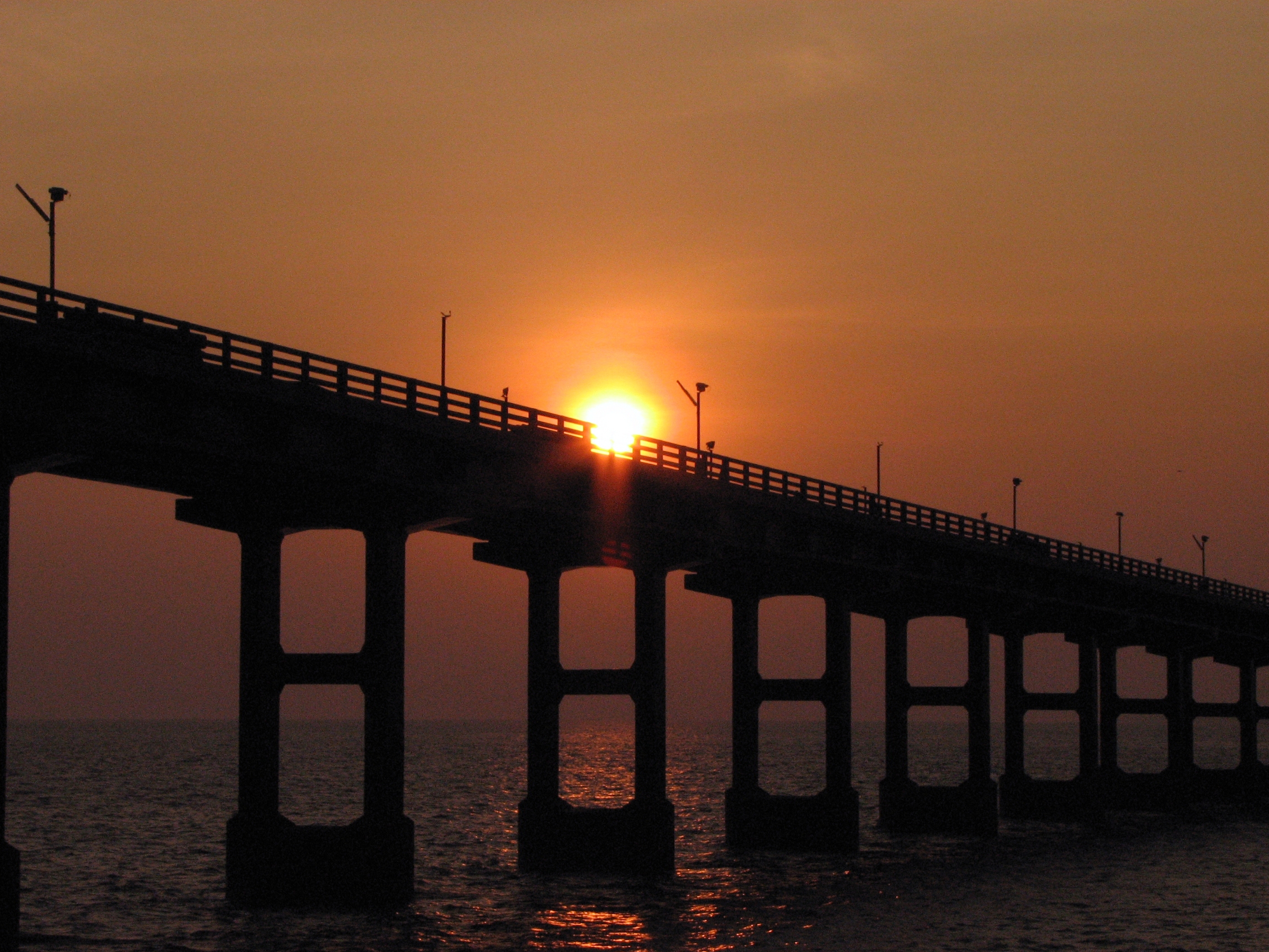
Pamban Bridge (named after the place at one end) lies between Indian main land
and Rameswaram island. It was the longest sea bridge for almost a century in India
(built in 1914) until Worli – Bandra sea bridge was built in Mumbai a few years ago.
Now it is the second.

Besides this, it is also a cantilever bridge that opens up in the middle to allow
ships to pass by like the Tower Bridge in London.

It was damaged in a cyclone in 1964 and was restored in just 46 days by E Sreedharan
the father of Delhi Metro.That cyclone had however damaged the link from Pamban to
Dhanuskodi town that vanished in the cyclone, thereby cutting the rail link between India
and Sri Lanka. Along with it went away the name Boat Mail for Madras – Dhanuskodi train.
Boat mail ? yes, because from Dhanuskodi, the passengers used to take a ferry to
Thalaimannar in Sri Lanka and continued their onward train journey all the way to Colombo.
Since the Madras train connected to a boat at the end of the journey, it was called
Boat Mail. This train was also known as Indo Ceylon Express in very early days.
https://i0.wp.com/static.panoramio.com/photos/large/41963310.jpg
https://i0.wp.com/i1.trekearth.com/photos/18313/img_2671.jpg
https://i0.wp.com/www.ramnad.tn.nic.in/images/Final_Scissors%20Bridge%20001.jpg
SOURCE:::: iNPUT FROM A FRIEND OF MINE
Natarajan

One Year on, This Chennai Family Waits for MH 370 Passenger… Whole World Still Looking For Clues…


Chandrika Sharma(L)was one of the 239 people on board the ill-fated MH370 flight that disappeared while on its way to Beijing on March 8, 2014. In this photograph, she is seen with her daughter Meghna and husband Narendran.

KS Narendran, Chandrika Sharma’s husband, is a shattered man. His wife was one of the 239 people on board the ill-fated MH370 flight that disappeared while on its way to Beijing, one year ago on March 8, 2014.

Sharma had taken the flight on her way to Ulan Bator to participate in a Food and Agriculture Organisation conference to represent the NGO she worked for. Narendran, a management consultant, is a quiet man and has since chosen to keep to himself.

A colleague of Sharma at the NGO she worked at, International Collective in Support of Fishworkers (ICSF), said Narendran did not want to be disturbed. “Till date he has not received any death certificate,” the colleague added

https://i0.wp.com/www.hindustantimes.com/Images/popup/2015/3/08-03-pg21a.jpg

The couple’s only daughter is studying in a Delhi college and is currently preparing for her annual examinations.

On Friday, Narendran was present at a workshop organised by the NGO where Sharma’s co-workers and government officials paid tribute and spoke about her commitment to the cause and dedicated service to the people.

A stoic Narendran looked on as speaker after speaker narrated their own experiences at the NGO and shared their thoughts about Chandrika Sharma.  The ICSF in its website homepage has a section titled “Waiting for Chandrika Sharma”.

If the massive undersea search for Malaysia Airlines Flight 370 turns up nothing by the end of May, the three countries leading the effort will go “back to the drawing board,” Malaysia’s transport minister said on Saturday.

Liow Tiong Lai told a small group of foreign reporters on the eve of the anniversary of the plane’s disappearance that he remains cautiously optimistic the Boeing 777 is in the area of the southern Indian Ocean where the search is ongoing.

Despite the exhaustive search for the plane, which disappeared last March 8 during a flight from Kuala Lumpur to Beijing, no trace of the jet has been found. Malaysia’s government on January 29 formally declared the incident an accident and said all 239 people on board were presumed dead.

“By the end of May, if we still can’t find the plane, then we will have to go back to the drawing board,” Liow said.

Asked if Malaysia might stop the search if there are no new leads by the end of May, when bad weather usually sets in, Liow said it was “too early to pre-empt anything now,” and that the government would continue to rely on the group of experts leading the hunt.

“We stand guided by the expert team,” he said.

“I am cautiously optimistic it should be in this area,” he said, adding that “we need directions, we need plans, we need to review all the data that we have.”

Ships looking for debris from the plane on the ocean floor off the coast of western Australia have so far scoured 44 percent of the 60,000-square-kilometer (23,166-square-mile) area the search has been focused on, Liow said. In the latest report he received Friday, he said the search team had identified 10 hard objects that still need to be analysed.

Such findings, which often include trash and cargo containers from passing ships, have been common during the search, and so far no trace of wreckage has been located.

Liow said that Australia, Malaysia and China would meet next month to discuss the next steps in the search. Most of the plane’s passengers were Chinese.

Australian transport minister Warren Truss said last week that if the plane isn’t found by May, one option is to expand the hunt beyond the current search zone to a wider surrounding area.

Australian Prime Minister Tony Abbott said on Thursday, “I can’t promise that the search will go on at this intensity forever,” but added that “we will continue our very best efforts to resolve this mystery and provide some answers.”

Liow said an interim report on the investigation – a requirement under international civil aviation regulations – would be presented to the Malaysian government on Saturday and released to the public on Sunday. He didn’t comment on it.

But he outlined measures his government has already undertaken, including plans to upgrade radar systems to cope with bigger traffic volume and a new tracking system on Malaysia Airlines flights that sends aircraft data every 15 minutes, instead of the previous 30 to 40 minutes.

Liow said the government has allocated 700 million ringgit ($190 million) for the improved radar.

He said that the radar upgrade had been in the works even before Flight 370 disappeared. The plane dropped off civilian radar when its transponder and other equipment were switched off shortly after takeoff from Kuala Lumpur, but was tracked for some time by Malaysia’s military radar as it headed south across the country toward the Indian Ocean.

SOURCE:::: http://www.hindustantimes.com

Natarajan

” This All Women Team Took a Road Trip To INSPIRE other Women …” Also Spreading the Message of Women Empowerment…

A group of seven women embarked on a road trip in January 2015

In January 2015, a group of women travelled 5000 kilometres in India over eight cities in 28 days to spread the message of women’s empowerment and safety while on the road.

This is the first hand experience of the journey from Vidula who led the initiative. Read on!    I had always wanted to drive a car along the coast of the Indian Peninsula.

The maps were the first thing I worked on. Mahindra agreed to sponsor the Scorpio Adventure 4×4 vehicle.

Eventually, we had a real team of seven women raring to go.

The budget was Rs 1500 per head per day for food, fuel and accommodation.

We attended a first aid workshop with Anish Menon from Pune while Mahindra conducted a car maintenance workshop for us where we learned how to change the stepney.

The event was flagged off on the January 4, 2015.

On days one and two, we witnessed the beautiful Konkan coast, blue skies, lovely people and delectable food.

As the roads were badly maintained we ended up driving nine hours on these two days.

We decided then to stick to the national highways.

That sort of eased the pressure and we were able to stop by and see some places.

Malvan was the next stop where we swam in the sea at night.

Day three was Agonda in Goa!

Food was the highlight — delicious pancakes and chicken cafereal, a famous Goan dish.

We interviewed Belinda Mueller, who is a psychiatrist by profession and a long distance cyclist.

One of the girls got a haircut at a local barber shop and she let go of all her long lovely curls.

The Karnataka stretch was pretty, lined with rivers, bridges, seas, coconut trees, tiny villages and fields.

We stopped for some gajras (flower necklaces) that we wore on our hands and necks.

We stopped at a local shack.

There was an amma who was really keen to speak to us but didn’t know our language and we didn’t know hers.

Very affectionately she served us everything.

She smiled and laughed at everything we said.

We then went to Mirjan Fort which is a 16th century fort, built during the reign of Adil Shah.

Enroute, we stopped at Murudeshwar where the big Shiva statue was the highlight.

Back in the car, we read out loud some poetry by Pablo Neruda, and had some good laughs recording the poetry session.

In Udupi, we tried every local dish that we could get our hands on.

In Kerala, whenever we called the hotels for directions, all we would get was, “Please give the phone to the driver.”

They assumed that the driver would always be the stereotypical male.

After telling them that we women were driving ourselves, they meekly gave us directions.

In Kozhikode, for breakfast, the lady of the homestay made us some local puttu that we had with bananas.

Kochi biennale was going on and we got to see some art at a café.

The following day we stayed at the Kovalam beach.

It was much quieter after sunset, and spent the evening talking at a restaurant.

It was time for a rest day when one of the girls decided to go bald and felt liberated.

Kanyakumari was at the tip of the peninsula. The roads were far better on the east coast than the west.

The following day, on our way to Rameshwaram, we saw some beautiful sunflower fields.

Another day gone by and we saw ourselves make our way to Velankanni, which turned out to be a pretty little, clean town.

Next, we left for Puducherry. Enroute was Tranqeubar.

We stopped for a snack at the ‘Bungalow on the beach’.

There is an old Dutch fortress from the 1600s that stands on the shore.

We partied in Puducherry.

Two of the girls had emergencies back home and had to leave the trip midway.

It was down to two of us for the next couple of days.

We decided to continue nevertheless as we were going to pick up the last participant of the drive.

Close to Sullurupeta is the Pulicat lake and bird sanctuary which is the second largest brackish water lake in India.

We saw in the distance pink flamingoes, the exotic side of nature.

We drove from Nellore to Vijayawada to pick up our final companion and interview Mythri.

We reached Kakinada and then Vishakapatnam where the submarine museum was shut for renovation because a cyclone called HudHud had devastated it.

In Odisha, the first halt was at Gopalpur, a small village we had never heard of.

We then made our way to Puri.

We interviewed Claire Prest, the Co-founder of Grass Route Journeys.

We saw the Jagannath Puri temple where non-Hindus were not allowed, the women ululated, the men threw their hands up in the air with cries of joy and the deity was colourful and beautiful.

We hired a boat on Chilika Lake and saw some exotic birds. We visited the Konark Temple which is magnificent.

We also went to Raghurajpur where everyone from different families worked towards a common cause — art.

Chandipur beach which was our last stop in Odisha is also called the vanishing beach because twice in a day water recedes for 3 kms as this is an elevated beach. It was beautiful and there weren’t too many people on the beach.

We handed over the car to Mahindra in Kolkata and the road trip had come to an end.

We spent three days here, walking around and clicking random street pictures.

We visited the 100-year-old, India Coffee House and saw the Rabindranath Tagore museum in old Kolkata.

We interviewed musician Anushree Gupta in Kolkata.

The whole drive was about women’s empowerment.

It is about putting thoughts into action.

We were more careful and cautious on the east coast than the west.

Each one of us had a bottle of pepper spray.

Women are not expected to drive.

Belinda Mueller, the first Goan woman, whom we interviewed said, “Don’t let fear restrict you. But don’t do anything silly and stupid.”

The whole drive was about staying safe and common sense is what it took us to stay safe.

Men have to be more accepting of women. We wanted to be the seeds of change.

We had done that!

Source:::::  Vidula in http://www.rediff.com

Natarajan


HolikaDahan and The Stories Related to the Festival….” Victory of Good Over Evil “

The festival of Holi is associated with different mythological and spiritual stories. Out of the many tales, the most prominent is that of a devotee – Prahlad, his father Hiranyakashyap and Hiranyakashyap’s sister Holika. This story behind holika dahan is a testament to the power of bhakti (devotion).

King Hiranyakashyap worshiped Lord Brahma for years and, with penance he was able to impress him. Lord Brahma granted wishes of the king which were:

– King Hiranyakashyap cannot be killed by human being or an animal

– He will not die either in his home or outside the home

– He will not die in the day or at night

– He will not die either by astra or shastra (weapons)

– King Hiranyakashyap will not die either on land or in the sea or in the air

With such blessings the king had become invincible and wanted people in his kingdom to preach him as God. Everyone did except King Hiranyakashyap’s son Prahlad who preached Lord Vishnu. Offended by his son’s disobedience, King Hiranyakashyap decided to kill Prahlad and made several attempts too. All his attempts went in vain as Prahlad was saved by Lord Vishnu each time. King Hiranyakashyap then asked Holika, his sister, to kill Prahlad. Holika had a gift – she could not be harmed or burned by fire. Holika’s blessing was in the form of a shawl, which would protect her. As asked by her brother, Holika get herself seated in the flames with Prahlad on her lap to kill him. All the while Prahlad kept chanting Lord Vishnu’s name. As soon as the fire soared, the blessed shawl of Holika fluttered away to cover Prahlad. In this way, Prahlad lived and Holika burnt and died. This is how Holi gets its name from Holika and is celebrated as a festival that marks the victory and power of bhakti (devotion).

In some parts of the country, story of Pootana or Putana is also prevalent as the reason to celebrate Holi. The demon king Kansa (uncle of Krishna) feared getting killed one day by Lord Krishna. Kansa sent Putana to kill Krishna through her poisonous breast milk. She came to baby Krishna and started feeding of her poisonous milk. Lord Krishna, knowing her demonic intentions, sucked out Putana’s life-force while she fed him her milk and she turned into her original giant and scary form. Lord Krishna sucked all her blood until Putana was killed. It is said that it was the night of Holi when Putana was killed and Lord Krishna proved his greatness. Some who view the origin of festivals from seasonal cycles believe that Putana represents winter and her death the cessation and end of winter.

We can follow whichever story behind celebrating Holi but all the stories have the same crux – Victory of good over evil. In 2015, Holika Dahan is being celebrated on 5th March.

HOLI  GREETINGS TO ALL

source::::www.in.lifestyle.yahoo.com

Natarajan