” Satellite Image of India During Diwali” …Real and Fake !!!

The Hindu festival of Diwali celebrates the victory of Good over the Evil and Light over Darkness. It also marks the beginning of the Hindu New Year. This year, Diwali falls on October 23. Lighting lamps, candles, and fireworks are a big part of Diwali. It’s a celebration of light! But can you see those celebratory lights from space? The answer is no. NASA saysthe extra light produced during Diwali is so subtle that space images don’t show it. This post is about a real satellite image of India during Diwali, versus a false one that’s been circulating on the Internet for a few years, especially around the time of the Diwali festival.
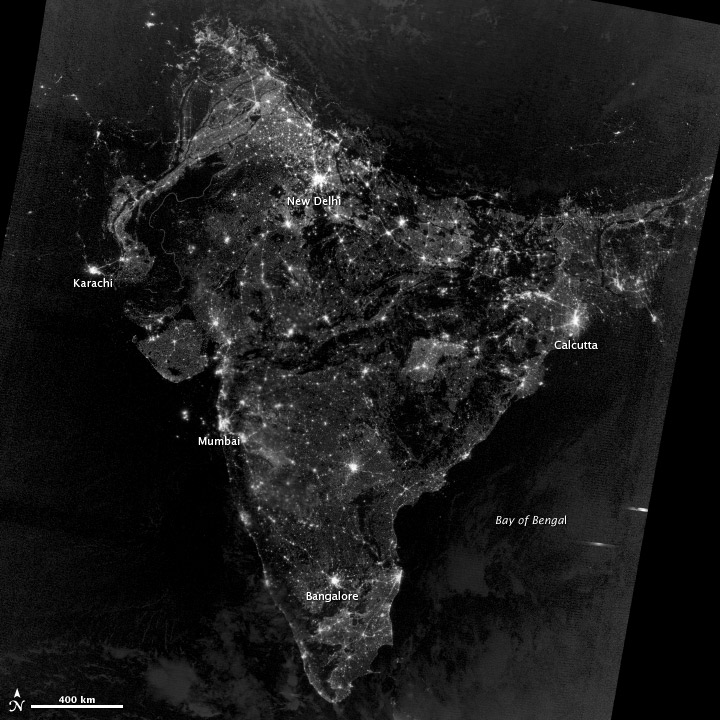
First, a real image:

The image above – which has been artificially brightened – shows what India looked like from space on the night during Diwali in November, 2012. It’s what India looks like from space onany night, according to NASA.

This image is from a NASA satellite known as Suomi NPP, for National Polar-orbiting Partnership. An instrument carried on this satellite – which detects light in a range of wavelengths from green to near-infrared – acquired this image in a single night. The image has been brightened to make the city lights easier to distinguish.

Most of the bright areas are cities and towns in India, which is home to more than 1.2 billion people and has at least 30 cities with populations over 1 million. Cities in Bangladesh, Nepal, and Pakistan are also visible near the edges of the image.
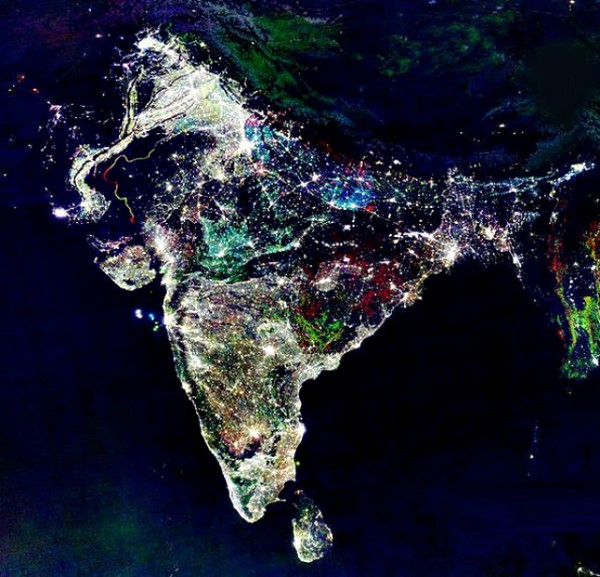
Now, the fake one:

In contrast, here is the false Diwali image, which has been circulating via the Internet for some years. It doesn’t show what it claims to show; that is, it doesn’t show India on a single night during the Diwali festival.

This image comes from satellite data, too, but not a single satellite on a single night. It’s based on data from U.S. Defense Meteorological Satellite Program (DMSP) satellites, and it’s a color-composite created in 2003 by NOAA scientist Chris Elvidge to highlight population growth over time. In this image, white areas show city lights that were visible prior to 1992, while blue, green, and red shades indicate city lights that became visible in 1992, 1998, and 2003 respectively.

Bottom line: This post contains a real space image of India, taken during the 2012 Diwali festival. The image is shown in contrast to another space image – a composite, put together with data taken over many years – which has circulated in recent years. The composite image does not show India during Diwali. NASA says the extra light so many enjoy during Diwali would not be visible from space.

SOURCE::::earthskynews

Natarajan

” அவ்வையாரின் விநாயகர் அகவல் …”


Avaiyar (meaning a very Old mother) was one of the very great women poets of ancient Tamil Nadu.(In telugu even today mother is called Avva) Apart from being a great poet, she played a very great role in the politics of those days, by making the great kings obey her.There are many references to her being a great Devotee of Lord Subrahmanya. Her well known work is AthiChoodi, which was written foer easy learning by Tamil Children. It is interesting to note that even today, Athichoodi shows the simple path to live well, for all children. Vinayagar Agaval is another one of her great works. Agaval means blank poetry and it is a song addressed to Lord Ganapathy . He is addressed as Vinayagar (he who removes obstacles) or Pillayar in Tamil. This prayer is an extremely popular one in Tamil Nadu. It clearly brings out the mastery of Avvaiyar in the Yoga, thathric practices and Saivism, possibly derived from the contribution of Sidhas in Tamil Nadu and the Tamil Nadu Saivism

SOURCE::::www.periva.proboards.com and You Tube

Natarajan


Message For the Day…” Signifacance of Genuine Deepawali …”

The festival of Deepavali is to express gratitude at the defeat of the Naraka (demonic) tendencies in man, which drags one down from Divinity. Naraka, whose death at the hands of Krishna is celebrated today, signifies hell. Narakaasura is the personification of all the traits of character that obstruct the upward impulses of man. The human being is a composite of man, beast and God, and in the inevitable struggle among the three for ascendency, you must ensure that God wins, suppressing the merely human and the lowly beast. The griha (home) where the Name of the Lord is not heard is a guha (cave), and nothing more. As you enter it, as you leave it and while you are in it, regularly perfume it, illumine it and purify it with the Name. Light it as a lamp at dusk and welcome it at dawn, as you welcome the Sun. That is the genuine Deepavali, the Festival of Lamps.

Sathya Sai Baba

Joke of the Day…” Help Me Please …” !!!

There was a hysterical call at the fire department, and it went like this: Help me, please help me; there is a cat meowing and yowling with frequency and urgency. It is going to hurt me, it’s going to kill me; can you please help me, and send the fire squad right away? Take it easy, cats don’t hurt us, just relax wait until he leaves.

You don’t understand it is going to bite me, it is going to kill me; it is going to be fatal!

Cats aren’t like snakes or spiders that are poisonous, by the way who is calling?

I’m Josephine’s parrot you jerk! Help me please, please help!


Source::::joke a day.com

Natarajan

Picture of the Day…. View From Eiffel Tower Thro the Eyes of an Eagle !!!

Still from a video filmed from the back of an eagle as it soars over Paris after taking off from the Eiffel tower. In a world's first, a white-tailed eagle soared from the top of the Eiffel Tower in Paris and flew over the Seine down into the Trocadero Gardens with a camera mounted on its back.

Still from a video filmed from the back of an eagle as it soars over Paris after taking off from the Eiffel tower. In a world’s first, a white-tailed eagle soared from the top of the Eiffel Tower in Paris and flew over the Seine down into the Trocadero Gardens with a camera mounted on its back.Picture: Sony/SWNS 

SOURCE:::The Telegraph UK

Natarajan

” படித்து ரசித்தது …சத்ரு சம்ஹார வேல்…”

திருச்செந்தூரில் சுப்பிரமணிய சுவாமியையும், ராமேஸ்வரத்தில் ராமநாதசுவாமியையும் தரிசிக்கலாம். அவர்கள் இருவரையும் ஒரே தலத்தில் தரிசித்து, அந்த இரு தலங்களுக்கும் சென்று வந்த புண்ணிய பலனை ஒருசேரப் பெற விரும்புகிறீர்களா?
அப்படியென்றால், நீங்கள் செல்ல வேண்டிய தலம் பெருவயல்.
ராமநாதபுரத்தில் பெரிய வயல்கள் சூழ்ந்த கிராமமாக இவ்வூர் திகழ்வதால் பெருவயல் என்றே அழைக்கப்படுகிற. ஒரு காலத்தில் இவ்வூரில் மிகப் பெரிய நெற்களஞ்சியம் இருந்துள்ளது.
இத்தலத்தில் மூலவராக வள்ள-தேவசேனா சமேதராக அருள்பாலிக்கிறார். ரணபலி முருகன் என்ற சிவ சுப்பிரமணியசுவாமி. பிராகாரத்தில் ராமநாதசுவாமியும், பர்வதவர்த்தினியும் எழுந்தருளியுள்ளார்கள்.
பெருவயல் தலத்தின் பெருமைக்கு மேலும் பெருமை சேர்ப்பது இங்குள்ள சத்ரு சம்ஹார வேல்.
நான் எத்தனையோ தலங்களில் முருகனை தரிசித்திருக்கிறேன். ஆனால் வேலில் முருகன் உருவம் பதித்திருப்பதை பெருவயல் கோயிலில்தான் கண்டேன் என்று திருமுருக கிருபானந்தவாரியார் சுவாமிகள், முப்பத்தைந்து வருடங்களுக்கு முன் இதே அக்டோபர் மாதத்தில் இங்கு விஜயம் செய்தபோது குறிப்பிட்டிருக்கிறார். அதோடு தன சொற்பொழிவுகளில் எல்லாம் அந்த வேலின் சிறப்பையும் எடுத்துக் கூறியிருக்கிறார். அந்த அருள் வாசகத்தை கோயிலில் அவர் புகைப்படத்தோடு பிரேம் போட்டு மாட்டி வைத்திருப்பதை இன்றும் காணலாம்.
திருச்செந்தூர் முருகப் பெருமானின் அருளாலும், அவரது தீவிர பக்தர் ஒருவரின் முயற்சியாலும் கட்டப்பட்ட கோயில்.
ராமநாதபுரம் சமஸ்தானத்தை மன்னன் கிழவன் சேதுபதி ஆண்டு வந்த சமயம், அவரது நம்பிக்கைக்குரிய தளபதியாக பவிளங்கியவர், சாத்தப்பன் என்கிற காத்த வீர தளவா வயிரவன் சேர்வை.
முருக பக்தரான அவர் அடிக்கடி திருச்செந்தூர் சென்று முருகப் பெருமானை வழிபட்டு வருவது வழக்கம். ஒருநாள் அவர் கனவில் முருகன் தோன்றி, என்னை வழிபட இனி திருச்செந்தூர் வர வேண்டாம். தேவிப்பட்டினம் கடலில் நவபாஷாண கற்கள் இருக்கும் இடத்துக்குக் கிழக்கில் கண்ணாமுனை என்ற இடத்தில் மேலே கருடன் வட்டமிடும். அதற்குக் கீழே கடலில் மாலையும் எலுமிச்சம் பழமும் மிதக்கும். அந்த இடத்தில் கடலுக்கு அடியில் வள்ளி-தெய்வானை சமேதராக சத்ரு சம்ஹார வேலுடன் நான் இருப்பேன். என்னை எடுத்துச் சென்று உங்கள் ஊரில் பிரதிஷ்டை செய்து வழிபடு என்று கூறினார்.
இதோபோன்ற கனவு திருஉத்திரகோச மங்கை என்னும் தலத்தைச் சேர்ந்த ஆதிமங்களேஸ்வர குருக்களுக்கும் தோன்றியதால், இருவரும் மறுநாள் சந்தித்து, கந்தன் கனவில் சொன்ன அடையாளங்களின்படி ஆட்களை விட்டு கடலுக்குள் முருகன் சிலையைத் தேடினார்கள்.
பலமணி நேரம் தேடியும் சிலை கிடைக்கவில்லை. கடலுக்குள் சென்றவர்கள் கடும் ரணத்துடன் திரும்பினார்கள். கடைசியில் வயிரவன் சேர்வையே கடலுக்குள் மூழ்கி அந்த சிலையையும் வேலையும் எடுத்து வந்தார்.
விஷயம் அறிந்த மன்னர், தன் அரண்மனையில் “ராமலிங்க விலாசம்’ என்ற தர்பார் மண்டபம் கட்டுவதற்காக வைத்திருந்த பொருட்களைத் தந்து பெருவயல் ஊரணிக்கரையில் முருகனுக்கு ஆலயம் அமைக்க நிலங்களையும் இறையிலியாகக் கொடுத்து உதவினார்.
அதன்பின்னர் ஆலயத்திருப்பணிகள் விரைவாக நடைபெற்று, கடலில் கண்டெடுக்கப்பட்ட சிலைகள் கோயிலில் பிரதிஷ்டை செய்யப்பட்டு கும்பாபிஷேகம் சிறப்பாக நடைபெற்றது. திருச்செந்தூர் முருகன் கோயிலில் நடைபெறும் வழிபாட்டின் அடிப்படையில் பெருவயல் கோயிலிலும் பூஜைகளும், விழாக்களும் நடைபெறுகின்றன.
வயிரவன் சேர்வை ராமேஸ்வரம் ராமநாத சுவாமி மீதும் அதிக பக்தி வைத்திருந்ததால், ராமநாதசுவாமி மற்றும் பர்வதவர்த்தினி அம்மன் சன்னதிகளும் பெருவயல் தலத்தில் அமைக்கப்பட்டுள்ளன.
கடலுக்குள் இறங்கி சிலையை எடுக்க முயன்ற பலருக்கு உடல் முழுவதும் ரணம் ஏற்பட்டதால், மூலவர் சிவசுப்பிரமணியசுவாமி, ரணபலி முருகன் என்றே அழைக்கப்படுகிறார்.
பக்தர்களின் உள்ளத்தில் ரணத்தை ஏற்படுத்தும் கடன்,பிணி, சத்ரு ஆகிய துன்பங்களையெல்லாம் பலி செய்து, அவர்களுக்கு சகல நண்மைகளும் அருள்வதால், “ரணபலி முருகன்’ என்ற பெயர் இவருக்கு மிகப் பொருத்தமே!
இக்கோயிலில் கி.பி. 1741-ம் ஆண்டு, ராமநாதபுரம் மன்னர் குமாரமுத்து விஜய ரெகுநாத சேதுபதி காலத்தில் செதுக்கப்பட்ட கல்வெட்டும், செப்பேடகளும் உள்ளன. அவை இக்கிராமத்தின் பெயரை, பெருவல் கலையனூர் என்றும், மூலவரை, சிவசுப்பிரமணியசுவாமி என்ற ரணபலி முருகய்யா எனவும் குறிப்பிடுகிறது.
குருக்களையே கிரையத்திற்கு வாங்கி, நித்ய பூஜை செய்வதற்காக அவர்களுக்கு நிலங்கள் கொடுத்து, கொல்லர், தச்சர் போன்றவர்களுக்கும் நிலங்களை கொடுத்து, நிர்வாகம், கணக்கு, முத்திரைக் கணக்கு, தான கணக்கு சரி பார்த்து கோயில் கைங்கரியம் தொடர்ந்து நடந்து வர வேண்டும் என்பதை அந்த சாசனங்கள் தெரிவிக்கின்றன. அதன்படி இன்றும் கைங்கரியம் நடந்து வருவது குறிப்பிடத்தக்கது.
ஐந்து நிலை ராஜகோபுரம் தாங்கிய கிழக்கு நோக்கிய ஆலயம். கோயிலின் நுழைவுவாயிலில் இரண்டு குதிரை சிலைகளைக் காணலாம்.
ஒரு குதிரையில், பத்ரகாளி உபாசகரான ஆதி மங்களேஸ்வர குருக்களும், அதற்கு எதிரேயுள்ள இன்னொரு குதிரையில் பத்ரகாளி அம்மன் திருவுருவமும் அமைக்கப்பட்டிருப்பது வித்தியாசமான காட்சி. காலசந்தி மற்றும் சாரட்சை பூஜையின்போது இவர்களுக்கு நைவேத்யம் செய்த பின்னரே பலிபீடத்திற்கு செய்யப்படுகிறது.
ஜெயங்கொண்ட விநாயகரை தரிசித்துவிட்டு பலிபீடம், கொடிமரம், மயில் வாகனம், அர்த்தமண்டபம் கடந்தால் கருவறை. உள்ளே வள்ளி-தேவசேனா சமேதராக ரணபலி முருகன் என்ற சிவசுப்பிரமணியசுவாமி கருணை என்ற சிவசுப்பிரமணியசுவாமி கருணை பொங்கும் முகத்துடன் காட்சி தருகிறார். திருச்செந்தூர் முருகனை வழிபட்டால் கிடைக்கும் பலன்கள் அனைத்தும் இவரை வழிபட்டாலே கிடைக்கிறதாம்.
பிரகாரத்தில் ராமநாதசுவாமி, பர்வதவர்த்தினி, சண்முக சக்கரம், நாகரை தரிசிக்கலாம். கோயிலுக்கு வடக்கே தளவா வயிரவர் சேர்வைக்காரரின் சமாதி கோயில் உள்ளது. அங்கு சுப்பிரமணிய யந்திரமும், சிவலிங்கம் பிரதிஷ்டை செய்யப்பட்டுள்ளது. தினமும் கோயிலில் இருந்து நிவேதனம் கொண்டு செல்லப்பட்டு அங்குள்ள லிங்கத்திற்கு பூஜை நடைபெறுகிறது.
உற்சவர்களாக விநாயகர், வள்ளி-தெய்வானை சமேத சுப்பிரமணியர், வள்ளி-தெய்வானை சமேத சண்முகர் அருள்கிறார்கள். இவர்களையும், முருகன் உருவம் பொறித்த அதிசய வேலையும் பிரம்மோற்சவ நாட்களிலும், சூரசம்ஹாரத்தன்றுமே பக்தர்களால் தரிசிக்கமுடியும். மற்ற நாட்களில், பாதுகாப்பாக வேறு இடத்தில் இருக்கும் சத்ரு சம்ஹார வேலை சிறப்பு அனுமதியின் பேரில் ஆலயத்திற்குக் கொண்டு வந்து, அதற்கு பக்தர்கள் சிறப்பு பூஜை செய்வதும் உண்டு. சத்ரு சம்ஹார வேலை வழிபடுவோருக்கு எதிரிகள் தொல்லை விலகி, சகல பேறுகளும் கிட்டும் என்பது நம்பிக்கை.
வெளி பிராகாரத்தில், யாகசாலையின் மேல் பகுதியில் கோயில் தலபுராணமும், கோயிலுக்கு அளிக்கப்பட்ட நன்கொடைகள் பற்றிய குறிப்புகளும் காணப்படுகின்றன.
தினசரி நான்கு கால பூஜை நடைபெறும் இவ்வாலயத்தில் முருகனுக்குரிய முக்கிய தினங்களில் சிறப்பு வழிபாடுகள் நடத்தப்படுகின்றன. மாசியில் நடைபெறும் பிரம்மோற்சவமும், கந்த சஷ்டி விழாவும் இங்கு கோலாகலமாகக் கொண்டாடப்படுகின்றன.
பதினொரு நாள் நடைபெறும் மாசிமாத பிரம்மோற்சவத்தில் 7ம் நாள் திருச்செந்தூரைப் போல் சண்முகர் சிவப்பு, வெள்ளை, பச்சை சாத்தி மூன்று காலங்களில் எழுந்தருள்வார். இது இறைவனின் ஆக்கல், அழித்தல், காத்தல் ஆகிய செயல்களைக் குறிக்கும். 10ம் நாள் தேரோட்டமும், 11ம் நாள் ஆலய தீர்த்தமான சரவண பொய்கையில் தீர்த்தவாரியும் நடைபெறும்.
ஏழுநாள் உற்சவமாகக் கொண்டாடப்படும் கந்தசஷ்டி திருவிழாபவில் 6ம் நாள் பிரசித்தி பெற்ற சூரசம்ஹாரம் மாலை 3 மணி முதல் 6 மணி வரை நடைபெறும். அப்போது, கடலில் கண்டெடுக்கப்பட்ட அரிய சத்ரு சம்ஹார வேலைக் கொண்டு சூரனை முருகப் பெருமான் வதம் செய்யும் அற்புதக் காட்சியை பல்லாயிரக்கணக்கான பக்தர்கள் கண்டு பரவசமடைவார்கள்.

SOURCE:::: – மு. வெங்கடேசன்  IN  www.dinamalar.com  ….Kumudam Bhakthi

Natarajan

” When there is a Turbulence During your Flight …”

plane stormShutterstock

[Editorial note: This is an updated version of an earlier post. Turbulence is once again the news, after a Singapore Airlines flight encountered rough conditions while landing in Mumbai. recently. 

Turbulence is far and away the No. 1 concern of nervous flyers.

If you’re among those seeking reassurance, please refer to my earlier essay on the topic, a version of which also appears in chapter two of the my book. Many anxious passengers have found this discussion helpful.

READ IT HERE.

In the meantime, I’ll go ahead and reiterate some points:

1. First and foremost, turbulence is, for lack of a better term, normal. Every flight, every day, will encounter some degree of rough air, be it a few light burbles or a more pronounced and consistent chop that sometimes gets your coffee spilling and the plates rattling in the galley. From a pilot’s perspective, garden-variety turbulence is seen as a comfort and convenience issue, not a safety issue per se. It’s annoying, but it is not dangerous.

2. In rare circumstances, however, it’s worse, to the point where a plane’s occupants can be injured or, even more uncommonly, aircraft components can be damaged. How rare? Put it this way: The type of encounter that United and Cathay ran into is the sort of thing even the most frequent flyer will not experience in a lifetime. And of the small number of passengers injured each year, the vast majority of them are people who did not have their seat belts on when they should have.

3. Can turbulence occur unexpectedly — or, as the news people have been embellishing it, “out of nowhere”? Yes. Pilots receive weather and turbulence forecasts prior to flight; once aloft we get periodic updates from our dispatchers and meteorologists on the ground. We have weather radar in the cockpit, as well as our eyes to see and avoid the worst weather. And perhaps most helpful of all, we receive real-time reports from nearby aircraft. With all of these tools at our disposal, we have a pretty good idea of the where, when, and how bad of the bumps. But every so often they happen without warning. Almost always it’s a mild nuisance, but the lesson here is to always have your belt fastened, even when conditions are smooth.

4. Do pilots keep their belts fastened in the cockpit? Yes, always. Is this one of those things that, well, hey, we sometimes ignore and get lackadaisical about? No, and neither should you.

5. For what it’s worth, thinking back over the whole history of modern commercial aviation, I cannot recall a single jetliner crash caused by turbulence, strictly speaking. Maybe there have been one or two, but airplanes are engineered to withstand an extreme amount of stress, and the amount of turbulence required to, for instance, tear off a wing, is far beyond anything you’ll ever experience.

6. During turbulence, the pilots are not fighting the controls. Planes are designed with what we call positive stability, meaning that when nudged from their original point in space, by their nature they wish to return there. The best way of handling rough air is to effectively ride it out, hands-off. (Some autopilots have a turbulence mode that desensitizes the system, to avoid over-controlling.) It can be uncomfortable, but the jet is not going to flip upside down.

7. Be wary of analogies. You might hear somebody compare turbulence to “driving over a rough road,” or to “a ship in rough seas.” I don’t like these comparisons, because potholes routinely pop tires, break axles and ruin suspensions, while ships can be capsized or swamped. There are no accurate equivalents in the air.

8. Be wary of passenger accounts in news stories. Not to insult anyone’s powers of observation, but people have a terrible habit of misinterpreting and exaggerating the sensations of flight, particularly if they’re scared. Even in considerably bumpy air — what a pilot might call “moderate turbulence,” a plane is seldom displaced in altitude by more than 20 feet, and usually less. Passengers might feel the plane “plummeting” or “diving” — words the media can’t get enough of — when in fact it’s hardly moving.

9. Will climate change increase the number of severe turbulence encounters? Possibly, but in the meantime remember there are also more airplanes flying than ever before. The worldwide jetliner fleet has more than doubled in the past 20 years, and it continues to grow. It stands to reason that as the number of flights goes up, the number of incidents will also go up, regardless of changes in the weather.

SOURCE:::: http://www.businessinsider.com

Natarajan

Kindly have a look at my earlier blog post on this subject…pl click the following link and read further…


https://natarajank.com/2013/08/30/what-causes-turbulance-is-it-dangerous/

natarajan

Read more: http://www.businessinsider.com/Here’s What It Really Means When There’s Turbulence During A Flight, According To A Pilot#ixzz3GqakAfaI

The Wettest Place on Earth…Village Mawsynram in Meghalaya, India …

Winchester Lyngkhoi carries fresh meat up to his butcher's stall on market day in Mawsynr

Winchester Lyngkhoi carries fresh meat up to his butcher’s stall on market day in Mawsynram. Picture: Amos Chappele/Rex/australscope Source: Supplied

YOU might need a bigger umbrella — in fact, you might need a stash of them.

And forget sunglasses because you’ll be lucky to see many rays in the wettest place on Earth. Perched atop a ridge in the Khasi Hills of India’s north east, the village of Mawsynram is subject to the highest average rainfall on the planet.

Rainwater surges through Mawsynram Village during a heavy downpour. Picture: Amos Chappel

Rainwater surges through Mawsynram Village during a heavy downpour. Picture: Amos Chappele/Rex/australscopeSource: Supplied

In the two peak monsoon months of June and July Mawsynram is hit with an average 275 inch

In the two peak monsoon months of June and July Mawsynram is hit with an average 275 inches of rain. Picture: Amos Chappele/Rex/australscope Source: Supplied

Mawsynram is a village in the East Khasi Hills district of Meghalaya state in north-eastern India, a region renowned for being constantly wet.

The village receives a whopping 467 inches of rain per year thanks to summer air currents sweeping over the floodplains of Bangladesh and gathering moisture as they move north.

Perched atop a ridge in the Khasi Hills of India's north east, the village of Mawsynram i

Perched atop a ridge in the Khasi Hills of India’s north east, the village of Mawsynram is subject to the highest average rainfall on the planet. Picture: Amos Chappele/Rex/australscope Source: Supplied

Mawsynram receives constant rain. Picture: Amos Chappele/Rex/australscope

Mawsynram receives constant rain. Picture: Amos Chappele/Rex/australscope Source: Supplied

When the resulting clouds hit the steep hills of Meghalaya they are “squeezed” through the narrowed gap in the atmosphere and are compressed to the point where they can no longer hold their moisture.

The end result is the near-constant rain the village is famous for.

Labourers wearing traditional 'knup' umbrellas walk into Mawsynram. Picture: Amos Chappel

Labourers wearing traditional ‘knup’ umbrellas walk into Mawsynram. Picture: Amos Chappele/Rex/australscopeSource: Supplied

A farmer wearing a traditional 'knup' umbrella doesn't let the rain get in the way as he

A farmer wearing a traditional ‘knup’ umbrella doesn’t let the rain get in the way as he works near Mawsynram. Picture: Amos Chappele/Rex/australscope Source: Supplied

Further afield, deep in the rainforests of the state of Meghalaya lie some of the most extraordinary pieces of civil engineering in the world.

Here, in the depths of the forest, bridges aren’t built — they’re grown.

A fisherman walks under an ancient tree root bridge at Mawlynnong village. Picture: Amos

A fisherman walks under an ancient tree root bridge at Mawlynnong village. Picture: Amos Chappele/Rex/australscopeSource: Supplied

Examples of the thin aerial rubber tree roots used by locals to creates bridges and ladde

Examples of the thin aerial rubber tree roots used by locals to creates bridges and ladders in and around Mawsynram, which is the wettest place in the world. Picture: Amos Chappele/Rex/australscope Source: Supplied

Trailing vines and mosses, the living trees bridges of Cherrapunji are breathtaking in their majesty.

Ancient tree vines and roots stretch across rivers and streams, creating a solid latticework structure that appears too fantastical to be real.

A local man on the “double decker” tree root bridge in Nongriat Village, deep in the rain

A local man on the “double decker” tree root bridge in Nongriat Village, deep in the rainforests of the Indian state of Meghalaya. Picture: Amos Chappele/Rex/australscopeSource: Supplied

Local woman Mary Synrem holds a young Ficus Elastica rubber tree root, the material used

Local woman Mary Synrem holds a young Ficus Elastica rubber tree root, the material used to construct the tree root bridges in Cherrapunji, Meghalaya, India. Picture: Amos Chappele/Rex/australscope Source: Supplied

The Cherrapunji region is considered to be one of the wettest places on the planet and this is the reason behind the unusual bridges.

With Cherrapunji receiving around 15 metres of rain per year, a normal wooden bridge would quickly rot.

A living tree root bridge deep in jungle near Nongriat Village, near Meghalaya, India. Pi

A living tree root bridge deep in jungle near Nongriat Village, near Meghalaya, India. Picture: Amos Chappele/Rex/australscope Source: Supplied

Deep in the rainforests of the Indian state of Meghalaya lie some of the most extraordina

Deep in the rainforests of the Indian state of Meghalaya lie some of the most extraordinary pieces of civil engineering in the world. Picture: Amos Chappele/Rex/australscope Source: Supplied

This is why, 500 years ago, locals began to guide roots and vines from the native Ficus Elastica rubber tree across rivers using hollow bamboo until they became rooted on the opposite side, eventually creating a bridge.

Tourists visiting Mawsynram will definitely need one of these, in fact maybe a few. Pictu

Tourists visiting Mawsynram will definitely need one of these, in fact maybe a few. Picture: Amos Chappele/Rex/australscope Source: Supplied

But locals don’t let the rain get in the way of a good celebration or some hard work.

Farmers especially have developed ways to keep the rain at bay.

The sign on the weather station on the outskirts of Mawsynram, India, says it all. Pictur

The sign on the weather station on the outskirts of Mawsynram, India, says it all. Picture: Amos Chappele/Rex/australscope Source: Supplied

Made from bamboo and banana leaf, they wear knups, which are favoured for enabling both hands to be kept free for work and for being able to stand up to the high winds which come with the rainstorms in Mawsynram.

Goats shelter in a bus stop during nother drizzly afternoon in Mawsynram. Picture: Amos C

Goats shelter in a bus stop during nother drizzly afternoon in Mawsynram. Picture: Amos Chappele/Rex/australscopeSource: Supplied 

Source::::news.com.au

Natarajan

World’s Best and Worst Airports !!!

Airport with a spa

There were no surprises when it came to naming the best airport, with Singapore’s Changi International taking the title it’s held every year since the survey began 18 years ago.

It’s success is credited to the spa, pool, gym, four-storey slide and movie theatres that make the airport a destination in itself.

Offering almost as many cool perks as its Singapore counterpart, South Korean’s Seoul Incheon International was named second best.

Amsterdam Schiphol and Hong Kong International Airport (last year’s third and fourth best airports) dropped out from the top five to ninth and seventh spots, respectively.

Helsinki International Airport, Munich International Airport and Vancouver International Airport wrapped up the top five.

Changi is the clear winner 18 years in a row.

Changi is the clear winner 18 years in a row. Source: Supplied 

Incheon International Airport in South Korea came in at a close second.

Incheon International Airport in South Korea came in at a close second

Best Airports of 2014

1. Changi Airport, Singapore

2. Incheon International Airport, South Korea

3. Helsinki Airport, Finland

4. Munich Airport, Germany

5. Vancouver International Airport, Canada

6. Kuala Lumpur International Airport, Malaysia

7. Hong Kong International Airport, Hong Kong

8. Tokyo Haneda International Airport, Japan

9. Schiphol Amsterdam Airport, Netherlands

10. Zurich Airport, Switzerland


Worst Airports of 2014

1. Benazir Bhutto International Airport, Islamabad, Pakistan

2. King Abdulaziz International Airport, Jeddah, Saudi Arabia

3. Tribhuvan International Airport, Kathmandu, Nepal

4. Manila Ninoy Aquino International Airport, Philippines

5. Tashkent International Airport, Uzbekistan

6. Paris Beauvais-Tille Airport, France

6. Frankfurt Hahn Airport, Germany

8. Bergamo Orio al Serio Airport, Italy

9. Tegel Airport, Berlin, Germany

10. LaGuardia Airport, New York City


This article originally appeared on CNN …  and news.com.au

Natarajan