Hyderabad Lab Claims It Has Made World’s First Zika Virus Vaccine…

Bharat Biotech, a Hyderabad based vaccines and bio-therapeutic manufacturer, claims it has made a breakthrough in developing the world’s first vaccine against the dreaded mosquito-borne Zika virus.

The World Health Organization recently announced that Zika, which causes serious birth defects in children, is now present in 23 countries. Brazil has the maximum number of cases (3,530) and the United States too announced its first case yesterday.

There is concern that the virus could soon spread to Asia and Africa as well. India too is not as safe as hoped, although the virus was last seen here over 60 years ago.

1

Pic Source


The virus causes only a mild illness in most people. However, in pregnant women it is linked to abnormally small heads in their babies, a birth defect called microcephaly.

Bharat Biotech International Limited in Hyderabad told NDTV that they have patented the vaccine.

“On Zika, we are probably the first vaccine company in the world to file a vaccine candidate patent about nine months ago,” said Dr Krishna Ella, Chairman and Managing Director, Bharat Biotech Ltd.

The company used a live Zika virus, imported officially, to develop not one but two candidate vaccines.

Dr. Ella says the company has sought help from the Indian Council of Medical Research (ICMR) to get this vaccine out to the world as soon as possible.

“We have just been informed about the Zika vaccine candidate that Bharat Biotech has. We will examine it from the scientific point of view and see the feasibility of taking it forward. It is a good example of a Make in India product,” said Dr. Soumya Swaminathan, pediatrician and Director General, ICMR.

Dr. Ella is also seeking the help of Prime Minister Modi in fast tracking the development and delivery of the vaccine to those parts of the world where it is needed most.

The company says it can make one million doses of the vaccine in four months.

Source…….Nishi Malhotra in http://www.the betterindia.com

Natarajan

Message for the Day…..” Firm faith and pure Love are two essential tools for achieving anything in Life “….

For achieving anything in life two things are essential: firm faith and pure love. To experience pure, Divine love, you must be prepared to give up selfishness and self-interest. You must develop purity and steadfastness. With firm faith in the Divine, you must foster the love of God regardless of all obstacles and ordeals. You should never think that pleasure and pain are caused by some external forces; it is not so. They are the result of your own thoughts. There is no meaning in blaming others. If you develop love of God, that love will banish all sorrow and evil tendencies like attachment, anger and envy. One should pursue both spiritual education and secular studies. You have to realise that Nature is also a manifestation of God. Hence, Nature should not be ignored. Nature is the effect and God is the cause. Thus you should recognize the omnipresence of the Divine in the entire cosmos.

Sathya Sai Baba

Message for the Day….”All the good qualities automatically accumulate with the person who practices control of speech and constant contemplation of God…”

Sathya Sai Baba

Look at the crane; it walks pretty fast while in water. But while walking, it can’t catch fish; for that purpose, it must become quiet and stand motionless. So also, if you lead your daily life with greed, anger, and similar qualities, you cannot secure the fish of truth (sathya), dharma, and peace (shanti). Whatever spiritual practice one may be engaged in, one must practise uninterrupted remembrance of the Lord’s Name (nama-smarana). Only then can you master the natural attributes of greed, anger, etc. All the scriptures (sastras) teach this one lesson: since the Lord is the universal goal and this journey of life has Him as the destination, keep Him constantly in view and subdue the mind so that you do not stray from your chosen path. All the good qualities automatically accumulate with the person who practices control of speech and constant contemplation of the Lord.

Roads Made of Plastic Waste in India? Yes! Meet the Professor Who Pioneered the Technique….

A Government order in November 2015 has made it mandatory for all road developers in the country to use waste plastic, along with bituminous mixes, for road construction. This is to help overcome the growing problem of plastic waste disposal in India. The technology for this was developed by the ‘Plastic Man’ of India, Prof Rajagopalan Vasudevan, Professor of Chemistry at Thiagarajar College of Engineering, Madurai.

Plastic has slowly became an integral part of all human requirements. Plastic carry bags, packaging material, bottles, cups, and various other items have slowly replaced everything made of other material due to the advantages of plastic. Plastic is durable, easy to produce, lightweight, unbreakable, odourless, and chemical resistant.

But plastic does not decompose. This is its biggest drawback.

Meet the Plastic Man of India

Photo source: http://www.changebhai.in

Plastic garbage is commonly seen around the country and has started causing several problems. Plastic waste clogs drains, causing floods. It chokes animals who eat plastic bags, etc. Plastics found in fields blocks germination and prevent rainwater absorption.

Recycling plastic can be done only 3-4 times and melting the plastic for recycling releases highly toxic fumes.

By the turn of the century, a lot of noise was being made to reduce the use of plastic and control the waste it was generating. It was during this time when, one evening, Prof. Vasudevan saw a doctor on a TV program saying that plastic ‘dissolved’ in water bodies caused pollution.

“This set me thinking. Since plastic is a product of petroleum this theory of the doctor had to be false. There was a lot of serious talk about banning plastics all over the country and finding solutions to the waste plastic strewn all over.  I decided to take up the challenge to experiment with waste plastics and see if I could find a solution,” he says.

Laboratory results of mixing waste plastic with heated bitumen and coating the mixture over stone proved positive. He implemented the use of plastic waste on a road constructed inside the premises of his college in 2002.

“To date, this stretch of road is still going strong,” he says.

In 2006, the Thiagarajar College of Engineering received the patent for this technology.

The plastic waste items that can be used for road construction are various items like plastic carrybags, plastic cups, plastic packaging for potato chips, biscuits, chocolates, etc.

a wish for all plastic bags

Photo source: Thiagarajar College of Engineering

The entire process is very simple. The plastic waste material is first shredded to a particular size using a shredding machine. The aggregate mix is heated at 165°c and transferred to the mixing chamber, and the bitumen is heated to 160°c to result in good binding. It is important to monitor the temperature during heating.

The shredded plastic waste is then added to the aggregate.  It gets coated uniformly over the aggregate within 30 to 60 seconds, giving an oily look. The plastic waste coated aggregate is mixed with hot bitumen and the resulting mix is used for road construction. The road laying temperature is between 110°c to 120°c. The roller used has a capacity of 8 tons.

“The advantages of using waste plastics for road construction are many. The process is easy and does not need any new machinery. For every kilo of stone, 50 gms of bitumen is used and 1/10th of this is plastic waste; this reduces the amount of bitumen being used.  Plastic increases the aggregate impact value and improves the quality of flexible pavements.  Wear and tear of the roads has decreased to a large extent,” explains the proud Plastic Man of India.

This road construction process is extremely eco-friendly, with no toxic gases being released.

A road made of waste plastic

Photo Source: walkabilityasia.org

This process has generated an additional job for rag pickers.

Plastic waste helps increase the strength of the road, reducing road fatigue. These roads have better resistance towards rain water and cold weather. Since a large amount of plastic waste is required for a small stretch of road, the amount of waste plastic strewn around will definitely reduce.

Prof R Vasudevan’s inclination to keep experimenting led to another innovation. He decided to try creating a stone block with plastic coating and, in 2012, ‘plastone’ took birth. A plastone block is made from a mixture of waste plastic and stone. It has been found to withstand more pressure and it resists water percolation. In the professor’s department of chemistry they have made plastone blocks using granite and ceramic waste, along with plastic waste.

Each plastone block consumes 300 plastic carry bags and around six PET bottles.

“It is an easier way of disposing off plastic bottles which are found scattered all over,” points out Dr. Vasudevan.

Almost 10% of  solid waste consists of used materials that can be broken into pieces and used in the making of plastone. Industrial slug can also be used in the process. One of the foremost advantages of plastone is its non-porous nature and the ability to prevent water penetration.

The professor with his best creation, yet!!

Photo Source: http://www.thealternative.in/

Plastone can be used for flooring, especially outdoors. It can be a cheap and strong substitute for cement blocks, which have a tendency to wither away in constant rain. It can be an effective liner for water bodies, especially canals, preventing water seepage. It can also be used to raise compound walls. A coat of emulsion can be provided to make it colourful and attractive.

The college, and the professor in particular, have been receiving many queries from various countries in Europe and the Americas for this technology.

“Swacch Bharat is our first priority,” says the professor. “We will first help India dispose of its waste material by spreading the message about the use of plastic waste in road construction and usage of plastone. Once we have made headway in almost every part of our country, we will share this technology with other countries.”

About the author: Aparna Menon is a freelance writer, writing for various newspapers for the past 10 years. Her main fields of interest are wildlife, heritage and history. A keen traveler, she loves to read and write and does a lot of art work too.
Source……..Aparna Menon in www. the betterindia.com
Natarajan

Nature Soundmap: Listen to the Sound of Nature…!!!

You’ll probably agree with me that one of the best ways to experience nature is to be able to listen to its magnificent sounds. There’s something particularly enlivening about being fully aware of the beauty and diversity of our world. Our planet boasts a wealth of inspiring places that give us this perspective, and they are spread all over the globe for us to enjoy. However, if getting to these places poses a challenge to you, there’s another thing you can do to experience them – all you have to do is visit naturesoundmap!
Nature Soundmap is a project funded by Wild Ambience, which has gathered a collection of about 400 high-quality natural soundscapes from all over the world. Over 90 nature sound recordists have visited the locations to make this collection possible, so you can virtually experience their sounds from the website itself. The equipment used for these recordings allows users to enjoy sensational 360-degreesounds of the locations that are so vivid, it will almost feel like you’re actually there.

Nature Soundmap’s website allows you to view an interactive map of the world that displays the particular locations the recordists have visited. By clicking on these locations, you will be able to listen to the corresponding sounds. Listen to anything from a monsoon in Borneo’s tropical forest, to the erupting Piton de le Fournaise volcano in the Indian Ocean, frogs and crickets in the Amazon rainforest at night, kangaroos jumping in Australia, and a Great Blue Turaco singing in Uganda.
The website is incredibly easy to use, and it’s also free (although donations are welcome from those who would like to support the fantastic work put into the project).


Click here to visit Nature Soundmap!

Listen to the Wonderful Sounds of Nature with a Click of a Mouse

Here’s a guide that will help take you through the website’s main features:

  • Visit naturesoundmap
  • You will see a world map on your screen. Click and drag on the map to browse through it. Hover over the different locations marked in green to view more details about the sound subject and the location where it was recorded. By using the scroll button on your mouse, or the +/- buttons at the bottom-left of your screen, you can zoom in and out of the map (zooming in will allow you to see more location names).

Listen to the Wonderful Sounds of Nature with a Click of a Mouse

  • Click on the desired location and a pop-up box will appear on your screen. This includes an image of the environment or animal the website features the sound of, as well as details about the recordist, location, habitat, and a more detailed description of the sound. Click on ‘More info’ / ‘Read more’ to read further about the location or sound (a new tab will be opened). Click on ‘Listen’ in the pop-up box to play the sound. Change to a random sound by clicking on one of the arrows on each side of the pop-up box.
  • A player will appear at the bottom of your screen, displaying what you’re listening to. Click on the “pause” symbol to pause the sound (or re-click on the ‘Listen’ button in the pop-up box). To change sounds, you may click on another location and repeat, or simply click on the “next” symbol in the player to go to another random location.
  • You may even create your own little “playlist” of your favorite natural sounds by clicking on ‘Add to Playlist’ in the pop-up box. This action will send the sound to the player. To expand the player and access your sounds, click on the Playlist button on the right-hand side of the player. From here, you can click and drag to change the order of the sounds, or click on the ‘X’ to remove any of them from your list. Clicking on the Shuffle button, found abovethe Playlist button, will allow you to randomize the order of your sounds. Collapse the player by clicking on the Playlist button again.
  • Share your favorite sounds with your social media friends by clicking on ‘Share on Facebook’ or ‘Share on Twitter’  at the bottom of the player.

For the ultimate listening experience, Nature Soundmap suggests that you use headphones or decent speakers (good quality is recommended) to further the authenticity of your experience. If some sounds are quite loud, turn the volume down to a more reasonable level.

To immerse yourself even further into the experience, just close your eyes, picture your surroundings and take in all the aspects and dimensions of the sounds, including foreground and background noise. It’s a truly remarkable and almost surreal experience that sucks you out of reality for a little while and draws you closer to nature.


Try Nature Soundmap now!

Source…..www.ba-bamail.com

Natarajan

Message for the Day….” When your Heart is filled with Bliss …”

If you are ill or if your mind is pre-occupied , you will not Ienjoy the taste of delicious food. So also if your heart is full of ignorance (tamas) or is straying, no joy will be experienced, even if you are engaged in remembrance of the name (namasmarana), devotional singing (japa), or meditation. The tongue will be sweet as long as there is sugar on it. Likewise if the pillar of light called devotion continues to burn in the corridor of the heart, there will be no darkness. The heart will be illumined in bliss. A bitter thing on the tongue makes your whole tongue bitter; when qualities like greed and anger enter the heart, the brightness disappears, darkness dominates the scene, and one becomes the target of countless griefs and losses. Therefore those who aspire to attain the holy presence of the Lord must acquire certain habits, disciplines, and qualities. You must modify your daily living through spiritual discipline.

Sathya Sai Baba

” Why My 92-Year-Old Grandfather Left the City to Build a School in His Village…” ?


Shalini Narayanan’s 92-year-old grandfather has started a school for children in Sikhra village of Uttar Pradesh. He left behind the comforts of a city life, and decided to go back to his native place to help students get access to quality education. Amidst several challenges, and the problems of living in a village, this is how he did it all.

Seven years ago, my grandfather decided to give up the comforts of urban life to return to his native village and start a school there. He is 92 years old today – his dream school is up and running, and he has been changing many lives for the past few years.

Located in Sikhra village in Hathras district of Uttar Pradesh, this school has been built with the aim of providing easily accessible education to children living there.

Schools in Rural India

My grandfather at the school reception

My grandfather had left his village and lived in the city for about half a century. But when he looked behind after having spent several years of life working for his family, he realised that he had enough money, but there was no one around him who needed it. That was when he decided to set up a school. Sikhra already had a government school for students till Class 8. But after that, children had to travel for about 7km to reach the school where they taught students of Class 9 and beyond. That is why most of the girls and several boys dropped out after class 8.

So he started the Tikaram Smarak Inter-College, an English-medium high school affiliated to the State Board, where students from Class 9 to 12 would study. But he realised his mistake within a couple of years. Students coming from government schools were not qualified enough for higher classes. Unless he thought of something else, there was no way he could get them ready for the board exams. That was when he started the primary wing in the school, which has around 200 children now.

While his age makes it very difficult for grandpa to live in a village, but he continues to stay there even during the winters. I can picture him sitting in his dark, cold room during the nights, thinking about the past and the present. But each morning comes with some hope.

His inspiring spirit defies his age, as he gets ready to welcome the little ones for their lessons.

Schools in Rural India

Some students at school

Not many have the courage to wish him good morning or interact with him. People in the village respect him a lot, and everyone calls him ‘Baba’. One angry rebuke and the entire class is silent. I think this is what keeps him glued to the project – the way he inspires respect, the way students touch his feet, and how everyone greets him when they see him.

But even after the school building was ready, and it received the affiliation, there was still no time for  him to rest on his laurels. Who would manage the school after him – that was his biggest worry. In the last four years, he approached many institutions and missionaries that are running schools in Delhi, corporate organisations working in rural India and other education trusts, but nothing materialised. Nobody is interested in his project because the school is located in a very remote area. He is still trying to negotiate with different organizations.

Additionally, there are other daily occurrences that add on to the pressure – like many children don’t come to school during the harvesting season, parents keep asking him to excuse their child from some classes, and more. The school makes no profit and barely manages to run with the funds coming from my grandfather’s fixed deposits. But it is operational. Children now have an option to attend a school that actually provides education.

I remember visiting the school two years ago and meeting a little girl who had won the school essay competition. Her parents were so proud! That same girl went on to score 88 percent in high school.

Thinking about my grandfather reminds me of a quote by my Hindi teacher – “Be your own guru, your own teacher. Light the lamp and march on without fear.”

Source……Shalini Narayanan in http://www.the betterindia.com

Natarajan

Message for the Day…..”The Right Attitude to March Forward to attain the Presence of God …”

Sathya Sai Baba

A farmer clears and levels the land, removes the stones and thorns, ploughs and prepares the field, manures and strengthens the soil, waters and fertilizes it. Then after sowing, transplanting, weeding, spraying, and waiting, he reaps the crop. After winnowing and threshing, he stacks the corn. All these various processes are for the sake of feeding the stomach. So too one must feel that all hunger and thirst, joy and sorrow, grief and loss, suffering and anger, food and appetite are but impulses that help us march forward to attain the Presence of the Lord. When you have this attitude, sin will never tarnish any of your activities. Your appetite for hunger and material desires will also vanish, without a vestige of name or form. On the other hand, if you treat the appetites as more important, you will be sure to earn only sorrow, not joy. It will be impossible to acquire peace.

Subramanya Temple, Saluvankuppam….Ancient Sangam period Murugan temple unearthed !

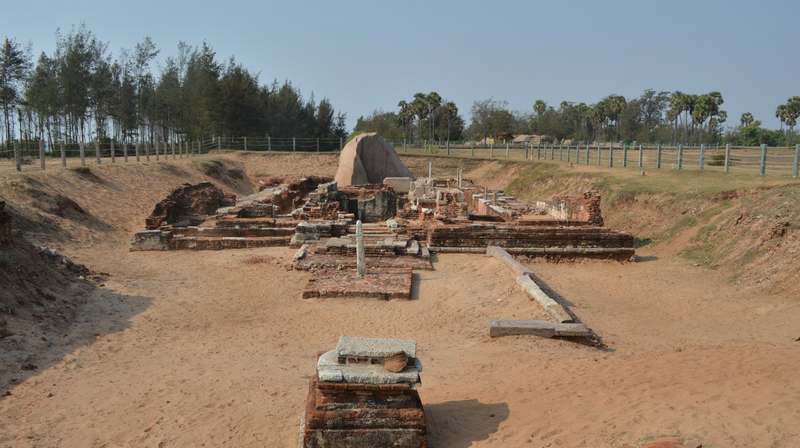
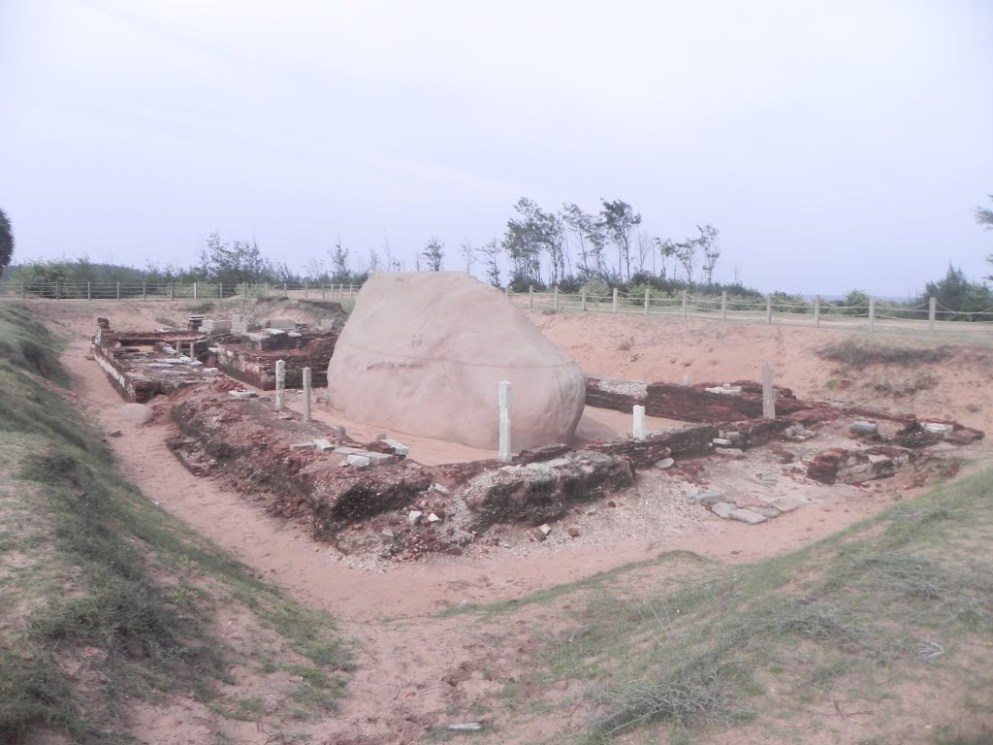
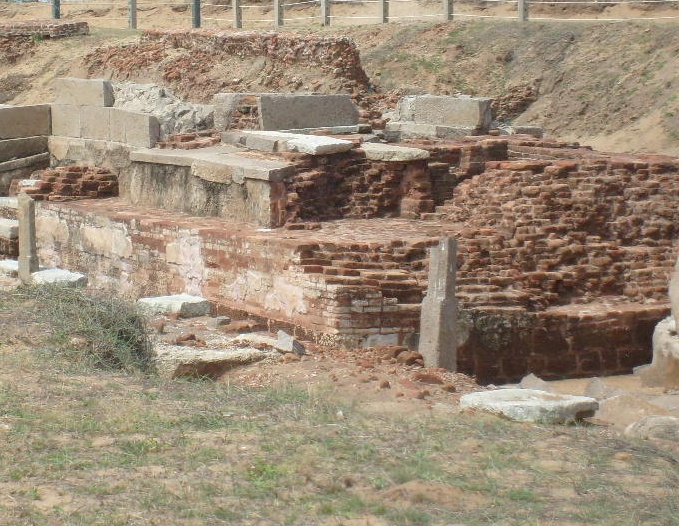
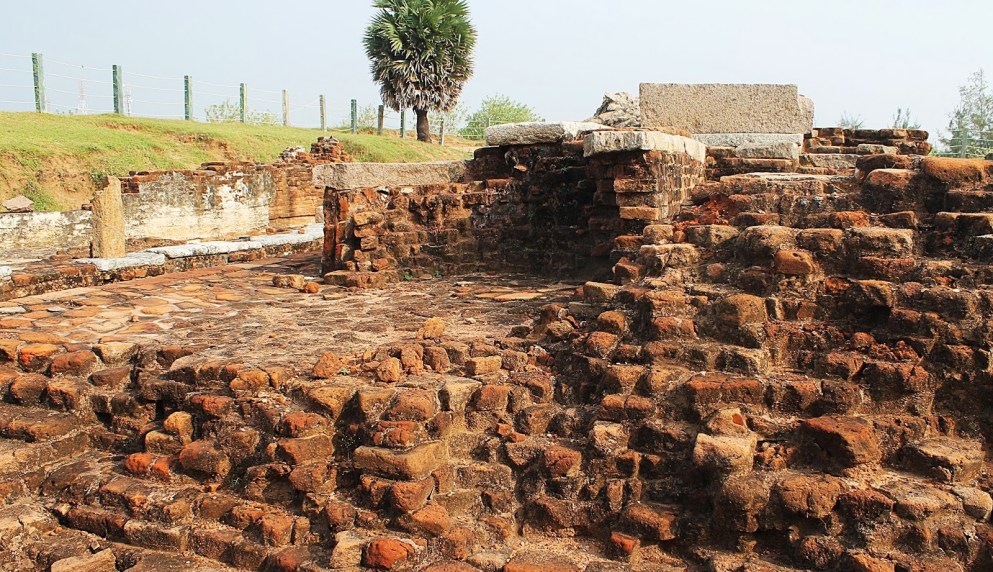
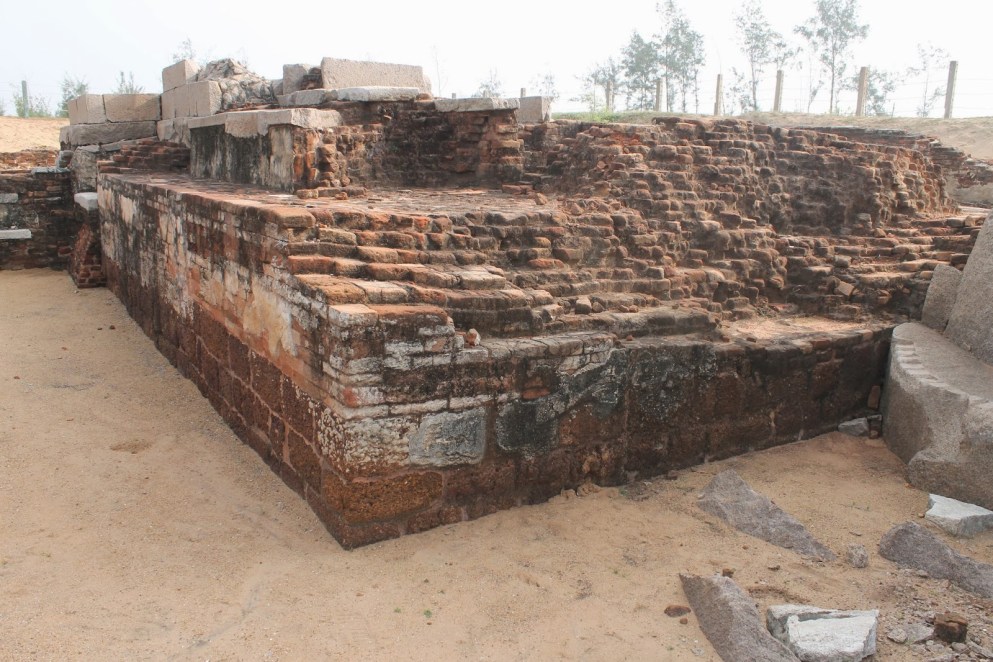
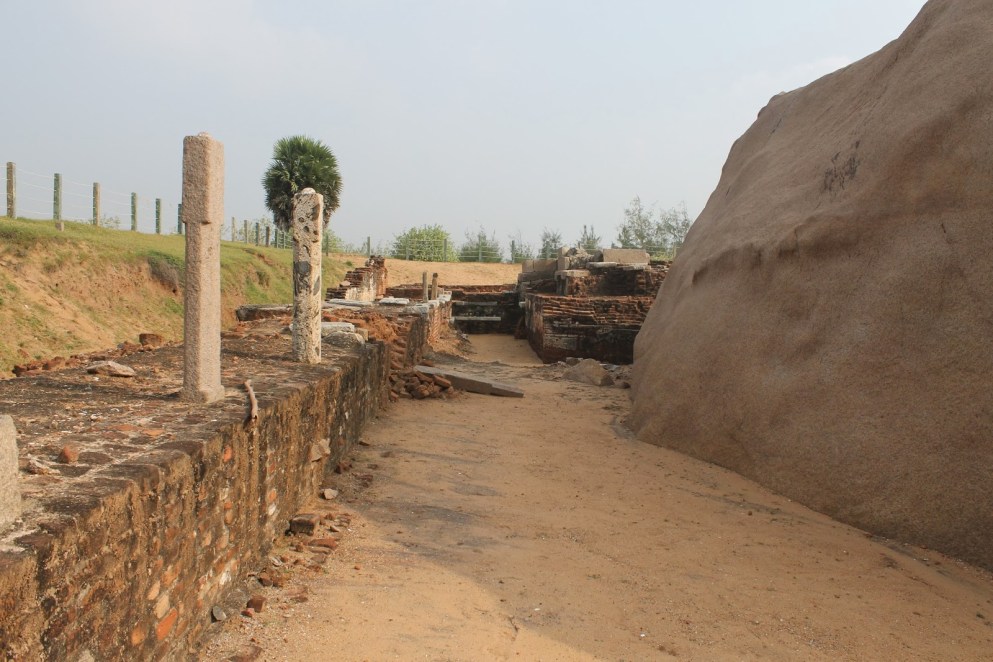
The Subramanya Temple at SaluvankuppamTamil Nadu, is a shrine dedicated to the Hindu deity Murugan. Archaeologists believe that the shrine, unearthed in 2005, consists of two layers: a brick temple constructed during the Sangam period (the 3rd century BC to the 3rd century AD) and a granite Pallava temple dating from the 8th century AD and constructed on top of the brick shrine. The Archaeological Survey of India (ASI) team which conducted the excavation believes that brick temple could be the oldest of its kind to be discovered in Tamil Nadu. However, noted Indian archaeologist R. Nagaswamy is critical of this claim owing to lack of references to the shrine in the popular literature of the period.

The temple was discovered by a team of archaeologists from the ASI based on clues found in a rock inscription left exposed by the 2004 Indian Ocean tsunami. Initially, excavations revealed an 8th-century Pallava-era shrine. Further excavations revealed that the 8th-century shrine had been built on the brick foundation of an earlier shrine. The brick shrine has been dated to the Sangam period.
The temple faces north, unlike most Hindu temples. Artifacts from two phases, the Sangam phase as well as the Pallava phase, have been found. The temple is Tamil Nadu’s oldest shrine to Murugan. It is also believed to be one of only two pre-Pallava temples to be discovered in the state, the other being the Veetrirundha Perumal Temple at Veppathur.
Discovery
After the 2004 Indian Ocean tsunami had subsided, archaeologists discovered rock inscriptions which had been exposed by the tsunami waves close to the hamlet of Saluvankuppam, near the UNESCO-designated World Heritage Site of Mahabalipuram. The inscriptions by the Rashtrakuta king Krishna III and the Chola kings Parantaka I and Kulothunga Chola I spoke of a Subramanya Temple at Thiruvizhchil (the present day Saluvankuppam). S. Rajavelu, epigraphist with the Archaeological Survey of India (ASI), identified a nearby mound as the site of the temple. In 2005, archaeologists unearthed an 8th-century Pallava temple under the mound. G. Thirumoorthy, ASI Assistant Archaeologist, believed that the shrine could be the oldest Subramanya temple to be excavated in Tamil Nadu. There were speculations on whether the temple could be one of the “Seven Pagodas“.

However, further excavations revealed that the 8th-century temple was constructed over the remains of an older brick temple. According to Thirumoorthy, the garbhagriha or sanctum Sanctorum of the brick temple was filled with sand and covered with granite slabs upon which the newer temple was constructed. Sathyamurthy, Superintendent, ASI Chennai Circle, said that the brick temple could be dated to the Sangam period as the shrine faced north unlike modern temples which face either east or west. This proved conclusively that the temple was constructed before the 6th or 7th century AD when the shilpa shastras, the canonical texts of temple architecture, were written. It has been estimated that the age of the brick shrine range from 1700 to 2200 years.
Archaeologists believe that the brick shrine was destroyed either by a cyclone or a tsunami which took place 2,200 years ago. The Pallavas built a granite temple on the brick foundation in the 8th century AD, which also was likely to have been destroyed by a tsunami. Archaeologists believe that the second tsunami must have occurred in the 13th century AD as the latest inscriptions which speak of the shrine have been dated to 1215.
The remains of a brick temple, dating back to the late Tamil Sangam period [circa 1st century B.C. to 2nd century A.D.], have been discovered on the seafront near the Tiger Cave at Saluvankuppam, a few km ahead of the world-famous Mamallapuram monuments.
“The brick temple is the most ancient temple discovered so far in Tamil Nadu. There is no doubt that it is about 2,000 years old,” said T. Sathyamurthy, Superintending Archaeologist, ASI, Chennai Circle. Twenty-seven courses of bricks with a square garbha griha (sanctum sanctorum) that made the Sangam age temple form the center piece of the discovery. The temple is dedicated to Muruga, the presiding deity of “Kurinji” [hill] tracts. The sanctum measures 2 metres by 2.2 metres. The bricks measure 40 cm x 20 cm x 7 cm. They are still sturdy.
The big-sized bricks are typical of the period and are similar to those found at Kaveripoompattinam near Thanjavur; Uraiyur in Tiruchi district — Uraiyur was the capital of the Cholas of the Sangam age; Mangudi near Tirunelveli; and Arikkamedu near Pondicherry.
Dr. Sathyamurthy was sure the brick temple was built before the canonical period because it faced north. “Agama” texts, which came into existence in the sixth or seventh century A.D., and “shilpa shastras”, had prescribed rules for construction of temples including the directions they should face. Normally, temples faced east or west. But this one did not follow “agama” texts and hence looked north. Tsunami or tidal waves that occurred twice had pulled down the entire temple complex. There is telltale evidence of wave action from the excavation. Deposits of shells and debris of the temple have been found on the eastern side of the complex, towards the shoreline. “What is interesting is not the discovery of the brick temple but that we can record stratigraphically the remains of palaeo-tsunami deposits. The impact of the tidal wave is seen on the eastern side of the temple, close to the sea. Such a feature is absent on the western side,” Dr. Sathyamurthy said.
G. Thirumoorthy, Assistant Archaeologist, ASI, said the temple belonged to two periods: the late Sangam age and the Pallava period. After the brick temple collapsed, the Pallava kings of the 8th and 9th century A.D., built another temple over it, using granite slabs. This temple too collapsed.
Artifacts found at the site include broken stucco figurines, obviously under worship; a painted hand portion with a bangle of a stucco figurine, simple-looking terracotta lamps, beads, roofing tiles made of terracotta, spinning whorls, a broken animal terracotta figurine and hop-scotches. A “prakara” (compound) wall of the same period has been excavated.
Archaeologists’ conclusions are:
From the evidences like temple orientation, brick size and artifacts collected from this site, the ASI team concluded that this structure immediately antedates the Pallavas. They are also of the opinion that this one is the earliest brick temple in Tamil Nadu identified as of now. Further to this they also infer that no other temple of such nature is reported from south India.
Presence two evidences granite spear and the plaque depicting women dancing ‘Kuravai Koothu’ allow the ASI experts to conclude this one as Lord Subramanya temple.
The Reach foundation, Chennai conducted carbon – 14 dating on the paleo-tsunami evidences (sea shells and other debris) proved that they got deposited in different periods between 405 A.D. and 564 A.D. and between 1019 A.D. and 1161 A.D.
According to T.Sathyamurthy, Superintendent, ASI Chennai Circle, (now Reach foundation trustee) conclude that the shrine belongs to Sangam period since it faces northwards. The modern temples built according to Shilpa Shastras (written between 6th or 7th century A.D.) are facing either east or west. This fact encouraged him to conclude that the temple was constructed before the 6th or 7th century A.D. He also estimated the age of the brick shrine ranging between 1700 and 2200 years.
However, noted Indian archaeologist R. Nagaswamy is critical of this claim due to lack of references to the shrine in the popular literature of the period.
Historical background
Although the city of Mahabalipuram was constructed by the Pallava king Narasimhavarman I in the 7th century AD, there is evidence that a small port might have functioned at the site even earlier. Megalithic burial urns dating to the very dawn of the Christian era have been discovered near Mahabalipuram. The Sangam age poem Perumpānattuppadai describes a port called Nirppeyyaru which some scholars identify with the present-day Mahabalipuram. Sadras near Mahabalipuram has been identified as the site of the port of Sopatma mentioned in the Periplus of the Erythraean Sea.
Inscriptions
Number of rock inscriptions is found near the shrine. The specific three granite pillars, which lead for the discovery of the shrine, bears inscriptions of grants offered to this shrine (Ref. 1-3). Later five more inscriptions discovered (Ref. 4-8). Now three more inscriptions identified Ref. (9-11).
Ø Kirarpiriyan of Mamallapuram made grants of ten ‘kazhanjus’ (small sized gold balls) First pillar inscription
Ø Vasanthanar, a Brahmin woman offered a grant of 16 kazhanjus Second pillar inscription which can be dated back to 813 A.D.
Ø Raja Raja Chola I (985–1014 A.D.) Third pillar inscription is about the grant
Ø Pallava king Dantivarman (795 to 846 A.D.) Fourth pillar inscriptions which can be dated back to 813 A.D.
Ø Pallava kings Nandivarman III (846 to 869 A.D.) Fifth pillar inscriptions which can be dated back to 858 A.D.
Ø Pallava kings Kambavarman (9th century A.D) sixth pillar inscriptions
7. Krishna III (939-68 A.D) Rashtrakuta king Seventh pillar inscriptions which can be dated back to 976 AD,
Ø Pallava king Kambavarman (9th century A.D) Eighth  pillar inscriptions
Ø Krishna III (939-68 A.D) Rashtrakuta king Ninth pillar which can be dated back to 971 A.D.   in his 21st regnal year
Ø Rajendra III Chola (1216–1256 A.D) Tenth pillar inscriptions
Ø Kulothunga Chola III (1178–1218 A.D.) which can be dated back to 1215 A.D.
All the inscriptions in ancient Tamil script record about the donations of land and gold for the maintenance of the Subramanya temple at Thiruvizhchil and it continuously received grants. All these inscriptions mention the village as Thiruvizhchil.
Architecture
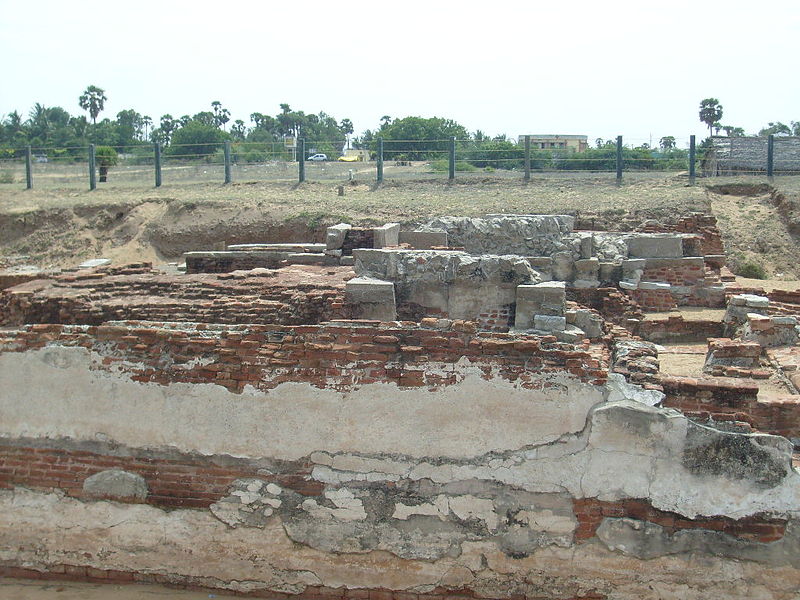
While the thin, tabular bricks at the top were laid by the Pallavas, the larger bricks underneath date from the Sangam period
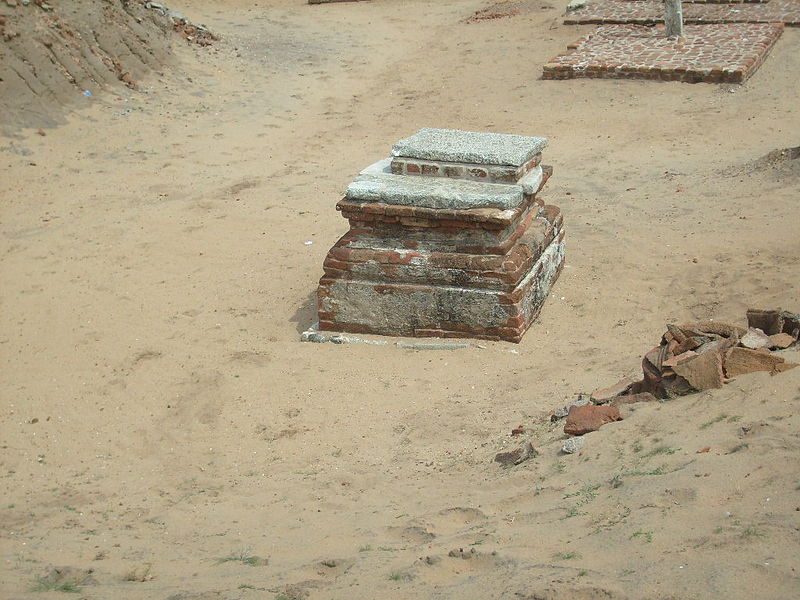
The temple is dedicated to the Hindu deity Murugan and faces north. The garbhagriha or sanctum sanctorum is 2 metres long and 2.2 metres wide and is made of 27 courses of bricks. The bricks used are similar to the ones used in other Sangam age sites such as PuharUraiyur, Mangudi and Arikkamedu.
A stone Vel is positioned at the entrance of the shrine. During the excavations, a terracotta plaque depicting a Kuravai Koothu, a dance which is mentioned in the 1st century AD Tamil epic Silappadikaram, was discovered. Sathyamurthy feels that there may not have been any idol in the square garbhagriha as it is too small to house one. The temple is surrounded by a prakara or a compound wall dating from the Sangam period. According to Thirumoorthy, the shrine is “the biggest brick temple complex dating to the pre-Pallava period”.
The temple is built on a cushion of alluvium on which a layer of man-made bricks were laid. On top of this were another four layers of man-made bricks separated by four layers of laterite. There were two types of bricks used: large-sized laterite bricks of the Sangam period and thin, tabular bricks of a later age. The bricks were plastered together with lime.
Artifacts unearthed
A terracotta Nandi (the bull of the god Shiva – father of Murugan), head of a woman, terracotta lamps, potsherds and a shivalinga (aniconic symbol of Shiva) made of green stone are some of the important artifacts found at the site. The Nandi is the first one made of terracotta to be found. While most of the items unearthed belong to the Sangam period, artifacts of a later period including a Chola copper coin have also been found.

How Barefoot College Trained 700 Rural Grandmothers to Be Solar Engineers & Electrified 20000 Homes…?

A vocational training college in Rajasthan, started by well known educator and activist Sanjit Bunker Roy, is responsible for lighting up the homes of thousands of poor villagers across the world.

Tilonia is a small village in Rajasthan’s Ajmer district. On the face of it, Tilonia is like any other village in India. One can see large tracts of semi-arid land, flocks of sheep on the roads, and women whose heads are covered with the pallus of brightly coloured sarees.

However, what sets Tilonia apart is that it is home to the Social Work and Research Centre, popularly known as Barefoot College. This institute is known all over the world for training rural people in vocational skills.

In the 1970s, Sanjit Bunker Roy, an educator and social activist decided to give something back to society and set up Barefoot College in Tilonia.

bunker roy

Photo source: Youtube

The college is spread over eight acres and runs completely on solar energy.

Bunker, who studied at Delhi University, says: “My elitist education almost destroyed me. In fact, the biggest reasons why the poor will always remain poor are the literate man and woman — products of the formal education system. This system makes you look down on villages.”

According to him, the formal system of education demeans and devalues the traditional knowledge and practical wisdom that the poor value. He says his real education started during his initial years in Tilonia when he was working as an unskilled labourer — blasting wells for water.

“I lived with very poor and ordinary people under the stars and heard the simple stories they had to tell of their skills, knowledge, and wisdom that books and university education can never teach you. My real education started when I saw amazing people – water diviners, traditional bonesetters and midwives – at work. That was the humble beginning of the Barefoot College,” he adds.

Though the college started with the aim of providing solutions to the water problems of rural India, its mission soon changed to sustainable development and empowerment of the marginalised. In fact, the courses offered at the institute are rooted in the Gandhian philosophy of making villages self-reliant.

“But it was not Gandhi or Marx who inspired the work of the college, but very ordinary people with grit, determination, and the amazing ability to survive with almost nothing,” says Bunker.

Students, primarily women, are selected from the poorest of villages and are taught vocational skills in different areas like solar energy, healthcare, education, handicrafts, and so on. The college provides basic health services to the villages through a team of doctors, midwives, and dentists.

It imparts education to women and children by keeping their different needs in mind. There are crèches for small children whose mothers work all day. There are night schools for children who help in the fields or tend to animals during the day. And bridge courses for those among them who wish to join day school. There is an emphasis on hands-on learning. Even the lessons offered are practical in nature. The children are taught about how democracy works, how to take care of a sick animal, how land is measured, etc.

Barefoot College is probably best known for producing hundreds of ‘barefoot’ solar engineers.

The Better India (4)

In 2003, the college decided to train illiterate rural women as solar engineers. The biggest challenge at the time was to convince donors, policy makers, as well as the male members of the community to accept the ‘impossibility’ that these women could be trained.

“Do you know why we insisted on women? Because training men is pointless. They will grow restless and go to big cities in search of jobs. Women have more patience to learn the skill. And especially since they are from poor families, they will stay back home and prove their worth to their communities,” says Bunker.

This training of women — to teach them how to install, repair, and maintain solar lighting units — did not stop in Rajasthan. Today, the institute trains women from countries like Afghanistan, Bhutan, Sierra Leone, Mozambique, Fiji, etc. It boasts of having over 700 solar ‘mamas’ in 70 of the least developed countries in the world. These women, from isolated and non-electrified villages, congregate in Rajasthan for a few months. To overcome the language barrier, they are taught through sign language.

They memorise the permutations and combinations of wires through colour codes.

The Better India (3)

Barefoot College brought three women from Afghanistan to Tilonia and trained them. After they went back, their village became the first ever solar-electrified village in the country. These women went on to train 27 others and now there are over a 100 solar-electrified villages in Afghanistan.

The College also trained grandmothers from Sierra Leone. They lit up the first village in the country with the sun’s energy.

The idea caught on and now there is a Barefoot Vocational Training Centre in Sierra Leone.

Under the India Technical Economic Cooperation Programme of the Ministry of External Affairs, the Barefoot College has trained nearly 700 rural grandmothers to be solar engineers and electrify over 20,000 houses in different countries.

Barefoot College is funded by various organisations and grants. Barefoot College applied for the HCL Grant and through this grant, it wanted to implement the Barefoot model of alternate community-based education and skill development in the five districts of Rajasthan, by empowering and educating children, women, and youth and setting up 25 crèches and 50 bridge schools in these districts. To know more about Barefoot College, contact the team on their website.

About HCL Grant

There are about 3.3 million NGOs in India doing commendable work in various areas aimed at inclusion and development. The HCL Grant has been launched to support the institutionalization of the Fifth Estate comprising individuals and institutions formed and led by the citizens of the country through the creation of strong governance frameworks and management capabilities. An endeavour of the HCL Foundation, HCL Grant envisions to build sustainable communities by supporting NGOs and individuals who are doing path-breaking work towards high impact transformation in rural India. In the first year, HCL Grant has identified the best NGOs in the area of rural education. To know more about the HCL Grant: http://www.hcl.com/hcl-grant

source……..Meryl Garcia in http://www.the betterindia.com

Natarajan