The 1936 Nobel Peace Prize

From 1901 till this year, Nobel prizes have been awarded 567 times to 864 Laureates and 25 organisations with the youngest winner being Peace Prize awardee Malala Yousafzai of Pakistan at 17 years.
By winning the Peace Nobel at this tender age along with India’s Kailash Satyarthi, Ms. Yousafzai beat the previous record of Lawrence Bragg, who won the Physics Nobel in 1915 at the age of 25.

Kailash Satyarthi (left) and Malala Yousafzai
The word “Laureate” signifies the laurel wreath awarded to winners of athletic competitions and poetic meets in Ancient Greece. In Greek mythology, god Apollo is represented wearing on his head a laurel wreath, a circular crown made of branches and leaves of the bay laurel.
The statutes of the Nobel Foundation say, “If none of the works under consideration is found to be of the importance indicated in the first paragraph, the prize money shall be reserved until the following year.”
“If, even then, the prize cannot be awarded, the amount shall be added to the Foundation’s restricted funds.”
On 27 November 1895, Alfred Nobel signed his last will and testament, giving the largest share of his fortune to a series of prizes in Physics, Chemistry, Physiology or Medicine, Literature and Peace.
In 1968, Sweden’s central bank Sveriges Riksbank established The Sveriges Riksbank Prize in Economic Sciences in memory of Nobel.
At the Nobel Award ceremonies on December 10, the Laureates receive three things: a Nobel Diploma, a Nobel Medal and a document confirming the Nobel Prize amount.
Each Nobel Diploma is a unique work of art, created by foremost Swedish and Norwegian artists and calligraphers.
The Nobel Medals are handmade with careful precision and in 18 carat green gold plated with 24 carat gold.
The Nobel Prize amount for 2014 is set at Swedish kronor (SEK) 8.0 million per full Nobel Prize.
Interesting facts
The average age of all Nobel Laureates in all prize categories between 1901 and 2014 is 59 years.

Two most common birthdays among the Nobel Laureates are May 21 and February 28.
Since 1901, prizes have not been awarded 50 times, most of them during World War I (1914-1918) and II (1939-1945).
Leonid Hurwicz has the distinction of being the oldest Nobel recipient at the age of 90 for Economics in 2007.
Till now, 47 women have won the Nobel while two Laureates declined the prize.
Jean-Paul Sartre, awarded the 1964 Nobel Prize in Literature, declined it as he had consistently declined all official honours.

Jean-Paul Sartre
Le Duc Tho, awarded the 1973 Nobel Peace Prize jointly with U.S. Secretary of State Henry Kissinger for negotiating the Vietnam peace accord, said he was not in a position to accept the award, citing the situation in Vietnam as his reason.
Four Laureates were forced by authorities to decline the Nobel.
Adolf Hitler forbade three Germans Richard Kuhn, Adolf Butenandt and Gerhard Domagk, from accepting the Nobel Prize.
They, however, received the Nobel Prize Diploma and Medal later but not the prize amount.
Boris Pasternak, the 1958 Nobel Laureate in Literature, initially accepted the Prize but was later coerced by authorities of his native country the Soviet Union to decline the award.
Three Peace Laureates — Germany’s Carl von Ossietzky, Myanmar’s pro-democracy icon Aung San Suu Kyi and Chinese rights activist Liu Xiaobo — were under arrest at the time of the award.
The International Committee of the Red Cross (ICRC) was given the Nobel Peace Prize thrice while its founder Henry Dunant won the first Peace Prize in 1901.
Linus Pauling has the distinction of being the only person to have been awarded two unshared Nobel Prizes — the 1954 Prize in Chemistry and the 1962 Peace Prize.
Why is Nobel Peace Prize given by Norway?
Since 1901, when Nobel Prizes were first given, Peace Prize has been awarded by a committee of five, appointed by the Norwegian Parliament Storting in accordance with Alfred Nobel’s will.
Alfred Nobel never disclosed why he didn’t give the task of awarding the Peace Prize to a Swedish body.
The reasons are speculative.
One argument is that Nobel admired Norwegian patriot and leading author Bjornstjerne Bjornson while another is that the Storting was the first national legislature to vote in support for the international peace movement.
Nobel may also have favoured distribution of the tasks related to the Nobel Prizes within the Swedish-Norwegian union or he may have feared that given the highly political nature of the Peace Prize, it might become a tool in power politics thus reducing its significance as an instrument for peace.
“It is my express wish that in awarding the prizes no consideration be given to the nationality of the candidates, but that the most worthy shall receive the prize, whether he be Scandinavian or not,” Nobel wrote in his will.
During the 20th century, eight Scandinavians have won the Peace Prize — five Swedes, two Norwegians and one Dane.
In the nomination and selection process, the committee has the assistance of a secretary and since the establishment of the Norwegian Nobel Institute in 1904, this person is also the institute’s director.
There have been several criticism and protests against decisions of the Norwegian Nobel Committee since 1901.
The selection process
The Peace Prize award ceremony on December 10 is the culmination of a long selection process.
![]()
According to rules, there can be a maximum of three Laureates in a category every year.
The Norwegian Nobel Committee begins the whole process by inviting nominations which can be submitted by February 1 each year.
Who are entitled to nominate candidates for the Nobel Peace Prize?
Present and past members of the Nobel Committee and advisers at the Nobel Institute; members of national assemblies and governments, and members of the Inter-Parliamentary Union; members of the Permanent Court of Arbitration and the International Court of Justice at the Hague and members of the Commission of the Permanent International Peace Bureau.
Besides them, members of the Institut de Droit International and present university professors of law, political science, history and philosophy; and holders of the Nobel Peace Prize can also nominate.
After reviewing their qualifications, a shortlist of the candidates is made.
The announcement of the Laureate’s name is often made on a Friday in mid-October at the Nobel Institute building and the award is presented annually on December 10, the day Alfred Nobel died in 1896.
SOURCE:::: http://www.the hindu.com
Natarajan
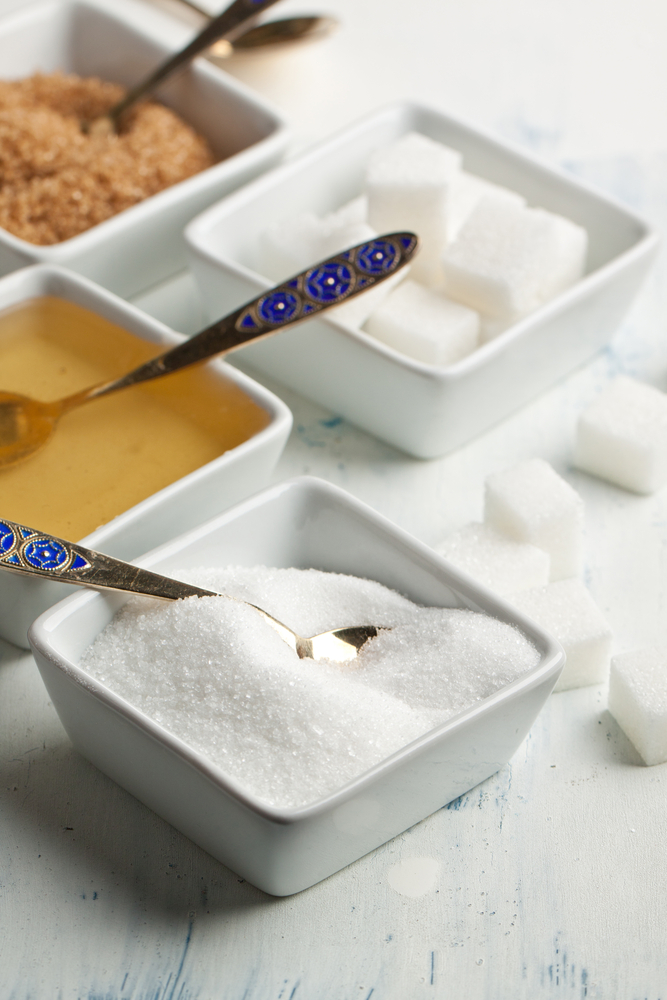
Saccharin is noted as being the first artificial sweetener, outside of the toxic Lead(II) acetate, and the first product to offer a cheap alternative to cane sugar. Interestingly enough, like the Chocolate Chip Cookie, it was also discovered entirely by accident.
The chemical was discovered in 1878/9 in a small lab at Johns Hopkins University. The lab belonged to professor of chemistry and all around chemical boffin, Ira Remsen. Remsen was hired by the H.W. Perot Import Firm in 1877, primarily so that the firm could loan the use of his lab to a young Russian chemist and sugar-nerd, Constantin Fahlberg.
The H.W. Perot company wanted Fahlberg to test the purity of a shipment of sugar they’d had impounded by the US government using Remsen’s lab. Fahlberg agreed and happily conducted the tests. After he’d finished, Fahlberg continued to work in Remsen’s lab on various things, such as developing coal tar derivatives.
On the momentous day in question, after working in the lab, Fahlberg was at home about to tuck into his meal when he noticed that the bread roll he’d just taken a bite out of tasted incredibly sweet. After ruling out the possibility of the bread roll being made that way, Fahlberg came to the conclusion that he must have accidentally spilled a chemical onto his hands. Rather than immediately sticking his finger down his throat and throwing up, then rushing to a hospital, Fahlberg reportedly became positively excited at the thought of his new discovery. (Yes, the first non-toxic artificial sweetener was discovered because a scientist didn’t wash his hands after getting chemicals all over them- not unlike how the effects of LSD were discovered.)
At this point, Fahlberg didn’t know which of the many chemicals he’d been working with that day had caused the sweet taste he’d experienced. With no alternative in mind, he resorted to going back to his lab and tasting every chemical he’d left on his desk, FOR SCIENCE! (Note: Nobel Prize winner Barry J. Marshall once did something equally daring, FOR SCIENCE, when he chose to drink the bacteria he thought caused ulcers to prove that they did.)
In any event, Fahlberg eventually discovered the source of the sweet chemical, a beaker filled with sulfobenzoic acid, phosphorus chloride and ammonia. This deadly sounding cocktail had boiled over earlier in the day, creating benzoic sulfinide, a compound Fahlberg was familiar with, but had never had a reason to try shoving into his mouth before that day.
Fahlberg quickly penned a paper with Remsen describing the compound and the methods of creating it. Published in 1879, the paper listed both Remsen and Fahlberg as the compounds creators. However, just a few short years later, after realising the compound’s massive commercial potential, Fahlberg changed his mind and when he patented saccharin in 1886, he listed himself as the sole creative mind behind it. Fahlberg had also applied for an earlier patent on a method of creating saccharin cheaply and efficiently in 1884.
There is no agreed upon consensus on who exactly came up with what in regards to saccharin; some sources say Remsen wanted to be listed as a co-discovered purely because saccharin was discovered in his lab. This is supported by the fact that it’s noted that by the time Fahlberg came onto the scene, Remsen was the president of John Hopkins University and was, thus, absent from lab most of the time. Others claim Remsen was instrumental in the discovery, supported by the fact that earlier in his life he had published many papers on sulfobenzoic acids. As for what Remsen had to say of the matter, “Fahlberg is a scoundrel. It nauseates me to hear my name mentioned in the same breath with him.”
Regardless, Fahlberg’s new artificial sweetener, advertised as a “non-fattening” alternative to sugar, was fairly successful right off the bat in the states, though it wouldn’t be until sugar shortages in WWI that it would became a widespread hit.
For those of you who are curious, the body doesn’t metabolise saccharin, meaning it has no caloric or nutritional value, unlike sugar. And for all you health conscious types- no, saccharin isn’t dangerous to humans.
This may come as a surprise considering that starting in the 1970s, and as recent as a a little over a decade ago, the widespread belief was that it caused cancer. This was despite the fact that in 1974 the National Academy of Sciences performed a review of all the studies done on saccharin and determined that there was no sound evidence that saccharin was a carcinogen and that the only studies that claimed to show it was were flawed or otherwise ambiguous in their results.
One particular flawed study from the 1970s was nearly the final nail in the coffin of saccharin when the researchers found that saccharin could lead to bladder cancer in rats. This spurred the Saccharin Study and Labeling Act of 1977, which managed to thwart efforts to ban saccharin outright, instead simply getting it a severe warning label: “Use of this product may be hazardous to your health. This product contains saccharin which has been determined to cause cancer in laboratory animals.”
The rats in the study did indeed have a high rate of bladder tumors. However, beyond any potential flaws in methodology, there is the obvious caveat that, while similar in some ways, rodents and humans aren’t exactly the same (shocker); so further studies needed to be done to see if the same thing occurred in humans.
What was happening with the rats is that specific attributes in their urine (high pH, high proteins, and high calcium phosphate) was, combined with the undigested saccharin, causing microcrystals to form in their bladders. This led to damage of their bladder lining, which over time led to tumors forming as their bladders were continually having to be repaired.
Once the exact cause of the tumors was determined, exhaustive tests were done to see if the same thing was happening with primates. In the end, the results came up completely negative, with no such microcrystals forming.
Thanks to this, in 2000, saccharin was removed from U.S. National Toxicology Program’s list of substances that might cause cancer. The next year, both the state of California and the U.S. Food and Drug Administration removed it from their list of cancer causing substances. In 2010, the Environmental Protection Agency concurred, stating that “saccharin is no longer considered a potential hazard to human health.”
The 1970s wasn’t the first time this compound came under fire. A much earlier and equally as unfounded panic occurred as a result of the Pure Food and Drug Act of 1906. Harvey Wiley, the director of the bureau of chemistry for the USDA, considered saccharin inferior to sugar and lobbied hard against it, even going so far as telling president Teddy Roosevelt that “Everyone who ate that sweet corn was deceived. He thought he was eating sugar, when in point of fact he was eating a coal tar product totally devoid of food value and extremely injurious to health.”
While he got the “totally devoid of food value” part correct, the latter “injurious to health” part wasn’t actually backed by any vetted evidence at the time (or since).
Roosevelt, who ate saccharin regularly, stated, “Anybody who says saccharin is injurious to health is an idiot.”
Needless to say, Wiley soon lost much of his credibility and his job. !!!
Bonus Fact:
SOURCE:::: http://www.today i foundout.com
Natarajan
Dietmar Eckell travels the world to photograph plane wrecks where everyone survived. He told BBC Culture why he decided to find crashes with happy endings.

Fairchild C-82A Packet, Alaska
January 1965, Alaska. A Fairchild C-82 is flying above the Arctic Circle when it encounters trouble. “The plane’s electric system failed and they crash-landed in the night in the tundra forest, cutting down many trees. They survived at -45 degrees Celsius by making a big fire from the wood they had cut. It is very remote up there: they were really lucky that the fire was spotted by another plane three days later and they were rescued.” German photographer Dietmar Eckell is describing one of the stories he discovered while researching his Happy End project, which records plane crashes that had no fatalities. He has even been contacted by those who survived: raising the money to print a book of the photos last year, he was contacted by the pilot of this Fairchild C-82. “He sent me an email to thank me for writing down his story and documenting his plane almost 50 years after the crash.”

Cessna 310, Australia
Eckell became interested in documenting wrecks where everyone survived after he had his own crash: flying a paraglider with an engine to take aerial shots over the Mojave Desert in California, he went into a tailspin and landed alone with a broken ankle. “While recovering from surgery I had time to search the internet for crash landings in remote locations with no fatalities.” He makes sure they were happy endings before he documents them: “I found planes where all survived the landing but a few started walking and were never found – if [even] one passenger did not make it, the plane is not included in the series.”

Grumman Hu-16 Albatross, Mexico
He finds the planes online, via “pilot forums, archives, accident reports and websites about World War Two history”. Pinpointing the exact location can be tricky. “Once the story is confirmed I try to find it on Google Earth. If the resolution is not good enough I ask at the local airport and most of the time pilots can help. Sometimes I have to hire a plane to search from above. Then I hike out there.” This plane is on a beach 70km south of Puerto Escondido. Eckell photographed it in September 2010, six years after it crashed: “It was half sunk and already broken in two pieces. On the pictures I saw [online] from 2006 … the engines looked like they would still work. But in four years the Pacific had done massive damage.” He happened to be shooting when a storm was passing. “The clouds were changing every minute. The scenery looked unreal through the viewer of my camera … more like a painting – surreal – with different lines of clouds towards the horizon.” It might not be there for much longer. “With the force of the waves the wreck is disappearing fast.”

Bristol Type 170 Freighter, Northwest Territories, Canada
Eckell has even tracked down planes that locals don’t know about. “One time I needed a float plane to get to a lake 400km away and could not afford a charter. After three days I found a retired pilot who was willing to take me there – although he did not believe that I had the location of an abandoned plane that he had never heard of in his 30 years as a local pilot. He was very surprised when we found the plane in great condition resting on the side of the lake, where it had been since 1956.”

Avro Shackleton, Western Sahara
The journey on foot to a plane can be hard-going. “Physically the hikes through swamps with all your gear are tough because your feet are wet all day, there are mosquitos and every kilometre feels like 5km.” He remembers his attempt to reach this plane in Western Sahara as particularly dangerous. “It’s in an area that is controlled by Polisario rebels. After a 30-hour car ride from Morocco to Mauritania and a 26-hour ride on an ore train, I got to a mining town and there had to convince the local Polisario leader to take me over the border to the Western Sahara. I had the plane’s GPS location and we drove cross country to avoid getting caught by the Mauritanian military. We had a very old car and after an hour it developed a flat tyre; but everything worked out and I got great shots of an Avro Shackleton. What I found interesting was that the same rebel group also rescued the 19 passengers in 1994.”

Douglas C-53 Skytrooper, Australia
Happy End is part of a longer-term project, called Restwert. “It started in the days before GPS when I was riding my motorbike in the remote Sahara following track descriptions with a map and compass. Some of the described landmarks along the way were car wrecks.” After photographing these ‘landmark wrecks’, Eckell went on to document abandoned mobile homes in the Mojave Desert. “With my photography I try to create curiosity for the story behind the picture.” This is one of the planes he has photographed most recently. It was forced to land in 1942 when the pilot missed the airport and ran out of fuel.

Douglas C-47 Skytrain, Yukon, Canada
There is an eerie dissonance between the wrecks and the majestic landscapes in the background, one that Eckell exploits to tell his story. “My ‘restwert’ photography is about abandoned objects forgotten in nowhere. When viewers see a photograph of a plane resting on a mountain or a tank sitting on a coral reef they want to know what happened … ‘Restwert’ is German for ‘residual value’ – the material value is written off, but the beauty, stories, and associations they trigger remain. I document these objects before nature takes them back to preserve their memory.” Ten people survived when this plane flew into the side of a mountain in February 1950. Eckell has visited the site twice. “I spent two hours at the wreck and still cannot imagine how they survived in February 1950 with temperatures in the -40s up there.”

Curtiss C-46 Commando, Manitoba, Canada
He sees the wrecks as beautiful, both because they represent a happy ending and because many of the planes have survived the ravages of nature. “Old airplanes, like the DC-3 or Curtiss Commando, are design classics and timeless beauties. Aluminium does not erode so they still look pretty good even after 70 years in the bush.” Eckell draws on artists from a different age. “I was inspired by the shipwreck painters of the Romantic period and in my photography also look for dramatic skies, late light or fall colours.”

B-24 Liberator, Papua New Guinea
“The locals in Papua New Guinea called this wreck ‘Swamp Ghost’,” says Eckell, who photographed it in March 2013. “When we arrived a heavy rain started and we had to hide under the wing for over an hour.” Trying to get the shot he wanted from a high vantage point, he climbed a tree. “Soon after I noticed that it was the home of giant ants. By the time I could get to a decent shot position they were all over me and it was difficult to focus.” The B-24 was forced to land in a sago swamp in October 1943, after running low on fuel after a bombing mission. The crew successfully parachuted to the ground, and the two pilots were unhurt in the crash landing.

Curtiss C-46 Commando, Manitoba, Canada
“I was in Calgary documenting the abandoned Olympic Ski Jump,” says Eckell, describing his journey to photograph this plane, which crashed near Churchill in 1979. “I took my octocopter which got a lot of attention from the biologists on the train who work at the Polar Bear Research Centre in Churchill. It’s not a good idea to walk out to the wreck – this is polar bear country and they are hungry in summer because they haven’t eaten anything since the ice melted.” He got a lift from a local, and took the pictures quickly. “The plane is sitting on huge rocks – the crew was lucky to crash in November with snow softening the impact.”
SOURCE:::: Fiona Macdonald in http://www.bbc.com
Natarajan

Joshua’s mother Joelle Adams and Harvey’s mother Samantha Redman submitted this photo, saying: ‘Paint a nice picture boys… no no not your face… NOT THE DOG!’

Little Noah Avossa, three, covered himself with baby cream, along with a coffee table, after getting his paws into a tub of the cream at his home in Leicester, in this snap sent in by mother Amelia

Two-year-old Ryley was caught in the act by mother Hayley Griffiths having fun unravelling a roll of loo roll

Harry, two, was caught painting walls by mother Sharon Powell, who captioned the photo: ‘Oops!

Oliver, two, created chaos in the bathroom after throwing toilet roll all over it at his home in Poole, Dorset
SOURCE::::www.dailymail.co.uk
Natarajan