Ramu to IAS Ramesh: The Story of a Disabled Bangle Seller Who is Now an IAS officer….

From selling bangles to becoming an IAS officer – who says hard work and determination don’t pay off? This is the inspiring story of Ramesh Gholap.

Ramesh Gholap, known as Ramu in his village Mahagoan in Barshi district of Maharashtra, was a bright child. His father Gorakh Gholap ran a cycle repair shop, enough to provide an income for his family of four, but the business did not last long as his health suffered from constant drinking.

It was then that Ramu’s mother Vimal Gholap started selling bangles in nearby villages to support the family. And though Ramu’s left leg was affected by polio, he and his brother joined their mother in her little venture. Ramu and his brother would yell out loud, “Bangde ghya bangde (Buy bangles!),” and their mother would help the women try them on.

As Mahagaon had just one primary school, Ramu later went to stay in Barshi with his uncle to study further.

He knew education was the only way out of the poverty his mother and family were facing, so he worked as hard as he could.

Ramu’s sincerity and dedication made him a star among his teachers. But, in the year 2005, when he was in Class 12 and his college model exams were going on, he got news of his father’s death. The bus fare from Barshi to Mahagaon was Rs.7 those days. And since he received a bus pass for the disabled, the fare for him was just Rs. 2. But Ramu did not even have that.

His neighbours helped him with the money and only then could Ramu go for the last rites of his father.

Just four days after his father’s death, Ramu had a chemistry model exam in his college. On his mother’s insistence he went and appeared for the exam but, after that, he skipped the other model exams. He did not even submit his journals. The final exam for Class 12 was just a month away when he received a letter from his teacher that he had scored 35 marks out of 40 in chemistry. The teacher wanted to meet him. With help and encouragement from his teacher, Ramu took his final exams and scored 88.5%.

Ramu chose to do D.Ed (Diploma in Education) in spite of scoring so well, because this was the cheapest course he could afford to do to get a job as a teacher and support his family. He completed his D.Ed and also pursued a graduate degree in Arts from an open university simultaneously. And finally, he was able to start working as a teacher in 2009. This was like a dream come true for his family. But, deep down, it was not what Ramu really wanted to do.

Ramu lived with his mother and brother in a small room provided by his aunt, who had got her two-room home through a government scheme called Indira Awas Yojna. He saw his mother making visit after visit to government offices to get a house for herself too under the same scheme, but she was turned away because her BPL (below poverty line) card wasn’t eligible.

Ramu was angry with the ration shop owner too, who sold kerosene in the black market instead of providing it to needy families like his.

He had already been through the frustration of seeing his father not get adequate attention when he was admitted for tuberculosis in a government hospital.

He saw his mother and other widows being manipulated by an officer who collected money from them and made false promises to get them their pensions.

During his college days, Ramu had been a member of the student’s union and consequently had to go thetehsildar’s office often to get approval for various college issues. He saw the tehsildar as being the most influential and powerful government official he had ever come across. Ramu decided he wanted to become a tehsildar too in order to solve all the problems he and his family faced.

In September 2009, he took the first step towards his dream. Using the loan that his mother had taken from a self-help group in his village, Ramu went to Pune to prepare for the UPSC exam, taking a leave of six months from his job.

“I did not even know the meaning of MPSC and UPSC since I had always lived in small villages. I did not have money to take coaching classes either. So, the first thing I did was to meet one of the teachers of these coaching classes, just to understand if I was eligible to take the UPSC exam. The first teacher who met me was Mr. Atul Lande. I requested him to write down the answers to a few of my questions, like what is UPSC, can it be taken in Marathi, am I eligible for it, etc. And he told me there was nothing to stop me from taking the UPSC. It is only because of that one statement that I finally did it,” says Ramesh Gholap.

Ramu appeared for the UPSC exams in May 2010 but unfortunately didn’t make the cut. In the meantime, he had also formed a political party with the help of some friends in his village of Mahagaon to fight the local panchayat elections. His mother stood as a candidate for sarpanch. The mission of the party was simple – to come to power and help the distressed. On October 23, 2010, the results of the panchayat elections were out. Ramu terms this date as the biggest turning point of his life in his autobiography, Ithe Thambne Nahi (I Won’t Stop Here).

Ramu’s mother, Vimal Gholap lost the elections by a few votes but the loss did not break Ramu. Instead, it gave him the strength to stand up and fight back again against the system. On the same day, he announced in front of all the villagers that he was leaving the village and would come back only when he became a powerful officer.

After this, no one could stop Ramu. He left his job and cleared the State Institute of Administrative Careers (SIAC) exam – this gave him a hostel to stay in and a stipend as scholarship. He painted posters to take care of his expenditures. And finally, this son of illiterate parents, who studied in a zilla parishad school and by correspondence with open universities, cleared the UPSC examination with an all-India rank of 287, without any coaching.

Ramu was selected for the IAS in the year 2012. And, as per his promise, he came back to his village on May 12, 2012, after finishing a long journey from being Ramu to becoming Ramesh Gorakh Gholap, IAS.

 
5

In the next couple of months, the MPSC results were also out and this time Ramu broke all records. He topped the Maharashtra Public Service Commission (MPSC) exam in the year 2012, scoring the highest ever marks of 1,244 out of 1,800.

Ramesh Gholap is now posted in Jharkhand as Joint Secretary in the Energy Department.

2-2

Mala swatala shikta nahi aala pan porala khup shikwaycha asa tharwila hota…Aaj majha mulga itka motha sahib zalay he baghun khup anand hoto…pang fedala porane (I couldn’t get an education but I had decided that I would educate my sons. Today, my son has become such a big officer and that makes me so happy…. my boy has returned all my debts!),” says Vimal Gholap.

Ramesh Gholap has given more than 300 informational and motivational talks to youngsters aspiring to take the MPSC or UPSC exams. He is also fulfilling his dream of helping the poor and distressed through his work.

“Whenever I cancel the licence of a PDS shop owner who has been black marketing kerosene, I remember my days when I had to turn off the lantern for lack of kerosene. Whenever I help a widow, I remember my mother begging for a house or for her pension. Whenever I inspect a government hospital, I remember my father’s words when he had left drinking and just wanted better treatment. He would ask me to become a big man and take him to a private hospital. Whenever I help a poor child, I remember myself, I remember Ramu,” says Ramesh Gholap, IAS.

Source….Manabhi Katoch in http://www.the betterindia.com

natarajan

Image of the day….” Late April Sun Pillar…”

cropped-sun-pillar-austin-jesse-j-media

Jesse Jackson saw this sun pillar near Tucson, Arizona. “Talk about a ray of sunshine,” he said .


Jesse Jackson shared his photo with us. Jesse wrote:

Talk about a ray of sunshine. I was near Sentinel Peak [southwest of Tucson, Arizona] when the sun was about to set, and decided to take a brief detour before the end of my day. It was a cloudy evening but the horizon was clear, so I knew it had to be promising. I took the chance, and I was fortunate to have a rare sighting of a sun pillar!

Sun pillars, or light pillars, are shafts of light extending from the sun or other bright light source. They’re caused by ice crystals drifting in Earth’s air. More info (and pics!) here.

Here’s another April 2016 sun pillar. This one was taken in southwest England by Jacquie Russell.

Photo credit…Jacquie Russell

sun-pillar-Jacquie-Russell


Source….www.earthsky.org

Natarajan


Academic, Teacher, Inventor – This Man Suffering from Cerebral Palsy Plays Many Roles to Perfection

A fulfilling life is within everyone’s reach – regardless of the abilities and challenges they face. Riitesh Sinha, who suffers from spastic cerebral palsy, is living proof of this.

Consummate student. Creative innovator. Attentive teacher. Model employee. Recipient of Cavinkare Ability Award. Limca Book Record holder. Honorary Doctorate holder. Many achievements, one name – Riitesh Sinha.

Dr Riitesh Sinha hails from Karnal. The 43 year old’s list of achievements is awe-inspiring, particularly

in light of the fact that he suffers from spastic cerebral palsy.

Untitled-design-14-1


Cerebral palsy is a group of permanent movement disorders that appear in early childhood. They result in poor motor skills, stiff or weak muscles and tremors, making simple movement painful and simple tasks time-consuming.

Yet, Riitesh was never one to be cowed down by circumstances. He had just passed with flying colours from his CBSE school (securing 75% in his board exams) when his quest for independence led to him invent his own ‘trike.’

Read also: Watching This Man’s Achievements Will Make You Rethink The Word ‘Disability’

“Throughout my school life, my parents had to take me to school and other places. I was entirely dependent on them,” recounts Riitesh. It was when he was watching a video on science that the idea of making a trike struck him:

“After two years of research and with very little expertise available in a small place like Karnal, I got modifications done on a normal cycle. I added a foot pedal that helped me steer the cycle and balance myself. The trike is affordable and very convenient to use.”

Soon Riitesh was using the trike to get around town, often going as far as 10 km all on his own – a noteworthy achievement and freeing experience for someone who was forced to depend on others to get around earlier. Teaching in nearby villages as a part of literacy campaigns became easier with the trike, as did attending his B.Sc classes in Kurukshetra University. Says Riitesh, “The trike gave me wings! And I was glad that this was my own innovation.”

“It even helped me bunk classes,” he jokes. “After all, bunking classes is a part of leading a fulfilling college life!”

With the help of supportive teachers and friends – “All my classes were arranged on the ground floor. I never once had problems of accessibility” – Riitesh completed his B.Sc. That, however, was only the beginning of his academic journey. He went on to do a Post-Graduate Diploma in Computer Application, a Certificate in Computing from IGNOU, a Masters in Technology from Manipal Academy of Higher Education, and a Diploma in Naturopathy from Nature Care Institute, Nashik.

Next, Riitesh opened a computer centre that was affiliated with the National Institute of Open Schooling. Here, he taught children – and some interested adults – the basics of computers.

Over a period of ten years, he introduced more than a 1000 students to the world of computers.

In 2011, Riitesh landed a job at the Districts & Sessions Court in Karnal. “But after a few months, I was ousted from the job on the grounds of my disability,” he recounts. “I then approached the High Court with my case. The Court asked me to submit to an ability test. I did and I won the case. The Court quashed my termination order.”

“Since it was the first time in the history of the High Court that a physically challenged person was asked to undergo an ability test, my name is in the Limca Book of Records,” says Riitesh.

His win went on to positively influence several other cases as well.

Today, he works with the Karnal District & Sessions court and is responsible for maintaining digitised records.

Riitesh also runs a blog called ‘Riitesh’s Mudraa.’

“I was reading a story about a yogi and how he benefitted from the practice of yoga. I started practicing it myself and found great relief…my body stiffness went away. I decided to help others discover this too,” Riitesh says. The blog lists mudraas and practices that can provide relief to people suffering from cerebral palsy and Parkinsons.

Ask him about the greatest struggle physically challenged people in India face and pat comes the reply: “Social stigma.”

“In India, our society thinks that physically challenged people are useless. We are not even treated as proper human beings. There are easily 25 lakh Indians who suffer from cerebral palsy, and yet, very few of them get jobs. I believe that if we remove this social stigma, more than 80% of physically challenged people can lead more fulfilling lives,” Riitesh explains.

“People refer to cerebral palsy as ‘CP’. I believe that CP stands for ‘Capable Person’ – we can do anything that others can,” says Riitesh.

As his sister Anila says, “For a man who finds it difficult to hold a pen, who finds it difficult to wear clothes, who sometimes takes as long as two hours to brush his teeth… the fact that such a man has achieved so much is truly inspirational.”

source…Anandita Jumde in http://www.the betterindia.com

Natarajan


The Rock Garden of Chandigarh….

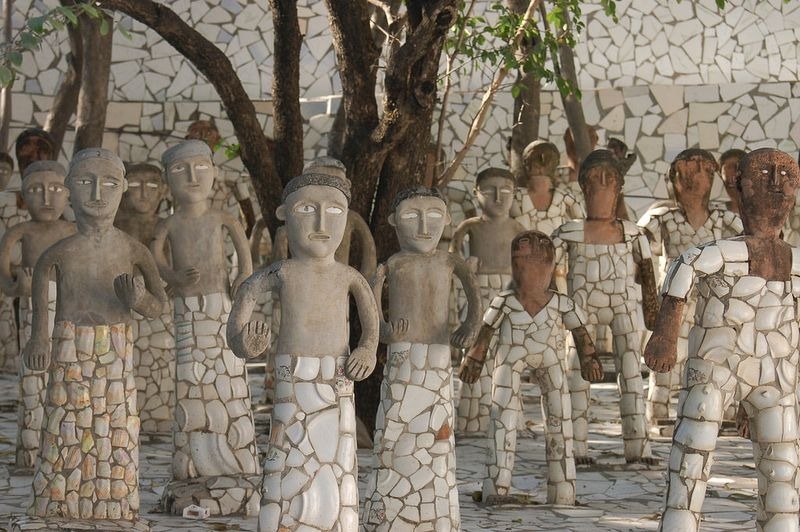
It took years of planning and millions of Rupees to design one of India’s first planned cities, but Chandigarh’s biggest tourist attraction was not on the master plan of Swiss-French architect Le Corbusier. It was the product of creative imagination and fifty years of labor by a humble government official Nek Chand.

Nek Chand was a road inspector in the Engineering Department of Chandigarh Capital Project, in 1957, the year he started working on his secret sculptural project. Nek Chand would cycle to a gorge near Sukhna Lake, at the foothills of Shivalik hills, that was used as dumping ground for urban and industrial waste, and spend hours collecting discarded pieces of broken pottery, bottles, auto parts, plumbing materials, street lights, electrical fittings, broken sanitary ware and so on. He would carry the pieces to a nearby PWD (Public Works Department) warehouse and fashion them into artistic forms resembling humans and animals.

rock-garden-chandigarh-106

Photo credit: Kirk Kittell/Flickr

Nek Chand worked at night because he was afraid of being discovered. For eighteen years, he kept it this site a secret. By the time it was discovered, it had grown into a 12-acre complex of interlinked courtyards, each filled with hundreds of pottery-covered concrete sculptures of dancers, musicians, and animals. The Rock Garden, as it is called now, mesmerizes everyone who sees it. Today it is spread over an area of 40 acres, and is completely built out of trash.

At one point, soon after its discovery, the authorities wanted to demolish the park because Nek Chand didn’t have permission to build it, but the public intervened. In 1976 the park was officially inaugurated as a public space. Nek Chand was given a salary, a title (“Sub-Divisional Engineer, Rock Garden”), and 50 laborers so that he could concentrate full-time on his work.

In recognition of his work, Nek Chand was awarded the Padma Shri, the fourth highest civilian award in India. The Rock Garden also appeared on an Indian stamp in 1983.

rock-garden-chandigarh-22


Photo credit: Ian Brown/Flickr

rock-garden-chandigarh-32


Photo credit: Carlos Zambrano/Flickr


Photo credit: Ramnath Bhat/Flickr

Sources: Wikipedia / citcochandigarh.com / The Wire


The Pyramid of Austerlitz…

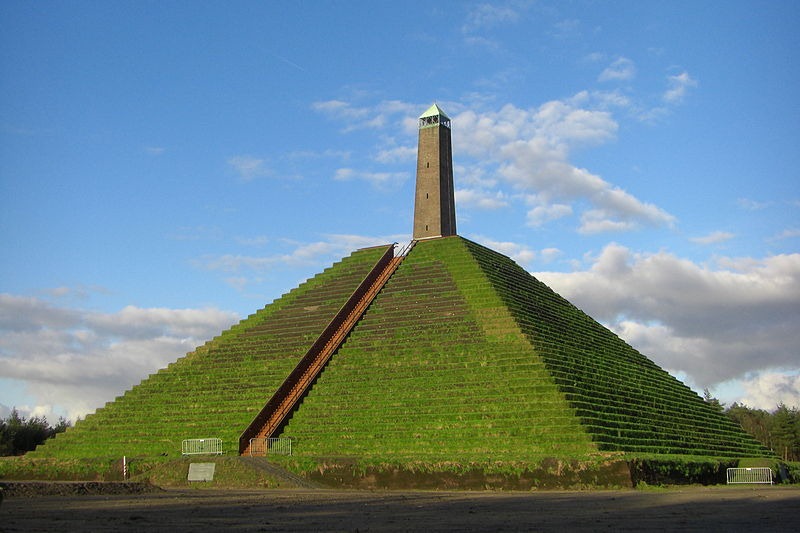
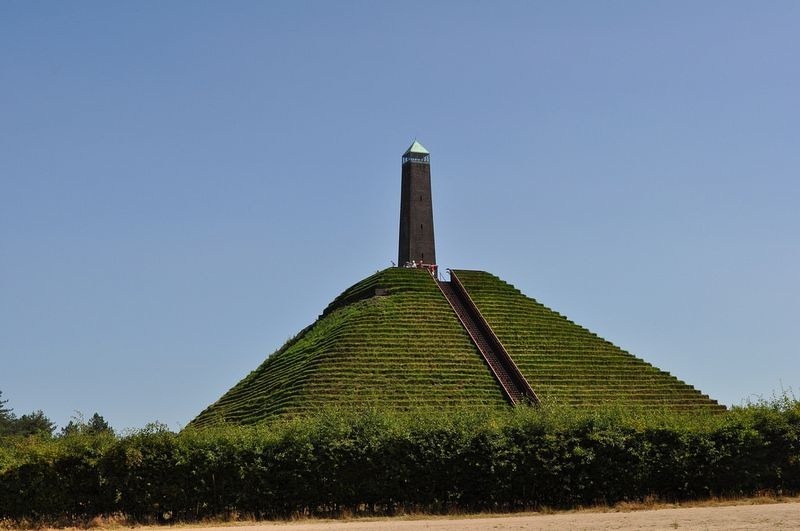
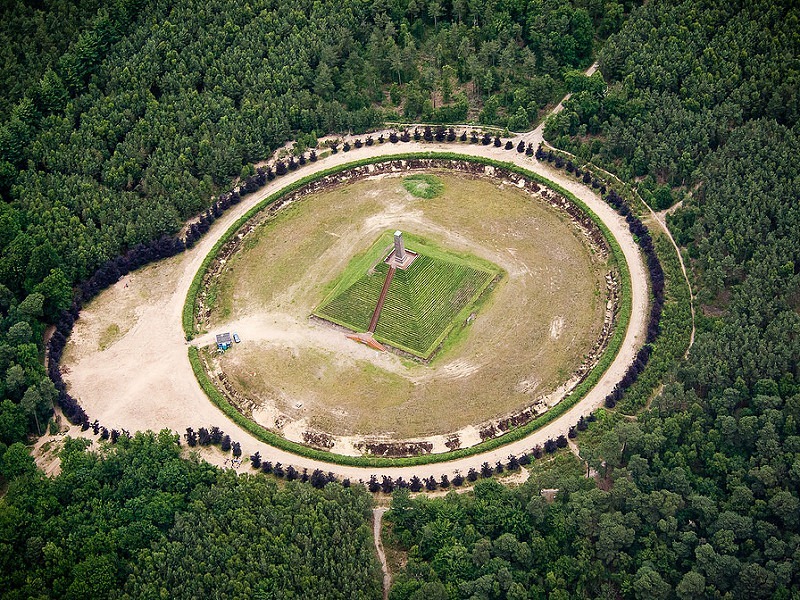
At the highest point of the Utrecht Ridge, in the Dutch village of Woudenberg, stands Europe’s only pyramid. The 36-meter-tall earthen hill was built in 1804 by Napoleon’s soldiers, under the direction of General Marmont as a tribute to his friend and example Napolean Bonaparte (although Marmont betrayed Napolean later). Marmont called it “Mont Marmont”. But in 1806, despite protest from General Marmont, Louis Napoleon, the new king of Holland, renamed the hill the Pyramid of Austerlitz in memory of the Battle of Austerlitz in which Napoleon decisively defeated the Russians and Austrians.

pyramid-of-austerlitz-4

Photo credit: Kattjosh/Flickr

In 1804 the French General Auguste de Marmont established an army camp in this central location in the Batavian Republic, the present Netherlands, where over a period of several months he managed to forge together various battalions into a large, well-trained army, capable of beating the British enemy should there be any repetition of the invasion of 1799. Satisfied with the military power of the new army, and to occupy his bored soldiers, in the autumn of 1804 Marmont had his soldiers build an earth and turf monument inspired by the pyramid of Giza, which Marmont had seen in 1798 during Napoleon’s Egyptian campaign. Even the erosion-exposed stepped surface was imitated.

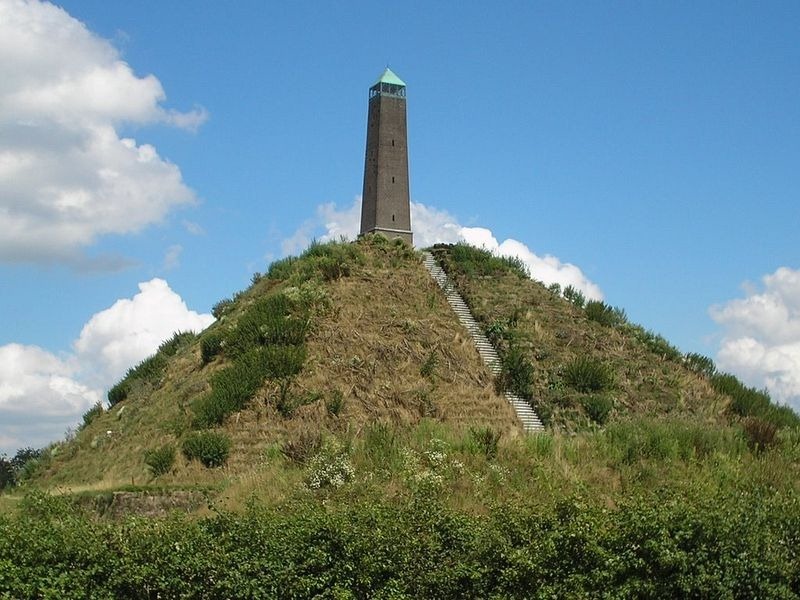
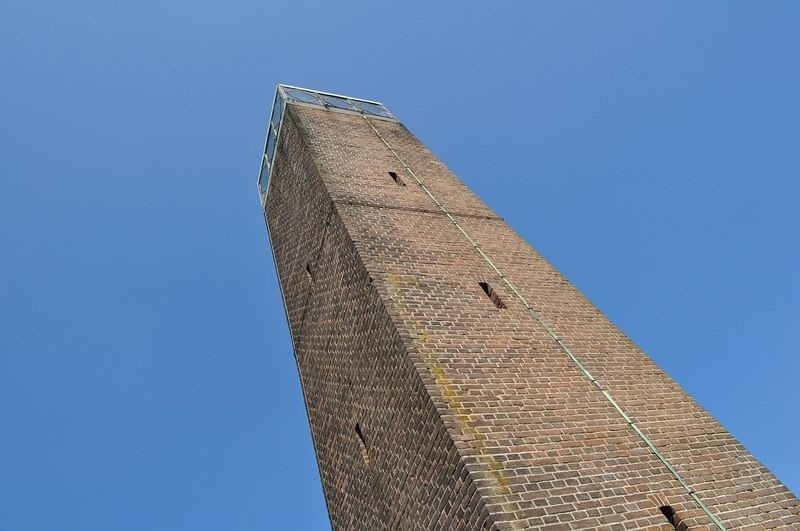
Construction took a mere 27 days and the structure rose to 36 meters. The apex of the pyramid was flat where was erected a 13-meter-tall wooden obelisk. Marmont was, however, too haste in its construction. There wasn’t even a proper foundation to the structure. It was simply a pile of earth and sand. Naturally, the pyramid started to collapse not too long after it was built. Marmont struggled to keep it in good repair, but when locals vandalized it by removing the stone plaques, the frustrated General sold the pyramid and the surrounding land to the Hubert M.A.J. van Asch van Wijk, who would later become mayor of the nearby city of Utrecht.

The pyramid remained neglected throughout the 20th century, until its restoration in 2004. The Pyramid and the surrounding area is now a popular tourist attraction and recreation spot.

pyramid-of-austerlitz-1

The Pyramid before it was restored. Photo credit: Fernambukk/Panoramio

pyramid-of-austerlitz-2

Photo credit: Traveling Tourist/Flickr

pyramid-of-austerlitz-3

Photo credit: Traveling Tourist/Flickr

pyramid-of-austerlitz-5

Photo credit: Marc Rauw/Flickr

Source…www.amusingplanet.com

natarajan

Image of the Day… Morning Sunglint Over the Pacific…!!!

Sunglint and clouds over the ocean photographed from low Earth orbit

This Earth observation composite image from the International Space Station captures morning sunglint and low clouds over the central Pacific Ocean. The image was put together at the Johnson Space Center in Houston, from a series of photographs taken by Expedition 47 Commander Jeff Williams on March 25, 2016.

Image Credit: NASA

source….www.nasa.gov

Natarajan

Bartered, Gifted, Stolen, But Never Sold, the Elusive Kohinoor Diamond is Still Making History…!!!

Entrenched in history, having been passed down by some of the greatest rulers of massive empires in the Indian subcontinent, the Kohinoor diamond is the most desirable, priceless stone.

It’s a clear stone the size of a ping pong ball and it fits in the palm of the hand. But the Kohinoor Diamond is priceless, with a deep history engraved in its essence. The stone has seen bloodshed, violence, greed, wonder, deception and wars. It has seen men go mad with power, it has seen men fall from grace. It has seen the thirst, the hunger and the dreams that make humans essentially human. The stone has been brought down through the ages, changing hands and making history on its way.

The assertion of ownership over the stone is still an elusive decision. India, Pakistan and Afghanistan all want the stone back, claiming ownership, while Britain vehemently refuses to part with their most prized possession. As theIndian government claims to bring back to stone ‘amicably’, here’s a look at why this legendary, brilliant cut 106-carat stone is so remarkable and desirable.

From India to Present-day Uzbekistan to England

kohinoor

The Kohinoor Diamond on the royal crown

Source: Wikimedia Commons

According to legends, in the 13th century, the diamond was found in Guntur, in Andhra Pradesh. The first known record of the possession of the diamond was with the Kakatiya Dynasty in South India, and then with the Rajas of Malwa. When the Delhi Sultanate took over the South of India in 1300s, Alauddin Khilji held the stone in his palace.

In 1339, it was taken to Samarkand (present day Uzbekistan), which was its home for the next 500 years. Sultan Ibrahim Lodi gifted it to Babur. After three generations, it was passed on to Shah Jahan. Then his son Aurangzeb took over and imprisoned him, and guarded the stone with his life. It was passed on to Bahadur Shah I and later to his great grandson, Muhammad Shah. Being a weak ruler, the stone was taken from Muhammad by Nader Shah. In 1747, he was assassinated, and his general, Ahmad Shah Durrani, passed on the stone to his grandson, Shah Shuja Durrani.

Durrani took the stone to India, and gifted it to the founder of the Sikh Empire, Ranjit Singh in 1813, in return for help to take down the Afghani throne. Emporer Ranjit Singh had instructed the stone to be part of Jagannath Temple in Puri after his death in his will. But when the East India Company and the British Empire took over the Sikh Empire in 1849, the stone was confiscated, and stored at a treasury in Lahore. Finally, it was taken to the Queen in 1850. Today, it is part of the Crown Jewels, placed in the Tower of London in the UK

The Curse of the Mountain of Light

In Persian, Koh-i-Noor means the mountain of light. However, the name didn’t come about till the stone reached Nader Shah in the mid-1700s. Legend has it that in 1306, someone wrote that the stone was cursed. According to the curse, any man who owns the stone is likely to own all the riches and power of the world, but also suffer great misfortunes. Only a god or a woman can carry or wear the stone with no ill consequences.

A New, Lighter Cut

kohinoor

The size of the stone before 1852

Source: Kohinoordiamond.org

When the stone was discovered, it was allegedly 793 carats, uncut. By the time it reached the British Empire in 1849, the stone weighed 186 carats. The Queen ordered the stone to be cut in 1852, as it wasn’t as brilliant and beautifully shaped when compared to other cut diamonds in their possession at the Crystal Palace. The stone was cut into an oval shape, and weighed 42% lighter at 105.602 carats.

The Priceless Gem

In the 1500s, Babur had declared that the Kohinoor was worth half the world’s total production costs in a day. However, there’s no certain way of determining the price of the stone. It has changed hands through history mainly because it was bartered, gifted or stolen. Compared to other stones in the world that weigh somewhere close, like the 100-carat flawless diamond sold by Sotheby’s at an auction in 2015, it should cost around $22-30 million (Rs 146 crores). But considering that the stone has been possessed by many of the greatest legends in Indian and world history, the premium for it could be priceless.

The Tug of War

kohinoor

Source: Wikimedia Commons, Kohinoordiamond.org

When India got its independence in 1947, it asked for the stone back, believing it was supposed to be in India. Even after consequent requests in 1953 and 2000, the British government refused, citing that it was nearly impossible to decide who the stone belonged to, given its various owners throughout history. In 1976, Pakistan laid claim to the stone, but was refused by then-Prime Minister of the UK, James Callaghan, claiming that in a treaty with the Maharaja of Lahore in 1849, the stone was ordered to be transferred to the British Crown. Afghanistan too claimed that the stone should be returned to them.

In 2010, Prime Minister David Cameron said, in a quote that’s now popular, “If you say yes to one you suddenly find the British Museum would be empty. I am afraid to say, it is going to have to stay put.”

It might be a while before a concrete decision has been made about the ownership of the diamond. Until then, it’ll take you a ticket to London to appreciate this beauty, steeped in historical legends!

Source…..Neeti VijiayKumar in http://www.the better india .com

Natarajan
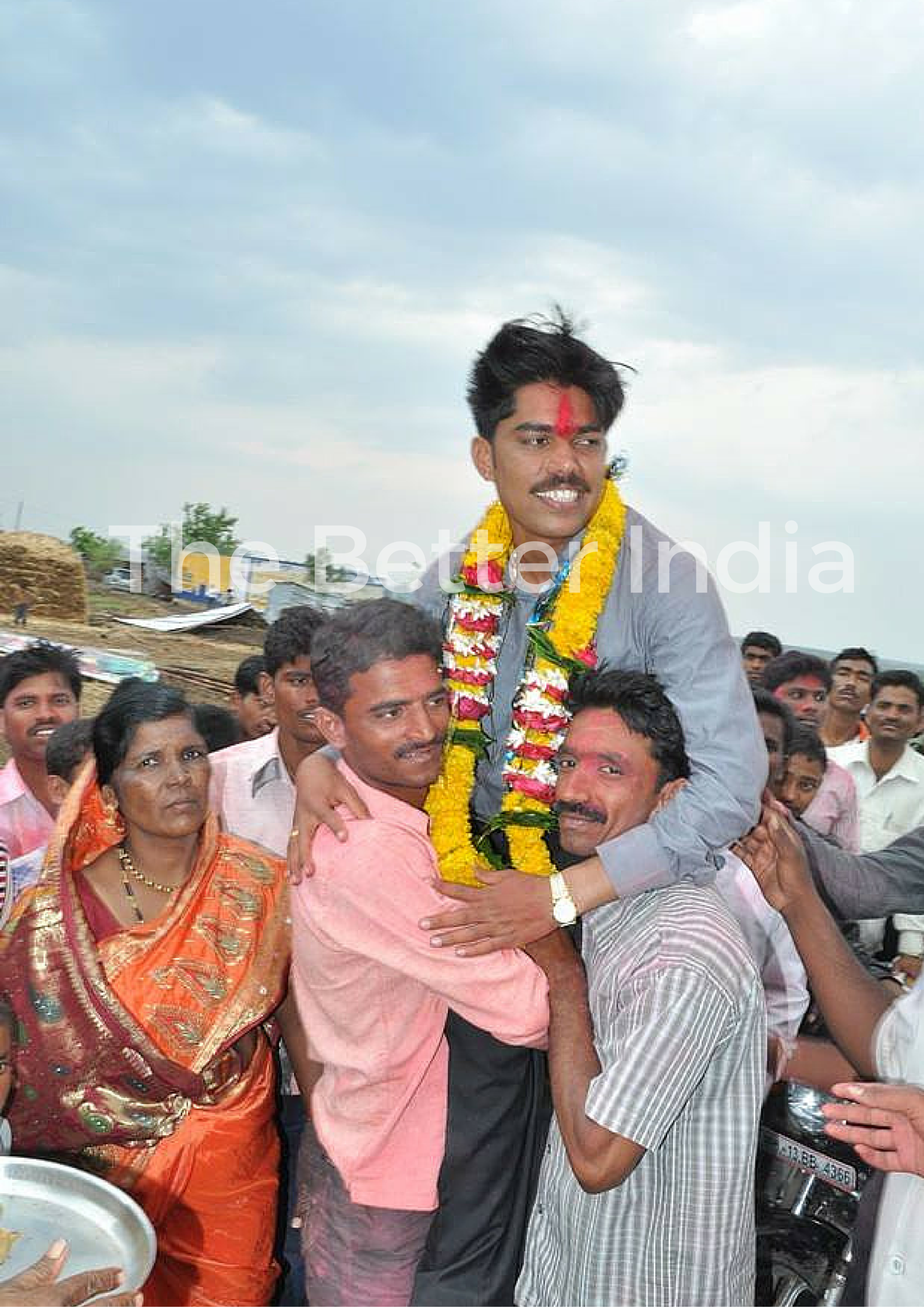
Operation Sulaimani: A District Collector’s Mind Blowing Initiative to Feed the Hungry in Kozhikode…!!!

The people of Kozhikode are silently funding an initiative that feeds anyone who is hungry for free, with utmost dignity.

“Nalla Manushyar Aanu” – “They are good people.” This is a default comment that you will hear about the people of Kozhikode, Kerala. From its fabled auto drivers who return every penny of change, to its palliative clinic that provides free care for the terminally ill, to simple heart-warming selfless conversations, the tales of Kozhikode’s good hearted people are greatly cherished.

Now here is a reason why you will also chime in with some words of praise – Kozhikode makes sure no one in the city goes hungry! Be it the poorest, the not so poor, be it you or me – the hungry will be served food for free, with utmost dignity.

People in need can collect a free meal coupon from any of the distribution centres and walk into any restaurant in the city – a meal will be served, no questions asked, no explanations sought.

K2

Restaurants in Kozhikode serve meals to the hungry in exchange for free coupons given away by the authorities.

Pic for representation purposes only: kerala.in

“We cannot ask a hungry person to get his hunger attested by a certified gazetted officer! That is why we insisted on the philosophy that ‘no questions will be asked’. If you ask for a food coupon, you will get it, it is as dignified as that,” says District Collector of Kozhikode, Prashant Nair, the chief architect of this project called ‘Operation Sulaimani’, eponymous of Kozhikode’s very own local black tea, served with a dash of lemon and cardamom.

The project was launched by Kozhikode’s District Collector, Prashant Nair, who envisaged this as a community owned and community driven initiative in its entirety. The Collector’s office initiated it and the Kerala State Hotel and Restaurants Association roped in over 125 city restaurants to become a part of this.

But, there are no big sponsors nor do any government funds flow in. The small and big contributions by the citizens are dropped into little boxes with ‘Operation Sulaimani’ inscribed on them.

K4

The volunteer team has placed the boxes across the city, into which nameless donations are made. This money is used to reimburse the meal coupons that are collected at the restaurants. Interestingly, Team Sulaimani does not take a penny from the collected money to meet its administrative costs. This money is meant only to feed the hungry, they insist.

In April 2015, Operation Sulaimani made the free meal coupons available at the Collectorate, Village and Taluk offices. Coupons were also distributed along with newspapers with the intent that people who read newspapers can offer the coupons to those in need. An army of volunteers went around the city to spread the word and distributed the coupons.

Just two days after the launch of Operation Sulaimani, the Collector got a massive one crore donation offer, which he refused. Yes, he refused!

Kozhikode Collector, Prasanth Nair

Kozhikode Collector, Prasanth Nair

The team believe that the spirit of Operation Sulaimani lies in the collective responsibility taken by the people to care for each other rather than an act of benevolence by any individual or organization.

This collective spirit has proved to be indeed powerful by feeding 9000 people in the last one year, not running out of funds, and not showing signs that the city’s good spirit will allow them to run out too.

One of the striking aspects of Operation Sulaimani is the fact that it gets fulfilled within the capabilities of existing systems. No big kitchens to feed the hungry were built and no massive funds were sought in the name of hunger eradication. By leading people to any restaurant in any part of the city, it blended the cause into the everyday function of Kozhikode’s restaurants.

The District Collector adds, “There is no food wastage nor do we have to worry about the safety of the food. If we had chosen to build a large kitchen to supply free food, we would have all these problems. But we just decided to use the existing system and make the best use of it.”

One of the restaurants in the vicinity of the city mental hospital feeds several people who come in with coupons. The restaurant owner says his life has never before felt so blessed.

sulaimani1

Coupons can be exchanged at local restaurants for free meals.

Many restaurant owners like him do not want to take the reimbursements but Team Sulaimani insists that they are paid.

Some people doubt if such a facility will be misused, but the team is not worried about that. Rather, it is finding it challenging to reach more people who are in need. The members found that hunger is not just about the people on the streets, the homeless, it is also discreetly present within our communities. Reaching these people and making them aware that food is the last thing they need to worry about is what the team is obsessed with.

If you noticed, we haven’t got any quotes from any beneficiary of Operation Sulaimani nor put up their photos. Team Sulaimani believes that the dignity of the people should not be infringed on, and we salute that spiri

Source…..Ranjini Sivaswany in http://www.the betterindia.com

Natarajan

The story of the World War II gunner who fell 22,000 feet without a parachute and lived…

Paratroopers make a big deal about jumping out of planes from 800 feet, but U.S. Army Air Force Staff Sgt. Alan Magee fell out of a plane at 22,000 feet without a parachute while the plane was on fire.

And he lived.

ball turret gunner

Magee was a ball turret gunner in a B-17 named “Snap! Crackle! Pop!” after the three mascots for Rice Krispies cereal. That plane, along with others from the 360th Squadron, was sent to bomb German torpedo stores in St. Nazaire, France on Jan. 3, 1943.

During the mission, the plane was shot by anti-aircraft guns and became a ball of flames. Magee climbed into the fuselage to get his chute and bail out, but it had been shredded by the flak. As Magee was trying to figure out a new plan, a second flak burst tore through the aircraft and then a fighter blasted it with machine gun fire.

b17 bomber liberty belle


Magee was knocked unconscious and thrown from the aircraft. When he woke up, he was falling through the air with nothing but a prayer.

Magee told God, “I don’t wish to die because I know nothing of life,” according to reports from the 303rd Bomb Group.

Magee, struggling with a shortage of oxygen and likely in shock from the events of the past few minutes, passed out again and God seemingly answered his prayer. The young noncommissioned officer fell into the town of St. Nazaire and through the glass roof of the train station. He was later found dangling on the steel girders that supported the ceiling.

The glass had slowed his fall and he regained consciousness as German soldiers took him to medical care. Magee’s right leg and ankle were broken, he had 28 wounds from shrapnel and glass, and his right arm was cut nearly the whole way off. He had also suffered numerous internal injuries.

“I owe the German military doctor who treated me a debt of gratitude,” Magee said. “He told me, ‘we are enemies, but I am first a doctor and I will do my best to save your arm.'”

GErman prison camp wwii

French POWs at work at a farm in Westscheid bei Mennighüffen.

Magee was able to keep his arm and eventually made a full recovery. He spent most of the rest of the war as a POW.

In 1995, Magee was invited back to France as part of a ceremony sponsored by French citizens to thank Allied service members for their efforts in the war. Magee was able to see monuments to the crew of Snap! Crackle! Pop!, including the nose art which had been used as a Nazi trophy until after the war when a French man recovered it. It was restored in 1989.

Magee died in 2003.

Read the original article on We Are The Mighty. Copyright 2016. Follow We Are The Mighty on Twitter.

Source….www.businessinsider.com

Natarajan