” The Man who led Chennai’s Rescue Effort …”

Soldiers join the resuce operations in Chennai

IMAGE: Soldiers join the rescue efforts in Chennai. Photograph: MoD/Twitter

‘Coordination between our 50 teams, each with a strength of 45 men, played a key role in rescuing flood-affected people in Chennai. In all, we succeeded in rescuing over 20,000 people.’

‘The NDRF, an exclusive dedicated standalone multi-disciplinary disaster response force, is the only one of its kind in the world.’

NDRF chief O P Singh on how his organisation helped rescue and relief in flood-ravaged Chennai.

NDRF chief O P Singh

National Disaster Response Force Director General O P Singh refuses to be drawn into any controversy regarding the unprecedented release of over 29,000 cusecs of water from the Chembarambakkam reservoir on the night of December 1, without having alerting the state government, the police or the power utility services.

Water experts believe this release was the main reason for the floods that devastated Chennai with the situation being made worse by the heavy rainfall.

Singh,  is a 1983 cadre Indian Police Service officer. As head of the NDRF he was responsible for the rescue of nearly 50,000 civilians during the disastrous flooding of Sringar in September last year. His organisation’s work during the Nepal earthquake earlier this year was much appreciated by the governments of Nepal and India. The NDRF was formed by an Act of Parliament in September 2014.

He spoke exclusively to Rashme Sehgal for Rediff.com

You had 50 NDRF teams working night and day to rescue people through this crisis. What has the NDRF learning curve been from this?

What we witnessed in Chennai is the phenomenon of urban flooding. It is very different from rural floods or floods in semi-urban areas. Its special feature is that as water levels start to rise, the water begins to flow in a very swift manner. This kind of urban flooding we are witness to can be described as a very recent phenomena.

We witnessed it in Mumbai ten years ago. Jammu and Kashmir was our first experience of intense urban flooding.

How did you go about tackling the situation in flood-hit Chennai?

We are the only official disaster response team in the country. We have a strength of 12 batallions of 15,000 men drawn from the Central Reserve Police Force, the Indo-Tibetan Border Police, the Border Security Force and the Central Industrial Security Force who join us for a period of deputation lasting five years.

The first two years are spent providing them very intensive and highly professional training in how to handle disaster situations in different areas, whether it be the collapse of structures, search and rescue, deep underwater diving, underwater communication, medical first responder and also how to deal with biological, radiological and nuclear emergencies.

Coordination between our 50 teams, each with a strength of 45 men, played a key role in rescuing the flood-affected people in Chennai.

In all, we succeeded in rescuing over 20,000 people.

If you spend two years training them, then why should they revert back to their earlier cadre three years later? Doesn’t all this intensive training go waste by this kind of reversion?

That is a very valid question. If you permanently keep them (in the NDRF) then they might lose their motivation. We are thinking of keeping them for a longer period and are considering the possibility of extending their deputation from five to ten years.

We are also looking at a possibility of allowing 12 per cent of our force to be kept in the NDRF on a permanent basis.

You need to remember that this is an exclusive dedicated standalone multi-disciplinary disaster response force. It is the only one of its kind in the world. They focus only on disasters and nothing else.

When there are no disasters, we spend our time trying to empower the community because the community is the first responder to a disaster. We also interact closely with the police, the fire brigade and also provide training to organisations like the NCC (National Cadet Corps), the National Service Scheme and the home guards. We are capable of reaching a disaster within 20 minutes.

Were you able to reach Chennai within 20 minutes of the flood occurring?

In Chennai, our 50 teams flew in from Bhatinda, Guwahati, Patna and Pune. We had already pre-positioned some teams around Chennai and were receiving regular reports from the Indian Meteorological Department.

You had pre-positioned your teams around Chennai prior to the massive flooding?

We had four teams that had been pre-positioned. We had teams in Cuddalore and Kanchipuram and had two teams in Puducherry. Within two to three hours of being informed about the heavy rainfall and about the release of water from the reservoir, our local battalion stationed in Ernakulam was there.

What were the immediate steps you took?

Our first steps were on how to evacuate the people who were marooned. We had to put them in boats and take them to a safer location. For that we needed divers, life jackets and boats.

In some areas there was eight to nine feet of water. Chennai airport was submerged in eight to nine feet of water. Several localities were completely submerged.

The second major problem we faced was the breakdown of power resulting in a major communication failure. People’s mobile phones had gone dead. There was also the apprehension was of people getting electrocuted.

The other problem we faced that even though people were marooned, they were not willing to leave their homes.

Why was that? Did people feel that in their absence, their homes would get looted?

People living in ground floor houses agreed to get evacuated, but those living on the first floor moved to the second floor and then onto the roof.

The settlements along the banks of the river Adyar which were all low lying areas, saw huge amounts of water collect there. Our teams found it very difficult to navigate these areas.

More than 300 people died in these floods.

A large number of these deaths took place in some hospitals because of the power failure. The ICU units in the hospitals were affected because of the lack of power.

Our 50 teams were using Quick Deployable Antennae (for satellite communications) which is a portable system and can be used both in the digital and analogue mode. But this QDA is an internal system that can be used only by us.

But on our helpline, we were getting information via SMS, e-mails and Whatsapp, and also from television channels. I was stationed in Chennai and constantly telling my response team to reach the area from where the alert had been sounded. I was acting as a link between the victim and the parent or others.

Obviously, during the flood, people were on edge, they had become nervous and very jittery. I had to keep assuring the public. It was a huge challenge to communicate and reach out to the people especially since the power facilities were down.

But our men were working round the clock. I would like to cite the example of one rescue mission that my men undertook of a woman called Deepthi who was in her final stages of pregnancy and living in the Ramapuram area. Two NDRF sub-inspectors Bijumon and Satish reached out to her in a boat, but could not load her onto a boat.

She had to finally be rescued by a chopper. The two jawans helped her climb onto a water tank from where they helped her climb her onto an IAF helicopter being flown by a team led by Wing Commander Simon and Squadron Leader Venkatraman.

The lady gave birth the next day to two twin girls and her father Mohan Raj sent me a letter commending the work done by the NDRF and hoping his twin grand-daughters would join the NDRF one day.

The NDRF received praise in Chennai, but the NDRF received criticism for its rescue operation work during the floods that hit Kashmir last year.

No, I don’t think so. The terrain of Srinagar is completely different from the terrain of Chennai. Srinagar is an extremely mountainous area. The Jhelum river had spilled over and mixed with the Dal Lake and the entire area looked like a vast sea.

The current there was very sharp and we had to use choppers. The flood water ended up dividing the old Srinagar city from the Dal Lake area. Our teams ended up rescuing 50,000 people in the operation.

Chennai used to be a dry city. But the incessant rain, unregulated construction and the release of a huge amount of water from the Chembarambakkam reservoir caused this deluge.

To go back to my earlier question, what is your learning from this deluge?

I believe we have to strengthen our response measures to meet disasters. But the long-term strategies would be to pay much greater attention to prevention and mitigation strategies. These will involve flood mapping and satellite imagery. But most important, we need to pay much greater attention to regulate development in our cities.

To take the example of Chennai, which as a city can be divided into three parts. No new construction must be allowed in the vulnerable parts of the city. The state government must take strong measures in this. I believe after witnessing two major floods that all urban construction must be regulated.

In terms of mitigation strategies, we need to construct water channels to drain out the water. More important, we need to revive the water channels that have been destroyed. We need to take very strong steps on this score.

Cities must develop resilience to face heavy rain and for that we need to take institutional measures to ensure that there can be no encroachment on marshlands, our traditional tanks and lakes that have shrunk must be restored and all the waterways that had been constructed to drain excess water must also be restored to ward off future threats.

Source…….Rashme Sehgal in http://www.rediff.com

Natarajan

Image of the Day….” Rare Sunset …”

A photo of rare sunset, only seen when the sun is low in the sky and likely a result of reflection by ice crystals.

Photo taken December 11, 2015 by Peter Lowenstein in Mutare, Zimbabwe.

Photo by Peter Lowenstein in Mutare, Zimbabwe.

On December 11, 2015, Zimbabwe was still experiencing an intense heatwave with almost clear skies and very little rain. While the sun was setting behind a lone small cumulus cloud, a diffuse duplicate appeared above it in a thin veil of more distant high cloud.

This spectacle lasted for just over a minute before the second sun faded away.

The photo was taken between using a hand-held Panasonic Lumix DMC-TZ60 compact camera in intelligent auto mode.

I asked Jim Foster of the Earth Science Picture of the Day what might have caused this phenomenon. He worked as a research scientist at NASA’s Goddard Space Flight Center for more than 37 years before retiring in 2014. He replied that a double sun is:

… only seen when the sun is low in the sky and likely a result of reflection by ice crystals.

The Earth Science Picture of the Day on Facebook also published this photo on December 14, 2015.

Bottom line: Apparently double sunset – likely due to reflection by ice crystals – seen in Zimbabwe on December 11, 2015.

Source…. Posted by http://www.earthsky.org


natarajan

The Incredible Story of Neerja Bhanot – Indian Flight Attendant Who Saved 360 Lives…

On the morning of September 5, 1986, Pan Am Flight 73 landed in Karachi. It had arrived from Mumbai and, had nothing gone wrong, would have departed for Frankfurt and onward to New York City. The flight was carrying, among members of other nationalities, Indians, Germans, Americans, and Pakistanis.

Unfortunately, the flight was hijacked while it was parked on the tarmac at Jinnah International Airport in Karachi.

pan am

Photo for representation purpose only. Source: Wikipedia

Four heavily-armed terrorists, dressed as airport security guards, entered the aircraft while firing shots from an automatic weapon and seized control of the plane.

This is the story of Neerja Bhanot, the senior flight attendant on board, who helped a number of passengers escape. She was murdered while shielding three children from terrorist fire, less than 25 hours before her 23rdbirthday.

After the terrorists boarded the plane, Neerja alerted the cockpit crew, who escaped through an overhead hatch in the cockpit. As the senior-most remaining crew member on board, this left Neerja in charge. One of the terrorists asked the flight crew to collect and hand over the passports of all passengers on board. When Neerja realised that the primary targets of the terrorists were American passengers, she hid their passports – even discarding some of them down the rubbish chute. From a total of 41 American passengers, only 2 were killed.

After holding the passengers and crew members hostage for 17 hours on the runway, the terrorists opened fire. Neerja stayed on the plane to help passengers escape, even though she could have been the first to leave. She was shot while shielding three children from the bullets that were being fired by the terrorists.

Most of us will never find ourselves in a high-pressure situation, facing life or death the way Neerja did. True bravery emerges in the face of fear. We might never know what Neerja was thinking or feeling during those terrible hours of the hijacking, but we do know that she chose to respond to the actions of the terrorists with exceptional grace, courage, and grit. Of the 380 passengers and crew members on Flight 73, 20 were killed.

While many others were injured, they did survive – in no small part due to the actions of a 22-year-old flight attendant who chose compassion over cowardice and performed her duty till the very end.

Neerja Bhanot

source,….Facebook

Neerja Bhanot’s family suffered an unbearable loss when they lost their only daughter.

“Neerja was the ‘laado’ of the family, the youngest and most pampered. My parents had wished for her, and in a news article after her death, my father had mentioned how, when she was born on September 7, 1962, the maternity ward matron here at Chandigarh hospital rang up to inform, it’s a girl. To her surprise, he gave her double thanks, for Neerja was a prayer answered after two sons,”recalls Aneesh, her brother.

As her father remembers her,

“Neerja was a very sensitive, deeply affectionate and an extremely decent person who believed in sharing with her people all her joys but not the jolts. She had well defined principles and there was little room for compromise in that area.”

Despite their irreplaceable loss, her parents, Rama and Harish Bhanot, soldiered on, and even found a fitting way to honour Neerja’s memory. With the insurance money that they received after her death and an equal contribution from Pan Am, they set up the Neerja Bhanot Pan Am Trust. Through the Trust, they present two awards of Rs. 1,50,000 every year – one to an Indian woman who faces social injustice but overcomes it and helps other women in similar situations, and one to honour an airline crew member who acts beyond the call of duty. There could hardly have been a better way to keep Neerja’s memory alive.

For her actions on the day of the hijacking, Neerja Bhanot was posthumously awarded the Ashok Chakra, India’s highest peacetime military decoration for the “most conspicuous bravery or some daring or pre-eminent valour or self-sacrifice”, and the Tamgha-e-Insaniyat, awarded by the Pakistan government for showing incredible kindness. She also posthumously received multiple awards for her courage from the United States government.

Source……..Vandita Kapoor in http://www.the betterindia.com

Natarajan


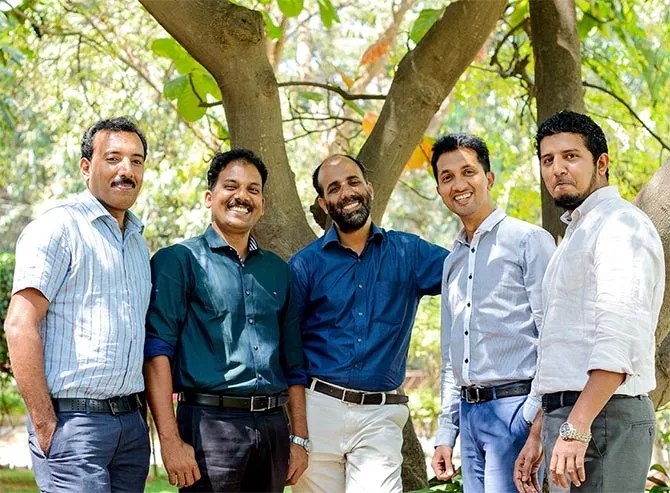
” ‘If you have the passion to start something, do it immediately. Don’t wait for tomorrow.’…Says P.C.Musthafa, from Wayanad Kerala…

‘When we became a Rs 100 crore company in October, we celebrated in grand scale. We have grown from producing 10 packets a day in 2005, with just my cousin managing the kitchen, to 50,000 packets a day with 1,100 employees in 10 years.’

‘If you have the passion to start something, do it immediately. Don’t wait for tomorrow.’

Shobha Warrier/Rediff.com listens to P C Musthafa’s incredibly inspiring story.

This is the story of a 42-year-old man from a remote village in Wayanad, Kerala. His father was a coolie. His mother never went to school.

This is the story of a man who failed in Class 6, but went on to join the Regional Engineering College (now the National Institute of Technology), Calicut and the Indian Institute of Management-Bangalore.

This is the story of a man who decided to become an entrepreneur and employ people from rural India.

Today, fresh idli and dosa batter made by P C Mustafa’s company ID Fresh reaches homes in Bengaluru, Chennai, Pune, Mumbai, Delhi, Hyderabad, Mangaluru and even Dubai.

Childhood in Wayanad

I grew up in a small village called Chennalode near Kalpatta in Wayanad.

The village was so remote that we had only a primary school. It had no roads or electricity. We had to walk at least four kilometres to go to high school so most of the kids dropped out after primary school.

My father Ahmed stopped studying after Class 4 and worked as a coolie on a coffee plantation. My mother Fathima never went to school.

I am the eldest and I have three younger sisters.

Failing in Class 6

I was not interested in studies. After school every day, and on weekends, I preferred helping my father, a daily wage worker, instead of doing homework or studying.

There was no question of opening the books at night as there was no electricity at home, only kerosene lamps.

Though I was below average in all other subjects, I was good at mathematics. After I failed in Class 6 I lost interest in going to school.

A school master steps in

My father asked me to join him as a daily wage worker. My maths teacher, Mathew Sir, didn’t like my dropping out of school one bit. He spoke to my father who agreed to give me one more chance.

Mathew Sir asked me a question, ‘Do you want to be a coolie or a teacher?’ I looked at him and could see the difference between my father and my teacher. ‘Sir,’ I answered, ‘I want to be a teacher like you.’

When I went back to school, I had to sit with my juniors. All my friends were in a higher class. I felt so humiliated that I became attentive in class.

I was very weak in both English and Hindi. Seeing me struggle, Mathew Sir helped me after school.

From a failure to a topper

Sir’s help worked. I came first in the Class 7, surprising all the teachers. There was no looking back after that.

I stood first in the school in Class 10.

In those days, I had only one ambition: I wanted to be a maths teacher like Mathew Sir. He was my role model.

From a village to a city

Till I completed Class 10, I had not stepped out of Wayanad. For college (junior college was known as pre-degree those days), I had to go to Kozhikode (Calicut). My father didn’t have a problem but didn’t have any money to fund my education.

I got admission at the Farooq College in Kozhikode where my father’s friend, who had suggested I study further, arranged for a free meal scheme in the college charity hostel. I was one of the 15 students who were offered free stay and food, as we could not afford to pay.

There were four hostels in the college and we had to go to different hostels for breakfast, lunch and dinner as we were on charity.

Naturally, other students looked at us with disdain. That upset me. It was like we were eating somebody else’s food. Some students made fun of us. It was not a pleasant experience, but I had to swallow the humiliation for the sake of my education.

Looking back, I feel the college management did a great job by taking care of poor students like us.

Coming from a village, I was very weak in English. It was a big handicap in college where all the lectures were in English. A good friend of mine used to translate everything for my benefit. I also worked extremely hard and felt even more motivated when I scored good marks.

Engineering at REC, Calicut

I wrote the engineering entrance exam after my college and was ranked No 63 in the state. I got admission at the Regional Engineering College (now the National Institute of Technology).

When I look back, I feel three factors helped me.

I had the potential as I was good in Maths. I was a hard worker. And the third and most important reason was that God was with me.

I was very lucky to have secured such a good rank. I got the opportunity to study what I really liked — computer science. There was no one to guide me in those days except God Almighty.

Life was not that bad at REC. I got a scholarship and also took a student’s loan. I didn’t have to pay any tuition fees and only had to take care of the hostel fees. That was a big relief. Unlike other students, I had to be very careful about spending money, but that was okay.

I had no dreams to be an entrepreneur then. I wanted to be a well-known engineer. I worked hard and did well in studies. When I graduated in 1995, I got placed at Manhattan Associates, an Indian start-up in the US.

First flight

After a few days of working at the start-up in Bangalore, I got an offer from Motorola. It was a dream offer for a person from a remote village in Wayanad. After working for a short period in Bangalore, I was sent to Ireland.

As a young boy, I stepped out of Wayanad for the first time to study in a college. Now, for the first time in my life, I boarded a flight and went out of the country.

The flight took off at 6.30 pm. I looked down and saw Bangalore. I will never be able to forget the image: The aerial view of Bangalore.

Missing India

Though I loved Ireland and the Irish people, I missed my people and country a lot. I also missed Indian food, as there were no Indian restaurants there. I was used to praying five times a day, which I found difficult to do there.

After three months, I got a very good offer from CitiBank. I jumped at it and moved to Dubai. In 1996, a salary in lakhs was quite something. The first thing I did after I paid off my loan was to send Rs 1 lakh in cash to my father through a friend. I was told he cried seeing so much cash in a bag sent by his son.

He paid off his debts and started planning my sister’s wedding. One of my sisters had dropped out after school, but the others went to college. In 2000, I also got married.

A home for his parents

Soon, I built a house for my parents in our village. The people in my village, who had seen me as a small child, could not believe the change in my life. Many kids in my village now look up to me. They also dream of achieving something big in life.

From Dubai to India

In 2003, after having lived in Dubai for so long, I decided to return to India. There were three reasons for the decision.

I wanted to come back and spend time with my parents.

I wanted to study further. Though I had a very good GATE score, I couldn’t study after my engineering due to financial constraints. After working for a few years, I decided to study business administration.

The third reason was that I wanted to give something back to society.

There are so many smart youngsters in our villages who are not getting a good break in life. I wanted to give them that opportunity so that they too could come up in life. And the best way to help them, I thought, was by providing them with jobs. In order to do that, I had to be an entrepreneur.

Quitting a well paying job

It was one of the toughest decision I have ever made.

My father was horrified. So was my wife’s family. But one person supported me wholeheartedly, my cousin Nasser. As did my wife.

I am very close to my maternal cousins. We grew up together. They also came from very poor families. Unlike me, they didn’t go for higher studies.

Nasser ran away from home to Bangalore where he started a small kirana store. He gave me the courage to listen to my heart. He said, ‘If it does not work out, you can go back to work anytime. Quitting the job was the end of the world. But you shouldn’t feel that you didn’t try to do what you wanted to.’

The funny thing was I knew I wanted to do something but had no idea what it would be. I came to back to India with a savings of Rs 15 lakh (Rs 1.5 million).

Idlis and dosas

I met with my first objective by going to my village every weekend to be with my parents.

Instead of studying technology, I decided to do an MBA as I found management more interesting. I gave the CAT exam and got admission at IIM-Bangalore.

Even while studying at IIM-B, I would constantly discuss business plans with my cousins.

Shamsuddin, one of my cousins, had seen dosa batter being sold in plastic bags tied with a rubber band in nearby stores and suggested we make and supply dosa batter. That was an Aha! moment. I decided to invest Rs 25,000 and start a company immediately.

Five of us cousins — Nasser, Shamsu, Jaffer, Naushad and me — decided to join hands. The partnership was such that I had 50 per cent share in the company and the other 50 per cent was with the four of them.

We found a small place of around 550 square feet and started with two grinders, a mixer and a sealing machine.

ID is identity, not idli dosa

We were discussing names when a cousin suggested ID for idli dosa. We named the venture ID Fresh as we planned to supply fresh dosa and idli batter.

Our initial target were 20 stores in the neighbouring area. If we were able to sell 100 packets a day in six months, I would invest more and buy more machines.

We didn’t employ anyone; my cousin was in charge. We started very small with just 10 packets a day. Initially, the shopkeepers were not willing to keep a new brand. So we gave them a special offer — cash after sales.

When the customers asked for ID repeatedly, other stores also wanted to stock our product. But we stuck to the first 20 stores and waited to touch the 100 packet figure. By the ninth month, we were selling an average of 100 packets a day.

Making profits from day one

The best part of our venture was that we were making profits from day one. None of us took any salary initially. After paying the rent of Rs 500 and crossing off the expenditure of buying rice, dal, etc, our profit was Rs 400 in the first month.

Once we reached the target of 100 packets, I decided to invest Rs 6 lakh (Rs 600,000) and move to a bigger kitchen of 800 sq ft with 2,000 kg capacity, which is 2,000 packets with 15 wet grinders.

Nasser was handling the kitchen alone so we employed five people, all of whom were our relatives.

Joining as the CEO

In 2007, I got my MBA and officially joined as the CEO in charge of marketing and finance. Till then, I was only remotely participating in the operation along with my cousins.

In two years, we increased the capacity to 3,500 kg a day. The number of stores we partnered with increased to 300, 400. We now had 30 employees working for us. We were operating our kitchen in a residential area till then.

As the demand increased, we decided to have a proper manufacturing plant in an industrial area. We were making a decent 10 to 12 per cent profit every month.

In 2008, I invested another Rs 40 lakh (Rs 4 million) and bought a 2,500 sq ft shed in the Hoskote Industrial Area. We imported five large wet grinders from America and customised them to fit our requirements.

In 2008, we added parathas to our list of products. We will soon introduce vada batter and also rava idli batter.

At ID Fresh, we only deal with natural fresh food. We do not add any preservatives to any of our products.

Expanding operations

In 2012, we expanded to other cities like Chennai, Mangaluru, Mumbai, Pune and Hyderabad. My friends and relatives joined me to take ID Fresh to the next level. We follow a partnership model in other cities, with a local manufacturing plant in each city. Each partner becomes a shareholder in the parent company.

In 2013, we started our operations in Dubai. We see the maximum demand for dosa batter in Dubai and are not able to match the demand.

Our experience in Bangalore helped us. We use the same raw materials, the same manufacturing process and the same business model everywhere. Expanding to other cities was a bit tough though, since we are not locally present there.

We are not looking at any other international market right now. India is such a huge market and we have so much to explore.

Rs 100 crore company

Today, we produce around 50,000 kg in our plant. The total investment must be around Rs 4 crore (Rs 40 million) and our revenue is Rs 100 crore (Rs 1 billion).

When we became a Rs 100 crore company in October 2015, we celebrated in grand scale. We have grown from producing 10 packets a day in 2005, with just my cousin managing the kitchen, to 50,000 packets a day with 1,100 employees in 10 years.

Employs only youngsters from rural areas

When I recruit someone, I ensure he is from a rural area. He has to be smart, honest and committed. Those who work in the plant make around Rs 40,000 a month.

Biggest challenge

The biggest challenge any start-up faces is getting the right people, the right team. I was lucky to have my cousins with me.

But balancing work and personal life is by far the toughest challenge.

Future plans

My aim is to make ID the most popular and trusted brand in the fresh food segment and make it Rs 1,000 crore (Rs 10 billion) company in the next five to six years.

By then, I am sure we will be able to employ at least 5,000 people.

Advice to aspiring entrepreneurs

If you have the passion to start something, do it immediately. Don’t wait for tomorrow. I had the passion to be an entrepreneur, but it took me a few years make that decision. I still regret the delay. I wish I had started five years earlier.

My words may sound like management jargon, but it is very important to maintain the quality of the product to be successful.

The three things that worked for us were that we were in the right city with the right product at the right time.

Photographs: Courtesy ID Fresh

Source…..Shobha Warrier in http://www.rediff.com

Natarajan
 

” I Draw Famous Cities from my Memory …” Says Stefan Bleekrode…

The city fascinates me, no it totally absorbes me, actually it excites me to such degree that I feel like spending hours, days, weeks and sometimes months recreating in fine detail my impressions of all great cities I’ve visited.

Mainly from memory, I reconstruct whole cities in pen and ink and not a single little detail is lost on me: streetlights, subway entrances, shopfronts, park benches, yes, even curtains in windows. None of it is left out so I can reproduce as much as possible the same sensation I had when walking through the places which hold my fascination even long after I’ve left. I must admit I do make sketches in pen or watercolour on the spot sometimes if I get stuck and in case of an creative emergency I resort to photographic material, but only as a support.

New York above all, but also Rome, London, Budapest, Paris, Amsterdam, Florence and many, many other places provide me with an endless amount of images and perspectives fit for reproduction or to be used in imaginary but highly realistic metropolises which could actually exist.

Below you can see a few examples of my work. Enjoy!

More info: stefanbleekrode.exto.org

I reconstruct whole cities in pen and ink and not a single little detail is lost

Spacca Napoli, Naples

New York

Centro Storico, Italy

Parisian Boulevard At Night

Vienna, Austria

Washington Square In New York

Berne, Switzerland

Evening In Paris

New York City At Night

Shard tower By The River Thames

Bucharest, Romania

My Imaginary American City

Broadway And 5th In Manhattan

My Invented Metropolis By The Sea

Source….

Stefan Bleekrode in

http://www.boredpanda.com

Natarajan

“படித்தேன் , பகர்கிறேன் உங்களுடன்… பெருமை நிறைந்த மார்கழி மாதப் பிறப்பு…! “

பெருமை நிறைந்த மார்கழி மாதப் பிறப்பு…!
மாதங்களில் மிகவும் உயர்ந்தது மார்கழி என்பார்கள்.
அதனால்தான், ‘மாதங்களில் நான் மார்கழியாக இருக்கிறேன்!’
என்று ஸ்ரீகிருஷ்ணனே கூறியிருக்கிறார்.
மேலும் அவரே, கீதையில் “மார்கழி மாதத்தை தேவர்களின் மாதம்” என்று சொல்கிறார்.
அத்தனை சிறப்புகள் வாய்ந்தது இந்த மார்கழி மாதம்.
அதிகாலை எழுந்து கோலம் இட்டு அதில் சாணத்தால் பிள்ளையார் பிடித்து வைத்து கோலத்தை பூக்களால் அலங்கரித்து மார்கழியை வரவேற்கிறோம்.
‘பீடு’ என்றால் ‘பெருமை’ என்று பொருள். பெருமை நிறைந்த மாதம் என்பதே மருவி ‘பீடை’ என்றானது.
அதுவரை இருந்த எல்லா கஷ்டங்களும் நீங்கி வரும் தைத் திங்களில் இருந்து புது வாழ்க்கை அமைய வேண்டும் என பிரார்த்திக்கப்படும் மாதமும் இது தான்.
மார்கழி முப்பது நாட்களும் பாவை விரதம் இருந்து தானே ஆண்டாள் அந்த பெருமாளையே மணாளனாகக் கொண்டாள்.
இதிலிருந்தே அந்த மாதத்தின் பெருமையை உணரலாம்.
விடியற்காலையில் இருந்தே, ஆலயங்களில் வழிபாடுகள் தொடங்கிவிடும்.
அதுபோலவே பல ஆலயங்களில் திருப்பள்ளி எழுச்சி பூஜை தொடங்கி விடும்.
மார்கழி மாதத்தில் கோலத்தில் பூ வைப்பதற்கும், சாணத்தால் பிள்ளையார் பிடித்து வைப்பதற்கும் முன்னோர்கள் காரணங்கள் சொல்லிச் சென்றுள்ளனர்.
பூ வைப்பது ஏன் ?
அக்காலத்தில், திருமணத் தரகர்களோ, மாப்பிள்ளை – பெண் தேவை என்பதற்காக வெளியிடப்படும் கல்யாண விளம்பரங்களோ கிடையாது.
எந்த வீட்டில் பெண் அல்லது பிள்ளை திருமணத்துக்குத் தயாராக இருக்கிறார்களோ,
அந்த வீட்டின் வாயிலில் மட்டும் கோலத்தின் மேல் பூசணிப் பூ வைப்பார்கள்.
ஒட்டு மொத்தமாக எல்லா வீடுகளிலும் வைக்க மாட்டார்கள்.
மார்கழி மாத அதிகாலையில் வீதி பஜனையில் வருபவர்களின் பார்வையில் இந்தப் பூக்கள் தென்படும்.
விவரத்தைப் புரிந்து கொள்வார்கள். தை மாதம் பிறந்த உடனே பேசி, கல்யாணத்தை முடிப்பார்கள்.
இதன் காரணமாகவே மார்கழி மாதத்தில் வீட்டு வாயிலில் இருக்கும் கோலத்தில் பூக்களை வைத்தார்கள்.
அது போலவே மார்கழி மாதத்தில் பல புராதன நிகழ்வுகளும் நடந்துள்ளன.
மகாபாரத யுத்தம் மார்கழி மாதத்தில் நடைபெற்றதாக இதிகாசம் கூறுகிறது.
எல்லாவற்றிற்கும் மேலாக ஆண்டாள் நாள்தோறும் வைகறையில் எழுந்து ,
{ஒவ்வொரு பாசுரமாகப் பாடி, திருமாலை திருப்பாவையால் திருவடித் தொழுது, திருமணம் புரிந்ததும் மார்கழி மாதம்}
என்னும் சிறப்பு மிக்க மார்கழி மாதத்தில் தான்.
இவ்வாறு பல மகத்துவத்தை தன்னுள் அடக்கி வைத்துள்ளது மார்கழி மாதம்.
சிதம்பரத்தில் மார்கழி மாதத்தில் நடைபெறும் ஆருத்ரா தரிசனமும், ஸ்ரீரங்கத்தில் நடைபெறும் வைகுண்ட ஏகாதசியும் மிக முக்கியமான விசேஷங்களுள் ஒன்று.

ஆன்மிக மலர்ச்சிக்கு சிறந்த மாதமாக கருதப்படும் இந்த
{மார்கழி மாதத்தில்} இறைவனை எண்ணத்தால் துதித்துப் போற்றுங்கள்…..
அனைத்து செல்வங்களையும் பெறுங்கள்…..
மார்கழி மாதம் அதிகாலை எழுந்து ஏன் கோலம் போட வேண்டும்?
இந்த மாதத்தில்தான் சூரியன் தட்சிணாயணத்திலிருந்து உத்தராயணத்திற்கு நகர்கிறான்.
அதாவது டிசம்பர் முதல் மே வரை சூரியன் தெற்கிலிருந்து வடக்கிற்கும்,
ஜுன் மாதத்திலிருந்து நவம்பர் வரை வடக்கிலிருந்து தெற்கு நோக்கியும் நகர்கிறான்.
சூரியனின் ஓட்டத்தில் இந்த மாற்றம் நிகழும்போது,
பூமியினுடைய சக்தி சூழ்நிலையிலும் பல மாற்றங்கள் நிகழ்கின்றன.
குறிப்பிட்ட விதத்தில் கோலம் இடுவதன் மூலம் அந்தச் சக்தியை நம் வீட்டிற்குள் கிரகித்துக் கொள்ள முடியும்.
இதனை நீங்கள் விஞ்ஞானப்பூர்வமாக செய்தால் உங்களுக்கு நிச்சயம் பலன் கிடைக்கும்.
குறிப்பாக பூமத்திய ரேகையிலிருந்து 32 டிகிரி அட்சரேகையில் (Latitude) பெரிய மாற்றங்கள் நடைபெறுகின்றன.
தமிழ்நாடு, ஆந்திரா, கர்நாடகா போன்ற மாநிலங்கள் இந்தப் பரப்பில்தான் உள்ளன.
இந்த மாற்றங்கள் நிகழ்கின்றபோது அதனை பயன்படுத்திக் கொள்ள பல கருவிகள் உருவாக்கப்பட்டன.
யோக முறைகளிலும் பலவிதமான பயிற்சிகள் வகுக்கப்பட்டுள்ளது. நீங்கள் மஹாபாரதக் கதை கேட்டிருப்பீர்கள்.
அதில் பீஷ்மர், தன் உடலில் அத்தனை அம்புகள் ஏறியிருந்தாலும் தன் உயிரை உத்தராயணத்தில் தான் துறக்க வேண்டும் என்று விடாமல் பிடித்து வைத்திருந்தது உங்களுக்கு தெரிந்திருக்கும்.
உத்தராயணத்தில் உடலை நீத்தால் முக்தி கிடைக்கும் என்னும் நம்பிக்கையே இதற்குக் காரணம்.
எனவே முக்தி நோக்கிலுள்ள மக்களுக்கு மார்கழியில் தொடங்கும் உத்தராயணம் முக்கியமானதாக இருக்கிறது.
எனவே சூரியனின் போக்கில் மாற்றங்கள் நிகழும் போதும், பூமிக்கும் சூரியனுக்குமான தொடர்பில் மாற்றங்கள் ஏற்படும்போதும்,
தேவையான { அறிவு, ஞானம் } இருந்தால், அப்போது ஏற்படும் சக்தி சூழ்நிலையை, நமக்கு சாதகமாக பயன்படுத்திக் கொள்ள முடியும்.
{ அதில் ஒன்று தான் கோலம் இடுவதும். }
குறிப்பிட்ட விதத்தில் கோலம் இடுவதன் மூலம் அந்தச் சக்தியை நம் வீட்டிற்குள் கிரகித்துக் கொள்ள முடியும்.
இதனை நீங்கள் விஞ்ஞானப் பூர்வமாக செய்தால் உங்களுக்கு நிச்சயம் பலன் கிடைக்கும்.
உங்களுக்கும், உங்கள் வீட்டில் இருப்பவர்களுக்கும், உங்கள் வீட்டு சூழ்நிலைக்கும் நன்மையைக் கொண்டு வர முடியும்.
இந்த மாதத்தில் அதற்கான வாய்ப்பு மிகத் தீவிரமாக உள்ளது…

Source….input from a friend of mine…

Natarajan

Message For the Day… ” Good and Noble action is Authentic Worship{Pooja} …”

The inborn desires and mental impressions (samskaras) make or mar the individual (jivi); they are the steps that take all individual souls to the goal. Samskaras make the individual wade through loss and grief. Only through good mental tendencies you can attain the Lord. So every individual has to be wholly engaged in good actions (sath-karmas).Good and noble action is authentic worship (puja). It is the best form of remembering the Lord. It is the highest devotional song. It spreads love, without distinction and difference. It is service done as the duty of the individual. Be engaged in such noble actions (karmas). Revel uninterruptedly in the thought of the Lord. This is the royal road to the goal you have to reach.

Sathya Sai Baba

These Are the 6 Singaporean Satellites Being Launched by ISRO Today…17 Dec 2015…

At 6:00 pm today, Indian Space Research Organisation (ISRO) will launch six Singaporean satellites from the first launch pad at Satish Dhawan Space Centre in Sriharikota, Andhra Pradesh.

The satellites will be put into orbit by India’s Polar Satellite Launch Vehicle, in its thirty-second flight (PSLV-C29).

ISRO Satellite

PSLV-C29 on the First Launch Pad with Vehicle Assembly Building in background

PSLV-C29 will launch the satellites into a 550 km circular orbit inclined at 15 degrees to the equator. They will be launched one after the other to avoid collision, and there will be a distance of about 20 kilometres between them. The satellites being launched include one primary satellite and five co-passenger satellites.

The commercial arm of ISRO, Antrix Corporation Limited, has provided launch services for 51 commercial satellites from 20 countries so far. The six satellites being launched today include the following –

TeLEOS-1:

ISRO Satellite

TeLEOS-1 and Nanosats

This is the primary satellite weighing 400kg. It is the first Singapore commercial earth observation satellite and it is being launched for remote sensing applications. Designed and developed by Singapore Technologies Electronics, the mission life for this satellite is five years.

VELOX-CI:

ISRO Satellite \

Velox-CI and Kent Ridge-1

This is a micro satellite weighing 123kg. It will be used for research in tropical environmental monitoring using radio occultation techniques.

VELOX-II:

This satellite weight 13 kg and is a 6U-CubeSat technology demonstrator with three payloads – the communications, GPS experimental, and fault tolerant payload. A CubeSat is a type of small satellite used for space research.

Athenoxat-1:

ISRO Satellite

PSLV-C29 Heat-shield closed with six satellites integrated to the Launch Vehicle

It is a technology demonstrator nano-satellite, designed and developed by Microspace Rapid Pvt. Ltd in Singapore.

Kent Ridge-1:

This is a micro satellite weighing 78 kg, and it has two primary payloads.

Galassia:

A 2U-Cubesat weighing 3.4 kg, this satellite has two payloads.

“The satellites will be able to produce information at a much higher frequency. This will surely be very important when you use it for disaster monitoring in the region like Southeast Asia,” Project Director of the Satellite Programme at the National University of Singapore (NUS), Professor Goh Cher Hiang, said.

The 59-hour countdown for the PSLV-C29/TeLEOS-1 Mission began at 7:00 am on December 14. This is the eleventh fight of PSLV in ‘core-alone’ configuration. In this configuration, the six strap-on boosters used by standard PSLV model is not used.

All pictures: isro.gov.in

Source….Tanaya Singh in http://www.the better india .com

Natarajan

” The Chennai Flood Happened Due to a Complete Lack of Urban Planning…”

Views of an Urban Planner and Architect  …” My View ” Column in http://www.the better india .com

Natarajan


After Chennai’s recent catastrophic floods, the one question that looms large is – ‘could proper urban planning have prevented such a disaster?’ My answer to that question is certainly ‘yes’.

The way our cities are planned has got a lot to do with inviting or avoiding such disasters. Chennai floods underline the importance of adhering to the fundamental urban planning principles, when we design our cities. Being an architect and an urban planner, I can’t over-emphasise this point enough.

Anil  Bhaskaran , Urban Planner and Architect

But before discussing about the kind of planning that should have been done in a city like Chennai, we must understand what the architecture of any ideal city should be like.

Chennai city planning

Photo Credit: ReflectedSerendipity/Flickr

Let us first look at the birth and growth pattern of a city, which is almost like a living human body. It is born, lives for a certain period of time, and then dies. Like a group of cells come together to form a human body, a group of people come together to form a city. Thus, any city must grow to its limit, attain maturity, cease to grow and eventually perish. It can function to the peak of its efficiency only for a limited period of time, after which it should be allowed to die its natural death. Adding newer parts to an old city is almost like transplanting new organs in the body of an old living organism. It distorts the fundamental body mechanism.

This leads us to the question – ‘what can we do to prevent the distortion of our cities like Chennai, and to prevent disasters like the recent floods?’ Here are three basic points that must be kept in mind:

1. A city must be designed for a specific number of people.

Chennai city planning

Photo Credit: Jared Smith/Flickr

As and when the limit is attained, newer cities should be designed and built. And this should be a continuous process. This is quite similar to the situation of a living being, who on achieving maturity, allows the next generation to come into existence through the method of reproduction.

2. We need to limit the migration from villages to cities.

Chennai city planning

Photo Credit: snotch/Flickr

Chennai is a classic example of this problem. However, the solution cannot be achieved by promulgating any law. Instead, we need to enhance the quality of life in our villages. This will require a change in the existing mindsets and policies.

3. A city should be walkable.

Chennai city planning

Photo Credit: Andrea/Flickr

On further analysis, one comes across another important element of city planning – Every city should be walkable, horizontally and vertically. This leads to the reduction in the amount of energy spent while commuting. Ideally, one should be able to walk from the outermost ring, to the centre of a city within twenty minutes.

Traditionally, cities were planned and built based on the principles mentioned above. Cities like Rome, Paris, Florence, Jaipur and Jaisalmer are all good examples of how well the city planners of the past understood these fundamentals and applied them prudently in the creation of their cities. But on comparing those with present-day cities like New York, Tokyo, Mumbai or Chennai — there is clearly a striking contrast.

But then, what is wrong with Indian cities like Chennai, which is a mix of the old and contemporary? Fundamentally, it is the unlimited growth that destroys the order in such cities beyond repair. In a human body, unlimited growth is considered cancerous. A city is no exception to this rule.

Chennai must accommodate the natural contours, slopes and drains, in its plan. One of the best ways of planning a water front city is to ensure that all the main streets are running perpendicular to the coast line. This will allow easy passage of excess rain water into the sea. A good example of such planning is the city of Minneapolis that sits on the banks of the Mississippi river.

Looking at the enormity of the problem in Chennai, the solutions have to be implemented at a large scale too! We need to take some hard steps here, such as:

Chennai city planning

1. Gravity drains should be created, taking into account the natural slopes of the terrain and quantum of water to be handled.
2. Existing natural drains and rivers should be de-silted and widened.
3. Low-lying areas should be spared of construction (have some mercy!). In some cases, dikes have to be built around them to protect such areas from flooding.

But in the end, we must remember that prevention is better than cure. We must plan, form and take care of our cities like we do our homes.

Netherlands, a country that has more than sixty percent of its land below sea level, has been taking some pioneering steps in the direction of water management and hydrology. The country has taught itself how to live with water, rather than fight it. In the recent years, it has been consistently voted as one of the top ten happiest countries in the world to live in. If they can top in happiness quotient, in spite of their problems with water management, so can we. What is needed is the will to face the challenges and solve the problems objectively and scientifically.

– Anil Bhaskaran

Anil Bhaskaran is an Urban Planner and Architect, and the MD of IDEA Centre Architects, Bangalore.

Source….www.the betterindia.com

Natarajan

Inside the world’s most dangerous airport….

Flying into Nepal’s Lukla airport demands courage and precision.

FLYING into Nepal’s Lukla airport — the gateway to Mount Everest — demands courage and precision, thanks to its tiny, treacherous runway perched on a steep cliff.

For half a century pilots have needed to navigate snow-capped peaks and endure erratic weather to land on a runway just 500 metres long that has been carved into a mountain ridge and sits by a perilous three-kilometre drop.

A litany of deadly crashes, including one in October 2008 that killed all 18 on board except the pilot, has earned Lukla the nickname of the “world’s most dangerous airport”.

But when a massive earthquake hit Nepal eight months ago, triggering Everest’s deadliest avalanche and leaving hundreds of climbers and trekkers stranded, the tiny airfield faced its toughest test yet.

Helicopter pilot Nischal KC says that even on an average day constant “weather changes and the steep terrain sometimes make landing impossible”.

“It’s high-stakes work and there’s very little room for error,” he added.

Also known as Tenzing-Hillary Airport after the first men to summit Everest, it has no radar system because of the high cost of installation, forcing officials to rely on an outdated voice communications system to track movements in the air.

“The pilots tell us when they are approaching, we give them updates on wind and traffic, then as the aircraft enters Lukla valley, we warn choppers to steer clear for the landing,” said air traffic controller Dinesh Koirala.

People stand around the wreckage of a Yeti Airlines plane in 2008.

People stand around the wreckage of a Yeti Airlines plane in 2008.Source:News Limited

Things became even tougher in the aftermath of the April 25 earthquake, which killed nearly 8900 people across the impoverished Himalayan nation.

Rescue pilots seeking to reach Everest base camp, where an avalanche set off by the 7.8-magnitude quake killed 18 people, were held back for a day because of hostile weather.

When they were finally able to fly, rippling aftershocks raised the threat of further damage.

“Aftershocks kept coming that day but I was more stressed out by the weather. I knew that unless it cleared up, we could not send any choppers to rescue people injured by the avalanche,” air traffic controller Koirala said.

Pilot KC, who has been flying in the Everest region for 14 years, recalls starting the day with a prayer.

“My first priority was to get the injured out of base camp but people higher up the mountain were panicking because of all the aftershocks,” the Manang Air pilot said.

He made dozens of trips that day to rescue terrified climbers desperate to get off the mountain, and to base camp to rescue the injured.

Things became tougher after the earthquake earlier this year.

Things became tougher after the earthquake earlier this year.Source:Supplied

The frequency of aftershocks and the precarious terrain made landing even more difficult than usual, prompting the pilots to hover overhead and haul climbers up with ropes instead.

As rescuers carried dozens of quake victims into Lukla on sleeping bags doubling as stretchers, the tiny airport began to swell with hundreds of tourists haggling with airline officials for a ticket out.

Back in the control tower, Koirala and his colleagues embarked on the busiest week of their lives, closely monitoring the movement of planes and helicopters to ensure no accidents occurred midair.

“The whole week was a blur of flights — the fact that there were so many more aircraft than usual in the air made the job very stressful,” Koirala said.

Before the airport’s construction in 1964, porters would spend days walking from Kathmandu to Lukla, carrying hundreds of kilos of expedition gear on their backs.

The wreckage of a plane.

The wreckage of a plane.Source:AFP

Mountaineering legend Sir Edmund Hillary originally planned to build the airfield on flat ground — but local farmers refused to part with their fertile land.

Undeterred, he bought a steep slope for $US635 ($871) and recruited scores of Sherpa villagers to cut down scrub with knives. The climber then plied villagers with local liquor and asked them to perform a foot-stomping traditional dance to flatten the land.

“A very festive mood prevailed and the earth received a most resounding thumping. Two days of this rather reduced the Sherpas’ enthusiasm for the dance but produced a firm and smooth surface for our airfield,” Hillary wrote in his 1998 memoir, View from the Summit.

As the number of climbers taking on the world’s highest mountain has boomed in recent decades, so has traffic at Lukla airport, which can be accessed by helicopter or small aircraft.

Spring and autumn tourist seasons are the busiest, but closures are common since clear skies are essential for safe landing on the clifftop runway.

Despite the challenges, some say its reputation for danger is undeserved.

“It’s unfair to call Lukla the most dangerous airport when there’s not much we can do about the terrain or the weather,” said Koirala.

“I have no doubt many lives were saved because this airport remained open after the quake.”

It’s busier here these days.

It’s busier here these days.Source:News Limited

Source………Ammu KannampillyAFP in http://www.news.com.au

Natarajan