The Parallel Worlds Of Puddles In Toronto…!!!

With my Instagram account I try to demonstrate that you don’t need a professional camera to take a nice picture. With the use of a smartphone, one can take a beautiful picture that tells its own story.

Many people don’t like rain, but the puddles left behind can be more than magical. Every time I see a puddle I take out my smartphone and put my camera lens as close as I can to the water and capture its parallel world. These are some of my puddle reflections I have taken in Toronto, Canada last month.

More info: Instagram

Source………Guigurui

Guigurui

Community Member  in http://www.boredpanda.com

Natarajan

Elephants Do The Most Precious Thing Every Time They See This Sanctuary Worker…!!!

Need a boost to help you power through your work week? Check out this adorable video of a group of elephants rushing over when they see their best friend — a tractor driver named Darrick, who works at theElephant Nature Park in Thailand.

Every morning when Darrick gets to work, a younger elephant named Kham La runs over for some cuddles.

We all know that elephants are brilliant, so it only makes sense that they’d recognize their favorite guy every day. What a lucky man Derrick is to have such beautiful friends to take care of!

Source……….www.viralnova.com and http://www.youtube.com

Natarajan

Message for the Day……” Discipline Consists of….”

Sathya Sai Baba

You must seek Truth and test it thoroughly with all the canons of reasoning. The discipline consists of: 1) The heroism to observe dharma rigorously (Ojas). 2) Fearless self-control (Tejas). 3) Discarding of all feelings of joy or sorrow with equanimity, due to the peaks and troughs of life. 4) Having unshakable faith in dharma and truth(Sahana). 5) Mental and physical health of the most excellent kind, earned by discipline and celibacy (bala). 6) The desire and ability to speak sweetly and straight, won by the practice of truth and love. 7) Withdrawal of the five senses of wisdom (Jnanendriyas) and the five senses of action (karmendriyas) from vice and sin, and the sublimation of all the senses to serve truth (indriya-moha).8) Victory over Self resulting in acceptance by the world. 9) The destruction of one’s prejudices and the pursuit of truth at all times (dharma). It is essential that all humanity today acknowledges the glory of this universal dharma. You must earnestly pray, “May all this be conferred on me” as found in the ‘Chamakam’ hymn.

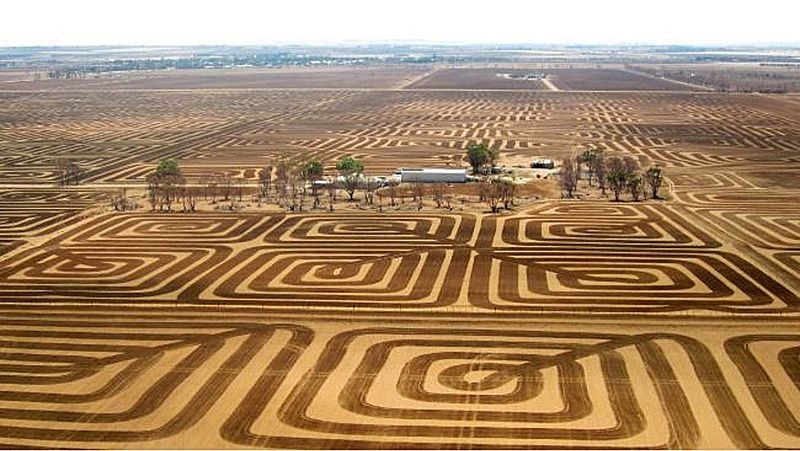
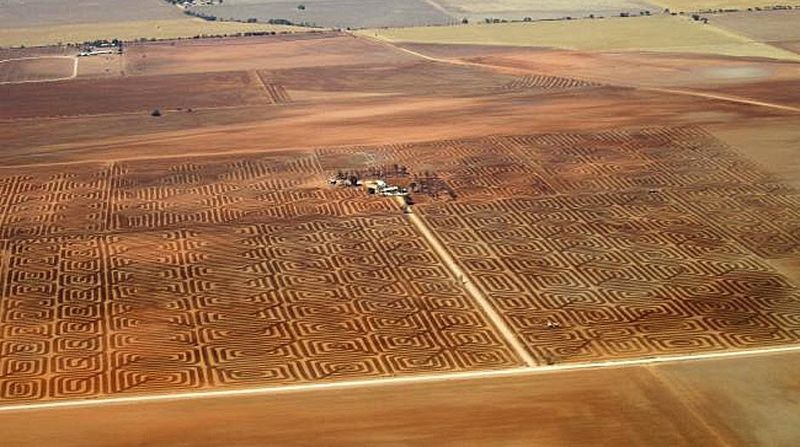
Australian Farmer Fights Soil Erosion With Land Art……

After a recent bushfire consumed all vegetation on his land, a South Australian farmer Brian Fischer decided to etch a gigantic geometric pattern on the bare ground in a bid to fight soil erosion. Without vegetation, the topsoil was vulnerable to erosion by gusting winds. So Fischer ploughed his land in a patchwork of spirals creating long furrows in the topsoil. Now no matter which direction the wind blows there will always be a furrow to catch the soil. Fischer says the pattern cost him a few days to make, but he expects to save 15 cm of topsoil that would have otherwise been lost, until the fields are green again.

The clever erosion-fighting technique came from his dad, who used it on the farm as early as 1944 during one of the worst droughts South Australia experienced. More than one million hectares of land were destroyed by a raging bushfire in Victoria, prompting some farmers to come up with this unique solution.

brian-fischer-1

Photo credit: Brian Fischer

brian-fischer-2

Photo credit: Brian Fischer

via The Guardian

Source….www.amusingplanet.com

Natarajan

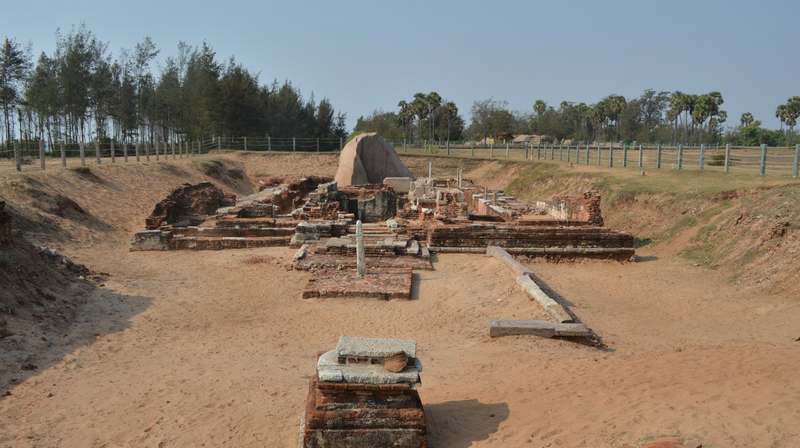
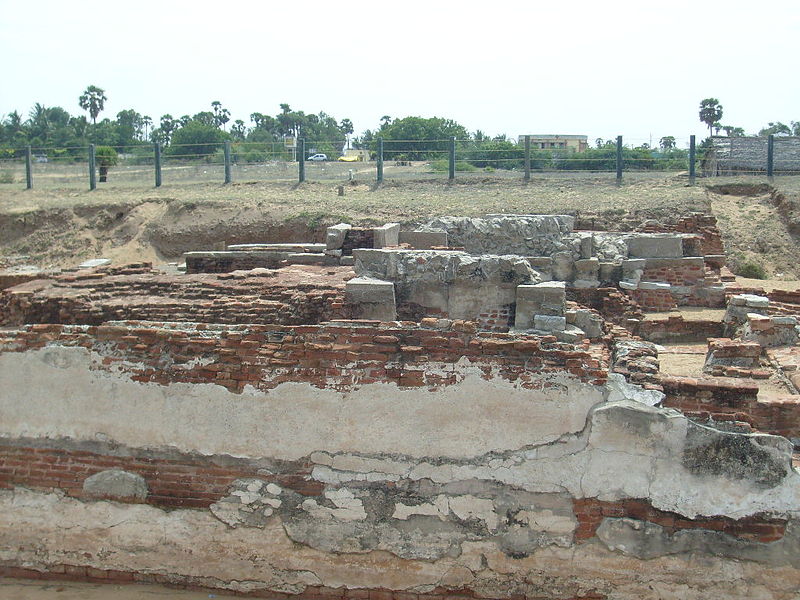
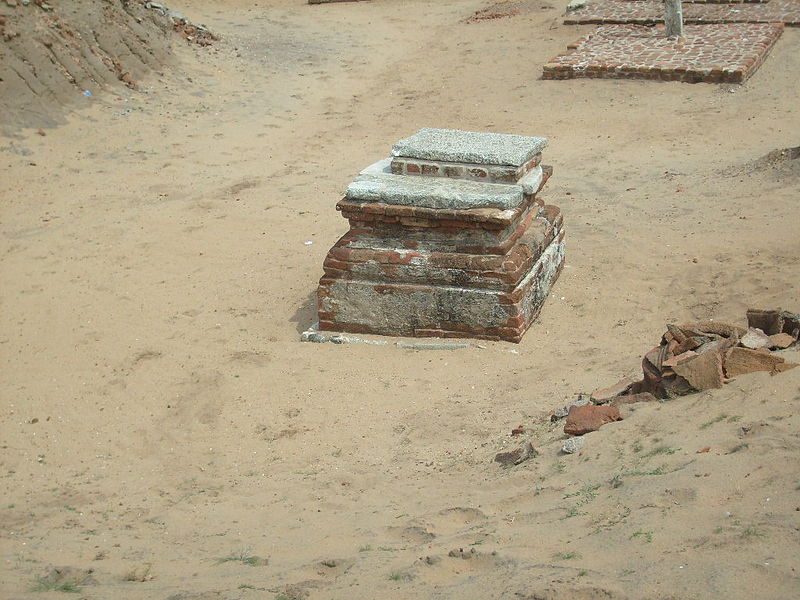
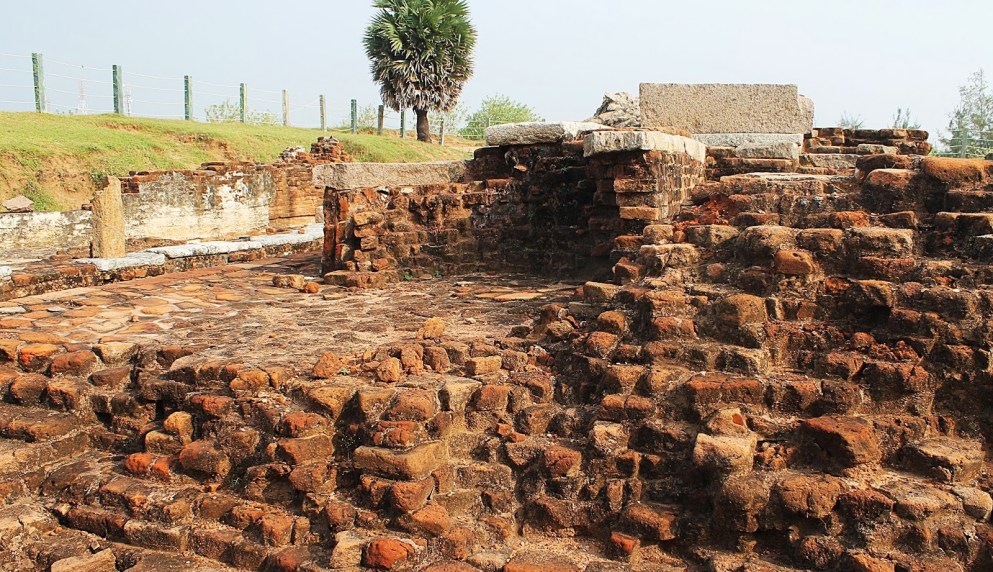
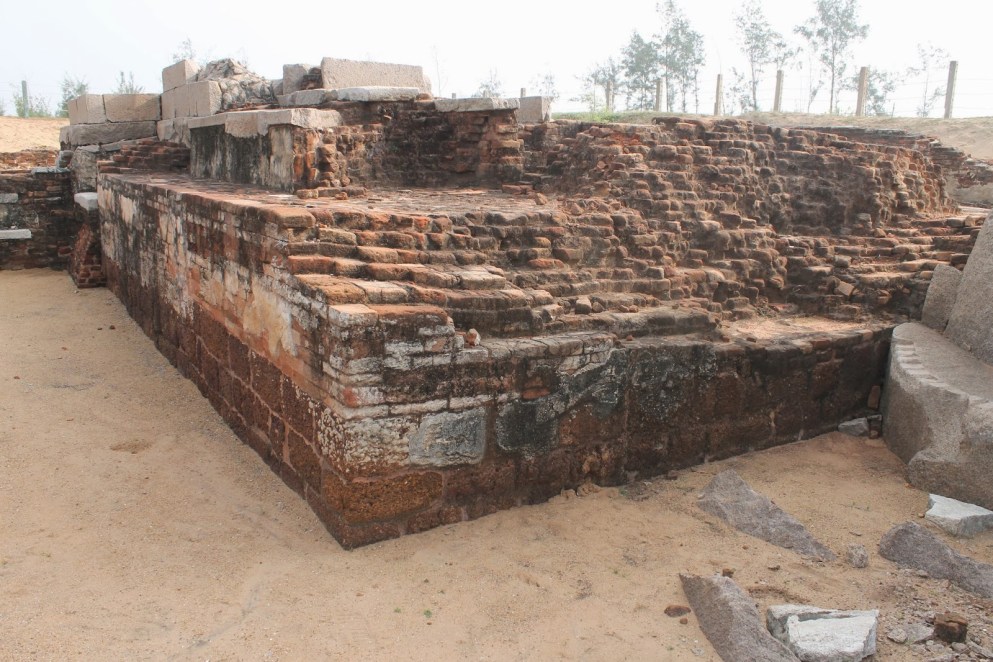
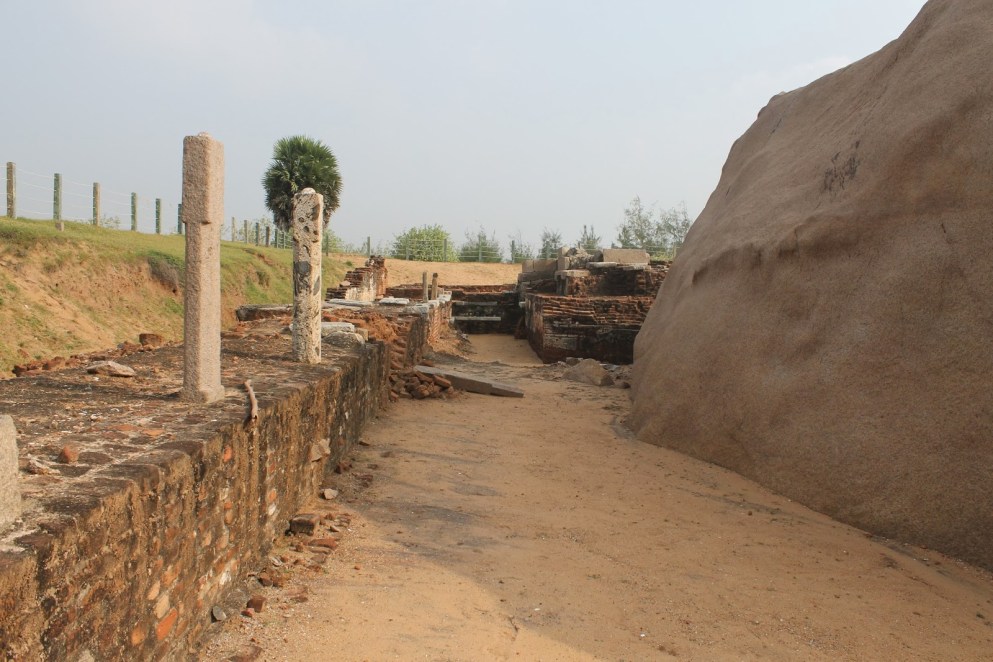
Subramanya Temple, Saluvankuppam….Ancient Sangam period Murugan temple unearthed !

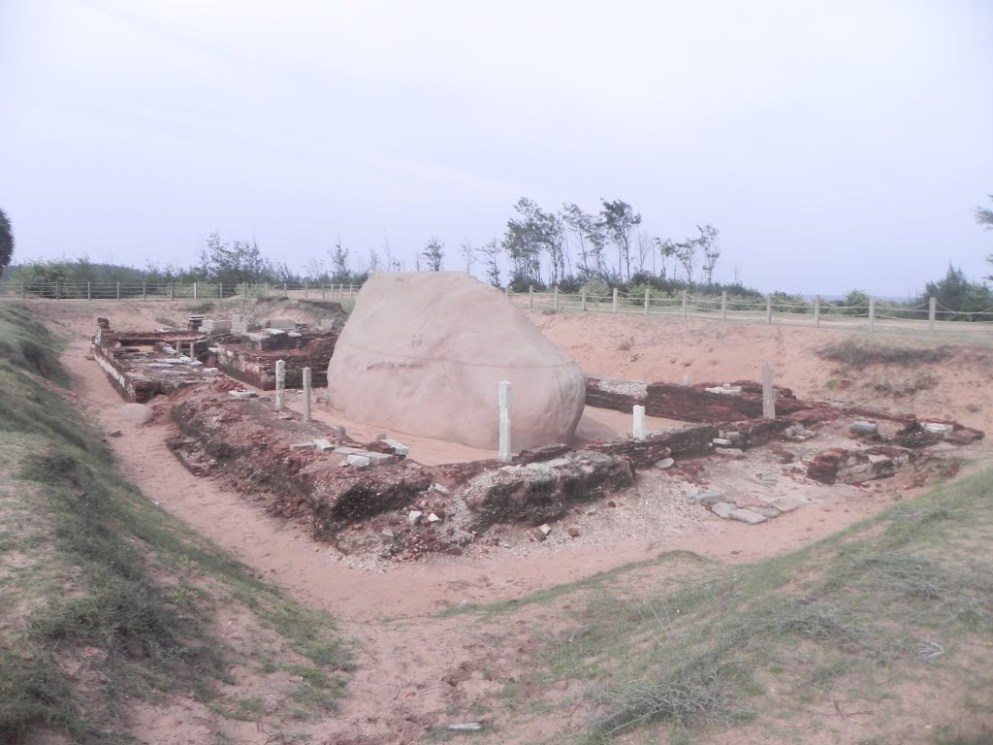
The Subramanya Temple at SaluvankuppamTamil Nadu, is a shrine dedicated to the Hindu deity Murugan. Archaeologists believe that the shrine, unearthed in 2005, consists of two layers: a brick temple constructed during the Sangam period (the 3rd century BC to the 3rd century AD) and a granite Pallava temple dating from the 8th century AD and constructed on top of the brick shrine. The Archaeological Survey of India (ASI) team which conducted the excavation believes that brick temple could be the oldest of its kind to be discovered in Tamil Nadu. However, noted Indian archaeologist R. Nagaswamy is critical of this claim owing to lack of references to the shrine in the popular literature of the period.

The temple was discovered by a team of archaeologists from the ASI based on clues found in a rock inscription left exposed by the 2004 Indian Ocean tsunami. Initially, excavations revealed an 8th-century Pallava-era shrine. Further excavations revealed that the 8th-century shrine had been built on the brick foundation of an earlier shrine. The brick shrine has been dated to the Sangam period.
The temple faces north, unlike most Hindu temples. Artifacts from two phases, the Sangam phase as well as the Pallava phase, have been found. The temple is Tamil Nadu’s oldest shrine to Murugan. It is also believed to be one of only two pre-Pallava temples to be discovered in the state, the other being the Veetrirundha Perumal Temple at Veppathur.
Discovery
After the 2004 Indian Ocean tsunami had subsided, archaeologists discovered rock inscriptions which had been exposed by the tsunami waves close to the hamlet of Saluvankuppam, near the UNESCO-designated World Heritage Site of Mahabalipuram. The inscriptions by the Rashtrakuta king Krishna III and the Chola kings Parantaka I and Kulothunga Chola I spoke of a Subramanya Temple at Thiruvizhchil (the present day Saluvankuppam). S. Rajavelu, epigraphist with the Archaeological Survey of India (ASI), identified a nearby mound as the site of the temple. In 2005, archaeologists unearthed an 8th-century Pallava temple under the mound. G. Thirumoorthy, ASI Assistant Archaeologist, believed that the shrine could be the oldest Subramanya temple to be excavated in Tamil Nadu. There were speculations on whether the temple could be one of the “Seven Pagodas“.

However, further excavations revealed that the 8th-century temple was constructed over the remains of an older brick temple. According to Thirumoorthy, the garbhagriha or sanctum Sanctorum of the brick temple was filled with sand and covered with granite slabs upon which the newer temple was constructed. Sathyamurthy, Superintendent, ASI Chennai Circle, said that the brick temple could be dated to the Sangam period as the shrine faced north unlike modern temples which face either east or west. This proved conclusively that the temple was constructed before the 6th or 7th century AD when the shilpa shastras, the canonical texts of temple architecture, were written. It has been estimated that the age of the brick shrine range from 1700 to 2200 years.
Archaeologists believe that the brick shrine was destroyed either by a cyclone or a tsunami which took place 2,200 years ago. The Pallavas built a granite temple on the brick foundation in the 8th century AD, which also was likely to have been destroyed by a tsunami. Archaeologists believe that the second tsunami must have occurred in the 13th century AD as the latest inscriptions which speak of the shrine have been dated to 1215.
The remains of a brick temple, dating back to the late Tamil Sangam period [circa 1st century B.C. to 2nd century A.D.], have been discovered on the seafront near the Tiger Cave at Saluvankuppam, a few km ahead of the world-famous Mamallapuram monuments.
“The brick temple is the most ancient temple discovered so far in Tamil Nadu. There is no doubt that it is about 2,000 years old,” said T. Sathyamurthy, Superintending Archaeologist, ASI, Chennai Circle. Twenty-seven courses of bricks with a square garbha griha (sanctum sanctorum) that made the Sangam age temple form the center piece of the discovery. The temple is dedicated to Muruga, the presiding deity of “Kurinji” [hill] tracts. The sanctum measures 2 metres by 2.2 metres. The bricks measure 40 cm x 20 cm x 7 cm. They are still sturdy.
The big-sized bricks are typical of the period and are similar to those found at Kaveripoompattinam near Thanjavur; Uraiyur in Tiruchi district — Uraiyur was the capital of the Cholas of the Sangam age; Mangudi near Tirunelveli; and Arikkamedu near Pondicherry.
Dr. Sathyamurthy was sure the brick temple was built before the canonical period because it faced north. “Agama” texts, which came into existence in the sixth or seventh century A.D., and “shilpa shastras”, had prescribed rules for construction of temples including the directions they should face. Normally, temples faced east or west. But this one did not follow “agama” texts and hence looked north. Tsunami or tidal waves that occurred twice had pulled down the entire temple complex. There is telltale evidence of wave action from the excavation. Deposits of shells and debris of the temple have been found on the eastern side of the complex, towards the shoreline. “What is interesting is not the discovery of the brick temple but that we can record stratigraphically the remains of palaeo-tsunami deposits. The impact of the tidal wave is seen on the eastern side of the temple, close to the sea. Such a feature is absent on the western side,” Dr. Sathyamurthy said.
G. Thirumoorthy, Assistant Archaeologist, ASI, said the temple belonged to two periods: the late Sangam age and the Pallava period. After the brick temple collapsed, the Pallava kings of the 8th and 9th century A.D., built another temple over it, using granite slabs. This temple too collapsed.
Artifacts found at the site include broken stucco figurines, obviously under worship; a painted hand portion with a bangle of a stucco figurine, simple-looking terracotta lamps, beads, roofing tiles made of terracotta, spinning whorls, a broken animal terracotta figurine and hop-scotches. A “prakara” (compound) wall of the same period has been excavated.
Archaeologists’ conclusions are:
From the evidences like temple orientation, brick size and artifacts collected from this site, the ASI team concluded that this structure immediately antedates the Pallavas. They are also of the opinion that this one is the earliest brick temple in Tamil Nadu identified as of now. Further to this they also infer that no other temple of such nature is reported from south India.
Presence two evidences granite spear and the plaque depicting women dancing ‘Kuravai Koothu’ allow the ASI experts to conclude this one as Lord Subramanya temple.
The Reach foundation, Chennai conducted carbon – 14 dating on the paleo-tsunami evidences (sea shells and other debris) proved that they got deposited in different periods between 405 A.D. and 564 A.D. and between 1019 A.D. and 1161 A.D.
According to T.Sathyamurthy, Superintendent, ASI Chennai Circle, (now Reach foundation trustee) conclude that the shrine belongs to Sangam period since it faces northwards. The modern temples built according to Shilpa Shastras (written between 6th or 7th century A.D.) are facing either east or west. This fact encouraged him to conclude that the temple was constructed before the 6th or 7th century A.D. He also estimated the age of the brick shrine ranging between 1700 and 2200 years.
However, noted Indian archaeologist R. Nagaswamy is critical of this claim due to lack of references to the shrine in the popular literature of the period.
Historical background
Although the city of Mahabalipuram was constructed by the Pallava king Narasimhavarman I in the 7th century AD, there is evidence that a small port might have functioned at the site even earlier. Megalithic burial urns dating to the very dawn of the Christian era have been discovered near Mahabalipuram. The Sangam age poem Perumpānattuppadai describes a port called Nirppeyyaru which some scholars identify with the present-day Mahabalipuram. Sadras near Mahabalipuram has been identified as the site of the port of Sopatma mentioned in the Periplus of the Erythraean Sea.
Inscriptions
Number of rock inscriptions is found near the shrine. The specific three granite pillars, which lead for the discovery of the shrine, bears inscriptions of grants offered to this shrine (Ref. 1-3). Later five more inscriptions discovered (Ref. 4-8). Now three more inscriptions identified Ref. (9-11).
Ø Kirarpiriyan of Mamallapuram made grants of ten ‘kazhanjus’ (small sized gold balls) First pillar inscription
Ø Vasanthanar, a Brahmin woman offered a grant of 16 kazhanjus Second pillar inscription which can be dated back to 813 A.D.
Ø Raja Raja Chola I (985–1014 A.D.) Third pillar inscription is about the grant
Ø Pallava king Dantivarman (795 to 846 A.D.) Fourth pillar inscriptions which can be dated back to 813 A.D.
Ø Pallava kings Nandivarman III (846 to 869 A.D.) Fifth pillar inscriptions which can be dated back to 858 A.D.
Ø Pallava kings Kambavarman (9th century A.D) sixth pillar inscriptions
7. Krishna III (939-68 A.D) Rashtrakuta king Seventh pillar inscriptions which can be dated back to 976 AD,
Ø Pallava king Kambavarman (9th century A.D) Eighth  pillar inscriptions
Ø Krishna III (939-68 A.D) Rashtrakuta king Ninth pillar which can be dated back to 971 A.D.   in his 21st regnal year
Ø Rajendra III Chola (1216–1256 A.D) Tenth pillar inscriptions
Ø Kulothunga Chola III (1178–1218 A.D.) which can be dated back to 1215 A.D.
All the inscriptions in ancient Tamil script record about the donations of land and gold for the maintenance of the Subramanya temple at Thiruvizhchil and it continuously received grants. All these inscriptions mention the village as Thiruvizhchil.
Architecture
While the thin, tabular bricks at the top were laid by the Pallavas, the larger bricks underneath date from the Sangam period
The temple is dedicated to the Hindu deity Murugan and faces north. The garbhagriha or sanctum sanctorum is 2 metres long and 2.2 metres wide and is made of 27 courses of bricks. The bricks used are similar to the ones used in other Sangam age sites such as PuharUraiyur, Mangudi and Arikkamedu.
A stone Vel is positioned at the entrance of the shrine. During the excavations, a terracotta plaque depicting a Kuravai Koothu, a dance which is mentioned in the 1st century AD Tamil epic Silappadikaram, was discovered. Sathyamurthy feels that there may not have been any idol in the square garbhagriha as it is too small to house one. The temple is surrounded by a prakara or a compound wall dating from the Sangam period. According to Thirumoorthy, the shrine is “the biggest brick temple complex dating to the pre-Pallava period”.
The temple is built on a cushion of alluvium on which a layer of man-made bricks were laid. On top of this were another four layers of man-made bricks separated by four layers of laterite. There were two types of bricks used: large-sized laterite bricks of the Sangam period and thin, tabular bricks of a later age. The bricks were plastered together with lime.
Artifacts unearthed
A terracotta Nandi (the bull of the god Shiva – father of Murugan), head of a woman, terracotta lamps, potsherds and a shivalinga (aniconic symbol of Shiva) made of green stone are some of the important artifacts found at the site. The Nandi is the first one made of terracotta to be found. While most of the items unearthed belong to the Sangam period, artifacts of a later period including a Chola copper coin have also been found.

How Barefoot College Trained 700 Rural Grandmothers to Be Solar Engineers & Electrified 20000 Homes…?

A vocational training college in Rajasthan, started by well known educator and activist Sanjit Bunker Roy, is responsible for lighting up the homes of thousands of poor villagers across the world.

Tilonia is a small village in Rajasthan’s Ajmer district. On the face of it, Tilonia is like any other village in India. One can see large tracts of semi-arid land, flocks of sheep on the roads, and women whose heads are covered with the pallus of brightly coloured sarees.

However, what sets Tilonia apart is that it is home to the Social Work and Research Centre, popularly known as Barefoot College. This institute is known all over the world for training rural people in vocational skills.

In the 1970s, Sanjit Bunker Roy, an educator and social activist decided to give something back to society and set up Barefoot College in Tilonia.

bunker roy

Photo source: Youtube

The college is spread over eight acres and runs completely on solar energy.

Bunker, who studied at Delhi University, says: “My elitist education almost destroyed me. In fact, the biggest reasons why the poor will always remain poor are the literate man and woman — products of the formal education system. This system makes you look down on villages.”

According to him, the formal system of education demeans and devalues the traditional knowledge and practical wisdom that the poor value. He says his real education started during his initial years in Tilonia when he was working as an unskilled labourer — blasting wells for water.

“I lived with very poor and ordinary people under the stars and heard the simple stories they had to tell of their skills, knowledge, and wisdom that books and university education can never teach you. My real education started when I saw amazing people – water diviners, traditional bonesetters and midwives – at work. That was the humble beginning of the Barefoot College,” he adds.

Though the college started with the aim of providing solutions to the water problems of rural India, its mission soon changed to sustainable development and empowerment of the marginalised. In fact, the courses offered at the institute are rooted in the Gandhian philosophy of making villages self-reliant.

“But it was not Gandhi or Marx who inspired the work of the college, but very ordinary people with grit, determination, and the amazing ability to survive with almost nothing,” says Bunker.

Students, primarily women, are selected from the poorest of villages and are taught vocational skills in different areas like solar energy, healthcare, education, handicrafts, and so on. The college provides basic health services to the villages through a team of doctors, midwives, and dentists.

It imparts education to women and children by keeping their different needs in mind. There are crèches for small children whose mothers work all day. There are night schools for children who help in the fields or tend to animals during the day. And bridge courses for those among them who wish to join day school. There is an emphasis on hands-on learning. Even the lessons offered are practical in nature. The children are taught about how democracy works, how to take care of a sick animal, how land is measured, etc.

Barefoot College is probably best known for producing hundreds of ‘barefoot’ solar engineers.

The Better India (4)

In 2003, the college decided to train illiterate rural women as solar engineers. The biggest challenge at the time was to convince donors, policy makers, as well as the male members of the community to accept the ‘impossibility’ that these women could be trained.

“Do you know why we insisted on women? Because training men is pointless. They will grow restless and go to big cities in search of jobs. Women have more patience to learn the skill. And especially since they are from poor families, they will stay back home and prove their worth to their communities,” says Bunker.

This training of women — to teach them how to install, repair, and maintain solar lighting units — did not stop in Rajasthan. Today, the institute trains women from countries like Afghanistan, Bhutan, Sierra Leone, Mozambique, Fiji, etc. It boasts of having over 700 solar ‘mamas’ in 70 of the least developed countries in the world. These women, from isolated and non-electrified villages, congregate in Rajasthan for a few months. To overcome the language barrier, they are taught through sign language.

They memorise the permutations and combinations of wires through colour codes.

The Better India (3)

Barefoot College brought three women from Afghanistan to Tilonia and trained them. After they went back, their village became the first ever solar-electrified village in the country. These women went on to train 27 others and now there are over a 100 solar-electrified villages in Afghanistan.

The College also trained grandmothers from Sierra Leone. They lit up the first village in the country with the sun’s energy.

The idea caught on and now there is a Barefoot Vocational Training Centre in Sierra Leone.

Under the India Technical Economic Cooperation Programme of the Ministry of External Affairs, the Barefoot College has trained nearly 700 rural grandmothers to be solar engineers and electrify over 20,000 houses in different countries.

Barefoot College is funded by various organisations and grants. Barefoot College applied for the HCL Grant and through this grant, it wanted to implement the Barefoot model of alternate community-based education and skill development in the five districts of Rajasthan, by empowering and educating children, women, and youth and setting up 25 crèches and 50 bridge schools in these districts. To know more about Barefoot College, contact the team on their website.

About HCL Grant

There are about 3.3 million NGOs in India doing commendable work in various areas aimed at inclusion and development. The HCL Grant has been launched to support the institutionalization of the Fifth Estate comprising individuals and institutions formed and led by the citizens of the country through the creation of strong governance frameworks and management capabilities. An endeavour of the HCL Foundation, HCL Grant envisions to build sustainable communities by supporting NGOs and individuals who are doing path-breaking work towards high impact transformation in rural India. In the first year, HCL Grant has identified the best NGOs in the area of rural education. To know more about the HCL Grant: http://www.hcl.com/hcl-grant

source……..Meryl Garcia in http://www.the betterindia.com

Natarajan

The Story of the Wise Old Man…..Inspiring Story !!!

Everyone has their own personal outlook on life. Many of us don’t choose it – we just follow our feelings, shaped by circumstance and experience. Others decide to choose what their outlook will be, and follow their minds instead. The old man in this story shows us that it takes some wisdom to be able to live happily…

A 92-year-old man, short, very well-presented, who takes great care of his appearance, is moving into an old people’s home today.

His wife of 70 years has recently died, and he is obliged to leave his home.

After waiting several hours in the retirement home lobby, he gently smiles as he is told that his room is ready. 

 As he slowly walks to the elevator, using his cane, I describe his small room to him, including the sheet hung at the window, which serves as a curtain.

 “I like it very much”, he says, with the enthusiasm of an 8-year-old boy who has just been given a new puppy. 

“Sir, you haven’t even seen the room yet. Hang on a moment, we are almost there.”

This Story Will Inspire You: The Wise Old Man

“That has nothing to do with it,” he replies. 

“Happiness is something I choose in advance.  Whether or not I like the room does not depend on the furniture, or the decor – rather it depends on how I decide to see it. 

“It is already decided in my mind that I like my room.  It is a decision I make every morning when I wake up. 

“I can choose.  I can spend my day in bed enumerating all the difficulties that I have with the parts of my body that no longer work very well, or I can get up and give thanks to heaven for those parts that are still in working order. 

“Every day is a gift, and as long as I can open my eyes, I will focus on the new day, and all the happy memories that I have made during my life. 

“Old age is like a bank account.  You withdraw in later life what you have deposited along the way. “

This Story Will Inspire You: The Wise Old Man

For a moment, I thought about the old man’s words, and it all made sense.

He made me realize that in life, we have to deposit all the happiness we can in our bank account of memories. Like this, we will always have a trove of them to cherish.

Source………….www.ba-bamail.com

Natarajan
Message for the Day…” Ways of God’s Showering Grace on HIS Devotee…”

Sathya Sai Baba

Even when you attain the state of living with God and merger in a divine form (sarupya-mukti), there is still a trace of differential feeling. Just because a devotee has a form like the Lord’s, one may not have the powers of creation, preservation, and destruction that the Lord has. Only when all trace of difference disappears and unity is attained, the highest stage is reached. This is real union (Sayujya). This comes of divine grace won by the essence of the spiritual practice of each; it cannot be claimed as the fruit of effort. The devotee wishes to serve the Lord as one pleases and to experience the joy of the form that one has attributed to the Lord. But the Lord, out of His grace, gives the devotee not only existence with the Lord, witnessing always the glory of the Lord, and being suffused with God-consciousness but also Sayujya – union with Him! The path of devotion results also in attainment of ultimate knowledge (Brahma-jnana). Even if the devotee does not crave it, the Lord Himself vouchsafes it to the devotee.

Rio Celeste, The Blue River…!!!

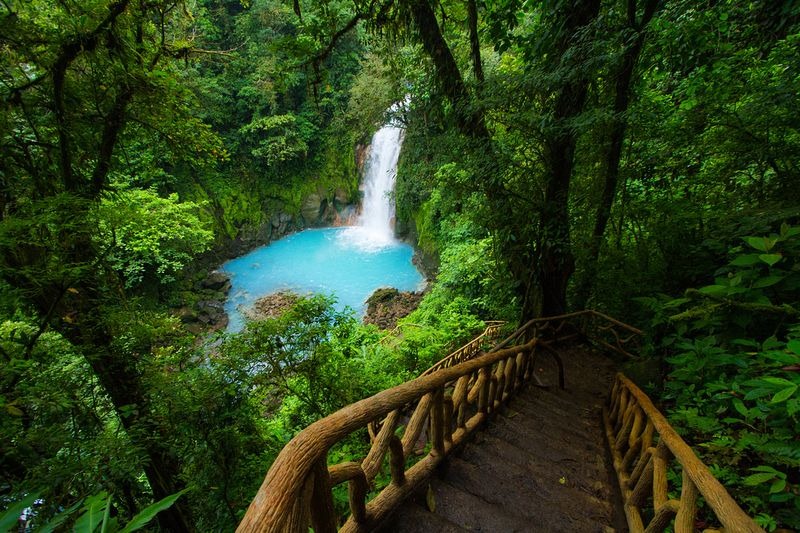
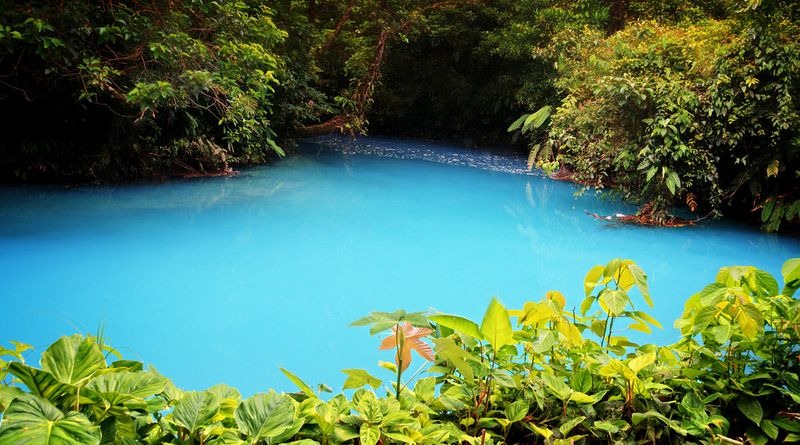
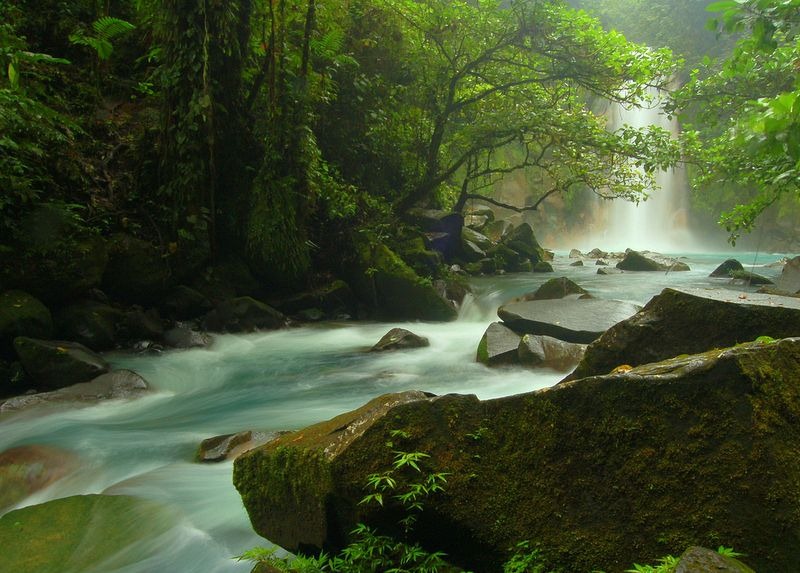
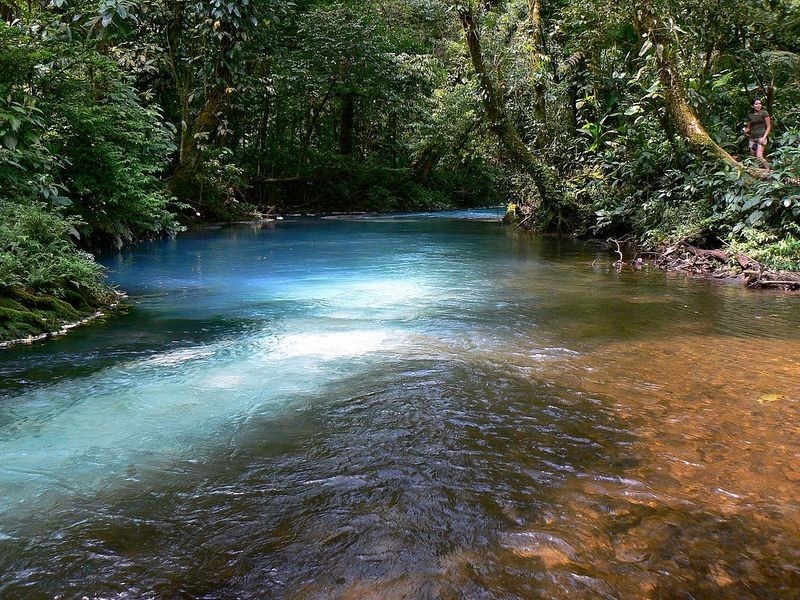
Winding through the verdant rainforest of Tenorio Volcano National Park of Costa Rica, is a bright blue river called Rio Celeste. The river is formed by the confluence of two smaller rivers called the Sour Creek and the Good View River. At precisely the point where the waters of the two completely transparent rivers meet, that the blue color starts. For that reason, this point is known as El Teñidor, which means “The Dyer” in English.

Until very recently, scientist were unable to fully explain why Río Celeste has such a distinctive turquoise coloration. Many hypotheses were put forward such as the water contained copper or calcium carbonate and sulfur, or that the river’s proximity to the Tenorio Volcano caused it have the blue color. It is now known that the blue color arises due to a physical phenomenon known as Mie scattering triggered by the presence of certain minerals in the river’s water that causes sunlight to reflect in such a manner that it gives the water its incredible hue.

rio-celeste-3

Photo credit: The Rohit/Flickr

As already mentioned, Río Celeste is fed by two rivers — Sour Creek and Good View River. The Good View River carries significant quantities of a type of whitish mineral known as aluminosilicate, that is composed of aluminum, silicon and oxygen. This is the mineral that is responsible for reflecting the blue color in sunlight. But if the mineral is also contained in the Good View River, why doesn’t it appear blue like Río Celeste? The answer lies in the size of the particles.

Researchers found that Good View River particles have a size of 184 nanometers, while in the Río Celeste the particles are much larger at 566 nm.

“This increase in size is what causes the scattering of sunlight, such that it occurs principally in the blue region of the visible spectrum. So that’s why we have that spectacular light blue color of the Rio Celeste” said Dr. Max Chavarría Vargas, lead investigator.

But why are the aluminosilicate particles in Río Celeste bigger than those in Good View River, when the particles itself came from the Good View River? It so happens that Sour Creek, the second river to join Good View River, is highly acidity due to volcanic activity (which is why it’s called Sour Creek). When these two streams mix to form Río Celeste, the drop in pH causes the aluminosilicate particles to aggregate and enlarge producing Mie scattering which gives the river a strong turquoise color.

“It’s one of those quirks of nature where one of the rivers provides mineral material with one size and the other river provides the acidic environment so that those particles grow,” said Dr. Max Chavarría Vargas.

rio-celeste-7

Photo credit: Steve Corey/Flickr

rio-celeste-5

Photo credit: The Rohit/Flickr

rio-celeste-2

Photo credit: Efrain Gonzalez Buitrago/Flickr

rio-celeste-4

Photo credit: The Rohit/Flickr

rio-celeste-1

Photo credit: Bruce Thomson/Flickr

Sources: The Costa Rica Star / Wikipedia

Source…….www.amusingplanet.com

Natarajan
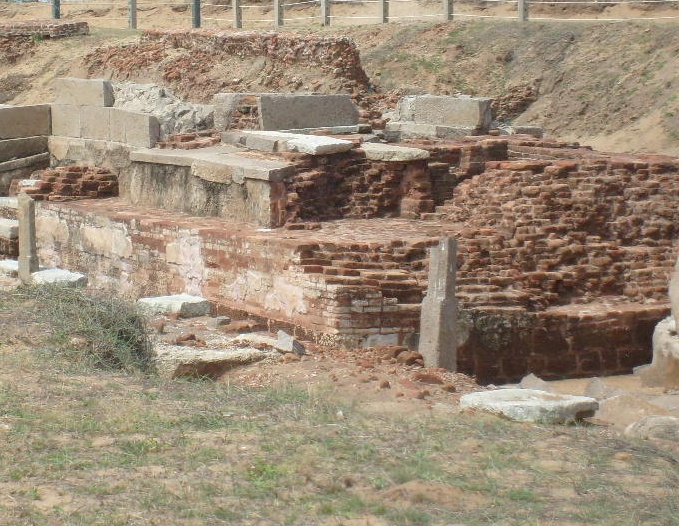
Image of the Day…Space Station Flyover of the Mediterranean…

Nighttime photograph from low Earth orbit of Mediterranean showing clouds and city lights
Expedition 46 flight engineer Tim Peake of the European Space Agency (ESA) shared this stunning nighttime photograph with his social media followers on Jan. 25, 2016, writing, “Beautiful night pass over Italy, Alps and Mediterranean.”
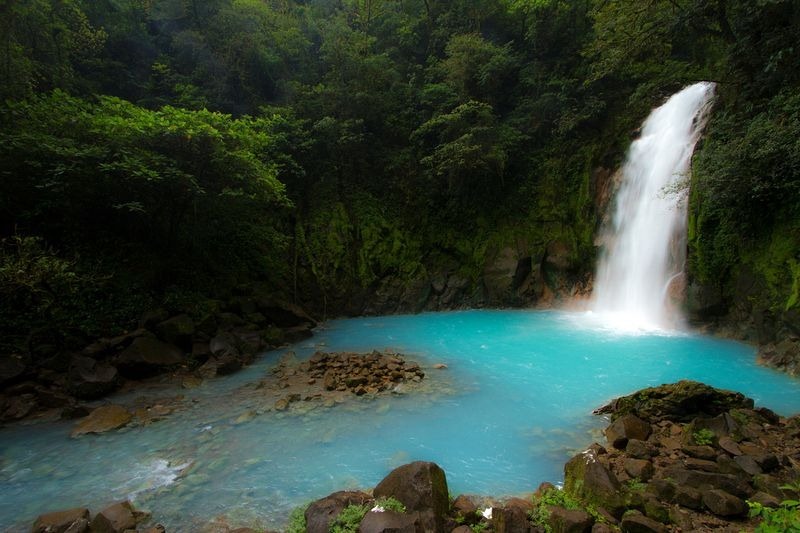
Image Credit: ESA/NASA

Source…….www.nasa.gov

Natarajan