This 30-Year-Old Indian Pilot Is the World’s Youngest Woman to Captain a Boeing 777!

Currently based in Mumbai, the young aviator had always dreamed of becoming a pilot and did so at the age of 19

“Since my childhood, I wanted to be a pilot. Other children used to make fun of me for this. Kids, at that time, were pushed to pursue engineering or become a doctor but not a pilot,” Anny told to HT.

Coming from an army background, one would think Anny must have had it easy. While she had rock-solid support from her parents, dissent often cropped up in form of family friends and relatives.

“Luckily, my parents never forced their choice on me. They were supportive and progressive in their thinking. My mother always used to encourage me. However, my relatives and my family friends were against my decision to become a pilot. Also, at that time, being a pilot was not considered as a profession for woman,” she said.

After her father took voluntary retirement, the family moved to Vijayawada, where Anny did her schooling. Hailing from a modest background, their family had their share of financial shortcomings. “Since I grew up in Vijayawada, I could write and read English but speaking English was a major challenge that I had to overcome,” Anny said.

Post her school education, the 17-year-old Anny made it to Indira Gandhi Rashtriya Uran Akademi (IGRUA), one of the premier flying schools in the country.

The cultural change from a small town to a big city was overwhelming for me. I had difficulty adjusting and speaking English. People used to mock me for my poor English and that hurt me a lot. At times, I had even thought of going back. However, backed with my parents’ support, I worked hard enough to win a scholarship,” she added.

Completing her training by the time she was 19, Anny bagged a job with Air India and since then, there has been no looking back. Post her training, she kickstarted her flying carrier with Boeing 737.

“When I turned 21, I was sent to London for further training. It was then when I started to fly Boeing 777. Since then, my life has changed. It’s been a great experience so far. I’ve got the opportunity to travel to various countries. My journey so far has taught me a lot,” Anny added.

When the going gets tough, the tough get going!

Source….LekshmiPriya .S  in http://www.betterindia.com

Natarajan

Hoover and Their Disastrous Free Flight Promotion…

world-travelGiving away free stuff with a purchase is a good way to bolster sales and can result in a tidy increase in profits, provided you follow the general rule of making sure the long term projected profit from the promotion is greater than the cost of the giveaway. Appliance giant Hoover learned this seemingly obvious lesson first hand in 1992 when they inexplicably decided to give away free flights worth several times more than most of the products they were selling as part of what has become known as Hoovergate- one of the most disastrous marketing campaigns of all time, today taught in marketing text books the world over.

Though Hoover sells a multitude of appliances and domestic goods, the company is known mostly for its vacuum cleaners. (And if you’re curious, see: Who Invented the Vacuum Cleaner?) So much so in fact that over in Blighty the word “hoover” is an accepted synonym for the device, much to the annoyance of Hoover who, like other companies, fought hard not to have their brand become genericized like Aspirin and Thermos. This generalizing of their brand name largely rose from the near total monopoly Hoover had over vacuum sales in the UK throughout much of the 1950s to 1970s. However, as the end of the 20th century approached, the British arm of Hoover found that sales were beginning to lag considerably from their heyday, with their marketing share steadily declining and warehouses slowly filling with old stock nobody wanted to buy.

In the early 1990s, Hoover’s British arm was approached by a now-defunct travel agent called JSI Travel with a rather intriguing offer to help shift some of this old stock out of the warehouses and into the hands of customers. The idea was to offer two free return flights to Europe with every purchase of any Hoover product worth more than £100 (about £190 today or $235), all arranged through this travel agency. Beyond revenue from sales, much of the cost for the tickets themselves from those who jumped through the many, many hoops to actually get the tickets would be subsidized by JSI Travel selling additional services like travel insurance and hotel packages. JSI Travel also thought it would provide a long term benefit for their small company as it would introduce tens of thousands of people to their travel agency’s services.

Hoover liked the sound of the arrangement and in 1992 launched their free flights campaign, advertising it on TV and in papers across the country with the simple caption: “Two Return Flight Tickets. Unbelievable.”

The offer saw sales of Hoover product explode because, hey, free flights. Slowly, but surely, Hoover’s warehouses began to empty.

Now, if Hoover had chosen to quit here, we wouldn’t really have much to say other than kudos to them on a smart business decision. (And if you’re wondering, see What’s a Kudo?) Unfortunately for them, they got too greedy and hilarity ensued.

After examining the numbers linked to the campaign and realising that only a fraction of the people who’d bought a qualifying product as part of the campaign actually jumped through all the hoops to redeem for the tickets, Hoover decided to extend the promotion and get a little more international, hoping to boost sales even further in the process.

This was despite Hoover having approached various risk management companies to evaluate the promotion and being summarily told it was a horrible idea. For instance, risk management advisor Mark Kimber from PIMS-SCA would late note,

“I advised Hoover of the potential pitfalls of the promotion. Having looked at the details of the promotion along with attempting to calculate how it could actually work I declined to even offer risk management coverage based upon the information presented. With such a high value offer for only a relatively small cost to the consumer, to me it made no logical sense.

…nevertheless Hoover chose to completely ignore both mine and the industry’s advice and continue on its calamitous crusade without considering the potential cost or consequences…”

Head firmly in the sand, Hoover approached three of the biggest airlines of the day, British Airways, Virgin Atlantic and American Airlines, along with various travel agencies, and entered into negotiations to offer a similar deal as they had previously, only this time offering free flights to either New York or Florida from the UK.

After terms were set and contracts signed, Hoover once again launched a massive ad campaign to tell the public about the promotion, which still inexplicably offered the free flights if the customer spent a minimum of just £100. This is an important fact because, at the time, a flight to either destination would have set you back on average about £600 (nearly £1,200 or $1,500 today) making the promotion infinitely more desirable than a pair of free flights to a European destination that cost a fraction of that.

According to news reports after the fact, its purported that Hoover expected that the value of the flights to America would encourage people to perhaps buy a more expensive product. Whether that’s true or not, customers flocked to stores and predictably bought the absolute cheapest qualifying product possible (the Turbopower Total System which clocked in at a reasonable £119.99)  before sending off for their free tickets to the land of freedom and cheese that comes in a can.

This resulted in massive backlogs in Hoover’s offices as they only anticipated about a tenth of the eventual response. Thanks to their status as a trusted, well-established brand known for their quality, Hoover’s reputation wasn’t initially hurt by the delays that resulted until a reporter for the Daily Record claimed that not a single airline had received a booking to America from a Hoover voucher holder. Whether accurate or not, this story raised the hackles of the customers who up to this point had been waiting patiently.

Along with being one of the most popular articles the Daily Record ever published, it had the side-effect of alerting millions of people that the promotion existed, resulting in tens of thousands of additional sales.

It was soon after reported that local travel agencies wanting to avoid the loss of income from their part of the deal began trying to dissuade customers by abusing the offer’s small print- doing things like offering flights from airports that were across the country from the person trying to fly. According to a contemporary BBC report, one agency, Free Flights Europe, seemed to require customers to buy about £300 of add-ons to their “free” tickets before they’d stop hassling them and finally give them their tickets.

During the ensuing media firestorm, Hoover blamed the delays on the airlines and travel agencies they’d contracted with for being unable to meet the demand. Whoever’s fault it was, their customers weren’t happy.

One particularly irate customer was one Harry Cichy who decided that he was going to get his flight no matter what, organising a group of likeminded customers who doggedly pursued their tickets from Hoover in and out of court. The aptly named Hoover Holiday Pressure Group, spearheaded by Cichy, refused to allow Hoover to worm their way out of their obligation, with Cichy himself going as far as travelling to the company’s American headquarters (a trip that was ironically paid for by Hoover) to argue his case in front of their executives.

Despite Cichy’s best efforts, it’s estimated that only 220,000 of the half million or so (Hoover never released the official figures) people who applied for the promotion were able to ever claim their free flights, with those who didn’t either suing for the value of the flights in small claims court or moving on and swearing off the brand forever. This latter point turned out to be the heaviest blow to the company.

As to that aftermath, three top executives, director of marketing services Michael Gilbey, vice president of marketing Brian Webb, and Hoover’s European president William Foust, were summarily fired by the company’s American owners, Maytag.

Beyond the major firings, the company spent about £50 million (around £100 million today or $125 million) for the tickets for the free flights compared to about £30 million in gross revenue generated from sales during the promotion. But the ultimate cost was far greater.

To begin with, hundreds of thousands of people in the UK now had Hoover products that in many cases they didn’t actually want or need. The result from this was a massive sell off of these items on the second-hand market, meaning potential future customers could easily buy brand new Hoover products for a fraction of the price Hoover was selling them for in the stores.

On top of that, the company took a major hit to their reputation, meaning even those customers who might have still purchased something from Hoover were now avoiding the brand. To try to fix this, Hoover launched an advertising campaign costing about £7 million to help restore their image, with little affect.

Unsurprisingly, the Hoover brand in the UK took a major hit, with their market share dropping from about 50% in 1992 to just 20% in 1995. Cutting their losses, the entire European arm of Hoover was sold by Maytag to an Italian manufacturer called Candy at a significant loss from what they’d paid for it just six years before in 1989.

Source….www.today i foundout.com

Natarajan

” Why Fear When HE is there …” ?


A man had been on a long flight. The first warning of the approaching problems came when the sign on the airplane flashed on: “Fasten your seat belts.” Then, after a while, a calm voice said, “We shall not be serving the beverages at this time as we are expecting a little turbulence. Please be sure your seat belt is fastened.”
 
As he looked around the aircraft, it became obvious that many of the passengers were becoming apprehensive. Later, the voice of the announcer said, “We are so sorry that we are unable to serve the meal at this time. The turbulence is still ahead of us.”
 
And then the storm broke. The ominous cracks of thunder could be heard even above the roar of the engines. Lightening lit up the darkening skies and within moments that great plane was like a cork tossed around on a celestial ocean. One moment the airplane was lifted on terrific currents of air; the next, it dropped as if it were about to crash. The man confessed that he shared the discomfort and fear of those around him.
 
As he looked around the plane, he could see that nearly all the passengers were upset and alarmed. Some were praying. The future seemed ominous and many were wondering if they would make it through the storm. And then, he suddenly saw a girl to whom the storm meant nothing. She had tucked her feet beneath her as she sat on her seat and was reading a book. Everything within her small world was calm and orderly.
 
Sometimes she closed her eyes, then she would read again; then she would straighten her legs, but worry and fear were not in her world. When the plane was being buffeted by the terrible storm, when it lurched this way and that, as it rose and fell with frightening severity, when all the adults were scared half to death, that marvelous child was completely composed and unafraid.
 
The man could hardly believe his eyes. It was not surprising therefore, that when the plane finally reached its destination and all the passengers were hurrying to disembark, he lingered to speak to the girl whom he had watched for such a long time. Having commented about the storm and behavior of the plane, he asked why she had not been afraid. The sweet child replied:
 
“Sir, my Dad is the pilot and he is taking me home.”
 
Dear friends, this is a story, I received through internet. The implicit faith of this little child, set me thinking…. If each one of can have an implicit faith in our Supreme Father, we will have no reason to be afraid of any thing in life…
What do you think? 
Source…Author  unknown… input from a friend of mine
Natarajan

Daniel The Emotional Support Duck Takes His First Plane Ride, Soars In Popularity…!!!


Daniel The Emotional Support Duck

Daniel The Emotional Support Duck Takes His First Plane Ride, Soars In Popularity

Daniel, an emotional-support duck, on board a recent American Airlines flight.

Mark Essig was settling into his puddle-jumper flight from Charlotte to Asheville, N.C., on Monday when he noticed an unusual passenger boarding the plane.

It was a duck. Making his way down the aisle.

Wearing red shoes. And a Captain America diaper.

The duck’s human introduced him to their fellow, now-amused passengers: This was Daniel Turducken Stinkerbutt, or Daniel for short. He is a 4 1/2-year-old Indian Runner duck and is her emotional support animal, she explained.

“I heard a few maybe semi-critical mutterings, like, ‘Now I’ve seen everything,’ ” Essig told The Washington Post. “But most everybody was delighted to have a duck on a plane. As they should be.”

Like many other passengers, Essig snapped a few photos while Daniel and his human were boarding. After takeoff, Essig tried to concentrate on light reading during the flight, but he kept inadvertently glancing toward the duck, just a row ahead and to the right of him.

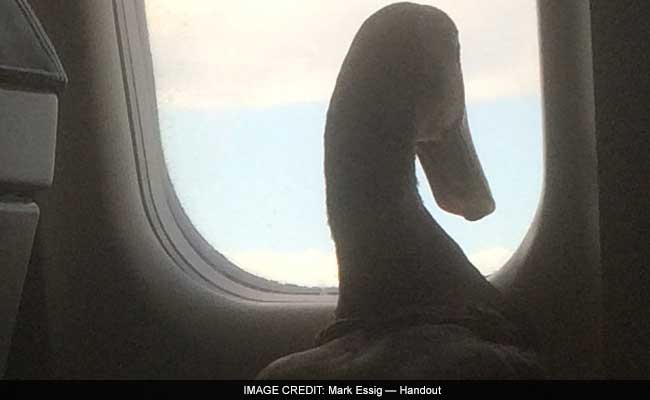
When he saw the duck staring out the window, he couldn’t resist taking one more picture.

daniel-duck-wp_650x400_81477014972

After the flight, Essig posted his photos on Twitter.

“My seatmate, [from] CLT [to] AVL, is this handsome duck named Daniel,” Essig tweeted first. “His gentle quacking eases the sadness of leaving #SFA16,” the Southern Foodways Alliance conference in Mississippi.

Daniel the emotional-support duck looking out the window during his flight.

“I was expecting that this might amuse a couple of my friends,” he said. What he didn’t anticipate was that the photos would go viral.

It turned out that a duck wearing shoes and a diaper on a plane was too much for the Internet to handle.

Essig posted two more photos and a video: one of Daniel in his full red-shoed, diapered glory, and another of the duck wagging his tail while his owner explains that it means that Daniel is happy. Both tweets were shared thousands of times.

The most popular one, however, was a picture of Daniel as the duck seemed to stare forlornly out the airplane window: “Daniel, the duck on my flight, likes to look at the clouds,” Essig stated simply. That photo had more than 5,000 retweets and more than 11,000 likes.

“A duck head is a very recognizable shape, and the shape of an airline window is a very recognizable shape, too,” Essig said. “So you’ve got two very recognizable shapes that don’t normally go together . . . it caught people’s eye.”

The encounter amused Essig but also piqued his curiosity about ducks as support animals — he happens to be the author of “Lesser Beasts,” a book about humans’ complicated relationship with pigs. After the flight, he looked up Daniel’s breed and discovered that Indian Runner ducks do not fly.

“My guess was that he was gazing out the window, looking at the clouds, and the sight triggered a deep ancestral memory of what it was like to fly himself,” Essig said, laughing. “I’m almost certain that’s [what] he was thinking.”

Within two days of Essig’s tweets, Daniel had become an Internet sensation, getting featured on BuzzFeed, ABC News and Cosmopolitan, among many other sites.

The attention surprised Daniel’s owner, Carla Fitzgerald of Wisconsin, “because to me, having an emotional support duck is normal – it’s my new normal.”

Fitzgerald adopted Daniel in 2012, when he was two days old, she told The Post in a phone interview Wednesday. Less than a year later, Fitzgerald, a former horse-and-carriage driver in Milwaukee, was involved in a serious accident.

“Someone who was paying more attention to the phone than the road hit me from behind, with enough force to bust up the carriage,” she said. Her horse was badly injured, and the crash sent Fitzgerald hurtling toward a metal-grated drawbridge. For months, she was immobile.

“It took them four months to teach me how to walk again,” Fitzgerald said. Along with the physical pain, she suffered post-traumatic stress disorder, something she describes as “hell.”

After the accident, Daniel knew things were different – and responded without ever having been trained.

“He would notice something wrong, whether it be my pain or my PTSD,” Fitzgerald said. “He would come and lay on me and [give me] lots of hugging and lots of kisses. And if he notices that I’m going to have a panic attack, he would give me a cue to lay down by trying to climb me.”

At home, Fitzgerald says Daniel communicates with her in other ways: If he needs a new diaper, he walks to his changing table. If he wants food, he walks to the refrigerator or to his feed bowl. Outside of bedtime, he always wears shoes and a diaper, she said, because he is so used to carpet and linoleum.

He apparently enjoys movies, but only “super G-rated” ones. (Daniel responded well to “The Peanuts Movie” but got upset during a chase scene in “The Good Dinosaur,” Fitzgerald said.)

“He doesn’t identify with other ducks because he’s imprinted on humans,” Fitzgerald said. “As far as he’s concerned, he thinks he’s people with feathers.”

Her living room is full of toddler toys that Daniel enjoys, particularly anything that has a button to push or makes a sound, such as keyboards and music boxes.

“And God forbid one of the batteries runs out,” Fitzgerald said. “He stomps his feet, he raises his hackles, he huffs and he gives you stink-eye. And if you don’t change those batteries right now, he gets snippy. He can also tell you when he needs a new diaper.”

Since the accident, Daniel has accompanied Fitzgerald everywhere, mostly car rides. Monday had been Daniel’s first time flying on a plane (or flying, period). She provided a note to the airline from her doctor, who has said it is in Fitzgerald’s best interest to have Daniel around for support, but otherwise had a smooth trip.
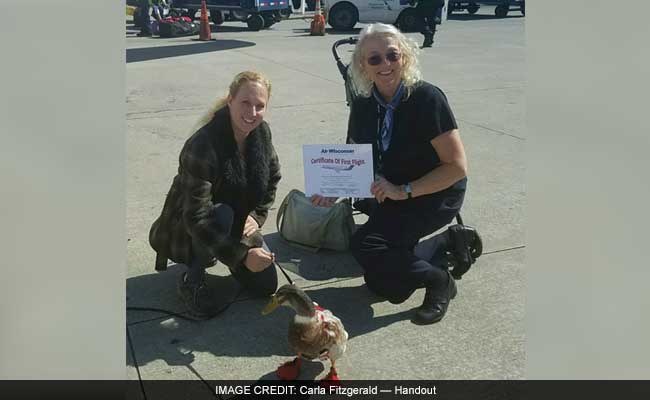
The crew on their first leg, before their connecting flight to Asheville, even insisted on posing for pictures with Daniel and presenting him with a “Certificate of First Flight.”
daniel-duck-wp_650x400_51477015109
The Transportation Department is debating new rules regarding accommodations for disabled people on airplanes, including reviewing rules for emotional-support animals, USA Today reported. The department began allowing emotional-support animals on planes, but the practice of bringing them on board has offended some passengers.”Here’s the thing. Who are we to say what is and what isn’t an emotional support animal or what can and cannot be a pet?” Fitzgerald said. “Or what they can do for people who have PTSD like I do? Having it is hell.”

For the time being, Fitzgerald does not have any other immediate travel plans but said that Daniel will no doubt accompany her on her next trip. She said she thinks that people responded positively to Daniel because he’s unique – but also because he keeps to himself.

“He is obedient and he wears a diaper harness, ” she said. ” I make sure before he goes in public that he has a shower, so there’s no smell to him. When he’s in public, he behaves. He’s not flapping and running around and chasing people.”

However, Fitzgerald might be a little more prepared next time since, as her friends put it, “Daniel broke the Internet” after his first plane ride.

“I didn’t know that a little Indian Runner duck who weighs six pounds could cause such an uproar,” she said.

Source…..www.ndtv.com
Natarajan

படித்து நெகிழ்ந்தது …”திருவள்ளுவரின் நாலு அடி பாடல் …” !!!


இப்படியும் ஒரு மனைவி இருந்திருக்கிறாளா..?
பல நூறு ஆண்டுகளுக்கு முன்…ஒரு புலவரின் மனைவி… இறக்கும் தருவாயில் தன் கணவனை அருகே அழைத்தாளாம் …
என்னவென்று கேட்டு , கலங்கிய கண்களோடு கணவன் அவள் பக்கத்தில் வர…மனைவி தயக்கத்துடன் இப்படிக் கேட்டாளாம் …
“என் உயிர் எப்போதோ என்னை விட்டுப் பிரிந்திருக்க வேண்டும்..ஆனால்..ஒரே ஒரு கேள்வி ..என் நெஞ்சுக் குழியில் நின்று கொண்டு , என் உயிர் இந்த உடலை விட்டுப் பிரியாமல் தடுத்துக் கொண்டிருக்கிறது.. அந்தக் கேள்வியை இதுவரை உங்களிடம் நான் கேட்டதில்லை…இப்போதாவது கேட்கலாமா..?”
புலவனான அந்தக் கணவன் , புரியாமல் அந்தப் புனிதவதியைப் பார்க்க…அந்த மனைவி கேட்டாளாம் இப்படி:
“இதுவரை உங்களிடம் நான் கேட்காத அந்தக் கேள்விக்கு , இப்போதாவது பதில் எனக்குத் தெரிந்து விட்டால்…நிம்மதியாக கண்களை மூடுவேன்.. அந்த நிம்மதியான மரணத்தை எனக்குத் தருவீர்களா.?”
கணவன் மௌனமாக தலையசைத்து சம்மதம் தெரிவிக்க …மனைவி தன் நெடுநாள் சந்தேகத்தை கேட்டு விட்டாளாம்..
“ஒவ்வொரு நாளும் நீங்கள் உணவு அருந்தும்போது ஒரு கொட்டாங்குச்சியில் தண்ணீரும், ஒரு ஊசியும் கொண்டு வரச் சொல்லி , அதைப் பக்கத்தில் வைத்துக் கொண்டுதான் சாப்பிடுவீர்கள்…அப்படித்தானே..?”
கணவன் இதற்கும் மௌனமாக தலையசைக்க , மனைவி கேட்டாளாம் ..”இதுவரை அதற்கான காரணத்தை ஒருபோதும் நான் உங்களிடம் கேட்டதில்லை… காரணம்..கணவன் சொன்னதற்கு மறுபேச்சு பேசி , நான் அறிந்ததில்லை… இப்போது என் வாழ்வின் இறுதி மூச்சில் இருக்கிறேன்…இப்போதாவது சொல்லுங்கள்.. அந்த கொட்டங்கச்சியும் , தண்ணீரும் எதற்காக..?”
இதைக் கேட்டுவிட்டு , இதற்கான பதிலை எதிர்பார்த்து அந்த மனைவி , புலவனான கணவன் முகத்தைப் புரியாமல் பார்த்திருக்க , அந்தக் கணவன் சொன்னாராம்.. “ அது வேறொன்றும் இல்லை… பரிமாறும்போது தவறுதலாக சோற்றுப்பருக்கை கீழே சிந்தி விட்டால் , அதை அந்த ஊசியில் குத்தி , கொட்டாங்குச்சியில் உள்ள தண்ணீரில் கழுவி மீண்டும் சோற்றில் கலந்து உண்ணத்தான் அந்தக் கொட்டங்கச்சி நீரும்..ஊசியும்..”
கணவன் பதில் சொல்லியும் மனைவியின் குழப்பம் தீரவில்லை…அவள் கேட்டாள் .. “ஆனால் ஒருபோதும் நீங்கள் அந்த ஊசியையும் , கொட்டாங்கச்சியையும் பயன்படுத்தி நான் பார்த்ததே இல்லையே..?”
மனைவி இப்படிக் கேட்டதும்…குரல் உடைந்து போன கணவன்…குமுறும் அழுகையை அடக்கிக் கொண்டு சொன்னாராம்… “ உண்மைதான்…ஒரு நாளும் நான் அதைப் பயன்படுத்தவில்லை..!
ஏனென்றால் ஒரு நாளும் நீ எனக்குப் பரிமாறும்போது , ஒரு சோற்றுப் பருக்கையைக் கூட சிந்தவே இல்லையே….!”
கணவன் பதில் அறிந்த மனைவி.. புன்னகை செய்தாளாம்…. அவ்வளவுதான்…! போய் விட்டாளாம்..!!
நெகிழ்ச்சியோடு நெடு நேரம் நின்ற கணவன் ..அந்தப் புலவன்…கண்ணீரோடு தன் அன்பு மனைவிக்காக உடனே ஒரு கவிதை எழுதினானாம் …
இதுநாள் வரை தன் வாழ்நாளில் அவன் எழுதியதெல்லாம் …இரண்டு வரிப் பாடல்கள்…அதில் ஏழே ஏழு வார்த்தைகள்..! அவ்வளவுதான்…அதுதான் அந்தப் புலவன் தன் பாட்டுக்கு ஏற்படுத்திக் கொண்ட பார்முலா..விதி..!
இப்போது…. தனது செய்யுள் விதியை…தானே தளர்த்திக் கொண்ட அந்தப் புலவன்… தன் வாழ்வில் முதன் முதலாக , நாலு வரிப் பாட்டு ஒன்றை எழுதினானாம்…அந்த நாலு வரிப் பாடல்:
“அடியிற்கினியாளே அன்புடையாளே
படிசொல் தவறாத பாவாய்- அடிவருடி
பின்தூங்கி முன்னெழும்பும் பேதாய்-
இனிதா(அ)ய் என் தூங்கும் என்கண் இரவு”
# ஆம்… இந்த நாலு வரிப் பாடலை எழுதிய அந்தப் புலவர் ..திருவள்ளுவர்….!
கணவன் சொல் தட்டாத அந்த கள்ளமற்ற அன்பு மனைவி ..வாசுகி…!
அந்தப் பாடலின் பொருள் :
“அடியவனுக்கு இனியவளே! அன்புடையவளே! என் சொல்படி நடக்கத் தவறாத பெண்ணே! என் பாதங்களை வருடி தூங்கச் செய்தவளே! பின் தூங்கி முன் எழுபவளே! பேதையே! என் கண்கள் இனி எப்படித்தான் இரவில் தூங்கப் போகிறதோ!”
# இன்னொரு வள்ளுவன் எதிர்காலத்தில் பிறக்கலாம்…!


ஆனால்..இன்னொரு வாசுகி….?

Source…..Facebook post of Sridharan Sivaraman

Natarajan

The 10 best airports in Asia….Singapore’s Changi Airport is again Number One !!!


Leading consumer aviation website Skytrax has published its latest annual World Airport Awards, and for the third consecutive year, Singapore’s Changi International Airport took the crown as the world’s best airport. However, Changi isn’t the only world class facility of its kind in Asia — which is why Skytrax has released its list of the 10 best airports in Asia.

The Skytrax annual rankings are based on the impressions of over 13 million flyers from 106 countries. More than 550 airports were included in the survey, which covers 39 service and performance parameters, including facility comfort, location of bathrooms, and the language skills of the airport staff.

10. Kuala Lumpur International Airport (KUL)

Yearly passengers: 47.5 million

Previous rank:10

Why it’s awesome: Kuala Lumpur International is one of southeast Asia’s busiest airports and serves as home base to both AirAsia and Malaysia Airlines.

The airport is located just 35 miles south of the Malaysian capital and is easily accessible by road and rail. KL International is home to one of the most unique features in all of aviation, an in-airport jungle, complete with waterfall. Called the KLIA Jungle Boardwalk, the nature area is located in the airport’s Satellite Terminal.

Source: Skytrax World Airport Awards. Yearly passenger figure is for 2013, provided by Airports Council International.

9. Taiwan Taoyuan international Airport (TPE)

Yearly passengers: 34 million

Previous rank: 9

Why it’s awesome: Located just outside of the Taiwanese capital of Taipei, Taoyuan International is the largest airport in Taiwan. The airport is the home base for both China Airlines and EVA Air.

Skytrax reviewers praised the airport for its polite service, clean environment, and speedy immigration lines. Taoyuan was also once home to Taiwan’s aviation museum, but the museum was shut down earlier this year to make way for further airport expansion.

Source: Skytrax World Airport Awards. Yearly passenger figure is for 2014, provided byTaoyuan International Airport.

8. Beijing Capital International Airport (PEK)

Yearly passengers: 83.7 million

Previous rank: 6

Why it’s awesome: As the second-busiest airport in the world, Beijing’s Capital Airport has played a major role in the Chinese capital’s explosive growth.

With this growth, the airport has built new facilities and upgraded its infrastructure. Capital’s Terminal 3 was rated as the 10th-best terminal in the world.

Source: Skytrax World Airport Awards. Yearly passenger figure is for 2013, provided by Airports Council International.

7. Tokyo Narita International Airport (NRT)

Yearly passengers: 35.6 million

Previous rank: 8

Why it’s awesome: Narita is the first of the two Tokyo airports to appear on the list. Located 35 miles outside of Japanese capital, Narita handles the majority of the international traffic going in and out of the city. The airport serves as a major hub for ANA, Japan Airlines, Delta, and United.

Skytrax reviewers lauded the airport for its efficient and friendly staff, clean facilities, and abundant dining options.

Source: Skytrax World Airport Awards. Yearly passenger figure is for 2014, provided byNarita International Airport.

6. Kansai International Airport (KIX)

Yearly passengers: 20 million

Previous rank: 7

Why it’s awesome: Located on an artificial island in the Osaka Bay, Kansai International is a major hub for ANA and Japan Airlines.

Reviewers on Skytrax praised Kansai for its modern architecture, spotless facilities, and helpful staff. The airport also boasts a Sky View observation deck that affords passengers spectacular views of incoming and outgoing flights.

Source: Skytrax World Airport Awards. Yearly passenger figure is for 2014, provided byNew Kansai International Airport.

5. Central Japan International Airport (NGO

Yearly passengers: 9.8 million

Previous rank: 5

Why it’s awesome: Built on an artificial island in the middle of Ise Bay near the city of Nagoya, Central Japan International — also known as Centrair — serves as a hub for Japan Airlines and ANA.

Centrair holds the distinction as the best regional airport in the world.

It has a 1,000-foot-long sky deck where passengers can watch ships sail into Nagoya Port. There’s also a traditional Japanese bathhouse where you can have a relaxing soak while watching the sunset over the bay.

Source: Skytrax World Airport Awards. Yearly passenger figure is for 2014, provided by Skytrax.

4. Hong Kong International Airport (HKG)

Yearly passengers: 63.1 million

Previous rank: 3

Why it’s awesome: Built on an artificial island off the coast of Hong Kong, HKG has become one of the most popular facilities in the world since it opened in 1998.

One of the busiest airports in Asia, Hong Kong International serves as the home to Cathay Pacific, Hong Kong Airlines, and Dragonair.

Be sure to play a round at the SkyCity Nine Eagles golf course near Terminal 2.

Source: Skytrax World Airport Awards. Yearly passenger figure is for 2014, provided by Airports Council International.

3. Tokyo Haneda International Airport (HND)

Yearly passengers: 72.8 million

Previous rank: 4

Why it’s awesome: Haneda is one of two major international airports that serve the Tokyo area. Located a few miles away from the heart of the Japanese capital, Haneda has proved to be a popular port of entry for business travelers and tourists.

The world’s fourth-busiest airport, Haneda is know for its service efficiency, cleanliness, and shopping.

Source: Skytrax World Airport Awards. Yearly passenger figure is for 2014, provided by Airports Council International.

2. Incheon International Airport (ICN)

Yearly passengers: 41.7 million

Previous rank: 2

Why it’s awesome: Once again, Incheon is the world’s second best airport. Located on an island just outside of the South Korean capital, Incheon is home base to Korean Air and is the 24th-busiest airport in the world. It opened in 2001.

Incheon’s highly regarded facilities feature an array of shopping and dining options, in addition to a bevy of cultural performances. The airport even has a Korean culture museum.

Source: Skytrax World Airport Awards. Yearly passenger figure is for 2013, provided by Airports Council International

1. Singapore Changi International Airport (SIN)

Photo courtesy of Singapore Changi Airport

Yearly passengers: 54 million

Previous rank: 1

Why it’s awesome: For the fourth year in a row, Changi takes the crown as the world’s best airport. Changi serves as home to Singapore Airlines, Silkair, and Tigerair and is the 16th busiest airport in the world.

The Singaporean airport has received praise from flyers for its beautiful architecture, efficient operation, luxurious amenities, and broad offering of dining and shopping options.

Flyers passing through are treated to movie theaters, a multimedia entertainment deck, spas, and a wild corkscrew slide.

Source: Skytrax World Airport Awards. Yearly passenger figure is for 2014, provided by Airports Council International.

Source….www.businessinsider.com

natarjan

This is how much time it should take to escape a crashed airliner….


A Emirates Boeing 777-300 crashed landed and burst into flames at Dubai International Airport on Wednesday.

Fortunately, the airline has confirmed that all 300 passengers and crew on board the flight made it to safety before the aircraft became engulfed in flames.

Which leads us to the question, how long does it take to evacuate a crashed airliner?

Believe it or not, federal regulations dictate that all modern airliners capable of carrying more than 44 passengers must be able to be fully evacuated in less than 90 seconds.

In addition, in order to be certified to fly, new airliners or even new derivatives of existing airliners must pass an evacuation test. The tests involve simulated emergency situations in which all passengers and crew must exit the aircraft in pitch-black darkness using only half of the available emergency escapes.

In 2006, the Airbus A380 superjumbo managed to pass the test by evacuating 853 passengers, 18 crew, and two pilots in just 78 seconds, Flight Global reported.  The Boeing 777-200 passed the evacuation test in 1994 in 84 seconds, Quartz reported. The aircraft involved in the Emirates crash is an elongated 777-300. According to the AP, the aircraft was not subject to its own evacuation test. Instead, it was certified by extrapolating the test results of the 777-200 with the addition of two emergency exits.

These tests are generally conducted using the aircraft type’s maximum passenger capacity which means that aircraft in service are equipped with far fewer seats. For instance, the A380 was evacuation tested with 853 passengers. In operation these days, most of the superjumbos fly with around 500 seats.

However, it should also be noted that these test are also conducted in a laboratory conditions that are calm and organised. The hectic nature of an actual emergency evacuation may slow down the time it takes to empty an aircraft.

As a result, experts recommend that passengers select seats within three rows of an emergency exit. In addition, passengers should be aware of the location of the nearest emergency exit at all times.

Here’s a video of the Airbus A380 evacuation test:

Source….www.businessinsider.com.au

Natarajan

THAT TIME A FLYING PIG GROUNDED EVERY PLANE AT LONDON’S HEATHROW AIRPORT….


Imagine if you will that you’re sitting in an airport waiting to go on vacation. Suddenly and without warning you hear a voice over the tannoy system informing you that every single plane scheduled that day had been grounded. As your mind begins to think of all the horrible things that could have caused the delay, you hear the voice again informing you that flights have been grounded not by a freak storm, crash or technical glitch, but by an escaped flying pig.

flying pig

As unbelievable as it’s going to sound, this is genuinely something that once happened in London in the 1970s thanks to the band Pink Floyd and their gigantic pig shaped balloon.

In 1976, Pink Floyd recorded an album called Animals which drew inspiration from the 1945 novel Animal Farm, a thinly veiled allegory of Soviet communism that prominently features pigs as characters.

After the album was recorded, the band met with a design team called Hipgnosis to create the album’s cover. Despite being regarded by many as some of the best album designers of all time (working with and designing albums for the likes of AC/DC, ELO, Styx and Rainbow), all of Hipgnosis’ ideas fell flat with the band.

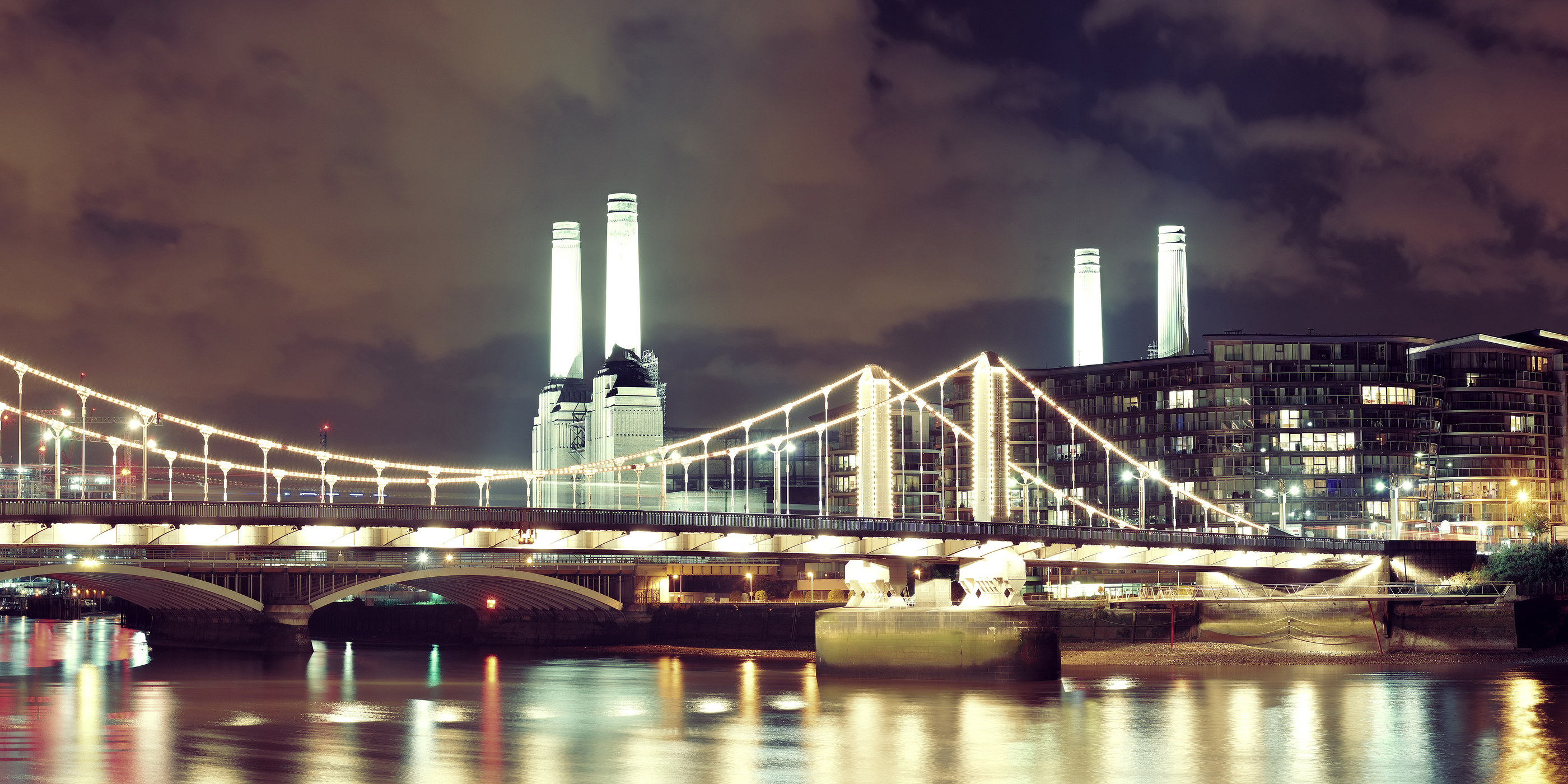
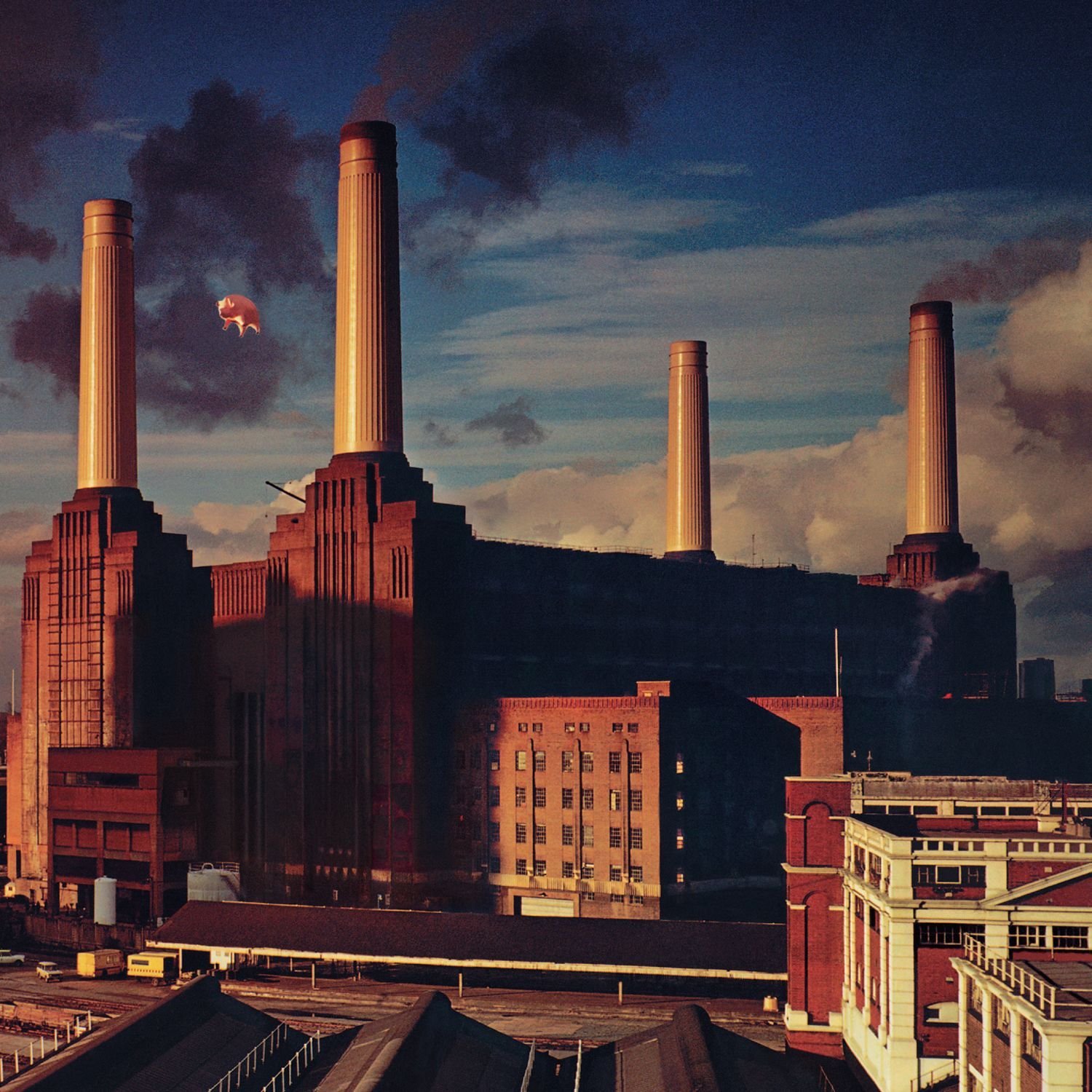
Battersea-Power-StationAfter some deliberation, bassist Roger Waters suggested to Aubrey Powell of Hipgnosis that they use Battersea Power Station as the backdrop for the cover. Waters later explained to Rolling Stone, “I’d always loved Battersea Power Station, just as a piece of architecture. And I thought it had some good symbolic connections with Pink Floyd as it was at that point. One, I thought it was a power station, that’s pretty obvious. And two, that it had four legs. If you inverted it, it was like a table. And there were four bits to it, representing the four members of the band…” (I’m getting a definite This is Spinal Tapvibe here… Just me?)

The band had recently commissioned a gigantic 40 ft. inflatable pig for their upcoming tour.  Putting two and two together, Powell stated in an interview that when the pair were discussing the power station idea, “Roger and I both looked up at the Station, and said, ‘let’s fly the pig between the chimneys’. Just like that.”

After applying for what we can only assume was an ungodly amount of permits to float a giant balloon shaped like a pig above an (at the time) operational major power station, the band with help from Powell picked out the best angle from which to shoot the cover. Other prep work included hiring an expert marksman who was given orders to shoot the pig down should it escape. The band then decided on a date on which to shoot the photo- December 2, 1976, a day which was supposed to be mostly clear with some cloud, which the band specifically wanted so that the sky didn’t look “boring”, or as boring as it could be with a giant floating pig in the middle of it.

However, on the day of the shoot, the pig wouldn’t inflate for reasons never explained in any interview we could find. This annoyed Powell to no end because, “that day there was the most incredible, Turner-esque sky. But for some reason, the pig wasn’t inflating. I shot the Station anyway, because the sky was so amazing.”

After trying and failing to inflate the pig for several hours, the band gave up and they agreed to come back the next day.

The group returned and, oddly, this time the pig inflated just fine. After painstakingly attaching the pig to Battersea’s southernmost chimney, disaster struck as the tether holding the balloon in place broke during a wind gust, causing the gigantic inflatable porcine to begin lazily drifting away.

The pig was loose.

So what happened to the sniper they hired for just such a bizarre event? Well, apparently the manager simply forgot to tell him or his gun that they required his services the next day. So he never showed up.

As the pig began to climb ever higher, rising to heights no pig, inflatable or otherwise, had ever hoped or dared to dream, a terrible realisation crept over those watching it sail toward the heavens- the pig was flying directly towards Heathrow airport. As panic began to set in, the band did what many would do in such a situation, according to Powell, “Pink Floyd left the site.”

Moments after the skyward swine escaped, Heathrow officials received several communiqués from pilots in passing planes matter-of-factly telling them that they’d just seen a giant pig float past their windows. After realising that the calls weren’t a joke, all flights from the airport were grounded.

As the pig danced around in the sky, police helicopters and eventually the RAF were called in to chase it down, but to no avail; by the time they arrived the pig was gone and, despite their sincerest efforts, they couldn’t find it.

With the pig off enjoying its freedom and the band having absconded the scene of the crime, this left Aubrey Powell to take the fall. After police arrived, according to Powell, he was promptly arrested and taken in for questioning.

Meanwhile the band, who’d managed to retain their freedom, set about trying to find the pig- giant inflatable pigs not being cheap, after all. Using their status as Pink Floyd, they were able to convince radio stations across the country to plead with listeners to keep their eyes peeled for a giant floating pig, providing a number they could call if they happened to see it.

Almost immediately this number was flooded with prank calls because, of course it was. However, at around 9:30 pm that evening, a phone call from an irate farmer in Kent (about 40 miles or 65 km away) came in, with the farmer sharply asking “Are you the guy looking for a pig?”

After having this fact affirmed, the farmer angrily told the group that such an object had landed on his farm and was currently scaring all his cows. After getting the man’s details, Powell, along with the police, went and collected the swine which was miraculously undamaged from its adventure.

pink-floyd-animalsSurprisingly, the police and officials at Battersea allowed the band to come back and re-shoot their album cover, with the proviso that they actually bring the sharpshooter along this time. Although Powell was able to get shots with the tethered pig, the sky that day was entirely clear and he ended up hating how they looked initially. However, he was able to get the shot he wanted by using a photo from the first day and superimposing the pig on top of it. Sans Photoshop, this did not look that great if you looked too closely at the picture.

As such, this all went against Waters’ original requirements that the “picture should be real”, rather than superimposing the pig, as Powell had at one point suggested before the whole debacle. This nevertheless all ended up working out for the band swimmingly. As Powell later noted, the escaped pig “was front-page news: Pink Floyd couldn’t have got better publicity if they tried.”

After its little adventure, the pig went on tour with the band later the following year.

Source…….www.today i foundout .com

Natarajan


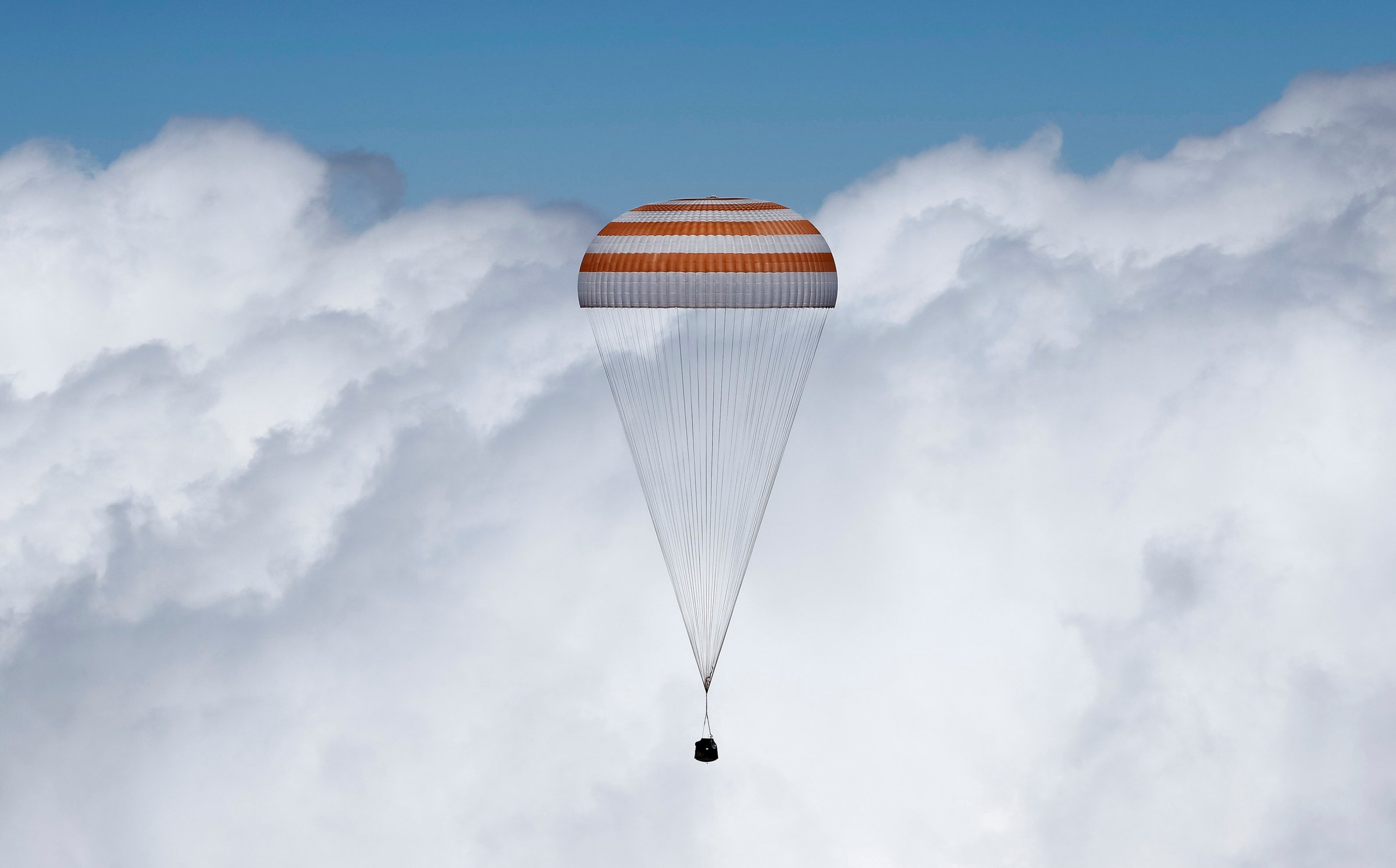
Image of the Day….Astronaut Tim Peake has returned to Earth after an historic mission aboard the ISS…


soyuz

The Soyuz TMA-19M spacecraft capsule carrying International Space Station (ISS) crew members, Timothy Peake of Britain, Yuri Malenchenko of Russia and Timothy Kopra of the U.S., descends beneath a parachute near the town of Dzhezkazgan (Zhezkazgan), Kazakhstan, June 18, 2016. REUTERS/Shamil Zhumatov

Source….www.businessinsider.com

Natarajan

This $300 million airliner is the hottest new trend in private jets….

image

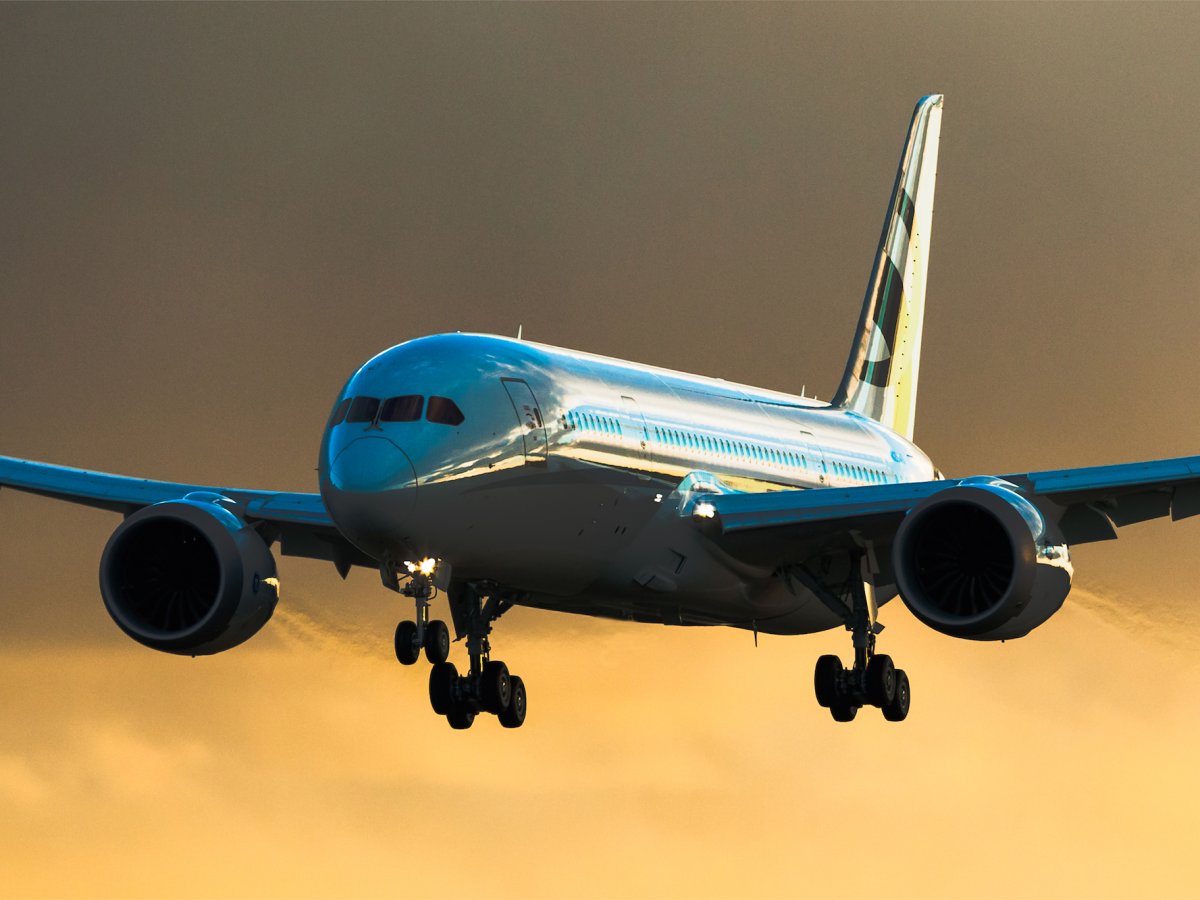
Kestrel Aviation Management   Boeing 787-8 BBJ.

In July, China’s HNA Aviation Group will welcome a shiny new Boeing 787-8 Dreamliner to its fleet.

This plane is special because it is the first 787 Dreamliner to be built purely as a private jet.

HNA’s new Dreamliner is symbolic of a hot new trend in private and corporate aviation — long-range, mid-size, wide-body airliners.

“It’s an emerging market that didn’t really exist in the past,” Kestrel Aviation Management CEO Stephen Vella told Business Insider. Kestrel oversaw the design, engineering, and fabrication of HNA’s new Dreamliner which has an estimated total cost topping $300 million.

Airbus and Boeing have long offered versions of its airliners to private customers under their Airbus Corporate Jet and Boeing Business Jet programs. However, buyers of these airliner-based private jets have long gravitated to either four-engine, jumbo jets like the Boeing 747 or smaller, narrow-body jets such as the Airbus A320.

“The market is traditionally separated into two buckets,” Vella said. “The big Boeing 747s and Airbus A340s primarily catered to heads of state while the smaller Airbus A320 and Boeing 737s are popular corporate runabouts as well as secondary planes in government fleets.”

image (1)


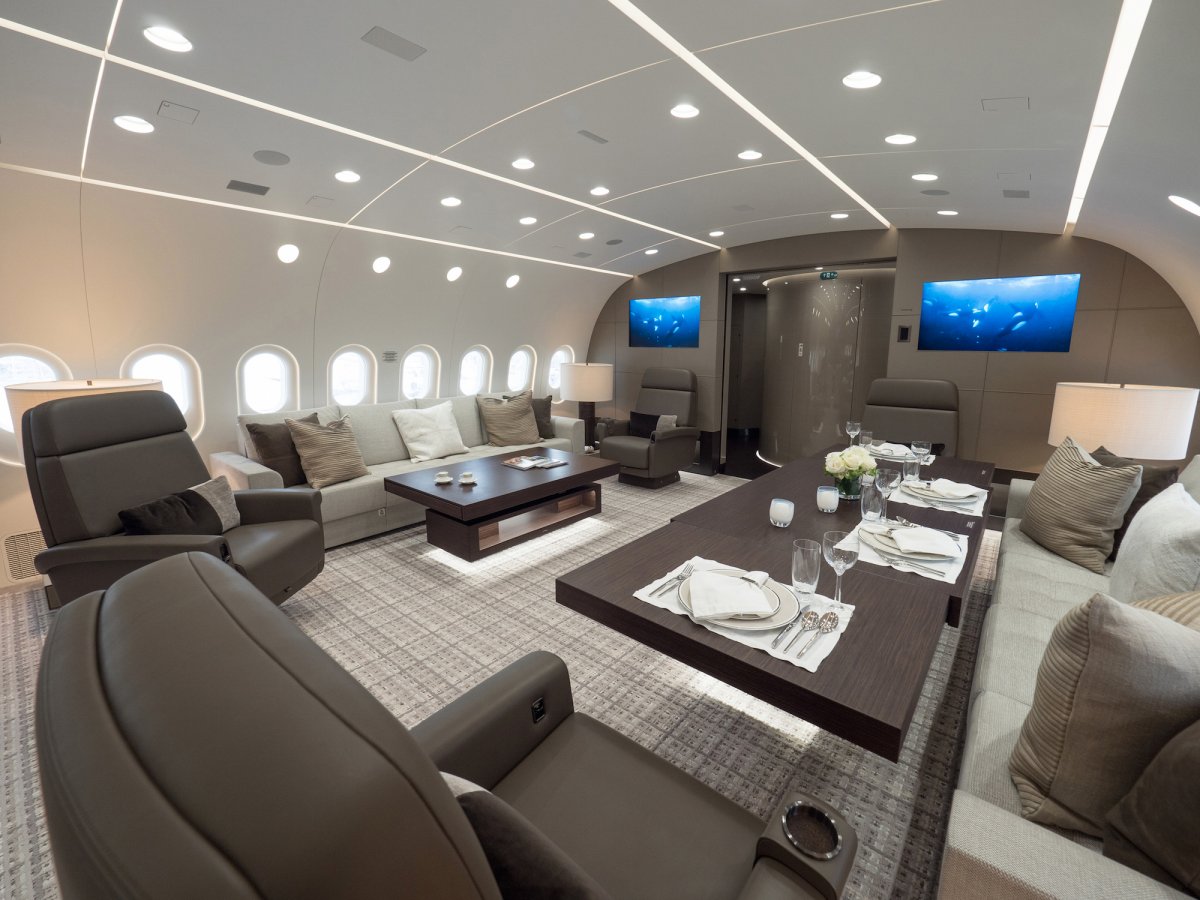
Boeing 787-8 BBJ interior.

Although twin-engine, mid-size, wide-body jets such as the Boeing 767 and the Airbus A330 have long been available, they never quite caught on with the private jet crowd.

However, in recently years, ultra high-end private jet customers have become increasingly interested in the new generation mid-size, wide-body planes such as the Dreamliner and Airbus A350.

What’s changed?

According to Vella, several factors led to the shift.

First, leading business men and heads of state are generally pressed for time. As a result, they prefer be to able to fly anywhere they need to go non-stop. Until recently, this simply wasn’t possible in a twin-engined jet. The traditional thinking in the aviation dictates that there’s safety in the number of engines a plane has.

Regulating bodies such as the US Federal Aviation Administration have even placed limits on which ultra-long-range intercontinental routes twin-engine jets can fly. As a result, government and corporate clients looking for a plane which the range and capability to go anywhere in the world had to turn to four-engined jumbos.

However, with the incredible reliability of modern turbofan engines, the regulatory limitations on twin-engined jets have essentially been wiped out. Now, planes such as the A350 and the 787 can fly anywhere the owner requires, but in a slightly smaller and more affordable package. For instance, HNA’s new state-of-the-art composite Boeing has a range of 9,800 miles even when packed with passengers, luggage, and fuel. A similarly outfitted A350 ACJ will be able to delivery that type performance as well.

“You can fly between virtually any two points on the globe,” Vella said of the Dreamliner.

Secondly, the price of crude oil has fallen dramatically over the past two years. Even though cheaper fuel makes buying and operating a thirsty, four-engined, jumbo jet much more attractive, low crude prices have also cut dramatically into the income of Middle Eastern governments. Unfortunately for the 747 BBJ, they are also some of the plane’s biggest customers.

According to Vella, all major Middle Eastern governments such as Saudi Arabia, operate large royal fleets, many of which are jumbo jets, for elite members of the ruling family and officials to use.

Over the next decade or so, these fleets with need to be updated. Vella, whose company has bought and sold more than $50 billion worth of commercial and private jets, believes the Middle Eastern clientele are ready to do some belt-tightening and downsize to smaller planes.

Finally, another factor that has benefited the Dreamliner-sized jet is the increasing public sensitivity towards political largess. Unlike the US, where the plane that operates as Air Force One is held in high esteem and seen as a symbol of national power, the public in many countries view a large presidential aircraft as a sign of political over indulgence.

According to Vella, this is a particularly sensitive issue in Europe. However, a smaller aircraft with the performance capabilities of a jumbo, but in a less attention-getting package is a reasonable alternative.

“The mid-size jets have less ramp presence,” Vella said. “They offer the owner much more discretion.”

After all, it’s hard to arrive discretely in a jumbo jet no matter where you go. Even at the world’s busiest international airports, an aircraft the size of a 747 or Airbus A380 is conspicuous.

But all of this requires some perspective. Even the “smaller” 787 BBJ is still an absolutely massive aircraft. At 186 ft. long, even Donald Trump’s converted Boeing 757 is dwarfed by the new Dreamliner. And with 2,400 sq. ft. of living space, it offers the same amount of room as an average American suburban home.

What’s coming

According to the long-time aviation executive, over the next 15-20 years, demand from just the Middle East for Boeing 787-sized private jets will top 30 aircraft. That may not sound like many planes, but at more than $300 million a pop, that’s about $10 billion in business from just a handful of customers.

In fact, Vella believes demand from East Asia will be just as intense over that period of time.

“Because of the high number of long distance and (trans-oceanic) flights the customers make, these are the perfect planes for Asia,” Vella added.

Whether the market for these mid-size, twin-engine wide-body private jets actually skyrockets remain to be seen. But with the unprecedented level of advanced technology, luxury, and performance it can offer, they are an undeniably attractive option for the right buyer.

Source…..BENJAMIN ZHANG   in http://www.businessinsider.com.au

Natarajan