” A Teashop Owner Couple …Who Have Visited 16 Countries …” !!!

“If you really wish to chase your dreams, nothing can stop you from it,” – a line like this may sound tacky in isolation, but when Vijayan , a 65-year-old wayside tea-seller owning a tiny tea shop in Kochi says it , a decade’s worth of stories echoing hard work, sweat and conquered dreams tumble out.

Tea Shop

Vijayan has been a tea-seller for over forty years, however, that hasn’t stopped him and his wife from touring almost every scenic destination in India along with a whopping 16 other countries- Britain, France, Austria, Egypt, UAE, the list goes on.

His tea-stall is his only source of income, something that has never been an obstacle in fulfilling his dream of travelling all over the world. “I got the obsession in traveling from my dad; he took me to different places since I was 6 year old. We went to Madurai, Palani and many other places. Those travel memories with my dad helped me unleash my dreams” says Vijayan.

Tea Shop 7

Life was not easy on Vijayan while he was growing up. Trips with his father to almost all temples in Kerala triggered his passion for travelling; however his father’s death brought all possibilities of travelling to a standstill as he took up all family responsibilities. It was only in 1988 that he resumed travelling when he accompanied a man as his cook on a pilgrimage to the Himalayas.

What is the point of fulfilling your dreams if you have nobody to share it with, says Vijayan as he refers to his wife Mohana, who joined him forty years ago. Back then her life revolved around Kochi, but post marriage, the couple have explored exotic cities, all on their own. Excitement lights up her face as Mohana explains her most enjoyable journeys.

Tea Shop 4

“I was really excited when we first travelled abroad. Belonging to a very poor family, I never dreamt of a life like this. Later along with him I too became obsessed with the journeys. Switzerland is my favorite among the places we visited”, she says.  Switzerland may have been her favourite but according to her, seeing the statue of Jesus in Israel left her rooted to her spot for a long time.

Tea Shop6

For Vijayan, on the other hand, every experience was different, right from trudging through the deserts of UAE to heading down the magnificent Nile river in Egypt, Nile being one of the spots he wishes to visit again.

It’s hasn’t been easy for the couple to sustain such a lifestyle. With their sole source of income coming from their tea-shop, the only way out for them to pursue their love for travelling was via help through bank loans.

Despite all financial insecurities, the couple would take a loan, travel to a foreign destination, come back and spend the next three years repaying the debt they owed, and the cycle would go on.

Has toiling and working so hard helped him? “There will be many hurdles, but we can overcome that through hard work. If you really wish to chase your dreams, nothing can stop you from it” he says.

Vijayan follows a very simple funda for saving money, “I save rupees 300 a day for our tickets and spend just 10 dollars or less on picking up some tiny souvenirs from the places of visit. We don’t spend anything more.”

There is no question of spending lavishly for this couple.

They may have travelled to 16 countries, but one country on their to-go-list still eludes them – the United States of America, a place they have been wishing to go for a long time now since their last trip to Europe in 2012.

Teah Shop 5

Considering their age, the couple in recent times have faced difficulties in getting loans to finance a loan to their next dream destination. But all is not lost, says Vijayan. “Once I was completely stuck without money, then one of my old acquaintances who resides in South Africa offered me stay and food there. Then I somehow managed the ticket fare and visited the country. So am sure that somehow I will be able to visit the US”, he said.

Tea Shop 3

Despite the financial burden the couple will have to sustain, Vijayan is steadfastly stubborn about one thing, about not leaving his wife behind. “I can’t travel without her, I will happy only when she is around”, says Vijayan smiling.

Some dreams are worth going all out for, and Vijayan’s story sounds like one of those few.

SOURCE:::: Haritha John in http://www.thenewsminute.com/

Natarajan

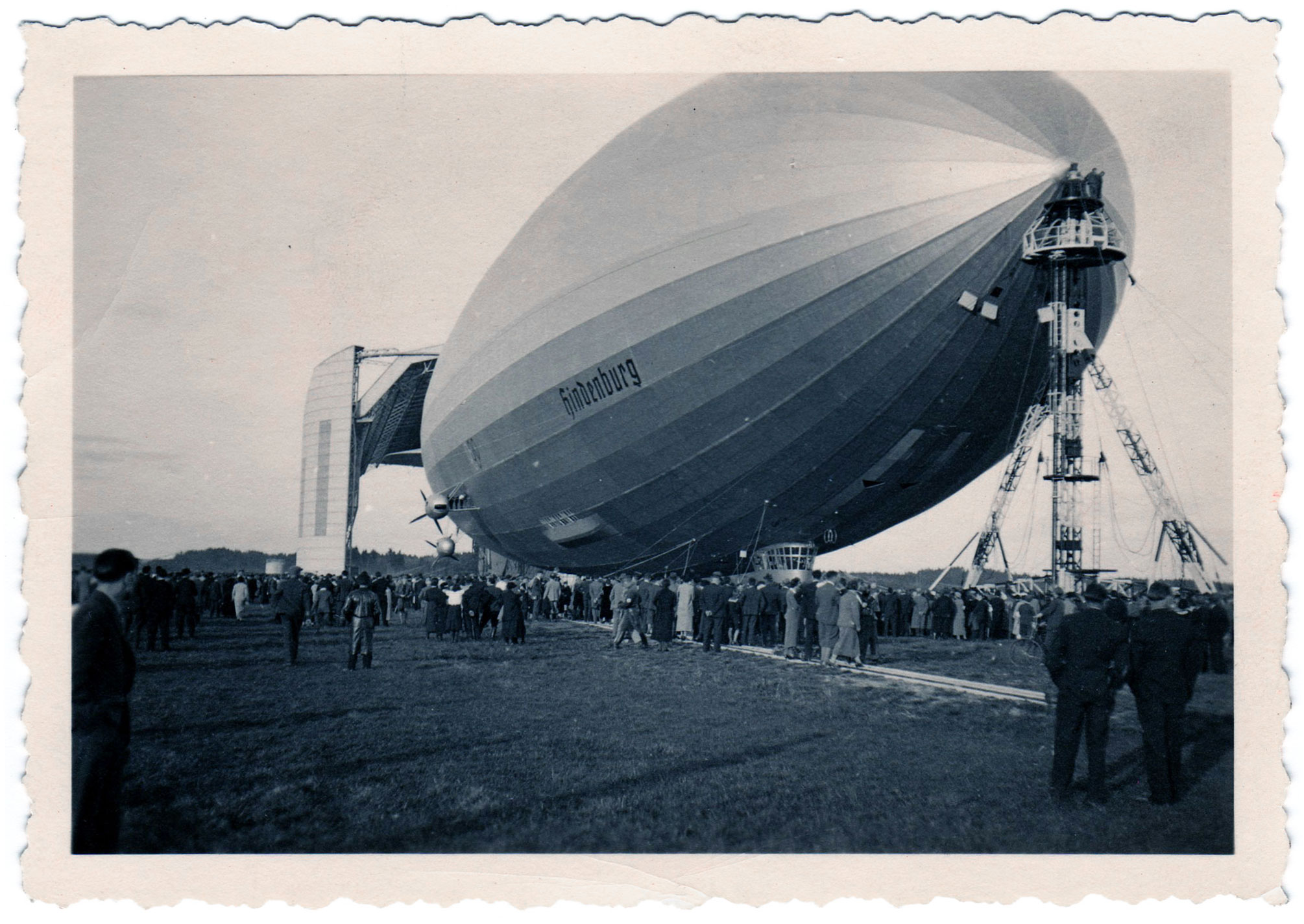
LZ-129 Hindenburg: …Airships Which Ruled The Skies Prior to Airliners !!!

Prior to the age of the airliner, Zeppelin airships ruled the skies over the north Atlantic — connecting cities like New York with Western Europe. Zeppelin’s fleet of airships included such colossal creations like the Graf Zeppelin and the Hindenburg  along with the less famous Graf Zeppelin II.

Before the modern jumbo jet and its first class suites, the biggest and grandest thing in luxury air travel was the German Zeppelin Airship.

Of all the massive Zeppelin’s constructed, the most famous was the Hindenburg. The Hindenburg was designed to ferry passengers across the Atlantic in serenity, with the dirigible floating smoothly through the clouds.

The Hindenburg was the first of two “Hindenburg” Class airships constructed by the Zeppelin Company. Construction of the airship began in 1931 and was completed in 1936. The Hindenburg, along with its highly successful predecessor, the Graf Zeppelin, made numerous trans-Atlantic crossings in their brief but illustrious career.

Constructed out of an aluminum alloy called duralumin, the Hindenburg’s massive frame work was filled with 7 tons of hydrogen. Hydrogen is much lighter than air, and allows the massive Zeppelin to carry more people in greater levels of luxury. However, with an ignition source, an oxidizer, and right concentration, hydrogen can also be incredibly flammable.

The Hindenburg entered passenger service in May of 1936 and carrier up 50 passengers in luxury across the Atlantic.

The legend of the Hindenburg’s luxurious amenities are well know, but most have not seen them in living color. So take the opportunity to check out these wonderful photos of the Zeppelin’s passengers spaces courtesy of airships.net and the German Federal Archive.

 http://www.airships.net/hindenburg/interiors
 SOURCE :::: http://www.airships.net/hindenburg/
Natarajan


Message For the Day…” Duty First…Rights Next …”

Life will be unfulfilled by merely spending time. When you enquire earnestly whether duty comes first or right comes first, several people insist upon ‘rights’. Ask yourself – Where did ‘rights or entitlements’ come from? When you perform your duty, its fruit, in the shape of rights, accrues to you! How can a child exist without the mother? So also, when you perform your duties sincerely, the result of that action comes as rights. When you enquire into the fact whether rain comes first or the flow of water, it becomes clear that flow of rainwater follows rain. Without rain, there cannot be a flow. The flow can be compared to one’s ‘rights’ and rain to ‘duty’. Therefore accord your highest priority to your duties!

Sathya Sai Baba

Message For the Day…” What is the Gift to Swami on His Birthday , today …” ?

Many must be thinking about the gift to offer Swami on His Birthday. The present given to God must be pure, steady and selfless Love. You can rejoice that you have given the Lord a real gift only when you love your fellowmen, share their sufferings, and engage in serving them. Adopt villages and make them ideal villages. Rich and powerful have plentiful servants. The distressed, the poverty-stricken, and the diseased have no one to serve them. Go to them and be their friends and relatives, their closest well-wishers. Let them welcome you as such. Do not pour spirituality into the ears of those who are tortured by hunger and afflicted by pain. First satiate their hunger. Serve them as God and give food, clothes, and medicines and then teach them spirituality. I bless you with long life, good health, bliss, peace and prosperity. May you devote your physical, mental, intellectual and spiritual strength and skills for the service of the Universe.  

Sathya Sai Baba


This Man Set the Parallel Parking World Record !!!

This Man Set the Parallel Parking World Record

Living in big cities might be great for your professional growth, however, you do fear the weekend, for it is the time when you get out onto crowded roads to shop or just roam around. You have to remember though that you take your car out and the biggest problem is parking your car.

But parking is no problem for Chinese wheelman Han Yue as he has done the seemingly impossible by breaking the tightest car parallel parking record. The Guinness Book of World Records has given its official nod to this feat too. Han managed to neatly slide his way into a gap measuring just 8 cm or 3.15 inch longer than the MINI 3 Door Hatch he was driving.

To give you an understanding of what all that is, the gap was probably smaller than the length of your smartphone. Han’s feat shaves off 0.6cm from British driver Alastair Moffatt’s record set back in July 2013 of 8.6 cm or 3.4 inch. The Chinese stunt driver has previously held the title in 2012 after manoeuvring into a gap of 15 cm (5.91 in).

video link….

SOURCE::::: Ameya Naik in http://www.auto.ndtv.com

Natarajan

Health Benefits of Home Grown Herbs….

Herbs are some of the best things you can grow around your house and garden. They are mostly easier to grow then many kinds of vegetables and fruits and yet they can be just as healthy and tasty to eat. These are 10 of the easiest, healthiest and most recommended herbs for you to grow, each with important tips on where and how to grow them. They are guaranteed to make your food taste better, your house smell nicer and your overall health better than ever before.

Rosemary:

A good for source of iron, calcium, and vitamin B6, rosemary has been found to be helpful with enhancing memory and concentration as well as providing neurological protection. It is an herb that’s perfect to grow in a pot, but not in direct sunlight, so you don’t even need to have a garden. Use dry or fresh rosemary to add a great taste to pizzas or baked potatoes.

Thyme:

Thyme is a powerful herb that can help you with many types of breast and colon cancer, bacterial infections and skin problems. Thyme is commonly used for the treatment of diarrhea, stomachache, arthritis, sore throat and bronchitis. The plant is very hardy and is easy to grow, it is also safe to harvest without constant fear of the plant dying. It is best used in deep stews and meat marinades.


Sage:

Sage is used in medicine to help alleviate symptoms of mental disorders such as Alzheimer’s and depression. It can also be used to solve digestive problems, improve memory and help type 2 diabetes patients with lowering cholesterol and triglyceride levels. A sage plant requires plenty of sunshine, good drainage and good air circulation. Sage is most often used with poultry and pork but can also be used to flavor cheese.

Lemon Balm:

Many people believe that lemon balm has calming effects that can reduce anxiety and sleep problems, it is also used for digestive problems like upset stomach, intestinal gas, vomiting and colic. This useful plant tends to be naturally pest and disease resistant, all it really needs is some decent soil, protection from punishing heat and a regular watering schedule. This herb can be used for making homemade tea and as a yummy salad addition.

Parsley:

Parsley contains more vitamin C and K than basically anything else you eat, it works wonders for people with kidney stones, gastrointestinal disorders, constipation, diabetes, cough, and asthma. If you plan on planting some parsley seeds in your garden do so in moist, rich soil and plant each seed about 7 inches (18 cm) apart. Chop parsley and sprinkle it on any dish you want to add a little life and color to, it’s mild on flavor and yet very refreshing.

Chives:

Chives is nutrient-dense herb, its low on calories and high on beneficial nutrients like vitamins, minerals and antioxidants. Chives contains choline, an important nutrient that helps with sleep, muscle movement, learning and memory. It has no problems growing in-doors or out-doors but it prefers full sun light, it is also important to give chives consistent watering in the growing season, to ensure high yields. Add a bit of chives to salads or other dishes spiced with herbs to give them an unexpected twist.

Mint:

Best grown in a pot, as it grows to fill whatever space you give it, mint is a very useful herb to have around the house. It can be used as a simple answer to allergies, colds, Irritable bowel syndrome and abdominal pains. Use mint to make home-made natural tea, add to your salads, and even just crush a bit of leaves and add to water with some lemon juice for a great healthy drink.

Oregano:

This plant will glow at ground level but won’t spread too aggressively which means its best gown out-doors or in large containers. Not only does this herb provide food flavor and an amazing smell, it’s also high on potent antioxidants and anti-bacterial ingredients. Water the oregano only when the soil is dry, they are native to arid regions and don’t like too much water. Use it when you are making some home-made pizza, mix it in with your pasta sauce and even try adding a bit to your morning’s scrubbed eggs.

Tarragon :

Tarragon has been used as a traditional remedy to stimulate appetite and alleviate anorexic symptoms. It is a rich source of vitamins such as vitamin C and vitamins A and B, and other minerals like calcium, manganese, iron and magnesium. Keep tarragon in a spot of the garden that enjoys full sun in the morning with dappled light in the afternoon. It can tolerate full afternoon sun in locations that don’t get too hot but it should be kept well watered. Tarragon is a tasty spice for any dish with rice or chicken and can also add a refreshing, but not overpowering, taste to fish.

Basil:

Consider planting this herb in your garden and house just for the smell if not for its many possible heath benefits. Rich in antioxidants and anti-aging properties, basil is a good source for vitamin A, vitamin K, vitamin C, magnesium, iron and potassium. During dry periods water the plants freely, basil loves moist ground, and also be sure to pick the leaves regularly to encourage growth throughout the summer. Commonly used in Italian cooking, basil combines wonderfully with anything that includes tomatoes and cheese.

Source: Jimmy R. in ba-ba mail site

Natarajan

In Vrindavan, work is on to build the world’s tallest religious structure…Krishna Temple !!!

Model of the Krishna temple planned at Vrindavan Picture by Sanjay K Sharma

The capsule elevator will rise up the steel belly of the skyscraper. On its 700-feet journey, it will take visitors past the various universes of Hindu mythology: Svarga Loka, that transitory place for righteous souls; Vaikuntha Loka, the abode of Vishnu; and finally Goloka Vrindavan, the eternal abode of Krishna.

At each stop, visitors will get a three-dimensional, light-and-sound experience of these planetary systems as described in the Vedic scriptures. From here, the elevator will move further up to the viewing gallery at the very top that will have telescopes through which visitors can see the Yamuna, Mathura, Govardhan, Nandgaon and, on a clear day, even the Taj Mahal, 70 km away.

The 70-storey, 210-metre-high Chandrodaya Mandir will be nearly three times the height of Qutub Minar and taller than the Great Pyramid of Giza. Conceptualised by the International Society for Consciousness (ISKCON)-Bangalore, this sprawling 65-acre project intends to put Vrindavan on the world map.

About 2 km from the bustling temple town, on the highway to Mathura, work on the mammoth project, which is shaped like a peacock feather, has started. The foundation stone was laid on March 16, and last week President Pranab Mukherjee performed puja here. Over the next five years, here is how aspires to transform what is today a vast stretch of barren land.

The architecture will be a fusion of western and traditional styles. The intended end result is a skyscraper temple. “The skyscraper is a concept from modern architecture and requires modern technology,” says Chanchalapathi Dasa, project president and vice-president, ISKCON-Bangalore. “And the shikhar, mandap and other structures will be built in the traditional Nagara architectural style which was prevalent in northern India.” The use of marble and glazing in the central structure also reflects this fusion.

World's tallest temple at Vrindavan to stand Thrice as tall as Qutab Minar


Chanchalapathi Dasa, project president and vice-president, ISKCON-BangalorePicture by Sanjay K Sharma

While the temple will occupy about 500,000 square feet, close to 700,000 square feet will be meant for education. As ISKCON believes in salvation through devotion to Krishna, as exemplified by Chaitanya Mahaprabhu in the 15th and 16th centuries, the emphasis will be on the knowledge of Krishna that has been assimilated into local cultures across India and represented in dance, art, music, literature, architecture and even cuisine.

The Krishna Heritage Museum will preserve and showcase these varied expressions. The Science and Spirituality Pavilion will present contemporary scientific discoveries and concepts and try to correlate them with some of the concepts present in Indian Vedic literature — the bugbear of modernists. For example, the Bhagavad Gita Expo will offer students an expositional tour and concepts of the Gita “in a way that is appealing to the scientific temper of young people,” says Chanchalapathi.

The oganisation is relying heavily on technology to introduce younger children to Krishna. “The days when grandmothers told stories to children are gone. YouTube and 3D experiences have taken over,” says an ISKCON devotee. This is where “multi-sensory environmental story-telling experiences” will play a key role. The complex will have a climate-controlled, covered Krishna Leela Park spread across 200,000 square feet where children will get 3D experiences of the many acts Krishna performed as a child. An internally reconstructed Yamuna creek with boats will meander through this park.

Around the central complex, ISKCON plans to recreate 12 forests. “Vrindavan was a vana, a forest. But there’s no forest left now,” says Chanchalapathi. ISKCON intends to recreate those forests that find mention in Vedic scriptures in the area called Braj Mandal, a large part of which falls in Uttar Pradesh and some of which is in Rajasthan and Haryana. Each forest had its own kind of flora, fauna, water bodies and caves.

About 28 acres of land around the temple have been earmarked for these forests. For example, Talavana had tal (palm) trees with fruit that Krishna and his cowherd friends are said to have been attracted to. Similarly, there are other forests planned like Bhandiravana with banyan trees, Kumudavana with lotus and lily ponds, and Kamyavana with rocky, mountainous caves. ISKCON has been in consultation with the Uttar Pradesh forest department to source the trees.

Krishna, say his devotees, performed leelas, or magic, in these forests. Those experiences will be recreated. For example, the story goes that a demon called Aghasura came in the form of a gigantic python to kill Krishna. He opened his mouth and sat in wait. Mistaking his open mouth for a cave, Krishna and his friends decided to explore it. Once inside, Krishna saw his friends fainting because of the obnoxious smell coming from the guts of the snake.

He tore through the snake and released his friends. ISKCON wants to create a tunnel shaped like a python winding around a hillock. A water slide will take people through the snake’s cave-like mouth and out at a point where a large statue of Krishna is seen tearing open the snake’s body. The boat will take people past lakes of ‘gastric juice’ and remnants of other things the snake has ingested.

Model of the planned at Vrindavan

Now if people are going to be visiting a site as expansive as this, housing will be critical, more so as the temple is a bit removed from the city. So it plans to build simple, inexpensive rooms,ashrams, cottages and bungalows. The bungalows will be put up for sale.

It’s hard to believe it when ISKCON members tell you that the estimated cost of this ambitious project is merely Rs 350 crore. “It’s all about intelligent design and creative engineering,” says Chanchalapathi. “This shikhar (skyscraper) that is contributing to the height is like the Eiffel Tower. It is a steel structure with an external façade. We have to spend some money on the façade, but internally it’s just steel.” He says while a skyscraper costs about Rs 75 lakh per square feet, “we are doing this at about Rs 11 lakh per square feet”.

Meanwhile, the civil engineering department of the Indian Institute of Technology-Delhi is reviewing the structural design. The wind tunnel test has also been conducted to see how the structure will hold out against storms. For water, which will be critical to create and sustain the forests, ISKCON has bought two plots of land on the banks of the Yamuna, about 3 km from the temple site, and installed pumps. Pipes from there will bring water to the site.

As of now, standing on the barren stretch, it’s difficult to imagine the picture ISKCON is painting.

SOURCE::: Veenu Sandhu in http://www.business-standard.com
Natarajan

Message For the Day…” Everyone Must Preserve to Protect The Practice of Truth…”

A real student is one who contemplates and understands the value of the education being received. Higher knowledge (Vijnana) and Supreme wisdom (Prajnana) are not merely products of education that can be acquired by learning or listening. Everyone can develop these sacred powers through culture and refinement gained through education and consistent practice. What is culture? Culture is the conscious effort put in by every being to achieve a transformation in their daily lives from untruth to truth, from non-conformance to scriptures to conformance to scriptural authority, and from evanescence to eternity. It is a spiritual journey towards Divinity. Human beings are embodiments of truth. Everyone must persevere to protect the practice of Truth (Sathya) and Righteousness (Dharma), which in turn will protect the Universe. If you succeed in doing so, the whole world will enjoy peace and prosperity.

Sathya Sai Baba

The World’s Best Or Most Unlucky Goalie !!!


The World’s Best or Most Unlucky Goalie

When a game of soccer ends with a tie, the game moves to a stage called “penalty kicks”, in which the ball is placed in the penalty-kick position. Then, a player tries to kick it into the goal. The teams alternate between them, and (unless they are still tied) the team with more points wins. In this case, the goalie for the North Carolina Tar Heels found an unorthodox way to stop the ball…


SOURCE::: You Tube and ba-ba-mail site

Natarajan