From Digitally Illiterate to Networking Guru… Story of Mudassir Ansari, Chanderi Madhya Pradesh…


Mudassir Ansari had not seen a computer till he turned 18. Today, he uses technology to bring internet connectivity to rural India and empower thousands with digital literacy.

Coming from a long line of weavers, Mudassir Ansari grew up to the rhythmic clacking of handloom machines in his hometown of Chanderi, Madhya Pradesh. For the Ansari family, weaving was more than just a means to earn a living – it was a legacy shared with their children, generation after generation.

By the 1990s however, most of their machines fell silent. Globalisation and easy access to cheap, printed material meant that many weavers across India were out of work.

BIDDING GOODBYE TO A BYGONE ERA
In a bid to cope with the changing world around him, Mudassir’s father became a tourist guide. The family even went on to set up a phone booth. Despite this, making ends meet continued to be a challenge.

Thoughts of the future weighed heavily on Mudassir’s mind and he came to the conclusion that something radical had to be done to change the status quo: “I realised that every generation brings with it its own set of changes. If you don’t change with the times, you will be left behind.”

Providing for his family and securing their future gave Mudassir sleepless nights, till he hit upon a solution.

“I noticed that PCs were fast becoming an integral part of all aspects of life. From government and corporate offices to hospitals, schools and colleges, PCs were making their presence felt in all fields. I understood that if we didn’t make an attempt to learn computing, we would be confined to our small town and to our limited income. There would be no change and that would prove detrimental for the family. Learning how to use this device was our ticket to a better life,” he said.

“In the 1990s, knowing how to operate a computer was a big deal in our town, especially since there were no institutes or classes that imparted the skill. People who wished to learn computing had to travel to other cities and attend classes there. The nearest city was just 30 kilometres away but I had never been there. When I decided to learn how to work on a PC, my life changed,” he added.

Mudassir attended classes and, through continued practice, became proficient in using the PC.

“My father was overjoyed. He would tell everyone he met that his son knew how to use a PC. It became a sign of progress, of a higher social status even,” he recalled with a smile.

In 2006, confident about the value that owning a PC would add to his son’s life, Mudassir’s father bought him his very first computer. “We travelled all the way to Bhopal to buy the computer. It was the first time I had ever been to such a big city. Once again, I had technology to thank for helping me explore the world,” he said.

In 2009, the Digital Empowerment Foundation (DEF), an NGO dedicated to promoting connectivity in rural India, set up an Internet Resource Centre in Chanderi.

Impressed by Mudassir’s hard work and resolve to learn how a computer works, the organisation took him in and began to instruct him. In addition to being trained in basic computer skills, he learnt about wireless networking.

After completing his training, Mudassir joined DEF as a networking engineer.

“In 2010, DEF decided to bring Wifi connectivity to Chanderi. I played an integral role in ensuring that the railway station, the hotels and numerous monuments became Wi-Fi zones. I was ecstatic to help the entire city get connectivity. We were among the first few cities in India to have this facility,” he said with justified pride. From thereon, there was no looking back for Mudassir.

“Guna, Shivpuri, Alwar, Nagaon, Sonapur…,” Mudassir rattled off the list of towns he had helped bring Internet connectivity to. To date, he has helped more than 50 towns and villages get online

His work doesn’t end with just ensuring connectivity either. “When we brought connectivity to a zilla in Madhya Pradesh, I helped set up a two-month course for the local women. I taught close to 2,500 rural women basic computing skills so that tomorrow they are able teach their children. My hope is that once they realise how important PCs are, regardless of their economic status, they will ensure their children learn basic computing. After all, it is a tool that can lift them out of poverty.”

In yet another village, Mudassir helped hire an instructor to impart computer training to 20 children:

“Today, ten of those children are using PCs to earn a living. These are girls who were not allowed to step out of the house, but now, working from the comfort of their homes, they are able to support their families. That’s something!”

In this day and age, when people have moved from desktops to portable computing devices like laptops, there are still places in India where people have never even seen a computer, much less worked on one. I get immense satisfaction from knowing I am able to introduce such people to this magic machine. When I see the joy on their faces, I know what I am doing is good,” he said.

PCs have brought a sea-change in Mudassir’s personal and professional life. “I did not study beyond the 12th standard and don’t have a university degree, so just based on my qualifications, my prospects for a job were limited. And yet, today, thanks to my computer skills, I am able to work as a networking engineer and earn more than Rs. 20,000 a month. I have also had the opportunity to lead a team of 20 engineers. Thanks to my job, I have even travelled to different parts of the country – remarkable considering I had not stepped out of the village until I turned 18!” exclaimed Mudassir.

The PC was also an invaluable tool for him to learn English.

“When I started working, I realised that all emails I received were in English. I didn’t like the idea of replying in Hindi, so I started using Google Translate. I would translate the mail that was sent to me, understand the context, and then compose a reply in Hindi. I’d then use Google Translate to translate it into English. That’s how I picked up English!” he revealed.

His success at work has translated to financial security for his entire family, “I am able to fund my younger brother’s education, and I am confident I will be able to give my three children access to quality education,” he added with satisfaction.

“If it weren’t for the PC, I would probably still be manning a small phone booth in a small town in a corner of the country,” concluded Mudassir.

Source…. Anandita Jumde in http://www.the betterindia.com

Natarajan

World’s Largest Camera Museum to Come Up in Gurugram, India…


Gurugram is all set to become home to the world’s largest camera museum this World Photography Day.

Untitled-design-37

On August 19th, the Municipal Corporation of Gurgaon along with acclaimed photographer Aditya Arya, of the Vintage Camera Museum fame, will launch ‘The Museo Camera – Centre of Photography.’

The Museum will trace the art of photography through the evolution of cameras, various photography processes as well as photography paraphenlia. Pinhole cameras, the camera obscura, daguerreotypes, dry plates, the birth of film, polaroid and digicams will be on display in the Museum.

Close to 700 cameras, of different shapes, sizes and models, will be displayed. These are a part of the collection painstakingly curated by Arya.

Around 800 original patents of cameras from the 1800s will also be displayed at the Museum. These have been collected by Arya during his many travels.

The Museum will also be home to a collection of vintage camera ads.

In addition to displaying the wonderful and fascinating history of photography, the Museum will also function as a place of learning: “I want to create an institution, a physical space that should also be state-of-the-art,” Arya toldThe Times of India.

The Museum will be spread across 15,000 square feet in Chakkarpur village of New Gurgaon.

Says Vivek Kalia, joint commissioner of the Muncipal Corporation of Gurgaon, “We want this to be world-class, a symbol of excellence.”

Source….. Anandita Jumde in http://www.thebetterindia.com

Natarajan

How a Class 7 Indian-Origin Girl in Texas Raised Rs. 13 Lakh to Distribute Free LED Bulbs in Delhi…?


This Class 7 student in the US raised funds to buy and distribute LED bulbs for free to poor people in India. This is the story of her determination to do something concrete for the future of the planet.

meera2

“Small things can make a difference – provided all of us do our part. I am asking you to join me in the effort of replacing 77 crore incandescent bulbs in India with energy efficient LED bulbs. This will go a long way in reducing energy consumption and carbon emission along with the electricity bills of those who can least afford these bulbs. For the sake of India and for the sake of this planet, let’s all change our future, one bulb at a time.” – This is 13-year-old Meera Vashisht’s message to children of her age around the world.

An Indian-origin girl who was born and raised in the US and lives in Sugar Land, Texas, Meera will soon be in Delhi to distribute LED bulbs for free to those who cannot afford them.

Meera’s interest in the project came about when she was researching a project in school. She stumbled across a news article about the LED revolution in India. The Indian government is in the process of replacing 77 crore incandescent bulbs with LED bulbs, as a part of the Unnat Jyoti by Affordable LEDs for All (UJALA) scheme. She was intrigued to learn that simply changing a bulb at home can not only change the lives of people by offering increased energy savings, but reduce our carbon footprint as well.

Under the UJALA scheme, the Indian government is distributing LED bulbs across 16 states, in the price range of Rs. 75-95.

“But even at these subsidised rates, people belonging to the poorest sections of society would find it difficult to afford these bulbs,” Meera concluded.

“This was my moment of reckoning. After all those days when I had thought of doing something for India but didn’t know what to do, I suddenly discovered something that I could actually do and make a difference,” she wrote in an essay.

Meera’s first thought was to save her allowance money and send it to India as her contribution to the UJALA scheme. But that wouldn’t be enough she realized, so she thought of something else: “Let’s distribute the bulbs for free!” Her parents encouraged her to develop the idea further and it was then that she came up with the idea of a fundraiser.

She picked up a telephone directory and started writing letters to random people in the US, asking for help in making LED bulbs available to those who need them the most in India.

The challenge here was – why would anyone in the US want to fund something that was going on in India? But Meera was willing to take on this challenge. She told us – ‘The planet is one. We all share this planet. Whatever happens in India affects everyone. So let me try and draft this letter,’” says her mother Sunanda Vashisht, who works as a writer and columnist.

To everybody’s surprise, the first cheque arrived for Meera in just a few days, and the money kept coming in after that. Meera sent 500 letters and collected $ 2,000 (approximately Rs. 1,40,000) over the span of a year.

“In my letter, I explained why an LED revolution in India can save the whole planet and why we all should participate and contribute. I explained that a simple action of switching a light bulb in India could help achieve the goal of providing 24/7 electricity across the country. What most of us don’t understand is that electricity is empowerment. In rural areas it helps kids study after dusk, it helps ease the workload of people, it improves agricultural output, it helps set up small scale industries and connects remote areas with the world at large via the Internet and smartphones. This is empowerment in its truest sense and real democracy in action,” she wrote.

Now Meera had to find a way to reach those people who would need these bulbs the most. Sunanda contacted India’s Ministry of Power, informing them about Meera’s desire to visit and contribute to their mission, and the authorities were more than willing to help.

Sunanda and Meera will reach Delhi in the first week of July, and the Ministry will help them identify the underprivileged families that need these bulbs.

Meera’s father is an engineer and her family’s ancestral home is in Punjab. “We have family in India and we keep going back to visit them all the time. We are inculcating affection for India in Meera. She always says that she wants to work for people there,” says Sunanda. Through this distribution drive, Meera also wants to create awareness about the use of LED bulbs among people who might think that giving Rs. 75 for a bulb is a waste of money.

The teenager also stays connected to her roots through music and dance. She learns Hindustani classical vocal music and has been learning Bharat Natyam since she was four years old. Her grandfather’s passion for environmental causes has inspired Meera to work for the environment as well.

“He is an avid lover of nature, an artist, and an environmentalist. He is very considerate and compassionate. From him I have learnt to respect all life…I am so glad to be finally able to now come to India and make a contribution to the cause of cleaning the environment in a tangible way. I couldn’t be happier,” she says.

Here’s hoping this young environment enthusiast finds success in all her endeavours towards making the planet greener and more compassionate towards the less fortunate.


You can contact Sunanda by writing to her at sunanda_vashisht@yahoo.com.

Source….TanayaSingh in www. the betterindia .com

Natarajan

” நீ திருப்பாவை படித்தாய் …கண்ணன் உனக்கு கணவன் …” !!!


நீ திருப்பாவை படித்தாய், கண்ணன் கணவனாக வருகிறான். திருவெம்பாவை படித்தாய், பரமேஸ்வரன் மாமனராக வருகிறார்,”

13442188_1273387012679287_8859585920371746160_n

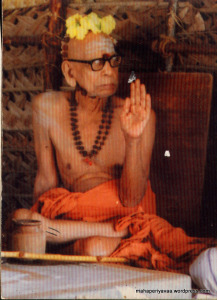
காஞ்சிப்பெரியவருக்கு 40 ஆண்டுகள் கைங்கர்யம் செய்த குமரேசன் என்பவர் கூறிய தகவல் நம்மை பரவசமடைய செய்கிறது.

பல ஆண்டுகளுக்கு முன், ஒரு கார்த்திகை மாதத்தில் தஞ்சாவூர் அருகிலுள்ள திருக்காட்டுப்பள்ளியில் இருந்து ஒரு தம்பதி தங்கள் மகளுடன் காஞ்சிபுரம் வந்தனர். மகாபெரியவரை தரிசிக்க காத்திருந்தனர். அவர்கள் முறை வந்ததும் அந்த குடும்பத்தினர் பெரியவருக்கு நமஸ்காரம் செய்தனர்.

அவரைப் பார்த்து தயக்கத்துடன் நின்ற குடும்பத்தலைவரிடம், “என்ன விஷயம்?” என்று பெரியவர் கேட்டார்.

“பெரியவா! இவள் எங்களுக்கு ஒரே மகள். இவளுக்கு திருமணம் தள்ளிக்கொண்டே போகிறது. தாங்கள் அனுக்கிரகம் செய்து, திருமணம் விரைவில் நடக்க ஆசி வழங்க வேண்டும்,” என்றார் குடும்பத்தலைவர்.

பெரியவர் அந்தப் பெண்ணிடம், “உன் பெயர் என்ன?” என்றார்.

“ராதா’ என்றாள் அவள்.

பெரியவர் அவளிடம், “உங்கள் ஊரில் பெருமாள் கோவில், சிவன் கோவிலெல்லாம் இருக்கிறதா?” என்றார்.

“ஆம்’ என்றாள் அவள்.

“சரி…அடுத்த மாதம் மார்கழி. தினமும் அதிகாலையில் நீராடிய பிறகு வீட்டு வாசலில் கோலம் போடு. பெருமாள் கோவிலுக்குப் போய் திருப்பாவை பாடு, சிவன் கோவிலுக்கு போய் திருவெம்பாவை பாடு. உனக்கு போக முடியாத நாட்கள் வருமில்லையா! அந்த நாட்களில் வீட்டில் இருந்தே அந்த பாடல்களை பாராயணம் செய்,” என்று சொல்லி ஆசிர்வதித்தார்.

ராதாவும் பெரியவர் சொன்னதை தவறாமல் கடைபிடித்தாள். தை மாதம் பிறந்தது. ஒரு நன்னாளில் அவள் வீட்டுக் கதவு தட்டப்பட்டது. ராதாவின் பெற்றோர் கதவைத் திறந்தனர்.

வெளியே ஒரு பெரியவரும் அவரது மனைவியும் நின்றனர். அவர்கள் ராதாவைப் பெண் கேட்டு வந்துள்ள விபரம் தெரியவந்தது.

“எங்கள் பூர்வீகம் பாலக்காடு. உங்கள் பெண்ணைப் பற்றி அறிந்தோம். அவள் ஜாதகம் எங்கள் மகன் ஜாதகத்துக்கு பொருத்தமாயிருக்கிறது,” என்றனர்.

திருமணப் பேச்சு நடந்தது. நிச்சயதார்த்த நாள், முகூர்த்த நாள் குறிக்கப்பட்டது. தை பிறந்ததும் ராதாவுக்கு வழியும் பிறந்து விட்டது.

திருமணத்துக்கு முன்னதாக பெரியவரிடம் ஆசி பெற ராதாவும், அவளது பெற்றோரும் காஞ்சிபுரம் வந்தனர். பெரியவரை அவர்கள் தரிசித்தனர்.

ராதாவிடம், “உன் பெயர் ராதா தானே! உனக்கு வரப்போகும் ஆத்துக்காரர் பெயர் என்ன?” என்று கேட்டார்.

“கண்ணன்” என்ற ராதாவிடம், “உன் மாமனார் பெயர் பரமேஸ்வரனா?” என்றார்.

“ஆம்…என்றாள் ராதா ஆச்சரியமாய்.

“மாமனார் பெயர் பெரியவருக்கு எப்படி தெரிந்தது?’ என்று அவள் ஆச்சரியப்பட்ட வேளையில், “நீ திருப்பாவை படித்தாய், கண்ணன் கணவனாக வருகிறான். திருவெம்பாவை படித்தாய், பரமேஸ்வரன் மாமனராக வருகிறார்,” என்றார்.

இதைக் கேட்ட எல்லாருமே அதிசயித்துப் போனார்கள். முக்காலமும் உணர்ந்த ஞானிக்கு இவர்கள் பெயர் தெரியாதா என்ன? !!!


Source ….facebook input

Natarajan

” Give and Take ” Principle in our Life….A Moral Story !


af80adc2-4280-41d5-8c5d-f40715a844a6

‘Give-Receive’ – The Abundance Principle


Once a man got lost in a desert. The water in his flask had run out two days ago, and he was on his last legs. He knew that if he didn’t get some water soon, he would surely die. The man saw a small hut ahead of him. He thought it would be a mirage or may be a hallucination, but having no other option, he moved toward it. As he got closer, he realized it was quite real. So he dragged his tired body to the door with the last of his strength.

   The hut was not occupied and seemed like it had been abandoned for quite some time. The man entered into it, hoping against hope that he might find water inside.

   His heart skipped a beat when he saw what was in the hut – a water hand pump…… It had a pipe going down through the floor, perhaps tapping a source of water deep under-ground. He began working the hand pump, but no water came out. He kept at it and still nothing happened. Finally he gave up from exhaustion and frustration. He threw up his hands in despair. It looked as if he was going to die after all.

   Then the man noticed a bottle in one corner of the hut. It was filled with water and corked up to prevent evaporation.He uncorked the bottle and was about to gulp down the sweet life-giving water, when he noticed a piece of paper attached to it. Handwriting on the paper read :

    “Use this water to start the pump. Don’t forget to fill the bottle when you’re done.”

   He had a dilemma. He could follow the instruction and pour the water into the pump, or he could ignore it and just drink the water. What to do? If he let the water go into the pump, what assurance did he have that it would work? What if the pump malfunctioned? What if the pipe had a leak? What if the underground reservoir had long dried up?

   But then… may be the instruction was correct. Should he risk it? If it turned out to be false, he would be throwing away the last water he would ever see. Hands trembling, he poured the water into the pump. Then he closed his eyes, said a prayer, and started working the pump.

    He heard a gurgling sound, and then water came gushing out, more than he could possibly use. He luxuriated in the cool and refreshing stream. He was going to live!

   After drinking his fill and feeling much better, he looked around the hut. He found a pencil and a map of the region. The map showed that he was still far away from civilization, but at least now he knew where he was and which direction to go. He filled his flask for the journey ahead. He also filled the bottle and put the cork back in. Before leaving the hut, he added his own writing below the instruction:

        “Believe me, it works!”

This story is all about life.  The Morals It teaches us that ‘We must GIVE  before We can RECEIVE Abundantly’. 


More importantly, it also teaches that ‘FAITH  plays an important role in GIVING’. 


The man did not know if his action would be rewarded, but he proceeded regardless. Without knowing what to expect, he made a Leap of Faith.


   Water in this story represents the Good things in Life something that brings a smile to your face. It can be Intangible Knowledge or it can represent Money, Love, Family, Friendship, Happiness, Respect, or any number of other things you Value. Whatever it is that you would like to get out of life, that’s water. The water pump represents the Workings of the Karmic Mechanism. 


‘Give it some Water to Work with, and it will RETURN far more than you put in.’

Source…..unknown….Input from a friend of mine

Natarajan

Message for the Day…”Conquer your Mind and be at Peace…”


SI_20160607If you conquer your mind, you will attain peace. If you attain peace, you will look at all things with an equal mind. Good and bad, respect and disrespect, likes and dislikes are all aspects of one and the same thing – Brahman (Divinity). If you are able to get divine grace, everything will flow smoothly. If you are far away from divine grace, evil planets will begin to influence you. Sage Viswamitra pleased Brahma through his intense austerities. Lord Brahma removed the clouds of doubts that were hiding the intrinsic strength present in Sage Viswamitra. Lord Brahma taught Viswamitra to recognise the divine presence everywhere and told him to sing about Lord’s grace and His presence. The divine aspect is not something which is separate and distinct. God is omnipresent; it is not a matter with some specific features, it is spirit (parartha) and not matter or object (padartha). God is, and is present everywhere.

” ஒட்டிய பழமும் …ஒட்டாத பழமும் …” Mahaperiava ‘s Tips for getting Good Orange !

Experiences with Maha Periyava: Ottiya Pazhamum Ottadha Pazhamum (The fruit that sticks and the fruit that does not)

album1_22

Many years have passed since this happened. Still it remains unfading green in my heart and guides me until today.

My marriage was held in the year 1958. My husband was serving as a Captain in the Army. Since, even after some years there was no putra bhagyam (fortune of a child) for me, my mother took me to have darshan of Shri Kanchi Kamakoti Pithadhipati Shri Chandrashekarendra Saraswati Maha Swamigal.

It was evening time. Shri Kanchi Maha Swamigal was doing japam (litany) sitting in his mena (palanquin). Some time passed by, and then Sri Maha Periyava looked at us with boundless compassion. My mother conveyed my grievance to Sri Maha Periyava. Taking an orange fruit from a plate nearby, Sri Maha Periyava kept meditating, closing His two eyes that were in blossom like lotus flowers, and rolling that fruit over those two eyes.

After sometime, He blossomed his eyes, gave that fruit to me and said, “You take this.”

With great happiness I took that fruit and went home.

Years rolled by. My husband was serving as a Major in charge of guarding the borders. When he came home during his vacation, we both went to Shri Kanchi Matham to have darshan of Shri Maha Swamigal.

It was evening time. Coming out of his room, the God of Compassion welcomed us with vatsalyam (paternal love), looked at me with limitless kindness and said, “Vaama Kuzhandhe! (Come, child! Come inside!)” He took us inside and told us to sit down.

Looking at my husband he asked, “You are serving in the Army, right?” and my husband replied, “Yes, I am in Siliguri.” Periyava asked him, “Can you get oranges there? Can you send me a basket of them?” “Yes”, replied my husband.

Sri Kanchi Maha Periyava looked at me and said, “There are two varieties of the orange fruit. Do you know?”

“I don’t know”, I said.

Periyava explained, “There are two kinds of oranges, one where the fruit sticks to the inner rind, the other, (he gestured with his hand as if He held a fruit and shook it near his ear), like this, rattles, with the fruit not touching the rind. It is this fruit that is tastier and sweeter than the kind that sticks to the rind. Always keep this in mind.”

He had given me a fruit earlier. Years later, He spoke to me about ‘the fruit that does not stick’ to its rind and gave me an insight into a very great truth. He taught me that one must live like ‘the fruit that does not stick’, unattached and unaffected by life. By calling me with the words, “Come, my child”, He made me His child. After I have myself become His child, where is the need of a child for me?


Author: Smt.Lalitha Raman, Sainikpuri
Source: Maha Periyaval – Darisana Anubhavangal Vol.2, Pages 120-122

Source….Facebook input

Natarajan

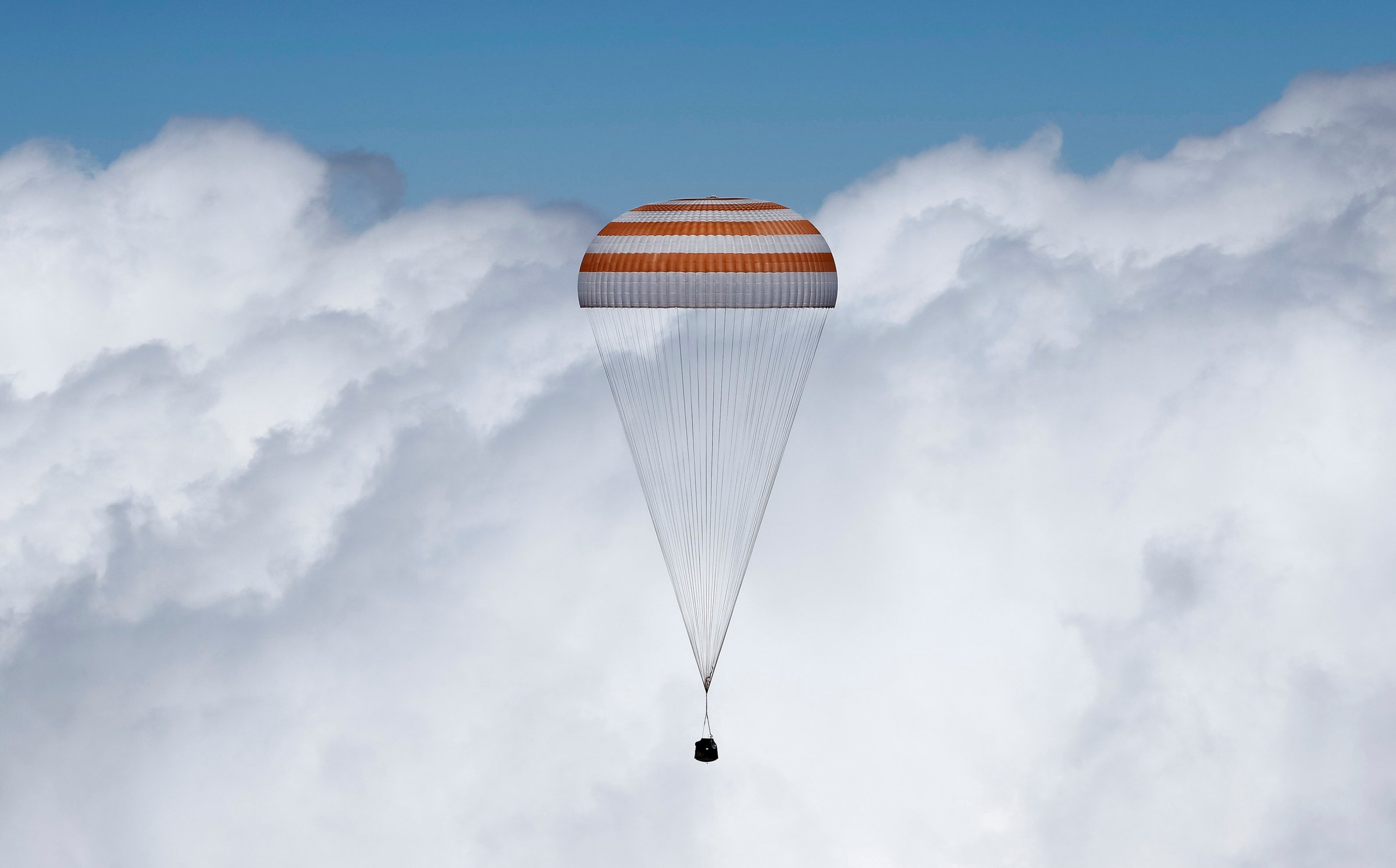
Image of the Day….Astronaut Tim Peake has returned to Earth after an historic mission aboard the ISS…


soyuz

The Soyuz TMA-19M spacecraft capsule carrying International Space Station (ISS) crew members, Timothy Peake of Britain, Yuri Malenchenko of Russia and Timothy Kopra of the U.S., descends beneath a parachute near the town of Dzhezkazgan (Zhezkazgan), Kazakhstan, June 18, 2016. REUTERS/Shamil Zhumatov

Source….www.businessinsider.com

Natarajan

A Must Read….” Values of Punniyam & Paapam” …!

Featured Image -- 20447

Jaya Jaya Shankara Hara Hara Shankara – Actually Sri Periyava narrates this incident under Deivathin Kural Volume 1 Madham Section reiterating Karma theory. It is a foreign lady and not a man but the gist is more important to take here. Thanks to TV Shivram for sharing it in Whatsapp. Ram Ram
Values of Punniyam & Paapam

Once a foreigner interested in the philosophy of Hinduism was waiting for Darshan of Mahaperiva ( Most revered Mahaswami) at Sri Madam to clarify his doubt. Shortly, he got his appointment and without wasting time, he put forth his question.
Swamiji, I understand all your concepts, value them but for one particular faith (i.e.) same soul taking various births, papa, punya being carried forward to the next births etc. Can you please make me comfortable on this aspect? Because, in all our religions, we get the reward for what we do in this birth  only. (i.e.) if we are honest, God is pleased and blesses us with benefits and we are dishonest, we get punished by Him.
At this point, Periva asked him, whether he owns a car and if he could do a favour of collecting some statistical information within Kancheepuram using his vehicle. The guest readily agreed, at the same time wondering why his question was not answered spontaneously.
Please, Swamiji, go ahead, What is the service you expect me to do now?
Periva said, Please go around 10 maternity centres within Kancheepuram and collect the data of children born within the last 2 days – Child’s gender, health condition, parents name, status, educational qualification, time of birth.
The man said – Fine, this is nothing, – immediately rushed in his car like Lord Muruga goes in Thiruvilayadal and within a day he was back in the matam with exact statistics in front of Mahaperiva. He went through the statistics, about 15 children were born in 10 hospitals, 8 female and 7 male infants, out of which 3 children had malnutrition defects, 2 children were the first child of highly rich parents born in luxury hospitals, while 4 were children of coolie labourers who already had few children.
Maha Periva now looked at the gentleman and started asking few questions:
Do you think any of these children have been honest / dishonest within 2 days of their birth? Probably they could not even recognize their own mother. So, they have neither earned papa or punya in this birth.
According to your concepts, all these children should be living exactly identical to each other, but not so practically, some are ill, some are healthy, some are born to rich parents, some are born to poor parents. Remember all children born in the same day, same longitude, latitude, you can’t blame their horoscope which is going to be almost identical.
The gentleman was dumbfounded!
It is here the concept of previous birth erupts! All these children have taken their present birth according to their deeds (karma) and the resultant papa, punya which they have assimilated in their previous births.
Hara Hara Shankara Jaya Jaya Shankara
Source….input from a friend of mine….
Natarajan

வாரம் ஒரு கவிதை… ” புறக்கணிப்பு ” !!!

stock-photo-beautiful-yellow-sunflower-petals-closeup-1975445