The Pigeons who took Photos ….

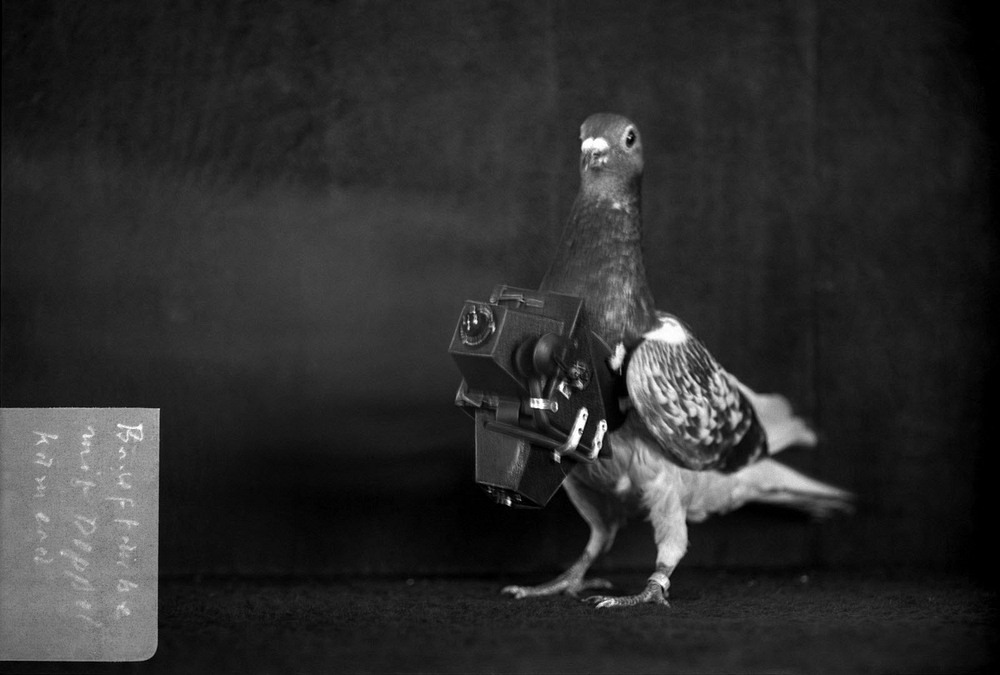
At the turn of the last century, when aviation was still in its infancy, a German named Julius Neubronner submitted a patent for a new invention—a miniature camera that could be strapped to the breast of a pigeon so that the bird could take flight and snap pictures from the air.

Julius Neubronner was an apothecary who employed pigeons to deliver medications to a sanatorium located near his hometown Kronberg, near Frankfurt. An apothecary is one who makes medicines. A pharmacist is a more modern word, but in many German speaking countries, such as Germany, Austria and Switzerland, pharmacies are still called apothecaries.                                                                                                                                   


Apothecary was Julius Neubronner’s family profession. His father was an apothecary, and so was his grandfather. In those days, homing pigeons were used extensively to carry messages and small supplies. It was Julius’s father’s idea to use pigeons to receive prescriptions from the sanatorium and send out medicinal supplies in a hurry—a practice that continued for more than half a century until the sanatorium closed.

One day, Neubronner let out a pigeon on an urgent errand but it didn’t return. When several days passed and there was still no sign of the bird, Neubronner assumed the pigeon was lost, or it got caught and killed by predators. A month later, the lost messenger showed up unexpectedly at Neubronner’s place. The bird appeared well fed, which got Neubronner into thinking. Where had he gone? Who had fed him?

Neubronner decided that he would start tracking his pigeons’ future travels.


Julius Neubronner with one of his pigeons.

Being a passionate do-it-yourself amateur photographer, it didn’t take long for Neubronner to fashion a miniature wooden camera which he fitted to the pigeon’s breast by means of a harness and an aluminum cuirass. A pneumatic system in the camera opened the shutter at predetermined intervals and the roll of film, which moved along with the shutter, took as many as thirty exposures in a single flight. The entire rig weighed no more than 75 grams—the maximum load the pigeons were trained to carry.

The pictures turned out so good that Neubronner started making different models. One system, for instance, was fitted with two lenses pointing in opposite directions. Another one took stereoscopic images. Eventually, Neubronner applied for a patent, but the patent office threw out his application citing that such a device was impossible as they believed a pigeon could not carry the weight of a camera. But when Neubronner presented photographs taken by his pigeons, the patent was granted in 1908.


Aerial photograph of Frankfurt.

Neubronner exhibited his photographs in several international photographic exhibition gaining him accolades. In one such exhibition in Dresden, spectators watched as the camera-equipped carrier pigeons arrived at the venue, and the photos were immediately developed and turned into postcards which they could purchase.

The technology was soon adapted for use during the First World War, despite the availability of surveillance aircraft then. Pigeons drew less attention, could photograph enemy locations from a lower height, and were visibly indifferent to explosions on a battlefield.

Neubronner’s avian technology saw use in the Second World War too. The German army developed a pigeon camera capable of taking 200 exposures per flight. The French too claimed they had cameras for pigeons and a method to deploy them behind enemy lines by trained dogs. Around this time, Swiss clockmaker Christian Adrian Michel perfected a panoramic camera and an improved mechanism to control the shutter. Pigeon photography was in use as late as the 1970s, when the CIA developed a battery-powered pigeon camera, though the details of the camera’s use are still classified.

Today, aerial photography has been replaced by aircrafts, satellites, and more recently, by affordable drones. But the legacy of Julius Neubronner’s pigeon photography lives on in these images which are among the very early photos taken of Earth from above.

Bonus fact: So what happened to Neubronner’s pigeon who stayed away from the owner for a month and returned fattened up? It had flown away to Wiesbaden, some twenty kilometers away, and was taken care of by a restaurant chef.


Source…..Kaushik in http://www.amusingplanet .com

Natarajan


The Theater That Shakespeare Stole ….!!!

On a cold, snowy December night in 1598, about a dozen men armed with swords, daggers and axes quietly broke into a recently vacated theater in Shoreditch, located just outside the city of London. With the aid of what modest light their lanterns could throw, the men worked tirelessly all throughout the night, dismantling the theater beam by beam and nail by nail, and loading the stripped timber onto wagons. By the time the darkness of the night gave way to the first light of dawn, the theater was gone.

The vandals in question were the Lord Chamberlain’s Men, the theatrical troupe to which William Shakespeare belonged. For the past several years, the Chamberlain’s Men had been playing at Shoreditch’s Theatre. This theater, built in 1576, was the second permanent theater ever built in England, and the first successful one to be built for the sole purpose of theatrical productions.


Shakespeare’s Globe theater in London. Photo credit: Diego Delso/Wikimedia

The Lord Chamberlain’s Men was founded in 1594, and within a short period of time it became one of the leading theatrical companies in London. Shoreditch’s Theatre was their home, and over the years, the Chamberlain’s Men played many of Shakespeare’s most famous plays on this stage.

In 1596 the lease for the property on which the Theatre was built expired, and the Chamberlain’s Men tried hard to negotiate an extension with the stubborn owner, Giles Allen. Not only Allen refused to renew the lease, he threatened to take possession of the theater as well. The dispute dragged on for two years, during which time the company performed at the nearby Curtain playhouse. It was at Curtain Theatre that Shakespeare debuted what is arguably his most famous play, Romeo and Juliet.


The Theatre of Shoreditch, the one that Shakespeare’s men dismantled.

When it became clear that Giles Allen wasn’t going to give back the land, the Chamberlain’s Men leased a new plot by the Thames, and on 28 December 1598, while Allen was celebrating Christmas at his country home, the men stole into the Theatre and carefully tore it down. A talented carpenter named Peter Street, who would later build another historic London theater named Fortune Playhouse, recycled the old pieces of wood into an astonishing new theatre—the Globe, capable of holding up to 3,000 spectators.

The romanticized version of the story holds that the Theatre was dismantled during the course of a single night, but historians believe the job could not have been completed in such a short time. Also, there is no proof that Shakespeare was present during the night, although he most certainly would have been following the proceedings closely, for he did have a tremendous interest in having this job done right.

Initially the timber was stored in a warehouse near Bridewell, until the following spring, when the materials were ferried over the Thames and used to construct the much larger Globe.


Reconstruction of the Globe theatre based on archeological and documentary evidence.

The Globe was up and running by early 1599, and for the next 14 years it presented many of Shakespeare’s greatest plays. In 1613, during a performance of Henry VIII, a misfired stage cannon ignited the thatched roof and the theatre burned to the ground. Although the theatre was quickly rebuilt, Shakespeare probably never wrote for the second Globe. Eventually, like all the other theaters in London, the Globe was closed down by the Puritans in 1642.

A modern reconstruction of the Globe, named “Shakespeare’s Globe”, now stands on the Thames approximately 750 feet from the site of the original theater. It was built in 1997, based on an approximation of the original design, but with only half the capacity.

The new theater was designed to be as authentic as possible to Shakespeare’s 16th century theater. The structure is made of timber alone without any steel support, and it is the only building in London with a thatched roof, since that material was banned after the Great Fire of 1666. Seats are simple benches, although spectators can request cushions during shows. No spotlights, microphones or any kind of modern audio equipment are used. All music is performed live, most often on period instruments, just like it was in the 16th century. Only recently, the Globe began experimenting with lighting and sound rig.

Source….. Kaushik in http://www.amusingplanet.com

Natarajan


The Secret of Boxing icon…Mary Kom”s Success….

‘If I am super fit till 2020, I will compete but if I am not fit I will not.’                               

IMAGE: MC Mary Kom celebrates with her coaching staff after winning the Commonwealth Games gold medal. Photograph: PTI

Almost every medal that is there to be taken is in her kitty but M C Mary Kom says she still trains like a maniac, the latest result of the regimen being a gold on debut at the Commonwealth Games in Gold Coast on Saturday.

The 35-year-old mother-of-three, who has five world titles and an Olympic bronze medal, is seen as a sporting icon not just in India but also in other countries.

Crowned Asian champion just months ago, Mary Kom added the light flyweight (48kg) Commonwealth crown to her tally.

“The secret to my success is my fitness and I am very quick. I plan well before bouts. I am lucky that I can catch my opponents within seconds, I am able to read them very quickly,” a giggling Mary Kom said at the end of her CWG campaign.

“I don’t have injuries, all I have is minor issues like cramps sometime,” she added.

And the secret to her fitness levels and to an extent her calm demeanour in the ring is a training regimen that she refuses to let go even one day.

“When I decide something with my head and heart than even my husband cannot stop me. He sometimes tells me to take it easy after competition but I can’t help it,” she said.

“I have to train to keep myself calm. It’s a a strong urge, it’s a habit and training makes me happy. When I don’t train I feel sick sometimes,” she added.

But despite the high fitness levels, she wouldn’t commit on whether the outlandish possibility of a 2020 Olympic appearance is on her mind.

“2020 is difficult to say, but I will try my best. 48kg is not there and I will have to put on weight to be in 51kg which is never easy. If I am super fit till 2020, I will compete but if I am not fit I will not,” said the accomplished boxer.

Elated at being India’s first woman boxer to claim a Commonwealth Games gold, Mary Kom said scripting history makes her happy.

“I have won everything and all of my medals are very important. Do I need to say more? Which other boxer can claim that, now I would not be scared of anyone. I am very happy that I created history. I have got everything,” she said.

“I still think about Olympics gold but other than that I have got everything. Even in Olympics, I do have a medal. I haven’t left out anything,” she signed off.

Source……..www.rediff.com

natarajan


Anna Creek… A Cattle Station in Australia…Bigger than Israel !!!

In Australia, cattle stations—which is the equivalent of an American ranch—tend to be unimaginably large, so large that some of them are bigger than some European and African countries.

Take Anna Creek Station, a well known cattle station in South Australia, near Simpson Desert between Coober Pedy and Lake Eyre. This station covers nearly 24,000 square kilometers. By comparison, Israel is barely 21,000 square kilometers, and the biggest ranch in America is just over 3,300 square kilometers. In fact, there might be close to a hundred cattle stations in Australia that are bigger than the biggest American ranch.


Australia’s cattle stations are huge in size because of the continent’s climate. Most stations are located in the north and the central regions of the Australian Outback, where the climate is so dry and the vegetation so sparse that a large amount of country is needed to support enough cattle to make a living. Even a cattle station as large as Anna Creek Station normally runs about 17,000 animals during a good season.

The Anna Creek Station was bought by Sir Sidney Kidman, Australia’s so-called “cattle king”, who owned large areas of land across Australia during his lifetime. Kidman was thirteen when he ran away from his Adelaide home in 1870 with only 5 shillings in pocket and a one-eyed horse that he had bought with his savings. His teen years, Kidman worked as a drover, stockman and livestock trader, and made money supplying services to new mining towns springing up in outback. Eventually he had saved enough to buy his own station.


Sir Sidney Kidman

Kidman began gobbling up one estate after another until he was the biggest landholder in the world by World War I. At one point, the size of Kidman’s properties exceeded the size of the entire United Kingdom. His family still owns more than 10 million hectares, or about three-quarters the size of England. With a herd of 185,000 cattle, S. Kidman & Co is one of Australia’s largest beef producers.

There are at least nineteen cattle stations in Australia whose size exceeds 10,000 hectares. Four of them exceeds 15,000 hectares. These cattle stations are so large and the grazing area so spread out that it takes weeks to round up all cattle during the mustering season. Back in the old days, cowboys used to ride out in horses gathering up cattle. Today light aircraft is used for spotting animals which are rounded up by stockmen on trail bikes.

Because of the remoteness and size of Australian cattle stations, life is very isolated. The next human settlement is often a day’s drive away. So these stations function like small towns with schoolroom for the kids of the owners and workers, a small general store to supply essentials and possibly an entertainment or bar area. Electricity is typically provided by generators or solar cells. Internet and television is provided by satellite.

Anna Creek Station is currently owned by Williams Cattle Company, after it acquired the property from S. Kidman & Co in 2016.

Bonus fact: The name “Kidman” and “Australia” may remind you of actress Nicole Kidman. The connection is more than a coincidence—Nicole Kidman is actually a descendant of Sir Sidney Kidman.

Photo credit: Planettrekker/Flickr

Source ::::: Kaushik in http://www.amusingplanet.com

Natarajan


\


Give Your Idlis a Healthy twist ….

Give your idlis a healthy twist.

Dietitian Jasleen Kaur shares her recipes. You can share yours too! Scroll down to find out how. 


Photograph: Kind courtesy Upendra Kanda/Creative Commons

Hot and sour idli

Ingredients:

  • 1 cup rice
  • 1 cup arhar dal/ toovar dal
  • Red chillies
  • 1 onion, chopped
  • A pinch of hing
  • 1 tsp grated jaggery

Method:

  • Soak the rice and dal separately in three cups of water for four hours.
  • Grind red chillies and tamarind to fine paste. Grind dal and rice separately.
  • Add grated jaggery and red chillies, turmeric powder and salt. Mix well. Set aside for four to five hours to ferment.
  • Lightly grease idli moulds and put the batter. Once steamed, serve the idlis with chutney.

Idli Upma

Ingredients:

  • 5-6 idlis
  • 1 tbsp oil
  • 1/2 tsp mustard seeds
  • 1/2 tsp urad dal
  • 1/2 tsp cumin seeds
  • 5-6 curry leaves
  • 1/2 ginger, finely chopped
  • 1 dry red chilli
  • 1 green chilli, chopped
  • 1/4 cup onions, chopped

Method:

  • Crumble 5 to 6 idlis and keep aside.
  • Heat oil in a pan and add mustard seeds.
  • When they start crackling, add urad dal and cumin seeds.
  • Saute till the urad dal turns golden. Add 5 to 6 curry leaves (chopped or kept whole), ginger, red chili and green chili.
  • Stir and then add the chopped onion. Mix well and saute for a minute or two.

SOURCE:::::: http://www.rediff.com

Natarajan

வாரம் ஒரு கவிதை …” நிழலில் தேடிய நிஜம் “


நிழலில் தேடிய நிஜம்
…………………
நிழல் என்றும் ஆகாது நிஜம் !
பதவியும் பணமும் வெறும் நிழல்தானே !
அந்த நிழலில் தேட வேண்டும்
நிஜம் என்ன என்பதை ?
நிழலில் தேட தேட நிஜம்
என்ன என்று புரியும் !
நிழல் நிஜம் ஆகாது
என்னும் உண்மையும் தன்னால்
தெரியும் !
நிழல் எல்லாம் நிஜம் என்று
நம்பினால் நிஜம் என்ன என்று
தெரியாது கண்ணுக்கு !
நிஜத்தை தொலைத்து விட்டு
இல்லாத நிழலில் தேட முடியுமா
நிஜம் எங்கே என்று ?
K.Natarajan  in http://www.dinamani.com
Dated 8th April 2018

The jingle Trucks of Pakistan …

A typical Pakistani truck driver spends more time with his truck than he does with his wife. Which explains why he wants his 10-ton six-wheeler to look like a new bride.

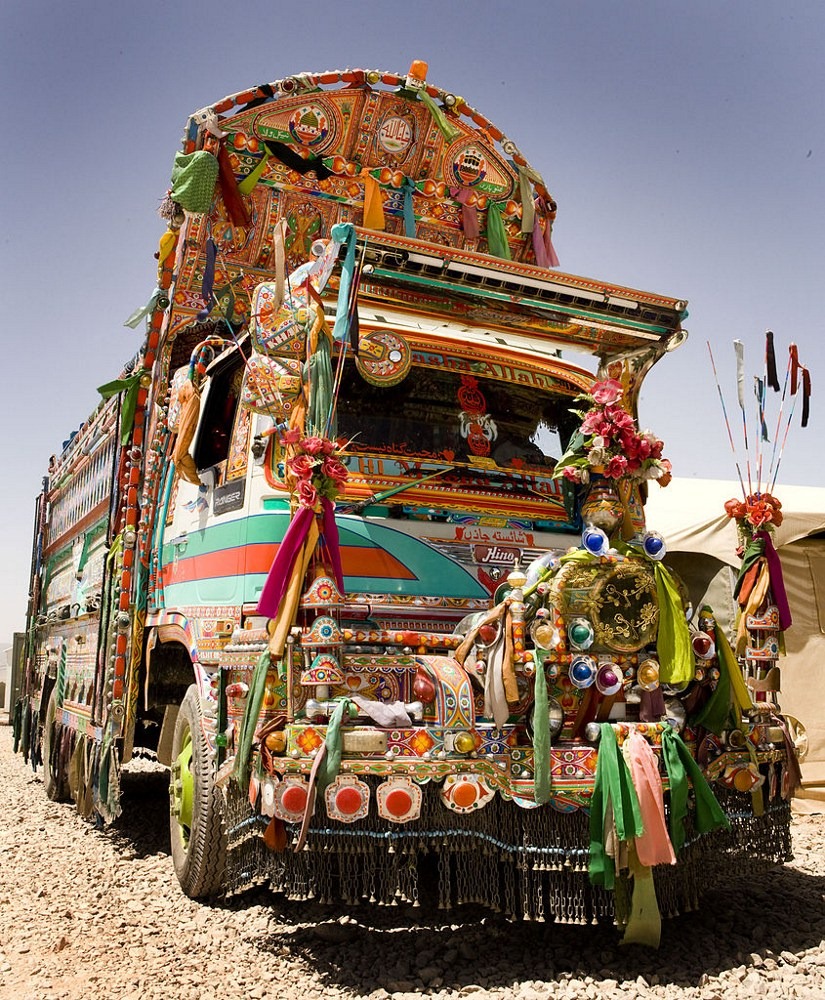
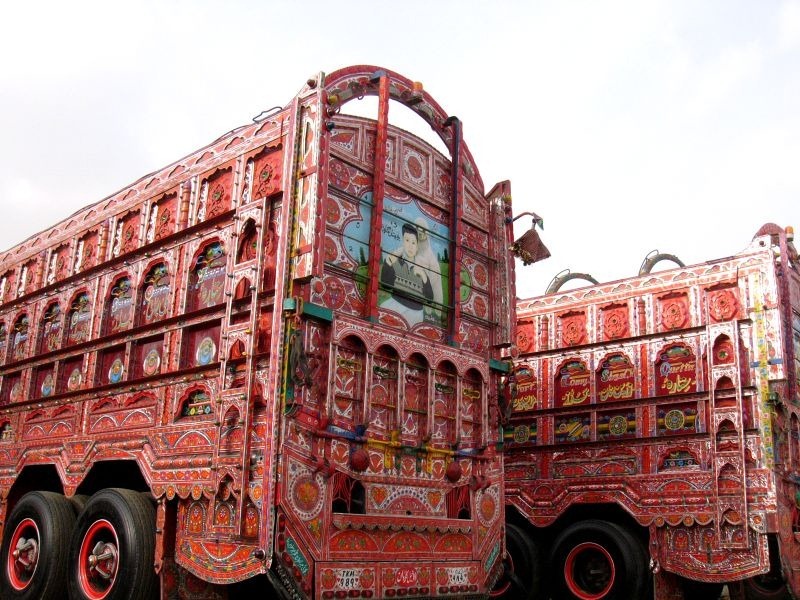
These trucks plying across Pakistan’s national highways and the neighboring country of Afghanistan are distinctively ostentatious. The entire trucks, from top to bottom, are a riot of colors. Lavishly painted panels containing a mosaic of birds, flowers, landscapes, saints, and actresses in hyper-saturated color palette adorn the exterior, while plastic flowers, draped beads, mirrors, ribbons and velvet grace the interior. The cabin is crowned by a custom built wooden prow wrapped in more kitschy artwork, while a string of metal bells dangle from the chassis all round the periphery. When the truck is in motion, these bells clang against each other like a new bride’s ghungroo. This is where the nickname “jingle trucks” come from—coined by US troops deployed in Afghanistan.


Photo credit: ISAF Public Affairs/Flickr

And it isn’t just trucks alone. Passenger buses, water tankers, transport vans, rickshaws, and even vendors’ pushcarts are psychedelically decorated with eye-popping colors. It’s like a rolling folk art, “a national gallery without walls, a free-form, kaleidoscopic exhibition in perpetual motion,” as Richard Covington puts it.

The tradition of decorating trucks began sometime in the 1920s with the introduction of the long-distance Bedfords—a British-built truck with rounded cab and seven-feet high paneled sides that was to become the country’s most prestigious and dependable truck for more than half a century. Originally trucks were painted with each company’s logo so that illiterate people could recognize who owned the trucks. Gradually, these logos became more fanciful, flamboyant and competitive. By the 1950s, stylized murals and frescoes had begun to replace them. It was only in the 1960s, as the country’s economy boomed, the decorations became increasingly sophisticated to reflect the growing wealth of the drivers and the rise of a new urban class.

Pimping out a truck this way cost truck owners a small fortune. It isn’t unheard of for a driver to spend the equivalent of a year’s worth, or more, of profits on truck decorations. According to a 2005 article, a basic painting and body job costs a minimum of $2500, equivalent to two years of the average truck driver’s salary. Some spend upwards of $10,000 outfitting their rigs. Unbelievably, many truckers will return to the workshop every three or four years for a full vehicle makeover.

“Truckers don’t even spend so much money on their own houses,” marvels Durriya Kazi, head of the department of visual studies at the University of Karachi. “I remember one driver who told me that he put his life and livelihood into the truck. If he didn’t honor it with the proper paint job, he would feel he was being ungrateful.”

A well-decorated truck also gives customers the impression that it is well taken care of and will, therefore, be a dependable way to transport goods.

Truck painting is also a big business. In Karachi city alone, more than 50,000 people are engaged in this unregulated yet lucrative industry. Family-run workshops comprising of apprentices and highly trained artisans, and small shops selling all manners of outlandish ornaments and accessories crowd around truck yards.

Over the years, however, the business has changed. Now instead of meticulously hand painting each truck, mass produced stickers and adornments are used.

“Truck decoration is not stagnating; it is dead,” laments R M Naeem, an assistant professor at the National College of Arts, Lahore. “This is because truck painters treat their work as a source of livelihood. They do not have the time or the luxury to innovate; they repeat the same old patterns, images and icons over and over again.”

However, thanks to artists like Haider Ali, who gave a Ford van a jingle-truck-style makeover a couple of years ago in a parking lot in Pasadena, California, and other painters, it’s unlikely that this quintessentially Pakistani craft is going to die out any time soon


Source……..Kaushik in  http://www.amusingplanet.com

Natarajan


This 69 year old Man has helped start free Libraries across Chennai , and YOU can too !

No membership, no one to supervise, and no last date to return books: Mahendra Kumar’s libraries run on no rules, and plenty of goodwill.

Chennai-based Mahendra Kumar speaks about reading and books with reverence and passion. “It is a character-building activity,” he says earnestly.

In April 2015, he decided to do something which he hoped would encourage people to read: He opened a library in Thirumullaivoyal, Chennai.

It wasn’t just your run-of-the-mill library. The most unique part about it wasn’t even that it was set up in a cement shop, where 69-year-old Mahendra shared a table with the shopkeeper.

What truly set it apart was there was no membership fee, no register to keep track. Literally anyone could walk in, pick up one of the 20 books, and take it home. They could return it whenever they wanted.   

This was the first Read and Return Free Library (RFL). Now, Mahendra says that there are 66 of them across TN, and a few other states, with 10,000 books in all.

His first library in Thirumillaivoyal has now expanded to three cupboards, which he keeps outside his house,bursting with books. It stands completely unmanned.

“I could have kept a register perhaps, where people could sign with the book they were taking,” he adds as an afterthought. But Mahendra snaps out of it the very next moment. “I wanted no protocols, no control. Just people free to read and return books, as per their conscience.”

Encouraging others

Presently, there are 48 RFL libraries in Chennai alone. The others are in Nilgiris, Coimbatore, Aurangabad and Mumbai.

But setting these up has not been an easy task. Unable to travel to these places himself, Mahendra would try to convince others to start such libraries.

“I would sometimes see contact numbers in books. Someone who has written an introduction or a foreword – I’d try to find their numbers. I would try to convince them then to start this in their locality. And I would send whatever little money I could to help them,” Mahendra shares.

One such person he convinced was a former classmate of his, Captain R Venkataraman, who started a RFL library in T Nagar, Chennai, in 2016.

“But there are only so many friends or family members who can be convinced,” Mahendra says. “If there are 66 libraries today, you can assume I made 6,000 calls for them.”

Not as easy as it seems

In the past two years, RFL libraries have sprung up in many different places – gated communities, railway stations, hospitals and even a barber shop.

RFL at a Railway Station….

Mahendra is reluctant to share that this has required a considerable amount of legwork and resources from him. He believes it will discourage people, and make them wary of starting more RFLs.

“When people initially came to know about the concept, they wanted to donate books. So I would speak to a few of them, start at 5 am in the morning, make a round with multiple stops and come back with a car full of books,” he recounts. “Sometimes, I would sleep in the car because I’d get tired.”

The problem was that everyone wanted to donate books, but no one wanted to start the library. “Sometimes, people seemed on board with the idea, but they don’t really follow it up with action. I have been wanting to start one RFL library in Bengaluru as well, and got a volunteer too. But they have not really taken it forward after that.”

Mahendra says that he is ready to send some books, and whatever token amount he can from his pocket to help them get started, if only people volunteer.

He also mentions that he is grateful for his wife, who has never raised an objection against him going around the city at odd hours to collect books, and spending money for the RFLs.

Helping students

Mahendra put together the RFL website in 2016. While he is not very familiar with the internet, he says that he somehow learnt some basics and put it together. “The logo looks very childish, no? I made it on Microsoft Paint,” he says, sounding anxious.

The sole purpose for starting the website, he says, is to promote something called ‘Students Corner’.

It allows students to post requirements for second-hand course books, as well as if they have books to donate. Once they fill a form under that section on the site, other students can see it and get in touch. The donor can either mail the books or have them collected by the recipient, as per convenience.

However, Mahendra rues that this has not become as popular as he would have liked it to be.

He also wishes for more people to start RFLs in their localities. “But, it is quite simple really. You just have to see it from time to time to ensure that the infrastructure, wherever you’ve put it, is okay. You can also start it, madam!” he says, cheerfully.

Source…..Geetika Mantri in https://www.thenewsminute.com/

Natarajan

வாரம் ஒரு கவிதை …” இரை தேடும் பறவை “


இரை தேடும் பறவை
——————-
இரை  தேடும்  பறவைக்கு
இலக்கு ஒன்றே ஒன்று என்றும் !
இங்கும் அங்கும் அலைந்தாலும் தன்
இலக்கு என்ன என்று அது  மறக்காதே !
அங்கும் இங்கும் அலையும்
மனிதன் மனது மட்டும் தனக்கு
தினம் இரை வழங்கும் இறைவன் யார் ,
எங்கே என்று இன்னும் தேடுவது ஏன் ?
இரை தேடும் பறவையிடம் இறை
தேடும் மனிதன் கற்க வேண்டும் பாடம் !
K.Natarajan
in http://www.dinamani.com dated 25th March 2018

” No one thinks Banks are trustworthy anymore “….

Somewhere along the way everyone fell in love with the prefix e — as in e-banking and e-commerce and e-jiggerypokery

Dear Mr. Banker,

Hello. This is one of your clients. I am appalled at what you have decided to do to banks. Oh, I’m not talking about your non-performing assets and your crony capitalism. If I had had a problem with that, I would have put my money in a sock and tucked it under my mattress. I get it. You probably thought the diamond merchant was a good idea. (Did a solitaire for wifey clinch the deal?) You probably thought the world needs one more mismanaged airline. (Were there some free tickets thrown in?) You probably had political pressure put on you to advance loans to the friends of those in power. (Things do not change because people do not change.)

What I am talking about is how you deal with those who are my age. I am in my fifties and I rather like to think that my money is my own and that you are only the custodian of it. I know also that we are living in the last golden age of interest; that some banks in developed nations charge their customers to keep their money. I know all this but I think it is rather much when you don’t deliver a cheque book after 10 days.

Gone are the days

Now in the old days, I would pop across the street with a piece of paper and sign on the dotted line and the bank clerk would nod and tell me to come back in two days. I would duly go back in two days and be told that he was on leave, could I come back in two days. When I went back in two days, he would be there and my cheque book would be handed over to me and all would be well again. He would ask after my health and I would ask whether his son had done well in the examinations. We had a relationship, he and I. It wasn’t the world’s best relationship but you’re trying to replace it with something poisonous and vile and inhuman because somewhere along the way everyone fell in love with the prefix e- as in e-banking and e-commerce and e-jiggerypokery.

So with your bank, I have to register a request. Some system records my request and then I get an sms saying that the cheque book is ready and it is to be delivered and then another sms saying that the cheque book is on its way — what is this dance of the seven veils? — and then… nothing.

So I call up the service centre where Aziz replies. Aziz is courteous and he informs me that this call will be recorded for the purpose of maintaining quality. That doesn’t fool me, you know. It is to stop me from abusing. Anyway, I don’t believe there is much point abusing Aziz who is a working stiff, trying to make a living. He is not in charge of your policies. He has no idea how much you don’t want to see me at the bank, how much you despise my warm body at the bank because it takes up real estate and costs the bank some more wages for tellers and the line. He has no idea that you want me to do my banking in a disembodied fashion so that all the big shots can earn some more free tickets. He only knows that I do not have a phone banking pin.

I say that I do not have a phone banking pin because I do not use phone banking.

He is slightly perturbed but he asks me to call back from my registered mobile number and answer some questions so he can give me back the phone banking pin that I do not use and will not use.

I do so.

Correct answers

Madhuri is on the line this time and she has several questions for me, all of which I answer correctly. She asks me what my problem is. I say that my cheque book has not turned up. She says she will check the system. This may take time, will I hold? I have long since understood that all service sector encounters in this nation are about waiting so I will wait while she plays me a series of advertisements for banking products in which lively people suggest I should entrust my money and my lifetime security to a bunch of people who cannot send me a cheque book in 10 days. I breathe deeply.

She is back on the phone and says that the cheque book has been returned to head office because my address is incomplete.

I point out that the address has worked for several spam letters delivered by the same bank, for two older cheque books and for several other pieces of paper that look portentous but are actually meaningless.

She says that this may be true but what to do.

I say that the delivery company is lying to them. They need to sort this out with the delivery company.

Madhuri says this may be true but what to do.

I say that I am being penalised for the failure of the delivery company.

Madhuri says this may be true but what to do.

I ask her what I should do. She perks up at this remarkably because it is now my turn to do.

Perhaps I could log on to the website and…

I do not use net banking, I tell her.

Why not? She seems perplexed as if I had said that I do not believe in human rights.

I take a page out of her book and go back to what to do.

She asks me why I don’t talk to my relationship manager.

I say that my relationship manager is but a wandering voice who is only interested in talking to me when my account crosses a certain mark and she thinks she can get me to plough some of it into her bonus.

She says I should take address proof and go to my nearest branch.

I begin to get angry. I say that I have nothing against her because she is doing a fine job but I do want to know why I should be penalised for the failure of their system.

She says that she has another solution. She will have my cheque book delivered to the nearest bank branch and I can pick it up from there.

I do not see that this is a solution since it means I must do the work but I am beaten. I agree.

Madhuri is relieved. She says I will get my cheque book in four working days.

I say that it is Friday, that means I will get it in six human days.

She says that this is true but what to do.

And finally…

I put down the phone. I get an email saying that I will receive my cheque book in eight working days.

I look at it and I think: this may even be true but what to do.

You see, Mr. Banker, there used to be a phrase: safe as banks. No one believes that any more. No one thinks that you’re trustworthy. No one thinks your institutions are trustworthy even if you have cleverly started putting ordinary people into your ads. Most people who have had anything to do with a bank know that it is run for the comfort and the convenience of the bank staff and for the wealth management of the big bosses.

Nothing we can do about that right now. But think about this for a moment. For decades, government-run telephony ruled our lives because we had no option. One day, the mobile phones came along and their monopoly ended. Think about the postal systems, they too had a monopoly and they’re dying now. Somewhere you’re going to tick off some young person; she will go home and create an institutional option, a system which puts the customer up, front and centre — it might be an app but I wouldn’t bet on it — and you’re all going to end up on the rubbish heap of economic history.

Or you could wake up and start thinking about the customer. What a revolutionary idea that would be.

Jerry Pinto

http://www.thehindu.com

The writer tries to think and write and translate in the cacophony of Mumbai.

Natarajan