” Octopus Opens Jar From Inside …”!!! Watch this Video Clip …


In this video from Japan’s Enoshima Aquarium, an octopus unscrews the lid of a jar … from the inside. Afterwards, the octopus stays in the jar, and who can blame him (her)?

The folks at Enoshima Aquarium in Fujisawa, Japan have some other wonderful videos, by the way, including these transparent eel larvae. To see more, visit the websiteTheKidShouldSeeThis.com, and search for the words “Enoshima Aquarium.”

Octopuses are very intelligent, amazing creatures.

Source….www.earthsky.org and http://www.youtube.com

Natarajan


Result of Team Work and Planning…100 year old Tree Moved and Transplanted in another place…!!!


The Ghirardi Compton Oak has been a piece of League City’s history for over 100 years. The tree stands 56 feet tall, has a canopy that is over 100 feet wide, and is 135 inches around. It also weighs an incredible 518,000 pounds. A county road widening project put the future of the Ghirardi Oak in jeopardy. Council voted to use park dedication funds to hire Hess Landscaping Construction to move the majestic oak. A project that took them just under a month to complete. Watch the incredible process from start to finish in this video.

Track for this video: http://www.istockphoto.com/stock-audio-19114250­-in-love-full-length.php

On March 22, 2014 the City of League City held an opening ceremony for the new Ghirardi WaterSmart Park. The Ghirardi WaterSmart Park is a three acre passive park which is dedicated to teaching citizens ways to conserve their water use at home. It consists of community garden areas, native planting displays, a rain garden, a theater area as an outdoor classroom as well, a small nature play area, park and maintenance buildings, picnic area, decomposed granite trails, wooden boardwalks and footbridges interpretive signage, green roof kiosk and water cistern. The park was built around the previously relocated and internationally famous Ghirardi Oak. See photos from the grand opening here:https://www.facebook.com/media/set/?s…

Source….www.you tube.com

natarajan

Here is what a Pilot Thinks When the Aircraft loses all of its Engines in the Mid Air….

Last weekend, Singapore Airlines Flight 836 was traveling from Singapore to Shanghai when the twin-engine Airbus A330-343 lost power on both engines over the South China Sea.

Image result for airbus A330-343

Image of Airbus330-343


Fortunately, the pilots were able to restore power to the engines, and the flight was able to continue on to its destination.

No injuries have been reported.

Modern turbofan engines are very robust pieces of engineering and tend to be incredibly reliable.

That makes last weekend’s incident an exceedingly rare event.

In fact, experienced A330 pilot Karlene Petitt told Business Insider that in her years flying the popular jet, she has never encountered, in pilot parlance, a “dual flameout.”

So what is an airline pilot thinking when the engines on his or her plane inexplicably lose power?

“What would go through my mind is fly the plane and do everything I can to get the engines started,” Petitt said in an email. “That would be the only thing to think about.”

In the cockpit, pilots are equipped with reference guides which provides guidance and checklists for a wide variety of operational situations – including the loss of power on all engines.

At cruising altitudes – 39,000 ft. in the case of the Singapore jet – the air is very thin and there may not be enough oxygen to get the engines to relight.

However, according to Petitt, “Normally when you get down around 24,000 feet you should be able to get one started because of the denser air at that altitude.”

In the case of Singapore Flight 836, the airliner lost 13,000 feet of altitude before the pilots were able to get the engines going again.

According to Petitt, she would only think about looking for a landing location after realizing she wouldn’t be able to get the engines going.

Depending on how high and how far the airplane is from an airport, the pilot would then determine what would be the appropriate course of action

In past incidents, pilots have chosen a variety of strategies.

In 1983, Air Canada Flight 143 going from Montreal to Edmonton ran out of fuel midway through the flight after the ground crew miscalculated the amount needed for the trip. The pilots were able to glide the twin-engine Boeing 767-200 jet to safety at a retired Canadian military runway that had been turned into a race track.

In 2001, an Air Transat Airbus A330 traveling from Toronto to Lisbon developed a fuel leak while flying over the Atlantic Ocean. The widebody jet lost all power, but the pilots were able to glide to an airport in the Azores Islands.

Miracle on the Hudson
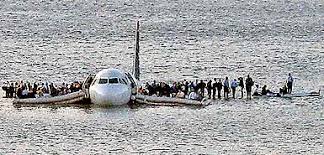
Most famously, US Airways flight 1549 lost both of its engines after colliding with a flock of geese while taking off from New York’s LaGuardia Airport. Due to the low altitude, the pilots didn’t have time to complete the engine restart procedure. Miraculously, Captain Sully Sullenberger was able to successfully guide the Airbus A320 down in the middle of the Hudson River.

In these instances, the pilots were able to safely land their planes with few injuries to the passengers and crew.

“Pilots never stop flying the plane,” Petitt reiterated. “No matter what, we will do what it takes.”

Source….BENJAMIN ZHANG in www.businessinsider.in

Natarajan

“Few Tips to Understand Your Brain …” A Small Wonder of Our Body !!!

How Our Brain Works

We know that our brain is what makes us tick. It stores our memories, controls our bodily functions, creates ideas that change the world and lets us fly on the wings on imagination whenever we want. This is why it’s imperative that we keep our brain in good health! These  tips and trivia bits will help you understand your brain better and keep it in good condition.

1. Living in a violent home affects a child in the same way combat affects a soldier.

How Life Affects Our Brain


Forgetting things (to an extent) is a sign of a healthy brain. Deleting unneeded information allows the brain to retain elasticity!

How Life Affects Our Brain


If you’re stuck in a constant state of stress, your brain ages and becomes weaker prematurely…

How Life Affects Our Brain


According to current research, dieting can cause the brain to eat itself…

If your brain doesn’t get oxygen for 5-10 minutes, it will suffer permanent damage.

How Life Affects Our Brain

Scientific research proved that when a person gets even a modicum of power, it will affect their brain’s works and will reduce their ability to have empathy.

Brain freeze is a real thing, its scientific name is: “Sphenopalatine ganglioneuralgia”

How Life Affects Our Brain

Both sides of the brain work in tandem. The concept of “left/right brain” is a myth.

How Life Affects Our Brain


Want to relax? When you smell chocolate, your brain releases theta waves which relaxes you

How Life Affects Our Brain

Did you know that your tongue is not the only part of your body with taste buds? Your brain has them as-well (and so does your stomach, intestines, pancreas, anus, testicles and lungs).

How Life Affects Our Brain

Drinking alcohol doesn’t erase your memories – instead, it prevents your brain from creating new ones.

How Life Affects Our Brain


When you’re rejected, your brain interprets it in the same way it does physical pain..

Your brain doesn’t stop developing until you are in your late 40’s, so it’s important to keep it active.

How Life Affects Our Brain

The effects of sleep deprivation on the brain slows your reactions and causes you to suffer from impaired judgment.

How Life Affects Our Brain

So keep that brain of yours working, get enough sleep and sniff some chocolate and you’ll be happier and healthier…….


Source…….www.ba-bamail.com

Natarajan

Message For the Day…” God is the Cosmic Director and all of us are Mere Actors…”

You pray to God for trivial worldly things. Distinguish clearly between earthly happiness and divine bliss. Ask for selfless love, which you do not have, but He has in plenty. Pray for love, peace and bliss. God is the embodiment of bliss; His love is supreme without a parallel. He knows what is good for you and will give it. He is a witness to all your thoughts, words and actions. Therefore surrender wholeheartedly unto Him, and lead an ideal life. You are all embodiments of the Divine. So love all and never hurt anyone. If you harm anyone, you are harming the Divine. Love is as vital for a human as fire is vital for a lump of coal to sparkle. Get rid of all your weaknesses by concentrating on Divine Love, as grace is ever flowing and confers the greatest strength. God is the Cosmic Director and all humans are mere actors. So perform your role to please Him!   

Sathya Sai Baba


Few Accidental Discoveries that Changed the world….

Scientist Lab

In many ways, modernity can be viewed as little more than the the product of centuries of dumb luck. As you are about to see, some of the world’s most significant milestones were the result of nothing more than happy accidents.

Accidental Discoveries: Penicillin

Penicillin Pills

Scottish biologist Alexander Fleming changed modern medicine and saved countless lives by not being a very tidy man. Fleming left for vacation in 1928, failing to clean up his lab beforehand. When he returned, he noticed that some of his Petri dishes had developed mold that prevented bacteria to grow on them.

Accidental Discoveries Penicillin

Correctly guessing that the mold had antibacterial properties, Fleming went to work on identifying the culture – Penicillium notatum. From that, the scientist was able to extract penicillin and revolutionize the world of antibiotics.

Accidental Discoveries Penicillin Advertising

It should be noted that it took another decade before other scientists found a way to create a stable strain of penicillin that could be mass-produced. Likewise, Fleming wasn’t the first person to see the potential of moldy cultures. Other prominent scientists such as Louis Pasteur and Joseph Lister also realized that certain molds could inhibit bacteria growth, not to mention the fact that moldy bread was a traditional infection remedy since ancient times.

The Big Bang Theory

Accidental Discoveries Big Bang

We aren’t actually talking about the discovery of the Big Bang theory itself, but rather of the cosmic microwave background (CMB), or the radiation that the Big Bang left behind. George Gamow predicted its existence in the 1940s but it wasn’t until 1964 that two radio astronomers, Robert Wilson and Arno Penzias, discovered it completely by chance.

Accidental Discoveries Big Bang Astronomers

For their work, Wilson and Penzias won the Nobel Prize in 1978 Source: One Minute Astronomer
Penzias and Wilson were working at Bell Labs in New Jersey and experimenting with a state-of-the-art horn antenna when they picked up some weird interference. At first, they thought this was due to something way less exciting than the CMB – pigeons. However, once they cleared the nest, they noticed that the interference remained. It could only be CMB.

Accidental Discoveries Big Bang Antenna

And thus the two astronomers discovered the first compelling evidence for the veracity of the Big Bang theory. At that time, the origins of the universe were in even hotter debate than today, with camps divided primarily by those who believed in an expanding universe (first put forward by Belgian priest/scientist Georges Lemaitre and later supported by Russian physicist George Gamow) or steady-state theory, the idea of a universe that always was and always will be. The discovery of the CMB tipped the scales in the Big Bang’s favor.

X-Rays

X Ray Hands

In 1895, German physicist Wilhelm Röntgen was doing some simple experiments with a cathode ray tube. At one point, he noticed that the tube was lighting a piece of fluorescent cardboard in the room even though there was a screen between them. Röntgen unsuccessfully tried to block the rays and eventually thought of sticking his hand in front of the tube, revealing the bones inside it. He had just discovered X-rays.

X Ray Rontgen

To be fair, others were aware of the effects of X-rays before Röntgen, but he was the one to study them systematically. He also gave them their name, even though they were referred to as Röntgen rays for decades following his discovery.

Accidental Discoveries X Ray

Röntgen went to work on improving the imaging process by replacing the screen with a photographic plate so the images would be clearer. The first medical x-ray ever taken was of his wife’s hand, which Röntgen presented to the scientific community. Pretty soon x-ray technology became an international medicinal staple.


Radioactivity

Accidental Discoveries Radioactivity Sign

One happy accident often leads to another. That was the case with French scientist Henri Becquerel, who, after being inspired by Röntgen’s work, started researching phosphorescence in 1896. Becquerel thought that phosphorescence was responsible for the x-ray effect so he tried exposing some photographic plates to phosphorescent salts in order to confirm it.

Accidental Discoveries Radioactivity Becquerel

None of the materials used ended up having an effect, save for one: uranium salts. And even still, that discovery was made completely by chance. Becquerel considered sunlight to be essential to the experiment, and it was cloudy on the day he planned to test the uranium salts. Becquerel stuck everything in a drawer and waited to experiment another day, only to find days later that the uranium salts caused the photographic plate to blacken in spite of the darkness.

Accidental Discoveries Radioactivity Plate

Becquerel had wrapped the plates in paper so they were never in direct contact with the uranium salts, which meant that some unknown form of radiation capable of passing through solid objects was responsible for this event, not phosphorescence. Becquerel had stumbled upon radioactive decay or, as more know it, radioactivity.

Wearable Pacemaker

With over 350 patents to his name, it’s a wonder that Wilson Greatbatch is not a household name. But of all his innovations, the wearable pacemaker is undoubtedly the most highly acclaimed.

Accidental Discoveries Pacemaker

In 1956, Greatbatch was an electrical engineer working to build a heart rhythm-recording device. In a serendipitous moment of inattention, he reached into a box of spare parts for a resistor, but grabbed the wrong size. Greatbatch realized this after installing it, but he also noticed that the completed circuit produced an electric pulse at a speed of 1.8 times per second.

Accidental Discoveries Pacemaker Implanted

That’s roughly as fast as the heart beats, something Greatbatch immediately picked up on. He realized that the electrical stimuli could be used to assist a weak heart and went to work on shrinking down his device. In 1958 he successfully inserted a pacemaker into a dog, but it was left to a Minneapolis medical company to develop wearable pacemaker for humans that same year.

Source…..www.all-that-is-interesting.com

Natarajan

” அந்த வீணையை என்னிடம் கொடு…நான் வாசிக்கலாம் இல்லையா …” ?

ஒரு சமயம், மகாபெரியவர் மகாராஷ்டிர மாநிலம் சதாராவில் தங்கி இருந்தார். ஒரு அரசமரத்தின் கீழ் இளைப்பாறிய அவர், மரத்தின் வேரில் தலையை வைத்துப் படுத்துக் கொள்வார். முன்னால் திரை போட்டிருக்கும்.
பக்தர்களுக்கு தரிசனம் கொடுக்கும் சமயத்தில் மட்டும், திரையை விலக்குவார்கள்.


அன்று, சென்னையில் இருந்து வீணை வித்வான் ஒருவர் பெரியவரைத் தரிசிக்க நண்பருடன் வந்திருந்தார். பெரியவரைத் தரிசனம் செய்த அவர், அவரது அனுமதி பெற்று, வீணையை எடுத்து வாசிக்க ஆரம்பித்தார். பக்தர்கள் எல்லாரும் அந்த இசைமழையில் நனைந்து கொண்டிருந்தனர். வாசித்து முடித்ததும், வீணையை உறையில் இட தயாரானார் வித்வான்.
பெரியவர் அவரிடம், “”அந்த வீணையை என்னிடம் கொடு. நான் அதை வாசிக்கலாம் இல்லையா?” என்று கேட்டார்.
பெரியவர் வீணை வாசிக்கப் போகிறாரா என்று எல்லாருக்கும் திகைப்பு. வித்வான் உட்பட..! ஆனால், எதற்காக வாசிக்க இருக்கிறார் என்பது மட்டும் யாருக்கும் புரியவில்லை.
வீணையைக் கையில் வாங்கிய பெரியவர் சுருதி கூட்டி, வித்வானிடம் காட்டினார். “”நான் சுருதி கூட்டியிருப்பது சரியா இருக்கான்னு பாரு,” என்றார்.
வித்வானும், “”சரியா இருக்கு” என்று சொல்ல, பெரியவர் வீணை வாசிக்க ஆரம்பித்து விட்டார்.
சில நிமிடங்கள் தான் ஆகியிருக்கும்! வித்வான் பெரியவரின் பாதங்களில் விழுந்தார். கன்னத்தில் போட்டுக் கொண்டு, “”பெரியவா! என்னை மன்னிக்கணும்! என்னை மன்னிக்கணும்! தப்பு பண்ணிட்டேன்! தப்பு பண்ணிட்டேன்,” என்று திரும்பத் திரும்பச் சொல்லிக் கொண்டே கதறி அழ ஆரம்பித்து விட்டார்.
பெரியவர் வாசித்து முடித்தார். பின் வீணையை அவரிடம் திருப்பிக்கொடுத்து, “”வித்யா கர்வம் ஒருவனுக்கு கூடாது. கவனமாக இரு,” என்று சொல்லி ஆசிர்வாதமும் செய்தார். வித்வானுடன் வந்த நண்பருக்கு என்ன நடக்கிறதென்றே புரியவில்லை.
பின் நண்பர் வித்வானிடம்,”” இங்கே என்ன நடந்தது? நீ தப்பு பண்ணிட்டதா கதறி அழுதே! பெரியவர் வித்யாகர்வம் கூடாது என்றார். அப்படி என்ன தான் இங்கு தவறு நடந்தது?” என்றார்.
வித்வான் திகைப்பு கலையாமல் பதில் சொல்ல ஆரம்பித்தார்.
“”கைலாய மலையைத் தூக்க முயன்ற ராவணனின் கைகள் மலையின் அடியில் சிக்கிக் கொண்டன. அப்போது, அவன் சாமகானம் இசைத்து சிவனை மகிழ்வித்து விடுதலை பெற்றான் இல்லையா! அதுபோல, நானும் இங்கே சாமகானம் வாசிக்க துவங்கினேன். ஆனால், திடீரென எப்படி வாசிப்பது என்று மறந்து போய்விட்டது. இது யாருக்கு தெரியப்போகிறது என, ஏதோ ஒன்றை வாசித்து நிறைவு செய்து விட்டேன். பெரியவர் இதைக் கண்டுபிடித்து விட்டார். என்னிடம் வீணையை வாங்கி, அந்தப் பகுதியை சரியாக வாசித்து நிறைவு செய்து விட்டார். பெரியவர் ஸர்வக்ஞர் (எல்லாம் அறிந்தவர்). அவருக்கு எல்லாம் தெரியும் என்பது எனக்கு தெரியாமல் போச்சே! அபச்சாரம் பண்ணிட்டேனே! அதனால் தான் அவரிடம் மன்னிப்பு கேட்டேன்,” என்றார்.
நமக்கு தெரிந்ததைச் செய்ய வேண்டும். தெரியாத விஷயங்களைத் தெளிவாகக் கற்றுக் கொள்ள வேண்டும் என்ற பாடத்தை இதன் மூலம் வாழும் தெய்வமான மகாபெரியவர் நமக்கு இதன்மூலம் உணர்த்தியிருக்கிறார்.

Read more: http://periva.proboards.com/thread/9358/maha-periva-knows-veena-vadyam?page=1&scrollTo=15889#ixzz3bX05cuZa

Source…..www.periva.proboards.com

natarajan

image of the Day… Sunset Sequence in Mars…!!!

Sunset on Mars

NASA’s Curiosity Mars rover recorded this sequence of views of the sun setting at the close of the mission’s 956th Martian day, or sol (April 15, 2015), from the rover’s location in Gale Crater.

The four images shown in sequence here were taken over a span of 6 minutes, 51 seconds.

This was the first sunset observed in color by Curiosity.  The images come from the left-eye camera of the rover’s Mast Camera (Mastcam). The color has been calibrated and white-balanced to remove camera artifacts. Mastcam sees color very similarly to what human eyes see, although it is actually a little less sensitive to blue than people are.

Dust in the Martian atmosphere has fine particles that permit blue light to penetrate the atmosphere more efficiently than longer-wavelength colors.  That causes the blue colors in the mixed light coming from the sun to stay closer to sun’s part of the sky, compared to the wider scattering of yellow and red colors. The effect is most pronounced near sunset, when light from the sun passes through a longer path in the atmosphere than it does at mid-day.

Malin Space Science Systems, San Diego, built and operates the rover’s Mastcam. NASA’s Jet Propulsion Laboratory, a division of the California Institute of Technology, Pasadena, manages the Mars Science Laboratory Project for NASA’s Science Mission Directorate, Washington. JPL designed and built the project’s Curiosity rover.  For more information about Curiosity, visit http://www.nasa.gov/msl and http://mars.jpl.nasa.gov/msl.

Credit: NASA/JPL-Caltech/MSSS/Texas A&M Univ.

Source……www.nasa.gov

Leaf People…Branch People….and Root People….

A beautiful analogy��
I have this tree analogy when
I think of people in my life, be it friends , family, acquaintances, employees, co-workers, whomever… They­ are all placed inside what I call my tree test.
It goes like this:

LEAF PEOPLE
Some people come into your life and they are like leaves on a tree. They are only there for a season. You can’t depend on them or count on them because they are weak and only there to give you shade. Like leaves, they are there to take what they need and as soon as it gets cold or a wind blows in your life they are gone. You can’t be angry at them, it’s just who they are.������

BRANCH PEOPLE
There are some people who come into your life and they are like branches on a tree. They are stronger than leaves, but you have to be careful with them. They will stick around through most seasons, but if you go through a storm or two in your life it’s possible that you could lose them. Most times they break away when it’s tough. Although they are stronger than leaves, you have to test them out before you run out there and put all your weight on them. In most cases they can’t handle too much weight. But again, you can’t be mad with them, it’s just who they are.�� 

ROOT PEOPLE
If you can find some people in your life who are like the roots of a tree then you have found something special. Like the roots of a tree, they are hard to find because they are not trying to be seen. Their only job is to hold you up and help you live a strong and healthy life. If you thrive, they are happy. They stay low key and don’t let the world know that they are there. And if you go through an awful storm they will hold you up. Their job is to hold you up, come what may, and to nourish you, feed you and water you.�� 
Source……input from a friend of mine
Natarajan

Common Mistakes we Make Every Day….

We all make health-related mistakes every day. From sneezing into our palms, to forgetting to wash our hands before eating, but there are a few very common health mistakes that don’t necessarily make sense unless you’re  a doctor. These few. mistakes that people are guilty of without even knowing…

health mistakes

Taking the Same Pill for Hangovers as Headaches

The problem: Using pain killers, even mild ones while you still have alcohol in your system will put your kidneys through a beating. A study conducted on the painkiller acetaminophen in Dallas, Texas, found that subjects who took the painkiller and drank small to moderate amounts of alcohol weekly, were prone to kidney disease, in alarming rates.
The Solution: Simple. Don’t combine any acetaminophen with alcohol, and check well which pain killer you are about to use. Best bet – and I’m sorry to say this – let it pass naturally, and drink a lot of water. You’ll be sparing your kidneys and have a reason not to drink too much again, which isn’t healthy for you anyway, let’s admit.

health mistakes

Carrying a Shiny Yellow Handbag

The Problem: This may not sound like an actual problem, but it is. Purses, wallets and belts made of bright colored ‘pleather’ (which is usually PVC or vinyl) frequently contain lead levels that are very high. Higher, in fact, than is allowed in children’s toys. The lead content is higher in yellow colored items, and then by this order: green, orange and red. The lead can be passed from handbag to hand to mouth, causing developmental problems in children and heart disease or cancer in adults. Although the CEH (Center for Environmental Health) has agreed with many retailers, in 2010, to limit the amount of lead in their products, more than 15% are still found to contain these high levels.
The Solution: Stay safe and avoid fake-leather purses and wallets if you can, and choose nylon, leather, hemp or canvas instead. If you really want a fake-leather purse, get a darker color.
health mistakes
Brushing  Right After Breakfast
The Problem: We’ve been told to brush our teeth after meals, and of course it is true you should at some point. However, when you drink something like coffee or orange juice, the acidity levels in your mouth go through the roof. If you rush off to brush your teeth afterwards, before your saliva has time to neutralize the pH levels, you’ll actually be pushing the acid into the enamel of your teeth, causing erosion. A study conducted in 2004 found that those who brush within 20 minutes of eating breakfast lost more dentil (the layer underneath the enamel) than those who waited.
The solution: After drinking an acidic beverage such as soda, wine, coffee or a fruit juice, drink a glass of water and wait 20-30 minutes before brushing, that will give enough time for the saliva in your mouth, which has a PH of 7, to neutralize the acidity.
health mistakes
Storing potatoes in the fridge
The problem: Most of our go-to carbs like chips, fries, potatoes, cookies etc. contain 2 ingredients that can be, in certain temperatures, quite volatile. These 2 are sugar and an amino acid called aspargine. When heated to high levels (as in during roasting, frying or baking), the two substances form a third – a chemical called acrylamide, which has been linked to several cancers (including endometrial, renal and ovarian cancers), which recently made the US FDA issue a consumer warning. This goes double for potato chips and french fries, especially when they’ve been kept in cold temperatures, which converts more starch into sugar, and thus, when heated – more carcinogens come out.
The Solution: Try cooking methods that releases a lot less acrylamide, such as boiling, steaming or microwaving. When storing, don’t store in the fridge but put the spuds in a cool, dark place. You can also soak the raw slices in water for 15-30 minutes before cooking.
A general rule of thumb – The darker the starch after being cooked, the more acrylamide it contains.
health mistakes
Airing Laundry Inside.
The Problem: When you hang up damp cloth inside the house, even fresh from the washer and looking clean, it will pollute the air. This is the conclusion of a study held by the Mackintosh Environmental Architecture Research Unit at the Glasgow School. Damp clothes increase humidity, which in turn creates an allergenic environment which dust mites and mold spores find irresistible, and can grow up to 300% of what is considered safe limits. During the study, about 25% of all homes in which laundry was air-dried came back positive for spergillus fumigatus, a fungus that causes lung infections, especially in people with a weak immune system.
The Solution: If you have a reason not to use a dryer, experts recommend that you hang damp cloth in an independent area with its own heat source and ventilation. For instance, hang in a closed room with a fan and open windows.
Source….www.ba-bamail.com
Natarajan