The Rock Garden of Chandigarh….

It took years of planning and millions of Rupees to design one of India’s first planned cities, but Chandigarh’s biggest tourist attraction was not on the master plan of Swiss-French architect Le Corbusier. It was the product of creative imagination and fifty years of labor by a humble government official Nek Chand.

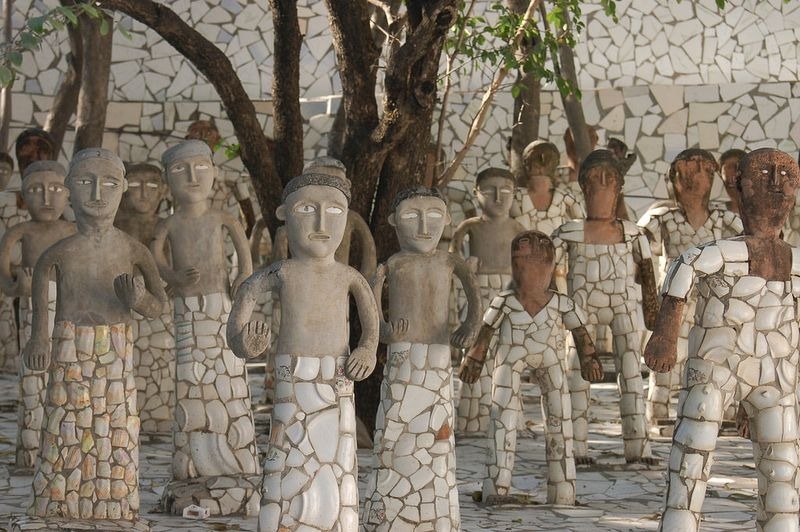
Nek Chand was a road inspector in the Engineering Department of Chandigarh Capital Project, in 1957, the year he started working on his secret sculptural project. Nek Chand would cycle to a gorge near Sukhna Lake, at the foothills of Shivalik hills, that was used as dumping ground for urban and industrial waste, and spend hours collecting discarded pieces of broken pottery, bottles, auto parts, plumbing materials, street lights, electrical fittings, broken sanitary ware and so on. He would carry the pieces to a nearby PWD (Public Works Department) warehouse and fashion them into artistic forms resembling humans and animals.

rock-garden-chandigarh-106

Photo credit: Kirk Kittell/Flickr

Nek Chand worked at night because he was afraid of being discovered. For eighteen years, he kept it this site a secret. By the time it was discovered, it had grown into a 12-acre complex of interlinked courtyards, each filled with hundreds of pottery-covered concrete sculptures of dancers, musicians, and animals. The Rock Garden, as it is called now, mesmerizes everyone who sees it. Today it is spread over an area of 40 acres, and is completely built out of trash.

At one point, soon after its discovery, the authorities wanted to demolish the park because Nek Chand didn’t have permission to build it, but the public intervened. In 1976 the park was officially inaugurated as a public space. Nek Chand was given a salary, a title (“Sub-Divisional Engineer, Rock Garden”), and 50 laborers so that he could concentrate full-time on his work.

In recognition of his work, Nek Chand was awarded the Padma Shri, the fourth highest civilian award in India. The Rock Garden also appeared on an Indian stamp in 1983.

rock-garden-chandigarh-22


Photo credit: Ian Brown/Flickr

rock-garden-chandigarh-32


Photo credit: Carlos Zambrano/Flickr


Photo credit: Ramnath Bhat/Flickr

Sources: Wikipedia / citcochandigarh.com / The Wire


The Pyramid of Austerlitz…

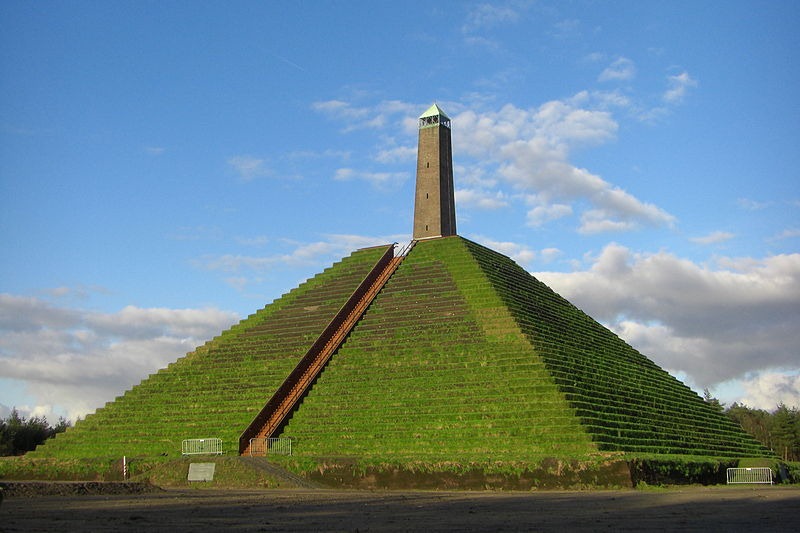
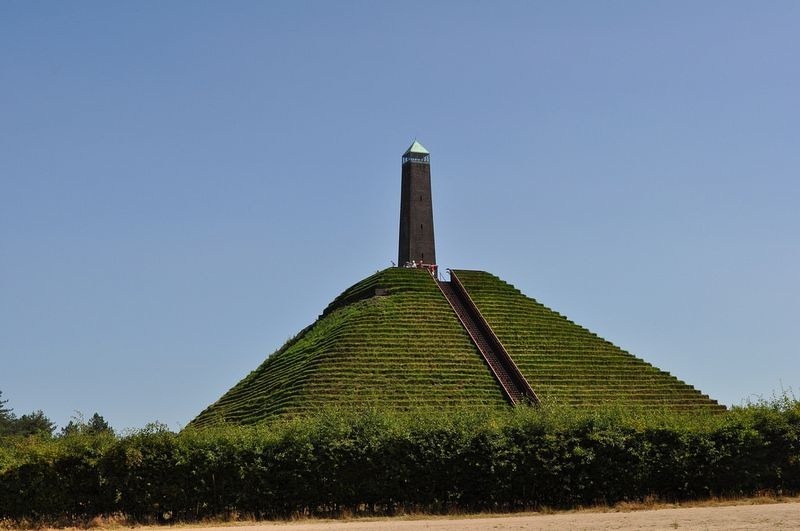
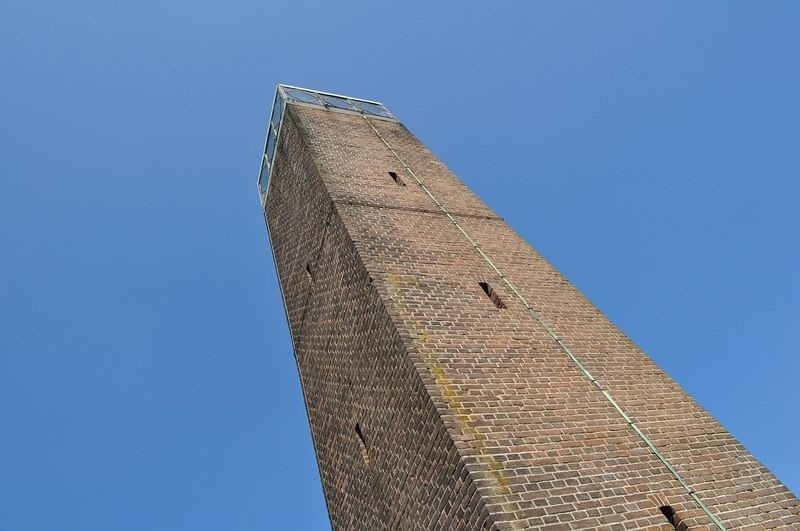
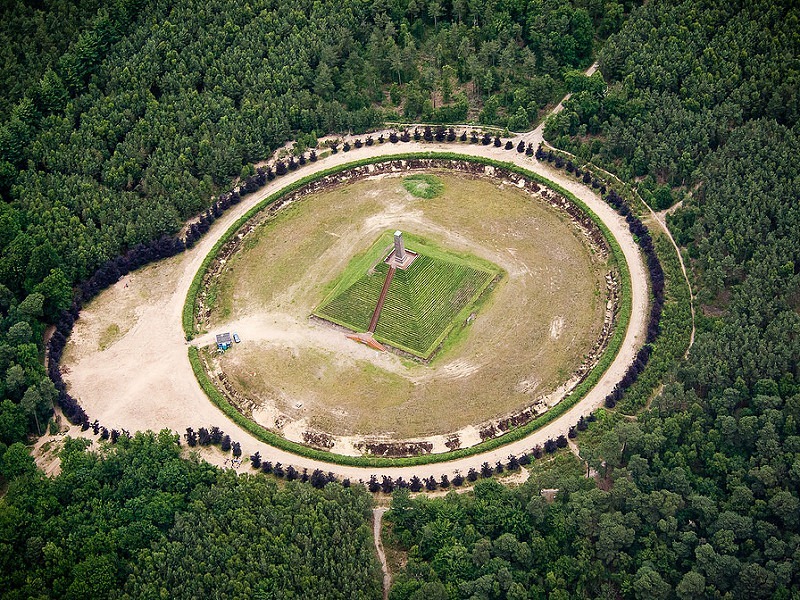
At the highest point of the Utrecht Ridge, in the Dutch village of Woudenberg, stands Europe’s only pyramid. The 36-meter-tall earthen hill was built in 1804 by Napoleon’s soldiers, under the direction of General Marmont as a tribute to his friend and example Napolean Bonaparte (although Marmont betrayed Napolean later). Marmont called it “Mont Marmont”. But in 1806, despite protest from General Marmont, Louis Napoleon, the new king of Holland, renamed the hill the Pyramid of Austerlitz in memory of the Battle of Austerlitz in which Napoleon decisively defeated the Russians and Austrians.

pyramid-of-austerlitz-4

Photo credit: Kattjosh/Flickr

In 1804 the French General Auguste de Marmont established an army camp in this central location in the Batavian Republic, the present Netherlands, where over a period of several months he managed to forge together various battalions into a large, well-trained army, capable of beating the British enemy should there be any repetition of the invasion of 1799. Satisfied with the military power of the new army, and to occupy his bored soldiers, in the autumn of 1804 Marmont had his soldiers build an earth and turf monument inspired by the pyramid of Giza, which Marmont had seen in 1798 during Napoleon’s Egyptian campaign. Even the erosion-exposed stepped surface was imitated.

Construction took a mere 27 days and the structure rose to 36 meters. The apex of the pyramid was flat where was erected a 13-meter-tall wooden obelisk. Marmont was, however, too haste in its construction. There wasn’t even a proper foundation to the structure. It was simply a pile of earth and sand. Naturally, the pyramid started to collapse not too long after it was built. Marmont struggled to keep it in good repair, but when locals vandalized it by removing the stone plaques, the frustrated General sold the pyramid and the surrounding land to the Hubert M.A.J. van Asch van Wijk, who would later become mayor of the nearby city of Utrecht.

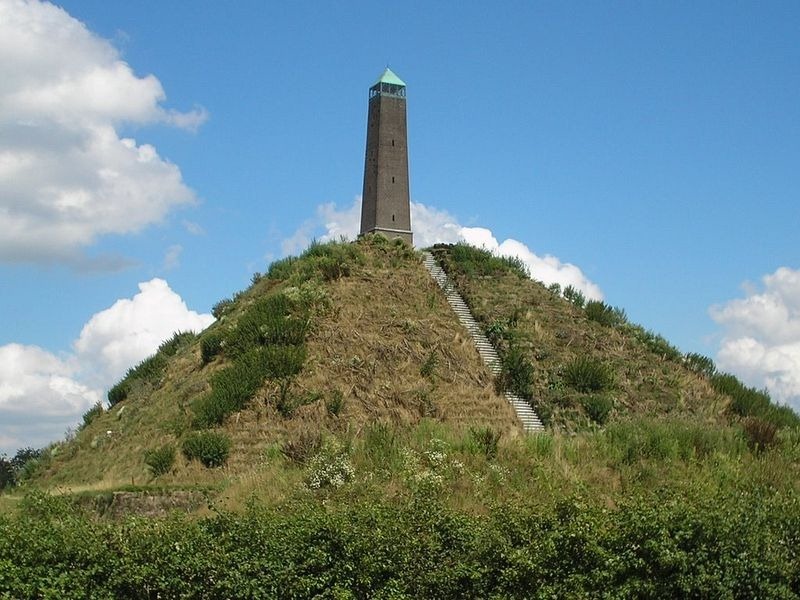
The pyramid remained neglected throughout the 20th century, until its restoration in 2004. The Pyramid and the surrounding area is now a popular tourist attraction and recreation spot.

pyramid-of-austerlitz-1

The Pyramid before it was restored. Photo credit: Fernambukk/Panoramio

pyramid-of-austerlitz-2

Photo credit: Traveling Tourist/Flickr

pyramid-of-austerlitz-3

Photo credit: Traveling Tourist/Flickr

pyramid-of-austerlitz-5

Photo credit: Marc Rauw/Flickr

Source…www.amusingplanet.com

natarajan

Bartered, Gifted, Stolen, But Never Sold, the Elusive Kohinoor Diamond is Still Making History…!!!

Entrenched in history, having been passed down by some of the greatest rulers of massive empires in the Indian subcontinent, the Kohinoor diamond is the most desirable, priceless stone.

It’s a clear stone the size of a ping pong ball and it fits in the palm of the hand. But the Kohinoor Diamond is priceless, with a deep history engraved in its essence. The stone has seen bloodshed, violence, greed, wonder, deception and wars. It has seen men go mad with power, it has seen men fall from grace. It has seen the thirst, the hunger and the dreams that make humans essentially human. The stone has been brought down through the ages, changing hands and making history on its way.

The assertion of ownership over the stone is still an elusive decision. India, Pakistan and Afghanistan all want the stone back, claiming ownership, while Britain vehemently refuses to part with their most prized possession. As theIndian government claims to bring back to stone ‘amicably’, here’s a look at why this legendary, brilliant cut 106-carat stone is so remarkable and desirable.

From India to Present-day Uzbekistan to England

kohinoor

The Kohinoor Diamond on the royal crown

Source: Wikimedia Commons

According to legends, in the 13th century, the diamond was found in Guntur, in Andhra Pradesh. The first known record of the possession of the diamond was with the Kakatiya Dynasty in South India, and then with the Rajas of Malwa. When the Delhi Sultanate took over the South of India in 1300s, Alauddin Khilji held the stone in his palace.

In 1339, it was taken to Samarkand (present day Uzbekistan), which was its home for the next 500 years. Sultan Ibrahim Lodi gifted it to Babur. After three generations, it was passed on to Shah Jahan. Then his son Aurangzeb took over and imprisoned him, and guarded the stone with his life. It was passed on to Bahadur Shah I and later to his great grandson, Muhammad Shah. Being a weak ruler, the stone was taken from Muhammad by Nader Shah. In 1747, he was assassinated, and his general, Ahmad Shah Durrani, passed on the stone to his grandson, Shah Shuja Durrani.

Durrani took the stone to India, and gifted it to the founder of the Sikh Empire, Ranjit Singh in 1813, in return for help to take down the Afghani throne. Emporer Ranjit Singh had instructed the stone to be part of Jagannath Temple in Puri after his death in his will. But when the East India Company and the British Empire took over the Sikh Empire in 1849, the stone was confiscated, and stored at a treasury in Lahore. Finally, it was taken to the Queen in 1850. Today, it is part of the Crown Jewels, placed in the Tower of London in the UK

The Curse of the Mountain of Light

In Persian, Koh-i-Noor means the mountain of light. However, the name didn’t come about till the stone reached Nader Shah in the mid-1700s. Legend has it that in 1306, someone wrote that the stone was cursed. According to the curse, any man who owns the stone is likely to own all the riches and power of the world, but also suffer great misfortunes. Only a god or a woman can carry or wear the stone with no ill consequences.

A New, Lighter Cut

kohinoor

The size of the stone before 1852

Source: Kohinoordiamond.org

When the stone was discovered, it was allegedly 793 carats, uncut. By the time it reached the British Empire in 1849, the stone weighed 186 carats. The Queen ordered the stone to be cut in 1852, as it wasn’t as brilliant and beautifully shaped when compared to other cut diamonds in their possession at the Crystal Palace. The stone was cut into an oval shape, and weighed 42% lighter at 105.602 carats.

The Priceless Gem

In the 1500s, Babur had declared that the Kohinoor was worth half the world’s total production costs in a day. However, there’s no certain way of determining the price of the stone. It has changed hands through history mainly because it was bartered, gifted or stolen. Compared to other stones in the world that weigh somewhere close, like the 100-carat flawless diamond sold by Sotheby’s at an auction in 2015, it should cost around $22-30 million (Rs 146 crores). But considering that the stone has been possessed by many of the greatest legends in Indian and world history, the premium for it could be priceless.

The Tug of War

kohinoor

Source: Wikimedia Commons, Kohinoordiamond.org

When India got its independence in 1947, it asked for the stone back, believing it was supposed to be in India. Even after consequent requests in 1953 and 2000, the British government refused, citing that it was nearly impossible to decide who the stone belonged to, given its various owners throughout history. In 1976, Pakistan laid claim to the stone, but was refused by then-Prime Minister of the UK, James Callaghan, claiming that in a treaty with the Maharaja of Lahore in 1849, the stone was ordered to be transferred to the British Crown. Afghanistan too claimed that the stone should be returned to them.

In 2010, Prime Minister David Cameron said, in a quote that’s now popular, “If you say yes to one you suddenly find the British Museum would be empty. I am afraid to say, it is going to have to stay put.”

It might be a while before a concrete decision has been made about the ownership of the diamond. Until then, it’ll take you a ticket to London to appreciate this beauty, steeped in historical legends!

Source…..Neeti VijiayKumar in http://www.the better india .com

Natarajan

The story of the World War II gunner who fell 22,000 feet without a parachute and lived…

Paratroopers make a big deal about jumping out of planes from 800 feet, but U.S. Army Air Force Staff Sgt. Alan Magee fell out of a plane at 22,000 feet without a parachute while the plane was on fire.

And he lived.

ball turret gunner

Magee was a ball turret gunner in a B-17 named “Snap! Crackle! Pop!” after the three mascots for Rice Krispies cereal. That plane, along with others from the 360th Squadron, was sent to bomb German torpedo stores in St. Nazaire, France on Jan. 3, 1943.

During the mission, the plane was shot by anti-aircraft guns and became a ball of flames. Magee climbed into the fuselage to get his chute and bail out, but it had been shredded by the flak. As Magee was trying to figure out a new plan, a second flak burst tore through the aircraft and then a fighter blasted it with machine gun fire.

b17 bomber liberty belle


Magee was knocked unconscious and thrown from the aircraft. When he woke up, he was falling through the air with nothing but a prayer.

Magee told God, “I don’t wish to die because I know nothing of life,” according to reports from the 303rd Bomb Group.

Magee, struggling with a shortage of oxygen and likely in shock from the events of the past few minutes, passed out again and God seemingly answered his prayer. The young noncommissioned officer fell into the town of St. Nazaire and through the glass roof of the train station. He was later found dangling on the steel girders that supported the ceiling.

The glass had slowed his fall and he regained consciousness as German soldiers took him to medical care. Magee’s right leg and ankle were broken, he had 28 wounds from shrapnel and glass, and his right arm was cut nearly the whole way off. He had also suffered numerous internal injuries.

“I owe the German military doctor who treated me a debt of gratitude,” Magee said. “He told me, ‘we are enemies, but I am first a doctor and I will do my best to save your arm.'”

GErman prison camp wwii

French POWs at work at a farm in Westscheid bei Mennighüffen.

Magee was able to keep his arm and eventually made a full recovery. He spent most of the rest of the war as a POW.

In 1995, Magee was invited back to France as part of a ceremony sponsored by French citizens to thank Allied service members for their efforts in the war. Magee was able to see monuments to the crew of Snap! Crackle! Pop!, including the nose art which had been used as a Nazi trophy until after the war when a French man recovered it. It was restored in 1989.

Magee died in 2003.

Read the original article on We Are The Mighty. Copyright 2016. Follow We Are The Mighty on Twitter.

Source….www.businessinsider.com

Natarajan

Message for the Day….” It is your duty to follow and practice the twin principles of Truth and Righteousness…”

Sathya Sai Baba

Ravana (the villain in Ramayana) sought wealth and gratification of desire, utterly violating the principle of dharma. He was a scholar par excellence. He had mastered the sixty-four disciplines of learning whereas Rama had mastered only thirty-two. However Rama put them into practice and thereby digested them, whereas Ravana failed to digest them. The indigestion on the part of Ravana arose in the form of desire (kama), which ultimately destroyed him. While Rama was the embodiment of Dharma, Ravana remained as the embodiment of kama. Thus there arose a conflict between righteousness and unrighteousness. Rama transformed Himself into the embodiment of sathya (Truth), since He followed the principle ofdharma. Since Ravana violated dharma, he became the embodiment of asathya (untruth). There is an eternal warfare between righteousness and unrighteousness, truth and untruth. It is your duty to follow and practice the twin principles of truth and righteousness.

Lord Rama….Fact or Fiction ….?

By Sri Nandanandana das (Stephen Knapp)

As of late, in the year 2007, the idea of whether Lord Rama exists or not has been called into question, by no less than some of the politicians in India. So it is a wonder how such persons can be accepted as leaders of the people of India who should be concerned with preserving and protecting the culture of the country. Obviously, they are neither concerned nor aware of the depths of information that can be found in support of the traditions for which India is especially known. Or, they are really attempting to dismantle or destroy the authority of the timeless nature of the civilization of the country.

In regard to Lord Rama, the point about ancient history is that the farther you go back in time, the fewer references you can use that actually refer to the incident in history. There may be many commentaries, but few quotations to the actual events.

However, when it comes to the Ramayana and the history of Lord Rama, there have been numerous authors who have accepted the Ramayana as a history of ancient events. For example, the first Governor General of India, Sri Rajaji, wrote on the Ramayana and called it a history, as also did the English Indologist Sir William Jones. Various other western authors have made a study of the culture and history of the Ramayana, such as Philip Lutgendorf in his book Rama’s Story in Shiva’s City, California University; Joe Burkhalter Flueckiger and Laurie Sears in The Boundaries of Traditional Ramayana and Mahabharata Performances in South and Southeast Asia, University of Michigan, Ann Arbor; W. L. Smith on Ramayan Traditions in Eastern India, University of Stockholm, and others.

There are also numerous places that are indicated as the locations where various events happened in reference to the pastimes of Lord Rama and Sita. Thus, they are accepted as historical sites. I have personally visited many of these places, such as Ramesvaram, Nasik, Hampi, and others where there are particular locations and sites that are related to the events that took place in the life and adventures of Lord Rama. Many people accept these sites as the locations for the events described in the Ramayana. So how can this be unless there are not some reality behind it?

However, why is there not more archaeological evidence that points towards Rama’s existence? Because such an effort has not been made in India and systematic excavations have never been carried out, says historian Nandita Krishnan. She says that to doubt the existence of Rama is to doubt all literature. There is little archaeological or epigraphic evidence for either Jesus Christ or Prophet Mohammed, who are known only from the Bible and Koran respectively. Does it mean they did not exist? If Rama performs miracles such as liberating Ahalya, the Biblical story of Jesus walking on water or the Koranic tale of Mohammed flying to heaven on a horse are equally miraculous. Such stories reinforce divinity.

She also describes in summary what areas the events of Lord Rama’s life took place. She explains: “The Ramayana is geographically very correct. Every site on Rama’s route is still identifiable and has continuing traditions or temples to commemorate Rama’s visit. Around 1000 BC or earlier, no writer had the means to travel around the country inventing a story, fitting it into local folklore and building temples for greater credibility.

“In 1975 the Archaeological Survey of India (ASI) unearthed fourteen pillar bases of kasauti stone with Hindu motifs near the mosque at Ayodhya; reports of the excavations are available with the ASI. Rama was born in Ayodhya and married in Mithila, now in Nepal. Not far from Mithila is Sitamarhi, where Sita was found in a furrow, still revered as the Janaki kund constructed by her father Janaka. Rama and Sita left Mithila for Ayodhya via Lumbini. In 249 BC, Ashoka erected a pillar in Lumbini with an inscription referring to the visits by both Rama and Buddha to Lumbini. Ashoka was much nearer in time to Rama and would be well aware of his facts.

“Rama, Lakshmana and Sita left Ayodhya and went to Sringaverapura – modern Sringverpur in Uttar Pradesh – where they crossed the River Ganga. They lived on Chitrakoot hill where Bharata and Shatrughna met them and the brothers performed the last rites for their father. Thereafter, the three wandered through Dandakaranya in Central India, described as a land of Rakshasas, obviously tribes inimical to the brothers’ habitation of their land. Tribals are still found in these forests. The trio reached Nasik, on the River Godavari, which throbs with sites and events of Rama’s sojourn, such as Tapovan where they lived, Ramkund where Rama and Sita used to bathe, Lakshmankund, Lakshmana’s bathing area, and several caves in the area associated with their lives in the forest.

“Rama then moved to Panchavati near Bhadrachalam (AP), where Ravana abducted Sita. The dying Jatayu told them of the abduction, so they left in search of Sita. Kishkinda, near Hampi, where Rama first met Sugriva and Hanuman, is a major Ramayana site, where every rock and river is associated with Rama. Anjanadri, near Hospet, was the birthplace of Hanuman (Anjaneya); Sugriva lived in Rishyamukha on the banks of the Pampa (Tungabhadra); Sabari probably also lived in a hermitage there. Rama and the Vanara army left Kishkinda to reach Rameshwaram, where the Vanaras built a bridge to Lanka from Dhanushkodi on Rameshwaram Island to Talaimannar in Sri Lanka. While parts of the bridge – known as Adam’s Bridge – are still visible, NASA’s satellite has photographed an underwater man-made bridge of shoals in the Palk Straits, connecting Dhanushkodi and Talaimannar. On his return from Sri Lanka, Rama worshiped Shiva at Rameshwaram, where Sita prepared a Linga out of sand. It is still one of the most sacred sites of Hinduism.

“Sri Lanka also has relics of the Ramayana. There are several caves, such as Ravana Ella Falls, where Ravana is believed to have hidden Sita to prevent Rama from finding her. The Sitai Amman Temple at Numara Eliya is situated near the ashokavana where Ravana once kept her prisoner.

“All the places visited by Rama still retain memories of his visit, as if it happened yesterday. Time, in India, is relative. Some places have commemorative temples; others commemorate the visit in local folklore. But all agree that Rama was going from or to Ayodhya. Why doubt connections when literature, archaeology and local tradition meet? Why doubt the connection between Adam’s Bridge and Rama, when nobody else in Indian history has claimed its construction? Why doubt that Rama traveled through Dandakaranya or Kishkinda, where local non-Vedic tribes still narrate tales of Rama? Why doubt that he was born in and ruled over Ayodhya?

“Rama’s memory lives on because of his extraordinary life and his reign, which was obviously a period of great peace and prosperity, making Ramarajya a reference point. People only remember the very good or the very bad. Leftist historians have chosen to rubbish archaeology, literature and local tradition.”

Nandita Krishnan also adds that “Nobody believed that Homer’s Iliad was a true story till Troy was discovered after extensive archaeology. Unfortunately, the sites of the Ramayana and Mahabharata have now been built over many times and it may never be possible to excavate extensively either at Ayodhya or Mathura.”

To further verify this aspect of the history of Lord Rama, Pushkar Bhatnagar concludes that geographical evidence for the epics is abundant. There still exist many places like Rameshwaram, Kishkindha, Kurukshetra, Hastinapura, etc. where the visits of Rama and Krishna are a basic part of local folklore.

Lack of archaeological evidence is no excuse for denying the existence of history, sums up Bhatnagar. “If the buildings of that time over 7000 years ago do not exist today, can we just infer that civilizations and personalities of that time also did not exist?”

In literature, we have the Ramayana and other texts such as the Puranas which also relate and verify the history and existence of Lord Rama. People from many other regions of the world have also accepted the Ramayana as worthy of attention, devotion, and historical evidence. For example, we can see the affects of the Ramayana tradition in many countries who have adapted their own form of the Ramayana and worship of Lord Rama, especially in the countries of Southeast Asia. These include Burma (Myanmar), Cambodia (Capuchia), Thailand, Indonesia, Malaysia, the Philippines and Vietnam. Other areas can also be found where the influence of the history of Lord Rama is in affect, such as the continent of Africa was once known as Kushadvipa for having been ruled by Kush, one of Lord Rama’s sons.

The other fact is that many millions of people feel the reciprocation from Lord Rama whenever they engage in devotion to Him, or read the Ramayana, or hear the Ramayana in a katha, or watch a television show or movie about Him, or go to one of the temples dedicated to Him. This cannot be denied or neglected. Just because we have insensitive politicians who cannot perceive this reciprocation does not mean that we all are so spiritually undeveloped. This dedication and reciprocation has spread throughout the world.

There have also been astronomers who have identified the approximate time of the Ramayana by the descriptions of the stars and constellations as given in the Ramayana, or even in the Bhagavata Purana and other texts. Pushkar Bhatnagar, author of the book Dating the Era of Lord Rama, claims that there is a significant amount of information available to prove that Rama was a historical personality. He says, “Valmiki, who wrote the Ramayana, was a contemporary of Rama. While narrating the events of the epic, he has mentioned the position of the planets at several places.” He explains that by using recent planetary software, it has been possible to verify that these planetary positions actually took place precisely as specified in the Ramayana. These were not just stray events, but the entire sequence of the planetary positions as described by Valmiki at various stages of Rama’s life can be verified today as having taken place.

Bhatnagar goes on to explain: “This information is significant, since these configurations do not repeat for lakhs of years and cannot be manipulated or imagined so accurately, without the help of sophisticated software. The inference that one can draw is that someone was present there to witness the actual happening of these configurations, which got recorded in the story of Rama.”

Bhatnagar provides the following quote from the Ramayana: “Rama was born on the Navami tithi of Shukla Paksha of Chaitra masa (9th day of the increasing phase of the moon in the lunar month of Chaitra). At that time, the nakshatra was Punarvasu, and Sun, Mars, Saturn, Jupiter and Venus were in Aries, Capricorn, Libra, Cancer and Pisces respectively. Lagna was Cancer and Jupiter & Moon were shining together. — Ramayana 1.18.8,9

The conditions can be summarized as follows, according to Bhatnagar:
1. Sun in Aries
2. Saturn in Libra
3. Jupiter in Cancer
4. Venus in Pisces
5. Mars in Capricorn
6. Lunar month of Chaitra
7. 9th day after New Moon (Navami Tithi, Shukla Paksh)
8. Moon near Punarvasu Nakshatra (Pollux star in Gemini constellation)
9. Cancer as Lagna (Cancer constellation rising in the east)
10. Jupiter above the horizon

According to the Planetarium software, it provides the following date: Sri Rama Navami – 10th January 5114 BCE – Birth Day of Rama, Observation at 12.30 p.m.

Bhatnagar continues: “By using a powerful planetarium software, I found that the planetary positions mentioned in Ramayana for the date of birth of Lord Ram had occurred in the sky at around 12.30 p.m. of 10th January 5114 BC. It was the ninth day of the Shukla Paksh of Chaitra month too. Moving forward, after 25 years of the birth of Lord Ram, the position of planets in the sky tallies with their description in Ramayana. Again, on the amavasya (new moon) of the 10th month of the 13th year of exile the solar eclipse had indeed occurred and the particular arrangement of planets in the sky was visible. ( Date comes to 7th October, 5077 BC). Even the occurrence of subsequent two eclipses also tally with the respective description in Valmiki Ramayana. (Date of Hanuman’s meeting Sita at Lanka was 12th September, 5076 BC). In this manner the entire sequence of the planetary positions gets verified and all the dates can be precisely determined.”

Although this provides verification of the existence for Lord Rama according to calculations as given in the Ramayana, some people feel the timing for the day and year of His birth may be different than what the planetarium software indicates. For example, Vedic astrologer Nartaka Gopala devi dasi points out that “Regarding the calculation of Lord Rama’s birth as 10th of January 5114 BCE – Birth Day of Rama, Observation at 12.30 PM, there are 2 reasons why this cannot be correct. His rising sign, or lagna, is Cancer. That places Aries in the tenth house, and He has the Sun in Aries. The placement of the Sun in any birth chart will tell the time of day of the birth. Sun in the tenth house means birth at noontime (approx. 11 AM to 2 PM). There are no exceptions to this. (Lord Krishna appeared at midnight, the Sun is in Leo, 4th house for Taurus rising. Birth at 6 PM means 7th house Sun. Birth at sunrise means 1st house Sun.) Also, in Lord Rama’s chart the Sun is in Aries, and the dates for Sun in Aries are fixed, which means the same each year on April 14th to May 13th. So how did the January 10 date come up? These two Jyotish corrections are common sense that any Vedic astrologer would immediately see.” So there may be a difference in what the planetarium software suggests. This also corroborates why we who follow the Vedic calendar celebrate Lord Rama’s appearance in April-May each year. So the traditional date appears accurate.

Furthermore, some people feel that the appearance of Lord Rama took place many thousands or even millions of years earlier, in the Treta-yuga. For example, the Bhagavata Purana clearly states that Lord Rama became king during Treta yuga (Bhag. 9.10.51). We have been in Kali-yuga for 5000 years. Before this was Dvapara-yuga which lasts 864,000 years. Before that was Treta-yuga, which lasts over 1,200,000 years. Thus, according to this, the existence of Lord Rama had to have been many thousands of years ago. And if Lord Rama appeared in one of the previous Treta-yugas, it would certainly indicate that Lord Rama appeared several million years ago. And this is exactly what is corroborated in the Vayu Purana.

In the Vayu Purana (70.47-48) [published by Motilal Banarsidass] there is a description of the length of Ravana’s life. It explains that when Ravana’s merit of penance began to decline, he met Lord Rama, the son of Dasarath, in a battle wherein Ravana and his followers were killed in the 24th Tretayuga. The Roman transliteration of the verse is:

tretayuge chaturvinshe ravanastapasah kshayat
ramam dasharathim prapya saganah kshayamiyavan

There are 1000 Treta-yugas in one day of Brahma, and it is calculated that we are presently in the 28th cycle of the four yugas (called divya-yugas, which is a cycle of the four yugas, Satya-yuga, Treta-yuga, Dvapara-yuga, and then Kali-yuga) of Vaivasvata Manu, who is the seventh Manu in the series of 14 Manu rulers who exist in one kalpa or day of Brahma. Each Manu is considered to live for 71 such divya-yuga cycles. So, without getting too complicated about things, from the 24th Treta-yuga to the present age of this Kali-yuga, there is obviously a difference of millions of years when Lord Rama manifested here on earth. Of course, few people may believe this unless they are already familiar with the vast lengths of time that the Vedic literature deals with.

Nonetheless, maybe there is further reason why we should accept that Lord Rama appeared millions of years ago. In the Valmiki Ramayana, Sundara-Kanda (or Book 5), Chapter 4, verse 27, [Gita Press, Gorakhpur, India] it explains that when Hanuman first approached Ravana’s palace, he saw the doorways surrounded by horses and chariots, palanquins and aerial cars, beautiful horses and elephants, nay, with four-tusked elephants decked with jewels resembling masses of white clouds.

Elsewhere in the Valmiki Ramayana, Sundara-Kanda (or Book 5), Chapter 27, verses12, an ogress named Trijata has a dream of Lord Rama, which she describes to the other demoniac ogresses upon awakening. In that dream she sees Rama, scion of Raghu, united again with Sita. Sri Rama was mounted on a huge elephant, closely resembling a hill, with four tusks.

The question is how could there be a mention of the elephants with four tusks unless Valmiki and the people of his era were familiar with such creatures? A quick search on the Encarta Encyclopedia will let us know that these four-tusked elephants were known as Mastodontoidea, which are said to have evolved around 38 million years ago and became extinct about 15 million years ago when the shaggy and two tusked Mastodons increased in population. Now there’s something to think about, eh? So this would mean that the specific planetary configuration that is described in the Ramayana, and is verified by Pushkar Bhatnagar, may have indeed happened, but at a time millions of years prior to merely 10,000 years ago.

In this way, as we go through the evidence, we can see how Lord Rama was an actual historic personality, as described in the Ramayana and in other Puranic texts. Nonetheless, there will always be those for whom no matter what you present for verification, it will not be enough. Some just won’t believe it. Some will, some won’t, so what, let’s move on. But many in the world already accept the authority of the Ramayana and other Vedic texts for the verification of the existence of Lord Rama.

Jaya Sri Rama!

Source…….www.dandavats.com

Natarajan

Sulabh International Museum of Toilets….!!!

In a quiet courtyard in the suburbs of New Delhi, inside a low-slung concrete building, the assistant curator and guides of Sulabh International Museum of Toilets eagerly awaits for visitors. The museum is small, with just one long room, but it’s possibly the world’s only toilet museum, and it’s location in the Indian capital is all the more important.

Hygiene and sanitation is one of India’s most pressing issues. An astonishing 60% of the country’s 1.2 billion people defecate in the open because they do not have access to safe and private toilets. The numbers were probably worse in 1970 when Dr. Bindeshwar Pathak, a humanitarian and social worker, introduced pay-to-use public toilets in a small village in Patna, Bihar. At first the people laughed at his idea, but now over 15 million people across the country use public toilets constructed by Sulabh International, a non-profit he founded.

sulabh-international-museum-of-toilets-7

Photo credit: http://www.sulabhtoiletmuseum.org

Sulabh International’s mission is to promote safe sanitation habits and provide public toilet facilities throughout India. It builds and maintains hundreds of public toilets in major cities, including those outside tourist attractions such as the Red Fort in Delhi and the Taj Mahal in Agra, as well as towns and villages across the vast nation. With 50,000 volunteers devoted to the cause, Sulabh International is India’s largest nonprofit organization.

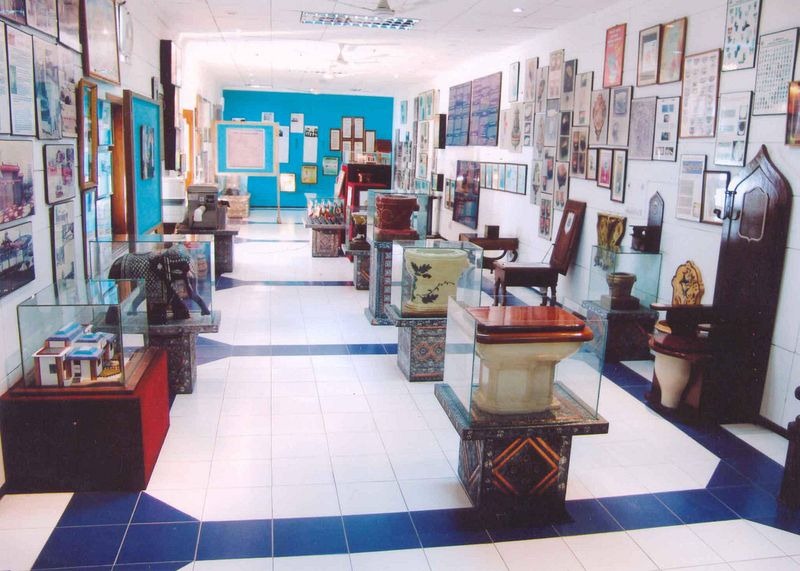
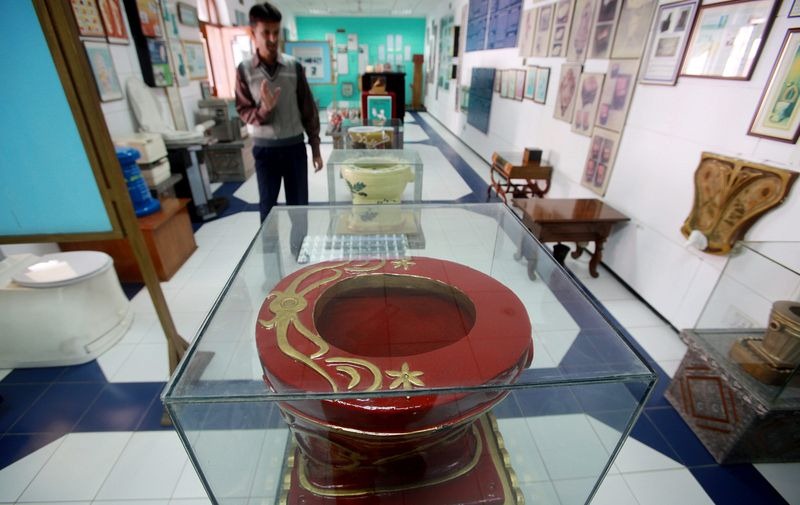
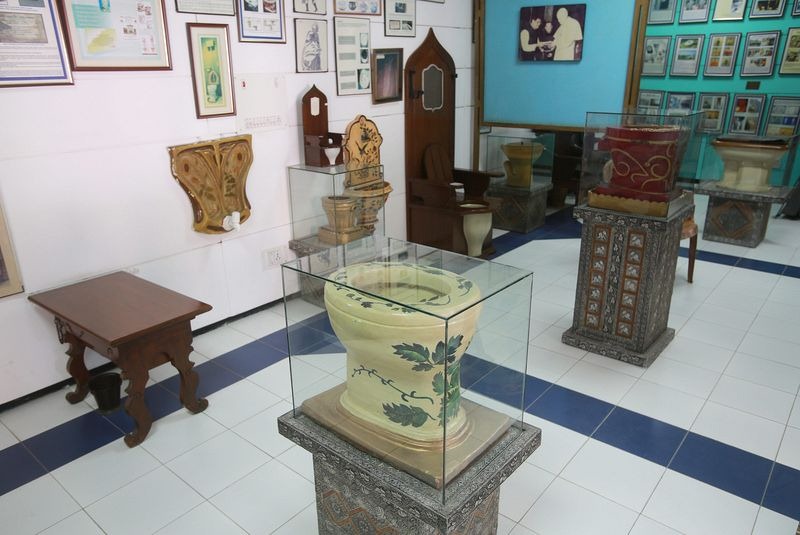
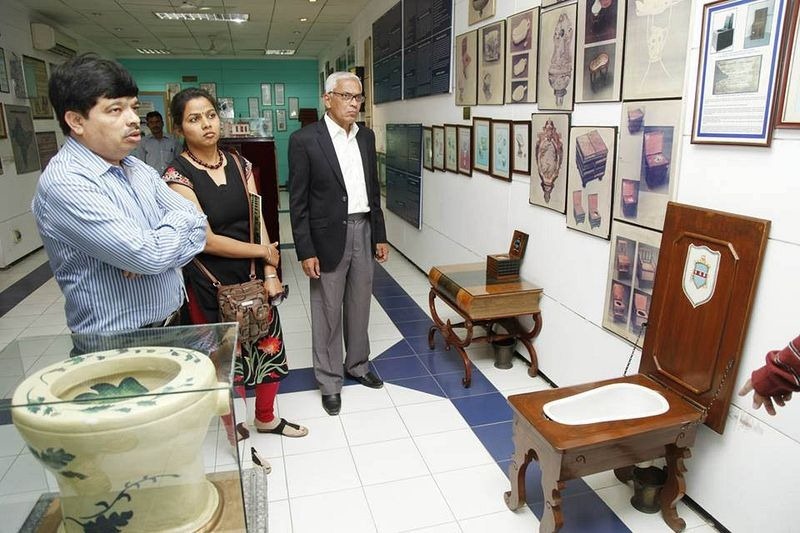
The museum, located in the offices of the organization, traces the history and development of toilet system around the world from the brick commodes of the ancient Harappan settlement near Pakistan, five thousand years ago, through the Middle Ages to the modern day toilet with electrically controlled flush system, through a series of privies, chamber-pots, toilet furniture, bidets and water closets, accompanied by a healthy number of images, drawings, photographs, and graphics. The museum also provides a chronological account of developments relating to technology, toilet related social customs, toilet etiquettes, prevailing sanitary conditions and legislative efforts of the times.

Among its most prized possessions is a flush pot devised in 1596 by Sir John Harrington, a courtier of Queen Elizabeth I, a gem-studded bided of Queen Victoria, table-top toilets from England and a couple of highly decorated commodes from Austria. Some of the toilets of these period were disguised. There is a French one that looks like a stack of books, and an English one which resembles a treasure chest.

Hanging on the walls are display boards with poems, comics, jokes and cartoons related to toilet humor. But one of its most amusing displays is a full-size replica throne from the court of the French King, Louis XIII, with a hidden commode underneath it. The King used it to relive himself while still in court.

The Sulabh International Museum of Toilets was opened in 1992, and since then it has welcomed some 100,000 visitors.

sulabh-international-museum-of-toilets-5

Photo credit: Metro.co.uk

sulabh-international-museum-of-toilets-6

Photo credit: Metro.co.uk

sulabh-international-museum-of-toilets-1

Photo credit: http://www.sulabhtoiletmuseum.org

sulabh-international-museum-of-toilets-2

Photo credit: http://www.sulabhtoiletmuseum.org

Sources: www.sulabhtoiletmuseum.org / Wikipedia / PRI.org

Source….www.amusingplanet.com

Natarajan

காருக்குறிச்சியின் நாத சுகம்…


இடதுபுறம் காருக்குறிச்சி அருணாசலம், வலதுபுறம் கே.எம். அருணாசலம்

  • இடதுபுறம் காருக்குறிச்சி அருணாசலம், வலதுபுறம் கே.எம். அருணாசலம்
  • காருக்குறிச்சி அருணாசலத்தின் குடும்ப ஒளிப்படம்
    காருக்குறிச்சி அருணாசலத்தின் குடும்ப ஒளிப்படம்

நினைவு தினம் ஏப்ரல் 8

தமிழகத்தில் அண்மைக்காலத்தில் மிகவும் புகழ்பெற்று விளங்கிய நாகஸ்வரக் கலைஞர் காருக் குறிச்சி அருணாசலம். திருநெல்வேலி மாவட்டத்திலுள்ள காருக்குறிச்சி எனும் ஊரில் 1907-ம் ஆண்டில் இவர் பிறந்தார். இவருடைய தந்தை பலவேசம் நெல்தானிய அளவை செய்யும் பணியைச் செய்துவந்தவர்.

ஒரு முறை காருகுறிச்சியிலுள்ள பெரும் பண்ணையார் ஒருவர் இல்லத் திருமணத்துக்கு கூறைநாடு நடேசபிள்ளை எனும் பிரபல நாகஸ்வர வித்வான் நாகஸ்வரம் வாசிக்கச் சென்றிருந்தார், அப்போது அருணாசலத்தின் தந்தை பலவேசம், அந்த நாகஸ்வர வித்வான் தங்கியிருந்த வீட்டுத் திண்ணையில் அமர்ந்து மாலைகள் கட்டிக்கொண்டிருந்தார். “மாப்பிள்ளை புறப்படத் தயார், உங்களை அழைத்துவரச் சொல்கிறார்கள்” என்று நடேசபிள்ளைக்கு ஆள் வந்தது. “பத்து நிமிடங்களில் கிளம்பி வருகிறோம் என்று சொல்” என்று அவர் வந்த ஆளிடம் சொல்லியனுப்பினார்.

இதுபோலப் பல ஆட்கள் வந்தழைப்பதும், “இதோ கிளம்பிவிட்டோம்” என்று நடேசபிள்ளை சொல்வதுமாகவே இருந்தது. அந்தப் பண்ணையார் தனது வார்த்தைக்கு யாரும் கட்டுப்படவில்லையென்றால் அவர்களைக் கொன்றுபோடக் கூடத் தயங்க மாட்டார். “இந்த நாகஸ்வரக்காரர் இப்படி அலட்சிய மாகயிருக்கிறாரே, என்ன ஆகப் போகிறதோ” என்ற கவலை மிகந்தது பலவேசத்துக்கு இறுதியாகப் பண்ணையாரே நேரில் வந்துவிட்டார். “இதோ வந்துகொண்டே இருக்கிறோம், நீங்கள் முன்னால் போய்க்கொண்டிருங்கள்” என்று அப்போதும் நடேசபிள்ளை கூறியபோது, “அதற்கென்ன, தங்கள் சௌகரியம் போல் வாருங்கள்” என்று சிறிதும் கோபமற்றவராகப் பண்ணையார் கூறிச் சென்றதைக் கண்ட பலவேசத்துக்கு இது மிகவும் ஆச்சரியத்தை உண்டாக்கியது.

‘ஆஹா! இவர் ஒரு பெரிய நாகஸ்வர வித்வான்; இவரிடமுள்ள கலை எவ்வளவு மதிப்புடையதாயிருந்தால் நமது பண்ணையார் இவ்வாறு சிறிதும் கோபம் கொள்ளாதிருப்பார்! இந்தக் கலையைப் பயில வேண்டும், அப்போதுதான் நமக்கும் மதிப்பு கிடைக்கும்’ என்ற முடிவு செய்த பலவேசம், சேரன்மகாதேவியிலிருந்த நாகஸ்வரக் கலைஞர் ஒருவரிடம் சீடரானார். வயதும் இதரச் சூழ்நிலைகளும் அவரது ஆசைக்கு இடையூறாக இருந்தன. தன்னால் சாதிக்க முடியாதவொன்றைத் தன் மகன் அருணாசலமாவது செய்ய வேண்டுமென்ற எண்ணம் அவருக்கு.

அருணாசலத்தை, சுத்தமல்லி சுப்பையா கம்பரிடம் நாகஸ்வரமும், களக்காடு சுப்பையா பாகவதரிடம் வாய்ப்பாட்டும் கற்றுக்கொள்வதற்காகச் சேர்த்துவிட்டார். ஓரளவு தேர்ந்த பின், அங்கொன்றும் இங்கொன்றுமாய்க் கச்சேரிகளும் அருணாசலத்துக்குக் கிடைத்தன. எனினும், உலகிலேயே நாகஸ்வரத்தில் ஈடிணையற்ற சக்கரவர்த்தியாக விளங்கும் திருவாவடுதுறையார் போன்ற ஒருவரிடம் சீடனாக ஆனால் தனது கலை மேன்மை பெறும் என்றும், அப்படியொரு நல்வாய்ப்பு தனக்குக் கிட்டுமா? என்றும் சிந்தனைவயப்பட்டார் அருணாசலம்.

ஈடேறிய கனவு

ஒருமுறை காருக்குறிச்சியிலுள்ள ஒரு பண்ணையில் நாகஸ்வரம் வாசிக்க வந்திருந்தார் திருவாவடுதுறை ராஜரத்தினம் பிள்ளை. அவருடன் வாசித்து வந்த ‘கக்காயி’ நடராஜசுந்தரத்துக்கு உடல்நலமில்லை. “யாரேனுமொரு பையன், அவன் சும்மா சத்தம் கொடுத்தால் போதும். ஒத்தாசைக்குக் கிடைப்பானா?” என்று தம் நண்பர்களிடம் கேட்டார் திருவாவடுதுறையார். மணிசர்மா என்பவர் உடனே ஓடிச் சென்று அருணாசலத்தை அழைத்து வந்து அறிமுகம் செய்வித்தார்.

“பையன் தேவலாமே. இவன் சில காலம் என்னோடு இருக்கட்டும்” என்று ராஜரத்தினம் பிள்ளை கூறினார். இவ்வாறு 26.6.1935 அன்று ராஜரத்தினம் பிள்ளையின் சீடராக ஆனார் அருணாசலம். தனித்து, அமர்ந்து, முறைப்படியெல்லாம் கற்பிப்பவரல்ல திருவாவடுதுறையார். வீட்டில் இருக்கும்போதெல்லாம் வாசித்துக்கொண்டிருப்பார். அதைக் கவனமாகக் கேட்பது, கச்சேரிகளில் கூட அமர்ந்து கேட்பது இவைதான் பயிற்சி. கற்பதைக் காட்டிலும், இசையில் ‘கேள்வி’ பெரும் பயனைத் தரும்.

இப்படியாக, ராக ஆலாபனை செய்வது, அழகாகக் கீர்த்தனைகளை வாசிப்பது போன்ற பல அம்சங்களில் நிகரற்றவராக ஆனார் அருணாசலம். பாராட்டுகளும் பட்டங்களும் சன்மானங்களும் வந்து குவிந்தன. ராஜரத்தினம் பிள்ளைக்குப் பின்பு, மிக உயர்வான ஸ்தானம் அவருக்குக் கிடைத்தது. அப்படிப்பட்ட நிலையிலும் சிறிதும் கர்வமில்லாமல், எல்லோரிடத்தும் அன்புடனும் பண்புடனும் பழகிவந்தார் அருணாச்சலம்.

தன்னை மறக்கும் கலை

ஒருமுறை சென்னை பனகல் பார்க் அருகே திருமண விழா ஒன்றில் முதல் நாள் மாப்பிள்ளை அழைப்புக்கு நாகஸ்வர சக்கரவர்த்தி டி.என். ராஜரத்தினம் பிள்ளையின் நாகஸ்வர கச்சேரி. சமூகத்தின் பலதரப்பட்ட மக்களிடமும் அவருக்கு அமோக செல்வாக்கு. ராஜரத்தினம் பிள்ளை நாகஸ்வரம் வாசிக்கும்போது அநேகமாகத் தன்னை மறந்து கண்களை முடிக்கொள்வார். தன்னை மறந்த அந்த நிலையிலேயே, மிக எளிதில் சில ஸ்வரங்களை உதவியாகக் கொண்டு வாசித்துக்கொண்டிருப்பார்.

இந்தத் திருமண நிகழ்விலும் அவர் தன்னை மறந்த நிலையில் வாசித்துக்கொண்டிருந்தார். திடீரென அவரது வாசிப்பு நின்றது. ஆனால், கண்களை மட்டும் திறக்கவில்லை. அருகிலேயே அவரது சிஷ்யப்பிள்ளை காருக்குறிச்சி தொடர்ந்து வாசித்துக்கொண்டிருந்தார். அருகில் இருந்து வாசித்துக்கொண்டிருந்த அருணாச்சலத்துக்கு கை, கால் உதறல் எடுக்கத் தொடங்கிவிட்டது. வாசிப்பில் தான் ஏதாவது தவறு செய்துவிட்டோமோ என்று அவருக்குள் ஒரு பயம். பயந்தபடியே தனது குருநாதரை ஏறிட்டுப் பார்த்தார். குருநாதரோ ரசித்துக்கொண்டிருந்தார்.

தேடிவந்த பிராபல்யம்

ரசிகர்களுக்குக் காருக்குறிச்சியாரிடம் இருந்த மதிப்புக்கும் அன்புக்கும் ஈடுகூற முடியாது. ஒருமுறை, சென்னைத் தமிழிசைச் சங்கத்தின் இசை விழாவில் நடைபெற்ற அருணாசலத்தின் நாகஸ்வரக் கச்சேரியை வானொலி நிலையத்தினர், வழக்கத்துக்கு மாறாக, நள்ளிரவு 12 மணி வரையிலும் நேரடியாக ஒலிபரப்பினார்கள் என்றால், மக்களுக்கு அருணாசலத்தின் இசையின் மீது இருந்த மதிப்பே காரணமாகும்.

காருக்குறிச்சியாரிடம் புகழ்பெற்ற தவில் கலைஞர்கள் பலர் வாசித்து வந்தனர். திருமுல்லைவாயில் முத்துவீர் பிள்ளை, நீடாமங்கலம் சண்முகவடிவேல் பிள்ளை, யாழ்ப் பாணம் தட்சிணாமூர்த்தி பிள்ளை போன்றோரை முக்கியமாகக் குறிப்பிடலாம்.

அருணாசலம் தனது நாகஸ்வர இசையைக் கிராமபோன் இசைத்தட்டுகளில் பதிவு செய்திருப்ப தோடு, சில திரைப்படங்களிலும் வாசித்துள்ளார். ‘கொஞ்சும் சலங்கை’ என்ற திரைப்படத்தில் எஸ். ஜானகி பாட அருணாச்சலம் நாகஸ்வரம் வாசித்துள்ள ‘சிங்கார வேலனே தேவா’ என்ற பாடல் மிகவும் பிரபலமானது. ‘அனார்கலி’ என்ற இந்திப் படத்தில் லதா மங்கேஷ்கர் ஒரு பாட்டு பாடுவார். அந்தப் பாடலை காருக்குறிச்சி தனது நாகஸ்வரத்தில் இசைத்திருப்பார்.

புகழேணியின் உச்சியை எளிதாகவும், விரைவாகவும் எட்டிப்பிடித்த சிறந்த நாகஸ்வர விற்பன்னரான காருக்குறிச்சி அருணாச்சலம் 8.4.1964 அன்று தன் கோவில்பட்டி இல்லத்தில், இயற்கையைத் தழுவி, இசை ரசிகர்களுக்குப் பேரிழப்பை உண்டாக்கினார்.

காருக்குறிச்சி வாசிப்பில் உள்ள சுகம் ரசிகர்களுக்கு ஒரு போதை. நாகஸ்வரம் இருக்கின்ற வரையில், இசை இருக்கின்ற வரையில் அவருடைய பெயர் நிலைத்திருக்கும். அப்படிப்பட்ட ஒரு மகா வித்வான் அவர்!

Source….www.thehindu.com

natarajan

படித்து ரசித்தது …”ஆசிரியர் , மாணவர் …ஒரு உதாரணம் …”!

‘பெரியோர்கள் வாழ்விலே’ நூலிலிருந்து: கல்வி வள்ளல் அழகப்ப செட்டியார், ஒருமுறை கேரளாவுக்கு செல்லும் போது, வழியில், கோவையில், சர்.ஆர்.கே. சண்முகம் செட்டியார் இல்லத்தில் தங்கினார். அப்போது, தன் தமிழ் ஆசிரியரான பலராம ஐயர், அவ்வூரில் வாழ்ந்து வரும் தகவலை அறிந்தார்.
உடனே, ஆசிரியரை சந்திக்க விரும்பி, கைப்பட கடிதம் எழுதி, தன் ஊழியரிடம் கொடுத்து, அவரை அழைத்து வரச் சொல்லி, தன் காரை அவர் இல்லத்திற்கு அனுப்பி வைத்தார்.
கடிதத்தை வாங்கி படித்த ஆசிரியர், உடனே பதில் கடிதம் தந்தார். அதில், தன் மாணவன் இன்று நல்ல நிலையில் இருப்பதற்கு தன் மகிழ்ச்சியையும், வாழ்த்தையும் தெரிவித்து, மூன்று காரணங்களால், அவரை சந்திக்க வருவது, சாத்தியமில்லை என்று குறிப்பிட்டிருந்தார். அது, ‘முதலாவதாக, நான் வயோதிகன்; நீ இளைஞன். இரண்டாவதாக, நான் ஆசிரியன்; நீ மாணவன். மூன்றாவதாக, நான் வறியவன்; நீ செல்வந்தன். எனவே, நான் வந்து உன்னை பார்ப்பது பெருமையல்ல…’ என்ற, பொருள்பட ஆசிரியரின் கடிதம் இருந்தது.
அதைப் பார்த்ததும், பதறி, ஆசிரியரை பார்க்க, தானே அவர் இல்லத்திற்கு புறப்பட்டார் அழகப்ப செட்டியார்.
பூ மற்றும் பழங்கள் வாங்கி சென்ற அழகப்பர், கையில் தயாராக வைத்திருந்த மாலையை ஆசிரியருக்கு அணிவித்து வணங்கி, ‘இங்கிதம் அறியாமல், தங்களை அழைத்து வருமாறு கூறி விட்டேன்…’ என்று வருத்தம் தெரிவித்தார். ஆசிரியரும் மனம் நெகிழ்ந்து, தன் மாணவரோடு மனம் விட்டு அளவளாவினார்.
அழகப்பர் விடை பெறும்போது, ஒரு வெள்ளி தட்டில், 100 ரூபாய் கட்டுகளை வைத்து, அதை ஏற்று கொள்ளுமாறு ஆசிரியர் முன் சமர்ப்பித்தார்.
ஆசிரியரோ, புன்சிரிப்பை உதிர்த்து, ‘உன் அன்புக்கு மிக்க மகிழ்ச்சி; ஆனால், இந்த பணத்தால், பலனடையும் வயதை தாண்டி விட்டேன். எனவே, என்னை வற்புறுத்தாமல் நீயே இதை எடுத்துக் கொள்…’ என்றார்.
ஆசிரியருக்கு அவரும், மாணவருக்கு இவரும் உதாரணம்!

Source…….www.dinamalar.com

Natarajan

Origins of currencies: from jagged edges to flowers……

A fistful of dollars

The dollar is one of the most common currencies in the world used by the US, Australia, Canada, Fiji, New Zealand, and Singapore to name a few. The origin of the dollar, also the Slovenian tolar, is from a coin called the Joachimsthaler, shortened to Thaler (or daler in early Flemish or Low German), named after the valley in which the silver it was made from was mined, the Joachimsthal, literally ‘Joachim’s valley’. The term began to be used in other languages, especially Dutch, and was later applied to the most widely used coin in the American colonies. In 1792, it was adopted as the name of the US monetary unit.

All that glitters is not gold

Many countries use the dinar, which comes from the Latin denarius, an ancient Roman silver coin: Jordanian dinar, Algerian dinar, Serbian dinar, and Kuwaiti dinar among others. The Indian and Pakistani rupee derives from the Sanskrit rupya meaning ‘wrought silver’,which is also the origin of the Indonesian rupiah.

The South African rand is named after the Witwatersrand, the area  around Johannesburg known for its gold deposits, while Poland uses the zloty which means ‘golden’ in Polish. The Hungarian forint comes from the Italian fiorino, originally the name of a gold coin from Florence, Italy with a flower (Italian fiore) stamped on it. The British coin the florin (used until 1971) has the same origin.

Serrated edges on coins became popular when coins were made of precious metals like gold and silver because the ridges made it harder for people to scrape off metal and devalue the coins. The Malaysian ringgit is from the Malay for ‘jagged’ and refers to the serrated edges of the Spanish silver dollars used as currency in Malaysia before the ringgit was introduced.

Doing the rounds

Chinese yuan 元, Japanese yen 円, and Korean won 원, all originate from the Chinese character 圓 meaning ‘round’  or ‘round coin’. Although in English, we speak about the Hong Kong dollar or the New Taiwan dollar, in Chinese these are referred to as yuán 圓. Likewise, in Chinese, ‘dollar’ is translated as ‘yuan’, so the US dollar or měiyuán 美元 is literally ‘American yuan’ in Chinese.

Royal crown

Many Scandinavian countries use currency whose name is ultimately derived from the Latincorona meaning ‘crown’: Swedish krona, Norwegian krone, Danish krone, Icelandic krónaas well as the Estonian kroon (now replaced by the Euro) and the Czech koruna. The Spanish real, a former currency of Spain derived from the Latin regalis meaning ‘royal’ which is the origin of a number of Middle Eastern currencies such as the Omani and Iranianrial, and the Qatari, Saudi, and Yemeni riyal.

A weighty subject

Although the Germans and the Finns use the Euro now, their former currencies the Germanmark and the Finnish markka, both have their origin in units of weight. While the Spanishpeso meaning ‘weight’ in Spanish, is also no longer used in Spain, it lives on as the currency of Mexico, Argentina, the Philippines, Chile, Uruguay, the Dominican Republic, Cuba, and Colombia. The Russian ruble or рубль, also used in Belarus, was originally a measure of weight used for silver. The British pound (or pound sterling) comes from the Latin pondus ‘weight’ (sterling probably originally from Middle English meaning ‘little star’ because there was a star on early Norman coins). The Italian and Turkish lira also have their origins in units of weight from the Latin libra meaning ‘pound’.

Source…..www.blog.oxforddictionaries.com

Natarajan