“Kids are Capable of Doing More than We Expect From Them…Watch this video clip…!!!


A compilation of incredible talented and fearless kids, demonstrating their skills at everything from skateboarding and weightlifting to surfing and basketball trick shots!

Source….www.ba-bamail.com and http://www.youtube.com

Natarajan

Age …No Bar For Dancing and Rocking…!!!…Watch this Video Clip …

What Happens When a Group of Seniors Goes on Live TV?

If you’ve never heard of the ‘The Zimmers’ you’re in for a surprise, as these delicate looking old folk’s performance will have you in stitches. This incredible group of happy-go-lucky golden agers has wowed people on live television, so if you missed it, here’s your chance.

BGT pensioners The Zimmers rock the stage with Beastie Boys
classic Fight For Your Right. How will the groovy granparents go down with
Britain’s Got Talent Judges David Walliams, Alesha Dixon, Simon Cowell and
Amanda Holden?

Source….www.ba-bamail.com and http://www.youtube.com

Natarajan

World’s Tastiest Vegetarian Dish….

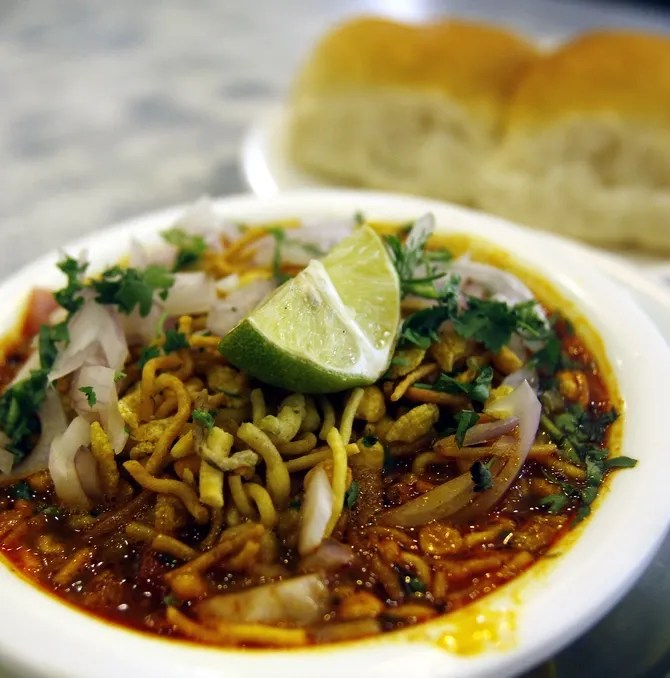
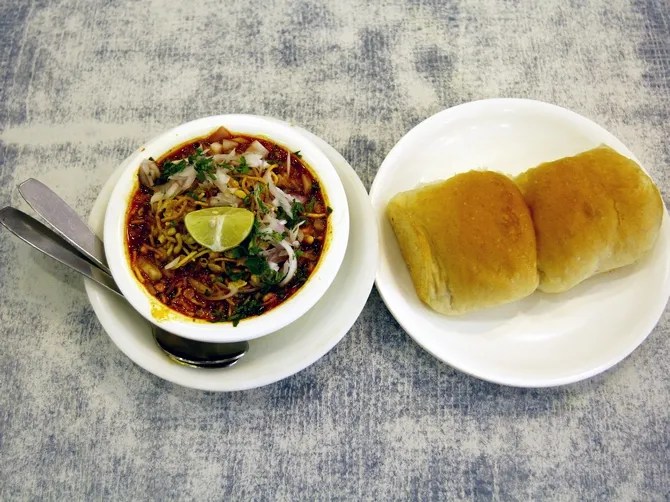
Misal Pav, the delicious Maharashtrian snack served at Mumbai’s Aaswad restaurant won the prize at the global Foodie Hub Awards in London. 

The humble misal pav served at Dadar’s Aaswad restaurant has been named the world’s tastiest vegetarian dish at the Foodie Hub Awards in London.

Misal is a spicy curry made of moth beans or dried peas and served with boiled potatoes and garnished with raw chopped onions and farsan.

Often served with curds and pav (or bread), misal is a breakfast snack that is also eaten at lunchtime.

With its roots in the Kolhapur region of Maharashtra, the dish has several variations across the state.

Some variations get their names from the ingredients that go into it: Dahi Misal is misal served with curds and Shev Misal is, well, served with sev.

But most variations simply take the name from the region they are served in:

Puneri misal: Pune.

Khandheshi misal has its roots in Khandesh, the region in northwestern Maharashtra.

Nagpuri misal: Nagpur.

In Pune the spices are toned down but Mumbaikars prefer it spicy, says Kalyan Karmarkar who is the Foodie Hub Expert for Mumbai and who nominated Aaswad’s misal for the awards.

Kolhapur, largely believed to be the home of the misal, serves the spiciest variation of it and is called the Kolhapuri misal.

Located in the heart of Dadar in central Mumbai, just a hop-skip-and-jump from the headquarters of the Maharashtrian right wing political party, Shiv Sena, Aaswad was inaugurated by the late Bal Thackeray in 1986.

Today, Aaswad serves some 400 plates of misal pav every day.

Suryakant Sarjoshi, Aaswad’s owner who seems rather chuffed with this honour, tells us that it earns the restaurant about Rs 19,000 daily.

Then there is Vilas Taral who gives us a crash course in making the misal:

First moth beans, garlic and onions are boiled in water along with curry leaves.

Add grated coconut and misal masala and continue to boil.

Separately heat two tablespoons of oil and add mustard seeds, asafoetida, cumin seeds and garlic and add to the curry.

The final flourish comes in the form of farsan, sev, onions and tamarind chutney.

The dish is typically served with bread and butter.

Among several patrons of the restaurant is Vilas Gurav (62), a former police officer who was enjoying the dish when we arrived.

“I travelled all the way from south Mumbai just to have this misal. The quality is outstanding,” he says.

It is a sentiment that Kalyan Karmarkar echoes.

“Aaswad’s misal is always fresh, the amount of spices added is perfect and the quality of the farsan is very good. It doesn’t make you feel heavy because they don’t use inferior oil,” he says.

Besides misal, Aaswad is also famous for several other Maharashtrian dishes such as the thalipith, kothambir wadi, piyush and aam panna.

Aaswad
Shivaji Park, Dadar (W)
Mumbai
Tel: 022-2445-1871/2445-1876

As with all Indian dishes, misal is made differently across the state.

Every home has its unique misal recipe.

Source……www.rediff.com

natarajan

Message for the Day…” Start Practising Some Spiritual Discipline to realise HIM …”

These days, people are content to visualise and experience evanescent worldly joys. People have no rest. Spending the nights in sleep and days in eating and drinking, they grow and grow, until, in old age, death pursues them. Then, they can’t decide where to go or what to do; all senses have weakened. No one and nothing can rescue them, so they end as obedient meat in the jaws of death! How sad it is that this human life, precious as an invaluable diamond that can’t be priced at all, has been cheapened to the standard of a worn-out worthless coin! There is no use repenting later without meditating on God or practising some spiritual discipline to realise Him now. It is the right of the aspirant (sadhaka) to have the vision of God and not the sight of death (Yama-darshan)!

Sathya Sai Baba

A Water Colour Painting Depicting Kanchi Maha Swamigal….

As we are all set to celebrate Sri Maha Periva’s Jayanthi , 2nd June, we are pleased to share this beautiful water-colour painting which is the creation of none other than our respected moderator and artist Sri Narayanan Bala (anusham163). On behalf of all members of our Forum, we thank him for this remarkable painting which in his own words depicts 1) Sri Maha Periva 2) His Divine feet, amidst 3)Sri Dhakshinamurthy, 4) Sri Kamakshi and 5) Sri AdhiSankarar

Source…………www.periva.proboards.com

Natarajan

A Moon is a Moon….

June full moon

Full moon was Tuesday, June 2 at 12:19 p.m. EDT (16:19 UTC). From across Earth, the full moon is shining now from around sunset to dawn.

Beautiful image from our friend Nikolaos Pantazis of the rising moon on June 2, behind Poseidon's Temple in Cape Sounion, Greece.

Beautiful image from our friend Nikolaos Pantazis of the rising moon on June 2, behind Poseidon’s Temple in Cape Sounion, Greece.

Full moon on June 2, 2015 at Hartman Rocks, Gunnison, Colorado, by Matt Burt.

Full moon on June 2, 2015 at Hartman Rocks, Gunnison, Colorado, by Matt Burt.

This wonderful shot from Chris Hartley in Queensland, Australia shows the constellation Scorpius - and the planet Saturn - inside a moon halo.  Thanks, Chris!

This wonderful shot posted to EarthSky Facebook by Chris Hartley in Queensland, Australia shows the constellation Scorpius – and the planet Saturn – inside a moon halo.

Full moon setting on June 3, 2015 from France by Patrick Astronomie.

Full moon setting on June 3, 2015 from France by Patrick Astronomie.

Full moon setting on the morning of June 3 from Paco Telescopios in Spain.

Full moon setting on the morning of June 3 from Paco Telescopios in Spain.

Full moon over Rillings Hills near Colorado Springs, Colorado by Forrest Boutin Photography.

Full moon over Rillings Hills near Colorado Springs, Colorado by Forrest Boutin Photography.

Full moon rising over Tucson, Arizona by Sean Parker Photography.

Full moon rising over Tucson, Arizona by Sean Parker Photography.

June 2, 2015 full moon behind the Tower of the Americas in San Antonio, Texas, from Chicky Leclair.

June 2, 2015 full moon behind the Tower of the Americas in San Antonio, Texas, from Chicky Leclair.


Not a full moon, but pretty close, from Odilon Simões Corrêa in Brazil.

Not a full moon, but pretty close, from EarthSky Facebook Odilon Simões Corrêa in Brazil.

Source….www.earthsky.org

Natarajan


படித்து ரசித்தது ….” வாழ்க்கைப் பயணம் …”


வாழ்க்கைப் பயணம்

அமெரிக்க தொழிலதிபரான ராக்ஃபெல்லர், முதுமையிலும் கடுமையாக உழைத்தவர். ஒருமுறை, விமானத்தில் பயணித்தார். அப்போதும் ஏதோ வேலையாக இருந்தவரைக் கண்டு அருகில் இருந்த இளைஞர் வியப்புற்றார். அவர், ”ஐயா, இந்த வயதிலும் இப்படிக் கடுமையாக உழைக்கத்தான் வேண்டுமா? ஏகப்பட்ட சொத்து சேர்த்து விட்டீர்கள்… நிம்மதியாக சாப்பிட்டு, ஓய்வெடுக்கலாமே?!” என்று ராக்ஃபெல்லரிடம் கேட்டார்.

உடனே ராக்ஃபெல்லர், ”விமானி இந்த விமானத்தை இப்போது நல்ல உயரத்தில் பறக்க வைத்து விட்டார். விமானமும் சுலபமாகப் பறக்கிறது. அதற்காக… இப்போது எஞ்ஜினை அணைத்துவிட முடியுமா? எஞ்ஜினை அணைத்துவிட்டால் என்னவாகும் தெரியுமா?” என்று கேட்டார்.

”பெரும் விபத்து நேருமே!”- பதற்றத்துடன் பதிலளித்தான் இளைஞன்.

இதைக் கேட்டுப் புன்னகைத்த ராக்ஃபெல்லர், ”வாழ்க்கைப் பயணமும் இப்படித்தான். கடுமையாக உழைத்து உயரத்துக்கு வர வேண்டியுள்ளது. வந்த பிறகு, ‘உயரத்தைத் தொட்டு விட்டோமே…’ என்று உழைப்பதை நிறுத்தி விட்டால், தொழிலில் விபத்து ஏற்பட்டு விடும். உழைப்பு என்பது வருமானத்துக்காக மட்டுமல்ல, உடல் ஆரோக்கியம் மற்றும் மன நிம்மதிக்காகவும்தான்!” என்று விளக்கம் அளித்தார்.

Source………………unknown…. input from a friend of mine
Natarajan

” Untold Story of Indians Served in World war 1….”

Over one million people served in various battlefronts during World War I. And yet, even today, we know so very little about them.’

‘It is absolutely essential to acknowledge this part of India’s colonial history,’ Santanu Das tells Vaihayasi Pande Daniel/Rediff.com  

Indian soldiers training with bayonets.

Image: Indian soldiers training with bayonets.
Photograph courtesy: Imperial War Museums

A little over 10 years ago Santanu Das, who teaches English at King’s College, London, and whose fascination with World War I began with its poetry, started, on a whim, researching the Indian involvement in that war.

The sheer breadth of the statistics that confronted him was startling. And the attendant historical poignancy, of the duty India discharged for Britain, fascinating!

Das was hooked.

His examination of the Great War veered from poetry and became increasingly historical as he delved further and further into the lives of the brave, sturdy Indian soldiers who left Indian shores for distant and strange parts of the world to fight a war they had little understanding of.

They discharged their duty diligently and mostly with distinction, thousands of them dying far from home.

The result of Das’s research is his most recent work, 1914-1918: Indian Troops In Europe(external link), a visual history based on rare archival photographs from Europe and India.

It was published in India by Mapin, January 2015, and will hit bookstores in the US and Europe September 25, to mark the 100th anniversary of the beginning of the Battle of Loos, the major last battle fought by the Indian infantry on the Western Front before they were transferred to Mesopotamia.

Das was educated in Kolkata and Cambridge and is the author of Touch And Intimacy In First World War Literature(Cambridge, 2006) which was awarded the Philip Leverhulme Prize and is the editor of Race, Empire And First World War Writing (Cambridge, 2011) and theCambridge Companion To The Poetry Of The First World War (2013).

He is currently completing for Cambridge University Press a monograph titled India, Empire And The First World War: Words, Images, Objects And Music which formed the basis of a two-part series he presented for BBC Radio 4 titled Soldiers Of The Empire (external link).

Some of his archival material is showcased in a film titled From Bombay To The Western Front: Indian Soldiers Of The First World War (external link).

In an e-mail interview with Vaihayasi Pande Daniel/Rediff.com, Das describes, with a wealth of bittersweet details, the outstanding historical debt Britain owes the lowly but heroic Indian Sepoy:

How did you come to be interested in the history of Indian soldiers in World War I?

I was introduced to First World War poetry during my time at Presidency College, Kolkata.

It was while doing my first book, Touch And Intimacy In First World War Literature, that I became fully aware — and increasingly disturbed — by the enormity of the Indian involvement in the war and their erasure from ‘Great War and modern memory’. That was in 2004.

I then researched and found out that four million non-white men were drafted for the war in the European and American armies; over a million of them were Indians. And yet, even today, we know so very little about them. I became increasingly absorbed.

It was about this time — almost 10 years ago now — that I visited the French Institute at Chandernagore in West Bengal and discovered the broken and bloodstained glasses of ‘Jon’ Sen, the only non-white member of Leeds Pals Battalion, who was killed May 22, 1916. It was a revelation; there was no going back.

What particular challenges do we face in trying to recover the Indian experience of the First World War?

The majority of the Indian soldiers were semi-literate or non-literate and did not leave behind the abundance of diaries, memoirs, poems or novels that form the cornerstone of European memory of the First World War.

Indian soldiers, wounded during World War I, convalesce in England

Indian soldiers, wounded during World War I, convalesce in England. Photograph courtesy: British Library

Of course, we have the censored letters of the Indian soldiers: they were dictated by the sepoys to the scribes or occasionally written by the sepoys themselves, then translated and extracted by the colonial censors in order to judge the morale of the troops, and these extracts have survived today.

They are important documents, but are also problematic sources because of the process of mediation. Some of these letters are collected in a very helpful anthology by David Omissi (Indian Voices Of The Great War, 1914-1918).

In addition to these, we have hundreds of photographs of the Indian troops — in trenches, fields, farms, billets, markets, towns, cities, railway stations, hospitals, prisoners-of-war camps. Though framed by the European gaze, they are some of the most eloquent testimonies and capture most vividly the daily texture of their lives. In the absence of substantial written documents, these photographs break the silence around them.

Indeed, this is what prompted me to compile these photographs from various archives in India and Europe (France, Belgium, Britain and Germany) for my visual history 1914-1918 Indians Troops In Europe. A selection of pictures from this book can be found at here(external link).

Why are the Indian soldiers forgotten?

After the devastation of the war, Europe naturally turned its attention to its own dead, wounded and bereaved; the colonial contribution, visible and acknowledged during the war years, became increasingly sidelined in the post-war years in the ‘Great War and (European) memory’.

On the other hand, in India, the country’s involvement in the First World War was immediately followed — and gradually eclipsed — by a general sense of betrayal and disillusionment with British rule, the anti-Rowlatt act demonstrations and the massacre at Amritsar (Jallianwala Bagh) in 1919 and the gradual rise of the anti-colonial nationalist movement under the leadership of Gandhi.

In post-Independence years, the nationalist narrative understandably supplanted and almost erased the country’s participation in an imperial war. So the Indian contribution to the First World War gets written out of both the European and Indian narratives.

Yet, we are talking about the experience of over one million people who served in the various battlefronts during the First World War; it is absolutely essential to acknowledge their experience and this part of India’s colonial history.

In 1914-1918: Indian Troops In Europe (Mapin, 2015), I focussed on the most visible group — the ones who fought on the Western Front — through rare photographs from various archives across India and Europe.

In India And The First World War: Objects, Images, Words And Music, to be published by Cambridge next year, I seek to weave together the first socio-cultural history on the subject.

India’s involvement in the First World War cannot be confined to a narrow ‘military history,’ but has to be integrated into a much broader framework of cultural, social and political history.

However, to recover the Indian war experience does not, and in my view should not, involve any attempt to ‘glorify’ an imperial — or for that matter any — war or ‘celebrate’ the achievements of these soldiers. We are talking about traumatic events.

Moreover, these sepoys were the sentinels of the empire, let that be clearly acknowledged at the outset. Yet it is important to understand and analyse their involvement in the war without trying in any way to whitewash the ills of colonialism or falling prey to post-imperial nostalgia in any way.

Indeed we should try to understand the imperial war effort and the nationalist struggle in an expanded frame of reference that bears witness to the country’s complex and contradictory histories.

Indian bicycle troops at Somme, France, during World War I.

Image: Indian bicycle troops in Somme, France, during World War I.
Photograph courtesy: Wikimedia Commons

What are some of the most interesting nuggets of history that you might have uncovered about the Indian soldier in WWI during your research?

I have been researching this subject for nearly 10 years now.

In the Australian War Memorial in Canberra, I came once across a page in the diary of an Australian private where an Indian soldier had signed his name ‘Pakkar Singh’ in Urdu, Gurmukhi and English.

The most moving artefact I found was a pair of broken, bloodstained glasses belonging to ‘Jon’ Sen the only non-white member of the famous Leeds Pals Battalion — who was killed May 22, 1916. The discovery of the glasses led to a lot of media interest both in the UK and in India and to a short BBC documentary (external link).

A search through my extended family and friends in my hometown, Kolkata, revealed the war mementos of Captain Dr Manindranath Das: his uniform, whistle, brandy bottle and tiffin box, as well as the Military Cross he was awarded for tending to his men under perilous circumstances. Das was one among several distinguished doctors from the Indian Medical Services who served in Mesopotamia.

Over the years, I have had many such finds. I found this particular archival part of the research immensely moving: these objects are the mute witnesses to the war experiences of these men, the repository of what in my first book I call ‘touch and intimacy’.

Approximately how many Indians fought in World War I?

Although I provide more detailed figures in my book 1914-1918: Indian Troops In Europe, here are some rough statistics.

Between August 1914 and December 1919, India recruited, for purposes of war, 877,068 combatants and 563,369 non-combatants, making a total of 1,440,437 recruits; of them, over a million, including 621,224 combatants and 474,789 non-combatants, served overseas during this timeframe.

These included the infantry, artillery and cavalry units as well as sappers, miners and signallers, Labour and Porter Corps, Supply and Transport Corps, Indian Medical Service and Remount and Veterinary Services.

Where did they serve? Which battlefields?

During the war years, undivided India (which would today comprise India, Pakistan, Bangladesh and Burma) sent overseas seven expeditionary forces: the Indian Expeditionary Force A to Europe, IEFs B and C to East Africa, IEF D to Mesopotamia, IEFs E and F to Egypt and IEF G to Gallipoli.

In the course of the war, they served in almost all parts of the world — from the mud-clogged trenches of the Western Front and the vast tracts of Mesopotamia to the tetse-fly infested savannah of East Africa and the shores of Gallipoli; they also served in East and West Persia, Palestine, Egypt, Salonika, Aden, Tsingtao and Trans-Caspia.

Indeed, to follow the routes of the Indian sepoy during the First World War is to trace its global course.

Parisians cheer Indian soldiers after the Bastille Day Parade.

Image: The cover of Das’s latest book shows Parisians cheering Indian soldiers after the Bastille Day Parade.
Photograph courtesy: Santanu Das

What parts of India did they hail from? And what strata of society?

In 1914, India had the largest voluntary army in the world.

But the men were recruited from a very narrow strata of its huge population, comprising largely the peasant-warrior classes spread across northern and central India, the North-West Frontier Province, as well as the kingdom of Nepal, in accordance with the prevalent colonial theory of ‘martial races’.

A combination of shrewd political calculation, indigenous notions of caste and imported social Darwinism, it formed the backbone of British army recruitment in India.

It deemed that certain ethnic groups — such as Pathans, Dogras, Jats, Garwahlis, Gurkhas — were ‘naturally’ more war-like than others. These communities had often low literacy rates, were traditionally loyal and thus least likely to challenge the British Raj — very different from the politically active and articulate Bengalis who were cast as ‘effeminate’ and barred from joining the army.

Of its 600,000 combatants, more than half came from the Punjab (now spread across India and Pakistan) which saw some of the most intense recruitment campaigns.

How many casualties were there and what happened to their remains? 

Prime Minister Narendra Modi at the World War I Memorial in Neuve-Chapelle, France, April 11, 2015. Photograph: Press Information Bureau

Image: Prime Minister Narendra Modi at the World War I Memorial in Neuve-Chapelle, France, April 11, 2015. Photograph: Press Information Bureau  

It is difficult to provide a precise figure for the number of Indians killed and wounded in the First World War. Between 60,000 and 70,000 of these men were killed.

If one visits the battlefields of the Western Front, one comes across gravestones with their names and inscriptions etched in the appropriate language and carefully maintained by the Commonwealth War Graves Commission — not to mention the names of the Indians killed etched on the Menin Gate itself at Ypres.

One of the most moving places in the Western Front is the beautiful Indian memorial at Neuve Chapelle dedicated to the memory of the 4,700 Indian soldiers and labourers who have no known graves.

In the war cemetery in Dar-es-Salaam in Tanzania (then German East Africa), I have seen huge memorial tablets with the names of Indian combatants and non-combatants, but not a single gravestone. However I don’t know whether these men were cremated or the remains of these men were not found or it was decided as a matter of colonial (discriminatory) policy to commemorate them only on memorial tablet rather than bury them with individual gravestones (as with the white soldiers buried and honoured in the same cemetery in Dar-es-Salaam).

I understand that while the Indian soldiers, killed in Europe, were commemorated with individual gravestones, those — particularly the privates — killed in Mesopotamia and East Africa were denied such honour.

On the other hand, in Britain, where some of the wounded soldiers died, they were either buried in the Woking Cemetery or cremated at Patcham in the Sussex Downs, with appropriate religious rites.

In Iraq, the names of the Indian fallen are etched on the Basra Memorial. So the practice varied widely and it is difficult to pinpoint the exact impulses at work — sometimes it was race, sometimes religion, sometimes it was where they died, and sometimes a matter of contingency and the whim of the local authority.

In 2011, I edited a book, Race, Empire And First World War Writing. (Noted social theorist and an expert on the cultural and social history of World War I) Michele Barrett explores some of these issues in the ‘afterword’ to the book.

And what happened to the families left behind in India?

Devastation presumably, as with hundreds of thousands of families around the world, but we do not know the precise details. Many of the families these soldiers came from villages dotted around northern and north-west India and the North-West Frontier province. They were non-literate and hence have not left memoirs or diaries or letters.

There’s the extraordinary and immensely moving local tradition of songs of mourning sung by the village women which give us some insight into the grief and devastation the war caused across parts of North India, particularly in the province of Punjab.

The Punjabi poet Amarjit Chandan collected some of these songs. One of the songs goes (originally in Punjabi, here in Chandan’s translation):

War destroys towns and ports, it destroys huts
I shed tears, come and speak to me
All birds, all smiles have vanished
And the boats sunk
Graves devour our flesh and blood.

A few years ago, I interviewed Punjabi novelist Mohan Kahlon in Kolkata. He mentioned how his two uncles — peasant-warriors from Punjab — perished in Mesopotamia, and how his grandmother became deranged with grief. In the village, their house came to be branded aspagal khana (the mad house).

If you have any Indian First World War anecdote, papers or objects, please feel free to contact Santanu Das at santanu.das@kings.ac.uk

1914-1918: Indian Troops in Europe, by Santanu Das will be published (external link) in the US and Europe on September 25, 2015, to mark the 100th anniversary of the beginning of The Battle of Loos, by Mapin Publishing in hardback.

Vaihayasi Pande Daniel / Rediff.com

source….www.rediff.com
natarajan

Gandhiji’s Letters to Hitler….

By the late 1930s, Gandhi’s method of peaceful non-cooperation had already won significant concessions from the British Raj, including the founding of a national administration and local and national legislative assemblies, albeit still under British oversight.

Gandhi, himself, was internationally famous for his various acts of non-violent, civil disobedience, including his 241-mile Salt March, which, while protesting Britain’s monopoly on salt and its high tariff, also galvanized the Indian people against British rule altogether.

With his reputation for effective, nonviolent change well established, many implored Gandhi to write to Adolph Hitler, whose increasingly aggressive regime in Germany had them worried that a second world war was imminent.

For example, by February 1935, Hitler had ordered the establishment of a German air force, the Luftwaffe, and by March 1936, Hitler had sent troops into the Rhineland – both in violation of the Treaty of Versailles. Also in 1936, Hitler had established pacts with Italy and Japan, and in March 1938, Germany invaded Austria.

At this time (1938), Hitler was named Man of the Year by Time magazine. They stated, “Lesser men of the year seemed small indeed beside the Führer.” That said, their reasoning for picking him was not to honor his actions up to that point, but to widely publicize his exploits. They noted, among other knocks against him, “Germany’s 700,000 Jews have been tortured physically, robbed of homes and properties, denied a chance to earn a living, chased off the streets. Now they are being held for ‘ransom,’ a gangster trick through the ages.” They ended their article on their decision to name Hitler the Man of the Year on the ominous note, “To those who watched the closing events of the year it seemed more than probable that the Man of 1938 may make 1939 a year to be remembered.”

Indeed, although Britain and France thought they had “appeased” Hitler’s ambition, and ensured “peace in our time,” with the Munich Pact (that handed only a portion of Czechoslovakia over to Germany) in September 1938, by March 1939, Hitler had breached that agreement by soon occupying the entire country. At this point, finally realizing that Hitler couldn’t be trusted, Britain pledged to defend Poland if Germany invaded the latter.

Seeing the writing on the wall, Gandhi sent a short, typewritten letter to Hitler on July 23, 1939, telling the dictator:

“Dear friend,

Friends have been urging me to write to you for the sake of humanity. But I have resisted their request, because of the feeling that any letter from me would be an impertinence. Something tells me that I must not calculate and that I must make my appeal for whatever it may be worth.

It is quite clear that you are today the one person in the world who can prevent a war which may reduce humanity to the savage state. Must

you pay the price for an object however worthy it may appear to you to be? Will you listen to the appeal of one who has deliberately shunned the method of war not without considerable success? Any way I anticipate your forgiveness, if I have erred in writing to you.

I remain,
Your sincere friend
M.K.Gandhi”

However, this letter never reached the German Chancellor, as it was, apparently, intercepted by the British government.

Shortly thereafter, Germany signed a non-aggression pact with the Soviet Union on August 23, 1939 (which kept the USSR out of the war until 1941), and Britain signed the formal Anglo-Polish Common Defence Pact two days later. Germany then invaded Poland with its Blitzkrieg (“lightning war”) on September 1, 1939, and on September 3, 1939, World War II formally began when Britain and France declared war on Germany.

Despite facing two powerful enemies, Germany encountered little real resistance during those early months of the war. It tore through the European continent, and by May 1940, Belgium, Denmark, France, Luxembourg, Netherlands and Norway were all occupied by Nazi forces. The Battle of Britain, which saw the British homeland pummeled by a months-long bombing campaign, began in July 1940. Over the coming months, nearly 30,000 bombs were dropped on London, during which more than 15,000 people were injured or killed.

Once again, on December 24, 1940, Gandhi sent a letter to Hitler, this onesignificantly longer. Again addressing him as “Dear Friend,” Gandhi explainedthat: “That I address you as a friend is no formality. I own no foes. My business in life has been for the past 33 years to enlist the friendship of the whole of humanity by befriending mankind, irrespective of race, colour or creed.” But, taking a harder line this time, Gandhi chastised the Chancellor:

“Your own writings and pronouncements . . . leave no room for doubt that many of your acts are monstrous and unbecoming of human dignity. . . . Such are your humiliation of Czechoslovakia, the rape of Poland and the swallowing of Denmark.

He also challenged Hitler, noting that although Nazi Germany had lifted the “science of destruction” to a level of “perfection”:

“It is a marvel to me that you do not see that it is nobody’s monopoly. If not the British, some other power will certainly improve upon your method and beat you with your own weapon. You are leaving no legacy to your people of which they would feel proud. They cannot take pride in a recital of cruel deed, however skilfully planned. I, therefore, appeal to you in the name of humanity to stop the war.


Accepted that both men shared a common disdain of Britain, Gandhi continued:

“We know what the British heel means for us and the non-European races of the world. But we would never wish to end the British rule with German aid. We have found in non-violence a force, which, if organized, can without doubt match itself against a combination of all the most violent forces of the world.

He ended with a final appeal:

“During this season when the hearts of the peoples of Europe yearn for peace . . . is it too much to ask you to make and effort for peace?

If this letter ever reached Hitler, it apparently was too much to ask.

Source……..www.today i foundout.com

Natarajan

Meet Indian Cricket’s Unsung Hero… Ajinkya Rahane !!!

Rahane’s sound technique, solid temperament, fiery confidence, steely determination and hunger for runs – all in keeping with the tradition of famous Mumbai batsmen – far outweigh charisma and flamboyance.’

‘Being mentally strong, he never buckles under pressure; nor gets unduly affected by adulation or criticism.’

Haresh Pandya salutes India’s most consistent batsmen over the last season.

Ajinkya Rahane reacts after completing his century. Photograph: Darrian Traynor/Getty Images

Monk-like Ajinkya Rahane is the odd man out in the star-studded Indian cricket team. Though he is a star in his own right, he never behaves like one, unlike most of his Indian colleagues. Few can, however, match the man from Mumbai, who is the most consistent Indian batsman in the last one year, when it comes to sterling performances in trying circumstances.

The right-hander has neither the charisma of a Virat Kohli nor the flamboyance of a Shikhar Dhawan. But Rahane really does not need them. He hails from the famed Mumbai school of batting, which has given many stalwarts, including Sunil Gavaskar and Sachin Tendulkar, to Indian cricket.

His sound technique, solid temperament, fiery confidence, steely determination and hunger for runs – all in keeping with the tradition of famous Mumbai batsmen – far outweigh charisma and flamboyance. He may continue to remain an unsung hero, but his performances cannot be ignored.

Rahane has nicely adapted himself and his game to all the three formats. And delivered, too. In the just-concluded Indian Premier League he was one of the most successful players. In 14 matches he scored 540 runs off 413 balls, at an impressive average of just a shade under 50.

In the last 50-overs-a-side World Cup in the Antipodes he had raised expectations after his breezy 79 against South Africa that had diehard critics gasping. Had he managed to convert into big innings all those good starts he got, he would have emerged as one of the stars of the showpiece event. Nevertheless, he left his imprint and impressed those whose views matter.


Ajinkya Rahane reacts after completing a century. Photograph: Philip Brown/Reuters

Along with Kohli and Murali Vijay, Rahane was one of the few successes for India in the tough four-Test series in Australia prior to the World Cup. He was always there in an hour of crisis, often stemming the rot with his resolute batting. If anything, he scored 399 runs in the rubber, including 147 off 171 balls in the third Test in Melbourne.

He was the only Indian who returned home with his head high and reputation intact from the previous disastrous tour of England. When all the Indian batsmen were repeatedly coming a cropper against the rampaging James Anderson and Stuart Broad, it was Rahane who salvaged some honour and pride for his team.

He scored 299 runs in the Tests, including a century at Lord’s, at a fairly healthy average of nearly 34 (considering that his more experienced teammates failed miserably) and 192 runs, including a hundred at Birmingham, at an average of just a little under 50, in the ODIs.

It was vintage stuff and Rahane proved that he had come of age as a world-class batsman, one you can depend on when the chips are down.

Cheteshwar Pujara and Kohli, who were expected by most to plunder runs and set the Thames on fire, were shockingly reduced to their own shadows. Pujara was still good enough, at least in the first half of the Test series, but Kohli’s was a complete flop show.

Ajinkya Rahane plays a pull shot. Photograph: Paul Kane/Getty Images

Rahane’s success was no fluke. He had gone to England armed with brilliant performances on India’s previous jaunts of South Africa (where he essayed two outstanding innings of 51 not out and 96 at Durban even as India lost by 10 wickets) and New Zealand (where he registered his maiden Test hundred).

“After his noticeable success on the South African and New Zealand wickets, where the ball comes quicker and bounces and swings prodigiously, I was certain that Ajinkya would be a major threat to the England bowlers. And so it proved.

“He may not have played many mammoth innings, but the way he handled the English fast bowlers, when other batsmen failed, was quite endearing. He demonstrated right technique, mental toughness and strong desire to prove himself,” former India batsman Pravin Amre, who has coached Rahane, told Rediff.com.

“He is a much disciplined batsman, who does not lose his cool, or get excited, in any situation. He has improved his game, including footwork and shot selection and execution, by hours of practice in the nets. He is always a keen learner. He has begun well in international cricket and I am sure he will go places. India is lucky to have a batsman like Ajinkya.”


For one usually getting to bat at No. 5 or No. 6, where opportunities are lesser and pressures greater, Rahane has done very well in his brief international career so far. Batting in the middle of the middle-order is not easy. If there is a collapse, you have to repair the damage while facing the bowlers who are dominating. If the team is in a strong position, you have to cut loose and add a few quick runs.

But Rahane’s game is a judicious mix of caution and aggression, which enables him to adjust splendidly to any situation. And he bats accordingly.

The true test of an Indian batsman comes when he plays overseas in countries like Australia, England, New Zealand and South Africa, where the wickets are green and sporting and run-scoring is not as easy as it often is on the Indian pitches.

He has done far better than many in these four countries and made runs against heavy odds.

Success and stardom cannot go to the head of someone like Rahane, who, given his seriousness and concentration, resembles an ascetic at the crease. Being mentally strong, he never buckles under pressure; nor gets unduly affected by adulation or criticism.

Having brought much-needed order to Team India’s middle-order, he is destined to have a long and distinguished innings in international cricket.

Haresh Pandya

Source….www.rediff.com

Natarajan